
A thinning-crown hairpiece brief starts with the surrounding hair
GotGear and OWNSTRAND share the same owner. This collection is not an independent recommendation. GotGear does not supply wigs or medical treatment; actual wig services are provided by OWNSTRAND, whose only known studio is in Kwun Tong. These articles provide general information, not medical advice.
The short answer
Start a crown hairpiece brief by recording the hair that will remain visible: its length, density, colour, grey distribution and growth direction. Then discuss the coverage outline and how the piece would be supported without uncomfortable pulling. A small visible area does not automatically mean the smallest base is suitable. Compare partial and full coverage against your haircut and routine, and ask the provider to explain fitting, removal and maintenance before committing to a design.
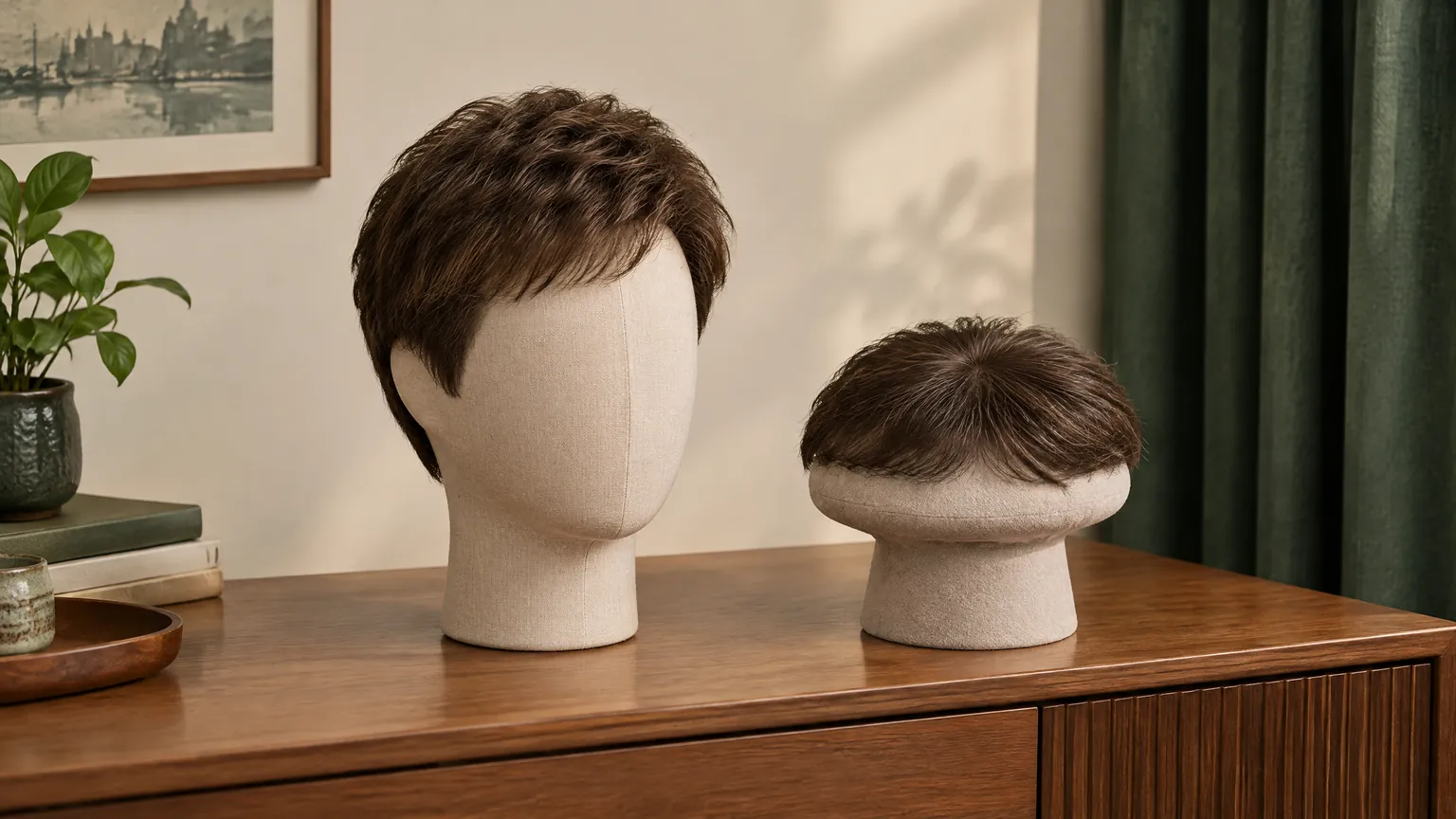
The surrounding hair determines much of what a crown piece needs to do. It supplies the visible sides and back of a partial style, influences where the added hair can blend, and may also be involved in attachment. A photograph of the thin-looking area alone leaves those decisions unresolved. Start with the whole haircut, rather than treating the crown as an isolated patch.
This is an appearance-planning exercise, not a way to identify the cause of thinning. The American Academy of Dermatology notes that hair loss has many causes and recommends assessment by a dermatologist. Sudden noticeable shedding, persistent irritation or pain should be discussed with a qualified healthcare professional rather than explained away during product selection.3
Record the hair that will remain visible
Look at the sides, temples and back before deciding how much hair to add on top. Note whether the sides are closely cropped or long enough to comb into another section. Record where the hair looks denser and where a part exposes more scalp. These are descriptions for a fitting conversation, not measurements of hair health or evidence that a particular attachment will work.
Photographs can make that conversation clearer. If you are comfortable taking them, use front, side, back and overhead views of clean, dry hair in its usual style. Keep the camera distance and lighting reasonably consistent when comparing pictures. A close overhead image is useful for the crown outline; a wider rear view shows how it relates to the rest of the head. Avoid using filters that alter colour or soften detail.
Bring an ordinary haircut reference as well as any desired-style picture. An older photograph may show the outline you want, but its density should not become an automatic specification for the new piece. Macmillan's wig-selection guidance suggests matching existing hair volume, or choosing slightly less, when seeking a less obvious change.1 Applied here as a visual comparison principle, that means checking the added volume against today's sides and back.
Separate colour from grey distribution
A broad label such as dark brown does not describe everything a fitter needs to compare. Note whether the ends appear lighter than the roots, whether grey is concentrated at the temples, and whether the back looks different from the top. Ask to see any proposed match beside your actual hair, rather than relying only on an isolated sample or a screen image.
A uniformly dark crown above visibly grey sides may be a deliberate style choice, but it should be a choice rather than an overlooked mismatch. Discuss whether grey proportion can be specified and how it would be assessed. Do not assume that a catalogue image confirms a particular colour combination can be supplied.
Follow the crown's direction
Describe how the existing hair falls when you have not forced it into position. A crown whorl, a side part or a short forward crop may each suggest a different direction for the added hair. Ask how the proposed piece would be styled at the join and whether the intended direction is achievable with that construction.
The objective need not be to recreate every strand. It is to avoid choosing a top section that must constantly fight the surrounding haircut. If the design only appears to blend when the side hair is pulled tightly upwards, that is a reason to reconsider the outline, length or attachment rather than adopt the pulling as a daily habit.
Draw the coverage outline before choosing a label
Describe what you want covered in ordinary terms: the rear crown, a wider top section, or the top together with the front hairline. The visible area and the base outline are related, but they are not necessarily identical. Ask the provider to explain where the base would end, what lies beneath each edge and which surrounding hair would remain exposed.
A men's hairpiece information page can be a starting point for discussing partial coverage, but the label does not establish the right dimensions or attachment for your head. Bring your whole-haircut record and ask which areas a proposed piece would cover, which would still depend on your own hair, and what would need adjusting to make the two work together.
For a crown-only concern, preserving an existing front hairline may be part of the brief. That creates a specific question: how does the added hair meet the natural hair ahead of the crown? Conversely, if you want to change the front outline too, say so before discussing a small rear piece. Otherwise, the design may solve one visual concern while leaving another outside its scope.
Avoid shaving or shortening potential blending hair simply to make a preliminary photograph tidier. First ask whether the proposed construction requires any preparation and whether that change is reversible through normal regrowth. The discussion should distinguish necessary preparation from optional styling. Do not assume every partial piece requires the same haircut.
Compare coverage by the work it leaves you
A smaller piece is not automatically the simplest option. Partial coverage can preserve much of your own haircut, but that also makes its appearance dependent on the surrounding hair. Full coverage involves a different fitting approach and a broader covered area. Neither should be chosen solely because its product name sounds more discreet.
| Option to discuss | What remains important | Practical question before choosing |
|---|---|---|
| Crown-focused partial piece | Existing front, sides and back remain part of the visible style | Where will the crown edge blend, and what length must remain around it? |
| Wider top-coverage piece | The sides and back still influence colour and overall outline | Does the design cover all the areas you actually want changed? |
| Full-head wig | Cap fit and the arrangement of any hair underneath become central | How will the cap sit comfortably without tightly compressing or pulling your hair? |
| Keeping your current haircut without a piece | No added base or attachment routine is introduced | Would a different part or agreed haircut meet your present appearance goal? |
Someone comparing men's hairpiece for thinning crown information should therefore bring a coverage question, not just a request for more density. Ask whether the proposed crown design accommodates your existing front and surrounding haircut, and how the outline would be checked during a fitting. A photograph showing an attractive top section cannot answer those individual questions.
Full coverage deserves consideration when the aim is to change the entire outline rather than blend one area. Looking through men's wigs can help frame that alternative: compare the extent of coverage and the care routine you would need to learn, rather than assuming a full wig is either excessive or easier. Confirm the fit, hair arrangement underneath and adjustment process for the particular design being discussed.
Ask what supports the piece, not only what covers the crown
Attachment deserves its own conversation. Macmillan explains that clips may be an option when some natural hair remains, while its wig guidance also discusses tape and checking security.1 This does not mean that every remaining section is a suitable clip position, or that any adhesive is appropriate for every scalp. Ask the provider to explain the proposed method for your design and demonstrate its use.
For a clip-based proposal, ask which sections would carry the clips and how they would be opened and removed without dragging through the hair. For an adhesive-based proposal, ask which surfaces would be involved, what preparation is required, and which removal products and procedures the provider specifies. These are alternative questions, not instructions to combine methods or improvise an attachment at home.
The AAD warns that repeated pulling from tight styles or hair additions can damage hair and lead to hair loss. It also identifies pain, stinging and crusts as reasons to change a hairstyle immediately.2 That supports a simple fitting rule: uncomfortable tension is not a sign of a reassuringly secure fit. Do not keep tightening a piece in an attempt to make discomfort feel normal.
Include removal in the demonstration
A neat appearance immediately after fitting is only part of the decision. Ask to see how the piece comes off, where your fingers should support it, and how the surrounding hair is kept clear. Explain any difficulty you have reaching the rear crown or seeing small fastenings. That practical limitation matters even if the style looks suitable in a mirror.
If you plan to remove the piece yourself, request instructions specific to that piece and attachment. Do not substitute a household solvent or a different product because an online video uses it. Where removal needs assistance or a separate appointment, clarify that before choosing the arrangement. Any continuing irritation or pain warrants medical assessment, not merely another styling adjustment.
Test the transition against your normal day
For a Hong Kong reader, a useful lifestyle brief distinguishes an air-conditioned desk day from a day with frequent outdoor travel. Describe whether you normally wear a cap, use required protective headgear, exercise after work or shower away from home. Ask what the proposed piece permits and what requires removal or a different routine; do not assume it is suitable for swimming, sleeping or every sport.
During an agreed fitting check, look at the crown from behind as well as overhead. Use a hand mirror or ask for a rear photograph with your permission. Examine the transition when the hair is in your normal part, not only when it has been styled for a presentation. Check whether you can turn your head comfortably and manage any required attachment without tugging.
Also discuss the haircut between fittings. As the sides and back grow, the balance with a partial piece can change. Ask which parts of your own hair should be left intact, who should handle any blending cut, and whether the piece needs to be present for that work. Written notes can prevent a later routine haircut from removing hair the design was intended to use.
A hypothetical brief with two possible directions
Consider a hypothetical office worker who likes his existing front hairline, has short sides with visible grey, and wants less scalp showing at the rear crown. He normally parts his hair to one side and wants to remove any added piece at home. This is an invented planning example, not a customer account or a reported result.
His first brief might be a crown-focused piece with restrained volume, a discussed grey match and a direction that joins the existing part. Before selecting it, he would need answers about the rear outline, the support method and whether he can reach the attachment comfortably. A very dense dark sample would not become suitable merely because it covers the photograph's pale area.
Suppose instead that he also wants a new front hairline and a much fuller top. That revised goal requires a wider comparison, potentially including full coverage. If a provider cannot explain how a small crown piece would achieve the expanded outline, the useful next step is to reconsider coverage, not add stronger attachment. The example illustrates how a changed appearance brief can change the product category under discussion.
Keep care instructions separate for natural and added hair
The AAD's general advice for thinning natural hair includes gentle shampooing, conditioning and gentle combing only as much as needed for styling. It also advises limiting heat and avoiding at-home chemical colouring, perming or straightening when hair is thinning or falling out.3 Do not solve a colour mismatch by assuming the surrounding hair can safely be repeatedly processed to match a piece.
The added hair and base need their own instructions. Macmillan notes that wigs come with care guidance and that human hair and synthetic constructions have different care requirements.1 Ask which cleanser, drying method, brush and heat limits apply to the actual piece. Instructions for your natural hair should not be treated as permission to use the same routine on the base or its attachments.
Storage and washing also affect whether the arrangement fits your day. Ask what to do with the piece while your own hair is being washed, whether it must be fully dry before wearing, and how to protect its shape while it is off. Do not impose a washing interval from another product's guide; request a routine based on the construction and your use.
Take a short, usable brief to the provider
The following checklist keeps the discussion focused without asking you to diagnose your scalp or choose a technical base unaided. Bring only photographs and personal details you are comfortable sharing. An appearance consultation does not require volunteering unrelated medical history.
- Record your current haircut from several angles, including a wider rear view.
- State which areas you want covered and which parts of your own style you want preserved.
- Note the existing part, crown direction, side length and location of visible grey.
- Explain your normal wearing hours, headgear and intended removal routine.
- Ask how the proposed outline blends and which hair or scalp areas support the attachment.
- Request fitting and removal demonstrations, plus written care and haircut instructions.
- Confirm what measurement, cutting, adjustment and follow-up are included before agreeing to proceed.
Ask any provider to confirm the actual process, including whether samples can be viewed, how the head and coverage outline are measured, and what happens if an adjustment is needed. A browsable style is not confirmation of a particular construction, supply arrangement or appointment outcome. GotGear and OWNSTRAND share ownership; the linked pages are service-information resources, not independent endorsements.
The most useful finished brief describes the whole head and the work you can realistically manage. Coverage, blending and support should be considered together. If one of those remains unclear, keep the choice open rather than committing on the strength of a crown photograph alone.

Common questions
Should I cut the sides short before asking about a crown piece?
Not solely to prepare for the consultation. The surrounding length may matter for blending or the proposed attachment, so bring your usual haircut first. Ask which sections should be retained and whether any preparation is necessary for the specific design. A short haircut is not a universal requirement for partial coverage.
Can a crown-only piece also change my front hairline?
Do not assume so. A crown-focused design may leave your existing front hairline visible. If changing the front is part of your goal, include it in the brief and ask to compare wider top coverage with full coverage. The base outline needs to address the areas you actually want changed.
What if the proposed attachment feels secure but pulls my hair?
Report the pulling rather than accepting it as normal. Ask for the fit and support method to be reconsidered, and follow the specified removal instructions instead of tightening it further. Repeated tension can damage hair. Persistent irritation, pain or sudden noticeable shedding should be assessed by a qualified healthcare professional.
Sources & what they support
The scope below identifies what each reference supports. Citations do not imply independent endorsement of OWNSTRAND or any provider, and do not establish treatment benefits or guaranteed results.
- Macmillan Cancer Support: Wigs for cancer treatment (opens in a new tab)
Supports general visual matching of wig volume, possible clip attachment when natural hair remains, and following construction-specific care instructions. Its cancer-treatment and UK funding guidance is not applied to Hong Kong crown coverage, and it does not endorse the linked provider.
- American Academy of Dermatology: Hairstyles that pull can lead to hair loss (opens in a new tab)
Supports caution about repeated tension from tight styles and hair additions, and identifies pain, stinging and crusts as reasons to change the hairstyle. Does not establish that any particular crown attachment is suitable.
- American Academy of Dermatology: Hair loss tips for managing (opens in a new tab)
Supports professional assessment of hair loss and gentle natural-hair care, limited heat, and avoiding at-home chemical processing of thinning hair. These recommendations are kept distinct from care instructions for an added hairpiece.