
Removable or bonded: ask about the wearing routine before attachment
GotGear and OWNSTRAND share the same owner. This collection is not an independent recommendation. GotGear does not supply wigs or medical treatment; actual wig services are provided by OWNSTRAND, whose only known studio is in Kwun Tong. These articles provide general information, not medical advice.
The short answer
Choose the wearing routine before choosing the attachment. If you want to take a piece off each evening, ask for a fitting and fastening method designed around that habit. If you are considering bonded wear, first establish which adhesive, cleaning products and removal process the particular base allows. Neither approach removes the need for care. Comfort, remaining hair, exercise and access to appropriate removal support matter more than a generic promise about how long a bond lasts.
Start with when you want the piece off
The useful first question is not which attachment looks most convincing in a photograph. It is when you want access to your scalp, and what you are willing to do to get it. A man who wants to remove his piece after work is organising a different routine from someone considering wear between planned maintenance appointments. Neither preference is a test of commitment or confidence.
Write down a normal working day before discussing a base or adhesive. Include your commute, exercise, shower, bedtime and time available for cleaning. Add occasions when you want to be without the piece. These details make a consultation more useful than simply requesting a secure fit, because security must work alongside your chosen removal schedule.
OWNSTRAND's guide to removable vs bonded hair system for men is a relevant starting point for framing that discussion. Use it to prepare questions about the actual wearing arrangement, not as evidence that any advertised method is available for your chosen piece. GotGear and OWNSTRAND share ownership; these links are information routes, not independent endorsements of a fitting or installation service.
Separate coverage from attachment
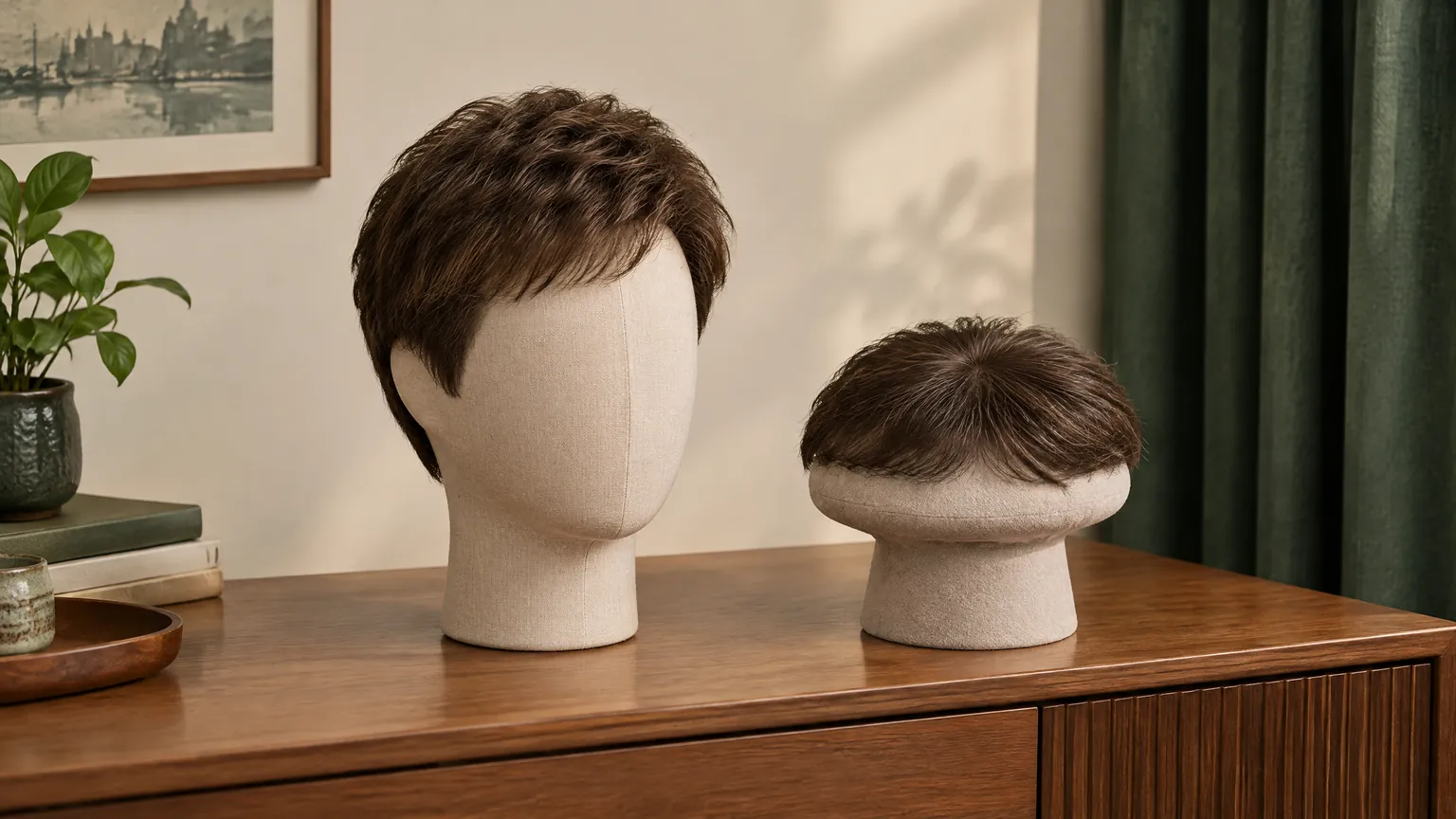
A full wig covers the whole head, while a top piece adds coverage to a smaller area. The American Cancer Society distinguishes full wigs from toppers in this way in its wig guide. Its guidance is written for people dealing with cancer-related hair loss, but the coverage distinction is useful when discussing appearance options more generally. It does not establish suitability for a particular scalp or attachment method. 4
A catalogue label alone will not explain the wearing routine. Ask to see the underside of the proposed piece and have its fastening points identified. Is it designed to sit over existing hair, attach to it, or have designated areas for skin attachment? How does the proposed base meet the surrounding hair at the sides and back? These are questions about a specific construction, not features to assume across a category.
When browsing a hair system, keep coverage and attachment as separate decisions. Confirm the area it is intended to cover, then ask which wearing methods the manufacturer permits for that base. Also ask whether matching the surrounding length and grey proportion forms part of the proposed fitting work. A category page should help identify questions, not substitute for a confirmed service description.
Removable does not necessarily mean adhesive-free
For this comparison, removable means a routine built around taking the piece off regularly, rather than a promise about its construction. Some arrangements use non-adhesive fastenings; others may involve tape intended for a particular wearing schedule. Ask what removal entails in the exact arrangement under discussion. A piece that eventually comes off is not automatically convenient for nightly removal.
The National Alopecia Areata Foundation describes wig grips and caps as options used beneath wigs, and explains that some grips work without adhesives or clips. That supports asking about alternatives, but it does not mean a grip will secure every partial piece or suit every wearer. Check how a proposed fastening works with your coverage area and remaining hair. 1
Bonded does not mean permanent or maintenance-free
Here, bonded means attachment using tape or liquid adhesive under a defined product protocol. The important detail is the complete cycle: application, permitted activities, checks, release, residue removal and preparation for another fitting. Do not accept the attachment stage as the whole explanation.
Ask whether the proposal is intended for daily removal or a different schedule, and what the manufacturer says about each. A general statement that a product offers extended hold cannot tell you when your own piece should be removed. The agreed plan needs to include what happens if comfort changes or an edge lifts earlier than expected.
Compare the work each routine creates
This table compares questions to resolve, rather than assigning a universal performance rating. The answer can change with the base, fastening products and your circumstances. A removable arrangement is not automatically simpler if its clips are difficult for you to operate. Equally, fewer removal sessions do not make a bonded arrangement free of upkeep.
| Practical decision | Routine built around regular removal | Routine involving bonded wear |
|---|---|---|
| Taking it off at bedtime | Confirm the release method and where to hold the base | Ask whether that frequency is permitted and what each release requires |
| Access for scalp care | Plan cleaning around the time the piece is off | Establish how and when the covered area becomes accessible |
| Exercise and washing | Ask whether removal is expected before each activity | Obtain product-specific restrictions rather than a waterproof promise |
| Maintenance tasks | Practise positioning, fastening, cleaning and storage | Clarify release, residue cleaning, base care and reattachment |
| Travel | Pack compatible care products and suitable storage | Confirm access to authorised removal products and support |
| A change in comfort | Know how to remove the piece without pulling | Have a removal plan that does not depend on waiting for the next routine visit |
If whole-head coverage is what you need, the information on men's wigs can help you identify the category to discuss. Ask about cap measurements, adjustment and any compatible fastening accessories before assuming that a full wig needs adhesive. The American Cancer Society advises following the directions supplied with a wig and checking the particular brand's sizing information, rather than treating a general size chart as definitive. 4
Ask for the product instructions before application
An attachment proposal should name the products involved. Request the adhesive or tape name, the intended remover, and the instructions applicable to your base. Include preparation and cleaning products in that conversation. A description such as strong glue does not tell you about intended skin contact, handling precautions or compatibility.
Ask the provider to explain any waiting periods before washing or exercise by referring to the actual product instructions. Do not import a timetable from another adhesive, a social-media demonstration or a different type of base. If instructions are unavailable or the proposed combination is unclear, resolve that uncertainty before attachment rather than after the piece is on your head.
Removal products deserve the same attention as adhesives. Walker Tape's manufacturer guidance distinguishes oil-, alcohol- and water-based removal approaches, and explains that the suitable process depends on the adhesive and remover. It also distinguishes removal from skin from cleaning residue on the detached system. These are reasons to require product-specific instructions, not a recommendation to buy a particular brand. 3
Discuss known reactions to cosmetic products with a qualified healthcare professional where needed, and tell the fitting provider about relevant product sensitivities. Ask whether the manufacturer's instructions call for a preliminary skin test and how that is arranged. A fitting-room trial or a brief period without discomfort should not be presented as proof that irritation cannot develop later.
Plan removal as carefully as the first fitting
Before agreeing to bonded wear, establish who will perform the first removal and what help is available afterwards. If you are not confident using the required products or handling the base, ask for removal by someone experienced with that attachment method. This is a service to confirm explicitly, not something to infer from the sale of a hairpiece.
The removal plan should cover a routine appointment and an unexpected problem. Ask what to do if attachment becomes uncomfortable, if an edge lifts, or if you cannot attend the next planned visit. Request instructions you can keep. The plan should not depend on pulling at a resistant base or trying an unidentified household product.
Walker Tape's guidance allows time for the selected remover to release the bond before gentle lifting. It separately warns that a solvent suggested for soaking a detached system is not skin-safe. The practical lesson is that a cleaner used on the base is not automatically suitable for the scalp. Do not transfer a detached-piece cleaning method to a piece still being worn. 3
The National Alopecia Areata Foundation also notes that alcohol-based removal products can irritate a sensitive scalp. Avoid treating advice about one remover as interchangeable with every product containing alcohol. Ask which product is intended, how it should be used, and what precautions the manufacturer requires for both skin and base material. 1
Treat irritation as a reason to stop and reassess
Itching, soreness or a rash should not be explained away as evidence of a strong bond. The NHS describes contact dermatitis as irritation triggered by contact with a substance. Symptoms can include itching, blistering, dryness and cracking, and reactions may appear within hours or days. Those symptoms do not let a wearer identify the cause from appearance alone. 2
If discomfort develops, avoid adding more adhesive or introducing another product to conceal the problem. Arrange appropriate removal help when the piece cannot be released using the supplied instructions, and seek healthcare assessment for persistent, recurrent or severe symptoms. The NHS advises medical review in those circumstances. Ongoing pain or sudden marked hair loss also warrants qualified healthcare assessment, rather than a retail diagnosis. 2
A removable piece still needs a comfort check. Notice where clips, bands or cap edges sit and whether removal catches your existing hair. Ask for the fit to be reviewed if a fastening hurts rather than repeatedly tightening it. Being able to take something off easily is useful, but it is not evidence that every non-adhesive fastening is suitable for your scalp or remaining hair.
Rehearse a working week, including the awkward moments
Consider this hypothetical example: Daniel works in an office, exercises on some evenings and wants to be without a hairpiece at home. He is not describing a customer result or testing a product. His first consultation question should be whether the proposed piece supports his preferred removal routine, followed by how he will position it consistently the next morning.
If Daniel explores bonded wear instead, the provider needs to explain how exercise, showering and removal fit the particular attachment protocol. If nightly removal would require a process he does not want to perform, that is a practical mismatch even if he likes the hairstyle. He can reconsider the routine or the proposed piece before committing to either.
Travel introduces another useful test. Imagine needing to remove the piece somewhere unfamiliar, with limited counter space and no usual provider nearby. Ask what compatible supplies must accompany it and what you should do if the planned method does not release it. If the answer depends on professional assistance, establish how to arrange that assistance rather than assuming any salon can handle the base.
For home care, distinguish washing the hair fibres from cleaning the fastening area and caring for your scalp. These jobs may need different products and timings. The American Cancer Society advises using care products formulated for wigs and avoiding heated styling tools unless the wig is heat-resistant. Human hair in a piece does not remove the need to check instructions for the whole construction. 4
Think about storage as well as wear. A regularly removed piece needs a suitable place where it can be supported without being crushed. Ask how it should dry and whether styling must be refreshed before the next wear. Keep these tasks in the routine you compare; do not assess convenience solely by how quickly the piece goes on during a demonstration.
Leave the consultation with a usable care plan
Use this checklist before agreeing to attachment. It is a set of matters to resolve with the relevant provider, not a claim that any particular retailer offers every listed service.
- Confirm the coverage area, base construction and permitted fastening method for the exact piece.
- State when you want to remove it and ask whether the proposed routine supports that frequency.
- Obtain the names and instructions for attachment, preparation, removal and cleaning products.
- Ask what washing, exercise and overnight restrictions apply, and where those instructions come from.
- Establish who handles first removal, later maintenance and unexpected discomfort or lifting.
- Clarify which fitting, trimming, adjustment and care-teaching tasks are included or need separate arrangements.
- Practise any home-handling tasks you are expected to perform, and keep the written instructions.
A useful consultation ends with an explanation you can repeat in your own words: how the piece attaches, when it comes off, how it is cared for and where to seek help. You should also understand what has not yet been confirmed. A catalogue description is not an appointment agreement, and a discussion of bonded wear is not confirmation that installation is provided.
Choose the arrangement whose everyday work you can realistically manage. Regular removal may fit a preference for daily scalp access; bonded wear requires a clearly understood release and maintenance plan. In either case, appearance is only one part of the decision. The more decisive question is whether you can wear, remove and care for the particular piece without relying on unsupported promises.

Common questions
Can a piece with tape still follow a daily-removal routine?
Possibly, but daily removal must be permitted for the specific base and attachment product. Ask what releasing the tape involves, how residue is cleaned and whether you can repeat the process yourself. Do not assume that an attachment described as removable will be convenient to release every evening.
What should I ask if bonded wear becomes uncomfortable before maintenance?
Ask in advance who can help with removal, which instructions apply and how to contact the provider. Do not pull at a resistant base or add another adhesive to hide discomfort. Persistent, recurrent or severe irritation needs qualified healthcare assessment; a retail fitting cannot establish the medical cause.
Does selecting a full wig remove the need to discuss attachment?
No. Full-head coverage describes the area covered, not how the wig stays in position. Confirm the cap measurements, adjustment features and compatible fastenings for the actual wig. Ask to practise positioning and removal, particularly around glasses and remaining hair, before deciding whether the routine is manageable.
Sources & what they support
The scope below identifies what each reference supports. Citations do not imply independent endorsement of OWNSTRAND or any provider, and do not establish treatment benefits or guaranteed results.
- National Alopecia Areata Foundation: Buying, caring for and wearing wigs and toppers (opens in a new tab)
Describes non-adhesive wig grips and caps and warns that alcohol-based removal products can irritate sensitive scalps; does not establish suitability for every partial piece or endorse OWNSTRAND.
- NHS: Contact dermatitis overview (opens in a new tab)
Supports the description of contact-triggered irritation, possible delayed symptoms and the need for medical review of persistent, recurrent or severe symptoms; does not diagnose a wearer's scalp.
- Walker Tape: How to remove hair system liquid adhesives (opens in a new tab)
Manufacturer-specific guidance demonstrates that remover choice and release procedures vary, distinguishes skin removal from detached-system cleaning and warns that a suggested soaking solvent is not skin-safe; no product or universal wear-time recommendation is made.
- American Cancer Society: Wigs for hair loss (opens in a new tab)
Supports distinctions between full wigs and toppers, following supplied fitting and brand-sizing instructions, wig-specific care products and heat-resistance precautions; its cancer-care context is not used to claim medical suitability or brand endorsement.