
A receding-hairline system: discuss the boundary before the finish
GotGear and OWNSTRAND share the same owner. This collection is not an independent recommendation. GotGear does not supply wigs or medical treatment; actual wig services are provided by OWNSTRAND, whose only known studio is in Kwun Tong. These articles provide general information, not medical advice.
The short answer
Start with the area you want to cover and the position of the proposed hairline, rather than the finished hairstyle. A receding-hairline system is an external appearance option, not a treatment for hair loss. Its usefulness depends on how the front and temples meet your remaining hair, whether the attachment suits you, and what care you can manage. Ask about these boundaries before committing to a material, cut or custom order.
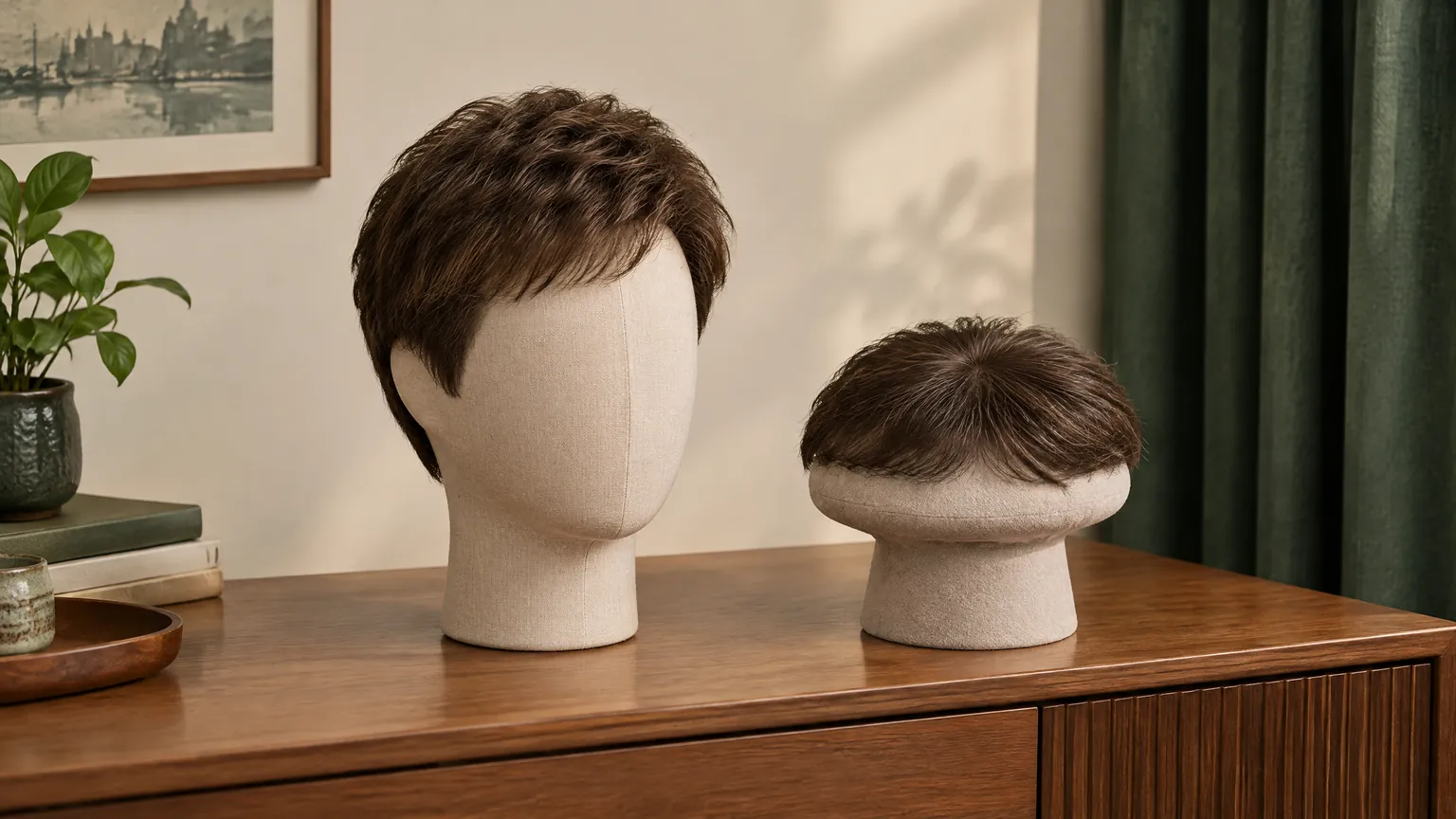
A photograph of a finished hairstyle can make the decision seem simple: choose the look, then find something that produces it. With a receding hairline, the more useful starting point is the join. Where will added hair begin? Where will the piece end? What will remain visible at the temples when you turn your head? Those questions determine what a consultation needs to resolve before the final cut.
This guide is about cosmetic coverage, not diagnosing recession or recommending treatment. GotGear and OWNSTRAND share ownership; the linked pages below are service-information resources, not independent endorsements. Product-specific suitability and any custom arrangement still need to be confirmed with the provider.
Separate the appearance decision from the cause of hair loss
A hair system adds hair over a chosen area; it does not create new growing hair or establish why the existing hairline has changed. The NHS notes that hair loss has different possible causes and recommends seeing a GP if you are concerned. It also advises seeking an understanding of the cause before considering a commercial hair clinic. That assessment is separate from choosing a cosmetic piece.1
The practical distinction matters at the appointment. You can explain that your aim is to reduce the visible depth of the temples, soften the front, or obtain a more consistent outline. None of those requests requires a salesperson to diagnose your scalp. If hair loss becomes suddenly noticeable, or you develop persistent irritation or pain, seek assessment from a qualified healthcare professional rather than trying to solve the problem with extra coverage.
Readers exploring non-surgical hair replacement Hong Kong can use the service information to frame questions about appearance coverage and fitting. Ask what the proposed service actually includes: discussion of the coverage area, measurement, a sample review, fitting or later adjustment. Do not assume that a general description of men's systems confirms every attachment method, custom option or ongoing service.
Draw the coverage boundary before choosing a hairstyle
Describe the area in ordinary language first: the central front, one or both temple corners, the front extending towards the top, or a wider area. A photograph of your current hair can help communicate this, provided you are comfortable sharing it. Do not rely on a tightly cropped picture that hides the side hair; the transition is part of the choice.
Ask to see where the proposed piece would end in relation to your remaining hair. A boundary placed within a dense-looking area raises different blending questions from one that meets visibly sparse hair. Rather than declaring either arrangement correct, ask the provider to explain the proposed outline and how it would be checked during fitting. If the area needing coverage changes later, establish whether the original outline can be reassessed.
Decide what the front should reveal
An exposed front and a fringe-covered front are different briefs. If you normally brush hair back, the edge itself becomes an important visual feature. If you prefer hair falling forwards, the finished shape may conceal more of that edge, but you should still understand what happens when the fringe moves or you restyle it.
Bring one reference for the overall cut and another for the front you want. Discuss the proposed height and temple shape while looking at your whole face, not just the forehead. A very low, straight line may be an aesthetic preference, but it should not be treated as the automatic definition of a convincing result. The useful question is whether the proposed outline fits your own appearance and usual styling choices.
Include the temples in the conversation
The central front can look settled while the corners remain unresolved. Ask how the design relates to the hair at each temple and whether the sides would need a particular length to support the intended blend. Make clear if you prefer closely cropped sides. Do not agree to that cut first and discover afterwards that the proposed design depended on more side hair.
There is no need to choose an outline from memory. Ask whether the provider can explain or demonstrate the proposed boundary before you commit, and clarify which parts of the decision remain provisional until an actual fitting.
Compare coverage shapes, not just product names
Terms such as hair system, toupee, topper and wig can appear together in catalogues. For selection purposes, concentrate on the area each proposed piece covers. A frontal piece intended for the hairline is not automatically interchangeable with a piece designed for the top of the head, and a full wig presents a different fitting question from local coverage.
The following comparison is a discussion aid, not a finding that a particular option suits you or is available from a particular supplier.
| Appearance option | Question it helps address | Important trade-off to discuss |
|---|---|---|
| Styling the existing hair without a piece | Can the current length or part create an outline you prefer? | The result depends on the hair already present and the way you style it. |
| Local frontal coverage | Is the front the main area you want to change? | The front edge and both temple transitions need specific attention. |
| A wider partial system | Does the appearance concern extend behind the hairline? | The larger outline must be considered alongside the remaining side and back hair. |
| A top-focused topper | Is visible thinning on top more important than the frontal edge? | Confirm whether the particular design addresses the front at all. |
| A full wig | Would you rather cover the whole hairstyle? | Overall fit and the wearing routine replace some partial-piece blending questions. |
When reviewing a men's hair system for receding hairline, focus on whether the described coverage corresponds to your own front and temple concerns. A useful enquiry describes the intended outline and everyday hairstyle, then asks which designs can actually be considered. A page about frontal coverage is not evidence that a particular model, material or installation method is currently offered.
Match the join before increasing density
More hair is not necessarily the most useful design instruction. Added hair that appears much fuller than the adjacent sides can create a transition you did not intend. Ask to compare the proposed fullness at the boundary with your remaining hair, then consider the overall volume. You can request a restrained appearance without assuming that every sample can be altered to provide it.
Colour should also be discussed across the whole hairstyle. Describe any grey at the sides, whether your front appears darker, and whether your existing hair has been coloured. Ask how colour and grey proportion would be selected and what opportunities there are to review them. A single online photograph should not be treated as confirmation of an exact match.
For a custom men's hair system, treat customisation as a set of questions rather than an unlimited promise. Ask which choices can be specified, how head measurements and hairline placement are recorded, whether samples can be viewed, and which fitting or finishing stages require your approval. Confirm the availability of the particular men's design before assuming that a broader hand-customisation description applies to it.
Texture and direction deserve their own discussion. If your sides have a wave, ask how the proposed top would be styled alongside them. If you want to change your part occasionally, establish whether that is practical for the design being considered. The cut should finish an agreed design, not conceal unanswered questions about the piece underneath.
Treat attachment as a separate decision
An attractive sample does not establish how it should be secured on your head. Ask the provider to name the proposed attachment method and explain where it would contact skin or existing hair. If clips, tape or adhesive are being discussed, check whether that method is supported for the particular piece; do not assume that a catalogue label confirms an installation service.
The American Academy of Dermatology warns that repeated pulling can damage hair and contribute to traction-related hair loss. Its guidance also identifies pain, stinging and crusts as reasons to change a stressful hairstyle or product arrangement.3 This is not a claim that every system causes such problems. It is a reason not to accept persistent pulling or discomfort as a necessary part of getting a secure appearance.
Ask how the piece comes off
Removal deserves as much attention as initial attachment. Establish who is expected to remove the piece, whether you would receive a demonstration, and which cleaning or removal products the provider specifies. Do not improvise with household solvents, pull at a resistant edge or adopt an online removal routine intended for a different product.
If a skin-contact product is proposed, ask for its identity, instructions and any required precautions. Tell the provider about relevant past reactions without feeling obliged to disclose unrelated medical history. Persistent irritation, pain or a worsening scalp problem needs professional healthcare advice, not repeated reattachment to hide it.
Build the wearing routine around an ordinary week
Think beyond the appointment hairstyle. Describe how often you exercise, whether you wear a cap, how you wash your hair, and whether you want to remove the piece at home. These details do not prove that a certain system will work; they tell the provider what its care and attachment instructions must address.
Do not assume a system can be worn for swimming, vigorous exercise or sleep simply because it can be fitted for normal daytime use. Ask separately about the proposed product and method. If wearing a helmet is part of your work or travel, the hair arrangement must not interfere with the helmet's required fit; raise this before settling on volume or placement.
Hypothetical example: A Hong Kong office worker has visible temple recession, keeps the sides short and usually wears a forward fringe. He also exercises after work and wants to handle removal himself. His first consultation should not begin with the fullest sample. It should establish whether frontal coverage can meet his short sides, how the fringe is expected to move, and whether the proposed attachment has a manageable home-care routine.
If he later decides he wants a brushed-back style, he should revisit the front-edge requirement rather than assume the original design will provide the same appearance. Likewise, if the provider's removal routine does not suit his week, he can reconsider the coverage approach. These are ordinary selection trade-offs, not evidence of a guaranteed outcome.
Use a consultation checklist that leaves a record
A useful consultation ends with an understandable proposal. You should know what has been agreed, what still needs a sample or fitting, and what is not included. Ask for the relevant details in writing so that an appealing conversation does not become the only record of the intended design.
- [ ] State the coverage area, including whether each temple is part of the brief.
- [ ] Choose whether the front is normally exposed or covered by a fringe.
- [ ] Confirm the side length needed for the proposed blend before changing your cut.
- [ ] Ask which colour, grey proportion, fullness and styling choices can be specified.
- [ ] Identify the proposed attachment, its contact areas and the removal routine.
- [ ] Clarify which review, fitting, adjustment and finishing steps are included.
- [ ] Ask what can still be changed before an order or irreversible trimming.
- [ ] Obtain product-specific care instructions and a contact route for fitting concerns.
If you share photographs, ask which views are actually needed and how they will be used. Images for a private design discussion should not be casually treated as permission for a public before-and-after post. You can communicate your hairstyle preferences without agreeing to promotional photography.
Keep the remaining hair in the care plan
The piece and your own hair may need different instructions. The AAD advises gentle washing and combing for thinning hair, limiting heat, and avoiding styles that pull tightly.2 Those recommendations concern existing hair; they are not a care manual for a synthetic fibre, a particular base or an attachment product. Ask for the correct instructions for each part of your arrangement.
Do not assume that bleaching, perming or straightening the remaining hair is required to create a blend. If a significant chemical change is proposed, discuss whether it is appropriate for your current hair and scalp rather than treating it as routine. Equally, an appearance label such as human hair or heat-resistant does not tell you how the complete system should be cleaned or styled.
During fitting, review the front and sides with the hairstyle you intend to wear. If permitted, make small ordinary head movements and put on your usual glasses. Look at the temple transitions as well as the top. Report pressure or pulling directly; a satisfactory appearance in the mirror is not a reason to overlook discomfort.
Before any final trimming, confirm that the hairline position, coverage outline and intended part have been understood. The best decision is not necessarily the most dramatic change. It is a clearly specified appearance option whose boundary, attachment and upkeep you understand well enough to accept—or decline—before the finishing work begins.

Common questions
Should I choose an exposed hairline or a fringe before choosing the system?
Make that preference part of the initial brief. A brushed-back style places more visual emphasis on the front edge, while a fringe changes how that edge is seen. Ask whether the proposed design supports your usual style and any realistic alternatives; do not assume a later cut can resolve every front-edge concern.
Will a frontal piece work if I keep the sides very short?
That needs an individual fitting discussion. Explain your preferred side length before agreeing to a design, and ask how the piece would meet the remaining hair at both temples. Do not cut the sides first if the proposed blend may require more length. A product category alone cannot establish suitability.
Does a custom system mean I can specify every feature and remove it myself?
No. Ask which design choices are actually offered and which attachment or removal routines the particular piece supports. Confirm what the provider will measure, demonstrate and adjust, and what you would manage at home. Customisation does not itself confirm availability, unrestricted styling, a home-removal method or a particular finished result.
Sources & what they support
The scope below identifies what each reference supports. Citations do not imply independent endorsement of OWNSTRAND or any provider, and do not establish treatment benefits or guaranteed results.
- NHS: Hair loss (opens in a new tab)
Hair loss can have different causes; people concerned about it should seek GP advice, and the NHS advises understanding the cause before considering a commercial hair clinic. Used to separate cosmetic coverage from medical assessment, not to support a product or treatment recommendation.
- American Academy of Dermatology: Hair loss tips for managing (opens in a new tab)
Thinning hair merits gentle washing and combing, reduced heat exposure and avoidance of tight pulling styles. These are existing-hair care principles, not instructions for cleaning or attaching a specific hair system.
- American Academy of Dermatology: Hairstyles that pull can lead to hair loss (opens in a new tab)
Repeated pulling can damage hair and cause traction-related hair loss; pain, stinging or crusts warrant changing a stressful styling or product arrangement. This supports caution about discomfort, not a claim that all hair systems cause hair loss.