Topper coverage and grey blend: record size and colour separately
GotGear and OWNSTRAND share the same owner. This collection is not an independent recommendation. GotGear does not supply wigs or medical treatment; actual wig services are provided by OWNSTRAND, whose only known studio is in Kwun Tong. These articles provide general information, not medical advice.
The short answer
Record a topper’s coverage and colour as two separate decisions. The coverage note should describe the area to conceal, front-to-back and side-to-side measurements, and proposed attachment positions. The colour note should describe the darker shade, the desired grey appearance and where lighter strands belong. Use photographs only for an explained purpose, with clear permission and limited access. A satisfactory colour sample does not confirm a suitable base, and a comfortable base does not confirm the right blend.
A useful topper record answers two different questions: where must the piece sit, and how should its hair blend with the hair left visible? Write those answers separately before comparing styles. Otherwise, a pleasing grey shade can distract from unsuitable coverage, while a well-positioned base can make an unresolved colour choice seem settled. Neither a photograph nor a colour percentage answers both questions.
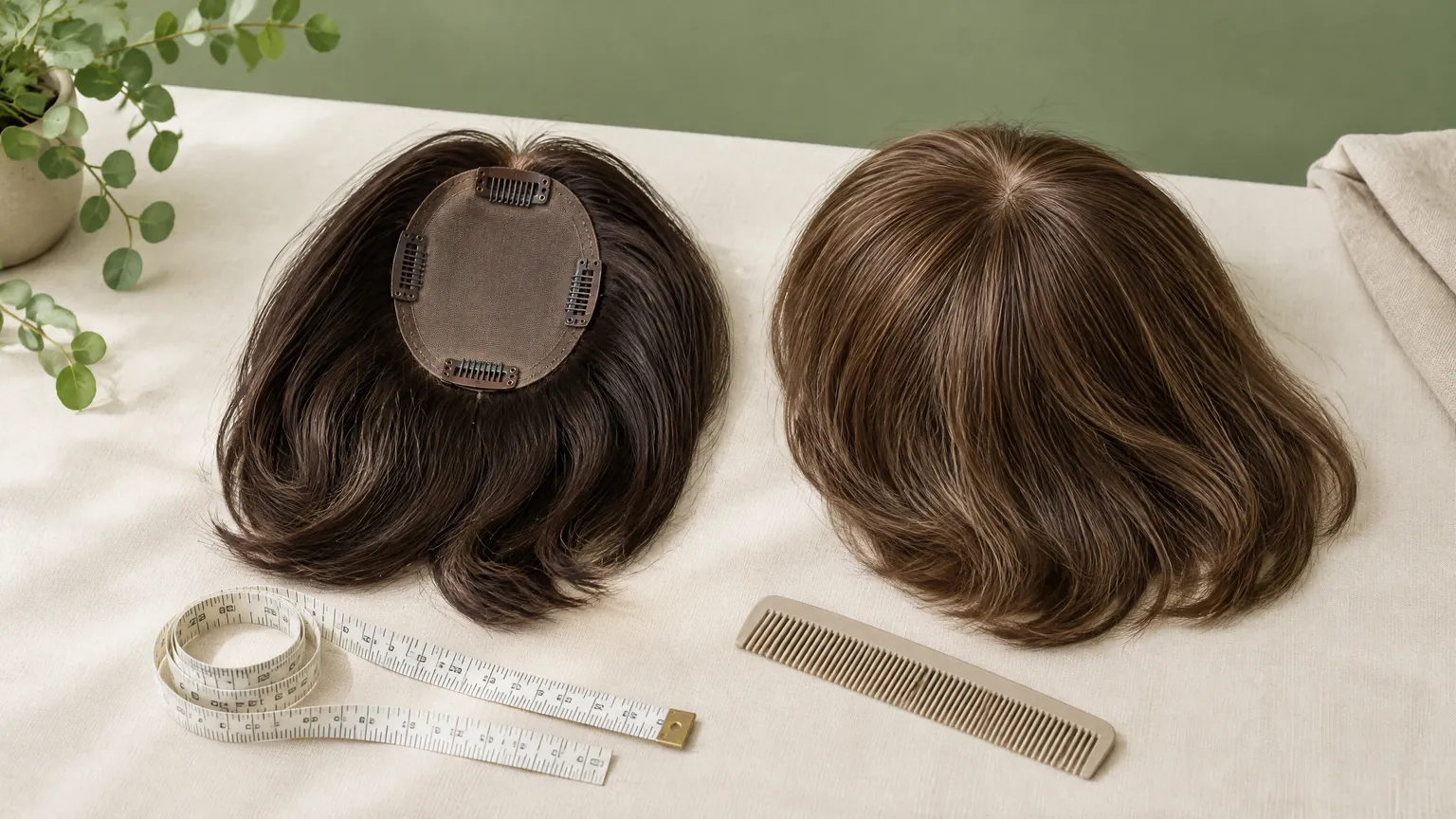
This matters especially when the part looks wider but the temples and sides remain visible. A localised hair topper covers part of the head; a full wig has a different coverage role. Decide which appearance you want to change without trying to diagnose why your hair has changed. Then make a coverage note and a colour note that can each be revised without overwriting the other.
Measure the coverage area, not the hairstyle
The first record should describe the area you want concealed in your usual hairstyle. Note whether that means the part, the crown, the front or a combination. Hair length is a separate detail: a long strand can fall beyond the base, but that does not tell you where the base ends or where its attachments sit. Keep finished hair length out of the measurement field.
Jon Renau’s topper guidance separates the area requiring coverage from front-to-back and side-to-side measurements. It also says that measurement endpoints should lie where there is sufficient hair to support clip attachment. These are useful manufacturer principles for discussing fit, not a diagnosis or proof that a particular topper will suit everyone. 1
For a structured explanation of hair topper base size, use the guide to prepare questions about coverage dimensions and attachment positions. Record the base’s width and length with their orientation and units. Ask how those dimensions relate to the area you want hidden, rather than assuming a familiar size label settles the fit.
Keep the measured area and proposed base distinct
Draw a simple outline of the coverage area, labelled front and back. Beside it, record the proposed base dimensions and where the clips would land. These are related measurements, but they are not interchangeable. The edge of the area you want concealed may not be an appropriate attachment point, and different base shapes can place their corners differently.
Jon Renau advises adding a margin to its coverage measurements for clips to attach outside the thinning area. Do not turn that instruction into a universal allowance for every construction. Ask the service provider to explain the margin and attachment layout for the actual piece under discussion. A numerical match alone does not establish that the surrounding hair can support it. 1
Check a widening part in its everyday position
A part is not simply a line viewed from above. Its position affects which hair remains visible along the topper’s edges and which areas need checking from the front or side. Make the first observation with the part arranged as you normally wear it, rather than with a temporary styling trick that you cannot comfortably repeat.
If your concern is a hair topper for widening part, use the coverage information to distinguish a part-focused enquiry from a broader crown enquiry. Describe what you want concealed and which existing hair you want to leave visible. That gives the consultation a clearer starting point than requesting the smallest piece or the fullest-looking sample.
During a proposed fitting, check whether the base remains within the intended area when you turn your head and arrange the hair normally. Ask to see the edges rather than judging only the finished front view. These are practical observations, not a guarantee against movement or a substitute for assessing the attachment method.
Record a regular habit that could change the assessment. Someone who usually tucks hair behind the ears should check the resulting side view. Someone who wears a side part on working days but a centre part at weekends should discuss both. Do not assume that a base or parting construction accommodates every arrangement; record what was actually discussed or demonstrated.
Describe grey distribution before choosing a percentage
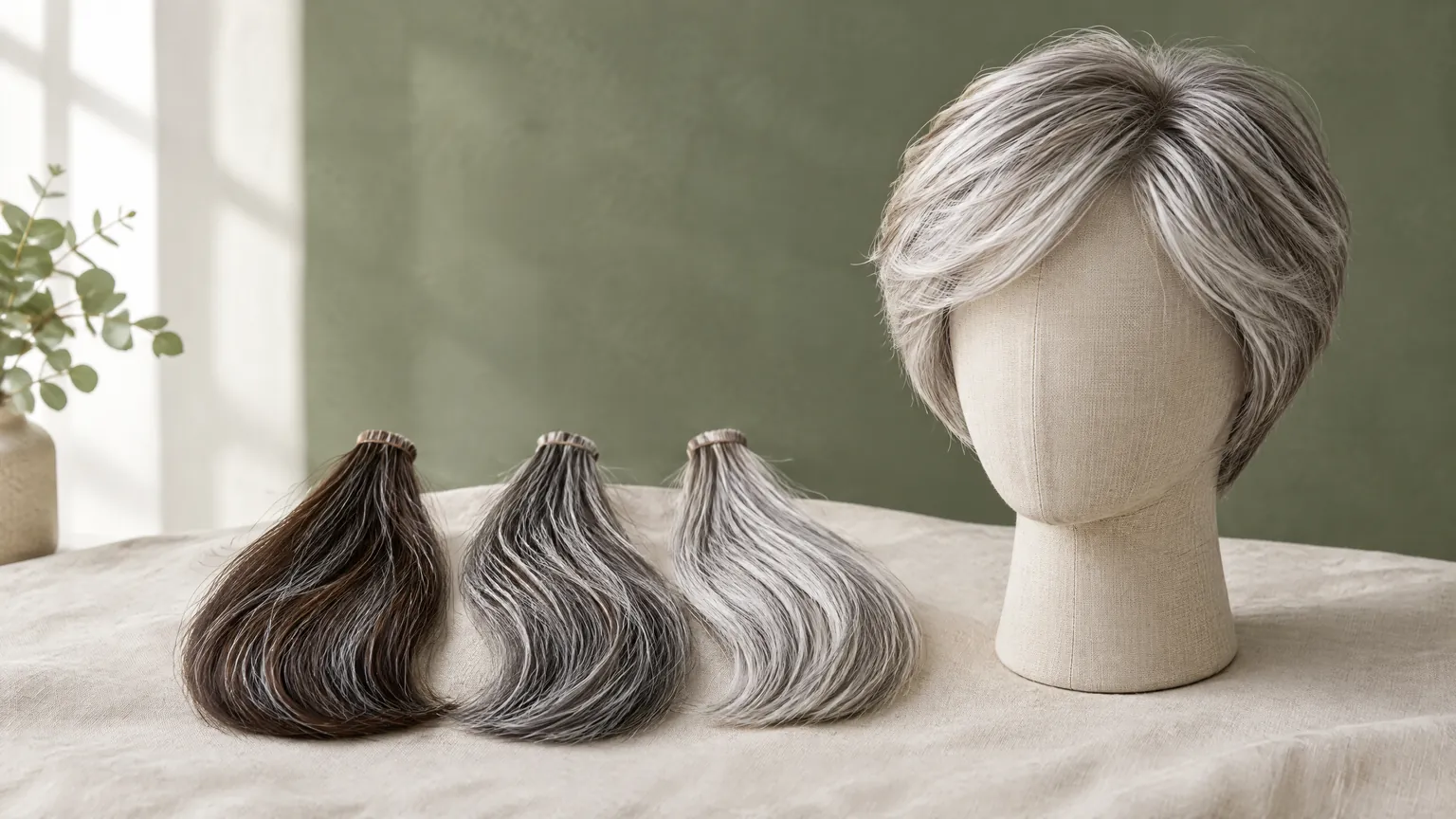
A note saying only ‘grey blend’ leaves too much undecided. Start with the darker component, then describe the lighter component and where each should appear. Useful descriptions include a darker crown with lighter temples, an evenly mixed salt-and-pepper appearance, or a lighter area around the face. They express an intended look without pretending to count individual hairs.
A percentage needs an agreed meaning. Ask whether it refers to the whole piece, a particular section or a sample blend. Also ask what the service provider means by grey: white strands mixed with a darker shade may look different from a pale silver shade. Do not convert a photograph into an exact percentage or assume that two providers interpret the same number identically.
An enquiry about a custom wig with a percentage of grey hair can help frame these questions about proportion and placement. Keep the product distinction explicit: that resource concerns a custom wig enquiry, so it does not establish that the same specification is offered for a localised topper. Confirm the scope before treating a preferred blend as an available option.
Keep a shade identifier with its supplier
Jon Renau’s colour-code guide distinguishes colour families and explains how a code can also describe blended shades and darker roots. Its worked example shows why one number or a general colour name may not describe the entire appearance. That guide explains its own system; it does not establish that another supplier uses equivalent codes. 2
Record a sample identifier with the supplier’s name and the description you agreed. If you compare another supplier’s sample, give it a separate entry instead of replacing the first code. Write ‘preferred reference’ until the provider confirms what can be made or supplied. This prevents an attractive sample from becoming an unintended promise about the finished piece.
Use a comparison record with separate approval fields
A small comparison table can keep an appointment focused without becoming a personal dossier. Its purpose is to show what has been observed, what remains undecided and what must be confirmed. The following fields can be used on paper or in a simple customer record; none requires a face photograph.
| Record field | What to write | What it does not confirm |
|---|---|---|
| Coverage area | Part, crown or front; labelled outline | Cause of hair change |
| Measured area | Front-to-back and side-to-side, with units | Final base dimensions |
| Proposed base | Dimensions, shape and attachment positions | Comfortable attachment on its own |
| Colour reference | Supplier, sample identifier and darker shade | An equivalent shade elsewhere |
| Grey distribution | Overall or section-specific preference | A precise percentage from a photo |
| Decision status | Accepted, rejected or awaiting confirmation | Permission to publish images |
Keep separate status fields for coverage and colour. ‘Coverage acceptable; colour undecided’ is more useful than ‘sample approved’. If a base is changed later, revisit its attachment positions without automatically changing the colour preference. If the grey blend is changed, retain the coverage measurements unless there is a reason to measure again.
Date the observations and identify the sample being discussed. A later haircut or a change in the usual part may alter what is visible around a topper. Treat the old record as a reference, not an instruction to repeat the same choice regardless of the current appearance. Avoid labelling a customer by a presumed condition when an ordinary coverage description would do.
Compare samples without treating photographs as measurements
A photograph can help communicate placement and distribution, but it cannot tell you how a clip feels or establish an exact grey proportion. Phone processing, lighting and screen settings can also complicate visual comparisons. Treat the image as a reference for discussion, not a calibrated colour measurement or a final acceptance test.
Where samples can be viewed, compare the darker shade beside the existing hair that will remain visible. Then examine the lighter strands at the intended boundary, such as the sides or hairline. Ask whether the sample represents the material and distribution being proposed; a small swatch should not silently stand in for every feature of a complete piece.
Keep the comparison reasonably consistent. Use the same part position and avoid comparing one sample under a bright spotlight with another in a dim corner. Record the viewing conditions briefly if they affected the decision. There is no need to photograph every rejected sample: a short note explaining ‘too light at the crown’ may preserve the useful information.
If the proposed service involves later trial fitting, adjustment or finishing, ask what can be reconsidered at each stage. Do not assume that a colour, base construction or cutting preference can be changed after every other decision has been made. Record unresolved questions before agreeing to the next step.
Explain photo use before taking or keeping an image
Hong Kong’s Privacy Commissioner explains that personal data should be collected for a lawful, directly related purpose and should be necessary, adequate and not excessive. People providing it should be informed about its use, whether supply is obligatory or voluntary, relevant classes of transferees, and access and correction arrangements. An identifiable customer image should therefore be handled as personal data rather than an informal styling souvenir. 3
For a fitting reference, explain the specific purpose before taking the photograph. Ask whether a labelled sketch and sample note would be enough. If a photo is helpful, discuss whether the face can be left out and whether unnecessary background details can be avoided. Reducing those details does not necessarily make an image anonymous, particularly when it remains linked to a customer record.
Separate fitting permission from publicity permission
Record permission for internal fitting reference separately from permission for advertising or social media. Agreeing to a consultation photo should not be presented as automatic permission for publication. The Commissioner states that using personal data for a new, unrelated purpose requires express and voluntary consent; consent previously given can be withdrawn by written notice. 3
A useful internal entry identifies the image, its explained purpose, the permission recorded and any restriction on use. If publicity is proposed, explain that purpose separately rather than adding it to a vague ‘photos allowed’ box. This is a proportionate workflow suggestion, not a complete legal compliance form. A shop must also address the privacy requirements relevant to its actual operations.
Keep only the personal record the fitting needs
Technical precision does not require collecting a detailed personal history. A coverage record can describe the visible area without storing a suspected diagnosis, unrelated medical information or reasons the customer does not wish to discuss. For most selection conversations, the useful information is the desired appearance, practical fitting observations and a way to contact the customer for the agreed purpose.
The Commissioner’s guidance requires practicable steps to maintain accuracy, avoid retaining data longer than necessary and protect it against unauthorised or accidental access, loss or use. It also describes rights of access and correction. Apply those principles to fitting images as well as written notes: decide who needs access, where records are held and when their continued retention will be reviewed. 3
Do not invent a standard retention period for every appointment. A shop should relate its policy to the actual purpose and applicable requirements. Avoid leaving identifiable pictures in a personal phone gallery or a shared folder that unrelated staff can browse. When a record is corrected, make the current preference clear so an outdated colour choice is not mistaken for approval.
Work through one ordinary fitting scenario
Consider a hypothetical customer who wants to conceal a wider centre part while keeping darker side hair and visibly grey temples. The initial record identifies the part-focused coverage area and separately describes the colour preference as ‘darker through the crown, lighter near the temples’. No exact grey percentage is inferred from the customer’s appearance.
A sample may have an appealing lighter blend but place its attachments in unsuitable positions. In this hypothetical case, the coverage decision remains unresolved even if the colour reference is retained. Conversely, a better-positioned base does not settle how light the crown should look. The two records allow the discussion to move forward without pretending that one successful comparison answered everything.
Before agreeing to the next step, use this checklist:
- Confirm the usual part position and the area to conceal.
- Label both measurements, their units and the proposed attachment positions.
- Record the sample supplier, identifier and preferred grey distribution.
- Clarify what any percentage refers to and whether it is a target or confirmed specification.
- Mark coverage and colour decisions separately, including unresolved questions.
- Agree the purpose of any photographs and whether they need to be retained.
- Ask how to update preferences or request access to the personal record.
If a proposed attachment pulls or hurts, stop the fitting rather than recording discomfort as an acceptable compromise. Persistent irritation, pain or sudden marked hair loss should be assessed by a qualified healthcare professional. A topper consultation concerns appearance and wearability; it is not a diagnosis or a treatment plan.
GotGear and OWNSTRAND share ownership, so the linked resources are related-site information, not independent recommendations. Keep the final discussion practical: which product type is being considered, what the proposed base covers, how the grey blend is described, and which details still need confirmation. A short, accurate record is more useful than a large folder of images with unclear permissions.
Common questions
Can I specify a grey percentage from a photograph of my current hair?
Use the photograph to explain where lighter and darker areas appear, not to calculate an exact proportion. Agree what a proposed percentage describes and compare an identified sample where possible. Keep the preferred crown and temple distribution in words as well, because a single overall figure leaves placement unresolved.
If the colour sample looks right, can I approve the topper at the same time?
Approve colour and coverage separately. A colour sample does not show whether the proposed base covers the intended area or whether its attachments suit the surrounding hair. Record the sample as a colour reference while leaving the base decision pending until dimensions, position and practical fitting observations have been discussed.
Does agreeing to a fitting photo mean the shop can post it online?
Do not treat those permissions as interchangeable. Ask the shop to explain and record the fitting purpose separately from any proposed publicity use. Hong Kong privacy principles restrict new, unrelated uses of personal data without express and voluntary consent. Also clarify access, retention and how you can request correction of your record.
Sources & what they support
The scope below identifies what each reference supports. Citations do not imply independent endorsement of OWNSTRAND or any provider, and do not establish treatment benefits or guaranteed results.
- Jon Renau: All About That Base (opens in a new tab)
Manufacturer guidance distinguishes coverage area, front-to-back and side-to-side measurements, and sufficiently supported clip positions; its additional measurement margin is not presented as a universal rule.
- Jon Renau: Color Codes 101 (opens in a new tab)
Manufacturer explanation of colour families, blended shades and rooted colour coding; supports recording supplier-specific colour references rather than treating codes as interchangeable.
- Hong Kong Privacy Commissioner: The Ordinance at a Glance (opens in a new tab)
Official explanation of necessary and non-excessive collection, collection notices, accuracy, retention, security, access and correction, and express voluntary consent for new unrelated uses of personal data.