
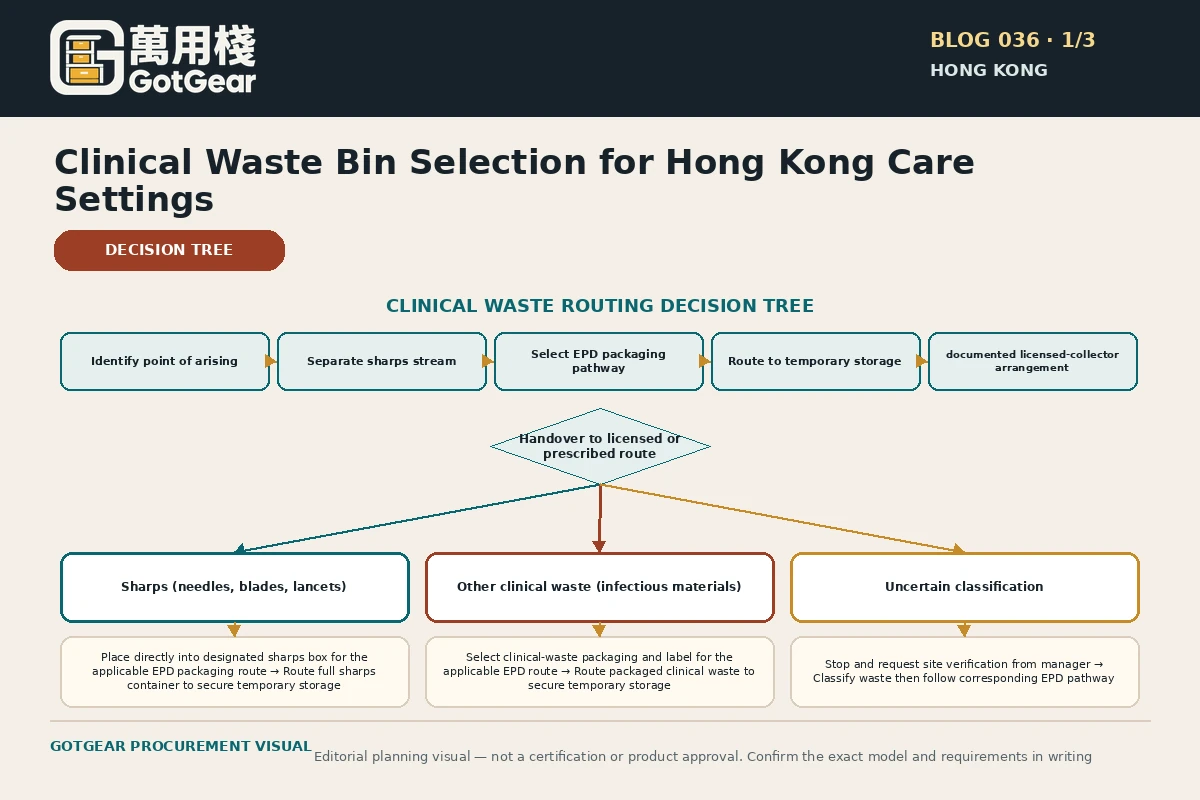
For Hong Kong care settings, identify the clinical-waste group at its point of arising and apply the EPD-prescribed packaging route: sharps in approved sharps boxes; other groups into their designated leak-proof bags or containers with the right colour-coding and sealing. Confirm the chosen container suits your producer responsibilities and the licensed collector’s acceptance; ensure storage, labelling and sealing meet EPD requirements. Do not substitute a general-purpose bin for required clinical packaging — that alone will not meet the Control Scheme obligations.
What to remember before you decide
- Select containers by clinical-waste group at the point of arising, not by colour or capacity alone.
- Sharps must go into dedicated sharps boxes that are puncture-resistant and sealable before transfer.
- Containers must meet EPD characteristics: leak-proof, moisture-impervious and sufficiently strong for one trip.
- Producer responsibility includes correct packaging, secure storage and verified licensed collection.
- Confirm collector acceptance in writing and trial the container through a full transfer cycle.
- Document procedures, train staff and audit usage to prevent non-compliant substitutions.
Start at the point of arising: identify waste groups
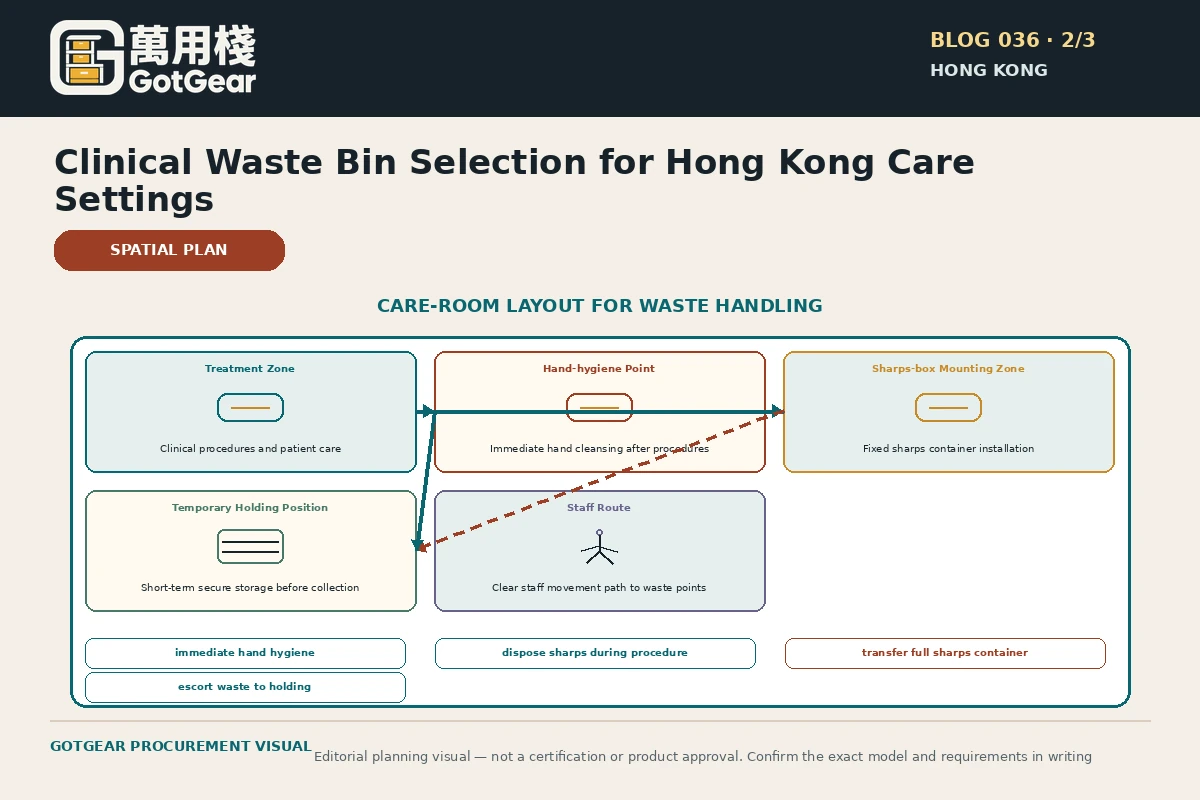
In Hong Kong, The Environmental Protection Department (EPD) requires segregation at the point of arising. In practice, small producers in Hong Kong — clinics, dental surgeries and care facilities — must be able to make the correct decision in the clinical area where the waste is generated, whether that is a treatment room, minor theatre or patient bay. Common groups encountered at point of care include used or contaminated sharps (Group 1) and other clinical wastes that fall into different bag-and-container arrangements. Use these decision checks: Train staff to classify waste by clinical group; place only the approved container type at each point of use; and ensure containers are clearly labelled and colour-coded as per the EPD pathway you follow. Practical limits: Space and workflow can make placement difficult in compact Hong Kong clinics; however, placing the correct container close to the procedure is essential to prevent cross-contamination and accidental sharps injuries. For example, a dental chair-side must have an approved sharps box within arm’s reach when sharps are used. Next, Run a short task-based audit to map what waste groups arise in each room, tag the group on the room plan, and install the matching point-of-use container. Update your local SOPs to require segregation at point of arising and inform the relevant team during the next shift handover.
Sharps-first: why a sharps box cannot be improvised
In Hong Kong, EPD guidance explicitly identifies sharps (used or contaminated needles, scalpels, broken glass, etc.) as requiring a sharps box. This is non-negotiable in practical operation: sharps boxes are rigid, leak-resistant, puncture-resistant and designed to close and seal before removal. Use these decision checks: Select a sharps box that matches the expected sharps types and frequency of use; ensure wall-mounted or freestanding holders keep the box secure and accessible without risk of tip-over; and verify your collector accepts the make and size. Practical limits: In small clinics the trade-off is capacity versus replacement frequency — oversized containers are less likely to be full frequently but may be awkward to site at the point of use; undersized boxes reduce dwell time but require more staff time to replace. Next, Specify sharps boxes by EPD-conforming characteristics, confirm collector acceptance in writing, and schedule box change protocols that prevent overfilling and ensure seal-before-transfer.
“Match container form to waste group and downstream acceptance — correct packaging plus verified collection is what makes a compliant clinical-waste system in Hong Kong.”— GotGear Editorial Team
What should buyers compare for clinical waste bin selection Hong Kong?
| Option or approach | Best for | Trade-offs | Checks before acceptance |
|---|---|---|---|
| EPD-specified sharps box with wall mount | Settings with frequent sharps use (dental, minor procedures). | Higher change frequency in busy clinics; requires mounting and safe replacement routine. | Confirm puncture resistance, closability and collector acceptance; run fill-rate trial for eight clinic days. |
| EPD-coloured clinical waste bags in rigid liner bins | Facilities generating mixed soft infectious waste that needs protected bulk storage. | Requires correct bag selection and sealing prior to removal; liners increase handling steps. | Match bag type to EPD group, document sealing procedure and verify collector will accept bag-in-liner transfers. |
| Dedicated sealed rigid containers for high-moisture waste | Units producing wet or highly contaminated waste that could leak in transit. | Heavier and bulkier to store and move; must meet one-trip strength and be sealed before transfer. | Inspect seals and structural integrity, confirm collector acceptance and perform a leak test under normal handling. |
| Centralised room with labelled intermediate storage for small producers | Small clinics consolidating waste to a secure location pending licensed pickup. | Requires secure, ventilated space and clear labelling; transport from point-of-care increases handling steps. | Document chain-of-custody, ensure storage meets EPD recommendations and confirm pickup schedule with licensed collector. |
| General-purpose municipal bin (not compliant for clinical waste) | Non-clinical municipal refuse only; not suitable for clinical waste. | Does not meet EPD packaging or routing; risks non-compliance and contamination. | Do not use; if observed in process mapping, replace with correct EPD-conforming packaging and retrain staff. |
This framework helps buyers create comparable written enquiries. Final model specifications, availability, delivery and commercial terms must be confirmed in a formal quotation.
Match EPD packaging, sealing and colour-routing
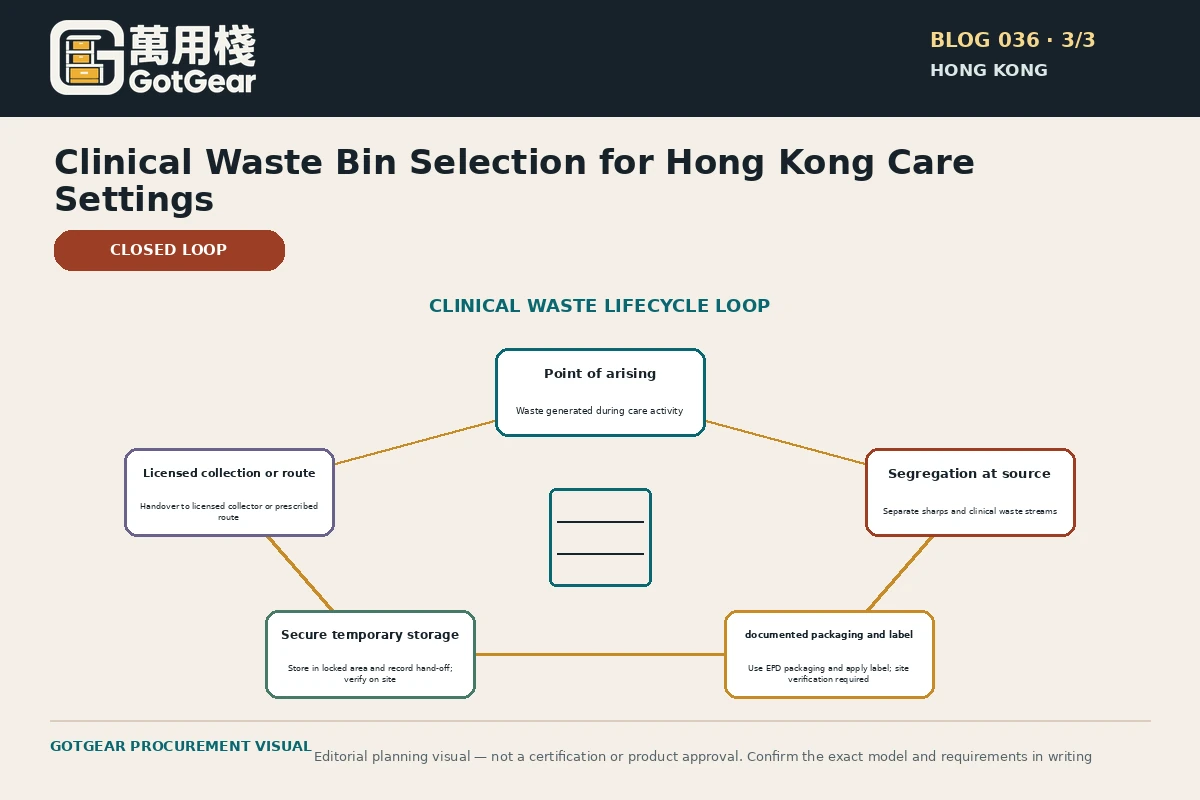
In Hong Kong, The EPD sets packaging characteristics — leak-proof, moisture-impervious and strong enough for one trip — and colour/routing pathways for different groups. A compliant clinical-waste container strategy is about packaging and the downstream pathway, not colour or capacity alone. Use these decision checks: For each waste group, select packaging type (sharps box, labelled bag, rigid container) that meets leak-proof and strength expectations; confirm how the item will be sealed and labelled before it leaves producer premises; and verify the licensed collection or prescribed alternative accepts that container and labelling. Practical limits: Some licensed collectors apply their own acceptance criteria within the Control Scheme; a container that meets EPD characteristics may still be refused if not compatible with the collector’s handling systems. Also, EPD expects containers to be sealed before removal, which can complicate on-premises buffering during busy days. Next, Obtain written acceptance from your chosen licensed collector for each container type and size, update procurement specifications to require EPD-conforming packaging, and trial the container through a mock transfer to the storage point so staff can practice sealing and labelling before pickup.
Producer duty, storage and licensed collection — compliance depends on process
In Hong Kong, Under the Clinical Waste Control Scheme the producer — the healthcare facility generating the waste — remains responsible for correct handling, storage, labelling and delivery to a collection point or licensed disposal process. Container selection alone does not discharge that duty. Use these decision checks: Ensure you have a documented chain-of-custody process, secure storage pending collection that prevents leakage or scavenging, and proof the collector is licensed or the prescribed pathway is in place. Practical limits: Small producers may rely on third-party collectors; you must confirm they are licensed under the Scheme and able to accept your container form and sealing method. Where space is constrained, you may need dedicated compact storage that meets EPD storage safety recommendations. Next, Verify the collector’s licence and acceptance criteria, document your handover and receipt procedures, and add container compatibility checks to procurement acceptance testing so incoming boxes and bags match both EPD expectations and the collector’s handling equipment.
Clinical waste bin selection Hong Kong decision checklist
- Map every room to the clinical-waste groups that arise there and list required container types.
- Confirm sharps boxes are available at each point of use where sharps are generated and wall-mounted where practical.
- Check each container type meets EPD characteristics (leak-proof, moisture-impervious, sufficient strength).
- Obtain written confirmation from your licensed collector that they accept your selected container make, size and sealing method.
- Ensure labelling and colour-routing match the EPD-specified packaging pathway for each group.
- Design documented procedures for sealing containers before they leave producer premises and train staff.
- Allocate secure, ventilated storage that prevents access by unauthorised persons and documents chain-of-custody.
- Run a practical trial cycle (fill, seal, transfer to storage, handover to collector) before full deployment.
- Include container compatibility checks in procurement acceptance testing and supplier agreements.
- Schedule regular audits to ensure containers are used correctly and overfilling or substitution does not occur.
Practical action sequence
- Audit current waste streams by room to identify waste groups at point of arising.
- List compatible container types required per room and quantify realistic change frequencies.
- Request written acceptance from your licensed collector for each proposed container type and size.
- Procure EPD-conforming sharps boxes and bags, specifying sealing and labelling requirements.
- Install point-of-use holders and signpost containers with group-specific instructions and colouring.
- Train staff in segregation, sealing, labelling and handover procedures; run a mock transfer.
- Document the storage location and chain-of-custody steps, and integrate collector pickup times.
- Audit after one month and adjust container sizes, locations or change frequency as needed.
Apply the checks to your Hong Kong site
Hong Kong’s Control Scheme and EPD guidance set clear operational expectations: segregation at source, one‑trip leak‑proof packaging characteristics, use of sharps boxes for Group 1 items, and producer responsibility for collection arrangements. Local constraints — limited clinical space, high patient throughput and varying collector acceptance rules — mean container choice must follow packaging pathway and collection arrangements rather than capacity or colour alone. When undertaking clinical waste bin selection Hong Kong, document the waste group, intended packaging route and the collector’s written acceptance before site roll‑out. Ensure decisions align with clinical waste container requirements Hong Kong and that SOPs state who seals, labels and records each package. Specify a healthcare sharps waste bin Hong Kong only where Group 1 sharps are handled and validate placement with a short on‑site trial. Operational takeaway: map every care area to its waste group, confirm collector acceptance in writing, then update and train staff on the site‑specific SOPs before deployment.
References used for this article
These sources provide regulatory, safety or planning context. They do not certify any GotGear product or replace site-specific professional advice.
- EPD: Segregation, Packaging and Labelling of Clinical Waste for Small Producers — EPD container, colour-coding, sealing and labelling guidance for clinical-waste groups, including sharps.
- EPD: Clinical Waste Control Scheme — Producer responsibilities, licensed collection and the clinical-waste control framework in Hong Kong.
- EPD: Codes of Practice for the Management of Clinical Waste — Official code-of-practice entry point for small and major clinical-waste producers.
Questions about clinical waste bin selection Hong Kong
Do I have to use a designated sharps box for used needles and scalpels?
Yes. The EPD specifically requires a sharps box for used or contaminated sharps (Group 1). Sharps boxes are rigid, puncture-resistant containers designed to be closable and sealable before removal. Using an improvised receptacle or a general-purpose bin for sharps risks injury and will not meet the EPD’s packaging expectations. Ensure the box type you select is suitable for the sharps you generate, wall-mounted or secured at point of use, and accepted by your licensed collector.
Can I use a standard clinical bin with a coloured lid instead of EPD-specified bags or containers?
No. Colour alone does not satisfy the EPD’s requirements. The Control Scheme focuses on the correct packaging pathway — for example, some waste groups require leak-proof bags of a specified type while others require rigid containers or sharps boxes. A general-purpose bin, even if colour-coded, is not a substitute for the correct packaging, sealing and labelling steps required before transfer and collection.
Who is responsible for ensuring containers are compliant and collected?
The producer (the facility that generates the waste) retains responsibility for correct segregation, packaging, storage and delivery to a collection point or licensed disposal process under the Clinical Waste Control Scheme. This means you must choose compliant containers, seal and label them properly, store them securely, and verify the collector is licensed and accepts your container types. Container selection is necessary but not sufficient; documented processes and proof of licensed collection complete the duty.
How do I choose container capacity for busy Hong Kong clinics with limited space?
Balance capacity against replacement frequency and point-of-use accessibility. In compact spaces prioritise smaller, handier containers at the point of use to prevent movement and accidental contamination; schedule more frequent change-outs. For bulk storage areas choose rigid liners or larger sealed containers that meet EPD one-trip strength requirements. Run a short trial to measure fill rates over several clinic days to inform capacity and procurement decisions.
What must be done before a clinical-waste container leaves my premises?
Before leaving producer premises containers should be sealed, labelled and recorded according to your internal chain-of-custody. The EPD guidance highlights that containers must be leak-proof and sealed prior to transfer. You should also ensure the licensed collector’s acceptance is documented and that storage pending pickup prevents unauthorised access or leakage. Maintain handover documentation or receipts where possible to prove compliance with the Control Scheme.
What practical checks should I do with a new licensed collector regarding containers?
Ask for written confirmation of the collector’s acceptance criteria (container types, sizes, and sealing method), inspect their handling equipment compatibility, and request proof of licence under the Clinical Waste Control Scheme. Conduct a mock pickup with your sealed containers so both teams can test handling, transfer and documentation. Document the agreement and integrate any container adjustments into procurement specifications.
Compare available product models and specifications
These product cards are matched to this buying topic. Select a specification and quantity to send the product details to WhatsApp.
 Cleaning & Waste ManagementProduct reference image
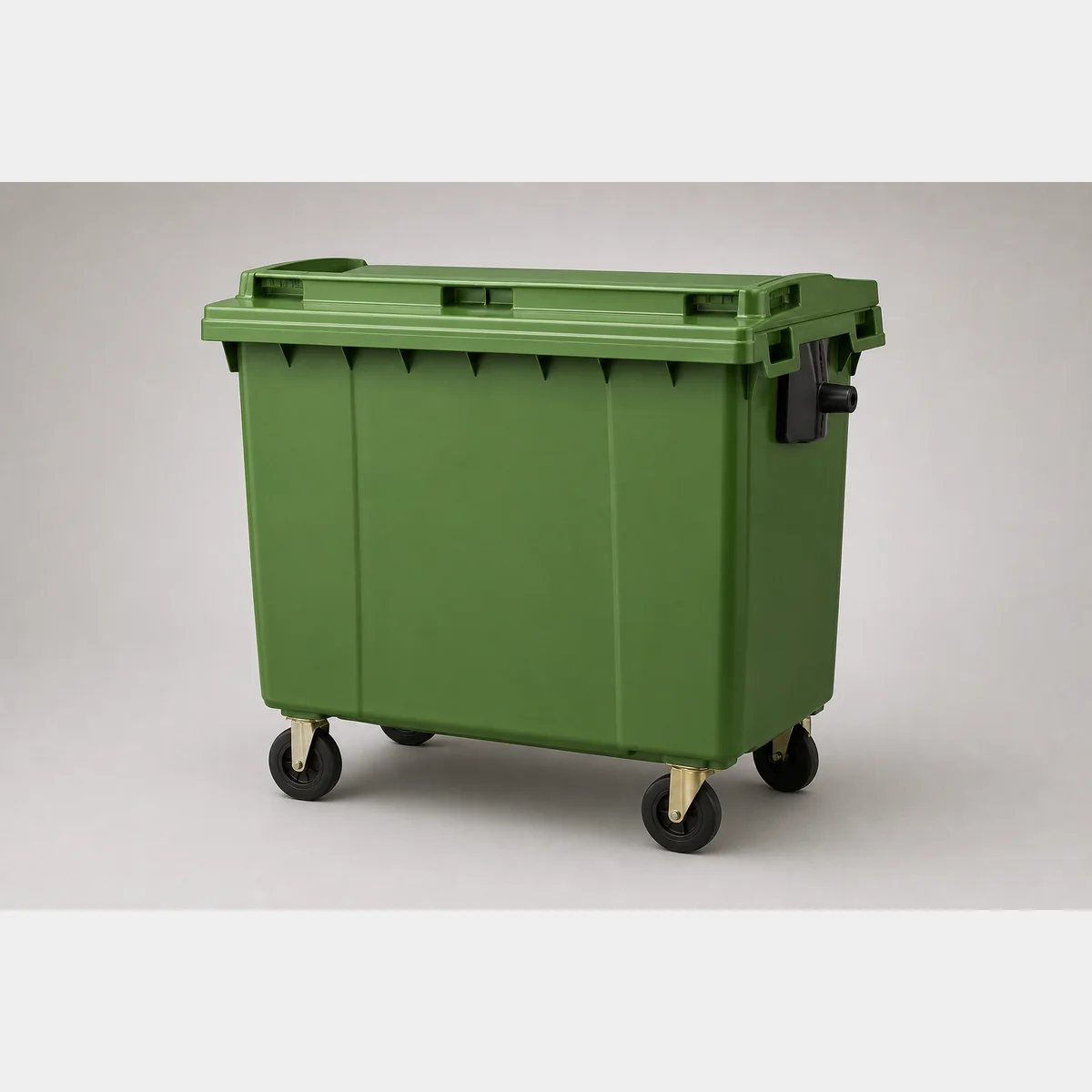
660 L Pedal-operated Mobile Waste Bin
Pedal-operated 660 L mobile waste bin, approximately L1410 x W785 x H1230 mm.
- Capacity
- 660 L
- Dimensions
- L1410 x W785 x H1230 mm
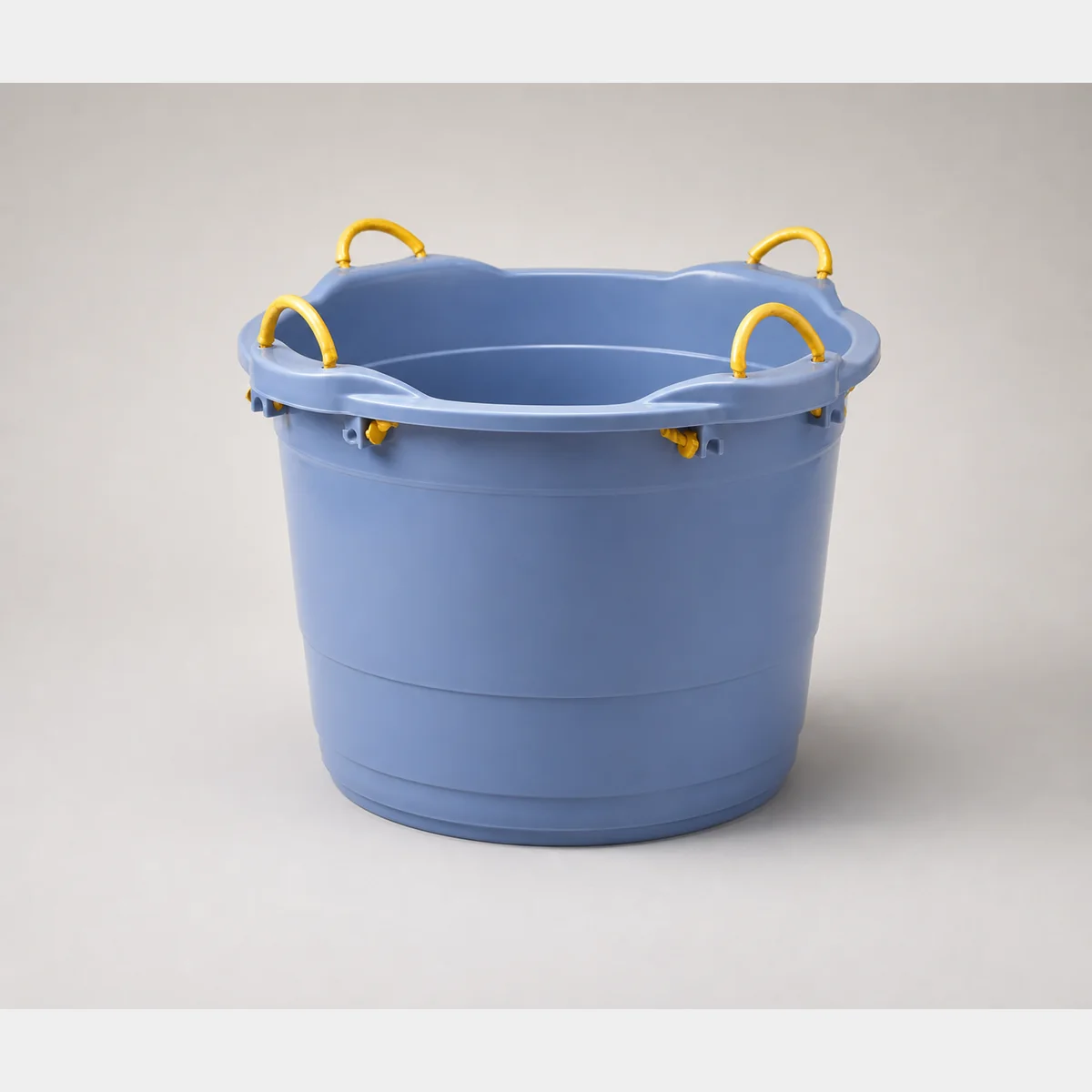 Cleaning & Waste ManagementProduct reference image
Bucket
Bucket, Capacity: 76 L; Size: dia.640*H450(mm); Minimum order quantity: 1 unit. A formal quotation is available upon request based on use, specifications and quantity.
- Capacity
- 76 L
- Size
- dia.640*H450(mm)
- Minimum order quantity
- 1 unit
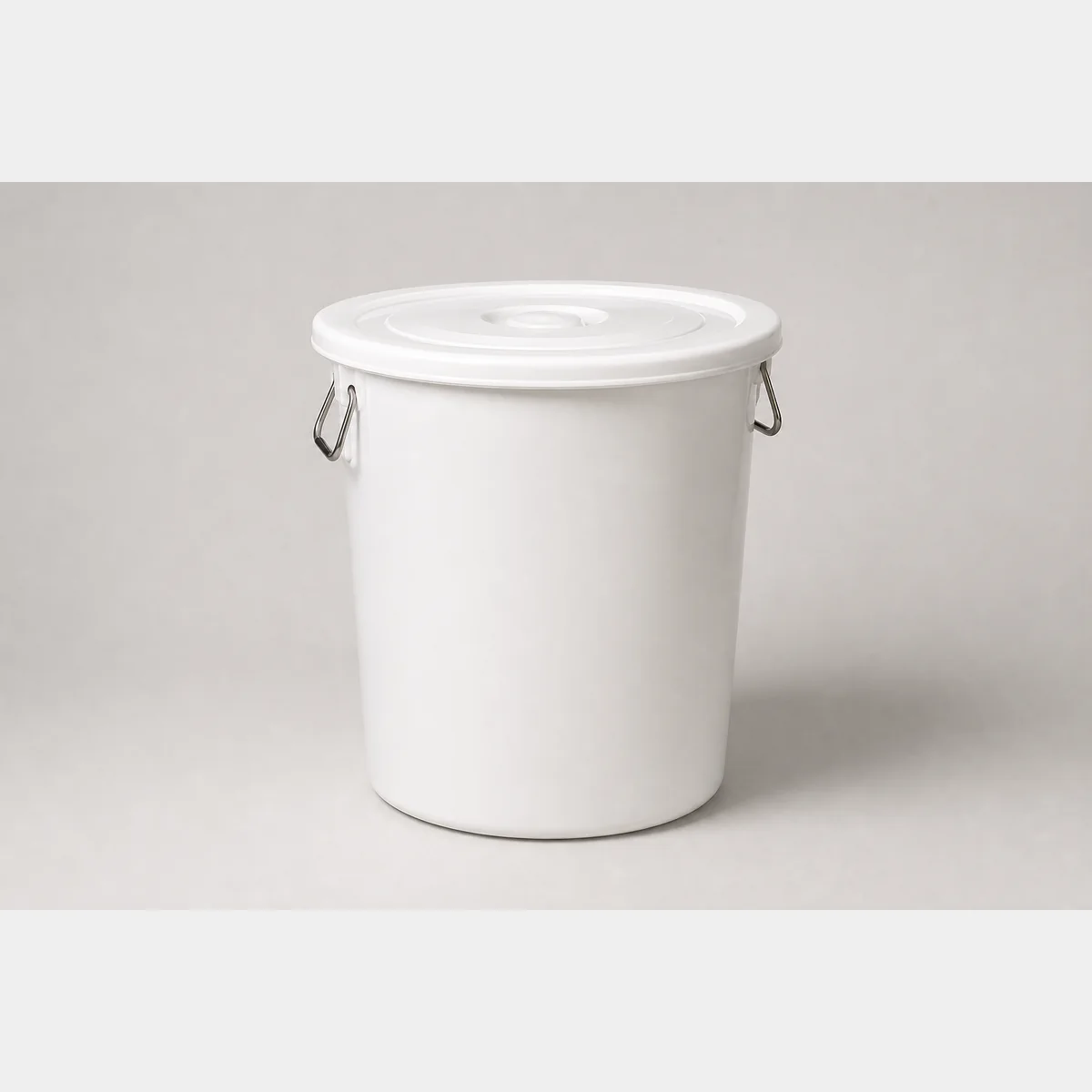 Cleaning & Waste ManagementProduct reference image
Bucket
Bucket — 35L: 400xH410 mm; 57L: 445xH530 mm; 85L: 500xH620 mm. Formal quotation available on request based on use, specifications and quantity.
- 35L
- 400xH410 mm
- 57L
- 445xH530 mm
- 85L
- 500xH620 mm
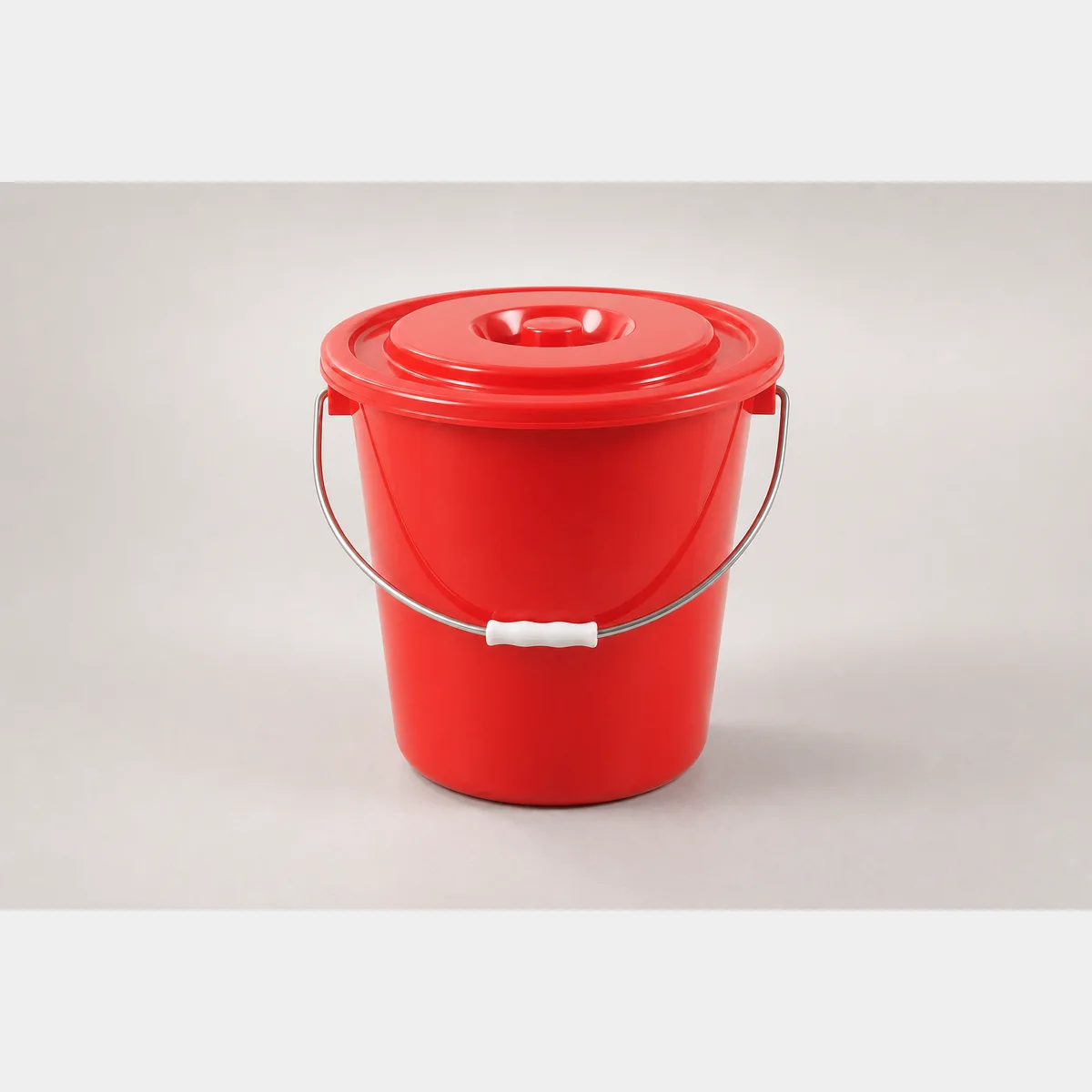 Cleaning & Waste ManagementProduct reference image
Bucket
Lidded and unlidded 30 L and 22 L bucket range. Minimum quantity: 5 sets. The 30 L model width requires written confirmation because source records conflict between 395 mm and 400 mm.
- 30 L models
- Lidded 280/280-1 / Unlidded 280
- 30 L dimensions
- Minimum L410xW395xH380 mm / Maximum L410xW395xH595 mm
- 22 L models
- Lidded 260/260-1 / Unlidded 260
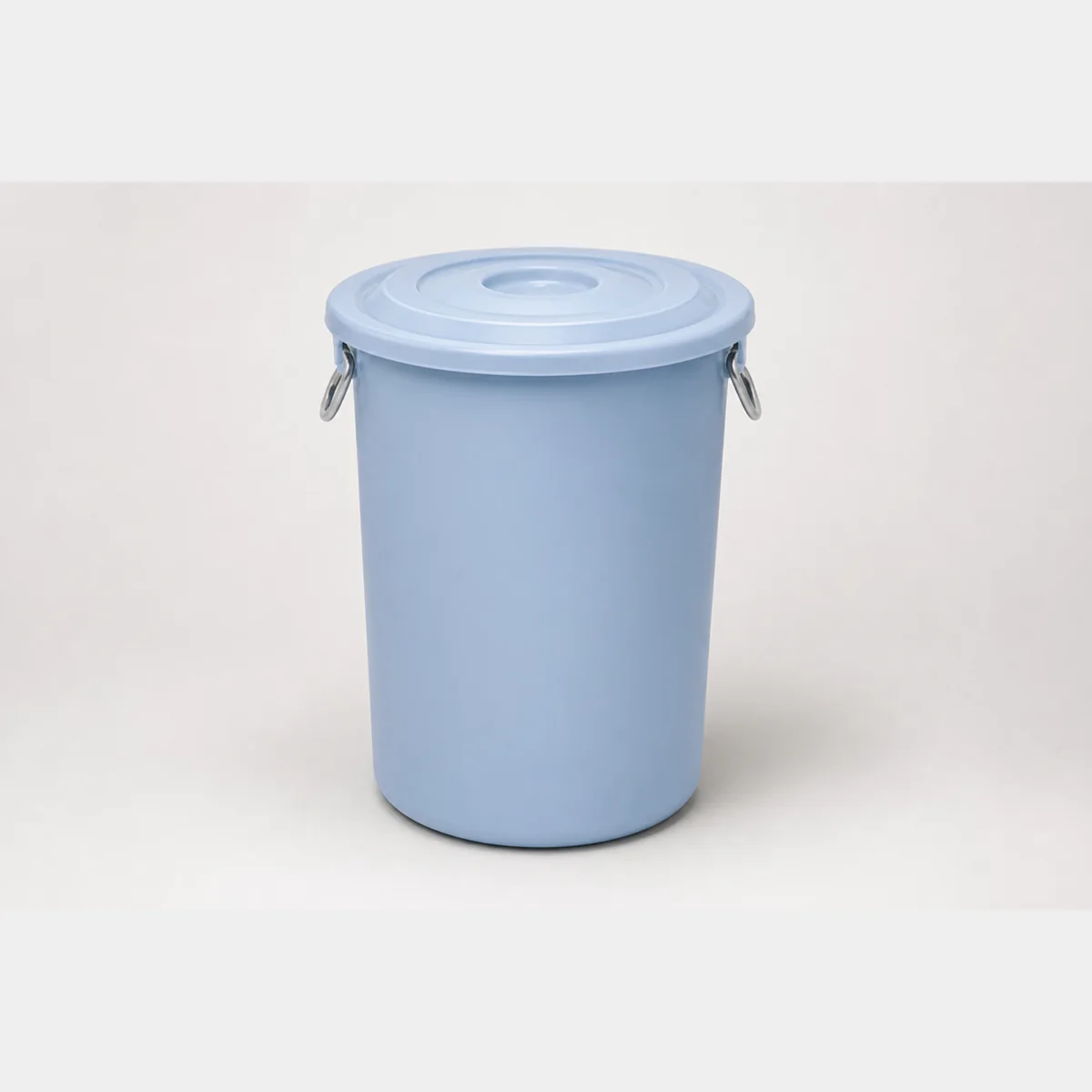 Cleaning & Waste ManagementProduct reference image
Bucket / Trash Bin
Bucket / Trash Bin, Item No. 2212 (bucket) & 2212-1 (lid) (Capacity: 47 L); Dimensions: dia.410*H615 (mm) / dia.457*H615 (mm); Bucket only (without lid): dia. 400 x 580 (mm) / dia. 445 x 578 (mm). Formal quotation available upon request based on use, specifications and quantity.
- Item No. 2212 (bucket) & 2212-1 (lid) (Capacity)
- 47 L
- Dimensions
- dia.410*H615 (mm) / dia.457*H615 (mm)
- Bucket only (without lid)
- dia. 400 x 580 (mm) / dia. 445 x 578 (mm)
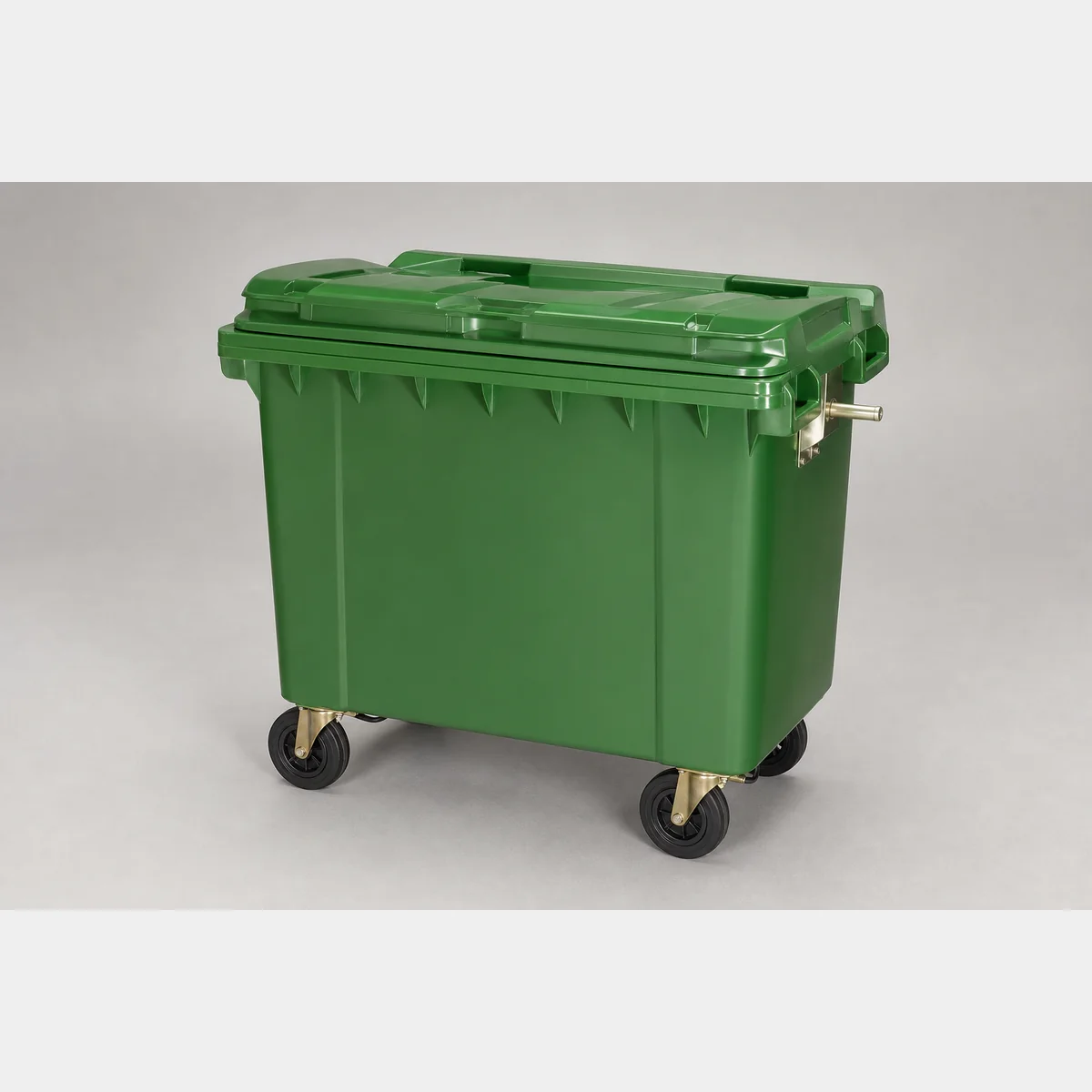 Cleaning & Waste ManagementProduct reference image
Eco-friendly Large Trash Bin (JB037)
660L Eco-friendly large trash bin. Dimensions/Specification line: L1420xW800xH1230 mm; Colours: Red, Grey, Blue, Green, Yellow; Use: Suitable for food waste, recyclables. Formal quotation available on request according to use, specification and quantity.
- Dimensions/Specification
- L1420xW800xH1230 mm
- Colours
- Red, Grey, Blue, Green, Yellow
- Use
- Suitable for food waste, recyclables
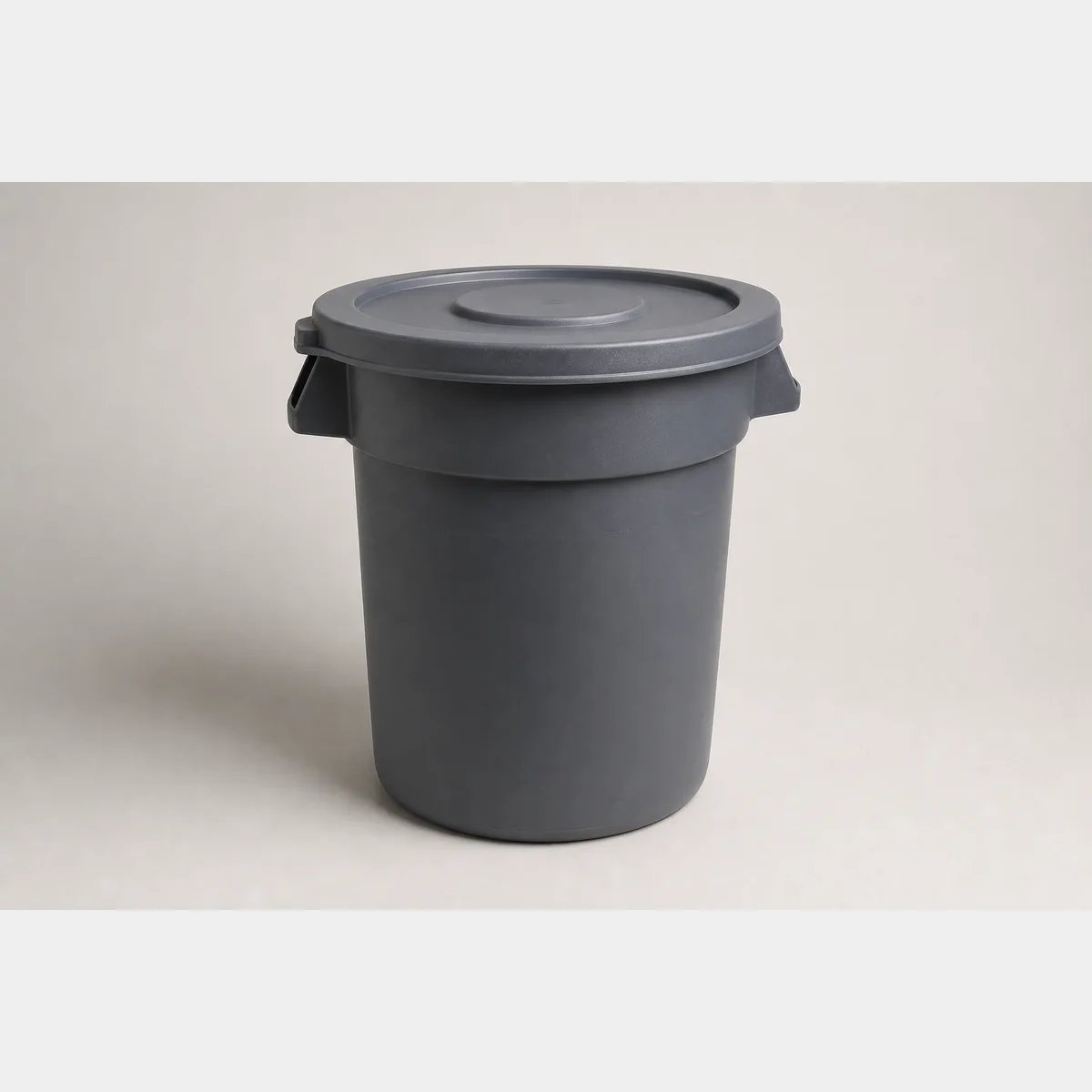 Cleaning & Waste ManagementProduct reference image
Flat-lid Trash Bin
Flat-lid Trash Bin; Capacity: 76L / 37L; Product dimensions: ø50XH58 cm / ø40XH43 cm; Minimum order quantity: 1 unit. Formal quotation available on request based on intended use, specifications and quantity.
- Capacity
- 76L / 37L
- Product dimensions
- ø50XH58 cm / ø40XH43 cm
- Minimum order quantity
- 1 unit
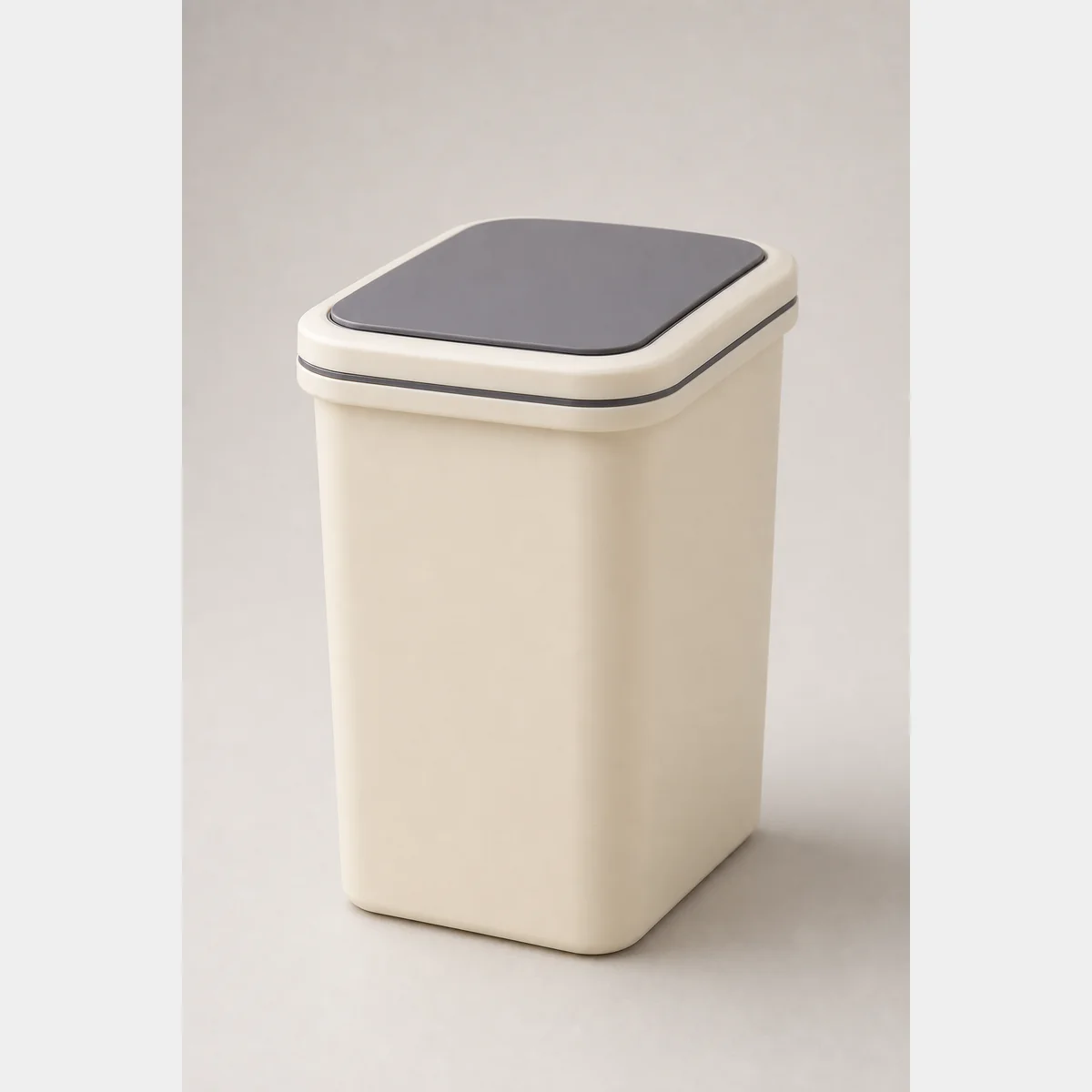 Cleaning & Waste ManagementProduct reference image
Flip-top bin (JB010)
Flip-top bin, 6L: L233xW160xH264 mm; 10L: L266xW176xH336 mm; 15L: L306xW198xH378 mm. Formal quotation available upon request according to intended use, specifications and quantity.
- 6L
- L233xW160xH264 mm
- 10L
- L266xW176xH336 mm
- 15L
- L306xW198xH378 mm
Continue with closely related procurement topics
These pages share equipment, operating or decision-stage signals with this guide.
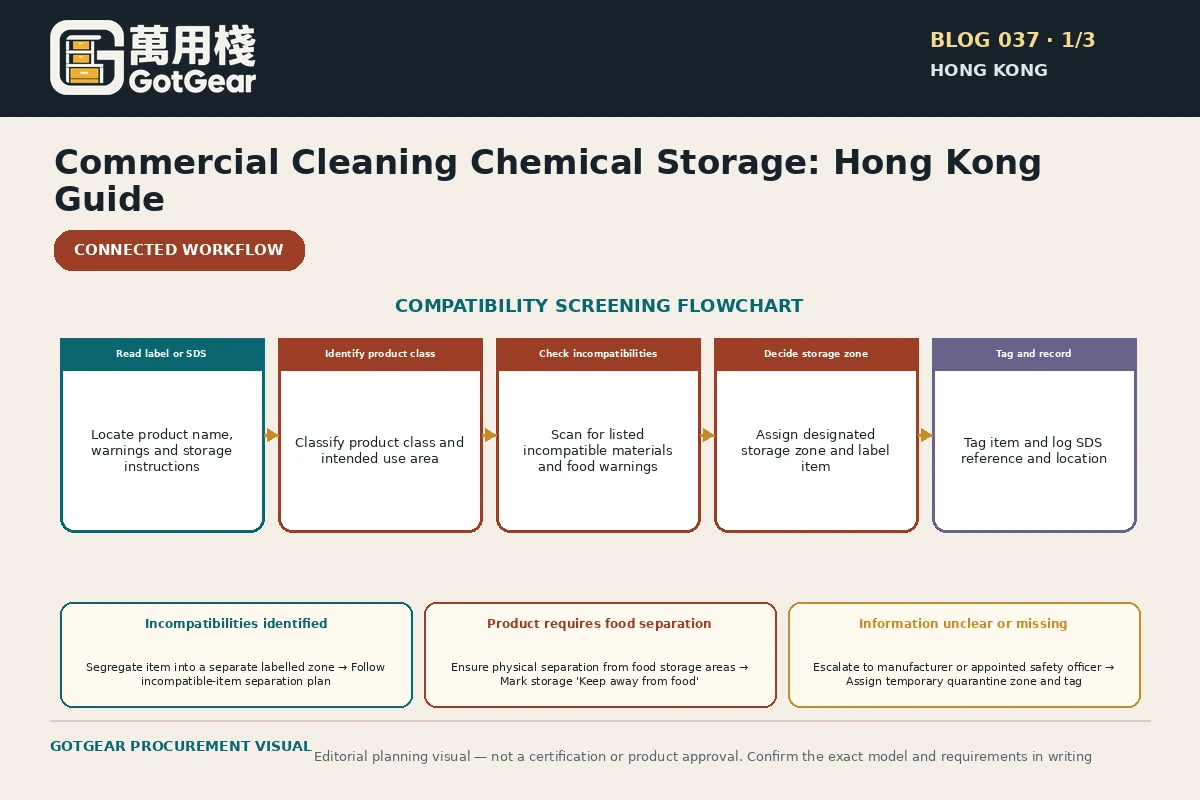
Commercial cleaning chemical storage Hong Kong
GotGear explains commercial cleaning chemical storage Hong Kong for Hong Kong buyers. See how cleaning chemical segregation guide Hong Kong supports janitorial chemical storage cabinet Hong Kong, with practical checks, evidence boundaries and written requirements.
Read the guide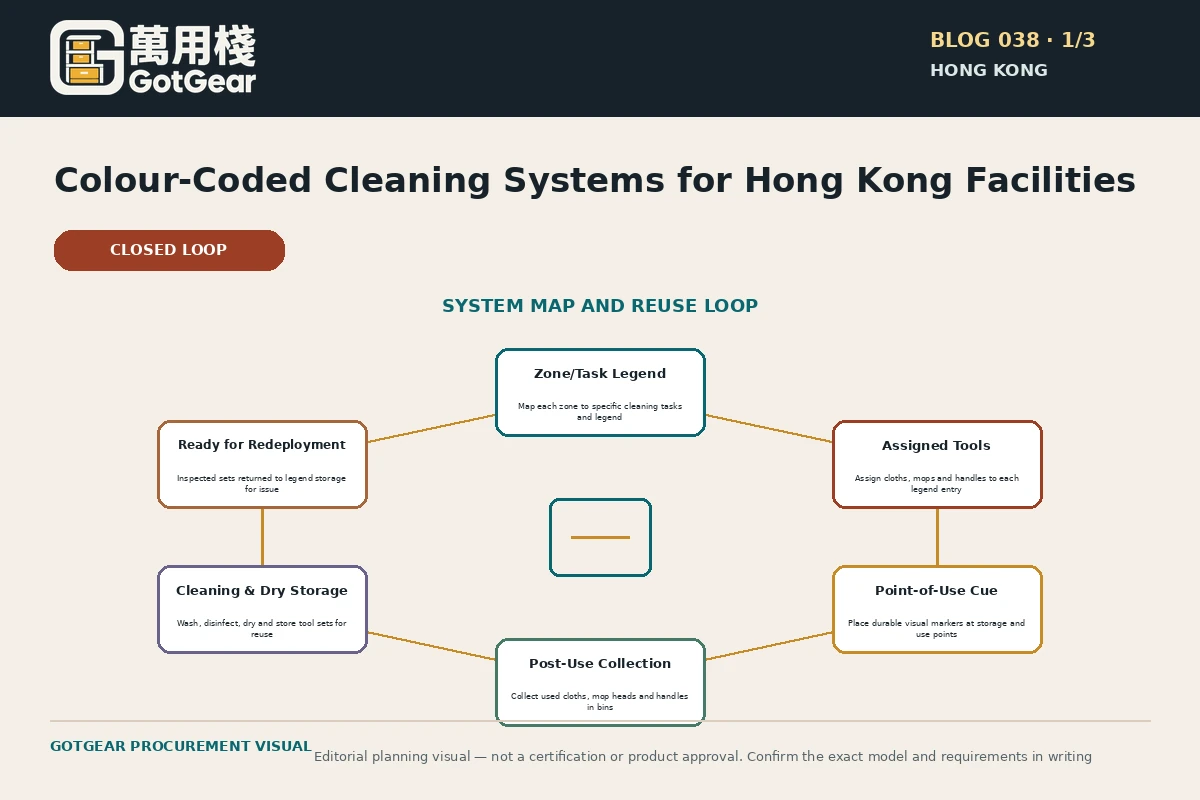
Colour coded cleaning system Hong Kong
GotGear explains colour coded cleaning system Hong Kong for Hong Kong buyers. See how colour coded cleaning cloths Hong Kong supports colour coded mop system Hong Kong, with practical checks, evidence boundaries and written requirements.
Read the guide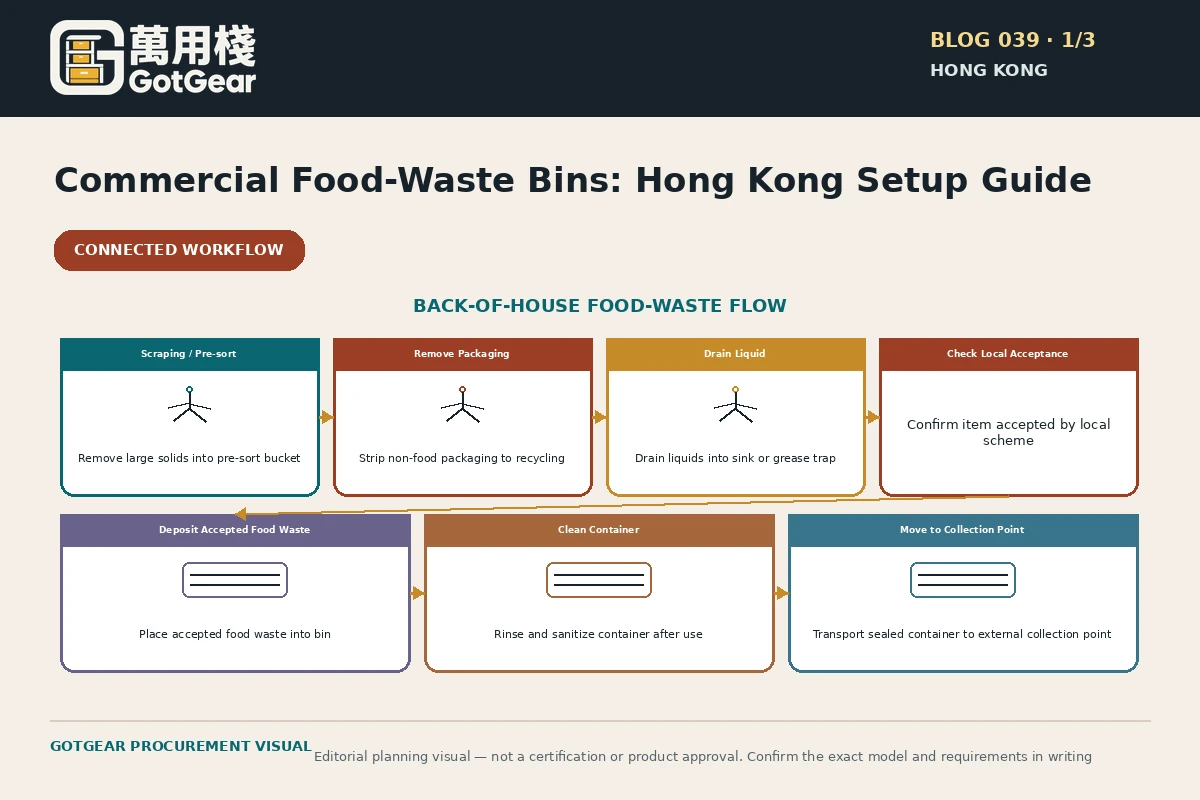
Commercial food waste bin selection Hong Kong
GotGear explains commercial food waste bin selection Hong Kong for Hong Kong buyers. See how restaurant food waste container Hong Kong supports food waste collection point design Hong Kong, with practical checks, evidence boundaries and written requirements.
Read the guide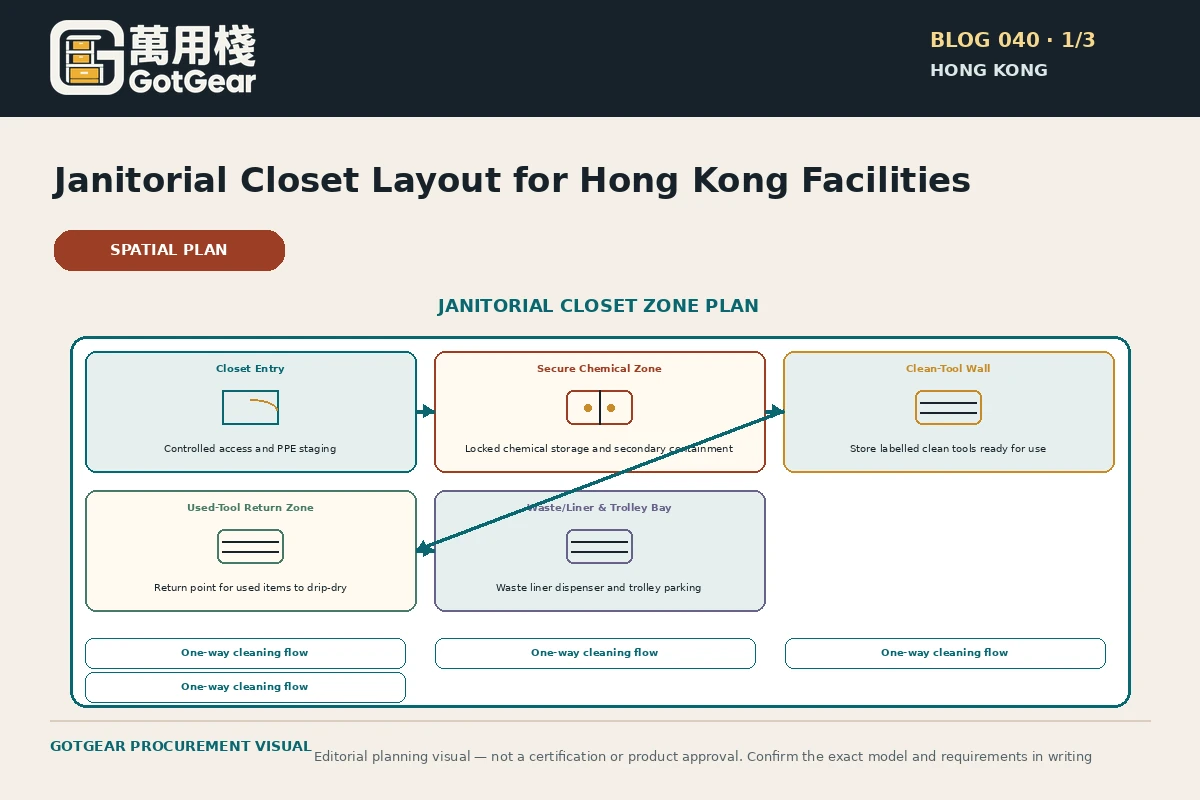
Janitorial closet layout Hong Kong
GotGear explains janitorial closet layout Hong Kong for Hong Kong buyers. See how commercial cleaning supply storage Hong Kong supports cleaning equipment storage room Hong Kong, with practical checks, evidence boundaries and written requirements.
Read the guideRelated topic indexOpen more English procurement pages1 topics
Browse additional equipment families, applications and procurement questions relevant to these operating requirements.