
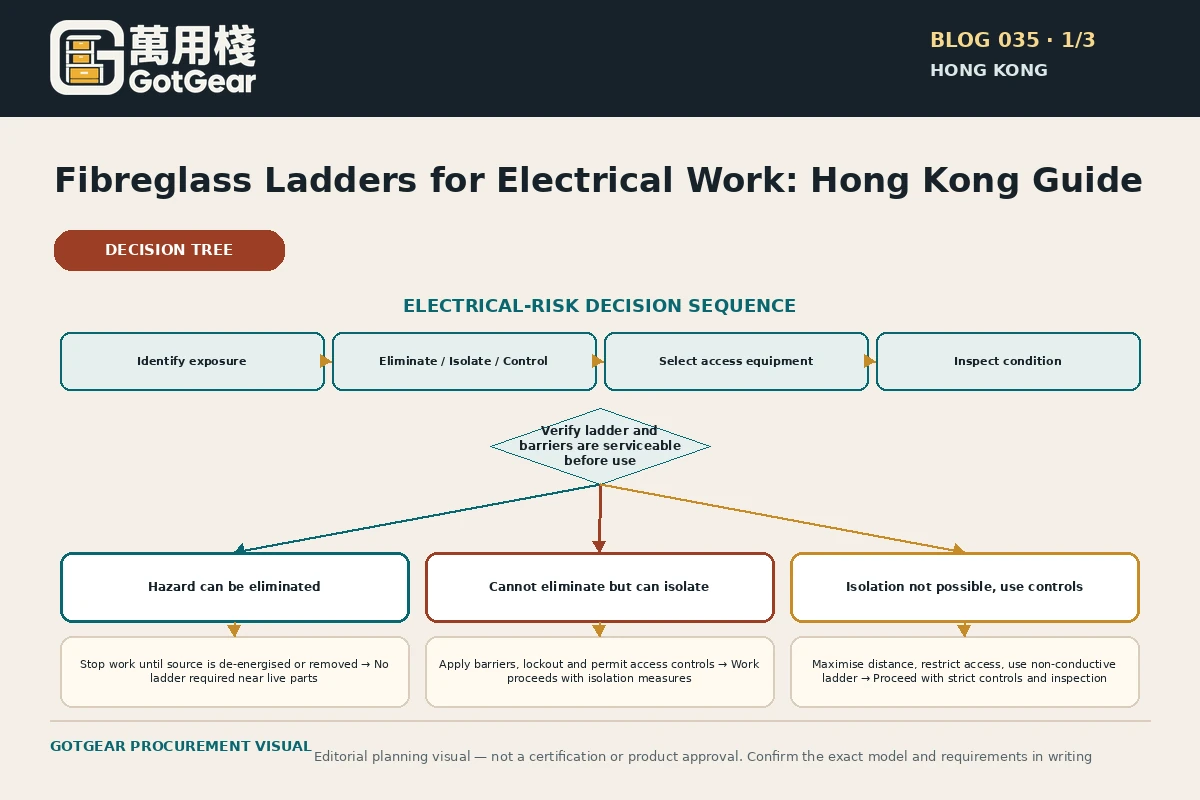
A fibreglass ladder may be the appropriate choice when contact with exposed energised parts or overhead lines is credible, because its side-rails do not conduct electricity like metal. However, fibreglass is not an electrical safety guarantee: contamination, moisture, cracked or damaged rails, and inappropriate use near live equipment remove the benefit. For work in Hong Kong, consult responsible electrical personnel, follow EMSD and local safety guidance, retain manufacturer instructions and reject ladders that show damage, soiling or an unsuitable rating.
What to remember before you decide
- Fibreglass ladders reduce electrical conduction risk but are not a substitute for isolation and task-specific controls.
- Contamination, moisture and damage can negate insulating properties; inspect and reject affected ladders.
- Specify cleaning, inspection and replacement criteria in procurement for Hong Kong’s humid and coastal environments.
- Always confirm isolation, permit-to-work and rescue plans with authorised electrical personnel before live work.
- Consider alternatives (scaffolds, platforms) where space, tool use or stability make ladder use unsafe.
- Record inspections, retain manufacturer instructions and remove ladders with metal fittings that could bridge to live parts.
When to consider a fibreglass or other non-conductive ladder
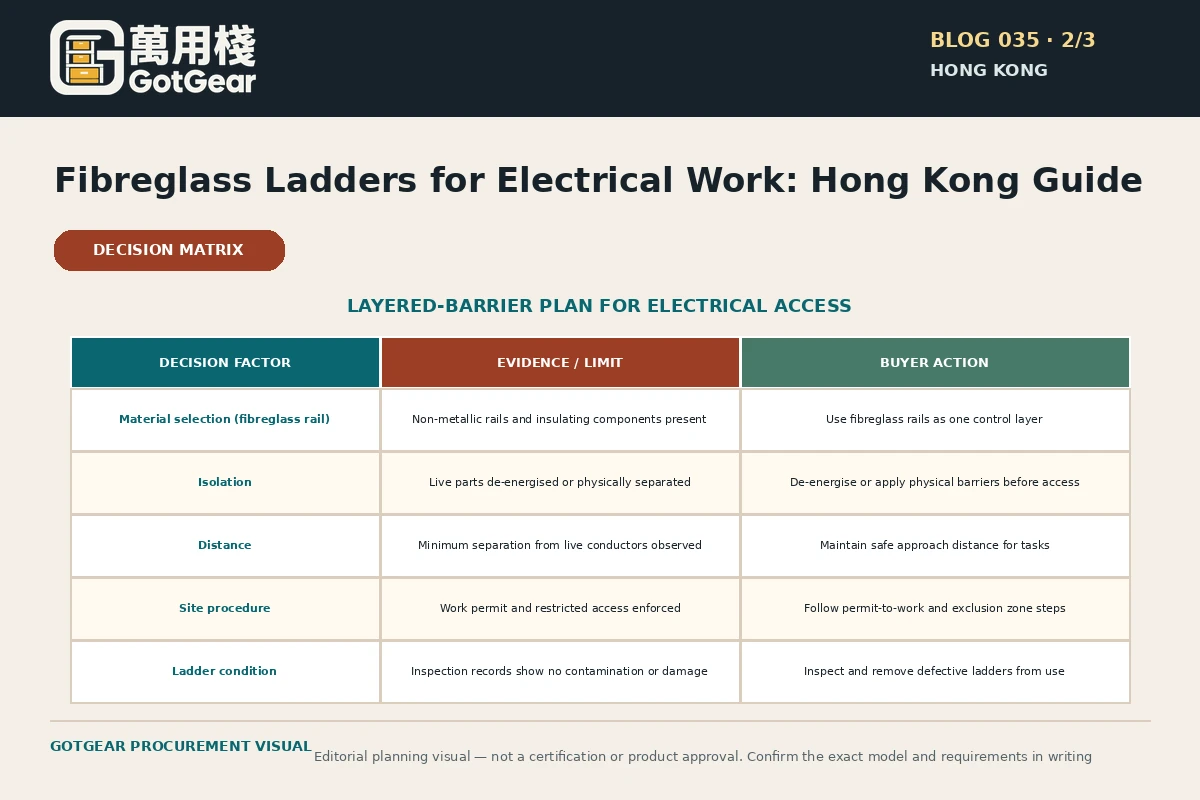
Context: Hong Kong facilities often mix distribution equipment, lighting, raised services and overhead cabling in compact plantrooms, rooftops and external areas. For registered electrical contractors, E&M facility teams and safety officers, the first practical test is whether the task exposes the worker to a credible possibility of touching energised conductors or exposed live parts. Use these decision checks: choose a fibreglass or otherwise non-conductive ladder when the work requires access that places hands, tools or work materials within reach of live parts, when overhead power lines are nearby and cannot be isolated, or where temporary access is needed near distribution switchgear during live operations that cannot be shut down. A key limitation is that non-conductive materials reduce the risk of an electrical path along the ladder, but they do not protect against all electrical hazards. Fibreglass strength and insulating performance decline if the surface is contaminated with conductive deposits (dirt, moisture, salt), if the ladder has hairline fractures or internal damage, or if metal components (hinges, fasteners, fittings) create a conduction route. Next actions for buyers: identify expected work heights and likely proximity to energised parts, record whether isolation will be possible, and list required ladder ratings and features (working height, load class, non-slip feet, rated feet/side-rail insulation). Ask suppliers for manufacturer instructions and any test or inspection evidence, but do not accept claims that a ladder is inherently electrically safe without task-specific verification.
How material choice relates to the task and environment
Practical Hong Kong considerations: rooftop plantrooms and external maintenance tasks can be exposed to sea spray, high humidity and airborne contaminants, all of which reduce insulating performance. Use these decision checks: where damp, salty or dirty conditions are common, demand a ladder with surfaces that can be thoroughly cleaned and inspected; avoid porous woods or plastics that absorb moisture. Consider whether the access route requires stepping over pipework or conduits; irregular contact points increase the chances of accidental contact with live parts. A key limitation is that wood and some plastics may offer initial non-conductivity but lose that property when wet, dirty or when the surface is abraded. Even fibreglass can have conductive paths if the outer gelcoat is worn or if metal fittings bridge to conductive structures. Next, specify cleaning, inspection and rejection criteria in procurement documents; include a reserve option such as a platform or mobile scaffold for tasks where ladder stability, working space or tool use create unacceptable risk.
“Choose ladder material to manage electrical risk, not to certify it. The control is in isolation, inspection and the work plan.”— GotGear Editorial Team
What should buyers compare for fibreglass ladder for electrical work Hong Kong?
| Option or approach | Best for | Trade-offs | Checks before acceptance |
|---|---|---|---|
| Fibreglass extension ladder | Tasks requiring height with non-conductive side-rails where isolation is not available and access is linear. | Heavier than aluminium and may have metal fittings; can be damaged by impact or UV and requires careful cleaning in coastal/HK environments. | Inspect rails for gelcoat damage, check for metal fittings that bridge to users, confirm manufacturer-rated load and intended use before purchase. |
| Insulated step-ladder with non-conductive feet | Short-duration work at modest heights where hands-on tool use requires steadier stance. | Limited working height and platform area; may still have metal components and is sensitive to contamination and moisture. | Verify manufacturer guidance for electrical work, ensure non-slip, non-conductive fittings intact and maintain cleaning protocol for humid HK conditions. |
| Wooden ladder (treated hardwood) | Low-resource requirements, short-term access away from wet or coastal environments where wood remains dry and uncontaminated. | Wood absorbs moisture and degrades; conductivity increases when wet or dirty; inspection can miss internal rot or hidden splits. | Use only when manufacturer or local standards permit; require pre-use checks and reject if moisture or surface damage is present. |
| Aluminium ladder | Work where electrical risk is controlled by isolation and where portability and weight are priorities. | Conductive — not suitable near energised parts; do not use where contact with live equipment is credible. | Only acceptable after documented isolation; otherwise reject for live electrical access tasks per local OSHC guidance. |
| Mobile scaffold or elevating work platform | Tasks needing a stable work platform, space for tools, and reduced tipping risk near electrical equipment. | Higher setup complexity and footprint; may require permits and ground access; some platforms have conductive components. | Choose equipment rated for electrical work or ensure isolation and implement exclusion zones; inspect for conductive fittings and grounding paths. |
This framework helps buyers create comparable written enquiries. Final model specifications, availability, delivery and commercial terms must be confirmed in a formal quotation.
Inspection, condition and manufacturer instructions — the controls that matter
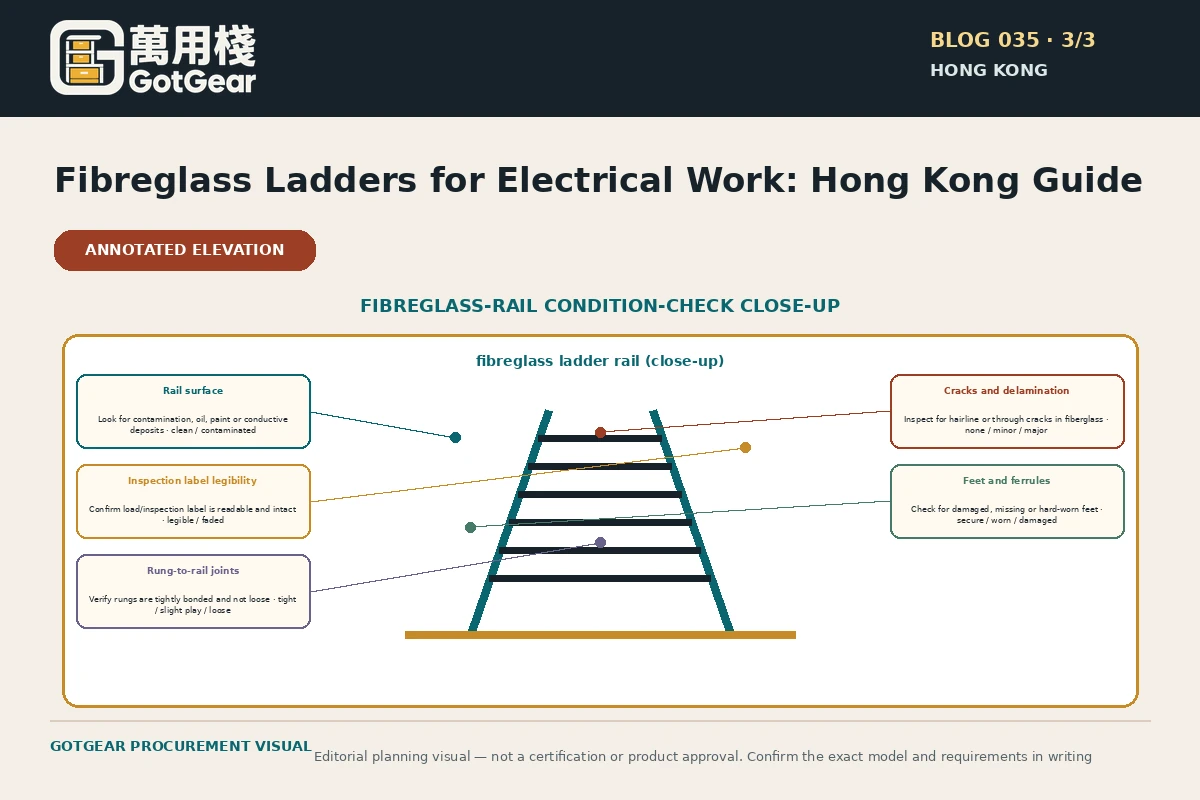
Context and expectations: manufacturers publish maximum load, intended use and maintenance instructions; local maintenance regimes must enforce them. Use these decision checks: before use, inspect for visible fractures, delamination, hairline cracks, soft or brittle areas, soot or grease contamination, conductive deposits and worn or missing non-conductive feet. Check fasteners, hinges and rung retention for security; any exposed metal that could contact a live part and a user at the same time is a potential hazard. A key limitation is that visual inspection alone cannot reveal internal damage caused by impact or UV degradation. Periodic formal checks by a competent person, and replacement intervals aligned with manufacturer guidance and local operating conditions, are prudent. Next, require suppliers to provide written maintenance guidance and replacement-part sources; log inspections in the asset register and remove from service any ladder with contamination, damage or missing labels.
Work planning: isolations, permits, PPE and when not to rely on a ladder
Hong Kong procurement and safety practice: use ladder selection as part of a broader risk control hierarchy. Use these decision checks: always prioritise elimination and isolation of the electrical hazard. If isolation and lockout are possible, a standard safe access method can be used; if isolation is not possible, escalate planning to include a rescue plan, insulated tools, appropriate PPE and a non-conductive ladder only as a last control. A key limitation is that ladders reduce working space and increase the chance of tool drops; when workers must manipulate tools or heavy parts, consider mobile scaffolds, cherry pickers or temporary platforms that provide handholds and fall protection. Next, for each job, require a written work plans recorded by the authorised electrical person, confirm clearance distances from overhead lines using EMSD and local site data, and implement permit-to-work and rescue provisions before allowing ladder use near energised equipment.
Fibreglass ladder for electrical work Hong Kong decision checklist
- Has the task been assessed for the credible possibility of contacting energised conductors or exposed live parts?
- Has the responsible authorised electrical person confirmed whether isolation or lockout is possible?
- Is the planned ladder material specified in procurement notes with clear cleaning, inspection and rejection criteria?
- Does the ladder have manufacturer instructions and rated load label present and legible?
- Are non-conductive surfaces clean and free of salt, grease, soot or other conductive deposits?
- Are hinges, fasteners and fittings non-conductive or insulated and in good condition?
- Is there adequate working space and a fall-prevention strategy (harness, handhold, platform) if tools are used?
- Is a rescue plan and permit-to-work in place if the work remains live?
- Are inspection logs and replacement criteria recorded in the asset register?
- Have environmental factors (humidity, sea spray, abrasion) been considered in expected service life and inspection frequency?
Practical action sequence
- Record the job and identify exposed or nearby energised parts with the authorised electrical person.
- Confirm whether isolation/lockout is possible; if so, plan to isolate before access.
- Specify ladder type, required features and inspection criteria in procurement paperwork.
- On delivery and before each use, inspect for contamination, damage, missing labels and secure fittings.
- If ladder is used near live parts, enforce non-conductive PPE, insulated tools and a permit-to-work.
- Log the ladder into maintenance records, note inspection dates and condition, and retire any suspect unit.
- If ladder use creates inadequate workspace or tool-holding problems, switch to a platform or elevating device.
- Review the task after completion and update risk assessments and supplier specifications as required.
Apply the checks to your Hong Kong site
Follow EMSD links and Hong Kong safety council guidance as part of site procedures, using overseas HSE or OSHA material only as contextual reference. Local environmental factors, dense service routing and constrained access mean inspection and procurement requirements should be stricter than in less-constrained locations. Specifying a fibreglass ladder for electrical work Hong Kong is a site-specific decision and does not by itself ensure electrical safety; teams must first identify exposed energised parts, overhead or nearby lines, and whether wet, contaminated or confined conditions change risk. Selection of a non-conductive ladder Hong Kong should be validated with current site measurements, user instructions and written inspection records. If a ladder near electrical installations Hong Kong is unavoidable, eliminate or isolate the hazard, establish exclusion zones and confirm the chosen ladder is free of damage or contamination before use. Operational takeaway: refuse to start work until isolation or control measures are documented and a site-specific ladder selection and inspection record is completed.
References used for this article
These sources provide regulatory, safety or planning context. They do not certify any GotGear product or replace site-specific professional advice.
- Electrical and Mechanical Services Department — Electricity Safety — Hong Kong electrical-safety governance and links to working-near-electricity-supply-line guidance.
- HSE — Types of ladder and using them safely — Non-conductive ladder reference, overhead-line warning and limits of ladder use.
- Occupational Safety and Health Council — Safety Hints for Using Ladders — Local warning not to use a metal ladder near electrical installations.
- OSHA — Safe Use of Extension Ladders Fact Sheet — Nonconductive side-rail guidance where contact with exposed energised equipment is possible.
Questions about fibreglass ladder for electrical work Hong Kong
Is a fibreglass ladder electrically safe for live electrical work?
No ladder should be considered electrically safe as a substitute for isolation. Fibreglass ladders have non-conductive side-rails which reduce the likelihood of a conduction path through the ladder, but they are not subject to written confirmation to be insulating under every condition. Contamination, moisture, damage or metal fittings can create conductive paths. For any live electrical work you must prioritise isolation, follow site permit-to-work procedures, and confirm with an authorised electrical person before relying on a ladder.
Can I use a metal or aluminium ladder near electrical installations?
Do not use metal or aluminium ladders near electrical installations unless the circuit or equipment has been positively isolated and made safe. Local safety guidance in Hong Kong warns against metal ladders near electrical equipment because they provide a low-resistance path to ground. If isolation is confirmed, metal ladders may be acceptable for non-live work, but the decision must be documented and supervised by authorised personnel.
Are wooden or plastic ladders safe near overhead power lines?
Wood and some plastics can be non-conductive when dry and clean, but their insulating properties are unreliable in wet, dirty or aged conditions. The HSE explicitly cautions that materials like wood, plastic or rubber should not be relied on when exposed to moisture or contaminants. For work near overhead lines, always treat these materials as unsuitable unless a competent person has verified their condition and provided task-specific controls or isolation.
What should I look for during a pre-use inspection in Hong Kong conditions?
Check the ladder for visible fractures, delamination, hairline cracks, brittle or soft spots, worn gelcoat, missing or damaged non-conductive feet, and any conductive deposits such as salt or grease. Verify that labels and load ratings are legible and that rungs and rails are secure. Pay attention to metal fittings that could create a conduction route. If any doubt exists, remove the ladder from service and tag it out until a competent inspection confirms safety.
How often should fibreglass ladders be formally inspected or tested?
Inspection frequency depends on the environment, usage and manufacturer guidance. In humid, coastal or heavy-use Hong Kong environments, increase inspection intervals and conduct formal checks after any impact event or suspected damage. Rely on the manufacturer’s maintenance schedule as a baseline, add condition-based replacements, and document inspections in an equipment register managed by facilities or safety teams.
If a ladder is the selected access method, what controls should be documented in procurement?
Procurement documents should specify acceptable materials, load ratings, cleaning and inspection procedures, required non-conductive fittings, replacement criteria for damaged units, and any necessary accessories (non-slip feet, stabilisers). Also require suppliers to provide manufacturer instructions and warranty information and insist on asset tagging and a record of periodic inspections by a competent person.
Compare available product models and specifications
These product cards are matched to this buying topic. Select a specification and quantity to send the product details to WhatsApp.
 Aluminium Ladders & Access EquipmentProduct reference image
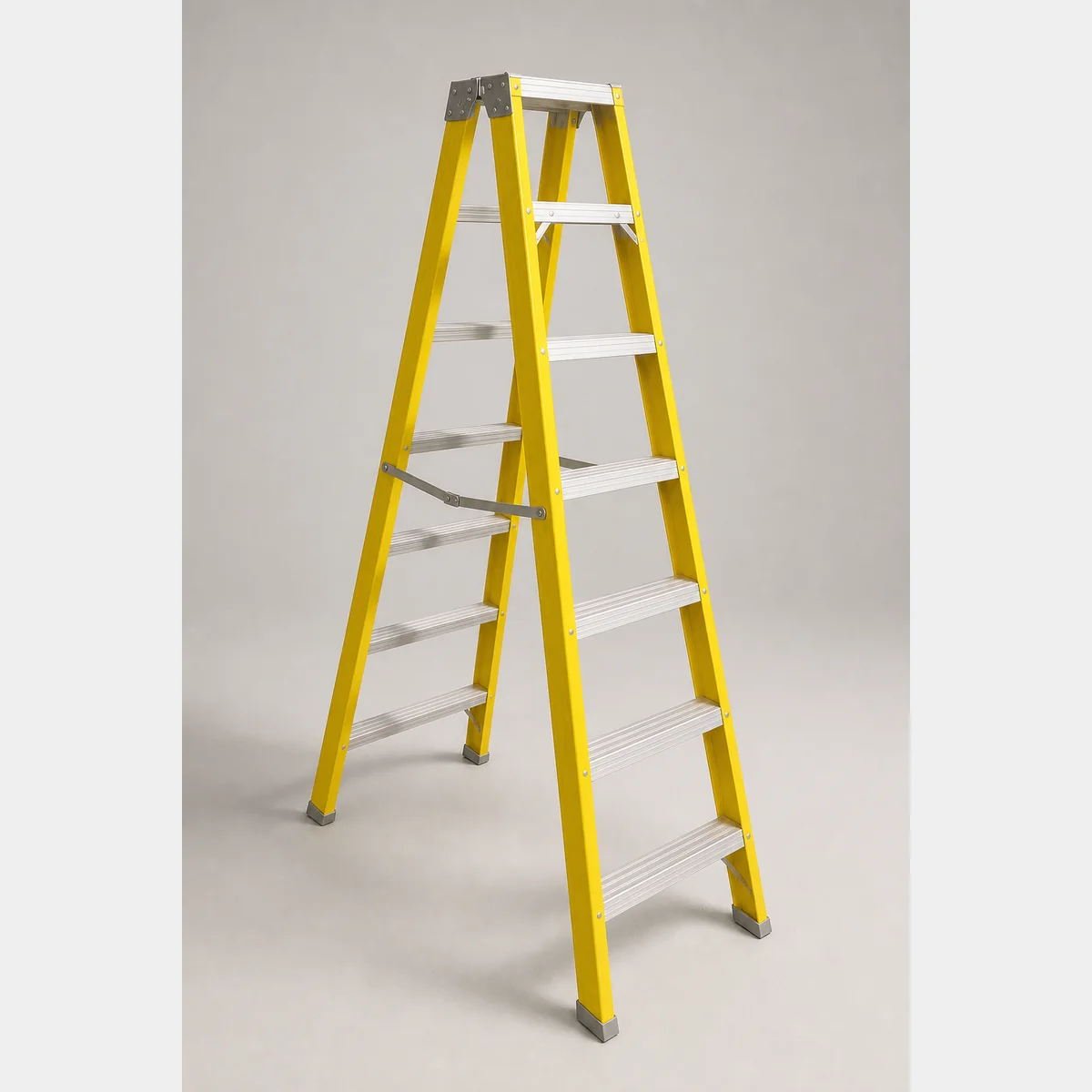
Double-sided fibreglass aluminium ladder
Double-sided fibreglass aluminium ladder. Load capacity: 150 kg; Working height: 90 cm / 110 cm; Minimum order quantity: 1PC. Official quotation available on request based on application, specifications and quantity.
- Load capacity
- 150 kg
- Working height
- 90 cm / 110 cm
- Minimum order quantity
- 1PC
 Aluminium Ladders & Access EquipmentProduct reference image
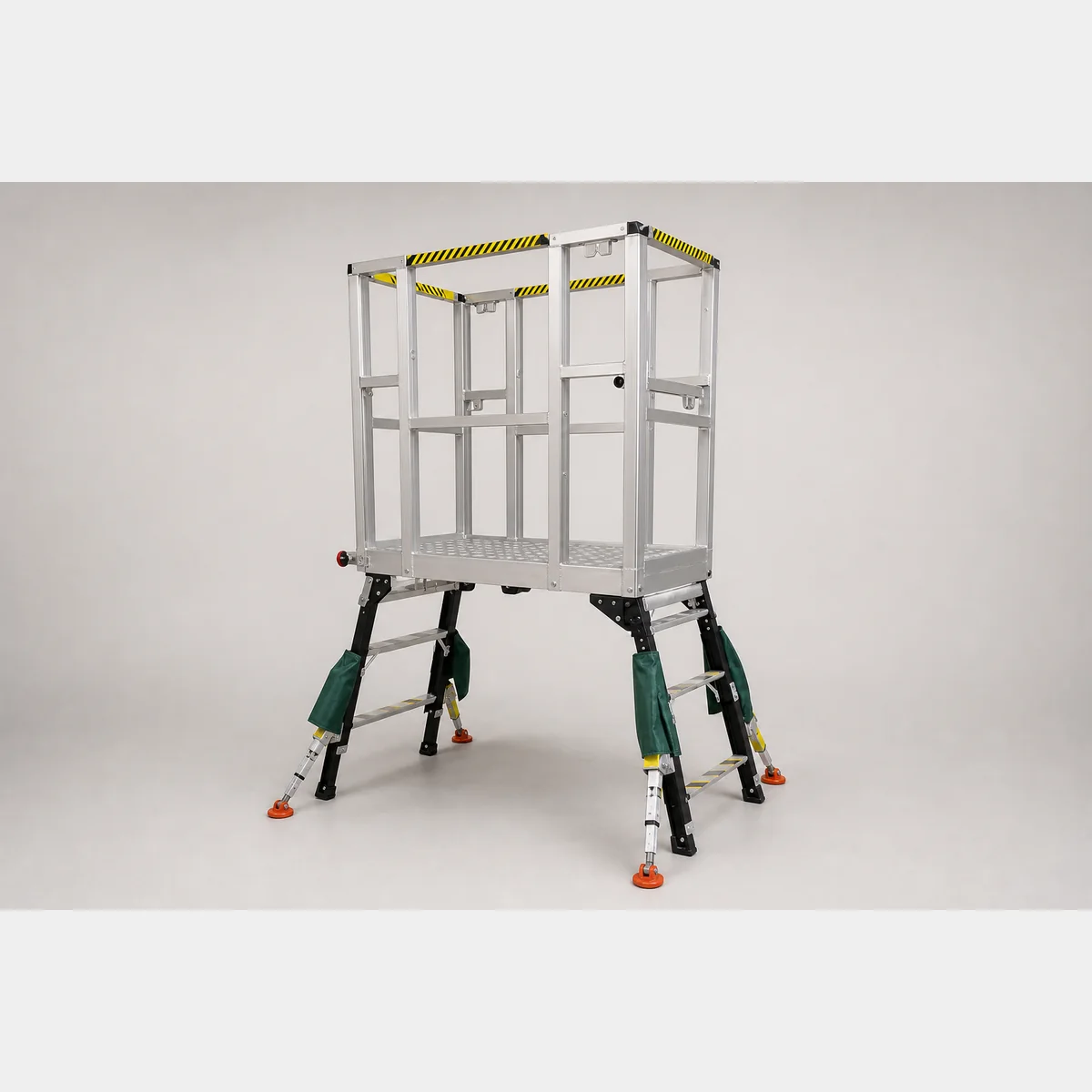
Fibreglass Work Platform Ladder with Guardrail (Diagonal Bracing)
fibreglass work platform ladder with guardrail (diagonal bracing). Dimensions/spec line: D1464-1544xW632-654xH1676-1825 mm / D1584-1683xW665-687xH1899-2061 mm; Working height: 719-871 mm / 945-1093 mm. Formal quotation available based on application, specifications, and quantity. SPL-NFB008-07.
- Working-height range
- The second working-height range requires written confirmation because source records conflict between 945–1093 mm and 9459–1093 mm.
 Aluminium Ladders & Access EquipmentProduct reference image
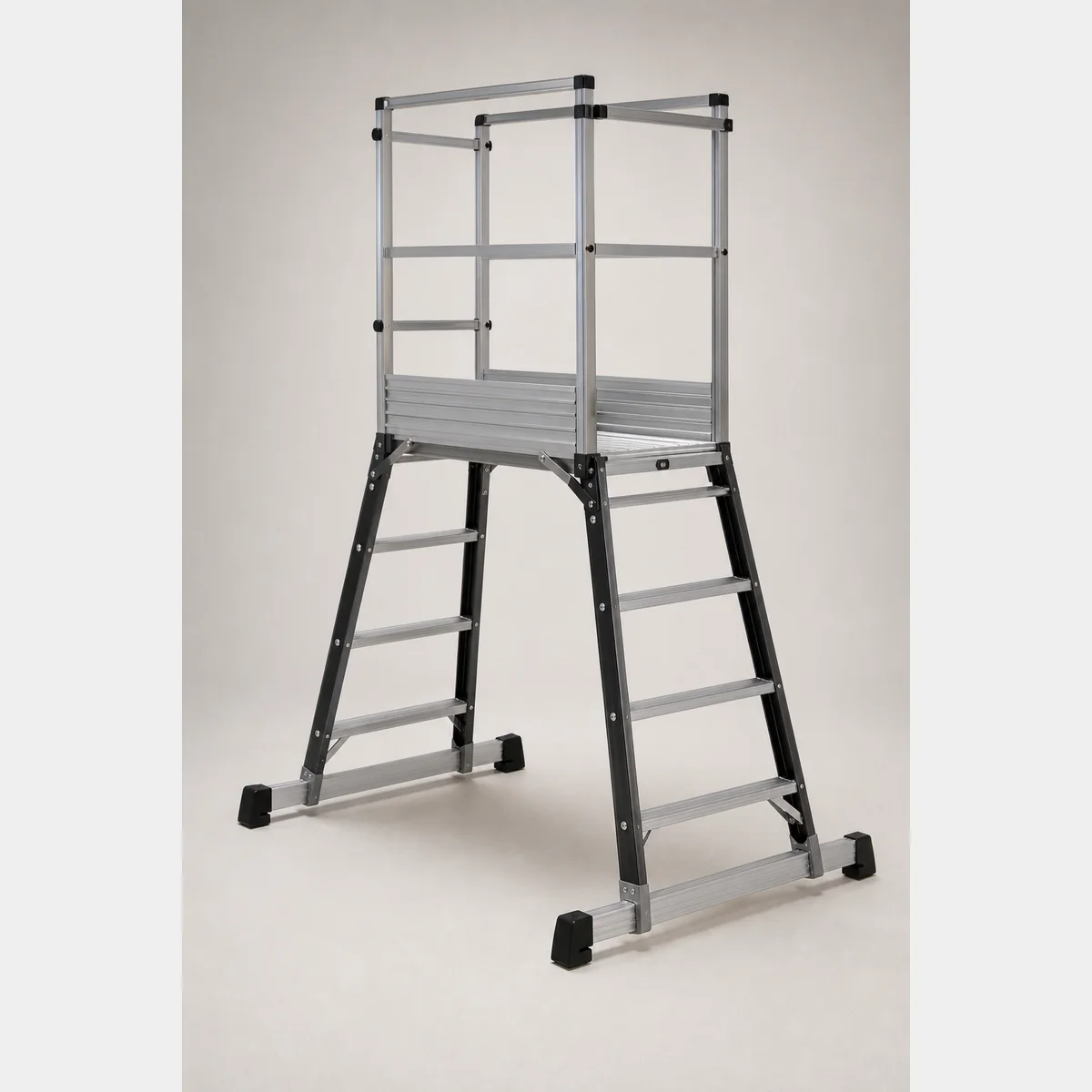
Guardrail Fibreglass Work Platform Ladder
Guardrail fibreglass work platform ladder. Models: SPL-NFB07 (L1) L148xW92xH75 cm; (L2): L106xW41xH96 cm Overall height 171 cm / SPL-NFB10 (L1) L163xW101xH100 cm; (L2): L106xW41xH96 cm Overall height 196 cm. Formal quotation available upon request based on usage, specifications and quantity.
- Dimensions / Model line
- SPL-NFB07 (L1) L148xW92xH75 cm / SPL-NFB10 (L1) L163xW101xH100 cm
- (L2)
- L106xW41xH96 cm Overall height 171 cm / L106xW41xH96 cm Overall height 196 cm
 Aluminium Ladders & Access EquipmentProduct reference image
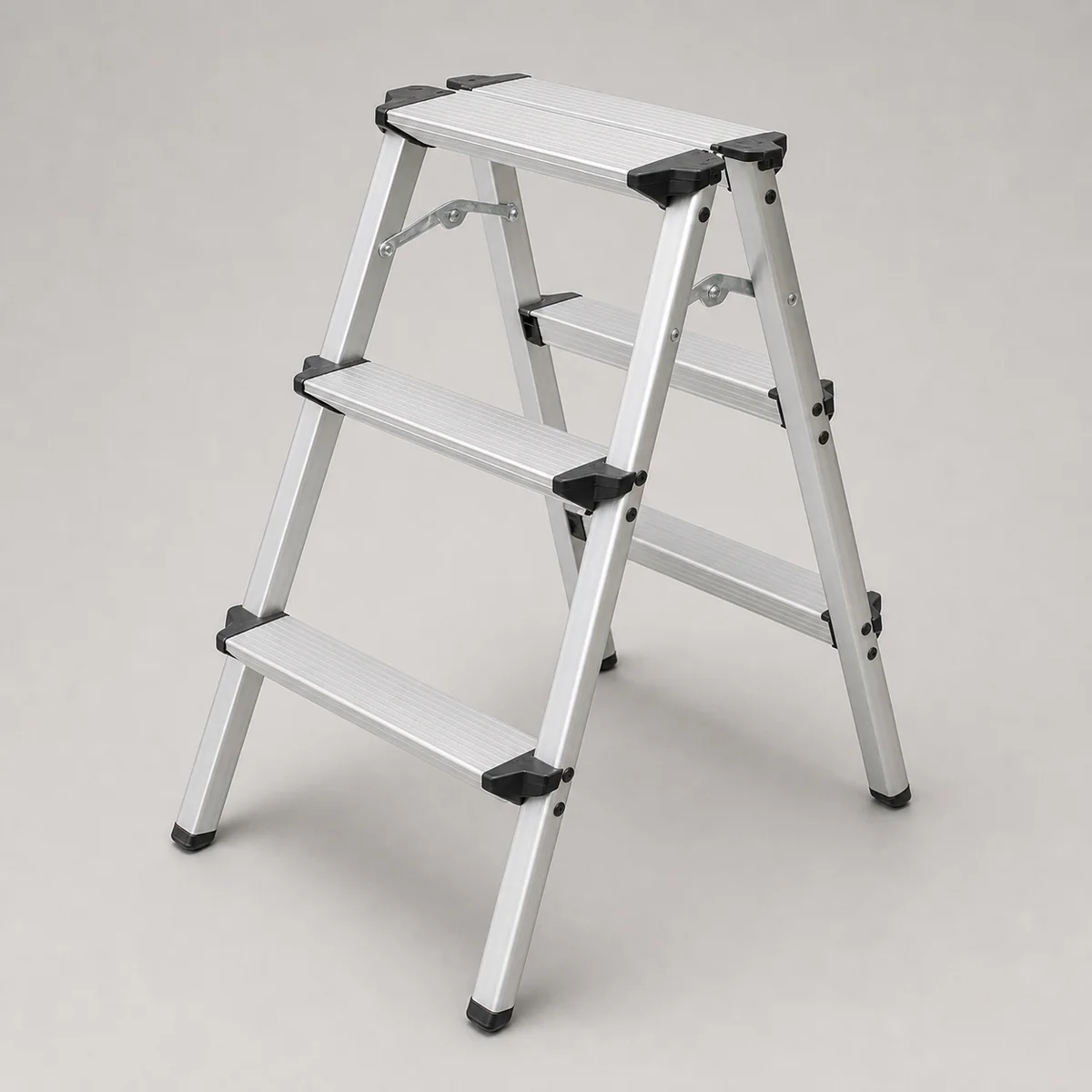
3-level A-frame aluminium ladder
3-level A-frame aluminium ladder. Material: aluminium; Working height: 80 CM; Load capacity: 100KG. Please contact us for a formal quotation based on application, specifications and quantity.
- Material
- Aluminium
- Working height
- 80 CM
- Load capacity
- 100KG
 Aluminium Ladders & Access EquipmentProduct reference image
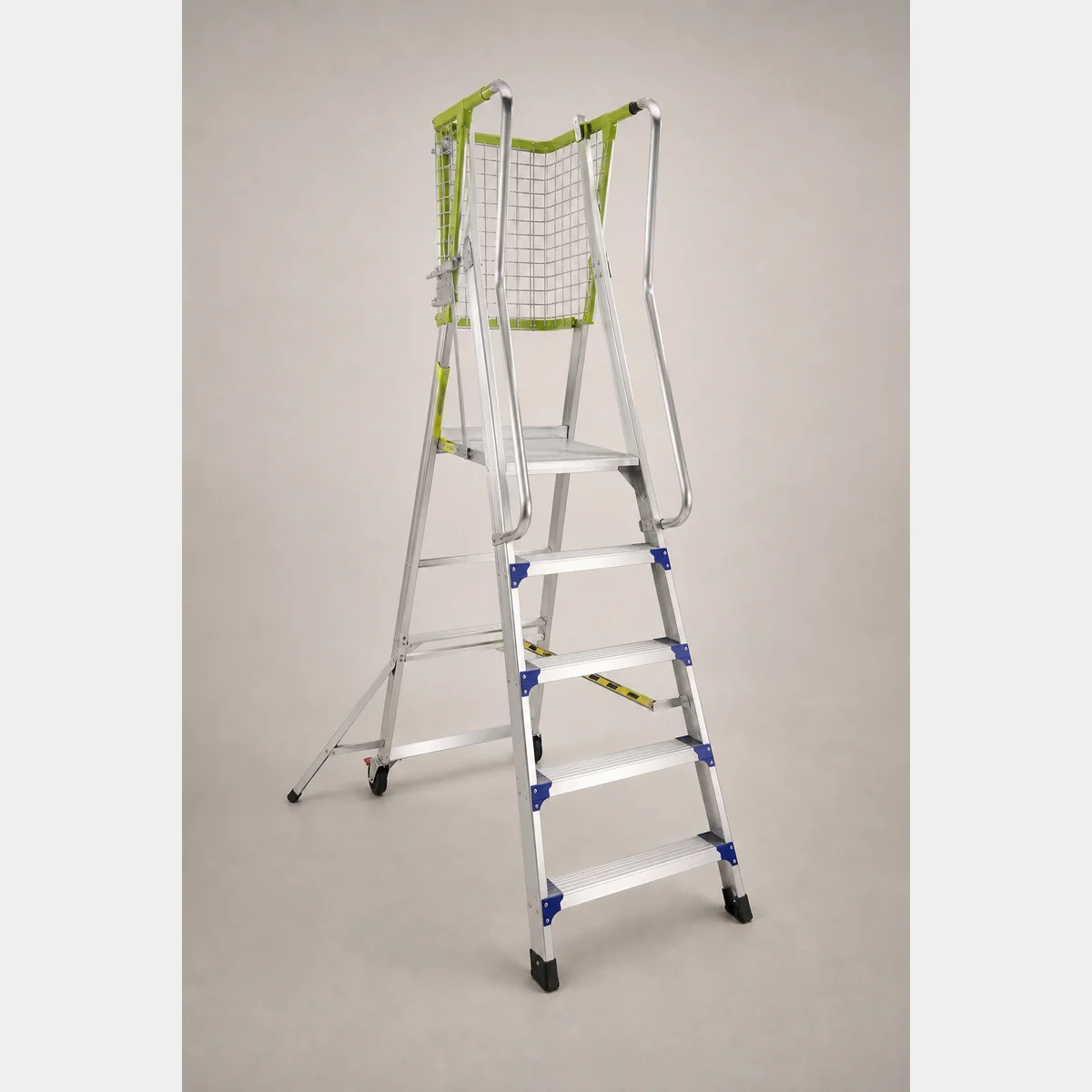
Aluminium platform ladder with mesh enclosure (Diagonal Brace)
Aluminium platform ladder with mesh enclosure (Diagonal Brace), working heights: 860 mm / 1150 mm. Formal quotation available upon request based on use, specifications and quantity.
- Working height
- 860 mm / 1150 mm
 Aluminium Ladders & Access EquipmentProduct reference image
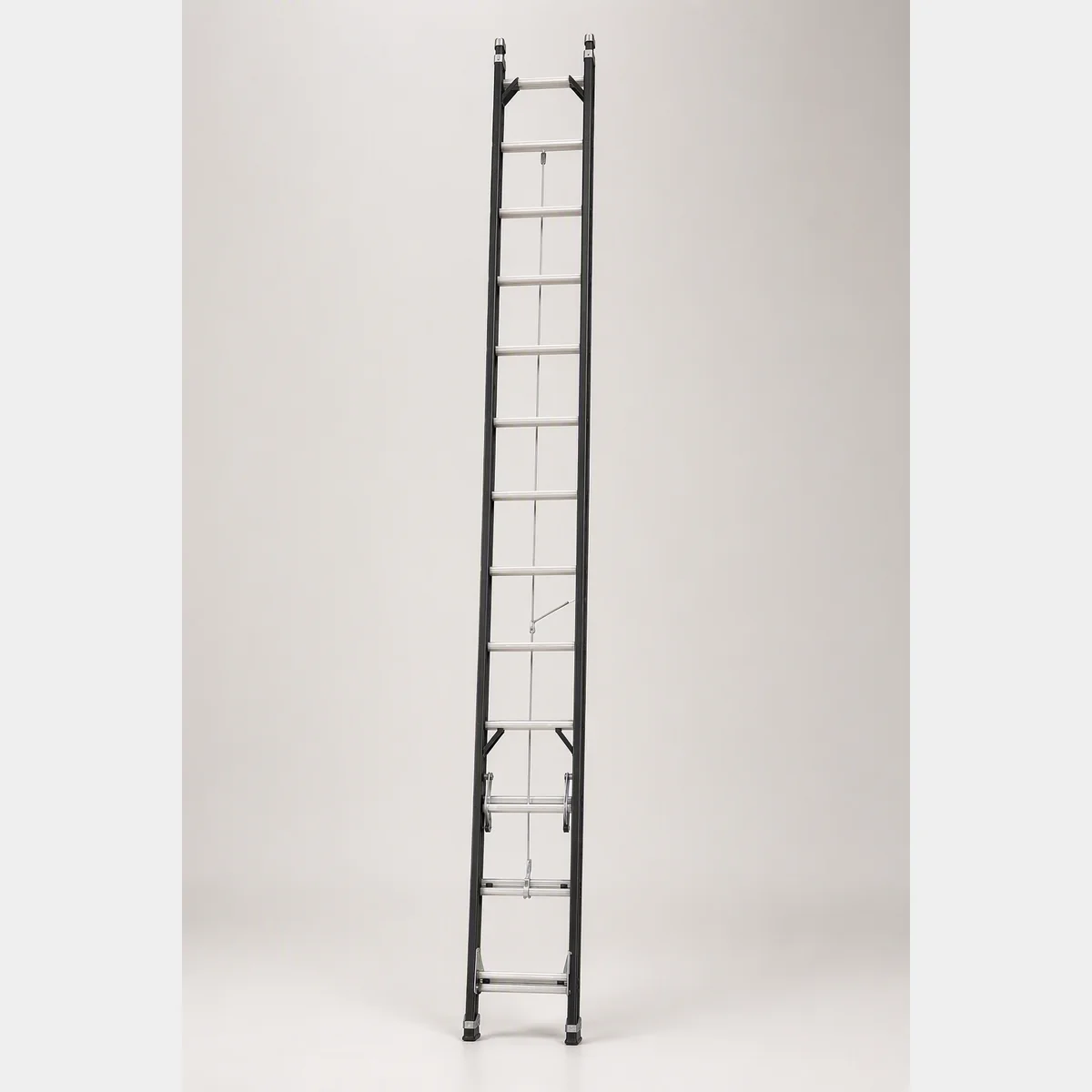
Double-section Fibreglass Extension Ladder (Straight Ladder)
Double-section fibreglass extension ladder, SIZE: 253-406 cm / 314-528 cm; Minimum order quantity: 1PC. Formal quotation available on request for use, specification and quantity.
- SIZE
- 253-406 cm / 314-528 cm
- Minimum order quantity
- 1PC
 Aluminium Ladders & Access EquipmentProduct reference image
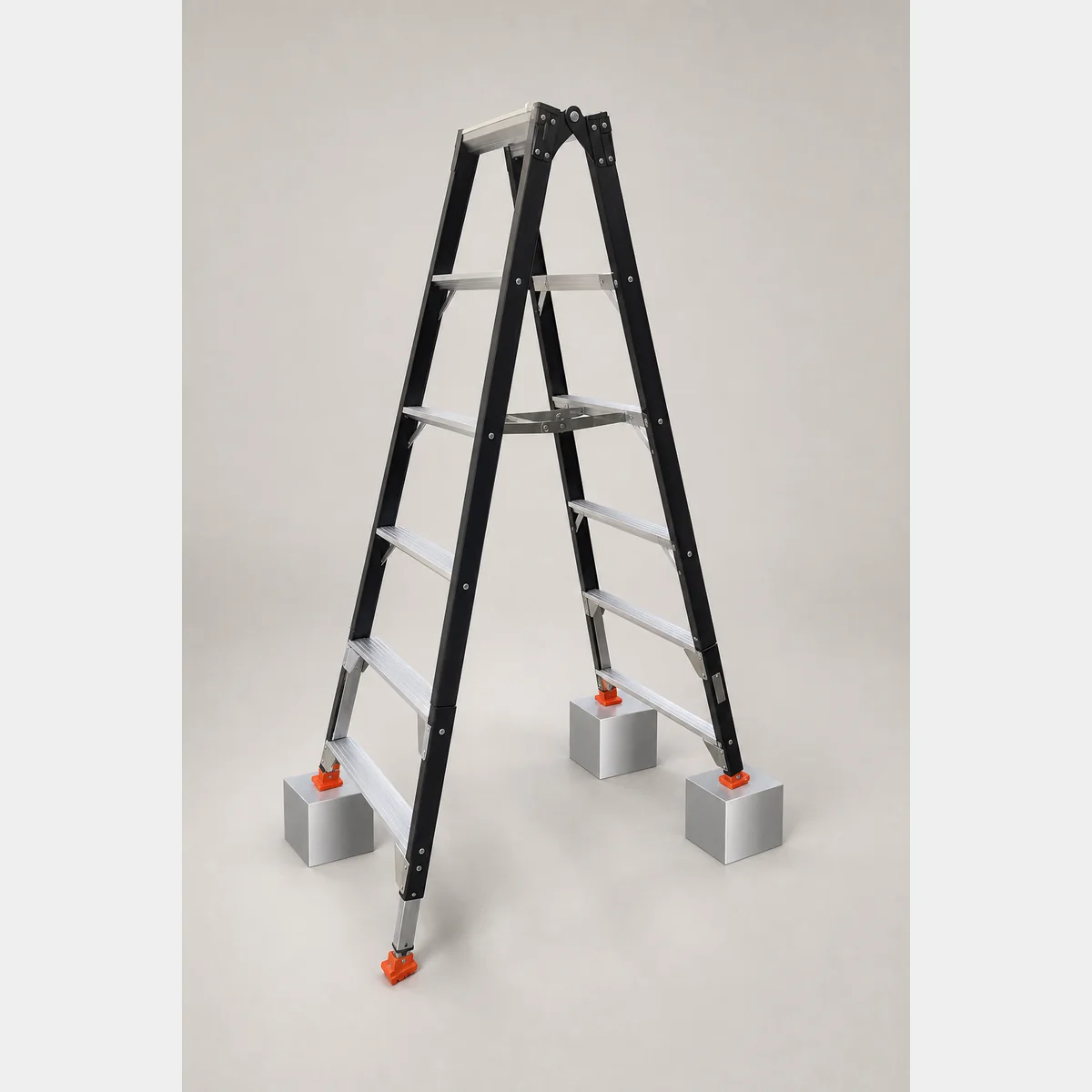
Double-sided A-frame Fibreglass Ladder (Telescopic)
Double-sided A-frame Fibreglass Ladder (Telescopic). Size/specification lines: W478-505xD576-664xH740-898 mm / W529-558xD730-818xH1028-1186 mm; Collapsed height: 767 mm / 1065 mm. Model: TR-DFB-03-003. Formal quotation available on request by intended use, specifications and quantity.
- Size / specification lines
- W478-505xD576-664xH740-898 mm / W529-558xD730-818xH1028-1186 mm
- Collapsed height
- 767 mm / 1065 mm
 Aluminium Ladders & Access EquipmentProduct reference image
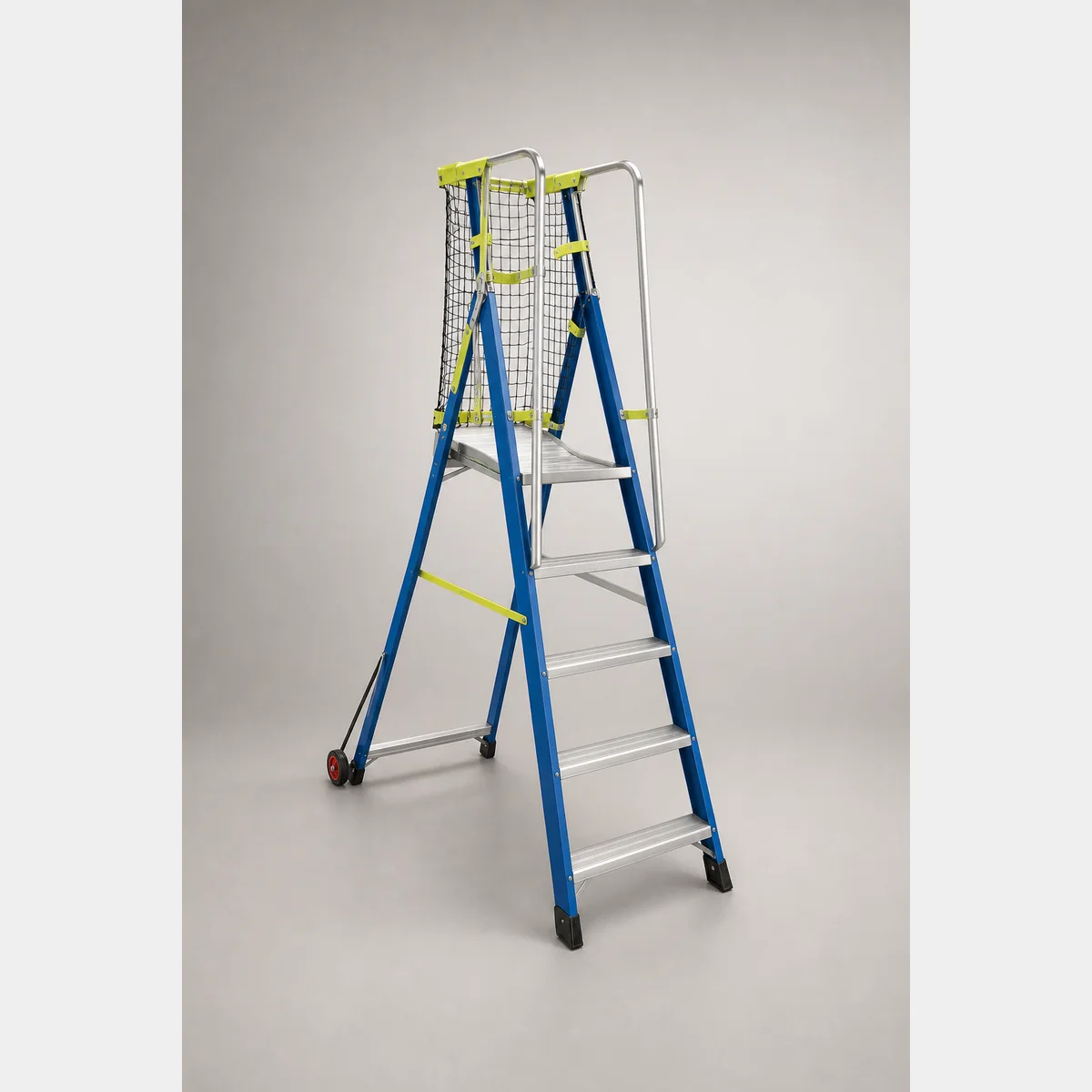
Fibreglass Platform Ladder with Guardrail (Diagonal Brace)
fibreglass platform ladder with guardrail (diagonal brace). Use heights: 860 mm / 1150 mm. Formal quotation available by intended use, specification and quantity.
- Working height
- 860 mm / 1150 mm
Continue with closely related procurement topics
These pages share equipment, operating or decision-stage signals with this guide.
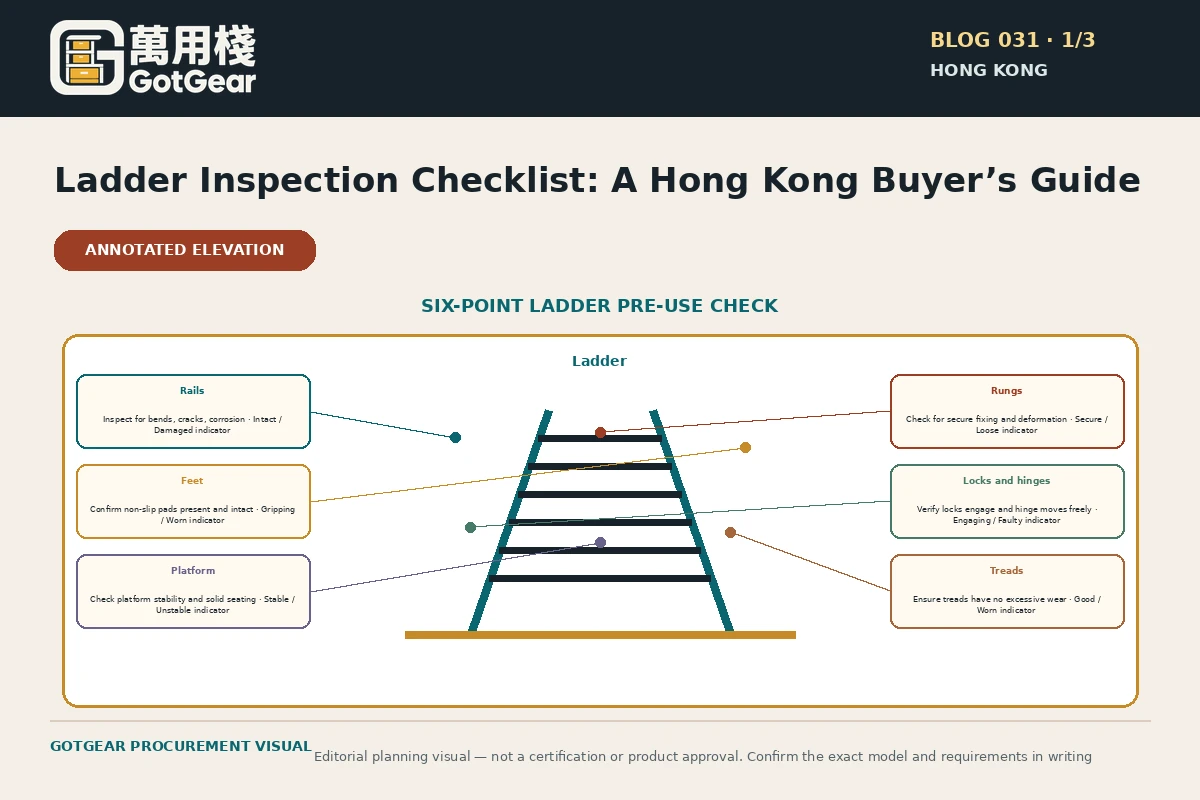
Ladder inspection checklist Hong Kong
GotGear explains ladder inspection checklist Hong Kong for Hong Kong buyers. See how ladder pre-use check Hong Kong supports ladder defect tag Hong Kong, with practical checks, evidence boundaries and written requirements.
Read the guide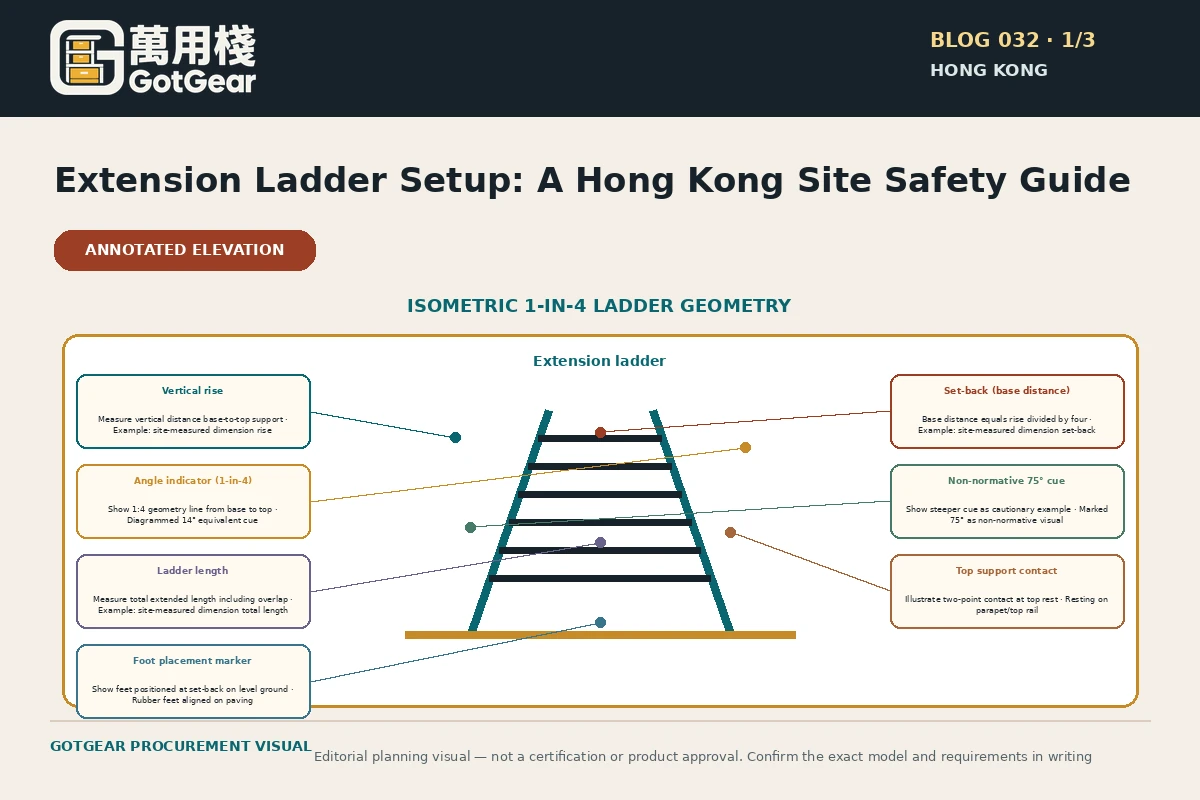
Extension ladder setup Hong Kong
GotGear explains extension ladder setup Hong Kong for Hong Kong buyers. See how ladder 4 to 1 rule Hong Kong supports extension ladder landing access Hong Kong, with practical checks, evidence boundaries and written requirements.
Read the guide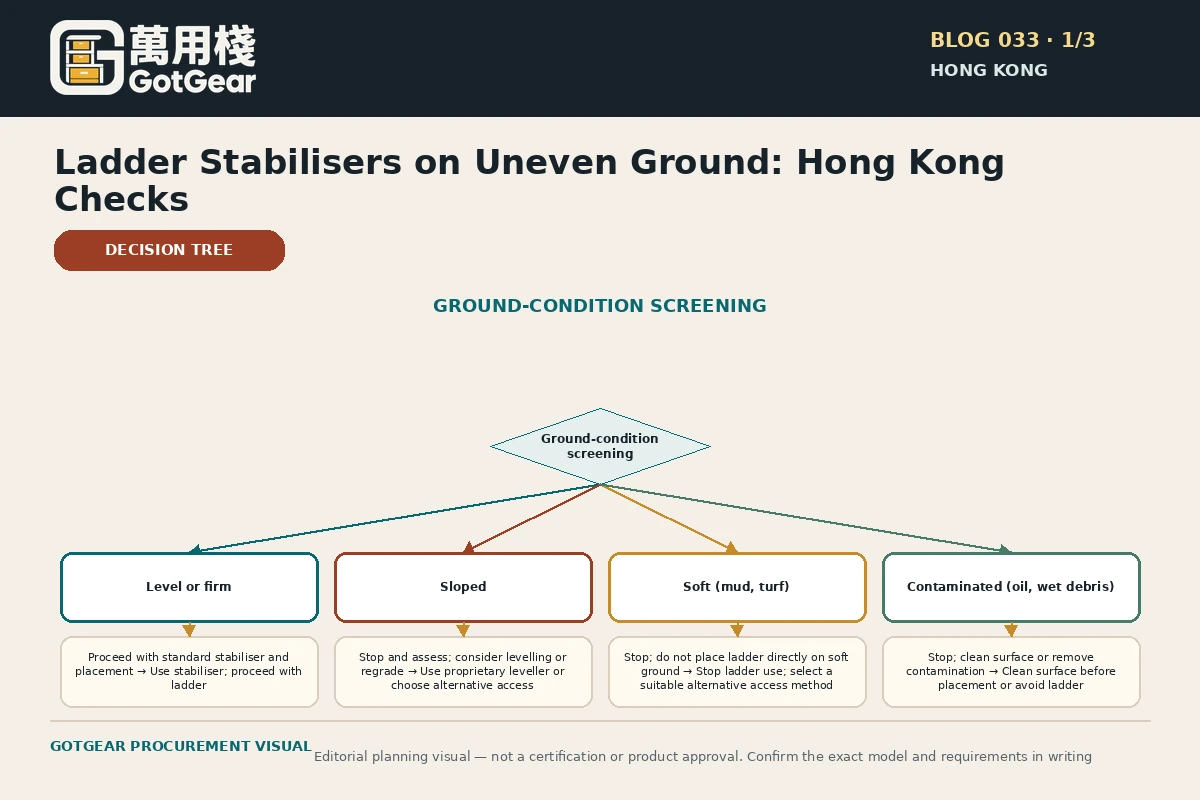
Ladder stabiliser for uneven ground Hong Kong
GotGear explains ladder stabiliser for uneven ground Hong Kong for Hong Kong buyers. See how ladder safety feet Hong Kong supports ladder securing methods Hong Kong, with practical checks, evidence boundaries and written requirements.
Read the guide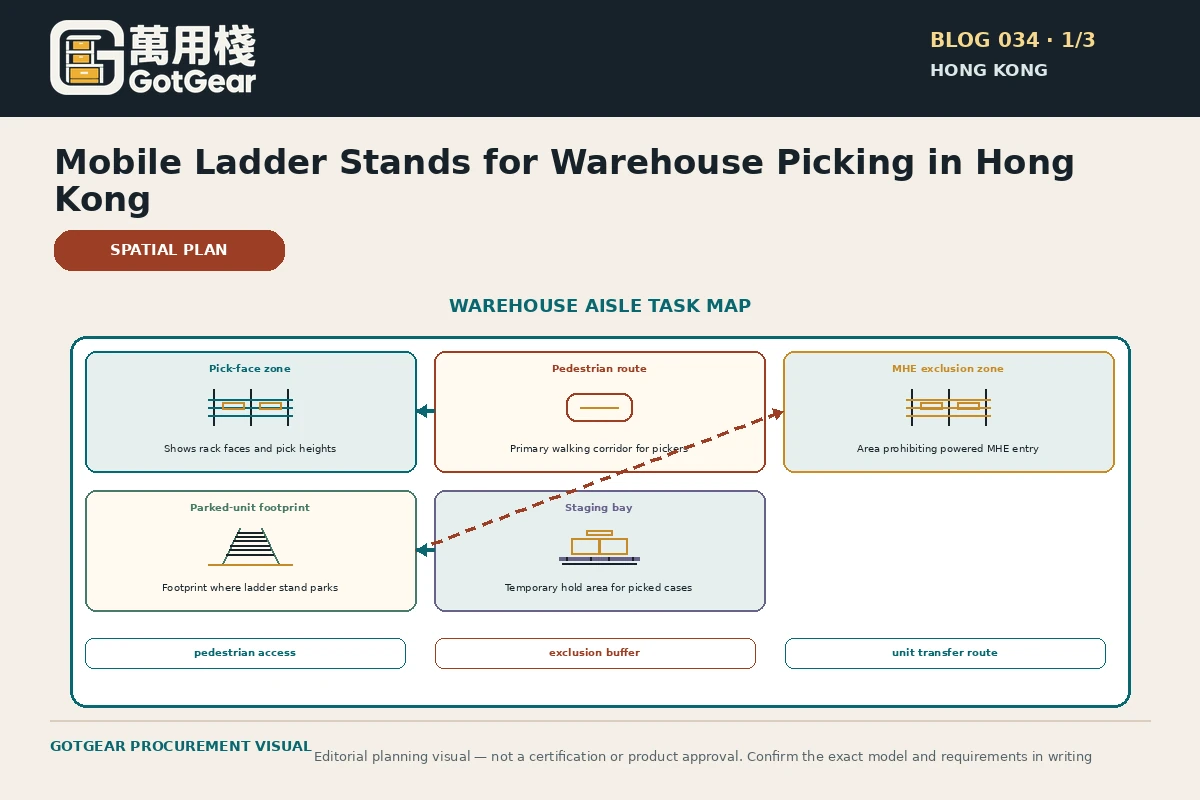
Mobile ladder stand for warehouse picking Hong Kong
GotGear explains mobile ladder stand for warehouse picking Hong Kong for Hong Kong buyers. See how warehouse order picking ladder Hong Kong supports rolling ladder platform Hong Kong, with practical checks, evidence boundaries and written requirements.
Read the guideRelated topic indexOpen more English procurement pages12 topics
Browse additional equipment families, applications and procurement questions relevant to these operating requirements.