
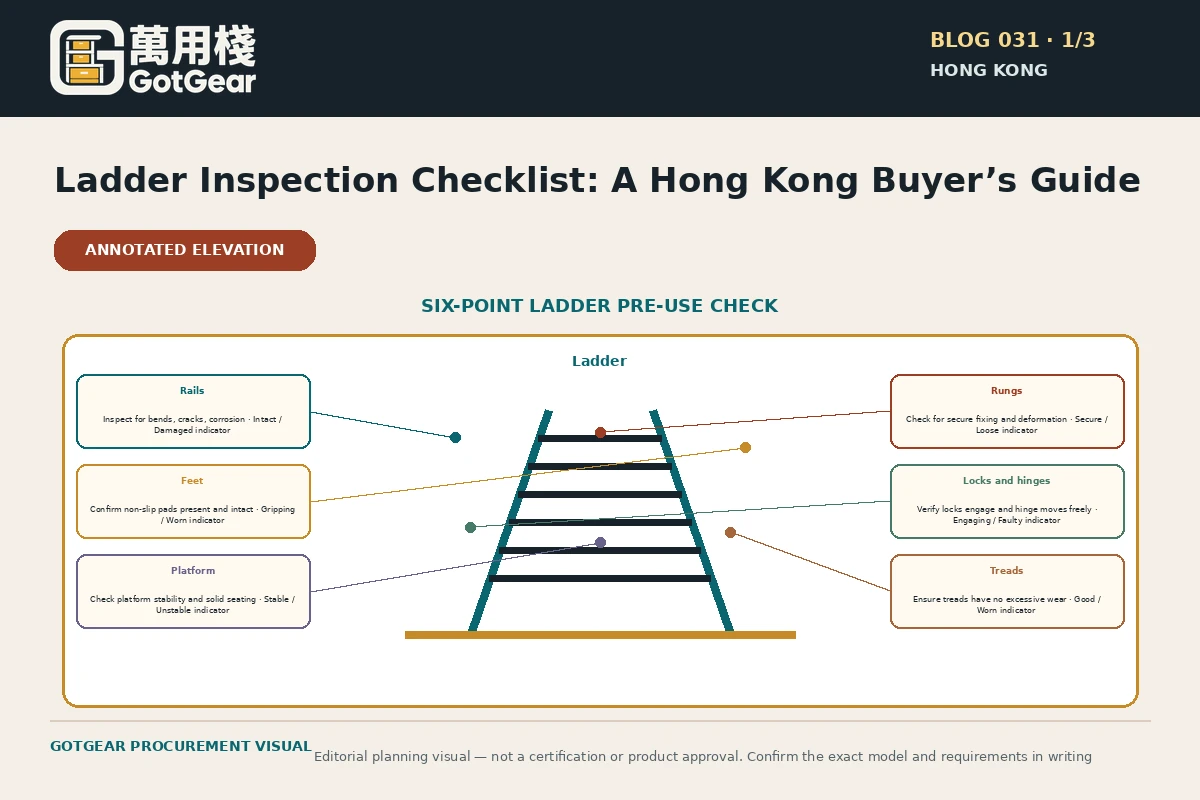
A practical ladder inspection checklist in Hong Kong begins with a user-led pre-use visual check for bent stiles, worn or missing feet, loose or damaged rungs, faulty locks or damaged platforms. If any defect is found, do not use the ladder: tag it, quarantine it and notify your competent inspector. Maintain manufacturer instructions on site, record periodic detailed inspections by a competent person, and treat a defect tag as a control on use rather than proof of repairability.
What to remember before you decide
- Require a short pre-use visual check every time a ladder is used and remove any ladder with visible defects.
- A documented detailed inspection by a competent person is needed to detect hidden or progressive defects.
- Use durable defect tags to quarantine unsafe ladders; tags control use but do not prove repairability.
- Set inspection intervals using manufacturer guidance, usage intensity and a site risk assessment — not a blanket timetable.
- Consider safer working platforms for prolonged or two-handed tasks and record the risk-assessment decision.
- Keep manufacturer instructions with the asset and retain inspection and tag records for procurement and trend analysis.
Pre-use visual checks: what every user must do
Purpose and context: In Hong Kong workplaces the sensible first line of defence is a short, user-led pre-use visual check performed each time a ladder is brought into service. This is a quick safety test to catch obvious defects that present an immediate hazard and to prevent use of an unsafe ladder. It does not replace scheduled detailed inspections or the manufacturer’s maintenance instructions and it cannot reveal hidden structural damage. What to check: At the start of each use, check stiles (sides) for bends, cracks or deformation; ensure feet and anti-slip pads are present and in good condition; verify rungs, steps and platform treads are free from breaks, cracks and excessive corrosion; test locks, spreaders, hinges and locking pins for secure engagement and absence of distortion; look for loose rivets, weld cracks or missing fasteners; confirm stiles, rungs and ladder labels (load rating, instructions) are legible. Use these decision checks: If you observe any of the following — missing or badly worn feet, bent stiles, loose or cracked rungs, failed or sticky locks, missing rivets or a visibly damaged platform — remove the ladder from service immediately. Do not attempt ad hoc repairs in the field other than removing the ladder from use and marking it clearly. A key limitation is that A pre-use check cannot detect internal or fatigue damage, glue joint failure in wooden ladders, or micro-fractures in metal. It should not be used as a sole record of inspection: it is a user safeguard that complements a documented inspection regime. Next actions for facilities teams: Provide a short laminated checklist at storage points and include a pictorial guide showing common defects. Train users to tag and quarantine suspect ladders, and to submit a short incident form or electronic report to the maintenance or EHS team so a competent person can perform a recorded detailed inspection.

Recorded detailed inspections: frequency, scope and competence
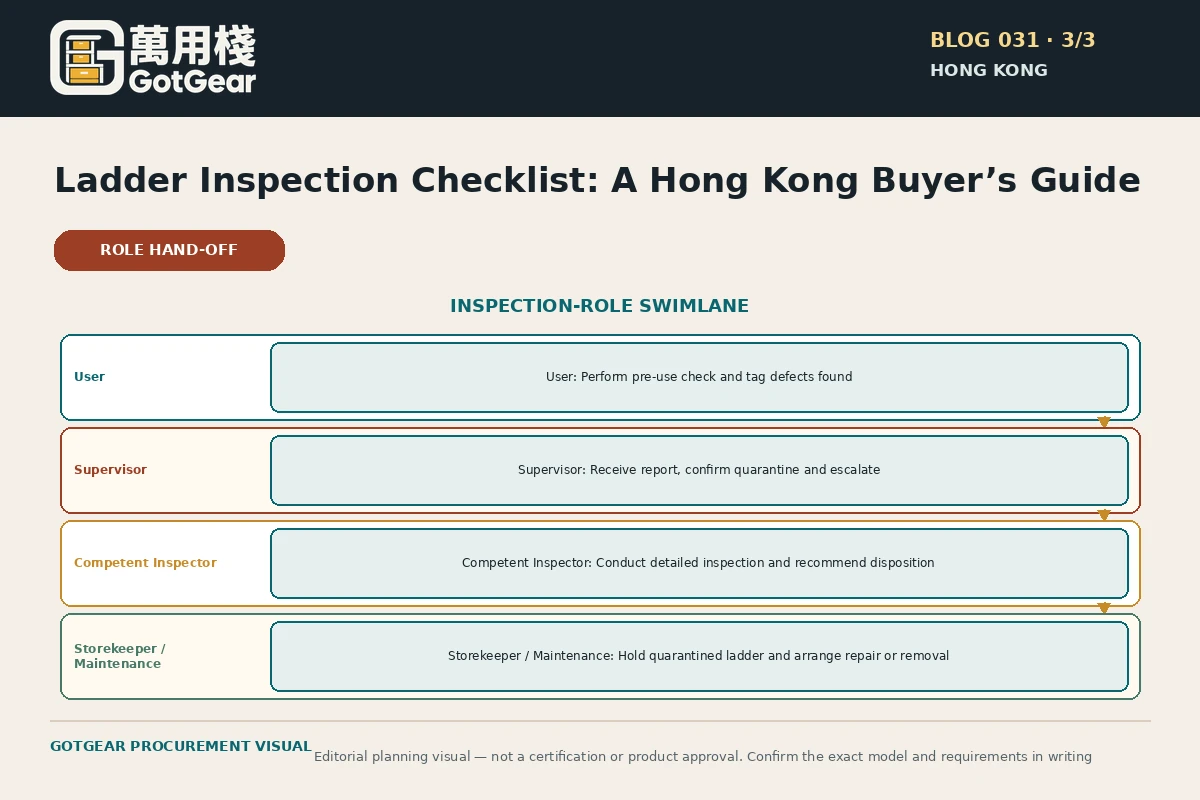
Purpose and context: A recorded detailed inspection is a systematic visual and functional check by a competent person. It is intended to pick up defects a user pre-check will miss and to make a recorded decision about continued use, repair or disposal. Overseas guidance from HSE distinguishes daily pre-use checks from these periodic inspections; use manufacturers’ instructions and your site risk assessment to set intervals rather than a blanket timetable. Scope and sample checks: The inspector should check all components described in the pre-use list in more detail and add hinge and spreader wear measurement, corrosion mapping, fastener torque or tightness where accessible, non-destructive surface checks for cracking at high-stress points, condition of labels and markings, and verification that platform or work-rest attachments meet their rated condition. For extension ladders check rope and pulley condition and correct engagement of safety catches. Deciding frequency: Do not adopt a universal interval solely because it exists elsewhere. Choose inspection intervals using three inputs: the manufacturer’s instructions, the ladder’s usage intensity (daily factory use vs occasional store access), and the site risk assessment for work at height. For higher-intensity or harsh environments (sea spray, chemicals, heavy dust) increase inspection frequency; for low-use, indoors ladders intervals may be longer. Record every inspection and store records centrally for procurement and asset reviews. Competence and recordkeeping: Define who is competent — typically a trained maintenance technician, EHS officer or external inspector with ladder-specific inspection training and an understanding of manufacturer limitations. The inspection should be recorded with date, inspector name, ladder ID, observed defects and disposition (in service, quarantined, repaired, disposed). Retain records as part of the work-at-height safety file so you can track recurring failures and identify unsafe models or suppliers. A key limitation is that Even a detailed visual inspection cannot always determine if a ladder is safe to repair; it cannot substitute for manufacturer guidance on repairability nor can it establish statutory certification. If repair is considered, consult the manufacturer or a competent repair provider and document the decision.
“Treat the pre-use check as an immediate safety stop and the recorded inspection as the decision-making step — quarantine first, then inspect, then act.”— GotGear Editorial Team
What should buyers compare for ladder inspection checklist Hong Kong?
| Option or approach | Best for | Trade-offs | Checks before acceptance |
|---|---|---|---|
| User pre-use visual check | Immediate detection of obvious defects and preventing same-shift use of damaged ladders. | Quick and simple but cannot reveal hidden faults or substitute for recorded inspections. | Train all users with a two-minute pictorial checklist and require a short report when a defect is found. |
| Periodic recorded detailed inspection | Detecting wear patterns, corrosion and items a user check will miss; provides a documented safety record. | Requires trained inspectors and administrative effort; interval must be set by manufacturer, usage and risk assessment. | Establish inspection intervals in the site system, record each inspection with ladder ID, inspector and action taken. |
| Defect tagging and quarantine | Immediate control to prevent use of a ladder until inspection, repair or disposal decision. | Administrative control only — tag does not prove repairability or structural integrity after fixing. | Use durable tags showing ladder ID, date and reporter; log tag actions and follow up with a documented inspector decision. |
| Manufacturer-led repair or authorised repairer | Ensures repairs follow manufacturer guidance and preserves rated performance where repair is permitted. | May be slower or more resource-intensive than local fixes; not all damage is repairable per manufacturer instructions. | Request written repair instructions or certification from the manufacturer or approved repairer before returning the ladder to service. |
| Use of a working platform (scaffold, podium or MEWP) | Tasks requiring prolonged work, two-handed operation or secure fall-protection tie-off points; reduced inspection burden for short tasks. | Higher upfront equipment or temporary-use arrangement and planning requirements; not always practical for short, simple tasks. | Record the task-specific risk assessment that justifies selection of a platform over a ladder. |
This framework helps buyers create comparable written enquiries. Final model specifications, availability, delivery and commercial terms must be confirmed in a formal quotation.
Defect tagging, quarantine and the repair-versus-replace decision
Purpose and Hong Kong context: Local guidance from the Occupational Safety and Health Council emphasises that damaged ladders should be clearly labelled and users should inspect structural soundness before use. A clear defect-tagging system prevents accidental use and creates a visible control for site teams. In Hong Kong, clarify responsibility for quarantine and set a simple route from report to inspector, and to disposal or repair. Tagging system design: Use durable, clearly worded tags stating “Do not use — quarantine” along with a unique ladder ID, date reported and person reporting. Keep a quarantine area physically separated from service ladders. Record the reason for tagging (e.g., bent stile, missing rung, loose rivet) and whether the ladder is to be inspected for repairability or disposed of. Repair versus replace criteria: Consider repair only when the manufacturer explicitly permits and provides repair instructions, or a competent repairer confirms repair is possible without compromising structural integrity. Factors pushing toward replacement: compromised stiles or high-stress weld/failure areas, unknown fatigue cracking, connectors or rungs with non-remediable deformation, and models that repeatedly fail. Repairs limited to cosmetic elements (replacement feet, replacement non-structural components) are common; structural repairs should be validated by the manufacturer. Limitations and control of use: A defect tag prevents use but does not guarantee the ladder is repairable. Treat tags as administrative controls; do not return a ladder to use without documented inspection and sign-off by the competent person or manufacturer instruction. Keep records of tags, decisions and final disposition for asset-management reviews and supplier feedback. Next steps: Define SLAs for inspection after tagging (for example, inspect within 24–72 hours depending on operational urgency). Identify an approved repair route or authorised disposal process. Use recurring defect data to inform purchasing choices — a model that generates repeated structural failures should be replaced with a more robust alternative.
Procurement, suitability and safer alternatives to using a ladder
Procurement decisions: When buying ladders in Hong Kong, require suppliers to supply manufacturer instructions and maintenance guidance with every ladder. Specify acceptable materials, load classes and intended use cases in tender documents. Ask suppliers for test data or compliance statements where appropriate; do not accept ambiguous claims. Keep a copy of the manufacturer’s instructions with the ladder asset record and on the job site when the ladder is in use. Suitability assessment: Before deciding to use a ladder, perform a task-specific risk assessment: task height, duration, need for two-handed operation, presence of distractions, and whether the ladder base can be secured. If the task requires prolonged access, two-handed work, carrying tools or frequent movement, the ladder may be a poor choice. Hong Kong guidance on work-at-height encourages considering a platform or scaffold where practical. Safer alternatives: Where practicable, use a properly rated mobile elevating work platform (MEWP), podium steps, or scaffold. These options provide better stability, a working platform and fall-protection tie-in points. Include the resource requirements of safer alternatives in procurement comparisons and factor in the lifecycle risk reduction: fewer inspections, less tagging, and a lower chance of fall incidents. Limitations and Next, Not all tasks require a platform and ladders remain appropriate for short-duration, low-risk tasks. Document the choice in your risk assessment and retain the decision record. For commercial buyers, include clear return and warranty terms, and ask suppliers for spare parts availability (feet, locks, rivets) so predictable small repairs do not take assets out of service for long.
Ladder inspection checklist Hong Kong decision checklist
- Is the task suitable for a ladder (short duration, one-handed tasks, stable placing point)?
- Are the manufacturer’s instructions available with the ladder or asset record?
- Has the user performed a pre-use visual check and logged the result?
- Are feet, stiles, rungs, locks and labels free from obvious damage or distortion?
- Has a competent person performed a recent recorded detailed inspection according to site intervals?
- Is there a clear defect-tagging process with a quarantine area and reporting route?
- Does the repair-versus-replace decision follow manufacturer guidance or competent repair advice?
- Have you considered a safer alternative (podium, scaffold, MEWP) in the task risk assessment?
- Are inspection and tag records retained centrally for trend analysis and supplier feedback?
- Is staff training and ladder competence verification up to date for users and inspectors?
Practical action sequence
- Provide a short laminated pre-use checklist at ladder storage points and train all users.
- Require users to perform and record a pre-use check before each use or shift.
- If a defect is found, immediately attach a durable defect tag and move the ladder to quarantine.
- Notify the competent inspector or maintenance team and log the defect in your asset system.
- Arrange a recorded detailed inspection by a competent person and document the disposition.
- Follow manufacturer guidance for repair or obtain an authorised repairer’s written approval.
- If repair is not permitted or safe, dispose of the ladder and update the asset record.
- Use inspection and tag data to adjust procurement specifications or supplier feedback.
Apply the checks to your Hong Kong site
Hong Kong workplaces should formalise a layered approach: daily user checks, scheduled recorded inspections by a competent person, and a strict quarantine and tagging workflow for defective items. When you assemble a ladder inspection checklist Hong Kong needs to reflect site dimensions, anchor options and the Labour Department’s task‑specific approach to work at height; keep manufacturer guidance attached to each asset. A practical ladder pre-use check Hong Kong routine asks users to verify footing, locking devices and absence of visible damage, and to log the result. Maintain a clear ladder defect tag Hong Kong process that immediately removes compromised ladders from service and routes them to competent repair or replacement assessment. Treat a ladder as one access method among alternatives rather than the default working platform. Operational takeaway: implement a site-specific ladder inspection checklist Hong Kong, train staff to perform and record a ladder pre-use check Hong Kong every use, and attach a ladder defect tag Hong Kong to any condemned unit until formally cleared.
References used for this article
These sources provide regulatory, safety or planning context. They do not certify any GotGear product or replace site-specific professional advice.
- Hong Kong Labour Department — Overview of Work-at-Height Safety — Hong Kong task-specific risk-assessment and ladder-versus-working-platform context.
- Occupational Safety and Health Council — Safety Hints for Using Ladders — Local poster covering pre-use inspection, damage labelling and basic safe placement.
- HSE — How to check your ladder is safe before use — Itemised pre-use checks for stiles, feet, rungs, locks, platforms and treads.
- HSE — Inspecting the condition of ladders — Distinguishes daily pre-use checks from recorded detailed inspections and identifies common defect types.
Questions about ladder inspection checklist Hong Kong
Can a pre-use check reveal hidden damage in a ladder?
No. A pre-use visual check is designed to find obvious, immediately hazardous defects such as bent stiles, missing feet or loose rungs. It cannot detect hidden internal damage, fatigue cracks, glue joint failures in timber ladders, or subsurface corrosion. For those issues you need a recorded detailed inspection by a competent person and, where necessary, manufacturer assessment. Treat a pre-use check as an essential immediate control, not a substitute for periodic, documented inspections.
How often should a detailed ladder inspection be done?
There is no universal interval to apply across all workplaces. Use the manufacturer’s instructions, the ladder’s intensity of use and your site-specific risk assessment to set inspection frequency. For heavy or harsh-use environments, increase inspection frequency; for occasional indoor use, intervals can be longer. The HSE guidance distinguishes daily user checks from periodic recorded inspections; follow that principle and keep inspection records to justify your chosen interval.
What does a ladder defect tag do and does it prove a ladder can be repaired?
A defect tag is an administrative control that clearly marks a ladder as out of service and shows the reason it was removed from use. It prevents accidental use but does not prove the ladder is repairable or safe to return to service. Only a competent inspection, and where applicable the manufacturer or authorised repairer’s guidance, can determine whether repair is permissible. Keep all tagging records and final disposition documentation for audit and asset management.
Who should perform the recorded detailed inspection?
A recorded detailed inspection should be carried out by a competent person — typically a trained maintenance technician, EHS officer or an external inspector with specific ladder inspection training. Competence means they understand ladder construction, common failure modes and manufacturer limits. The inspector should record findings, sign off on disposition, and escalate any structural concerns to the manufacturer or an authorised repair provider.
When is a working platform a better choice than a ladder?
Choose a working platform (scaffold, podium, MEWP) when the task requires prolonged access, two-handed work, carrying tools, or when a secure tie-off point is necessary. Platforms provide a stable work area, reduce fall risk and often lower operational inspections for short, repeatable tasks. Document the platform choice in your task risk assessment, taking into account practicality, resource requirements and the reduced safety risk compared with ladder use.
What records should we keep for ladder inspections and defects?
Keep a simple but complete record set: ladder asset ID and model, manufacturer instructions, pre-use check logs, detailed inspection reports with date and inspector, defect tags issued and their reasons, repair authorisations or rejection, and final disposition (repaired, disposed). Centralised records enable trend analysis to spot recurring failures, support procurement decisions and demonstrate proactive management of work-at-height risks.
Compare available product models and specifications
These product cards are matched to this buying topic. Select a specification and quantity to send the product details to WhatsApp.
 Aluminium Ladders & Access EquipmentProduct reference image
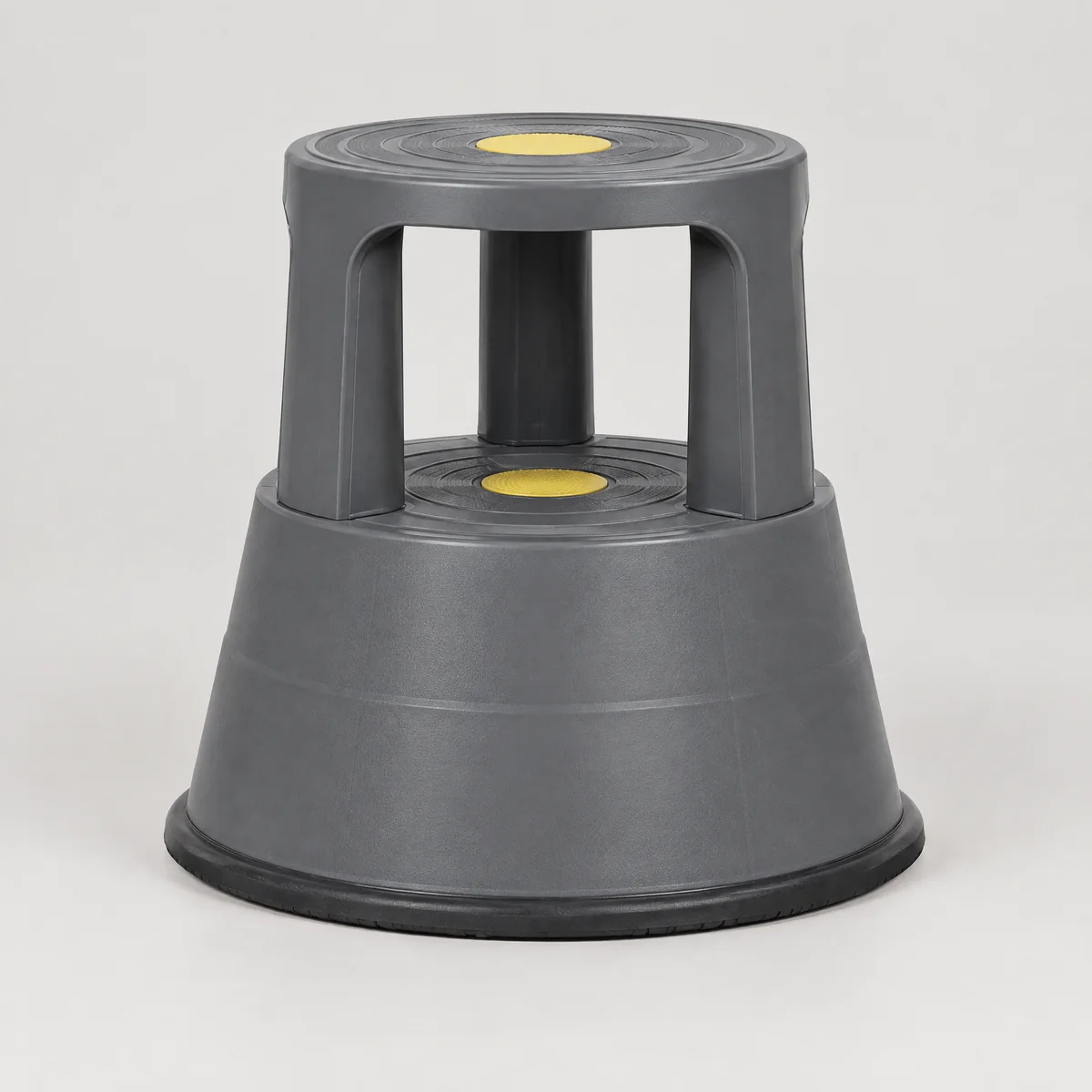
2-Level Round Step
2-Level round step. Colour: grey-white; Load capacity records differ: 100 kg in product information and 120 kg in selectable variant records; confirm the exact rating in writing. Formal quotation available upon request based on use, specifications and quantity.
- Colour
- grey-white
- Load capacity
- 100 kg in product information / 120 kg in variant records; confirm exact rating in writing
- Source-record note
- The JC2508-B/JC2509-B model identifier requires written confirmation because source product text and the selectable record conflict.
 Aluminium Ladders & Access EquipmentProduct reference image
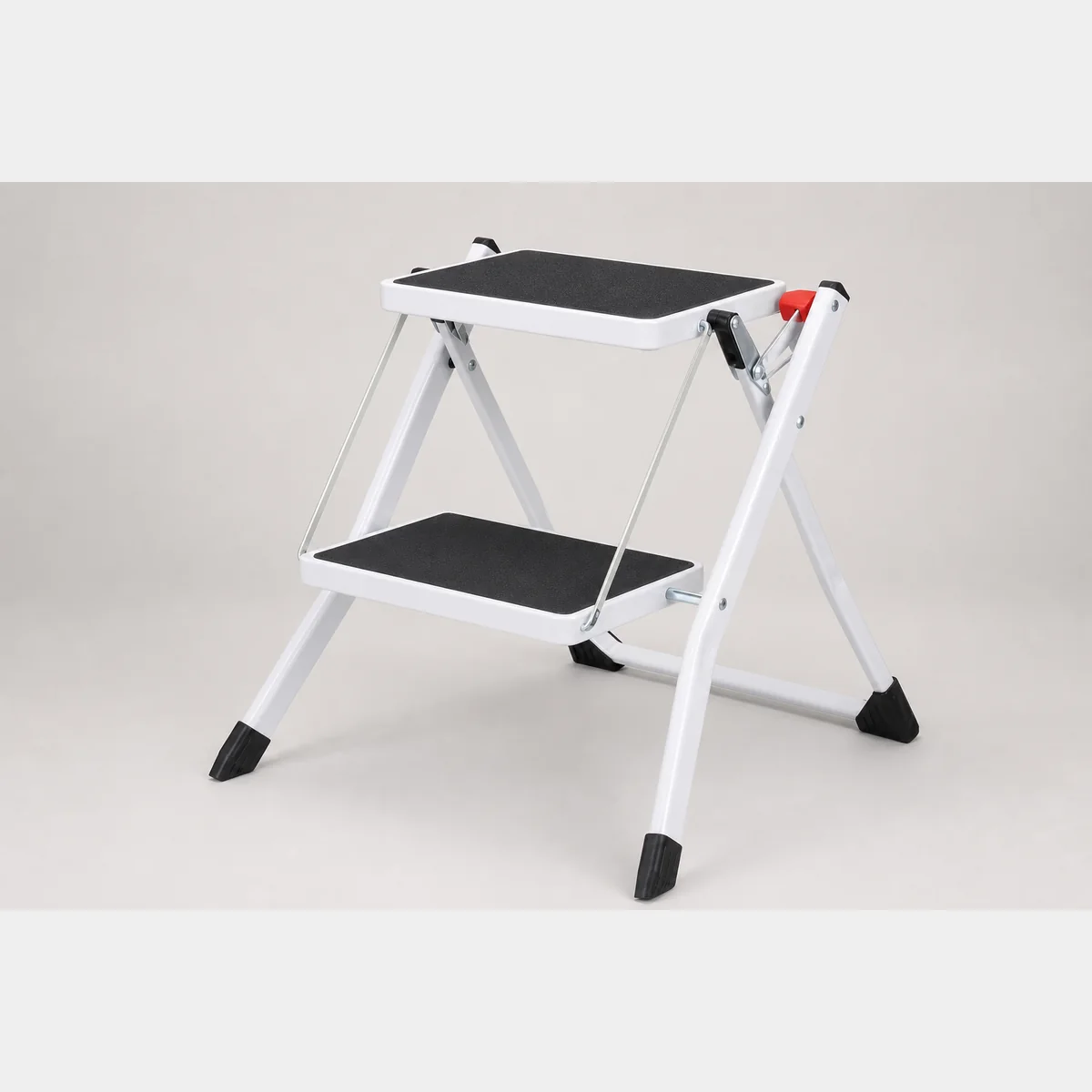
2-step ladder
2-step ladder. Dimensions/specification: L49xW48.5xH44.5 cm. Formal quotation available on enquiry with intended use, specifications and quantity.
- Dimensions/Specifications
- L49xW48.5xH44.5 cm
 Aluminium Ladders & Access EquipmentProduct reference image
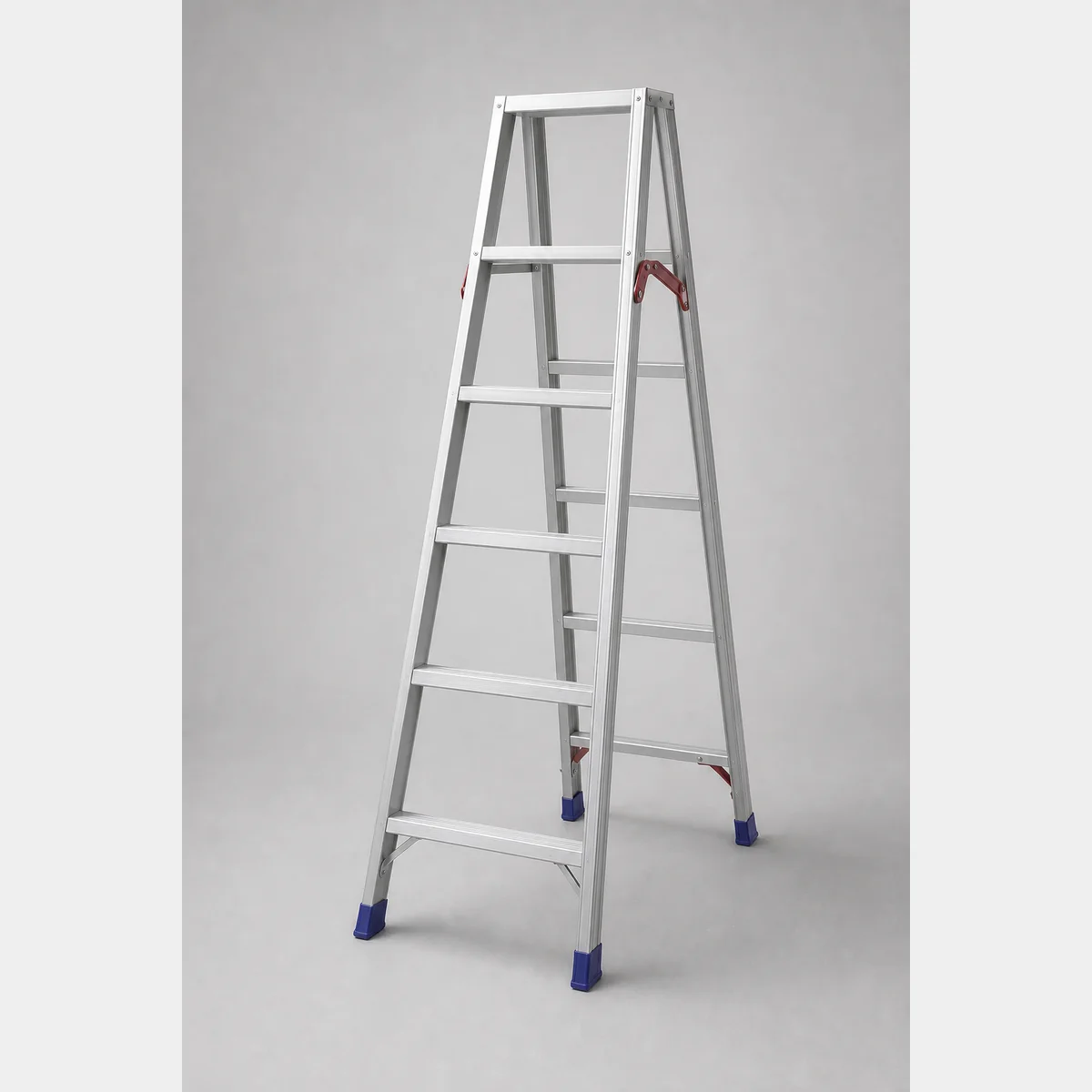
2-way double-sided A-frame aluminium ladder
2-way double-sided A-frame aluminium ladder. Size/Model lines: NXG150A2X4 / NXG150A2X5. A formal quotation is available on request by use, specification and quantity.
- Size/Model line
- NXG150A2X4 / NXG150A2X5
 Aluminium Ladders & Access EquipmentProduct reference image
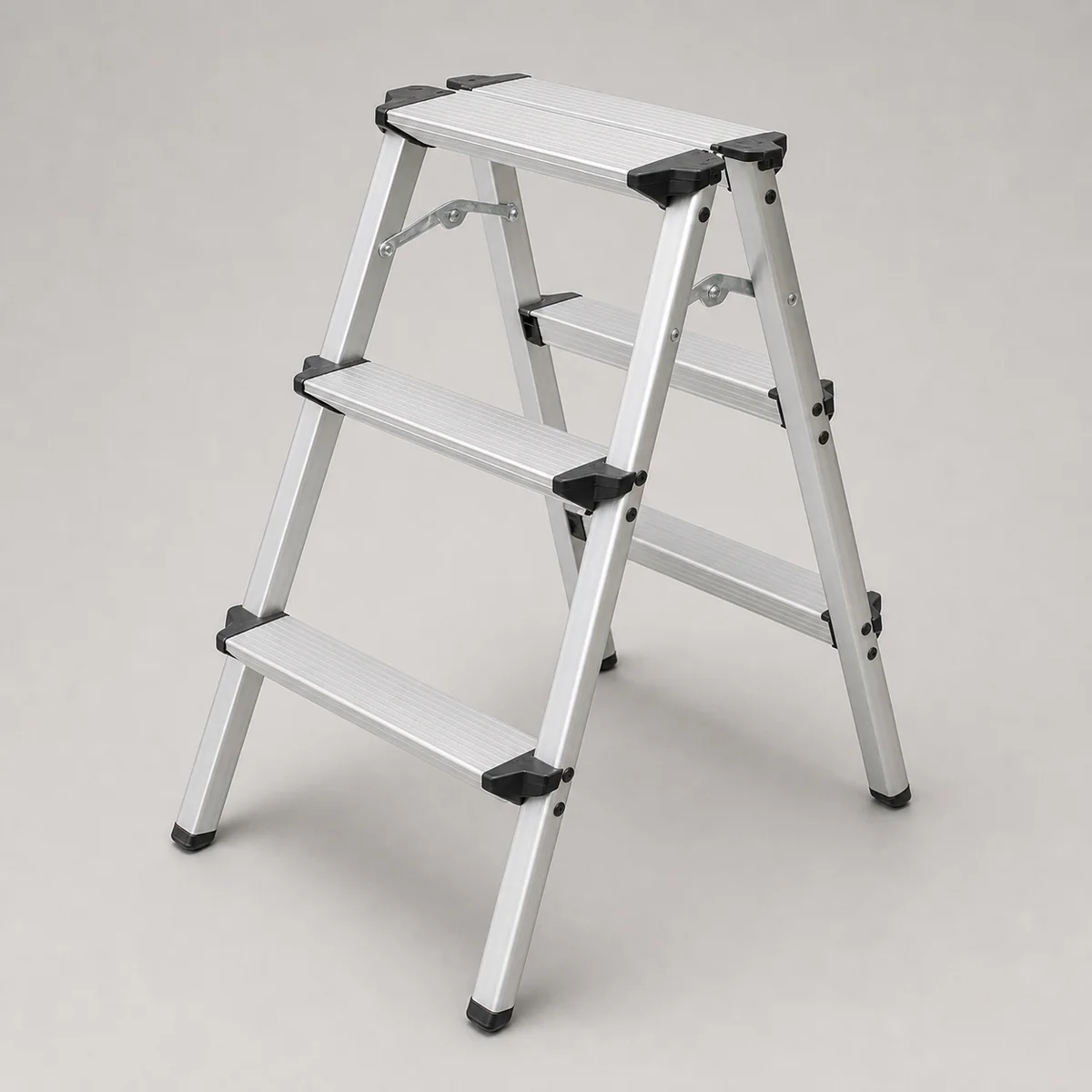
3-level A-frame aluminium ladder
3-level A-frame aluminium ladder. Material: aluminium; Working height: 80 CM; Load capacity: 100KG. Please contact us for a formal quotation based on application, specifications and quantity.
- Material
- Aluminium
- Working height
- 80 CM
- Load capacity
- 100KG
 Aluminium Ladders & Access EquipmentProduct reference image
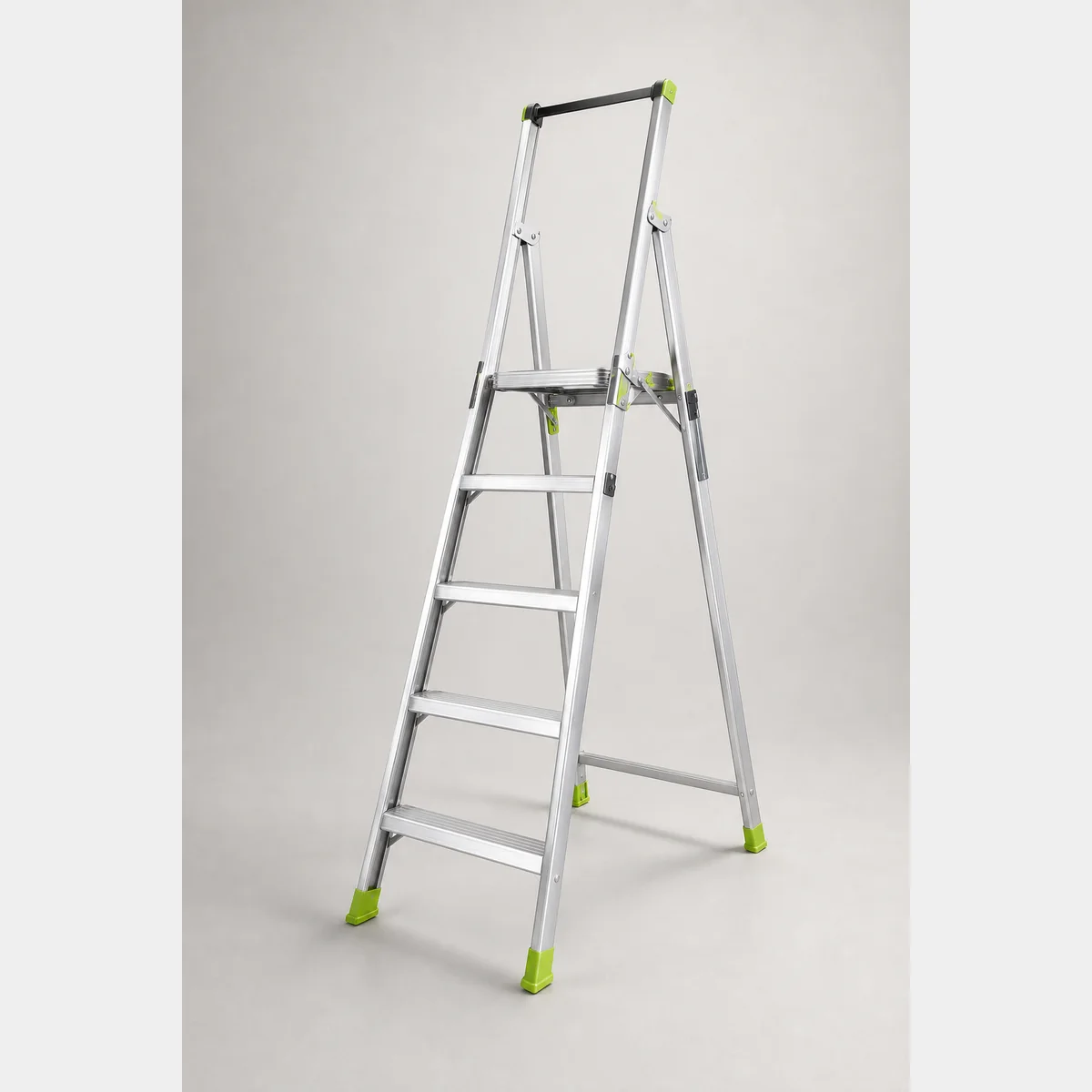
Aluminium Ladder with Handrail
Aluminium ladder with handrail. Dimensions/Specs: W473xD660xH1107 mm / W530xD845xH1387 mm; Use height: 487 mm / 767 mm; Load capacity: 150KG. Formal quotation available based on use, specifications and quantity.
- Dimensions/Specs
- W473xD660xH1107 mm / W530xD845xH1387 mm
- Use height
- 487 mm / 767 mm
- Load capacity
- 150KG
 Aluminium Ladders & Access EquipmentProduct reference image
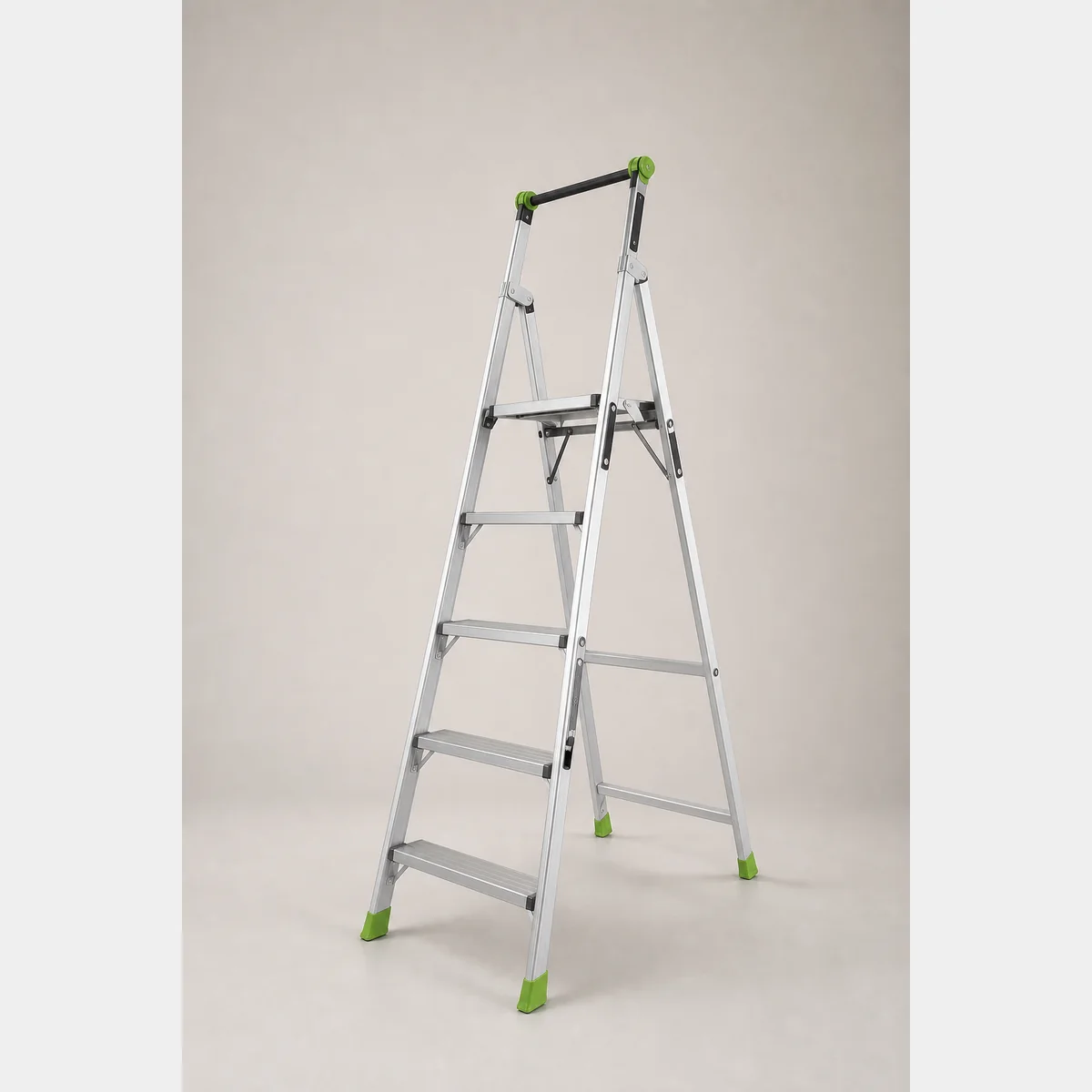
Aluminium Ladder with Handrail
Aluminium Ladder with Handrail. Enquire with the intended use, specifications and quantity for written confirmation.
- Dimensions / Spec line
- W424xD666xTH1221 mm / W448xD819xTH1436 mm
- Working height
- 611 MM / 827 MM
- Minimum order quantity
- 1PC
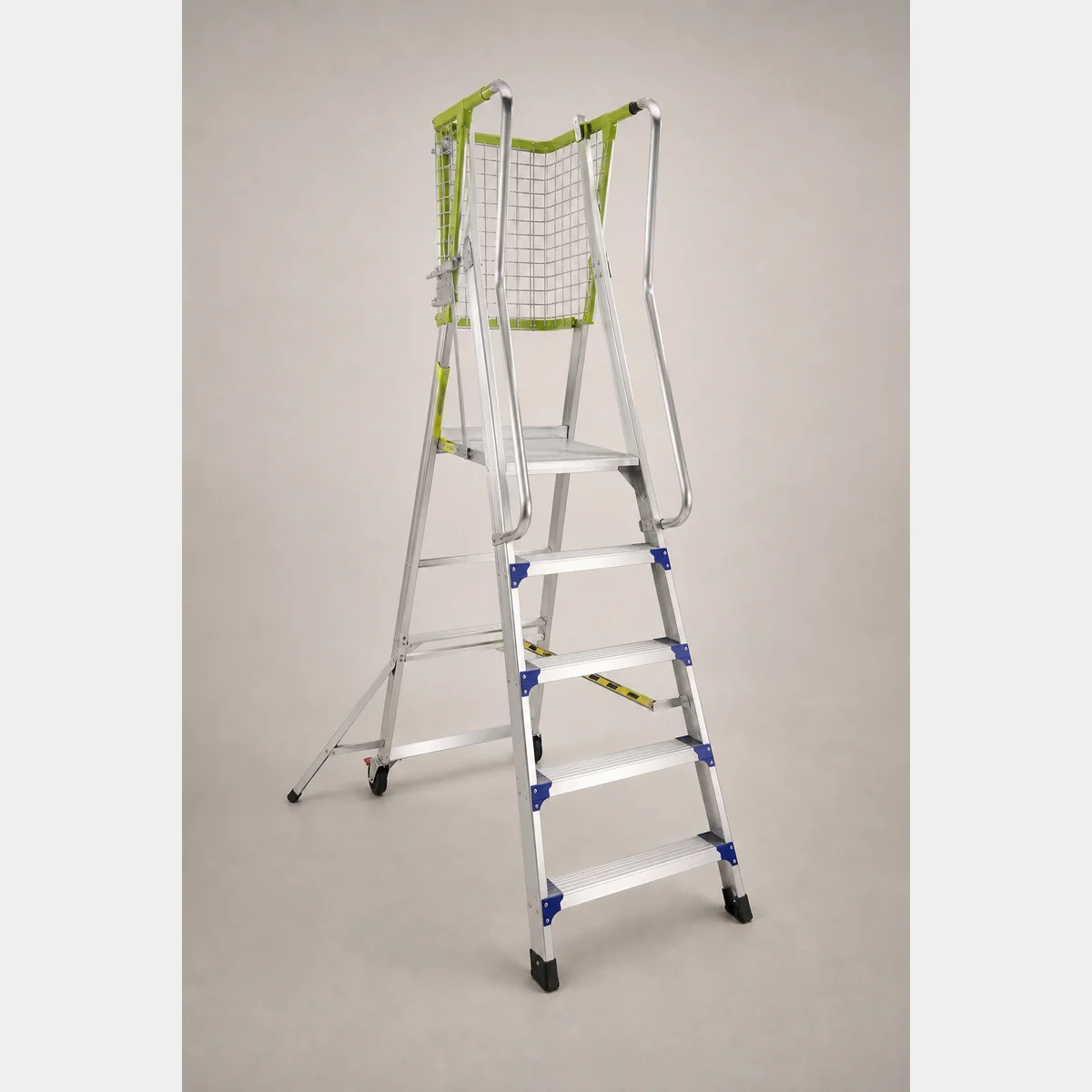 Aluminium Ladders & Access EquipmentProduct reference image
Aluminium platform ladder with mesh enclosure (Diagonal Brace)
Aluminium platform ladder with mesh enclosure (Diagonal Brace), working heights: 860 mm / 1150 mm. Formal quotation available upon request based on use, specifications and quantity.
- Working height
- 860 mm / 1150 mm
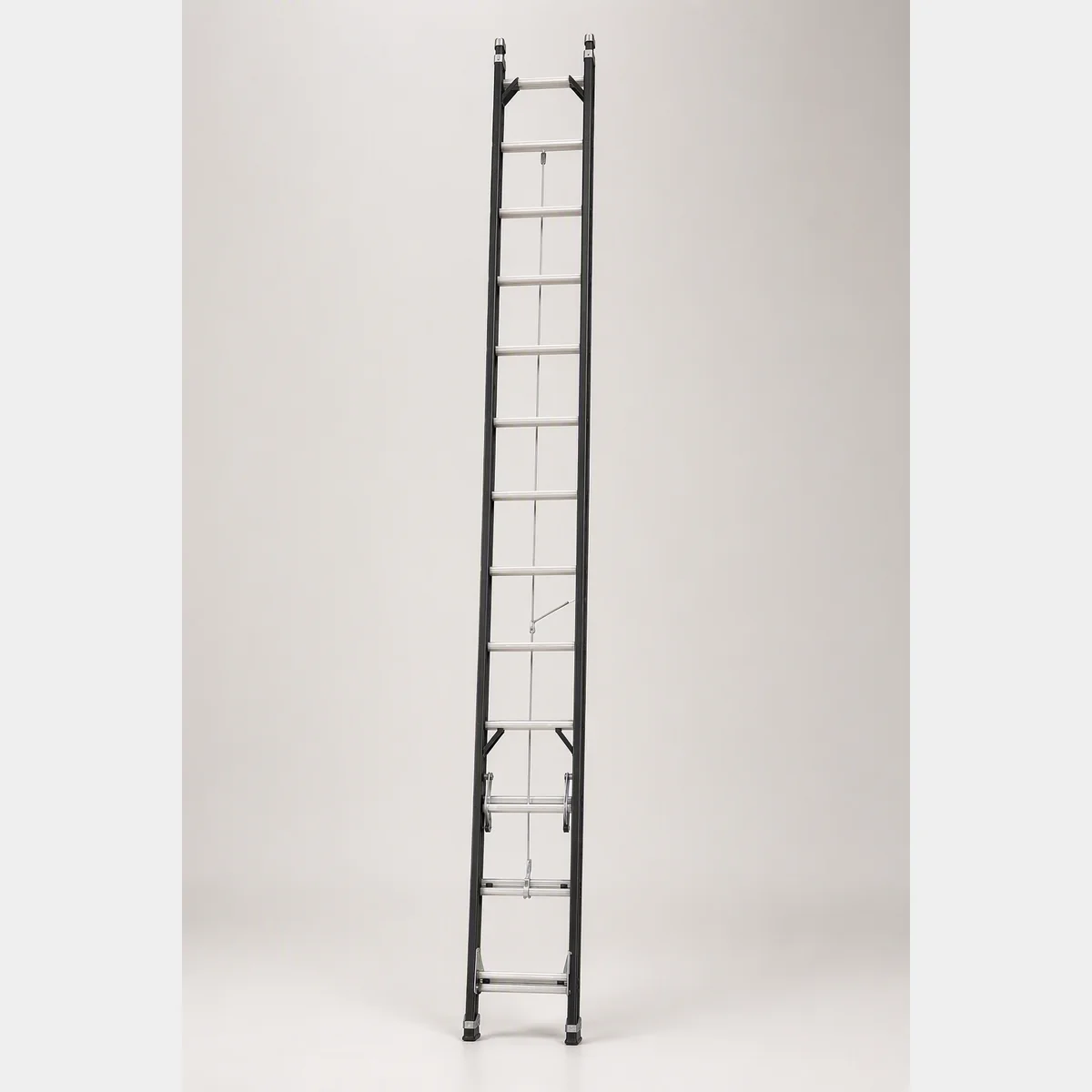 Aluminium Ladders & Access EquipmentProduct reference image
Double-section Fibreglass Extension Ladder (Straight Ladder)
Double-section fibreglass extension ladder, SIZE: 253-406 cm / 314-528 cm; Minimum order quantity: 1PC. Formal quotation available on request for use, specification and quantity.
- SIZE
- 253-406 cm / 314-528 cm
- Minimum order quantity
- 1PC
Continue with closely related procurement topics
These pages share equipment, operating or decision-stage signals with this guide.
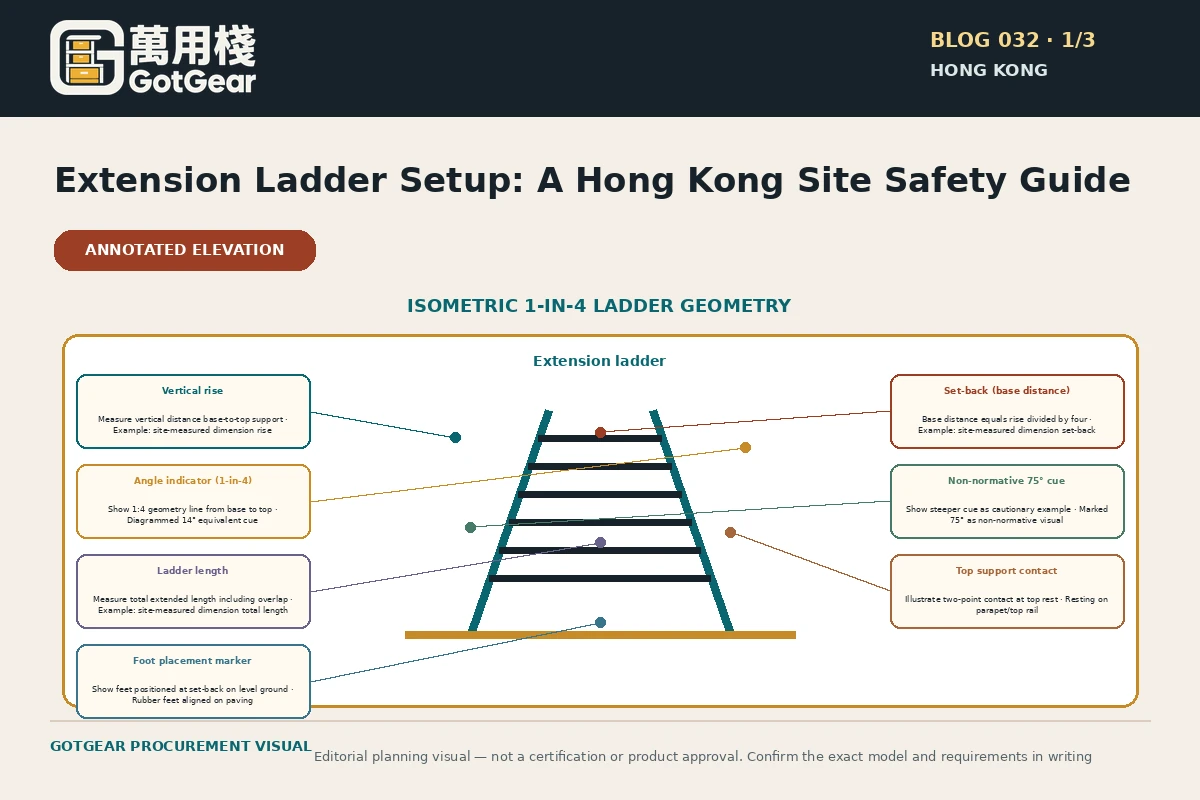
Extension ladder setup Hong Kong
GotGear explains extension ladder setup Hong Kong for Hong Kong buyers. See how ladder 4 to 1 rule Hong Kong supports extension ladder landing access Hong Kong, with practical checks, evidence boundaries and written requirements.
Read the guide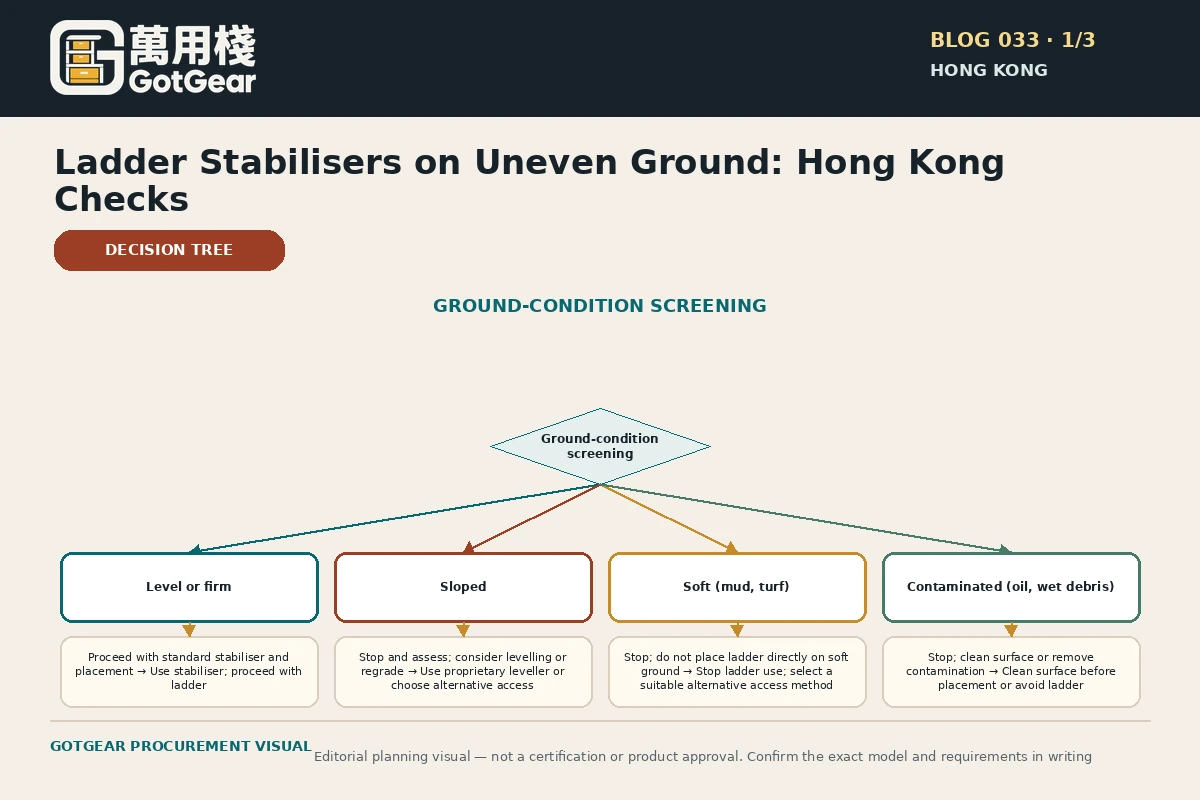
Ladder stabiliser for uneven ground Hong Kong
GotGear explains ladder stabiliser for uneven ground Hong Kong for Hong Kong buyers. See how ladder safety feet Hong Kong supports ladder securing methods Hong Kong, with practical checks, evidence boundaries and written requirements.
Read the guide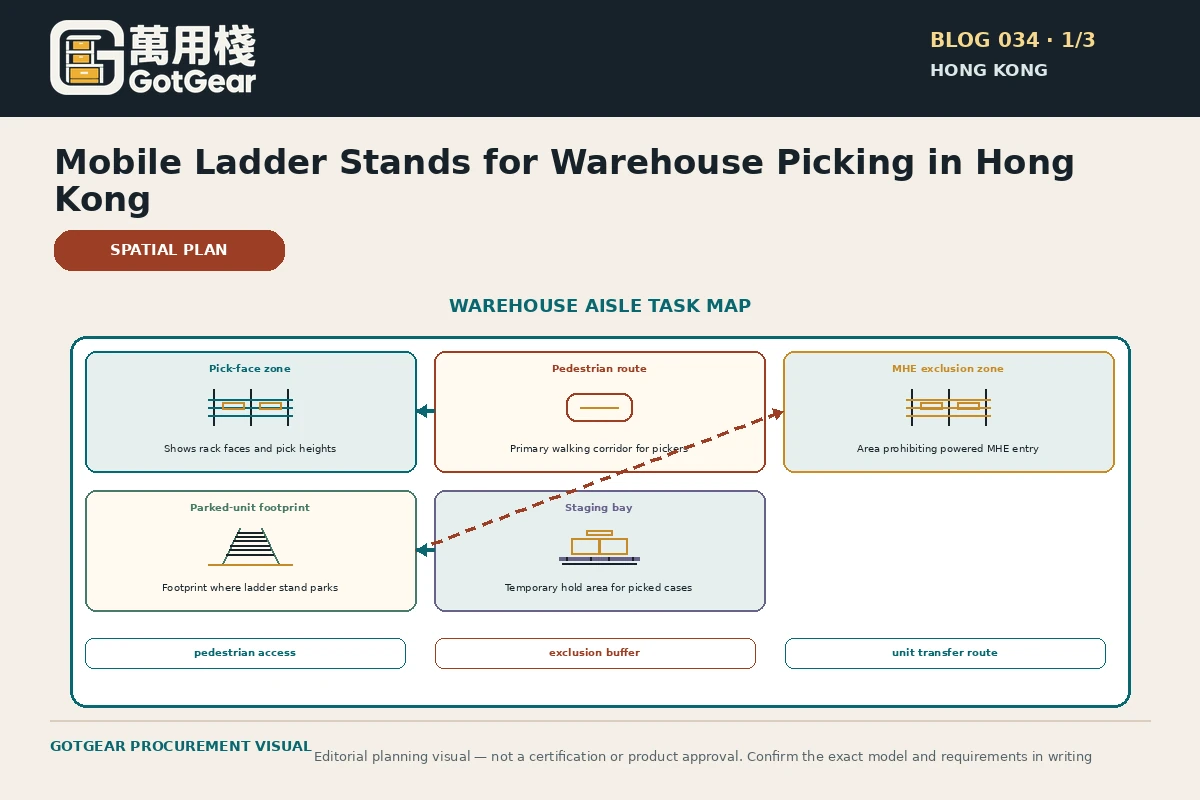
Mobile ladder stand for warehouse picking Hong Kong
GotGear explains mobile ladder stand for warehouse picking Hong Kong for Hong Kong buyers. See how warehouse order picking ladder Hong Kong supports rolling ladder platform Hong Kong, with practical checks, evidence boundaries and written requirements.
Read the guide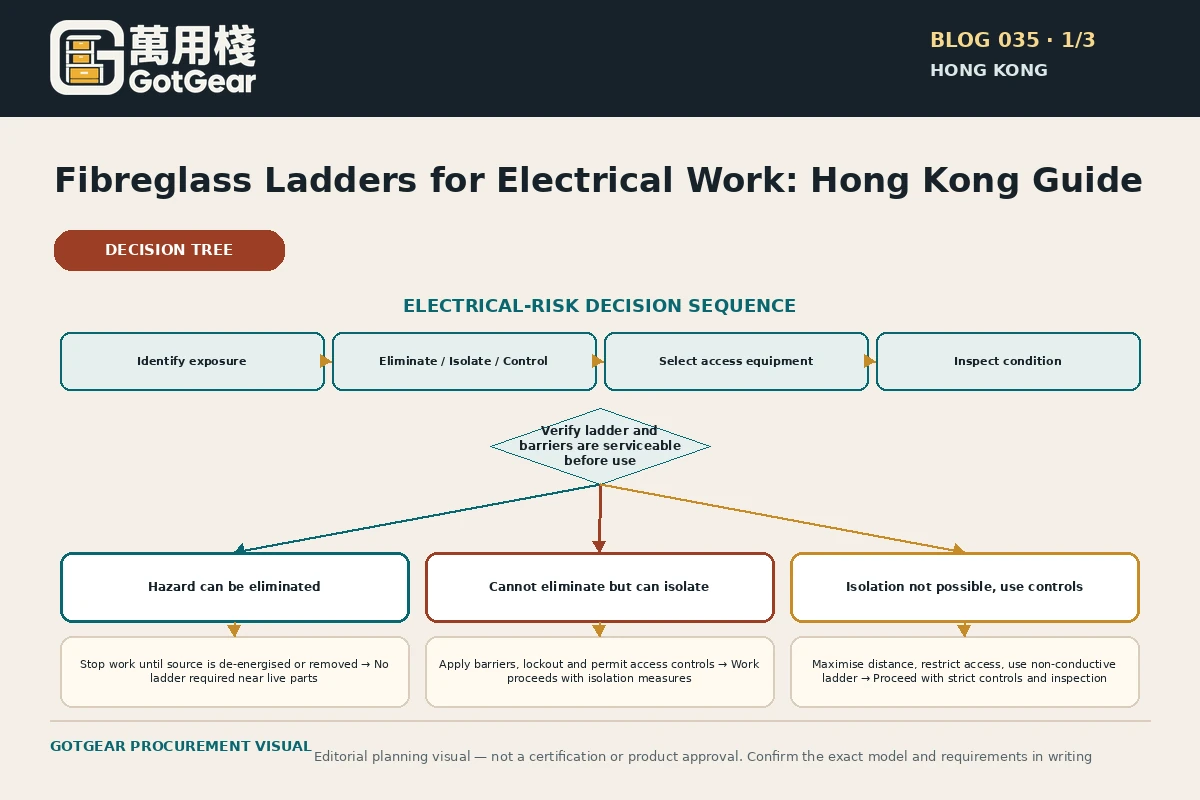
Fibreglass ladder for electrical work Hong Kong
GotGear explains fibreglass ladder for electrical work Hong Kong for Hong Kong buyers. See how non-conductive ladder Hong Kong supports ladder near electrical installations Hong Kong, with practical checks, evidence boundaries and written requirements.
Read the guideRelated topic indexOpen more English procurement pages13 topics
Browse additional equipment families, applications and procurement questions relevant to these operating requirements.