
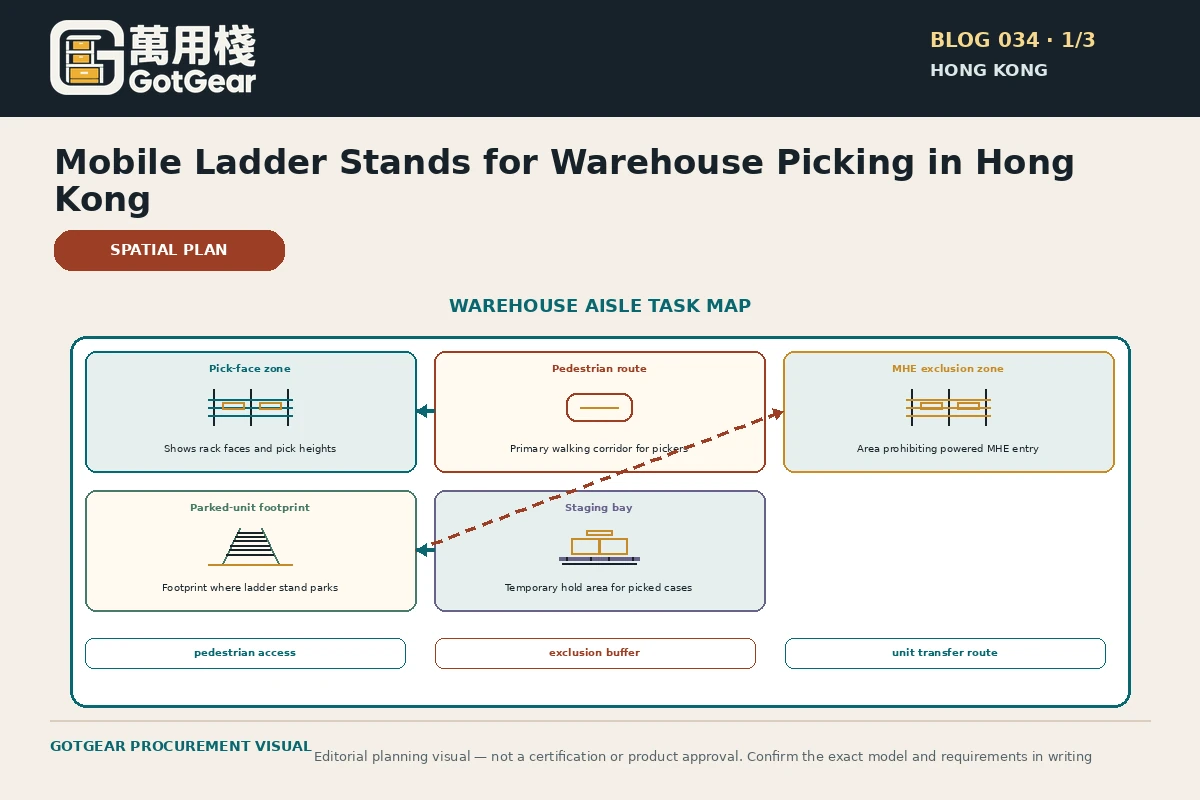
For repetitive order picking in Hong Kong, select a mobile ladder stand or platform once you have mapped average pick heights, user-plus-tool weight, and standing-area needs. Prioritise units with a published rated load that exceeds your worst-case person-plus-load, slip-resistant treads or deck, fixed handrails or guarding where picks require leaning, a positive caster-brake or wheel-lock system, and manufacturer instructions that prohibit moving while occupied. Treat OSHA/ALI guidance as technical context; verify manufacturer data and apply Hong Kong site risk controls and work-at-height hierarchy.
What to remember before you decide
- Map pick heights, traffic patterns and person-plus-tool loads before choosing a unit.
- Match rated load and deck area to the worst-case worker-plus-load and add a safety factor.
- Prefer platforms with positive caster locks or brakes sized for your floor; always test brakes on-site.
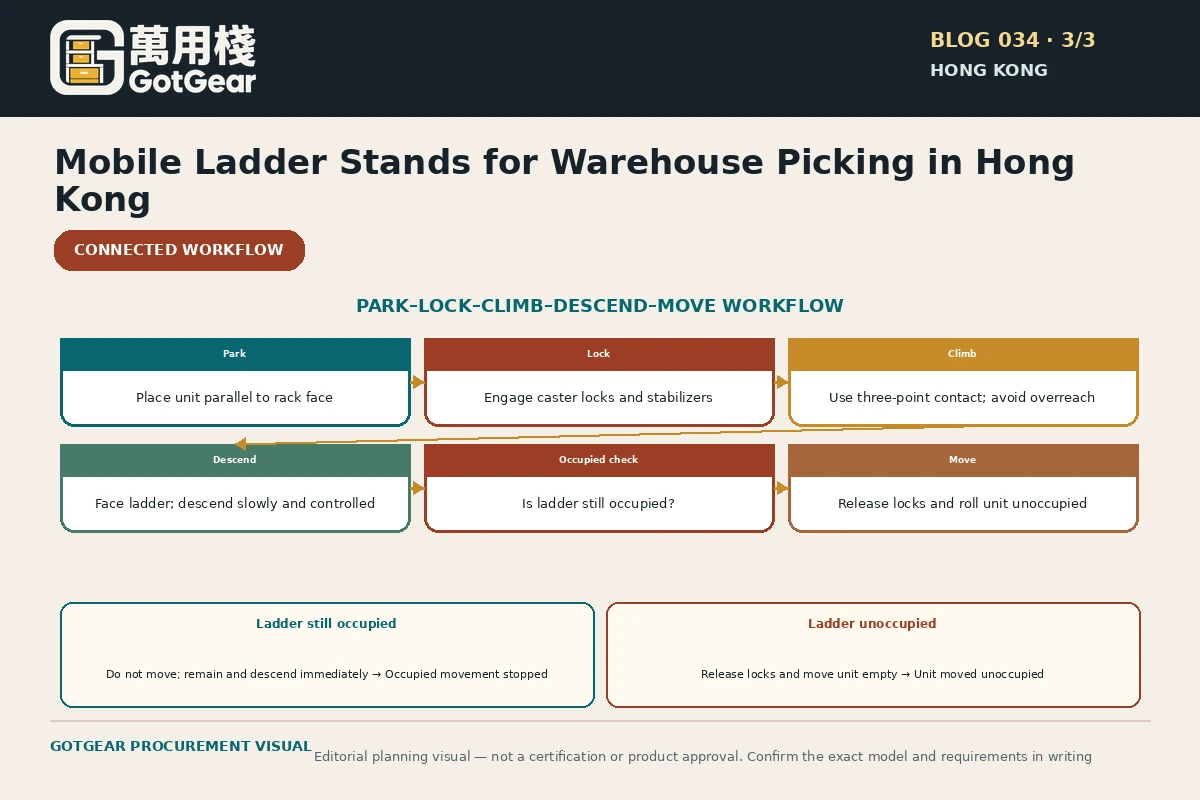
- Do not move mobile ladder stands or platforms while occupied—make this an explicit site rule.
- In tight Hong Kong aisles, validate turning radius and footprint with an on-site demo.
- Treat OSHA/ALI guidance as technical context; require manufacturer documentation and apply Hong Kong site risk controls.
Why the distinction matters in Hong Kong operations
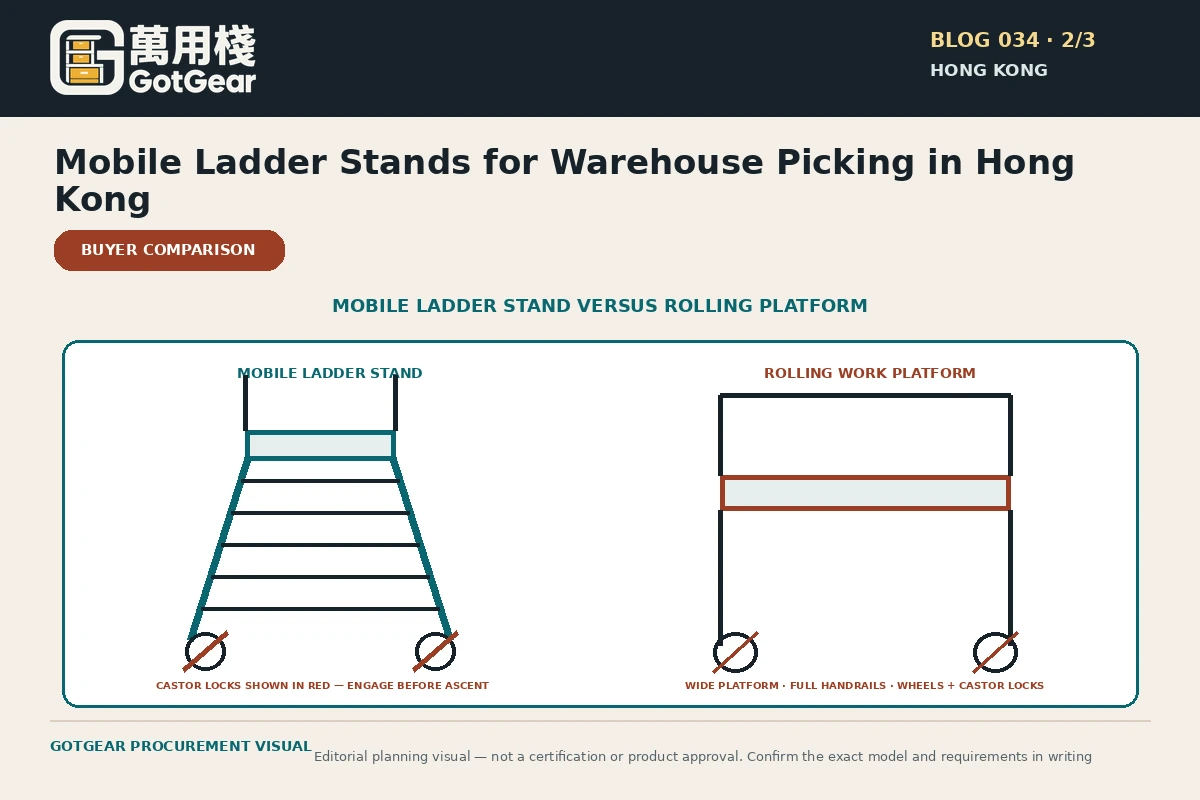
Decision context and why names are not interchangeable: In Hong Kong warehouses the footprint, aisle width and high labour density make it essential to choose the right style of access equipment. A ‘mobile ladder stand’ typically means a fixed-height ladder with wide flat treads and a top step for short, frequent picks; a ‘ladder stand platform’ (or mobile ladder platform) provides a small standing deck and means of egress and is chosen where workers need a stable platform to carry tools or pick larger items; a ‘rolling ladder platform’ usually offers a larger deck, guardrails and a higher rated load for longer-duration tasks. Use these decision checks: Map your most common pick heights and tasks. For picks below 1.5 m a simple mobile ladder stand with deep treads may be faster and take less aisle room. For repeated picking at 1.6–3.0 m where workers need space to sort or balance items, a ladder platform or rolling ladder platform with a standing deck and guarding is more appropriate. Consider the person-plus-tool load—the manufacturer’s rated load must exceed the maximum combined weight expected during a pick cycle. A key limitation is that Manufacturer model names vary and some suppliers market similar products under different labels. Overseas standards like OSHA and ANSI/ALI provide useful technical guidance but are not Hong Kong law; do not treat them as authorisations. Caster performance is load- and surface-sensitive; units rated for smooth concrete may behave differently on painted floors or tiled areas common in some Hong Kong facilities. Next, Perform a short pick-profile study: log 50–100 representative picks, record height, item size, weight, tool use and average time on-step. Measure aisle widths, turning radii and typical traffic patterns (including forklifts). Request detailed manufacturer data sheets showing rated load, deck area, tread dimensions, guardrail heights and caster specifications, and ask suppliers for safe-use instructions and warnings about moving while occupied.
Aisle geometry, collision exposure and Hong Kong layouts
In Hong Kong, Many local fulfilment and retail DCs are compact with narrow aisles, cross-aisles and mixed pedestrian/forklift traffic. Even if a unit is nominally ‘mobile’, using it in a tight aisle increases collision risk and reduces the margin for caster engagement. Use these decision checks: Choose narrower-profile stands for single-person picking when aisle width is constrained; select platforms with integrated guardrails when picks require two-handed manipulation or temporary sorting. Assess traffic exposure: where forklifts or pallet jacks pass frequently, prefer stationary or lockable solutions and designate staging areas away from traffic. A key limitation is that Some rolling ladder platforms have a larger turning circle and cannot be used effectively in aisles under a specified width. Floor irregularities, thresholds and chamfers—common near loading doors in Hong Kong—can defeat caster locks or create a tipping hazard. Always validate caster brake performance under loaded and unloaded conditions on your floor surface. Next, Measure the tightest aisle and test a demo unit in the same aisle with an operator carrying typical weights and tools. Verify wheel lock engagement and confirm the unit remains immobile under expected side loads. If demo units are unavailable, ask suppliers for reference installations in Hong Kong or similar-density warehouses and for video of the unit in use in comparable aisles.
“Select equipment on task fit, not on label. Confirm rated load, deck area, caster braking and the ‘no-move-while-occupied’ control before placing any mobile ladder stand into service.”— GotGear Editorial Team
What should buyers compare for mobile ladder stand for warehouse picking Hong Kong?
| Option or approach | Best for | Trade-offs | Checks before acceptance |
|---|---|---|---|
| Compact mobile ladder stand (single-step or 2–4 wide treads) | Very low picks (under 1.5 m), fast single-handed picking in narrow aisles. | Small or no standing deck; limited load capacity and no guarding; unsuitable for two-handed or heavier picks. | Request tread dimensions, rated load, and a demo to verify stability in your narrowest aisle. |
| Mobile ladder stand platform (small deck with means of access) | Repeated picks at 1.5–2.5 m where worker needs a small stable deck and some temporary staging space. | Larger footprint than compact stands; may be harder to manoeuvre in very tight aisles; requires robust caster brakes. | Obtain manufacturer deck area, guardrail heights, rated load, and test a demo under typical load and on your floor finish. |
| Rolling ladder platform with full guardrails | Higher picks or tasks that need two-handed work, tool use or temporary sorting—good for multi-minute tasks. | Heavier, larger turning radius, may block aisles; requires a larger storage footprint and more handling resources. | Check guardrail heights, gate design, rated load, and verify turning radius fits your aisle widths with a demo unit. |
| Stationary ladder with mobile safety cage (non-moveable) | High-traffic areas where movement would create collision risk; used as a dedicated access point. | No mobility; needs planning for multiple fixed locations and floor anchors; not suitable if picks must move frequently. | Review anchoring details, floor load requirements and ensure site layout supports fixed installation. |
| Low-level working platform (separate cluster reference) | Tasks under 2 m requiring a wider standing area and multi-minute occupation where a stable platform is needed. | May be heavier and less mobile; covered in dedicated low-level working platform guidance—use when deck size or guarding needs exceed ladder-platform designs. | Compare deck area, guarding, rated load and confirm alignment with your work-at-height policy and local controls. |
This framework helps buyers create comparable written enquiries. Final model specifications, availability, delivery and commercial terms must be confirmed in a formal quotation.
Load, standing area and guarding — match the task to the platform
Decision context: Match the rated load to person-plus-tool weight plus dynamic allowances for movement. For frequent repetitive picks that involve two-handed tools or small cartons, you will need a wider deck (standing area) to reduce balance risk. Guarding and handrails are essential where workers must lean or reach beyond the deck plane. Use these decision checks: Specify a minimum rated load equal to the heaviest worker plus tools, multiplied by a safety factor recommended by your EHS policy (commonly 1.25–1.5 for dynamic tasks). Define required deck area to allow a stable stance during the entire pick motion: for two-handed lifting, a minimum clear deck depth of 450–600 mm may be suitable; for sorting and temporary staging, larger decks are appropriate. Require full-height handrails where picks exceed shoulder level or where leaning is predictable. A key limitation is that Manufacturer rated loads are tested on level surfaces; working on ramps, uneven floors or near dock edges will reduce safe capacity. Some mobile ladder stands achieve a higher load rating by increasing footprint; this can be incompatible with narrow Hong Kong aisles. Also consider slip-resistance: highly polished steps or metal decks become slippery with dust, humidity or light spillages. Next, Ask suppliers for test reports or product-data sheets showing rated loads and the test conditions. If available, request independent test certificates or third-party evaluation. Implement local controls: surface inspections, anti-slip materials, and roster limits if the platform is used for prolonged periods to mitigate fatigue-related balance loss.
Casters, brakes and the rule: never move while occupied
In Hong Kong, The manufacturer’s instructions commonly prohibit moving a mobile ladder stand while someone is on it; this is an essential control for all Hong Kong sites. Caster design, wheel locks and friction brakes vary: some units use a foot-operated single-point brake, others provide positive mechanical locks or outrigger-style restraints. Use these decision checks: Choose casters sized for your floor, rated for the full load including dynamic loads, with a locking mechanism that prevents both rolling and swivel motion. For busy pick zones, prefer brakes that are easy to set and visibly indicate locked status. Where the process requires repositioning between picks, consider a two-person repositioning policy with no-one on the platform, and a clear communication method to confirm the unit is static before use. A key limitation is that Positive mechanical locks can add weight and resource requirements; simple friction brakes may degrade over time, especially with dirt or debris in Hong Kong warehouse floors. Wheel materials that roll well on concrete may snub on painted or oil-contaminated surfaces. Brakes cannot substitute for administrative controls where aisles are sloped or where traffic density is high. Next, Include caster and lock checks in daily pre-shift inspections, record brake engagement tests, and require staff training on the ‘no-move-while-occupied’ rule. Update site procedures to prohibit moving units while occupied and to designate staging areas for repositioning. Obtain manufacturer maintenance schedules and spare-part lists for casters and locking mechanisms.
Mobile ladder stand for warehouse picking Hong Kong decision checklist
- Map typical pick heights across SKUs and record at least 50–100 representative picks.
- Measure tightest aisle width, doorway thresholds and turning radii where units must pass.
- Calculate person-plus-tool maximum weight and add an organisational safety factor (1.25–1.5).
- Request manufacturer data sheets showing rated load, deck/tread dimensions, guardrail heights and caster specifications.
- Verify caster wheel diameter, material and brake type are suitable for your floor finish; request brake performance data where available.
- Confirm manufacturer safe-use instructions explicitly prohibit moving the unit while occupied and provide care-and-use guidance.
- Plan a demo or in-situ test in a representative aisle with an operator carrying typical tools and loads.
- Update your EHS policy to include daily pre-use inspection items for stands, caster checks and a no-move-while-occupied rule.
- Designate staging areas and repositioning procedures if units must be moved frequently between pick zones.
- Ensure training records and toolbox talks cover proper use, load limits, and inspection requirements.
- If guardrails are required, confirm they meet your operational needs for reach and leaning and that gates latch securely.
- Require suppliers to disclose maintenance schedules, spare-part availability and any recommended frequency for brake or caster replacement.
Practical action sequence
- Conduct a pick-profile study and log height, weight, time-on-step and tools used.
- Measure aisle geometry and identify locations with forklift or pallet truck traffic.
- Shortlist 2–3 product types and request technical data sheets focused on rated load, deck size and caster details.
- Arrange on-site demo tests in the tightest aisle with representative loads and an experienced operator.
- Update written procedures to prohibit moving units while occupied and define repositioning roles and communication methods.
- Train picking staff and supervisors on daily inspections, load limits and emergency procedures for working on platforms.
- Implement a pre-shift checklist that includes caster brake test, guardrail inspection and deck slip-resistance check.
- Review supplier maintenance recommendations and schedule periodic checks for casters, brakes and structural components.
Apply the checks to your Hong Kong site
Hong Kong warehouses are often space-constrained with mixed traffic and frequent picks, so local site risk controls must be applied alongside supplier guidance. Measure aisle widths, map traffic patterns and floor conditions, obtain manufacturer specifications and validate caster and brake performance on your actual floors before accepting units into service. Match pick height, person-plus-tool load and standing-area need to the device: a mobile ladder stand for warehouse picking Hong Kong will suit higher picks with a small footprint, while a warehouse order picking ladder Hong Kong may prioritise larger standing areas or different caster arrangements. Don’t assume one configuration fits every aisle geometry or collision exposure; aisle layout and nearby traffic will affect whether a rolling ladder platform Hong Kong is the safer choice. Operational takeaway: run loaded caster and brake trials and a short work cycle on representative floor areas, record the results against your site measurements, and only commission units that meet those documented performance checks.
References used for this article
These sources provide regulatory, safety or planning context. They do not certify any GotGear product or replace site-specific professional advice.
- Hong Kong Labour Department — Overview of Work-at-Height Safety — Hong Kong hierarchy, task-specific assessment and low-level working-platform context.
- OSHA — 29 CFR 1910.23 Ladders — Technical reference for mobile ladder stands and platforms, including slip resistance, movement restraint and load concepts.
- American Ladder Institute — Mobile Ladder Stand & Platforms — Definitions, ANSI-ASC A14.7 reference, care-and-use and product-data checks.
- Occupational Safety and Health Council — Work at Height — Hong Kong work-at-height programme and below-two-metre platform context.
Questions about mobile ladder stand for warehouse picking Hong Kong
Is OSHA 29 CFR 1910.23 applicable in Hong Kong for mobile ladder stands?
OSHA 29 CFR 1910.23 is a U.S. regulatory standard that provides technical requirements for ladders, including notes on slip resistance and movement restraint. It is not Hong Kong law; use it as technical context when evaluating products and procedures. For legal and regulatory compliance in Hong Kong, follow local guidance and consult the Hong Kong Labour Department and the Occupational Safety and Health Council. Always request manufacturer documentation and verify that product specifications suit your local site conditions.
What does the American Ladder Institute say about mobile ladder stands and platforms?
The American Ladder Institute (ALI) distinguishes movable fixed-height ladder stands from ladder-platform designs and publishes care-and-use guidance and references to ANSI-ASC A14.7 for performance expectations. ALI emphasises that mobile units should not be moved while occupied, must remain within rated load limits and should be used on level surfaces. This is useful technical guidance for buyers in Hong Kong, but it should be combined with local risk assessment and site-specific controls rather than treated as local regulation.
Do I need guardrails on mobile ladder platforms for warehouse picking?
Guardrails are recommended when the task involves reaching beyond the deck plane, two-handed work, tool use or longer occupation of the deck. For short, single-handed picks under shoulder height, a ladder stand with wide treads might suffice. Define guardrail requirements based on task analysis: if picks require leaning, sorting or carrying larger cartons, specify platforms with guardrails and gates that lock securely. Always test guardrail ergonomics with actual tasks during a demo.
Can I move a rolling ladder platform while a worker is standing on it?
No. Manufacturer instructions and widely referenced industry guidance prohibit moving mobile ladder stands or platforms while occupied. Movement introduces uncontrolled dynamic loads, increases tipping risk and can defeat caster locks. For Hong Kong operations, make this an explicit rule in your EHS policy: reposition only with no one on the platform and use designated staging areas or a two-person repositioning procedure.
How should I validate caster and brake performance for my floor finish?
Request caster specifications from suppliers including wheel diameter, material, load rating and braking mechanism. Perform in-situ tests on your actual floors with representative loads: check rolling resistance, swivel behaviour, brake engagement under load and behaviour over thresholds or floor joints. Record results and repeat periodically. If casters show degraded performance on your floor type, specify alternative wheel materials or positive mechanical locks.
What documentation should I require from suppliers before purchase?
Require detailed product-data sheets that include rated load, test conditions, deck/tread dimensions, guardrail dimensions, caster and brake specifications, maintenance schedules and manufacturer care-and-use instructions including the prohibition on moving while occupied. Where possible, request reference installations in Hong Kong or independent test reports. Do not rely on sales descriptions alone—insist on the technical documentation that supports safe use in your environment.
Compare available product models and specifications
These product cards are matched to this buying topic. Select a specification and quantity to send the product details to WhatsApp.
 Aluminium Ladders & Access EquipmentProduct reference image
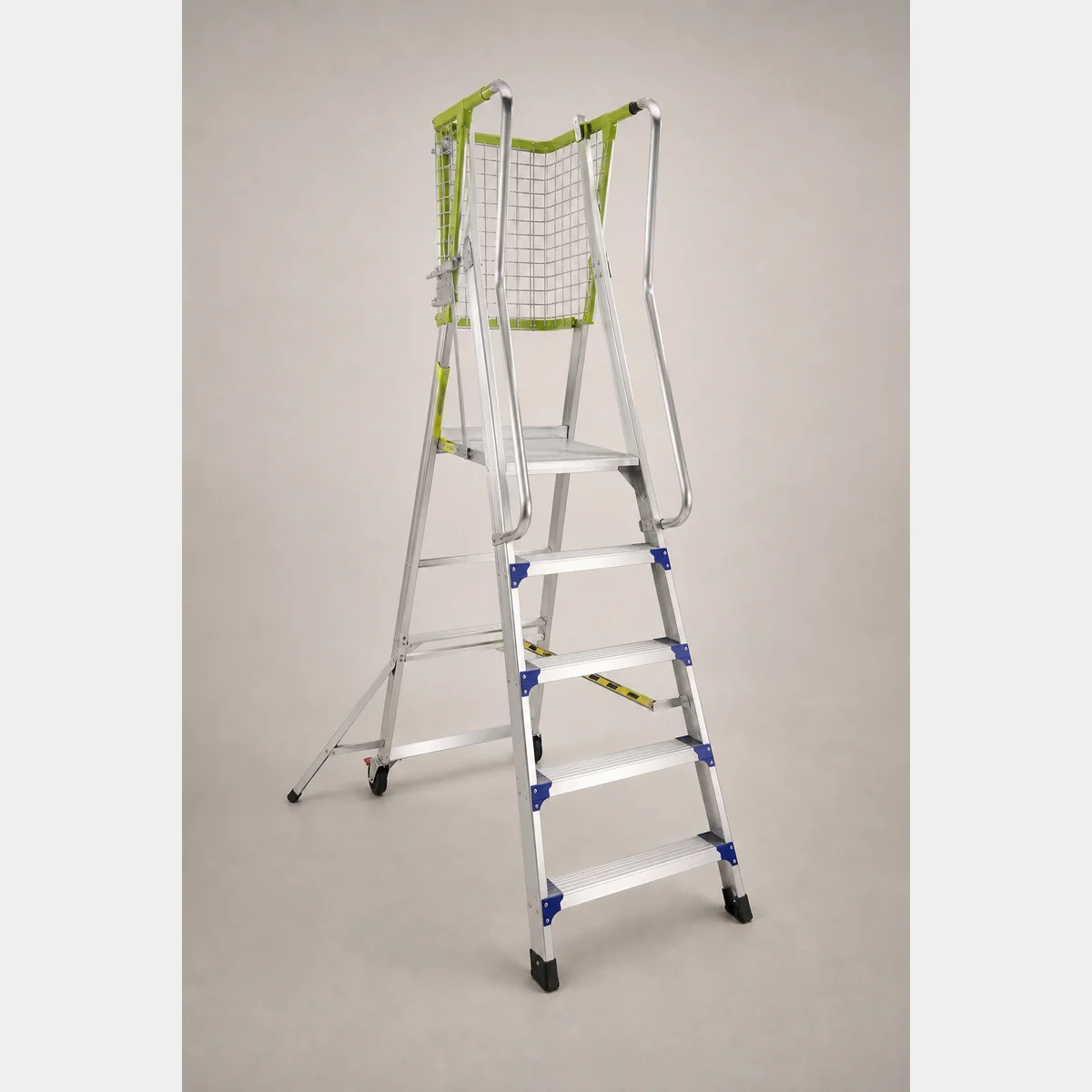
Aluminium platform ladder with mesh enclosure (Diagonal Brace)
Aluminium platform ladder with mesh enclosure (Diagonal Brace), working heights: 860 mm / 1150 mm. Formal quotation available upon request based on use, specifications and quantity.
- Working height
- 860 mm / 1150 mm
 Aluminium Ladders & Access EquipmentProduct reference image
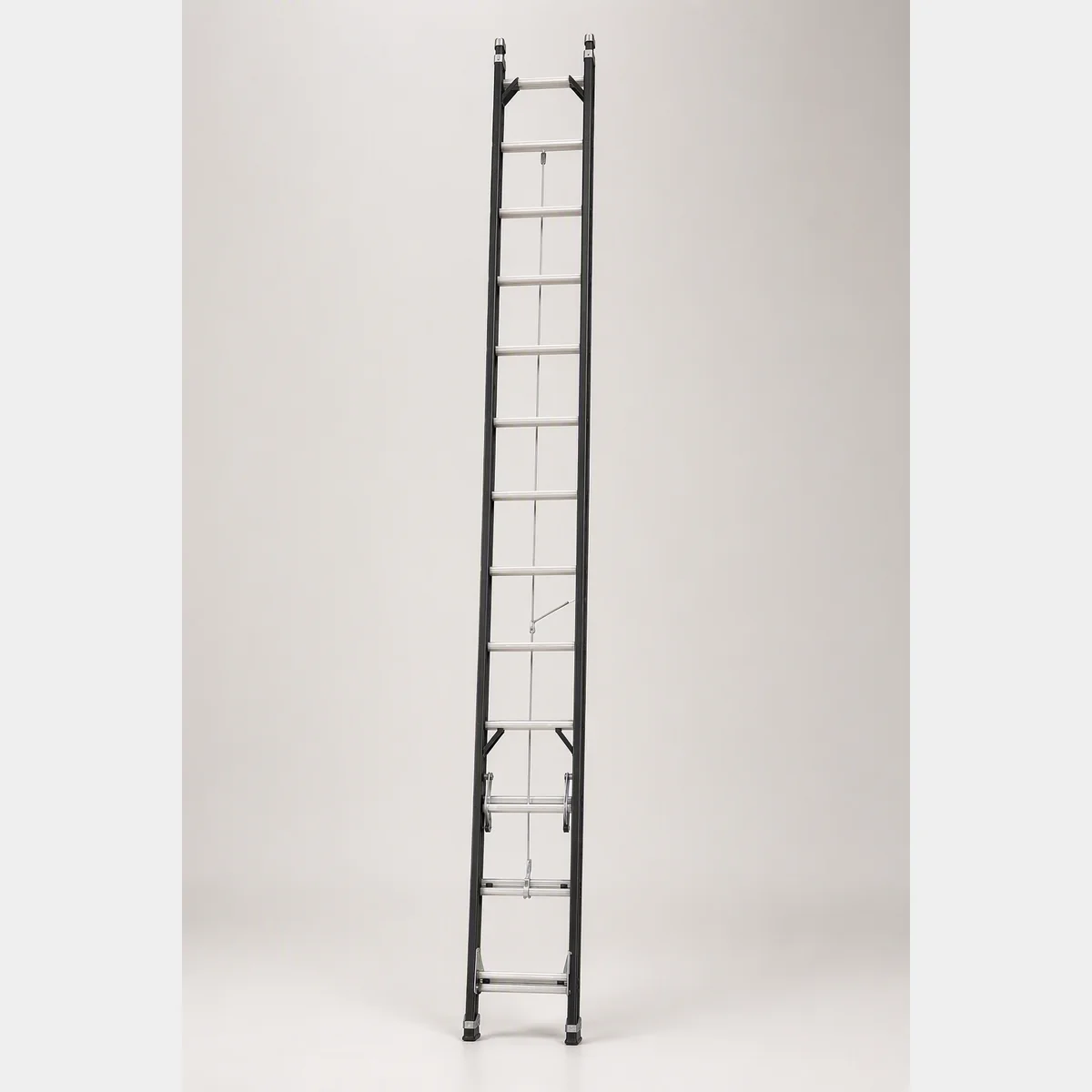
Double-section Fibreglass Extension Ladder (Straight Ladder)
Double-section fibreglass extension ladder, SIZE: 253-406 cm / 314-528 cm; Minimum order quantity: 1PC. Formal quotation available on request for use, specification and quantity.
- SIZE
- 253-406 cm / 314-528 cm
- Minimum order quantity
- 1PC
 Aluminium Ladders & Access EquipmentProduct reference image
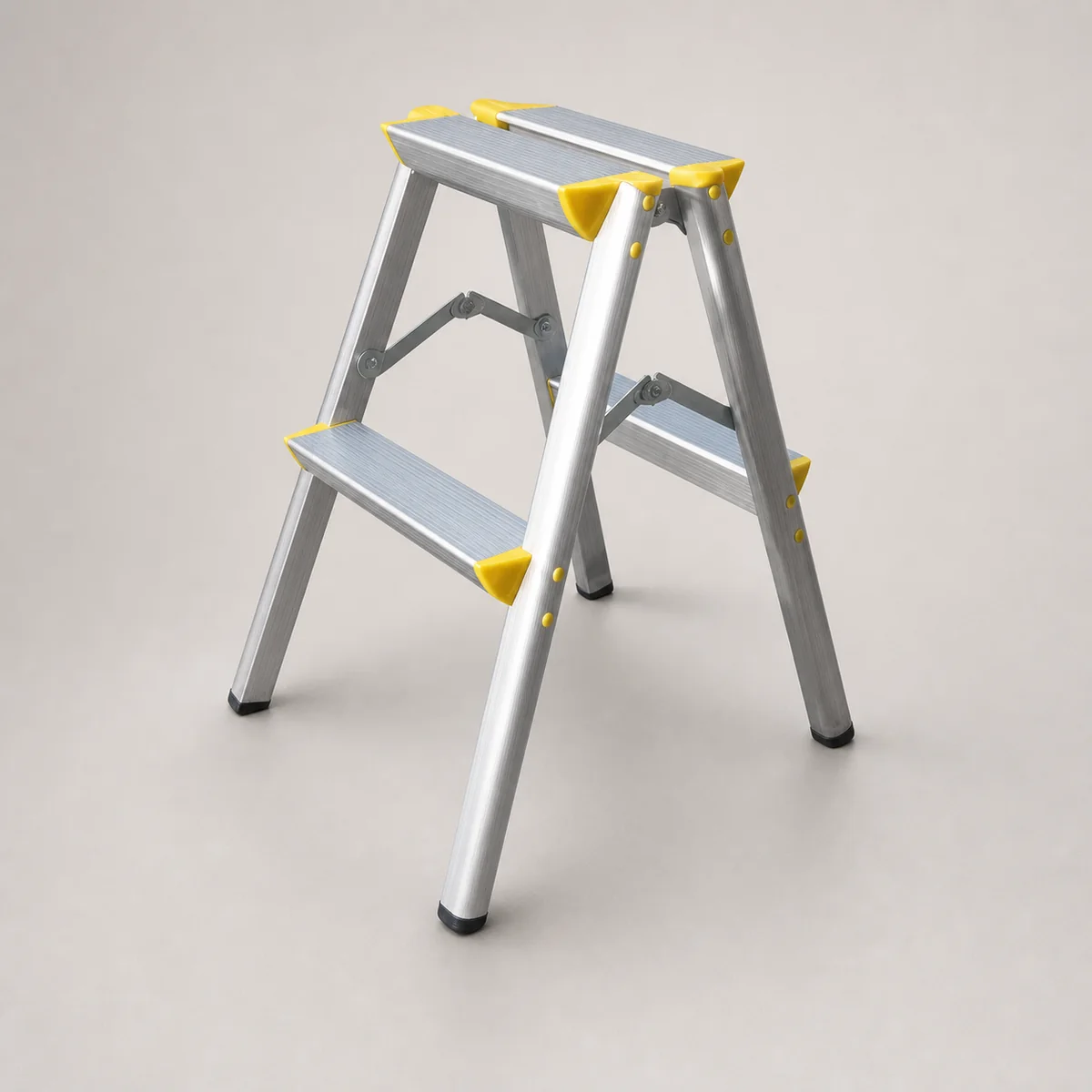
Double-sided A-frame aluminium ladder
Double-sided A-frame aluminium ladder, Sizes/Specifications: L35xW42xH50 cm / L40xW62xH75 cm; Minimum order quantity: 1PC. Formal quotation available on request based on use, specifications and quantity.
- Sizes/Specifications
- L35xW42xH50 cm / L40xW62xH75 cm
- Minimum order quantity
- 1PC
 Aluminium Ladders & Access EquipmentProduct reference image
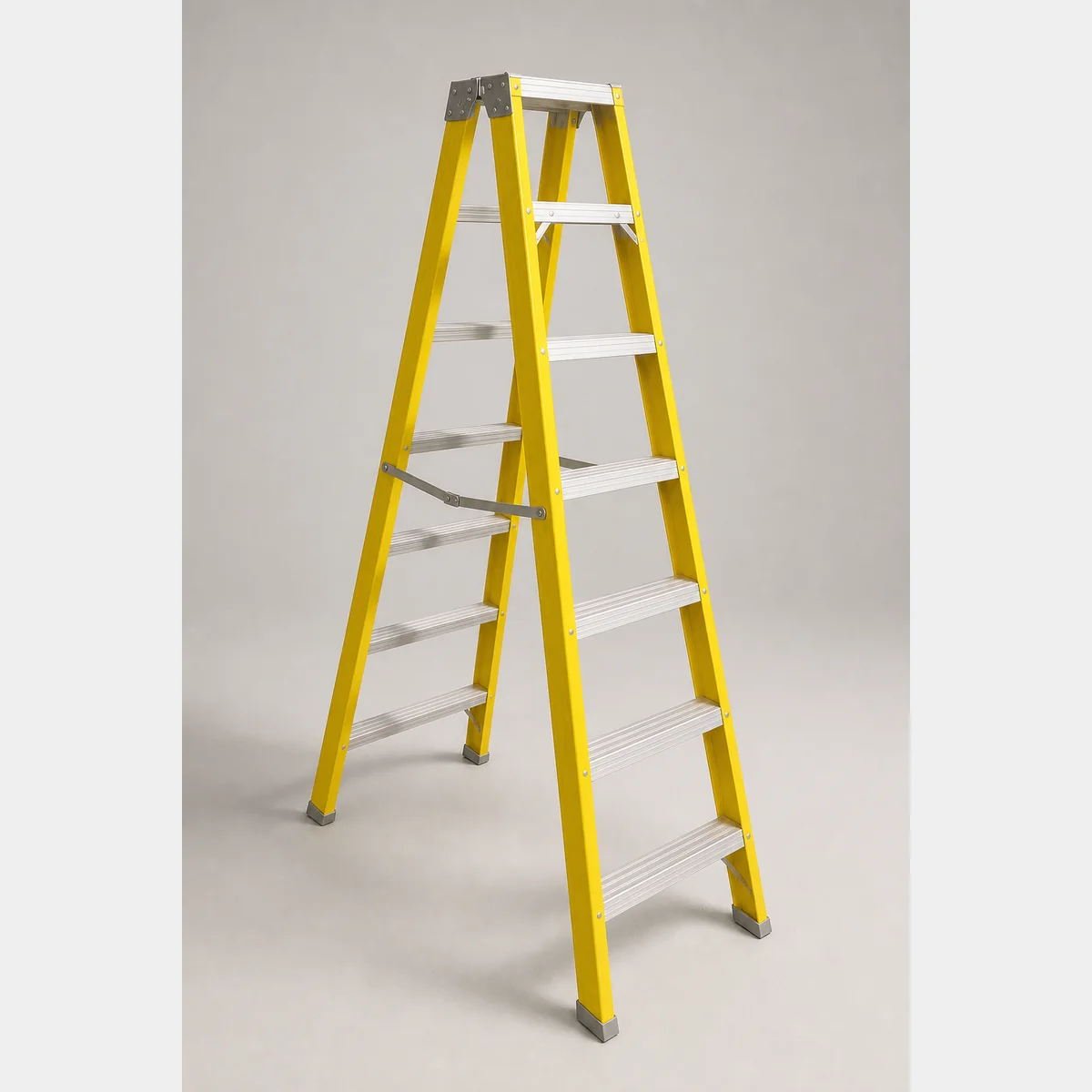
Double-sided fibreglass aluminium ladder
Double-sided fibreglass aluminium ladder. Load capacity: 150 kg; Working height: 90 cm / 110 cm; Minimum order quantity: 1PC. Official quotation available on request based on application, specifications and quantity.
- Load capacity
- 150 kg
- Working height
- 90 cm / 110 cm
- Minimum order quantity
- 1PC
 Aluminium Ladders & Access EquipmentProduct reference image
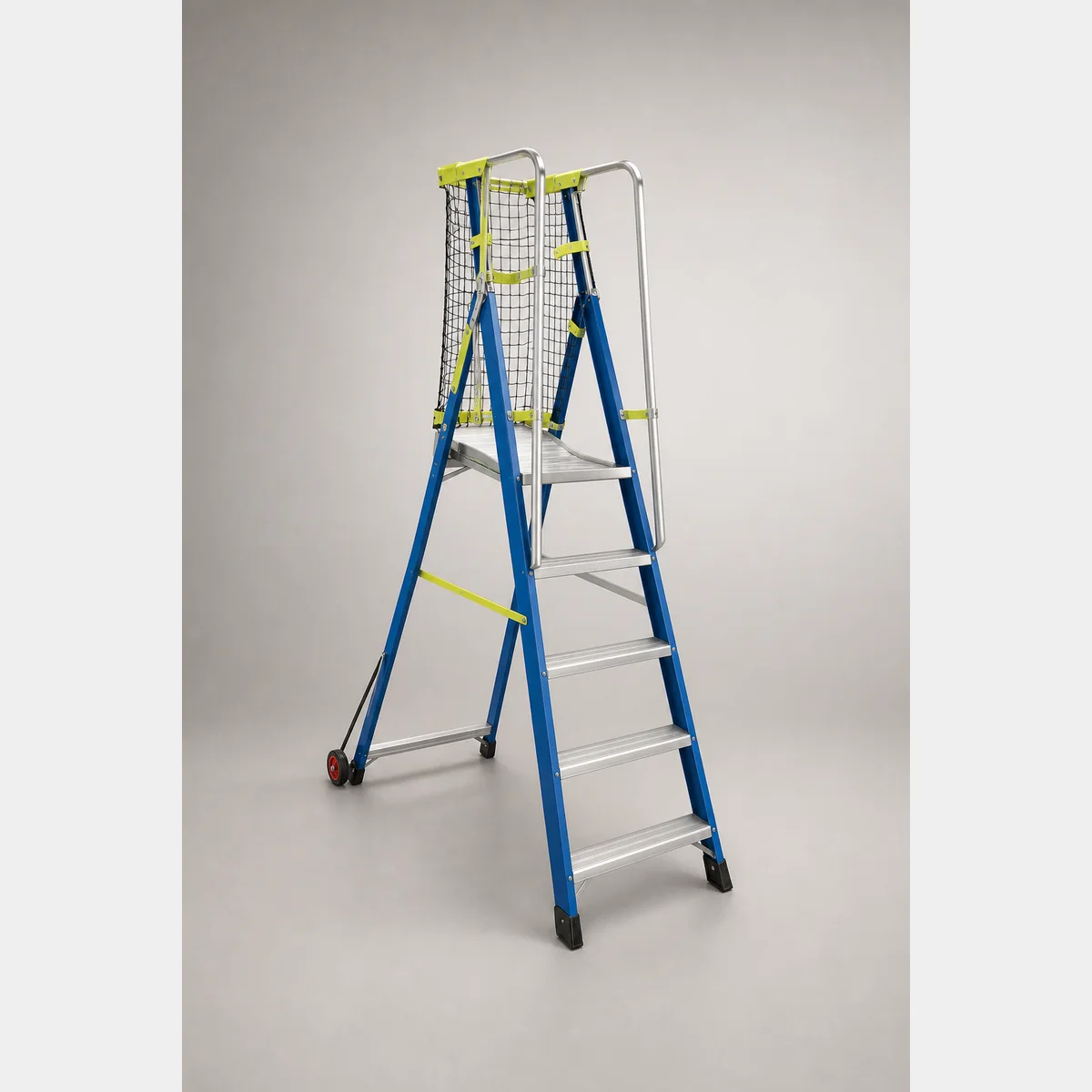
Fibreglass Platform Ladder with Guardrail (Diagonal Brace)
fibreglass platform ladder with guardrail (diagonal brace). Use heights: 860 mm / 1150 mm. Formal quotation available by intended use, specification and quantity.
- Working height
- 860 mm / 1150 mm
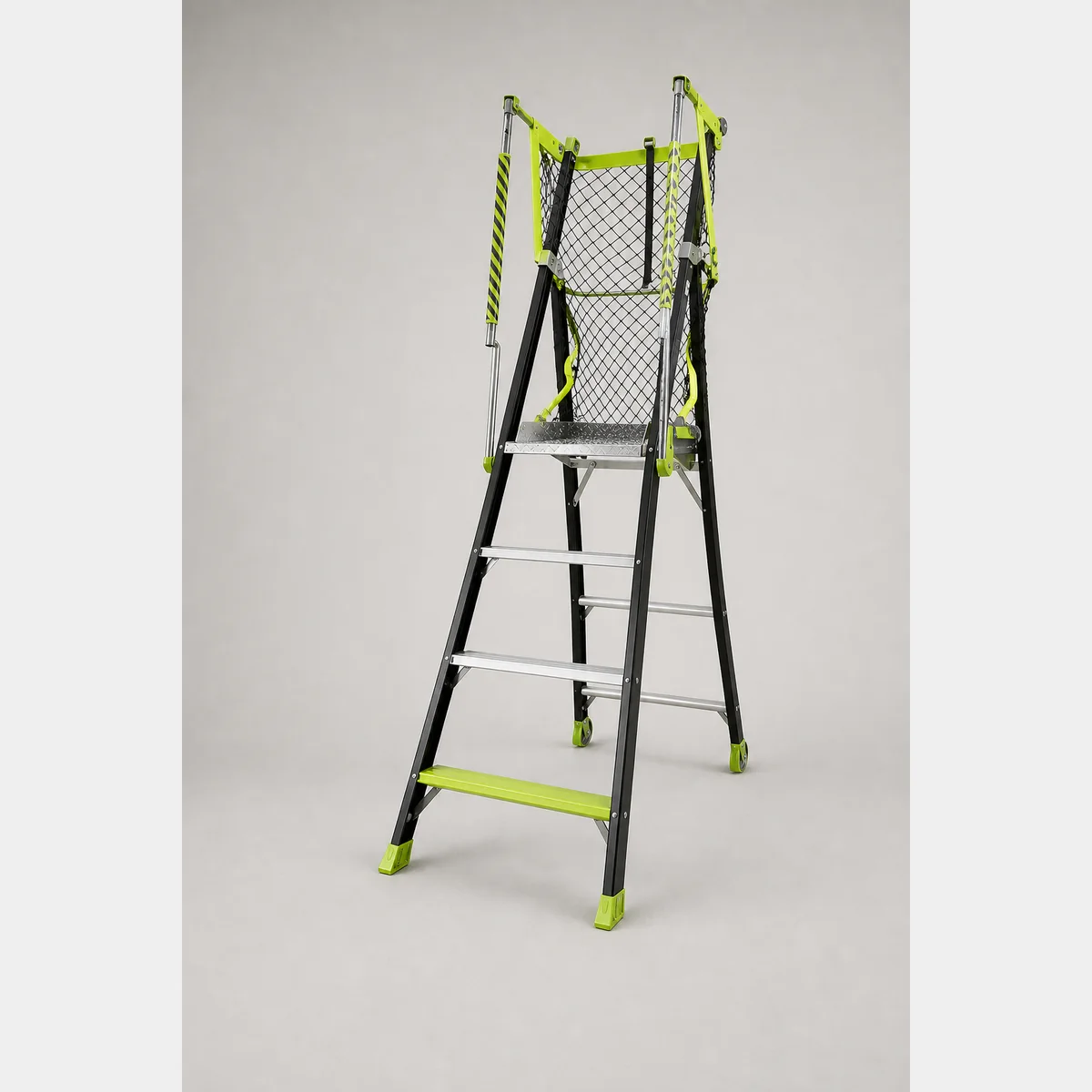 Aluminium Ladders & Access EquipmentProduct reference image
Fibreglass Platform Ladder with Handrail Enclosure
DRUFL04-001 fibreglass platform ladder with handrail mesh enclosure, W655xD1152xH1990 mm with a listed use height of 1034 mm.
- Model
- DRUFL04-001
- Material and form
- Fibreglass platform ladder with handrail mesh enclosure
- Dimensions
- W655xD1152xH1990 mm
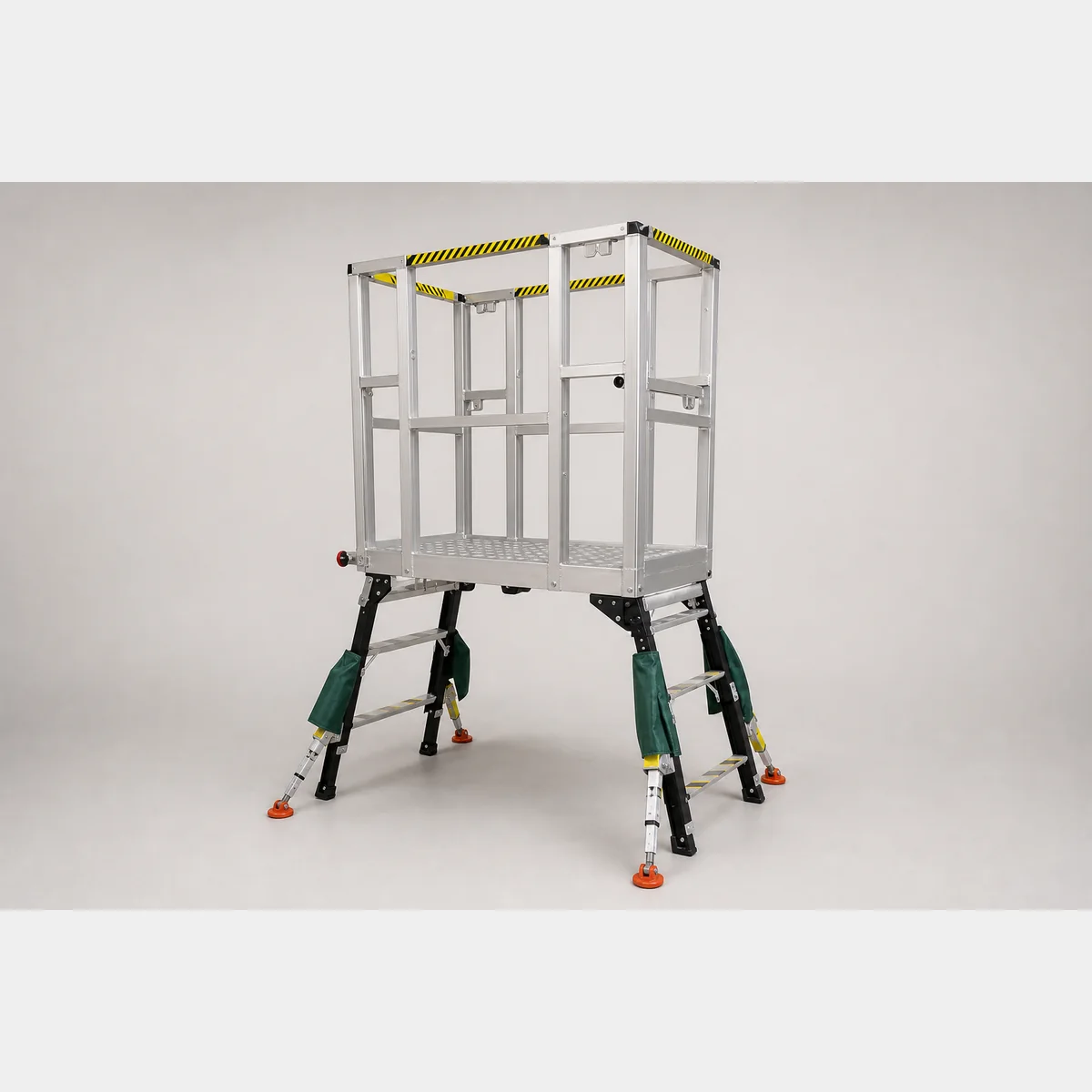 Aluminium Ladders & Access EquipmentProduct reference image
Fibreglass Work Platform Ladder with Guardrail (Diagonal Bracing)
fibreglass work platform ladder with guardrail (diagonal bracing). Dimensions/spec line: D1464-1544xW632-654xH1676-1825 mm / D1584-1683xW665-687xH1899-2061 mm; Working height: 719-871 mm / 945-1093 mm. Formal quotation available based on application, specifications, and quantity. SPL-NFB008-07.
- Working-height range
- The second working-height range requires written confirmation because source records conflict between 945–1093 mm and 9459–1093 mm.
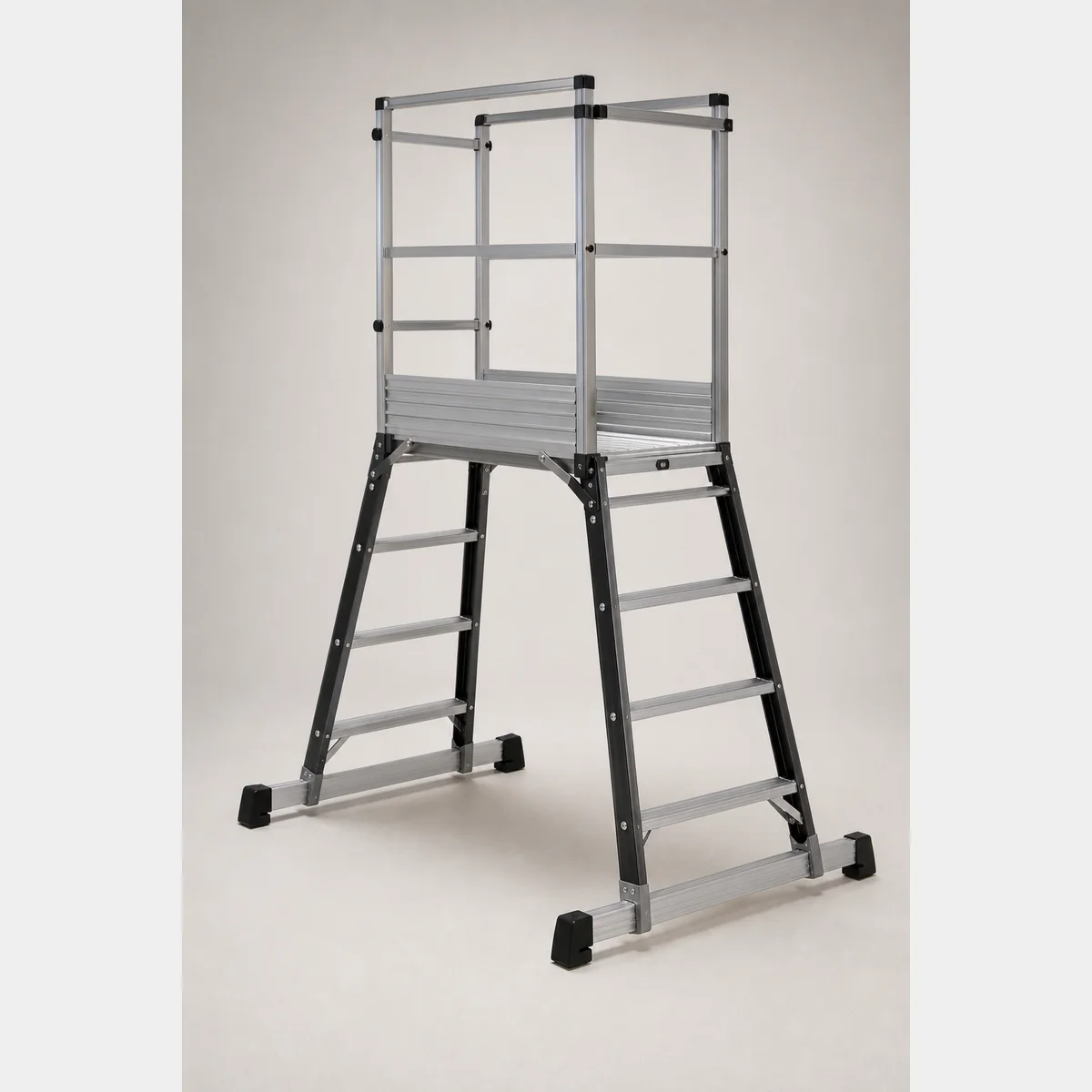 Aluminium Ladders & Access EquipmentProduct reference image
Guardrail Fibreglass Work Platform Ladder
Guardrail fibreglass work platform ladder. Models: SPL-NFB07 (L1) L148xW92xH75 cm; (L2): L106xW41xH96 cm Overall height 171 cm / SPL-NFB10 (L1) L163xW101xH100 cm; (L2): L106xW41xH96 cm Overall height 196 cm. Formal quotation available upon request based on usage, specifications and quantity.
- Dimensions / Model line
- SPL-NFB07 (L1) L148xW92xH75 cm / SPL-NFB10 (L1) L163xW101xH100 cm
- (L2)
- L106xW41xH96 cm Overall height 171 cm / L106xW41xH96 cm Overall height 196 cm
Continue with closely related procurement topics
These pages share equipment, operating or decision-stage signals with this guide.
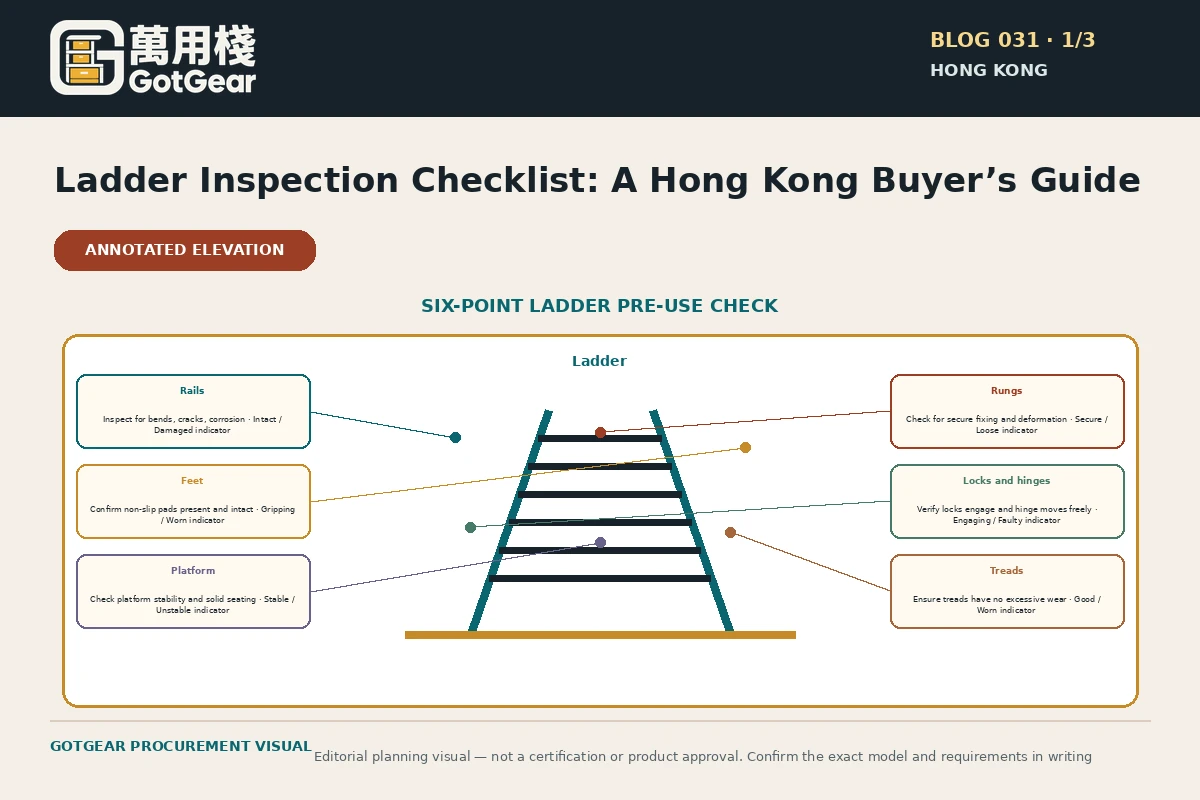
Ladder inspection checklist Hong Kong
GotGear explains ladder inspection checklist Hong Kong for Hong Kong buyers. See how ladder pre-use check Hong Kong supports ladder defect tag Hong Kong, with practical checks, evidence boundaries and written requirements.
Read the guide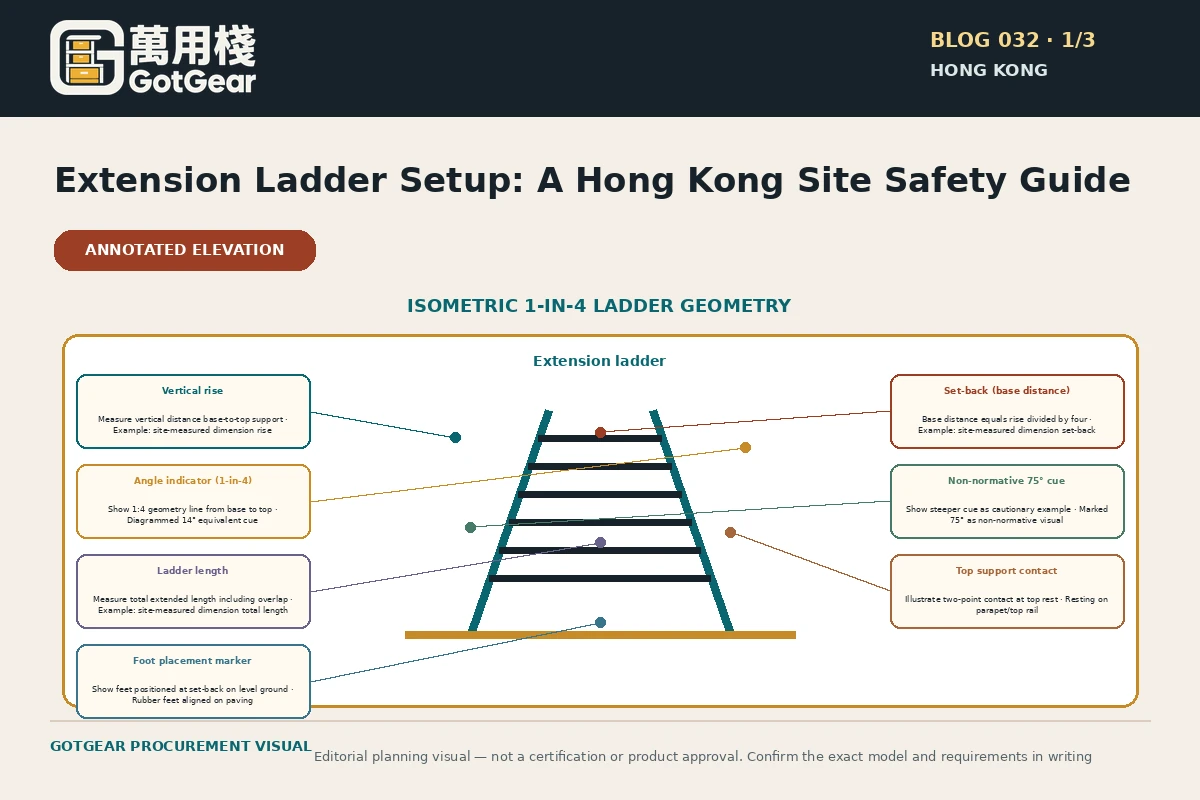
Extension ladder setup Hong Kong
GotGear explains extension ladder setup Hong Kong for Hong Kong buyers. See how ladder 4 to 1 rule Hong Kong supports extension ladder landing access Hong Kong, with practical checks, evidence boundaries and written requirements.
Read the guide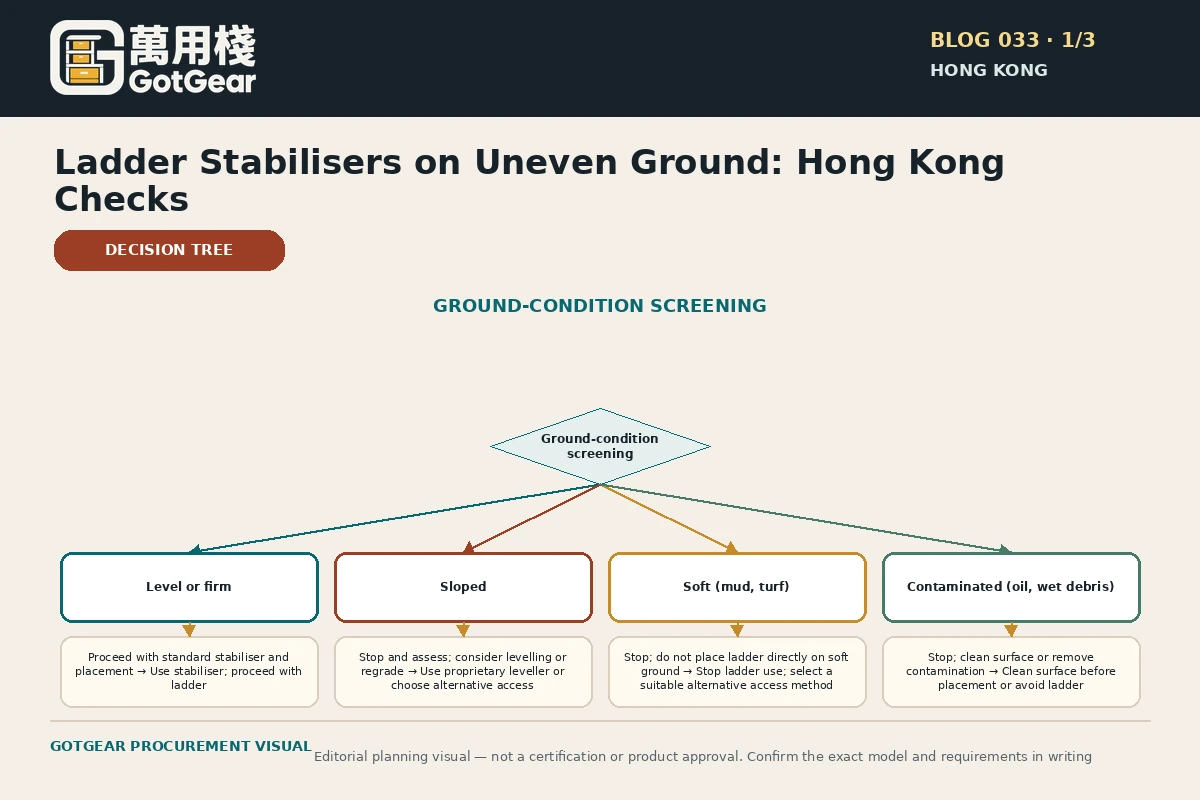
Ladder stabiliser for uneven ground Hong Kong
GotGear explains ladder stabiliser for uneven ground Hong Kong for Hong Kong buyers. See how ladder safety feet Hong Kong supports ladder securing methods Hong Kong, with practical checks, evidence boundaries and written requirements.
Read the guide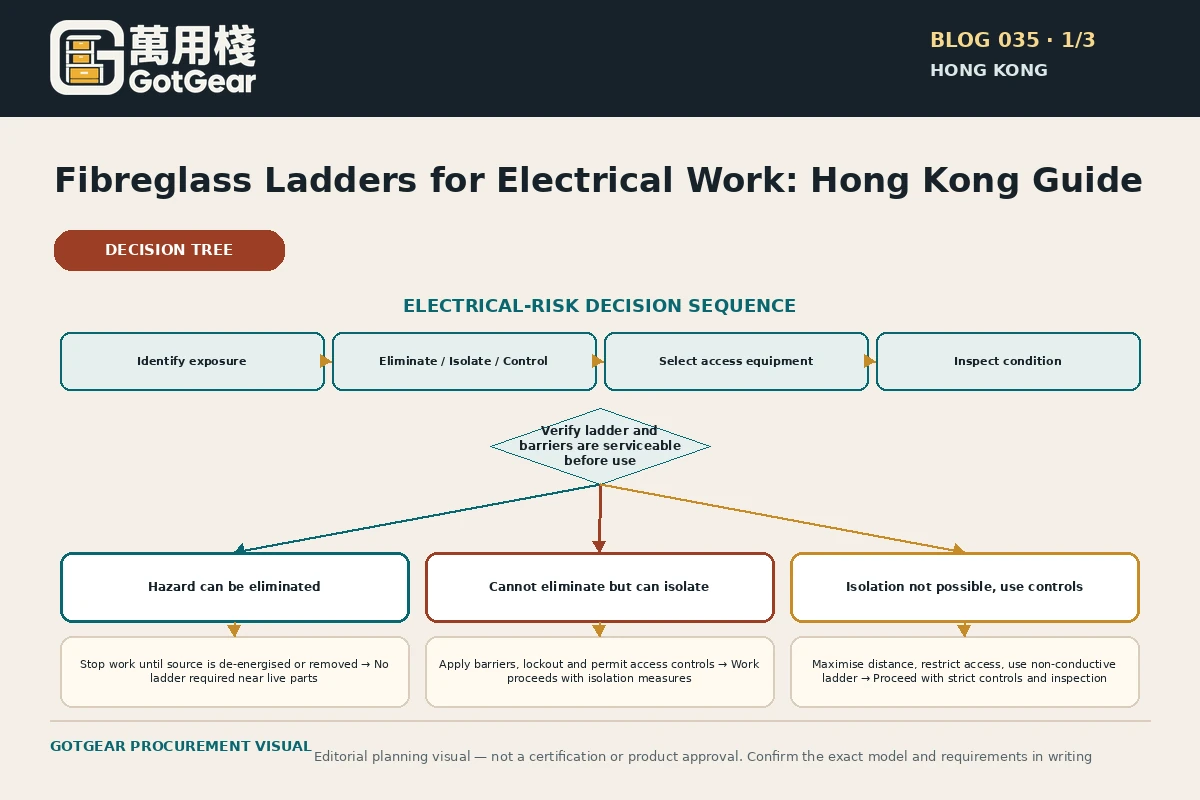
Fibreglass ladder for electrical work Hong Kong
GotGear explains fibreglass ladder for electrical work Hong Kong for Hong Kong buyers. See how non-conductive ladder Hong Kong supports ladder near electrical installations Hong Kong, with practical checks, evidence boundaries and written requirements.
Read the guideRelated topic indexOpen more English procurement pages12 topics
Browse additional equipment families, applications and procurement questions relevant to these operating requirements.