
What should supervisors map? Trace the shift from store to service area and back, assign fixed positions for clean supplies and collected items, and check loads, routes and cleaning methods against manufacturer instructions and site requirements.
Hotel housekeeping trolley workflow Hong Kong — Sequence rooms and replenishment
For hotels in Hong Kong, streamline the housekeeping trolley workflow by mapping the room sequence against replenishment and return points before each shift. Begin at the service pantry or floor store closest to the goods lift, plan a one-way loop that minimises backtracking, and set mid-shift top-up waypoints where linen, amenities and consumables can be safely restocked without crossing soiled returns. Decide and fix the locations for waste decanting and for parking soiled linen prior to chute or service-lift transfer. Keep Do‑Not‑Disturb rooms clearly flagged so attendants can re-route logically instead of shuttling back and forth.
Record measurements at the narrowest guestroom door, corridor pinch points and lift lobby turning spaces; confirm lift interior width, height and threshold details with the building office. In enquiries, request overall trolley dimensions including handles and bumpers, shelf clearances, bag-frame sizes, door swing (if lockable modules), and both total and per-shelf load ratings. As an example starting point only, some teams target an overall width near 520 mm and a total load near 100 kg; confirm the correct figures in the supplier’s specification and your supervisor’s brief. Ask for drawings, wheel diameter and tread data, and packaging dimensions to verify lift fit. When comparing quotations, list materials, modular options and castor sets on a single page. On receipt, inspect welds, fasteners, coatings, shelf alignment, castor rotation and braking, and ensure bilingual instructions and any keys are included.
Hotel housekeeping trolley workflow Hong Kong — Zone loads and plan lift access
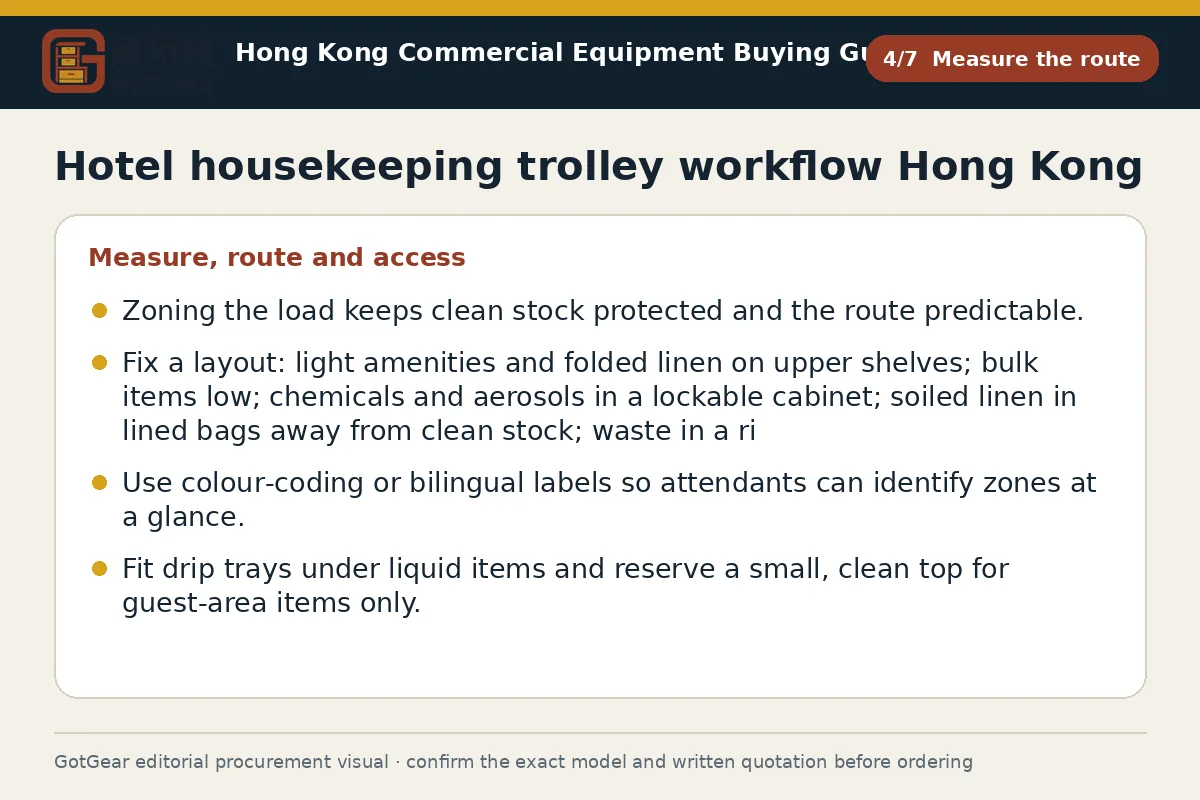
Zoning the load keeps clean stock protected and the route predictable. Fix a layout: light amenities and folded linen on upper shelves; bulk items low; chemicals and aerosols in a lockable cabinet; soiled linen in lined bags away from clean stock; waste in a rigid, lidded bin. Use colour‑coding or bilingual labels so attendants can identify zones at a glance. Fit drip trays under liquid items and reserve a small, clean top for guest‑area items only. Keep handles clear and maintain sightlines so the trolley can be steered safely in narrow corridors.
Lift access should be planned like a stop on the route, not an afterthought. Confirm goods‑lift booking rules and blackout periods with management office staff, then measure the lift door, car and threshold. Specify castors for the real floors: quiet, non‑marking treads for guest corridors; sealed bearings to resist humid stores; directional locks for long hall runs. As an example starting point only, many hotels trial 125–150 mm diameter soft‑tread castors to smooth thresholds; confirm diameter, tread and axle materials in the supplier’s sheet and a site roll test. Capture turns at lift lobbies on a sketch and set push‑pull positions so two attendants are not working against each other. Keep a copy of the lift schedule and the castor specification with the trolley SOP.
What should buyers compare for hotel housekeeping trolley workflow Hong Kong?
| Criterion | Straightforward requirement | More complex requirement | Evidence to provide |
|---|---|---|---|
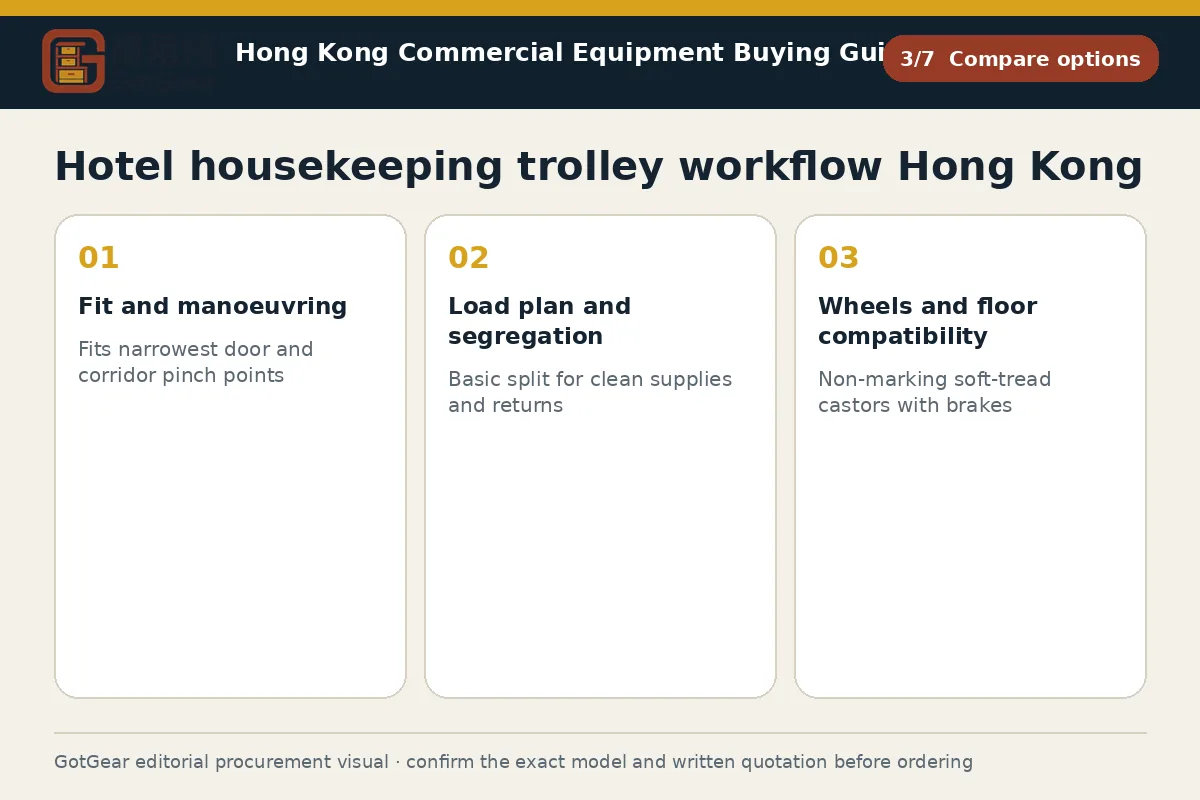
| Fit and manoeuvring | Fits narrowest door and corridor pinch points | Meets lift car size and turning space with thresholds and slopes considered | Measured widths/heights, lift car dimensions, turning sketch with clearances |
| Load plan and segregation | Basic split for clean supplies and returns | Lockable chemical module, lined soiled‑linen bags, lidded waste, colour‑coded zones | Annotated load map, SOP extract, photos of proposed zones |
| Wheels and floor compatibility | Non‑marking soft‑tread castors with brakes | Directional/total‑lock options, sealed bearings, anti‑thread guards, stainless axles for humidity | Castor datasheet (diameter, tread, bearing), site roll‑test note |
| Materials and durability | Wipeable polymer or coated steel shelves and frames | Stainless steel in damp areas, impact bumpers, drip trays under liquids | Material declaration, cleaning guidance, sample or swatch approval |
| Documentation and approvals | Bilingual user/assembly instructions | Lift booking confirmation, risk assessment and training outline | Supplier drawings, packaging size, RA/MOP, building office email confirmations |
This framework helps buyers create comparable written enquiries. Final model specifications, availability, delivery and commercial terms must be confirmed in a formal quotation.
Hotel housekeeping trolley workflow Hong Kong: Adapt Trolley Routes for Restaurant Clearing
Clearing tasks follow the same route logic but reverse the load priority. Managers using this restaurant‑clearing‑trolley guide in Hong Kong can stage routes from table clusters to a scraping station, then to the dishwashing entry, avoiding crossings with hot‑food service lines. Keep front‑of‑house noise low with soft‑tread wheels and bumpers, and conceal returns with lids or curtains where brand standards require. Secure designated positions on the trolley for glassware, plates, cutlery and food waste, and set short staging stops so attendants can clear quickly during peak periods without blocking guest paths. If allergen or special‑diet controls apply on site, separate those returns in line with your venue policy.
For procurement, measure aisle widths at the narrowest point, turning space at server stations and the dish area doorway or pass. Verify ramp gradients and any door closers that resist push force. In enquiries, request dimensions including handle depth and bumper overhang, plate‑rack or cradle sizes, bin volumes and weight limits, wheel diameter/tread, and whether bins/caddies are dishwasher‑safe. As an example starting point only, some teams trial 30–40 L detachable bins and low‑profile bumpers in dining rooms; confirm with your operations brief. Compare quotations on materials (polymer vs stainless), spare‑parts lists, drawings and packaging dimensions for lift access. Ask for any available rolling‑noise data or a site demo. Check that labelling and cleaning instructions are bilingual and aligned with your catering equipment approval process.
Hotel housekeeping trolley workflow Hong Kong — Set cleaning and end-of-shift checks
End‑of‑shift routines protect hygiene and extend service life. Empty waste and soiled linen into the designated back‑of‑house points first, then wipe all surfaces with your approved detergent or sanitiser for the task. Dry shelves and bag frames to limit corrosion in humid stores. Inspect wheels for hair or string wraps, check brakes and directional locks, tighten any loose fasteners, and confirm that locks on chemical modules are functional. Reset par levels for the next shift and park the trolley at the assigned bay without blocking egress routes.
Keep a simple, bilingual cleaning and defect log on or near the trolley, and escalate issues with clear photos to maintenance before the next shift. If storage is in a damp area, a breathable cover can reduce dust transfer; confirm any cover’s material with your fire‑safety and venue policies. As an example starting point only, some teams schedule a weekly fastener check and a monthly wheel inspection; confirm intervals in the manufacturer’s instructions and your supervisor’s plan. Request cleaning/maintenance guidance, a spare‑parts list (castors, bag frames, door latches) and materials data from the supplier, and file them with your materials handling equipment checklist and manual handling risk assessment.
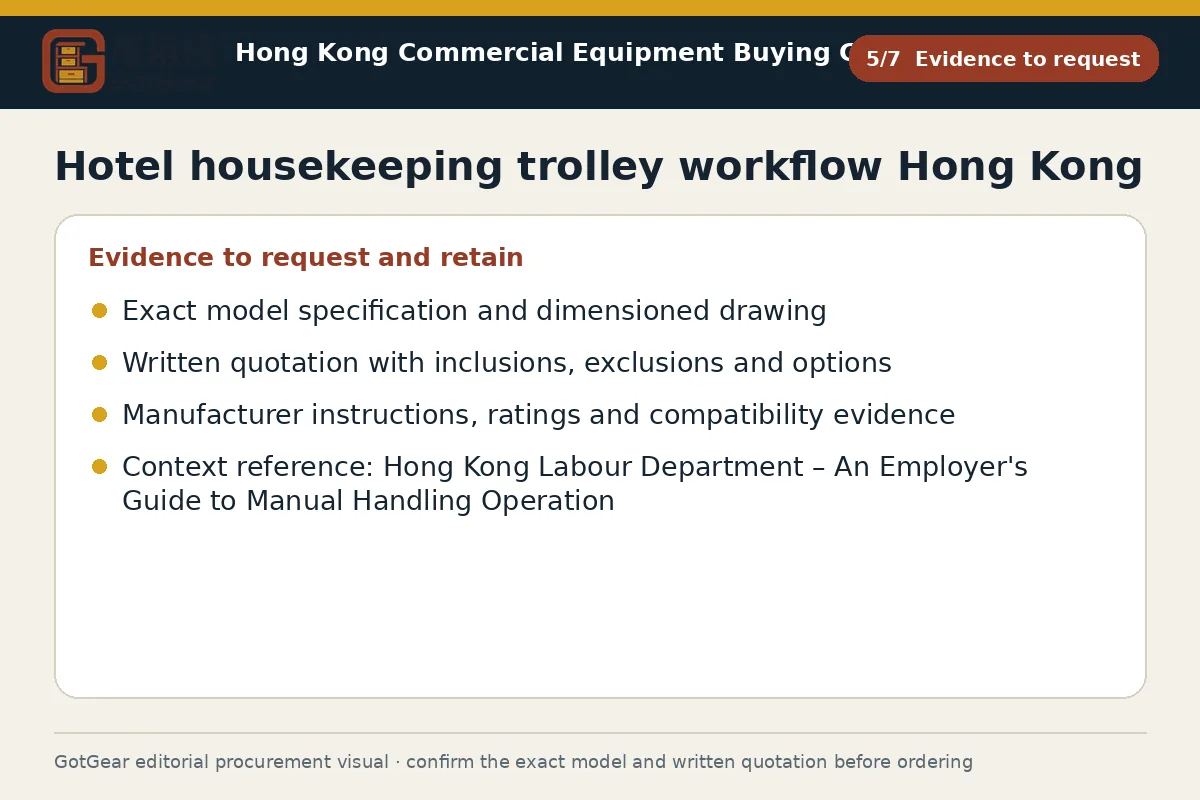
Hotel housekeeping trolley workflow Hong Kong decision checklist
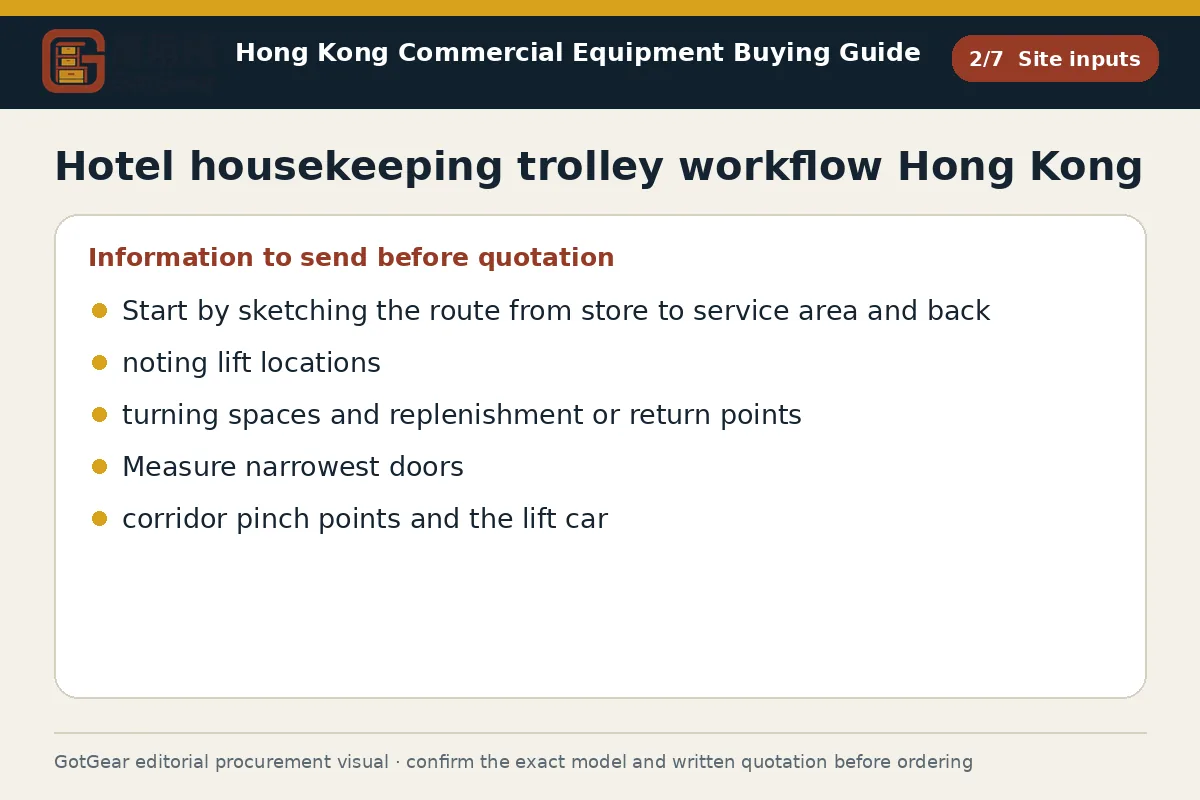
Start by sketching the route from store to service area and back, noting lift locations, turning spaces and replenishment or return points. Measure narrowest doors, corridor pinch points and the lift car, then record floor types and thresholds. Draft a load map for clean and returned items with fixed zones. Issue a written enquiry that requests full dimensions, wheel and bearing specifications, load ratings, materials, drawings, packaging size and bilingual instructions. Compare quotations line by line on those fields. Book lift windows with the management office. On receipt, inspect castors, fasteners, finishes and labels, and confirm the trolley fits its measured route. Train attendants on zoning, lift protocol and end‑of‑shift cleaning, then keep a simple defect and maintenance log.
- Operating use, quantity and expected frequency
- Dimensions, capacity, material and accessory requirements
- Delivery address, floor, goods lift and loading window
- Required documents, acceptance checks and after-sales arrangements
Key points for hotel housekeeping trolley workflow Hong Kong, restaurant clearing trolley guide Hong Kong
Hong Kong hotels and restaurants often face tight goods‑lift cars, narrow corridor pinch points and time‑boxed loading windows managed by building offices. Confirm lift bookings, blackout periods and escort rules early, and measure doorways and turning spaces rather than relying on drawings. Humid stores can accelerate corrosion and degrade bearings, so request castor and material guidance and keep drying airflow in mind. Bilingual labels and SOPs help mixed teams maintain segregation of clean supplies and returns. Front‑of‑house routes should minimise wheel noise and odour exposure for guests. This summary highlights frequent local constraints only; confirm your site’s requirements with the building manager, your facilities lead and the trolley manufacturer.
Questions about hotel housekeeping trolley workflow Hong Kong
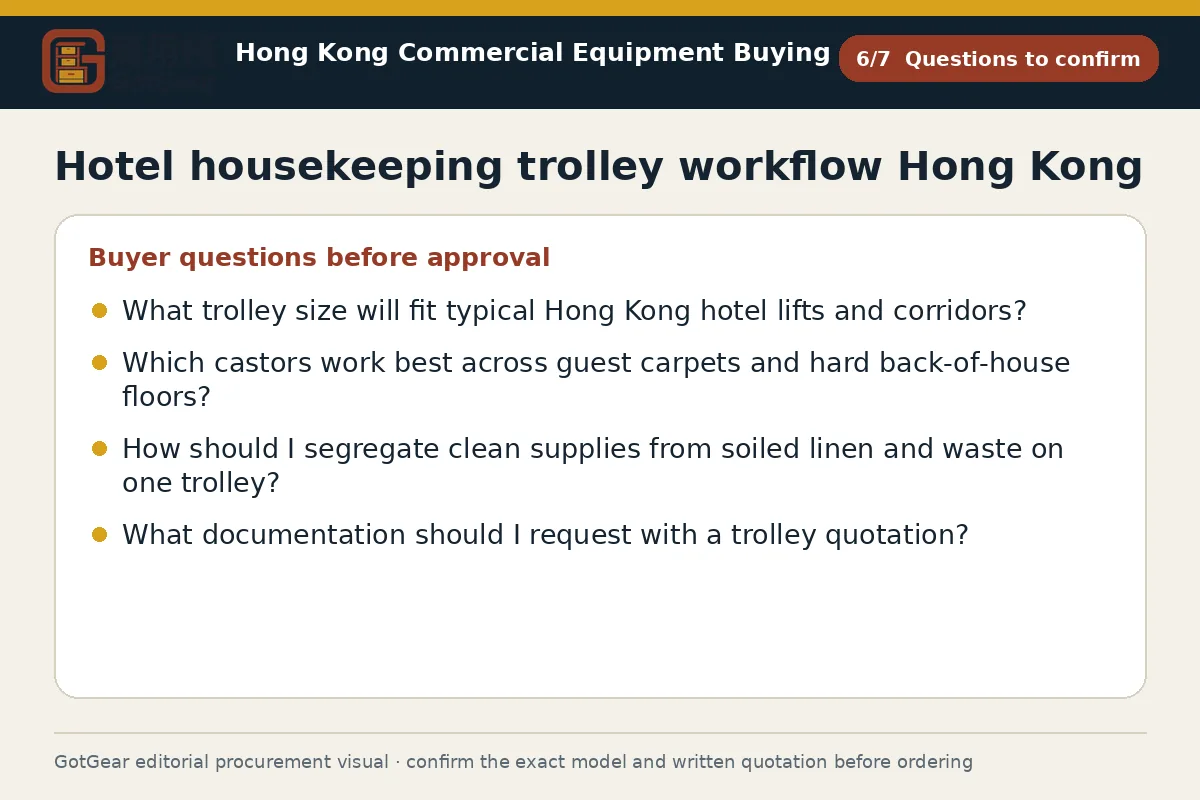
What trolley size will fit typical Hong Kong hotel lifts and corridors?
Measure the narrowest doorway, corridor pinch points, lift door opening and car interior, and allow turning space at lift lobbies. As an example starting point only, some teams target a trolley width at least 50 mm narrower than the tightest doorway and a height that clears the lift door by a similar margin. Confirm exact tolerances with your building office and the supplier’s drawings.
Which castors work best across guest carpets and hard back‑of‑house floors?
Use non‑marking, soft‑tread castors for quiet rolling on hard floors and smoother travel over carpet. Larger diameters reduce push force at thresholds; sealed bearings resist humidity. Directional locks help long, straight corridors, while total‑lock brakes stabilise on slopes. Treat these as selection principles only—request the manufacturer’s castor sheet and trial a set on your actual floors.
How should I segregate clean supplies from soiled linen and waste on one trolley?
Fix zones for clean linen and amenities, keep waste in a lidded rigid bin, and place soiled linen in lined bags away from clean shelves. Lock chemicals separately and label zones bilingually. Provide drip trays for liquids and reserve a small clean surface for guest‑area items. Always confirm your site’s hygiene policy and the trolley maker’s layout guidance before finalising zones.
What documentation should I request with a trolley quotation?
Ask for dimensional drawings, materials and finish descriptions, total and per‑shelf load ratings, wheel and bearing specifications, cleaning and maintenance instructions, spare‑parts lists, and packaging dimensions for lift checks. Bilingual user labels or manuals help. Warranty statements and any available test data are useful. Your final specification and the supplier’s written quotation should govern the purchase.
Continue with closely related procurement topics
These pages share equipment, operating or decision-stage signals with this guide.
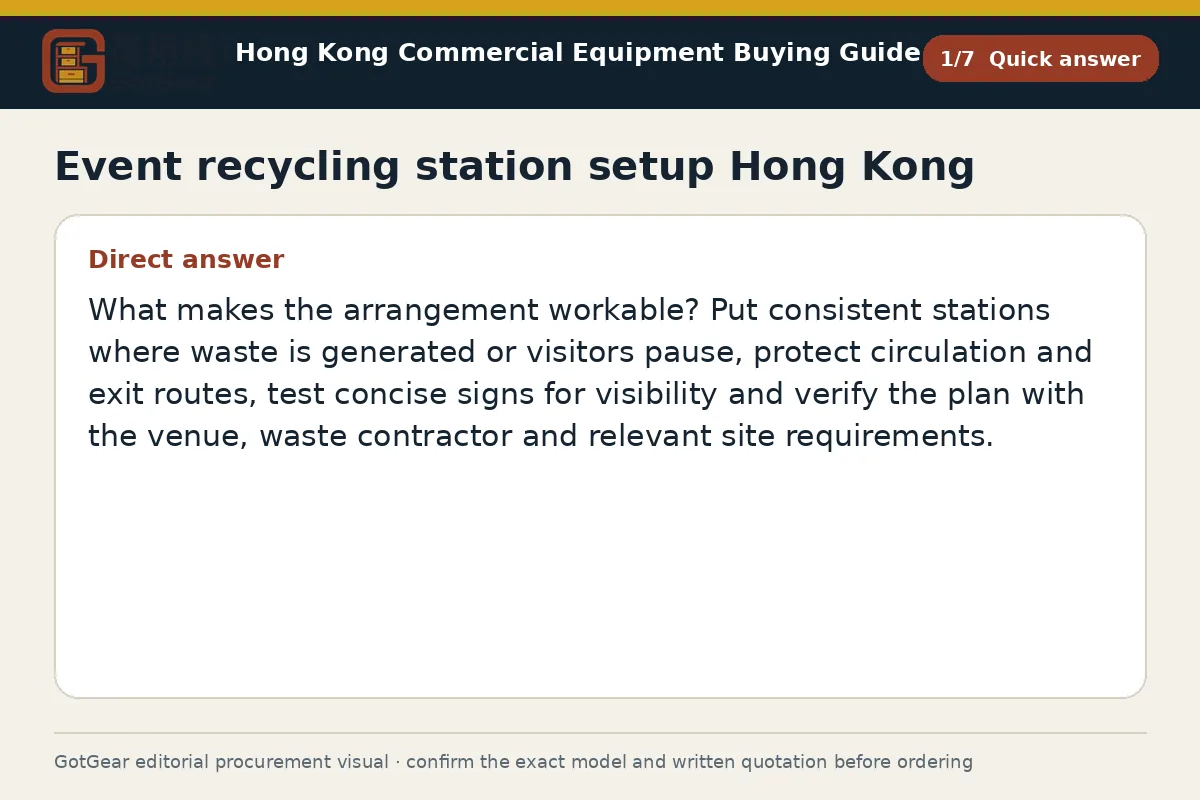
Event recycling station setup Hong Kong
GotGear has a checklist for event recycling station setup Hong Kong covering disposal points, servicing and signage. It includes recycling station signage for Hong Kong events and visitor direction signage for Hong Kong events.
Read the guide
How to store food off the floor in a Hong Kong commercial kitchen
GotGear explains how to store food off the floor in a Hong Kong commercial kitchen with raised shelving. Use the commercial kitchen food storage checklist Hong Kong to plan your restaurant back-of-house storage layout Hong Kong.
Read the guide
Manual handling risk assessment for warehouse trolleys Hong Kong
When should a Hong Kong warehouse use a trolley instead of manual carrying? GotGear has manual handling risk assessment for warehouse trolleys Hong Kong and warehouse trolley route planning Hong Kong.
Read the guide
Warehouse shelving access aisle planning Hong Kong
Consult our practical guide to warehouse shelving access aisle planning Hong Kong to review inventory handling, aisle clearances and emergency access. View the warehouse shelving layout checklist Hong Kong at GotGear.
Read the guideRelated topic indexOpen more English procurement pages1 topics
Browse additional equipment families, applications and procurement questions relevant to a wider buying brief.