
What evidence should suppliers provide? Compare complete systems using manufacturer information on intended conditions, loading and maintenance; for cold areas, confirm temperature and food-handling constraints against site conditions and applicable Hong Kong requirements.
Shelving for humid storerooms Hong Kong — Document moisture, airflow and cleaning
When narrowing down shelving options for humid storerooms in Hong Kong, begin by creating a conditions log that records humidity, visible leaks, condensate, airflow paths and typical loads. Log relative humidity with a simple data logger over several days to establish a baseline, then ask the building manager or a competent adviser to confirm whether the sample period represents the peak season. Sketch airflow from supply vents and fans, and note dead corners where stagnant air may promote corrosion or mould. Mark any wall sweating and floor puddling after washdowns, and record drying times.
Document the cleaning practices in writing, including detergent brands and concentrations, whether foaming or chlorine-based agents are used, and whether pressure rinsing is permitted. Photograph floor drains, kerbs and any thresholds that could obstruct trolleys. Measure room length, depth and clear height, as well as all door, corridor and goods-lift openings, and record the tightest turn into the space. Agree the minimum shelf-to-wall stand-off and top clearance required by the venue, insurer or building manager, if relevant. Use the warehouse shelf depth guide for Hong Kong to cross-check carton fit and hand clearance, and coordinate aisle-width decisions with your team using the warehouse shelving access aisle planning guidance for Hong Kong before issuing an enquiry.
Shelving for humid storerooms Hong Kong — Request material and finish evidence
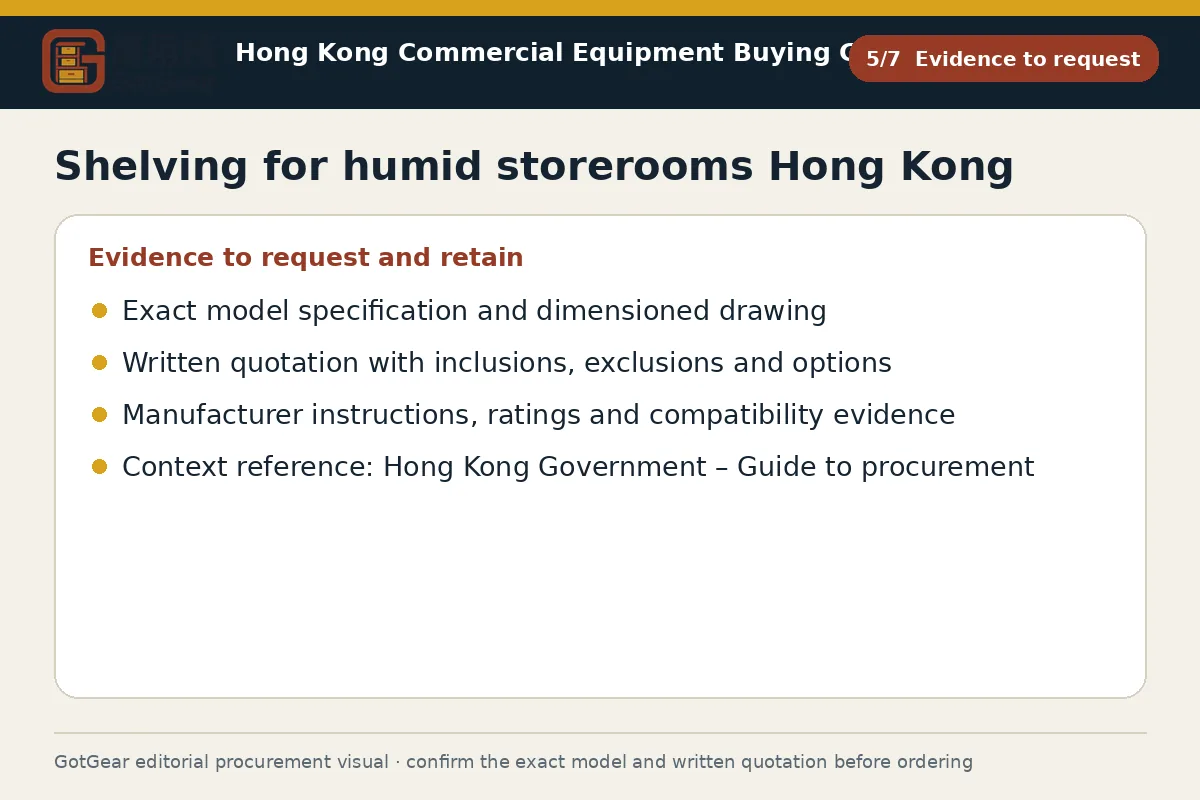
Ask bidders to supply manufacturer-originated evidence on materials, finishes and intended operating conditions, and state that the model specification and formal written quotation prevail. Request the stainless grade (As a starting point, only: 304 or 316 to be confirmed by supplier), coating chemistry for any epoxy or polymer layers, and the substrate type and treatment for galvanised parts. Seek a written statement on compatibility with your documented cleaning chemicals and a maintenance schedule for humid rooms.
For performance, ask for shelf and bay load tables at the temperatures and humidity you recorded, including deflection criteria and the material of posts, shelves, fasteners and adjustable feet. For coated systems, request a factory test summary such as neutral salt-spray exposure as an example starting point for comparative corrosion screening, plus chip-repair instructions. For cold-area suitability, request the declared temperature range, confirmation that plastics and wheels are rated for low temperatures, and guidance on minimising condensation on shelf surfaces. Insist on clear model numbers, revision dates, bilingual (English/Chinese) assembly and care instructions, and a sample shelf panel or coupon if your institution requires a cleaning-compatibility trial.
What should buyers compare for shelving for humid storerooms Hong Kong?
| Criterion | Straightforward requirement | More complex requirement | Evidence to provide |
|---|---|---|---|
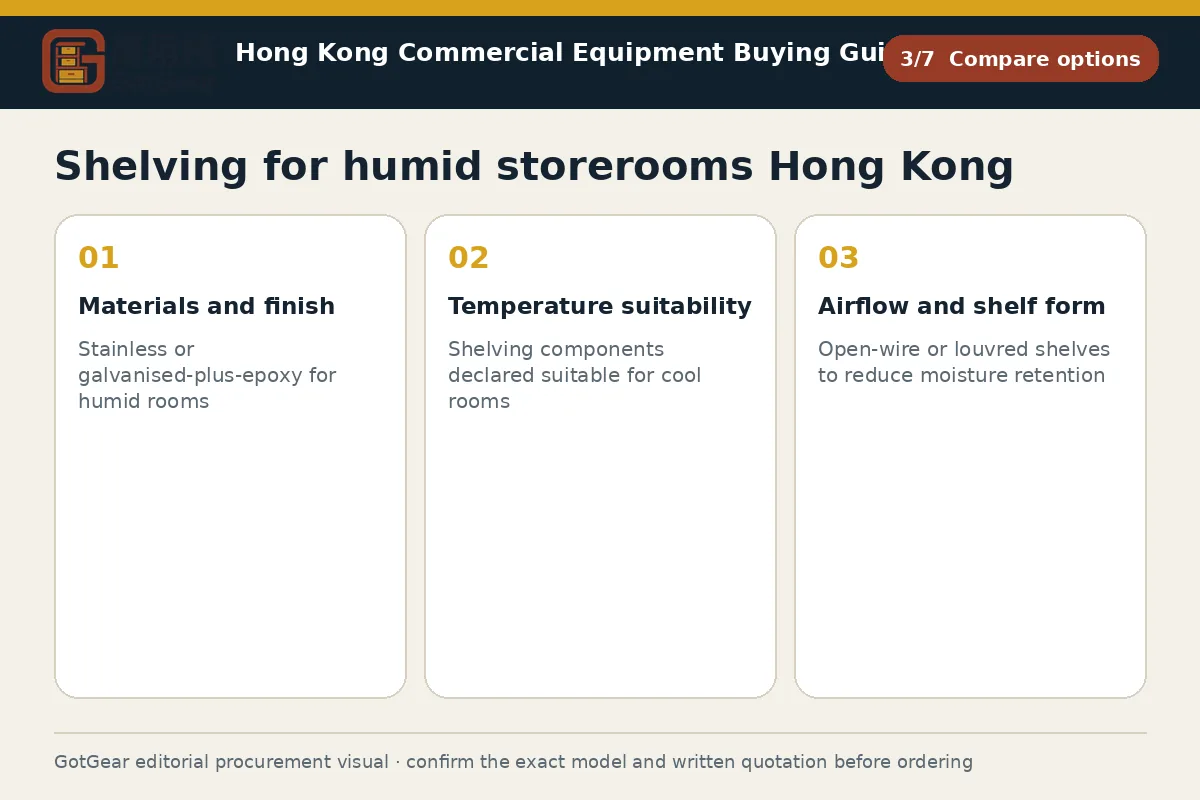
| Materials and finish | Stainless or galvanised-plus-epoxy for humid rooms | Higher-grade stainless or polymer/composite where chlorides or frequent washdowns apply | Manufacturer grade/finish declaration, coating specification, chemical-compatibility letter |
| Temperature suitability | Shelving components declared suitable for cool rooms | Components, wheels and plastics confirmed for low temperatures and defrost cycling | Written temperature range, parts list with materials, supplier confirmation against site conditions |
| Airflow and shelf form | Open-wire or louvred shelves to reduce moisture retention | Removable liners or perforated polymer inserts for small items and drip control | Open-area percentage, liner material data, cleaning/drainage guidance |
| Cleaning and hygiene | Compatible with neutral detergents and manual rinsing | Resistant to foaming sanitisers/chlorides and pressure rinse where used | Cleaning-chemicals list, maintenance schedule, surface-repair instructions |
| Load and stability | Per-shelf load rating meets recorded carton loads | Bay load, deflection and any floor/wall restraint proposal for tight routes or high centres of gravity | Load tables at stated conditions, deflection criteria, fixing method subject to venue approval |
This framework helps buyers create comparable written enquiries. Final model specifications, availability, delivery and commercial terms must be confirmed in a formal quotation.
Shelving for humid storerooms Hong Kong: Separate Humid-Storeroom and Cold-Store Requirements
Treat humid ambient rooms and mechanically cooled rooms as different engineering problems, and structure your cold storage shelving selection checklist for Hong Kong accordingly. In chillers and freezers, confirm the declared operating temperature range (example starting point only: down to –20 °C, subject to supplier confirmation), the effect of defrost cycles, and whether plastics, seals, castors and lubricants resist embrittlement. Prefer open‑wire or louvred shelves to support airflow from evaporators and reduce frost build‑up; where small items demand liners, ask for removable, sanitiser‑resistant options and for guidance on drip control above food zones.
Record floor construction and panel details. Do not plan to fix into insulated panels without landlord or building‑manager approval; request freestanding bracing or floor‑fixing proposals that respect vapour barriers. Map clearance from walls and evaporators for cleaning access and airflow, and note glove‑friendly adjusters for shelf heights. If you are mixing bay types, use boltless shelving for lighter pick faces and longspan shelving for heavier back‑up storage, and specify that the installation is for Hong Kong. Recheck routes into cold rooms: door heaters, ramps and thresholds can limit trolley options, so revisit aisle choices using warehouse shelving access‑aisle planning for Hong Kong before freezing the layout. For kitchen‑adjacent cold rooms, ensure shelf selection aligns with your team’s policy on storing food off the floor in a Hong Kong commercial kitchen.
Shelving for humid storerooms Hong Kong — Plan inspection and maintenance
Build acceptance, inspection and maintenance into the procurement. On delivery, check finishes for chips, dents or weld spatter, verify that all parts match the quotation’s model numbers, and confirm the presence of bilingual instructions. Assemble one bay in a dry area to confirm fit, fastener type and shelf adjustability; only then move into damp rooms or cold stores. Photograph any transit or coating damage before use and notify the supplier in writing.
Plan routine checks that focus on corrosion hot-spots: shelf edges, feet, fasteners, and contact points with walls or kerbs. As an example starting point only, schedule brief visual checks after the first month of operation and after the first deep clean, then confirm an interval with your maintenance lead based on findings. Keep a simple log of loads, cleaning chemicals used and any part replacements; this helps preserve warranties that make corrosion resistance conditional on care. Stock spare levelling feet and clips where institutional approval requires uninterrupted service. Coordinate inspection windows with management offices for loading-bay bookings and cold-room downtime, and reinforce warehouse practice such as how to store food off the floor in a Hong Kong commercial kitchen to maintain hygiene clearances around the new bays.
Shelving for humid storerooms Hong Kong decision checklist
Confirm the room’s humidity, airflow and cleaning methods in writing, with photos of drains, kerbs and leak points. Measure room size, clear heights, aisle targets, and every choke point from loading bay to site, including goods-lift dimensions and turns. Ask bidders for material grades, coating specifications, temperature ranges, load tables at your conditions, chemical compatibility, and bilingual instructions, stating that model numbers and written quotations prevail. Compare shelf form, bay stability and fixings proposals side by side. For cold rooms, seek solutions that protect panels and preserve airflow. Plan delivery sequencing with management offices, then accept goods by checking finish condition, component counts and adjustability before moving into damp or cold spaces. File maintenance schedules, log inspections and keep small spares to minimise disruption.
- Operating use, quantity and expected frequency
- Dimensions, capacity, material and accessory requirements
- Delivery address, floor, goods lift and loading window
- Required documents, acceptance checks and after-sales arrangements
Key points for shelving for humid storerooms Hong Kong, cold storage shelving selection Hong Kong
Hong Kong facilities face year-round humidity, monsoon downpours and tight back-of-house routes. Measure goods-lift cars, door clear widths and turning spaces before specifying bays, and book loading bays through the building management office where required. Many cold rooms are leased or panel-built; avoid fixing into insulated panels without written approval. Food-processing and catering sites may have hygiene expectations linked to their licences, so confirm any applicable Hong Kong requirements with the venue or competent advisers. Keep bilingual instructions and cleaning guidance on file for institutional reviews and staff training.
Questions about shelving for humid storerooms Hong Kong
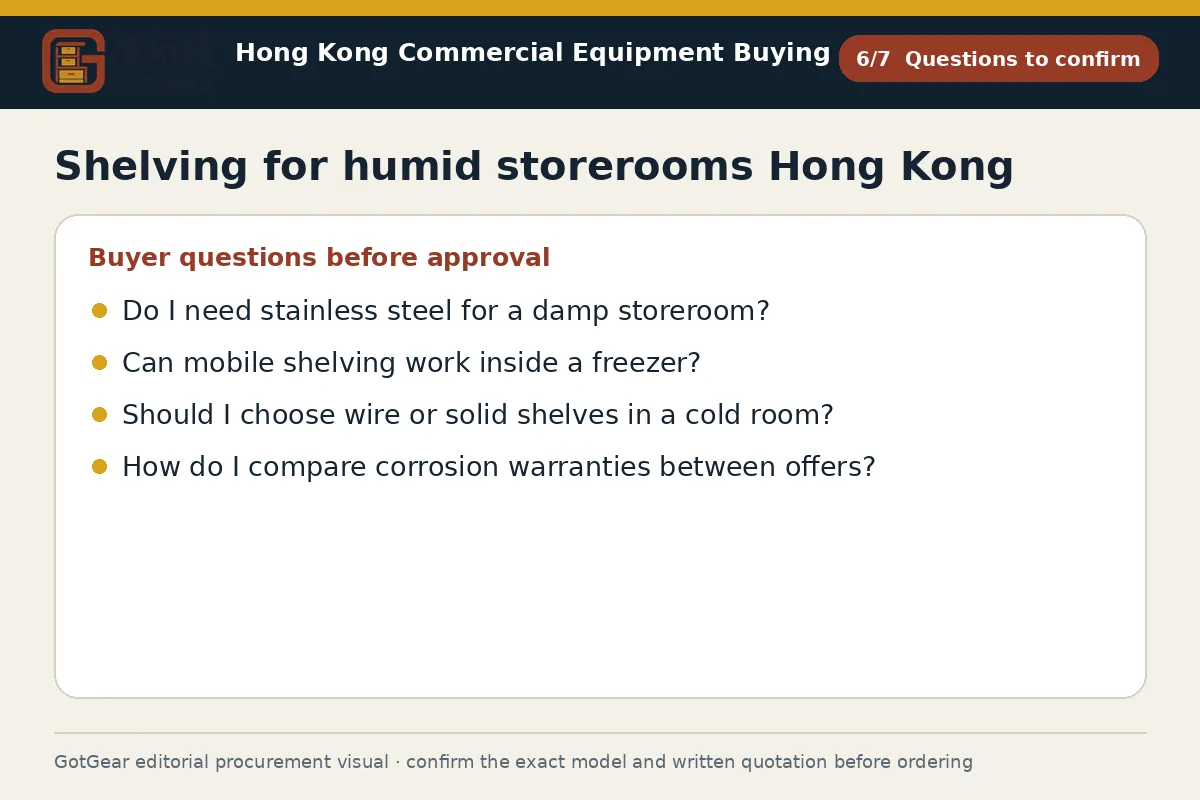
Do I need stainless steel for a damp storeroom?
Not always. Quality zinc-coated or epoxy-coated wire systems can perform acceptably in mildly humid rooms if cleaning chemicals are compatible and maintenance is followed. Where leaks, chlorides or frequent washdowns exist, stainless components may be more robust. Ask suppliers for written chemical-compatibility guidance, corrosion test summaries and warranty terms that reflect your recorded site conditions.
Can mobile shelving work inside a freezer?
Yes, but wheels, bearings, lubricants and polymer parts must be rated for low temperatures, and floors must tolerate the point loads. Check thresholds, ramps and door heaters that could obstruct trolleys. Condensation and ice can reduce traction, so request supplier guidance on wheel tread selection and safe-use practices. Confirm any bracing or track proposals with the landlord or building manager before installation.
Should I choose wire or solid shelves in a cold room?
Wire improves airflow and helps limit frost around evaporators, while solid shelves support small containers and catch drips. Many teams pair wire shelves with removable liners where needed. Ask for open-area percentages, liner material specifications and cleaning instructions. Confirm that any liners remain flexible at low temperatures and do not trap water, which can freeze and create hygiene or handling risks.
How do I compare corrosion warranties between offers?
Start by matching the stated environment, cleaning chemicals and maintenance obligations to your documented conditions. Then compare material grades, coating systems and any lab test summaries offered as evidence. Seek warranty terms in writing that name the model, finish and exclusions, plus care instructions you can realistically follow. If in doubt, request a sample component to trial with your cleaning regime before placing an order.
Continue with closely related procurement topics
These pages share equipment, operating or decision-stage signals with this guide.
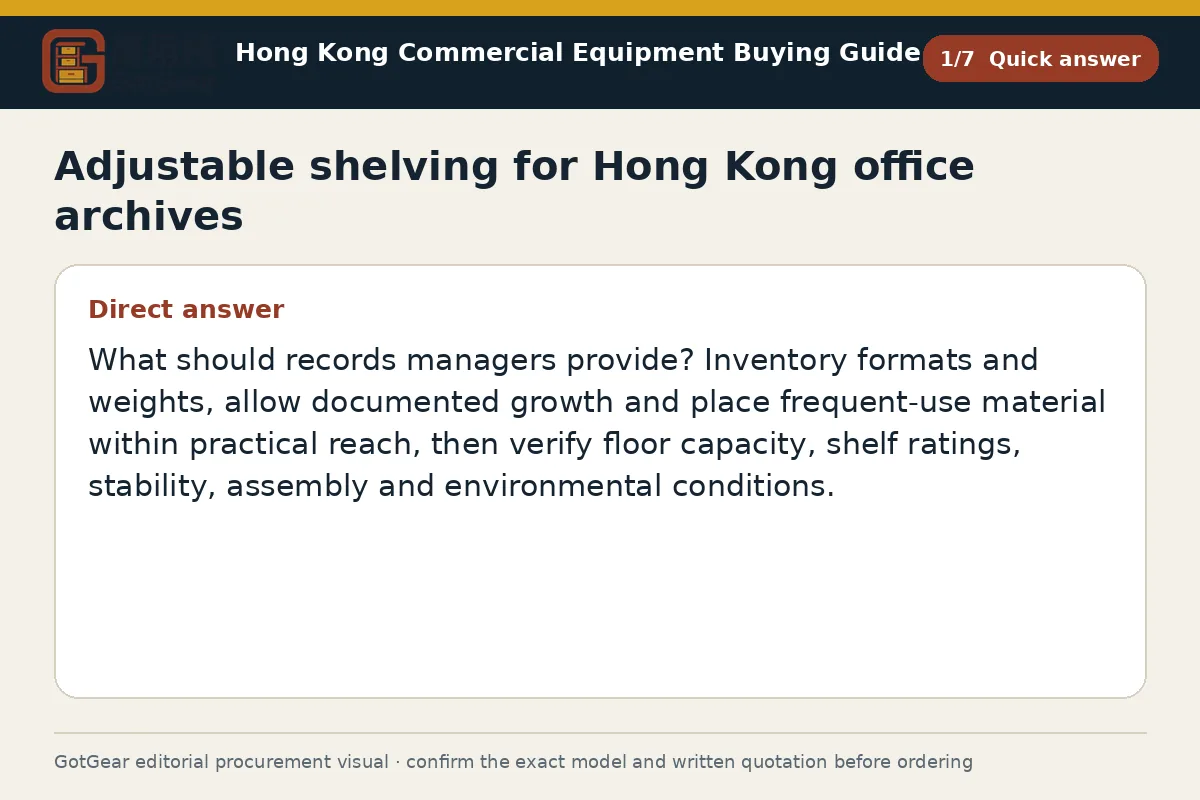
Adjustable shelving for Hong Kong office archives
Use adjustable shelving for Hong Kong office archives to organise capacity and access with GotGear. The checklist details box sizes, filing space, retention and retrieval schedules, growth allowance and floor capacity.
Read the guide
Warehouse shelf depth guide Hong Kong
GotGear presents the warehouse shelf depth guide Hong Kong, which outlines tests for carton size, weight, reach, rotation and overhang to aid shelf selection. Use it when planning shelving for boxed inventory Hong Kong.
Read the guide
Event recycling station setup Hong Kong
GotGear has a checklist for event recycling station setup Hong Kong covering disposal points, servicing and signage. It includes recycling station signage for Hong Kong events and visitor direction signage for Hong Kong events.
Read the guide
Food delivery container checklist Hong Kong
GotGear outlines the food delivery container checklist Hong Kong, covering capacity, closure, cleaning and loading, and explains hot and cold food delivery separation Hong Kong with monitoring and handover steps.
Read the guideRelated topic indexOpen more English procurement pages2 topics
Browse additional equipment families, applications and procurement questions relevant to a wider buying brief.