
What evidence should buyers compare? Review complete rated systems against the heaviest shelf load, required spans and access method, then check stability, floor and wall conditions, protection, assembly instructions and future adjustment.
Boltless shelving vs longspan shelving Hong Kong — Compare load profile and bay size
Start with the weight and footprint of what each shelf must support. When evaluating boltless shelving versus longspan shelving for use in Hong Kong, list the heaviest expected shelf load, whether it is uniformly distributed or concentrated, and the largest carton or tote length, width and height. Note the minimum clear entry required across the beam span, and any overhang you can accept without damaging packaging. As an example starting point, if a carton is 450 mm deep, choosing a shelf depth that exceeds this by 20–50 mm can reduce snagging, but confirm this against the rated system drawing and the written quotation.
Bay size decisions follow the load profile. Map out the number of beam levels required, preferred top-of-goods height, and the floor footprint available in each aisle. Record any limits from goods-lift cabins or stairwells that could cap beam length or upright height during delivery. If frequent carton picking is the priority, shorter spans with narrower shelves may keep deflection low and presentation tidy; for bulkier items, longer spans with robust decking may be justified if the manufacturer’s bay and shelf ratings support them. For depth selection, align shelf depth with the container fleet you use and the backstop or mesh options permitted on your site; the warehouse shelf depth guide for Hong Kong can help frame these depth choices for boxed inventory.
Boltless shelving vs longspan shelving Hong Kong — Use complete rated-system data
Do not compare parts in isolation; insist on complete rated-system data so the bay, beam level, connectors and shelves work as designed. Ask for the full system name and series, rated uniformly distributed load per shelf at the proposed span and shelf type, and the total permissible bay load. Request confirmation if bracing, locking pins or anti-topple accessories are required to reach the quoted ratings, and whether wall or floor fixings are part of the rated configuration.
Procurement files should include manufacturer drawings with coded components, the section profiles of uprights and beams, allowable beam pitch increments, and the stated deflection or stability limits that underpin the rating. For finishes, request the substrate and coating description (e.g., galvanised or powder-coated) and any corrosion-resistance claims in writing. Where storerooms are humid or near cooling plant, ask for care and inspection guidance and compatibility with protective sprays or wipes. Seek bilingual (English/Chinese) installation and user instructions that show assembly sequence, shelf fitting method, and any torque or clip-engagement checks the maker requires. If a supplier references test reports, ask for the applicable model and configuration page; the model specifications and formal written quotation prevail.
What should buyers compare for boltless shelving vs longspan shelving Hong Kong?
| Criterion | Straightforward requirement | More complex requirement | Evidence to provide |
|---|---|---|---|
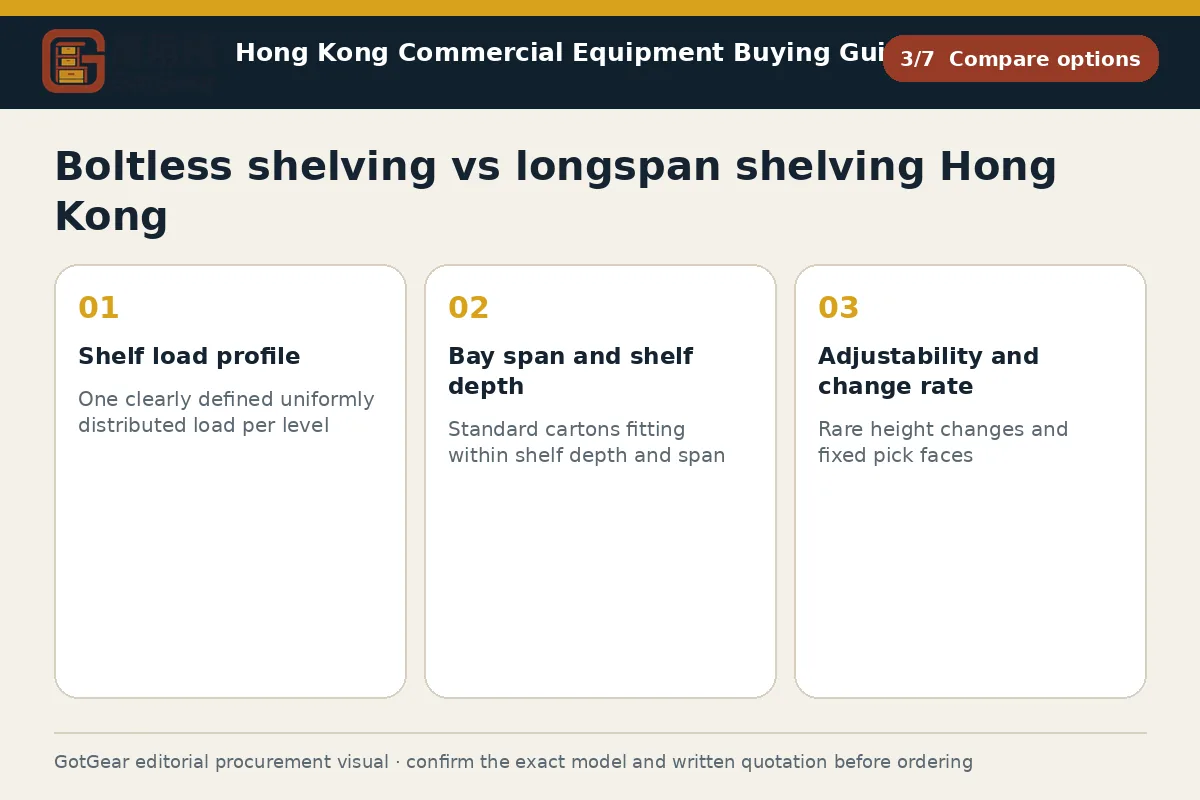
| Shelf load profile | One clearly defined uniformly distributed load per level | Mixed UDL with point loads, fragile items or uneven boxes | Heaviest item weight, footprint, contact points; confirm UDL vs point load handling in writing |
| Bay span and shelf depth | Standard cartons fitting within shelf depth and span | Oversized items needing long spans or controlled overhang | Largest L×W×H, required clear entry, acceptable overhang; preferred top-of-goods height |
| Adjustability and change rate | Rare height changes and fixed pick faces | Frequent reconfiguration by multi‑shift teams | Adjustment pitch, tools needed, estimated change frequency; signage and control notes |
| Environment and finish | Dry, temperature‑controlled storeroom | Humid areas near plant or coastal air; cleaning chemicals used | Requested substrate and coating, corrosion guidance, care instructions; label durability |
| Delivery and installation route | Ground‑floor access with open doors | Tight goods‑lifts, stair turns, managed loading windows | Lift cabin size and capacity, route photos, booking rules; building manager permissions |
This framework helps buyers create comparable written enquiries. Final model specifications, availability, delivery and commercial terms must be confirmed in a formal quotation.
Boltless shelving vs longspan shelving Hong Kong — Test access and reconfiguration needs
Access and adjustment needs often determine real efficiency. Note the picking method (hand pick, trolley, step-stool, order picker), typical pick heights, and whether staff reach goods head-on or from the side. Capture the reconfiguration pattern: do you change beam levels quarterly, or are heights stable for a teaching term or fiscal year? As an example starting point, adjustments at sub‑100 mm increments may allow finer carton presentation, but confirm the pitch available in the proposed system and any tooling required.
Where pick rates are high, ensure clear bay openings, smooth shelf edges, and optional backstops or mesh to prevent push-through. If replenishment comes by pallet truck or cart, record aisle width, turning space, and dock or lift interfaces; warehouse shelving access aisle planning Hong Kong provides a structured way to test these flows before committing. For teams with mixed experience, clip-in shelves with positive locks can speed safe changes; if bolted decks are used, request guidance on fastener type and retightening checks. In multi-user sites, specify load signage format, bilingual safety decals, and a change-control note so supervisors know which bay levels can move and who may do it.
Boltless shelving vs longspan shelving Hong Kong — Let site evidence guide the choice
Let site evidence steer the selection. Survey the floor for flatness, surface condition and signs of moisture; ask the building manager for any known slab load limits and drilling permissions, and whether anchoring near construction joints is restricted. Photograph doorways, corridors and the goods-lift cabin to verify component fit and weight handling on delivery days, and check loading windows with the management office to avoid disruption to neighbouring tenants.
If trolleys or stackers work nearby, plan corner and end-of-bay protection and agree impact zones; coordinate with your materials handling equipment checklist Hong Kong to reduce surprises. For plant rooms or storerooms with condensation or cleaning, align finishes and shelf materials with your hygiene routine; shelving for humid storerooms Hong Kong outlines considerations that can protect coatings and labels. In schools, clinics and public venues, capture any institutional approval steps early, including bilingual drawings and method statements if installers are used. Finally, compare quotations line by line against this site evidence: the right answer may be compact boltless bays for fast carton picks in tight aisles, or longer-span levels for bulky parts where handling space and stability accessories are confirmed in writing.
Boltless shelving vs longspan shelving Hong Kong decision checklist
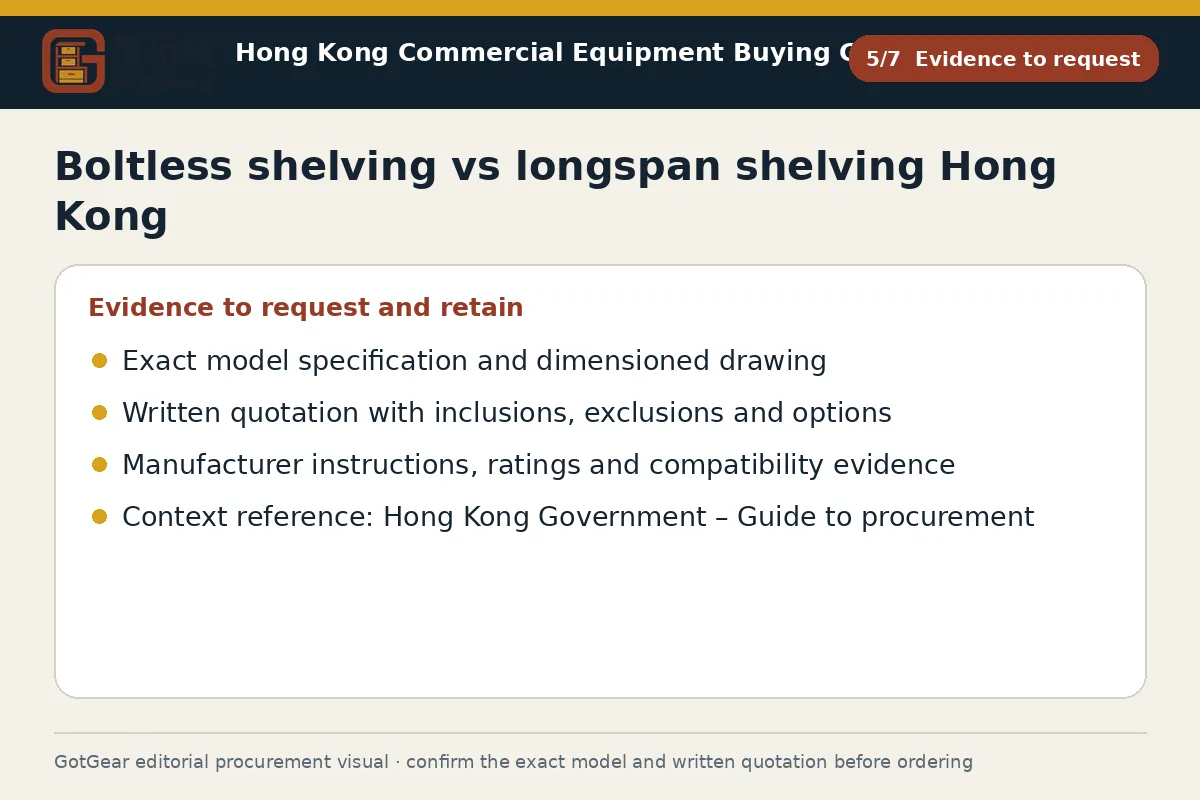
Confirm the heaviest shelf load, whether it is uniformly distributed or concentrated, and record the footprint of your largest carton or tote. Measure the available bay height, span and depth in each aisle, then test the delivery route against goods-lift and doorway dimensions with photos. In your enquiry, request the full rated system name, per‑shelf and per‑bay load ratings at the proposed spans, finish description, beam pitch increments and required accessories. Ask for bilingual drawings and installation/user instructions. Compare written quotations line by line: component codes, shelf materials, backstops, fixings and protection items. On receipt, inspect coatings, connectors, and deck seating; check that labels and instructions match the quoted model. Where anchoring, drilling or protection is proposed, ask for the manufacturer’s method notes and confirm permissions with the building manager before work starts.
- Operating use, quantity and expected frequency
- Dimensions, capacity, material and accessory requirements
- Delivery address, floor, goods lift and loading window
- Required documents, acceptance checks and after-sales arrangements
Key points for boltless shelving vs longspan shelving Hong Kong
Hong Kong projects face tight goods-lift cabins, narrow doorways and managed loading windows. Before choosing a shelving system, verify component lengths against lift dimensions and confirm delivery timing with the management office. Humidity from coastal air and building plant rooms can influence finishes and fasteners, so ask for corrosion-resistance guidance in writing. Institutional buyers often need bilingual drawings and instructions for approval. Floor drilling permissions and slab load notes should come from the building manager; treat them as prevailing constraints and match the final written quotation to those conditions.
Questions about boltless shelving vs longspan shelving Hong Kong
When should I choose shorter bays over longer spans for carton picking?
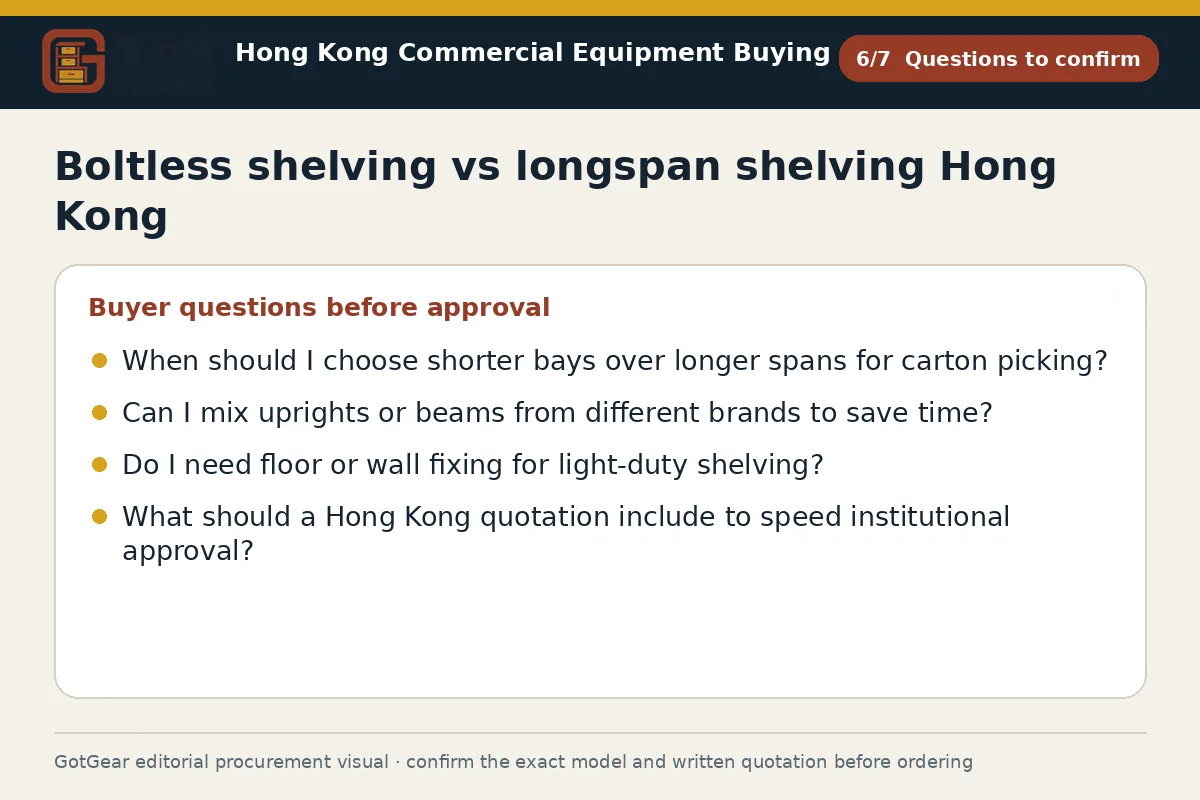
Choose shorter bays when you need tidy pick faces, low deflection and frequent access at multiple levels. Smaller spans typically present cartons more predictably and simplify adjustments. If you also store a few bulky items, dedicate a separate bay or end section to larger spans, but confirm the per‑shelf and per‑bay ratings, and any bracing or backstop requirements, in the written quotation and drawings.
Can I mix uprights or beams from different brands to save time?
Avoid mixing unless the manufacturer confirms cross‑compatibility in writing for the exact components and configuration. Even similar profiles may not lock or carry loads as intended, which can void ratings. If replacement parts are needed, request the original system series, component codes and drawings, and have the supplier confirm that the resulting bay and shelf loads remain valid for your layout.
Do I need floor or wall fixing for light‑duty shelving?
It depends on height‑to‑depth ratio, load, decking, and local conditions such as floor flatness or vibration. Some configurations require anchors or top ties to achieve their stated rating. Ask the manufacturer to state the fixing method for your proposed height and load, and confirm drilling permissions and substrate condition with the building manager before installation proceeds.
What should a Hong Kong quotation include to speed institutional approval?
Request the full rated system name, component codes, per‑shelf and per‑bay ratings at the proposed spans, finish and colour, beam pitch increments, accessories, and any anchoring or protection items. Include bilingual drawings and installation/user instructions. Add delivery route notes (goods‑lift size, booking windows) and site photos. State that the final specification, assembly and fixing method must match the approved documents.
Continue with closely related procurement topics
These pages share equipment, operating or decision-stage signals with this guide.
How to choose trolley wheels for Hong Kong warehouse floors
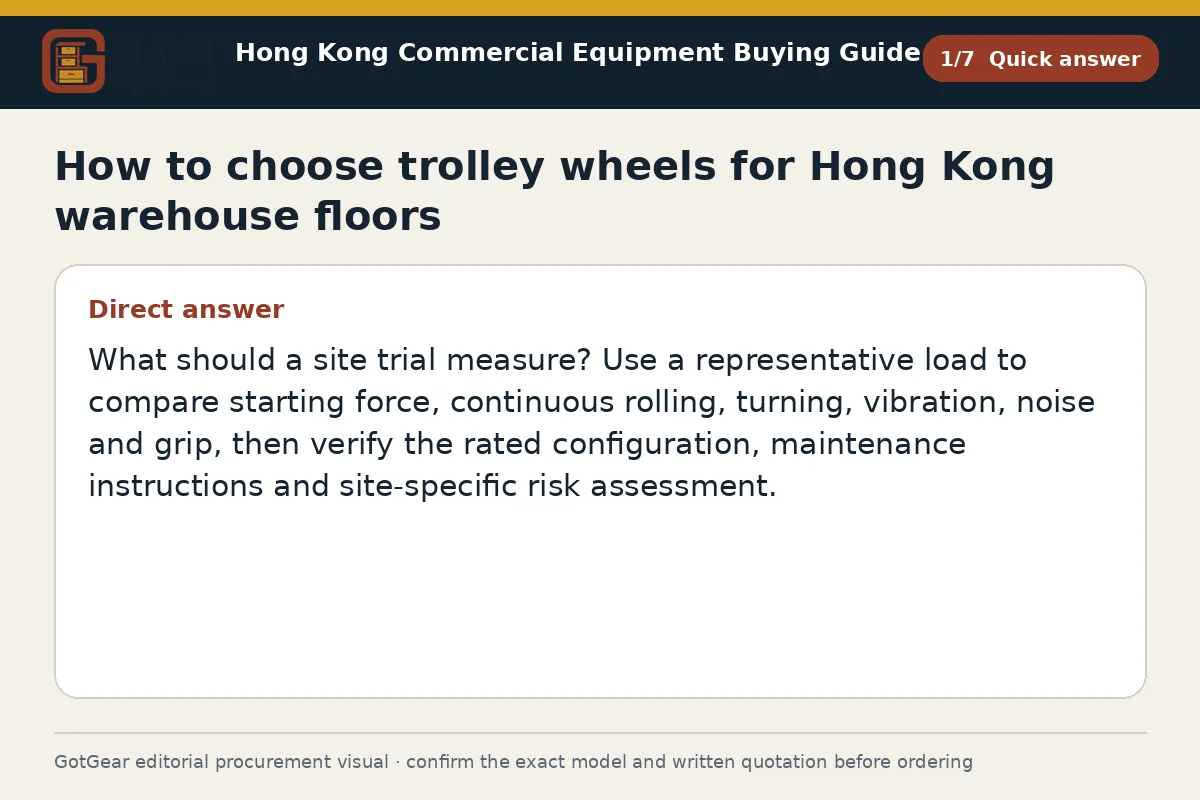
How to choose trolley wheels for Hong Kong warehouse floors depends on floor condition, expected load, tread type, rolling resistance, noise and manoeuvrability. See GotGear for practical guidance.
Read the guide
Pegboard vs gridwall display Hong Kong
This GotGear guide to pegboard vs gridwall display Hong Kong compares merchandise size, accessory fit, display density, wall condition, fixing method and change time to support your selection.
Read the guide
How to compare commercial equipment suppliers in Hong Kong
GotGear shows how to compare commercial equipment suppliers in Hong Kong by checking specifications, intended use and lead time. It explains how to compare commercial equipment quotations in Hong Kong.
Read the guide
Manual handling risk assessment for warehouse trolleys Hong Kong
When should a Hong Kong warehouse use a trolley instead of manual carrying? GotGear has manual handling risk assessment for warehouse trolleys Hong Kong and warehouse trolley route planning Hong Kong.
Read the guideRelated topic indexOpen more English procurement pages1 topics
Browse additional equipment families, applications and procurement questions relevant to a wider buying brief.