
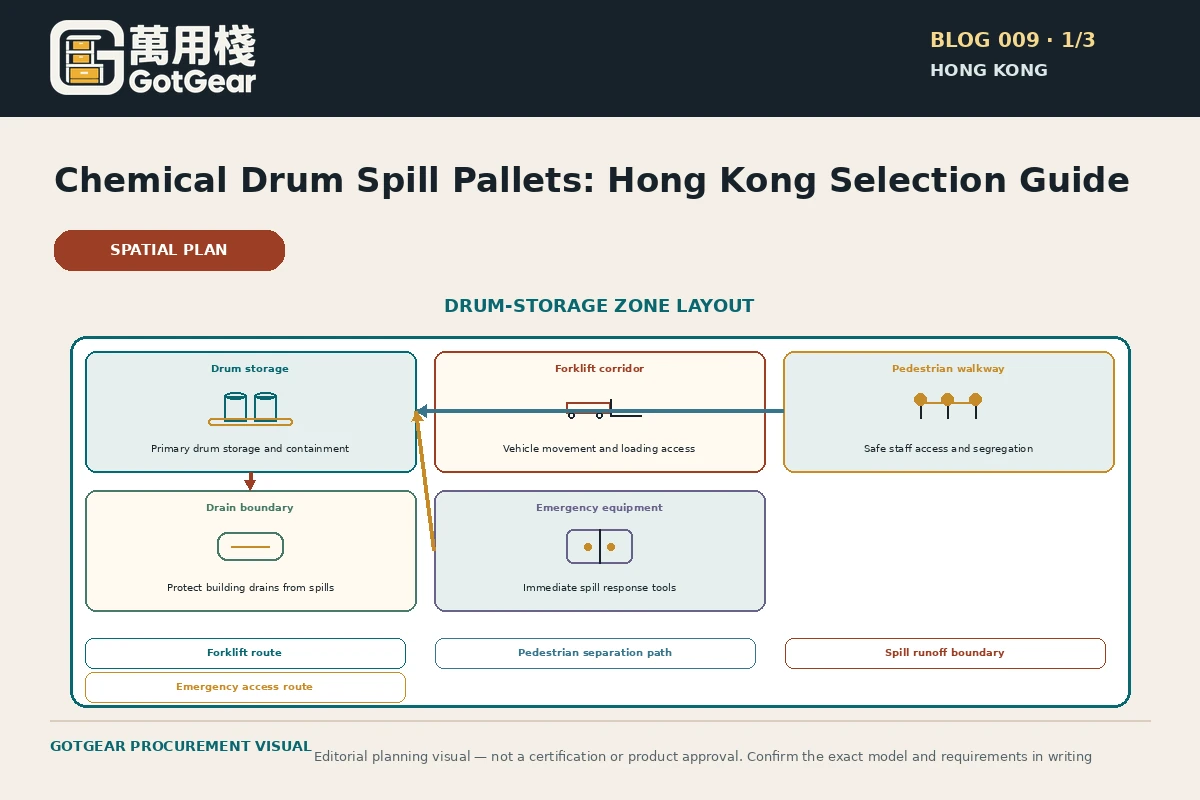
A chemical drum spill pallet should be chosen only after reviewing the chemical’s SDS, the number and size of drums, transfer and dispensing tasks, likely release scenarios and site constraints. Use the Labour Department’s risk-assessment sequence to identify hazards, evaluate controls and record findings, and ask the Fire Services Department about licensing if quantities approach exempt thresholds. Match sump capacity, material compatibility and access to the credible spill—treat the pallet as one control among PPE, procedures, housekeeping and emergency response.
What to remember before you decide
- Choose a spill pallet only after a site-specific risk assessment that uses SDS data and credible spill scenarios.
- A containment pallet does not remove the need to check Dangerous Goods licensing with the Fire Services Department.
- Match sump capacity and layout to the worst credible release and operational tasks, not to a universal formula.
- Verify material compatibility, plan routine inspections and keep written records of maintenance.
- Design storage so dispensing, movement and emergency access are safe and do not obstruct firefighting.
- Document decisions, consult FSD for borderline quantities and follow Labour Department guidance on assessments.
1. Start at the assessment: SDS, quantities and credible release scenarios
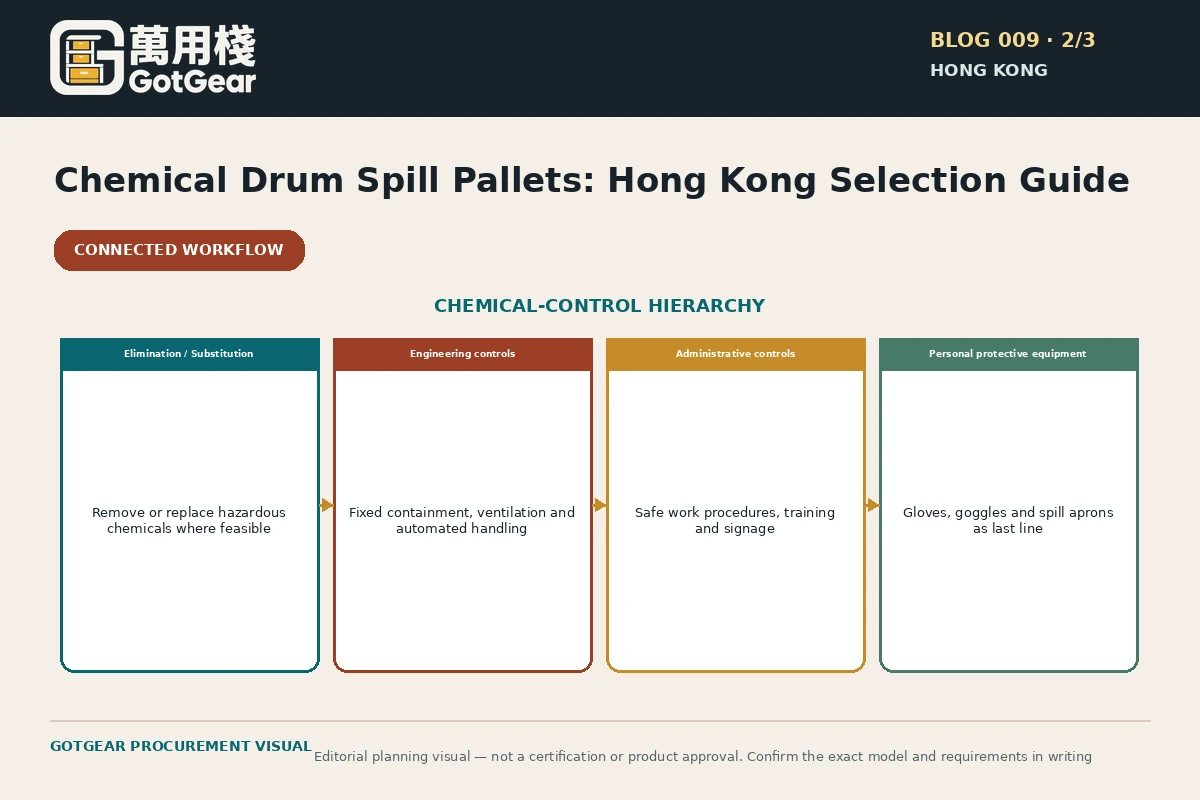
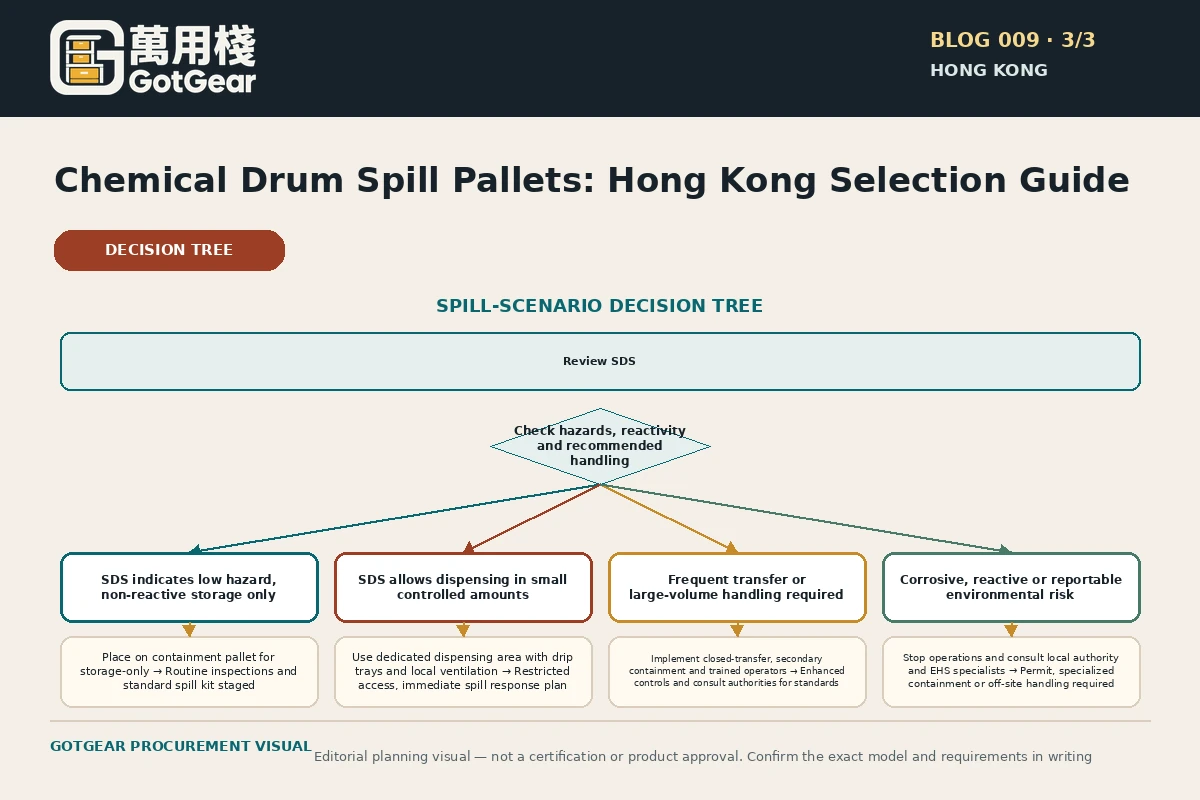
Begin selection with the substance’s Safety Data Sheet and a simple site-specific risk assessment. Hong Kong employers are advised by the Labour Department to identify hazards, consider who may be affected, evaluate controls, record findings and review them; this sequence determines whether a spill pallet alone is sufficient or whether additional or different engineering and administrative controls are required. Decision criteria here include the chemical’s hazard class, volatility, vapour density, flash point, toxic dose and corrosivity; whether the stored drum is in regular dispensing use or long-term static storage; and the proximity of people, drains, process plant and ignition sources. A key limitation is that an SDS provides required information but not a site-specific verdict; the Fire Services Department (FSD) provides licensing and classification under the Dangerous Goods Ordinance where quantities exceed exempt thresholds. Next, list all drum SKUs and sizes, record the typical transfer tasks, quantify maximum on-site aggregated quantity, and document plausible spill volumes for a single-drum rupture and for multiple-drum incidents.
Why licensing and segregation are not solved by a pallet
A secondary containment pallet mitigates liquid spread but does not remove the need to consider segregation, fire control or licensing. In Hong Kong the Dangerous Goods Ordinance and FSD guidance determine if storage requires a licence, and exempt-quantity boundaries are substance-specific and case-based; a sump or bund cannot substitute for those assessments. Use these decision checks: compare total stored quantity against SDS and FSD thresholds; check whether the chemical’s hazard class requires segregation from oxidisers, acids, alkalies, or flammables; and evaluate whether the storage area’s construction and fire-fighting access meet local expectations. Practical limitation: many purchasers look for a single numeric sump capacity; there is no universal legal sump size—sump requirement follows the credible release volume and operational context. Next, liaise with FSD for licensing questions and with your EHS or facilities team to confirm segregation distances, ventilation and fire-prevention measures before finalising pallet choice.
“Treat a spill pallet as one engineering control within a documented chemical-risk plan: match the sump, material and layout to credible releases and operational habits, and integrate inspection and training.”— GotGear Editorial Team
What should buyers compare for chemical drum spill pallet Hong Kong?
| Option or approach | Best for | Trade-offs | Checks before acceptance |
|---|---|---|---|
| Single-drum spill pallet (low profile) | Small workshops and labs with one or two drums used for dispensing and frequent access. | Good access and low footprint but limited aggregate capacity; may require multiple pallets for larger inventories. | Verify single-drum worst-case volume from SDS, confirm pallet sump volume exceeds this plus contingency, and test access with existing drum trolleys. |
| Single-drum pallet with raised grid and removable sump | Sites needing easy cleaning and rapid visual inspection while keeping small spills contained. | Higher initial complexity and slightly higher height; removable sump may clog or be mispositioned if not maintained. | Confirm material compatibility for pooled chemicals, set inspection intervals to check sump integrity and ensure staff can safely remove and replace sump trays. |
| Multi-drum bunded pallet (for bulk storage) | Facilities storing several drums together where footprint economy is important and access is less frequent. | Reduced manoeuvrability, more complex cleaning and higher spill potential if multiple drums fail; may increase water ingress outdoors. | Document aggregated maximum credible release, confirm bund capacity covers the selected scenario, and ensure segregation and firefighting access are maintained. |
| Dedicated dispensing station with integrated riser sump and spill shelf | Regular decanting tasks where controlled access and secondary containment during transfer are critical. | Larger footprint and setup resource requirements; requires disciplined housekeeping and trained operators. | Carry out a task-based transfer assessment, fit overflows/drain protocols and simulate dispensing operations to confirm ergonomics and containment performance. |
| Portable spill berm or flexible bund (temporary or mobile control) | Temporary storage, field work or situations where a permanent pallet would obstruct operations. | Portable solutions may be less durable, require setup time and can be affected by terrain or trip hazards. | Confirm chemical compatibility with the berm material, rehearse deployment in the required location and ensure leak-free joints before placing drums. |
This framework helps buyers create comparable written enquiries. Final model specifications, availability, delivery and commercial terms must be confirmed in a formal quotation.
2. Sump capacity, layout and drum configuration — match to the credible spill
Sump capacity should be determined by the credible maximum release from a single incident plus a margin for rain or residuals if outdoors. For laboratories and indoor workshops in Hong Kong, the most credible release is often a single-drum failure during dispensing or movement, not the complete failure of every drum in a rack. Use these decision checks: use the worst-credible single-drum volume (e.g. 20 L, 200 L) and any foreseeable transfer losses; if dispensing represents frequent transfer, allow extra capacity for accidental overfill or drum rupture. Layout matters: single-drum pallets permit closer access for handling and are suitable under workbenches; multi-drum bunds reduce footprint for bulk storage but make access, inspection and housekeeping harder. Limitations include vertical stacking restrictions, forklift movement clearances and floor loading. Next, map drum locations and movement paths, measure access for drum trolleys and forklifts, confirm floor load limits with facilities, and choose a sump layout that does not obstruct emergency egress or firefighting access.
3. Materials, compatibility and operations — choose wisely and plan maintenance
Material compatibility is a practical control: common pallet materials include polyethylene, steel with corrosion coating, and glass-reinforced plastic. Polyethylene offers good chemical resistance to many acids, bases and solvents, but specific compatibility must be checked against the SDS and manufacturer chemical-resistance data. Use these decision checks: verify compatibility for each chemical and mixture you store; consider UV exposure and outdoor use in Hong Kong’s climate because sunlight and heat can age some polymers; choose surface finishes that allow easy decontamination for spill clean-up. Operational considerations include drum handling tools, drip trays during decanting, lockable spill covers where needed and routine cleaning. A key limitation is that corrosion indicated by hidden pitting, compromised welds or poor maintenance will reduce containment; regular inspection is essential. Next, assemble a maintenance and inspection schedule, store compatibility charts with SDS documents, train staff on safe decanting techniques and keep spill kits sized for the maximum credible release adjacent to storage areas.
Chemical drum spill pallet Hong Kong decision checklist
- Has a documented site-specific risk assessment been completed using the Labour Department sequence (identify hazards, affected people, evaluate controls, record and review)?
- Have you gathered current SDSs for every liquid to be stored and checked chemical classes, flash points and incompatibilities?
- What is the maximum credible single-drum release and the aggregated on-site quantity—do these approach FSD exempt thresholds?
- Is the proposed sump capacity sufficient for the credible release plus contingency and, where outdoors, allowance for rainfall or run-on?
- Does the pallet material show documented compatibility with the chemicals and with expected temperature and UV exposure?
- Will the selected pallet allow safe access for dispensing, inspection, cleaning and emergency responders without blocking egress?
- Are segregation, ventilation and firefighting access in the storage area in line with local site requirements and FSD guidance?
- Are drum-handling tools, trolleys and forklifts compatible with pallet design and floor loading limitations?
- Is there a maintenance and inspection schedule with responsible persons, frequency and written records for sump integrity and cleanliness?
- Have waste-handling and clean-up procedures been defined, including how contaminated sump contents will be collected, classified and disposed?
Practical action sequence
- Compile SDSs and record every drum SKU, container size and maximum aggregated onsite quantity.
- Run a simple credible-spill exercise to estimate single-drum and multi-drum release volumes and likely spill spread paths.
- Contact the Fire Services Department early if aggregate quantities approach exempt thresholds or if you are unsure about classification.
- Select pallet material and sump capacity matched to the credible release, location (indoor/outdoor) and chemical compatibility.
- Confirm layout on site: mark movement aisles, emergency egress, firefighting access and ensure pallets do not obstruct these routes.
- Establish training for staff on decanting, drum movement, spill response and pallet inspection procedures.
- Schedule routine inspections and keep inspection logs; assign a responsible person to execute and review findings.
- Document the final selection and controls in your site risk assessment and review the arrangement whenever stock or tasks change.
Apply the checks to your Hong Kong site
In Hong Kong, site-level decisions determine whether a spill pallet is an appropriate engineering control rather than a compliance shortcut. Labour Department guidance requires a documented risk assessment and controls, and the Fire Services Department administers Dangerous Goods licensing with case-specific exempt-quantity boundaries. High-density tenancy, limited outdoor space, shared drains and close neighbouring occupancies push teams toward conservative containment planning: design for smaller credible releases, faster detection, simple layouts that preserve emergency access, and early engagement with FSD for borderline quantities. Project teams selecting a chemical drum spill pallet Hong Kong should base specification on container inventory, SDS compatibility and credible release scenarios rather than assuming a standard unit will suffice. Installers and safety managers specifying spill containment pallets Hong Kong must capture siting constraints and handling paths. Records demonstrating hazardous substance secondary containment Hong Kong arrangements help internal audits and regulator conversations. Operational takeaway: map container locations and release footprints, run a site walk with FSD liaison and emergency responders, then lock the pallet layout and access clearances.
References used for this article
These sources provide regulatory, safety or planning context. They do not certify any GotGear product or replace site-specific professional advice.
- Hong Kong Labour Department — Chemical Safety in the Workplace — Risk-assessment process and employer arrangements for chemical use, handling, storage and transport.
- Hong Kong Fire Services Department — Control Regime under the Dangerous Goods Ordinance — Dangerous-goods regulation, exempt-quantity boundary and FSD’s case-specific risk assessment for licence applications.
- Hong Kong Fire Services Department — A Guide to Application for Dangerous Goods Licence and Approval — Official application-guide entry point for site-specific licensing and approval enquiries.
Questions about chemical drum spill pallet Hong Kong
Can I buy a spill pallet and assume I meet all regulatory requirements?
No. A spill pallet is an engineering control but does not replace the need for a site-specific risk assessment or regulatory checks. In Hong Kong, the Labour Department’s guidance requires employers to assess chemical hazards and implement controls. Separately, the Fire Services Department regulates dangerous goods and applies licences above certain exempt quantities. Choose a pallet only after you document credible release scenarios, confirm compatibility and consult FSD where quantities or hazard class may trigger licensing.
Does a containment pallet change whether I need a Dangerous Goods licence?
A containment pallet on its own does not determine licensing. FSD assesses licensing under the Dangerous Goods Ordinance based on substance classification, stored quantity, storage arrangement and site-specific factors. While good secondary containment will be part of a risk mitigation package, FSD determines licensing requirements case by case under the Dangerous Goods Ordinance. If your aggregated quantities approach known exempt limits, engage with FSD early to understand site expectations.
How large should the sump capacity be?
There is no universal sump-size legal requirement; sump capacity must match your credible release scenario. Start by estimating the worst-credible release from a single drum during handling or accidental failure, then add contingency for overfill, residuals and, if outdoors, rainwater or run-on. For bulk stored drums, consider aggregated risks. Document your assumptions and record why the chosen capacity is appropriate for your site.
Who should I contact for classification and licensing questions in Hong Kong?
For classification and licensing questions under the Dangerous Goods Ordinance, approach the Fire Services Department’s Dangerous Goods Office. They provide guidance on exempt quantities, licence application processes and site-specific assessments. For workplace risk-assessment procedures and employer responsibilities, use the Hong Kong Labour Department’s chemical-safety guidance. Both organisations provide practical entry points for site-specific enquiries.
What maintenance and inspection regime should we apply to spill pallets?
Inspect pallets and sumps routinely—frequency should reflect use intensity and chemical aggressiveness but a practical baseline is monthly visual checks plus written records and a full inspection after any spill. Look for cracks, UV degradation, blocked drains, rust on metal parts, damage to grid tops and evidence of seepage. Ensure sump drains that are present remain closed or locked except during controlled removal for disposal of contaminated liquids following your waste-handling plan.
How do I handle incompatible chemicals in neighbouring drums?
Segregation is essential. Use the SDS to identify incompatibilities (for example oxidisers vs organics; acids vs alkalies) and keep incompatible chemicals separated by distance, separate bunding or in different rooms if necessary. Never rely solely on a single bund to keep incompatible classes together—plan storage so that an accidental release from one area cannot flow into the area of an incompatible chemical, and document segregation arrangements in your site risk assessment.
Compare available product models and specifications
These product cards are matched to this buying topic. Select a specification and quantity to send the product details to WhatsApp.
 Shelving & StorageProduct reference image
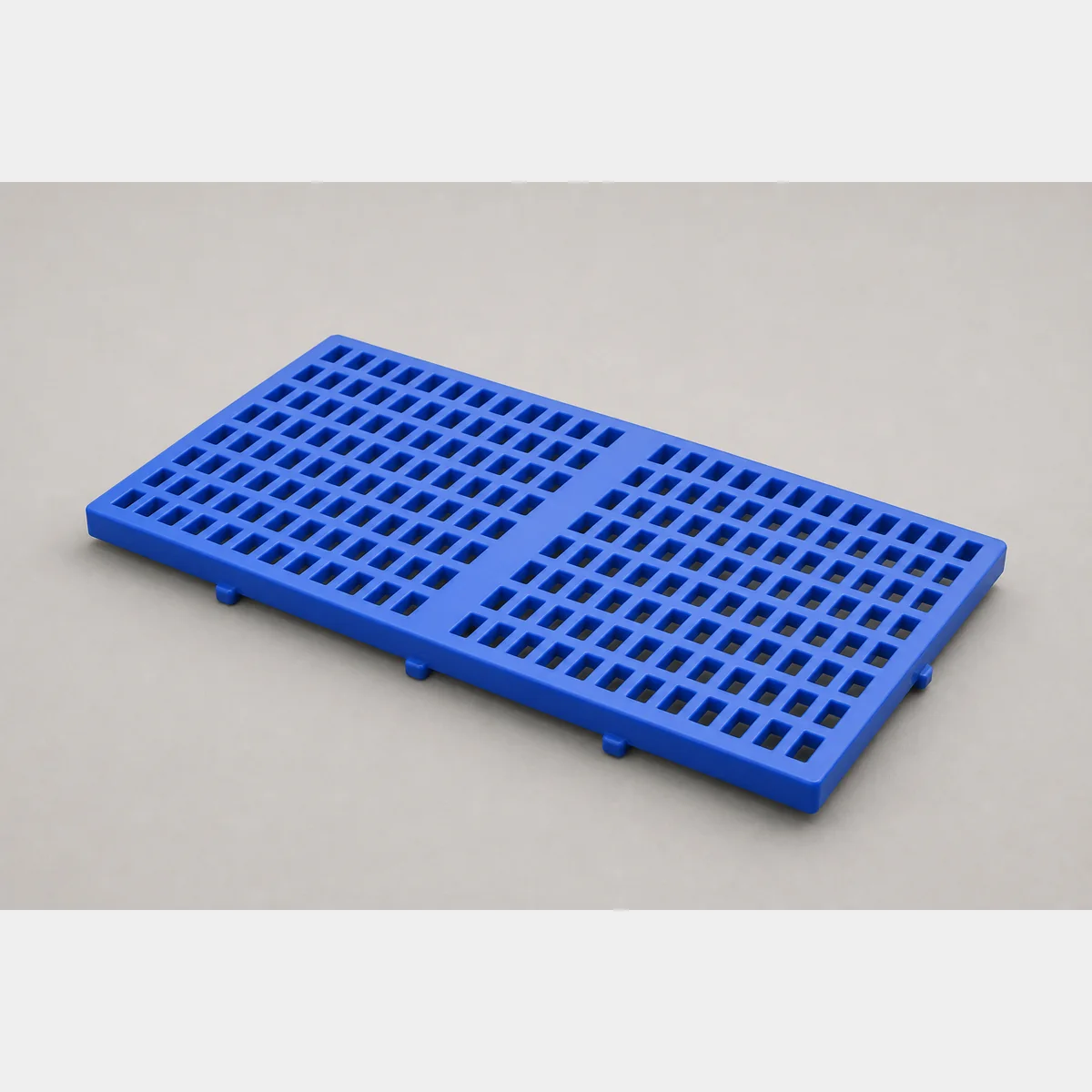
Perforated Pallet Sheet (JC2302)
Perforated pallet sheet, A: L600xW300xH30 mm; B: L600xW350xH30 mm; C: L900xW350xH30 mm. Formal quotation available on request based on use, specifications and quantity.
- A
- L600xW300xH30 mm
- B
- L600xW350xH30 mm
- C
- L900xW350xH30 mm
 Shelving & StorageProduct reference image
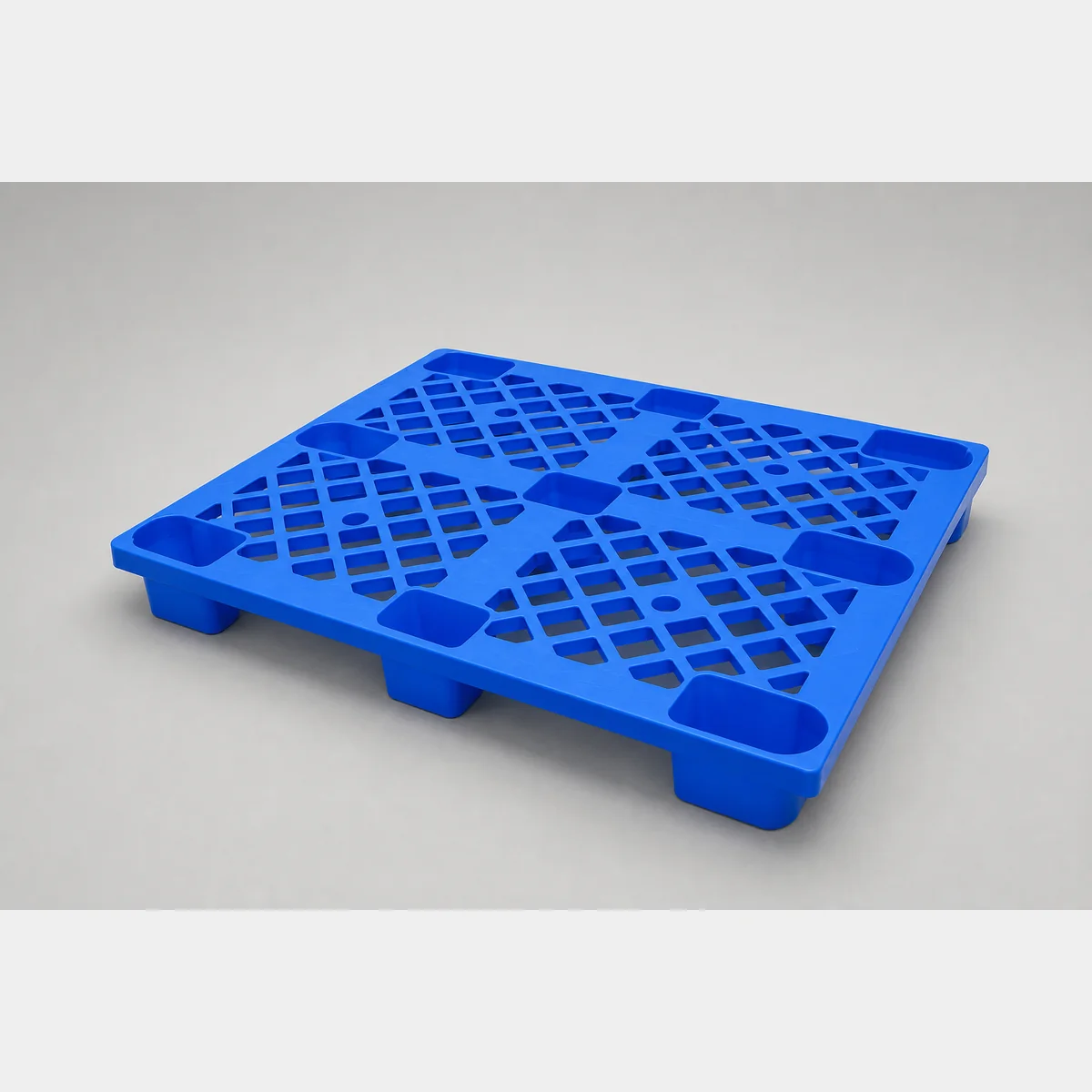
Plastic Pallet
Plastic pallet, A: L1200xW1000xH145 mm; B: L1200xW900xH145 mm; C: L1200xW800xH145 mm. Formal quotation available based on use, specification and quantity.
- A
- L1200xW1000xH145 mm
- B
- L1200xW900xH145 mm
- C
- L1200xW800xH145 mm
 Shelving & StorageProduct reference image
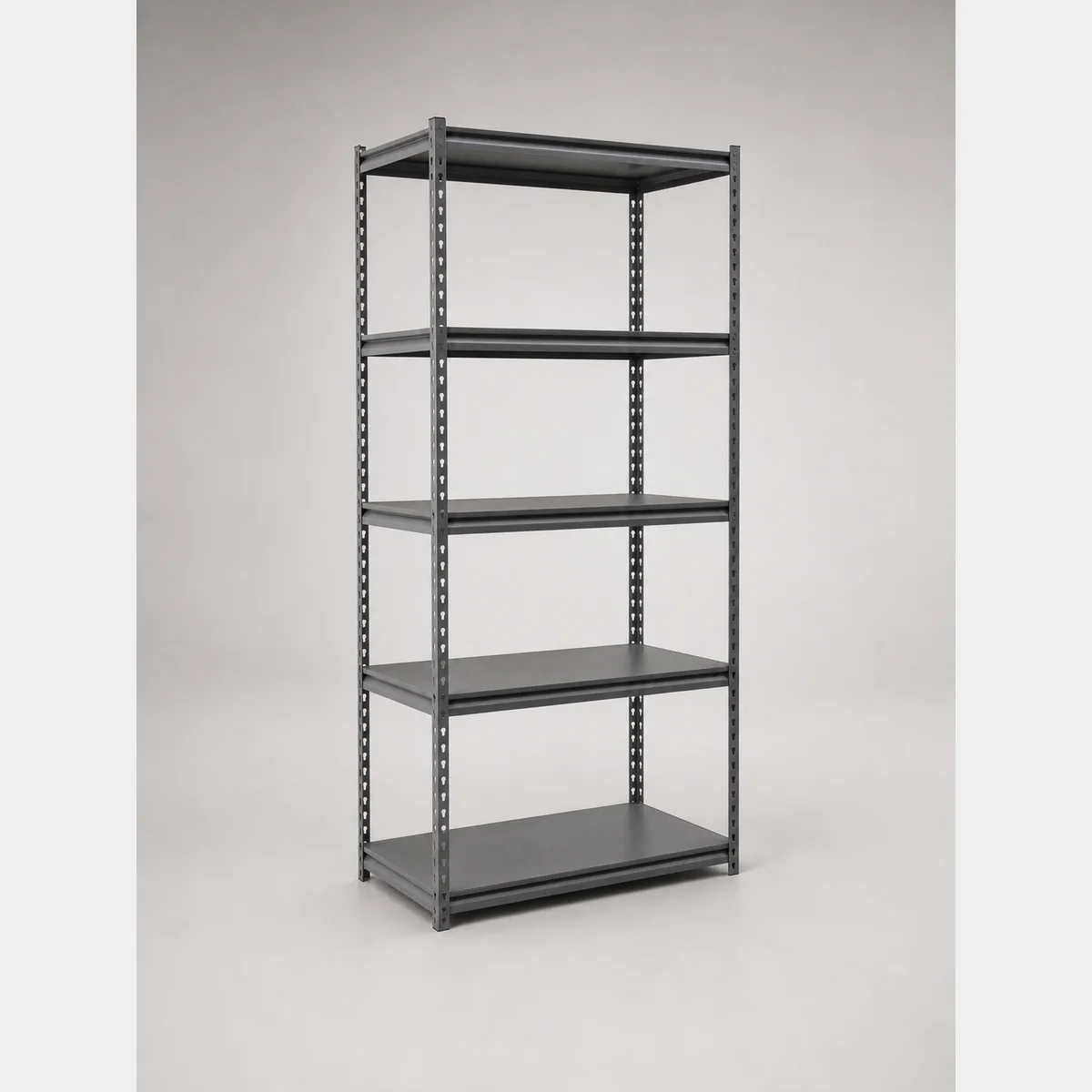
3-/4-/5-tier Storage Rack (S9190)
3-/4-/5-tier Storage Rack (S9190). Sizes/specs: Type A. L910 x W400 x H1830 mm / Type B. L1220 x W400 x H1830 mm; Type J: L910 x W460 x H1830 mm; Type K: L1220 x W460 x H1830 mm. Formal quotation available based on application, specifications and quantity.
- Size / Specification line
- Type A. L910 x W400 x H1830 mm / Type B. L1220 x W400 x H1830 mm
- Type J
- L910 x W460 x H1830 mm
- Type K
- L1220 x W460 x H1830 mm
 Shelving & StorageProduct reference image
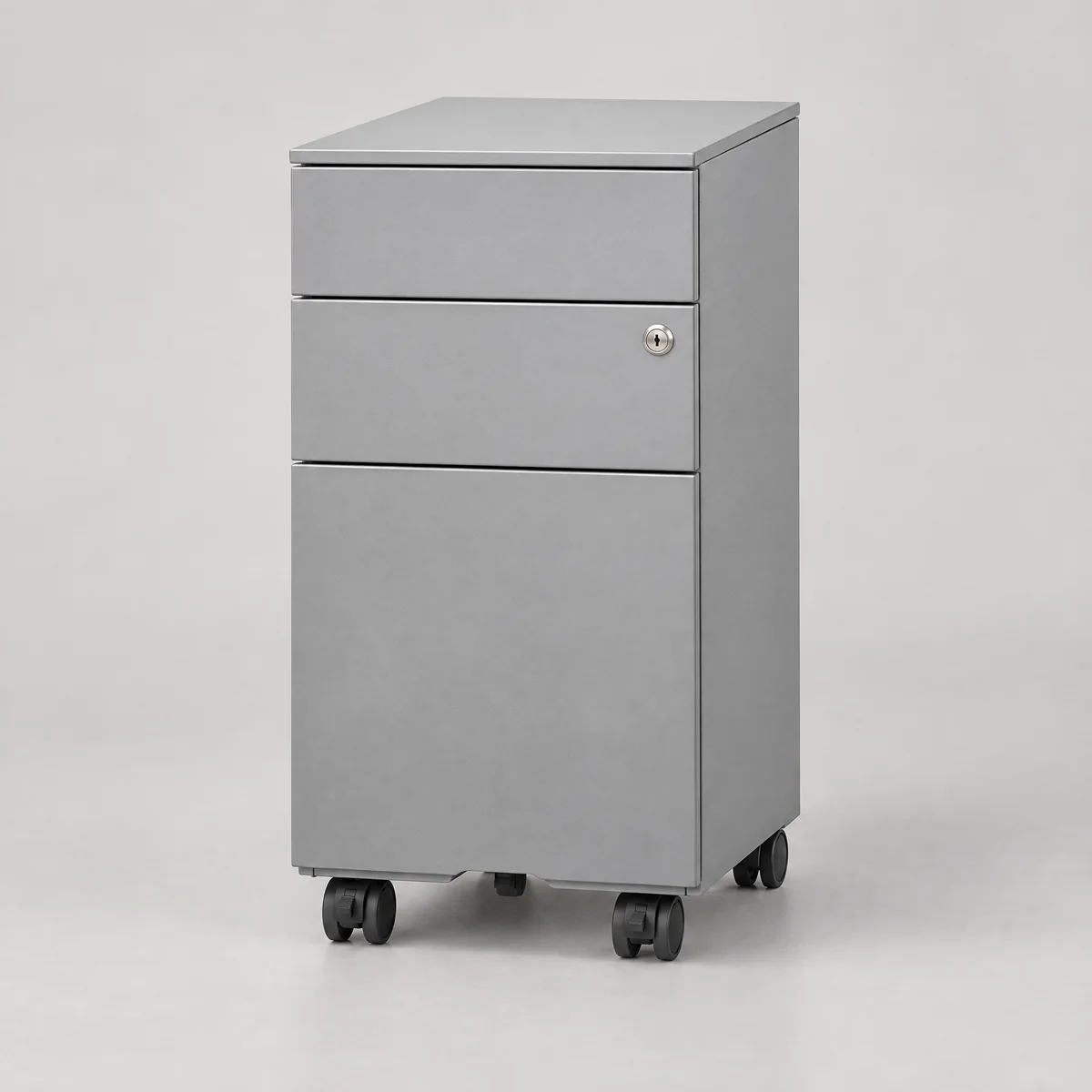
3-tier filing cabinet
3-tier filing cabinet; Size: Length 300xDepth520 × Height 600 mm. Formal quotation available based on use, specifications and quantity.
- Size
- Length 300xDepth520 × Height 600 mm
 Shelving & StorageProduct reference image
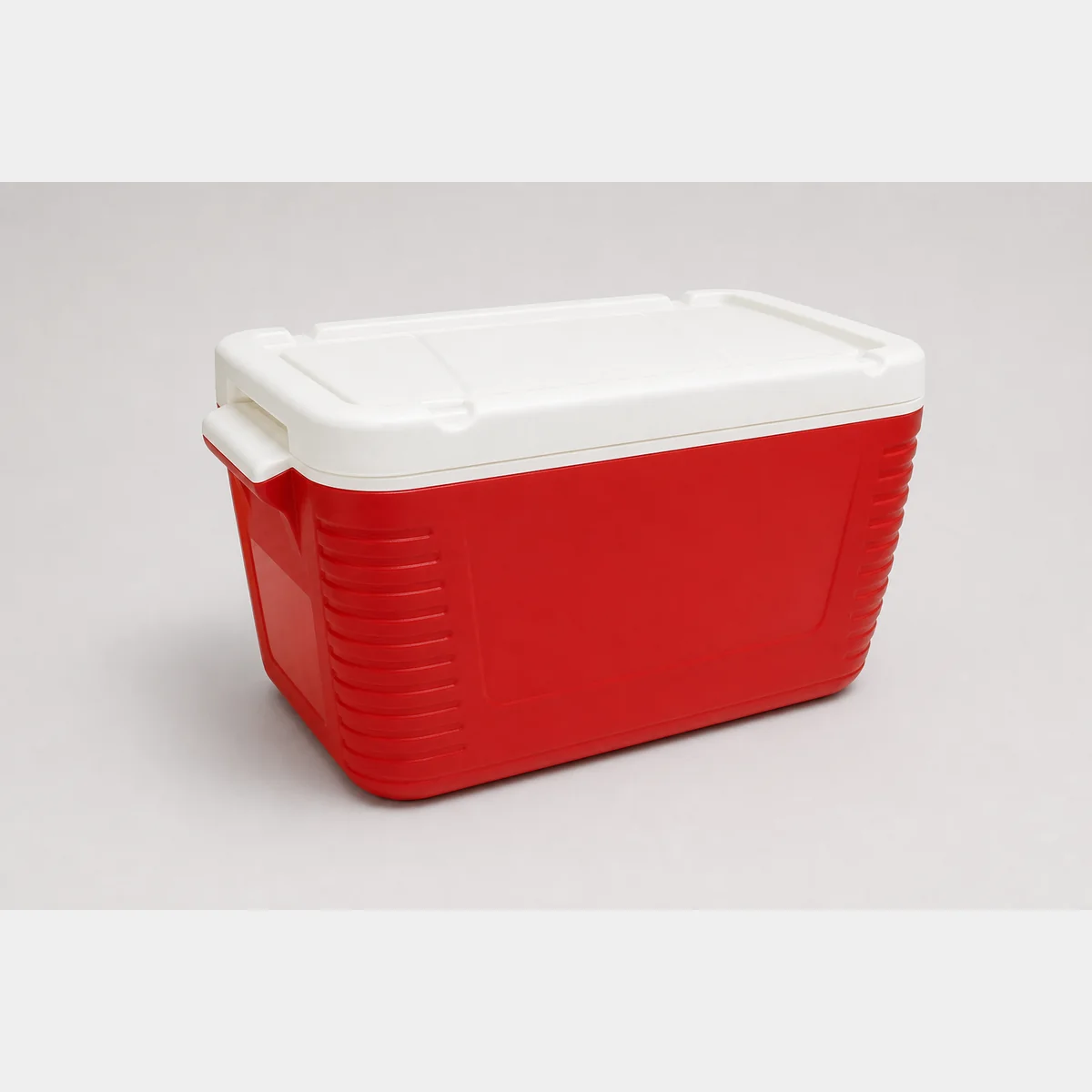
34 L Insulated Cooler Box (RK34)
34 L insulated cooler box. Size / Spec: 581 X 333 X 321 (mm) / 22-7/8 X 13-1/8 X 12-5/8 (inch); Vol: 34 L. Formal quotation available upon request based on use, specifications and quantity.
- Size / Specification
- 581 X 333 X 321 (mm) / 22-7/8 X 13-1/8 X 12-5/8 (inch)
- Volume
- 34 L
 Shelving & StorageProduct reference image
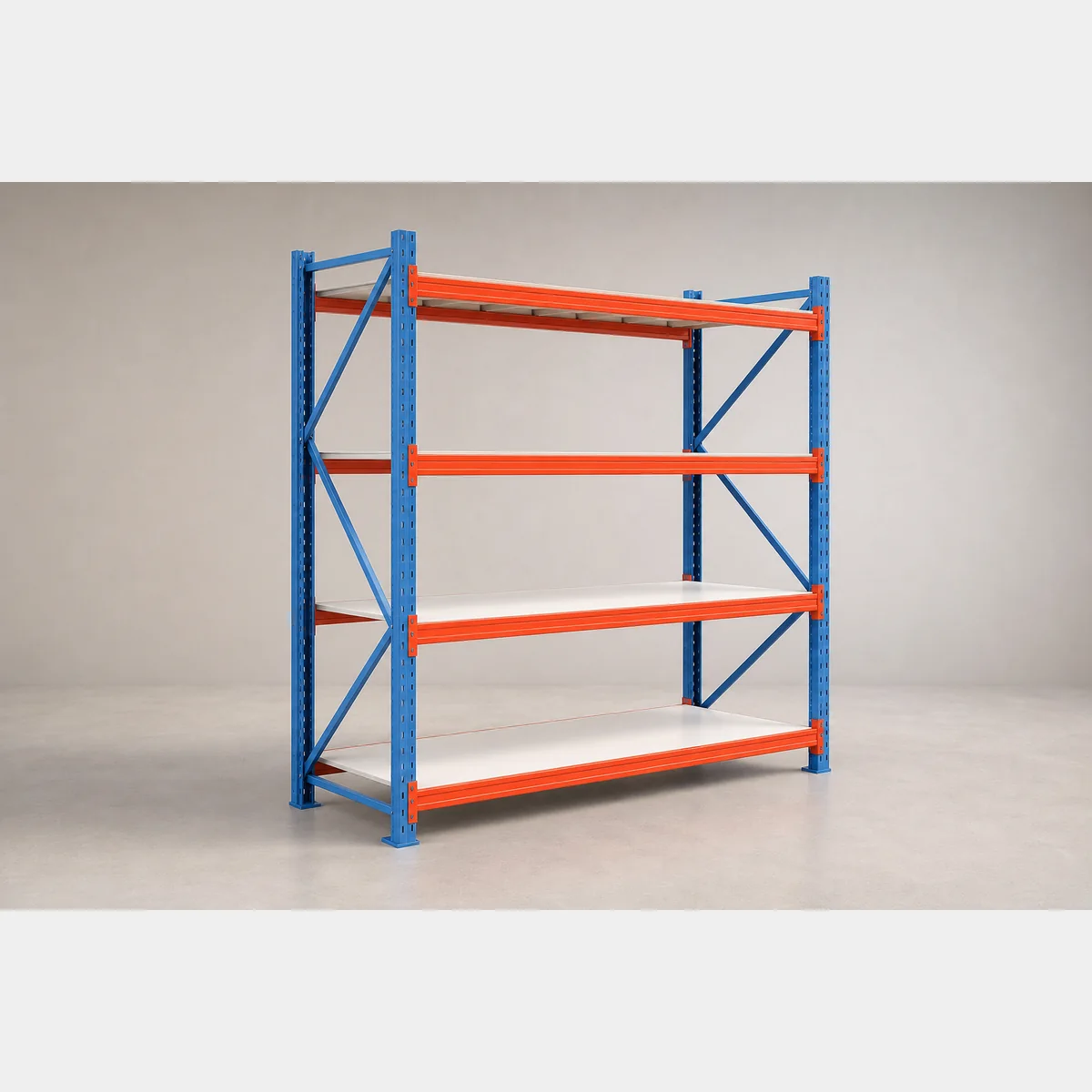
4-Tier Medium Shelving
4-Tier Medium Shelving, Colour: Blue; Size / Specification options: A. L2000 x W900 x H2000 mm / B. L2000 x W1000 x H2000 mm. Formal quotation available based on use, specifications and quantity.
- Colour
- Blue
- Size / Specification options
- A. L2000 x W900 x H2000 mm / B. L2000 x W1000 x H2000 mm
 Shelving & StorageProduct reference image
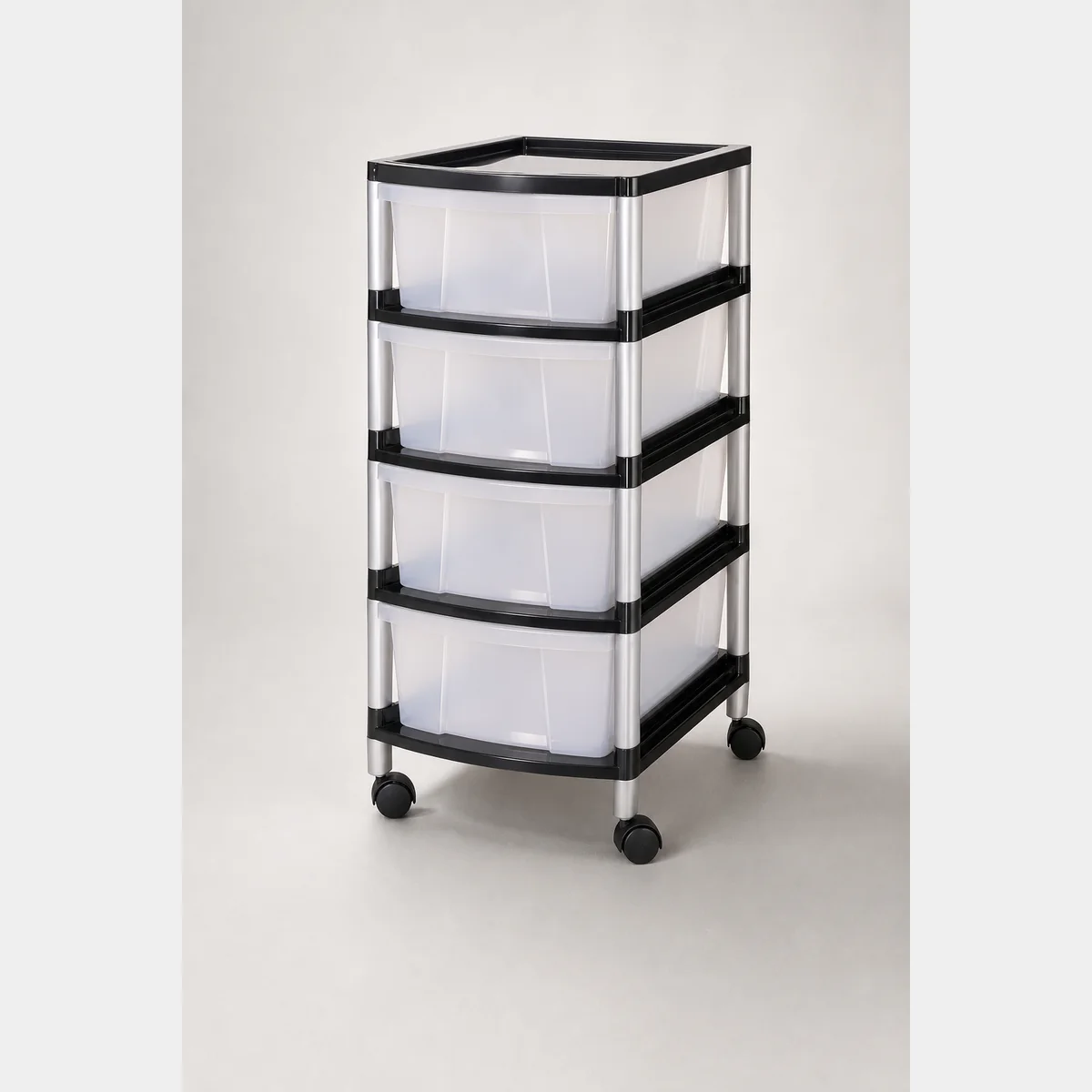
4-tier Rolling Drawer
4-tier Rolling Drawer, Item No: AD-3 / AD-4; Size: D388 x L298 x H517 (mm) / D15-1/4 x L11-3/4 x H20-3/8 (inch); Minimum order quantity: 1 pc. Formal quotation available upon enquiry for intended use, specifications and quantity.
- Item No
- AD-3 / AD-4
- Size
- D388 x L298 x H517 (mm) / D15-1/4 x L11-3/4 x H20-3/8 (inch)
- Minimum order quantity
- 1 pc
 Shelving & StorageProduct reference image
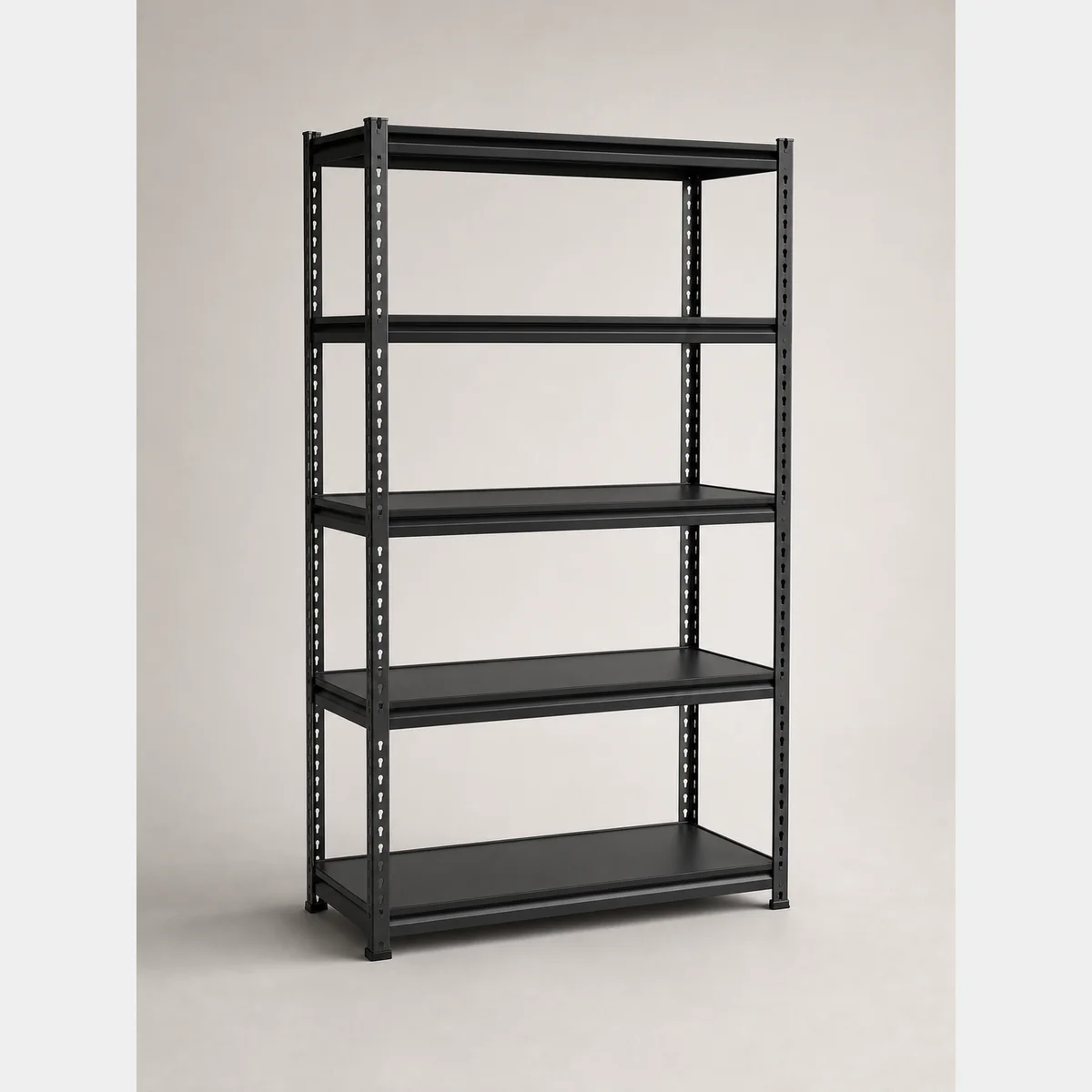
5-tier black shelving
5-tier black shelving, A: L60xW40xH198 cm; B: L70xW40xH198 cm; C: L80xW40xH198 cm. Formal quotation available on request based on use, specification and quantity.
- A
- L60xW40xH198 cm
- B
- L70xW40xH198 cm
- C
- L80xW40xH198 cm
Continue with closely related procurement topics
These pages share equipment, operating or decision-stage signals with this guide.
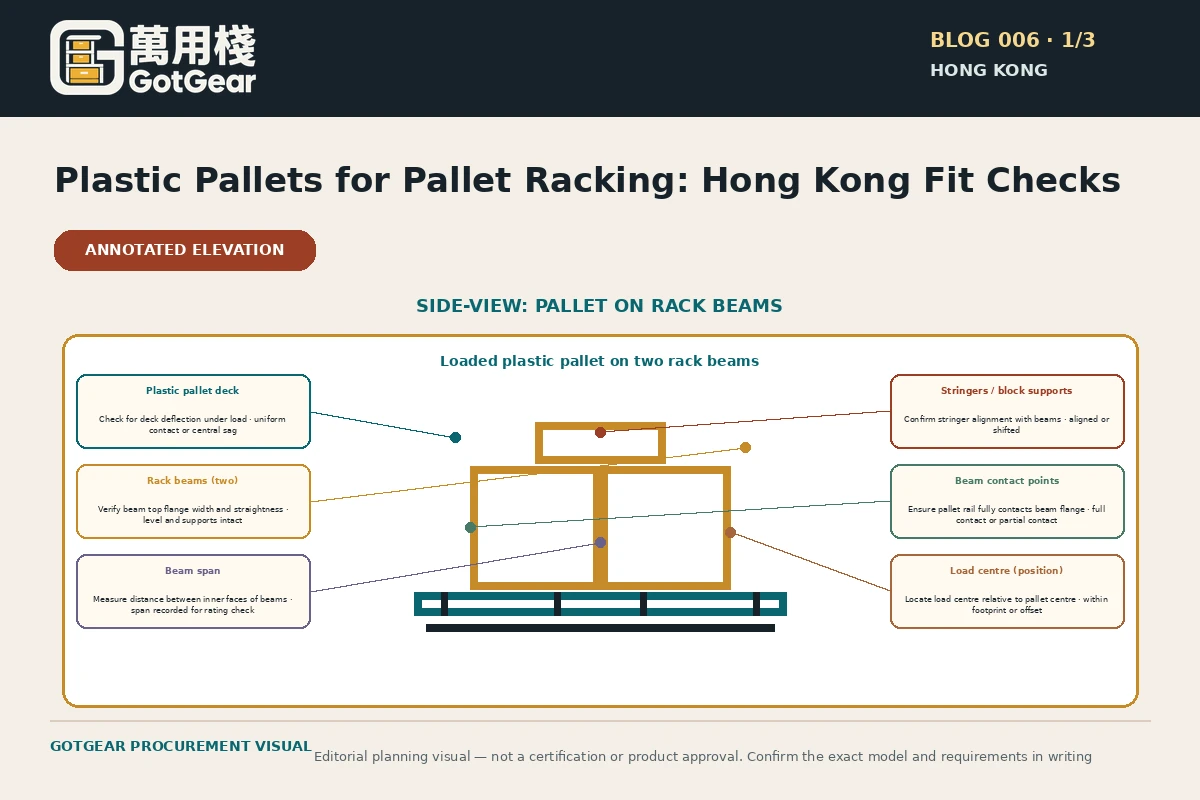
Plastic pallets for pallet racking Hong Kong
GotGear explains plastic pallets for pallet racking Hong Kong for Hong Kong buyers. See how plastic pallet rack load rating Hong Kong supports rackable plastic pallet Hong Kong, with practical checks, evidence boundaries and written requirements.
Read the guide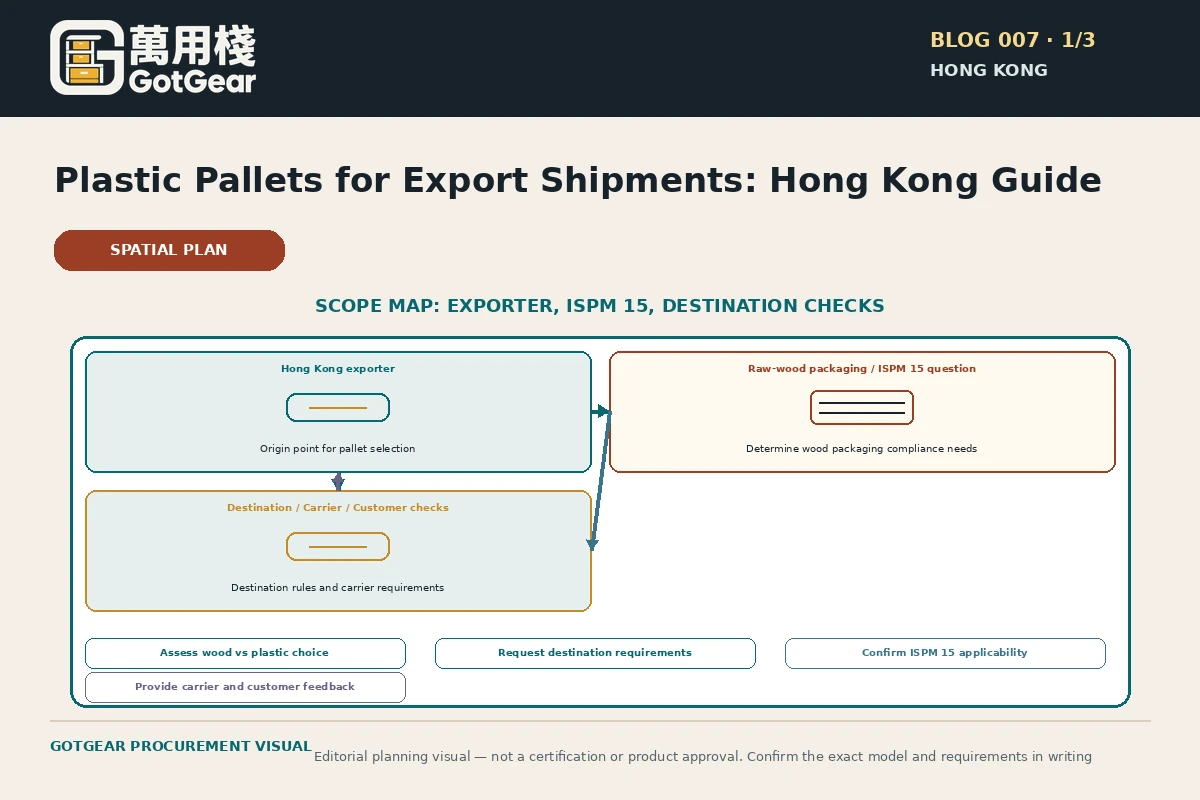
Plastic pallets for export shipments Hong Kong
GotGear explains plastic pallets for export shipments Hong Kong for Hong Kong buyers. See how ISPM 15 plastic pallets Hong Kong supports export pallet material Hong Kong, with practical checks, evidence boundaries and written requirements.
Read the guide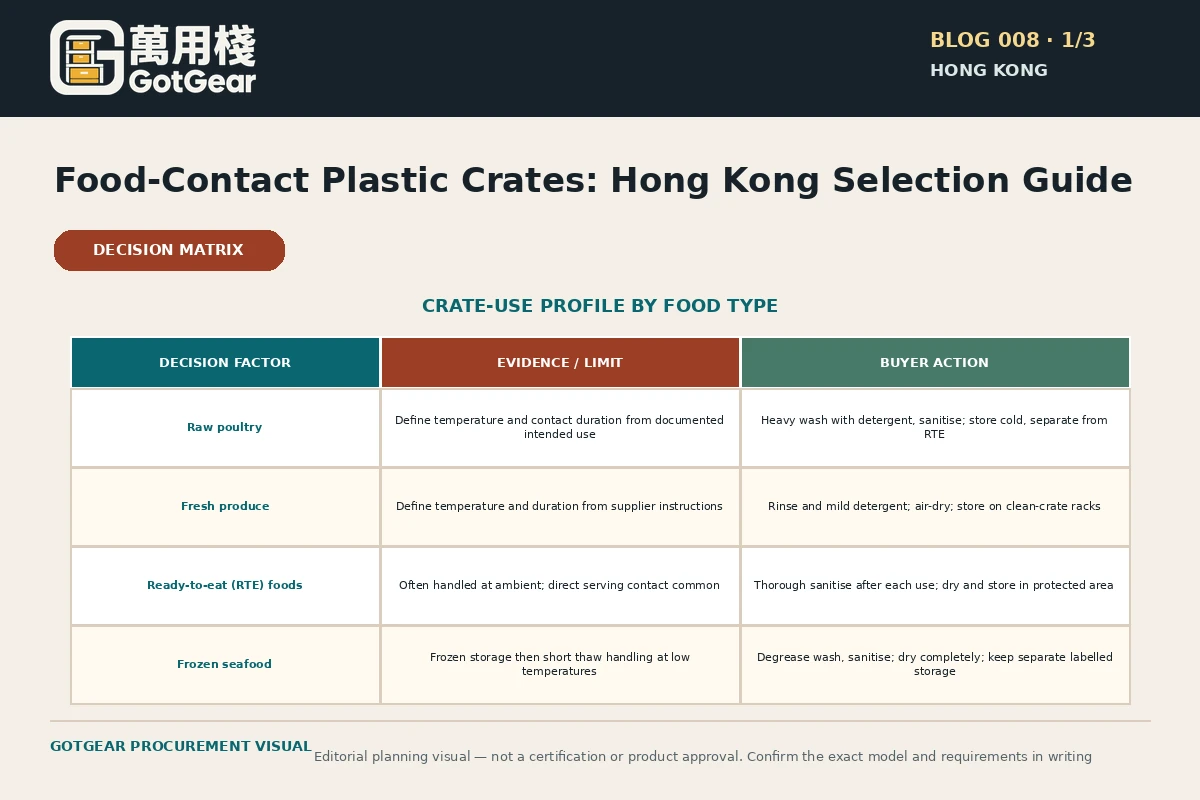
Food contact plastic crates Hong Kong
GotGear explains food contact plastic crates Hong Kong for Hong Kong buyers. See how food grade crate material Hong Kong supports food storage crate cleaning Hong Kong, with practical checks, evidence boundaries and written requirements.
Read the guide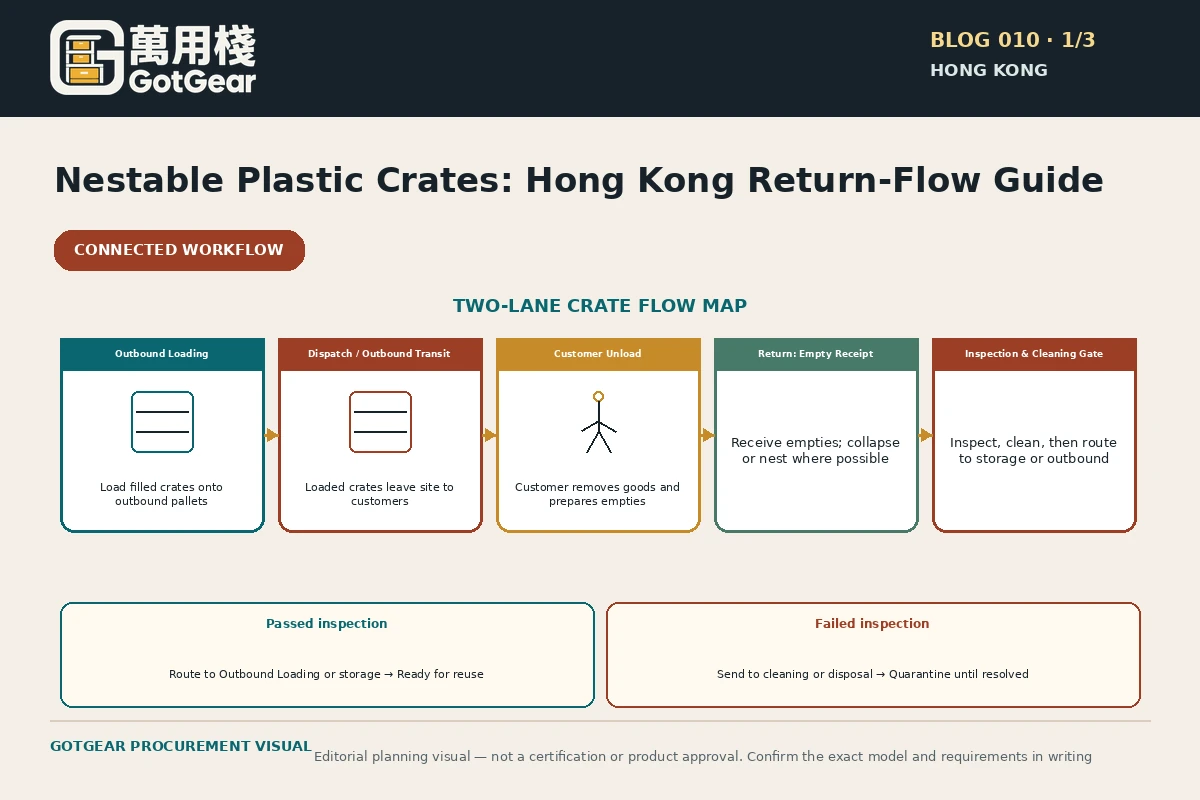
Nestable plastic crates Hong Kong
GotGear explains nestable plastic crates Hong Kong for Hong Kong buyers. See how stack and nest crates Hong Kong supports returnable crate empty storage Hong Kong, with practical checks, evidence boundaries and written requirements.
Read the guideRelated topic indexOpen more English procurement pages4 topics
Browse additional equipment families, applications and procurement questions relevant to these operating requirements.