
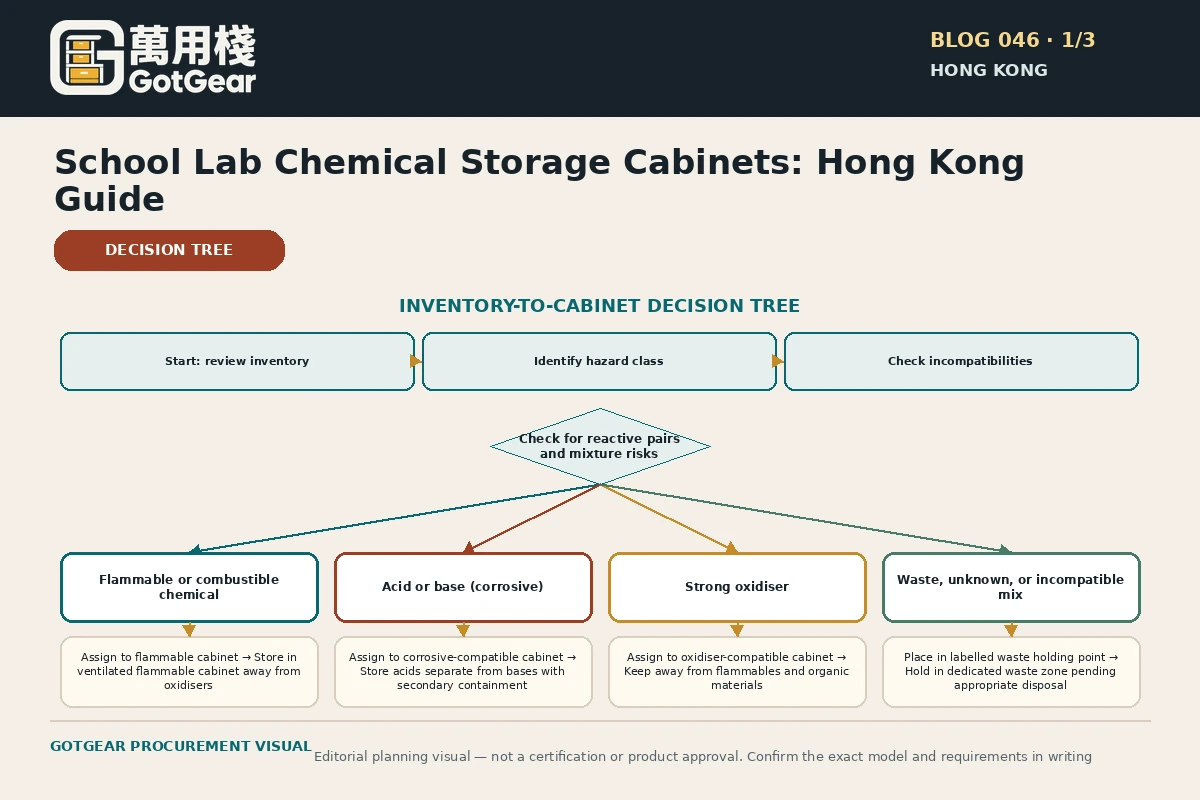
Choose storage only after you list every chemical, its quantity, hazard class and incompatibilities. Use locked cupboards for general stock, a flammable-liquid cabinet with applicable documented evidence for concentrated solvents and a corrosion-resistant cabinet for strong acids or bases; do not rely on paint colour alone. Confirm cabinet construction, internal features and any ventilation option against the product literature and the SDS. Keep chemical waste separate and follow EDB guidance on inventories and the EPD code for waste handling.
What to remember before you decide
- Start procurement from a full chemical inventory and incompatibility map, not product brochures or colours
- Choose between locked general cupboards, flammable-liquid cabinets and corrosion-resistant cabinets according to inventory-driven needs
- Verify cabinet construction, internal sump capacity and shelf materials against SDS guidance for your most aggressive substances
- Keep chemical waste separate and follow EPD rules for packaging, labelling and storage; do not use waste rules as stock-cabinet specs
- Document decisions, placements and authorised key-holders and train staff on inventory updates and emergency procedures
- Remember that ventilation claims and ‘chemical-resistant’ labels require detailed vendor data and may affect site services
Start here: inventory, labelling and incompatibility mapping
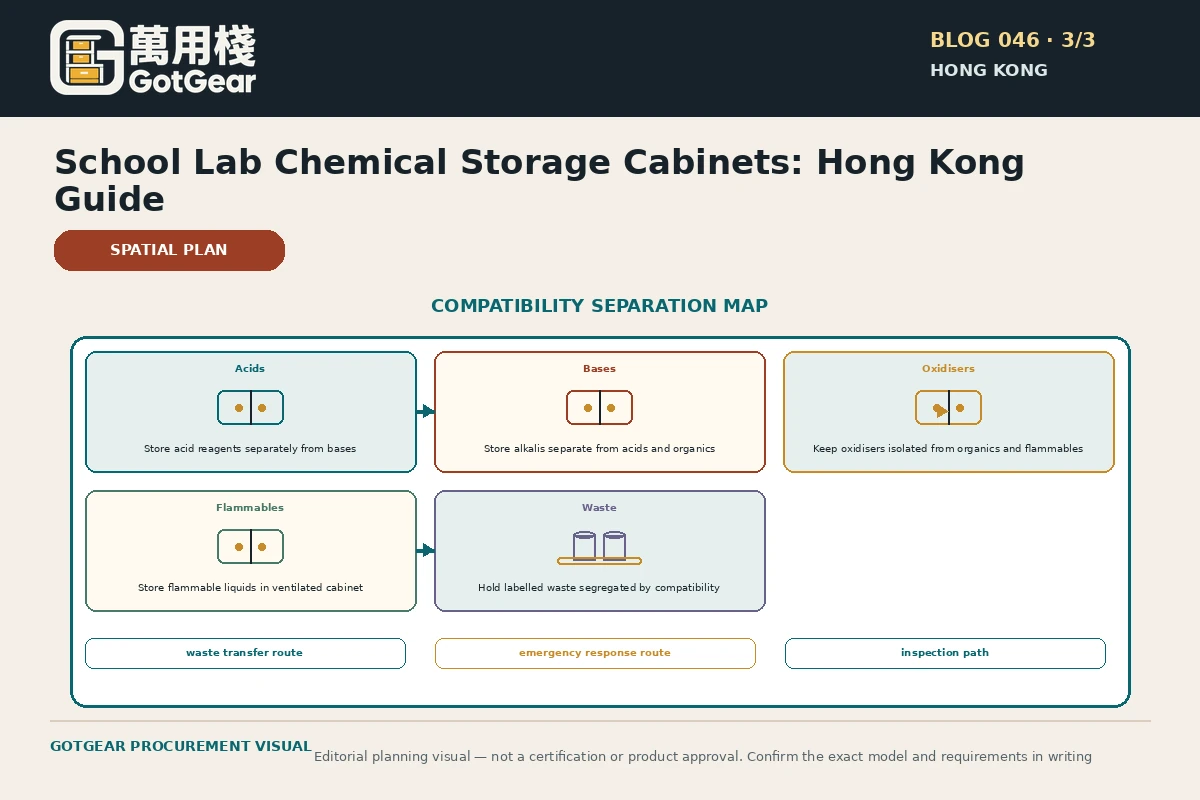
In Hong Kong, The Education Bureau (EDB) explicitly recommends updated chemical inventories that show locations, separation of incompatible chemicals, locked cupboards and restricted student access. Begin procurement by producing a single-sheet inventory for your science store and each laboratory that lists name, concentration, quantity on site, storage location and the relevant hazard pictograms. For multi-site schools or satellite prep rooms keep one master inventory under the lab manager’s control and local inventories for each teaching room. Use these decision checks: An inventory lets you sort chemicals into compatible groups (e.g. oxidisers, organics, acids, bases, cyanides, water-reactives). Use that grouping to decide whether a product should remain in a locked general cupboard, needs a flammable-liquid cabinet, or requires corrosion-resistant containment. Include the Safety Data Sheet (SDS) page and the supplier’s storage recommendations next to every entry so procurement and technicians can cross-check quickly. A key limitation is that The EDB guidance focuses on management and separation, not on specifying exact cabinet models or dimensions. Do not accept vendor claims that a painted yellow cabinet is “suitable” without matching the cabinet’s construction and features to your SDS requirements. Inventory-driven decisions must account for typical lesson volumes — a small classroom stock of dilute reagents may fit a lockable general cupboard, whereas concentrated reagents for senior labs will often require specialist cabinets. Next, Appoint a responsible person to produce and maintain the inventory; map incompatibilities visually and post the map outside store rooms; tag each container with its SDS reference and location code; and schedule a procurement review only after the incompatibility map is signed off by the science-panel leader and the premises manager.
Which data points matter on your inventory?
In Hong Kong, In inspections and routine safety work the EDB and school safety guidance emphasise accessible safety information and practical minimum quantities. Your inventory must therefore be concise and actionable for teachers, technicians and inspectors: chemical name, concentration, container size, total litres or kilograms on site, hazard pictograms, current storage location and a compatibility grouping. Use these decision checks: Use the inventory to determine storage volumes per cabinet type. For flammable liquids, identify total litres and whether these are Class IIIA/IIIB (use suppliers’ SDS for classification); for corrosives, list acid and base strengths and quantities. Choose cabinets by the function required: security, separation, spill containment, corrosion resistance and, where needed, ventilation. A key limitation is that Some product claims describe “ventilated” cabinets but do not explain whether ventilation is forced, filtered, or simply passive vent. Ventilation affects vapour accumulation and may interact with your laboratory’s fume-extraction strategy. Also be aware that a cabinet’s listed internal coatings or liners differ by manufacturer; a specification saying “chemical resistant” requires proof: manufacturer test data or recommended SDS compatibility lists. Next, For each candidate cabinet ask vendors for detailed product datasheets that list materials of construction, internal shelving and spill sump capacity. Cross-check against your SDS list for the most aggressive substances you will store. If ventilation is proposed, request the vendor describe airflow rates and whether filters are fitted; confirm compatibility with your school’s electrical and mechanical services before committing.
“Procurement decisions for school laboratories should always follow the chemicals first, and the cabinet second — inventory, SDS and incompatibility mapping drive safe choice and placement.”— GotGear Editorial Team
What should buyers compare for school laboratory chemical storage cabinets Hong Kong?
| Option or approach | Best for | Trade-offs | Checks before acceptance |
|---|---|---|---|
| Locked general chemical cupboard | Everyday dilute reagents and teaching stock where access control is required | Lower resource requirements and simplicity but limited spill bunding and may not resist strong corrosives or large solvent volumes | Check lock quality, shelf material and load rating; verify which concentrations the supplier recommends storing; cross-check SDSs for stored substances |
| Purpose-built flammable-liquid cabinet | Concentrated solvents and significant volumes of flammable liquids used in senior practicals | Better containment for flammables but heavier and occupies more space; ventilation options vary and must be assessed | Obtain vendor datasheet detailing sump capacity, internal partitions and recommended flammable classes; confirm SDS solvent classifications and quantities |
| Corrosion-resistant cabinet (epoxy or stainless interior) | Strong acids, bases and oxidisers that would degrade painted steel | Higher resource requirements and heavier; some corrosives may still attack certain liners so compatibility must be checked | Request material compatibility lists from vendor and match to the most aggressive reagents on your inventory; ask for proven installations in similar school settings |
| Ventilated cabinet (mechanical or passive vent) | Reducing vapour accumulation for low-level solvent storage where fume hood use is impractical | Adds complexity: needs ducting or filtered fans, may affect lab HVAC balance and could require maintenance | Clarify airflow rates, filter types and maintenance intervals; confirm compatibility with school’s mechanical services before purchase |
| Modular segregated shelving / secondary containment trays | Schools with mixed small-quantity stocks needing flexible segregation | Doesn’t substitute for specialist flammable or corrosion cabinets for high-risk concentrates; relies on correct labelling and user practice | Check tray materials and load limits; ensure each tray’s dimensions fit your container range and that staff understand segregation protocol |
This framework helps buyers create comparable written enquiries. Final model specifications, availability, delivery and commercial terms must be confirmed in a formal quotation.
Comparing cabinet types: locked general cupboards, flammable and corrosion-resistant options
In Hong Kong, Hong Kong schools typically need a layered approach: secure general cupboards for everyday teaching reagents, a flammable-liquid cabinet for concentrated solvents used in senior courses, and corrosion-resistant cabinets for strong acids and bases used in higher-level practicals. The EDB’s emphasis on locked storage and restricted student access informs placement and access control decisions. Use these decision checks: For each cabinet type evaluate these characteristics: lockable doors and robust hardware; internal spill containment (sump); shelf material and load rating; material resistance (stainless steel, epoxy-lined steel or chemical-resistant polymer); ease of decontamination; and whether the cabinet design reduces vapour accumulation. For flammable liquids prefer cabinets with internal partitions or labelled compartments to keep small packages separated and bunded sump capacity appropriate to the maximum likely spill. A key limitation is that Do not treat cabinet colour or external labels as evidence of suitability. Colour standards may be helpful for in-house identification but are not a substitute for construction details. Likewise, some cabinets marketed for “school use” are not tested for resistance to highly concentrated acids or extended exposure to solvents; verify manufacturer claims and ask for documented compatibility lists. Next, Assemble a shortlist of cabinets from reputable suppliers and request sample datasheets. Ask suppliers to confirm maximum recommended storage concentrations for aggressive chemicals. Arrange a site visit or photos of installed examples in other Hong Kong schools if available. Document your chosen rationale in procurement records so future inspections can see that selection was driven by inventory and SDS guidance rather than aesthetics.
Placement, access and maintenance priorities
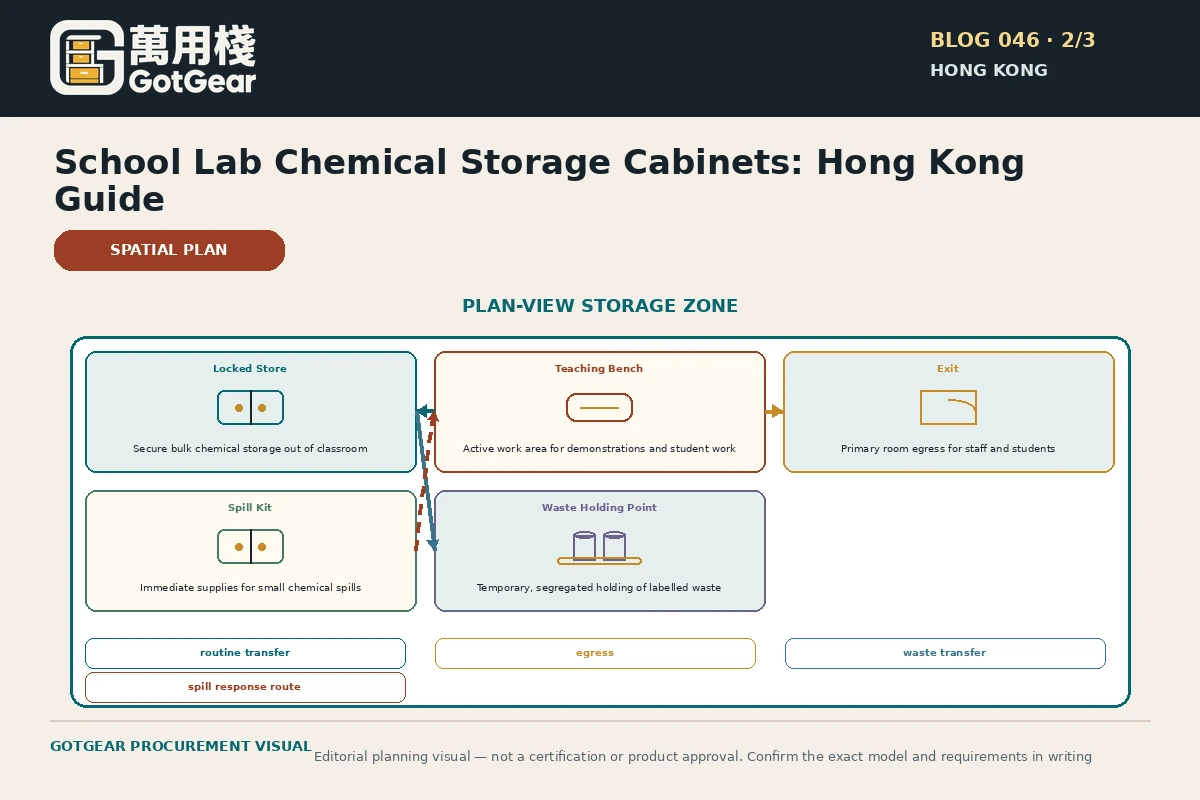
In Hong Kong, The EDB School Safety Booklet and Chemical Management letter trigger schools to keep hazardous items inaccessible to pupils and to maintain clear, practical signage. In Hong Kong’s constrained campuses this often means placing cabinets in a secure prep room or locked store with controlled access and clear routes to emergency equipment like eyewash and showers. Use these decision checks: Choose placements that separate incompatible groups, avoid direct sunlight and heat sources, and keep flammables away from electrical panels. Ensure that access control is simple — keyed or coded locks with a small authorised-user list — and that routes for routine movement of reagents do not expose students to spills. Consider maintenance access for cleaning and inspection: cabinets should not be squeezed into alcoves that prevent removal of shelving for decontamination. A key limitation is that Space constraints may force compromises; when a preferred location is unavailable, re-evaluate inventory levels and consider reducing on-site quantities. Also note that chemical waste must be handled separately: the Environmental Protection Department (EPD) code applies to packaging, labelling and storage of chemical waste, but does not define usable-stock cabinet specifications. Next, Produce a placement plan for each cabinet showing nearby emergency equipment, exit routes and the incompatibility map. Inform premises and security teams of authorised key-holders. Create a cleaning and inspection schedule and log cabinet inspections centrally. Finally, train teaching staff and technicians on the location map and emergency procedures.
School laboratory chemical storage cabinets Hong Kong decision checklist
- Produce a master chemical inventory listing name, concentration, container size, total quantity and storage location for each item
- Create an incompatibility map grouping oxidisers, flammables, acids, bases, cyanides and water-reactive materials
- Attach SDS references and supplier storage notes to inventory entries for rapid verification
- Decide cabinet function per group: secure cupboard, flammable cabinet or corrosion-resistant cabinet
- Verify cabinet materials of construction, internal sump capacity and shelf material against worst-case chemicals on the inventory
- Confirm lock type and authorised access controls with premises/security teams
- Assess proposed placement against emergency equipment, routes and heat or electrical hazards
- Ensure ventilation proposals include airflow, filtration and maintenance responsibilities
- Plan for regular inspection, cleaning and an update cadence for the inventory
- Separate chemical waste storage and handling from operational stock according to EPD guidance
Practical action sequence
- Appoint a responsible person to compile and own the chemical inventory and incompatibility map
- Audit existing stock and tag containers with inventory codes and SDS references
- Classify each chemical for storage: general, flammable, corrosive or waste
- Shortlist suppliers and request detailed product datasheets for candidate cabinets
- Cross-check candidate cabinet datasheets against the SDSs for your most aggressive/flammable substances
- Agree placement and access control with premises and security teams and draft an installation plan
- Install cabinets, label storage zones clearly and update the master inventory with exact locations
- Train teachers, technicians and authorised users on storage protocols, inventory updates and emergency procedures
Apply the checks to your Hong Kong site
Hong Kong schools should treat the Education Bureau guidance as operational direction on inventories, segregation, locked storage and restricting student access, noting those EDB materials are inspection triggers rather than technical cabinet specifications. The Environmental Protection Department remains the authority on chemical-waste packaging, labelling and storage; keep waste physically separated from operating stock and follow EPD packaging and labelling expectations. Overseas standards such as the American Chemical Society are useful for context but do not replace local EDB/EPD advice. When specifying school laboratory chemical storage cabinets Hong Kong teams must start from an accurate inventory and incompatibility map, then match that inventory to locked general cupboards, a flammable chemical cabinet for Hong Kong schools or corrosion-resistant options. Corrosive chemical storage for Hong Kong science labs needs material-appropriate lining and secure siting, not colour alone. Operational takeaway: create an on-site inventory, document a validation record and site the correct cabinet type before final purchase and installation.
References used for this article
These sources provide regulatory, safety or planning context. They do not certify any GotGear product or replace site-specific professional advice.
- Education Bureau — Chemical Management in Secondary School Laboratory — Local school guidance on inventories, hazard marking, separate storage of incompatible chemicals, locked cupboards and restricted student access.
- Education Bureau — School Safety Booklet — Local laboratory inspection prompts on locked storage, hazard labels, incompatibilities, accessible safety information and practical-minimum quantities.
- Environmental Protection Department — Chemical Waste Code — Statutory code scope for packaging, labelling and storage of chemical waste; useful for distinguishing waste from usable laboratory stock.
- American Chemical Society — Chemical Storage — Recognised scientific guidance on designated locked storage and separating incompatible chemical groups; not Hong Kong law.
Questions about school laboratory chemical storage cabinets Hong Kong
Does the Education Bureau require schools to keep a chemical inventory and locked storage?
Yes—EDB guidance for secondary schools emphasises keeping an updated inventory showing locations, separating incompatible chemicals and maintaining locked cupboards with restricted student access. Use the EDB checklist items to make the inventory practical for inspections and for day-to-day use by technicians and teachers. The EDB material provides management and separation expectations rather than technical specifications for particular cabinet models.
How should a school handle minimum quantities and accessible safety information for classroom stocks?
The EDB School Safety Booklet and related letters trigger schools to keep practical minimum quantities and ensure safety information is accessible. That means keeping only the stock needed for foreseeable lessons, posting SDS references locally and keeping a short inventory summary in each lab. If you need larger volumes for senior courses, relocate those to specialist cabinets in secure prep rooms rather than leaving them in general teaching cupboards.
Can I store chemical waste in the same cabinet as usable stock?
No. Chemical waste is governed by the Environmental Protection Department’s code for packaging, labelling and storage of chemical waste; waste containers and their storage are treated separately from operational stock. Keep waste segregated and packaged according to EPD guidance and arrange removal via appropriate waste-handling services. Do not treat EPD waste rules as a specification for stock cabinets.
Is cabinet colour sufficient to prove suitability for flammables or corrosives?
No. Colour is a convenience for in-house identification but not proof of suitability. What matters are the cabinet’s construction materials, internal bunding or sump capacity, shelf materials and the manufacturer’s stated compatibility or intended use. Always request technical datasheets and compatibility information rather than relying on paint colour or a vendor’s visual cues.
What should I ask a supplier when evaluating a flammable-liquid cabinet for a Hong Kong school?
Request the cabinet’s technical datasheet showing internal sump capacity, materials of construction, internal partitions, locking mechanism, and any ventilation option. Ask the supplier to state which classes of flammable liquids the cabinet is designed for and to supply references of installations in school settings if available. Cross-check those details with your SDSs to ensure the cabinet will safely contain the actual solvents and quantities you intend to store.
Compare available product models and specifications
These product cards are matched to this buying topic. Select a specification and quantity to send the product details to WhatsApp.
 Shelving & StorageProduct reference image
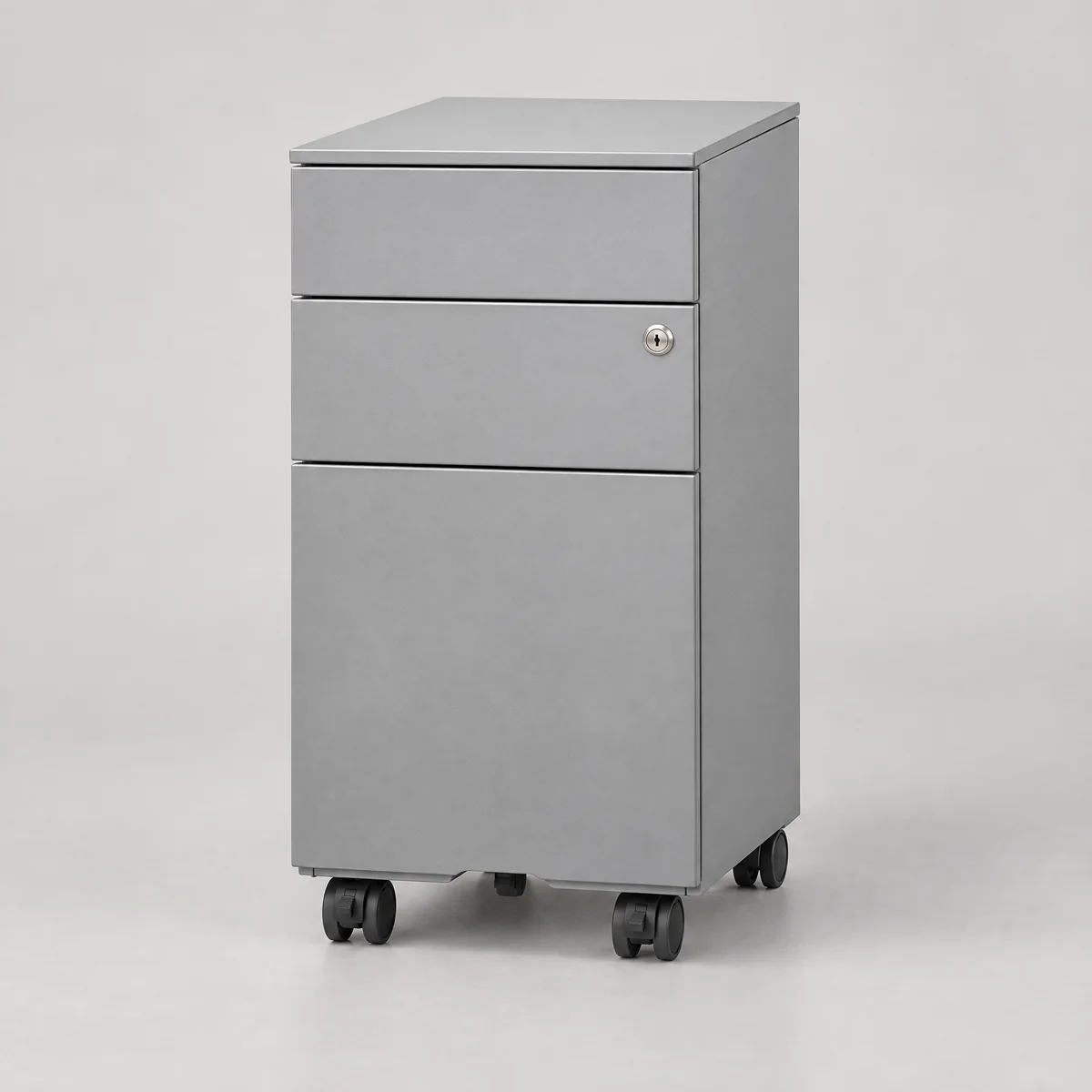
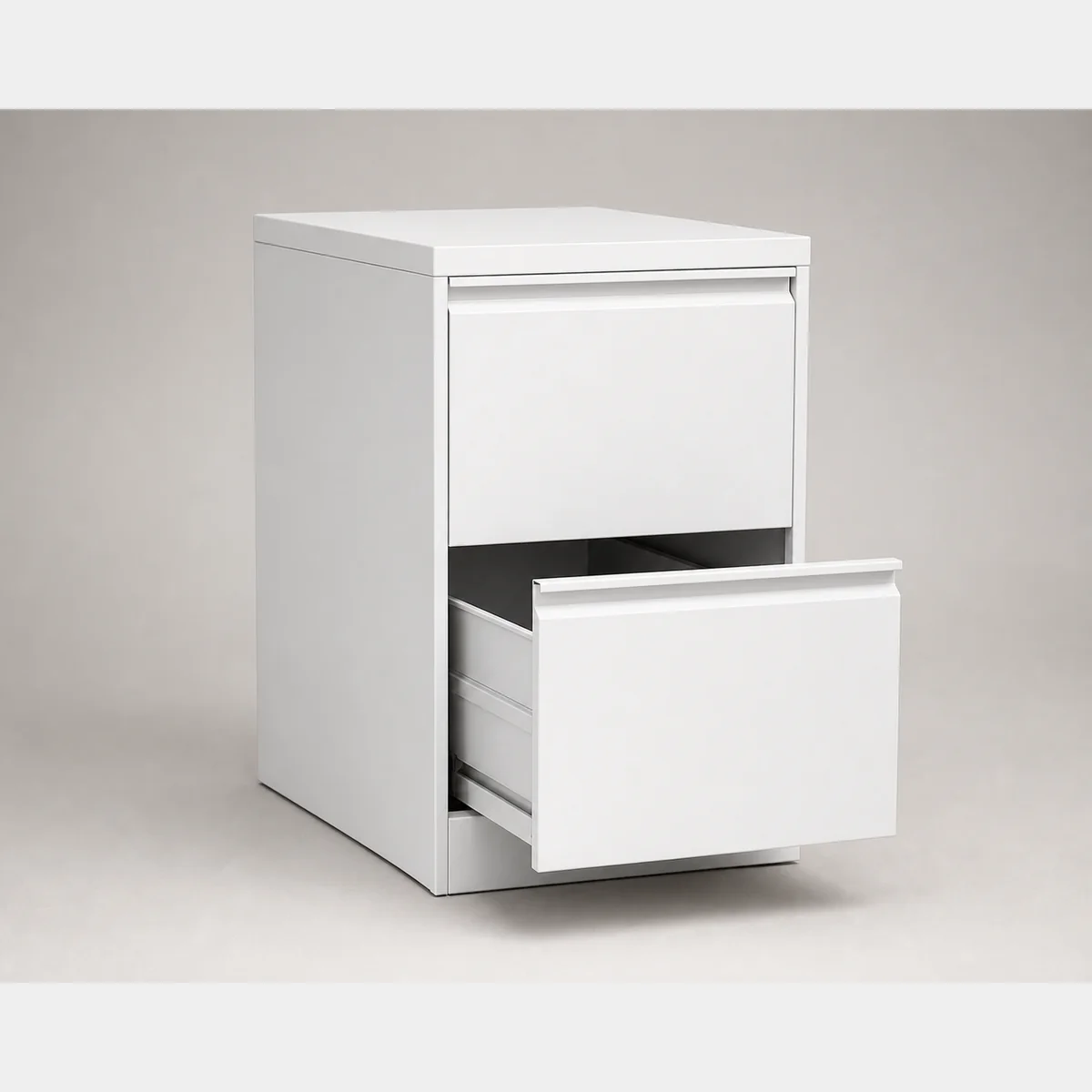
3-tier filing cabinet
3-tier filing cabinet; Size: Length 300xDepth520 × Height 600 mm. Formal quotation available based on use, specifications and quantity.
- Size
- Length 300xDepth520 × Height 600 mm
 Shelving & StorageProduct reference image
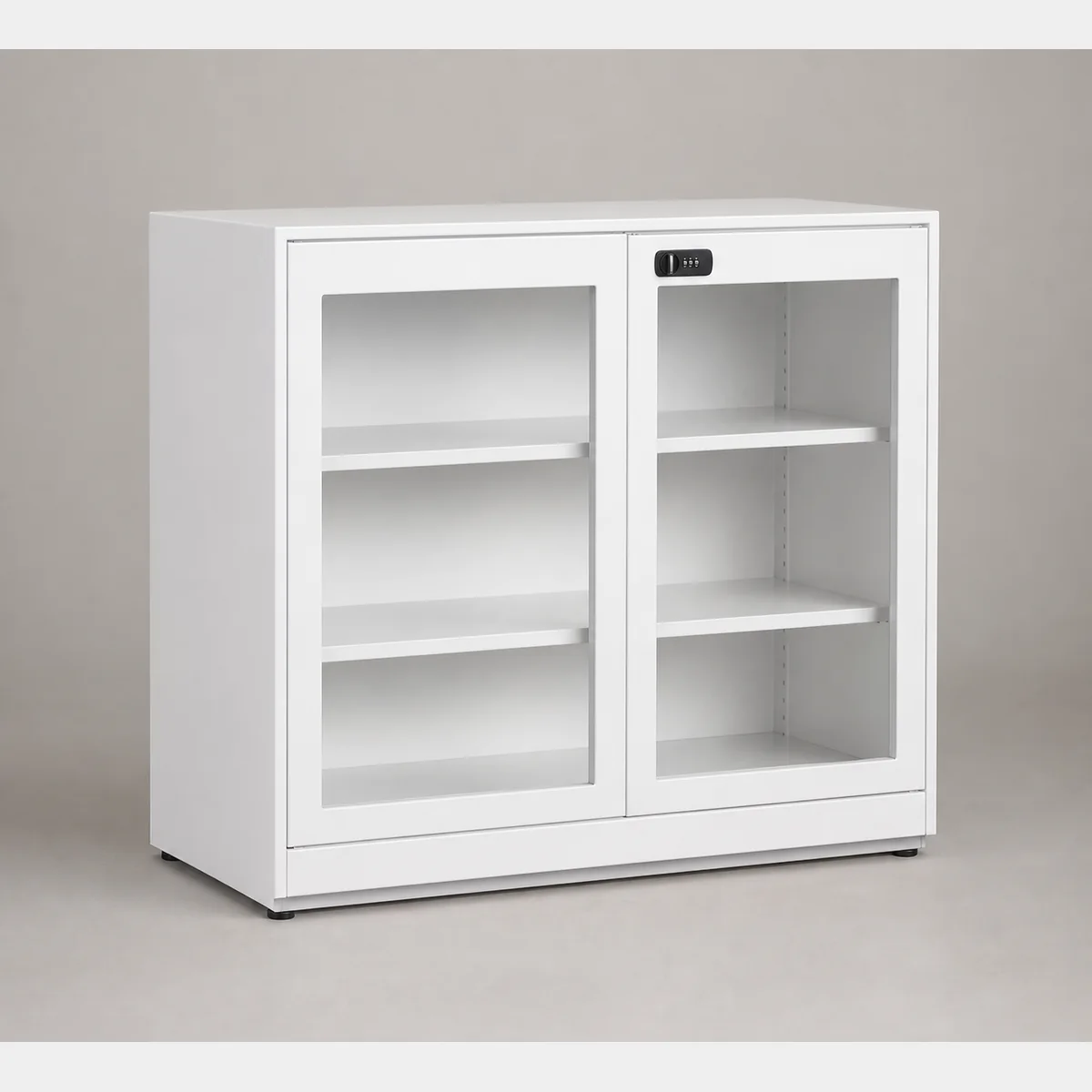
Double-door glass cabinet (numeric keypad lock)
Double-door glass cabinet (numeric keypad lock), A: L800xW400xH750 mm; B: L800xW400xH1150 mm; C: L800xW400xH750 mm. Formal quotation available based on use, specifications and quantity.
- A
- L800xW400xH750 mm
- B
- L800xW400xH1150 mm
- C
- L800xW400xH750 mm
 Shelving & StorageProduct reference image
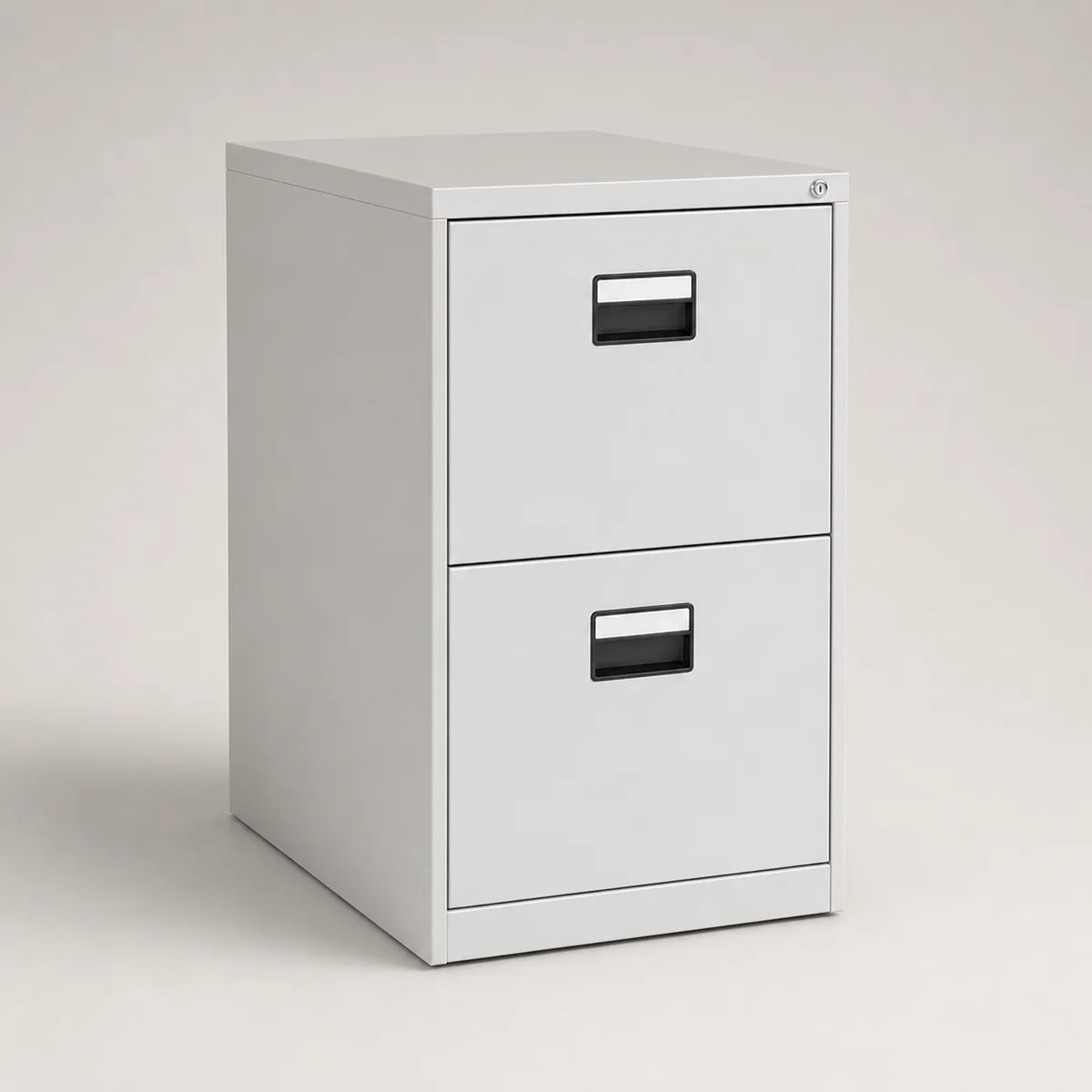
Drawer filing cabinet
Drawer filing cabinet. For intended use, size and quantity, contact the supplier for official specifications and a formal quotation. Model JCB3004.
- JCB3004-A option 1
- W460xD620xH731 mm
- JCB3004-B option 2
- W460xD620xH1031 mm
- JCB3004-C option 3
- W460xD620xH1331 mm
 Shelving & StorageProduct reference image
Drawer Filing Cabinet
Drawer filing cabinet. For official specifications and a formal quotation according to use, size and quantity, please contact GotGear.
- JCB3004-D
- W460xD620xH731 mm
- JCB3004-E
- W460xD620xH1031 mm
- JCB3004-F
- W460xD620xH1331 mm
 Shelving & StorageProduct reference image
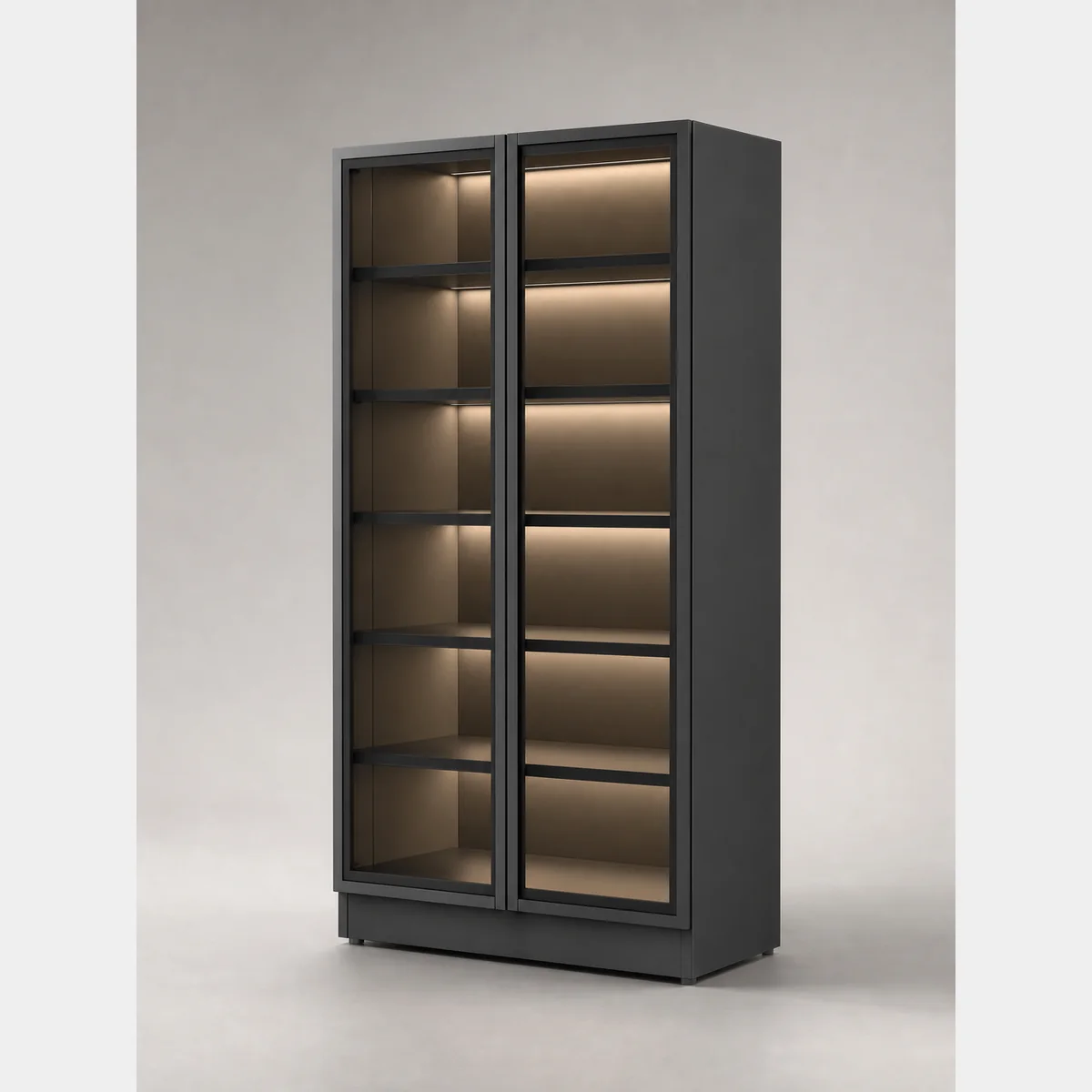
Glass-door Storage Cabinet
Glass-door storage cabinet. Dimensions/specifications: L40xW35xH120 cm / L60xW35xH120 cm; Colour: Dark Grey / Dark Grey, White; Use: Suitable for displaying ornaments, figurines, models, shoes, exhibits, etc. Formal quotation available based on use, specifications and quantity.
- Dimensions / Specifications
- L40xW35xH120 cm / L60xW35xH120 cm
- Colour
- Dark Grey / Dark Grey, White
- Use
- Suitable for displaying ornaments, figurines, models, shoes, exhibits, etc.
 Shelving & StorageProduct reference image
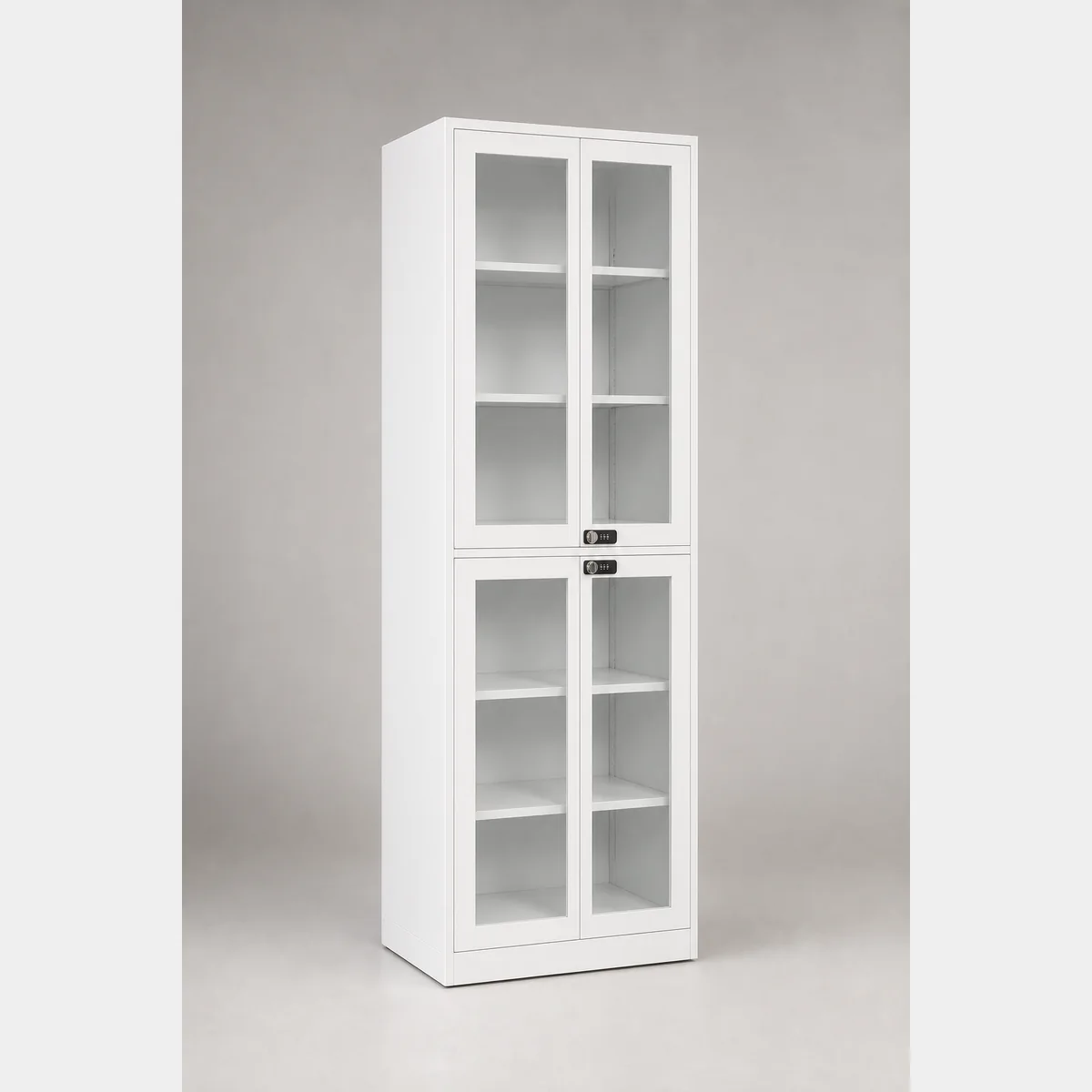
JCB3011 Glass Door Cabinet (Password Lock)
Glass Door Cabinet (Password Lock), Dimensions / Specifications: L600xW400xH1850 mm / L700xW400xH1850 mm. Formal quotation available based on use, specifications and quantity.
- Dimensions / Specifications
- L600xW400xH1850 mm / L700xW400xH1850 mm
 Shelving & StorageProduct reference image
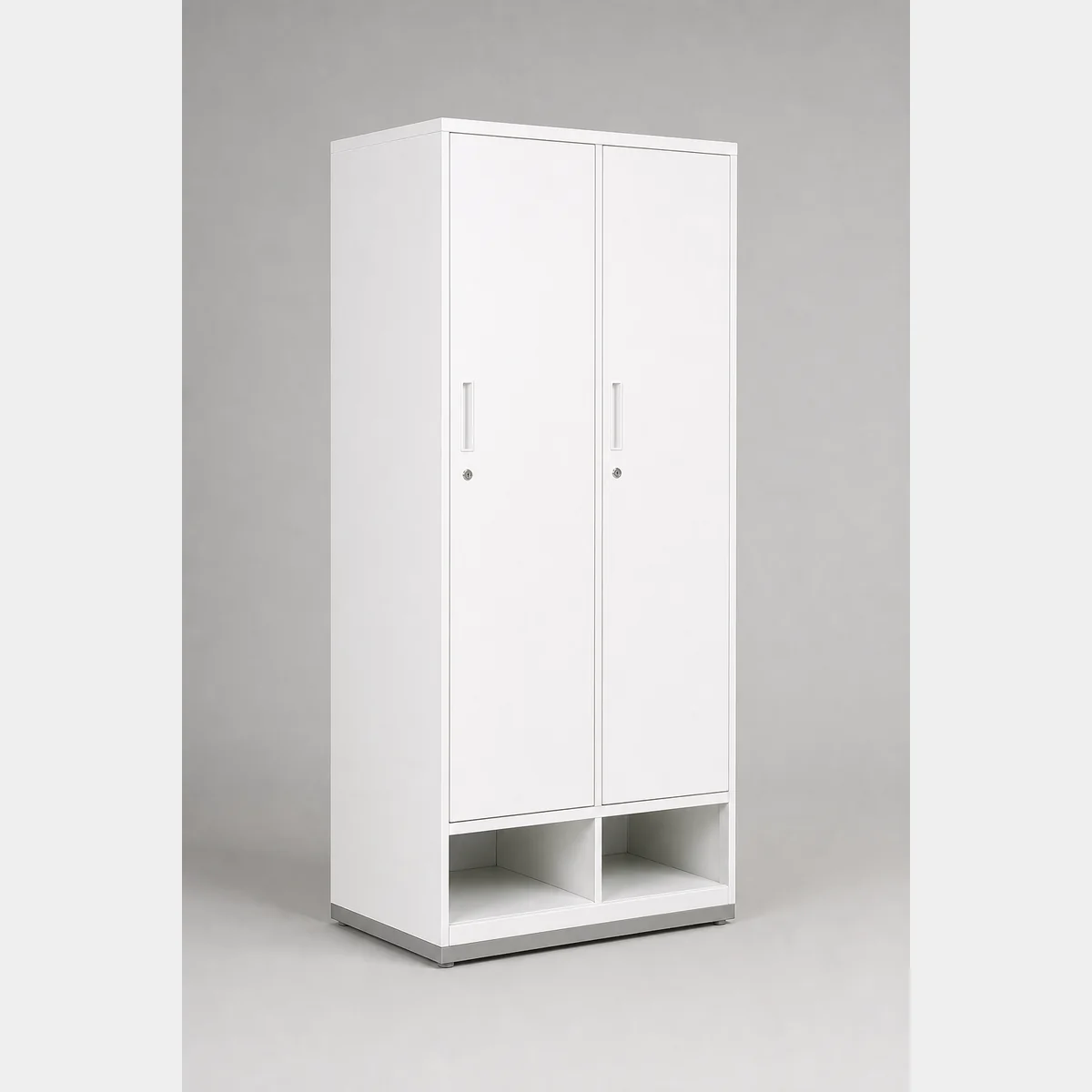
Locker with Shoe Cabinet
Locker with shoe cabinet, A:W900xD500xH1900 mm; B:W900xD500xH1900 mm; C:W900xD500xH1900 mm. Request a formal quotation based on intended use, specifications and quantity.
- A
- W900xD500xH1900 mm
- B
- W900xD500xH1900 mm
- C
- W900xD500xH1900 mm
 Shelving & StorageProduct reference image
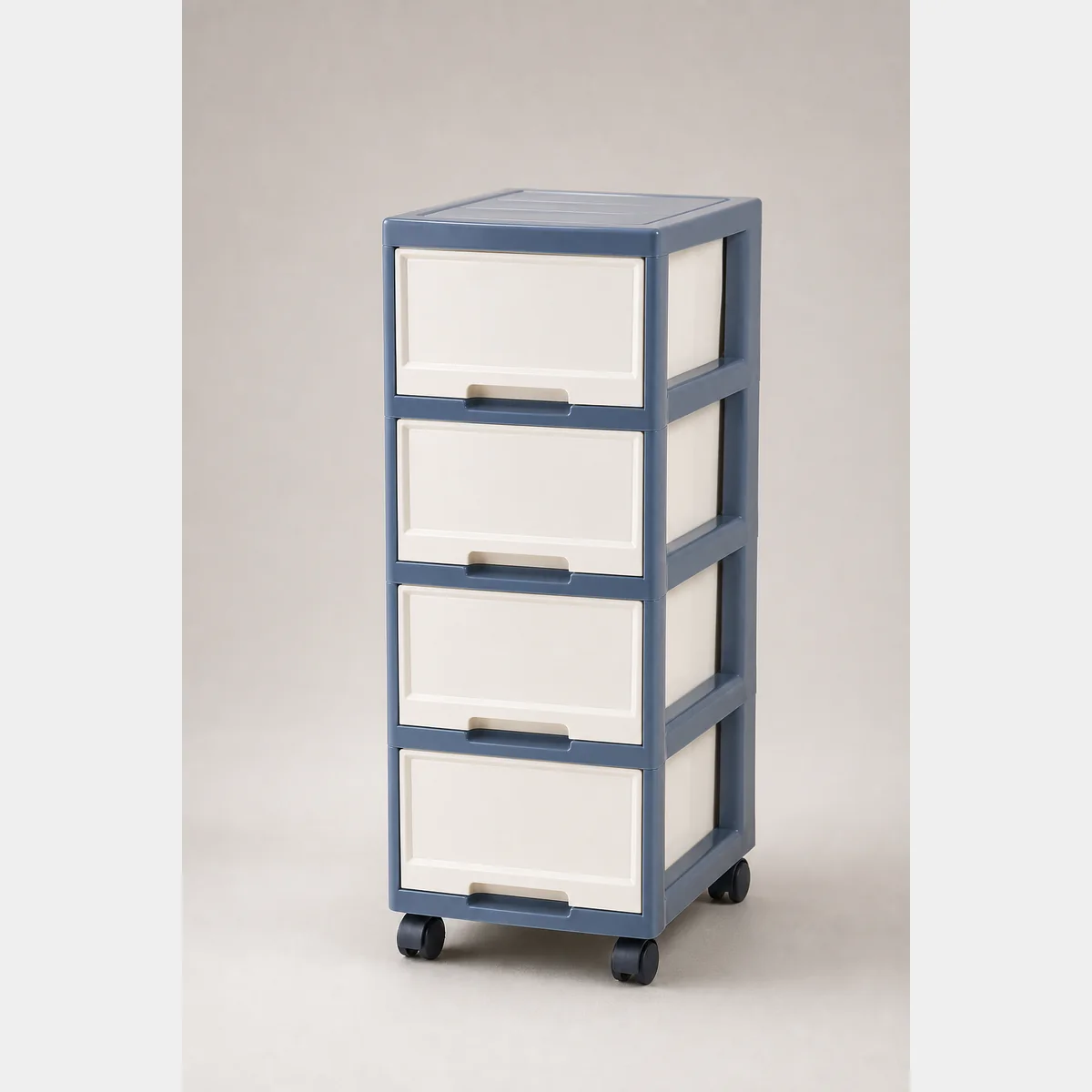
Multi-tier Plastic Storage Cabinet
Multi-tier plastic storage cabinet. Sizes/Specifications: W33xD43xH70 cm / W33xD43xH90 cm. Formal quotation available based on use, specifications and quantity.
- Size/Specification
- W33xD43xH70 cm / W33xD43xH90 cm
Continue with closely related procurement topics
These pages share equipment, operating or decision-stage signals with this guide.
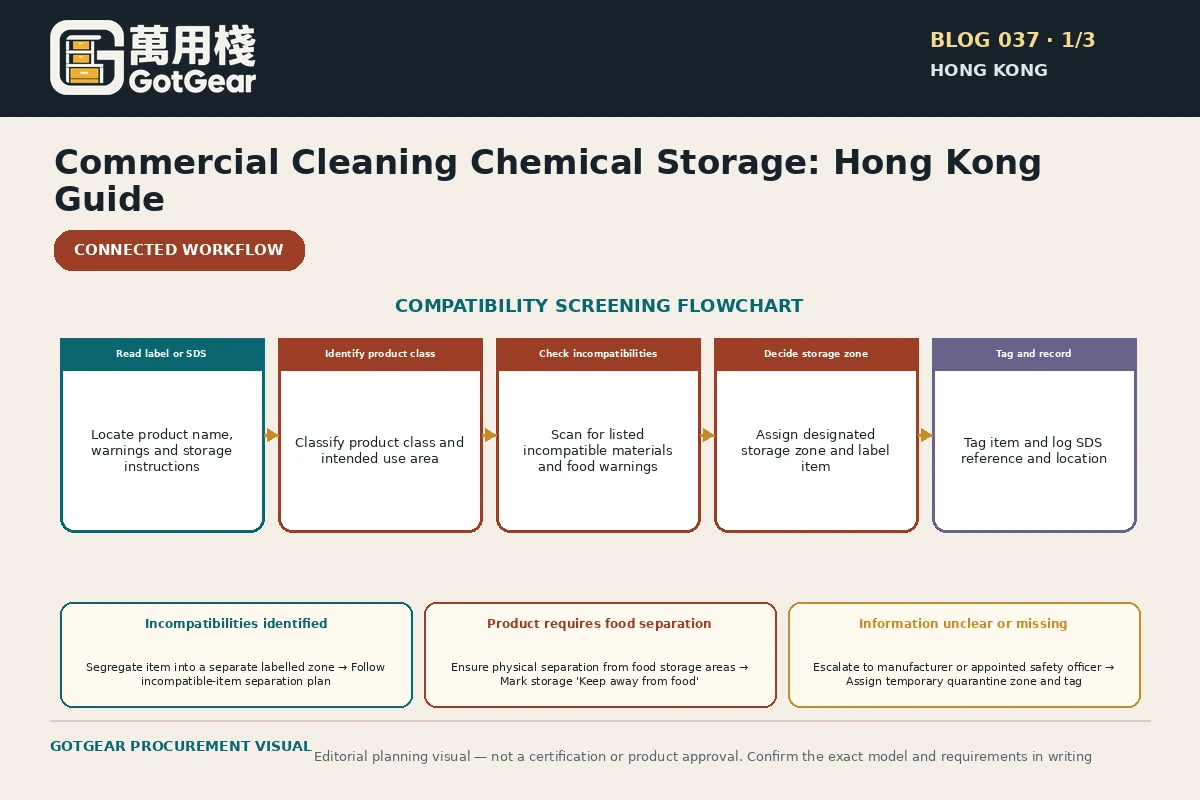
Commercial cleaning chemical storage Hong Kong
GotGear explains commercial cleaning chemical storage Hong Kong for Hong Kong buyers. See how cleaning chemical segregation guide Hong Kong supports janitorial chemical storage cabinet Hong Kong, with practical checks, evidence boundaries and written requirements.
Read the guide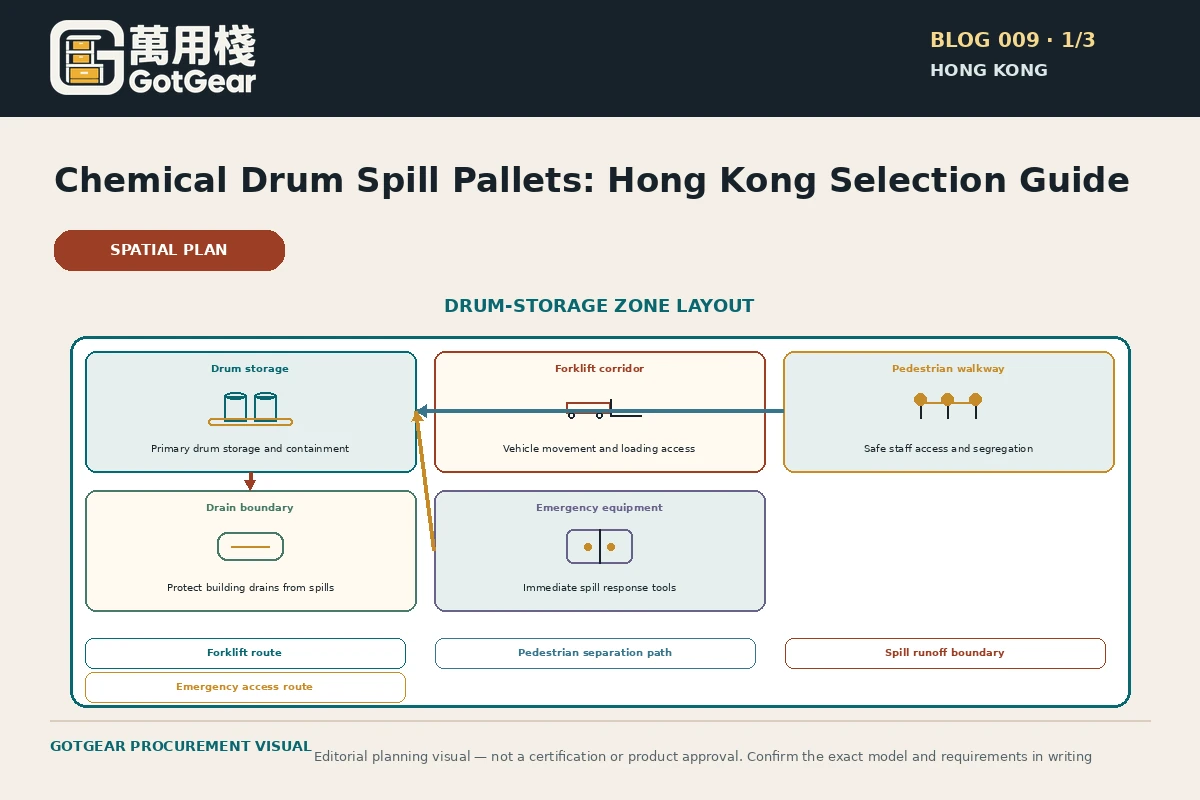
Chemical drum spill pallet Hong Kong
GotGear explains chemical drum spill pallet Hong Kong for Hong Kong buyers. See how spill containment pallets Hong Kong supports hazardous substance secondary containment Hong Kong, with practical checks, evidence boundaries and written requirements.
Read the guide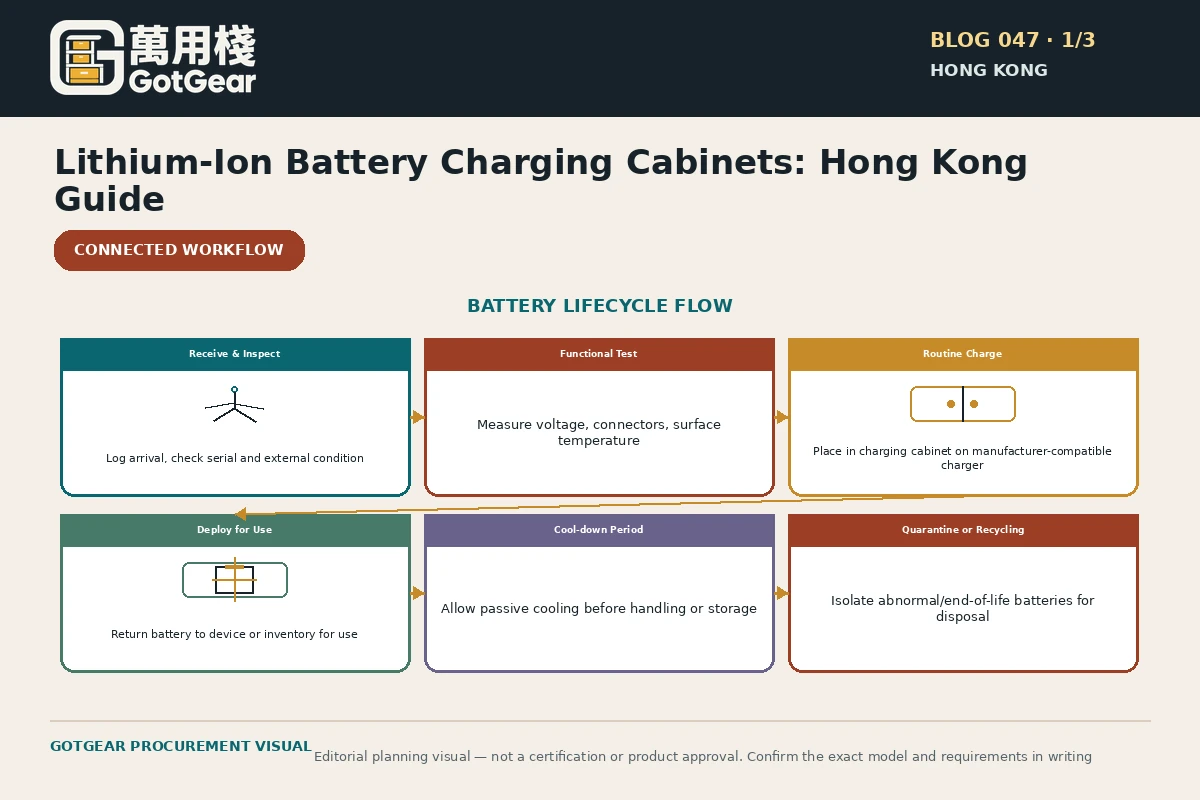
Lithium-ion battery charging cabinet Hong Kong
GotGear explains lithium-ion battery charging cabinet Hong Kong for Hong Kong buyers. See how battery charging station safety checklist Hong Kong supports lithium battery storage cabinet Hong Kong, with practical checks, evidence boundaries and written requirements.
Read the guide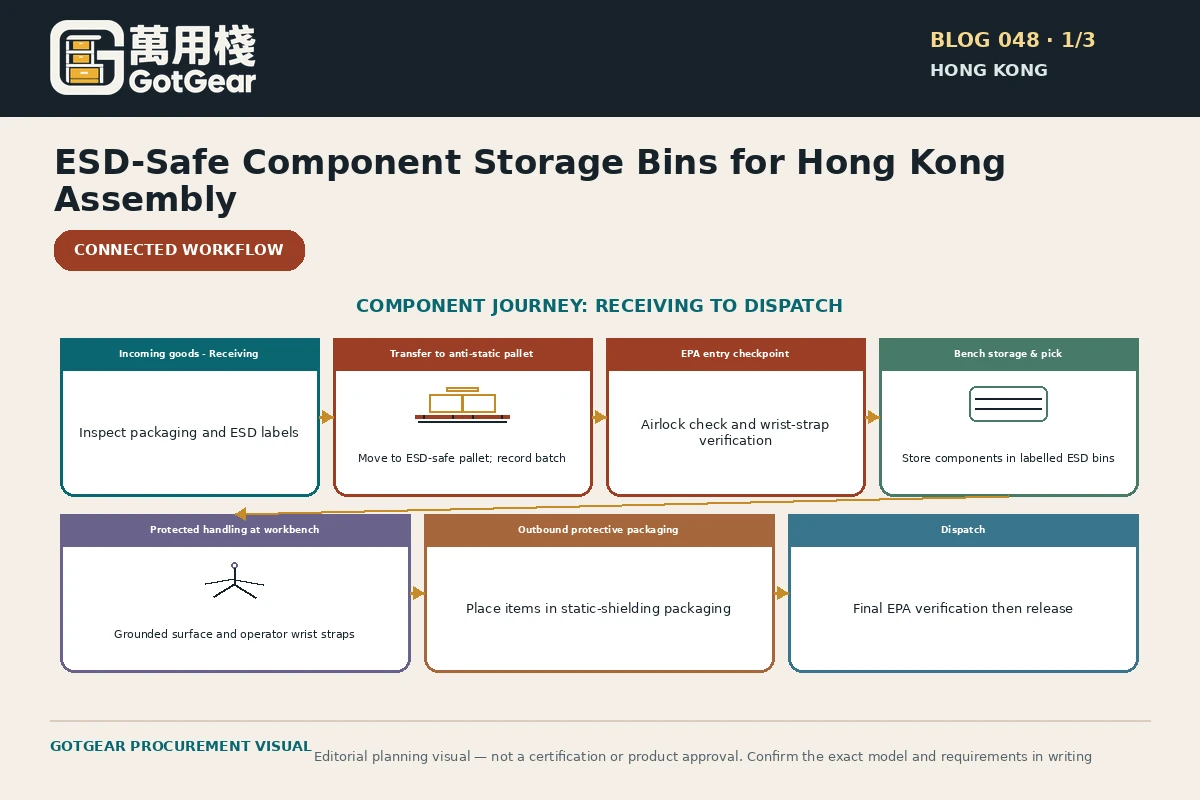
ESD-safe component storage bins Hong Kong
GotGear explains ESD-safe component storage bins Hong Kong for Hong Kong buyers. See how electronics assembly component bin selection Hong Kong supports electronics workbench parts storage Hong Kong, with practical checks, evidence boundaries and written requirements.
Read the guideRelated topic indexOpen more English procurement pages7 topics
Browse additional equipment families, applications and procurement questions relevant to these operating requirements.