
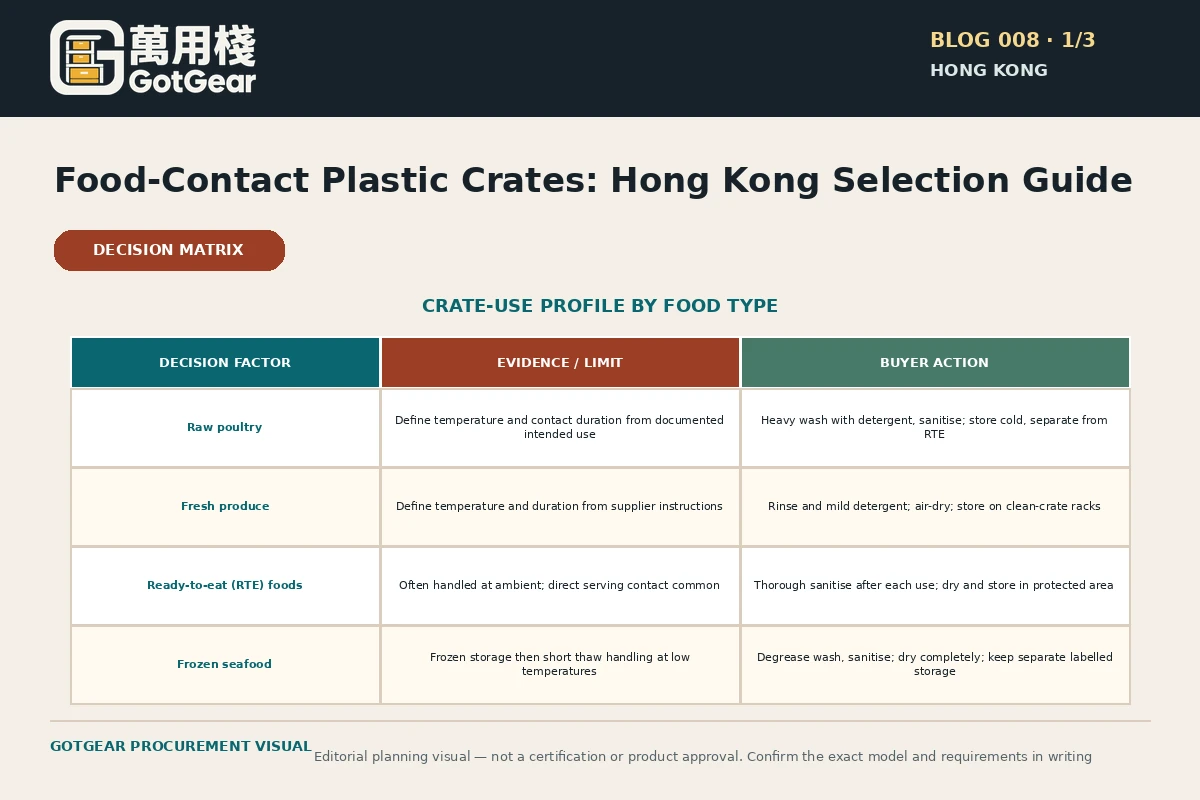
A food-contact plastic crate is suitable only when its documented intended conditions match what you will do on site. Ask the supplier for material composition information, migration or intended-use instructions, temperature limits and cleaning/sanitising guidance. Specify whether contact is direct or indirect, the food types, contact duration and storage environment. Integrate the crate into your raw/ready-to-eat segregation, inspection and protected clean storage procedures. Keep records of supplier instructions and local cleaning validation so crates remain safe in routine Hong Kong operations.
What to remember before you decide
- Select crates by documented intended conditions of use — food type, temperature, contact time and cleaning method — not by colour or generic ‘food-grade’ claims.
- Ask suppliers for intended-use statements, temperature limits and cleaning instructions; archive these as procurement evidence.
- Integrate crates into raw/ready-to-eat segregation, assign designated routes and protected storage to prevent recontamination.
- Validate cleaning on-site under your actual water quality and staff routines; inspect for residue, odour and moisture after cleaning.
- Use crate design (perforated, lidded, smooth) to match operational needs but be mindful of cleaning complexity and inspection points.
- Where supplier evidence is insufficient, restrict use to indirect contact or require single-use/restricted-use controls until validated.
Specify the crate by intended use, not labels
Decision criterion: start with a clear statement of intended use. For each crate you plan to buy, document whether it will contact food directly or only indirectly (for example supporting packaged products), what food types will touch the surface (oily, acidic, alcoholic, frozen, hot), expected contact time and the temperature range in service. In Hong Kong supply chains those details matter: seafood processors, wet markets and central kitchens use crates differently and the safety question depends on those conditions rather than on a colour or a marketing sticker. A key limitation is that suppliers may provide generic ‘food-grade’ claims without conditions. That label alone does not tell you whether the crate is safe for hot contact, long storage, or fatty foods — circumstances that increase constituent migration. Overseas standards described by regulators provide context but are not a substitute for documented intended-use instructions relevant to your operations. Next, produce an intended-use records to attach to every procurement request. Include contact type (direct/indirect), food categories, max/min temperature, contact duration and planned cleaning method. Ask suppliers to confirm compatibility in writing and provide their recommended cleaning and temperature limits.
Material documentation and what to request
Decision criterion: request the supplier’s technical information that demonstrates the crate’s suitability under your conditions. Useful items are a declaration of the polymer(s) used, any additives (described generically if proprietary), intended-use statements, temperature range, and any migration or suitability testing under conditions resembling your use. The Centre for Food Safety notes that constituents can migrate and that manufacturers should provide intended-use details and temperature specifications; ask for exactly that information. A key limitation is that suppliers may refuse to disclose full formulations for commercial reasons. In that case, accept high-level declarations and insist on functional statements that spell out limits: ‘suitable for direct contact with chilled fish for up to 24 hours at 0–4°C’ is better than a generic claim. Do not assume that compliance with overseas frameworks automatically covers your use; treat overseas guidance as context rather than Hong Kong law. Next, compile the supplier responses into a short evidence file for procurement and operations teams. Where the supplier cannot provide clear intended-use guidance, mark the item for restricted or indirect use only, or run your own simple compatibility checks (cleanability, odour retention, physical performance) before approval.
“Practical food-contact safety is a systems decision: material documentation matters, but so do cleaning validation, staff practices and protected storage. Procure with the use-case in mind and enforce it operationally.”— GotGear Editorial Team
What should buyers compare for food contact plastic crates Hong Kong?
| Option or approach | Best for | Trade-offs | Checks before acceptance |
|---|---|---|---|
| Open, solid-surface crates | Low-dust environments and packed or boxed products where inspection and simple rinsing are primary needs. | Lower airflow and longer drying times; residues can accumulate in corners but surface is easier to visually inspect. | Request supplier cleaning instructions and run a 24-hour moisture and odour retention check after your standard wash and dry routine. |
| Perforated or slatted crates | Wet products (seafood, produce) where drainage and airflow speed drying and reduce microbial growth. | More crevices and seams that require higher-pressure washing and careful inspection; may require stronger detergents. | Confirm supplier guidance on pressure washing and sanitiser compatibility; swab critical areas after cleaning to verify residue removal. |
| Lidded crates (stackable with closure) | Transport of ready-to-eat items or finished goods where contamination during transit is a concern. | Lids add cleaning complexity and hinge areas are contamination points; closed storage can trap moisture if not fully dry. | Obtain instructions for lid hinge cleaning and storage; inspect stacked units after routine cleaning and drying cycles. |
| Crates with smooth, rounded geometry | Highly hygienic operations where rapid visual inspection and thorough manual cleaning are needed. | may require more resources or be heavier; rounded geometry can reduce stacking options or footprint efficiency. | Ask for demonstrated cleaning cycles and seek samples to run your on-site wash, dry and odour tests before wider purchase. |
| Dedicated single-use or restricted-use crates | High-risk direct contact with ready-to-eat foods or when cleaning resources are limited; use as an operational control. | Higher ongoing procurement and waste management needs; not a material safety certification substitute. | Document the restricted-use rule, ensure traceability and test the logistics impact before adopting broadly. |
This framework helps buyers create comparable written enquiries. Final model specifications, availability, delivery and commercial terms must be confirmed in a formal quotation.
Fit the crate into your hygiene and segregation controls
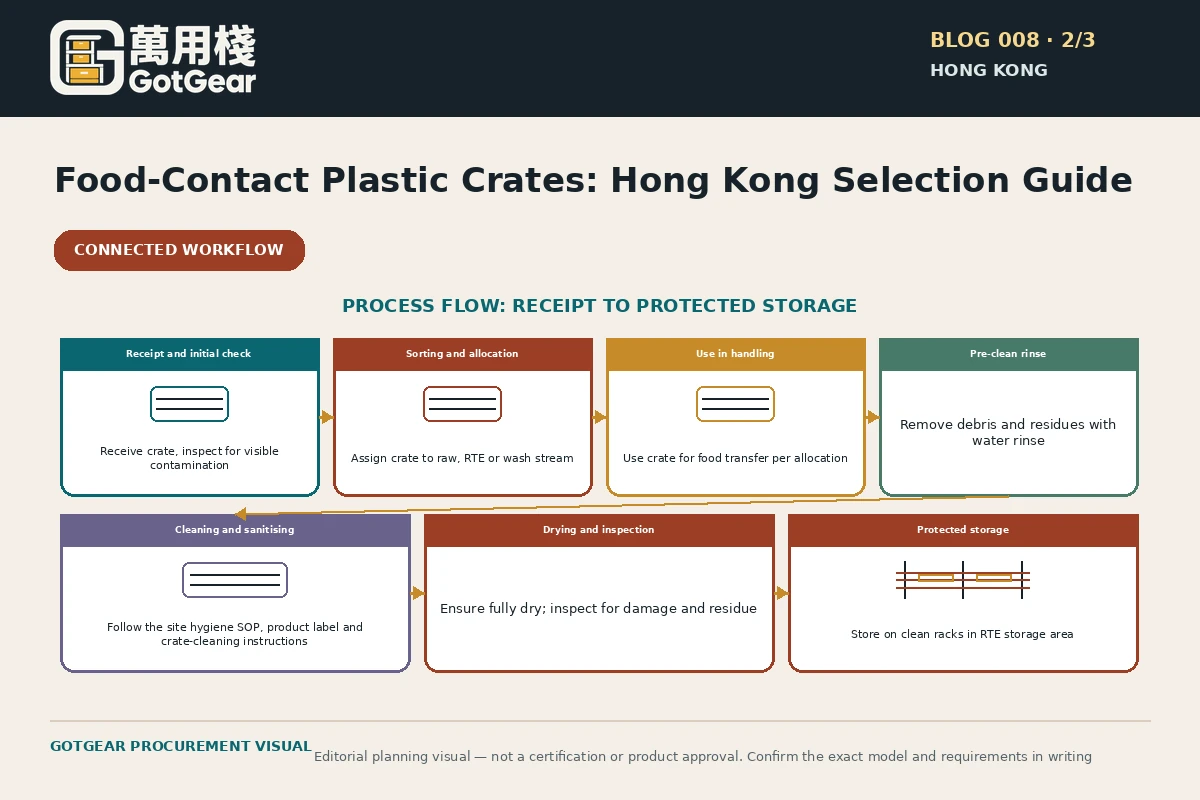
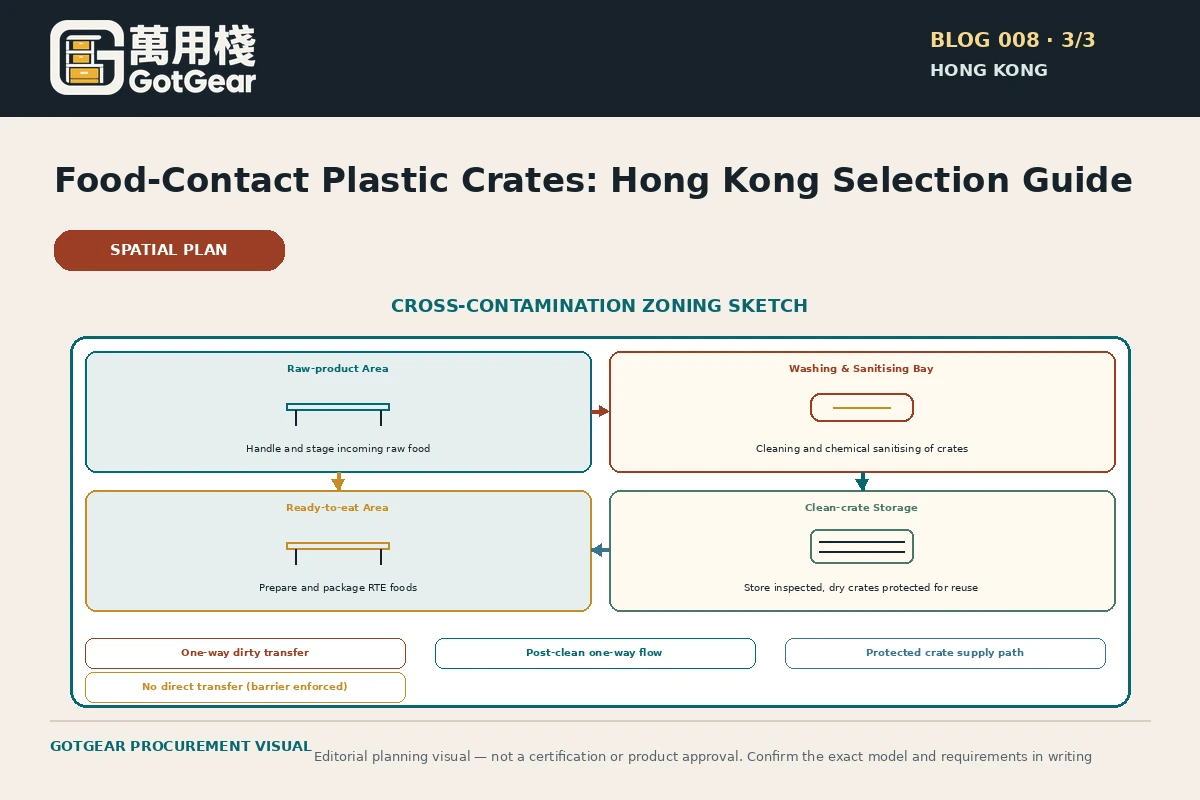
Decision criterion: deciding on a crate is also about how it will be handled: who touches it, where it is stored and how it moves between raw and ready-to-eat flows. In Hong Kong facilities with central kitchens and wholesalers, cross-contamination risk is often operational rather than material-based. Specify colour-coding only as an operational control layered on documented intended use, and define routes to keep raw-product crates separate from those used for cooked or packaged foods. A key limitation is that operational controls depend on staff training, space and discipline. A perfectly specified crate can still contaminate food if workflows allow raw and ready-to-eat materials to mix, crates are stacked unclean, or soiled crates are stored in the same area as clean ones. Traceability is often weak for third-party transport — ensure external carriers understand your segregation rules. Next, update your site’s flow diagrams to show crate movement, identify designated clean-storage zones with protection from dust and pests, and add crate-handling steps to your staff training matrix. Require suppliers to include handling instructions with deliveries and include crate identity or batch numbers for traceability where possible.
Cleaning, sanitising, inspection and storage
Decision criterion: the cleaning and drying method must be matched to the crate design and the supplier’s guidance. Perforated crates can be easier to rinse and dry but have more crevices; solid crates are simpler to inspect but may trap residues. Choose cleaning agents and temperatures that the supplier confirms will not damage the material or leave harmful residues, and use validated sanitising steps where crates see direct contact with ready-to-eat foods. A key limitation is that Hong Kong operations can be constrained by space, water quality and labour. High-temperature wash cycles or industrial dishwashers may not be available in smaller wholesalers. In those cases you must ensure alternative validated methods such as chemical sanitising combined with thorough drying are suitable for the material and the food type. Next, develop a crate cleaning SOP listing detergent concentration, contact time, water temperature (if used), rinsing, sanitiser concentration and drying method. Implement inspection checkpoints for physical damage, odour or staining, and log batch-level cleaning records. If crates are reusable across clients or sites, insist on protective storage and clear labelling to keep clean crates segregated.
Food contact plastic crates Hong Kong decision checklist
- prepare a requirements note specifying direct vs indirect contact, exact food categories (acids, fats, alcohols, frozen), maximum contact duration and temperature ranges.
- Request supplier intended-use statements that include temperature limits and restrictions; do not accept generic ‘food-grade’ claims alone.
- Obtain polymer type and additive information at a level sufficient to assess functional compatibility; if full formulation is withheld, secure functional limits in writing.
- Confirm supplier cleaning, sanitising and drying instructions and any chemicals or temperatures that must be avoided.
- Decide crate design against operational constraints: drainage, ventilation, lid presence, stacking and ease of inspection.
- Plan segregation controls: designate raw-only and ready-to-eat-only crates, routes, and protected storage locations.
- Include crate inspection points in daily checks for odour, staining, residues and structural damage that could trap contaminants.
- Ensure traceability for crates moving between sites or clients; label or batch mark where feasible to track cleaning history.
- Validate cleaning on-site: run a trial wash/dry/sanitise and assess moisture retention and residue removal under your water quality and staff routines.
- Record supplier evidence and your validation results in procurement files and update supplier terms to require clear intended-use documentation on future purchases.
Practical action sequence
- Draft an intended-use records for each crate type and attach it to procurement specifications.
- Request and archive supplier technical data: material type, intended-use limits, cleaning and temperature guidance.
- Run an on-site compatibility trial with representative foods: cleaning, drying and inspection steps documented.
- Implement segregation: label crates, define routes and assign raw/RTE status in the site flow diagram.
- Create or update SOPs for crate cleaning, sanitising, inspection and storage and train staff.
- Introduce daily inspection logs for crate condition, odour and residue and escalate failed units for rework or disposal.
- Define protected clean-storage areas and stack/cover rules to prevent recontamination after cleaning.
- Review supplier evidence and on-site validation every 12 months or sooner if processes change.
Apply the checks to your Hong Kong site
Hong Kong operators work in dense supply chains with rapid turnover and a wide range of food types, from chilled seafood to cooked ready-to-eat items. Practical specification of food contact plastic crates Hong Kong therefore combines supplier intended‑use documents with on‑site process controls: clear segregation of raw and RTE streams, validated cleaning compatible with local facilities, and protected clean storage to avoid recontamination. Use Centre for Food Safety guidance as the primary local context for migration risk and supplier instructions, and treat overseas standards as supplementary background rather than automatic acceptance. When vendors claim food grade crate material Hong Kong, require documented intended use, traceability and instructions for contact time and temperature. Design validation programmes for food storage crate cleaning Hong Kong around the detergents, handling and sanitation equipment you actually have, and keep challenge records. Operational takeaway: complete a site-based validation run and written supplier approval covering contact type, cleaning method and storage before putting crates into RTE use.
References used for this article
These sources provide regulatory, safety or planning context. They do not certify any GotGear product or replace site-specific professional advice.
- Centre for Food Safety, Hong Kong — Bisphenol A (BPA) and Food Contact Materials — Intended-use instructions, temperature/restriction information and the principle that food-contact constituents may migrate.
- Centre for Food Safety, Hong Kong — Green Lunch in School — Hygiene context: reusable food-contact utensils should be clean, sterilised and properly stored.
- European Commission — Food Contact Materials — Recognised explanation of food-contact materials and why intended use can affect safety and food quality.
Questions about food contact plastic crates Hong Kong
What does the Centre for Food Safety say about migration from food-contact materials?
The Centre for Food Safety explains that constituents from food-contact materials can migrate into food and that manufacturers should ensure materials will not create food-safety problems under intended conditions of use. That means you should treat migration risk as a function of material, food type, contact time and temperature, and not assume that a generic label eliminates risk. Ask suppliers for intended-use instructions that specifically address the conditions under which the crate will be used in your operation.
What instructions should I expect suppliers to provide for food-contact crates?
According to the Centre for Food Safety, manufacturers should provide instructions covering intended use, temperature specifications and restrictions. For crates you should expect written guidance on whether they are suitable for direct contact, the acceptable temperature range, any prohibited uses (for example hot-fill or prolonged fatty contact), and recommended cleaning and sanitising methods. If a supplier cannot provide these details, restrict the crate to indirect contact or require additional validation on your site.
Do reusable crates need sterilising and special storage?
CFS guidance highlights that reusable food-contact utensils should be clean, sanitised and properly stored. For crates this translates into validated cleaning and drying steps, documented sanitiser concentrations and thorough inspections before use. Proper storage means protected clean areas where crates are stacked or covered to avoid dust, pests and recontamination. In Hong Kong’s busy distribution environments, establishing and enforcing protected storage is as important as the cleaning method itself.
Is a ‘food-grade’ label enough to prove suitability?
No. A ‘food-grade’ label is not sufficiently specific. It does not state the intended use, temperature limits, or cleaning methods. Buyers should request the supplier’s intended-use statements and any relevant testing or functional limits. If a supplier only offers a generic claim, insist on written functional restrictions or run a site validation. Operational context — what food, how long, at what temperature and how you clean — determines safety.
How should I validate crate cleaning in my Hong Kong facility?
Validation should mirror your routine operations: perform the standard wash, rinse, sanitise and dry cycle, then inspect for residues, odour and moisture retention. For perforated crates inspect hinge areas and crevices. Where practical, conduct swab tests or adenosine triphosphate (ATP) readings to verify cleanliness thresholds used by your site. Record results and adjust the SOP if residues or moisture persist under your actual water quality and staff routines.
What should I do if a supplier refuses to give full material formulations?
Treat commercial confidentiality as common, but insist on functional statements and limits: temperature range, prohibited uses and recommended cleaning methods. If these are not forthcoming, restrict the crate to indirect contact or single-use for high-risk foods, or trial the item in a controlled validation. Keep the procurement decision documented and communicate any operational restrictions to staff and transport partners.
Compare available product models and specifications
These product cards are matched to this buying topic. Select a specification and quantity to send the product details to WhatsApp.
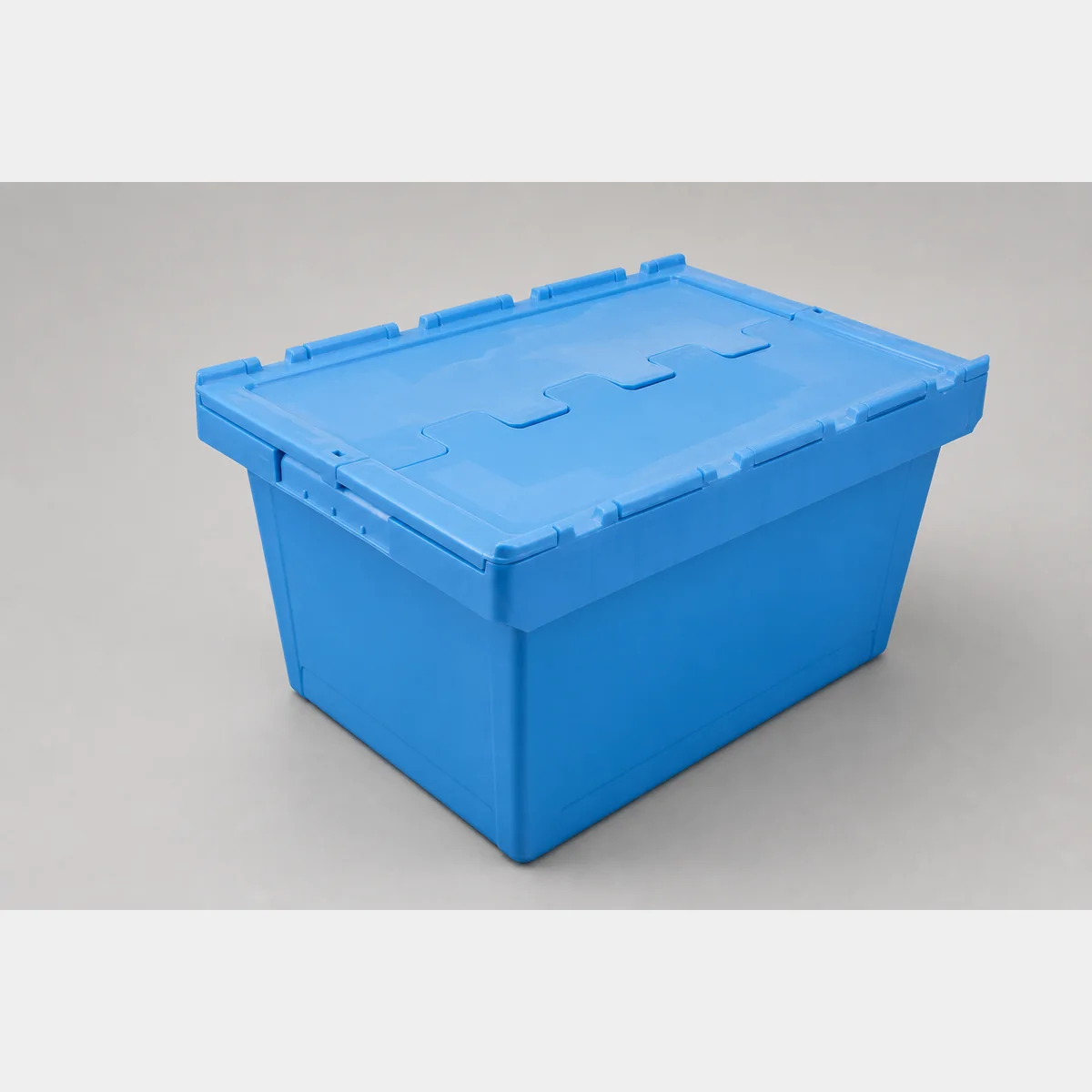
 Shelving & StorageProduct reference image
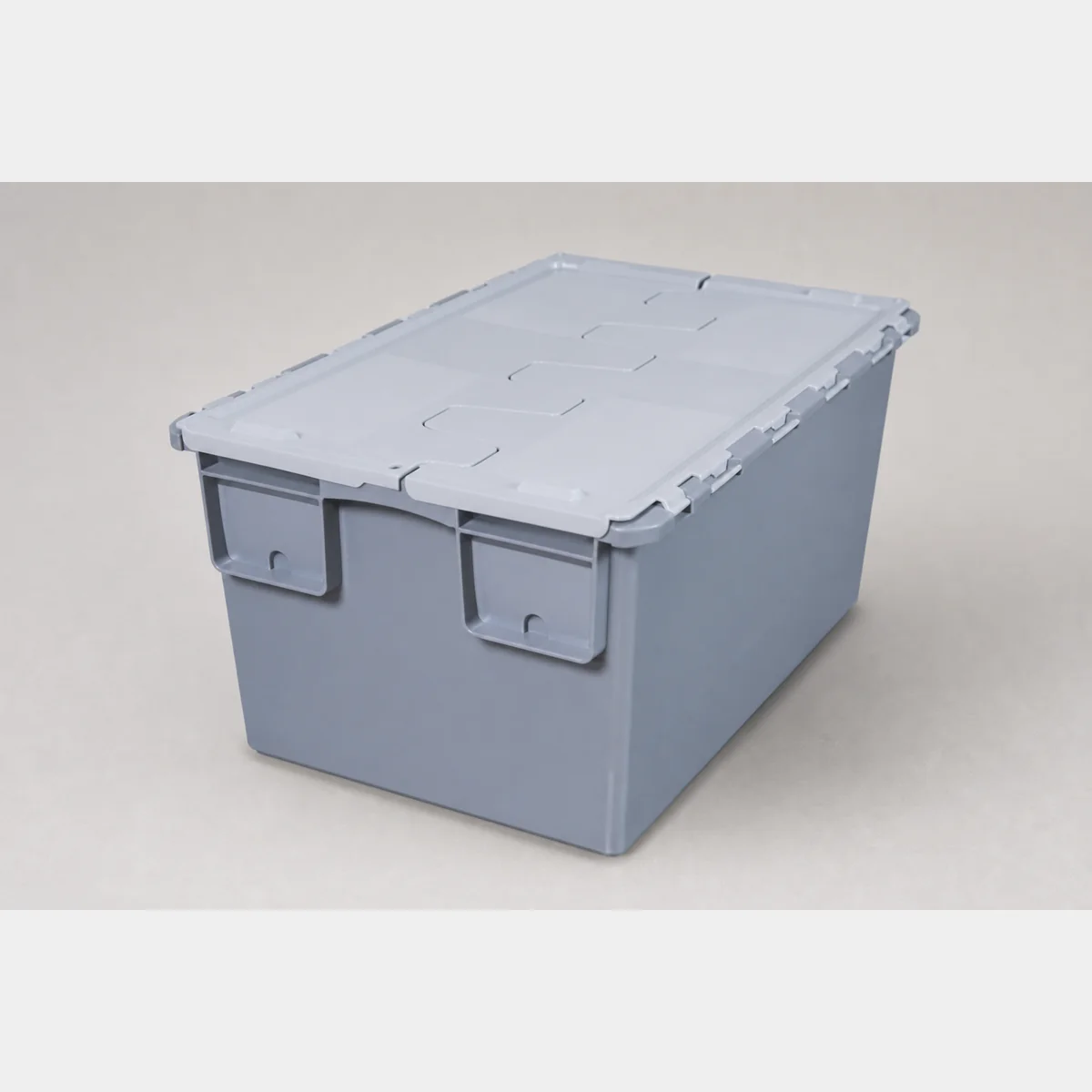
Lidded plastic box (suitable for food)
Lidded plastic box (suitable for food), external dimensions: L 643 X W 430 X H 325 mm; internal dimensions: L 590 X W 380 X H 310 mm. Contact us for a formal quotation based on use, specifications and quantity. SKU: A20.
- External dimensions
- L 643 X W 430 X H 325 mm
- Internal dimensions
- L 590 X W 380 X H 310 mm
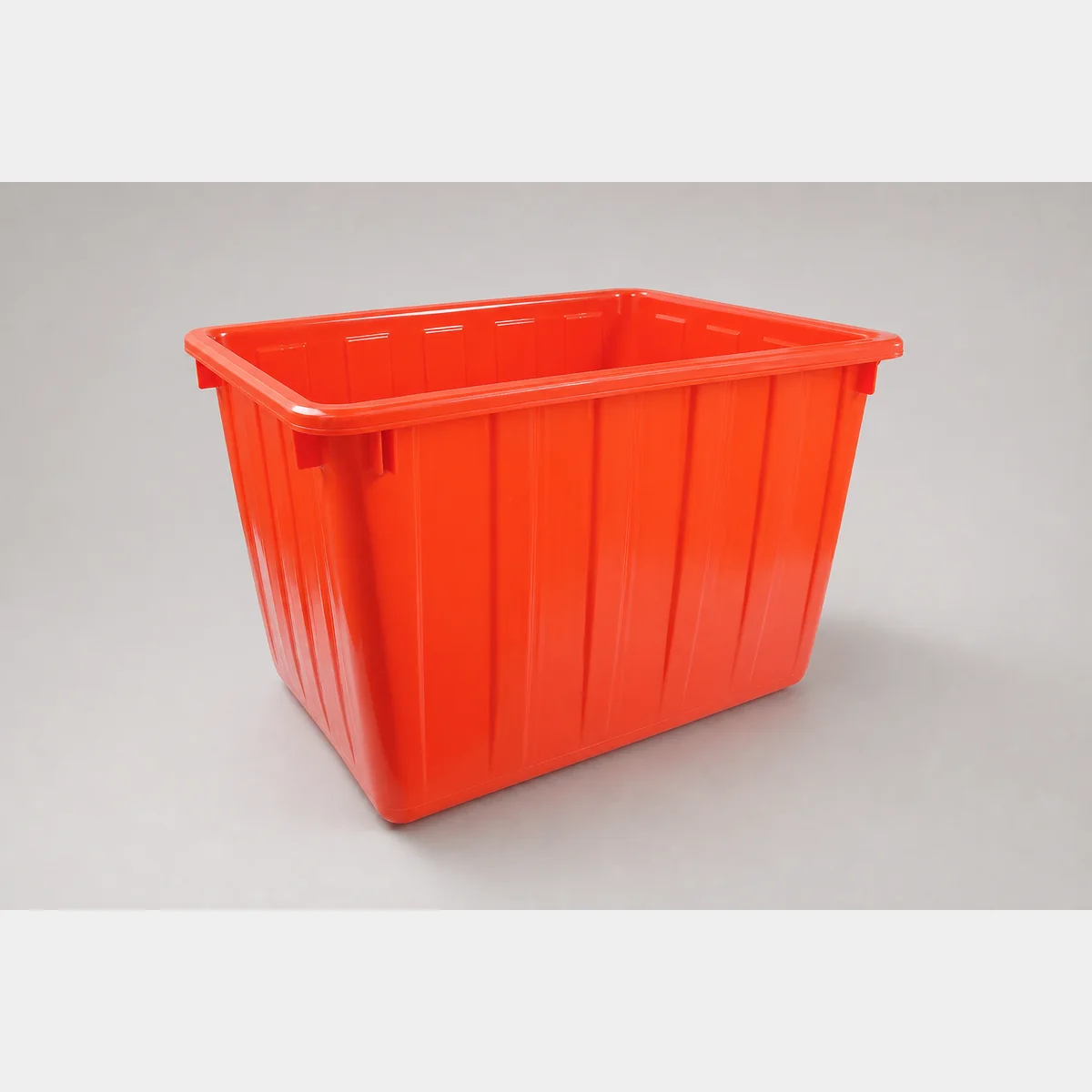 Shelving & StorageProduct reference image
Large Plastic Crates
Large plastic crate, C-120 (Capacity: 110L); External: 710L x 505W x 395H (mm) / 745L x 538W x 405H (mm); Internal: 595L x 390W x 380H (mm) / 620L x 420W x 395H (mm). Formal quotation available based on use, specifications and quantity.
- C-120 (Capacity)
- 110L
- External
- 710L x 505W x 395H (mm) / 745L x 538W x 405H (mm)
- Internal
- 595L x 390W x 380H (mm) / 620L x 420W x 395H (mm)
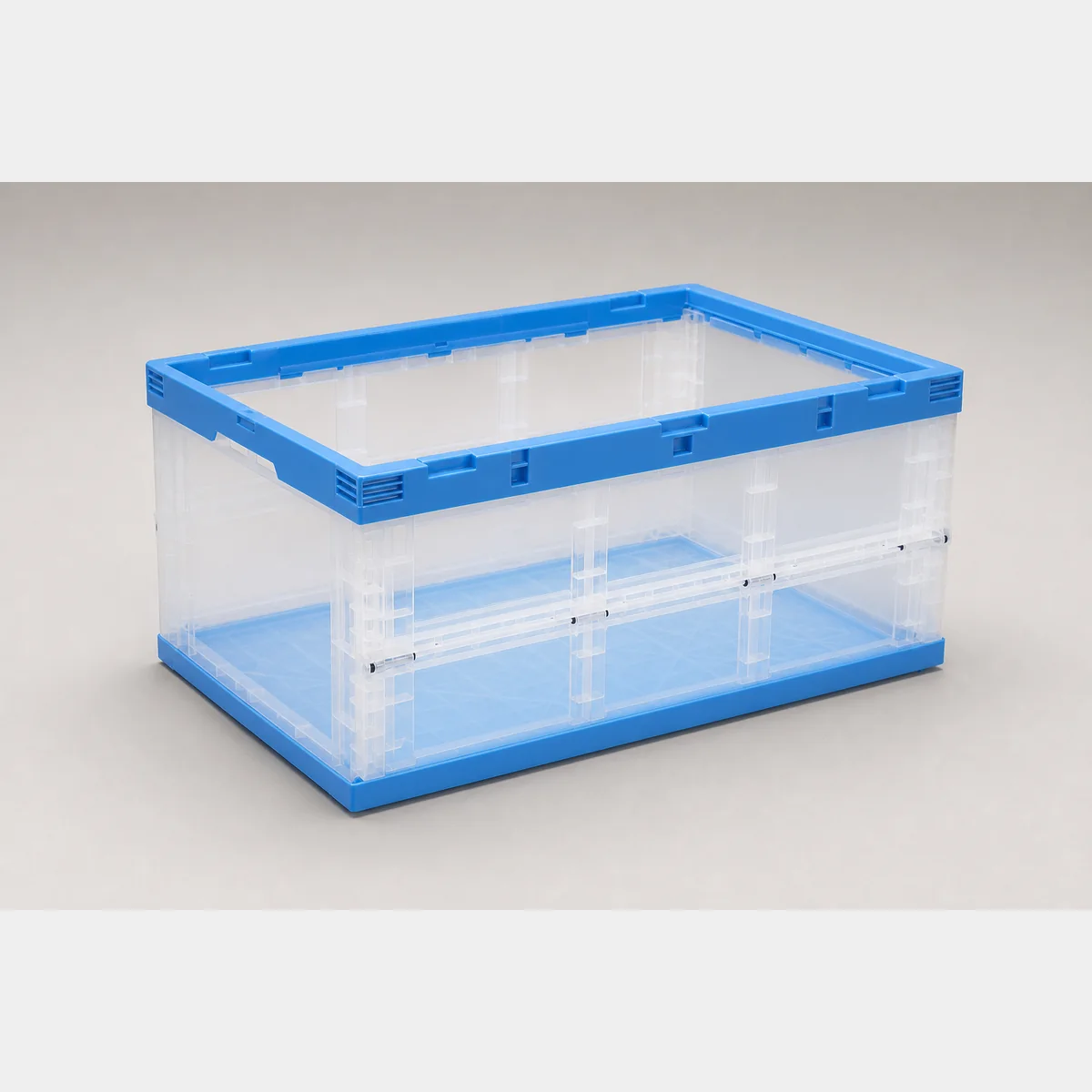 Shelving & StorageProduct reference image
Collapsible plastic crate
Collapsible plastic crate. Sizes: L650 X W440 X H345 mm / L590 X W395 X H320 mm. Formal quotation available upon enquiry with intended use, specifications and quantity.
- Dimensions
- L650 X W440 X H345 mm / L590 X W395 X H320 mm
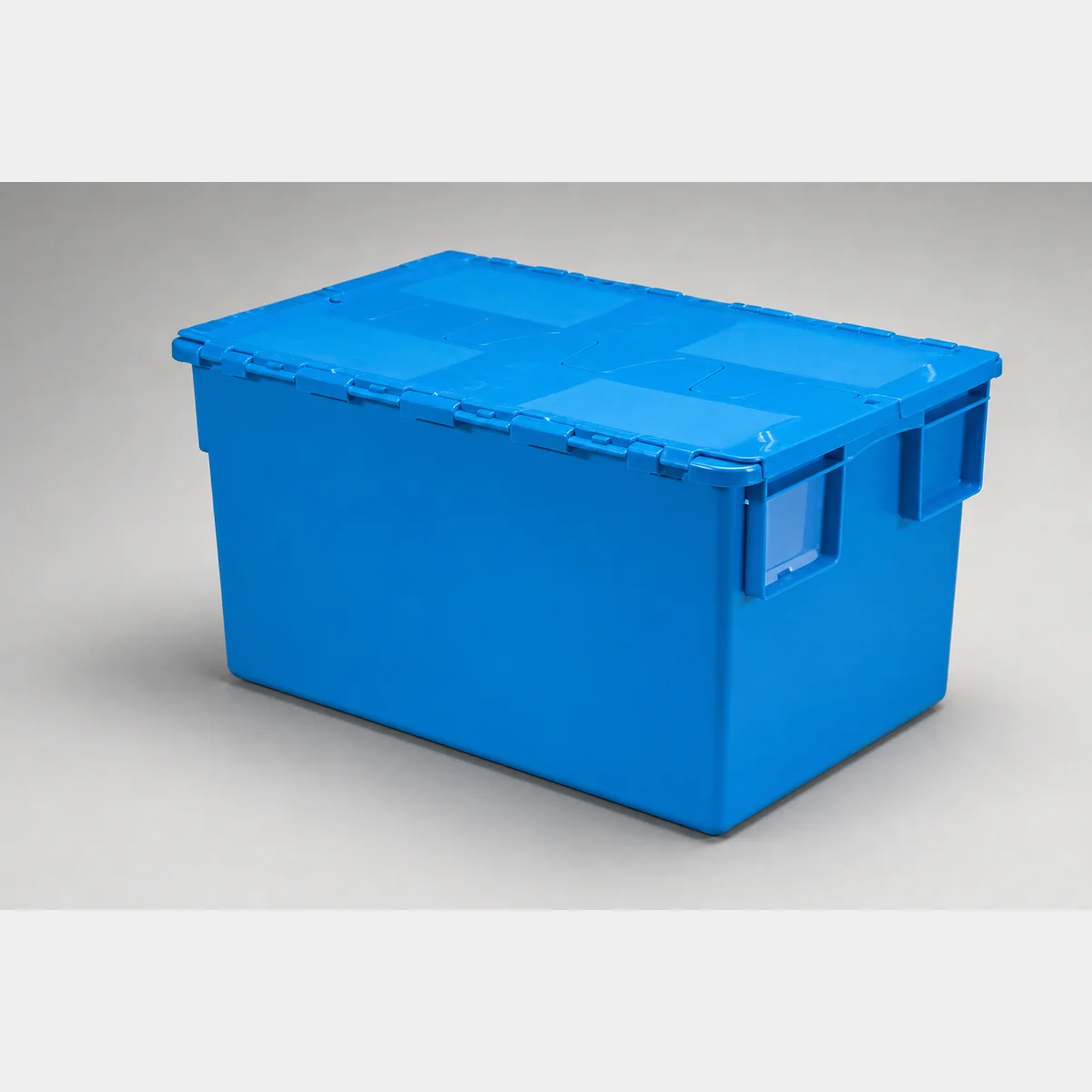 Shelving & StorageProduct reference image
Lidded Plastic Crate
Lidded plastic crate, External dimensions: Length 643 X Width 430 X Height 325 mm; Internal dimensions: Length 590 X Width 380 X Height 310 mm. Formal quotation available upon request according to use, specifications and quantity.
- External dimensions
- Length 643 X Width 430 X Height 325 mm
- Internal dimensions
- Length 590 X Width 380 X Height 310 mm
 Shelving & StorageProduct reference image
Logistics plastic crate (C-29)
Logistics plastic crate C-29, external dimensions: L600 X W402 X H335(mm); internal dimensions: L544 X W372 X H320(mm); capacity: 58L. A formal quotation can be provided according to use, specifications and quantity.
- External dimensions
- L600 X W402 X H335(mm)
- Internal dimensions
- L544 X W372 X H320(mm)
- Capacity
- 58L
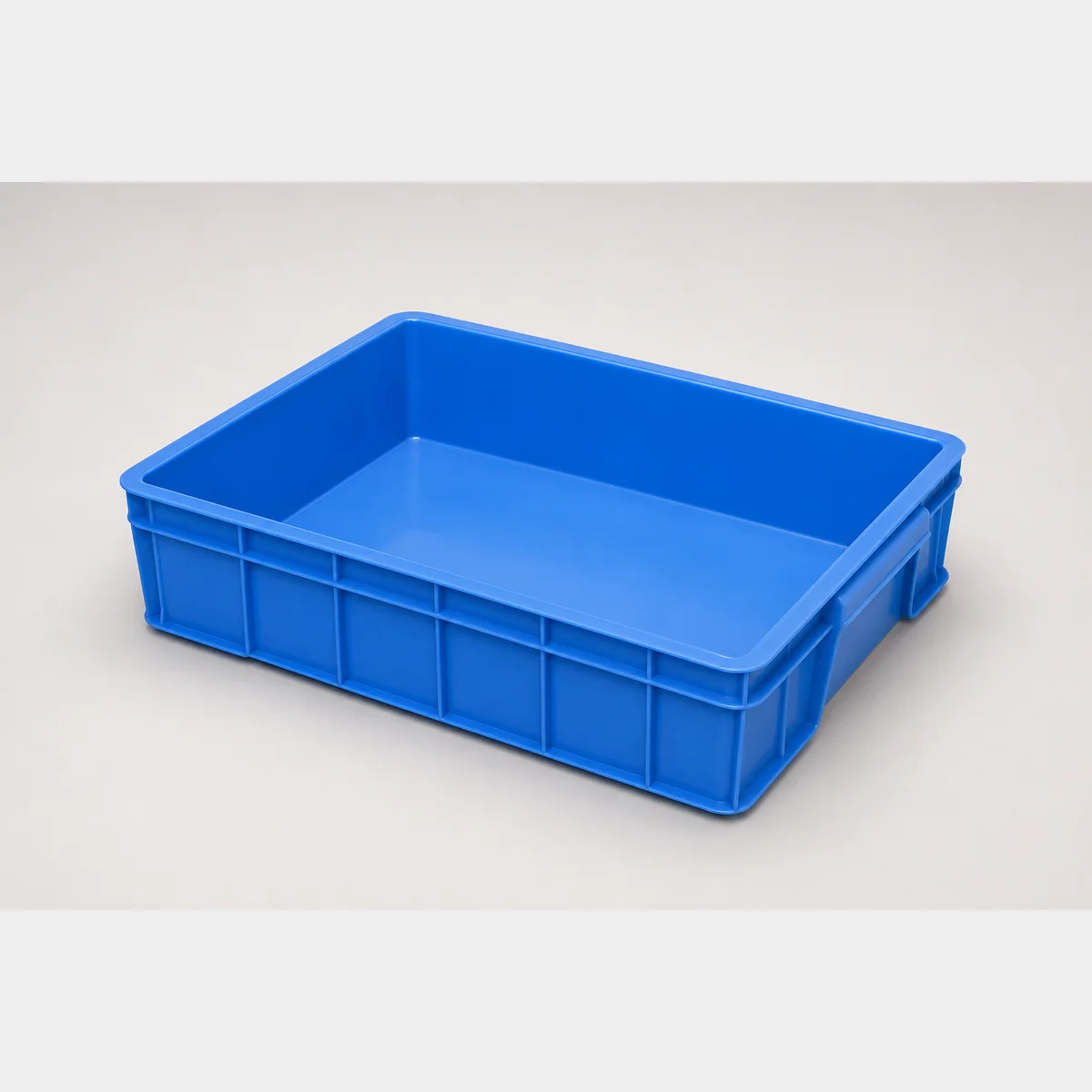 Shelving & StorageProduct reference image
Plastic Box
Plastic Box. A: External L600xW490xH155 mm; Size/Specification lines: Internal (555x450x140 mm) / Internal (570x382x142 mm); B: External L610xW420xH150 mm. Please contact us for a formal quotation based on use, specifications and quantity.
- A
- External L600xW490xH155 mm
- Size/Specification lines
- Internal (555x450x140 mm) / Internal (570x382x142 mm)
- B
- External L610xW420xH150 mm
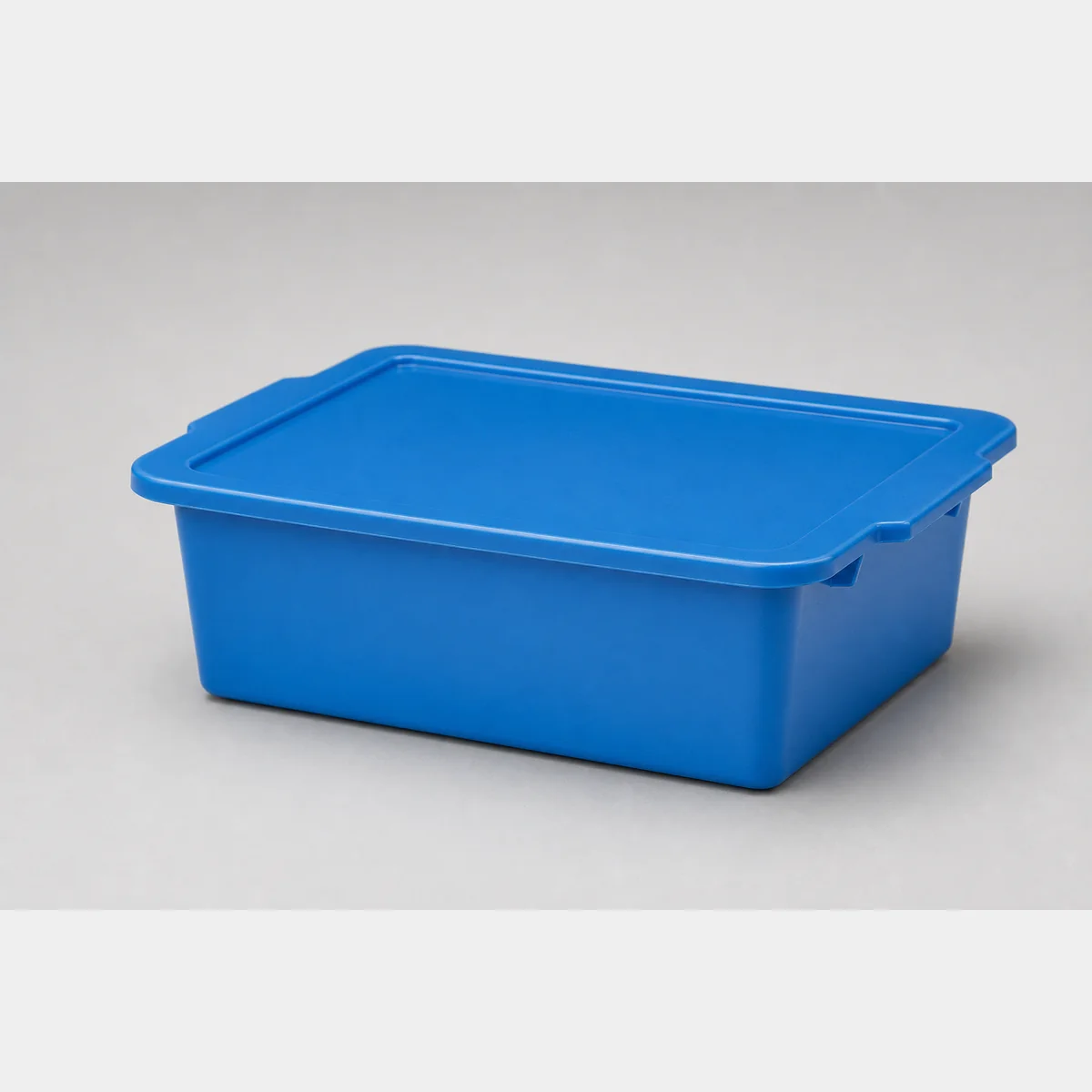 Shelving & StorageProduct reference image
Plastic Box (A-1822)
Plastic box. For formal specifications and a formal quotation, please contact GotGear with intended use, dimensions and quantity.
- A1822 option 1
- L365 x W290 x H117 mm
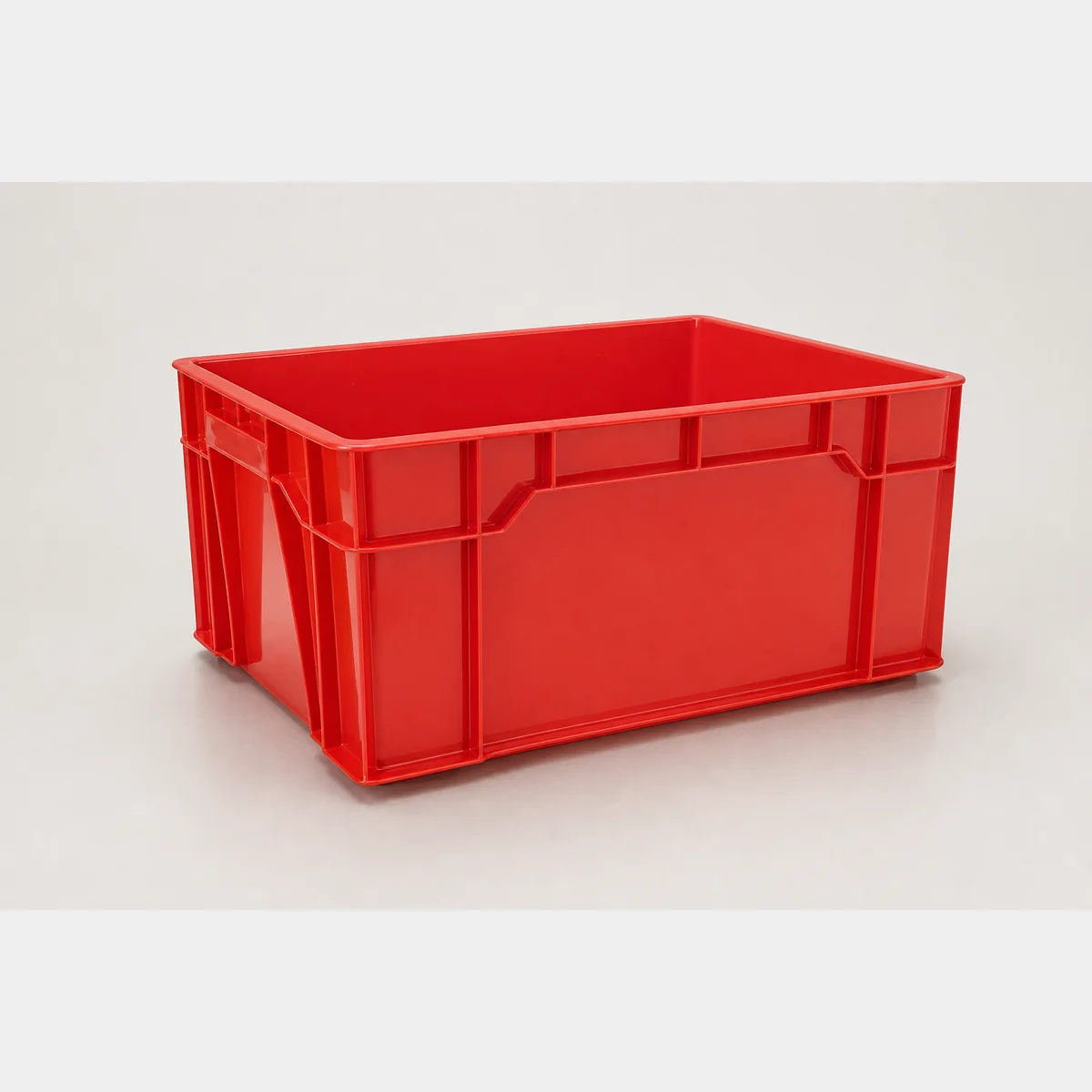 Shelving & StorageProduct reference image
Plastic Crate
Plastic crate, External: 556 x 420 x H245 (mm) / 555 x 423 x H380 (mm); Internal: 505 x 385 x H237 (mm) / 505 x 388 x H375 (mm); Minimum order quantity: 3 units. Formal quotation available based on use, specifications and quantity.
- External
- 556 x 420 x H245 (mm) / 555 x 423 x H380 (mm)
- Internal
- 505 x 385 x H237 (mm) / 505 x 388 x H375 (mm)
- Minimum order quantity
- 3 units
Continue with closely related procurement topics
These pages share equipment, operating or decision-stage signals with this guide.
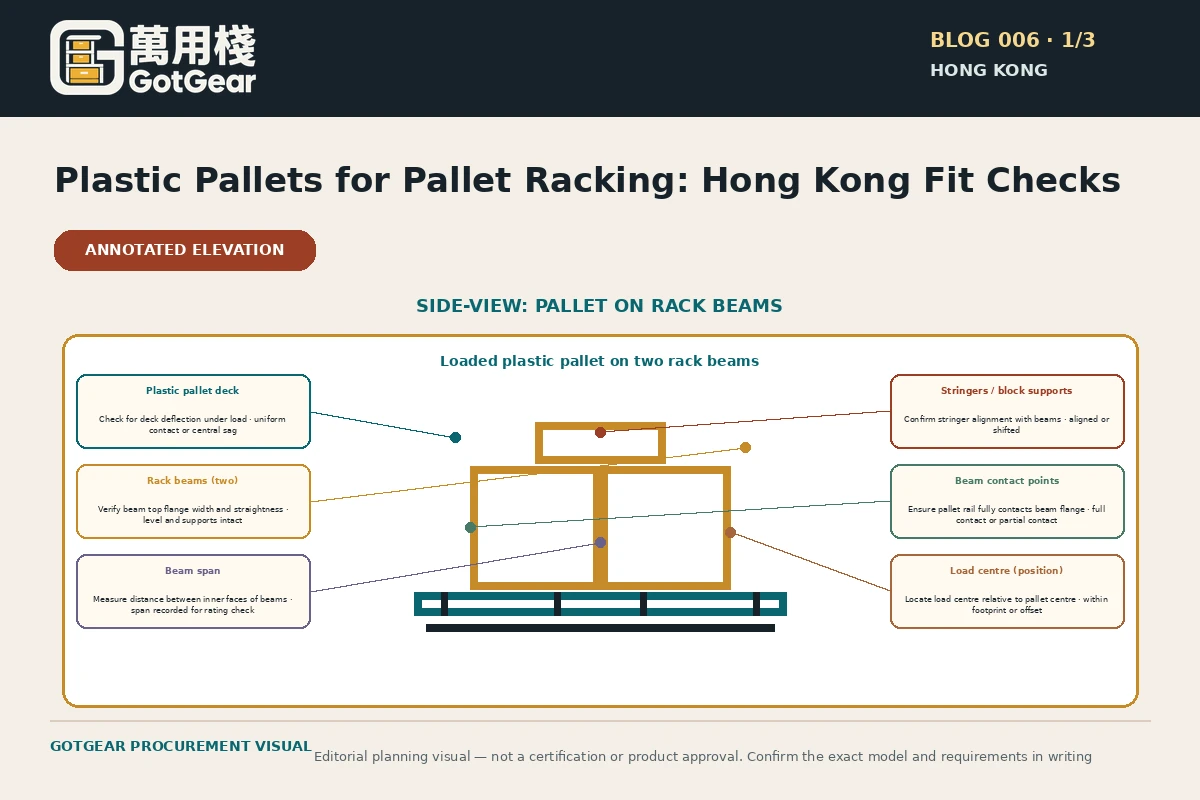
Plastic pallets for pallet racking Hong Kong
GotGear explains plastic pallets for pallet racking Hong Kong for Hong Kong buyers. See how plastic pallet rack load rating Hong Kong supports rackable plastic pallet Hong Kong, with practical checks, evidence boundaries and written requirements.
Read the guide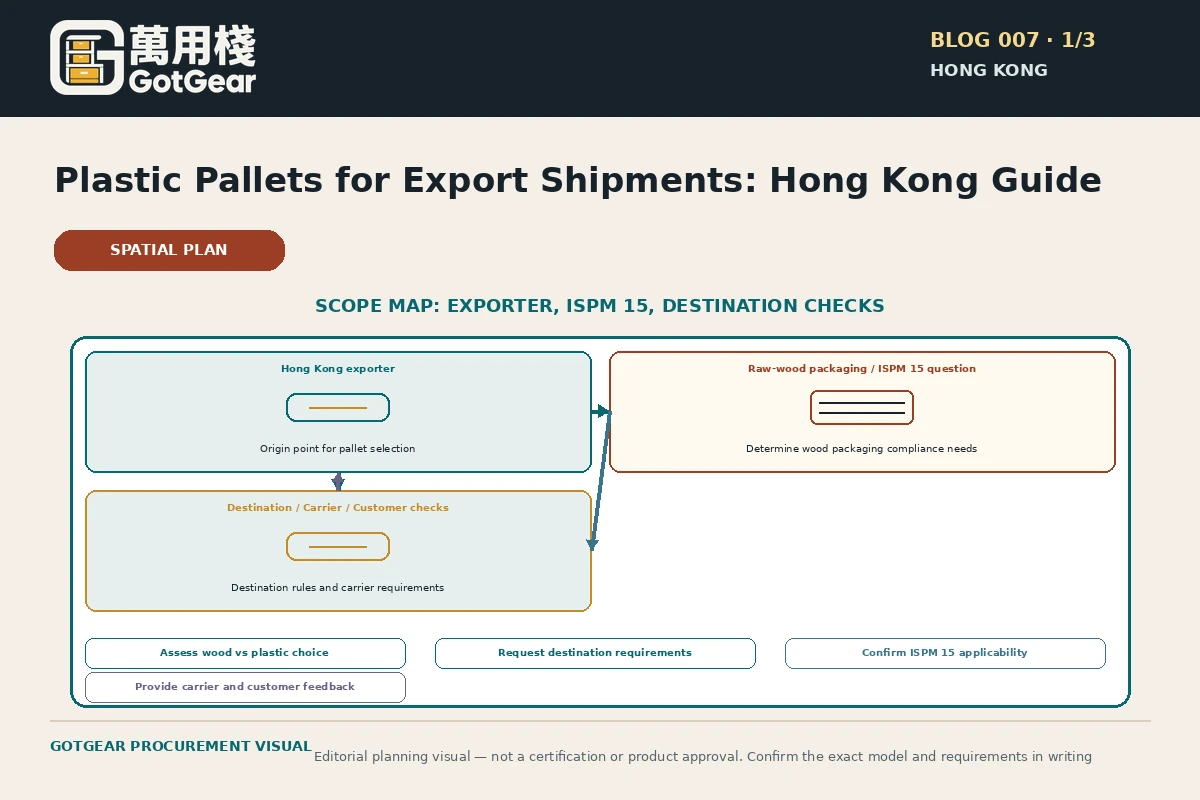
Plastic pallets for export shipments Hong Kong
GotGear explains plastic pallets for export shipments Hong Kong for Hong Kong buyers. See how ISPM 15 plastic pallets Hong Kong supports export pallet material Hong Kong, with practical checks, evidence boundaries and written requirements.
Read the guide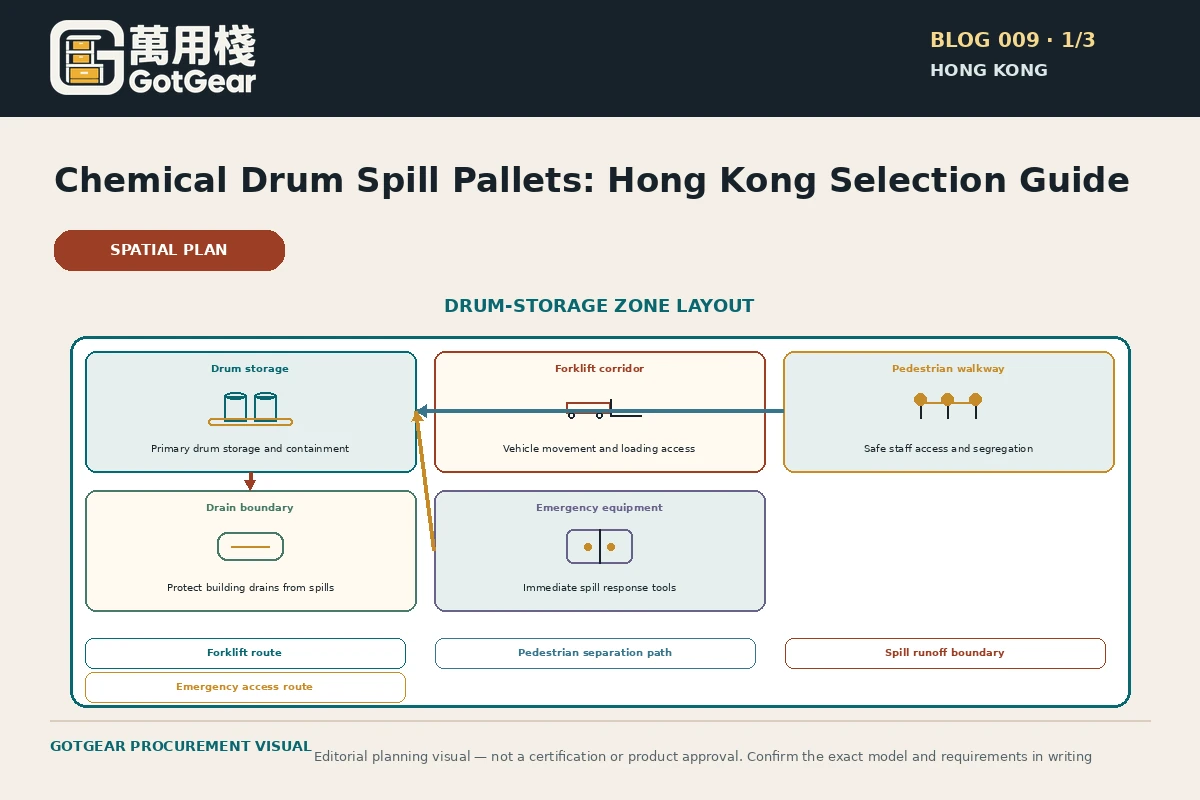
Chemical drum spill pallet Hong Kong
GotGear explains chemical drum spill pallet Hong Kong for Hong Kong buyers. See how spill containment pallets Hong Kong supports hazardous substance secondary containment Hong Kong, with practical checks, evidence boundaries and written requirements.
Read the guide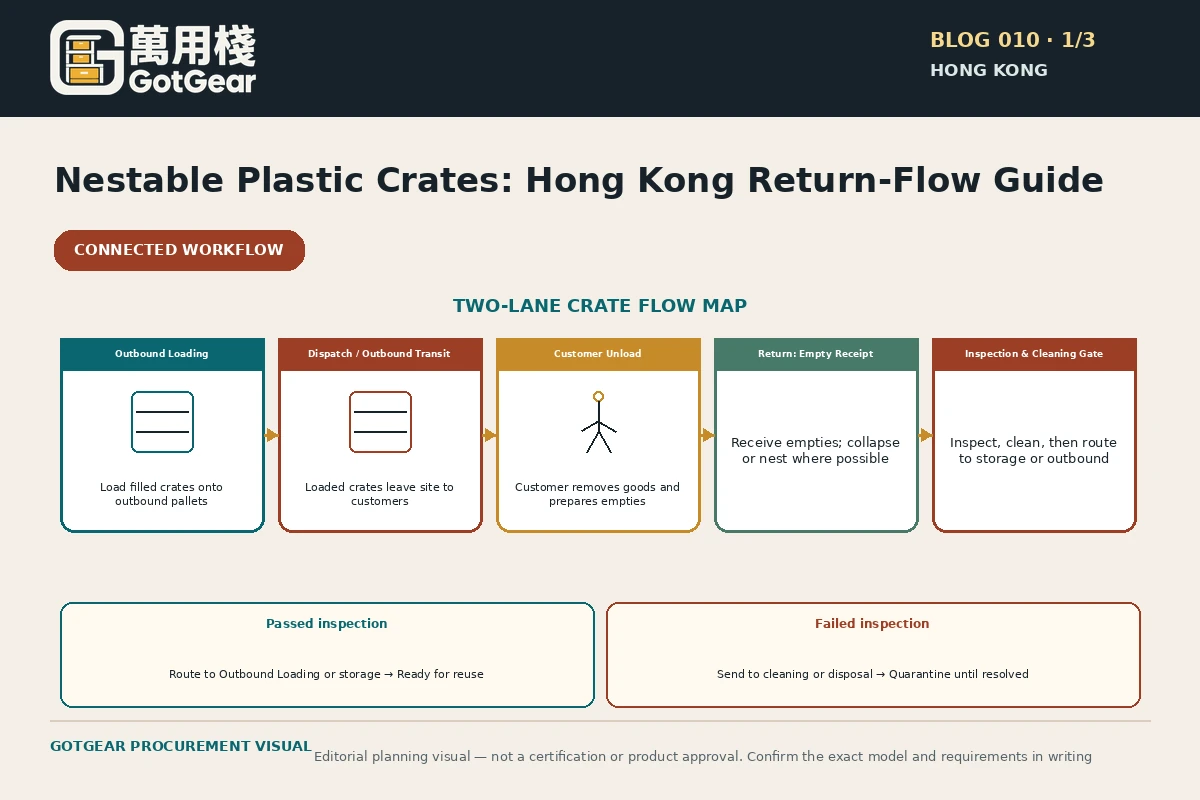
Nestable plastic crates Hong Kong
GotGear explains nestable plastic crates Hong Kong for Hong Kong buyers. See how stack and nest crates Hong Kong supports returnable crate empty storage Hong Kong, with practical checks, evidence boundaries and written requirements.
Read the guideRelated topic indexOpen more English procurement pages19 topics
Browse additional equipment families, applications and procurement questions relevant to these operating requirements.