
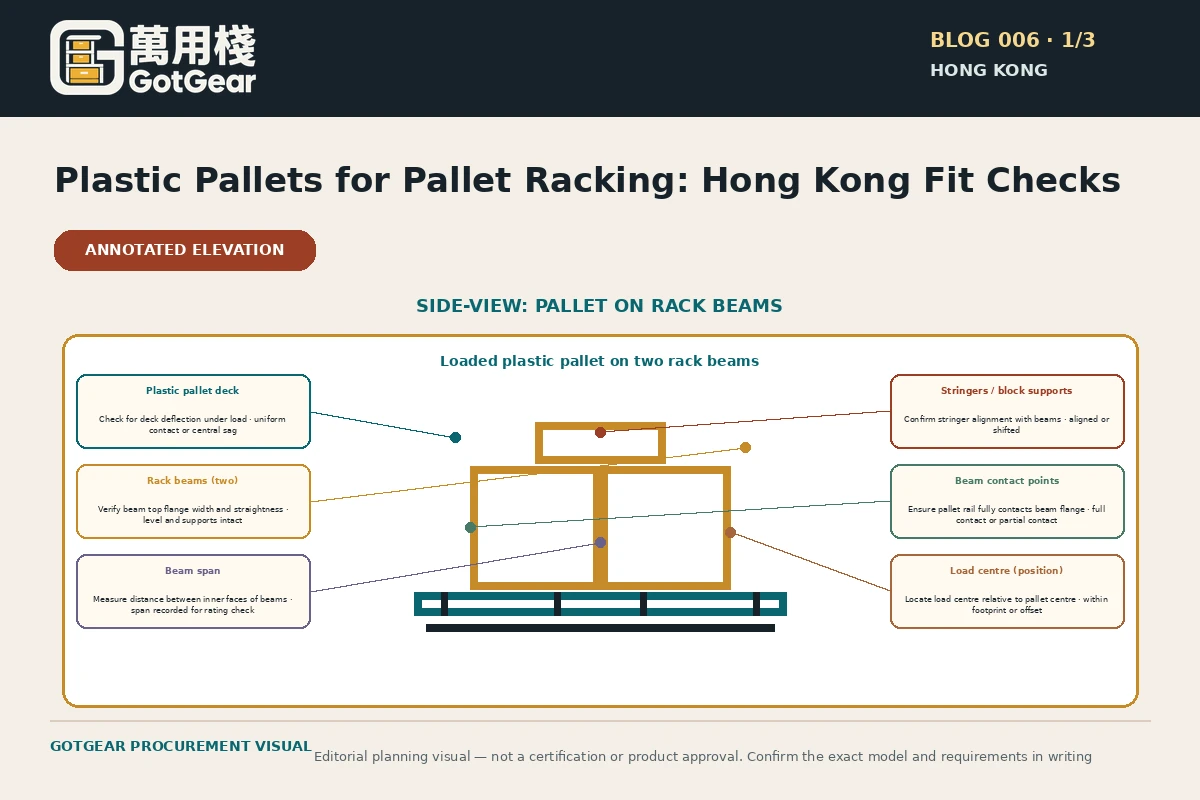
A plastic pallet may be rackable, but only if its published rack-supported rating matches your beam span, pallet orientation and the loaded footprint. Static (floor) and dynamic (fork) ratings describe different support conditions and cannot replace a rack-supported rating. For Hong Kong multi-level racking projects, obtain the racking drawing, the pallet’s rack test document, and measured unit-load dimensions; where uncertainty remains, plan a field check or controlled load test before approving stock placement.
What to remember before you decide
- Use the pallet’s rack-supported rating — not its static or dynamic figures — to approve on-beam storage.
- Match the tested span and pallet orientation exactly to your racking drawing before placing loads.
- Account for temperature, humidity and storage duration; plastic pallets show time-dependent creep.
- If test data are missing or mismatched, require a field trial or third-party test that replicates your configuration.
- Document test reports, racking drawings and on-rack acceptance checks in procurement records.
- Accessories and support boards change load paths and invalidate a published rack rating unless re-tested.
Why rack-supported ratings differ from static and dynamic ratings
Practical context: In Hong Kong’s multi-level warehouses the racking supplier, pallet vendor and operations team are often separate stakeholders. That separation increases the risk that a pallet selected on the basis of ‘floor’ or ‘fork’ capacity will be used on beams for which it was not tested. Use these decision checks: treat three support conditions distinctly — static (distributed floor support), dynamic (fork handling) and rack-supported (beam-to-beam support). For procurement and layout change decisions you must prioritise the pallet’s documented rack-supported capacity for on-beam storage. A key limitation is that many manufacturers report only static and dynamic values for plastic pallets; those figures do not account for the concentrated line or point loading created by two beams under a pallet. Plastic pallets deflect and creep under sustained loads, which reduces effective capacity on racking relative to floor capacity. Next, ask suppliers for the pallet’s rack-supported test report or a statement confirming testing to ISO 8611 test methodology. If the supplier cannot provide a rack-supported rating, do not approve placement on beam racking without either a proven alternative pallet or a programme of on-site validation testing.
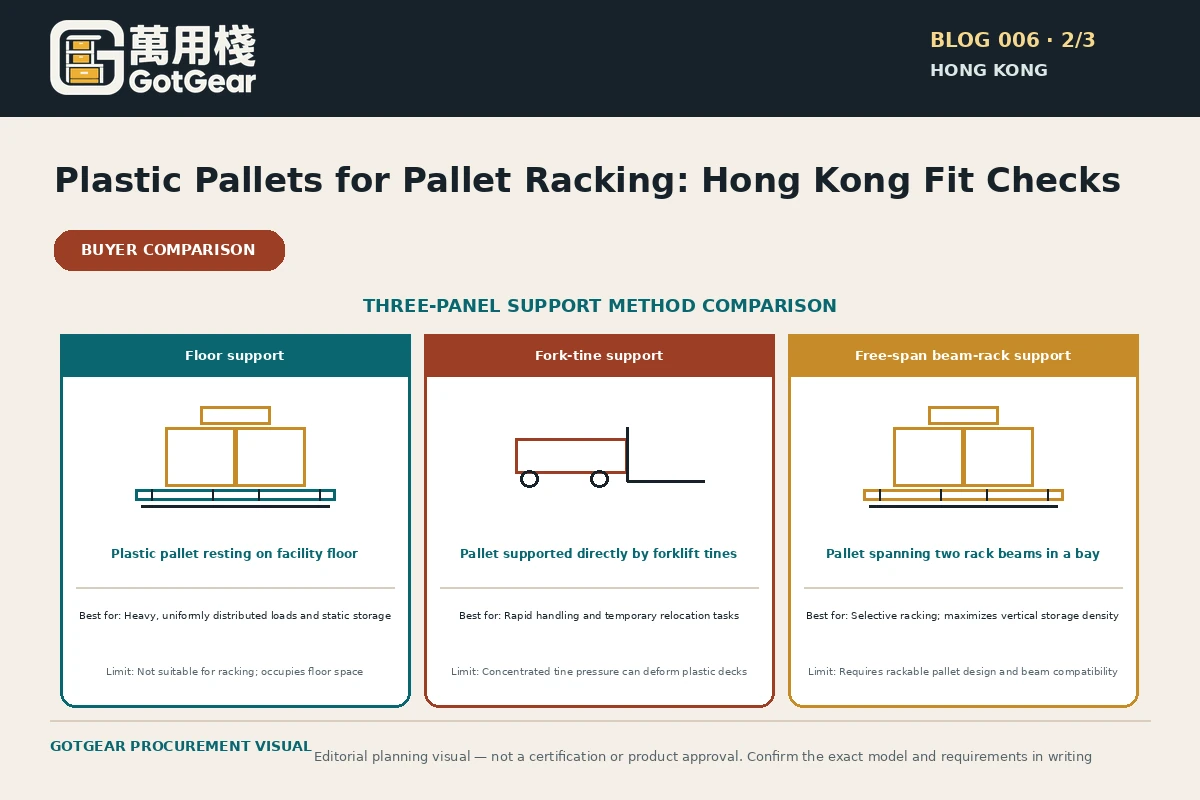
Static vs dynamic vs rack-supported — practical differences for Hong Kong operations
Practical context: Hong Kong warehouses commonly use narrow aisles and double-deep or multi-tier racking to maximise floor efficiency. A pallet can be oriented either with the deck parallel to the beams (longitudinal) or perpendicular (transverse), and orientation affects load distribution across beam faces. Use these decision checks: • Use the pallet’s rack-supported rating for stored positions only. • Use dynamic rating for lift, transport and handling clearances. • Use static rating for floor stacking or long-term floor storage. Measure the unit load footprint: the position of the load on the pallet and the pallet-to-beam contact length are decisive for beam reaction forces. A key limitation is that published ratings assume ideal test conditions and a defined support span; field geometry (unequal beam heights, damaged beams, misalignment) and pallet damage will reduce capacity. For dense storage in Hong Kong, also consider forklift types, entry angles and lift centres as they affect dynamic safety margins. Next, obtain the rack beam span from the racking drawing, confirm the pallet orientation you will use in racks, and compare the beam span and loaded contact area against the pallet’s rack-supported rating table or test data. If the table lacks your span/orientation, commission a manufacturer test or third-party test to match your configuration.
“Always treat rack-supported ratings as distinct engineering data: obtain the test report, match span and orientation, and verify on-site rather than assuming floor or fork figures will be safe for beam storage.”— GotGear Editorial Team
What should buyers compare for plastic pallets for pallet racking Hong Kong?
| Option or approach | Best for | Trade-offs | Checks before acceptance |
|---|---|---|---|
| Select a plastic pallet with a documented rack-supported rating | When you need lightweight, hygienic pallets and the vendor provides matching span/orientation test data. | May be more limited in load capacity than wooden/steel alternatives for long spans; requires documented evidence for each span and orientation. | Match the vendor’s rack test span/orientation to your racking drawing and run an on-rack trial with a representative unit load. |
| Use standard wooden or block pallets rated for beams | High-capacity loads and where spanning or concentrated loading exceeds typical plastic-pallet ratings. | Heavier, less consistent in hygiene-sensitive operations and variable in long-term dimensional stability. | Check supplier rack rating and inspect sample pallets for dimensional conformity and damage prior to rack use. |
| Add full-length shelf boards or steel spreader supports under pallets | When a chosen plastic pallet lacks a rack rating for your span but you want to use existing pallets safely. | Changes load paths and handling behaviour; adds installation complexity and must be included in testing. | Require combined-system testing or conduct a controlled on-site load test with the accessory in place. |
| Specify a custom-racked plastic pallet and commission ISO-based testing | Large volume programs where weight savings and hygiene justify upfront testing resource requirements. | Longer lead time and higher initial validation resource requirements; results are configuration-specific and must be retained in procurement records. | Commission testing to recognised methods and store the test protocol and report in the project file; run acceptance checks on delivery. |
| Use steel or engineered pallets for critical, heavy or long-term racking | Very high unit weights, uneven loads or where long-term creep of plastic is unacceptable. | Higher resource requirements, greater weight and possible handling changes; not ideal where hygiene or corrosion is a concern without treatments. | Confirm manufacturer’s rack ratings for your span and plan regular inspections for corrosion or deformation. |
This framework helps buyers create comparable written enquiries. Final model specifications, availability, delivery and commercial terms must be confirmed in a formal quotation.
Environmental, duration and support-accessory considerations
Practical context: Hong Kong’s humidity and temperature ranges, plus refrigerated storage for food and pharmaceuticals, influence the mechanical behaviour of thermoplastic pallets. Long dwell times on racking — common where e‑commerce or cross-docking is not used — increase the importance of creep. Use these decision checks: • For long-term storage, apply a time-dependent reduction factor to plastic pallet capacities as recommended in technical guidance; consider accelerated ageing data where available. • For cold rooms, confirm the polymer behaviour at operating temperature; some plastics become brittle and lose ductility. • For higher ambient heat or sunlight-exposed yards, verify UV stabilisation and rated temperature range. Support accessories: adding full-length top deck boards or in-fill shelf panels increases beam contact area and can reduce deflection, but these change load paths and should be included in any test. A key limitation is that accessory modifications change the tested configuration and invalidate a published rating unless re-tested. Creep published in lab tests may not align with long-term in-situ behaviour. Next, list expected storage temperatures and average storage duration per SKU, ask the pallet supplier for creep/ageing data at those conditions, and require a confirmation that the published rack rating applies at your operating temperature and for the expected storage term. Where the pallet will be used with support boards or shelving panels, require test data for that combined setup or plan a field trial.
Documentary evidence and on-rack verification for procurement and acceptance
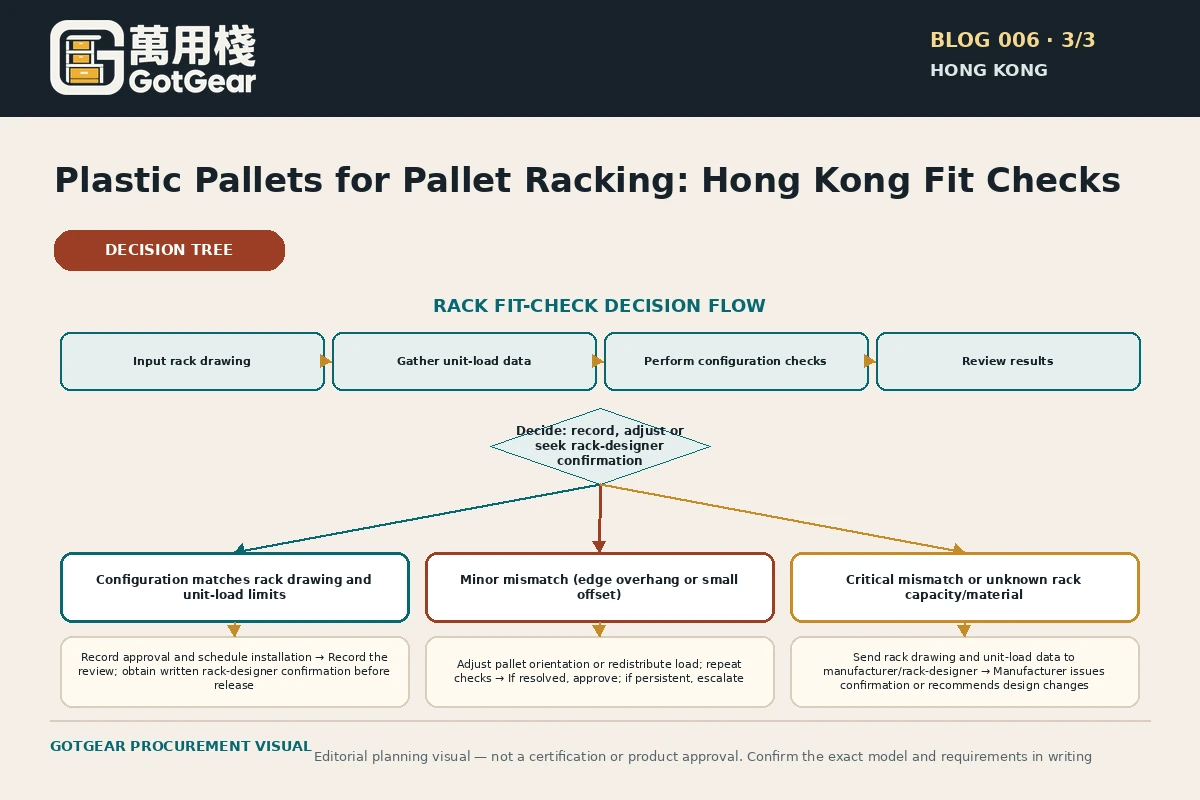
Practical context: procurement teams in Hong Kong must reconcile commercial schedules with safety and operational acceptance testing. Racking, pallets and operational rules may be specified by different vendors; clarity of documentation reduces delays and rejects at installation. Use these decision checks: require a supplied racking drawing that shows beam centres/spans, beam section and rated beam load, plus the pallet manufacturer’s rack-supported test report with span, orientation and load pattern specified. If a third party performed the test, request the test protocol. Require declaration of limits and conditions that apply to the published rating (temperature range, long-term loading advice, allowable pallet damage). A key limitation is that test reports are configuration-specific. A rack-supported rating for one span or pallet variant cannot be assumed valid at a different span, orientation or with an alternate top deck. On-rack verification cannot ‘certify’ all future uses; it only validates the tested configuration and handling pattern. Next, include a requirement for rack-supported rating documentation in purchase orders; schedule an on-site acceptance check where a sample loaded pallet is placed on beams under supervision and inspected for excessive deflection. If discrepancies appear, quarantine the pallet type from racking until resolved and update the warehouse SOPs and drawings to record approved span/orientation combinations.
Plastic pallets for pallet racking Hong Kong decision checklist
- Obtain the racking drawing showing beam span, beam section and rated beam capacity for each rack bay.
- Request the pallet manufacturer’s rack-supported test report that lists span, orientation and load pattern.
- Record intended pallet orientation (longitudinal or transverse) and the loaded footprint for each SKU.
- Confirm operating temperatures and expected storage duration for the pallet in its racked position.
- Ask for creep and ageing data relevant to your climate or cold-room temperatures where available.
- Check whether any support accessories (deck boards, shelf panels) will be used and request combined-system data.
- Confirm forklift types, entry method and dynamic handling factors that could affect on-rack safety.
- Inspect delivered sample pallets for manufacturing variance or damage that would invalidate test assumptions.
- Plan and document an on-rack acceptance test with a representative loaded pallet prior to full placement.
- Retain all test reports and the racking drawing in procurement and facilities records; update SOPs with approved configurations.
Practical action sequence
- Collect the racking drawings and confirm beam spans and rated beam capacities for the bays concerned.
- Request the pallet’s rack-supported test report and any temperature/creep data from the supplier.
- Measure representative unit-load footprints and confirm pallet orientation that will be used on beams.
- Compare the pallet’s documented rack span/orientation to your racking drawing and flag mismatches.
- If documentation is missing or mismatched, commission a field trial or third-party test that replicates your span and load.
- Run an on-site acceptance check with a sample loaded pallet on the actual beams under supervision.
- Document the outcome, update the approved-pallet register and circulate SOP changes to operations and procurement.
- Schedule periodic reinspection of pallets and a review of the approved list whenever storage patterns or temperatures change.
Apply the checks to your Hong Kong site
Hong Kong warehouses commonly stack vertically to maximise scarce floorspace; specialist cold‑storage and high‑density fulfilment operations are frequent, so the consequences of an unsuitable pallet are magnified. When selecting plastic pallets for pallet racking Hong Kong projects, treat overseas laboratory ratings as technical guidance rather than unconditional approval. Local teams should follow the same verification sequence whether sourcing from an international vendor or a local supplier: reconcile the racking drawing with actual beam span and pallet orientation, compare the supplier’s test report to unit‑load patterns and storage duration, and perform on‑site checks under representative handling conditions. Specifically, confirm the declared plastic pallet rack load rating Hong Kong refers to the beam span and support details on your drawing, and verify that the chosen rackable plastic pallet Hong Kong accommodates loaded footprint and handling practices. Operational takeaway: require a documented handover pairing the racking drawing, pallet test report and an on‑site validation record signed by operations and engineering before pallets enter multi‑level racking.
References used for this article
These sources provide regulatory, safety or planning context. They do not certify any GotGear product or replace site-specific professional advice.
- International Organization for Standardization — ISO 8611-1:2025 — ISO’s scope for flat-pallet test methods and its statement that field tests remain relevant to specific designs.
- Virginia Tech Unit Load Institute — How Much Load Can My Pallet Carry? — Distinguishes rack, dynamic and static support conditions, including deflection and creep considerations for plastic pallets.
- Hong Kong Labour Department — Handling of Heavy Objects in Workplaces — Local task-specific risk-assessment and safe-storage context, including stability, support systems and work changes.
Questions about plastic pallets for pallet racking Hong Kong
Does ISO 8611-1:2025 mean a pallet tested in a lab is automatically safe for any racking?
No. ISO 8611-1 sets out standardised methods for testing flat pallets, which is valuable for comparing designs and producing repeatable results. However the standard itself and test reports are configuration-specific; the document recognises that laboratory capacity figures do not replace field testing for a particular pallet design and racking geometry. For procurement in Hong Kong, use ISO-based test data as technical evidence but still verify that the tested span, orientation and load match your actual racking conditions before approving rack use.
Can I use a plastic pallet’s static or dynamic rating instead of a rack-supported rating?
You should not substitute static (floor) or dynamic (fork-handling) ratings for a rack-supported rating. Those ratings represent different support conditions: static assumes distributed support across the floor, dynamic covers short-duration fork handling, while rack support concentrates load on beams with a span between supports. Plastic pallets can deflect or creep under sustained, concentrated loads; a static floor rating will overstate capacity on beams. Always obtain a rack-supported rating for stored positions or validate the pallet on your beams.
What does Virginia Tech’s guidance imply for Hong Kong warehouses?
Virginia Tech’s Unit Load Institute highlights that fork, floor and rack conditions are distinct and that pallet deflection and creep affect usable capacity. For Hong Kong operations this means treat overseas technical guidance as informative context: apply the same engineering reasoning locally, and require test results that match your span and environmental conditions. Where a supplier can only provide fork or floor data, plan for field verification or select a pallet with a documented rack-supported rating suitable for your bays.
How should we measure beam span and pallet orientation on site?
Beam span is the clear distance between shelf supports that carry the pallet; obtain this from the racking drawing or measure the clear span between beam uprights. Confirm the intended pallet orientation by noting whether the deck boards will run parallel or perpendicular to the beams when loaded. Measure the loaded footprint — the area over which the unit load contacts the top deck — because small offsets in load placement change beam reactions. Record these dimensions and compare them directly with the span and orientation listed on the pallet’s rack test data.
Is an on-rack field test necessary and what should it include?
An on-rack field test is strongly recommended when documentation is incomplete, when spans differ from tested values, or when a pallet type is new to your site. A practical acceptance test places a representative loaded pallet on the actual beams, measures vertical deflection and inspects for permanent deformation. The test should replicate normal handling, include the expected storage duration if possible, and be supervised by trained staff. Document the load, span, pallet condition and deflection readings, and retain that record with procurement files.
What role does the Hong Kong Labour Department guidance play in pallet-racking decisions?
Local guidance emphasises risk assessment when handling heavy objects and safe storage systems; it provides context for workplace safety expectations in Hong Kong. Treat that guidance as a trigger to include pallet-racking compatibility in your task-specific risk assessments, to ensure stability, to verify support systems and to update work procedures. It is not a substitute for technical testing of pallet/rack compatibility, but it does reinforce the need for documented risk controls and correct equipment selection in your operational safety plan.
Compare available product models and specifications
These product cards are matched to this buying topic. Select a specification and quantity to send the product details to WhatsApp.
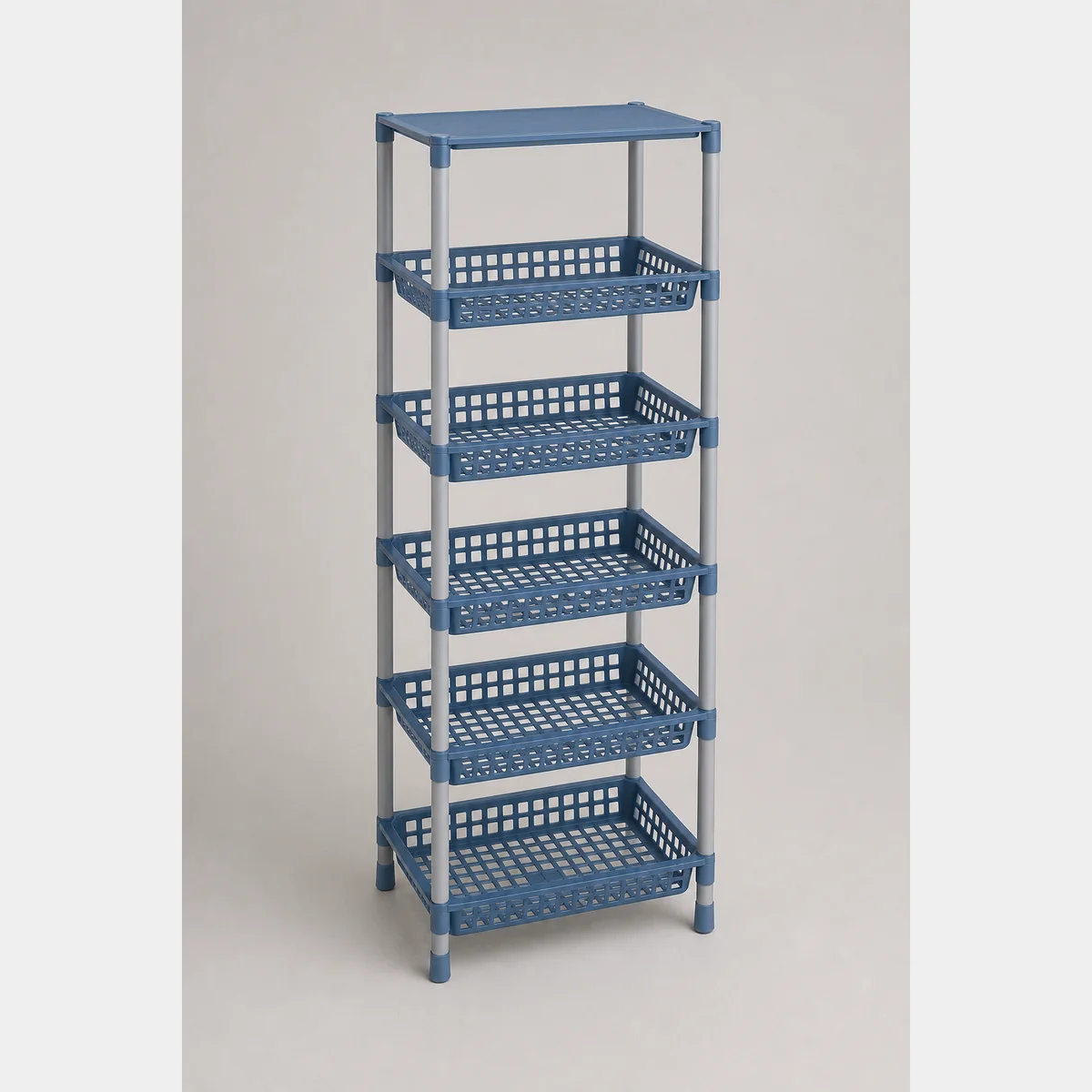 Shelving & StorageProduct reference image
Plastic shelving rack
Plastic shelving rack — Dimensions/Specifications: 402 x 280 x 950 (mm) / 15-7/8 x 11 x 37-3/8 (inch). Formal quotation available based on use, specifications and quantity.
- Dimensions/Specifications
- 402 x 280 x 950 (mm) / 15-7/8 x 11 x 37-3/8 (inch)
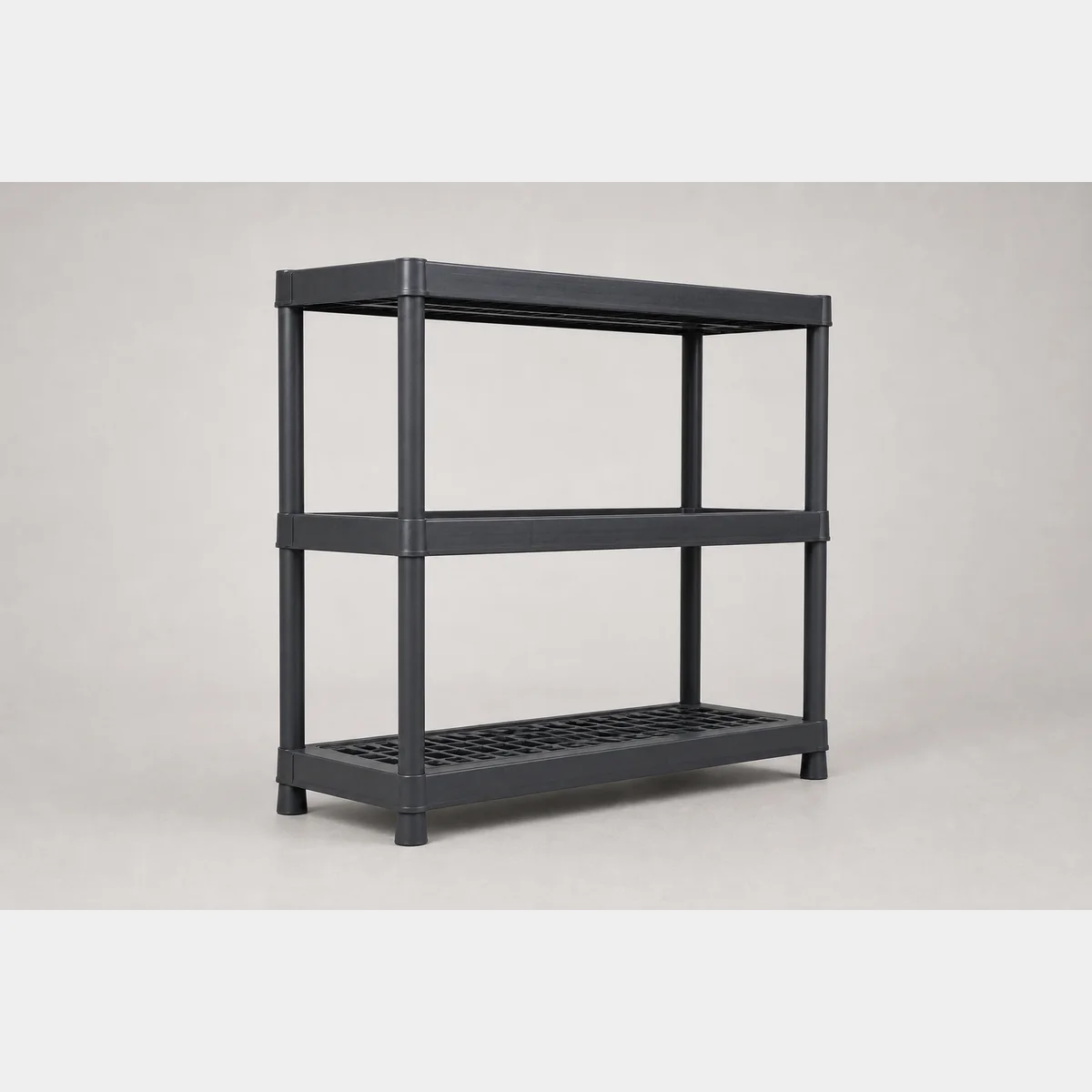 Shelving & StorageProduct reference image
3-tier plastic shelving (SKU: 334-3)
3-tier plastic shelving, Dimensions: L1200 x W397 x H989 mm; Shelf clearance: 390 mm; Colour: Black/Grey. Formal quotation available on request according to use, specifications and quantity.
- Dimensions
- L1200 x W397 x H989 mm
- Shelf clearance
- 390 mm
- Colour
- Black/Grey
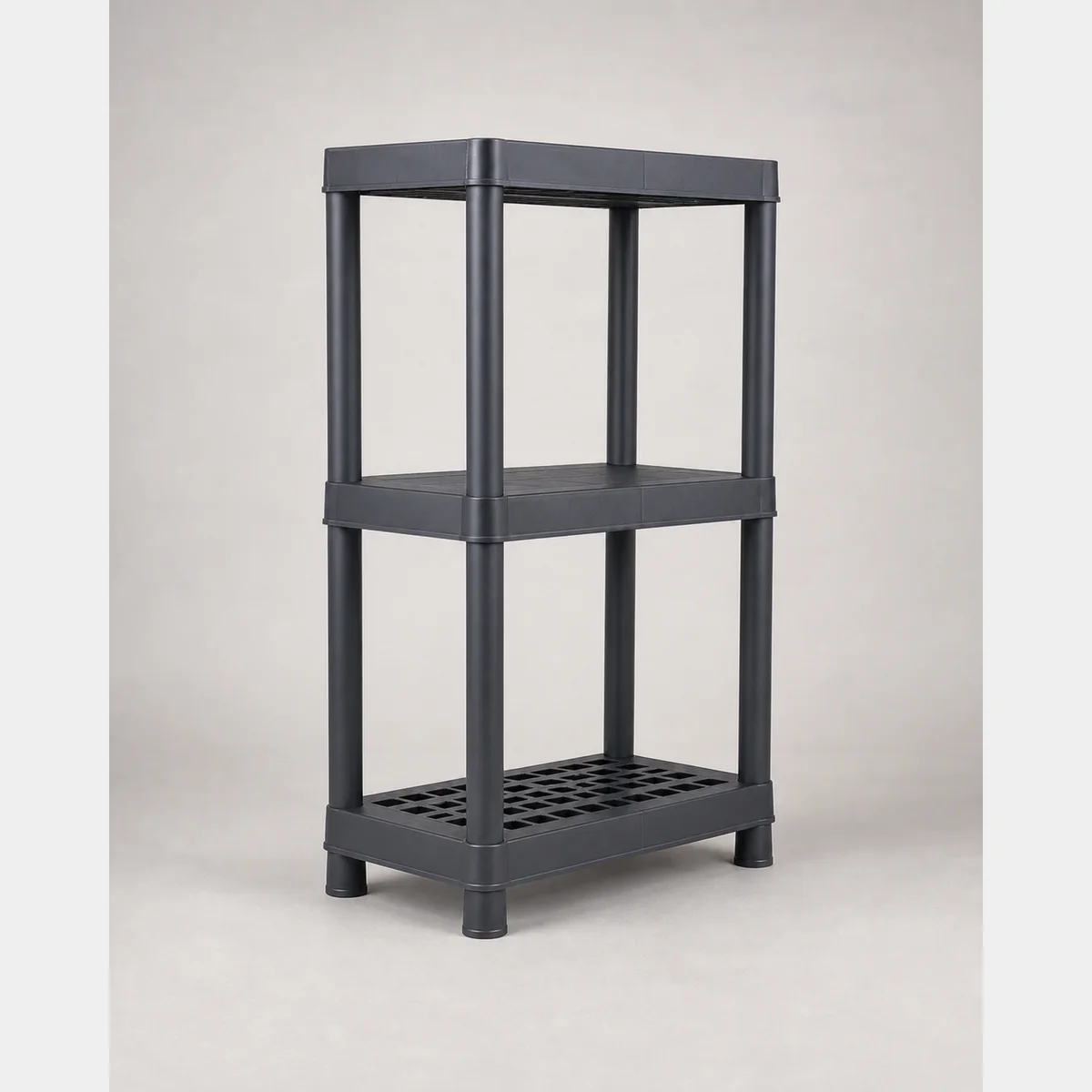 Shelving & StorageProduct reference image
Plastic shelf unit (SKU: 330-3)
Plastic shelf unit, Dimensions: L640 x W298 X H995 mm; Colour: Black/Grey. Formal quotation available based on use, specifications and quantity.
- Dimensions
- L640 x W298 X H995 mm
- Colour
- Black/Grey
- Source-record note
- Model 330-3 height requires written confirmation because source records conflict between H1012 mm and H995 mm.
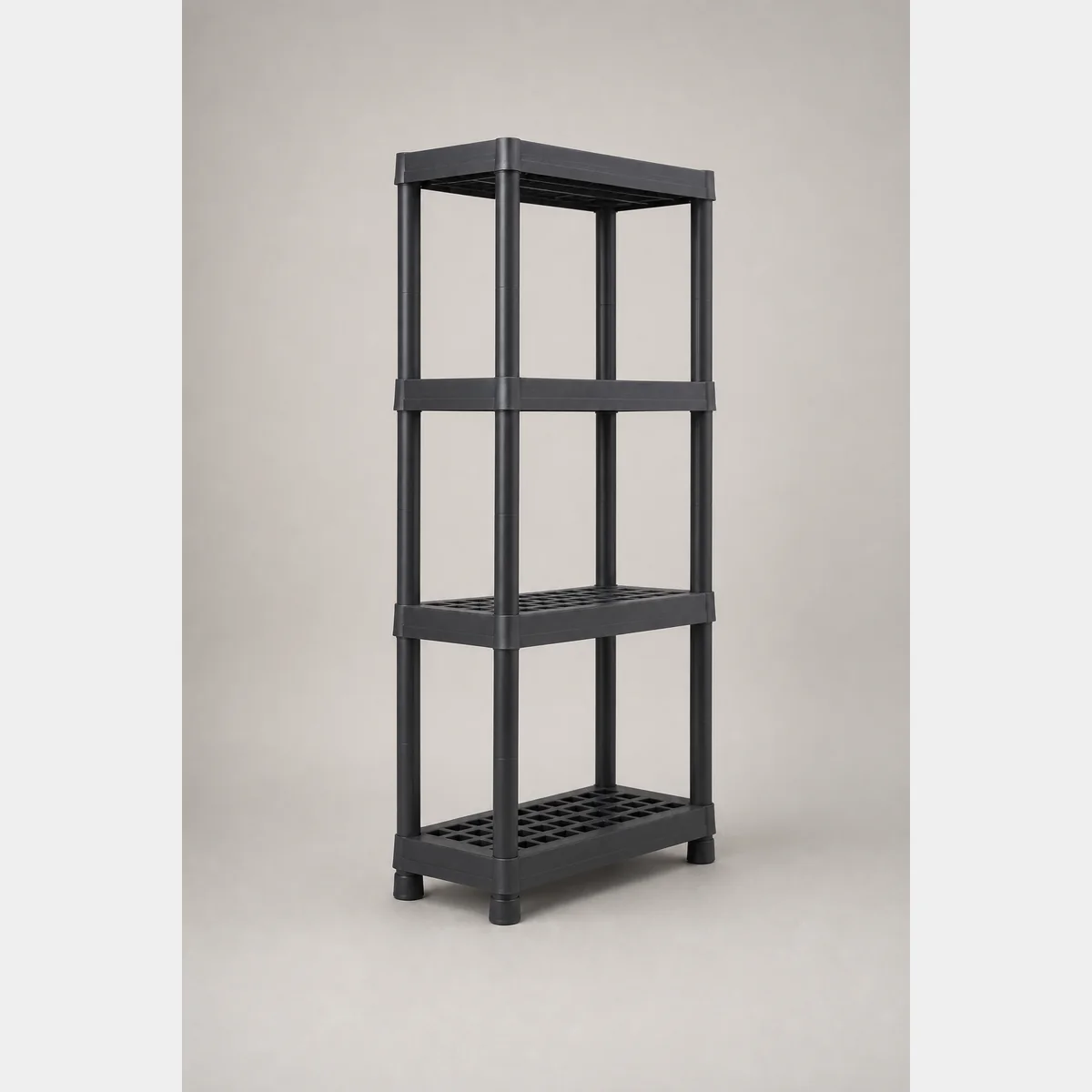 Shelving & StorageProduct reference image
Plastic shelving
Plastic shelving, Dimensions: L640 X W298 X H1460 MM; Colour: Black/Grey. Formal quotation available based on application, specifications and quantity. SKU: 330-4.
- Dimensions
- L640 X W298 X H1460 MM
- Colour
- Black/Grey
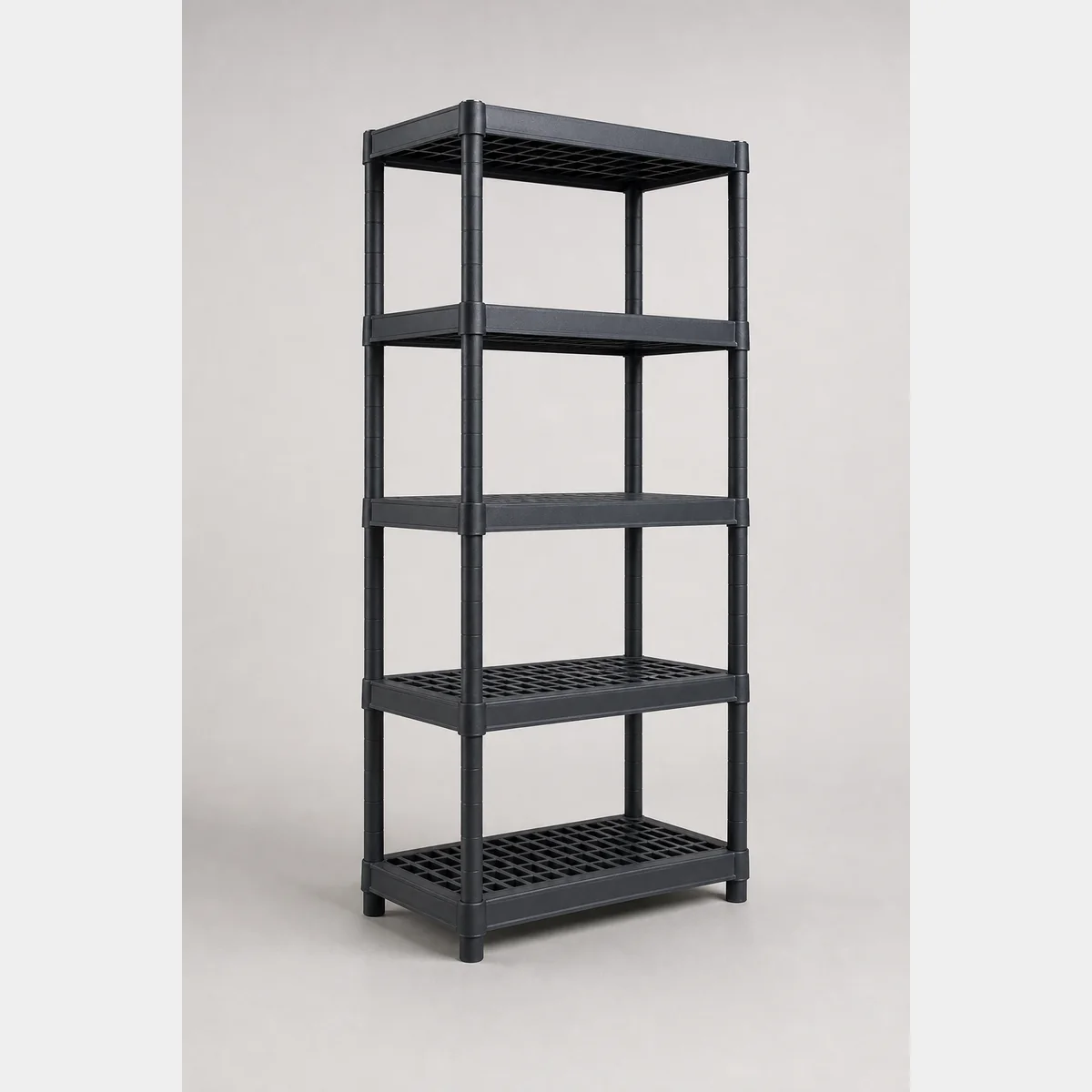 Shelving & StorageProduct reference image
Plastic shelving
Plastic shelving, Dimensions: L800 x W398 x H1867 mm; Clearance per shelf: 390 mm; Colours: Black/Grey. Formal quotation available based on use, specifications and quantity.
- Dimensions
- L800 x W398 x H1867 mm
- Shelf clearance
- 390 mm
- Colours
- Black/Grey
 Shelving & StorageProduct reference image
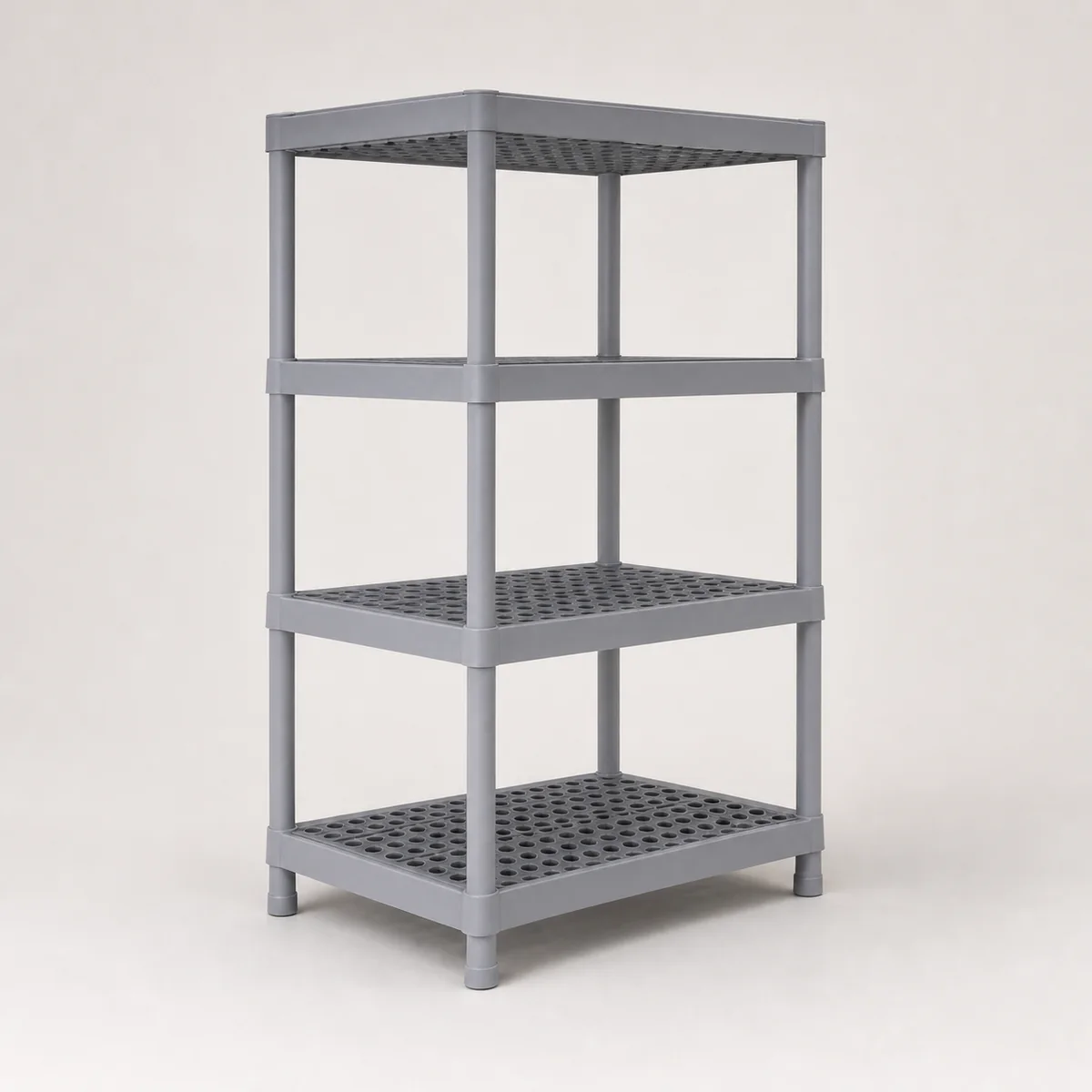
Plastic shelving
Plastic shelving unit. Dimensions: L900 x W598 x H1430 mm; Shelf clearance: 390 mm; Colour: Black / Grey. Formal quotation available based on use, specifications and quantity.
- Dimensions
- L900 x W598 x H1430 mm
- Shelf clearance
- 390 mm
- Colour
- Black / Grey
 Shelving & StorageProduct reference image
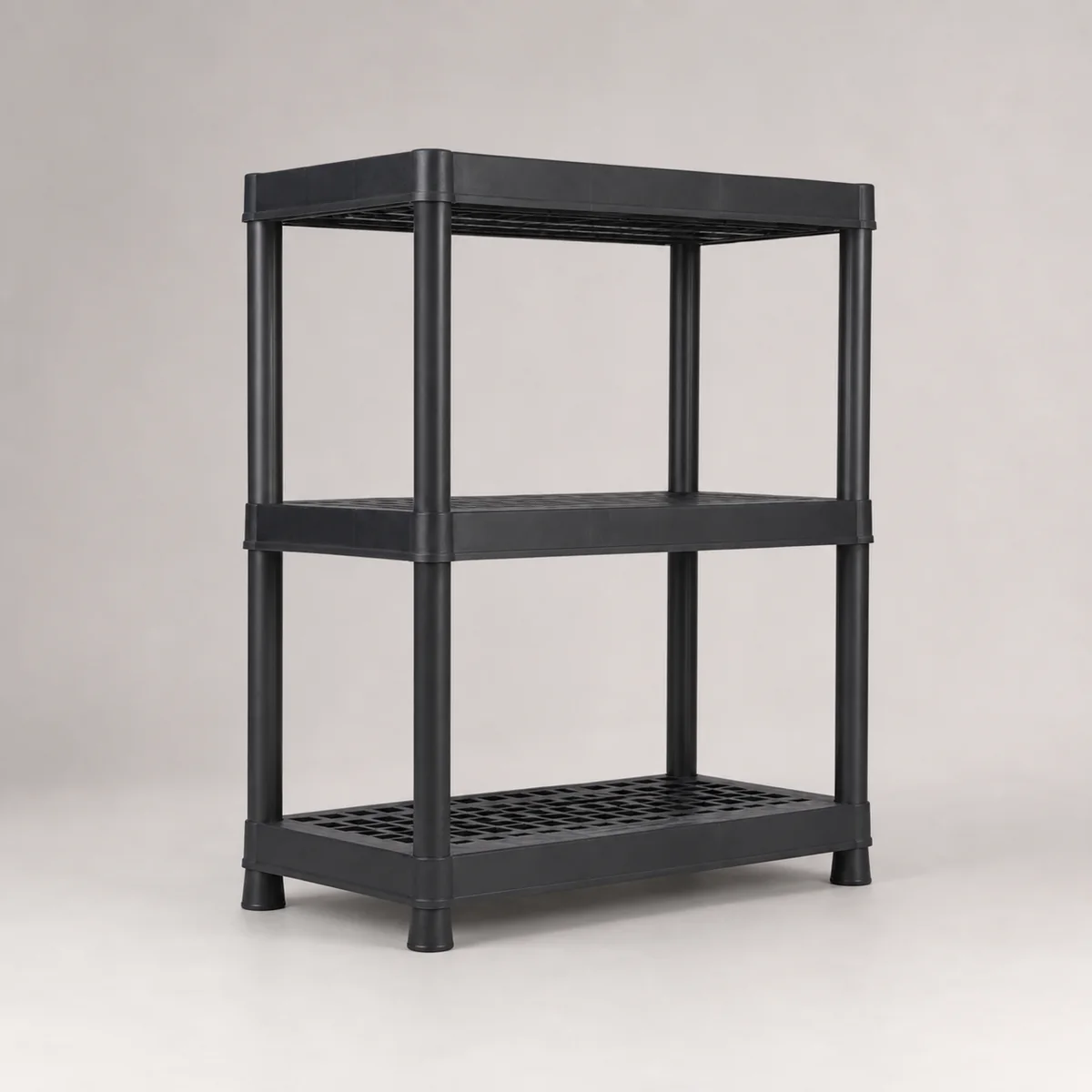
Plastic shelving
Plastic shelving, Dimensions: L900 x W450 x H995 mm; Shelf clearance: 390 mm; Colour: Black/Grey. Formal quotation available on request based on use, specifications and quantity.
- Dimensions
- L900 x W450 x H995 mm
- Shelf clearance
- 390 mm
- Colour
- Black/Grey
 Shelving & StorageProduct reference image
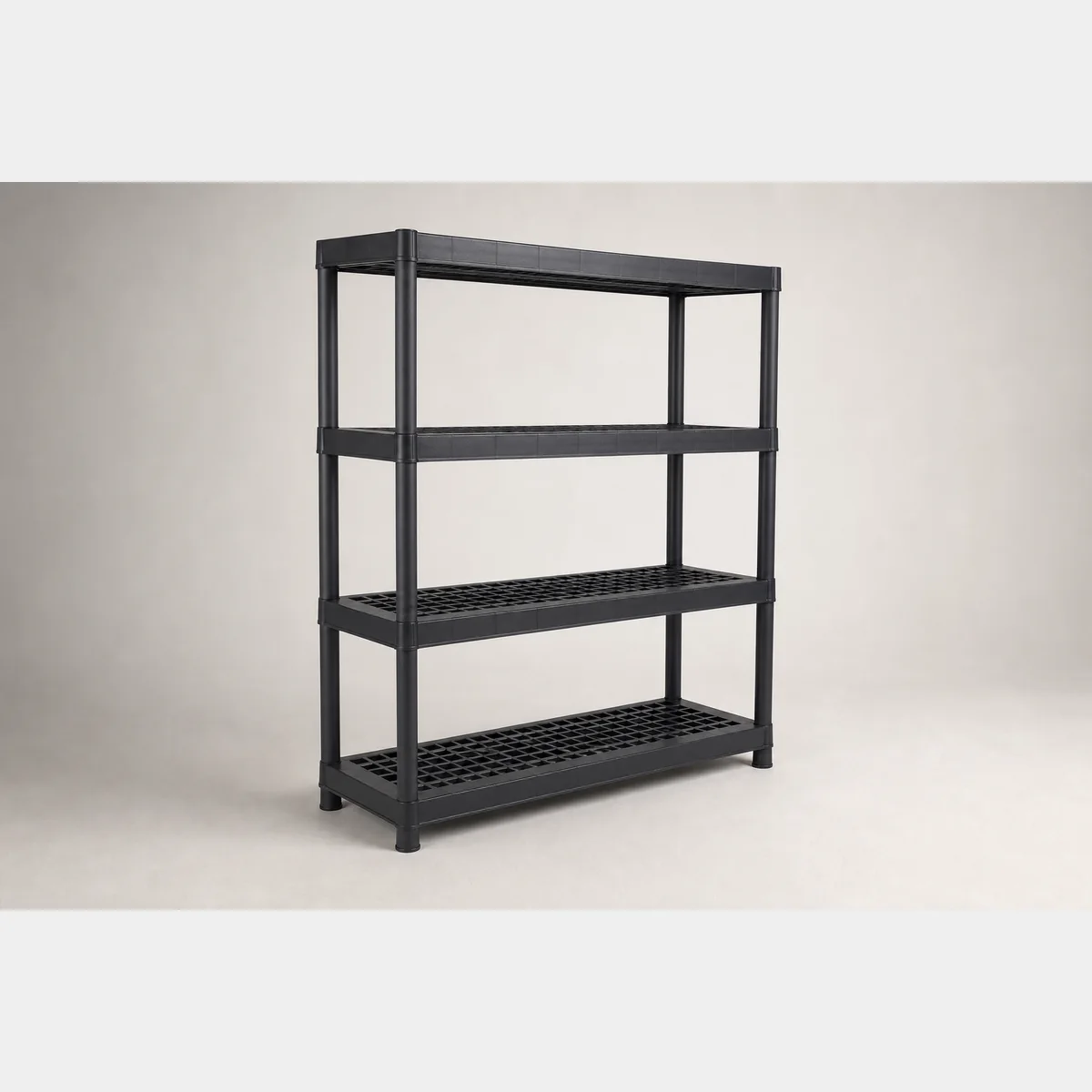
Plastic shelving
Plastic shelving, dimensions: L1200 x W397 X H1426 mm; shelf clear height: 390 mm; colour: Black/Grey. Formal quotation available based on use, specifications and quantity.
- Dimensions
- L1200 x W397 X H1426 mm
- Shelf clear height
- 390 mm
- Colour
- Black/Grey
Continue with closely related procurement topics
These pages share equipment, operating or decision-stage signals with this guide.
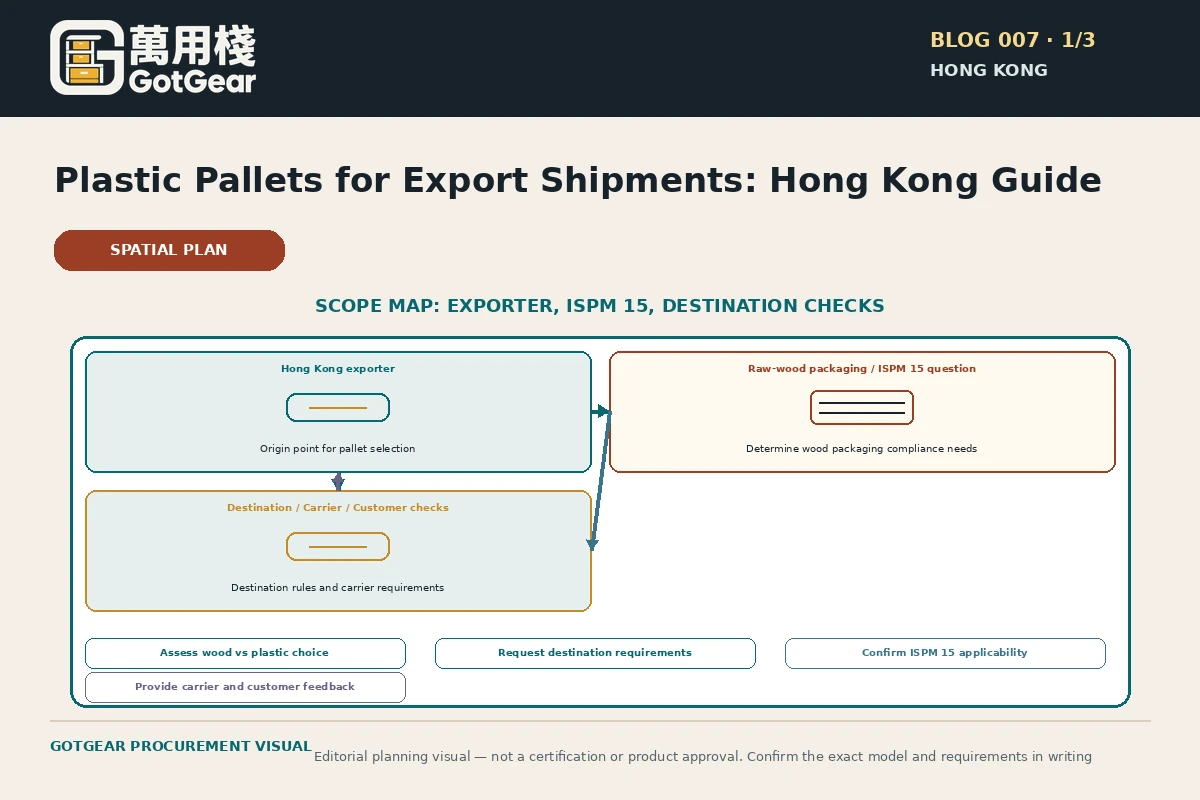
Plastic pallets for export shipments Hong Kong
GotGear explains plastic pallets for export shipments Hong Kong for Hong Kong buyers. See how ISPM 15 plastic pallets Hong Kong supports export pallet material Hong Kong, with practical checks, evidence boundaries and written requirements.
Read the guide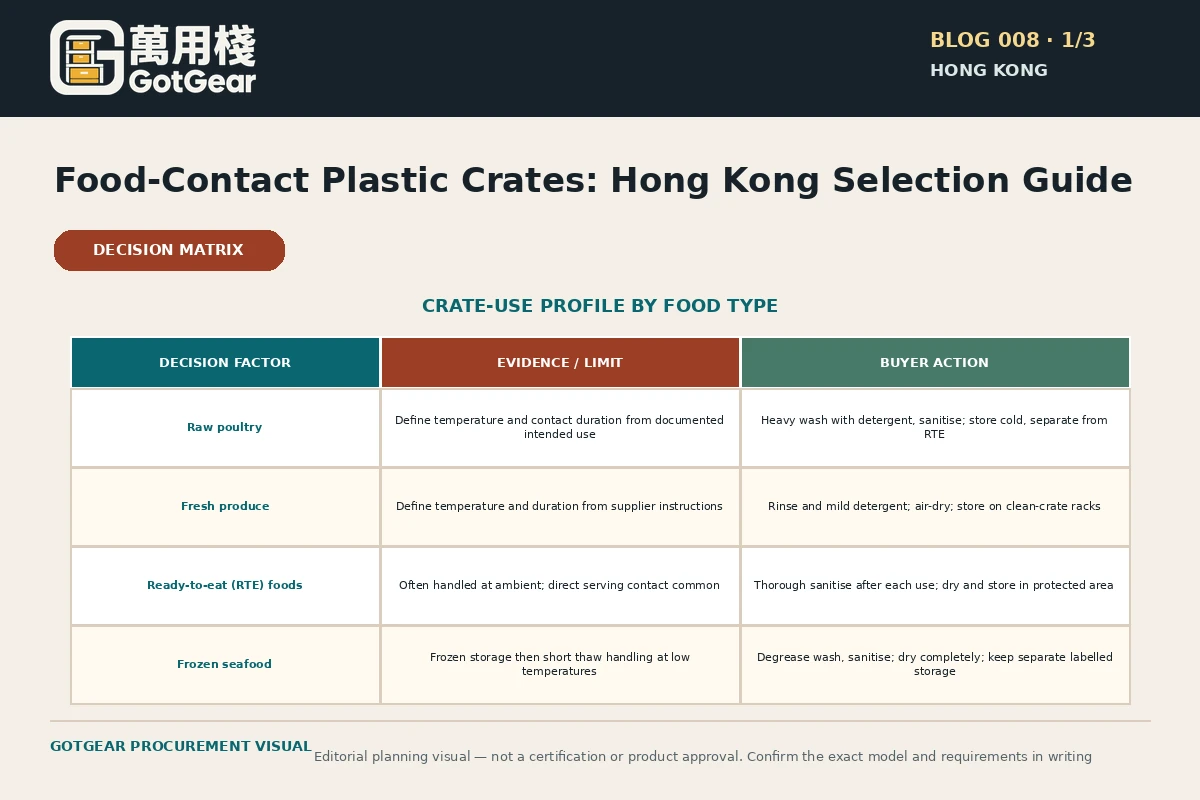
Food contact plastic crates Hong Kong
GotGear explains food contact plastic crates Hong Kong for Hong Kong buyers. See how food grade crate material Hong Kong supports food storage crate cleaning Hong Kong, with practical checks, evidence boundaries and written requirements.
Read the guide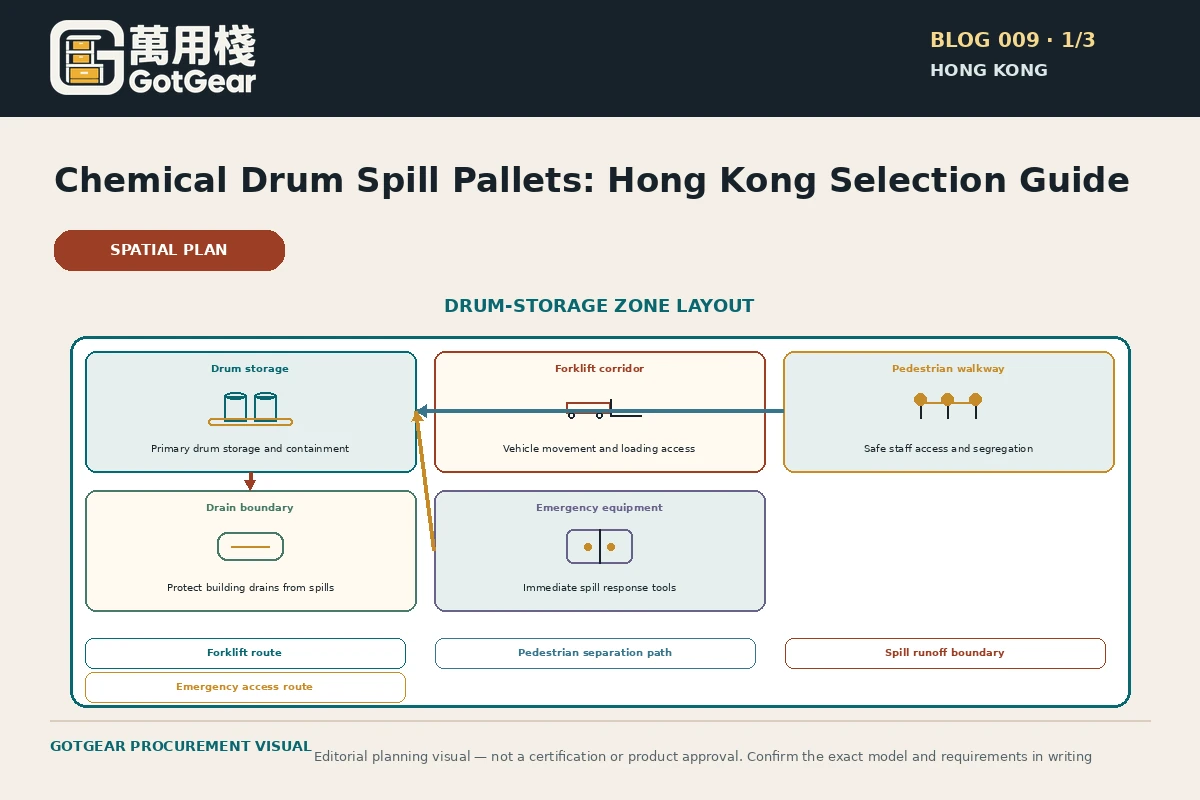
Chemical drum spill pallet Hong Kong
GotGear explains chemical drum spill pallet Hong Kong for Hong Kong buyers. See how spill containment pallets Hong Kong supports hazardous substance secondary containment Hong Kong, with practical checks, evidence boundaries and written requirements.
Read the guide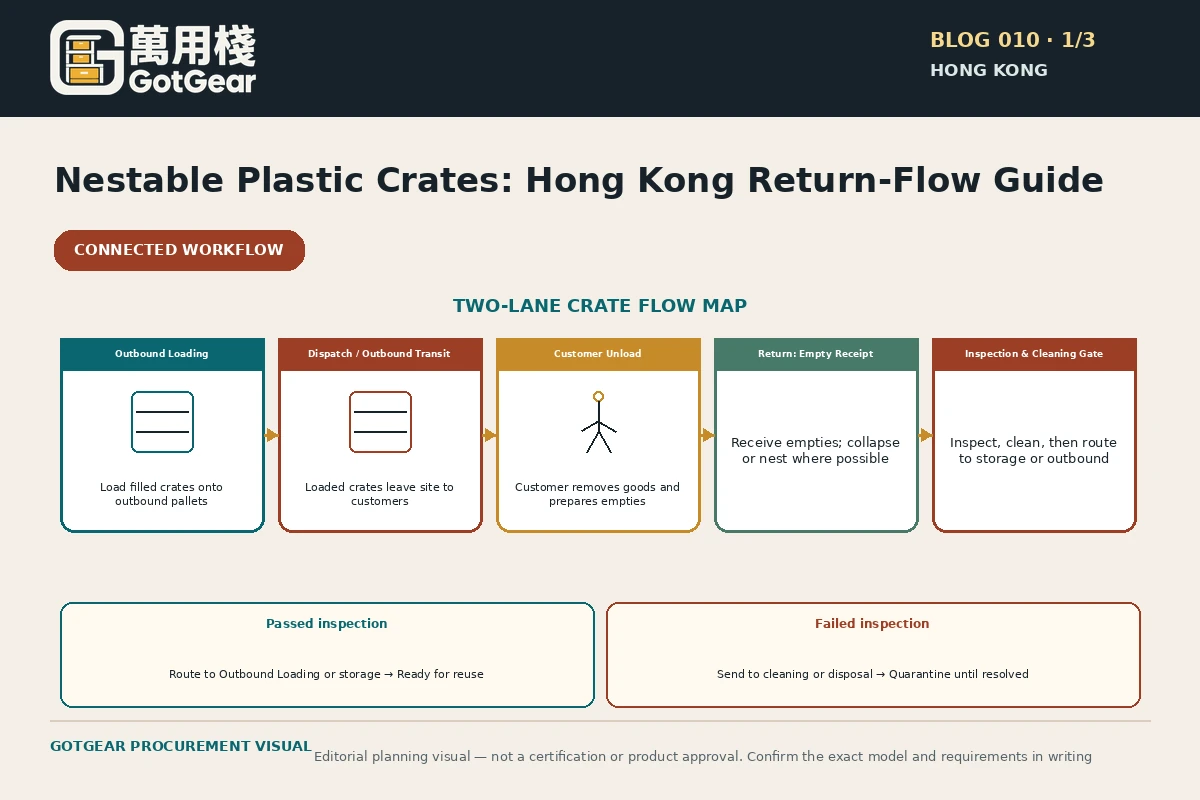
Nestable plastic crates Hong Kong
GotGear explains nestable plastic crates Hong Kong for Hong Kong buyers. See how stack and nest crates Hong Kong supports returnable crate empty storage Hong Kong, with practical checks, evidence boundaries and written requirements.
Read the guideRelated topic indexOpen more English procurement pages12 topics
Browse additional equipment families, applications and procurement questions relevant to these operating requirements.