
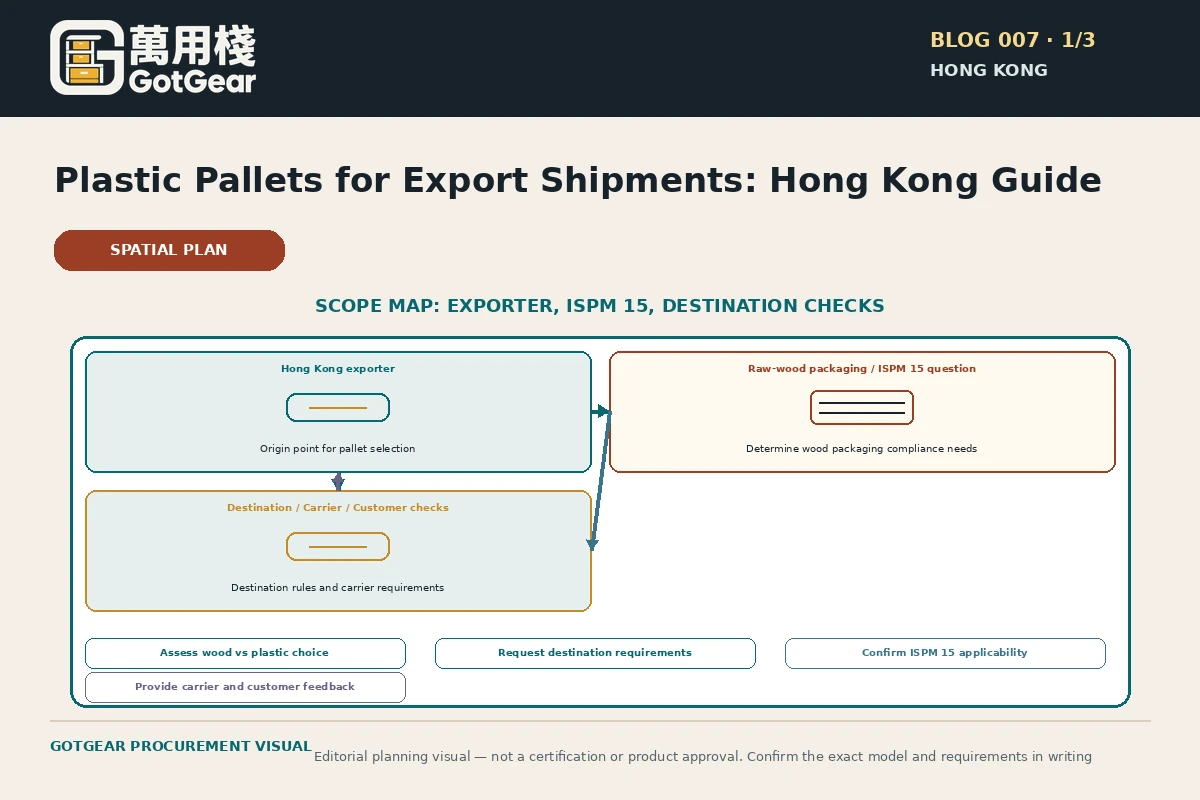
Start export planning by checking the consignee’s and carrier’s documented packaging rules and the destination country requirements; ISPM 15 applies to raw-wood packaging and therefore does not cover plastic pallets. However, plastic pallets can still be refused or restricted by a consignee, carrier or destination authority for reasons such as contamination, chemical rules, stacking/racking compatibility or cargo-specific regulations. Provide documented destination details, commodity, loaded footprint, weight, height and securing method before selecting pallets.
What to remember before you decide
- ISPM 15 applies only to raw-wood packaging; plastic pallets are outside its scope but not automatically acceptable everywhere.
- Always start with written confirmation from the destination, consignee and carrier before selecting pallet material.
- Keep supplier specifications, cleaning certificates and test-stow evidence as part of the shipment dossier.
- Validate pallet load ratings and handling compatibility with a representative test load in your Hong Kong warehouse.
- Retain all correspondence and documentation to reduce risk of inspection-related delays or rejection at destination.
Why start with destination, consignee and carrier requirements
Hong Kong exporters commonly treat ISPM 15 as the starting point for export pallet decisions, but that single regulation only addresses the phytosanitary risks of raw wood. Practical export readiness begins with the destination country’s packaging rules and the consignee’s and carrier’s specifications. Many buyers and shipping lines impose their own standards on pallet material, cleanliness, dimensions and strength; some countries add chemical or import controls unrelated to wood pests. In the Hong Kong context, your export team should first confirm whether the overseas buyer or freight forwarder has a mandatory pallet list or an accredited supplier requirement. If the consignee accepts only export-documented pallets or has a preferred pallet footprint, your procurement decisions must follow that list to prevent delays at destination. Use these decision checks: Obtain written confirmation of the destination’s accepted pallet materials, the consignee’s pallet policy and the carrier’s road, air-freight or container-stowage constraints. Confirm the commodity’s classification (e.g., food, pharmaceuticals, timber products) because regulated commodities frequently trigger additional packaging and cleaning checks. Verify loaded footprints (e.g., 1200 x 1000 mm), stack heights, maximum gross mass and whether the load goes into racked storage, on pallets for forklift handling or loose in containers. A key limitation is that A destination’s published import rules may be general; always favour direct confirmation from the consignee or an appointed agent. Government portals such as the Agriculture, Fisheries and Conservation Department’s guidance highlight ISPM 15 for wood packaging but do not replace destination-specific import controls. Next, Record the destination, consignee, commodity and carrier names in the shipment file. Ask the buyer or freight forwarder to confirm accepted pallet materials in writing and note any additional cleaning or documentation requirements before purchasing or staging pallets in Hong Kong.
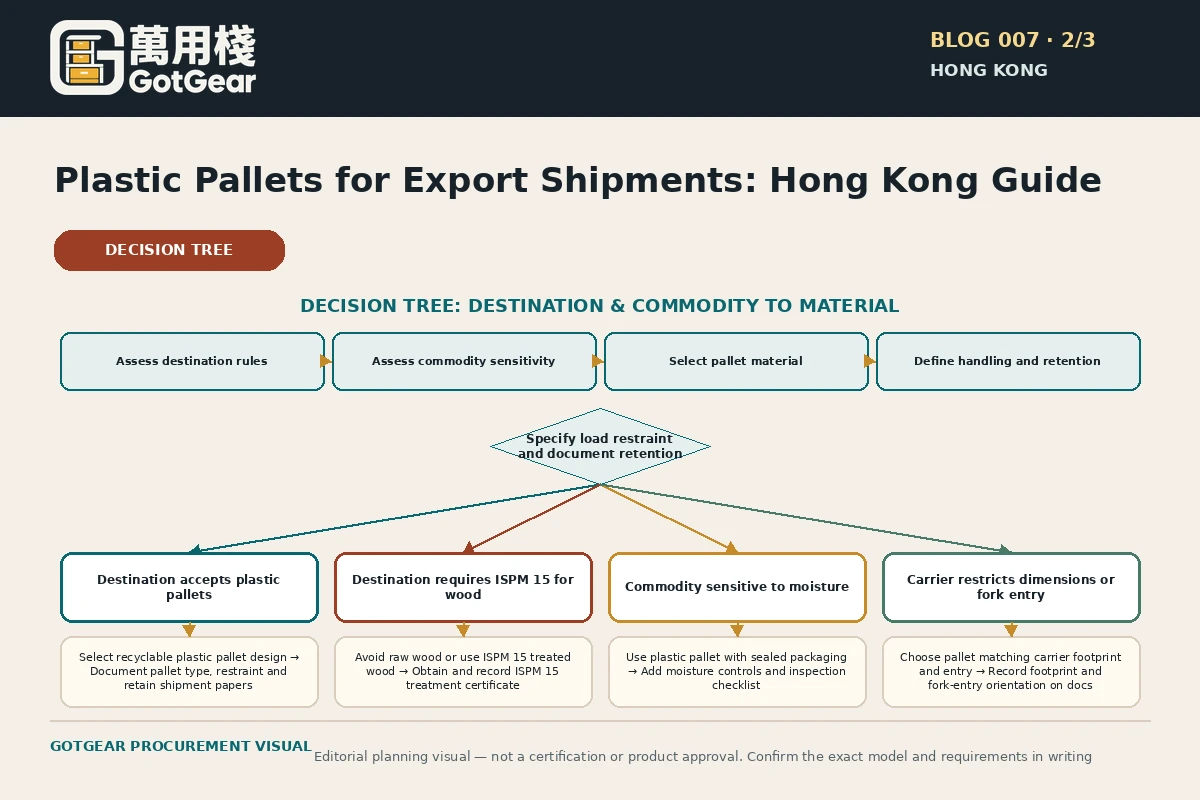
Quick Hong Kong checks before choosing pallet material
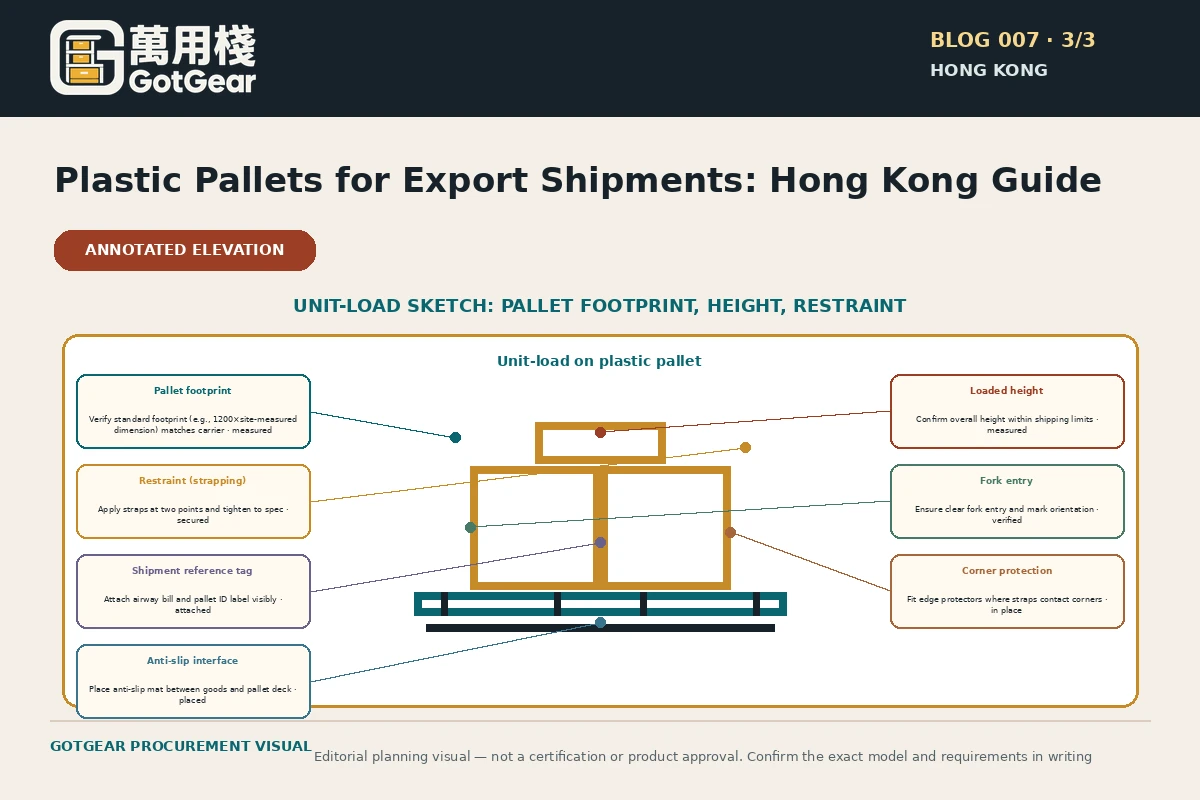
Before you commit to plastic or raw-wood pallets, gather these ten facts: destination country and port; final consignee name and contact; carrier and service (air, sea, land); commodity type and HS code; pallet footprint and entry orientation (long vs short); loaded height and gross mass; unit-load restraint method (strapping, stretch-wrap, chocks); planned handling (pallet jack, forklift, racking); whether pallets must be nestable or stillages; and any buyer or carrier pallet supplier requirements. Keep copies of correspondence. Direct comparison: plastic vs raw-wood (practical checklist view) - ISPM 15 scope: raw-wood packaging required to meet ISPM 15 measures; plastic pallets are outside ISPM 15. Use destination confirmation to validate acceptance. - Destination verification: raw wood may require treatment certificates, marking and inspection; plastic requires evidence of cleanliness and chemical compliance when specified. - Moisture and cleaning: wood can hide pests and moisture; plastic is non-porous and easier to clean but can trap residues; cleaning records help at inspection. - Handling and racking: certain plastic designs are weaker under dynamic load or not suitable for heavy racking; wood can be customised for strength. - Documentation to request: for wood, ISPM 15 stamps and treatment records; for plastic, supplier specification, material safety data (if required) and cleaning certificate where requested. Use these decision checks: Use this comparison to ask targeted questions: Will the destination accept plastic? Do you need a local pest-free or material certificate? Are the unit-load strength and handling compatibility sufficient for the commodity? If the buyer mandates a specific pallet type, document that instruction.
“Treat ISPM 15 as one narrow compliance input, not the whole export decision. The practical choice between plastic and wood must be documented against destination, buyer and handler requirements before you ship.”— GotGear Editorial Team
What should buyers compare for plastic pallets for export shipments Hong Kong?
| Option or approach | Best for | Trade-offs | Checks before acceptance |
|---|---|---|---|
| Plastic pallet, buyer-approved | Exports where consignee explicitly accepts plastic and requires a reusable, clean platform. | May need verification of load capacity and handling compatibility; some destinations or carriers may still require cleaning certificates. | Obtain written buyer approval, supplier technical sheet, and a cleaning/sanitisation certificate; trial a loaded unit for handling and stowage. |
| Heat-treated ISPM 15 stamped wooden pallet | Destinations that explicitly require ISPM 15 wood packaging or when buyer/carrier mandates wooden pallets. | Requires treatment records and stamping; wooden pallets are heavier and can carry moisture or pests if not treated properly. | Request stamped pallets from a documented supplier and retain treatment certificates and supplier contact details. |
| Processed/composite wood with declaration | When wood is used but can be demonstrated as pest-free (e.g., plywood, OSB) and the destination accepts processed wood exemptions. | Documentation burden to demonstrate processed status; destinations vary in acceptance and may still request inspection. | Collect manufacturer declarations proving processing methods and confirm acceptance with consignee or local agent. |
| Hybrid approach (plastic for sensitive SKUs, wood for bulk pallet pools) | Operations exporting mixed commodities where some buyers require plastic and others accept wood. | Increased inventory complexity and handling practices; requires clear SKU-pallet assignment and storage segregation. | Maintain a pallet allocation log, train handlers, and attach pallet-type notes to pick lists and packing documents. |
| Single-use wooden pallets with accompanying treatment records | Low-resource requirements export batches where plastic return is not viable and the destination accepts treated wood. | Environmental and disposal considerations at destination; potential returns or rejection if treatment documentation is incomplete. | Confirm treatment stamping, retain invoices linking pallet batches to heat-treatment certificates and photograph stamps before dispatch. |
This framework helps buyers create comparable written enquiries. Final model specifications, availability, delivery and commercial terms must be confirmed in a formal quotation.
Operational considerations in Hong Kong: handling, storage and inspection
Hong Kong warehouse and freight teams must balance export speed against compliance risk. Plastic pallets can speed packing and reduce repeated rework because they do not require heat-treatment records; they are generally easier to clean and stack in a compact footprint. However, practical limitations matter: many export shipments are palletised into 20ft or 40ft containers where container loading patterns and forklift handling determine whether a closed plastic deck will be punctured, whether the pallet nose will slot into an automated clamp, or whether pallet corners will take point loads on rack beams. If the load is destined for a distribution centre with racking, confirm pallet entry type and rated load for beam racking. Use these decision checks: Check whether the pallet profile suits your warehouse equipment. Confirm maximum dynamic and static load ratings for selected plastic pallets and compare them to your loaded unit weights and handling methods. Evaluate stackability during container stuffing and whether plastic pallets will migrate or slip when stretch-wrapped. A key limitation is that Supplier load data can be optimistic; test a typical loaded unit where hub and fork entry, stretch wrapping and lifting points replicate real handling. Don’t assume that “plastic = clean”; residues from previous loads or chemical contaminants still require cleaning verification. Next, Create a small test shipment or dry-run for a representative SKU to validate handling and stacking. Record the test results and attach supplier technical sheets and any cleaning certificates to the shipment documentation in Hong Kong.
Documentation, evidence retention and who to contact in Hong Kong
Documentation prevents disputes at destination. For raw wood you may need the ISPM 15 stamp and treatment records; for plastic, retain supplier specifications, material declarations and cleaning or sanitisation certificates if the destination demands them. In Hong Kong, the Agriculture, Fisheries and Conservation Department directs traders to note overseas and Mainland requirements for wood packaging. The IPPC clarifies that ISPM 15 applies to wood packaging material in international trade and excludes processed materials that are demonstrably pest-free; use those resources to support your documentation but always treat overseas guidance as context rather than Hong Kong law. Use these decision checks: Decide which documents to pack with the consignment and which to retain digitally: consignee approvals, carrier acceptances, pallet supplier data and cleaning certificates should all be stored. If your carrier or consignee requires evidence of pest-free packaging, provide the most directly relevant evidence for the pallet material chosen. A key limitation is that Government guidance and IPPC standards can inform decisions but do not guarantee acceptance by every destination authority, and they are not a substitute for consignee or carrier instructions. Next, Collate a digital dossier for each export containing destination confirmation, buyer instructions, pallet technical sheets, cleaning records and test-stow photos. Keep these records for the period specified by your company policy and any buyer or carrier contractual requirements.
Plastic pallets for export shipments Hong Kong decision checklist
- Record the exact destination country, port/airport and the final consignee’s name and written pallet acceptance instructions.
- Confirm the carrier and service type (air, sea, land) and any carrier-specific pallet or container-loading restrictions.
- Classify the commodity with HS code and note any phytosanitary, chemical or sanitary regulations that affect packaging.
- Measure and document pallet footprint, entry orientation, loaded height and gross mass for each SKU/unit load.
- Confirm handling method: forklift, pallet jack, clamp truck or racking; verify pallet compatibility with equipment.
- Request supplier technical sheets for pallet models and check dynamic/static load ratings against your unit weights.
- Obtain and retain cleaning, sanitisation or material-declaration certificates when requested by consignee or destination authority.
- If using wood, ensure ISPM 15 treatment stamps and treatment certificates are provided and recorded.
- Test a representative loaded unit for stacking, stretch-wrapping and container stowage pattern; photograph the test.
- Keep all written approvals, carrier confirmations and supplier documentation in the shipment file for audits and inspections.
Practical action sequence
- 1. Ask consignee and carrier in writing whether plastic pallets are acceptable for the specific shipment and commodity.
- 2. Gather pallet supplier technical sheets, load ratings and cleaning/sanitisation certificates for the chosen pallet.
- 3. Verify loaded dimensions, weight and unit-load restraint method; plan the container or trailer stow pattern.
- 4. Conduct a physical test of a representative loaded pallet to confirm handling, stacking and racking behaviour.
- 5. Collect and file all documentation: buyer approval, carrier acceptance, supplier specs, cleaning records and photos.
- 6. Attach required documents to the shipment (digital and physical copies) and instruct warehouse staff on pallet handling.
- 7. Monitor the shipment and be prepared to provide documentation to destination agents or authorities on request.
- 8. Retain evidence and correspondence for the company’s record retention period and for any post-shipment queries.
Apply the checks to your Hong Kong site
In Hong Kong, exporters should separate the narrow phytosanitary question from the broader logistics acceptance: AFCD guidance and IPPC texts clarify that ISPM 15 targets raw wood, not plastics, but that does not by itself secure carrier or consignee acceptance. Use destination regulations, consignee expectations and carrier practice to judge whether plastic pallets for export shipments Hong Kong will be handled without issue. Minimise inspection and return risk by obtaining written confirmations from carriers and consignees, retaining supplier documentation on material and load‑stability, and recording freight‑forwarder approvals. Treat ISPM 15 plastic pallets Hong Kong as one compliance element among handling, commodity and unit‑load requirements. Choose export pallet material Hong Kong based on documented route‑specific validation instead of assumption. Operational takeaway: secure explicit, written acceptance for the exact pallet SKU from both consignee and carrier and attach that approval to the shipping documents before dispatch.
References used for this article
These sources provide regulatory, safety or planning context. They do not certify any GotGear product or replace site-specific professional advice.
- Agriculture, Fisheries and Conservation Department — Wood Packaging Material — Hong Kong context for wood packaging material, overseas requirements and ISPM 15.
- International Plant Protection Convention — ISPM 15 — Official scope and phytosanitary purpose of ISPM 15 for wood packaging made from raw wood.
- GovHK — Global Trade, Import & Export — Official gateway to Hong Kong licensing, controls, clearance and requirement-search resources.
Questions about plastic pallets for export shipments Hong Kong
Does ISPM 15 apply to plastic pallets?
No. ISPM 15 is a phytosanitary standard that applies to wood packaging material made of raw wood and defines treatments and marking requirements to prevent pest spread. Plastic pallets are outside ISPM 15’s scope, so they are not subject to ISPM 15 stamping or heat-treatment records. Nevertheless, plastic pallets may still be subject to inspection or rejection by the consignee, carrier or destination authority for reasons unrelated to ISPM 15, such as contamination, chemical regulations or incompatibility with handling systems.
Does Hong Kong require ISPM 15 for exports?
Hong Kong’s Agriculture, Fisheries and Conservation Department advises traders to note overseas and Mainland requirements for wood packaging material. The AFCD guidance explains the role of ISPM 15 for wood packaging in international trade and directs traders to check destination rules. Use that guidance as context: Hong Kong itself does not issue ISPM 15 stamps, but you must ensure any wooden pallets used meet the destination’s ISPM 15 requirements where applicable and provide the necessary treatment records.
How do I confirm a destination will accept plastic pallets?
Obtain written confirmation from the consignee, freight forwarder or the destination’s appointed agent. Check the buyer’s procurement specification and the carrier’s published pallet policies. If a destination’s plant-health portal is ambiguous, ask the consignee to request clarification from their local authority. Retain the written acceptance in the shipment file; verbal assurances are insufficient for dispute resolution.
What documentation should I keep for plastic pallets?
Keep supplier technical sheets showing material type and load ratings, any material safety data sheets if chemicals are a concern, and cleaning or sanitisation certificates when required by the consignee or destination authority. Photograph new pallets and typical loaded units as evidence of condition and cleanliness at dispatch. Store all correspondence that confirms acceptance of plastic pallets.
Are plastic pallets always better for food and pharmaceuticals?
Plastic pallets are often chosen for hygiene-sensitive shipments because they are non-porous and easier to sanitise; however, suitability depends on the destination’s rules, the commodity’s regulatory regime and the consignee’s preferences. For some regulated shipments the destination authority may require specific pallet material declarations or validated cleaning methods. Always confirm with the buyer and collect the necessary cleaning certificates and documentation.
Where can I find official guidance on ISPM 15 and wood packaging?
Refer to the International Plant Protection Convention (IPPC) resources on ISPM 15 for the standard’s scope and purpose. For Hong Kong context and practical direction to check overseas requirements, consult the Agriculture, Fisheries and Conservation Department’s materials on wood packaging. Also use GovHK as a gateway for broader trade, import and export compliance resources—treat these government sources as guidance and always confirm destination-specific rules with the consignee or local agent.
Compare available product models and specifications
These product cards are matched to this buying topic. Select a specification and quantity to send the product details to WhatsApp.
 Shelving & StorageProduct reference image
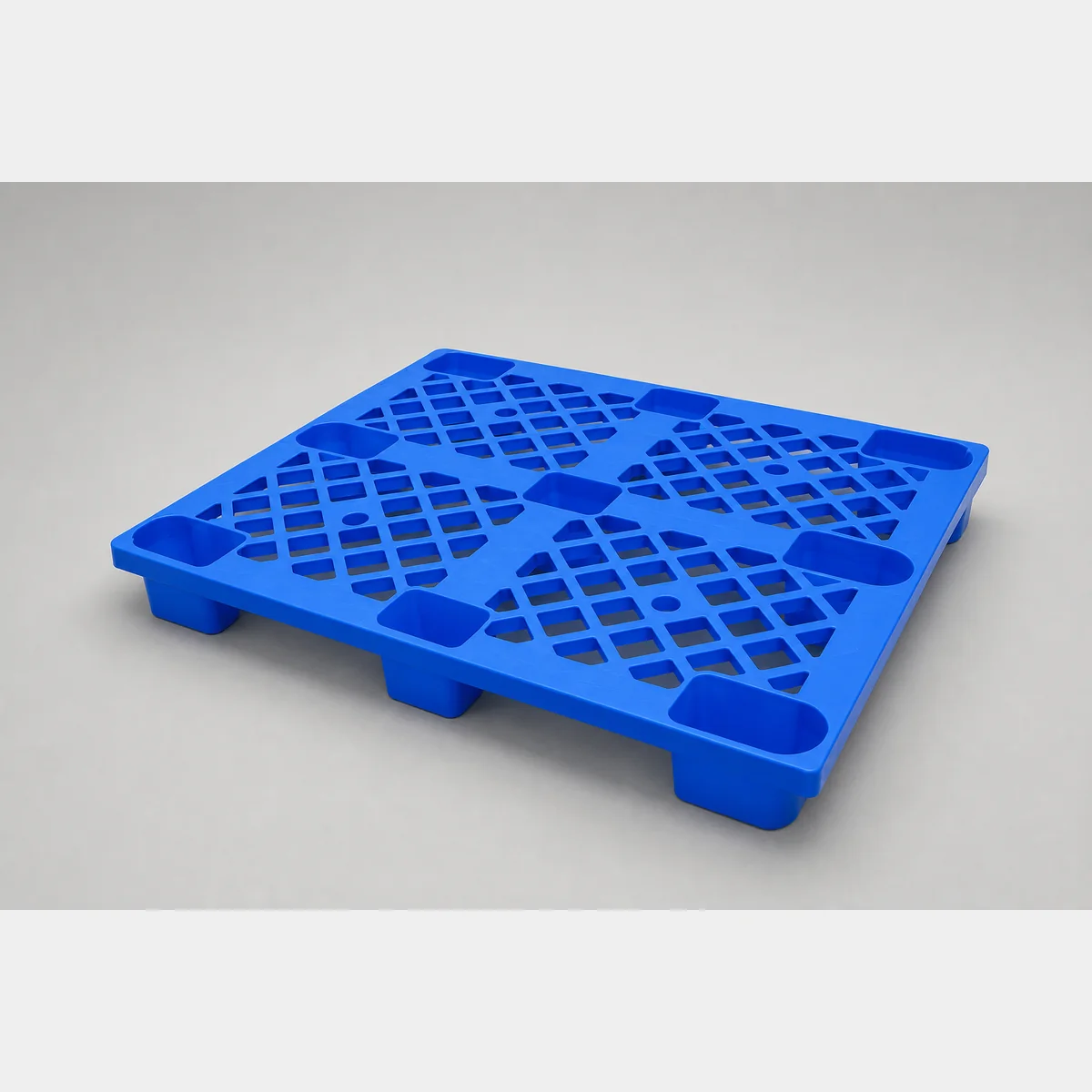
Plastic Pallet
Plastic pallet, A: L1200xW1000xH145 mm; B: L1200xW900xH145 mm; C: L1200xW800xH145 mm. Formal quotation available based on use, specification and quantity.
- A
- L1200xW1000xH145 mm
- B
- L1200xW900xH145 mm
- C
- L1200xW800xH145 mm
 Shelving & StorageProduct reference image
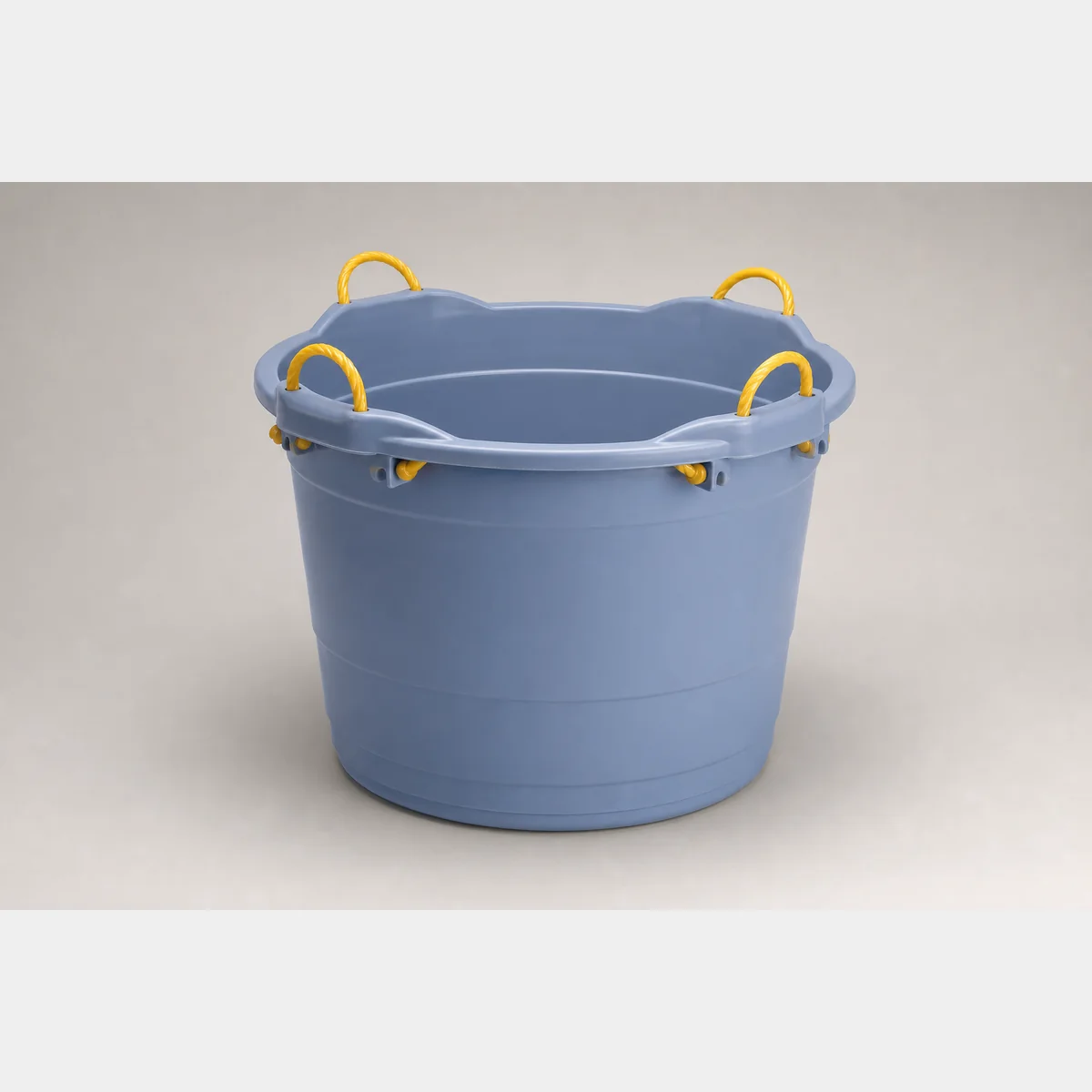
Bucket
Bucket; Capacity: 76 L; Size: dia.640*H450(mm); Material: Plastic. Formal quotation available upon enquiry with intended use, specifications and quantity.
- Capacity
- 76 L
- Size
- dia.640*H450(mm)
- Material
- Plastic
 Shelving & StorageProduct reference image
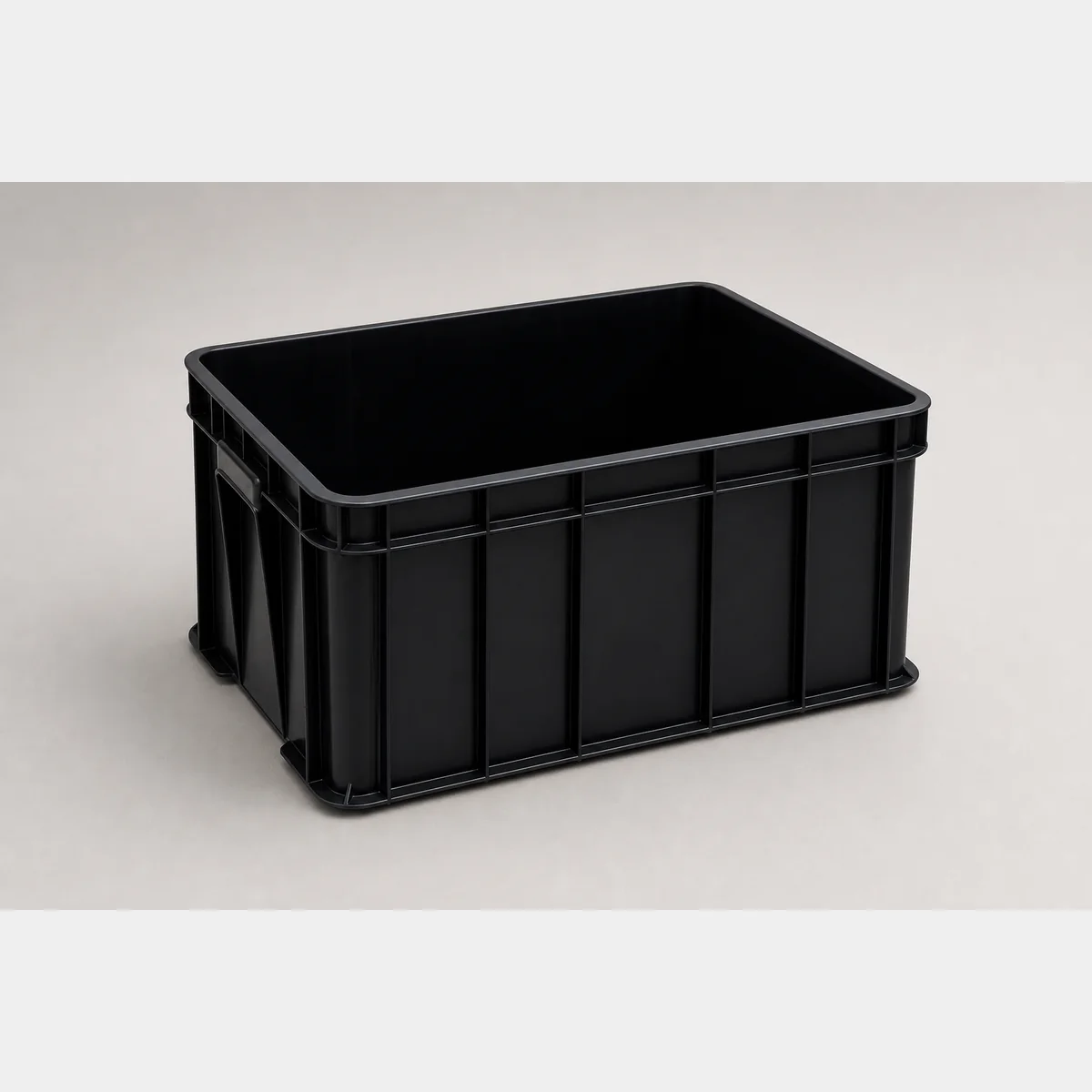
Anti-static plastic box
Anti-static plastic box — A: L410xW305xH145 mm; B: L600xW500xH360 mm; C: L620xW425xH320 mm. Formal quotation available based on use, specifications and quantity.
- A
- L410xW305xH145 mm
- B
- L600xW500xH360 mm
- C
- L620xW425xH320 mm
 Shelving & StorageProduct reference image
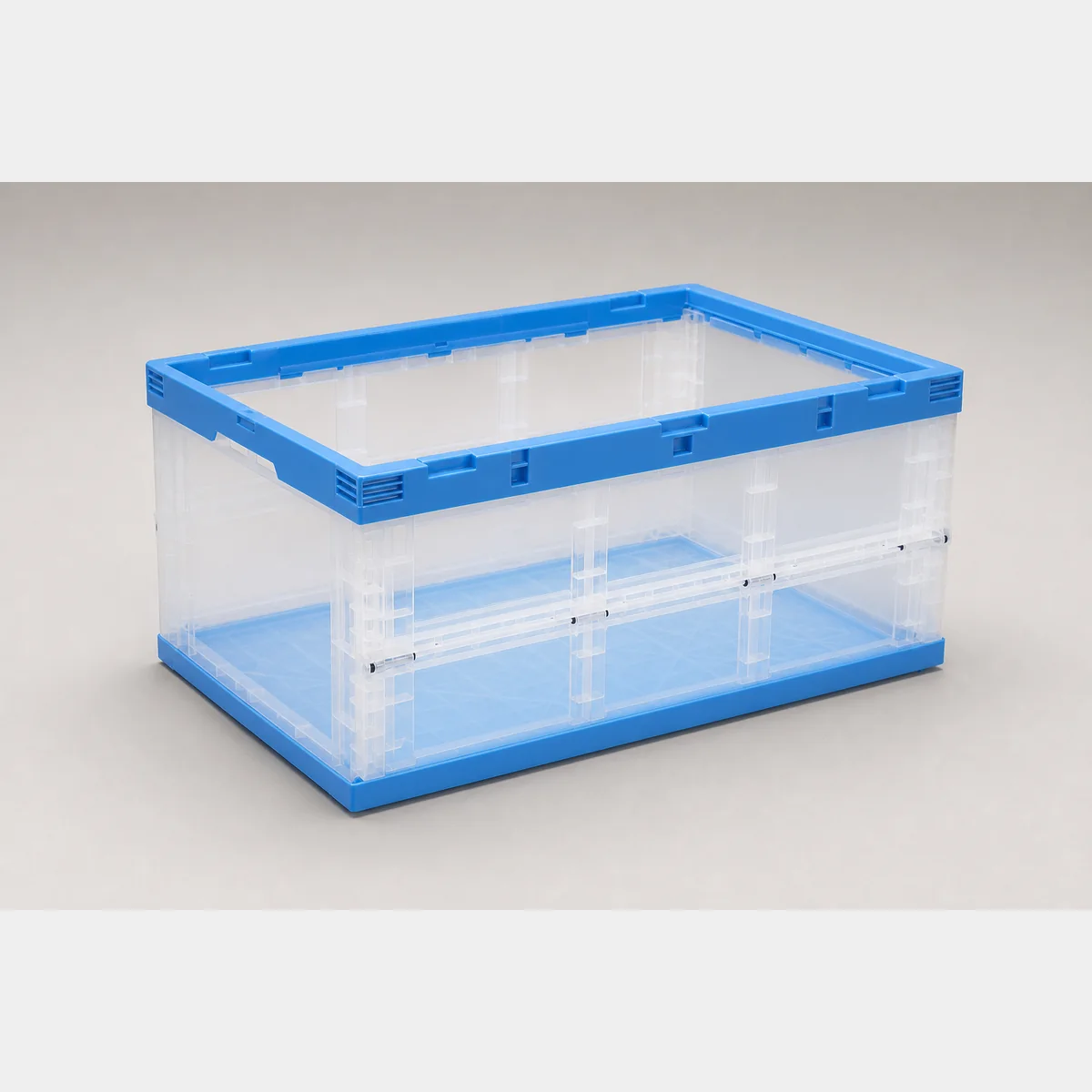
Collapsible plastic crate
Collapsible plastic crate. Sizes: L650 X W440 X H345 mm / L590 X W395 X H320 mm. Formal quotation available upon enquiry with intended use, specifications and quantity.
- Dimensions
- L650 X W440 X H345 mm / L590 X W395 X H320 mm
 Shelving & StorageProduct reference image
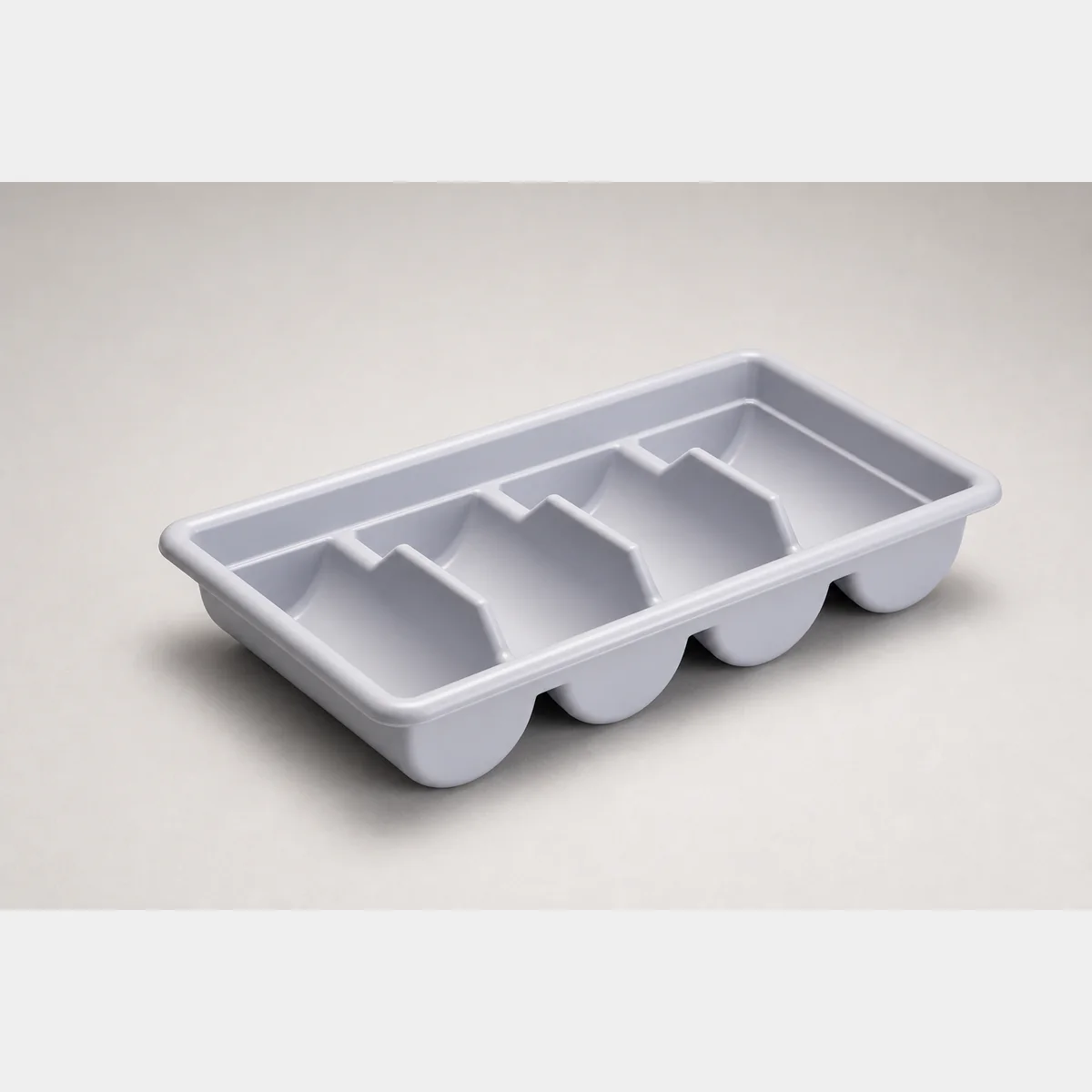
Cutlery Plastic Basin
Cutlery Plastic Basin, Dimensions: 517 X 285 X H95 MM. Formal quotation available based on use, specifications and quantity.
- Dimensions
- 517 X 285 X H95 MM
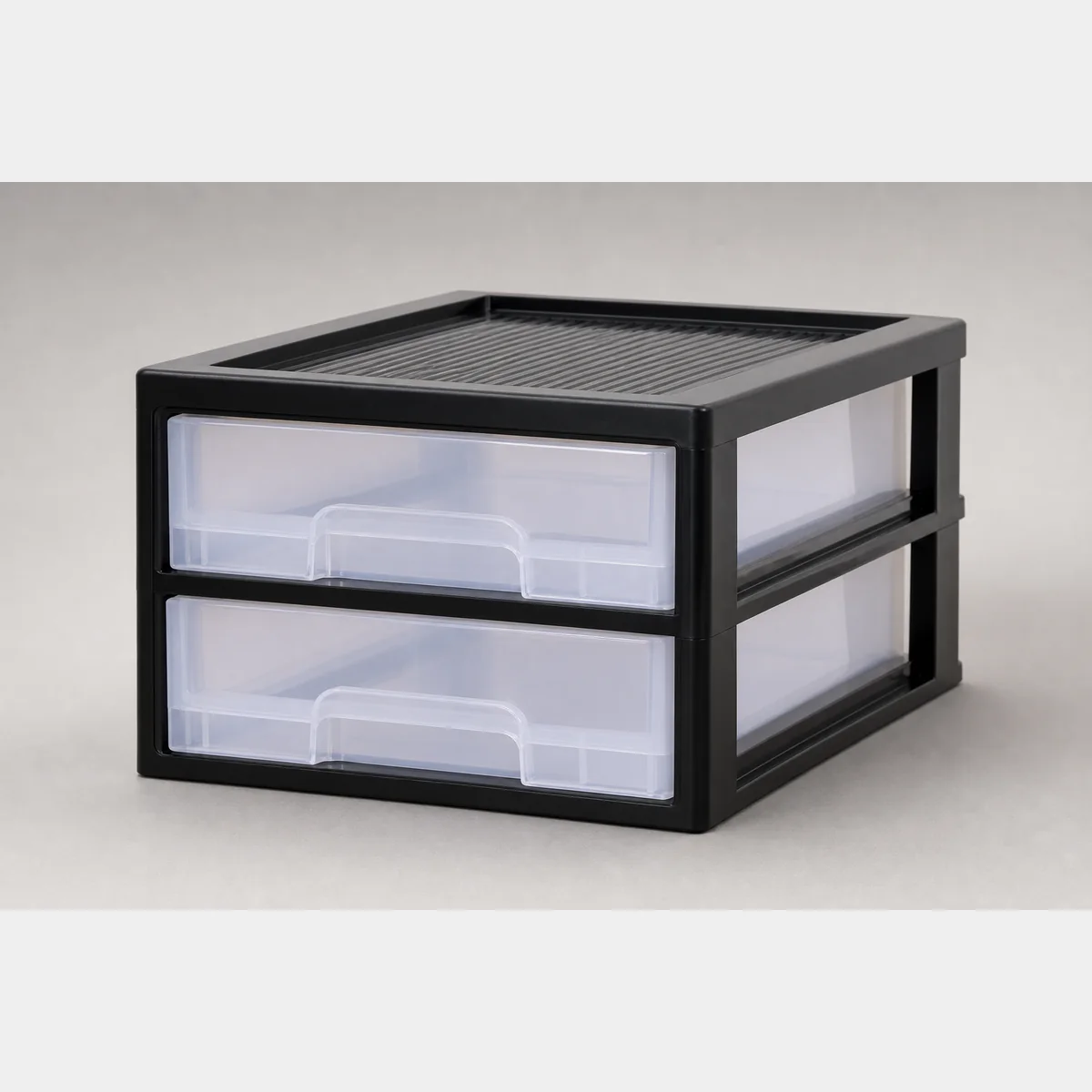 Shelving & StorageProduct reference image
Document Plastic Box
Document Plastic Box — Dimensions / Specification: D406 x L325 x H225 (mm) / D16 x L12-3/4 x H8-7/8 (inch); Minimum order quantity: 1 unit. Formal quotation available based on use, specifications and quantity.
- Dimensions / Specification
- D406 x L325 x H225 (mm) / D16 x L12-3/4 x H8-7/8 (inch)
- Minimum order quantity
- 1 unit
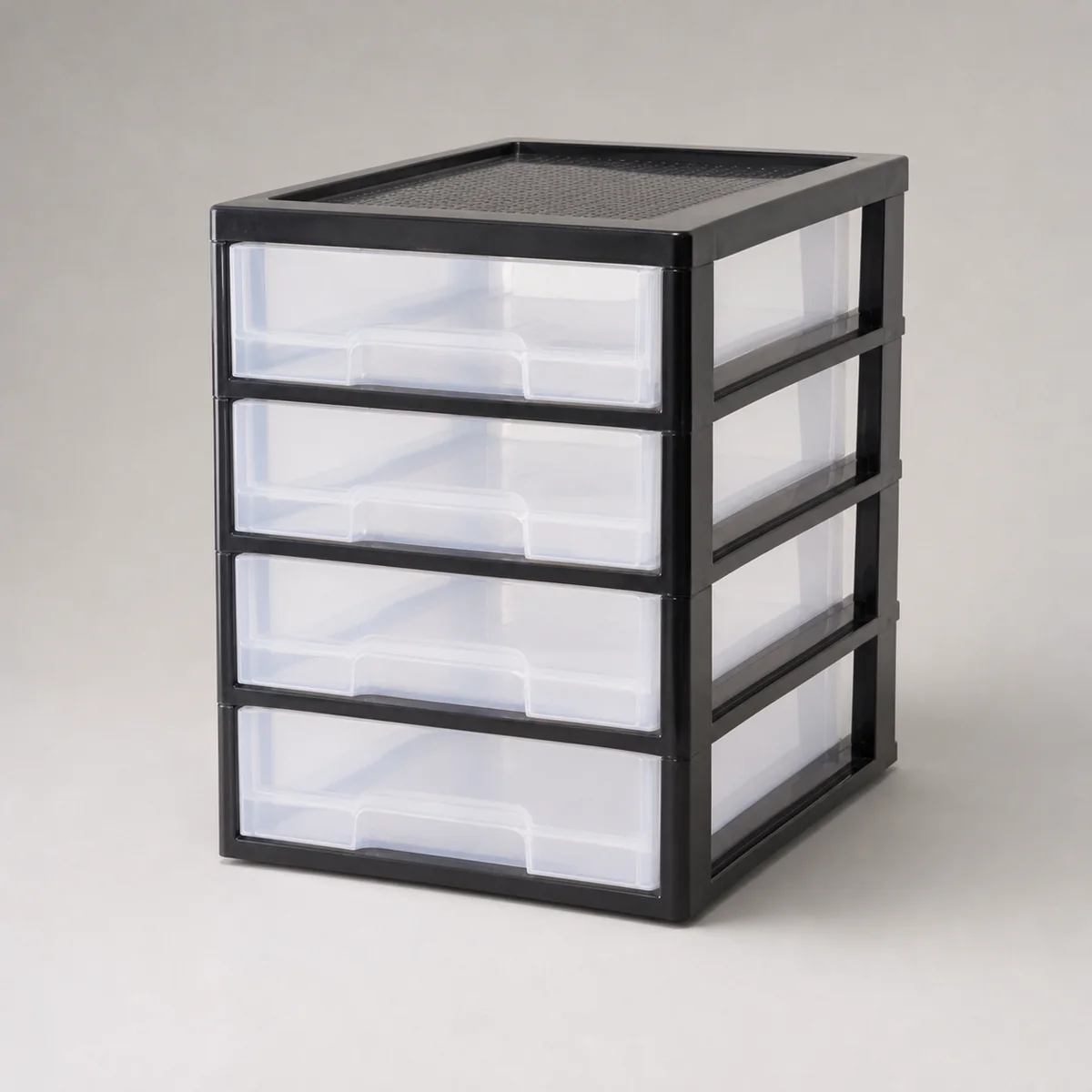 Shelving & StorageProduct reference image
Document Plastic Box
Document plastic box. Dimensions / Specification: D406 x L325 x H420 (mm) / D16 x L12-3/4 x H16-1/2 (inch); Minimum order quantity: 1 unit. Formal quotation available upon request based on use, specifications and quantity.
- Dimensions / Specification
- D406 x L325 x H420 (mm) / D16 x L12-3/4 x H16-1/2 (inch)
- Minimum order quantity
- 1 unit
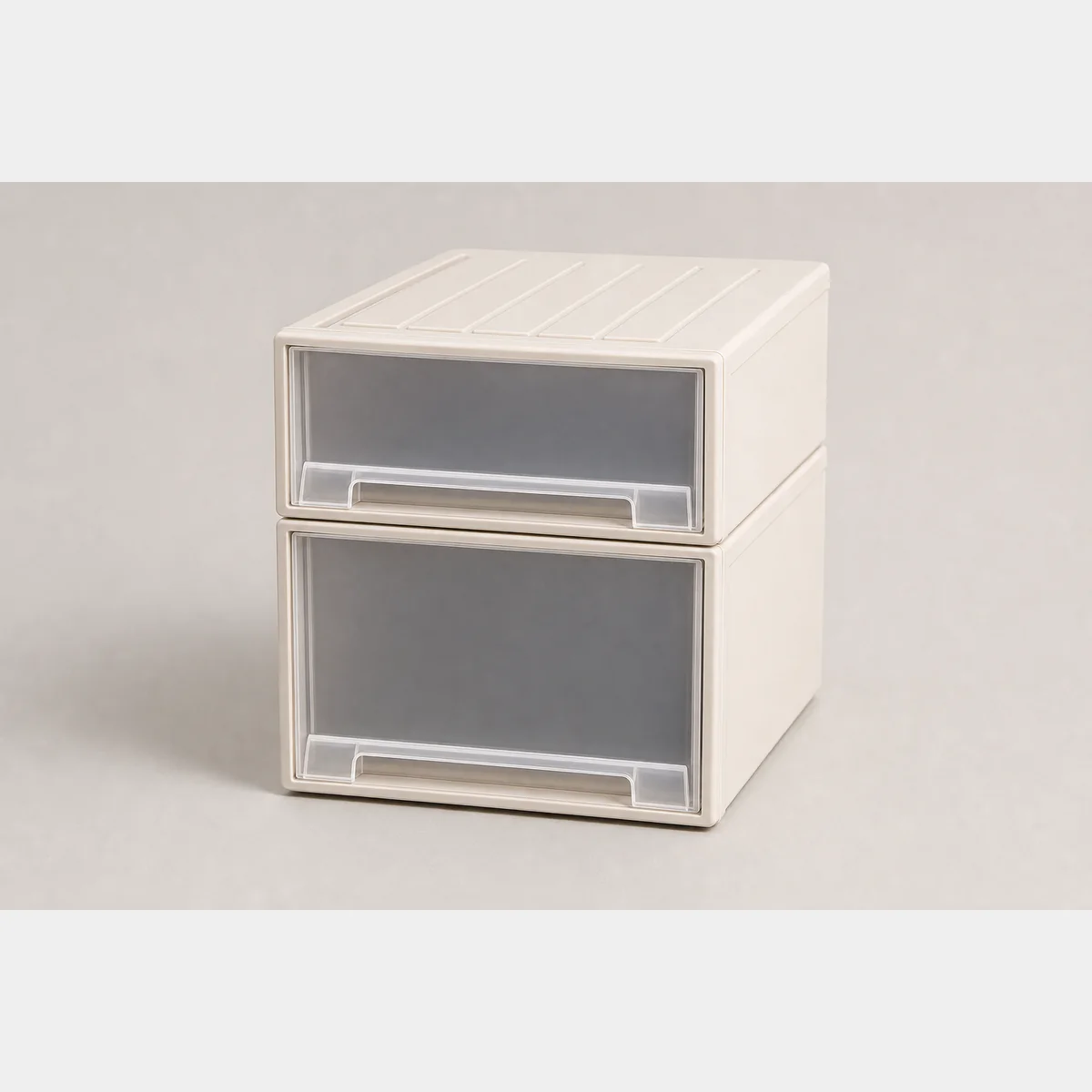 Shelving & StorageProduct reference image
Drawer Plastic Box (JC2601)
Drawer Plastic Box — A: W30xD53xH18 cm; B: W30xD53xH23 cm; C: W30xD53xH30 cm. Formal quotation available based on use, specifications and quantity.
- A
- W30xD53xH18 cm
- B
- W30xD53xH23 cm
- C
- W30xD53xH30 cm
Continue with closely related procurement topics
These pages share equipment, operating or decision-stage signals with this guide.
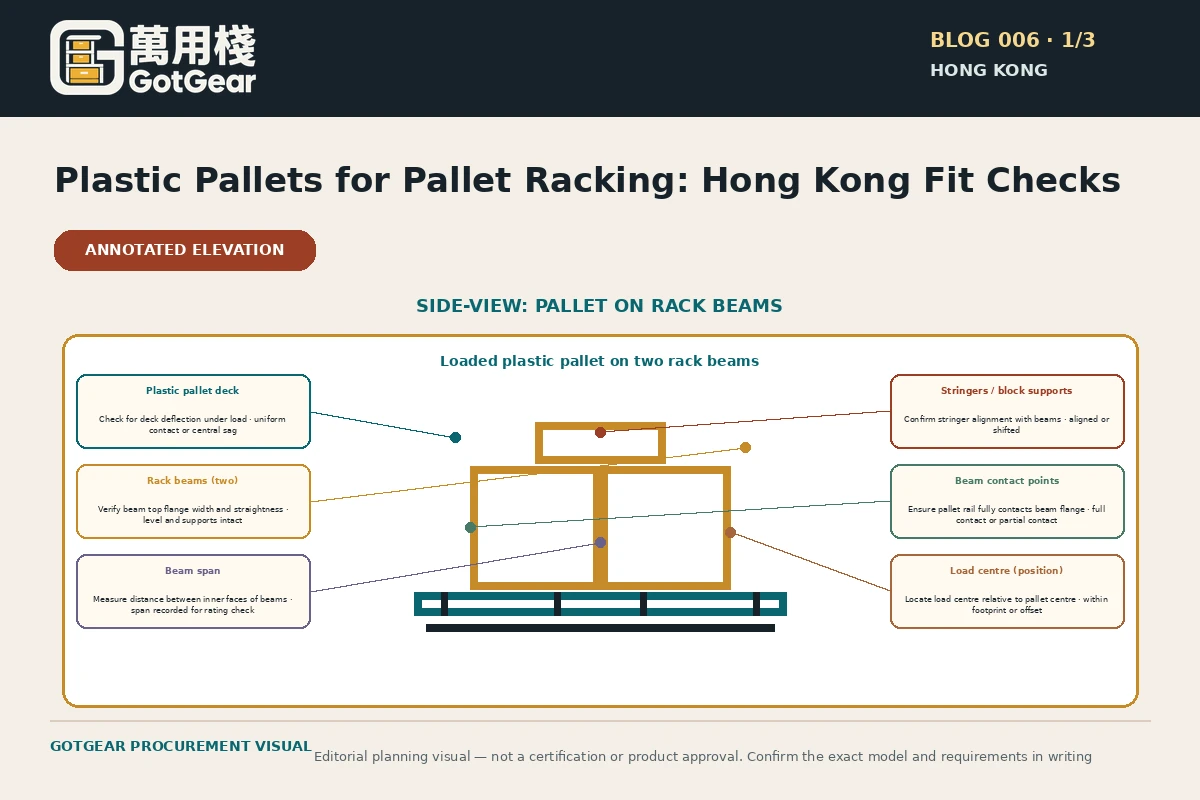
Plastic pallets for pallet racking Hong Kong
GotGear explains plastic pallets for pallet racking Hong Kong for Hong Kong buyers. See how plastic pallet rack load rating Hong Kong supports rackable plastic pallet Hong Kong, with practical checks, evidence boundaries and written requirements.
Read the guide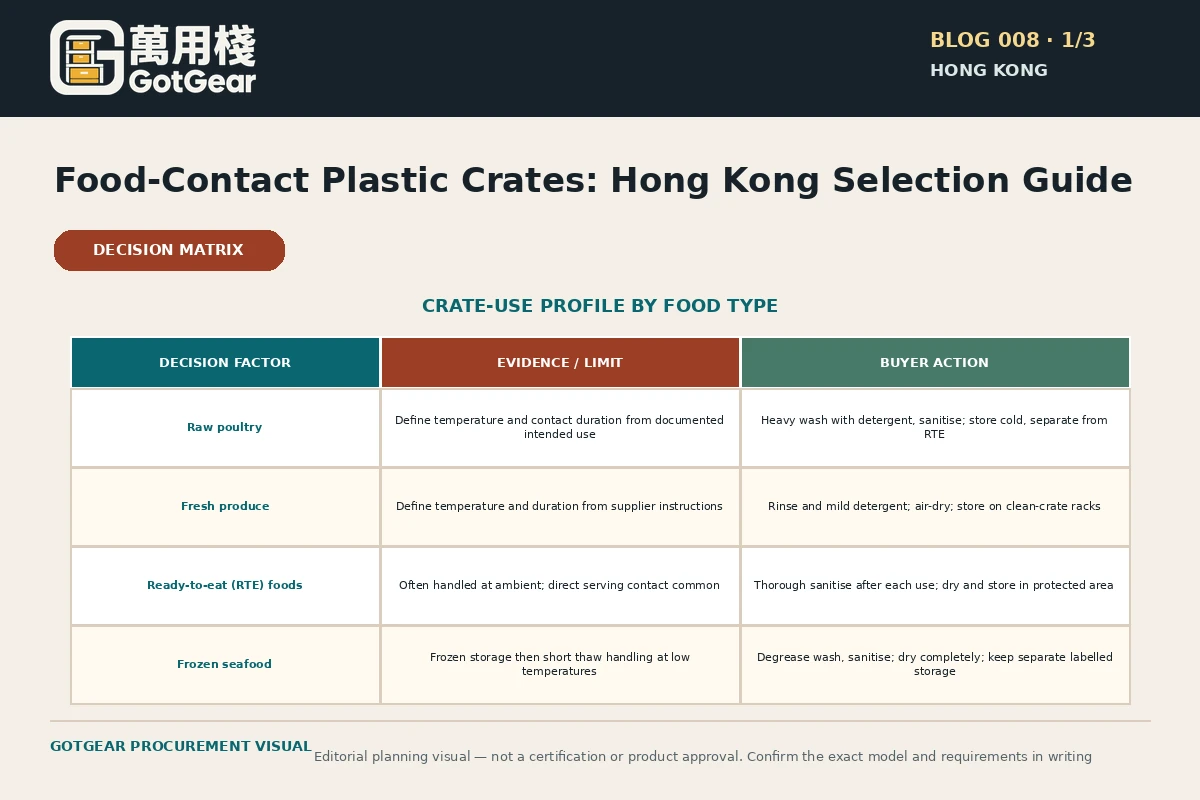
Food contact plastic crates Hong Kong
GotGear explains food contact plastic crates Hong Kong for Hong Kong buyers. See how food grade crate material Hong Kong supports food storage crate cleaning Hong Kong, with practical checks, evidence boundaries and written requirements.
Read the guide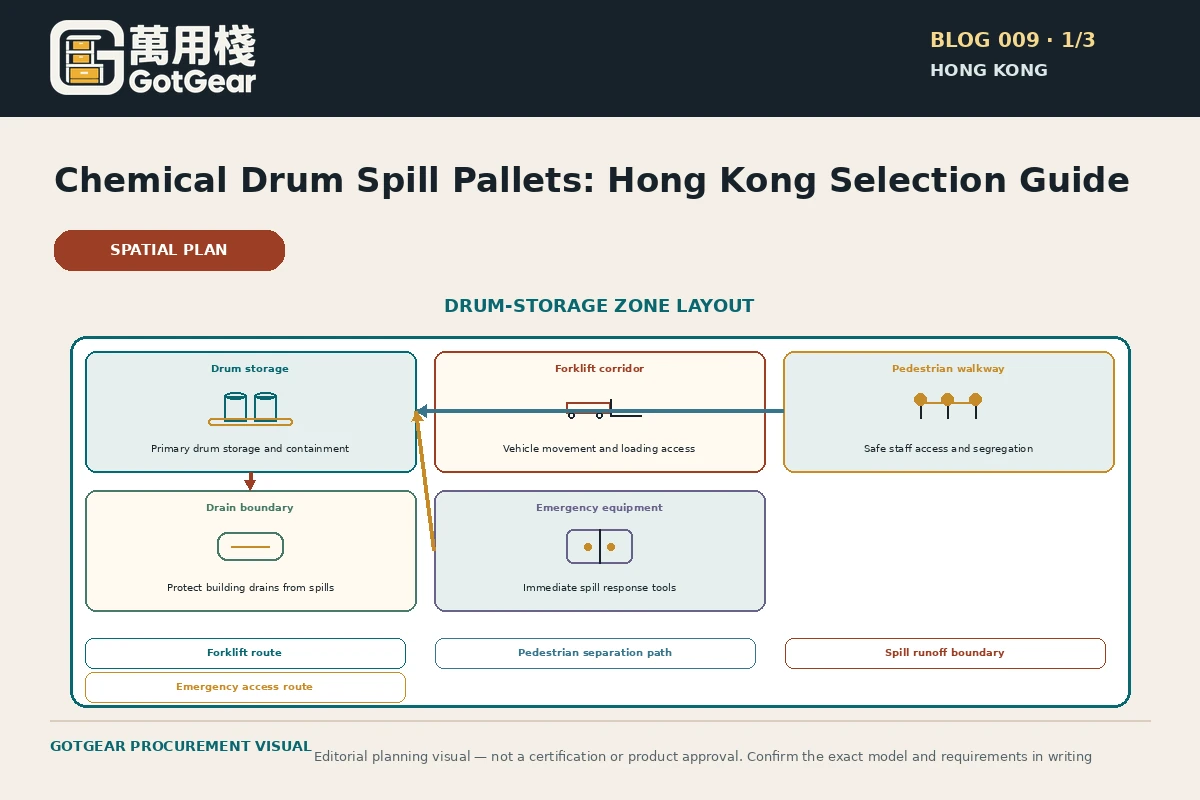
Chemical drum spill pallet Hong Kong
GotGear explains chemical drum spill pallet Hong Kong for Hong Kong buyers. See how spill containment pallets Hong Kong supports hazardous substance secondary containment Hong Kong, with practical checks, evidence boundaries and written requirements.
Read the guide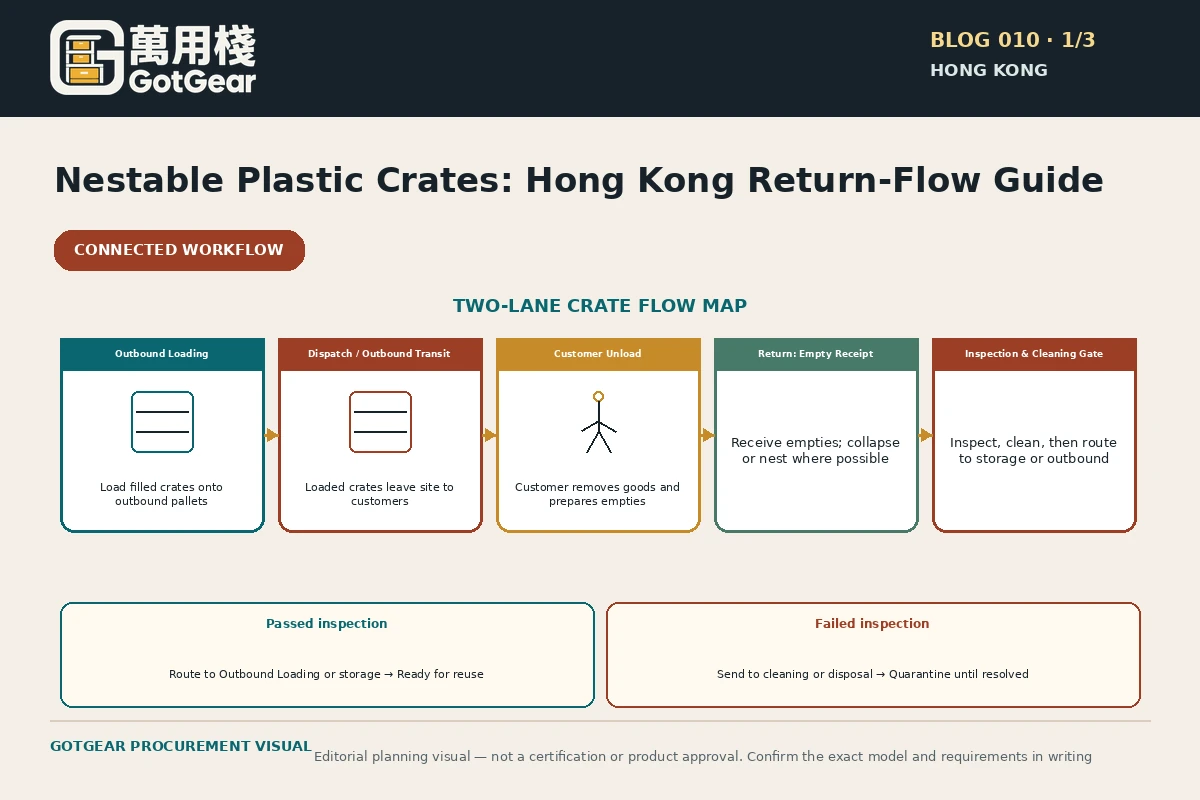
Nestable plastic crates Hong Kong
GotGear explains nestable plastic crates Hong Kong for Hong Kong buyers. See how stack and nest crates Hong Kong supports returnable crate empty storage Hong Kong, with practical checks, evidence boundaries and written requirements.
Read the guideRelated topic indexOpen more English procurement pages12 topics
Browse additional equipment families, applications and procurement questions relevant to these operating requirements.