
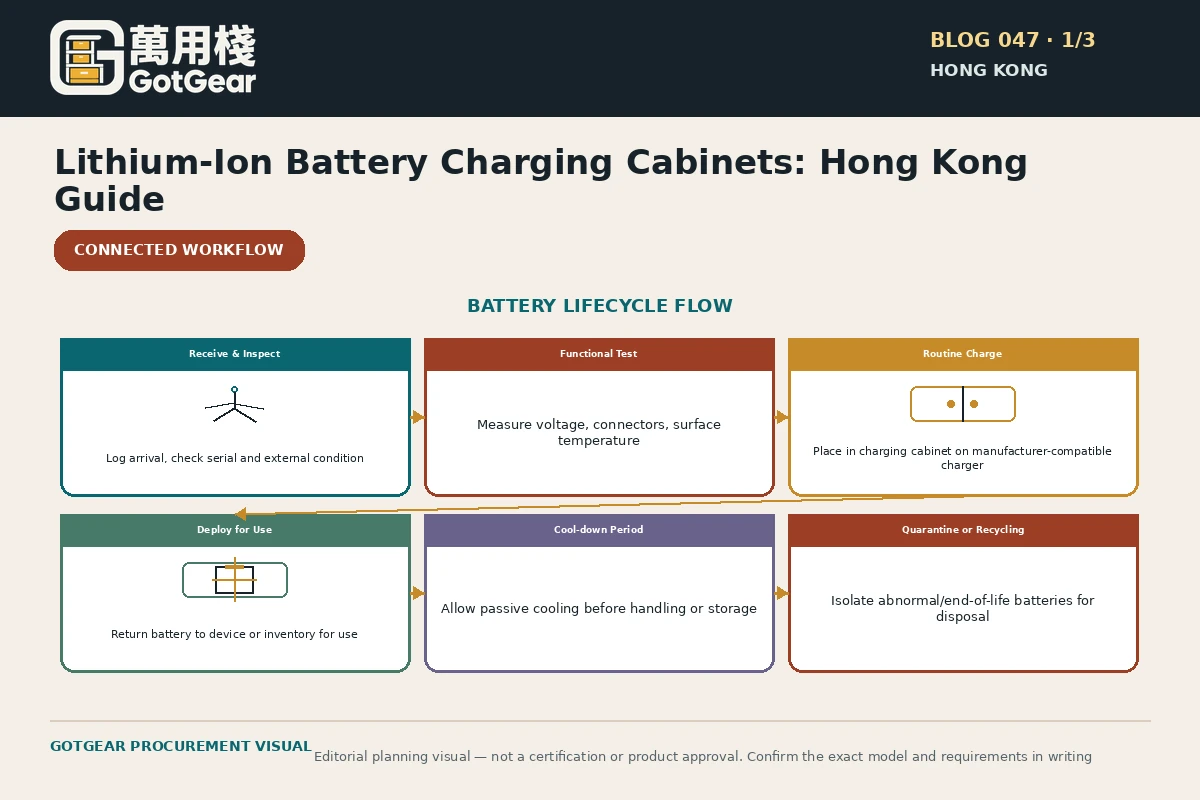
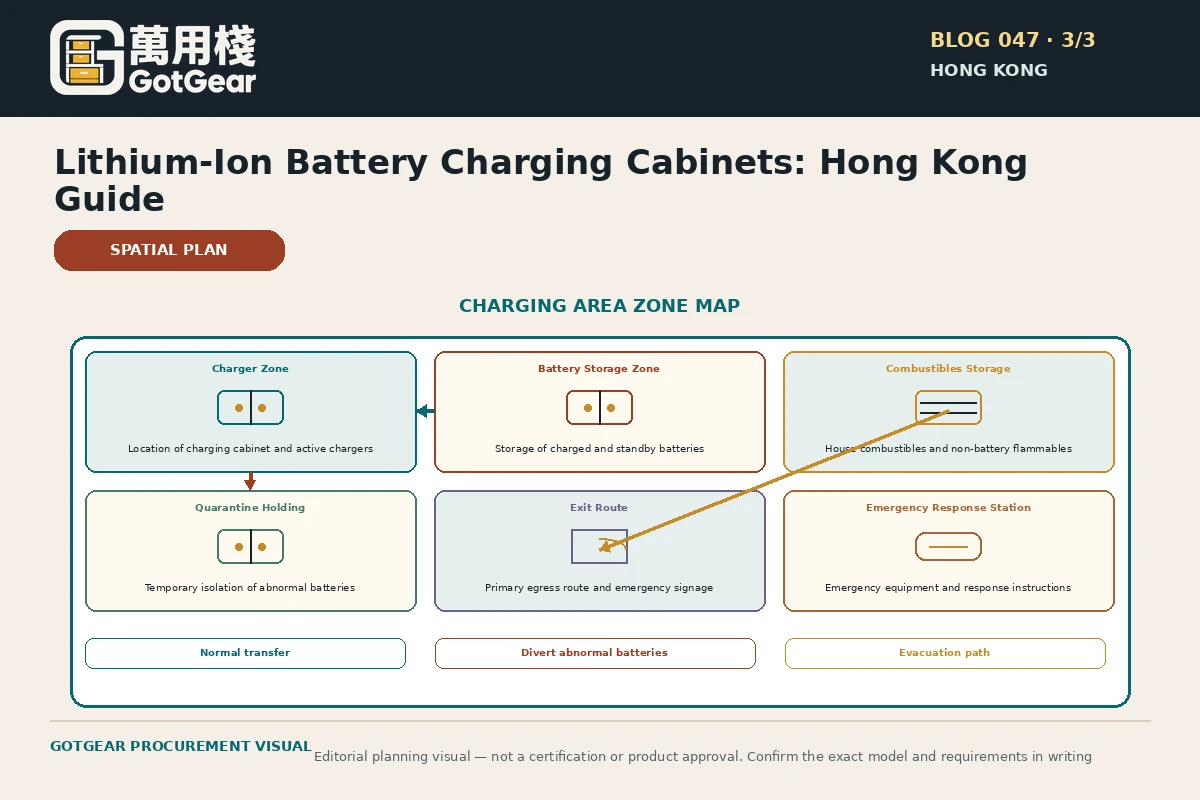
Select a charging cabinet only after you catalogue battery types, count simultaneous chargers, verify manufacturer‑approved chargers and define supervision and damage‑screening procedures. Keep charging on a solid non‑flammable surface, separate charging from general storage, exclude visibly damaged or swollen batteries, and link abnormal batteries to an exception handling and disposal route. In Hong Kong, follow facility scope in the Fire Services Department circular and use recycling guidance for end‑of‑life handling; engage electrical and fire advisers for design work.
What to remember before you decide
- Do an inventory and count peak simultaneous charging before choosing a cabinet.
- Match each battery to its manufacturer‑approved charger; incompatibility is a common risk.
- Treat damaged batteries as an exception—never put them in regular cabinets or collection boxes.
- Use the Fire Services Department circular to screen whether you need building‑level engagement.
- Cabinets are an operational layer, not a substitute for supervision, electrical protection or emergency planning.
- Work with electrical and fire advisers for permanent or high‑capacity installations.
When to choose a cabinet, a managed charging area or a storage cabinet
Context — Hong Kong facilities commonly juggle many portable lithium packs: tools in maintenance workshops, teaching kits in schools and batteries for event equipment. Start by mapping your inventory: list chemistries (Li‑ion, Li‑Po), cell counts per pack, typical states of charge, the number of chargers and the daily peak of simultaneous charging. Decision criteria should weigh quantity and operating hours, who supervises charging, accessibility during occupancy and whether chargers are manufacturer‑approved for those batteries. Limitations — A stand‑alone consumer‑grade cabinet will not replace a fire‑engineered battery room. The Hong Kong Fire Services Department circular defines thresholds and building‑plan scope for battery rooms and higher‑capacity charging installations; if your plan exceeds the circular’s described capacities, you must involve FSD and building authorities early. Likewise, overseas occupational guidance is helpful for risk assessment but does not change local regulatory obligations. Next actions — Inventory batteries and chargers now, then run a simple peak‑charging scenario: how many batteries would charge simultaneously during the busiest hour? If the peak is low (for example, a handful of small packs), a supervised open charging point on a non‑flammable bench may be adequate. If you hit dozens of large packs or need unattended overnight charging, prepare a project requirements for a cabinet vendor and a fire/electrical consultant. Keep manufacturer instructions with each battery type and require matching chargers.
Distinguishing a charging cabinet, a battery room and a storage cabinet
Practical distinctions — A lithium‑ion battery charging cabinet is designed to allow batteries to be charged inside an enclosed, lockable unit with features such as dividers, ports for chargers, flame‑retardant lining and sometimes limited ventilation or suppression. A battery room is a building‑level solution, usually specified under fire‑safety guidance and the FSD circular when aggregate capacity or dedicated infrastructure is required. A lithium battery storage cabinet Hong Kong managers use for safe storage only is intended to keep inactive batteries secure from damage and away from combustibles; it is not for charging. Decision criteria — Choose a charging cabinet when you have repeated, predictable charging cycles that require centralisation, controlled access and physical separation from combustible materials; however, check whether your required capacity approaches the FSD thresholds for a battery room. Choose a storage‑only cabinet when you need secure storage for many spares but will charge batteries individually at approved supervised stations. Choose a managed open charging area when quantity is small, staff can supervise, and chargers are tethered to approved battery suppliers. Limitations — Many manufacturers and occupational‑safety documents caution that cabinets are not universally documented as ‘fireproof’ for any size or battery failure mode. Ventilation and suppression options vary by product and often affect warranty and compliance. Do not assume an off‑the‑shelf cabinet absolves you of emergency planning, electrical protection or damaged‑battery procedures. Next actions — Compare your peak simultaneous charging number against vendor cabinet capacity and the FSD circular’s facility scope. Ask vendors for datasheets showing construction materials, charger pass‑through arrangements and recommended ventilation. Arrange a short tabletop emergency exercise with your staff to test an abnormal battery scenario and validate whether cabinet use changes your incident response steps.
“Choose containment as one control among many: inventory, compatible chargers, supervision, abnormal‑battery handling and local fire engagement are the decisive factors.”— GotGear Editorial Team
What should buyers compare for lithium-ion battery charging cabinet Hong Kong?
| Option or approach | Best for | Trade-offs | Checks before acceptance |
|---|---|---|---|
| Managed supervised charging bench (non‑enclosed) | Small quantities, daytime supervised use, teaching labs and short charging cycles | Requires continuous supervision and clear procedures; offers good visual inspection but less physical containment | Confirm chargers are manufacturer‑approved and test supervised charging for an entire peak period to observe behaviour and record any issues |
| Single commercial charging cabinet (lockable, for charging) | Medium-volume centralised charging where staff can inspect and control access | May require ventilation and electrical planning; not a substitute for a battery room if capacity grows | Obtain datasheet for cabinet, validate charger compatibility and run an abnormal‑battery drill to confirm isolation procedures |
| Lithium battery storage cabinet (non‑charging) | Storing large numbers of spares securely when charging is decentralised | Does not solve charging needs and must be combined with supervised charging points | Check cabinet construction and material statements, ensure separation from charging areas and document storage limits and access controls |
| Dedicated battery room or fixed charging facility (engineered) | High aggregate capacity, unattended overnight charging at scale and professional facilities | Triggers regulatory engagement, more complex design, and higher capital and design resource requirements | Engage fire and electrical engineers and consult the FSD circular early to establish required approvals and the building‑plan process |
| Hybrid approach (storage cabinet + supervised benches) | Workshops that need secure storage and flexible supervised charging during operating hours | Requires clear operational separation and staff discipline to avoid mixing charged/uncharged or damaged batteries | Set policies for movement between storage and charging, label all batteries and conduct periodic audits of compliance |
This framework helps buyers create comparable written enquiries. Final model specifications, availability, delivery and commercial terms must be confirmed in a formal quotation.
Product features that matter for workshop and school environments
Key features to prioritise — For Hong Kong buyers select products that clearly document their intended use, compatible charger types and internal layout. Look for: physical separation between battery bays; non‑flammable lining and removable trays for easy inspection; cable management that prevents abrasion; ports or brackets for manufacturer‑approved chargers; simple fume paths or mechanical ventilation if the product requires it; and clear labelling and lockable access to prevent unauthorised charging. Decision criteria — Verify vendor specifications against your battery chemistries and charger models. If chargers are manufacturer‑approved and dedicated to a battery type, centralised charging is less risky than using improvised connectors. Ensure the cabinet does not encourage battery damage by forcing cells into tight compartments or stacking them in ways that compress cells. Prioritise designs that let staff visually inspect packs without disrupting isolation, and prefer cabinets with a clear abnormal‑battery exclusion policy in the product literature. Limitations — No cabinet eliminates the need for a charging supervision policy and an abnormal‑battery workflow. Overseas guidance such as CCOHS is valuable for framing risk controls — approved chargers, charging surfaces and emergency planning — but it is not a substitute for Hong Kong fire‑safety requirements or a site‑specific fire engineering assessment. Manufacturer claims of ‘suitability for lithium batteries’ should be validated against your actual battery models and chargers. Next actions — Request vendor datasheets for the exact model and battery size you hold, and document a go/no‑go compatibility check for each battery‑charger pair. If the cabinet’s ventilation or suppression affects room HVAC, commission a short engineering review. Draft a one‑page operating procedure for staff that lists allowed batteries, charger models, inspection steps and the abnormal‑battery escalation path.
Operational rules, abnormal batteries and disposal workflows
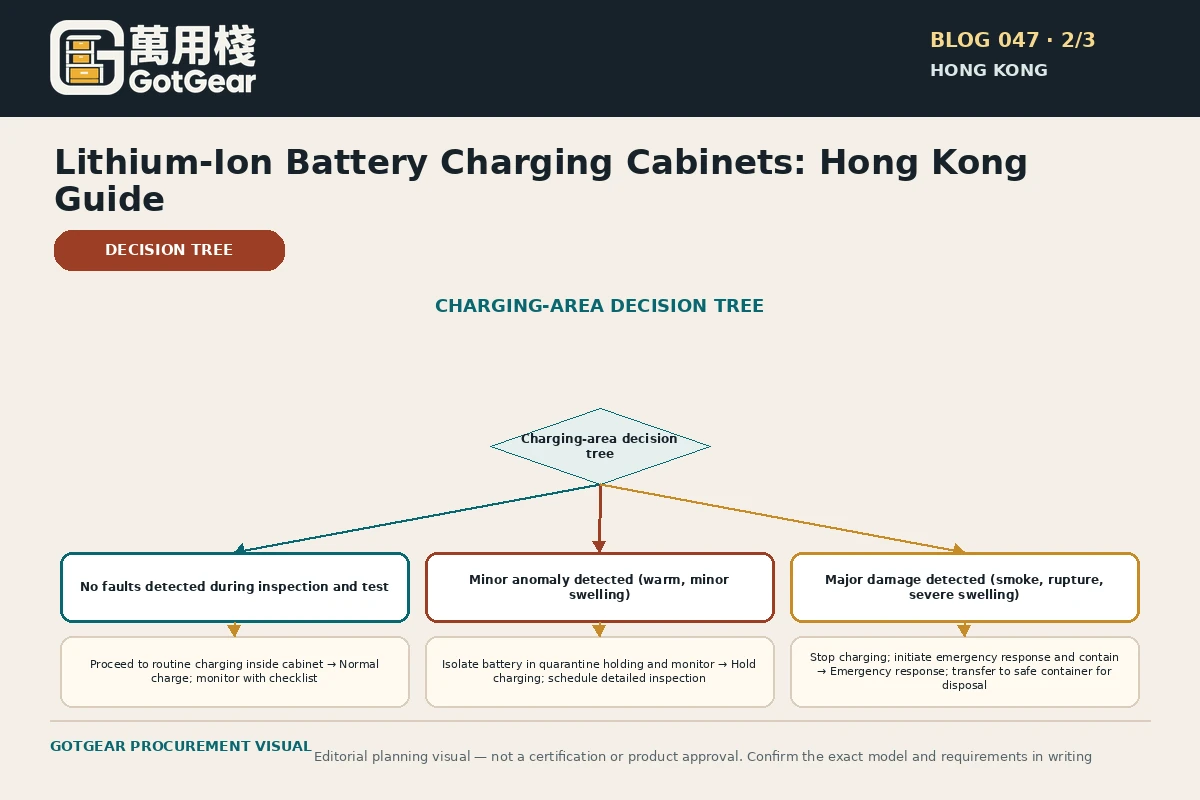
Operational context — The safety of any charging solution depends on policies and practised behaviours. Define who may initiate charging, who supervises, how long batteries may remain in a charger and where charged vs uncharged packs are stored. For schools and makerspaces, assign clear responsibilities during public activities and lock cabinets outside supervised hours. Include signage and record‑keeping of charging cycles for audit and traceability. Abnormal‑battery handling — Treat swelling, open‑circuit, hot, smoking or leaking batteries as exceptions. Do not place visibly damaged batteries into a normal charging cabinet or collection box. The Hong Kong Rechargeable Battery Recycling Programme advises terminal protection and specific handling before disposal; follow its guidance for end‑of‑life routing and never mix damaged batteries with regular collection stock. Develop an incident response plan with staged controls: isolate the battery in a safe container, move it to a non‑combustible safe area if it can be done without risk, call emergency services when fire or persistent thermal runaway is suspected, and preserve details for recycling collection or waste‑management partners. Limitations — Staff training and a low‑threshold escalation policy are essential; cabinets are not a replacement for human oversight. In addition, the Fire Services Department circular sets facility thresholds and should be consulted if your installation approaches those limits. Electrical safety and fixed wiring are outside vendor product claims—seek documented electrical and fire advisors for permanent or high‑capacity installations. Next actions — Produce a one‑page abnormal‑battery checklist and a labelled container for isolated cells. Train staff in a 30‑minute drill covering detection, safe isolation, notification and contact with the local battery recycling programme. Record each incident and refine your policy after the first three events.
Lithium-ion battery charging cabinet Hong Kong decision checklist
- Catalogue battery chemistries, pack sizes and cell counts for all devices.
- Count peak simultaneous charging need during busiest hour or event.
- Match each battery model to its manufacturer‑approved charger and record incompatibilities.
- Confirm whether charging will be supervised and define supervisory shifts or duties.
- Check cabinet vendor datasheets for intended battery types, ventilation, lining and internal layout.
- Compare planned aggregate capacity with the Fire Services Department circular thresholds.
- Define abnormal‑battery exclusion criteria and an incident escalation workflow.
- Ensure charging surfaces are solid and non‑flammable; do not charge on textiles or combustible shelving.
- Plan electrical protection: RCDs, fused circuits and avoidance of shared high‑load circuits.
- Label charging areas, cabinets and storage with clear instructions and allowed battery lists.
Practical action sequence
- Create a detailed inventory of batteries and chargers now.
- Run a peak charging scenario to determine simultaneous charging counts.
- Decide on one of the comparison approaches and record why it fits your use case.
- Request vendor datasheets and compatibility statements for your specific batteries.
- Commission an electrical and, if needed, fire engineering review for permanent installations.
- Draft staff operating procedures and an abnormal‑battery checklist, then run a staff drill.
Apply the checks to your Hong Kong site
Hong Kong specifics matter. The Fire Services Department circular letter is central to screening whether an installation triggers higher regulatory scrutiny and when to involve FSD and building authorities. Local recycling guidance emphasises terminal protection and excludes damaged cells from ordinary collection boxes. Overseas occupational guidance (for example CCOHS) provides practical context for engineering controls without substituting for Hong Kong law; commission local fire and electrical advisers when capacity, unattended charging or building services are involved. If you plan to charge on-site, seek advice on whether a lithium-ion battery charging cabinet Hong Kong is the right enclosure or whether a larger installation applies. Keep a site checklist that captures measurements, ventilation and segregation, and store damaged packs separately in a lithium battery storage cabinet Hong Kong. Operational takeaway: obtain current FSD and building-authority documents, commission local fire and electrical specialists to produce documented validation, and complete a battery charging station safety checklist Hong Kong before any unattended charging.
References used for this article
These sources provide regulatory, safety or planning context. They do not certify any GotGear product or replace site-specific professional advice.
- Hong Kong University of Science and Technology — Lithium-ion Battery Safety — Hong Kong institutional safety guidance on flammable-electrolyte hazards, solid non-flammable charging surfaces, damage checks and storage away from flammables.
- Canadian Centre for Occupational Health and Safety — Battery Charging — Reputable occupational-safety guidance on risk assessment, approved chargers, charging conditions, abnormal-battery signs and emergency planning; not Hong Kong legislation.
- Fire Services Department — Circular Letter 3/2025 — Hong Kong fire-safety requirements for battery rooms and electrical charging facilities, including the capacity and building-plan scope described in the circular.
- Hong Kong Rechargeable Battery Recycling Programme — Hong Kong guidance on safe terminal protection and handling before disposal for accepted portable rechargeable batteries.
Questions about lithium-ion battery charging cabinet Hong Kong
What’s the difference between a charging cabinet and a battery room in Hong Kong?
A charging cabinet is a product‑level solution intended to contain and organise multiple batteries during charging, usually at the furniture or equipment scale. A battery room is a building or dedicated room solution typically subject to higher fire‑safety scrutiny and, depending on aggregate capacity and building use, the Fire Services Department’s circular may require engagement with authorities and formal approvals. Use the FSD circular to screen whether your aggregate charging or storage capacity requires building‑level measures.
Can I put damaged or swollen batteries into a charging cabinet?
No. Damaged, swollen, leaking or hot batteries must be treated as an exception. The Hong Kong Rechargeable Battery Recycling Programme and occupational‑safety guidance advise that damaged batteries are unsafe for normal collection or storage and require terminal protection and separate handling. Do not place such cells into regular cabinets or collection boxes; follow your incident and disposal workflow and contact emergency services if thermal runaway or persistent heating occurs.
Are there universal ‘fireproof’ cabinets I can rely on to remove other controls?
No. While some cabinets advertise fire‑resistant properties, no off‑the‑shelf cabinet replaces the need for operational controls, supervision, correct chargers and incident planning. Established occupational guidance recommends risk assessment, manufacturer‑approved chargers, non‑flammable charging surfaces and emergency planning. Treat product claims as one layer: validate them against your battery types, vendor datasheets and site fire‑safety requirements.
What does the Fire Services Department circular mean for my facility?
The FSD circular provides a scope and thresholds for battery rooms and electrical charging facilities in Hong Kong. It helps you determine when an installation moves from a furniture‑scale solution (like a cabinet) to a building‑level engineered solution. Use the circular as an early filter: if your aggregate capacity or unattended charging needs approach the thresholds described, engage fire and building authorities and documented engineers rather than relying solely on product selection.
How should I prepare rechargeable batteries for disposal or recycling in Hong Kong?
Follow the Hong Kong Rechargeable Battery Recycling Programme: ensure terminals are protected (tape terminals where appropriate), keep damaged batteries separate and do not place swollen or leaking cells into regular collection boxes. The programme describes acceptable battery types and handling steps. For damaged batteries, follow your incident containment procedure and contact appropriate waste or emergency services for disposal — do not mix them with routine collection stock.
Compare available product models and specifications
These product cards are matched to this buying topic. Select a specification and quantity to send the product details to WhatsApp.
 Shelving & StorageProduct reference image
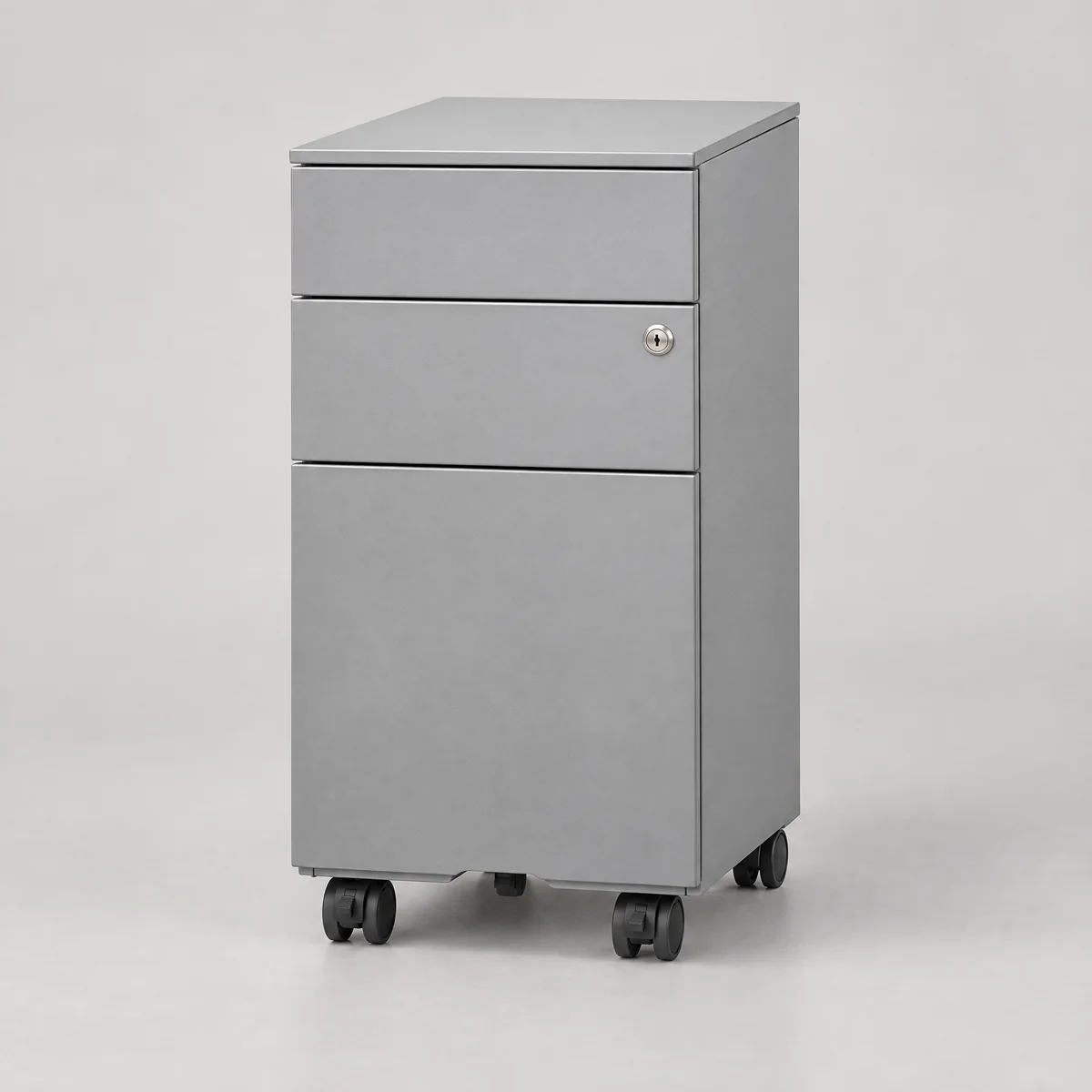
3-tier filing cabinet
3-tier filing cabinet; Size: Length 300xDepth520 × Height 600 mm. Formal quotation available based on use, specifications and quantity.
- Size
- Length 300xDepth520 × Height 600 mm
 Shelving & StorageProduct reference image
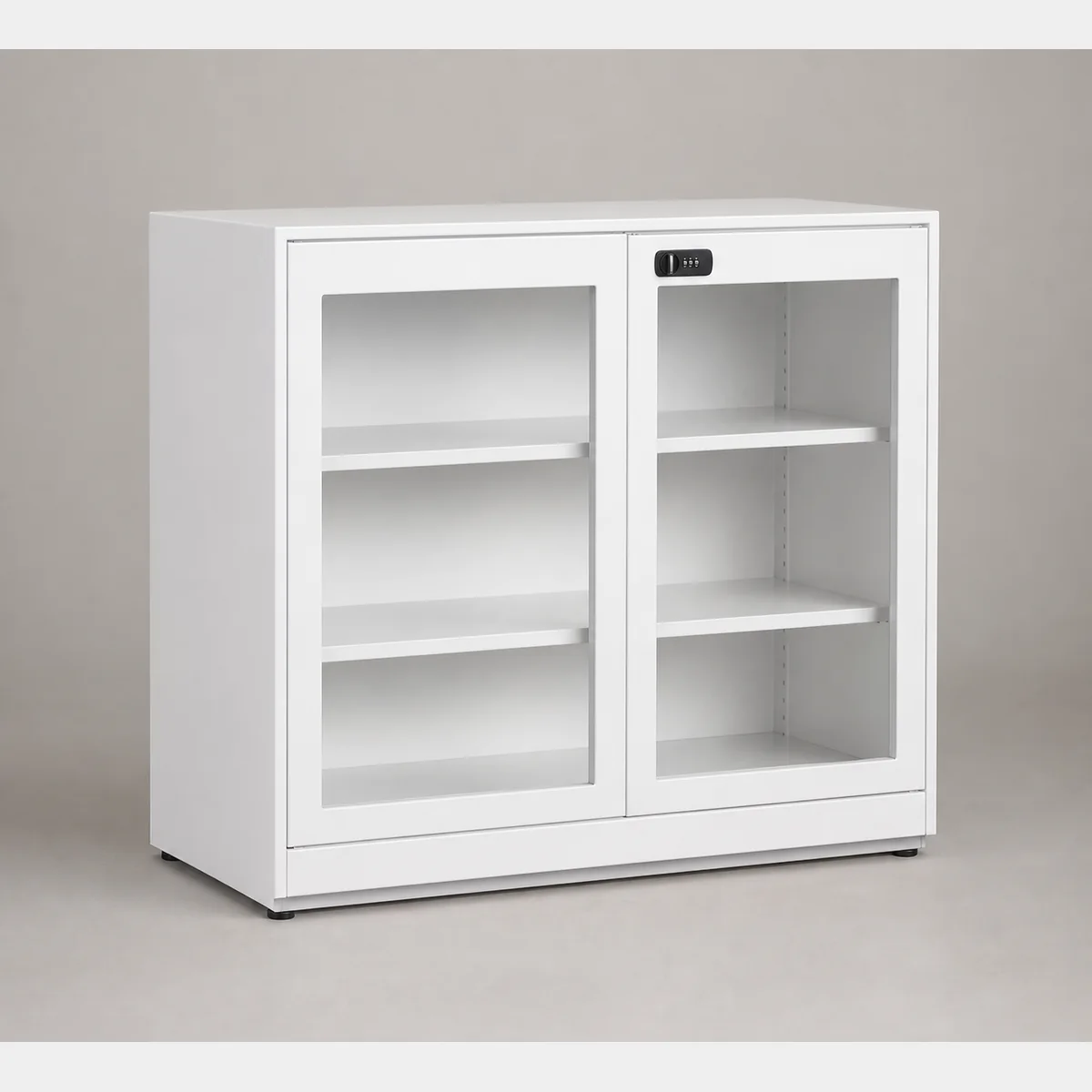
Double-door glass cabinet (numeric keypad lock)
Double-door glass cabinet (numeric keypad lock), A: L800xW400xH750 mm; B: L800xW400xH1150 mm; C: L800xW400xH750 mm. Formal quotation available based on use, specifications and quantity.
- A
- L800xW400xH750 mm
- B
- L800xW400xH1150 mm
- C
- L800xW400xH750 mm
 Shelving & StorageProduct reference image
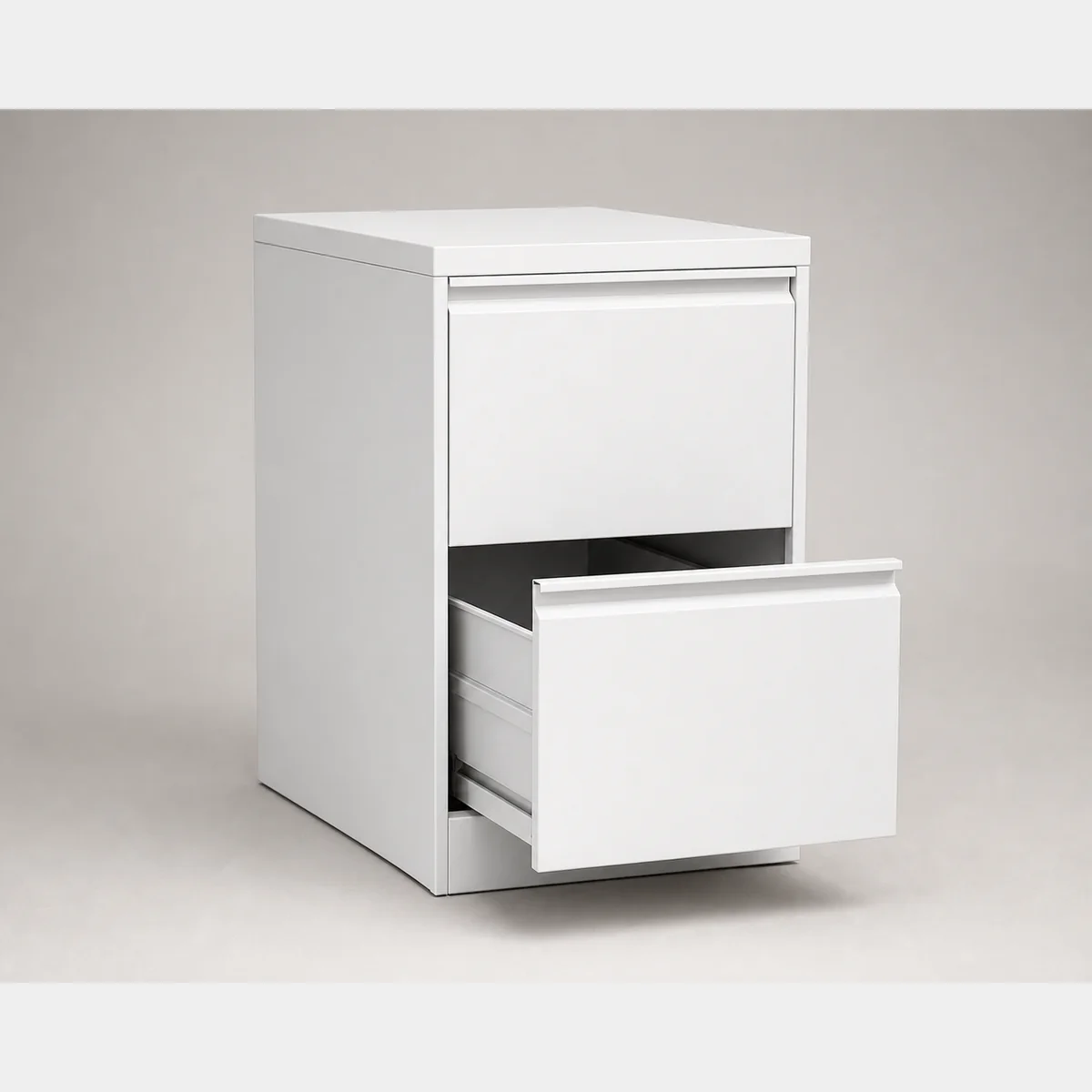
Drawer filing cabinet
Drawer filing cabinet. For intended use, size and quantity, contact the supplier for official specifications and a formal quotation. Model JCB3004.
- JCB3004-A option 1
- W460xD620xH731 mm
- JCB3004-B option 2
- W460xD620xH1031 mm
- JCB3004-C option 3
- W460xD620xH1331 mm
 Shelving & StorageProduct reference image
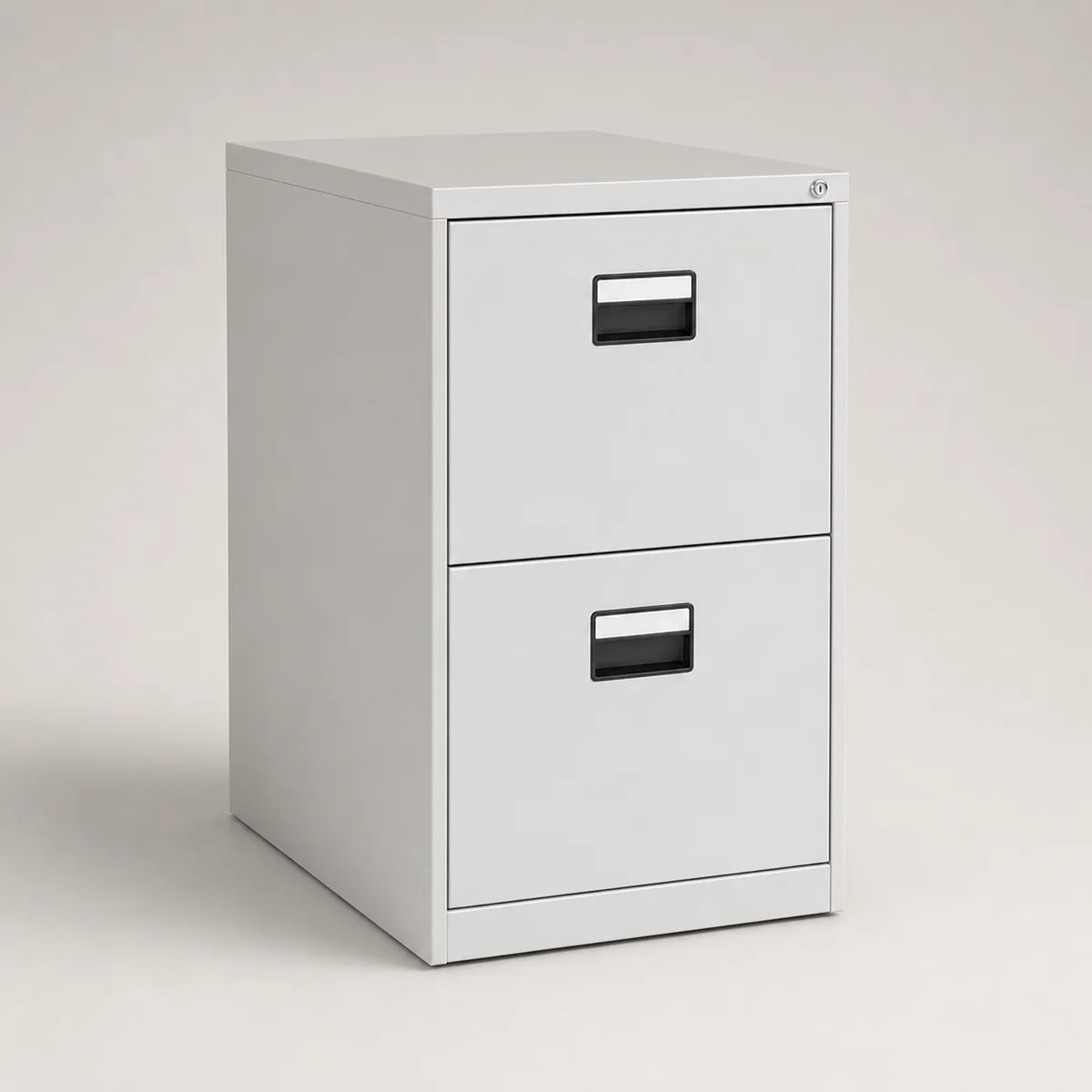
Drawer Filing Cabinet
Drawer filing cabinet. For official specifications and a formal quotation according to use, size and quantity, please contact GotGear.
- JCB3004-D
- W460xD620xH731 mm
- JCB3004-E
- W460xD620xH1031 mm
- JCB3004-F
- W460xD620xH1331 mm
 Shelving & StorageProduct reference image
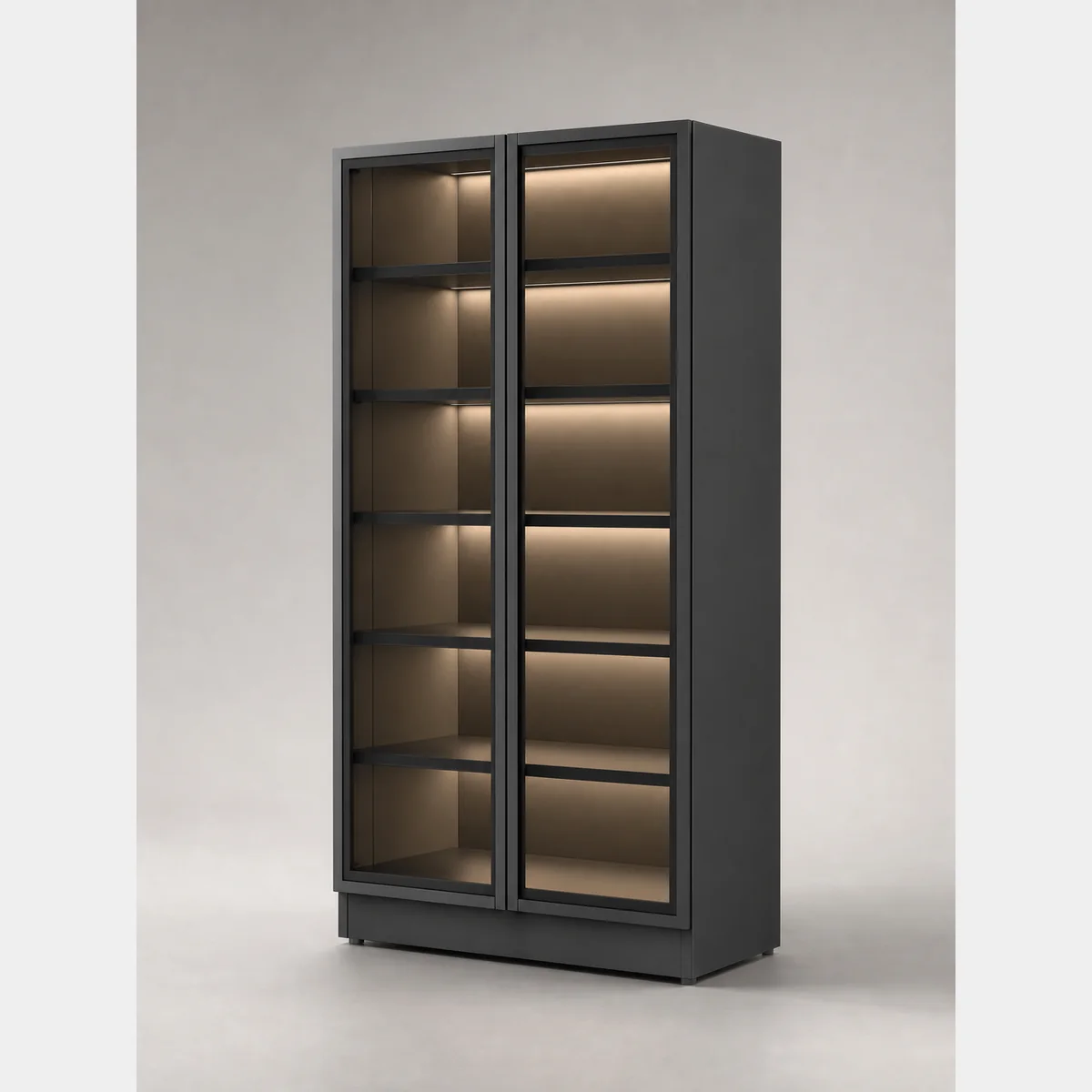
Glass-door Storage Cabinet
Glass-door storage cabinet. Dimensions/specifications: L40xW35xH120 cm / L60xW35xH120 cm; Colour: Dark Grey / Dark Grey, White; Use: Suitable for displaying ornaments, figurines, models, shoes, exhibits, etc. Formal quotation available based on use, specifications and quantity.
- Dimensions / Specifications
- L40xW35xH120 cm / L60xW35xH120 cm
- Colour
- Dark Grey / Dark Grey, White
- Use
- Suitable for displaying ornaments, figurines, models, shoes, exhibits, etc.
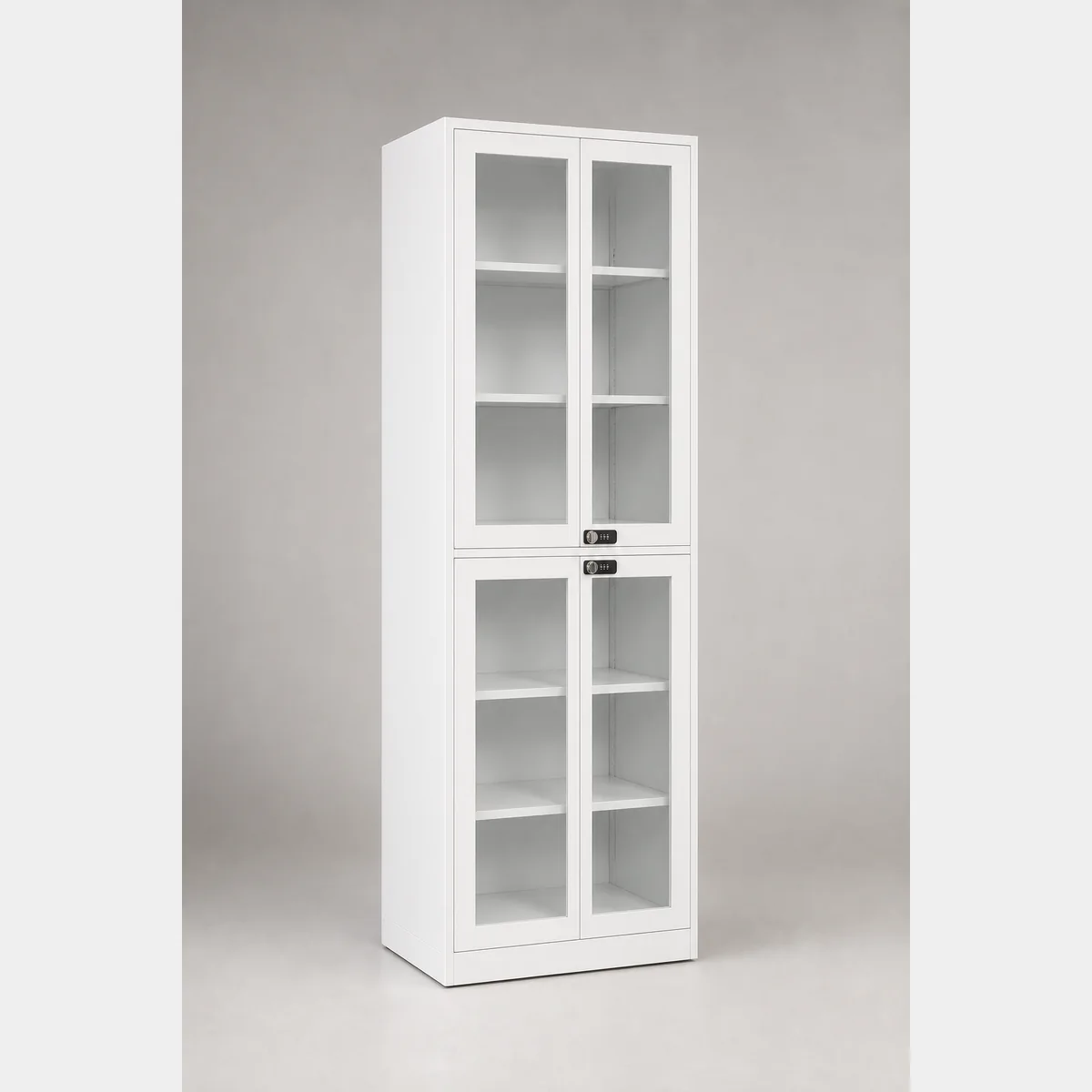 Shelving & StorageProduct reference image
JCB3011 Glass Door Cabinet (Password Lock)
Glass Door Cabinet (Password Lock), Dimensions / Specifications: L600xW400xH1850 mm / L700xW400xH1850 mm. Formal quotation available based on use, specifications and quantity.
- Dimensions / Specifications
- L600xW400xH1850 mm / L700xW400xH1850 mm
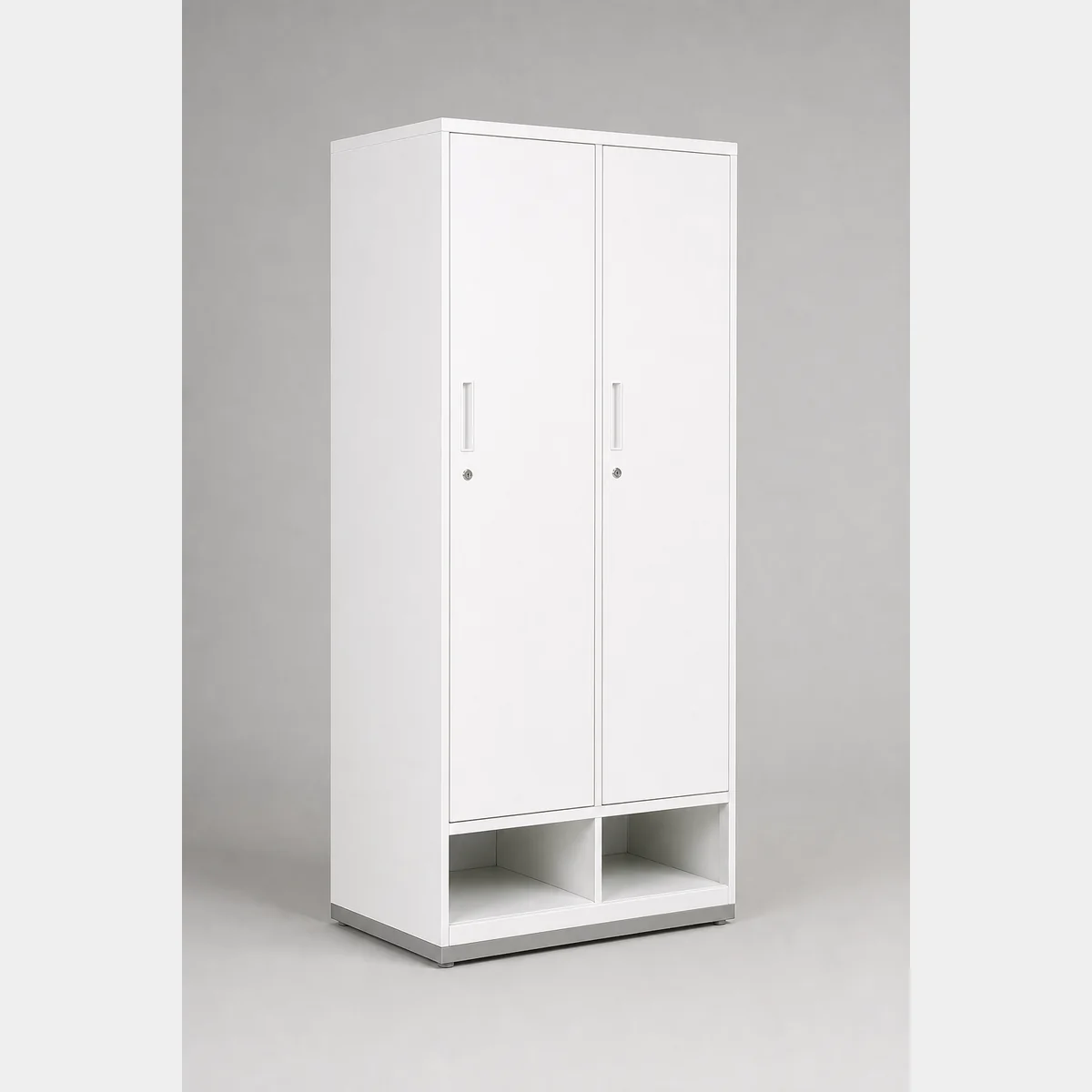 Shelving & StorageProduct reference image
Locker with Shoe Cabinet
Locker with shoe cabinet, A:W900xD500xH1900 mm; B:W900xD500xH1900 mm; C:W900xD500xH1900 mm. Request a formal quotation based on intended use, specifications and quantity.
- A
- W900xD500xH1900 mm
- B
- W900xD500xH1900 mm
- C
- W900xD500xH1900 mm
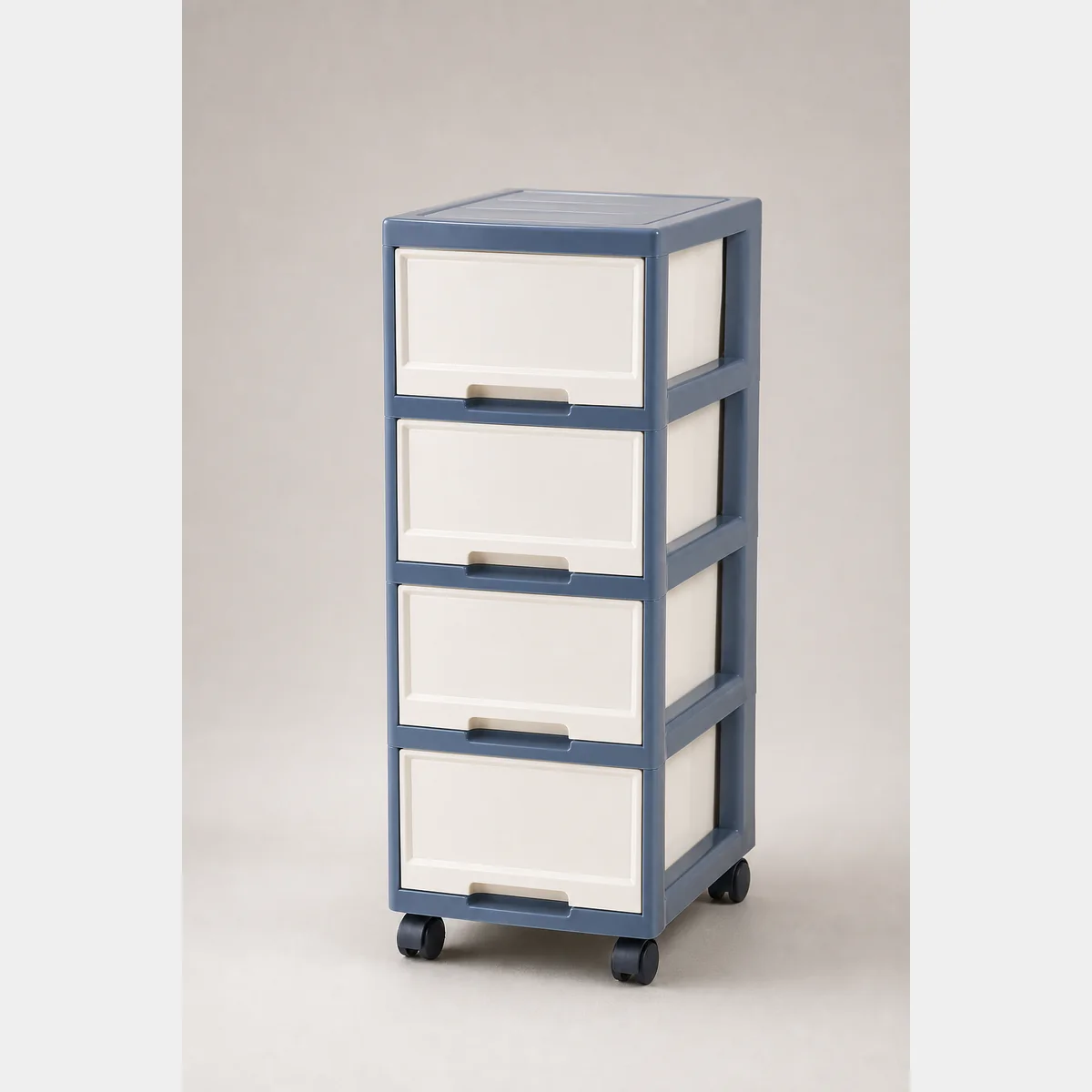 Shelving & StorageProduct reference image
Multi-tier Plastic Storage Cabinet
Multi-tier plastic storage cabinet. Sizes/Specifications: W33xD43xH70 cm / W33xD43xH90 cm. Formal quotation available based on use, specifications and quantity.
- Size/Specification
- W33xD43xH70 cm / W33xD43xH90 cm
Continue with closely related procurement topics
These pages share equipment, operating or decision-stage signals with this guide.
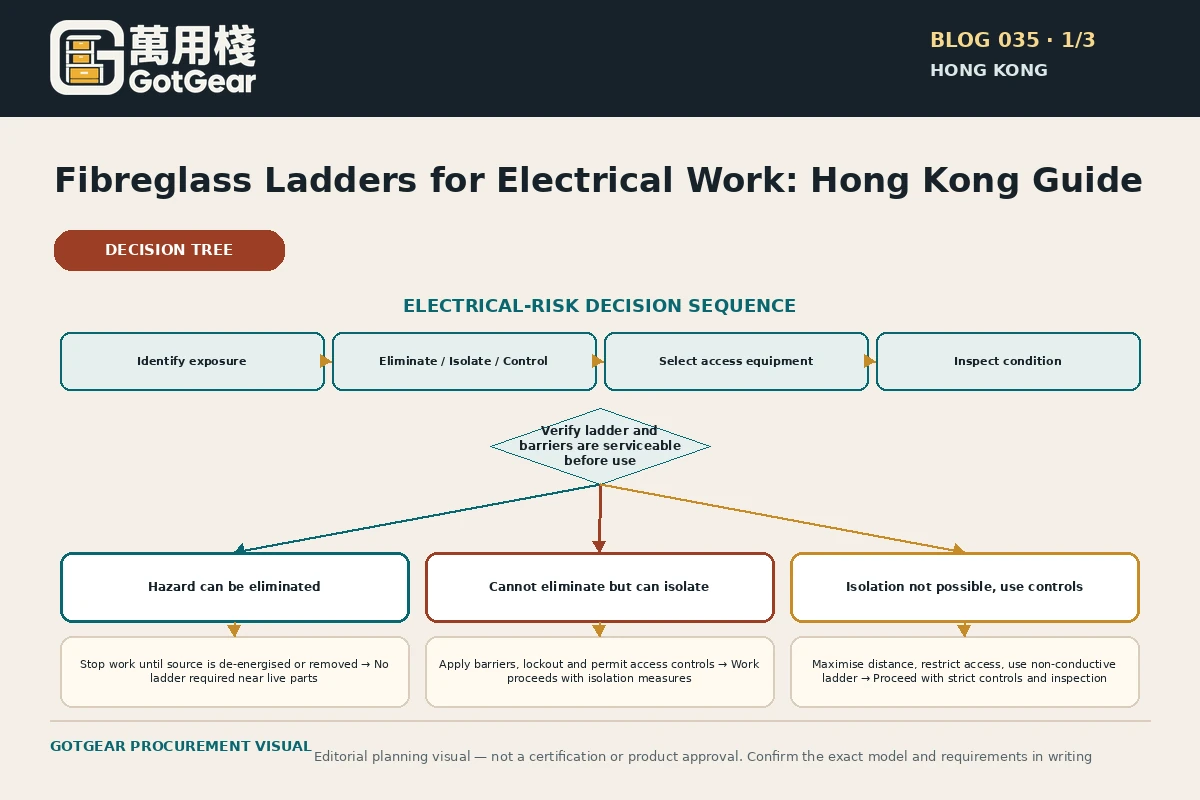
Fibreglass ladder for electrical work Hong Kong
GotGear explains fibreglass ladder for electrical work Hong Kong for Hong Kong buyers. See how non-conductive ladder Hong Kong supports ladder near electrical installations Hong Kong, with practical checks, evidence boundaries and written requirements.
Read the guide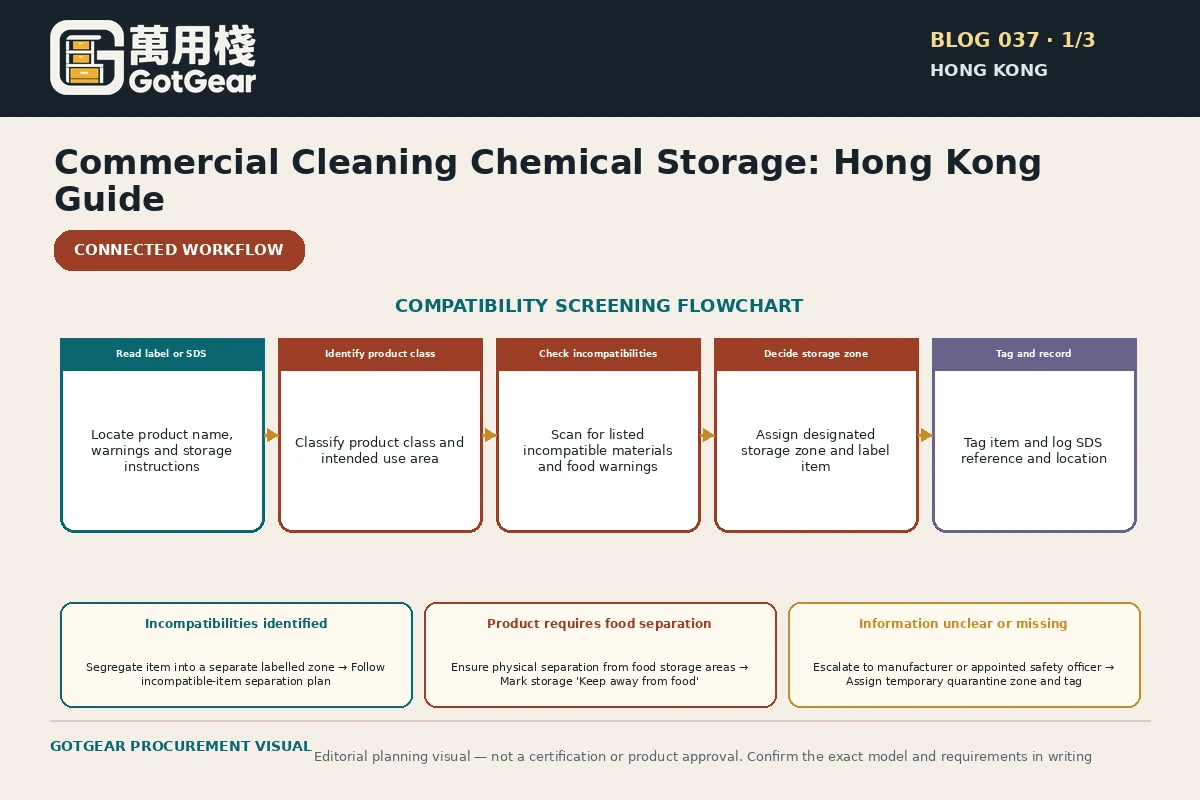
Commercial cleaning chemical storage Hong Kong
GotGear explains commercial cleaning chemical storage Hong Kong for Hong Kong buyers. See how cleaning chemical segregation guide Hong Kong supports janitorial chemical storage cabinet Hong Kong, with practical checks, evidence boundaries and written requirements.
Read the guide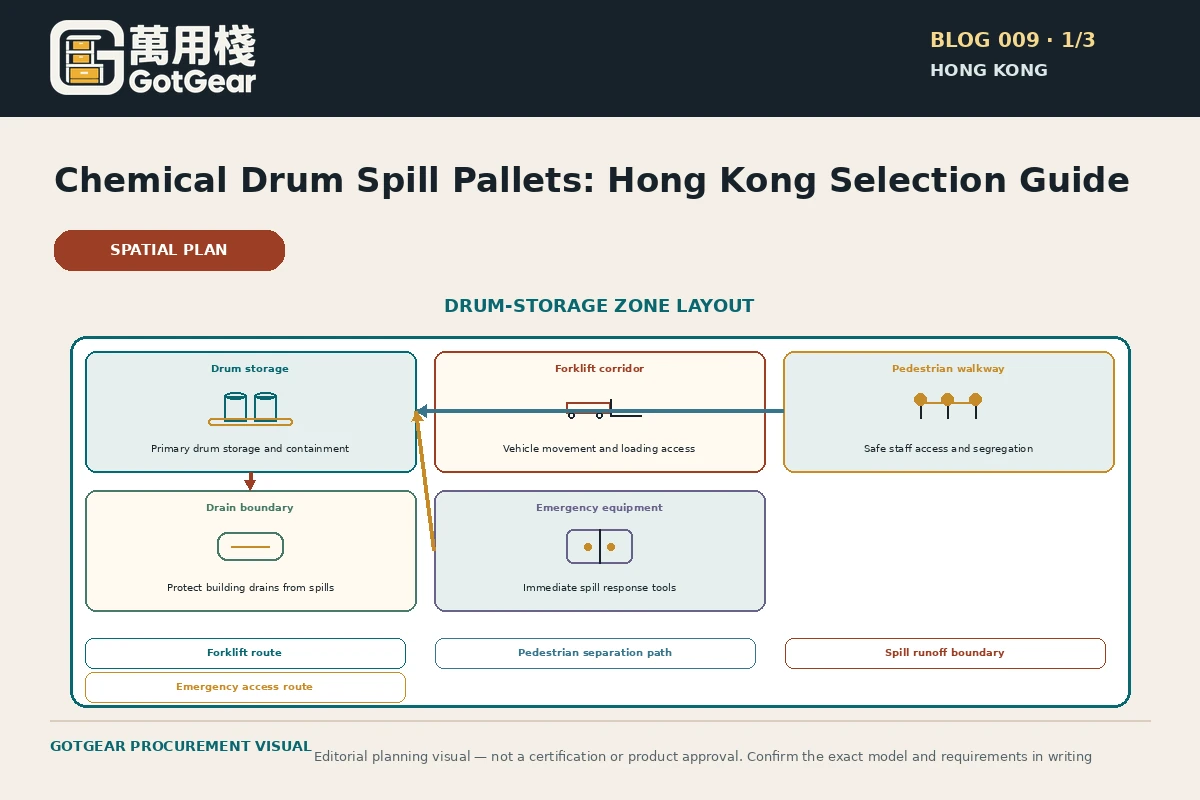
Chemical drum spill pallet Hong Kong
GotGear explains chemical drum spill pallet Hong Kong for Hong Kong buyers. See how spill containment pallets Hong Kong supports hazardous substance secondary containment Hong Kong, with practical checks, evidence boundaries and written requirements.
Read the guide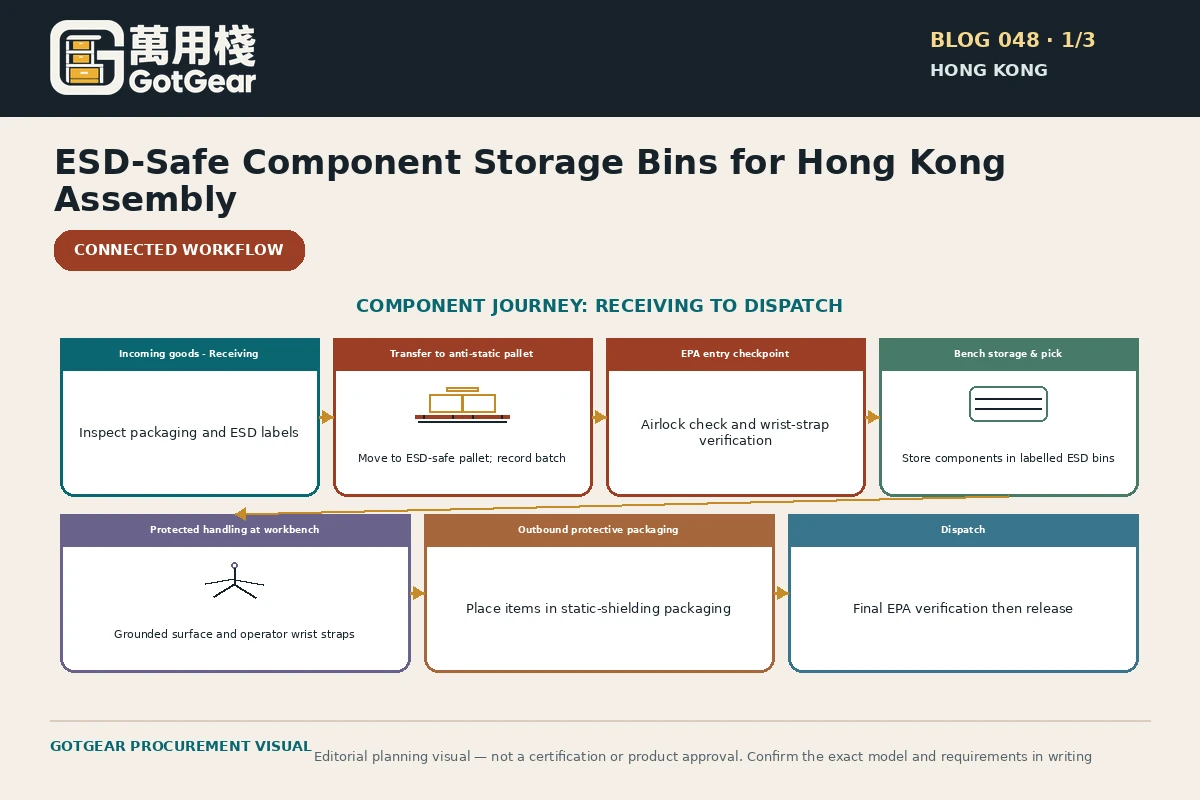
ESD-safe component storage bins Hong Kong
GotGear explains ESD-safe component storage bins Hong Kong for Hong Kong buyers. See how electronics assembly component bin selection Hong Kong supports electronics workbench parts storage Hong Kong, with practical checks, evidence boundaries and written requirements.
Read the guideRelated topic indexOpen more English procurement pages6 topics
Browse additional equipment families, applications and procurement questions relevant to these operating requirements.