
For a flat mop system Hong Kong, define the floor types and cleaning method, then check how pads attach, are prepared, changed, separated and returned for laundering or disposal. Verify compatibility across every component and follow manufacturer instructions for the intended surface and cleaning agent.
Define the floor-care method before choosing flat mop system Hong Kong
When comparing a flat mop system Hong Kong, facilities should first decide the cleaning method for each floor zone. Start by classifying surfaces (vinyl, ceramic tile with grout, sealed timber, epoxy, stone) and typical soils (dust, sand, food grease, spill-prone). Choose between dry dusting, damp or pre-soaked microfibre, spray-and-wipe, or wringer-based wet mopping. Consider whether any area requires a disinfectant application step and the contact time it needs, noting the slip risk and residue sensitivity of the floor finish. In high-traffic lobbies, rapid drying matters; in kitchens or washrooms, soil load and segregation matter more.
Translate that method into specifications. Record the floor areas, peak-traffic windows, and whether staff can stage clean and dirty pad containers near the work zone. Request written confirmation of pad fabric (microfibre blend, edge finish, backing type), frame width and locking, handle interface, and trolley preparation options (pre-soak boxes with lids, wringer/buckets). Ask suppliers for a concise method statement, the recommended dilution for the intended chemical, and the safety data sheets from the chemical manufacturer. Confirm that instructions, labels and training materials are available in bilingual form. If public access is controlled by management offices, note any time-of-day limits for wet processes and the need for low-noise wheels and bumpers on trolleys.
Flat mop system Hong Kong: Calculate pad quantities for each shift
Pad planning determines shift continuity and hygiene. Estimate clean pad quantities per zone by soil level, pad width, and change frequency. As an example starting point only, confirmable with your supplier, some teams allocate one damp pad per roughly 20–40 m² in light soil corridors, increasing changes for greasy areas or textured tiles. For disinfectant application, you may need separate pads to avoid chemical mixing. Add contingency for events, school exams or tenant VIP visits that compress cleaning windows.
Build your enquiry around the whole cycle: preparation, use, containment, laundering, and restocking. Ask vendors to state expected pad life in wash cycles, the recommended wash temperature and detergent type, and whether mesh bags should be used. Note drying time assumptions; Hong Kong humidity can extend turnaround, so you may need an extra day’s stock. Specify pack size, colour coding, and barcodes for inventory. Check trolley capacity for sealed clean-pad boxes and a segregated receptacle for used pads, plus the availability of leak-resistant liners. If access relies on a tight goods lift, confirm the pad boxes and trolley frames fit without tilting risks and that staff can manoeuvre safely during peak lift traffic.
What should buyers compare for flat mop system Hong Kong?
| Criterion | Straightforward requirement | More complex requirement | Evidence to provide |
|---|---|---|---|
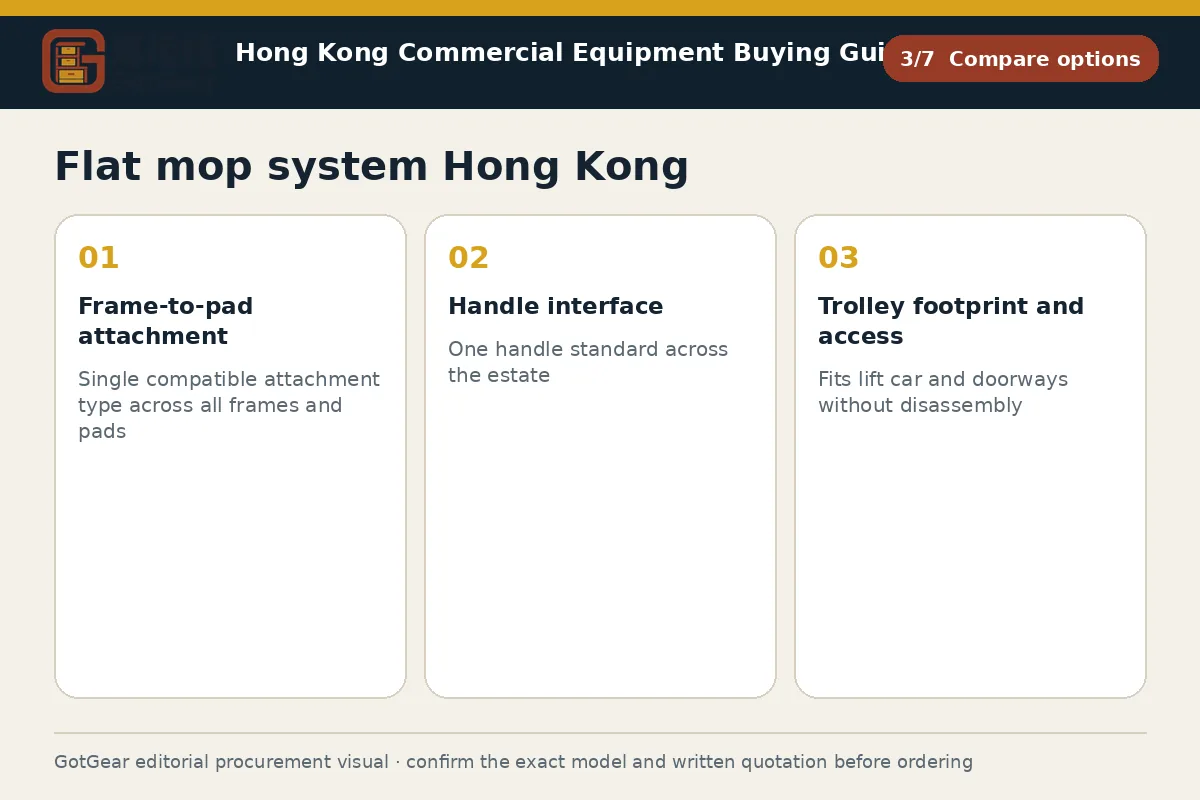
| Frame-to-pad attachment | Single compatible attachment type across all frames and pads | Mixed attachments (hook-and-loop and pocket) managed per zone | List attachment type per SKU; provide sample photos and a compatibility matrix |
| Handle interface | One handle standard across the estate | Multiple interfaces with adapters for legacy tools | State thread/click-in type, adapter SKUs and lock mechanism in writing |
| Trolley footprint and access | Fits lift car and doorways without disassembly | Tight turns or thresholds requiring specific wheels and bumpers | Provide lift car dimensions, tightest doorway and test-route photos |
| Pad preparation method | Pre-soak boxes with lids or a single wringer workflow | Hybrid workflow with chemical segregation and time-controlled dosing | Submit method statement, dosing tools, and lid seal details for review |
| Used-pad segregation | One colour-coded stream with clear labels | Multiple segregated streams (e.g., toilets, food areas) with sealed containers | Describe colour scheme, label language, liner spec and laundry acceptance letter |
This framework helps buyers create comparable written enquiries. Final model specifications, availability, delivery and commercial terms must be confirmed in a formal quotation.
Compare frame, pad and trolley fit within flat mop system Hong Kong
A reliable workflow depends on how frames, pads and trolleys fit together. Pad attachment options include hook-and-loop, pocket sleeves, or channel slides; each demands matching frames and preparation trays. Look for frames with robust swivels, a positive lock for stairs or edging, and replaceable hook strips. Check handle connectors (European thread, tapered cone, or click-in) and whether telescopic poles lock securely when extended. For trolleys, compare pre-soak boxes with gasketed lids versus wringer/bucket sets, note footprint, wheel diameter, and bumpers to protect door frames. Quiet castors and brakes help during night shifts in mixed-use buildings.
For procurement, request a compatibility matrix that lists frame-to-pad attachment, handle interfaces, and trolley fit for the chosen method. Ask for overall dimensions and turning radius, then test in your narrowest corridor and goods lift. Verify the press or lid can be operated within doorway clearances, and that chemical caddies are stable in transit. Seek written confirmation of spare-part availability (hook strips, clips, castors) and typical lead times. Insist that labels on preparation boxes and used-pad containers are durable and bilingual. When comparing quotations, ensure suppliers include complete sets—frames, pads, handles and trolley modules—so like-for-like evaluation is possible.
Test preparation and used-pad handling in flat mop system Hong Kong
Preparation and used-pad handling are where time is saved or lost. In pre-soak workflows, measure the chemical with graduated jugs and load pads into lidded boxes, ensuring even saturation without pooling. For wringer systems, check that the press can expel to the moisture level your floor finish tolerates. Plan the route for swapping pads at defined points, with trolley parking that does not obstruct fire routes or tenant entrances. Public venues may require lidded, colour-coded containers and signage during event changeovers.
For used pads, specify sealed, clearly labelled receptacles and leak-resistant liners. If areas are segregated (e.g., washrooms versus classrooms), keep pads separate to prevent cross-contamination and confirm the laundry will accept that scheme. Ask for manufacturer care instructions, SDS for any disinfectant involved, and outline PPE in a site-specific SOP approved by the venue or building manager where required. Consider storage airflow for drying racks; in humid months, odour control and extra drying time may be needed. Pilot the full workflow on one floor with timing notes before placing a larger order, then adjust pad quantities and trolley modules accordingly.
Flat mop system Hong Kong decision checklist
Start by mapping floor types, soil levels and any disinfection steps, then select one primary method per zone. Measure corridor widths, the tightest doorway and lift car dimensions, and note loading windows. Request written specifications for pad fabric and attachment type, frame width and lock, handle interface, trolley modules, and preparation boxes with lids. Ask for care instructions, SDS from the chemical supplier, and pad life data. Compare quotations that list complete kits and the pad count per shift. Pilot-test on a representative area and record change frequency. On receipt, inspect pad stitching and backing, frame swivels and hook strips, pole locks, castor operation, and lid seals, and confirm bilingual labels are included. Keep the model specifications and written quotation as the controlling documents.
- Operating use, quantity and expected frequency
- Dimensions, capacity, material and accessory requirements
- Delivery address, floor, goods lift and loading window
- Required documents, acceptance checks and after-sales arrangements
Key points for flat mop system Hong Kong
In Hong Kong, site logistics often drive the choice more than catalogue features. Confirm your trolley footprint against narrow goods-lift cars and older corridor doorways before finalising a model, and check turning space at lift lobbies shared with tenants. Humidity can slow pad drying; plan stock to cover extended turnaround. Many managed estates restrict chemical deliveries and wet processes to set windows, and bilingual labels and training materials are commonly expected. Treat these as operating constraints to verify with your building manager or venue; they are not legal advice.
Questions about flat mop system Hong Kong
What frame size should facilities choose for mixed-use floors?
Match frame size to obstacle density and lift constraints. Medium widths clean corridors efficiently, while larger frames suit open halls if turning space allows. Test a sample on your tightest route, including lift entry and thresholds, before ordering sets for all teams. Confirm the chosen size aligns with pad availability, preparation trays, and the trolley’s parking footprint.
Is a pre-soaked pad workflow better than using a wringer press?
Pre-soaked pads give consistent dosing, quick pad changes and less splashing in public areas. Wringer presses suit heavier soil or when water use varies by zone. The right choice depends on floor finish, chemical instructions and building policies. Pilot each method on-site, check contact times for any disinfectant, and confirm trolley modules and lids support your preferred workflow.
Can one trolley be shared across toilets, classrooms and kitchens?
Only if it keeps zones fully segregated with lidded containers and clear colour coding. Many institutions prefer dedicated sets to reduce cross-contamination risk. Check your venue or insurer guidance before standardising. If sharing, specify separate boxes and labels for each zone and confirm the storage cupboard and goods lift can accommodate the additional modules safely.
Should we launder pads in-house or send them out?
Outsourcing simplifies capacity planning but relies on reliable turnaround. In-house laundering offers control but needs machines sized for the load and space to dry pads properly. Confirm pad care instructions, maximum temperatures and expected cycle life in writing. Ask any laundry to acknowledge microfibre acceptance and bagging requirements, and plan collections within your building’s loading windows.
Continue with closely related procurement topics
These pages share equipment, operating or decision-stage signals with this guide.
Flat mopping trolley Hong Kong
Compare a flat mopping trolley Hong Kong and a Kentucky mopping trolley Hong Kong across pad preparation, water handling, storage, footprint and lift or door clearances, with insights from GotGear.
Read the guide
Microfiber cleaning cloth Hong Kong
GotGear compares microfiber cleaning cloth Hong Kong and microfiber flat mop Hong Kong across cleaning surfaces, chemical compatibility, colour coding and laundering cycles, and provides guidance on selection and care.
Read the guide
Decorative refuse bins Hong Kong
Compare decorative refuse bins Hong Kong with lobby litter bins Hong Kong to assess capacity, opening style, finish, liner concealment and cleanability, and to confirm required floor area with GotGear, Hong Kong.
Read the guide
Slim waste bins Hong Kong
Select slim waste bins Hong Kong by considering footprint, lid movement and easy liner removal. Compare swing top waste bins Hong Kong with push top waste bins Hong Kong for clearance and staff access with GotGear.
Read the guideRelated topic indexOpen more English procurement pages2 topics
Browse additional equipment families, applications and procurement questions relevant to a wider buying brief.