
Check for cracks, distortion, missing material, contamination and damaged entry points. Isolate uncertain items and follow manufacturer and site procedures.
Plastic pallet inspection checklist Hong Kong — Define Visual and Tactile Checks
Start with a calm, methodical walk‑around. Examine the top and underside decks, runners/blocks, corners and fork‑entry tunnels. Look for splits, through‑cracks, missing plastic, deep gouges, heat deformities, swollen areas, delamination and loose anti‑slip inserts. Run a gloved hand along edges to feel for sharp lips or soft spots. Press suspect ribs with thumb pressure; excessive flex may hint at internal damage. Check for contamination: oil, chemicals, embedded metal or pallet‑wrap trapped in apertures that could affect handling or hygiene.
Set simple field measurements. Place the pallet on a flat floor; use a straightedge to detect bowing, and note rocking. Measure length, width and both diagonals with a tape; significant diagonal difference may indicate twist. Measure fork‑entry height and width against your truck forks, and confirm chamfers are intact. In Hong Kong humidity, dry any condensation before assessment to prevent slip misreads. Teams using hygiene plastic pallets in Hong Kong should also inspect closed surfaces, drain channels and label plates for cleanability.
A robust plastic pallet inspection checklist that operators in Hong Kong can adopt should combine these visual and tactile checks with quick functional cues: does the pallet sit flat, can forks enter smoothly without snagging, and does the deck feel uniformly rigid under moderate hand load? Tag anything doubtful for review before use.
Plastic pallet inspection checklist Hong Kong: Record Pallet Inspection Findings
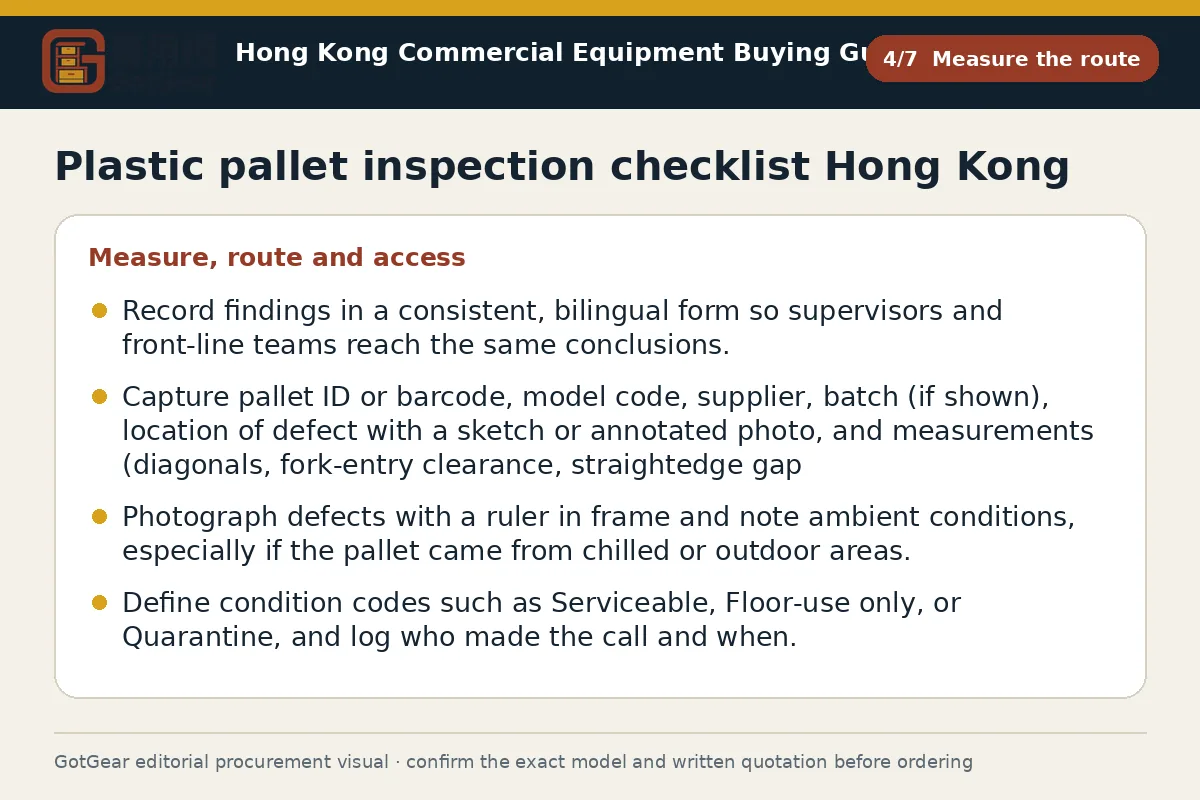
Record findings in a consistent, bilingual form so supervisors and front-line teams reach the same conclusions. Capture pallet ID or barcode, model code, supplier, batch (if shown), location of defect with a sketch or annotated photo, and measurements (diagonals, fork-entry clearance, straightedge gaps). Photograph defects with a ruler in frame and note ambient conditions, especially if the pallet came from chilled or outdoor areas. Define condition codes such as Serviceable, Floor‑use only, or Quarantine, and log who made the call and when.
To support plastic-pallet damage assessment, buyers in Hong Kong should align records with the model’s published acceptance criteria. Ask suppliers for the current datasheet, resin type, temperature range, racking suitability and stated deflection method. Where food or cleanroom use is in scope, request cleanability guidance and surface details relevant to hygiene audits; align notes with your HACCP or site hygiene plan. If you also run collapsible pallet containers, documentation for Hong Kong sites can use the same defect‑mapping approach for hinges, latch housings and base skids, aiding cross‑asset consistency.
Keep logs accessible to the management office and insurers where required. A short weekly review of quarantined items helps spot patterns (e.g., goods‑lift scuffing) that procurement can address with specification or handling changes. Written quotations and the manufacturer’s published criteria should prevail if doubt remains.
What should buyers compare for plastic pallet inspection checklist Hong Kong?
| Criterion | Straightforward requirement | More complex requirement | Evidence to provide |
|---|---|---|---|
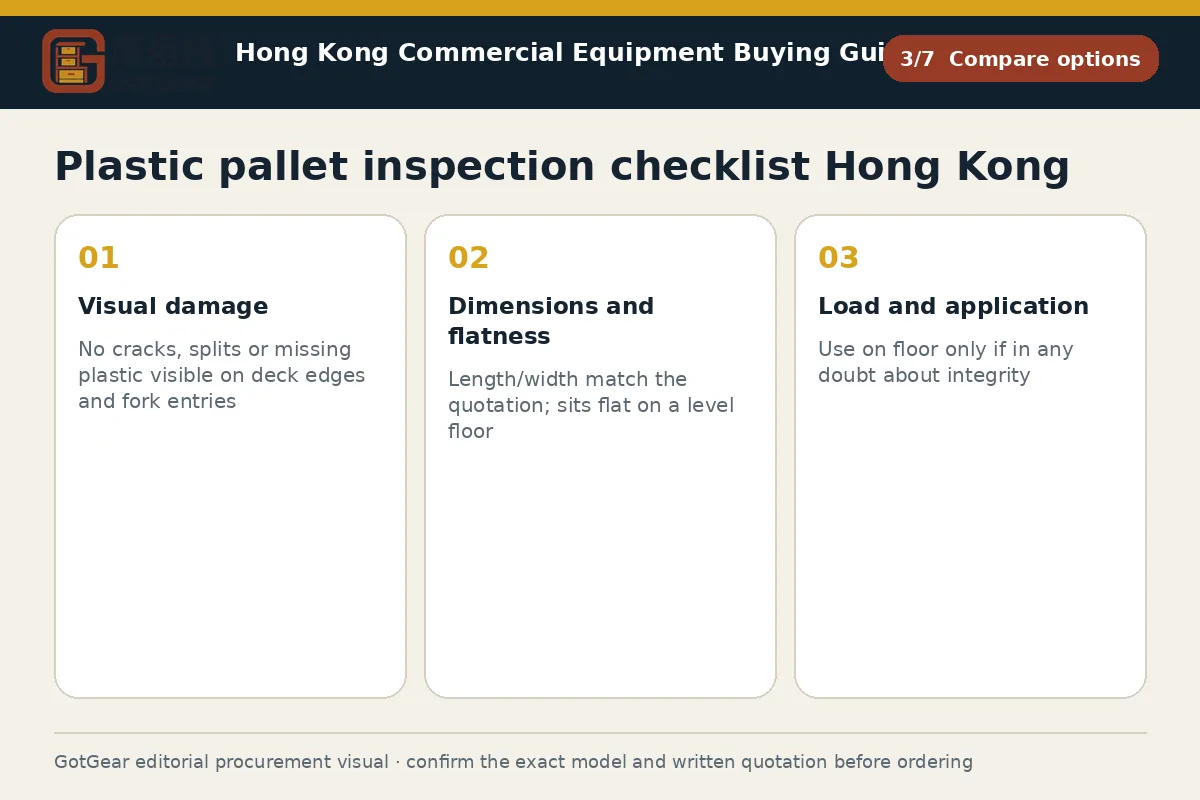
| Visual damage | No cracks, splits or missing plastic visible on deck edges and fork entries | Minor scuffs acceptable; define rib/runner crack and chamfer loss thresholds per model | Annotated photos with ruler; straightedge rock/flatness notes; inspector name/time |
| Dimensions and flatness | Length/width match the quotation; sits flat on a level floor | Include diagonal comparison and fork‑entry height/width versus site forks | Tape measurements, diagonal notes, fork sizes; state tolerances as per quotation |
| Load and application | Use on floor only if in any doubt about integrity | Racking only if the model’s datasheet confirms suitability and deflection method | Model datasheet, rack type, written confirmation of racking rating from supplier |
| Hygiene/contamination | Clean, dry surfaces for general goods; no embedded debris | Hygiene applications require closed surfaces and validated cleaning guidance | Cleaning SOP reference, material declaration, any test reports if requested |
| Traceability and records | Pallet ID and inspection date recorded | Bilingual checklist, defect codes, quarantine/release log and reviewer identity | Copy of form, photo set, quarantine tag ID, responsible person’s sign‑off |
This framework helps buyers create comparable written enquiries. Final model specifications, availability, delivery and commercial terms must be confirmed in a formal quotation.
Plastic pallet inspection checklist Hong Kong — Set Isolation and Escalation Rules
Agree clear isolation and escalation rules so suspect pallets never re‑enter service by accident. Mark a labelled quarantine zone that is physically separated from pick faces and dispatch lanes; in tight warehouses in Hong Kong this may be a fenced corner or a clearly taped floor area. Tag items with a bilingual isolation label stating the defect, date, and the person who quarantined it. Do not mix quarantined pallets with returns or waste unless the site’s waste contractor and building management have confirmed arrangements in writing.
Set decision triggers that reflect your operation and the model’s datasheet. Example starting point only: any crack that crosses a load‑bearing rib, or any chunk missing from a fork‑entry chamfer, is escalated to a supervisor for removal from racking duty; confirm with the supplier and your site policy. If there is chemical exposure or heat deformation, seek manufacturer guidance before any attempt to rework or reuse. Where pallets support stacked loads, align isolation rules with your plastic pallet stacking safety Hong Kong. Follow your site procedures, especially in shared loading windows where speed pressures are high.
Plan the route from quarantine to resolution: assessment, repair (if permitted), return to supplier, recycling or disposal. Coordinate with the management office on temporary holding in industrial buildings, and schedule movements during allowed lift times to prevent blocked goods‑lift access.
Plastic pallet inspection checklist Hong Kong — Assign Review and Release Responsibility
Define who can review and release quarantined pallets. Many facilities in Hong Kong nominate a warehouse supervisor or a safety officer trained on the specific models in use. Provide a short, bilingual checklist for review: confirm the recorded defect, re-measure, compare with the supplier’s acceptance criteria, and decide Serviceable, Floor‑use only or Remove from service. Record the outcome, the reviewer’s name and the time, then move the pallet immediately to the correct zone or to outbound staging if it is a supplier return.
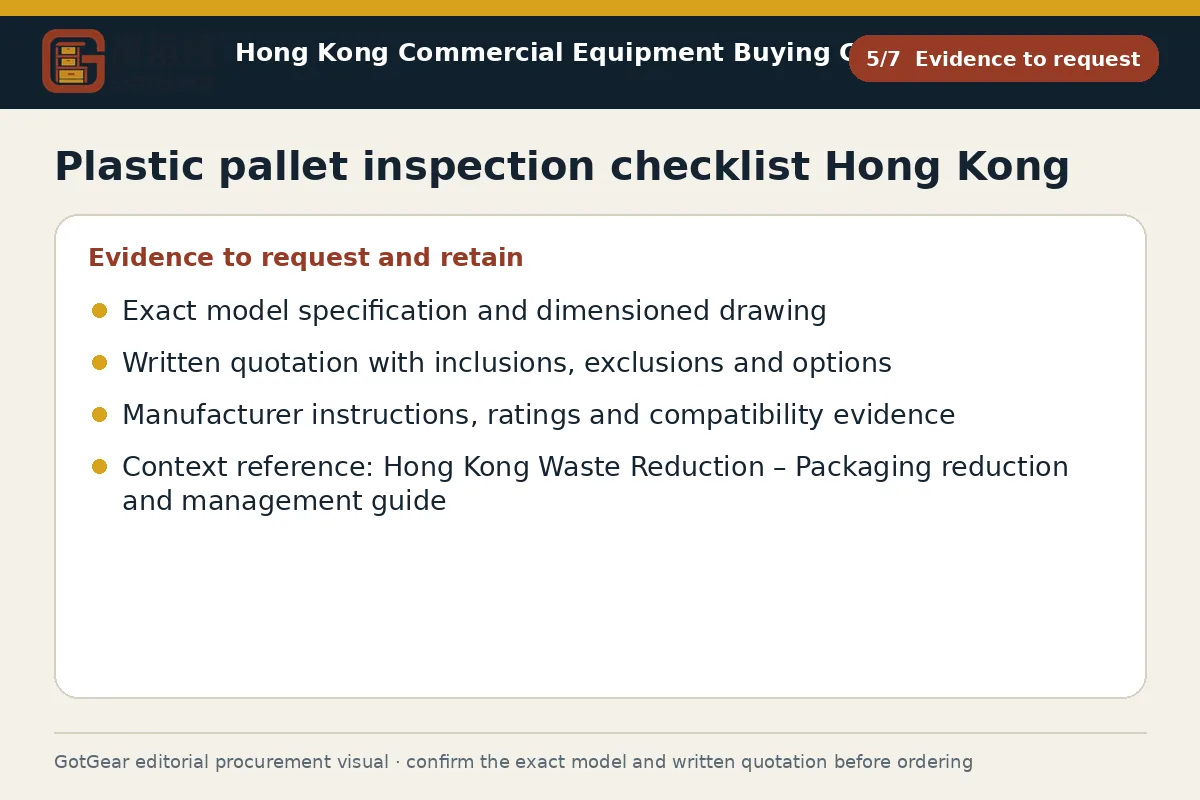
Procurement should request, at the quotation stage, the manufacturer’s inspection guidance, a racking suitability statement, cleaning instructions if relevant, and the process for returns or recycling of damaged stock. On receipt of new pallets, inspect a sensible sample per your site plan: check dimensions against the quotation, deck and runner integrity, fork‑entry smoothness and any labels or tracking devices. For operations in cold rooms, align responsibilities with your procedures for plastic pallets for cold storage Hong Kong so brittle‑temperature performance is considered in release decisions.
Use this guide to compare specifications and prepare a written enquiry. Agree competence, refresher training intervals and documentation filing with your institution or management office. Where public‑event venues or schools are involved, confirm any additional approvals required by the venue, landlord or insurer before returning marginal items to service.
Plastic pallet inspection checklist Hong Kong decision checklist
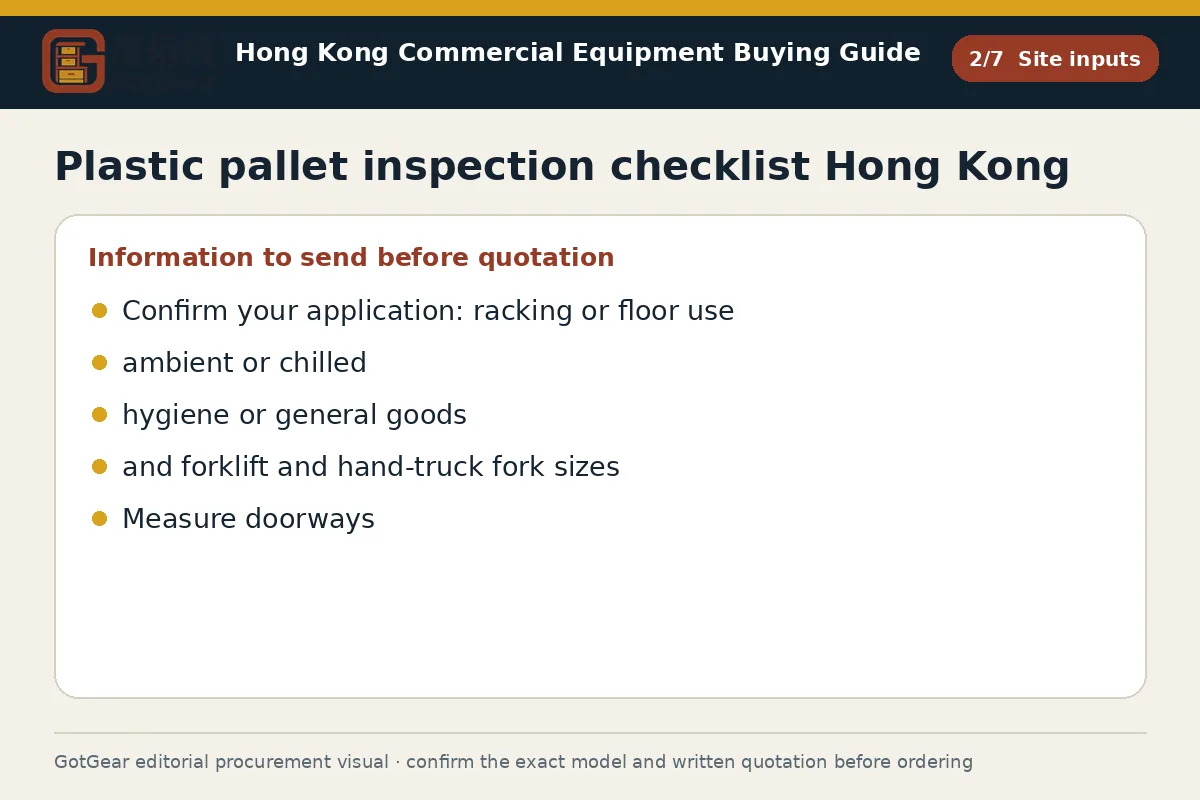
Confirm your application: racking or floor use, ambient or chilled, hygiene or general goods, and forklift and hand‑truck fork sizes. Measure doorways, turning spaces and goods‑lift dimensions that affect pallet handling. Request written quotations stating model code, resin, deck and runner style, racking suitability, static/dynamic load test methods and temperature range. Ask for acceptance criteria and cleaning guidance where hygiene applies. Set a simple pre‑use check, isolation zone and escalation pathway, and nominate who may release items. Prepare bilingual check and release forms with photo evidence spaces. On receipt, verify dimensions, fork‑entry smoothness and labelling against the quotation, then file documents. If uncertain, seek written confirmation from the manufacturer or distributor before use.
- Operating use, quantity and expected frequency
- Dimensions, capacity, material and accessory requirements
- Delivery address, floor, goods lift and loading window
- Required documents, acceptance checks and after-sales arrangements
Key points for plastic pallet inspection checklist Hong Kong, plastic pallet damage assessment Hong Kong
Hong Kong facilities face tight goods‑lift cars, narrow doorways and limited loading windows, so isolation zones and movement of quarantined pallets must be planned to avoid blocking circulation. Many industrial buildings require coordination with the management office for waste staging and after‑hours access. Humidity can mask or worsen defects, so dry surfaces before checks. Bilingual forms help mixed teams apply the same standard. The above guidance is practical, not legal advice; confirm detailed requirements with your supplier, venue and competent advisers.
Questions about plastic pallet inspection checklist Hong Kong
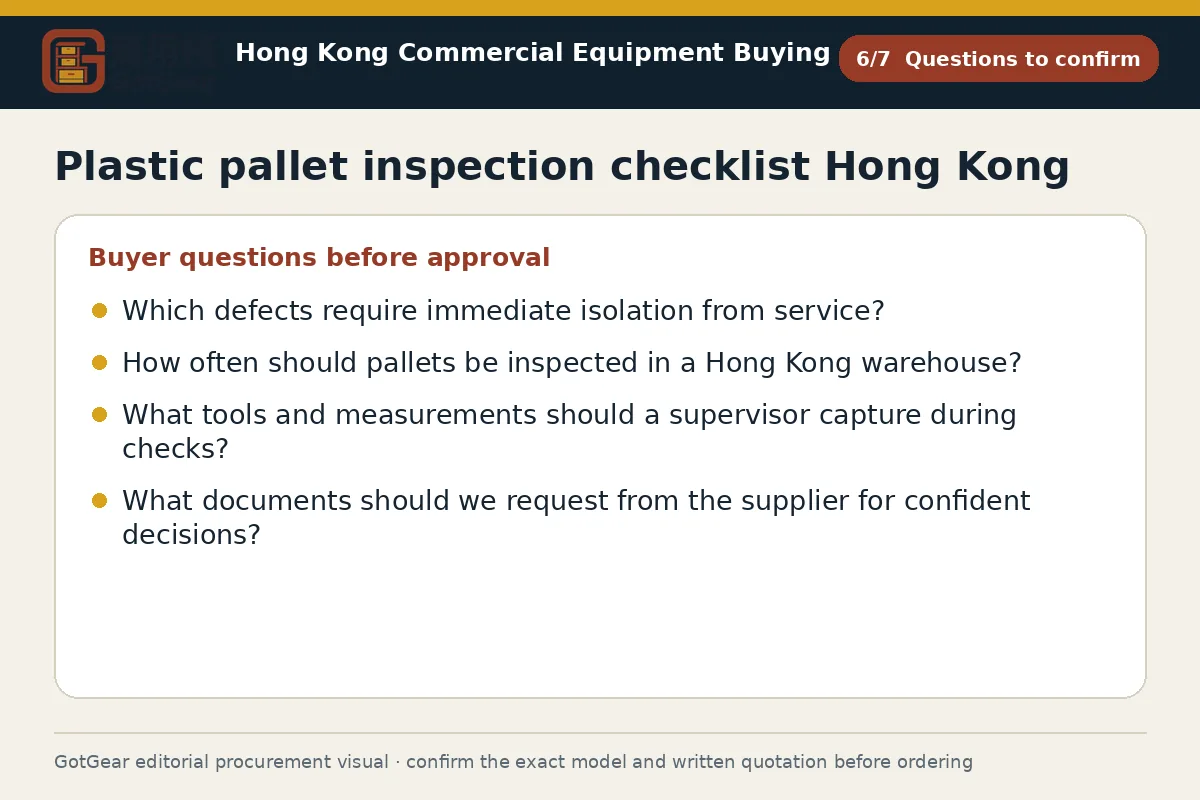
Which defects require immediate isolation from service?
Isolate any pallet with through‑cracks in runners or ribs, chunks missing from fork‑entry areas, severe deck bowing that rocks on a flat floor, embedded metal or chemical swelling. Treat these as out of service until reviewed. This is a practical rule of thumb only. Always compare against the model datasheet, your insurer’s expectations and the written quotation’s acceptance criteria before disposal or return.
How often should pallets be inspected in a Hong Kong warehouse?
Inspect before first use and whenever a pallet changes hands or purpose, then follow your site plan. As an example starting point, teams may do a quick visual‑tactile check at put‑away and again at despatch. Avoid blanket rules presented as universal; agree intervals with your management office, supervisors and the manufacturer’s guidance, and adapt for cold rooms or high‑turn bays.
What tools and measurements should a supervisor capture during checks?
Use a tape for length, width and diagonals, a straightedge for flatness, and a ruler in photos for scale. Note fork‑entry height and width versus your truck forks, and any rocking on a flat floor. Record defect locations and ambient conditions. If hygiene or racking is in scope, add surface‑finish notes and racking type. The supplier’s datasheet and quotation define final tolerances.
What documents should we request from the supplier for confident decisions?
Ask for the model code, material/resin, deck/runner design, static/dynamic and (if applicable) racking suitability with test method, temperature range and cleaning instructions. Request the manufacturer’s acceptance criteria for damage and guidance on returns or recycling. For food or cleanroom use, seek relevant surface information. Written quotations and manufacturer documents should prevail over internal guides where differences arise.
Continue with closely related procurement topics
These pages share equipment, operating or decision-stage signals with this guide.
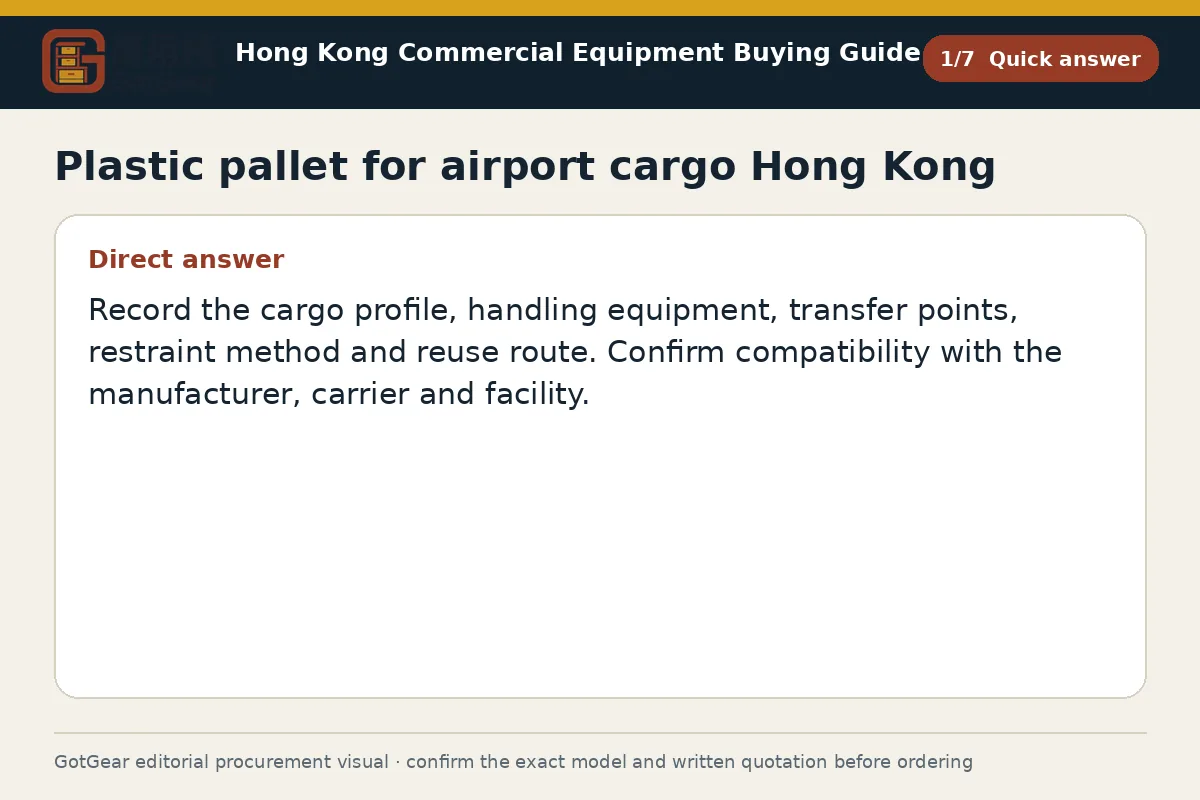
Plastic pallet for airport cargo Hong Kong
GotGear provides a checklist for plastic pallet for airport cargo Hong Kong so air-cargo handlers can record cargo profile, handling equipment, transfer points, restraint, inspection, operating limits and compatibility.
Read the guide
Plastic pallets for cold storage Hong Kong
Plastic pallets for cold storage Hong Kong: GotGear provides a checklist to compare temperature range, unit load capacity, handling, cleaning and condensation risks to help select suitable pallets for cold chain operation.
Read the guide
Plastic pallet stacking safety Hong Kong
GotGear explains plastic pallet stacking safety Hong Kong, plastic pallet load stability Hong Kong and plastic pallet anti-slip surface Hong Kong. It also recommends a unit-load checklist to check restraint, support and handling.
Read the guide
Perforated Euro containers Hong Kong
GotGear provides a checklist to compare perforated Euro containers Hong Kong and vented plastic crates Hong Kong for food handling and cold chain, covering airflow, drainage, containment and cleaning considerations.
Read the guideRelated topic indexOpen more English procurement pages2 topics
Browse additional equipment families, applications and procurement questions relevant to a wider buying brief.