
Provide temperatures, load distribution, support condition, handling equipment and cleaning method. Confirm operating limits and temperature restrictions with the manufacturer.
Plastic pallets for cold storage Hong Kong — Record Temperature and Load Data
Begin with field data, not a catalogue label. Map the coldest and warmest points your pallets will see along the route using a temperature logger placed inside a representative unit load and on the pallet surface. Note minimum service temperature, dwell time at each stage, and any rapid transitions between chill, blast, marshalling and vehicle docks. As an example starting point, you might record -25°C during freezing and brief exposure near +5°C in staging; confirm the actual profile on site. For humidity and door‑opening patterns, add brief observations of condensation risk at handover zones.
Translate these findings into a written enquiry. State the measured minimum temperature and ask for the pallet’s dynamic, static and racking load ratings at that temperature, with expected deflection at the proposed rack span. When comparing plastic pallets for cold storage, Hong Kong buyers should document the actual time–temperature profile and unit‑load map, then seek written ratings at those conditions. Request resin family (e.g., HDPE or PP), any impact modifiers, deck style (open/closed), base type (full perimeter/three‑runner/nine‑foot), surface texture and anti‑slip options. Ask for fork‑entry dimensions, under‑clearance, and whether labels, tags or moulded marks remain legible and adherent at your temperatures. Where available, ask suppliers to reference their internal test method and state any operating limits and temperature restrictions in writing, in bilingual documentation if required.
Plastic pallets for cold storage Hong Kong — Distinguish Rack, Floor and Stack Use
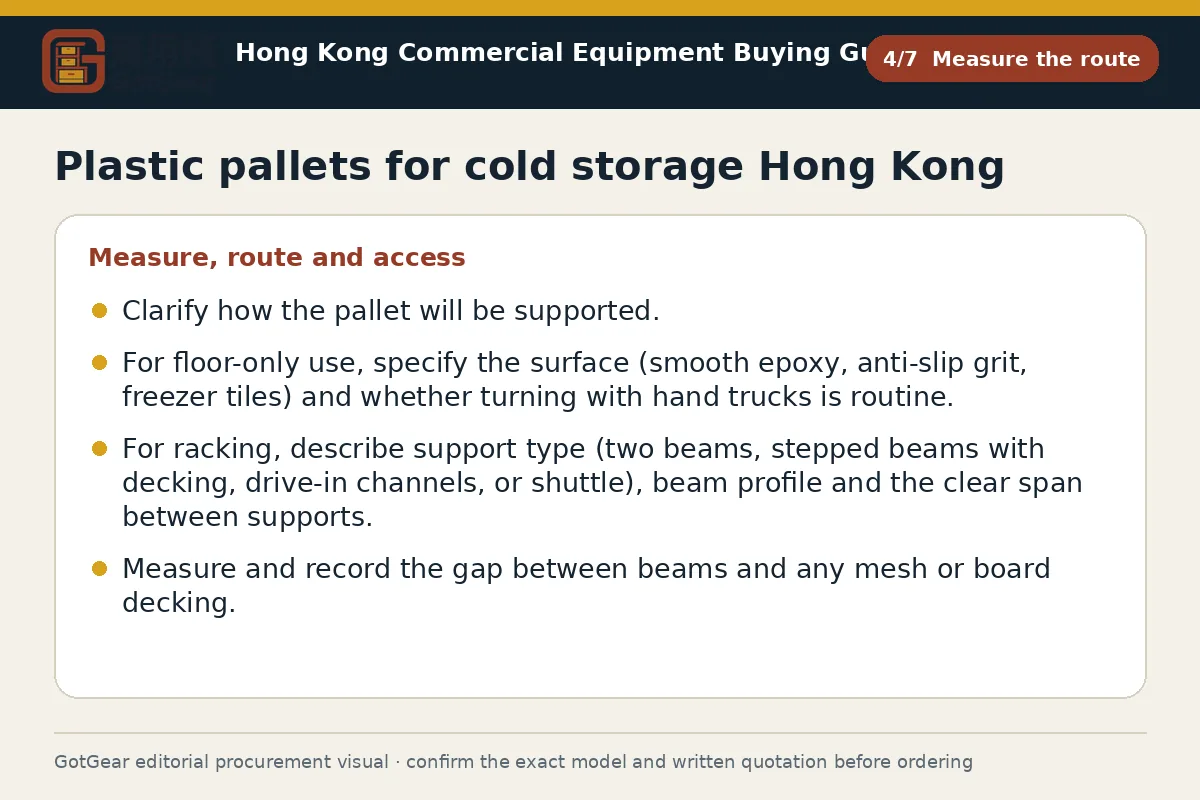
Clarify how the pallet will be supported. For floor-only use, specify the surface (smooth epoxy, anti-slip grit, freezer tiles) and whether turning with hand trucks is routine. For racking, describe support type (two beams, stepped beams with decking, drive‑in channels, or shuttle), beam profile and the clear span between supports. Measure and record the gap between beams and any mesh or board decking. State under‑clearance constraints for conveyors. If you place crates on pallets, note their foot pattern and whether loads are point‑loaded; Hong Kong users of cold-storage plastic crates often create concentrated stresses that affect pallet selection.
For stacking, state planned stack height and interlayers (example: two‑high in freezer staging, to be confirmed by site and manufacturer). Indicate whether loads are stretch‑wrapped, banded or netted. Add a line on plastic pallet load stability Hong Kong considerations so suppliers can propose anti‑slip top surfaces, rims or grommets where permissible. In your RFQ, ask for a racking load rating at your declared beam span and support style, with an acceptable deflection target (example values may be proposed by the racking engineer and must be confirmed). Request drawings of the base structure and runner orientation relative to rack beams, plus any conditions (minimum beam width, deck type) needed to achieve the stated rating. Consider a small on‑rack trial under supervision before full deployment.
What should buyers compare for plastic pallets for cold storage Hong Kong?
| Criterion | Straightforward requirement | More complex requirement | Evidence to provide |
|---|---|---|---|
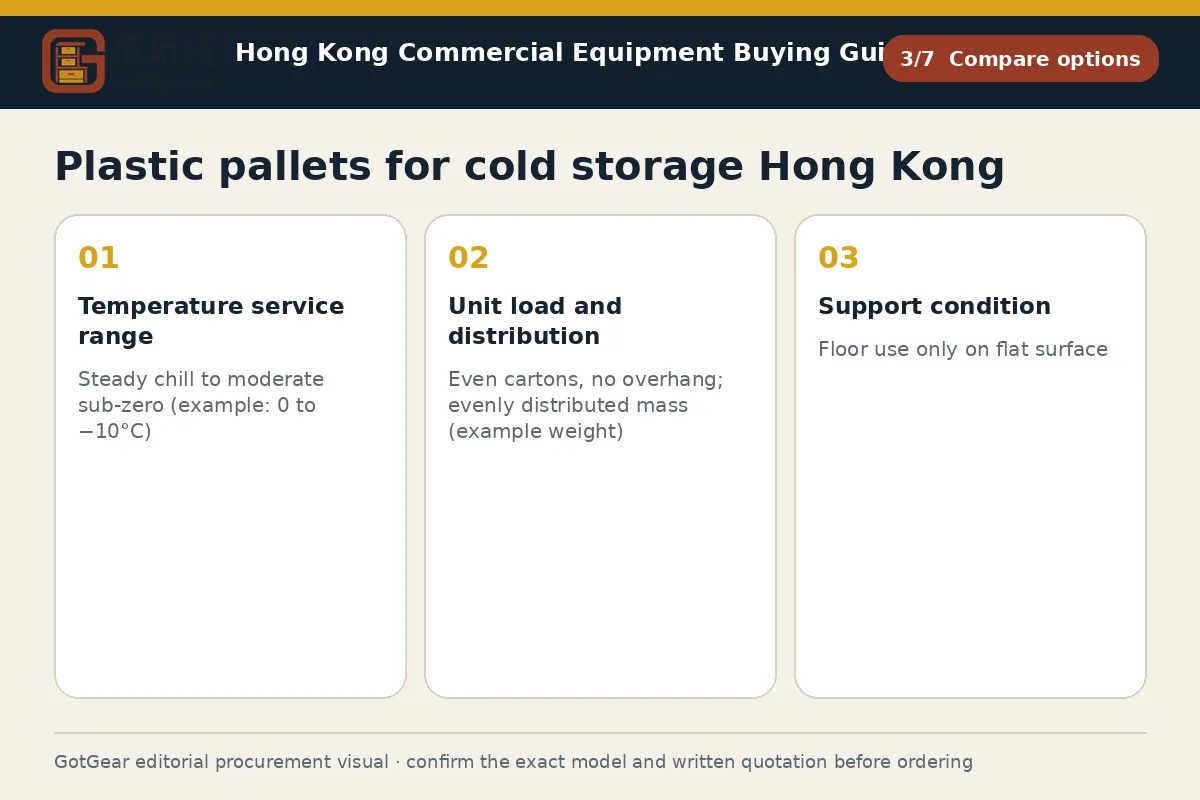
| Temperature service range | Steady chill to moderate sub‑zero (example: 0 to −10°C) | Deep‑freeze or cycling with warm staging (example: −25°C to +5°C) | Logger trace and process map (example set), with minimum temperature to be confirmed |
| Unit load and distribution | Even cartons, no overhang; evenly distributed mass (example weight) | Crates/drums causing point loads; permitted overhang; mixed packaging | Weight per layer, footprint drawing and layer map of point loads |
| Support condition | Floor use only on flat surface | Selective rack or drive‑in; declare beam span (example) and deck/support style | Rack drawing, beam specification and target deflection (to be confirmed) |
| Handling route | Hand pallet truck, short indoor moves | Reach truck, goods lift, dock levellers and conveyors in sequence | Fork dimensions, aisle/lift sizes, thresholds and turning spaces recorded |
| Cleaning and chemicals | Cold water rinse only | Hot wash (example max temp) plus alkaline/oxidising detergents; quick return to freezer | Detergent list/SDS, wash SOP and allowable thermal‑shock delta (to confirm) |
This framework helps buyers create comparable written enquiries. Final model specifications, availability, delivery and commercial terms must be confirmed in a formal quotation.
Plastic pallets for cold storage Hong Kong — Check Handling and Cleaning Conditions
List every touchpoint in the handling route. Identify whether pallets are moved by hand pallet trucks, reach trucks, VNA, shuttle systems, conveyors, goods lifts or dock levellers. Measure fork thickness, width and tip chamfer; as a starting example, some forks are around 160 × 50 mm, but confirm the dimensions of your forks. Record approach angles, threshold heights, kerbs and any floor gullies that could catch a runner. Note goods‑lift door and car dimensions, allowable weight and turning space typical in Hong Kong industrial buildings, and coordinate with the management office on loading windows to reduce staging in humid lobbies that can cause slippery frost.
Define cleaning and sanitation. State detergent names, concentrations and maximum wash temperature (example: up to 60°C; confirm). Explain whether high‑pressure lances are used and the interval between washing and return to sub‑zero storage to avoid thermal shock. For hygiene‑critical rooms, consider options for hygiene plastic pallets in Hong Kong with smooth, closed decks to speed rinsing and reduce water traps. Ask the supplier for written confirmation of chemical compatibility, surface roughness, drainage features and the temperature delta their model tolerates between wash and freezer. Specify marking requirements (laser engraving, embedded labels, RFID/2D codes) and ask whether adhesives and inks remain secure and readable at your lowest temperature and during hot‑wash exposure, with bilingual legends where needed.
Plastic pallets for cold storage Hong Kong — Plan Condition Checks and Isolation
Protect operations with planned checks and clear isolation. On receipt, verify model code against the quotation, measure overall dimensions and base type, and inspect moulding quality (no sharp flash, complete feet, clean weld lines). Place a straightedge on the deck to check flatness and look for transit scuffs. Record quantities, pallet IDs and any nonconformities with photos before moving stock into service. Store initial samples aside for future comparison.
During service, run brief condition checks focused on cold‑related brittleness: look for stress whitening, hairline cracks at feet and runners, chipped rims and excessive deck deflection when racked or stacked. As an example starting point, you might sample a small set at the end of each shift during the first month after changeover; confirm intervals with your risk owner and supplier. Quarantine suspect pallets immediately in a marked isolation area, with bilingual tags showing date, location and fault. Keep damaged pallets away from food‑contact zones. Ask the manufacturer for their inspection guidance and defect‑severity criteria, and align any repair/disposal actions with your insurer, building manager and food‑safety plan. A simple photographic log supports warranty discussions and continuous improvement with a plastic-pallet inspection checklist that Hong Kong teams can adapt.
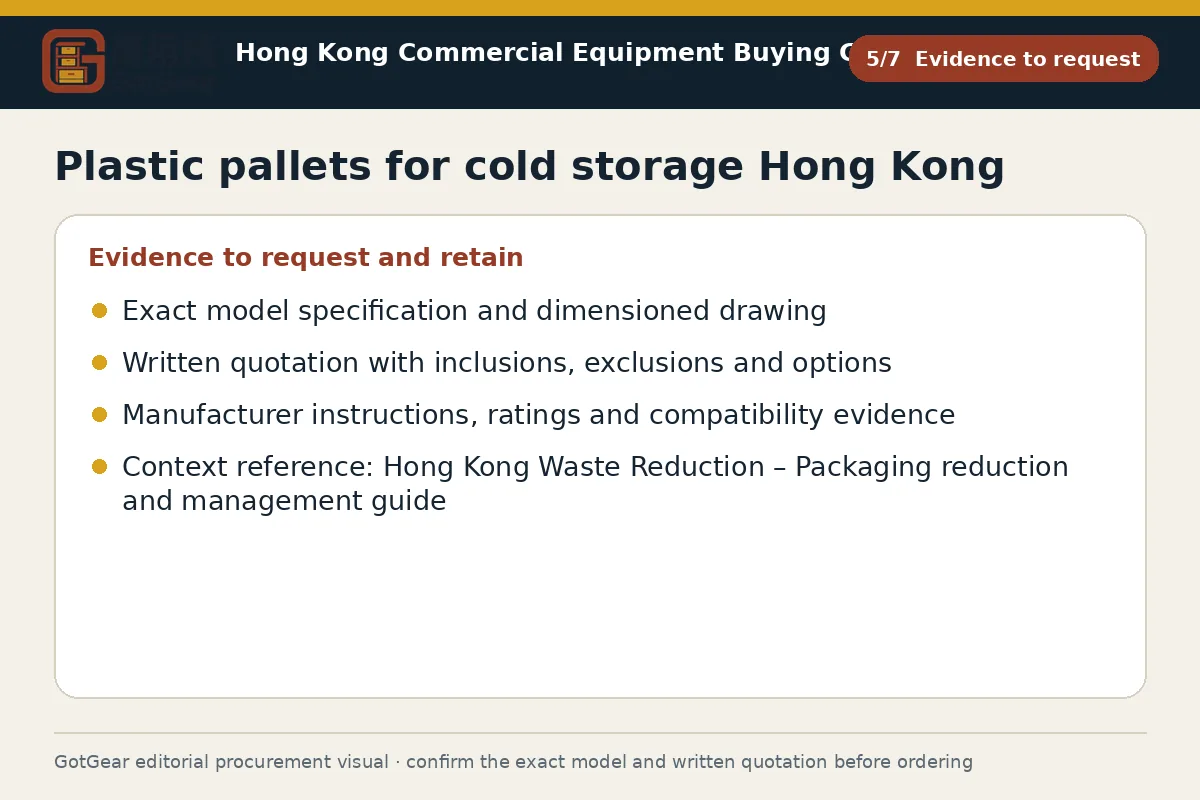
Plastic pallets for cold storage Hong Kong decision checklist
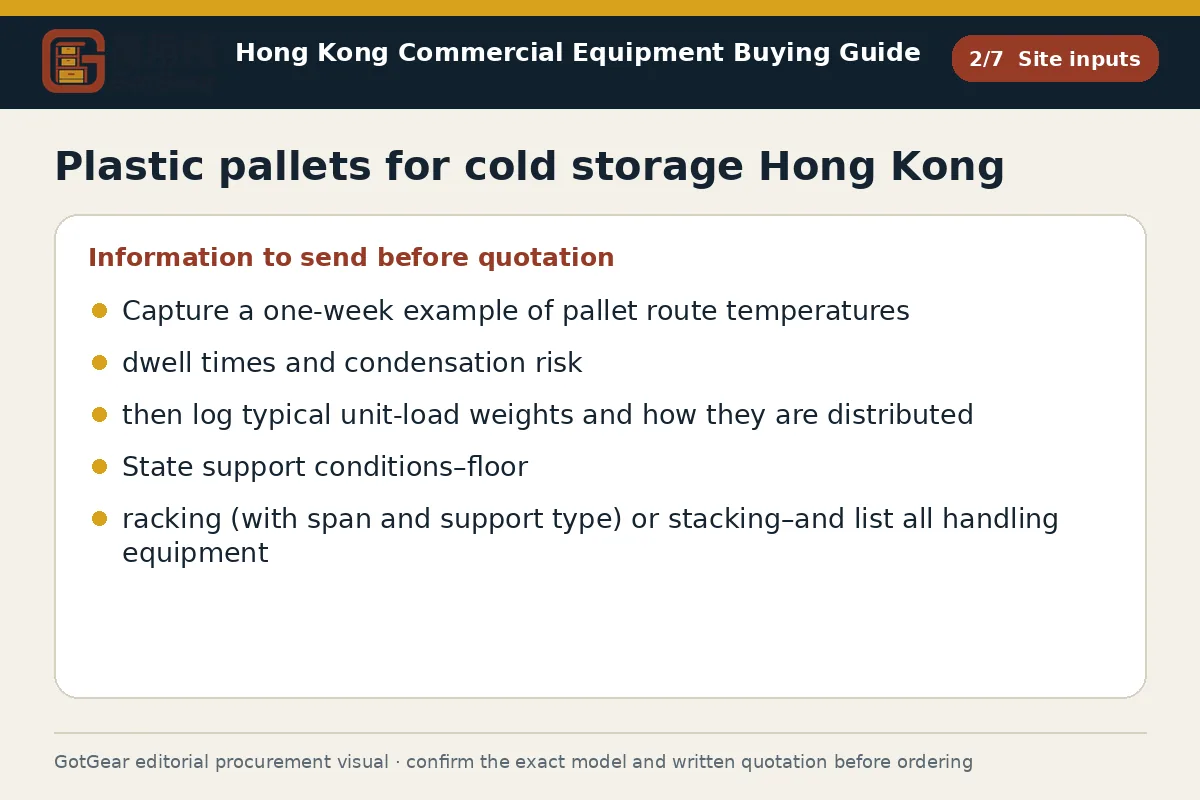
Capture a one‑week example of pallet route temperatures, dwell times and condensation risk, then log typical unit‑load weights and how they are distributed. State support conditions—floor, racking (with span and support type) or stacking—and list all handling equipment, fork sizes, thresholds and lift dimensions. Define cleaning method, detergent names and example maximum wash temperature. Request written ratings at your minimum temperature for dynamic, static and racking loads, with deflection at your span and any operating restrictions. Ask for resin type, base style, anti‑slip, fork‑entry sizes, marking options and bilingual documents. Compare quotations line‑by‑line against that brief. On delivery, verify model code, dimensions and moulding quality, then run early condition checks and set up quarantine and photo logs for issues.
- Operating use, quantity and expected frequency
- Dimensions, capacity, material and accessory requirements
- Delivery address, floor, goods lift and loading window
- Required documents, acceptance checks and after-sales arrangements
Key points for plastic pallets for cold storage Hong Kong
In Hong Kong, access often dictates selection. Many industrial buildings rely on goods lifts with tight doors, low ceilings and weight limits, so confirm door width, car depth and lift rating before purchasing full‑perimeter bases or oversize runners that may snag. Loading windows set by the management office can force staging in warm, humid lobbies; plan coverings and quick transfers to reduce condensation and slip risk. Bilingual (Chinese/English) datasheets, markings and safety notes help mixed crews. For food premises, any hygiene or sanitation commitments should align with the operator’s approved procedures and, where applicable, the expectations of local authorities or insurers—seek formal confirmation rather than assumptions.
Questions about plastic pallets for cold storage Hong Kong
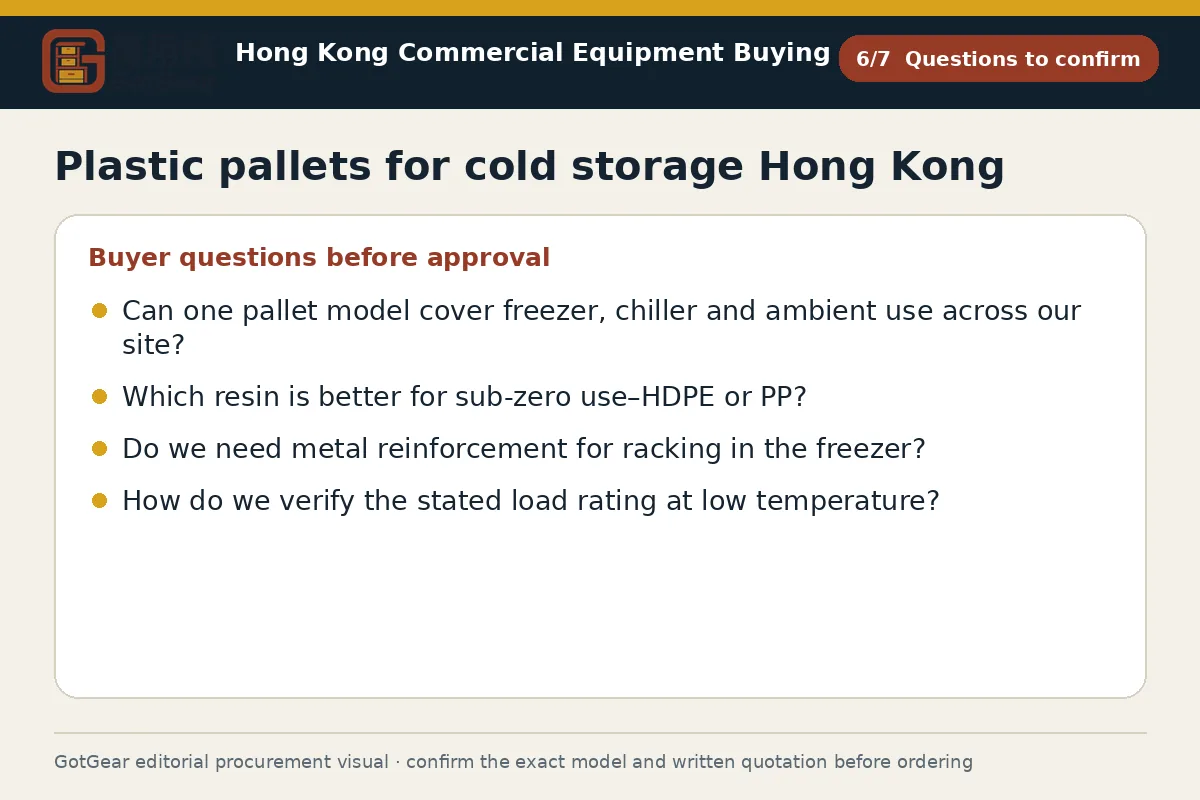
Can one pallet model cover freezer, chiller and ambient use across our site?
Often yes, if the manufacturer rates the same model across your full temperature range and handling route. Confirm load ratings and impact performance at the lowest temperature, and check thermal‑shock guidance if you wash hot and return to sub‑zero quickly. A short site trial under supervision helps validate deflection, grip and handling before wider rollout.
Which resin is better for sub‑zero use—HDPE or PP?
HDPE typically offers better impact toughness at very low temperatures, while PP can give higher stiffness for racking. The right choice depends on your minimum temperature, racking span, handling impacts and cleaning regime. Ask suppliers to propose the resin and any modifiers for your conditions, with written ratings at your minimum temperature and notes on any restrictions.
Do we need metal reinforcement for racking in the freezer?
Only if your rack span and support style require it to meet the target deflection and load at your minimum temperature. Inserts add stiffness but may complicate cleaning and can corrode if not suitably protected. Request the racking rating at your span with and without reinforcement, plus materials used, drainage features and any cleaning limitations, before deciding.
How do we verify the stated load rating at low temperature?
Ask for a written rating declared at your minimum service temperature, the test setup used and acceptable deflection. Request drawings showing base structure and any required support conditions. Run a supervised site trial with your actual unit loads, then measure deflection and observe damage over a defined period. The model specification and formal quotation should prevail in your records.
Continue with closely related procurement topics
These pages share equipment, operating or decision-stage signals with this guide.
Perforated Euro containers Hong Kong
GotGear provides a checklist to compare perforated Euro containers Hong Kong and vented plastic crates Hong Kong for food handling and cold chain, covering airflow, drainage, containment and cleaning considerations.
Read the guide
Reusable plastic crates Hong Kong
GotGear explains how reusable plastic crates Hong Kong are issued, sorted and inspected. It also outlines loss management, plastic crate colour coding Hong Kong and plastic crate cleaning and sanitising Hong Kong.
Read the guide
Plastic pallet inspection checklist Hong Kong
GotGear provides the plastic pallet inspection checklist Hong Kong, which covers cracks, distortion and contamination. It applies the plastic pallet damage assessment Hong Kong criteria to record defects and isolate suspect items.
Read the guide
Plastic pallet stacking safety Hong Kong
GotGear explains plastic pallet stacking safety Hong Kong, plastic pallet load stability Hong Kong and plastic pallet anti-slip surface Hong Kong. It also recommends a unit-load checklist to check restraint, support and handling.
Read the guideRelated topic indexOpen more English procurement pages2 topics
Browse additional equipment families, applications and procurement questions relevant to a wider buying brief.