
Confirm construction details, compatible cleaning agents, inspection points and product documentation. For controlled-room use, verify every proposal against the facility protocol.
Hygiene plastic pallets Hong Kong — Review Construction and Cleanability
Start by examining how the pallet is built. For hygiene-sensitive handling, specify closed-deck surfaces with continuous radiused edges, sealed runners and no exposed cavities where moisture or fines can lodge. Ask the manufacturer to confirm resin type (e.g., virgin HDPE or PP), pigment system and whether any metal or fibre reinforcement is encapsulated. In your enquiry, request deck style, runner configuration, approximate pallet weight, dynamic, static and (if applicable) racking load claims, plus a list of compatible detergents and sanitisers. Buyers in Hong Kong shortlisting hygiene plastic pallets commonly prefer smooth, monobloc or fully welded designs that tolerate frequent washdowns without delamination. This guidance is also relevant to plastic pallets for cold storage Hong Kong.
Handling features matter. If you require perimeter lips, anti-slip inserts or chamfered fork entries, specify them up front and ask for a dimensional drawing with tolerances for doorways, goods-lifts and conveyors. For chilled rooms, note wash and operating temperatures, drainage features and drying time; this is equally important for plastic pallets for cold storage Hong Kong. Condensation and frost are routine in such operations. On receipt, inspect for flash, burrs, pinholes and imperfect welds, and record batch or mould dates for traceability. As an example starting point only, you might request surface finish data or a wipe-test sample, to be confirmed in writing by the responsible supplier and accepted by your site before approval.
Hygiene plastic pallets Hong Kong: Separate Hygiene and Cleanroom Pallet Use Cases
Separate process needs before you shortlist. Food production, catering and institutional kitchens often prioritise rapid cleaning, colour segregation and wet-area grip, while hospital logistics teams may prioritise quiet handling, low snag risk and documented material safety. Electronics, medical-device or aseptic rooms may require reduced particulate shedding, sealed seams and pre-bagged deliveries. Hong Kong facilities evaluating cleanroom plastic pallets commonly require every detail to be checked against the facility protocol, including material formulation and how pallets are introduced, labelled and quarantined.
Map the pallet’s entire journey: loading bay, goods-lift, staging areas, lineside, wash bay and any temperature transitions. Define when pallets cross to stricter zones and whether they must be dedicated, bagged, double-wrapped or resterilised. State stack heights, handling equipment, and aisle clearances; reference the plastic-pallet stacking-safety rules that Hong Kong teams follow. Identify conveyor and racking interfaces (runner orientation, underside geometry) and whether ESD-dissipative properties are needed in electronics areas. For returns from external carriers, describe your decontamination or quarantine step. In quotations, ask suppliers to confirm that proposed models will not shed flakes, trap water or expose reinforcement when repeatedly cleaned under your process.
What should buyers compare for hygiene plastic pallets Hong Kong?
| Criterion | Straightforward requirement | More complex requirement | Evidence to provide |
|---|---|---|---|
| Construction and material | Virgin HDPE/PP, closed deck, sealed runners | Fully welded, cavity-free build with encapsulated reinforcement | Material grade, wall thickness, runner sealing method, drawing/photos |
| Cleanability and chemicals | Neutral-detergent manual wash compatible | Validated compatibility with named sanitisers and automated washer temperatures | Maker’s chemical list, max temperatures, cleaning SOP alignment |
| Load and handling | Dynamic/static loads for pallet jacks stated | Racking load with beam conditions, conveyor-fit and anti-slip details | Test method note, beam span example, friction/anti-slip data if offered |
| Environment and process | Chilled/wet area tolerance and drainage features | Controlled-room particulate/material controls, ESD where required | Statement on additives, particulate data if offered, ESD range if applicable |
| Documentation and delivery | Dimensional drawing, batch ID, bilingual labels | Food-contact or facility-required declarations, packaging cleanliness, delivery booking plan | Copies of declarations, packing description, booking reference and access plan |
This framework helps buyers create comparable written enquiries. Final model specifications, availability, delivery and commercial terms must be confirmed in a formal quotation.
Hygiene plastic pallets Hong Kong — Match Documentation to the Site Process
Match paperwork to the way your site actually runs. Ask for a material information sheet, batch/lot traceability method, dimensional drawing with tolerances, and the maker’s statement on cleaning-chemical compatibility and temperature limits for both operation and washing. If food contact or patient-proximate use is proposed, request the manufacturer’s declaration of suitability where your facility, insurer or adviser requires it. Where racking is used, ask for the stated test method and conditions behind the racking-load claim. Confirm language needs; bilingual English/Chinese documents and moulded markings help Hong Kong teams audit and train.
Compare written quotations like-for-like. List the model code, deck type (closed/open), runner layout, nominal pallet weight, colour, perimeter lip, anti-slip features, and marking options. Ask for packaging cleanliness, any pre-wash, and the proposed delivery arrangement for managed industrial buildings (booking windows, lift dimensions, access path). Include sample evaluation and acceptance criteria as an example starting point only, to be confirmed in the formal brief. Use this guide to compare specifications and prepare a written enquiry so that the final supplier quotation clearly prevails over assumptions.
Hygiene plastic pallets Hong Kong — Define Cleaning and Inspection Controls
Define how pallets will be cleaned, dried, inspected and released before they touch product or enter controlled zones. List approved detergents and sanitisers, maximum wash temperature, contact time and mechanical action. Describe drainage and drying provisions; because of Hong Kong's humidity, plan for airflow or heated drying cabinets so water does not pool in feet or runners. If your operation also washes totes, align procedures with plastic crate cleaning and sanitising Hong Kong; do so to avoid conflicting chemistries or cycles.
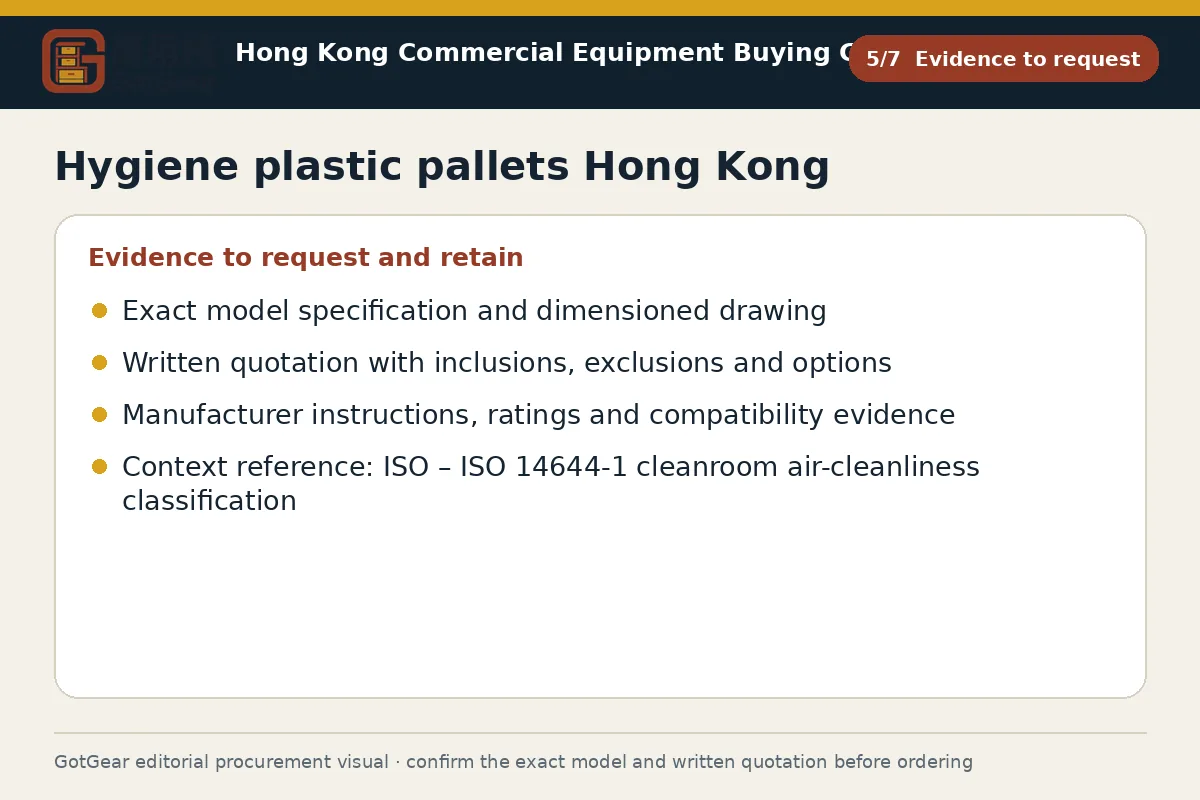
Set inspection controls before first use and on an agreed cycle thereafter. Use a written plastic pallet inspection checklist Hong Kong, which supervisors can follow: check for cracks, chips, exposed reinforcement, delamination, residue entrapment and distorted fork entries. Quarantine damage and record batch IDs. Define stack limits in staging areas, pallet-jack speed, turn radius and racking interface checks to reduce impact damage. On receipt, perform a clean-wipe test on sample units and verify documentation matches the model delivered. For controlled rooms, final acceptance steps must follow the facility protocol; escalate any deviation for written approval by the responsible manager or adviser.
Hygiene plastic pallets Hong Kong decision checklist
Define the handled goods, zones and cleanliness levels, then shortlist deck style, runner layout and any lips or anti-slip features that suit your equipment and floors. State operating and washing temperatures, detergents and drying provisions. Record goods-lift, door and aisle constraints, stack heights and racking interfaces. Request material information, chemical-compatibility statements, drawings, load-claim methods, batch traceability and bilingual markings. Compare quotations line-by-line on model code, features, packaging and building-access arrangements, and include sample acceptance criteria. On receipt, inspect for defects, verify batch IDs and run a wipe test before release. For stricter rooms, confirm every step against the facility protocol in writing.
- Operating use, quantity and expected frequency
- Dimensions, capacity, material and accessory requirements
- Delivery address, floor, goods lift and loading window
- Required documents, acceptance checks and after-sales arrangements
Key points for hygiene plastic pallets Hong Kong, cleanroom plastic pallets Hong Kong
Hong Kong industrial estates often require advance booking for loading bays, lifts and service corridors, and some buildings restrict pallet size or stacking in common areas. Confirm goods-lift car dimensions, turning space and door widths before ordering, and share them with suppliers so packaging and delivery equipment can be aligned. Humid weather slows drying; plan storage with airflow and drip control away from public routes. Bilingual labels and documents expedite management-office checks and institutional sign-off. Treat any delivery and cleaning schedule as site-specific guidance, not legal advice.
Questions about hygiene plastic pallets Hong Kong
Can one pallet model serve both hygiene zones and cleanrooms?
Often no. Cleanrooms may require sealed, low-shedding construction and specific entry controls, while general hygiene zones prioritise rapid wash and wet-floor grip. If dual use is proposed, seek written approval from the facility owner or adviser, define packaging and decontamination steps, and run a site acceptance trial before deployment.
What should I include in a quotation request for hygiene pallets?
Specify deck type, runner layout, nominal weight, perimeter lips, anti-slip, colour, material grade, and operating and wash temperatures. Add your detergents and sanitisers, stack limits, racking/conveyor details, goods-lift and doorway sizes, packaging cleanliness, delivery booking needs, and bilingual marking. Ask for drawings, load-claim method and batch traceability documentation.
How do I check chemical compatibility with our sanitisers?
Ask the manufacturer for a compatibility statement covering your named products, concentrations and temperatures. Then conduct a supervised site trial on sample pallets, inspecting for whitening, softening or cracking after representative cycles. Treat any trial frequency or acceptance limits as example starting points only, and confirm the final criteria in your written brief.
What are typical handling and storage controls in Hong Kong sites?
Coordinate delivery windows with building management and verify goods-lift dimensions. Set stack heights, turning radii and racking interfaces that match your equipment and aisles. Allow for humid conditions by providing airflow for drying and avoid staging wet pallets in public routes. Use bilingual labels and batch IDs to speed institutional checks and audits.
Continue with closely related procurement topics
These pages share equipment, operating or decision-stage signals with this guide.
Produce crates Hong Kong
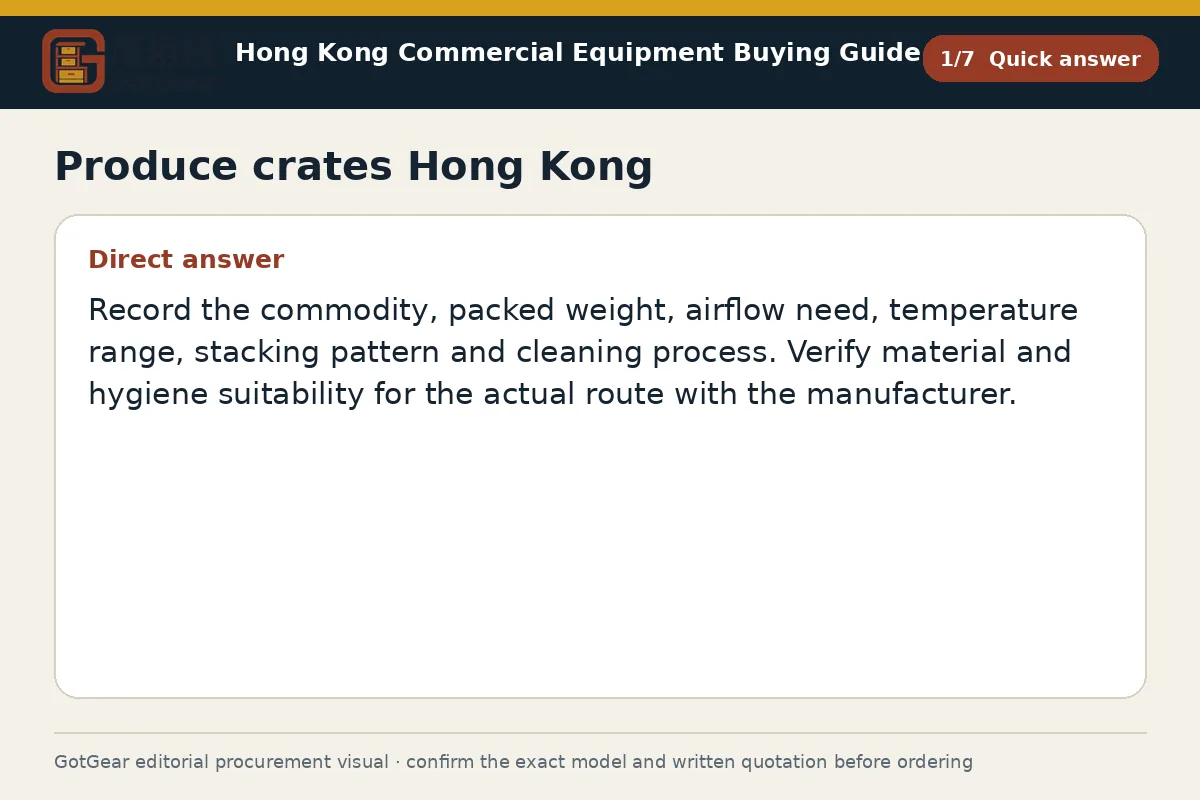
GotGear explains considerations for produce crates Hong Kong, comparing airflow, temperature control and stacking practices. It also covers cold storage plastic crates Hong Kong and food distribution crates Hong Kong.
Read the guide
Plastic storage bins with dividers Hong Kong
GotGear provides practical guidance to help teams choose plastic storage bins with dividers Hong Kong, including how compartment sizes and refill triggers support line-side movement for material flow bins Hong Kong.
Read the guide
Collapsible pallet containers Hong Kong
GotGear offers a Hong Kong guide to collapsible pallet containers Hong Kong, comparing load capacities, handling interfaces, access and empty returns with lockable pallet containers Hong Kong and plastic bulk containers Hong Kong.
Read the guide
Open front storage bins Hong Kong
Choose open front storage bins Hong Kong by assessing reach zones, item dimensions, refill access and shelf depth. Compare picking bins Hong Kong and shelf storage bins Hong Kong with guidance from GotGear.
Read the guideRelated topic indexOpen more English procurement pages2 topics
Browse additional equipment families, applications and procurement questions relevant to a wider buying brief.