
Document item dimensions, load, conveyor or trolley interfaces, closing method and empty-return route. Test store replenishment and e-commerce workflows as distinct operating cases.
Warehouse totes Hong Kong — Record Loads, Routes and Identification Needs
Start by mapping your SKUs and the physical route each container will travel. Measure the longest, widest and tallest packed item that will go into a single tote, and record the usual and peak packed weights. In your enquiry, request internal length, width and usable height under lid; external footprint; tare weight; and the maker’s stated dynamic load, static stack load and any conveyor rating. Ask whether dimensions are nominal or minimum usable. Note humidity, cleaning agents used, and whether smooth or vented walls are preferred for drying. For chain-of-custody or high-value lines, record the tamper-evidence method you intend to use and the label/ID format required.
Walk the route from racking to dispatch and take field measurements: aisle and doorway clear widths, lift-car and lift-door sizes, turning spaces, and the lowest barrier or conveyor side-guard. Photograph pinch points. In Hong Kong’s tighter industrial buildings, confirm loading-window timing and any management-office procedures for goods movements. Specify identification features: label pockets (state size, e.g., A6 as an example starting point), barcode plate, colour options, and whether bilingual labels are required. If your brief covers warehouse totes Hong Kong, include drawings of any chutes, powered rollers or AGVs so the base pattern and corner radii can be matched. Ask for a technical data sheet with material type (e.g., PP/HDPE), recycling mark and cleaning guidance; model specifications and the formal written quotation prevail.
Warehouse totes Hong Kong — Check Conveyor, Trolley and Handling Interfaces
Handling performance depends on the interface between the tote and your equipment. Record conveyor width, roller or wheel pitch, side-guard height, transfer gaps and any diverters, curves or stops. Ask suppliers for base drawings showing rib pattern, runner footprints and corner radii, and request a trial piece to push across your live rollers and belt joins. Where trolleys or dollies are used, note deck size, deck lip, retainer strap positions and lift-door thresholds. Confirm whether handholds, grips or bale arms are needed for stair-free manual moves within Hong Kong’s mixed-use sites.
Specify whether you require a smooth, low-noise base for night operations, and whether anti-scuff or ESD options are needed for electronics—only if your process or insurer requires it. If you measure frequent inclines at loading bays, capture slope angles as examples to be validated on site. Compare quotations on like-for-like base type, noise behaviour (request the manufacturer’s handling guidance) and whether dolly compatibility is certified by the tote maker. Where small parts remain in static shelving, consider picking bins Hong Kong for fixed locations, and reserve mobile totes for inter-zone transport. On receipt, inspect base flatness, flash, burrs and lid alignment, then run a short conveyor test before full deployment.
What should buyers compare for warehouse totes Hong Kong?
| Criterion | Straightforward requirement | More complex requirement | Evidence to provide |
|---|---|---|---|
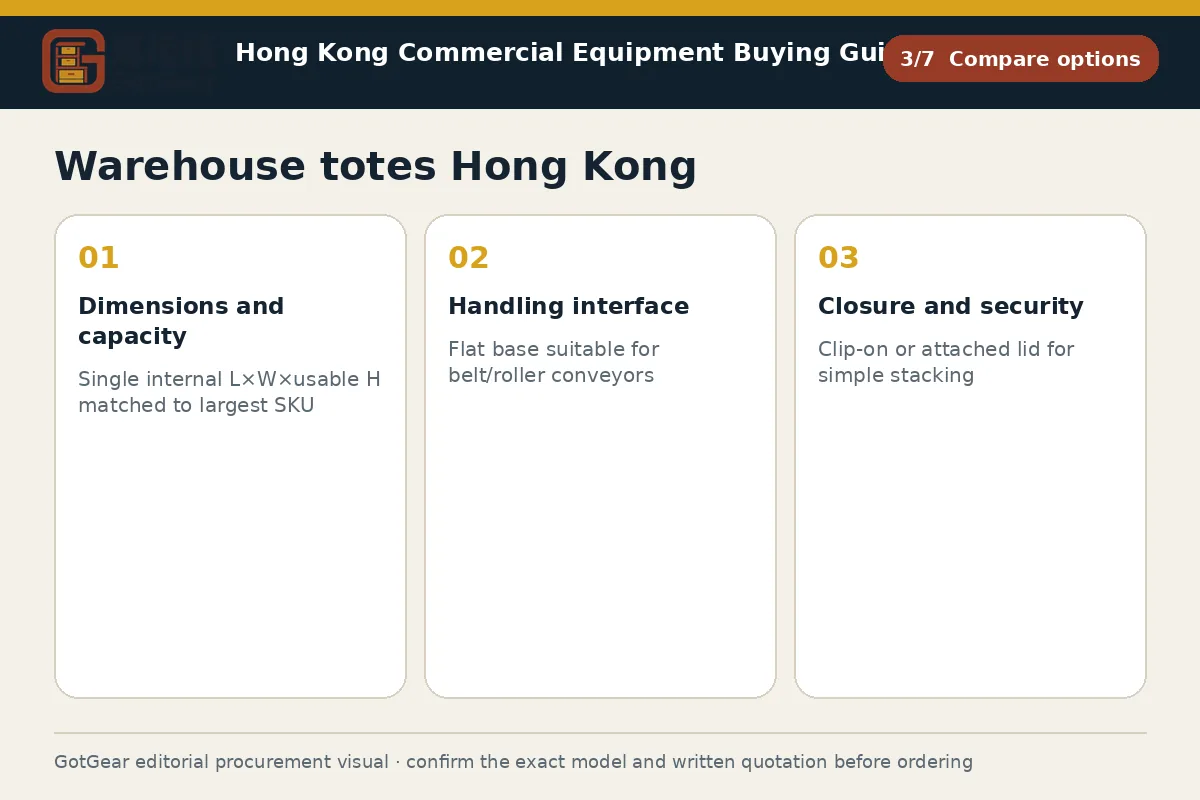
| Dimensions and capacity | Single internal L×W×usable H matched to largest SKU | Multiple heights or dividers across SKU families | Max item size, weight range, drawings of any inserts/dividers |
| Handling interface | Flat base suitable for belt/roller conveyors | Underside runners, AGV/trolley docking and lift thresholds | Conveyor width/pitch, turn radii, trolley deck size, lift-door clearances |
| Closure and security | Clip-on or attached lid for simple stacking | Tamper-evident seals or serialised ties per retailer policy | Seal type, hole size/position, security policy or audit note |
| Identification and tracking | A6 label pocket and human-readable ID | In-mould barcode/RFID and colour coding by route or client | Label size, data symbology, bilingual copy requirement |
| Cleanability and environment | Smooth PP walls; optional drain holes | Compatibility with sanitisers, chill rooms and high humidity | Cleaning agents, target temperature range (example), hygiene statement if required |
This framework helps buyers create comparable written enquiries. Final model specifications, availability, delivery and commercial terms must be confirmed in a formal quotation.
Warehouse totes Hong Kong: Plan Tote Closure and Store Returns
Closure choice affects transport security, stacking and the cost of store returns. Decide between attached hinged lids, clip-on lids or open totes with secondary wraps. For retail distribution workflows in Hong Kong, confirm whether tamper-evident seals or serialised cable ties are required by the retailer’s audit, and specify seal hole size and placement. If stores will backhaul empties, choose nestable containers or folding options; state nesting height and any bale-arm position needed to create a stable stack when loaded. If stores return mixed or wet goods, document the need for drainage holes and wash-through compatibility, and list your cleaning chemicals as examples to be confirmed with the manufacturer.
Plan the reverse logistics: who removes labels at store, where returns are consolidated, lift and corridor constraints at malls, and whether bilingual return instructions are printed on the tote. Reference pallet footprints for stacked closed totes and state the maximum stack height you propose as an example only. When comparing offers, align lid type, seal compatibility and label-pocket positions. Consider reusable plastic crates in Hong Kong for food or floral lines if hygiene or ventilation is essential, and position them within a broader Hong Kong returnable transport packaging programme so totes, crates and pallets can share the same backhaul and inspection steps.
Warehouse totes Hong Kong: Test Tote Fit for Picking, Sorting and Packing
Before scaling, run a timed picking and packing trial with the shortlisted tote. In Hong Kong e-commerce fulfilment tote operations, test the fit of common order profiles, divider options and dunnage, and ensure scanners read labels in all orientations. Confirm that ergonomic weight limits at your facility are respected; set an example threshold to be verified by your competent manager. At pack benches, check lid clearance, tote lip compatibility with slides, and whether open-tote designs speed touch-time without compromising containment.
If your sortation uses bomb-bay or tilt trays, verify that the tote transfers cleanly without catching. Where shelf picks dominate, align tote footprints with your warehouse bin storage system Hong Kong so replenishment and pick faces stay consistent. Ask suppliers to quote part numbers for dividers, label holders, colour variants and replacement lids, and to state whether barcodes or RFID tags can be applied in-mould or post-mould. On delivery, inspect internal dimensions against the quotation, check warp by stacking in a corner test, verify lid snap and hinge action, and run a short live pick-pack loop to confirm flow. As always, the model specification and written quotation prevail over samples.
Warehouse totes Hong Kong decision checklist
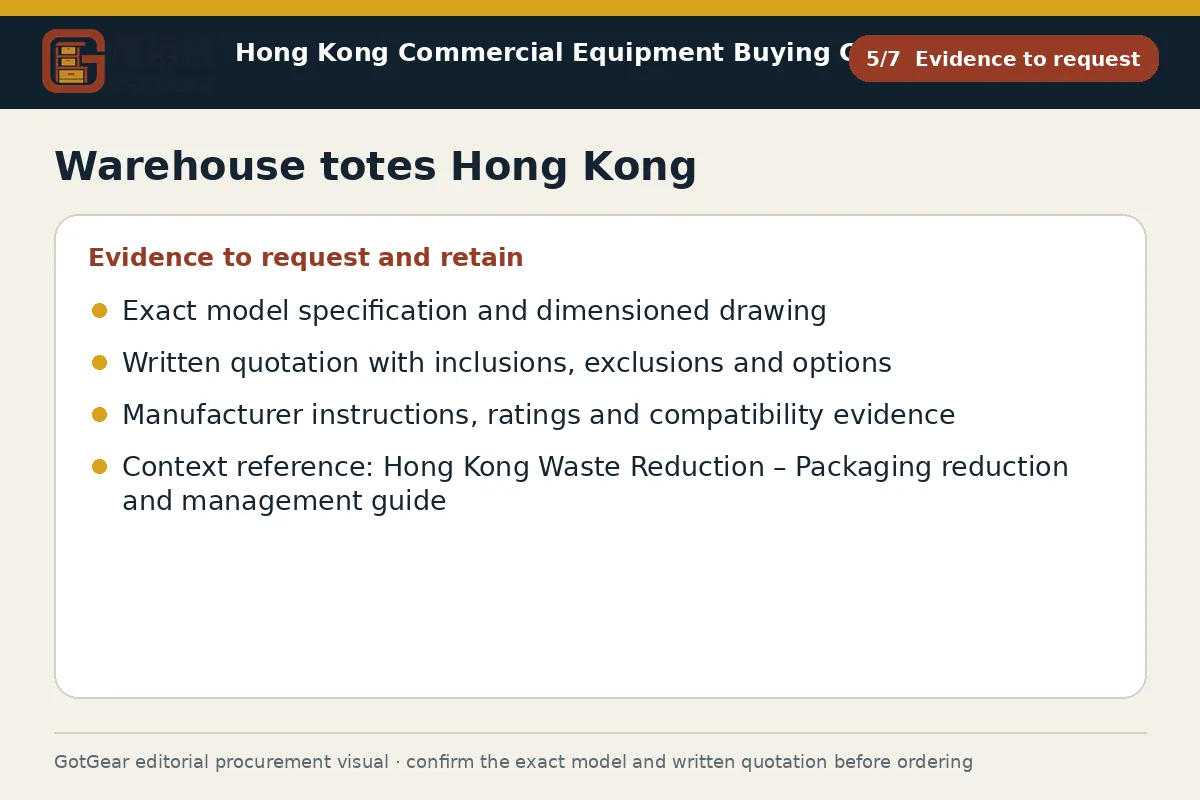
Document the largest packed SKU, the normal and peak weights, and whether contents are fragile or moist. Record the full route—racking, conveyors, lifts, corridors and docks—with measurements and photos of pinch points. Specify internal dimensions, external footprint, base style, lid type, identification method and any seal requirement. Note cleaning agents, humidity and whether venting or drainage is desirable. Request written quotations listing model code, material, colour, divider options, load ratings, stacking guidance and label-pocket size. Ask for base drawings and a trial unit to test on your conveyors or trolleys. On receipt, verify dimensions, flatness, lid function and label compatibility, then run a short workflow test. If any certification or hygiene statement is needed, request it only where required by your site or client.
- Operating use, quantity and expected frequency
- Dimensions, capacity, material and accessory requirements
- Delivery address, floor, goods lift and loading window
- Required documents, acceptance checks and after-sales arrangements
Key points for warehouse totes Hong Kong, retail distribution totes Hong Kong, e-commerce fulfilment totes Hong Kong
Hong Kong facilities often face tight lift cars, narrow corridors and managed loading windows, so tote selection must consider exact external footprints, stack height and trolley compatibility. Confirm procedures with the building’s management office before large deliveries or store returns, and capture any access restrictions in bilingual notes for operations teams. High humidity and frequent wash-downs favour smooth interiors and materials compatible with your cleaning chemicals, while typhoon-season water ingress makes secure lids and drainage a practical topic. Public-facing malls may require discreet handling and quiet bases for night work. Where approvals are needed, align your tote brief with the venue, client or insurer’s written requirements.
Questions about warehouse totes Hong Kong
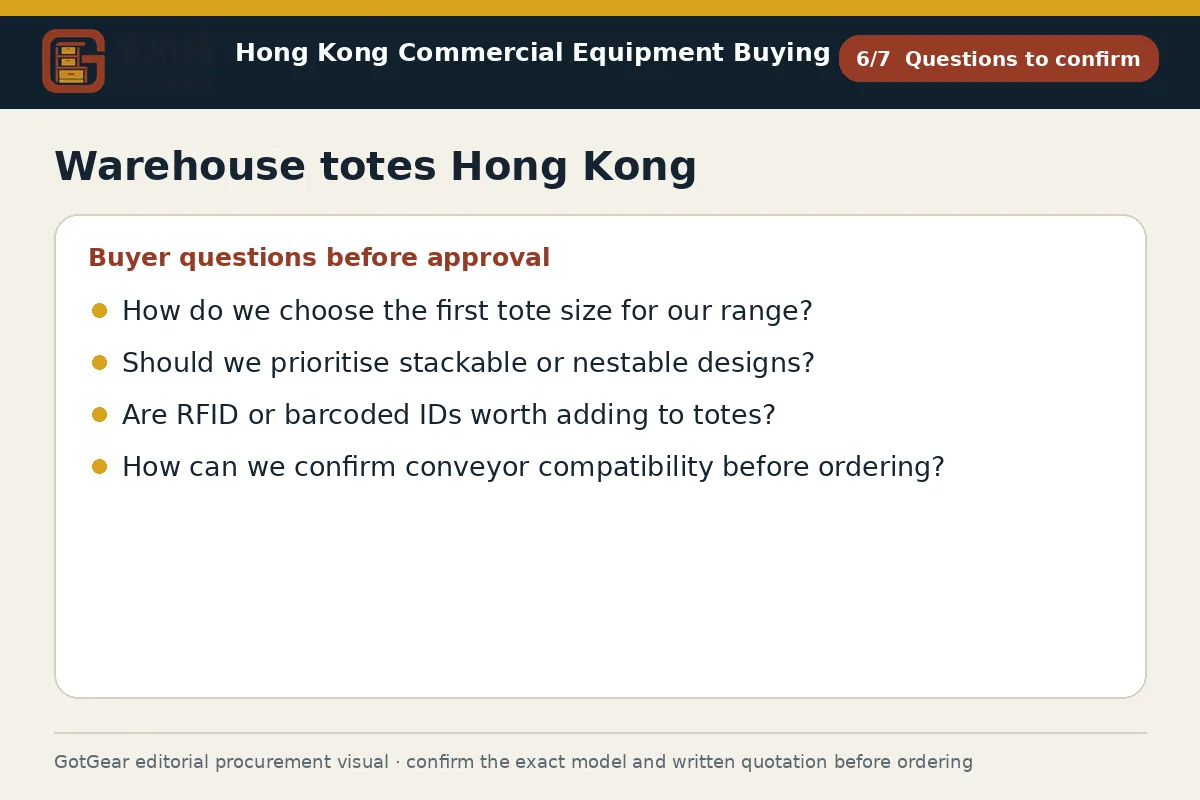
How do we choose the first tote size for our range?
Start with the largest packed item and add clearance for dividers, labels and easy picking. As an example starting point, many operations trial a 600×400 mm footprint with two heights, then confirm the fit with their supplier. Measure real routes, lift doors and shelving before committing. Your final choice should follow the model specification and the supplier’s written quotation.
Should we prioritise stackable or nestable designs?
Choose stackable lids or bale arms when totes must form stable, closed stacks in vehicles or store stockrooms. Pick nestable bodies if empties must backhaul efficiently. Many buyers mix both, using nestable for returns and lidded stackers for outbound. Test nesting height and stack stability on your own trolleys, and confirm the recommended limits in the manufacturer’s documentation.
Are RFID or barcoded IDs worth adding to totes?
Yes, if you need traceability across picking, dispatch and store returns. Specify label-pocket size, barcode symbology and whether in-mould labels or RFID tags are preferred. In humid conditions, verify adhesive performance or opt for mechanical pockets. Only request serialised IDs where your WMS and audit require them, and align the final approach with the supplier’s data and material guidance.
How can we confirm conveyor compatibility before ordering?
Request base drawings and a trial tote, then test it across your rollers, belt transfers, curves and stops. Check for noise, snagging and product movement. Capture roller pitch, side-guard height and transfer gaps in your enquiry. If dollies or trolleys are involved, test docking and braking as well. Final acceptance should follow the supplier’s specification and your site trial results.
Continue with closely related procurement topics
These pages share equipment, operating or decision-stage signals with this guide.
Produce crates Hong Kong
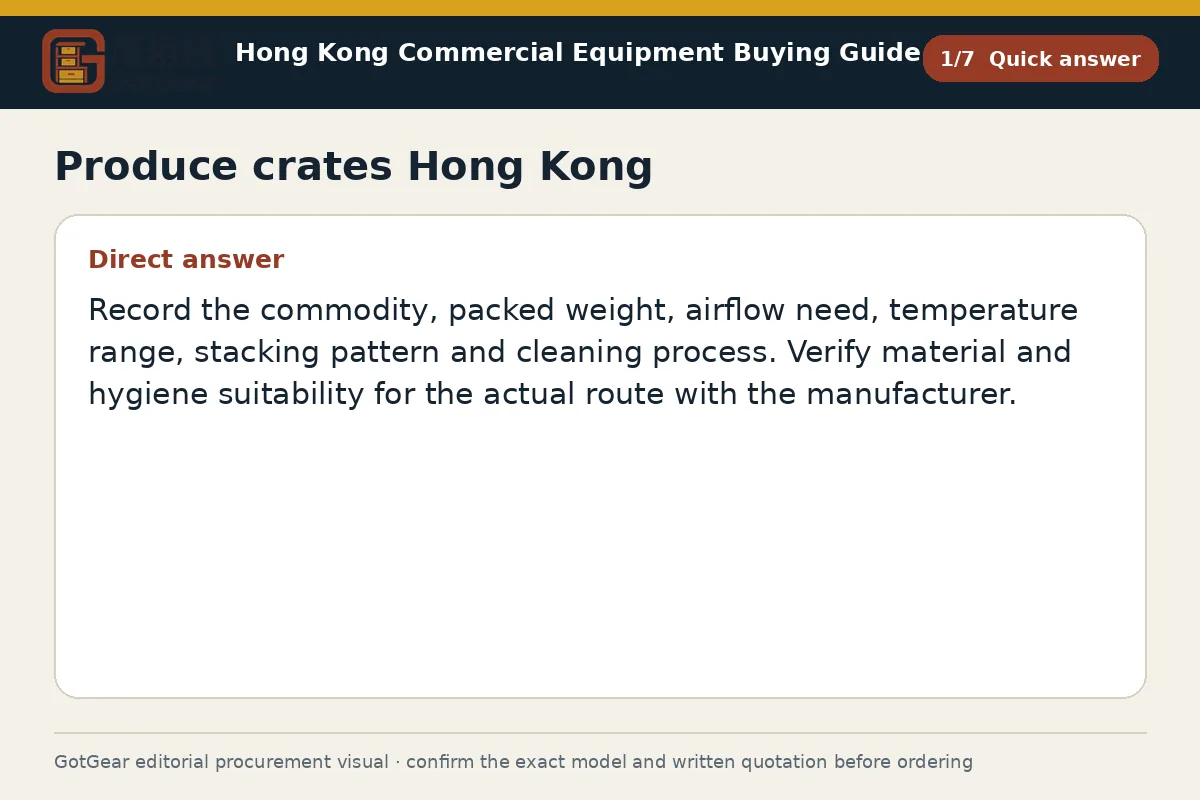
GotGear explains considerations for produce crates Hong Kong, comparing airflow, temperature control and stacking practices. It also covers cold storage plastic crates Hong Kong and food distribution crates Hong Kong.
Read the guide
Open front storage bins Hong Kong
Choose open front storage bins Hong Kong by assessing reach zones, item dimensions, refill access and shelf depth. Compare picking bins Hong Kong and shelf storage bins Hong Kong with guidance from GotGear.
Read the guide
Plastic storage bins with dividers Hong Kong
GotGear provides practical guidance to help teams choose plastic storage bins with dividers Hong Kong, including how compartment sizes and refill triggers support line-side movement for material flow bins Hong Kong.
Read the guide
Drawer containers Hong Kong
GotGear compares drawer containers Hong Kong by depth and labelling to help you choose the right parts drawer cabinet Hong Kong or transparent drawer storage cabinet Hong Kong.
Read the guideRelated topic indexOpen more English procurement pages2 topics
Browse additional equipment families, applications and procurement questions relevant to a wider buying brief.