
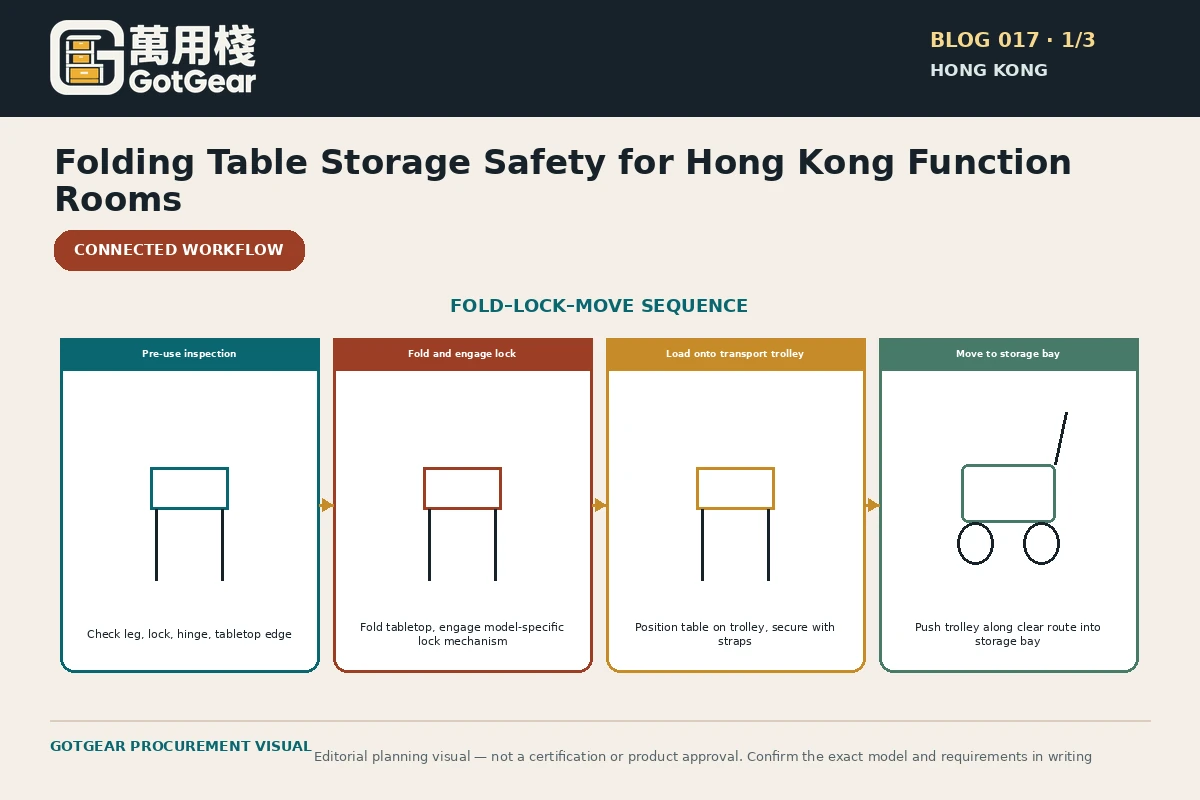
A safe folding-table storage plan follows the maker’s folding and transport instructions, clears the movement route of obstructions and slip hazards, and assesses the actual handling task rather than assuming a generic trolley or stack will work. In Hong Kong venues this means mapping door widths, stair or lift access, floor condition and turnaround times, choosing or modifying a trolley only after route trials, and scheduling risk-based pre-use checks governed by manufacturer guidance and local manual-handling best practice.
What to remember before you decide
- Always start by mapping the handling route and matching it to the table’s folded dimensions.
- Choose or adapt a trolley only after on-site trials with your actual tables and floors.
- Document movement procedures and train staff; routine pre-use checks reduce last-minute failures.
- Design storage to preserve stability and keep evacuation routes and access clear.
- Use Hong Kong manual-handling guidance and international guidance as practical frameworks, not legal substitutes.
Why treat folding tables as movable work equipment, not generic furniture
Practical context: In busy Hong Kong function rooms and community halls folding tables are moved frequently, often across narrow corridors, through fire exits and into multi-level storage. Treating them as furniture that can be stacked anywhere creates risks: unstable stacks, abrupt load shifts on trolleys, blocked escape routes and manual-handling injuries. Use these decision checks: identify typical handling patterns (one-person carry, two-person carry, trolley use), measure corridor, door and lift clearances, and note local floor finishes and gradients. Consider worker capability, expected handling frequency and available time between events. A key limitation is that Manufacturer folding instructions and trolley designs vary widely; a trolley that carries one table type may not secure another. Venue constraints such as storage room layout, fire-safety requirements and peak turnover times limit ideal solutions. Relying on ad-hoc stacking or leaving tables near exits increases slips/trips risk and can breach evacuation routes. Next, Record a standard task description for table reset operations in your venue’s operations manual. Measure and photograph key routes (doors, lift thresholds, corridor widths). Compare those dimensions to table folded size and any trolley footprint before choosing equipment. Trial one full movement cycle with trained staff before adopting a new method.
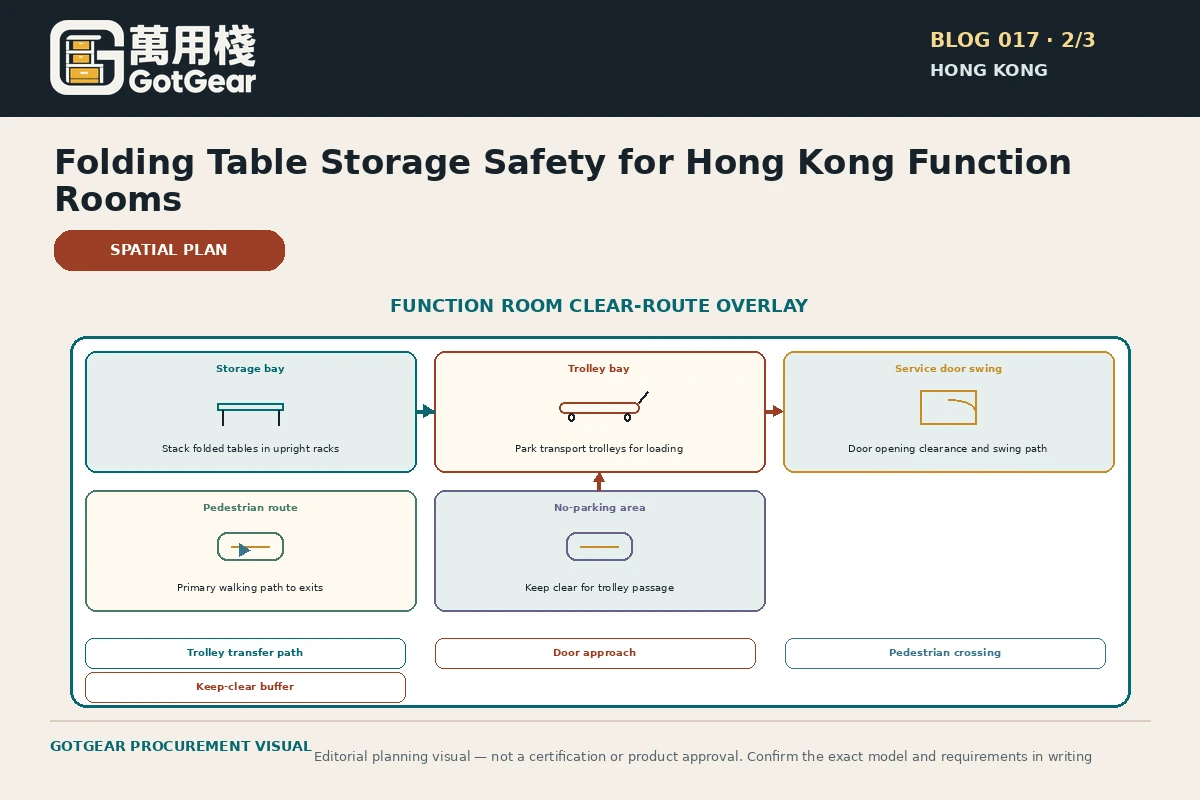
Map the handling task and environment first
Practical context: A Hong Kong hotel back-of-house corridor 1.0–1.2 m wide or a community centre with stepped access will shape the choice of trolley, stacking orientation and team size. Use these decision checks: create a simple task map—start point, interim route(s), storage location and time constraints. Note trip hazards, door swing directions, lift access, thresholds and typical pedestrian flows during events. A key limitation is that A route map is only as good as up-to-date observations. Changes such as temporary signage, maintenance works or high-attendance events alter risk. Mapping does not replace worker consultation; staff who move tables daily often know pinch points and practical workarounds. Next, Conduct a short route trial with the specific table model and an empty trolley (or mock trolley) during a quiet period. Record where the load needs stabilising, where helpers are required and where floor protection or additional signage is needed. Update your route map and the venue’s risk assessment based on those findings.
“Design table movement as a workplace task: measure, trial, document and inspect. The right trolley is the one proven to work on your route, not the one that looks compact on paper.”— GotGear Editorial Team
What should buyers compare for folding table storage safety Hong Kong?
| Option or approach | Best for | Trade-offs | Checks before acceptance |
|---|---|---|---|
| Two-person manual carry without trolley | Venues with very narrow routes or where trolleys cannot pass thresholds. | Higher physical demand per person, slower resets, greater dependency on staff training and rotation to avoid injury. | Trial with a measured route and timed carries; consult Hong Kong manual-handling guidance on team lifts and duration limits. |
| Generic flat stacking trolley (horizontal stacks) | Open storage rooms with level floors and short movement distances. | May be unstable on ramps, heavy to turn in tight corridors; not universally compatible with all table leg designs. | Test with the actual table model on your floor, checking braking, turning radius and whether fittings secure leg positions. |
| Dedicated folding-table trolley with A-frame or vertical support | High-turnover venues that need compact storage and safer centre-of-gravity control. | Requires route clearance for height and may need modified door thresholds; may require more resources and needs regular maintenance. | Run a full movement trial through doors and lifts, and verify vertical clearances plus wheel performance on your corridors. |
| Wall-mounted or racked vertical storage | Permanent stores where tables are seldom moved and space can be optimised vertically. | Requires mechanical lifting aids or more staff to load/unload; increases complexity of retrieval during busy turnovers. | Check wall fixings and floor loading limits; conduct a safe-access assessment for assembly/disassembly and emergency retrieval. |
| On-site custom trolley modification (brakes, wheel types, restraints) | Venues with awkward floor finishes or specific table designs that standard trolleys don’t suit. | Modifications must be reviewed against manufacturer guidance; improper mods can void warranties or create new hazards. | Document modifications, get manufacturer input where possible, and perform repeated route trials under load. |
This framework helps buyers create comparable written enquiries. Final model specifications, availability, delivery and commercial terms must be confirmed in a formal quotation.
Transport trolleys, stacking orientation and storage layout
Practical context: In Hong Kong venues space is at a premium, so trolley choice and storage layout must balance compactness with safe handling. Use these decision checks: confirm trolley compatibility with table size, foot geometry and latch engagement; check wheel type for your floor finish; ensure the trolley footprint fits storage and manoeuvre spaces; and ensure a trolley’s centre of gravity keeps loads stable during turns and on gradients. A key limitation is that A trolley designed for flat-lay stacking may not secure tables stored vertically and vice versa. Castors that work on smooth banquet halls can be unsuitable on tiled or uneven service corridors; poor brakes or non-swivelling wheels increase the chance of runaways on ramps. Storage density that prioritises maximum stack height over stability increases collapse risk during retrieval. Next, Before purchase, trial trolleys with your actual tables and storage area. Verify braking performance on your floor, attempt common manoeuvres (tight turns, lift thresholds) and confirm that stacked tables do not overhang the trolley frame. Define an acceptable stack height and orientation (flat, A-frame, vertical) based on manufacturer guidance and your route tests, and record that in the operations manual.
Store to preserve stability and escape routes
Practical context: Storage in multi-use rooms or corridors is common in Hong Kong. Always prioritise clear evacuation routes and keep storage out of fire-fighting access zones. Use these decision checks: ensure storage does not obstruct exits, keep aisles to the venue’s minimum width for evacuation, and designate a dedicated trolley parking zone away from public circulation. A key limitation is that Some venues lack a dedicated store room and may be tempted to stack tables against walls or behind doors. This risks unstable leaning stacks and makes pre-use inspections harder. In older buildings with uneven floors, vertical storage can place concentrated loads on small floor areas, increasing damage to tables and flooring. Next, Mark a storage footprint and friction-reducing pads where trolleys rest. Install labelled zones and physical barriers if needed to prevent ad-hoc stacking. Train staff to return tables to the designated footprint and to carry out a quick stability check when removing tables from the stack.
Folding table storage safety Hong Kong decision checklist
- Measure folded table dimensions, including legs and overhangs, and record them against door, lift and corridor clearances.
- Map the full movement route with photographs and note thresholds, level changes and typical pedestrian flows.
- Confirm that chosen trolley or carrying method secures the table’s legs, latches and centre of gravity.
- Check floor type and gradient along the route and for storage; select wheel types appropriate to those finishes.
- Determine maximum acceptable stack height and orientation based on manufacturer guidance and trial evidence.
- Ensure storage does not obstruct evacuation routes or firefighting access and aligns with venue safety procedures.
- Assess staff capability and roster for frequent table moves; plan team sizes and rotation to reduce manual-handling strain.
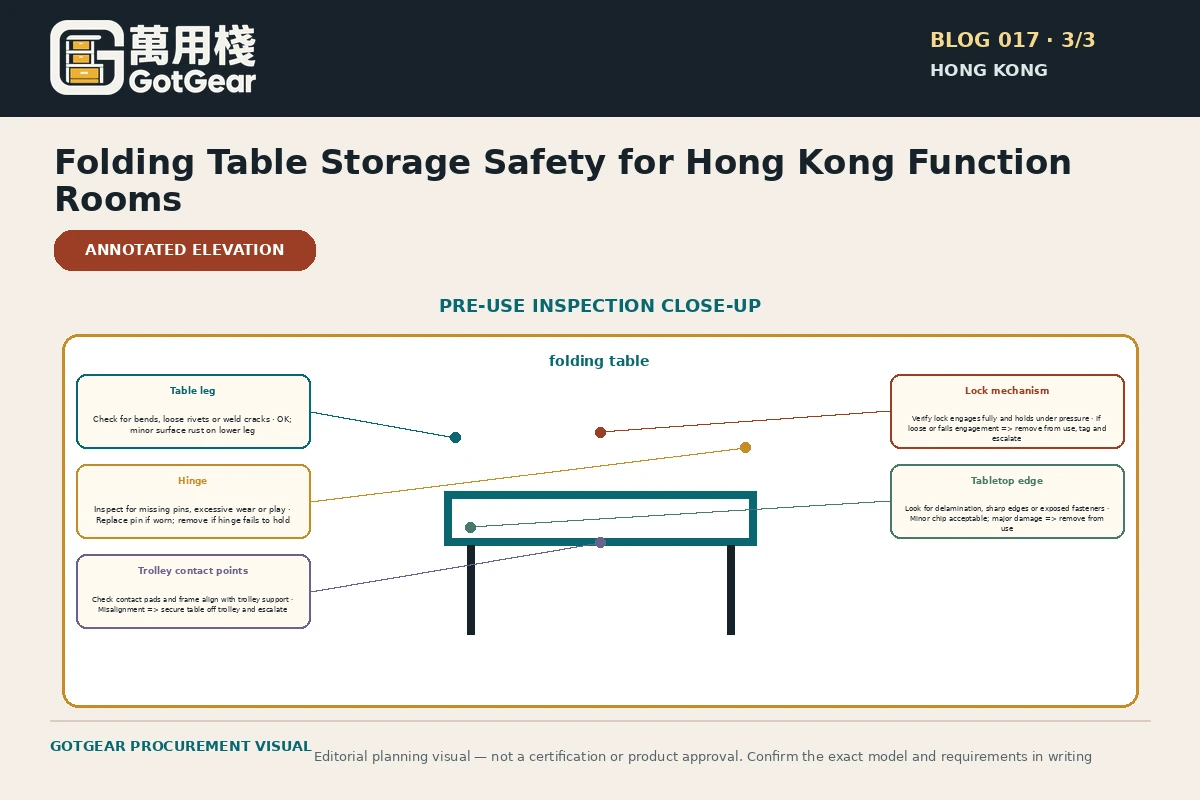
- Define pre-use visual checks for tables, trolleys and restraints and note inspection triggers (impact, wear, seasonal changes).
- Record a documented movement procedure and train staff with hands-on route trials before routine use.
- Assign responsibility for trolley maintenance, visual inspection records and corrective actions for defects.
Practical action sequence
- Step 1: Photograph and measure the table and the intended movement route (doors, lifts, corridors).
- Step 2: Select candidate trolleys or carrying methods and conduct an on-site trial moving an empty table through the route.
- Step 3: Observe and note pinch points, stabilisation needs and the required team size during the trial.
- Step 4: Decide storage orientation and mark dedicated storage and trolley parking zones in the venue.
- Step 5: Create a short documented movement procedure with a pre-use visual check and train staff through at least two supervised repetitions.
- Step 6: Schedule risk-based inspections for tables and trolleys, with records of defects and corrective actions.
- Step 7: Review the procedure after three events or one month of use and update route mapping and training as needed.
- Step 8: Maintain ongoing staff feedback channels to capture changes in route conditions or equipment performance.
Apply the checks to your Hong Kong site
For Hong Kong venues, folding tables should be treated as movable work equipment rather than generic stackable furniture. Follow the Labour Department’s manual‑handling guidance when assessing sudden load movement, pushing and pulling forces, space constraints and worker capability. Use ILO guidance as international best practice when planning handling aids and clearing obstructions, and view HSE inspection advice only as context for risk‑based inspection frequency and pre‑use visual checks, since HSE material is overseas guidance rather than Hong Kong statutory requirement. Local building and fire‑safety constraints—narrow corridors, rapid duty‑roster turnover and multi‑level service access—will disproportionately affect trolley selection and where sets can be stored. When assessing folding table storage safety Hong Kong teams should validate routes and clearances on site. Specify a condition‑check routine for commercial folding table inspection Hong Kong and select any folding table transport trolley Hong Kong to match measured service paths. Operational takeaway: map and mark a documented movement route, trial the trolley and storage layout in a staffed shift, and record the outcome as the basis for inspection frequency and storage allocation.
References used for this article
These sources provide regulatory, safety or planning context. They do not certify any GotGear product or replace site-specific professional advice.
- Hong Kong Labour Department — A Simple Guide to Health Risk Assessment — Local framework for evaluating posture, pushing/pulling, load stability, space and worker capability during folding-table movement.
- International Labour Organization — Manual handling — Supports planning lifts, considering a handling aid, removing obstructions and reducing carrying distances.
- HSE — Inspection of work equipment — Supports risk-based inspection and pre-use visual checks, with the table maker’s maintenance guidance governing legs, latches, hinges and trolley interfaces.
- HSE — Slips and trips in production areas — Supports keeping walkways clear and storing trolleys in designated areas; used as general safety guidance, not a Hong Kong statutory table-storage rule.
Questions about folding table storage safety Hong Kong
How does Hong Kong manual-handling guidance affect our table movement planning?
Hong Kong Labour Department guidance highlights risks from sudden load movement, pushing/pulling, space constraints and worker capability. Use that guidance to assess whether a task is a straightforward transfer or a higher-risk manoeuvre needing mechanical aids or team lifts. Practically, measure route constraints and consider shorter carrying distances, breaks, and rotation of staff. The guidance helps you frame your venue risk assessment and decide when a trolley or additional staff are required.
Will an ILO-recommended handling aid replace route risk assessment?
No. ILO guidance supports considering handling aids but stresses removing obstructions and planning paths. A trolley can reduce manual load, but only if it is compatible with both the table and the venue route. Use the ILO principles to justify trials and training, not as a substitute for mapping door sizes, thresholds and corridor geometry. A handling aid is effective only when the route is clear and the device fits the real handling task.
How often should we inspect folding tables and trolleys?
HSE recommends that inspection frequency be risk-based, informed by the manufacturer’s maintenance guidance, conditions of use and your own risk assessment. For high-frequency venue use in Hong Kong, conduct pre-use visual checks every shift and scheduled detailed inspections monthly or quarterly depending on wear, incident history and environmental exposure. Keep simple records of checks and any repairs; escalate to a competent technician where hinge, leg or latch damage is detected.
Can any trolley fit any commercial folding table?
No. Trolley compatibility depends on table folded geometry, leg design and latch positions. Some trolleys rely on specific leg profiles or edge rests to secure stacks; others are generic and rely on straps. Before purchase or adoption, test the trolley with your actual tables and on your route. Verify that tables sit securely, do not overhang, and that brakes and wheels perform on your floors.
Is vertical storage always better for saving space?
Not necessarily. Vertical or racked storage can reduce floor footprint but may raise stability concerns and retrieval complexity. If vertical storage is chosen, ensure mechanical aids or additional trained staff are available, that wall fixings and floor loading are suitable, and that the retrieval process does not block evacuation routes. Trial loading and unloading procedures to confirm safety and timeliness for your event turnaround.
What should staff include in a quick pre-use visual check?
A practical pre-use check should confirm that table tops are intact (no sharp edges), legs are straight and lock correctly, hinges and latches operate and show no cracks, wheels on trolleys roll and lock effectively, and straps or restraints are present and serviceable. Note any dents, loose bolts or wobble and remove defective items from service until repaired. Document the check and report defects to the person responsible for maintenance.
Compare available product models and specifications
These product cards are matched to this buying topic. Select a specification and quantity to send the product details to WhatsApp.
 Venue FurnitureProduct reference image
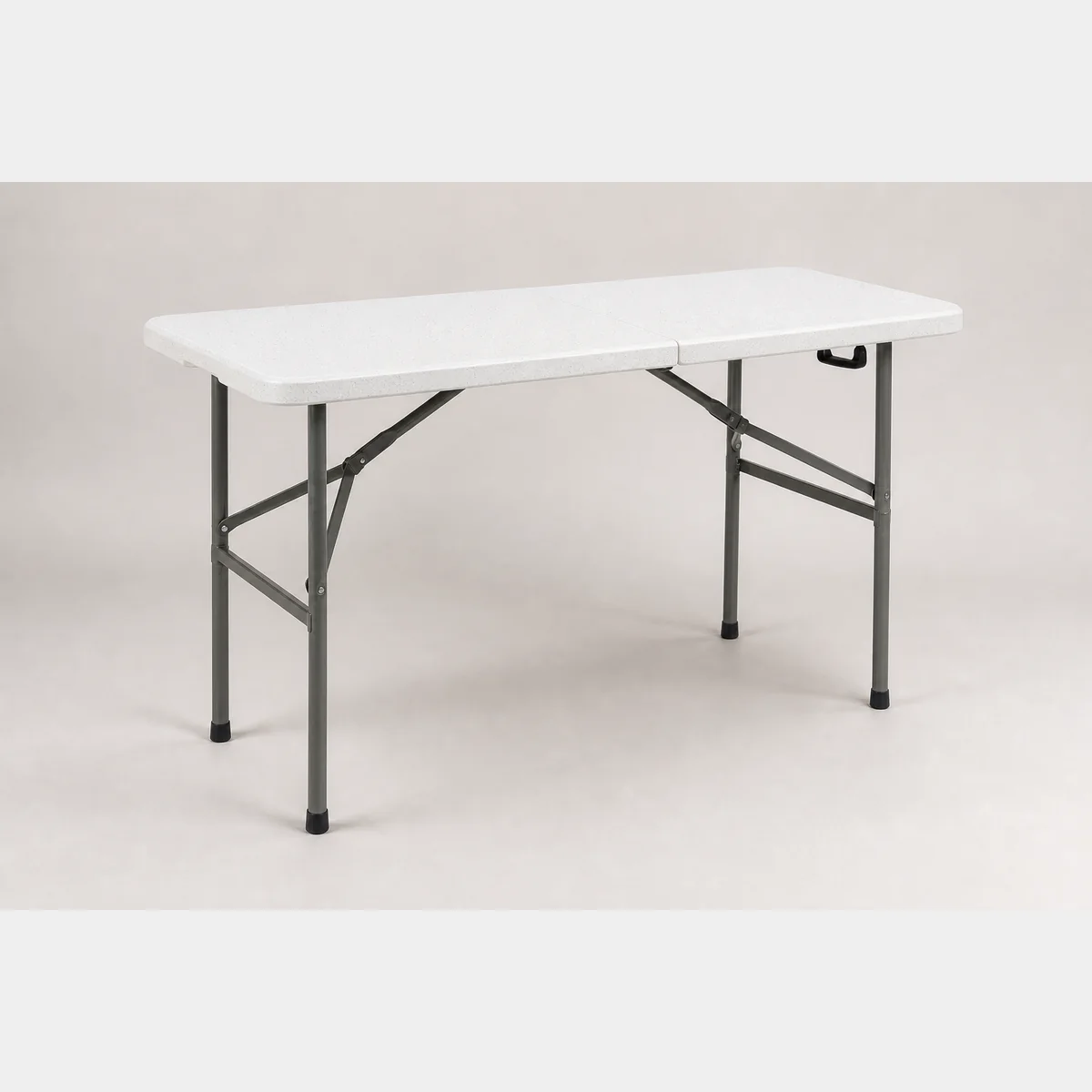
Folding Table S8629
Folding table, legs: Straight legs / Curved legs; Material: Plastic top / Steel legs; Colour: Off-white with fine blue speckle pattern. Please enquire for a formal quotation based on use, specifications and quantity.
- Legs
- Straight legs / Curved legs
- Material
- Plastic top / Steel legs
- Colour
- Off-white with fine blue speckle pattern
 Venue FurnitureProduct reference image
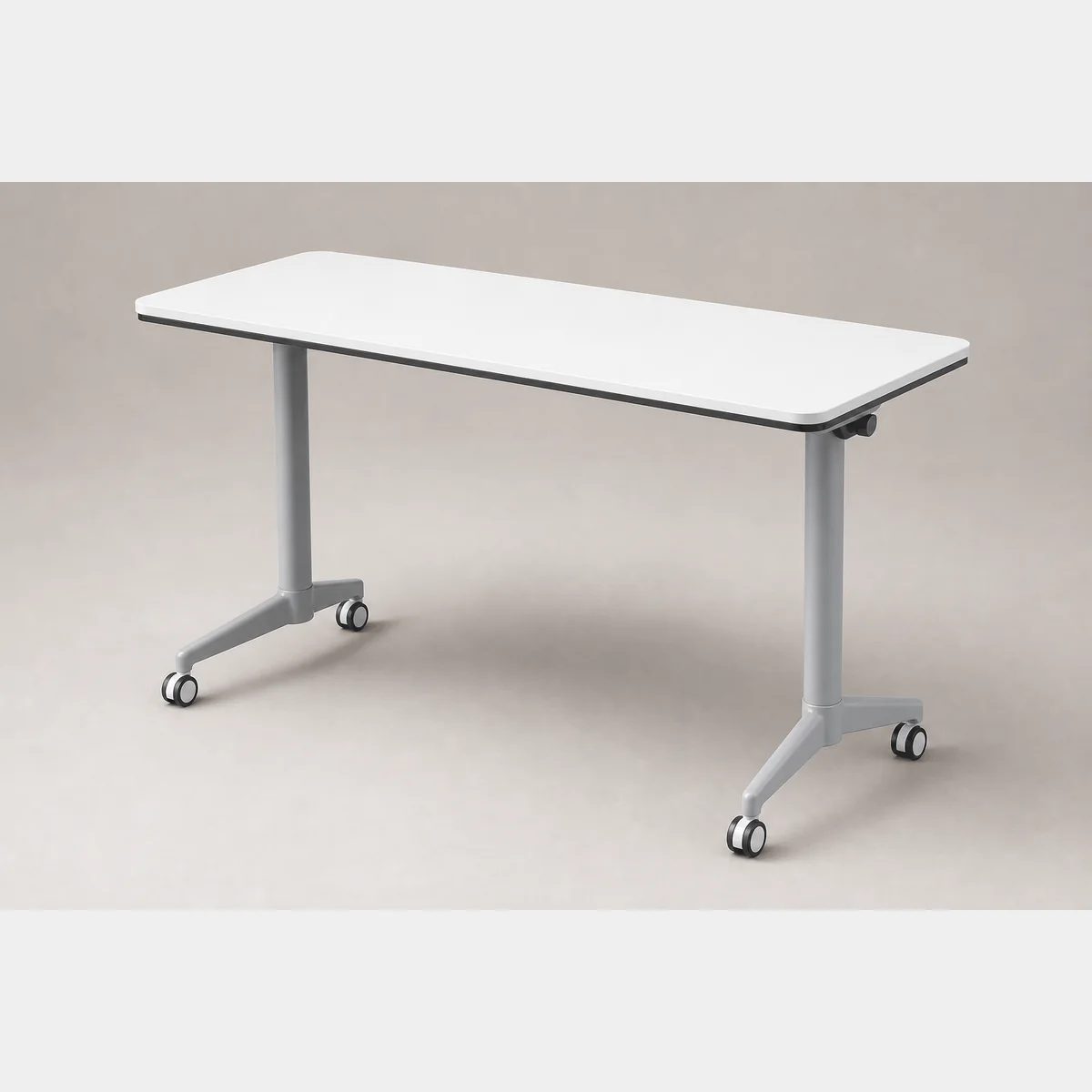
Folding Table with Castors
Folding table with castors. A: L120xW40xH75 cm; B: L140xW40xH75 cm; C: L160xW40xH75 cm. Formal quotation available based on use, specifications and quantity.
- A
- L120xW40xH75 cm
- B
- L140xW40xH75 cm
- C
- L160xW40xH75 cm
 Venue FurnitureProduct reference image
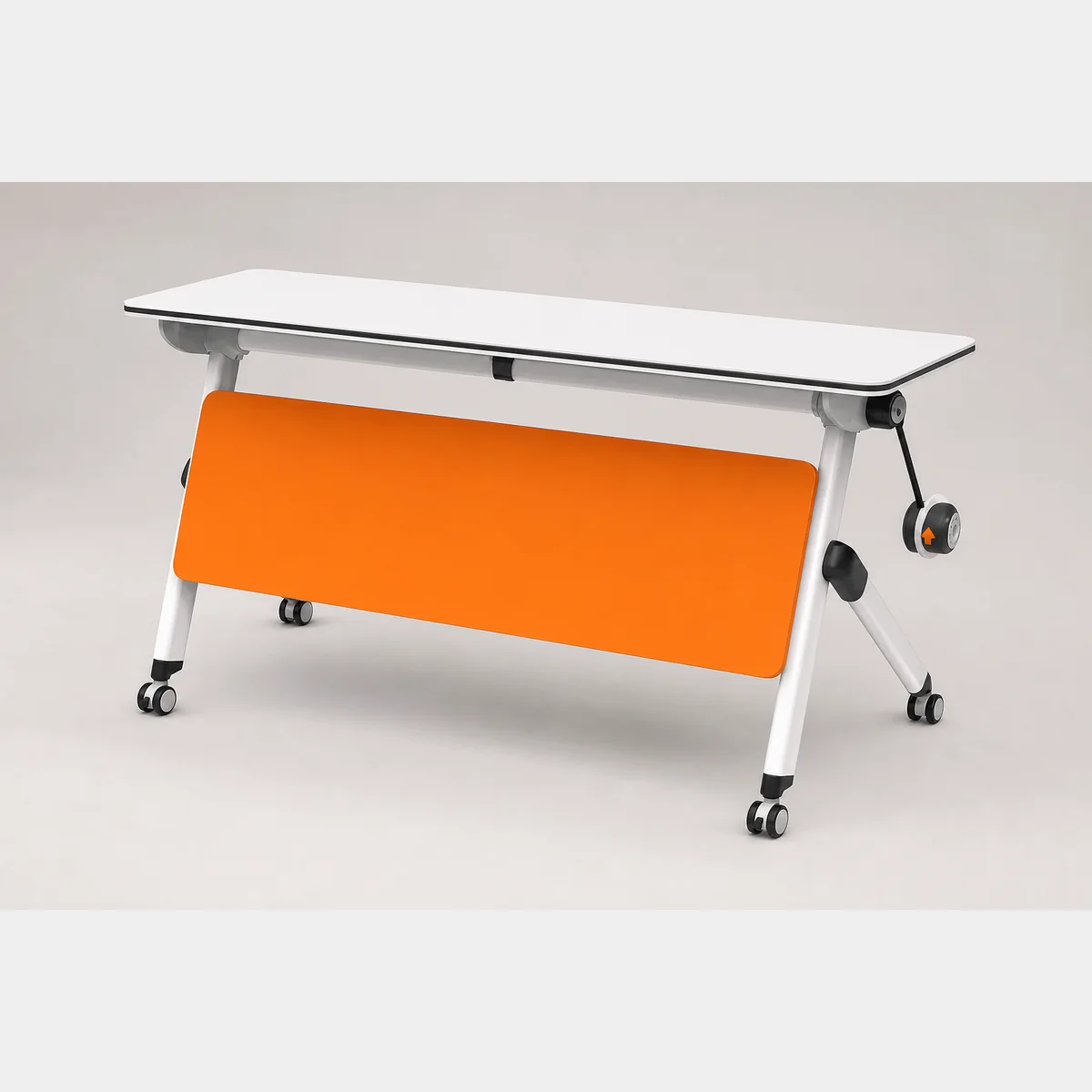
Folding Table with Castors (with modesty panel)
Folding Table with Castors (with modesty panel), A: L120xW40xH75 cm; B: L140xW40xH75 cm; C: L160xW40xH75 cm. Formal quotation available upon enquiry based on use, specifications and quantity.
- A
- L120xW40xH75 cm
- B
- L140xW40xH75 cm
- C
- L160xW40xH75 cm
 Venue FurnitureProduct reference image
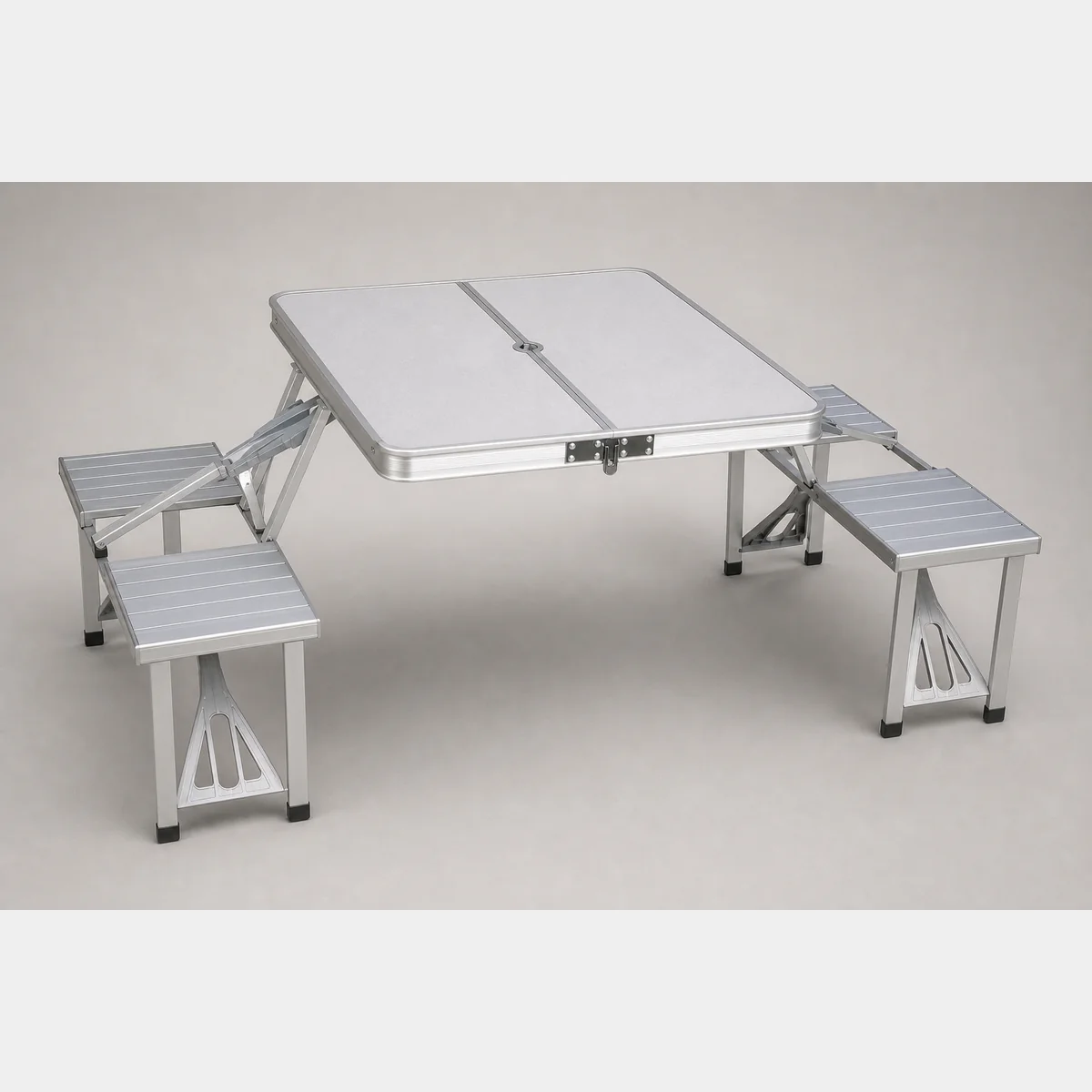
Outdoor aluminium folding table
Outdoor aluminium folding table. Material: plastic and aluminium; Colour: silver; Load capacity: 150kg. A formal quotation is available on request based on use, specifications and quantity.
- Material
- Plastic and aluminium
- Colour
- Silver
- Load capacity
- 150kg
 Venue FurnitureProduct reference image
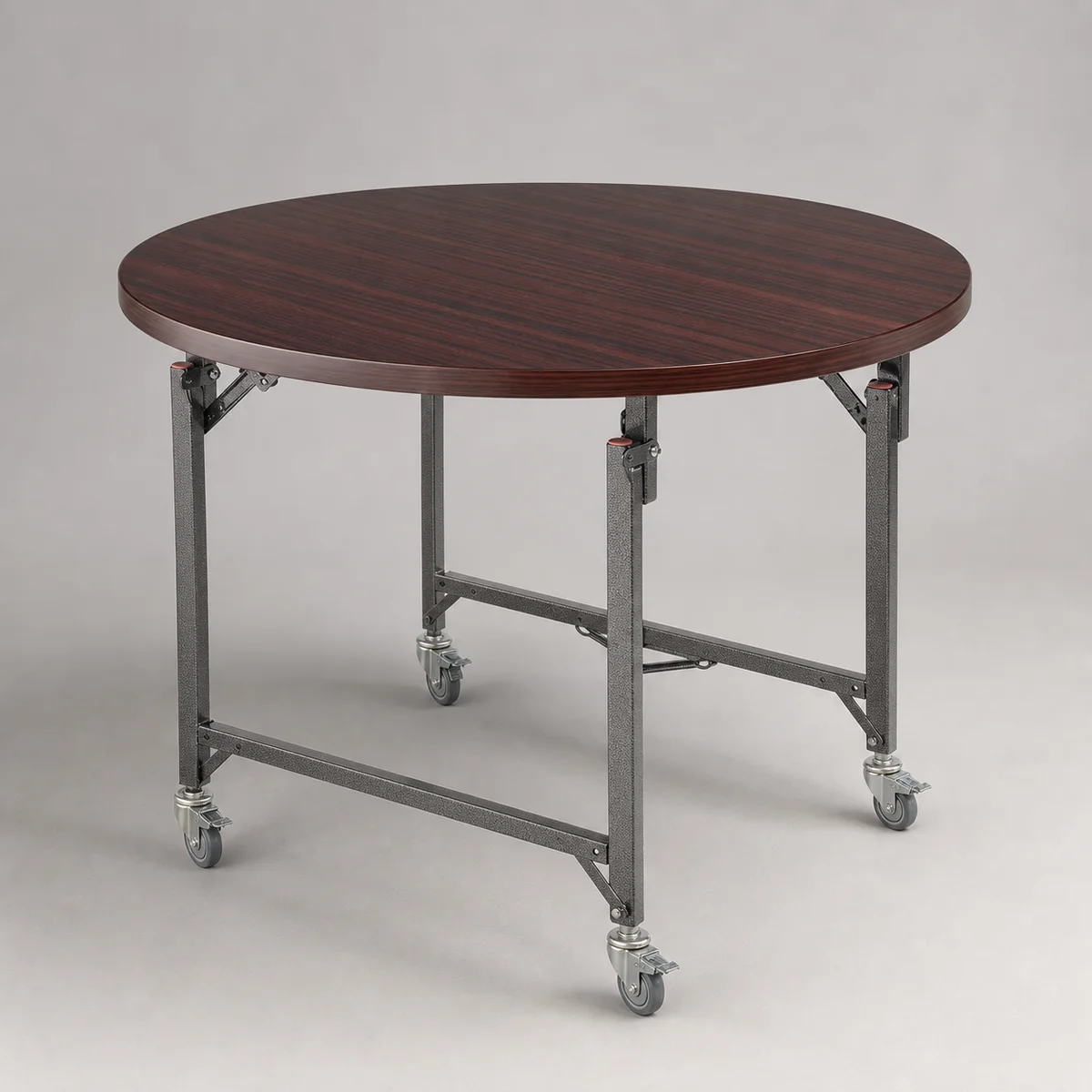
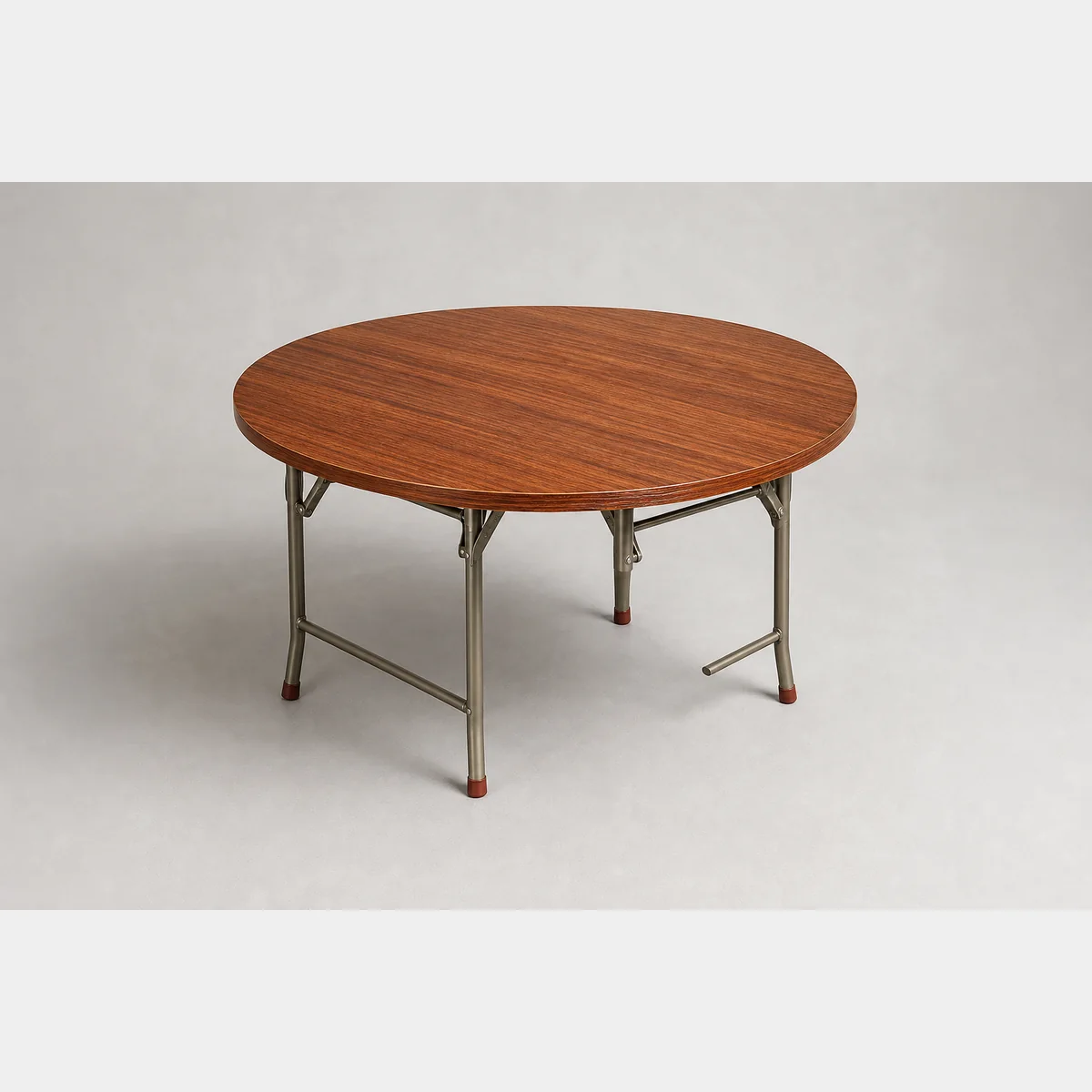
Round Folding Table
Round folding table. A: W24xH30inch; B: W30xH30inch; C: W36xH30inch. A formal quotation is available based on purpose, specifications and quantity.
- A
- W24xH30inch
- B
- W30xH30inch
- C
- W36xH30inch
 Venue FurnitureProduct reference image
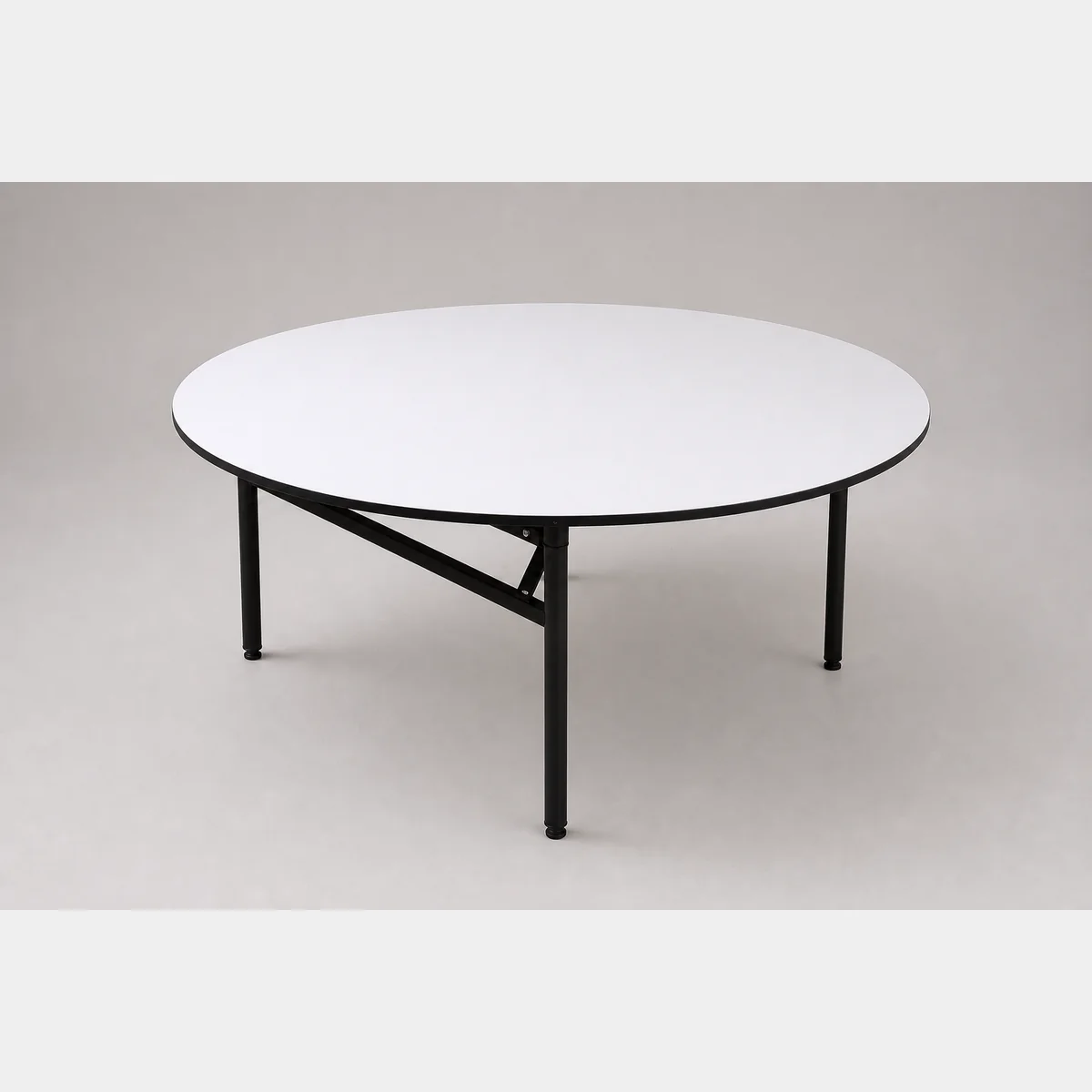
Round Folding Table
Round folding table — A: 1.2m x H75 cm; B: 1.5m x H75 cm; C: 1.8m x H75 cm. Formal quotation available based on use, specifications and quantity.
- A
- 1.2m x H75 cm
- B
- 1.5m x H75 cm
- C
- 1.8m x H75 cm
 Venue FurnitureProduct reference image
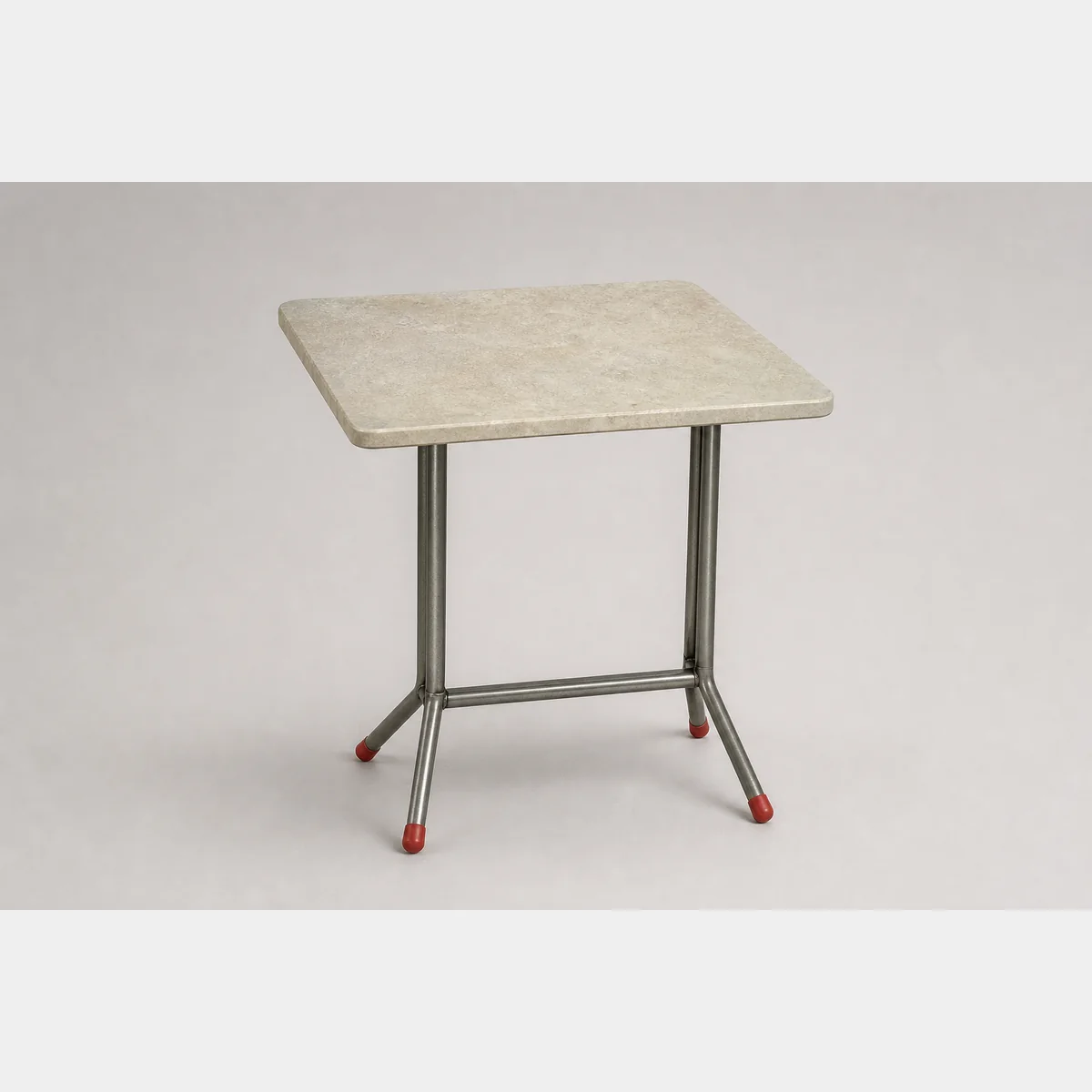
Square Folding Table
Square folding table, A: W18xD24xH30in; B: W18xD30xH30in; C: W18xD36xH30in. Formal quotation available on request based on intended use, specifications and quantity.
- A
- W18xD24xH30in
- B
- W18xD30xH30in
- C
- W18xD36xH30in
 Venue FurnitureProduct reference image
Square-to-Round Folding Table
Square-to-round folding table. For official specifications and quotation by usage, size and quantity, contact GotGear.
- SP0003-A option 1
- 30" to 42" x H30"
- SP0003-B option 2
- 36" to 48" x H30"
Continue with closely related procurement topics
These pages share equipment, operating or decision-stage signals with this guide.
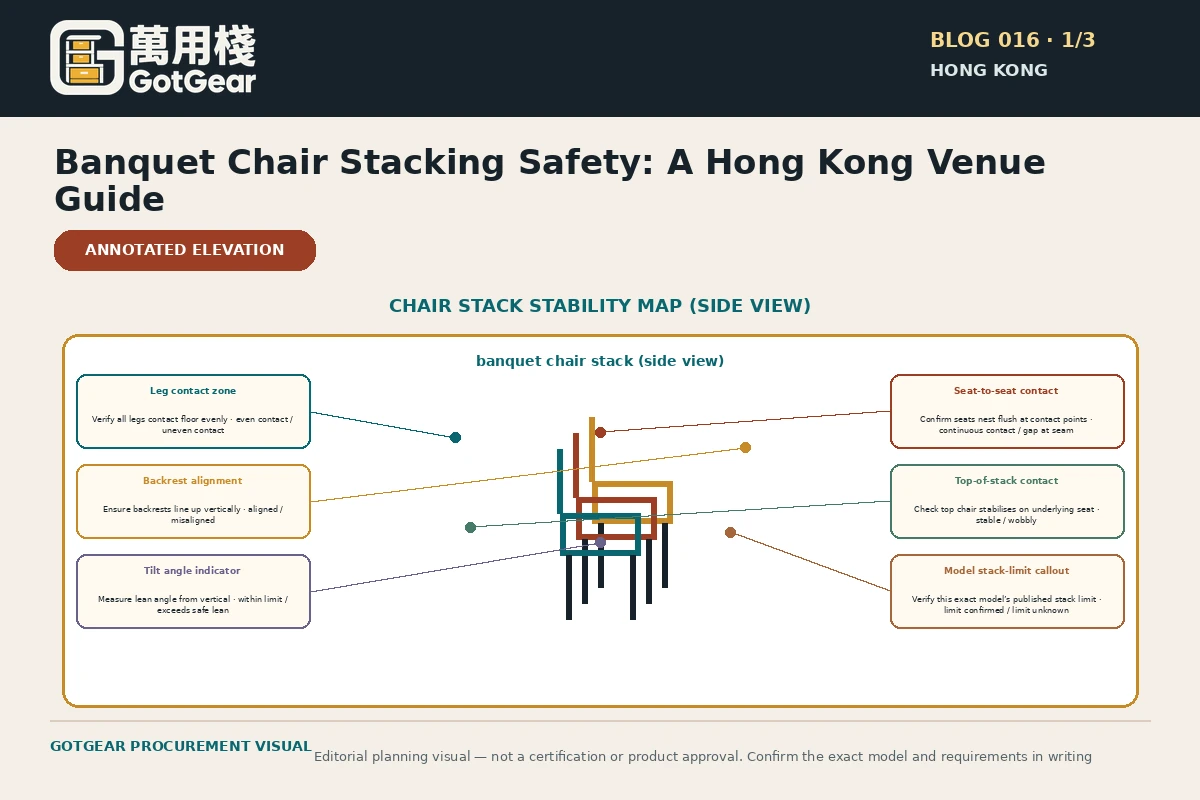
Banquet chair stacking safety Hong Kong
GotGear explains banquet chair stacking safety Hong Kong for Hong Kong buyers. See how banquet chair storage planning Hong Kong supports stacking chair inspection checklist Hong Kong, with practical checks, evidence boundaries and written requirements.
Read the guide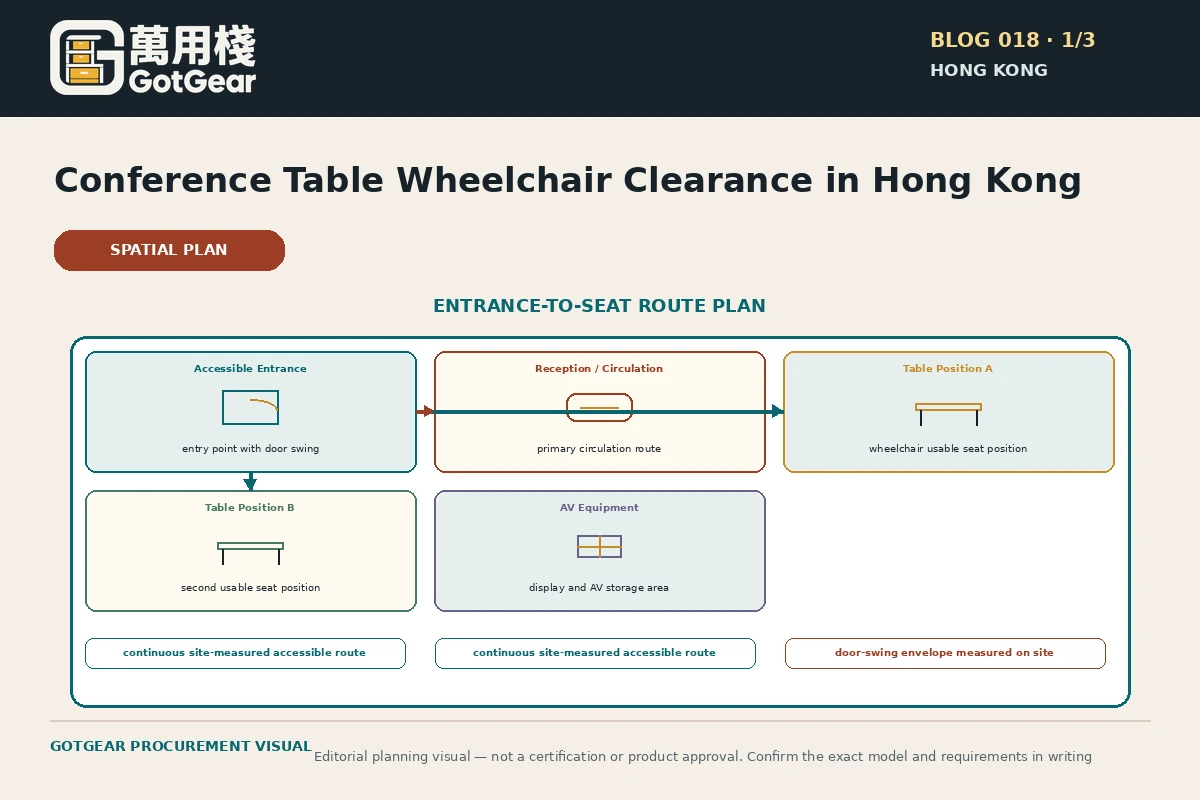
Conference table wheelchair clearance Hong Kong
GotGear explains conference table wheelchair clearance Hong Kong for Hong Kong buyers. See how accessible meeting room furniture Hong Kong supports wheelchair accessible conference table Hong Kong, with practical checks, evidence boundaries and written requirements.
Read the guide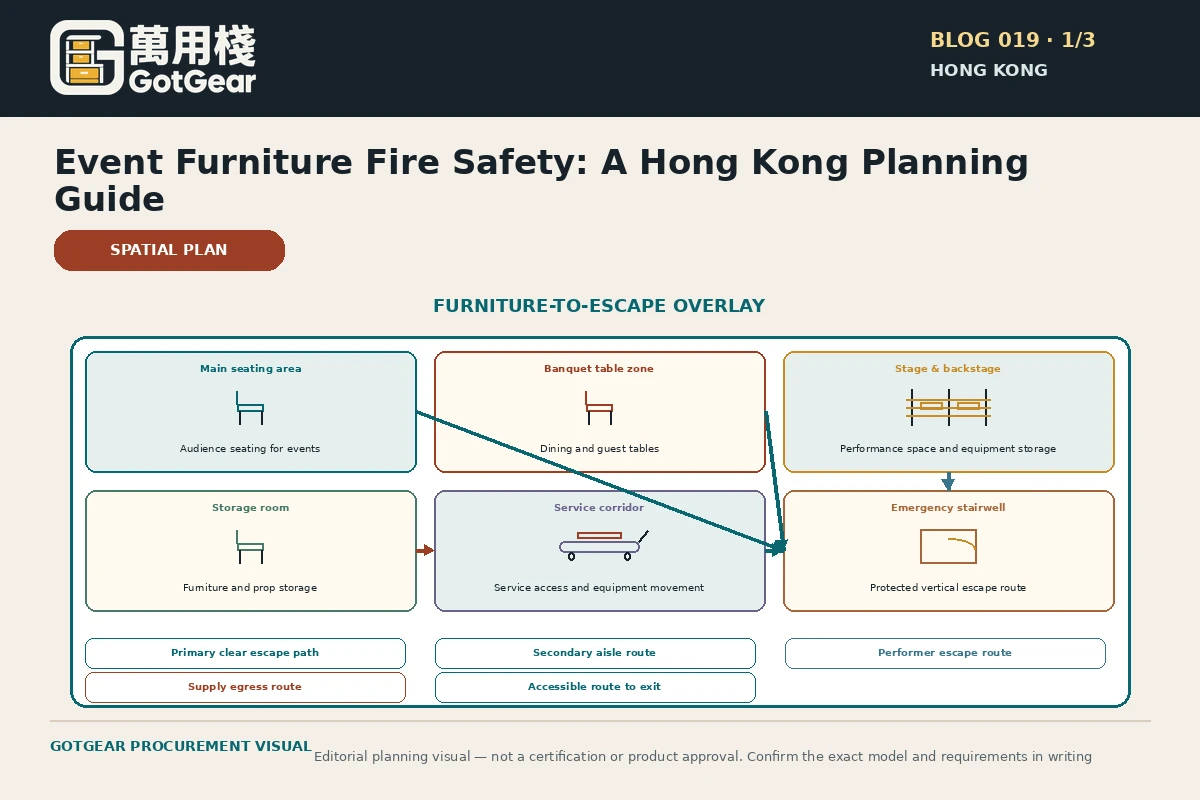
Event furniture fire safety Hong Kong
GotGear explains event furniture fire safety Hong Kong for Hong Kong buyers. See how upholstered event chair fire performance Hong Kong supports function room furniture fire risk Hong Kong, with practical checks, evidence boundaries and written requirements.
Read the guide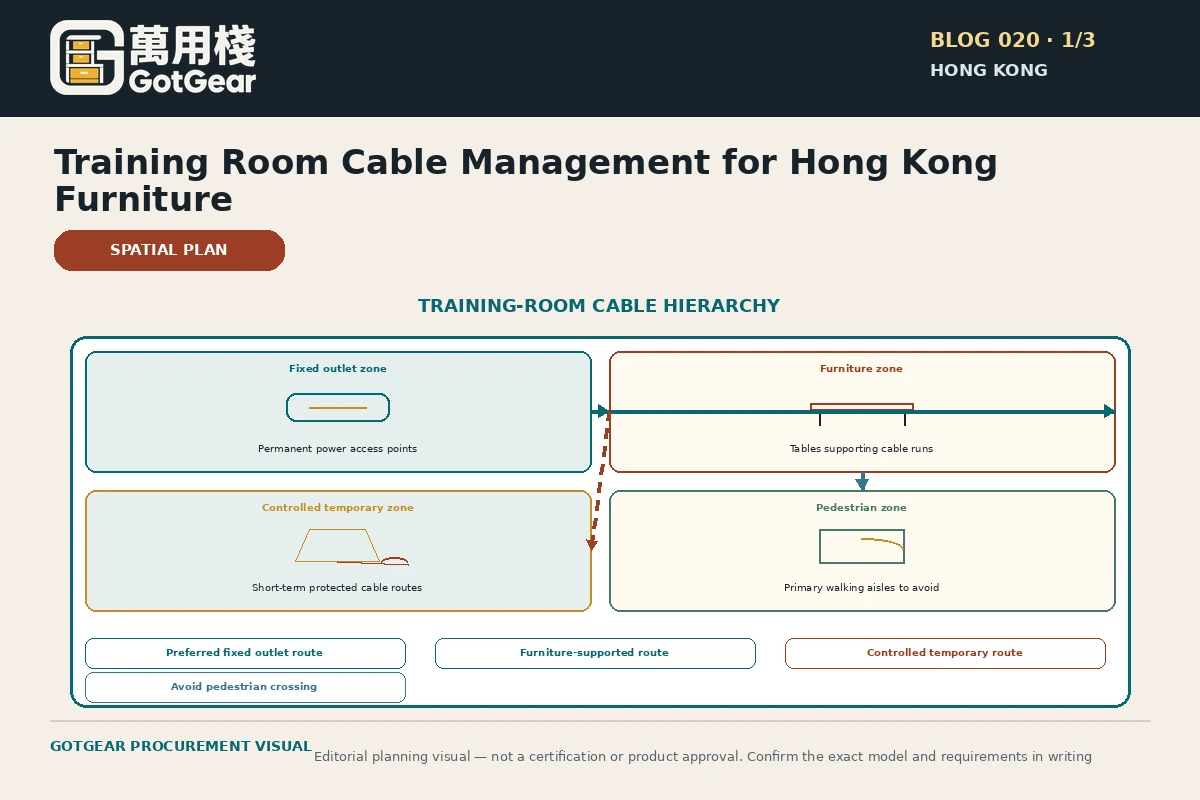
Training room cable management furniture Hong Kong
GotGear explains training room cable management furniture Hong Kong for Hong Kong buyers. See how conference table power module safety Hong Kong supports training table cable routing Hong Kong, with practical checks, evidence boundaries and written requirements.
Read the guideRelated topic indexOpen more English procurement pages11 topics
Browse additional equipment families, applications and procurement questions relevant to these operating requirements.