
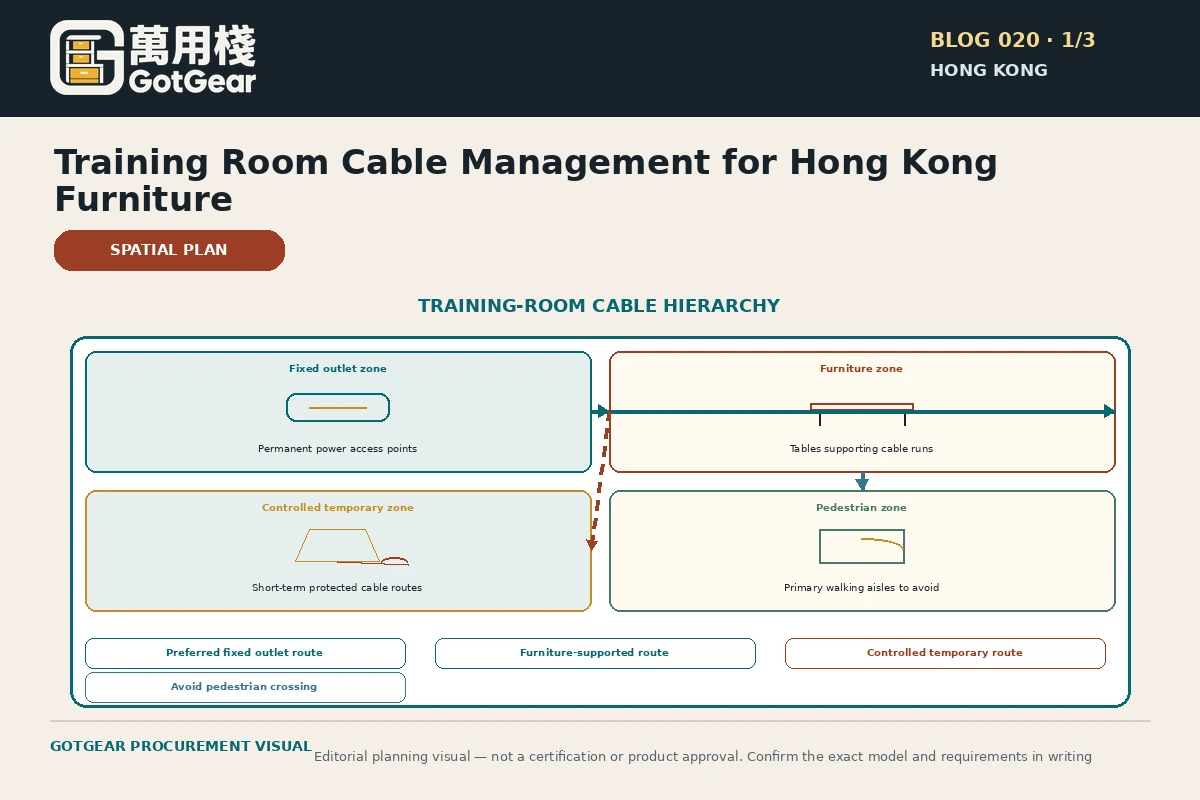
Good training-room cable management begins with planned outlet locations, correct circuiting and an understanding of device loads; furniture should support those decisions, not hide an overloaded or improvised electrical arrangement. In Hong Kong, follow EMSD product-compliance advice (check for BS 1363 markings where relevant), keep trailing leads out of pedestrian routes, and treat table-mounted modules and extension units as part of a safety plan only when installed and used within their rated capacity and by appropriate trades.
What to remember before you decide
- Start with an electrical plan: outlet locations and circuit capacity determine safe furniture choices.
- Use furniture to route and protect cables to fixed termination points — do not rely on it to hide overloaded wiring.
- Avoid adaptor/extension chaining and suspension of extension units as advised by EMSD.
- Eliminate trailing cables on circulation routes through permanent wiring where practical; use covers only as temporary controls.
- Inspect visible modules and leads regularly and schedule annual electrician checks for fixed wiring.
- Require supplier drawings and product documentation when specifying table modules and cable-management furniture.
Plan power and routes before choosing furniture
Context: In Hong Kong’s commercial buildings, outlet placement, circuit capacity and room layout determine whether furniture can be part of a safe cable-management strategy. Many problems start when clients buy table-mounted power modules or extension units to hide temporary needs rather than address the underlying supply and outlet distribution. Use these decision checks: Begin by documenting expected device types and their continuous loads (laptops, projectors, conferencing DSPs, powered speakers, chargers). Map where users sit and move; identify pedestrian circulation and emergency egress routes so that no flexible cord will cross a main walkway. Assess whether available dedicated circuits and outlet locations in the room support continuous load and any peak demand from AV equipment. A key limitation is that Furniture cannot increase circuit capacity or substitute for documented wiring. A neat cable spine or table port does not validate an overloaded extension unit or an adaptor chain. Hong Kong’s Electrical and Mechanical Services Department (EMSD) warns against inserting adaptors into extension units or suspending extension units by their cords; a table module’s aesthetic does not prove compliance. Next, a) Compile a device load schedule and peak-demand estimate; b) engage a competent electrician or building engineer to confirm circuit capacity and recommend permanent outlet locations; c) mark a cable-routing plan showing fixed trunking, floor boxes and furniture zones so procurement specifies furniture that aligns with those routes.
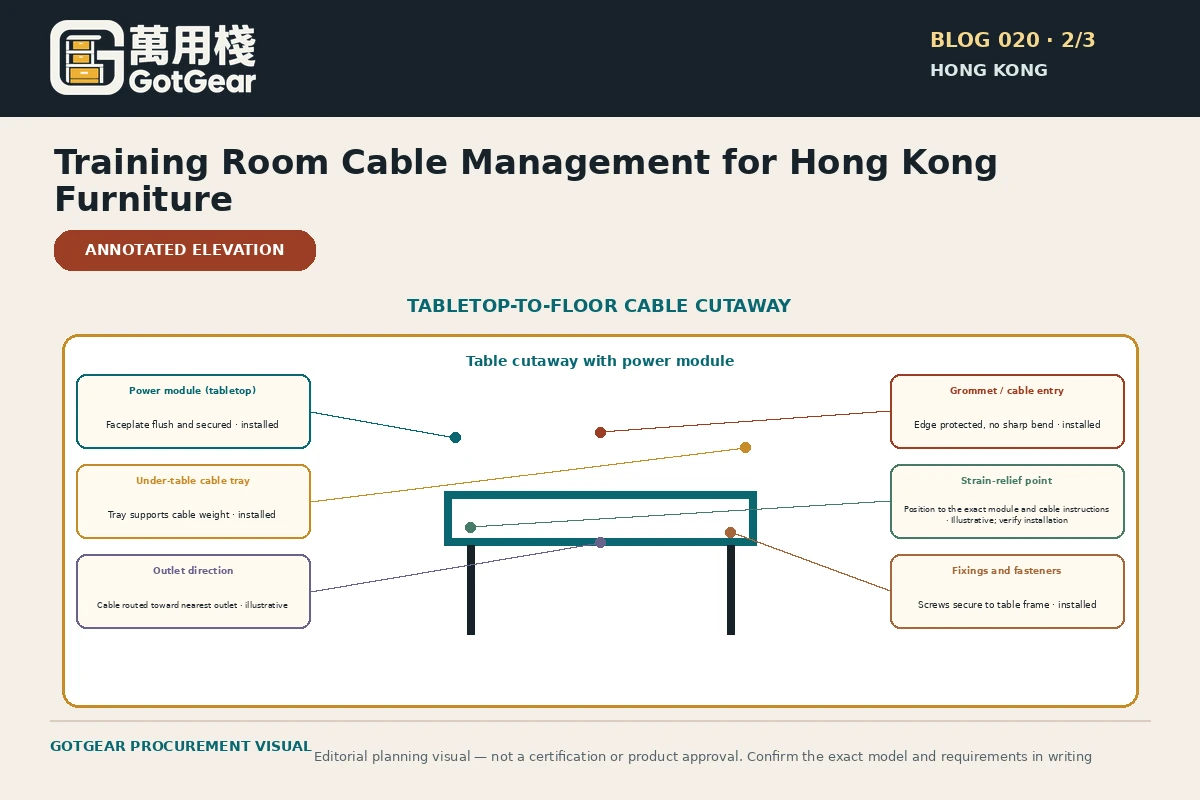
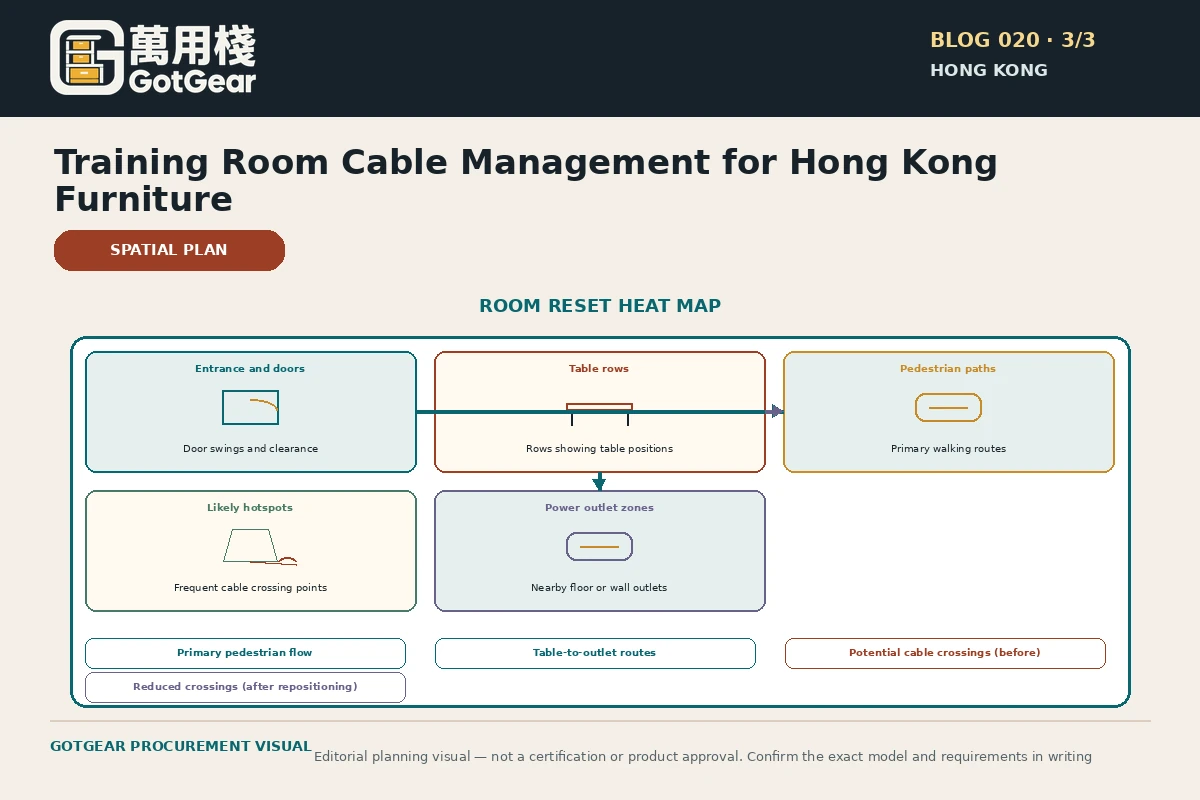
Choosing furniture features that support safe routing
Context: Commercial training tables and conference furniture sold in Hong Kong vary from simple desks with grommets to full-width cable troughs, integrated cable spine systems and table-mounted pop-up power/data modules. Use these decision checks: Choose furniture that aligns with the wiring plan. For training tables consider: integrated under-table trays for bundling low-voltage leads, vertical cable spines that terminate into floor outlets rather than into surface extension units, and recessed top ports sized for cable access without forcing connectors. For conference tables, prefer cable channels that feed into dedicated floor boxes or wall outlets instead of leaving extension units on or under the work surface. Specify fire-retardant materials and robust covers for any furniture openings in a commercial environment. A key limitation is that Even well-designed furniture cannot replace fixed wiring or proper outlet positioning; moving furniture often disturbs temporary cabling and can expose connectors. Table-mounted pop-up modules may be convenient but are not evidence of circuit adequacy — EMSD guidance recommends checking product markings and avoiding adaptor/extension chaining. Next, a) Require furniture drawings that show cable paths and termination points; b) specify acceptance checks on cable-cover gaps and internal tray capacities; c) plan for periodic inspection of modules and internal cabling for damage and strain relief.
“Furniture should organise and protect cables, not be used as a workaround for inadequate outlet planning or electrical capacity—specify routes and validate devices, then let furniture support that engineered solution.”— GotGear Editorial Team
What should buyers compare for training room cable management furniture Hong Kong?
| Option or approach | Best for | Trade-offs | Checks before acceptance |
|---|---|---|---|
| Permanent floor boxes and dedicated circuits | Rooms with fixed layouts and frequent AV/IT load where trailing leads must be eliminated | Higher upfront resource requirements and requires building management / electrical contractor involvement; longer lead time | Confirm with a qualified electrician that circuits and box locations meet expected loads; verify build/installation records with building management |
| Integrated cable troughs and under-table trays | Training tables that need clean desks for daily use and regular equipment changes | Does not change circuit capacity; trays can fill quickly if not managed and can hide damaged cords | Specify internal capacity and access for inspection; require supplier diagrams showing termination points into floor or wall outlets |
| Table-mounted pop-up power modules | Conference settings requiring occasional access to power and data at the table surface | Convenient but can encourage temporary extension-unit use; appearance is not proof of electrical compliance | Inspect markings and product documentation; ensure modules are fed from appropriate fixed wiring and not chained with adaptors or extension units |
| Temporary cable covers and ramps | Short-term events where permanent wiring is not practical and quick control is required | Suitable only as a temporary control; increases inspection burden and can shift trip risk if poorly installed | Use purpose-designed covers rated for foot traffic, restrict duration of use, and log inspections before and after each event |
| Vertical cable spines terminating into floor outlets | Rowed training tables where neat vertical routing is required and floor outlets are available | Requires coordination with furniture supplier and electrician to align outlet locations; may require building approval | Match spine positions to floor-box plans and get electrician sign-off on routing and strain relief |
This framework helps buyers create comparable written enquiries. Final model specifications, availability, delivery and commercial terms must be confirmed in a formal quotation.
Minimising trip and fire risk in operational rooms
Context: Trailing cables on pedestrian routes create both trip hazards and fire risks. The UK Health and Safety Executive (HSE) highlights the need to eliminate or control trailing leads, and the International Labour Organization (ILO) notes that cables, plugs and fittings should be robust and protected for the environment. Use these decision checks: Eliminate visible crossings on main circulation by using permanent wiring, floor boxes or fixed conduit runs. Where cables must cross a short route, use purpose-designed cable covers that are rated for foot traffic and do not create new trip edges, or reroute traffic during events. Secure multiway units so they cannot be suspended by cords or pulled free; ensure strain-relief at penetrations and that cable entries do not pinch insulation. A key limitation is that Cable covers and temporary ramps are controls, not substitutes for permanent wiring; they may be suitable for ad hoc events but increase maintenance and inspection needs. Emergency egress paths must never rely on temporary cable protection. Next, a) Audit circulation and mark any existing trailing leads; b) install floor boxes at regular intervals or amend room layout so power is accessible without crossing routes; c) specify cable covers only for temporary use with clear time limits and inspection procedures.
Operational checks, cleaning and asset care
Context: Ongoing maintenance keeps furniture-based management safe. The ILO and workplace guidance recommend visual checks, removal of defective equipment and protection against environmental damage. Use these decision checks: Implement a schedule for visual inspection of table modules, extension units and visible leads; check for overheating signs, damaged insulation and loose connectors. Include checks that modules are BS 1363-compliant where appropriate for Hong Kong use, and that labels, ratings and fuse types match expected loads. Plan cleaning routines that avoid liquids entering cable ports and choose covers that can be wiped without degrading seals. A key limitation is that Visual checks do not substitute for periodic electrical testing by qualified personnel; surface cleanliness or tidy routing cannot guarantee internal wiring integrity. Next, a) Create a simple inspection checklist for facilities staff to perform weekly checks of visible leads and modules; b) schedule annual technical checks with an electrician for fixed wiring and any integrated table power systems; c) keep a log of equipment removed from use and replaced, and retain product documentation for third-party verification if required.
Training room cable management furniture Hong Kong decision checklist
- Compile a device inventory with continuous and peak power draw for all equipment expected in the room (laptops, projectors, AV processors, chargers).
- Mark pedestrian circulation and emergency egress routes on the room plan to ensure no flexible cords cross main walkways.
- Confirm existing circuits and outlets with building management or an electrician; identify need for additional dedicated circuits or floor boxes.
- Specify furniture that routes cables to fixed termination points (floor boxes, wall outlets) rather than to surface-mounted extension units.
- Require product documentation for any table-mounted modules showing ratings, fuse types and compliance markings; check for BS 1363 where applicable in Hong Kong.
- Avoid adaptor-into-extension or extension-into-adaptor arrangements as per EMSD guidance; prohibit suspending extension units by cords.
- Plan for periodic inspections of visible leads and table modules and annual technical checks of fixed wiring by a competent electrician.
- Decide whether temporary covers are acceptable only for short events and include time limits, inspection logs and responsible staff.
- Select furniture materials and grommet designs that prevent pinching and provide strain relief at cable entry points.
- Include maintenance access in procurement specifications so trays and spines can be opened for inspection without uninstalling furniture.
- Check with building management for any building-specific restrictions on floor drilling, floor-box additions or conduit use.
- Ensure procurement language clarifies that furniture appearance is not a substitute for electrical compliance and that supplier drawings must show cable termination.
Practical action sequence
- Survey the room and produce a simple plan showing seating, circulation, existing outlets and proposed furniture positions.
- Estimate device loads and peak demand and share this with the building engineer or a qualified electrician for circuit assessment.
- Decide on the wiring strategy (floor boxes, wall outlets, conduit runs) and mark permanent routing paths before ordering furniture.
- Specify furniture with explicit cable routing features and request supplier drawings that align with the wiring plan.
- Set procurement conditions requiring supplier product documentation and on-site coordination with electrical contractors during fit-out.
- Implement a visible-cable inspection routine for facilities staff and schedule an annual electrical inspection by a competent electrician.
- Log any temporary cable-cover use with start/end times and inspection sign-off; remove covers promptly when no longer needed.
- Train AV/IT and cleaning staff on safe handling of table modules, avoiding strain on connectors and preventing liquids entering ports.
- Retain product manuals and compliance markings records for installed modules and extension units for future verification.
- Review room layout annually to account for changes in equipment or use that may alter power or routing needs.
Apply the checks to your Hong Kong site
In Hong Kong settings, furniture can help organise leads but must never be used to substitute for planned electrical capacity or competent electrical work. Follow EMSD guidance on extension-unit and adaptor use and treat BS 1363 markings as a local validation cue, while remembering that a tidy surface-mounted unit does not equal a safe installation. When specifying training room cable management furniture Hong Kong, confirm circuit locations with building management and align product selection with site electrical drawings. Assess conference table power module safety Hong Kong on the basis of how a module is integrated into fixed circuits and containment, not only neatness or convenience. Record training table cable routing Hong Kong in the project documentation and reference HSE and ILO materials as supportive international good practice rather than local law. Operational takeaway: verify circuit positions, check BS 1363 marking per EMSD advice, and instruct a competent electrician to design fixed outlet distribution before relying on furniture-mounted modules.
References used for this article
These sources provide regulatory, safety or planning context. They do not certify any GotGear product or replace site-specific professional advice.
- Electrical and Mechanical Services Department — Household Electrical Safety Handbook — Official Hong Kong advice on compliant adaptors/extension units, avoiding adaptor/extension-unit chaining and not suspending an extension unit by its flexible cord; not an installation-design approval.
- HKSAR Government / EMSD — Extension-unit overheating notice — Official notice about risks from non-compliant extension units and 13A BS 1363-marking advice; supports product-document checks.
- HSE — Slips and trips in production areas — General occupational-safety guidance identifying trailing cables as trip hazards and describing permanent wiring, cable covers or access restriction as control options.
- International Labour Organization — Electrical safety — Guidance on electrical hazard assessment, suitable protected cables/plugs/sockets and visual checks; supports the limits of furniture-led solutions.
Questions about training room cable management furniture Hong Kong
Can we use table-mounted pop-up power modules as our main power solution for conference tables?
Table-mounted pop-up modules are a convenient interface for power and data at the surface, but they are not a substitute for appropriate circuit capacity and correct electrical installation. Use modules as the user-facing outlet only if they are connected to suitable fixed wiring, installed according to building rules and within the ratings of the feed circuit. For Hong Kong, inspect product documentation and markings; EMSD guidance stresses checking compliance markings and warns that appearance alone is not proof of safety. Engage a qualified electrician to confirm that the feed circuit supports the expected load and to ensure installation is not dependent on extension-unit chaining.
What does the EMSD say about extension units and adaptors — what should we avoid?
EMSD advises against inserting an adaptor into an extension unit or an extension unit into an adaptor, and against suspending an extension unit by its flexible cord. These arrangements increase the risk of overheating, poor connections and mechanical strain. For procurement and daily use, prohibit adaptor/extension chaining and avoid using extension units as permanent wiring. Where extension units are necessary for temporary events, choose units with appropriate ratings, check for applicable compliance markings and document time-limited use and inspections.
How should we control trailing cables on pedestrian routes in a training room?
Trailing cables on pedestrian routes are recognised trip hazards. The preferred control is elimination through permanent wiring — floor boxes, additional wall outlets or rerouting of furniture. Where temporary crossings cannot be avoided, use purpose-designed cable covers rated for foot traffic and install them correctly to avoid creating new trip edges. Limit the duration of temporary measures and require pre- and post-event inspections. Emergency egress routes should never rely on temporary cable protection.
What inspection and maintenance steps should facilities staff perform for table power modules and extension units?
Facilities staff should carry out regular visual inspections: look for damaged insulation, exposed conductors, loose connectors, discolouration or signs of overheating on sockets and leads. Verify that strain reliefs at entry points are intact and that modules are secure. Any item showing damage, overheating or uncertain markings should be removed from service and referred to a qualified electrician. Maintain a log of inspections and any equipment taken out of use, and schedule annual technical checks of fixed wiring and integrated table systems by an electrician.
Are international standards useful guidance for Hong Kong facilities teams?
Yes — international guidance such as the HSE’s material on slips and trips and the ILO’s electrical-safety guidance provide useful best-practice controls for trip reduction, cable protection and equipment inspection. Treat them as practical context and design guidance rather than local legal requirements. For Hong Kong-specific product and usage advice, consult EMSD materials and engage building management and qualified local electricians to ensure installations conform to local expectations and building rules.
Compare available product models and specifications
These product cards are matched to this buying topic. Select a specification and quantity to send the product details to WhatsApp.
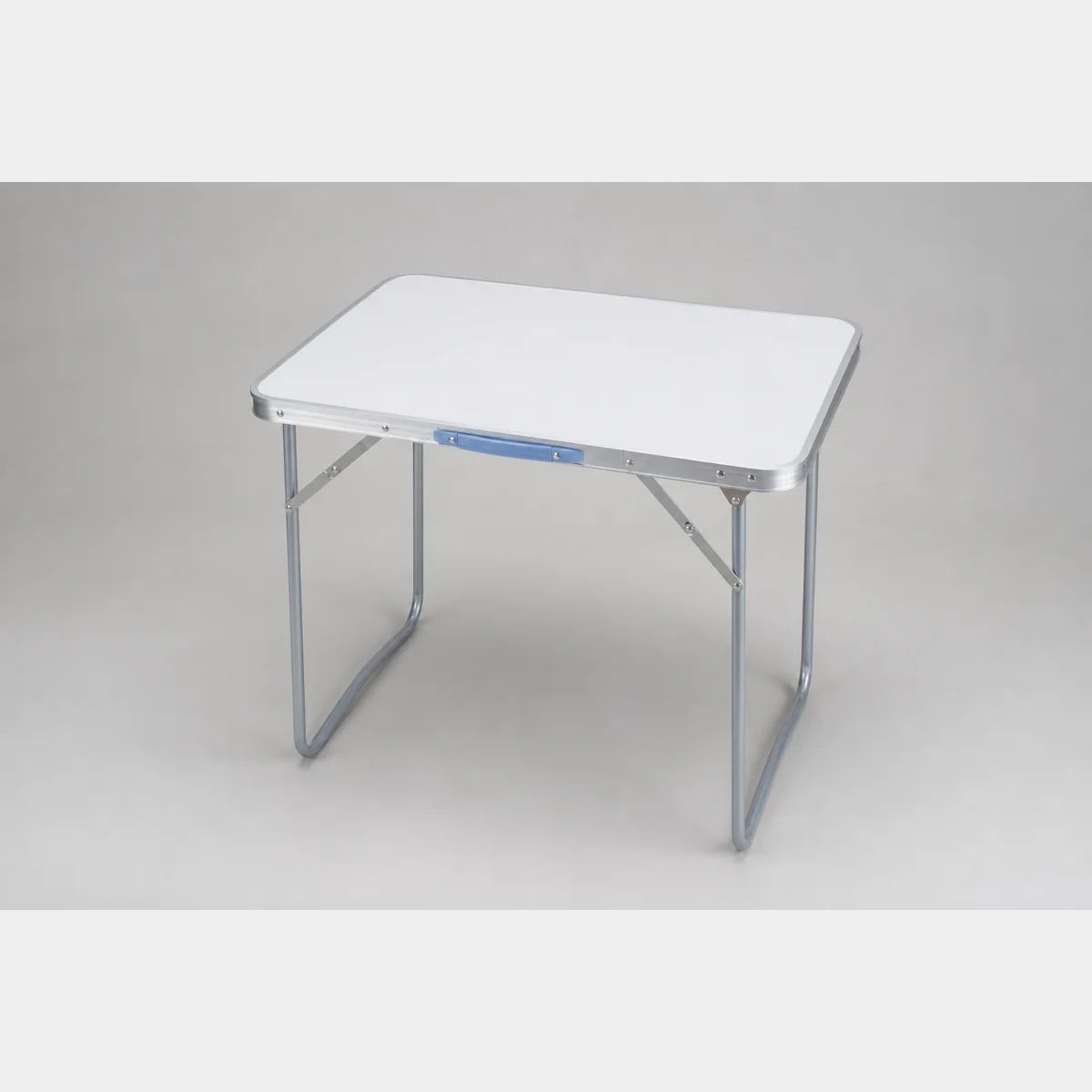 Venue FurnitureProduct reference image
Aluminium Table (S8321)
Aluminium Table (S8321), Dimensions/Specifications: L70xW50xH60 cm / L80xW60xH67 cm. Formal quotation available on request based on use, specifications and quantity.
- Dimensions / Specifications
- L70xW50xH60 cm / L80xW60xH67 cm
 Venue FurnitureProduct reference image
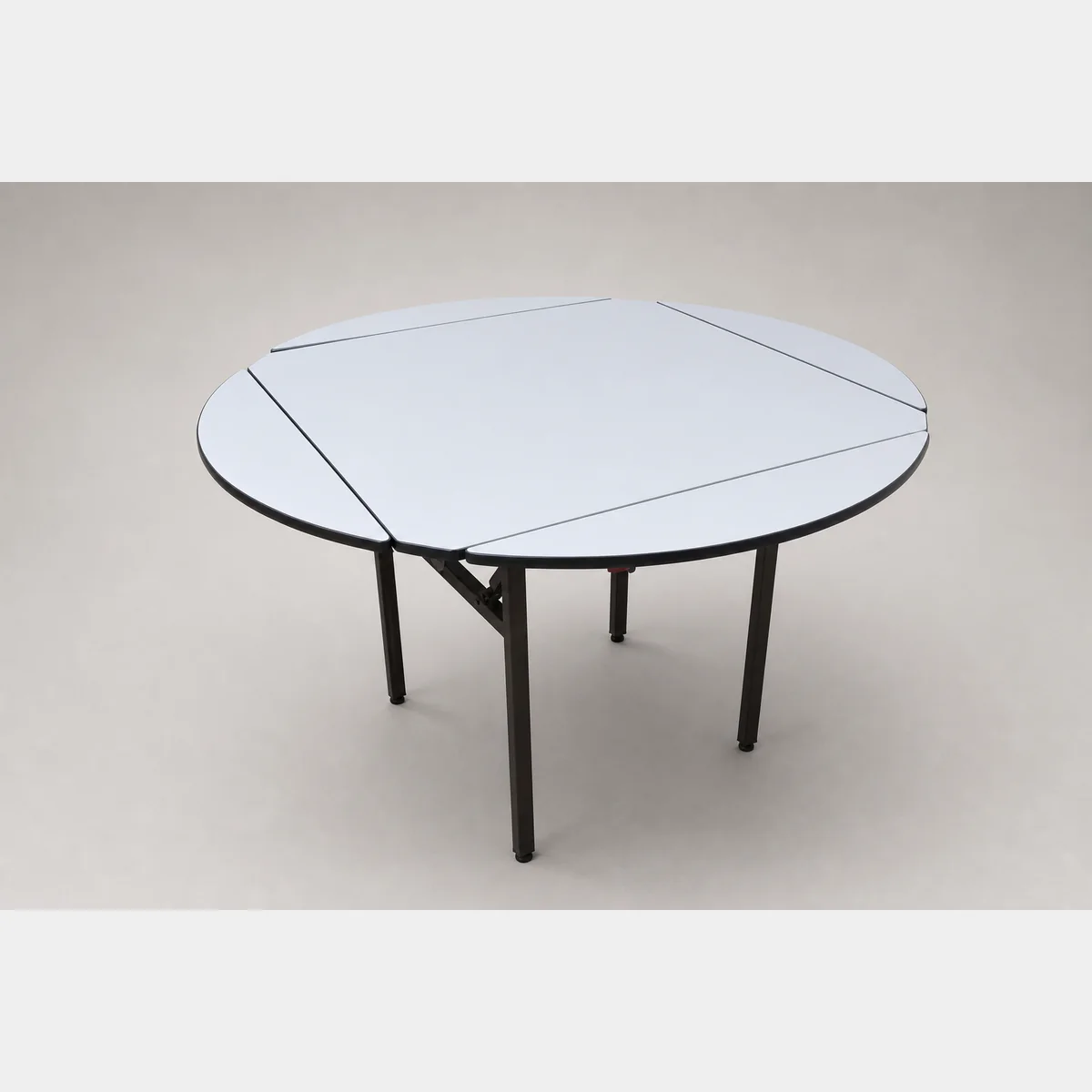
Dual-use table
Dual-use table, round table: 1.2m/1.5m; square table: 90x90xH75 cm/112x112xH75 cm. Formal quotation available based on use, specification and quantity.
- Round table
- 1.2m / 1.5m
- Square table
- 90x90xH75 cm / 112x112xH75 cm
 Venue FurnitureProduct reference image
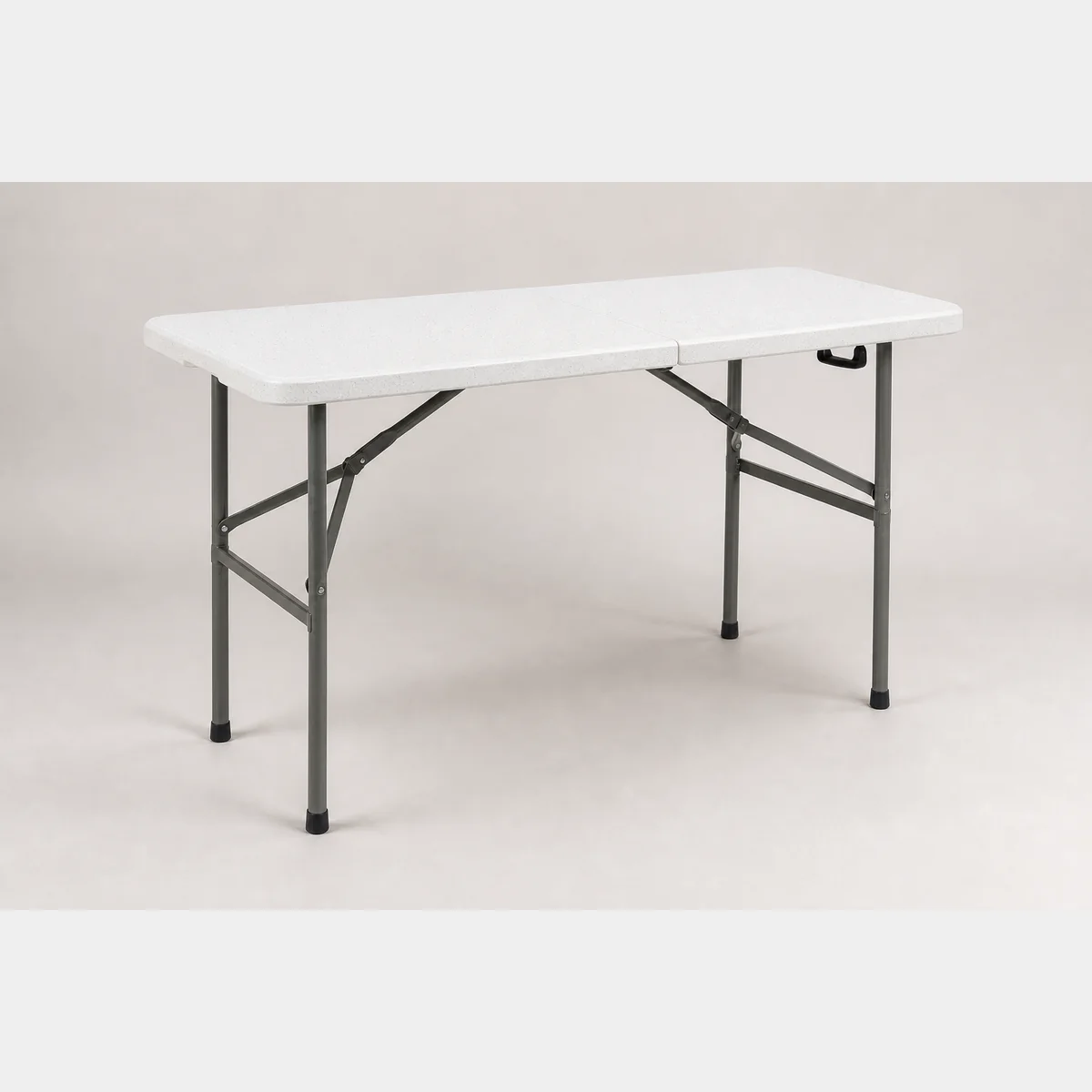
Folding Table S8629
Folding table, legs: Straight legs / Curved legs; Material: Plastic top / Steel legs; Colour: Off-white with fine blue speckle pattern. Please enquire for a formal quotation based on use, specifications and quantity.
- Legs
- Straight legs / Curved legs
- Material
- Plastic top / Steel legs
- Colour
- Off-white with fine blue speckle pattern
 Venue FurnitureProduct reference image
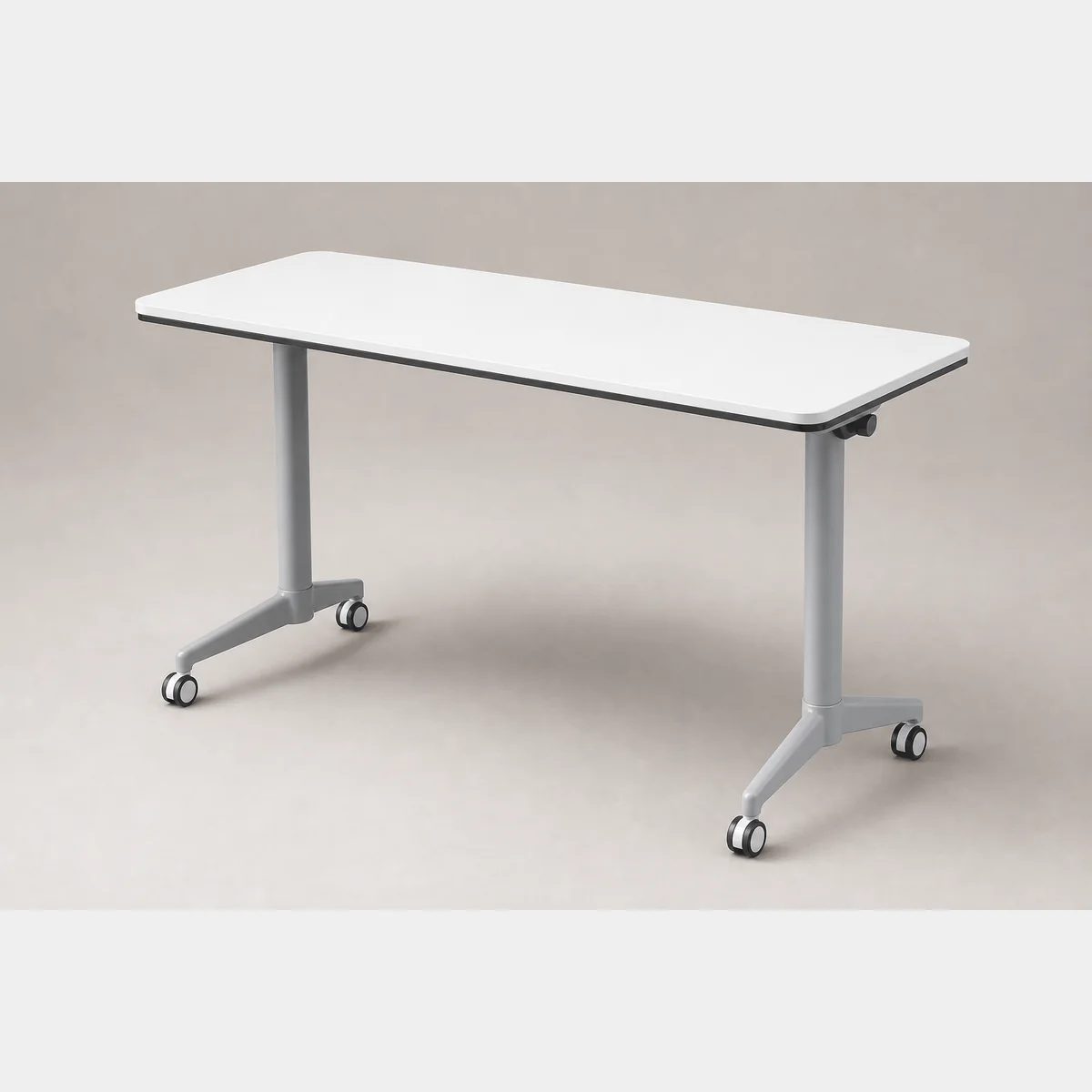
Folding Table with Castors
Folding table with castors. A: L120xW40xH75 cm; B: L140xW40xH75 cm; C: L160xW40xH75 cm. Formal quotation available based on use, specifications and quantity.
- A
- L120xW40xH75 cm
- B
- L140xW40xH75 cm
- C
- L160xW40xH75 cm
 Venue FurnitureProduct reference image
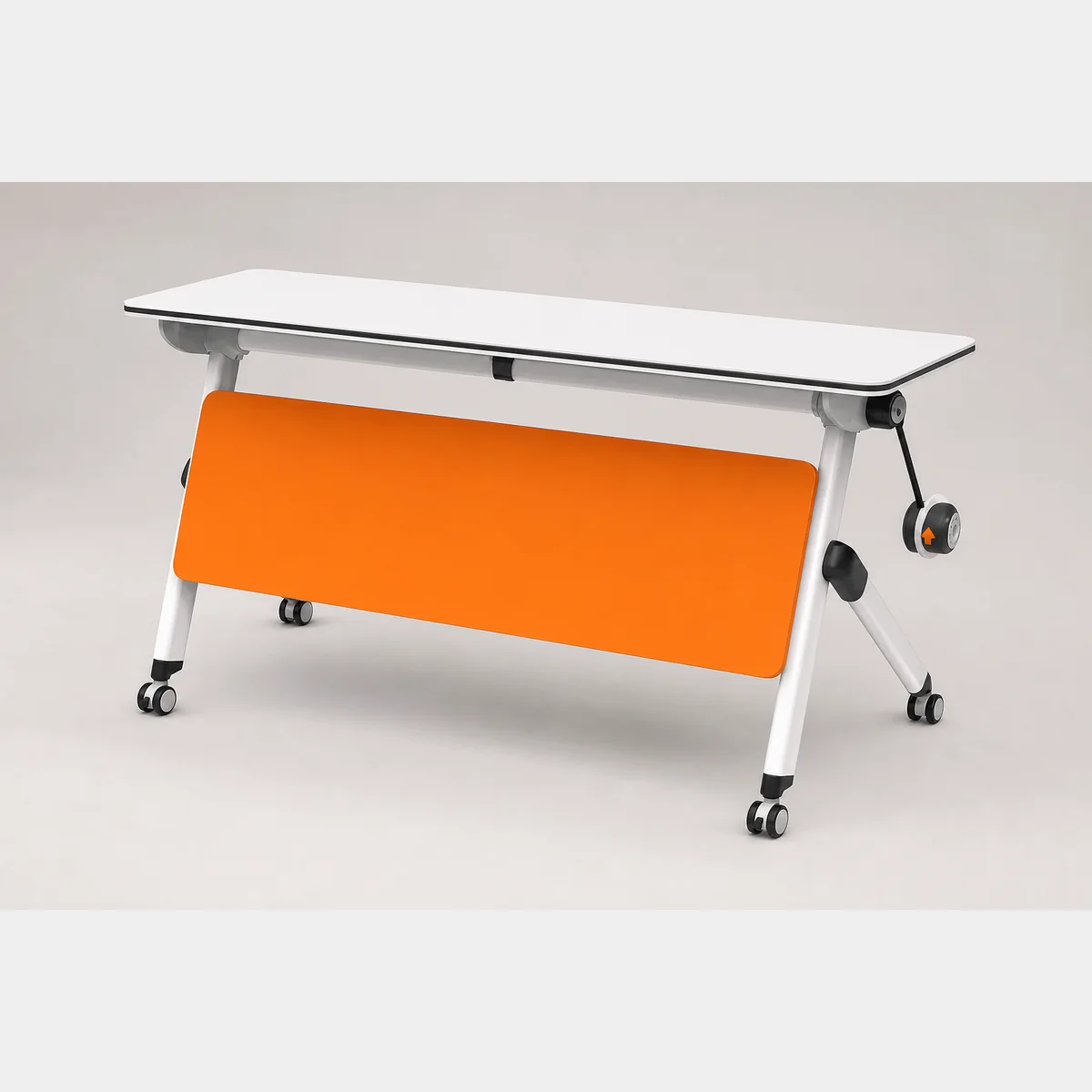
Folding Table with Castors (with modesty panel)
Folding Table with Castors (with modesty panel), A: L120xW40xH75 cm; B: L140xW40xH75 cm; C: L160xW40xH75 cm. Formal quotation available upon enquiry based on use, specifications and quantity.
- A
- L120xW40xH75 cm
- B
- L140xW40xH75 cm
- C
- L160xW40xH75 cm
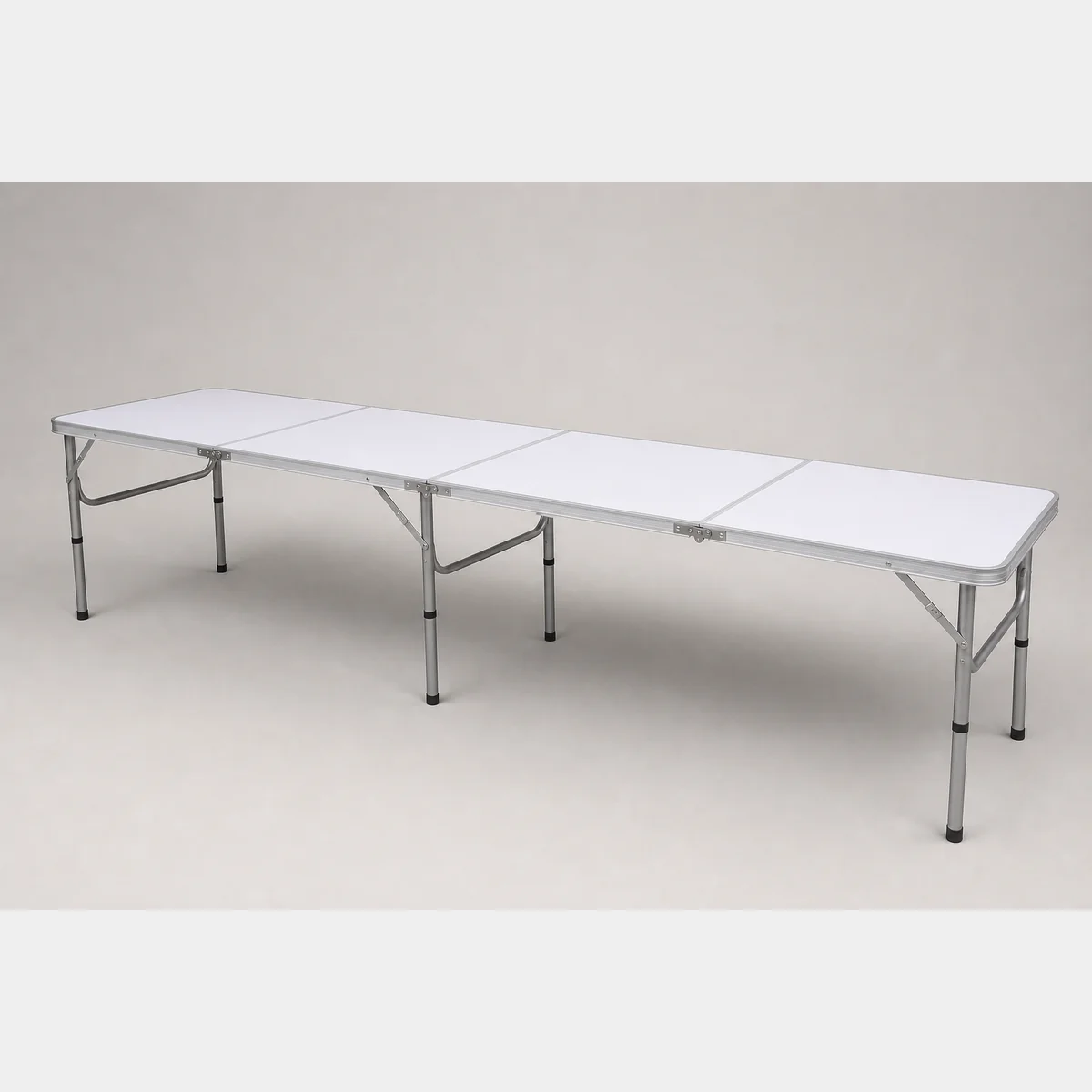 Venue FurnitureProduct reference image
Four-fold Aluminium Table (S8627)
Four-fold Aluminium Table, Net weight: 9KG; Material: Aluminium; Colour: Silver-white. Formal quotation available on request based on use, specifications and quantity.
- Net weight
- 9KG
- Material
- Aluminium
- Colour
- Silver-white
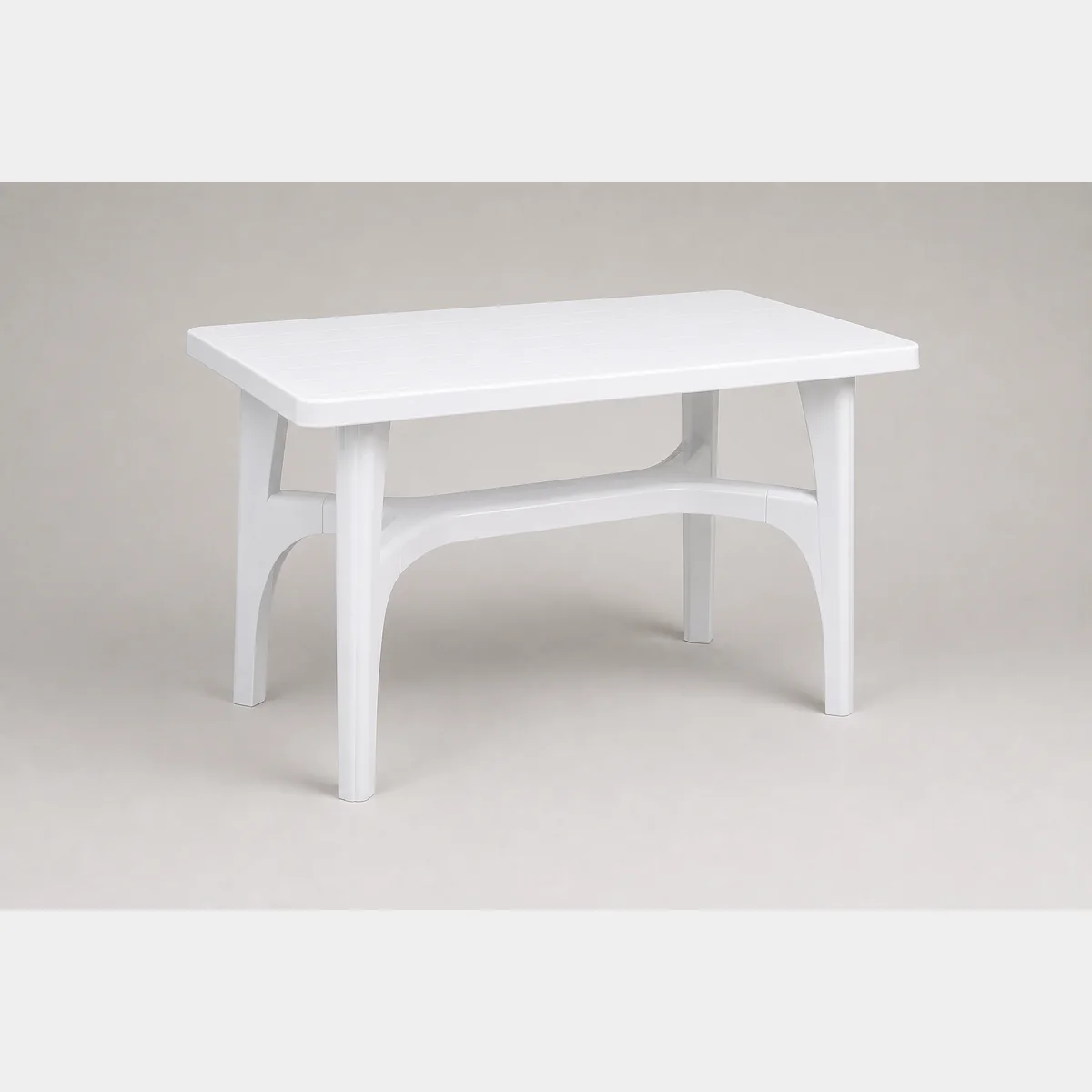 Venue FurnitureProduct reference image
Long table
Plastic long tables in two source-listed configurations: 1198 at L1100xW580xH720 mm and 1198-B at L1400xW850xH720 mm. Confirm the required configuration in writing.
- Model 1198
- L1100xW580xH720 mm
- Model 1198-B
- L1400xW850xH720 mm; confirm selection in writing
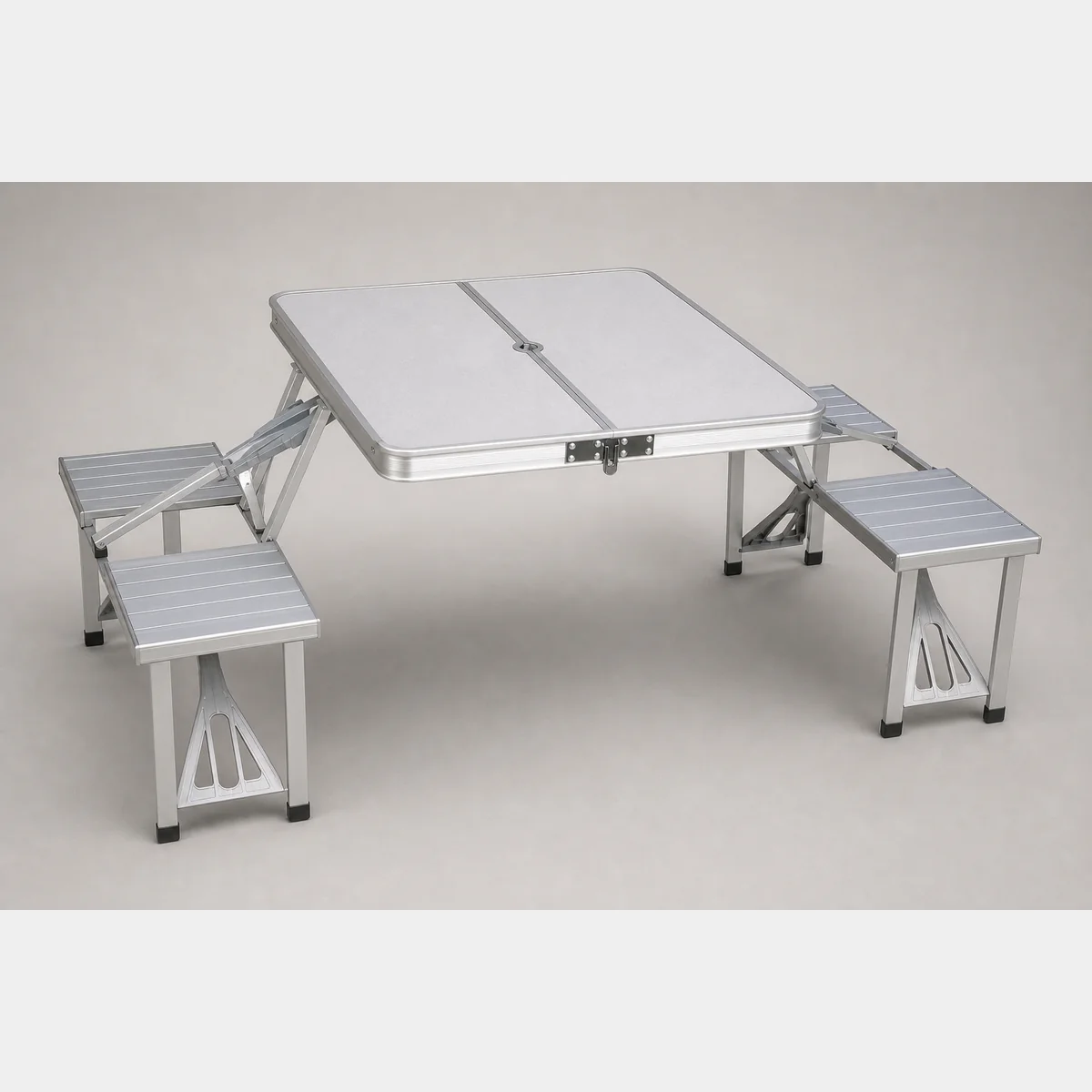 Venue FurnitureProduct reference image
Outdoor aluminium folding table
Outdoor aluminium folding table. Material: plastic and aluminium; Colour: silver; Load capacity: 150kg. A formal quotation is available on request based on use, specifications and quantity.
- Material
- Plastic and aluminium
- Colour
- Silver
- Load capacity
- 150kg
Continue with closely related procurement topics
These pages share equipment, operating or decision-stage signals with this guide.
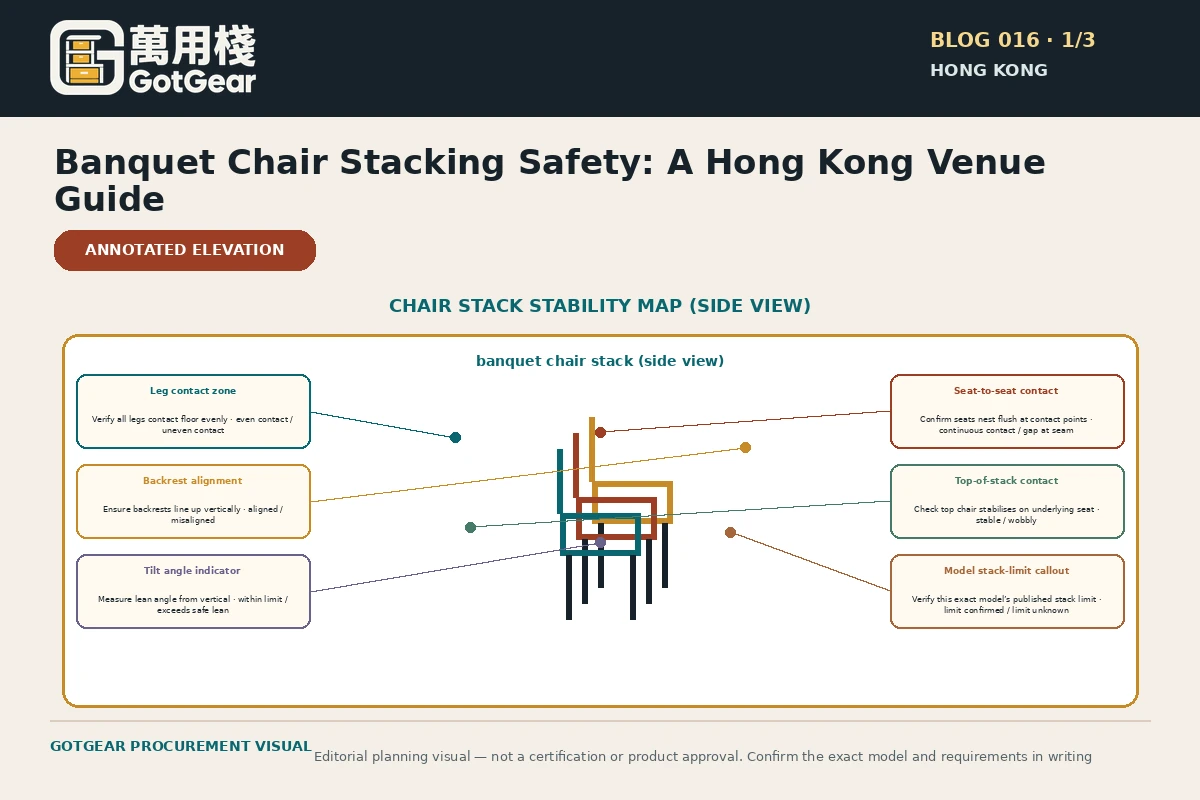
Banquet chair stacking safety Hong Kong
GotGear explains banquet chair stacking safety Hong Kong for Hong Kong buyers. See how banquet chair storage planning Hong Kong supports stacking chair inspection checklist Hong Kong, with practical checks, evidence boundaries and written requirements.
Read the guide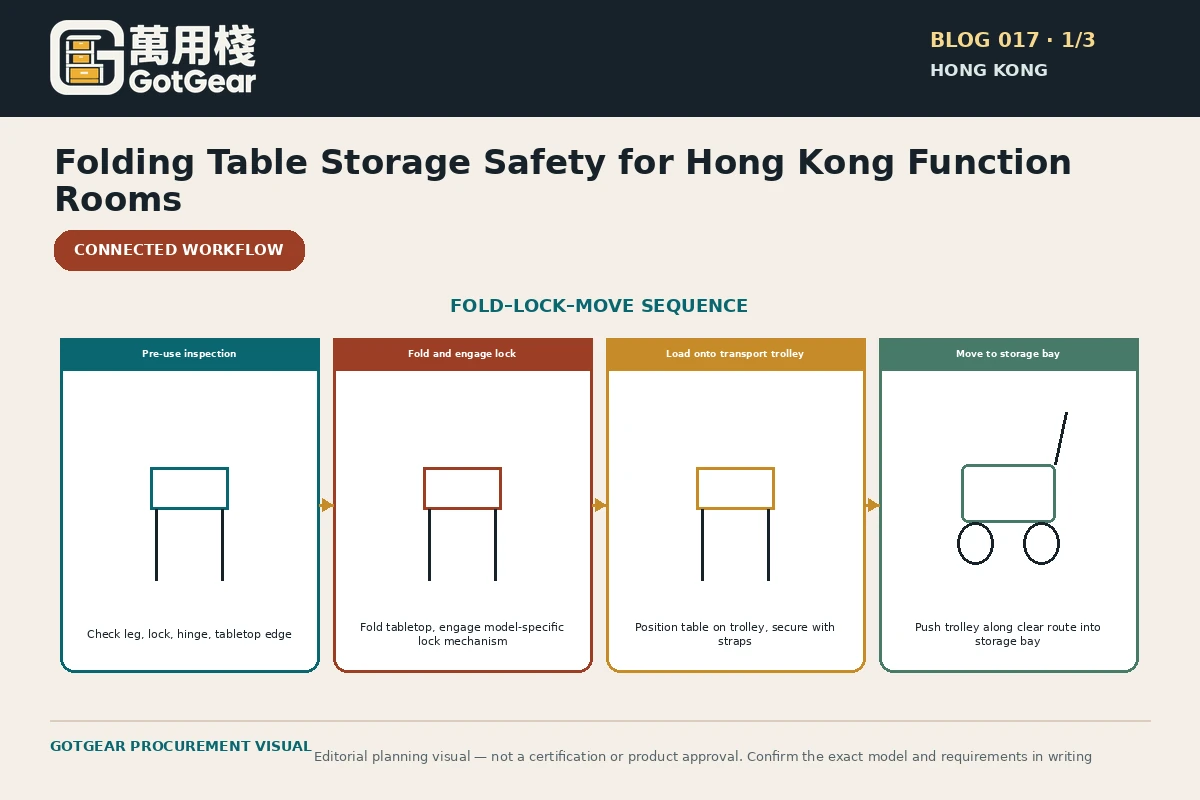
Folding table storage safety Hong Kong
GotGear explains folding table storage safety Hong Kong for Hong Kong buyers. See how folding table transport trolley Hong Kong supports commercial folding table inspection Hong Kong, with practical checks, evidence boundaries and written requirements.
Read the guide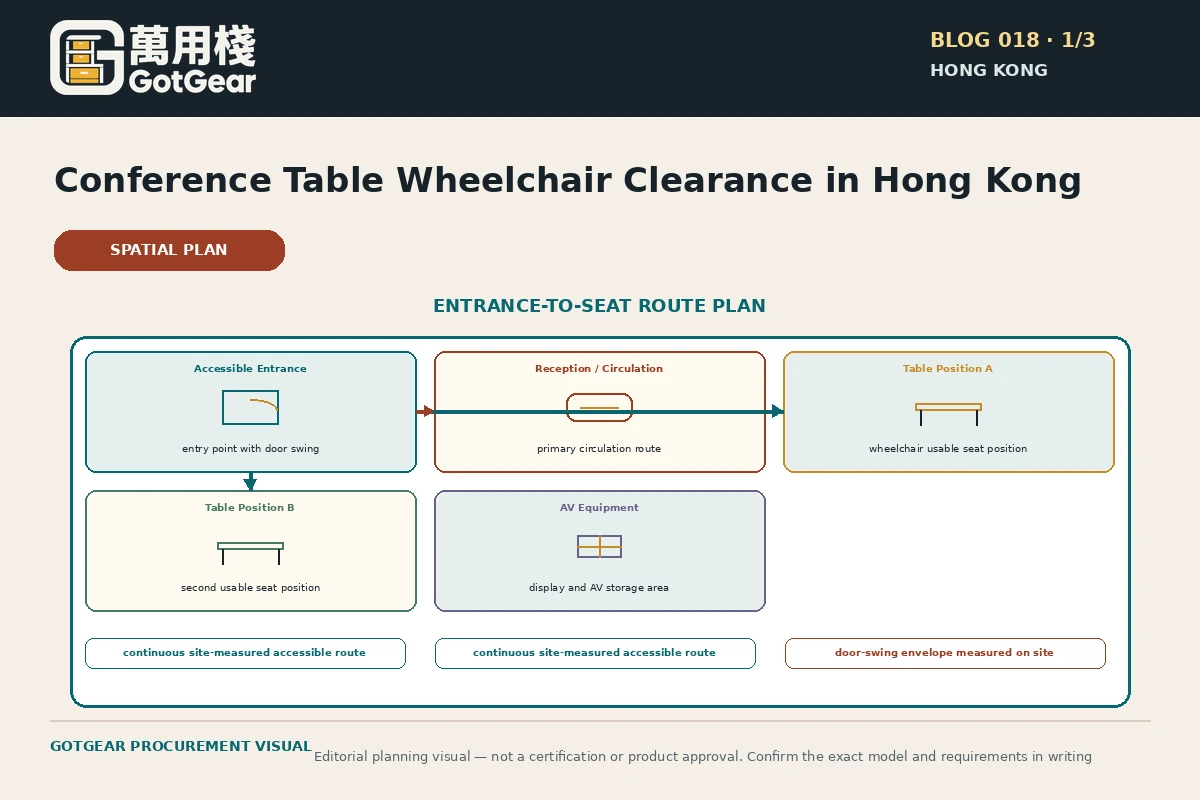
Conference table wheelchair clearance Hong Kong
GotGear explains conference table wheelchair clearance Hong Kong for Hong Kong buyers. See how accessible meeting room furniture Hong Kong supports wheelchair accessible conference table Hong Kong, with practical checks, evidence boundaries and written requirements.
Read the guide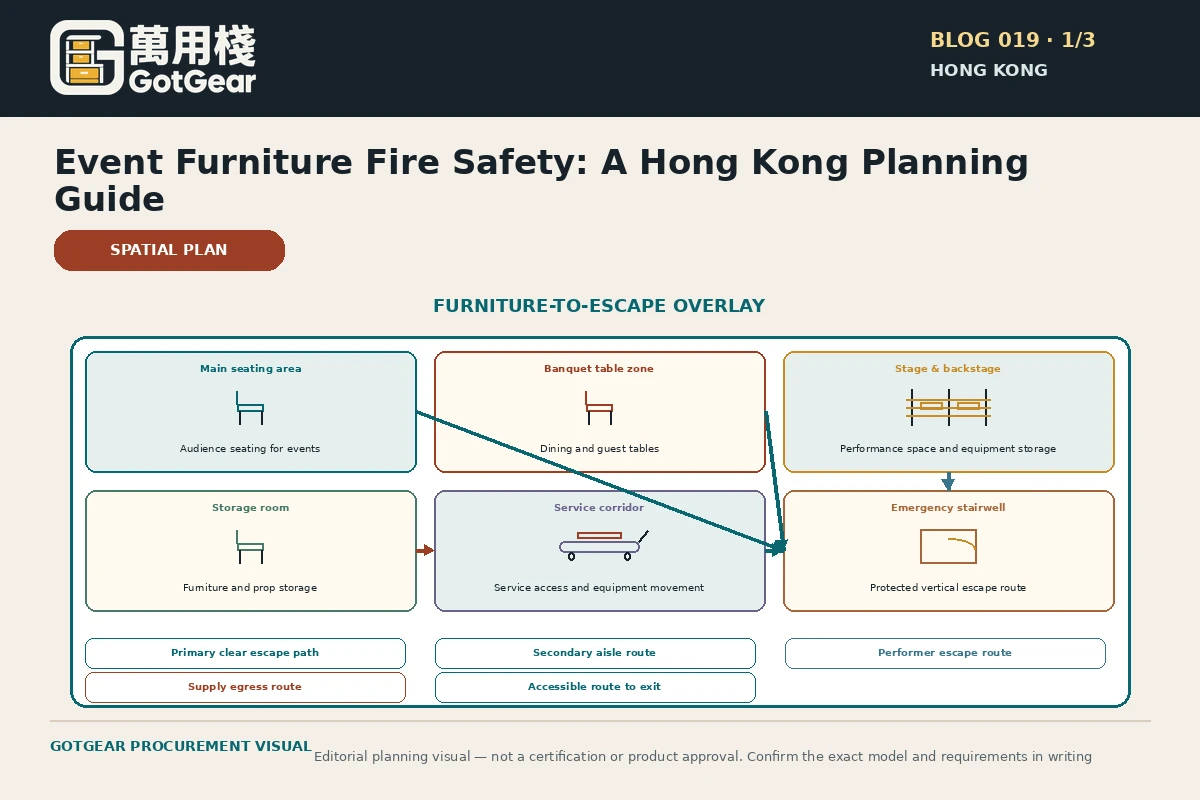
Event furniture fire safety Hong Kong
GotGear explains event furniture fire safety Hong Kong for Hong Kong buyers. See how upholstered event chair fire performance Hong Kong supports function room furniture fire risk Hong Kong, with practical checks, evidence boundaries and written requirements.
Read the guideRelated topic indexOpen more English procurement pages16 topics
Browse additional equipment families, applications and procurement questions relevant to these operating requirements.