
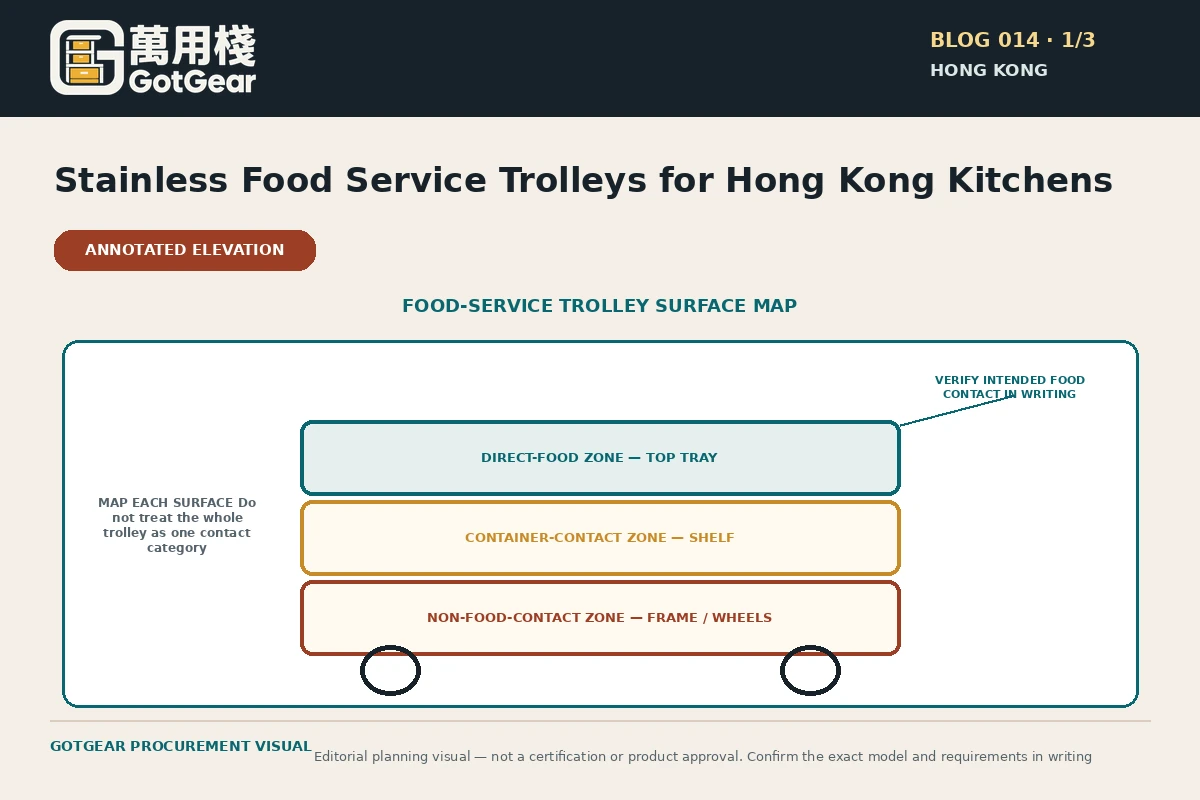
For food service use in Hong Kong, specify a trolley only after confirming whether it will contact unprotected food, the cleaning and sanitising routine, moisture and chemical exposure on the route, and shelf/tray layout. Prioritise smooth, crevice-free fabrication, corrosion-resistant materials, sealed welds and accessible joints; ensure castors and brakes suit washdown and load. Don’t assume “stainless” equals food-safe—request material and fabrication details and a supplier cleaning/maintenance sheet before accepting a trolley.
What to remember before you decide
- Don’t assume “stainless” equals food-safe—specify alloy, finish and fabrication for food-contact use.
- Define whether surfaces will touch unprotected food before selecting trolley design and cleaning methods.
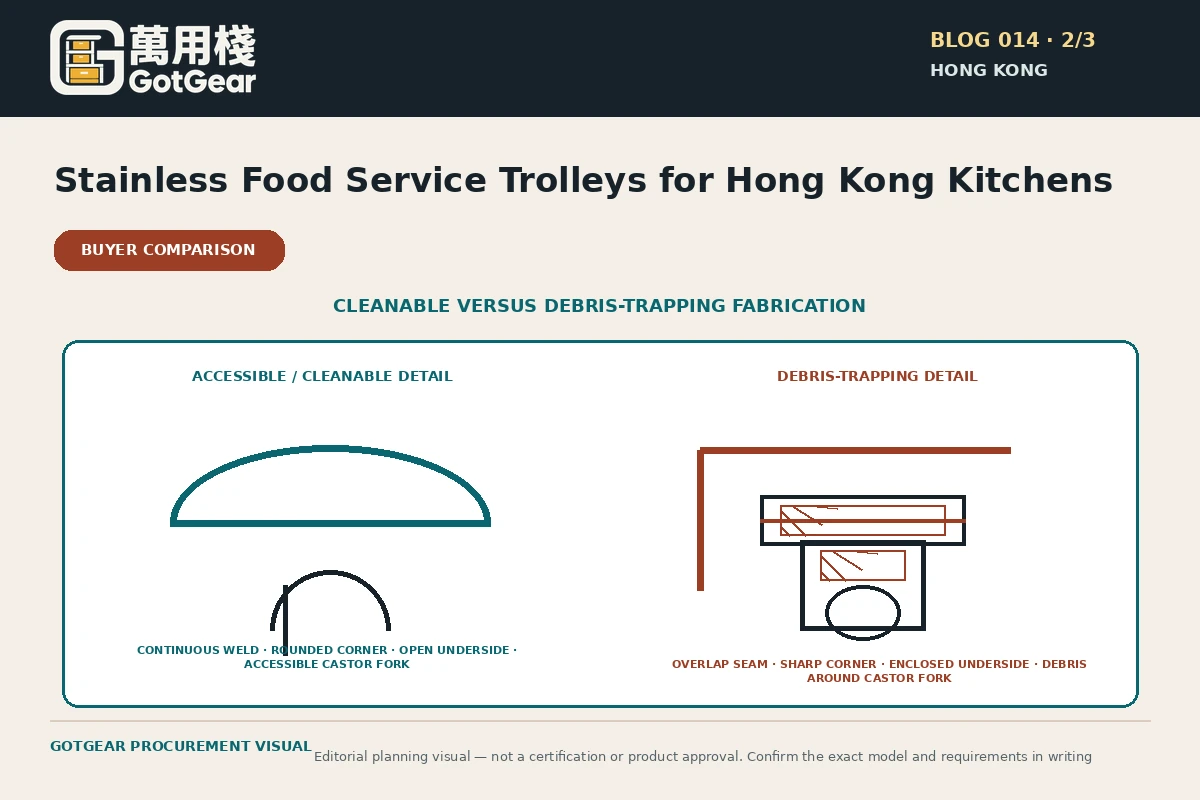
- Prioritise smooth, sealed welds, coved corners and accessible undersides to enable effective cleaning.
- Match detergents, sanitisers and wash methods to materials and secure a supplier cleaning sheet.
- Trial trolleys in real Hong Kong service routes and record inspection results before fleet acceptance.
- Include ergonomics and castor performance in procurement to reduce manual handling risks.
1. Define the trolley’s role: food-contact or service-only
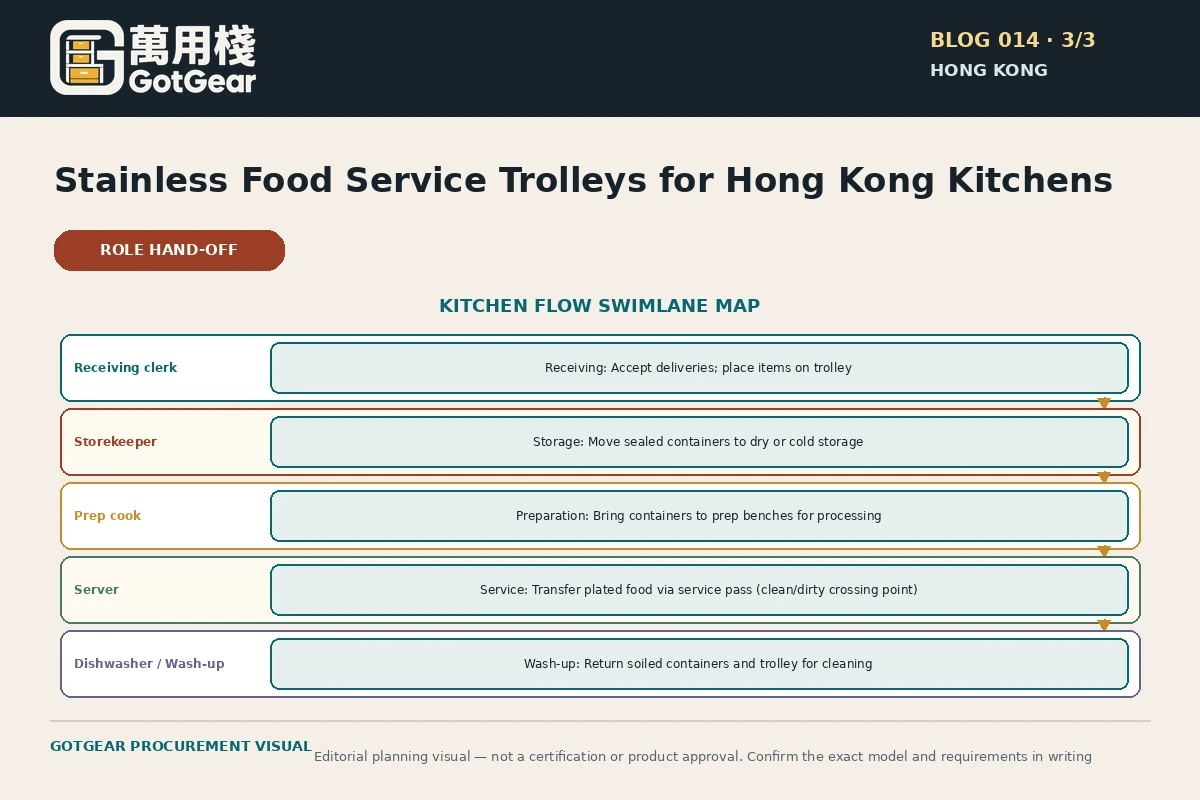
Start by mapping exactly how the trolley will be used in your facility. In Hong Kong kitchens the same cart may move covered plated meals, open food trays, ingredient containers or soiled serviceware along different routes; each use imposes different design and cleanability needs. If any surface will contact unprotected food (ready-to-eat items, unpackaged bakery goods, plated meals without lids), treat the trolley as a food-contact surface and require fabrication that meets FEHD characteristics: corrosion-resistant, smooth, non-absorbent, durable and free from cracks or open seams so it can be cleaned, sanitised and inspected. If the trolley only carries closed, protected items, the finish and joint tolerances can be less exacting, but avoid unnecessary projections and crevices so the surface remains easy to clean. Use these decision checks: list every load type, whether items will be covered, expected soiling, frequency of transfer, exposure to salts or acid cleaners, and whether the trolley will pass through customer-facing areas. A key limitation is that a trolley built for occasional covered service will not withstand regular direct food contact without design changes—welds, finishes and shelves may trap debris. Next, document the precise tasks the trolley will perform, photograph real loads and routes, and use that requirements note when requesting quotations and cleaning instructions from suppliers.
Material, finish and fabrication you must inspect
Ask suppliers for explicit material and fabrication information rather than marketing names. For Hong Kong operations this means requesting the alloy grade, surface finish (e.g. mill finish vs polished), weld method and evidence that seams are ground smooth or sealed. The FEHD guidance applied in local food premises emphasises smooth, corrosion-resistant and inspectable food-contact surfaces; use that as the performance requirements note when you evaluate samples. Use these decision checks: require welded construction with continuous, ground or filled welds on food-contact shelves and coved internal corners where trays sit. Specify non-porous finishes that do not hide soil and that tolerate your detergents and sanitiser concentrations. Check load ratings for expected plate or container stacks. A key limitation is that suppliers sometimes substitute lower-resource requirements fabrication where the work plans is vague—mill-finished stainless with spot welded seams can trap food and is hard to sanitise. Next, request close-up photos of welds and corners; inspect or trial a production sample of the exact trolley model under your usual loading and cleaning routine; obtain a written cleaning and maintenance sheet from the supplier.
“Choose trolleys by the cleaning you will do and the food you will carry; the metal name alone is not sufficient. A cleanable design, clear maintenance instructions and an in-kitchen trial matter more than a marketing label.”— GotGear Editorial Team
What should buyers compare for stainless steel food service trolley Hong Kong?
| Option or approach | Best for | Trade-offs | Checks before acceptance |
|---|---|---|---|
| Fully specified food-contact stainless trolley | Direct transfer of unprotected or ready-to-eat foods where surfaces touch food. | Higher fabrication resource requirements, heavier and requires specific cleaning chemistry and schedule. | Request alloy and finish details, weld close-ups, supplier cleaning sheet and run a 30–90 day in-kitchen trial under your SOP. |
| Service-only trolley for covered or packaged loads | Moving plated, lidded or boxed meals where food does not contact trolley surfaces. | Lower fabrication tolerances allowed but unsuitable if practices later change to direct food contact. | Confirm loads remain covered in daily use; inspect for hidden crevices and schedule periodic cleaning checks. |
| Washdown trolley with sealed joints and chemical-resistant components | Environments requiring frequent washdown with detergents or moderate sanitiser use. | May use heavier materials and higher-spec bearings; consider castor resistance to chemicals and heat. | Verify component compatibility with your detergents and sanitiser concentrations and test castors through wash cycles. |
| Trolley with removable food-contact inserts | Multipurpose operations where inserts can be run through a dishwashing system separately. | Extra handling steps for removal and storage of inserts; need space and process to wash/store inserts. | Confirm insert dimensions, ease of removal, and ensure storage allows inserts to dry and be inspected. |
| Service trolley with sealed surfaces but lower-grade alloy for dry use | Dry storerooms, tray distribution or covered-batch transport where corrosion exposure is limited. | Economical, but not appropriate for wet, salty or coastal environments where corrosion risk increases. | Match the alloy to environmental exposure and establish a maintenance check schedule to catch early corrosion. |
This framework helps buyers create comparable written enquiries. Final model specifications, availability, delivery and commercial terms must be confirmed in a formal quotation.
2. Design details that make daily cleaning realistic
Small design choices determine whether staff can keep the trolley hygienic in a busy Hong Kong kitchen. Shelf geometry should avoid horizontal crevices where food builds up: use sloped or perforated shelves where liquids drain, and provide adequate clearance above shelves so staff can access undersides. Select castors rated for the load and resistant to your cleaning regime—locks on at least two wheels help secure trolleys during loading and cleaning. Specify removable shelves or trays for items requiring higher-level wash cycles and ensure handles and control points are easy to disinfect without excessive heat. Use these decision checks: check shelf spacing for your tallest containers, confirm drainage provisions if the trolley is washed, determine turning radius for service routes through kitchens and corridors, and ensure brakes meet local safety expectations to prevent manual handling injuries. A key limitation is that heavy-duty trolleys with thicker gauge metal and sealed welds are easier to clean but can be heavier to manoeuvre; balance hygiene against ergonomics. Next, trial the trolley fully loaded along the busiest service route, test brakes on ramps and kerbs, and confirm castor bearings are washable and will not trap grease.
3. Cleaning, sanitising and maintenance: routines that will actually be followed
Define a cleaning and sanitising SOP that matches your chosen trolley and the FEHD expectations for food-contact surfaces. For trolleys that touch unprotected food, the SOP should include cleaning frequency, detergent types and concentrations, sanitiser dwell times, and inspection checkpoints (weld seams, underside of shelves, castor housings). For non-food-contact trolleys, the SOP should still reduce harbourage points and be achievable within staff time allocations. Consider whether trolleys will enter mechanical washing equipment or be hand-washed with a mop-and-spray routine; the trolley’s materials and finish must tolerate your chosen method. Use these decision checks: match detergent and sanitiser chemistry to the trolley’s alloy and finish; check that seals, gaskets and wheel bearings are compatible with water and chemicals; schedule regular deep inspections into your maintenance plan. A key limitation is that high-temperature, high-alkali wash cycles or frequent bleach exposure accelerate corrosion if the alloy and finish are unsuitable. Next, ask suppliers for a recommended cleaning sheet, run a short trial of your SOP on a sample trolley, and record any corrosion or finish loss over a 30–90 day trial before fleet-wide acceptance.
Stainless steel food service trolley Hong Kong decision checklist
- Define whether trolley surfaces will contact unprotected food; document tasks and routes.
- Request exact alloy grade, surface finish description and written fabrication details from the supplier.
- Inspect welds, seams and corners—require ground or filled welds and coved internal corners where food sits.
- Confirm shelf geometry, drainage and clearance for your containers and trays.
- Specify castor type, load rating, chemical resistance and at least two wheel locks for safety.
- Obtain a supplier cleaning and maintenance sheet that matches your detergents and sanitisers.
- Plan an in-kitchen trial under real loads and your cleaning routine for 30–90 days.
- Assess ergonomics: handle height, manoeuvring effort on typical routes and manual handling risk reductions.
- Check corrosion exposure on service routes (salt air, frequent washdown, acidic foods) and adjust material spec.
- Schedule periodic deep inspections for seams, undersides and castor housings and include results in maintenance logs.
Practical action sequence
- Map loads, routes and whether food will be unprotected; create a concise written requirements.
- Specify material, finish and fabrication tolerances in writing and request photos of production welds.
- Ask for a sample or prototype for an on-site trial and define the trial period and pass/fail criteria.
- Confirm detergents/sanitisers and ensure supplier cleaning sheet matches those chemicals.
- Run a loaded manoeuvre and washdown trial on your busiest route and record any issues.
- Train staff on the trolley’s SOP: loading, cleaning, sanitising and inspection points.
- Evaluate trial results, note corrosion, trapped-soil areas or ergonomic problems and refine the spec.
- Accept and order only after the supplier provides cleaning/maintenance documentation and a successful trial.
Apply the checks to your Hong Kong site
In Hong Kong the Food and Environmental Hygiene Department sets expected characteristics of food-contact surfaces; domestic supplier claims about stainless do not replace a documented specification and supplier cleaning procedures. The Labour Department recommends suitable trolleys and cart use to reduce musculoskeletal risk when moving dishes and heavy loads, so include ergonomics and route design in decisions. International standards such as NSF provide material and design guidance, but local FEHD expectations and in-kitchen trials are decisive. Separate a trolley that directly contacts unprotected food from one that operates in a food area, and assess smooth welds, crevice access, corrosion exposure, shelf arrangement and wheel choice by how they affect cleaning and sanitising. When considering a stainless steel food service trolley Hong Kong, require documented validation of your cleaning regimen and complete a live trial. Operational takeaway: approve a stainless steel catering trolley Hong Kong only after confirming your food service trolley cleaning Hong Kong process reaches every exposed surface during a service run.
References used for this article
These sources provide regulatory, safety or planning context. They do not certify any GotGear product or replace site-specific professional advice.
- Hong Kong Food and Environmental Hygiene Department — Food Hygiene Code, Chapter 2 — Hong Kong food-premises and equipment context, including food-contact-surface characteristics and non-food-contact cleanability.
- Hong Kong Labour Department — Hints on Prevention of Musculoskeletal Disorders: Catering Industry — Local catering context for using suitable trolleys or carts to transfer heavy objects and dishes while reducing force and distance.
- NSF — Food Equipment Standards — Recognised standards scope for food equipment materials, mobile food carts and food-service equipment design, construction and sanitation.
- WorkSafe WA — Manual task solutions: Trolleys — Selection criteria for hygiene/sterility, product material, temperature, castors, load, maintenance and worker trialling.
Questions about stainless steel food service trolley Hong Kong
What does the FEHD expect of food-contact surfaces on mobile equipment in Hong Kong?
The Food and Environmental Hygiene Department expects food-contact surfaces to be corrosion-resistant, smooth, non-absorbent, durable, non-toxic and impervious to grease, food particles or water; they should be free from cracks and open seams and accessible for cleaning, sanitising and inspection. Use the FEHD characteristics as your performance specification when you evaluate a trolley intended to touch unprotected food, and request supplier documentation that shows how the trolley meets those features.
Are all stainless trolleys suitable for direct contact with food?
No—stainless steel as a label does not guarantee the trolley is suitable for food contact. The crucial factors are alloy suitability, surface finish, weld quality and the absence of crevices. A thin-gauge, spot-welded or mill-finished trolley can trap food debris and corrode under frequent cleaning, so always confirm fabrication details and run a real-world cleaning and handling trial before approving a trolley for direct food contact.
How does the Hong Kong Labour Department guidance affect trolley selection?
The Labour Department recommends selecting trolleys that reduce force and distance when transferring dishes and heavy objects to lower musculoskeletal risk. For procurement this means checking load ratings, wheel performance, handle height and manoeuvrability, and trialling trolleys with staff on real routes. Ergonomics and safe manual handling are part of the written requirements alongside hygiene and cleanability.
Should I ask for NSF certification or follow NSF standards when buying a trolley in Hong Kong?
NSF standards are useful international guidance on material safety, design, construction and sanitation for food equipment and mobile carts. They can inform your specification, but NSF is not a Hong Kong legal requirement. Use NSF criteria where helpful, but ensure compliance with local FEHD characteristics and perform your own trials and documentation checks—don’t rely solely on overseas marks or statements.
What practical cleaning routine should we adopt for a food-contact trolley in a busy kitchen?
Adopt a short, practicable SOP: remove loose debris after each use, wash contact surfaces with the specified detergent at recommended concentration, rinse thoroughly, apply the approved sanitiser with the required dwell time, then air dry or dry with a clean cloth. Schedule a daily wipe-down for service-only trolleys and a full wash-and-inspect at shift end for food-contact trolleys. Ensure staff training and recordkeepers so the routine is followed consistently.
Compare available product models and specifications
These product cards are matched to this buying topic. Select a specification and quantity to send the product details to WhatsApp.
 Material Handling & LogisticsProduct reference image
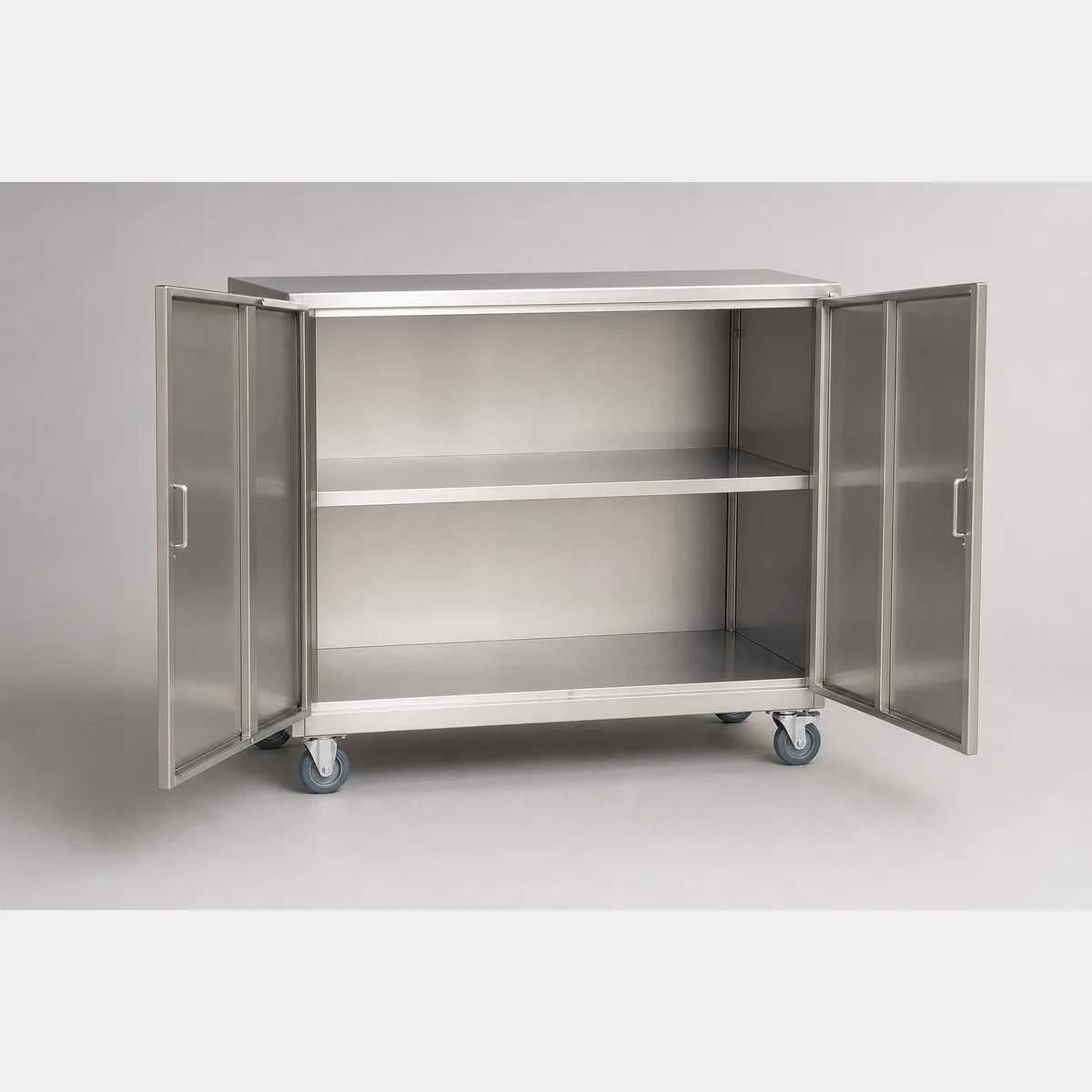
Three-tier stainless steel double-door food trolley
Three-tier stainless steel double-door food trolley. Dimensions / Specification: 900x500xH900 mm. Formal quotation available based on use, specifications and quantity.
- Dimensions / Specification
- 900x500xH900 mm
 Material Handling & LogisticsProduct reference image
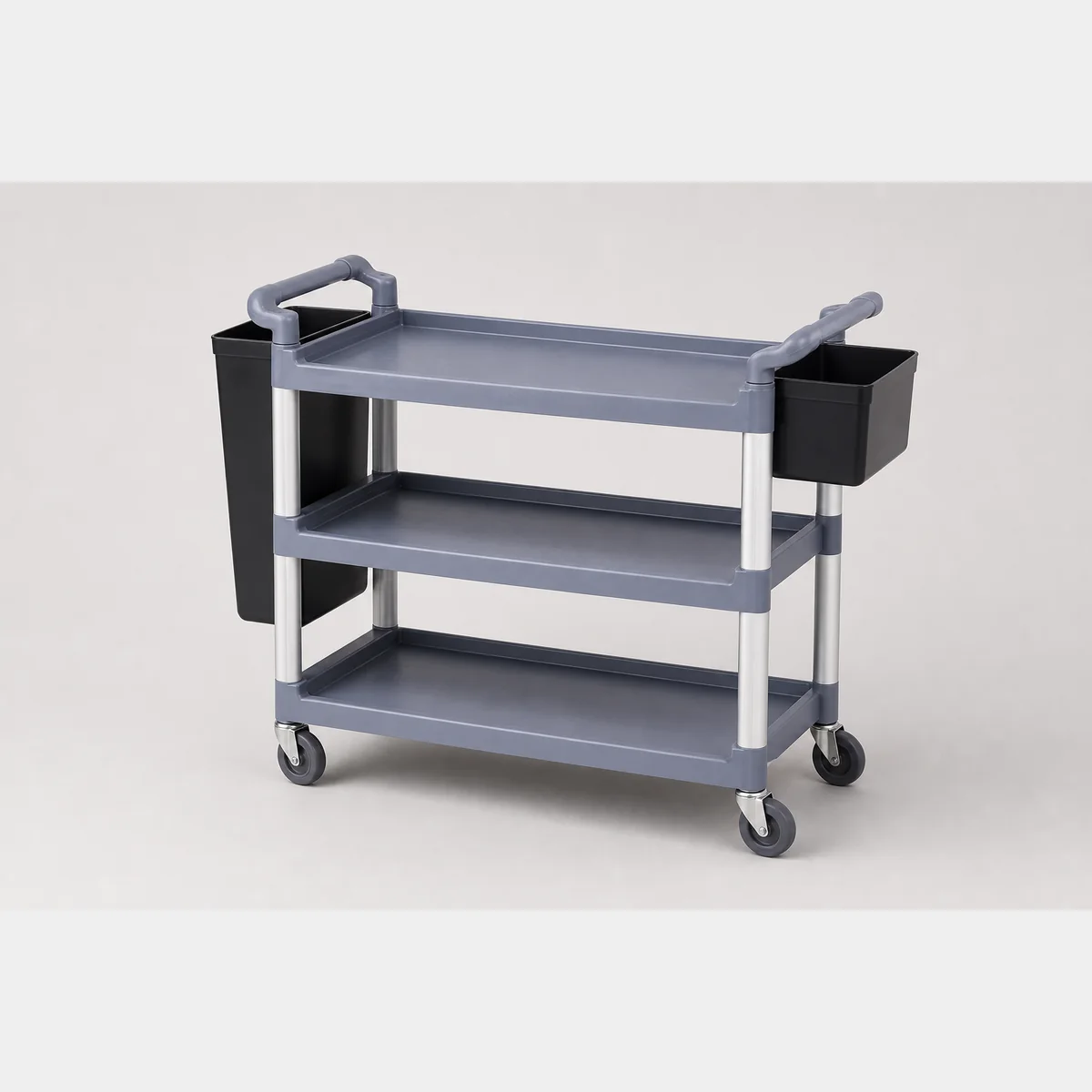
Three-tier Plastic Food and Service Trolley
Three-tier plastic food and service trolley in large and small reference sizes. Confirm the required size and optional hanging bins in writing.
- Trolley size
- Large: L103xW51xH96 cm / Small: L80xW41xH96 cm
- Optional basins
- 8256A L62xW42.5xH17.5 cm / 8256B L53xW42.5xH17.5 cm
- Optional hanging bins
- S8982A-L L33xW23xH56 cm / S8982B-S L33xW23xH17.5 cm
 Material Handling & LogisticsProduct reference image
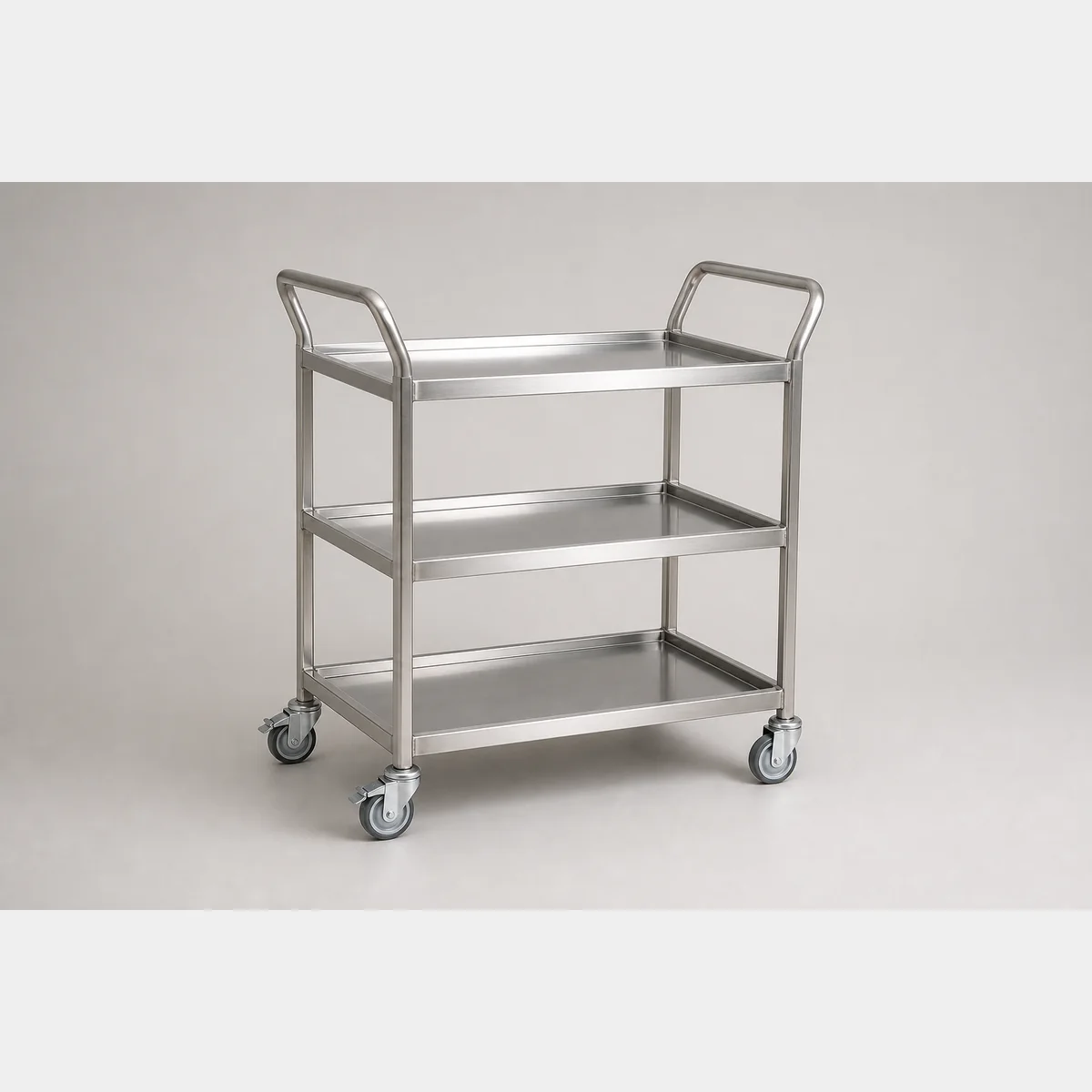
3-tier stainless steel push trolley
3-tier stainless steel push trolley, A: L600xW400xH850 mm; B: L700xW480xH900 mm; C: L850xW560xH950 mm. Formal quotation available based on intended use, specifications and quantity.
- A
- L600xW400xH850 mm
- B
- L700xW480xH900 mm
- C
- L850xW560xH950 mm
 Material Handling & LogisticsProduct reference image
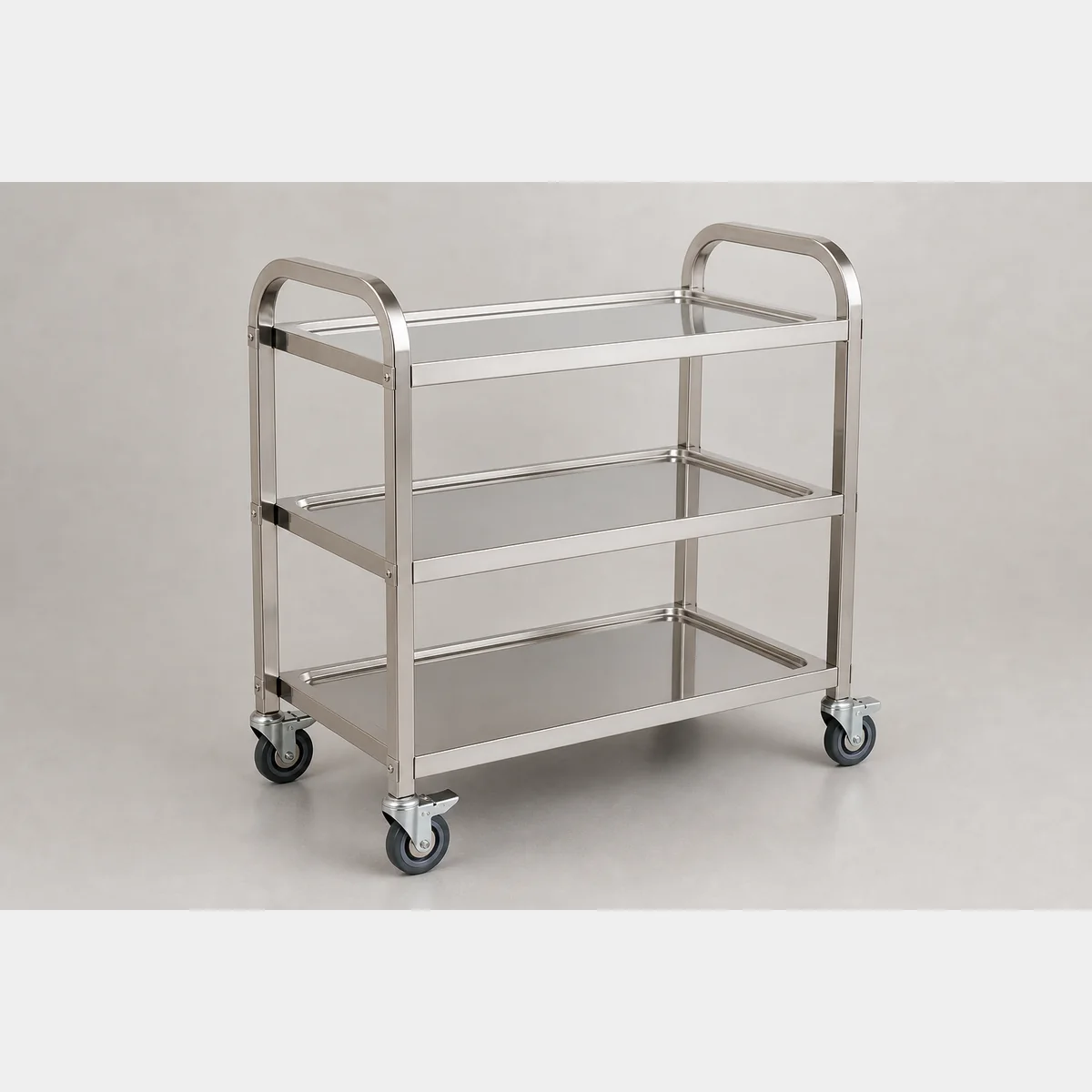
3-tier stainless steel trolley
3-tier stainless steel trolley. Material: stainless steel; Size (a): L75 X W40 X H83 CM; Size (b): L85 X W45 XH90 CM. Formal quotation available based on use, specifications and quantity.
- Material
- stainless steel
- Size (a)
- L75 X W40 X H83 CM
- Size (b)
- L85 X W45 XH90 CM
 Material Handling & LogisticsProduct reference image
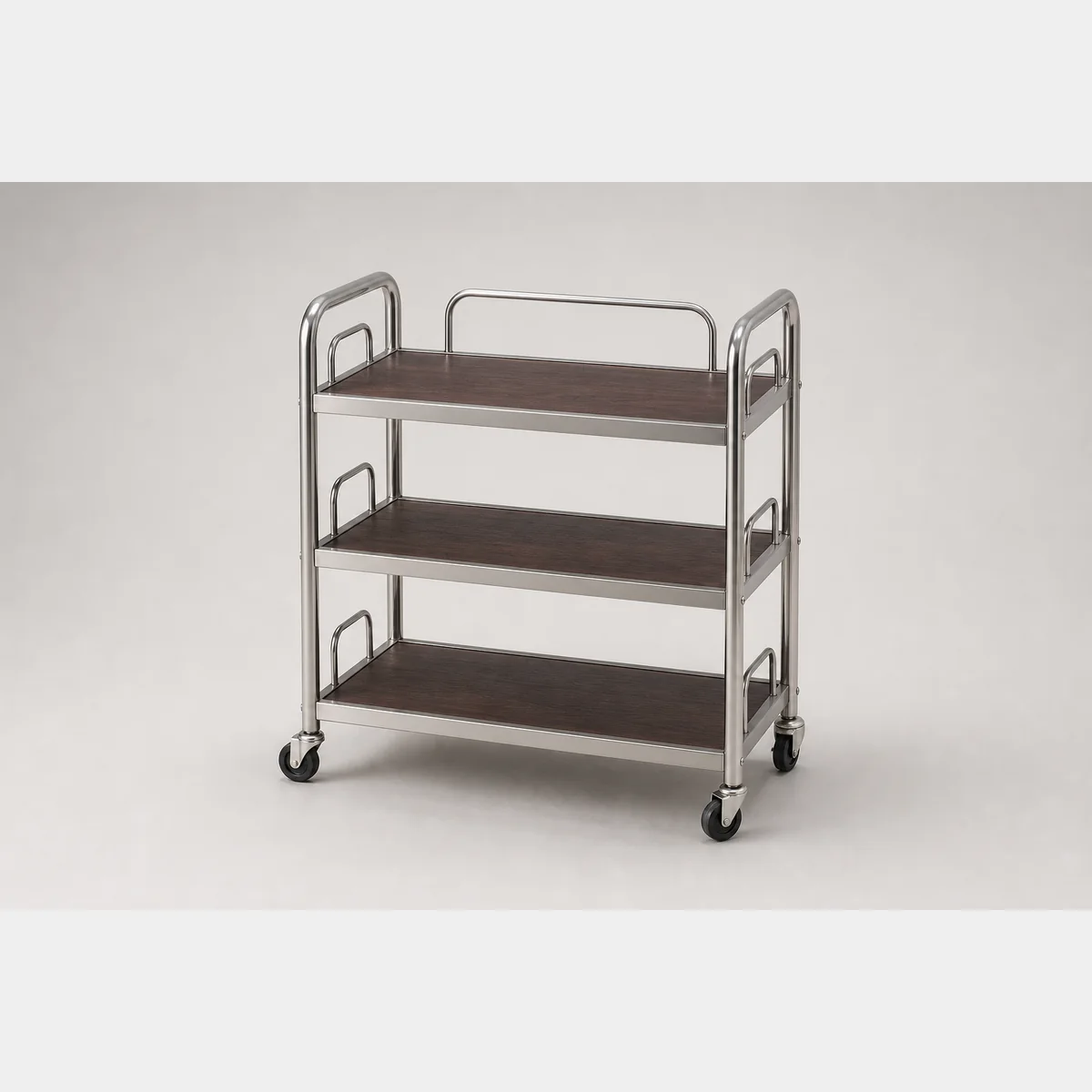
3-tier stainless steel trolley
3-tier stainless steel trolley. A: L60xW32xH77 cm; B: L54xW32xH77 cm. Formal quotation available upon request based on use, specifications and quantity.
- A
- L60xW32xH77 cm
- B
- L54xW32xH77 cm
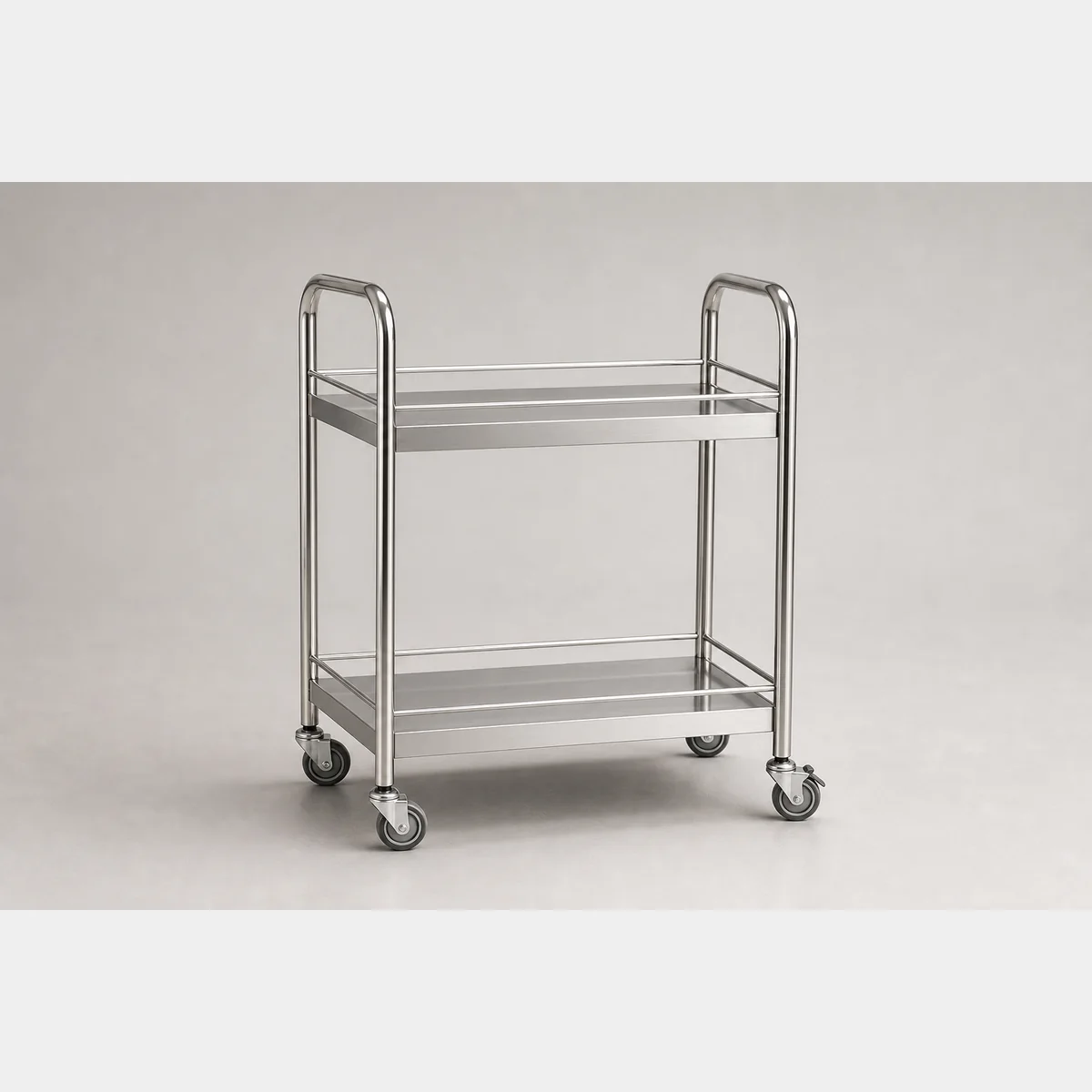 Material Handling & LogisticsProduct reference image
Double- or Three-tier Stainless Steel Push Trolley with Rails
Double-tier stainless steel push trolley with rails, A: L60xW40xH85 cm / L60xW40xH95 cm; B: L60xW45xH85 cm / L60xW45xH95 cm; C: L85xW45xH85 cm / L85xW45xH95 cm. For a formal quotation based on use, specifications and quantity, please enquire.
- A
- L60xW40xH85 cm / L60xW40xH95 cm
- B
- L60xW45xH85 cm / L60xW45xH95 cm
- C
- L85xW45xH85 cm / L85xW45xH95 cm
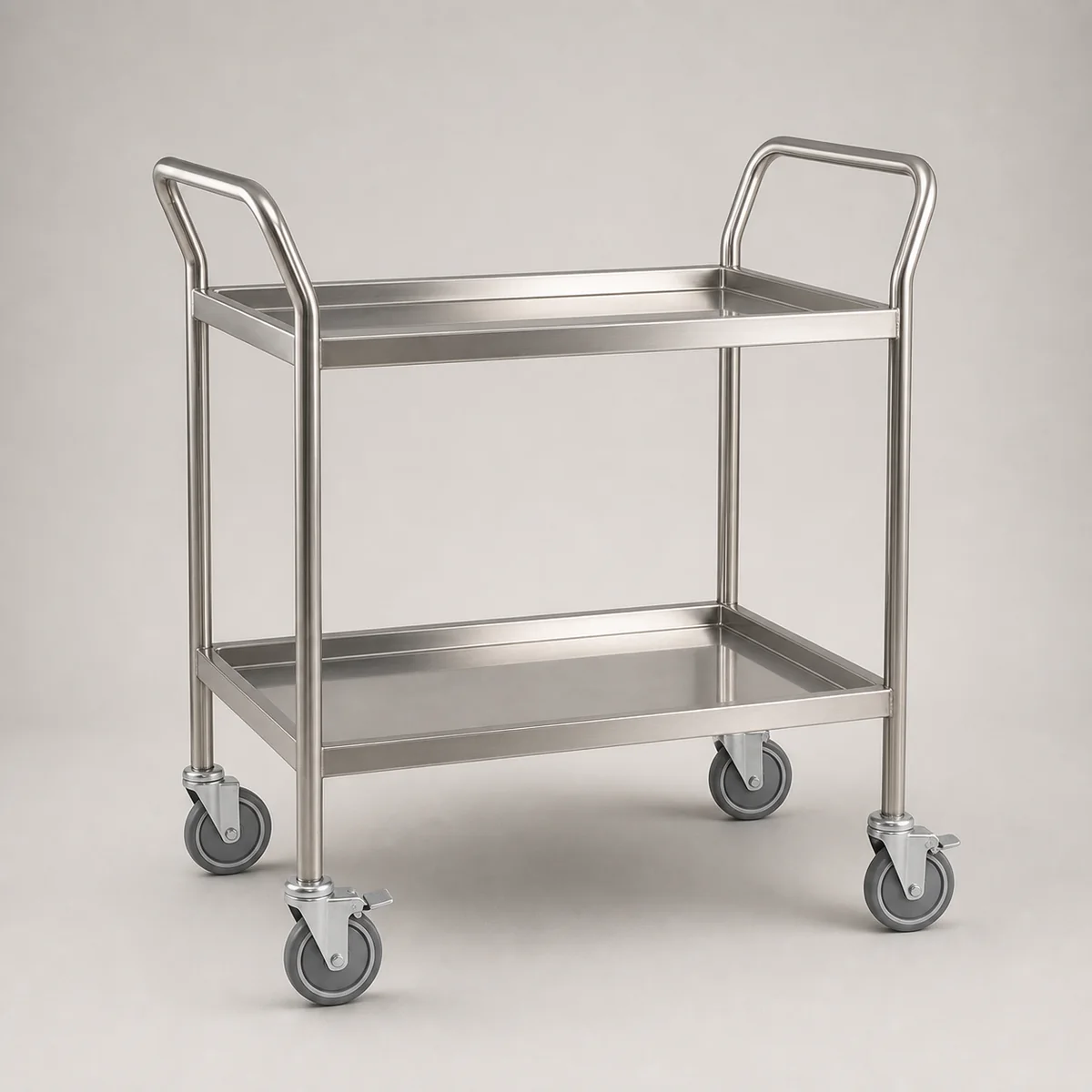 Material Handling & LogisticsProduct reference image
Double-deck stainless steel trolley
Double-deck stainless steel trolley, A1: L600xW400xH850 mm; A2: L600xW400xH850 mm; B1: L700xW480xH900 mm. Formal quotation available based on use, specifications and quantity.
- A1
- L600xW400xH850 mm
- A2
- L600xW400xH850 mm
- B1
- L700xW480xH900 mm
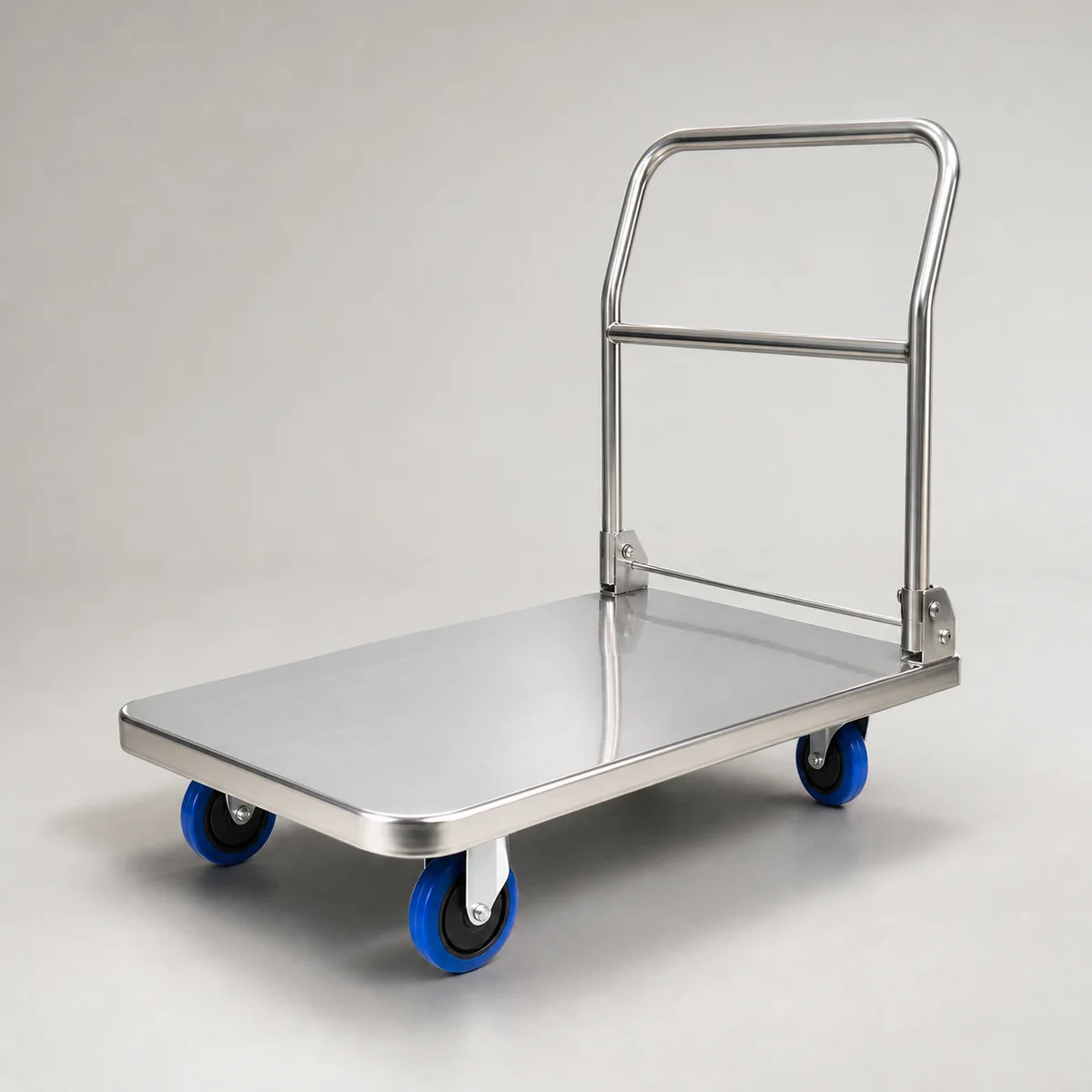 Material Handling & LogisticsProduct reference image
Heavy-duty stainless steel push trolley
Heavy-duty stainless steel push trolley, A: L72xW48xH84 cm. Formal quotation available on request based on application, specifications and quantity.
- A
- L72xW48xH84 cm
Continue with closely related procurement topics
These pages share equipment, operating or decision-stage signals with this guide.
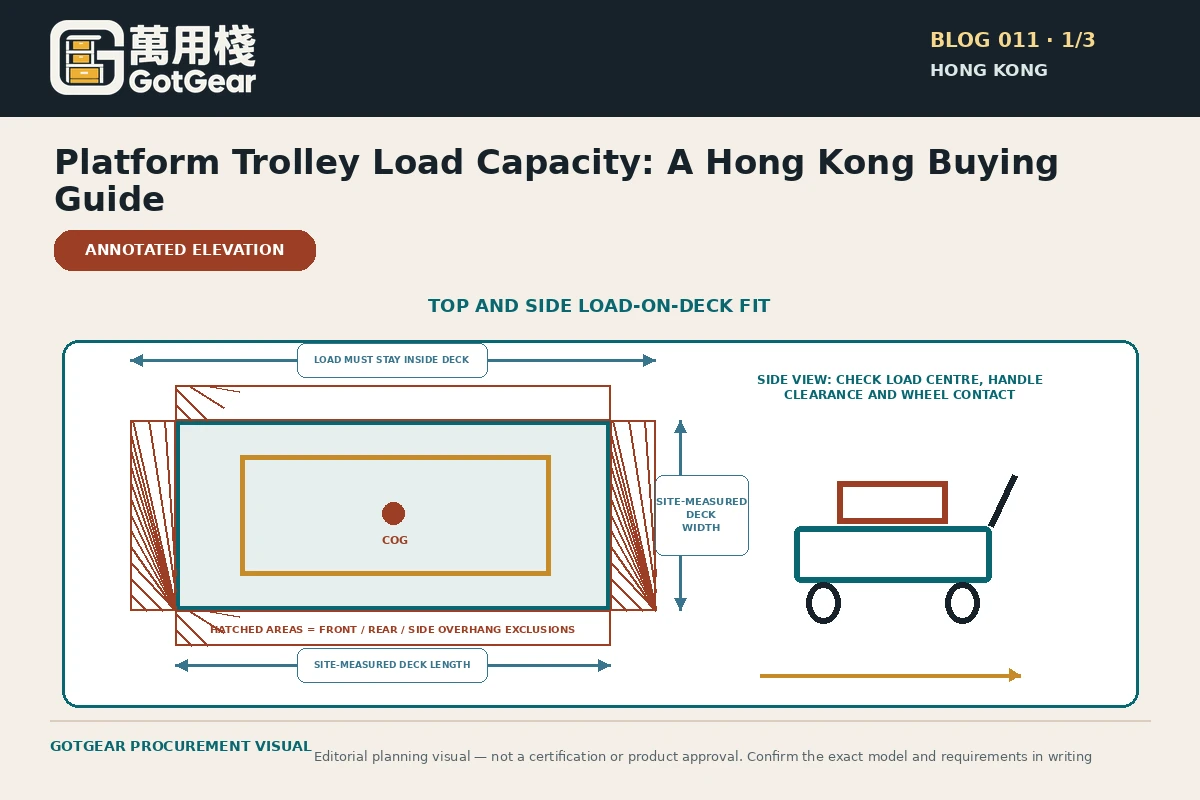
Platform trolley load capacity Hong Kong
GotGear explains platform trolley load capacity Hong Kong for Hong Kong buyers. See how platform trolley safe working load Hong Kong supports platform trolley deck size Hong Kong, with practical checks, evidence boundaries and written requirements.
Read the guide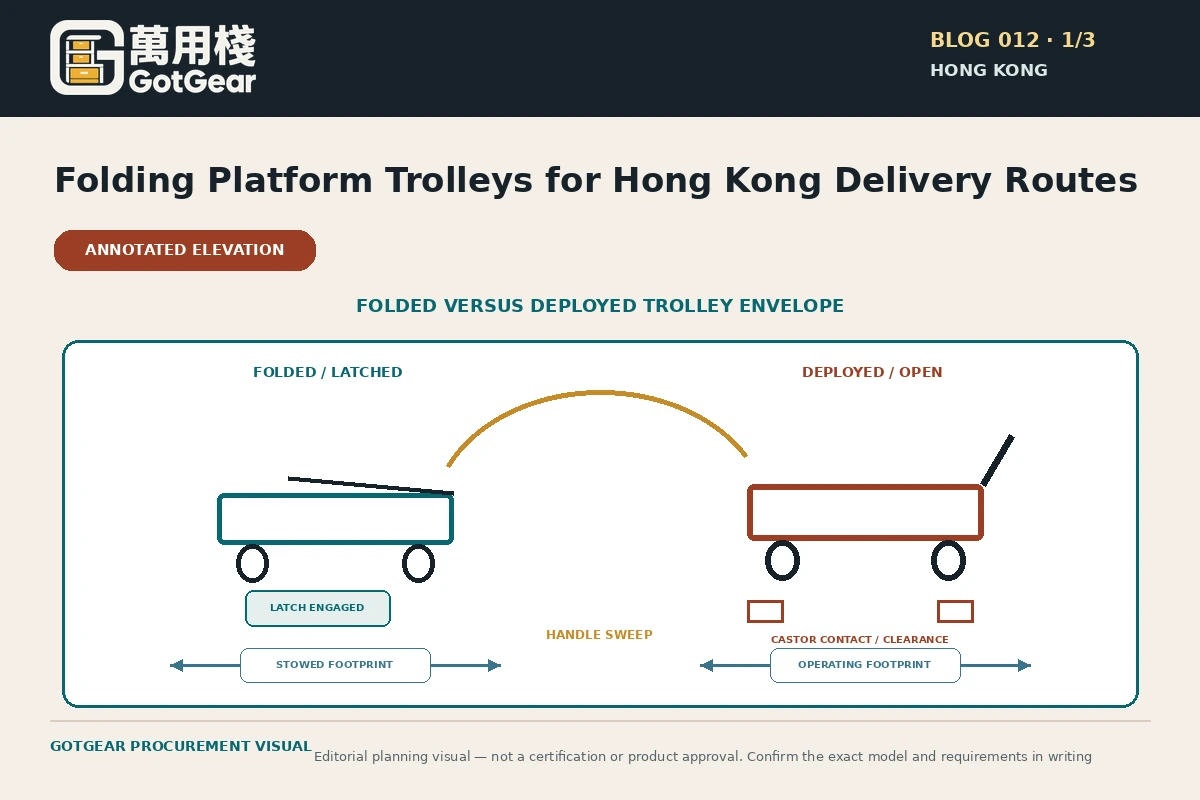
Folding platform trolley Hong Kong
GotGear explains folding platform trolley Hong Kong for Hong Kong buyers. See how foldable trolley for delivery vans Hong Kong supports compact platform trolley storage Hong Kong, with practical checks, evidence boundaries and written requirements.
Read the guide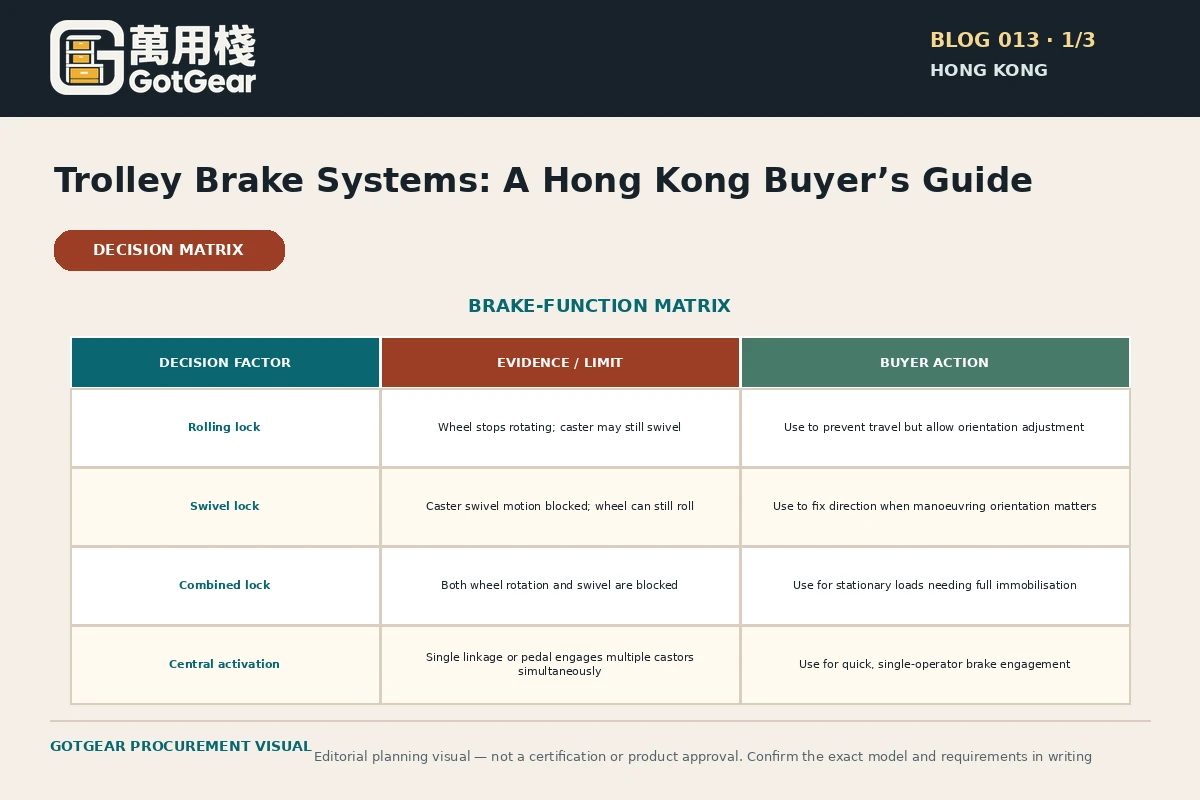
Trolley brake system Hong Kong
GotGear explains trolley brake system Hong Kong for Hong Kong buyers. See how trolley wheel brake types Hong Kong supports locking caster trolley Hong Kong, with practical checks, evidence boundaries and written requirements.
Read the guide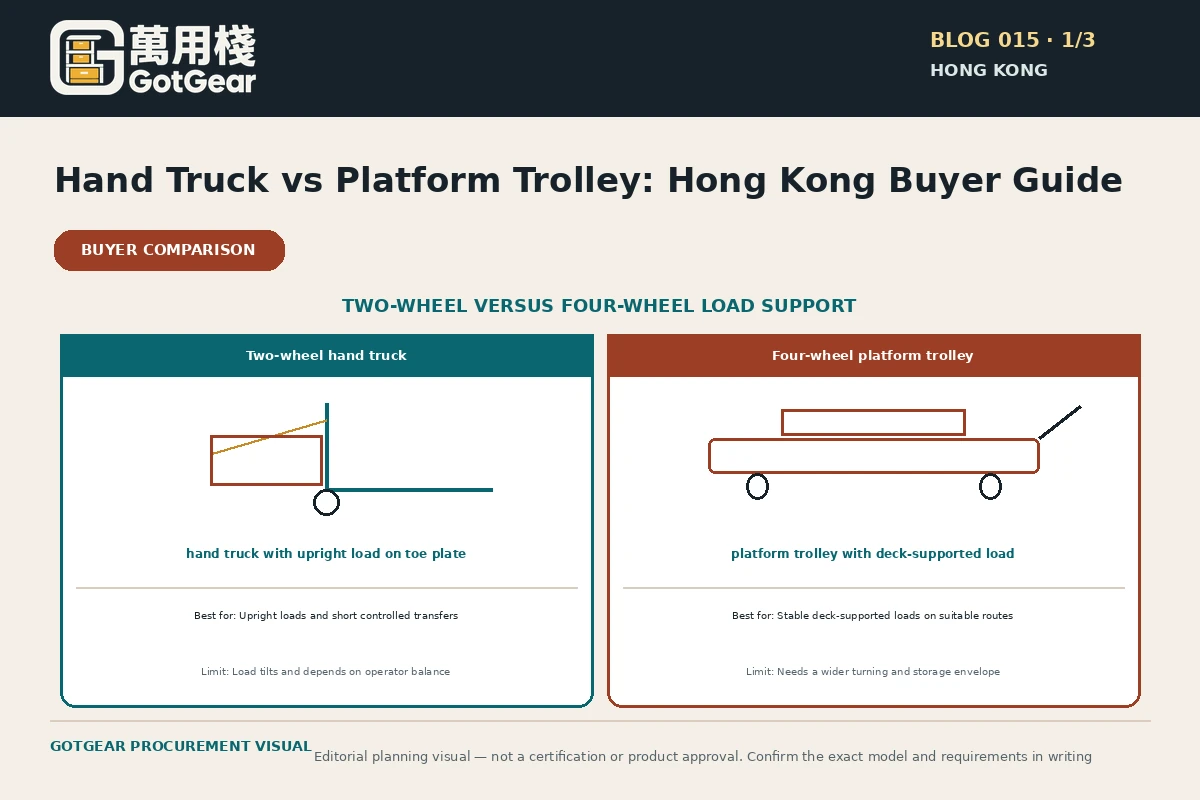
Hand truck vs platform trolley Hong Kong
GotGear explains hand truck vs platform trolley Hong Kong for Hong Kong buyers. See how two wheel hand truck Hong Kong supports four wheel platform trolley Hong Kong, with practical checks, evidence boundaries and written requirements.
Read the guideRelated topic indexOpen more English procurement pages7 topics
Browse additional equipment families, applications and procurement questions relevant to these operating requirements.