
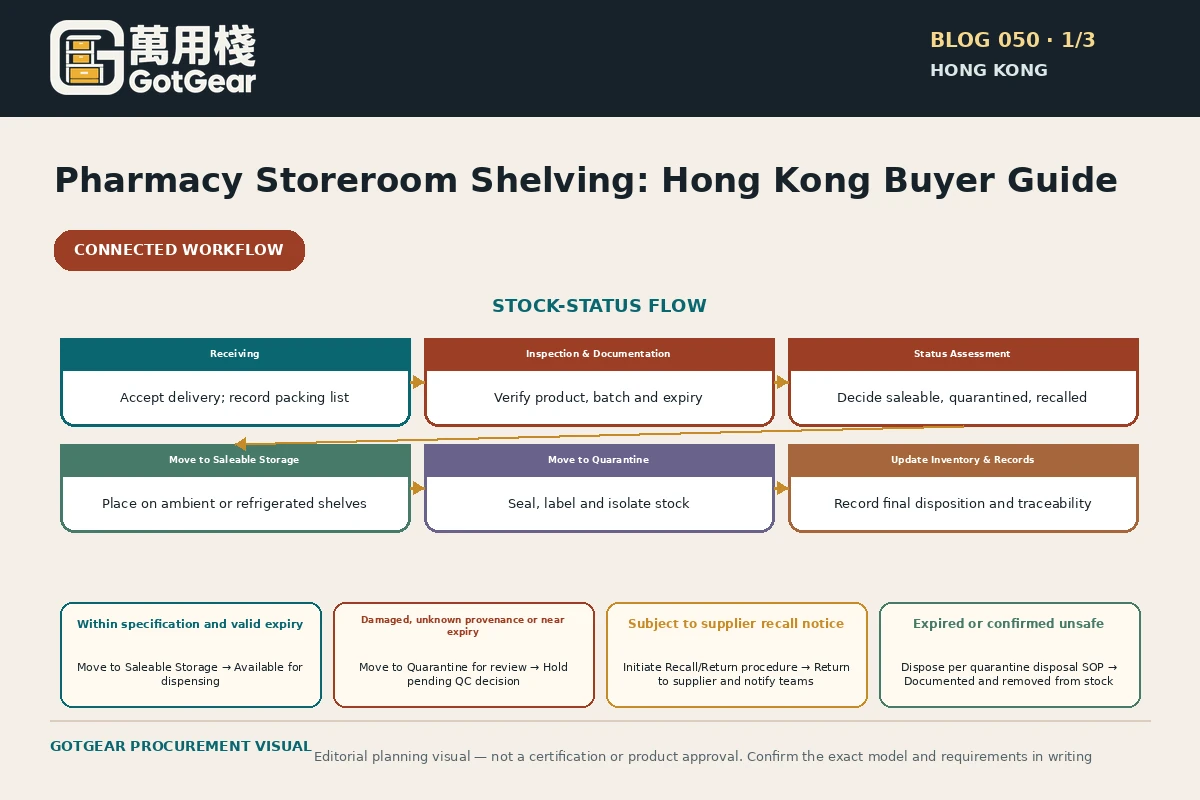
Start by segregating stock into saleable, quarantined/non-saleable, controlled (restricted access) and temperature-sensitive groups. For saleable, use adjustable open shelving that supports rotation and inspection; for controlled medicines, use lockable cabinets or lockable shelving within restricted rooms; for cold-chain products, specify monitored medical refrigeration with alarms and records. Always follow manufacturer storage instructions, document SOPs, and validate installations against Hong Kong Good Distribution Practice guidance and the PPB draft recommendations as non‑binding professional guidance.
What to remember before you decide
- Classify every SKU by manufacturer storage instruction and control status before choosing shelving.
- Segregation is the central decision — saleable stock, quarantined items, controlled medicines and temperature-sensitive products each need different solutions.
- Use adjustable open shelving for routine stock, lockable cabinets or rooms for controlled items, and monitored pharmaceutical refrigeration for cold-chain products.
- Document SOPs, keep manufacturer instructions on file and log access and temperature records to demonstrate consistent practice.
- Treat the PPB draft and WHO guidance as helpful professional references; rely on manufacturer labels and Hong Kong Drug Office GDP guidance for operational requirements.
1. Segregate stock by condition and access level
Decision summary: The single most important buyer choice is not the shelf brand but how you divide stock. In Hong Kong practice, pharmacists must design storerooms so that saleable stock, quarantined returns, controlled/poisons items and temperature-sensitive products are physically separated and clearly labelled. Use these decision checks: begin with a full inventory and classify every SKU by manufacturer-labelled storage condition and by legal/control status. Map items that require refrigeration or temperature ranges, those listed as poisons/controlled in the PPB index, and any goods pending quality inspection or recall. Operational limits: small community pharmacies often lack separate rooms; in those cases, create dedicated lockable cabinets or segregated, labelled zones with restricted staff access and documented procedures. Tight vertical stacking or overpacked shelves increases inspection time and accident risk. Next, produce a storage matrix (SKU × storage requirement × access level), measure available footprint and ceiling height, and allocate zones. Order simple modular shelving for saleable stock and plan budget for lockable cabinets and monitored refrigeration where needed.
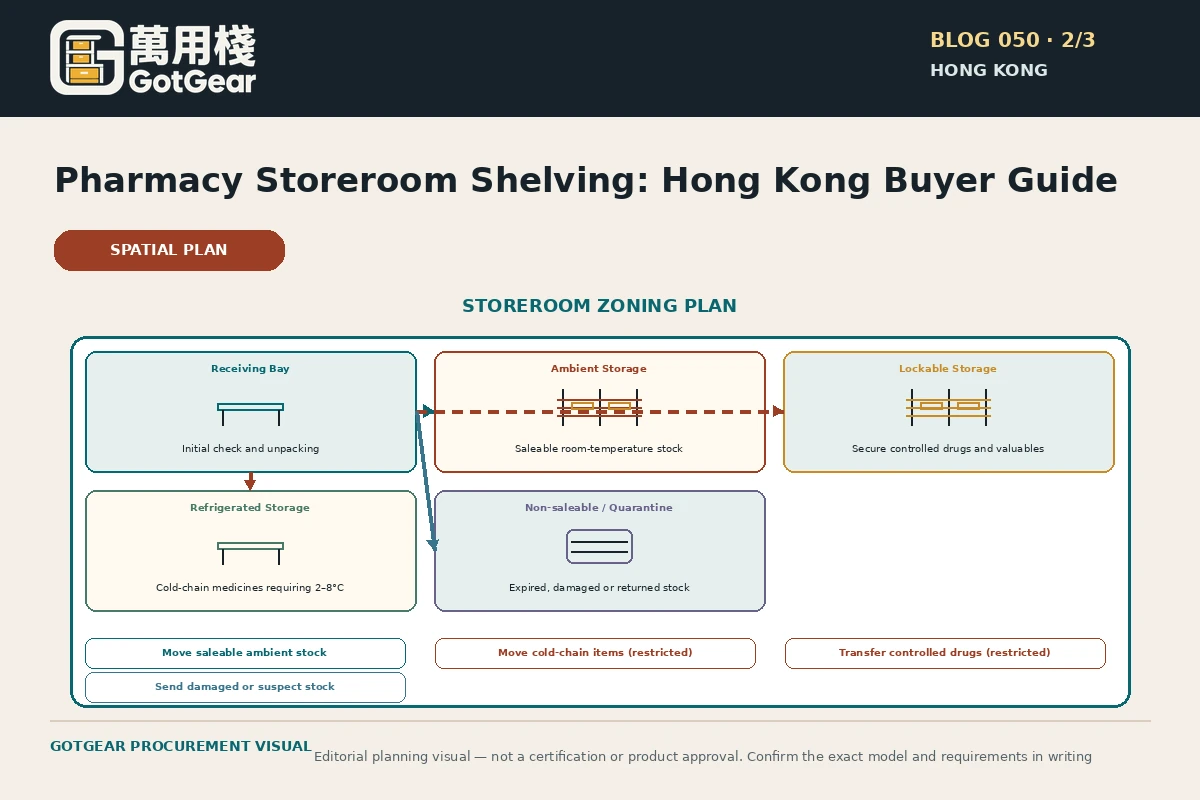
Practical measures, inspection space and stock rotation
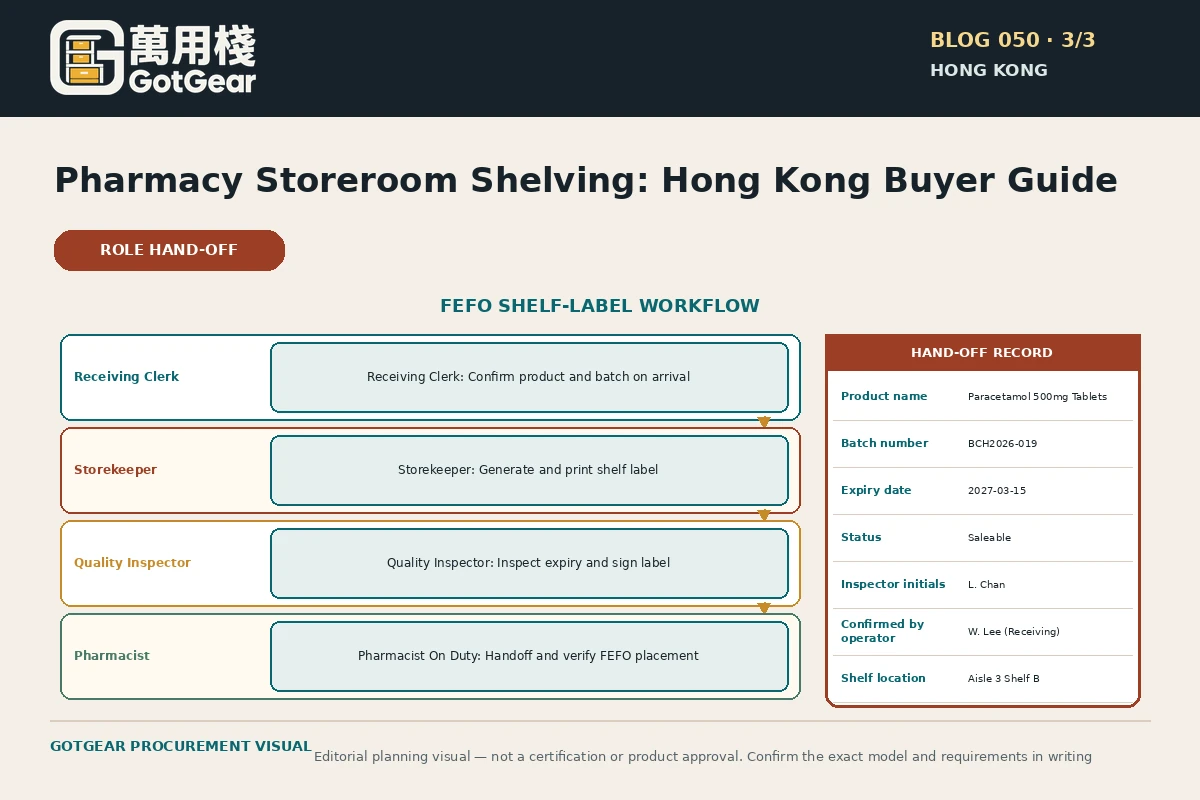
Use these decision checks: Allow space for visual inspection, picking, and FIFO rotation; WHO and Hong Kong GDP guidance emphasise accessibility for regular checks. In practice in Hong Kong, aim for clear aisle widths that permit staff to carry small batches and inspect expiry dates quickly; ensure shelving units permit 10–20 cm off-floor clearance to prevent damp exposure and allow cleaning. A key limitation is that constrained backrooms in Hong Kong clinics require creative layouts — wall-mounted adjustable shelving and mobile shelving racks can improve capacity but may reduce immediate visual inventory. Avoid deep shelving where items obscure expiry labels. Next, select adjustable shelf increments (25–50 mm steps) to match box heights, specify shelf depths that keep labels visible (typically 300–400 mm for most boxes), install clear shelf-edge labelling strips, and enforce a weekly walk-through checklist for expiry checks and cold-chain log review. Record arrangement changes in your SOP so inspectors and staff understand rationale.
“Design your storeroom around pharmaceutical condition and access needs first — shelving is the tool, not the policy. Prioritise segregation, record-keeping and supplier-validated cold storage over a single universal shelf approach.”— GotGear Editorial Team
What should buyers compare for pharmacy storeroom shelving selection Hong Kong?
| Option or approach | Best for | Trade-offs | Checks before acceptance |
|---|---|---|---|
| Adjustable open shelving (steel/epoxy-coated) for saleable stock | High-turnover, room-temperature over-the-counter and prescription stock | Lower security; needs separate lockable elements for controlled items; open shelving exposes labels to light and dust | Check load ratings, shelf depth to keep labels visible, and that shelves allow required off-floor clearance; run a one-week picking trial to confirm ergonomics |
| Lockable steel cabinets for controlled medicines | Small quantities of scheduled/poison items where room constraints prevent separate locked rooms | Reduces immediate visibility and may slow picking; requires access logging and key management | Confirm cabinet can be secured to structure, fits required stock, and test access controls (keys or electronic logs) during a trial period |
| Pharmaceutical-grade refrigerated cabinets with monitoring and alarms | Vaccines, biologics and temperature-sensitive medicines requiring 2–8°C or other specified ranges | Higher capital and maintenance demands; needs temperature validation, service plans and documented incident handling | Require temperature mapping, continuous data logging with alarm escalation, and documented calibration certificates from the supplier |
| Quarantine/returns shelving with clear binning and traceability | Isolating suspected-damaged, recalled or expired goods pending investigation | Consumes footprint and requires strict SOPs to prevent accidental restocking | Use labelled, colour-coded bins; maintain a quarantine ledger or electronic flagging and audit monthly to confirm no cross-contamination with saleable stock |
| High-density or mobile shelving for space-limited sites | Maximising storage in small Hong Kong backrooms with large non-controlled stock volumes | Can hinder rapid visual expiry checks and complicate access control for controlled items | Segregate controlled items from mobile systems or fit lockable compartments; run staff time-motion tests to ensure picking speed and inspection remain acceptable |
This framework helps buyers create comparable written enquiries. Final model specifications, availability, delivery and commercial terms must be confirmed in a formal quotation.
2. Lockable storage and controlled medicines
Decision summary: Controlled medicines require restricted access and physical security. Hong Kong professional guidance (draft PPB Code and Drug Office GDP guide) recommends lockable receptacles or restricted rooms for poisons and scheduled drugs; treat these documents as guidance and keep documented compliance steps. Use these decision checks: determine whether controlled items must be kept inside a locked cabinet within the main storeroom or in a separate locked room; consider alarms, restricted-key systems or electronic access control for larger volumes. Operational limits: high-density systems and mezzanines complicate forensic inventory and access control; do not rely on administrative controls alone — physical separation matters. For small pharmacies, a heavy-duty lockable steel cabinet bolted to the floor or wall within a locked storeroom is typically sufficient. Next, specify cabinets with internal adjustable shelves, tamper-evident seals for returned items, a clear logbook or electronic access log for withdrawals and restocks, and a reconciliation process at shift change. Validate your choice by running an access trial and ensuring staff can complete controlled-drug transactions within your SOP timeframe.
Documentation, access control and audit readiness
Use these decision checks: Your system must support documented procedures — who can access what, how temperature excursions are handled, and how quarantined items are separated. A key limitation is that documentation is only useful if followed; invest in staff training and simple visual cues (red bins for quarantined goods, green for saleable). For temperature-sensitive lines choose refrigeration units rated for pharmaceuticals with temperature logging and alarms; avoid ad-hoc domestic fridges which lack proper control and calibration. Next, create SOPs for receipt, storage, picking and returns; require staff to initial daily checks on fridges and to record any deviations with corrective actions. Schedule quarterly reviews of layout and an annual validation of cold-storage units to ensure your system remains practical and defensible against inspections. Keep manufacturer storage instructions with purchase records for each product and reference the Drug Office GDP guide for monitoring practices.
Pharmacy storeroom shelving selection Hong Kong decision checklist
- Map every SKU to manufacturer-labelled storage condition and legal/control status
- Measure room footprint, ceiling height and airflow before selecting shelving
- Segregate stock into saleable, quarantined, controlled and temperature-sensitive zones
- Specify adjustable shelf increments and shelf depths to keep expiry labels visible
- Require off-floor clearance and easy-to-clean shelving surfaces
- Select lockable cabinets or rooms for poisons/controlled items with access logging
- Choose pharmaceutical-grade refrigeration units with continuous logging for cold chain products
- Document SOPs for receipt, storage, picking, returns and temperature excursions
- Train staff on access controls, record-keeping and weekly visual inspections
- Plan supplier validation: load testing, temperature mapping and an installation acceptance test
Practical action sequence
- Audit current inventory and classify SKUs by storage condition and control status
- Measure available space and create a floor plan allocating zones for each stock type
- Specify shelving depths, materials, load ratings and lockable units in written requirements
- Procure and install shelving, cabinets and refrigeration with required anchoring and alarms
- Label shelves, install shelf-edge labels and quarantine binning, and implement access logs
- Train staff on SOPs, cold-chain logging and controlled-drug access procedures
- Run a 30-day operational trial and adjust shelf heights, labelling and SOP steps
- Document validation results, keep manufacturer storage instructions on file and schedule regular reviews
Apply the checks to your Hong Kong site
Use the Drug Office Good Distribution Practice guide and Pharmacy and Poisons Board materials as the primary, practical Hong Kong references; note the PPB Code of Practice for Authorised Seller of Poisons remains a draft and should not be treated as final law. Hong Kong guidance emphasizes segregation, restricted access, secure receptacles and ongoing temperature monitoring for pharmaceutical inventory. International documents such as WHO guidance can provide technical metrics (off‑floor spacing, FIFO rotation, monitoring frequency) but are context only and do not replace local governance or manufacturers’ storage instructions. When in doubt, document decisions and consult the Drug Office or legal counsel for regulatory interpretation. For pharmacy storeroom shelving selection Hong Kong, align site measurements and written validation to current local documents. Specify shelving types separately so pharmaceutical stock shelving Hong Kong meets the intended use, and reserve lockable medicine storage shelving Hong Kong for controlled items. Operational takeaway: map stock categories, document validation steps and get Drug Office sign‑off before final specification.
References used for this article
These sources provide regulatory, safety or planning context. They do not certify any GotGear product or replace site-specific professional advice.
- Pharmacy and Poisons Board of Hong Kong — Code of Practice for Authorised Seller of Poisons (draft) — Hong Kong professional guidance in draft form on secure premises, lockable receptacles, cold storage and controlled-medicine handling; status must be disclosed.
- Drug Office, Department of Health — Good Distribution Practice guide — Hong Kong pharmaceutical storage principles for clean, secure, segregated premises, restricted access and temperature or environmental monitoring.
- World Health Organization — Good Storage and Distribution Practices — Recognised international guidance on space, segregation, labelled storage conditions, off-floor spacing, security and first-expired-first-out stock rotation; not a substitute for Hong Kong requirements.
- Pharmacy and Poisons Board of Hong Kong — Regulations index — Authoritative index to the Hong Kong Pharmacy and Poisons Regulations provisions on storage and transport of poisons; directs readers to the governing framework rather than interpreting legal duties.
Questions about pharmacy storeroom shelving selection Hong Kong
Is the Pharmacy and Poisons Board draft code legally binding in Hong Kong?
No. The Code of Practice for Authorised Seller of Poisons referenced by the PPB is currently published as a draft; treat it as professional guidance rather than final law. Use it to inform practicable measures — secure receptacles, restricted access and cold storage monitoring — but do not rely on it as a substitute for legal advice. Keep records showing how you used the draft guidance to design your systems and consult the Drug Office or legal counsel for regulatory interpretation.
Can every medicine be stored on ordinary retail shelving if the room is air‑conditioned?
No. Manufacturer-labelled storage conditions determine appropriate storage. Many products are suitable for ambient, room-temperature shelving, but controlled substances need locked storage and temperature-sensitive products require monitored refrigeration. Air conditioning alone does not substitute for segregation or access control; design storage zones according to label requirements and control status, not by convenience.
If a product label says ‘store at room temperature’, does that override other guidance?
Manufacturer storage instructions are the primary source for safe storage conditions and must be followed. ‘Room temperature’ can vary; where labels specify a precise range, follow it. Use Drug Office and WHO guidance for monitoring practices and safe handling procedures, but do not override explicit manufacturer instructions. Document how you interpreted labels and how your chosen equipment maintains those conditions.
Do controlled medicines always need a separate locked room rather than a cabinet?
Not always. The appropriate measure depends on the volume and local layout. Small quantities in community pharmacies can be adequately secured in a suitably designed, lockable steel cabinet within a locked storeroom, provided access is strictly controlled and recorded. Larger volumes or premises with open access usually need a separate locked room with restricted entry and additional security measures. Whatever you choose, ensure physical separation, access logs and regular reconciliations.
How should I monitor and respond to temperature excursions in refrigerated medicines?
Use pharmaceutical-grade refrigeration with continuous temperature logging and audible/remote alarms. Implement an SOP that records who checks logs, the corrective actions for excursions (move stock to validated backup storage, document the incident, notify suppliers if needed) and a process for disposition of affected products. Perform initial temperature mapping on install and keep calibration records for sensors and thermometers in case of inspection.
What spacing and shelving materials work best in humid Hong Kong conditions?
Use corrosion-resistant materials (powder-coated steel, stainless steel or epoxy finishes) and ensure shelves are off the floor to avoid damp transfer. Allow aisle and shelf spacing for inspection and easy cleaning; avoid enclosed wooden shelving in humid backrooms. Specify finishes that tolerate hospital-grade disinfectants and set a regular cleaning schedule as part of your SOP.
Compare available product models and specifications
These product cards are matched to this buying topic. Select a specification and quantity to send the product details to WhatsApp.
 Shelving & StorageProduct reference image
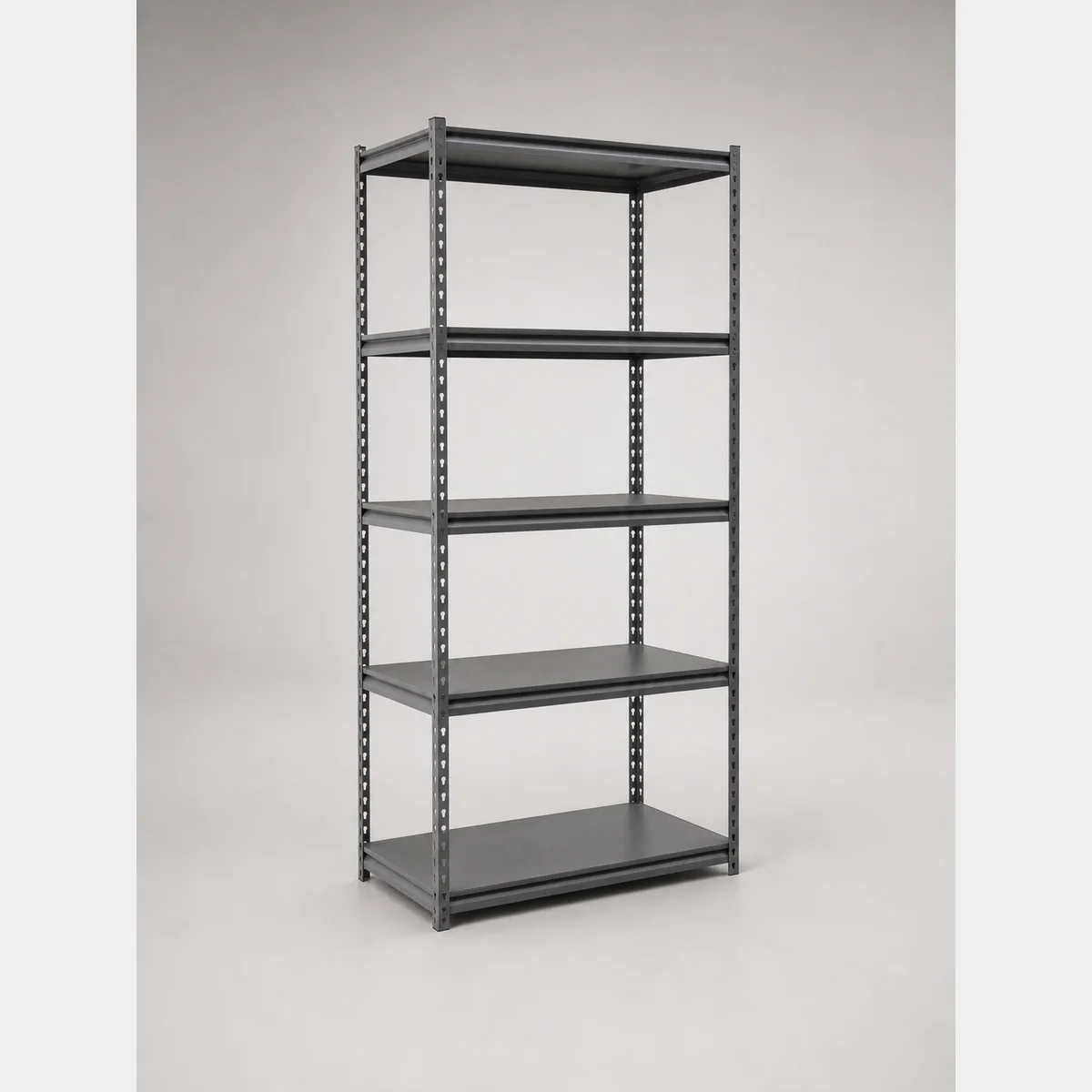
3-/4-/5-tier Storage Rack (S9190)
3-/4-/5-tier Storage Rack (S9190). Sizes/specs: Type A. L910 x W400 x H1830 mm / Type B. L1220 x W400 x H1830 mm; Type J: L910 x W460 x H1830 mm; Type K: L1220 x W460 x H1830 mm. Formal quotation available based on application, specifications and quantity.
- Size / Specification line
- Type A. L910 x W400 x H1830 mm / Type B. L1220 x W400 x H1830 mm
- Type J
- L910 x W460 x H1830 mm
- Type K
- L1220 x W460 x H1830 mm
 Shelving & StorageProduct reference image
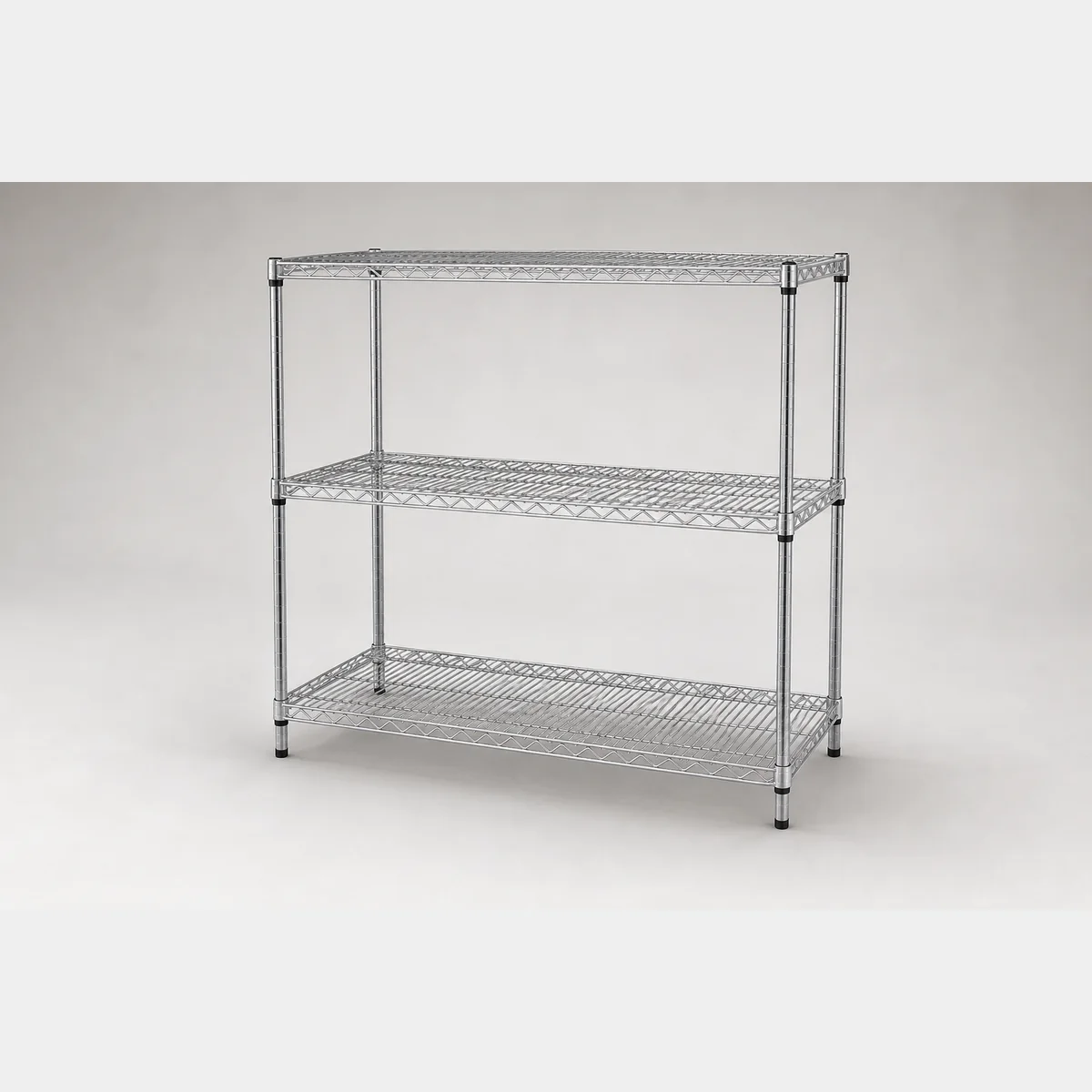
3-Tier Chrome Plated Shelf Rack
3-Tier chrome-plated shelf rack. Dimensions/Specifications: L1518 X W609 X H1500 MM / L1822 X W609 X H1500 MM; Average load per tier: 100kg. Please enquire for a formal quotation based on use, specifications and quantity.
- Dimensions/Specifications
- L1518 X W609 X H1500 MM / L1822 X W609 X H1500 MM
- Average load per tier
- 100kg
 Shelving & StorageProduct reference image
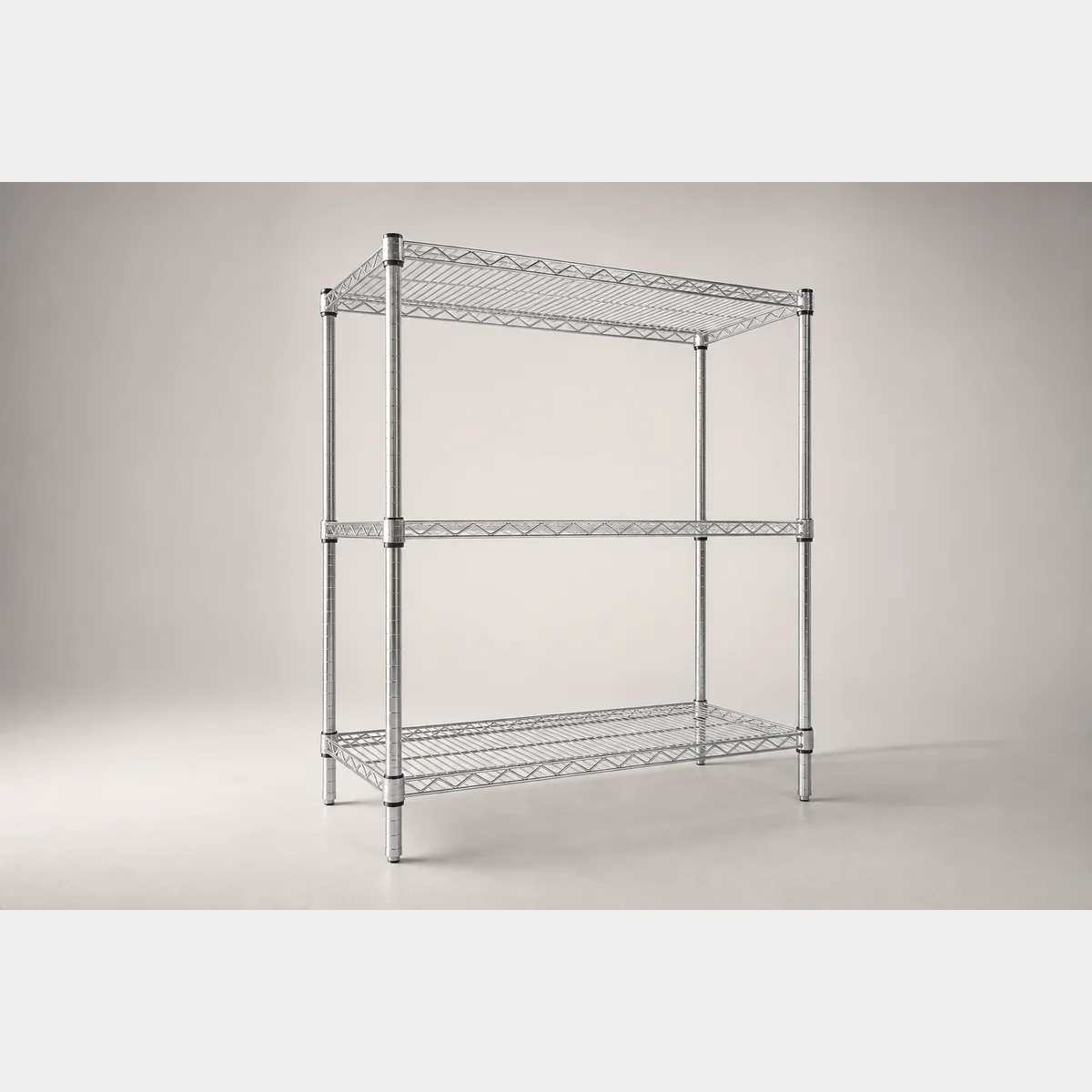
3-tier chrome-plated rack
3-tier chrome-plated rack, K4505: L1060 X W457 X H1500 MM; K4507: L1370 X W457 X H1500 MM; Load capacity per shelf: 100kg. Formal quotation available upon request based on use, specifications and quantity.
- K4505
- L1060 X W457 X H1500 MM
- K4507
- L1370 X W457 X H1500 MM
- Load capacity per shelf
- 100kg
 Shelving & StorageProduct reference image
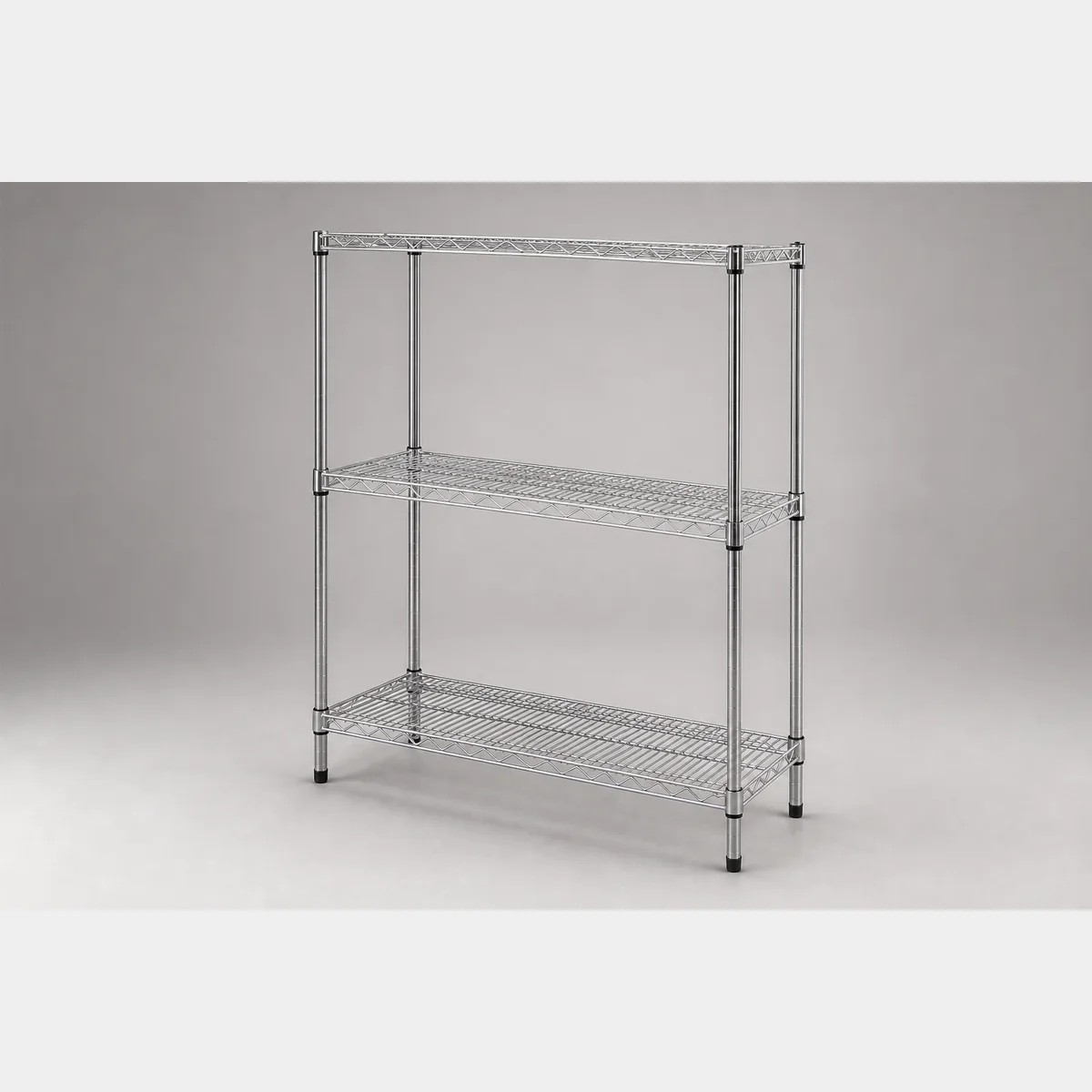
3-tier chrome-plated shelving
3-tier chrome-plated shelving, K3502: L609 X W355 X H1500 MM; K3504: L907 X W355 X H1500 MM; Average load per shelf: 100kg. Formal quotation available based on intended use, specifications and quantity.
- K3502
- L609 X W355 X H1500 MM
- K3504
- L907 X W355 X H1500 MM
- Average load per shelf
- 100kg
 Shelving & StorageProduct reference image
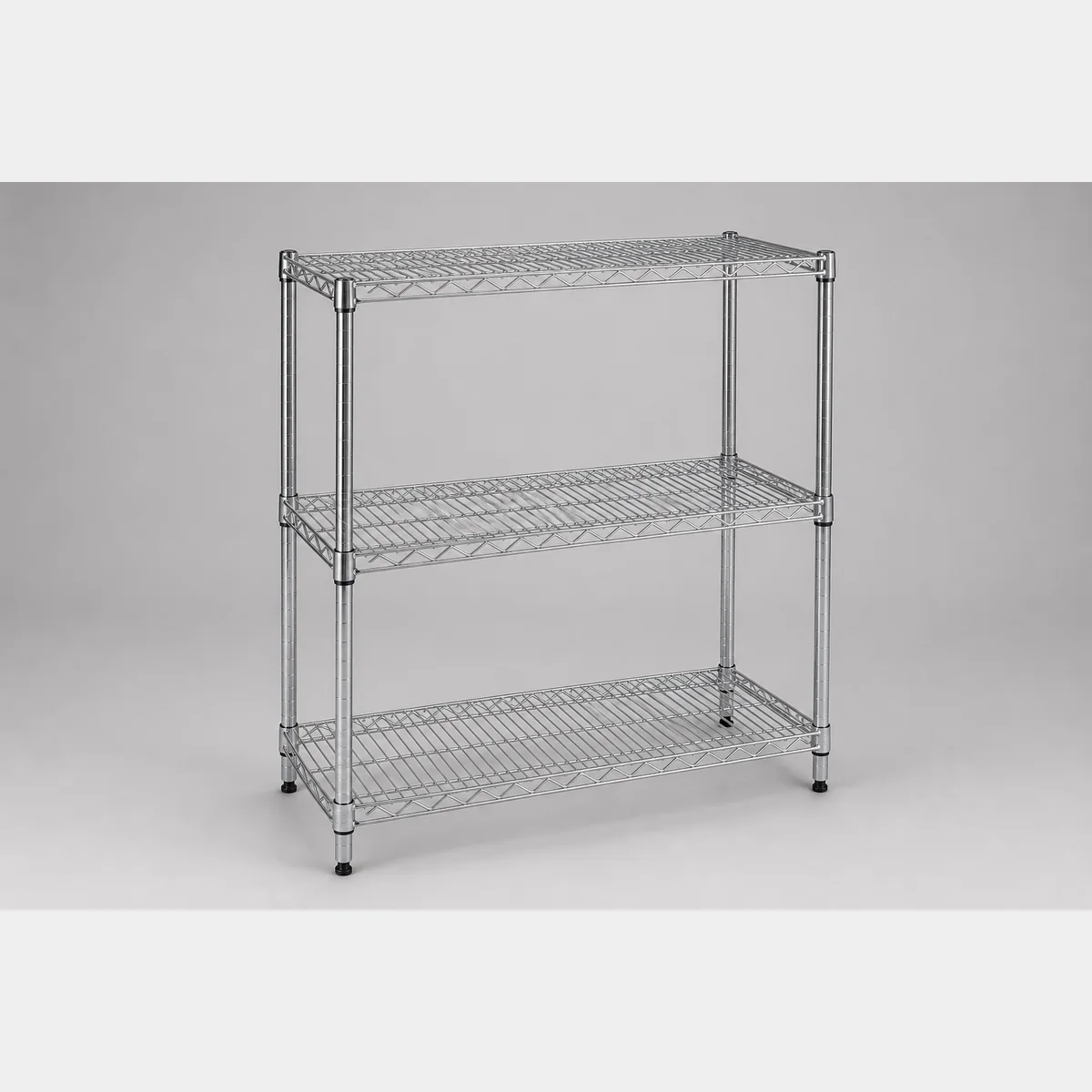
3-Tier Chrome-Plated Shelving Rack
3-Tier chrome-plated shelving rack, K5307: L1370 X W533 X H1500 MM; K5308: L1518 X W533 X H1500 MM; Average load per shelf: 100kg. Formal quotation available upon request based on use, specifications and quantity.
- K5307
- L1370 X W533 X H1500 MM
- K5308
- L1518 X W533 X H1500 MM
- Average load per shelf
- 100kg
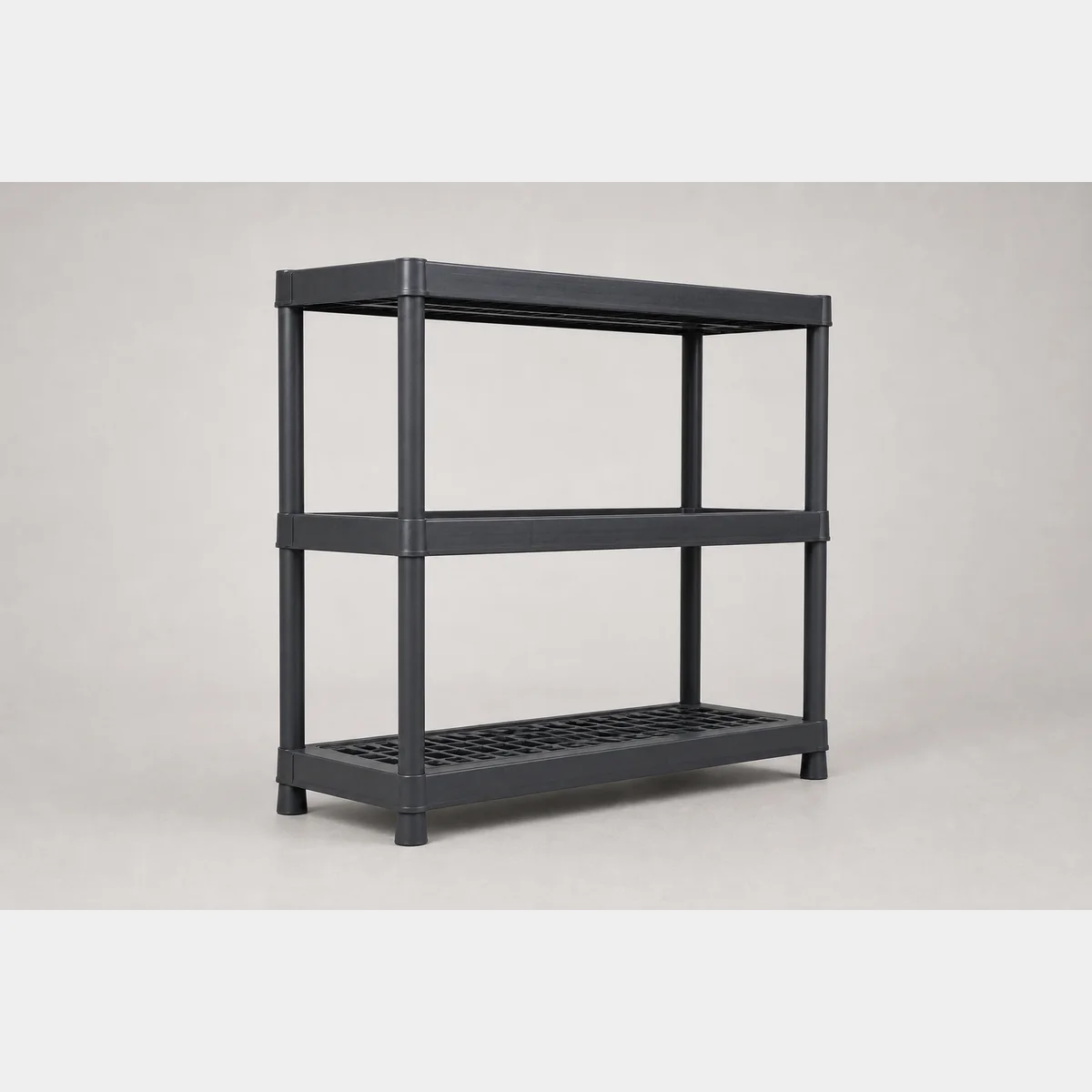 Shelving & StorageProduct reference image
3-tier plastic shelving (SKU: 334-3)
3-tier plastic shelving, Dimensions: L1200 x W397 x H989 mm; Shelf clearance: 390 mm; Colour: Black/Grey. Formal quotation available on request according to use, specifications and quantity.
- Dimensions
- L1200 x W397 x H989 mm
- Shelf clearance
- 390 mm
- Colour
- Black/Grey
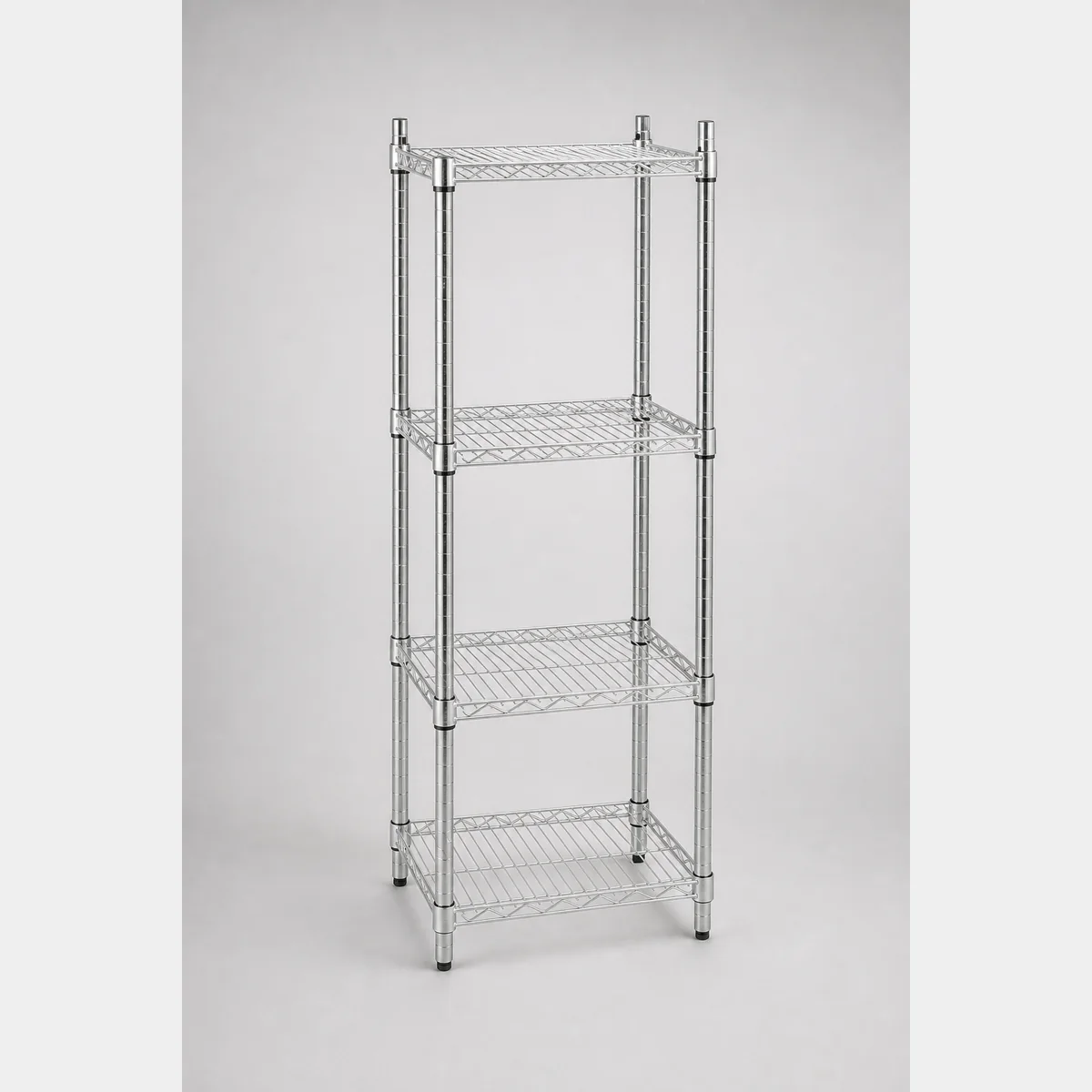 Shelving & StorageProduct reference image
4-tier electroplated rack
4-tier electroplated rack, H3501: L355 X W355 X H1800 MM; H3502: L609 X W355 X H1800 MM; H3504: L907 X W355 X H1800 MM. Formal quotation available by intended use, specifications and quantity.
- H3501
- L355 X W355 X H1800 MM
- H3502
- L609 X W355 X H1800 MM
- H3504
- L907 X W355 X H1800 MM
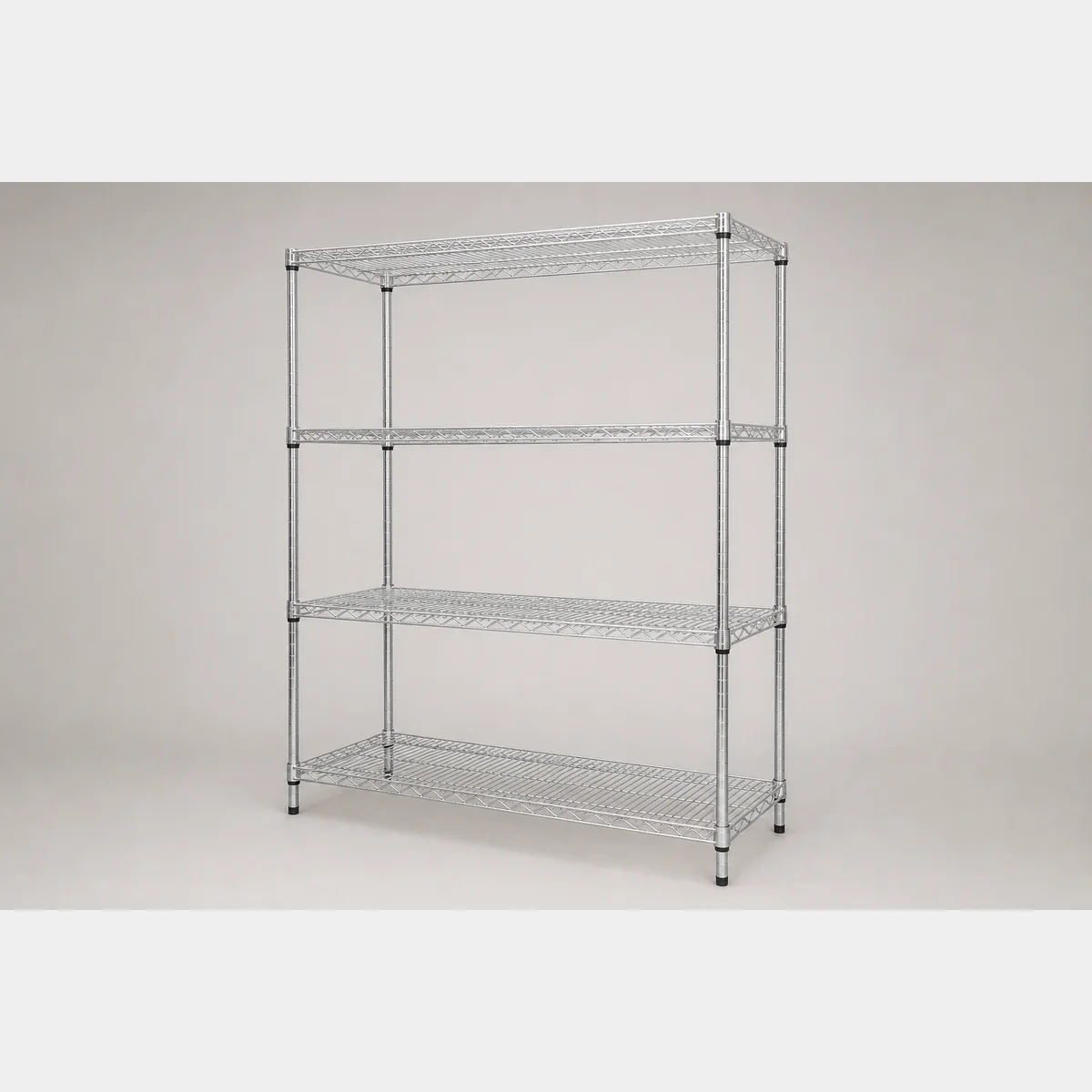 Shelving & StorageProduct reference image
4-Tier Electroplated Rack
4-Tier electroplated rack, H6008: L1518 X W609 X H1800 MM; H6009: L1822 X W609 X H1800 MM; average load per shelf: 100kg. Formal quotation available based on usage, specifications and quantity.
- H6008
- L1518 X W609 X H1800 MM
- H6009
- L1822 X W609 X H1800 MM
- Average load per shelf
- 100kg
Continue with closely related procurement topics
These pages share equipment, operating or decision-stage signals with this guide.
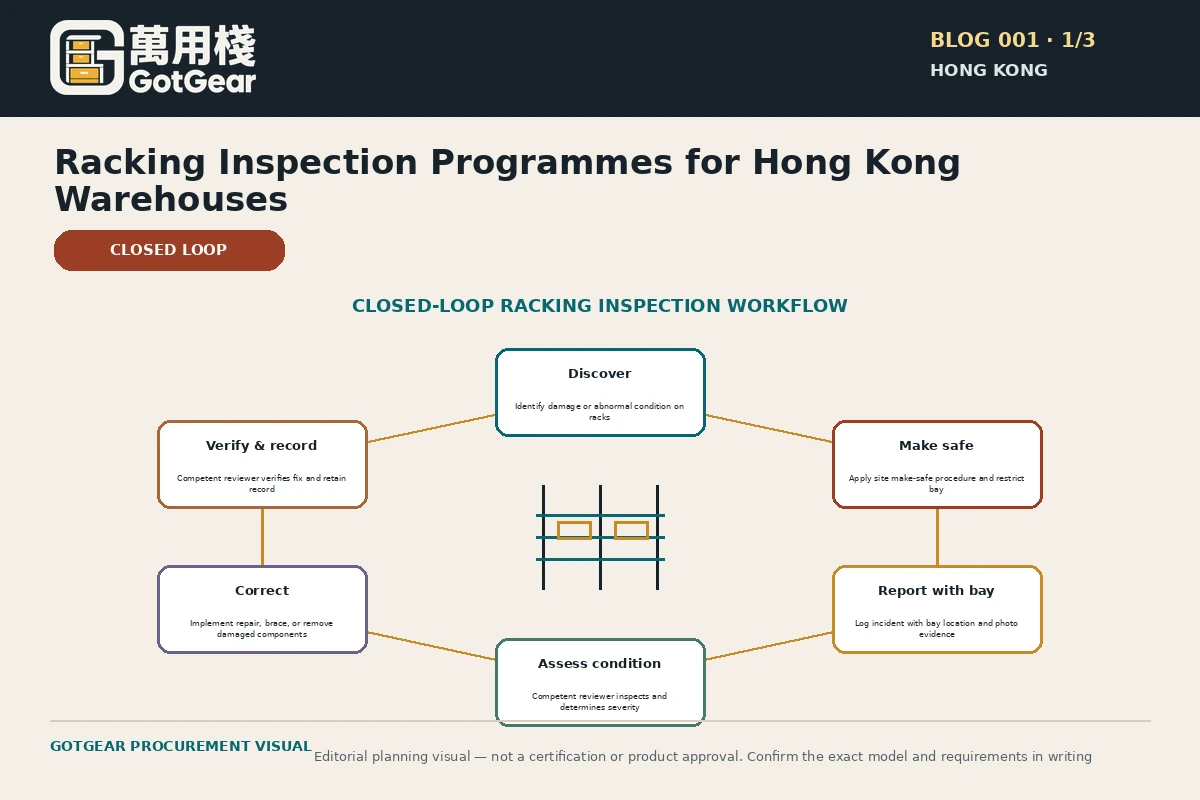
Warehouse racking inspection programme Hong Kong
GotGear explains warehouse racking inspection programme Hong Kong for Hong Kong buyers. See how racking damage reporting procedure Hong Kong supports warehouse rack inspection checklist Hong Kong, with practical checks, evidence boundaries and written requirements.
Read the guide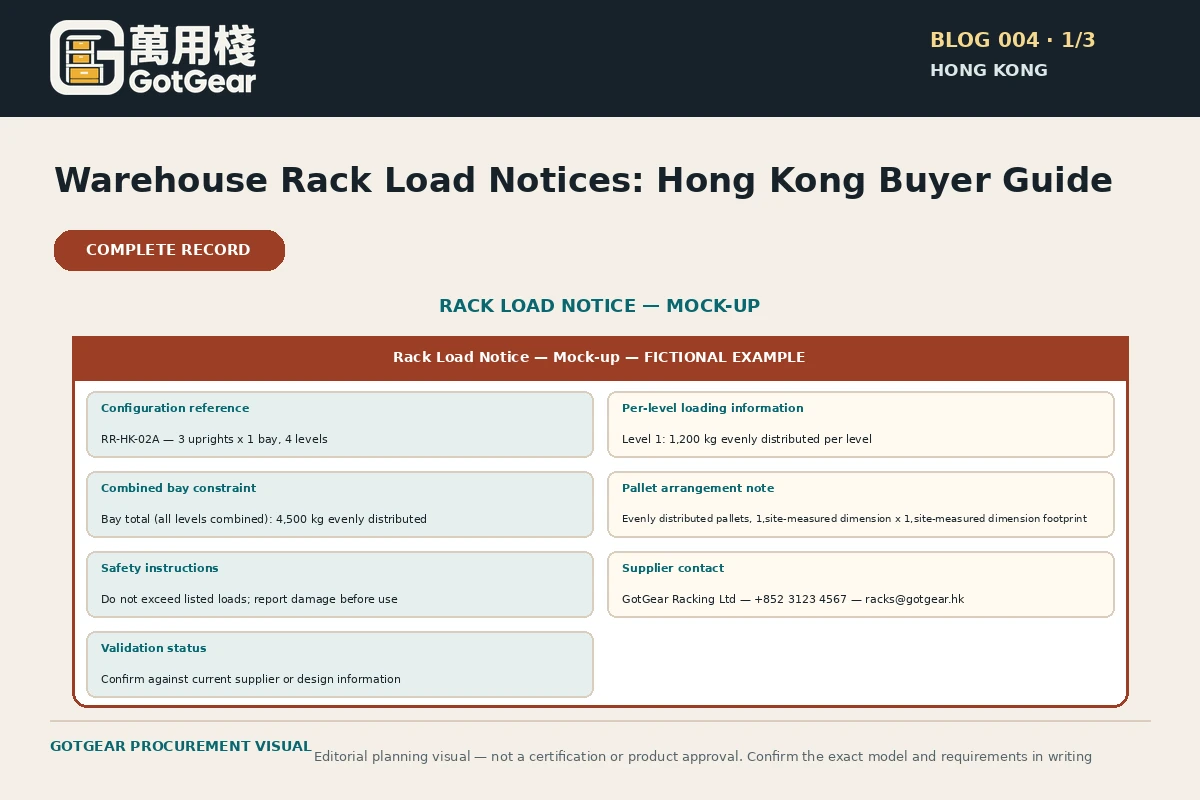
Warehouse rack load notices Hong Kong
GotGear explains warehouse rack load notices Hong Kong for Hong Kong buyers. See how pallet racking bay load Hong Kong supports racking safe working load sign Hong Kong, with practical checks, evidence boundaries and written requirements.
Read the guide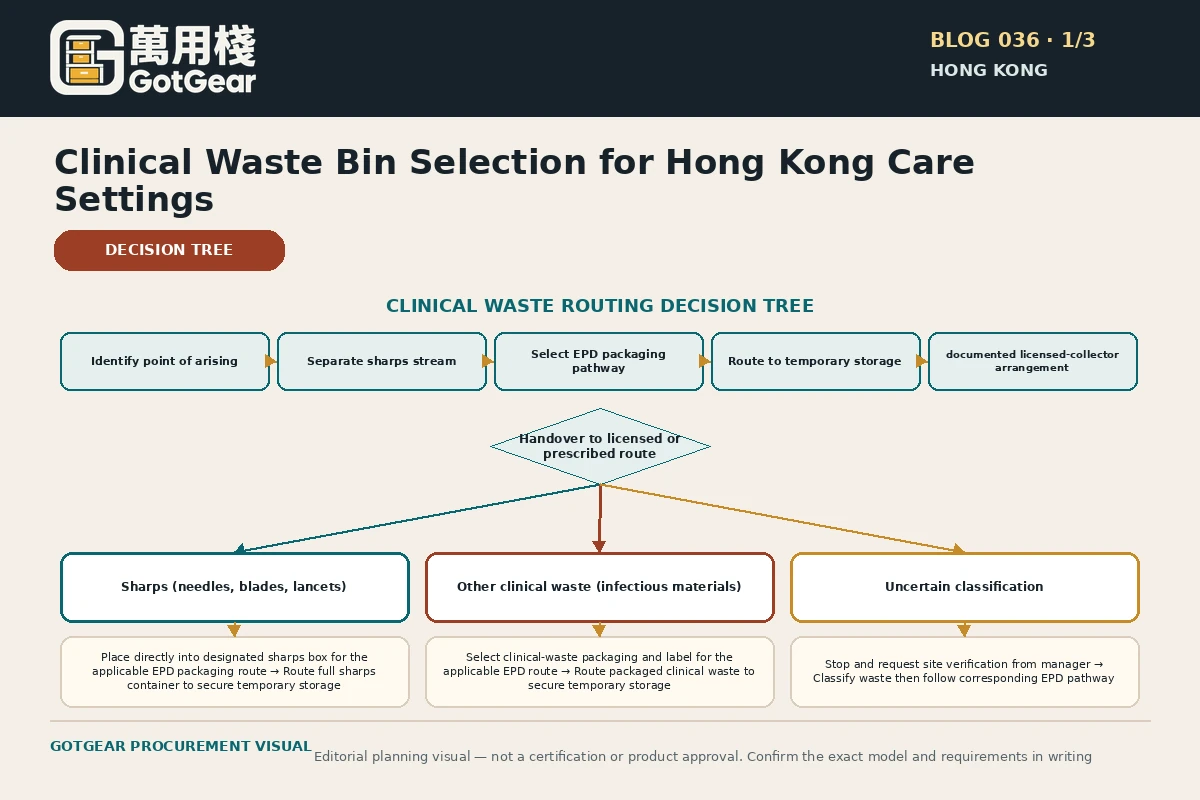
Clinical waste bin selection Hong Kong
GotGear explains clinical waste bin selection Hong Kong for Hong Kong buyers. See how clinical waste container requirements Hong Kong supports healthcare sharps waste bin Hong Kong, with practical checks, evidence boundaries and written requirements.
Read the guide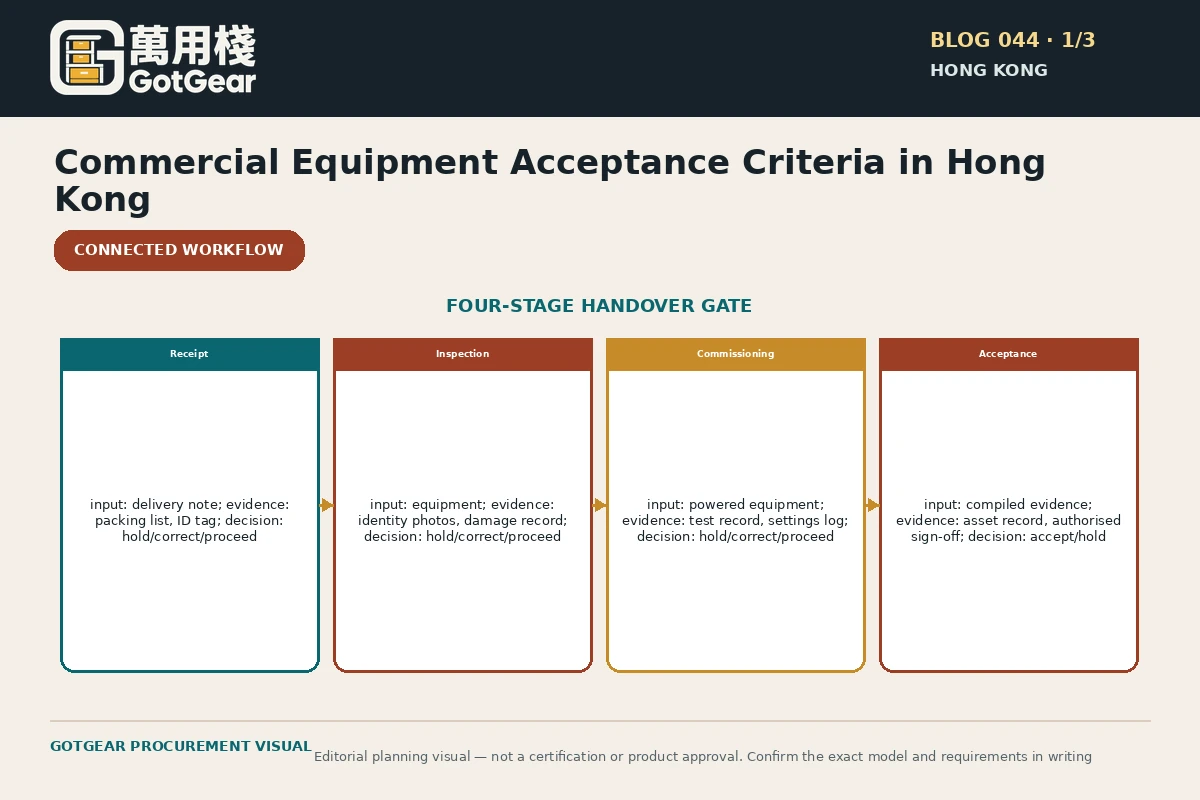
Commercial equipment acceptance criteria Hong Kong
GotGear explains commercial equipment acceptance criteria Hong Kong for Hong Kong buyers. See how commercial equipment commissioning checklist Hong Kong supports commercial equipment asset register Hong Kong, with practical checks, evidence boundaries and written requirements.
Read the guideRelated topic indexOpen more English procurement pages8 topics
Browse additional equipment families, applications and procurement questions relevant to these operating requirements.