
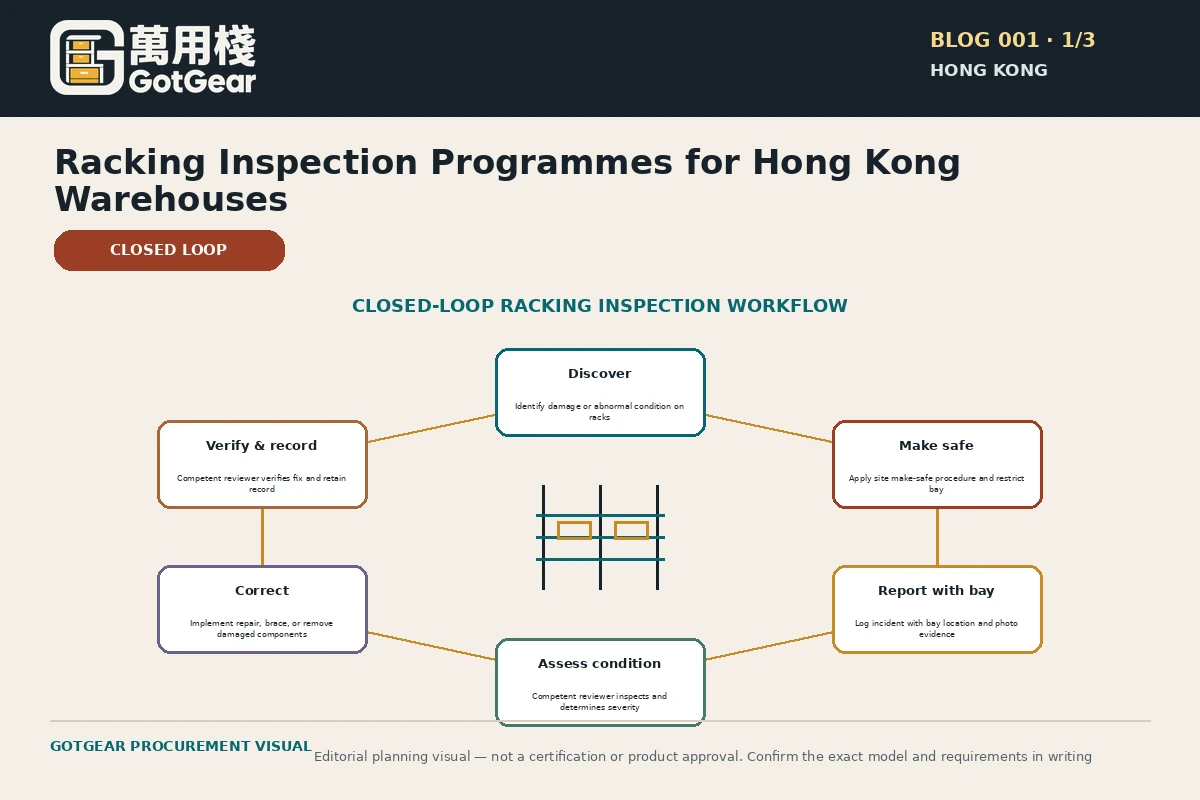
A robust racking inspection programme assigns a clear reporting route for every user, records risk‑based visual checks, isolates or restricts unsafe bays immediately, and uses manufacturer data or competent advice to verify repairs and return-to-service. It combines frequent operator observation, scheduled documented inspections by trained staff, and periodic competent-person review tailored to the site's layout, loads and operations. Frequencies and statutory duties should be confirmed for each Hong Kong site rather than adopted from overseas guidance; the programme must document actions, responsibilities and records.
What to remember before you decide
- Assign a single, simple reporting route for all users and require photos and a location tag.
- Use a risk-based documented checklist tailored to rack type, use and traffic patterns.
- Categorise defects as safe, restricted or unsafe; restrict use pending competent review where necessary.
- Competent-person assessment or manufacturer data is required after major damage or reconfiguration.
- Inspection cannot substitute for engineering assessment of unknown designs or foundation capacity.
- Document every step: reports, checks, repairs and sign-off to provide an auditable trail.
Programme foundations: who does what and when
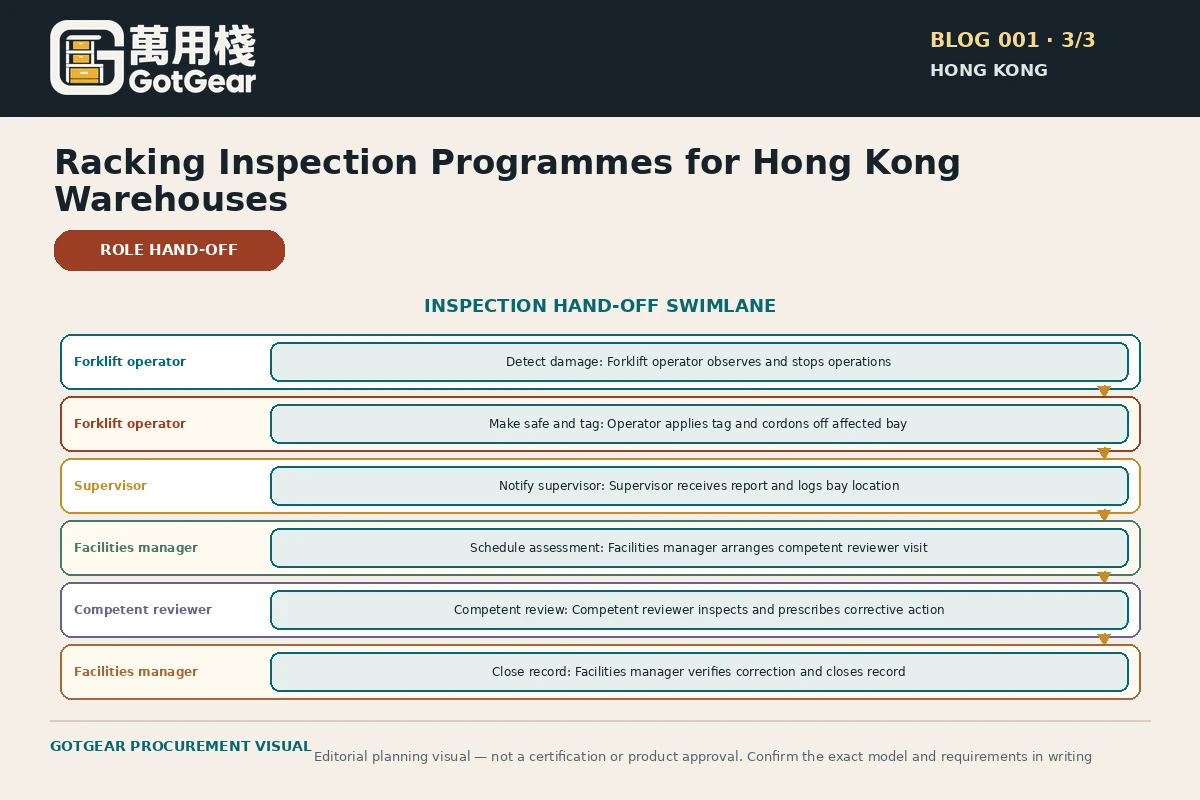
Most Hong Kong warehouses operate in dense footprints using mixed pallet racking and shelving; staff who pass racking runs every shift are therefore the earliest detectors of impacts and stacking changes. Start by mapping every user group that routinely moves through racking aisles — forklift operators, order pickers, replenishment staff, maintenance teams and inventory clerks — and give each group one clear channel for reporting concerns. That channel may be a simple digital incident form, a designated facilities mailbox that accepts photos and notes, or a central supervision telephone line; the priority is consistency so reports are logged and triaged without delay. Require every submission to include the rack location (aisle, bay and level), date and time, reporter name and shift, and at least one clear photo showing the damaged area and surrounding context. These fields reduce ambiguity and speed decision-making in busy Hong Kong operations where shifts change rapidly and space for rework is limited. Treat operator observation as the primary, not sole, defence: it is immediate and practical, yet inherently subjective. Routine operator reports will spot displaced decking, bent beams, missing locking devices or overt racking deformation, but they will not reliably detect subtle misalignment, internal cracking or foundation movement. To manage that gap, set operational rules that any visible deformation, missing safety clip or pin, bent beam, or dislodged decking triggers immediate notification and a temporary restriction of the affected bay or bays. Escalate those events to a supervisor or facilities lead for rapid triage and record the escalation outcome. Maintain a short log of actions taken at the time of reporting so shift supervisors can confirm whether stock was isolated or moved, whether access was restricted, and whether a follow-up inspection by trained personnel is scheduled. This approach respects Hong Kong’s high-throughput environment while ensuring reports convert into timely, documented action rather than being lost as informal feedback.
Risk-based inspection content and recordkeeping
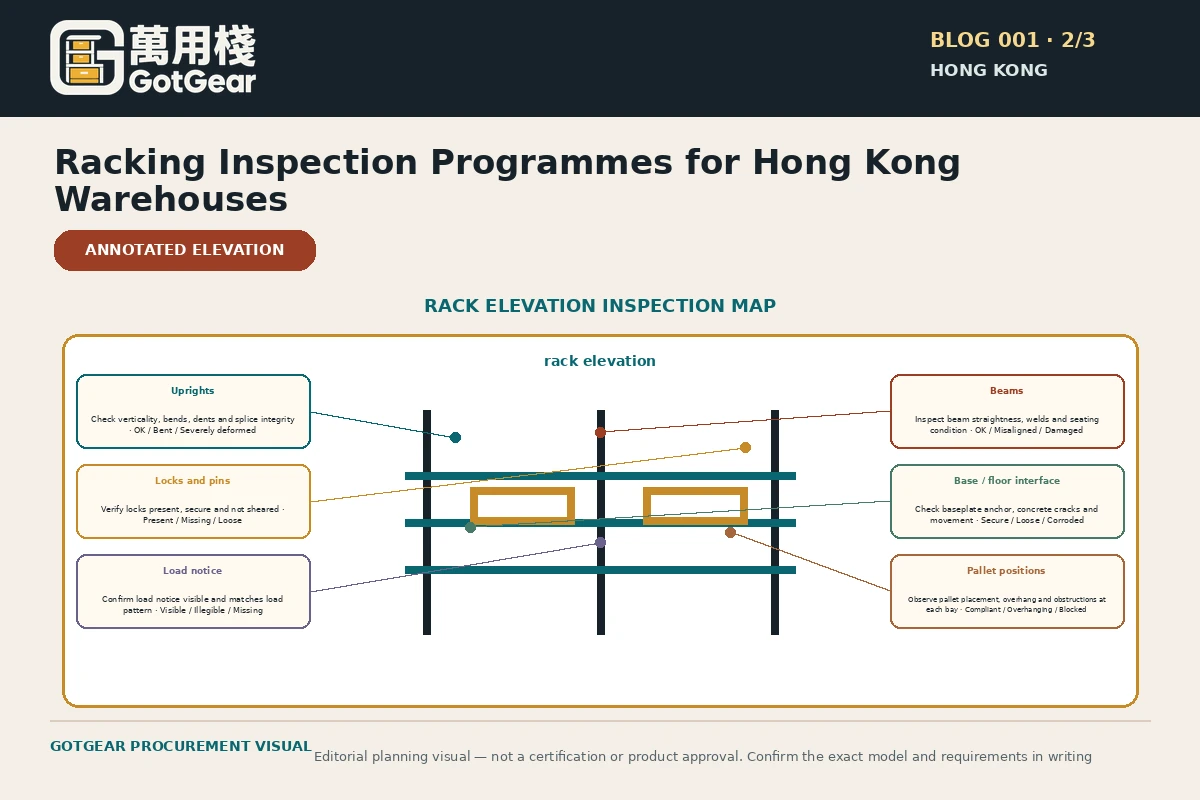
Hong Kong warehouse racking is subject to frequent changes in load patterns and traffic, so inspection priorities should reflect actual use and exposure rather than a fixed checklist alone. Concentrate routine documented checks on areas with the greatest exposure: pick faces where stock is handled repeatedly, end-of-aisle uprights liable to lateral impacts, loading and unloading zones, and rack runs adjacent to frequent forklift or pedestrian routes. Build each inspection sheet around three inputs: the rack’s current function (static bulk storage, high‑turnover pick faces, drive‑in or push‑back systems), the site’s recorded impact history for that run, and any installation or supplier guidance available for the specific system in place. At each check record upright plumbness, beam connection security, presence of clips or locking pins, signs of visible cracking or twisting, bolt condition and tightness, and deck condition (including corrosion, dislodgement or deflection). Photograph every non-conforming condition with an identifying tag so images link unambiguously to the written note. Be explicit about the limits of a visual inspection: surface checks cannot reveal internal section fatigue, subsoil or foundation settlement, or undocumented alterations to load-bearing members. Suspected internal damage, foundation concerns, or any condition that would alter design loads requires referral to a competent engineer for intrusive assessment. Keep dated inspection records, the inspector’s name and signature, and photographic evidence in a retrievable sequence; this supports trend analysis in Hong Kong’s busy operations where repeated low‑energy impacts often precede major failures. If an inspection identifies a defect that cannot be addressed by immediate, simple onsite correction, tag the bay out of use and schedule a competent-person review with documented remedial recommendations.
“Manage racking safety as a controlled loop: report, record, restrict where needed, obtain competent advice, repair and verify — and then learn from the data to reduce recurrence.”— GotGear Editorial Team
What should buyers compare for warehouse racking inspection programme Hong Kong?
| Option or approach | Best for | Trade-offs | Checks before acceptance |
|---|---|---|---|
| Operator observation (every shift) | Immediate detection of obvious impacts and near-miss observations without specialist tools. | Subjective and variable; can miss subtle or progressive damage and relies on consistent reporting behaviour. | Require photo evidence, a simple location tag, a named reporter and a follow-up documented check by trained staff within a defined time window. |
| Scheduled in-house documented visual inspection | Regularly recorded condition checks that create an auditable trail and catch cumulative deterioration. | Depends on inspector training and may not identify complex structural concerns; frequency must be risk-based rather than arbitrary. | Use standardised checklist items, assign responsibility, keep dated records and escalate defects beyond a visual remedy to a competent person. |
| Competent-person review (independent or supplier) | Assessment of significant damage, repair specification, and validation after modification or reconfiguration. | Higher resource requirements and scheduling lead time; will not be necessary for every minor observation but is mandatory when safety is uncertain. | Obtain a written report with recommended repairs, scope of assessment, limitations and explicit return-to-service criteria. |
| Condition-monitoring technology (sensors, CCTV review) | Continuous monitoring of high-risk zones and automated detection of impacts or unusual movement in busy facilities. | Technology needs calibration, interpretation and integration with reporting protocols; it supplements but does not replace visual checks. | Establish event thresholds, define who reviews alerts, and keep logs that link alerts to physical inspections and corrective actions. |
| Engineering re-assessment after layout or load change | Verifying capacity, foundation adequacy and safe reconfiguration after major operational changes. | Represents a significant step beyond inspection; may require structural analysis and cannot be substituted by routine visual checks. | Commission a qualified engineer or the manufacturer for a written assessment prior to returning modified racks to service. |
This framework helps buyers create comparable written enquiries. Final model specifications, availability, delivery and commercial terms must be confirmed in a formal quotation.
Escalation, restriction and return-to-service
When damage is observed in a congested Hong Kong yard, supervisors must make quick, recorded operational choices: continue limited use, impose load restrictions, or isolate the bay pending repair. Apply a straightforward three-tier decision rubric across the site: categorise the bay as safe for normal operations, restricted for limited duties, or unsafe and removed from service. Determine the category by observable criteria — degree of deformation, loosened connections, beam displacement, and any immediate risk to users — together with the rack manufacturer’s published limits or the site’s documented handling rules. For bays placed under restricted use, document the exact permitted load or handling method, specify which staff or shifts may access the bay, and attach a clear, durable notice at the aisle and to the warehouse management system so the restriction is visible to all. Physical controls such as barrier tape, temporary shrouds or pallet placement markers reduce accidental use during busy periods. Recognise the boundary of onsite decision-making: only a competent reviewer or original equipment guidance can authoritatively confirm that an altered or impacted frame is safe to return to full duty. For any bay put into restricted or unsafe status, create an auditable log entry recording who made the decision, why, what immediate steps were taken (stock removal, barriers applied), and when a follow-up inspection by a competent person has been requested. Remove or relocate stock if necessary to eliminate additional load on the affected structure, secure the area to protect staff, and schedule the competent-person inspection with a requirement for documented outcomes and sign‑off before any return to full operations.
Competent review and verification of repairs
Balancing operational tempo with statutory duties in Hong Kong means calling in competent racking reviewers when damage exceeds the scope of routine maintenance or when structural components must be altered. Seek review whenever observed damage is significant, when repairs require replacement of load-bearing elements, or after changes to rack configuration or documented load patterns. Retain and consult manufacturer manuals where available and maintain supplier contact details linked to each rack run so historical design data and spare‑part references are readily accessible. Keep in mind the practical limit of independent visual inspection in the absence of original design records: an external reviewer cannot reconstruct an undocumented structural design or substitute for manufacturer engineering where original specifications are unknown. When a competent reviewer is engaged, secure a written assessment that describes the observed damage, the engineering basis for remedial options, and prioritized recommended actions. Ensure any repair work is performed by trained technicians using appropriate, documented components that match the design intent of the system; avoid improvised fixes that could change load paths. Photograph the damaged condition before any intervention and photograph the completed repair from the same viewpoints to demonstrate that specified actions were carried out. Require the competent reviewer to record their name, qualifications and the date on the written report, and to provide a clear statement of whether the bay can be returned to restricted use or full service. Enter the report and the repair evidence into the site’s maintenance record and record the formal date of return-to-service to close the loop in the inspection and maintenance programme.
Warehouse racking inspection programme Hong Kong decision checklist
- Map every rack run with a unique identifier and current drawing reference.
- Retain load notices and supplier/manufacturer information for each rack type and location.
- Define and publish the single reporting route for operators with contact names and timescales.
- Create a documented, risk-based inspection checklist tailored to rack type and use.
- Assign trained staff to carry out scheduled documented inspections and record findings.
- Specify immediate actions for observed damage: tag, restrict, or isolate and who authorises each.
- Collect photographs and measurements for any suspected deformation or missing safety elements.
- Require competent review for major damage, unknown designs, or after reconfiguration.
- Record repair work, components used, repair dates and the verifying competent reviewer.
- Review inspection outcomes and incident trends quarterly and after any significant change.
Practical action sequence
- Survey and map all racking runs and link supplier data to each identifier.
- Define the operator reporting route and train every user group on what to record.
- Develop a risk-based inspection checklist and schedule for documented checks.
- Implement tagging/notification for restricted or isolated bays and secure affected areas.
- Arrange competent-person assessment where checks reveal significant or unclear defects.
- Carry out repairs using proper components, photograph completed work and retain records.
- Obtain written sign-off from the competent reviewer before returning bays to full service.
- Review the programme after layout, process or significant stock changes and update records.
Apply the checks to your Hong Kong site
Hong Kong employers should confirm statutory duties and translate them into site-specific measures. The Labour Department emphasises task-specific assessment, suitable storage supports, clear access routes, training, monitoring and review whenever work, equipment or the environment changes; overseas HSE and WorkSafe guidance are useful context but do not replace local duty confirmation. Tailor inspection content to your operations and document decisions and controls so they withstand routine audits and post‑incident review. Use those documented controls as the backbone of a practical warehouse racking inspection programme Hong Kong that joins operator reporting, documented visual checks, escalation and repair verification. Build a clear racking damage reporting procedure Hong Kong to capture who, when and how repairs are confirmed, and maintain a focussed warehouse rack inspection checklist Hong Kong for daily and periodic checks. Operational takeaway: nominate a responsible site lead, record every inspection and repair verification in a dated register, and enforce the reporting procedure before racks return to service.
References used for this article
These sources provide regulatory, safety or planning context. They do not certify any GotGear product or replace site-specific professional advice.
- Hong Kong Labour Department — Handling of Heavy Objects in Workplaces — Local guidance on task-specific risk assessment, suitable storage supports, clear routes, monitoring, training and review after significant change.
- HSE — Inspection of work equipment — Risk-based inspection principles, records, competence, and inspection following reinstallation, deterioration, serious damage or major modification.
- WorkSafe New Zealand — Working safely with pallet racking systems — Practical racking checks: reporting damage, keeping damaged parts out of use until assessed or repaired, inspecting loading, pins and impact damage, and retaining records.
- SEMA — Warehouse Racking Inspection — Recognised-industry description of immediate reporting, regular documented visual inspection and independent expert inspection as a three-level framework.
Questions about warehouse racking inspection programme Hong Kong
What should staff record when they find rack damage?
Staff should record the rack identifier or location, date and time, their name, a short description of what is observed (for example bent upright, missing safety clip, beam dislodged), the current status of nearby stock, and at least one clear photograph from different angles. If there is immediate risk to staff or stock, they should state this and follow the site's emergency restriction procedure. A precise record speeds triage and helps determine whether the defect can be managed by restriction or needs a competent review.
Who decides whether a damaged bay can stay in use?
Initial decisions follow the site-defined categorisation: operator reporting moves to supervisor/facilities who may apply a temporary restriction based on visible evidence and supplier limits. Only a competent reviewer or manufacturer information can authoritatively clear a bay for full return-to-service after significant damage, alteration or where safety is uncertain. The programme should specify who is authorised to impose restrictions and who must be consulted for sign-off to return a bay to normal duty.
When should the programme be reviewed after a layout or stock change?
Review the programme whenever there is a significant change to layout, stock types, forklift fleet, traffic routes or storage methods. The Labour Department advises that monitoring and review are necessary after changes in work method, equipment, objects or environment. Practically, schedule a trigger review following reconfiguration and again after an agreed settling period to check that inspection content, frequencies and risk controls remain appropriate.
How often should inspections happen?
There is no universal frequency that fits every Hong Kong site. Frequency should be risk-based: high-throughput, high-impact locations and recently altered layouts usually need more frequent documented checks, whereas low-activity storage may be inspected less often. Overseas guidance can inform risk approaches but do not replace site-specific assessment; confirm statutory duties and set frequencies according to observed use, incident history and supplier recommendations.
Can inspection verify an unknown rack design or overloaded foundations?
No. Visual inspection can identify obvious damage and deterioration, but it cannot validate an undocumented design or determine foundation bearing capacity. Where design details are missing or foundations are suspected to be overloaded, engage a competent engineer or the manufacturer for structural assessment. Treat affected bays as restricted until a competent assessment provides written assurance or remedial action is completed.
What records should the programme keep to be useful in audits or investigations?
Keep the rack mapping/drawings, supplier manuals, load notices, all operator reports with photographs, dated inspection checklists with inspector names, written competent reviews and repair records including components used and sign-off dates. Maintain a log of restrictions and their resolution. These records demonstrate proactive management and will assist post-incident investigations and routine audits.
Compare available product models and specifications
These product cards are matched to this buying topic. Select a specification and quantity to send the product details to WhatsApp.
 Shelving & StorageProduct reference image
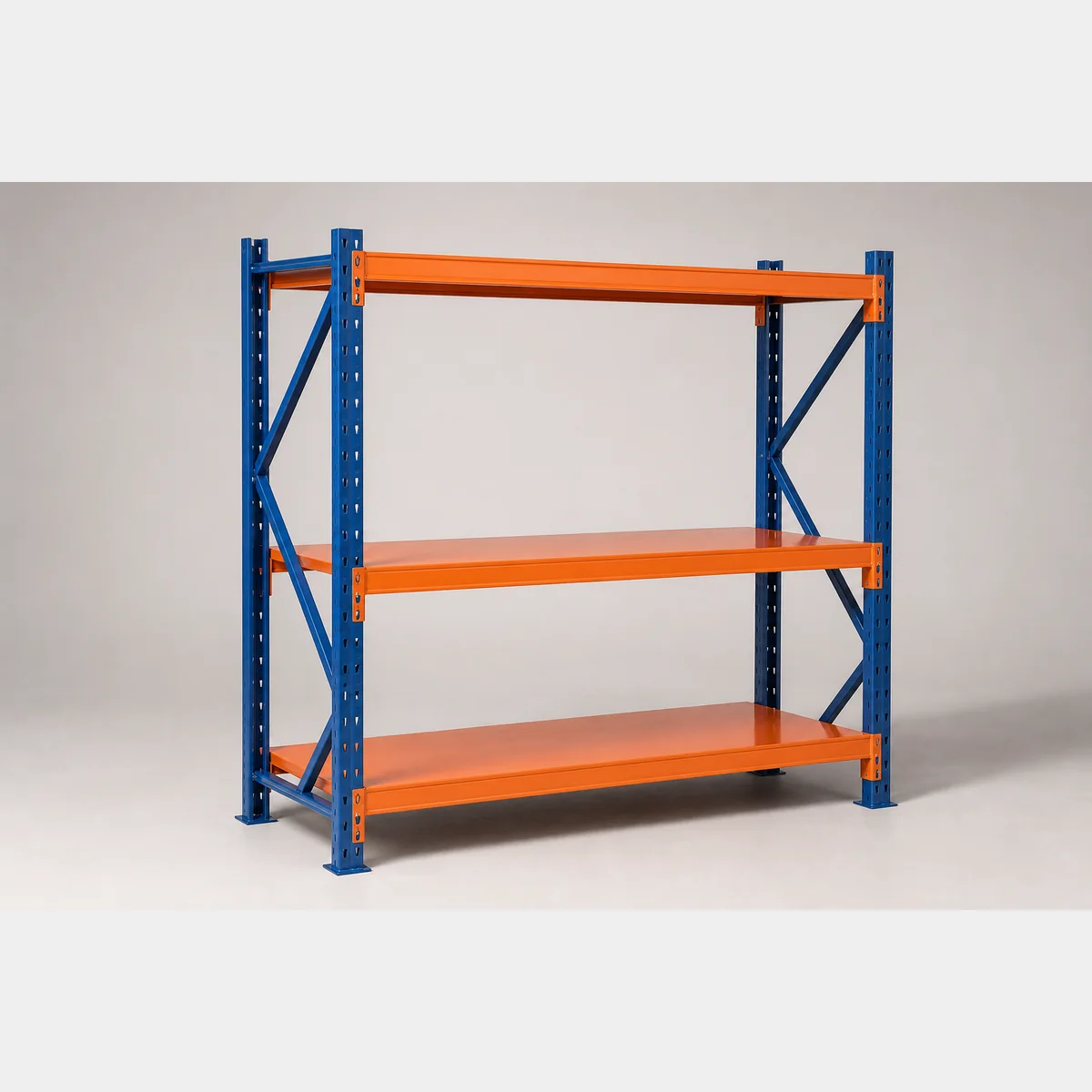
Racking
Racking, colour: blue uprights, orange beams and shelves; S9102-500A.: L1500xW600xH2000 mm; S9102-500B.: L1500xW800xH2000 mm. Formal quotation available based on use, specification and quantity.
- Colour
- Blue uprights, orange beams and shelves
- S9102-500A.
- L1500xW600xH2000 mm
- S9102-500B.
- L1500xW800xH2000 mm
 Shelving & StorageProduct reference image
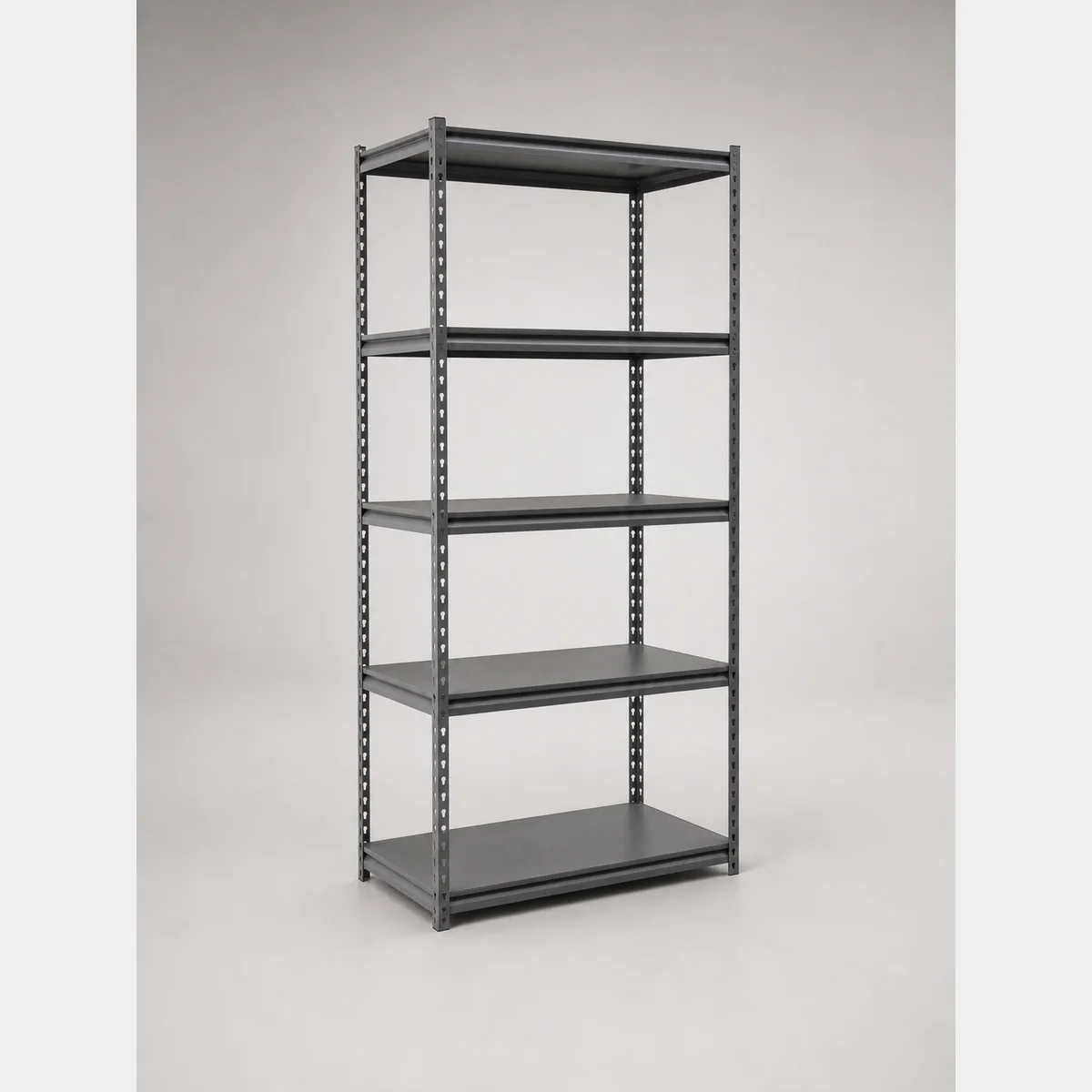
3-/4-/5-tier Storage Rack (S9190)
3-/4-/5-tier Storage Rack (S9190). Sizes/specs: Type A. L910 x W400 x H1830 mm / Type B. L1220 x W400 x H1830 mm; Type J: L910 x W460 x H1830 mm; Type K: L1220 x W460 x H1830 mm. Formal quotation available based on application, specifications and quantity.
- Size / Specification line
- Type A. L910 x W400 x H1830 mm / Type B. L1220 x W400 x H1830 mm
- Type J
- L910 x W460 x H1830 mm
- Type K
- L1220 x W460 x H1830 mm
 Shelving & StorageProduct reference image
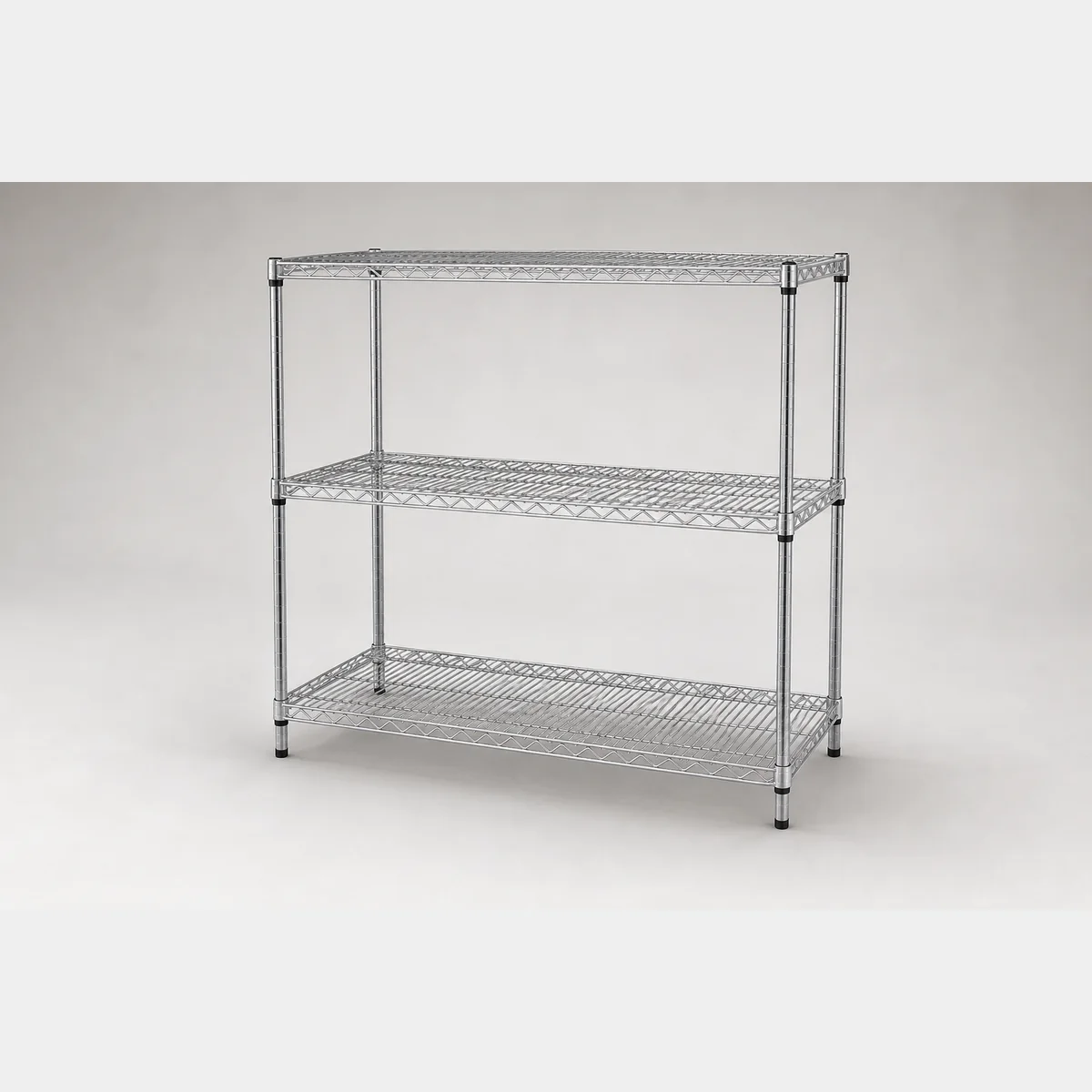
3-Tier Chrome Plated Shelf Rack
3-Tier chrome-plated shelf rack. Dimensions/Specifications: L1518 X W609 X H1500 MM / L1822 X W609 X H1500 MM; Average load per tier: 100kg. Please enquire for a formal quotation based on use, specifications and quantity.
- Dimensions/Specifications
- L1518 X W609 X H1500 MM / L1822 X W609 X H1500 MM
- Average load per tier
- 100kg
 Shelving & StorageProduct reference image
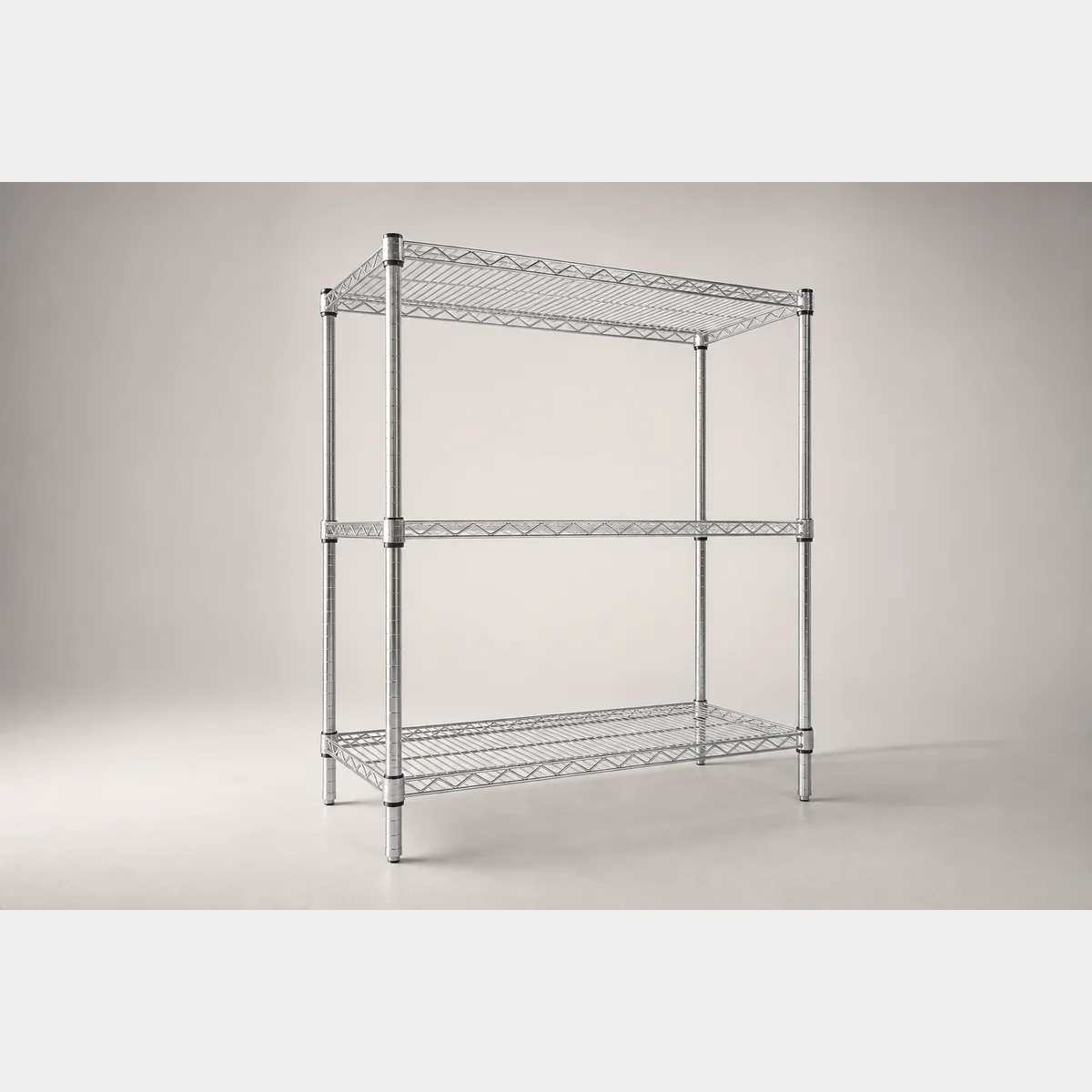
3-tier chrome-plated rack
3-tier chrome-plated rack, K4505: L1060 X W457 X H1500 MM; K4507: L1370 X W457 X H1500 MM; Load capacity per shelf: 100kg. Formal quotation available upon request based on use, specifications and quantity.
- K4505
- L1060 X W457 X H1500 MM
- K4507
- L1370 X W457 X H1500 MM
- Load capacity per shelf
- 100kg
 Shelving & StorageProduct reference image
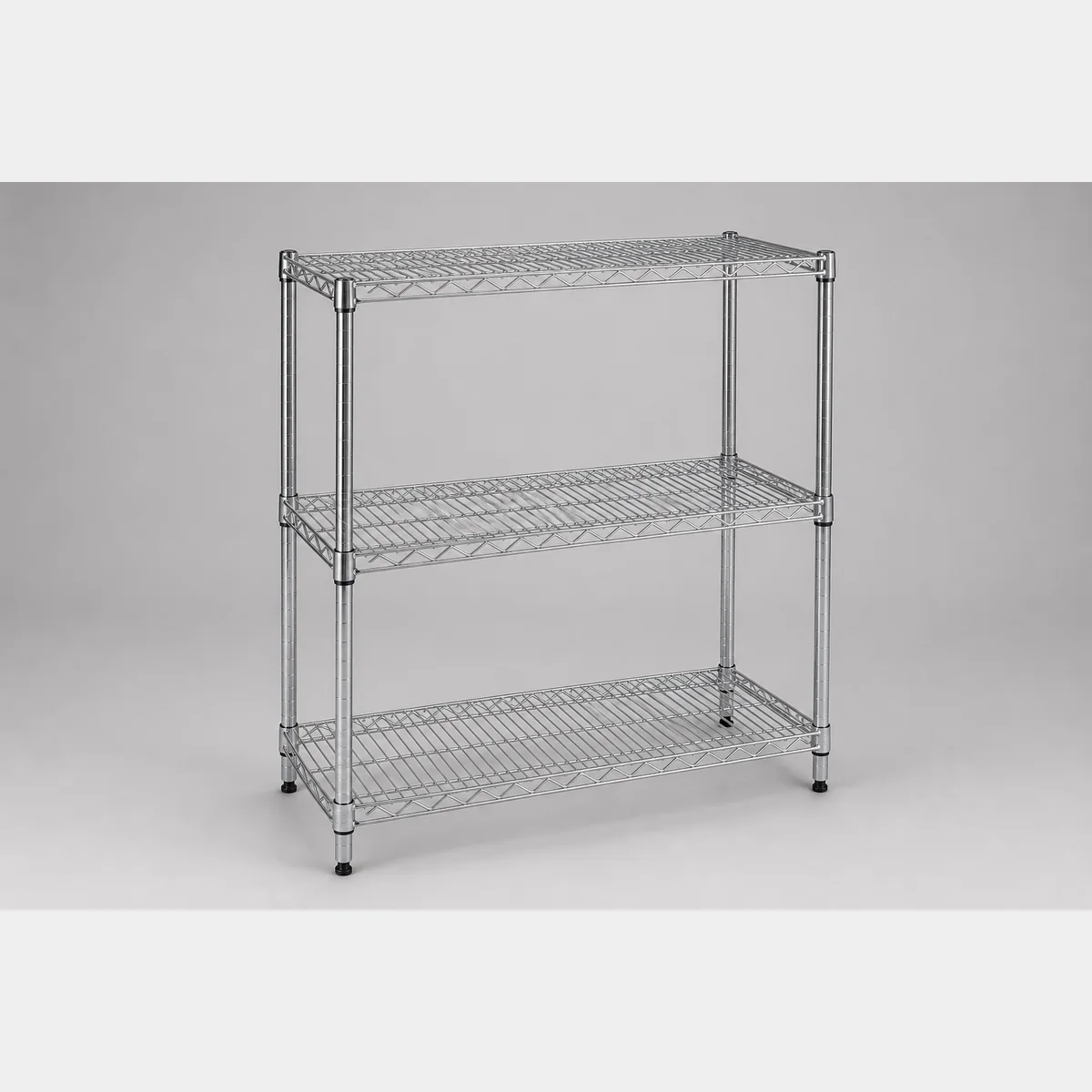
3-Tier Chrome-Plated Shelving Rack
3-Tier chrome-plated shelving rack, K5307: L1370 X W533 X H1500 MM; K5308: L1518 X W533 X H1500 MM; Average load per shelf: 100kg. Formal quotation available upon request based on use, specifications and quantity.
- K5307
- L1370 X W533 X H1500 MM
- K5308
- L1518 X W533 X H1500 MM
- Average load per shelf
- 100kg
 Shelving & StorageProduct reference image
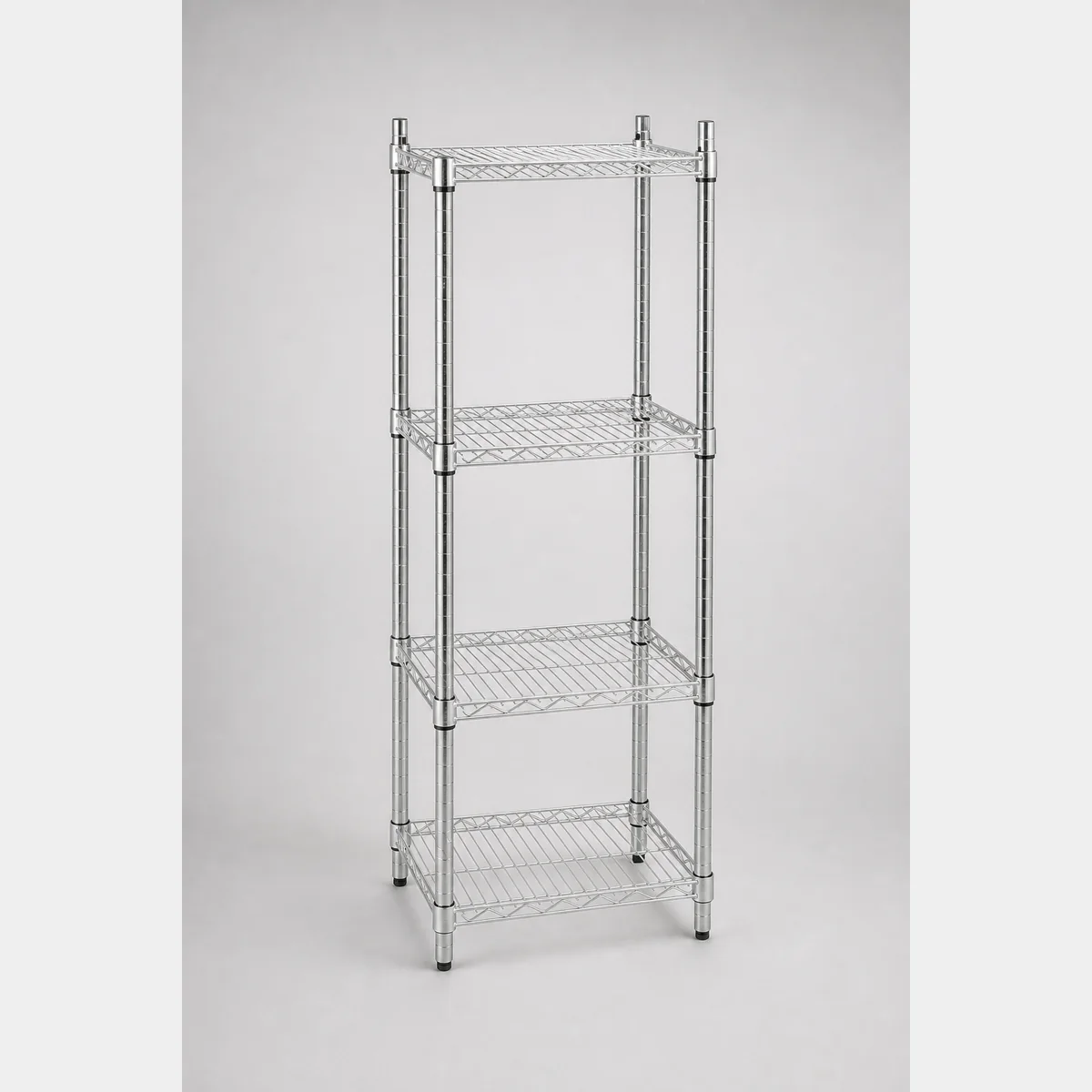
4-tier electroplated rack
4-tier electroplated rack, H3501: L355 X W355 X H1800 MM; H3502: L609 X W355 X H1800 MM; H3504: L907 X W355 X H1800 MM. Formal quotation available by intended use, specifications and quantity.
- H3501
- L355 X W355 X H1800 MM
- H3502
- L609 X W355 X H1800 MM
- H3504
- L907 X W355 X H1800 MM
 Shelving & StorageProduct reference image
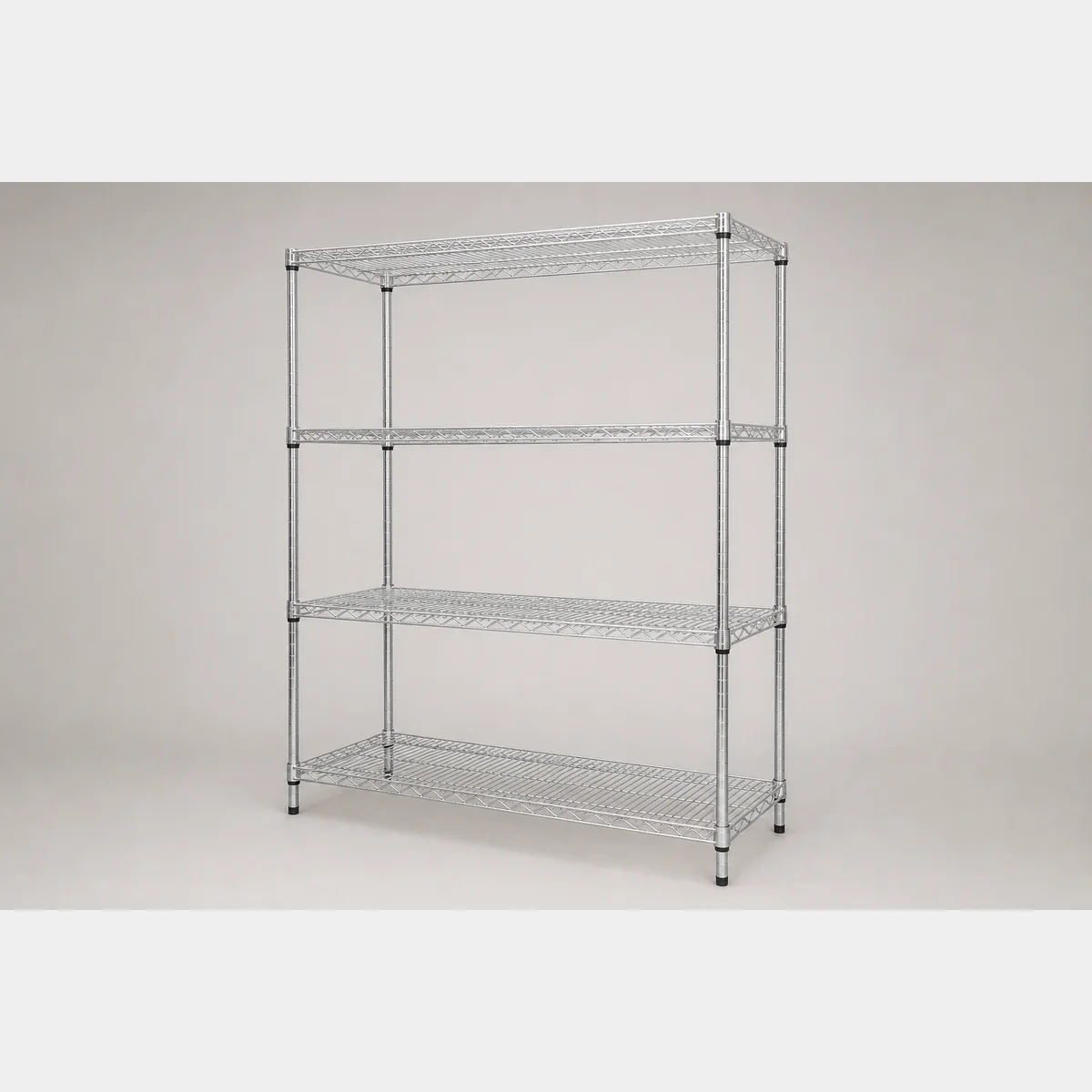
4-Tier Electroplated Rack
4-Tier electroplated rack, H6008: L1518 X W609 X H1800 MM; H6009: L1822 X W609 X H1800 MM; average load per shelf: 100kg. Formal quotation available based on usage, specifications and quantity.
- H6008
- L1518 X W609 X H1800 MM
- H6009
- L1822 X W609 X H1800 MM
- Average load per shelf
- 100kg
 Shelving & StorageProduct reference image
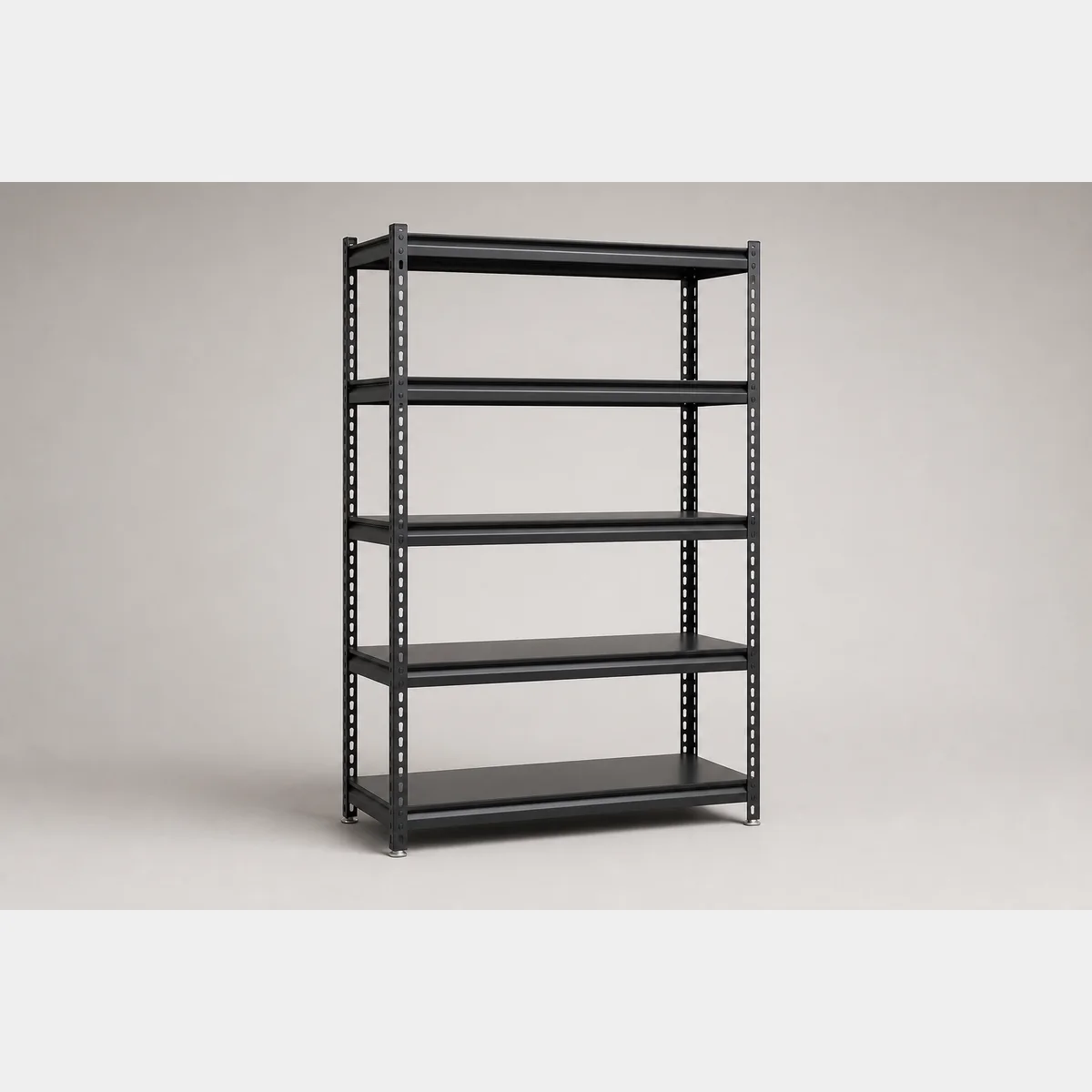
5-tier storage rack
5-tier storage rack, A: L76xW31x183 cm; B: L91xW31x183 cm; C: L91xW46x183 cm. Formal quotation available based on use, specifications and quantity.
- A
- L76xW31x183 cm
- B
- L91xW31x183 cm
- C
- L91xW46x183 cm
Continue with closely related procurement topics
These pages share equipment, operating or decision-stage signals with this guide.
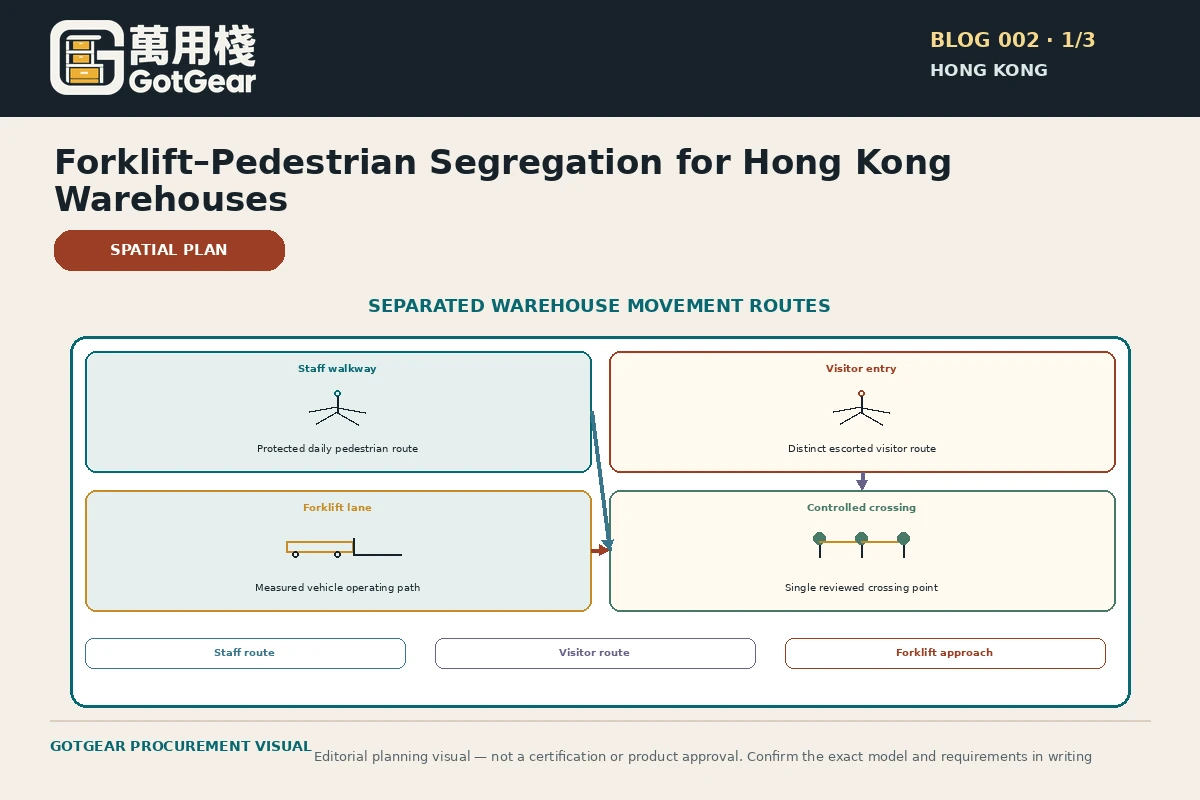
Forklift pedestrian segregation plan Hong Kong
GotGear explains forklift pedestrian segregation plan Hong Kong for Hong Kong buyers. See how warehouse traffic management plan Hong Kong supports forklift crossing controls Hong Kong, with practical checks, evidence boundaries and written requirements.
Read the guide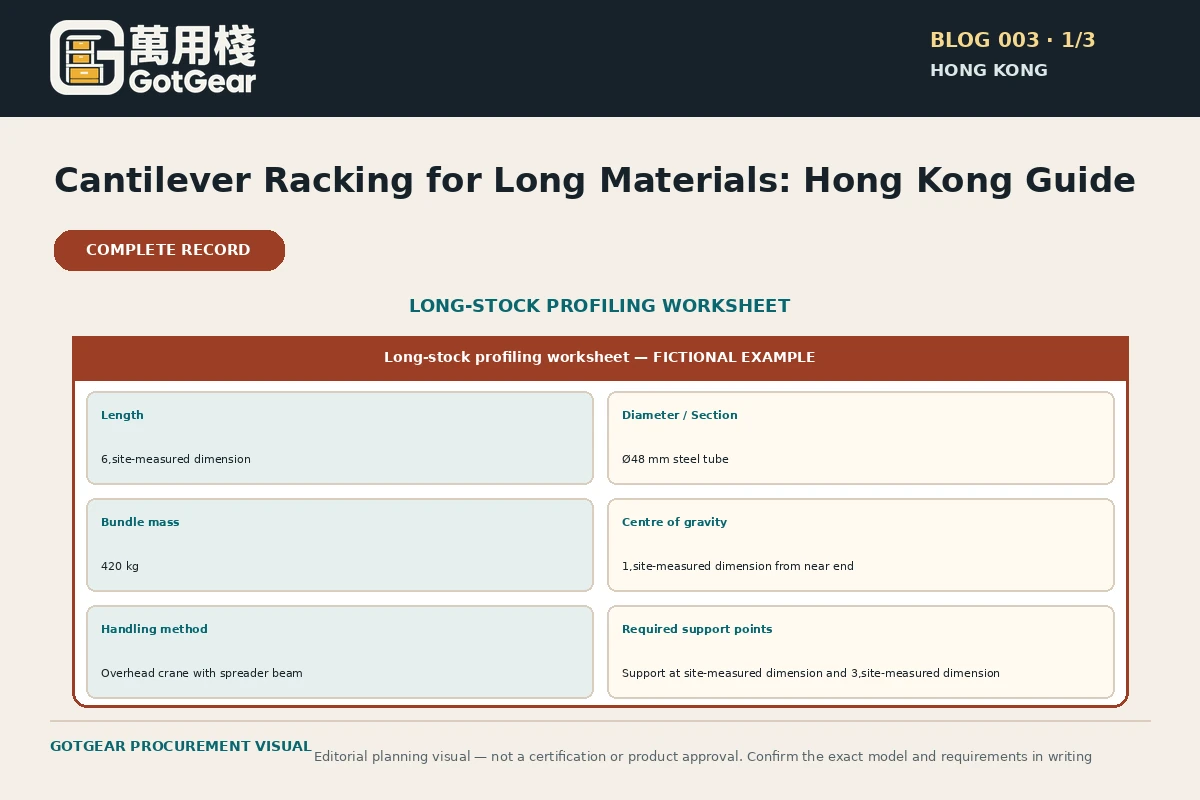
Cantilever racking for long materials Hong Kong
GotGear explains cantilever racking for long materials Hong Kong for Hong Kong buyers. See how pipe storage rack layout Hong Kong supports steel bar storage racking Hong Kong, with practical checks, evidence boundaries and written requirements.
Read the guide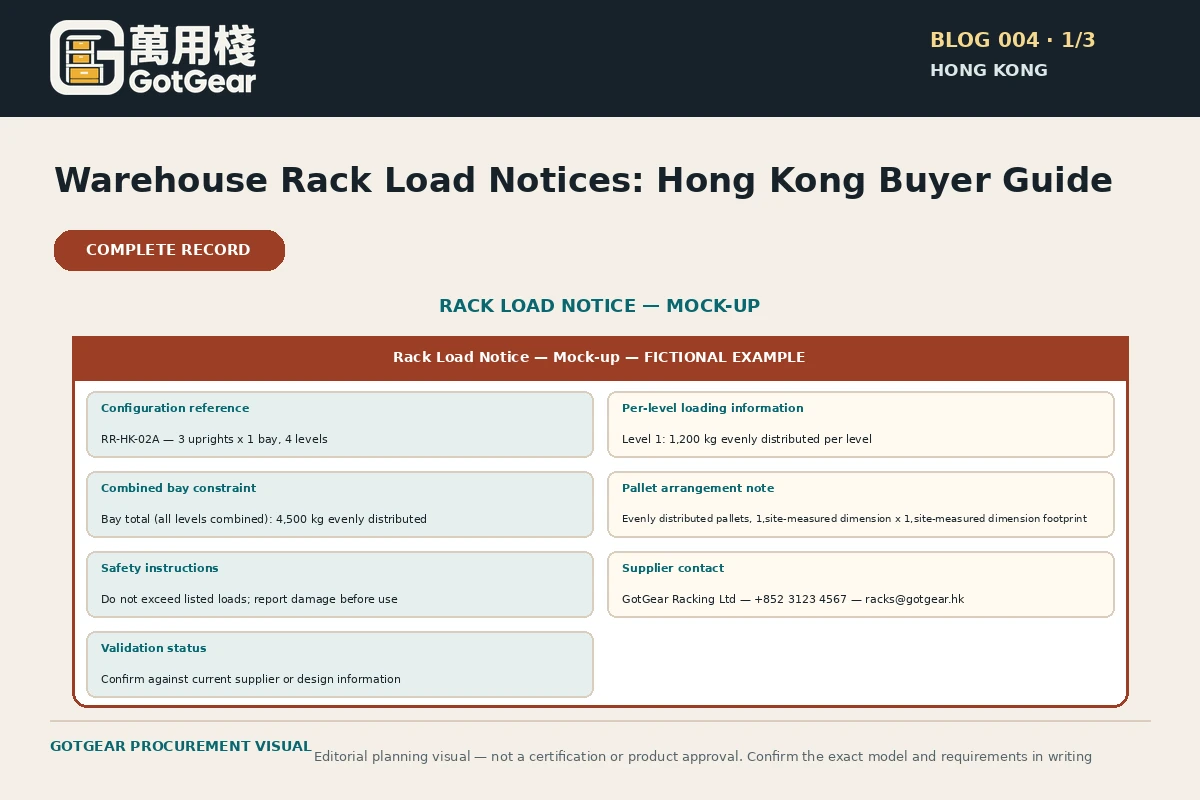
Warehouse rack load notices Hong Kong
GotGear explains warehouse rack load notices Hong Kong for Hong Kong buyers. See how pallet racking bay load Hong Kong supports racking safe working load sign Hong Kong, with practical checks, evidence boundaries and written requirements.
Read the guide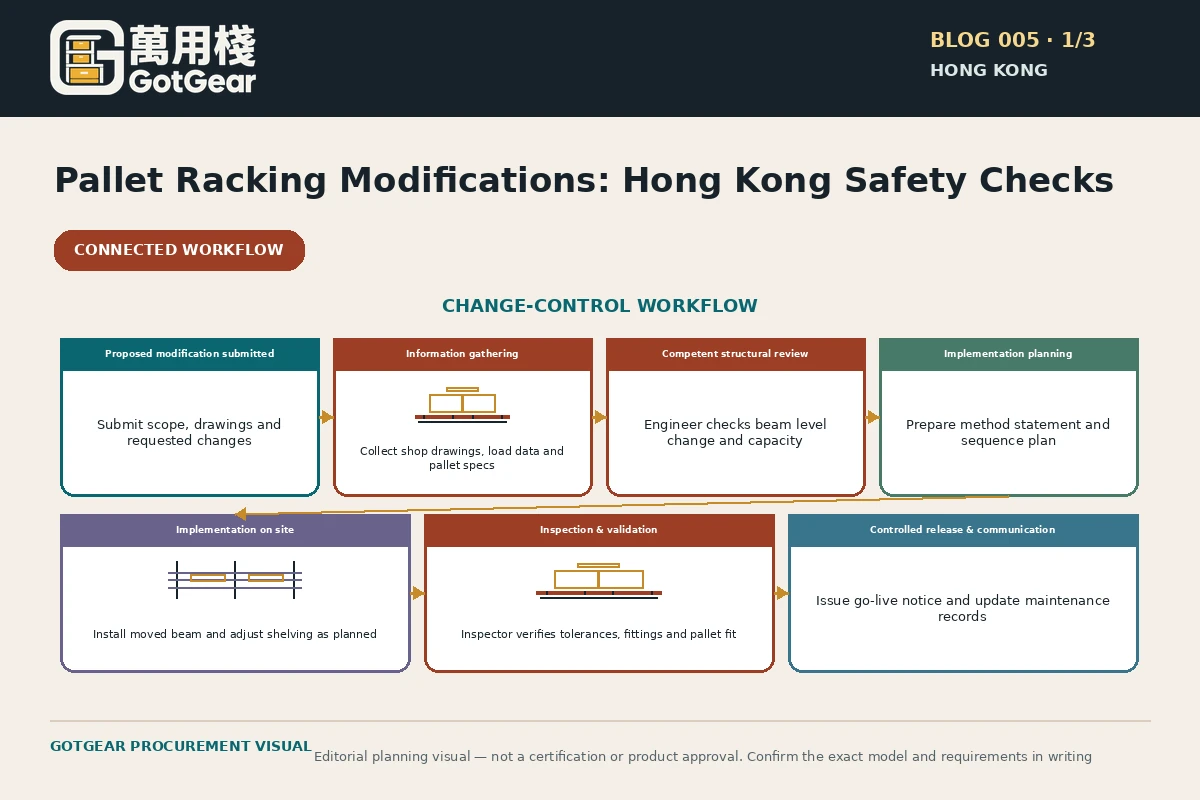
Pallet racking modification safety Hong Kong
GotGear explains pallet racking modification safety Hong Kong for Hong Kong buyers. See how warehouse racking reconfiguration Hong Kong supports rack beam level change review Hong Kong, with practical checks, evidence boundaries and written requirements.
Read the guideRelated topic indexOpen more English procurement pages15 topics
Browse additional equipment families, applications and procurement questions relevant to these operating requirements.