
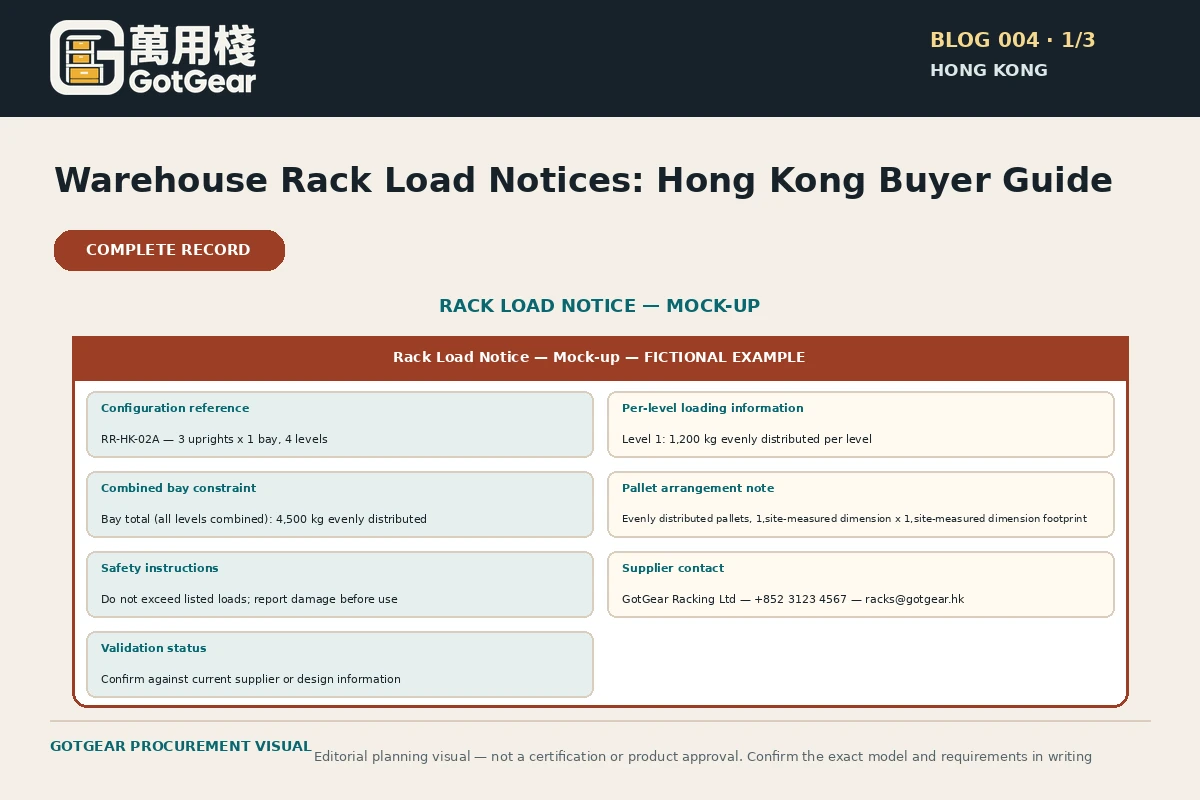
A valid rack load notice must pass four tests: it must be tied to the current installed configuration; show limits relevant to beam load and bay load; be positioned and sized so forklift operators and pickers can read it during normal operations; and be supported by supplier design documents and local training records. If any component, beam level, pallet profile or use case differs from the notice, stop assuming its numbers are correct and obtain technical clarification from the supplier, a competent designer or manufacturer before loading to that notice.
What to remember before you decide
- A notice is only authoritative if it is traceable to supplier documentation and matches the installed components and beam levels.
- Differentiate beam (per-level) and bay (aggregate) figures and train staff when to apply each on the floor.
- Place notices where forklift drivers and pickers can read them; use plain English and Traditional Chinese where needed.
- Use temporary restriction tags after impact or when configuration mismatches are found; do not guess capacities.
- Keep a single run file linking notices, supplier load tables, installation records and inspection notes.
- Set review triggers (impacts, changes, heavy loads) and periodic checks; contact the supplier or a competent inspector when in doubt.
What a usable rack load notice actually tells you
A practical rack load notice must do more than display a single number: it has to identify the exact run or bay, state the tested or designed limit per beam (per level) and the combined bay limit across pallet positions, and set out the assumptions behind those figures. The notice should record the pallet footprint assumed, whether loads are taken as evenly distributed, and any operational constraints such as single-deep arrangements or a required pallet orientation. In Hong Kong operations, treat the notice as an operational control that points to underlying evidence rather than as standalone proof of structural adequacy; issues such as floor slab capacity, unusual surcharge from nearby equipment, or seismic details may require separate engineering input or guidance from the Labour Department on safe forklift practice. Checkability is critical. The notice ought to carry a supplier name, manufacturer or project reference and the specific run or aisle identifier so someone can trace it back to installation paperwork. Compare the described components with what is actually installed: uprights, beams, bracing, connectors and the precise beam levels. Any variation — a different beam section, additional cross-members, or altered beam spacing — changes the permitted load. Equally important are the loading assumptions: if the notice assumes a 1,000 x 1,200 mm pallet and uniformly distributed cartons, that basis does not apply to narrow pallets, long-slung items, or drum loads that concentrate weight. A rack notice does not replace an inspection that validates the floor’s bearing capacity, nor does it prove pallet integrity, and it cannot authorise unauthorised alterations. If the notice lacks supplier traceability or is inconsistent with the visible rack components, treat it as a trigger for restriction rather than evidence of acceptance. Supervisors and procurement should photograph the notice and the immediate rack elements, locate the corresponding supplier paperwork, and, where documentation is missing or inconsistent, place a temporary restriction on that run. Obtain written confirmation from the supplier or from a competent reviewer before resuming normal stacking operations.
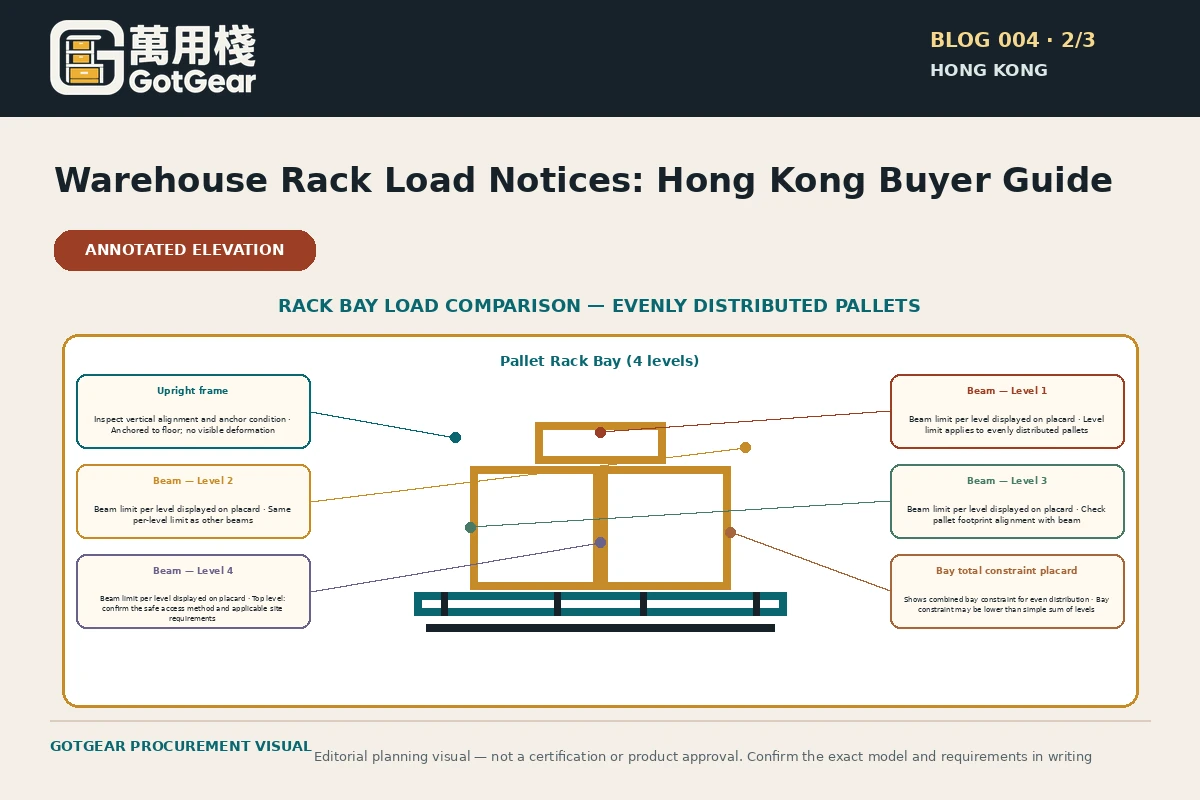
How beam load differs from bay load (practical interpretation)
On operational floors the distinction between beam load and bay load determines how staff stack and pick. Beam load, usually expressed per level, refers to the maximum weight that a single pair of beams will support across the span between uprights. Use that figure when placing or removing a single pallet at one level, provided the notice explicitly gives a per-beam value and the pallet footprint and load distribution match the assumed basis. Bay load aggregates load across the whole bay face and reflects the combined effect on uprights and bracing when multiple pallet positions or levels are loaded simultaneously; apply the bay figure when planning full-face stacking or when concentrated loads on adjacent positions could alter the load path. Many published figures assume uniformly distributed loads and standard pallet footprints. Dense or uneven loads — drums, coils, overhanging cartons or stacked items that exceed the assumed footprint — invalidate those assumptions and change the stress on beams and uprights. Off-centre loads from lorry or container loading are also common causes of changed load paths; these should be anticipated and mitigated during loading operations. Verify that the beam-level configuration (number of beams across a level, connector type and clip positions) matches the notice’s stated basis because small connector changes can significantly affect capacity. Operationally, communicate the applicable figure to operators. Where a notice provides both beam and bay values, mark which applies to routine single-pallet handling and which governs full-bay loading. If only a beam value is shown but operations commonly load multiple adjacent positions, request a bay-level confirmation from the supplier or a competent reviewer before continuing. Keep a record of any deviation from the assumed load profile and, where required, move out-of-spec items to areas designed for heavier or irregular loads.
“Treat the load notice as an operational control that only carries weight when tied to current installation records, readable at the point of work, and reinforced by training and supplier confirmation.”— GotGear Editorial Team
What should buyers compare for warehouse rack load notices Hong Kong?
| Option or approach | Best for | Trade-offs | Checks before acceptance |
|---|---|---|---|
| Rack load notice (site sign attached to run) | Quick operator decisions and daily loading control at the point of use. | Can become misleading if components or configuration change; requires traceable supplier reference to be authoritative. | Match the notice to the supplier reference and photographed installed components; cross-check beam levels and pallet footprint assumptions. |
| Supplier design and load documentation | Authoritative source when adjusting configurations, selecting new units or after repair. | May be technical and not immediately visible to operators; requires translation into a clear notice for the floor. | Confirm documents reference the exact model, batch or project, and that installation records show the same components and beam spacings. |
| Generic warehouse reminder sign | Raising general awareness about safe stacking behaviour and forklift approach limits. | Not specific to a run’s capacities and should not be used to justify loading decisions. | Use only as supplementary material; never replace a run-specific notice or supplier documentation. |
| Temporary restriction tag or lockout | Isolating a run after impact, during inspection or while waiting for supplier confirmation. | Prevents use and may disrupt storage plans; requires disciplined tag management to avoid inadvertent use. | Attach a dated restriction with responsible person and follow-up action; record in the run file when cleared. |
| Digital inventory/IMS with linked load data | Centralised control for large operations, enabling quick checks of capacity per SKU and automated alerts when load profiles change. | Requires accurate, maintained data and integration with physical run identifiers; not a substitute for an in-situ, legible notice. | Ensure each digital record links to photographed notices and supplier documents; audit field labels quarterly. |
This framework helps buyers create comparable written enquiries. Final model specifications, availability, delivery and commercial terms must be confirmed in a formal quotation.
Legibility, location and user understanding in Hong Kong workplaces
A rack load notice protects people only when it is visible and comprehensible at the point of loading. Place notices at eye level for operators as they approach the bay, on both sides of aisles where forklifts manoeuvre, and on end-frames for narrow aisles; the objective is that a driver or picker can read the essential figures from the vehicle stop position used during normal picks. Select durable substrates that withstand warehouse dust, routine cleaning chemicals and occasional contact without losing legibility. In Hong Kong’s mixed-language workplaces, limit potential misinterpretation by using clear English phrasing and, where helpful, Traditional Chinese alongside it so drivers, pickers and visiting drivers can all follow the limits. Practical legibility checks are simple: have a forklift driver and a casual picker perform a short read-and-repeat test while positioned as they would during picking. If the main numbers, pallet footprint and whether the figure is per beam or per bay cannot be read unaided, reposition the notice or increase type size. Avoid technical abbreviations and shorthand that are not universally understood by warehouse staff. Consider variations in lighting and shift conditions: for night or poorly lit operations, use reflective backgrounds or backlit signs so figures remain visible under headlamps and during peak traffic periods. Even a perfectly readable notice does not replace operator training or routine inspections. Staff must understand what an evenly distributed load looks like in practice and how to manage atypical items such as drums, coils or overhanging stacks. Damaged frames, bent beams or loose connectors immediately invalidate the stated limits regardless of the notice content. Conduct a visibility survey across all aisles and run a short read test with operators; relocate or replace any notice that fails. Add a concise reference card to the operators’ information pack summarising the per-beam and per-bay rules and listing the supplier or safety officer contact details for quick queries.
Supporting records, review triggers and when to obtain technical confirmation
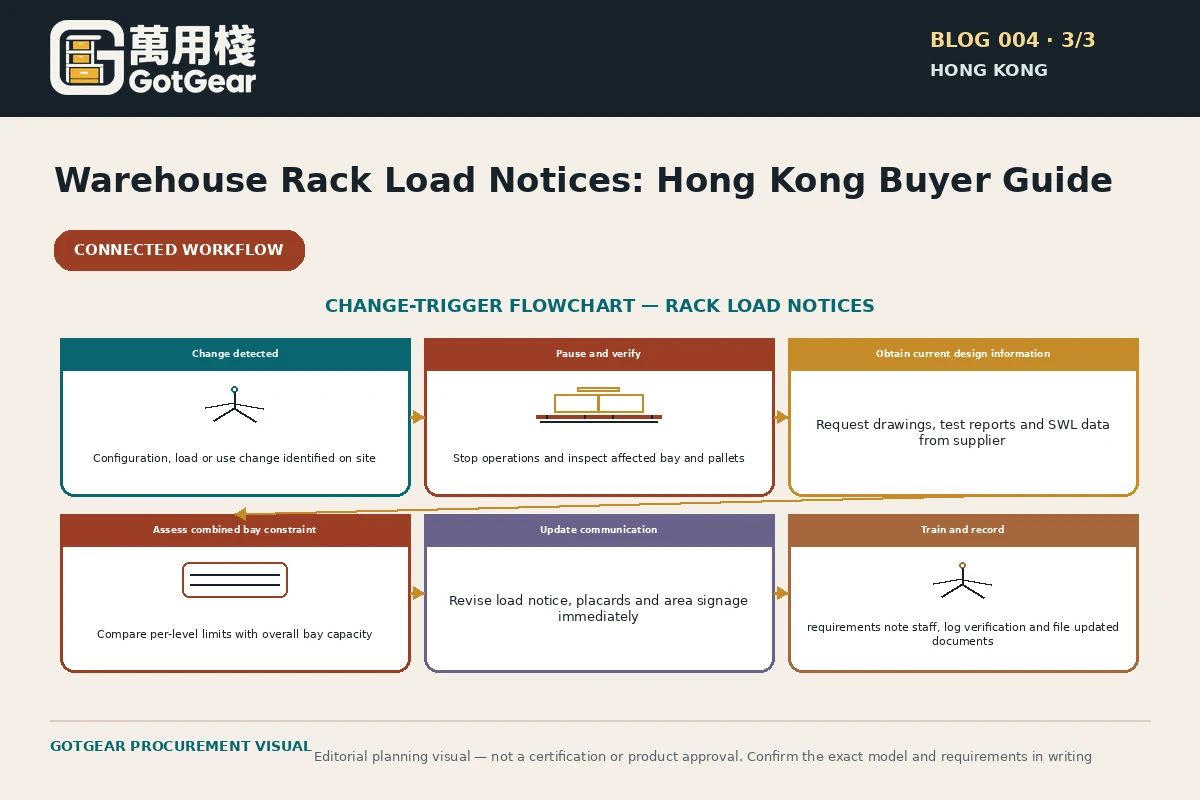
Maintain a single run file for each racking run that links the notice to the supplier’s load tables, installation records and inspection notes. That file is the operational source of truth: it should contain purchase or installation documentation, any test reports or third‑party inspection outcomes, dated inspection logs and photographs showing current component condition. In Hong Kong’s high‑turnover logistics environment, set explicit events that force a review so that notices do not become stale when operations change. Treat a range of changes as immediate review triggers: relocating a run, altering beam levels, replacing uprights or bracing, modifications to pallet footprints or stacking patterns, and any reported impact event or visible damage. Changes to the floor slab or the introduction of heavy equipment nearby are also triggers, because they alter the load environment. When a trigger occurs, seek written confirmation from the original supplier or manufacturer that the existing notice remains valid for the changed condition. If the supplier cannot confirm, engage a competent designer or inspector to assess the run before reinstating normal storage levels. A notice is not a substitute for a formal inspection after an impact, documented corrosion, or connector damage; those conditions require hands‑on inspection and, where necessary, component replacement. Overseas supplier data may provide useful background but does not automatically address Hong Kong site constraints such as floor bearing limits or local detailing requirements. Operational practice should therefore include calendar reminders for periodic review—every six or 12 months depending on activity—and a mandatory event log for any incident that could affect capacity. When the notice cannot be validated promptly, restrict the run and treat its load limits as unknown until competent confirmation is obtained.
Warehouse rack load notices Hong Kong decision checklist
- Locate the notice and check it names the supplier or project reference for traceability.
- Verify the installed beam type, beam level spacing, uprights, bracing and connectors match the notice description or supplier paperwork.
- Confirm whether the notice figures are per beam (level) or per bay and that pallet footprint assumptions are documented.
- Test legibility: can a forklift driver read the main figures while positioned for normal handling?
- Check that notice language and annotations are understandable to your local staff; add Traditional Chinese if needed.
- Inspect for recent impact, corrosion or missing connectors that would change capacity and tag the run if damage is present.
- Compare actual pallet/unit sizes and load distribution to the notice assumptions; note exceptions for heavy or concentrated loads.
- If components, layout or load profile differ, pause use of the notice and request supplier or competent review.
- Record any changes, inspections and supplier confirmations in a single run file with dates and responsible persons.
- Set review triggers and periodic review dates; log any event that might affect load capacity (impacts, layout changes, unusual stock).
Practical action sequence
- Identify and photograph the rack load notice and the surrounding components.
- Compare photos to supplier design documentation and installation records for the same run.
- Measure or record beam levels, beam type and pallet footprint dimensions used in practice.
- Conduct a legibility test with a forklift driver and a picker; reposition or enlarge the notice if unreadable.
- If mismatches or damage are found, attach a temporary restriction tag and inform operations to stop using the run.
- Contact the original supplier or a competent inspector for written confirmation or revised load data.
- Update the notice, run file and IMS records with any validated changes; communicate the change in a shift team communication.
- Document the date, findings and responsible persons; schedule the next review according to activity level and risk.
Apply the checks to your Hong Kong site
Hong Kong teams should treat notices as an operational control tied to local conditions. Follow Labour Department guidance on safe forklift operations and regard overseas industry guidance as helpful background rather than local law. Always confirm floor loading, slab constraints and any district-specific permit conditions with the building engineer or supplier when in doubt. When verifying warehouse rack load notices Hong Kong check that each notice is legible, clearly attributable to the exact rack configuration and aligned with on-site handling practices so users can act on it without ambiguity. For any pallet racking bay load Hong Kong assessment, match the notice to the bay label, stacking pattern and equipment footprint and keep a documented validation route for future audits. If a racking safe working load sign Hong Kong is faded, inconsistent or lacks clear attribution, quarantine the bay until the record is reconciled. Operational takeaway: adopt a site-specific checklist that photographs and records each sign, confirms slab/floor limits with the engineer, and removes illegible notices from service immediately.
References used for this article
These sources provide regulatory, safety or planning context. They do not certify any GotGear product or replace site-specific professional advice.
- SEMA — Racking Load Notices: Why They Are Important — Detailed recognised-industry explanation of load-notice purpose, safe beam and bay limits, distributed-load assumptions, configuration changes, maintenance and supplier contact.
- WorkSafe New Zealand — Working safely with pallet racking systems — Government guidance on displaying maximum safe working load/configuration where a forklift driver can see it, loading within rated bay capacity and consulting supplier instructions.
- Hong Kong Labour Department — Safe Practices in Operating Fork-lift Trucks — Local forklift context on knowing floor limits, maintaining safe clearances, safe load handling, balanced forks and avoiding overloaded or unstable loads.
- OSHA — Warehousing: Hazards and Solutions — Practical guidance to inspect and maintain racking, isolate damaged areas, keep rack capacities within limits, place heavier loads lower/middle and keep passages unobstructed.
Questions about warehouse rack load notices Hong Kong
What is the difference between a beam limit and a bay limit?
Beam limits normally apply to a single pair of beams at a given level and reflect how much load that beam span can safely support for one pallet position or a specific distributed footprint. Bay limits aggregate safe load across the bay face and consider how adjacent pallet positions combine to affect upright and bracing load. On the floor, use beam limits for single-position handling and bay limits when the entire bay is filled or multiple adjacent positions are loaded simultaneously. Where notices list both, follow the supplier’s guidance about when each applies.
When should a rack notice be reviewed?
Review triggers include any reconfiguration of beam levels, replacement of uprights or bracing, visible impact or suspected damage, changes in pallet dimensions or load profile (heavy, concentrated loads), relocation of the run, or changes to floor loading in the area. Additionally, set periodic reviews (commonly every six or 12 months depending on activity level) to confirm notices remain valid. In Hong Kong operations, rapid turnover and tight aisles increase the chance of impact; respond immediately to any reported incident rather than waiting for scheduled review.
What should a team do if a notice is missing or conflicts with the installed rack?
If a notice is missing, assume the capacity is unknown until you can validate it: restrict use of the run or reduce loading to a conservative interim profile and contact the supplier for confirmation. If a notice conflicts with the installed rack (different beam levels, beam types or missing bracing), attach a temporary restriction tag, photograph the discrepancy, and request written verification from the supplier or a competent inspector before resuming normal use. Do not guess a lower number as a permanent fix; technical clarification is the correct next step.
Can a rack load notice be used to prove floor capacity or pallet condition?
No. A load notice specifies racking limits based on the racking assembly, not the building slab or the integrity of pallets. Floor slab capacity must be assessed by a building engineer or during supplier design confirmation if heavy uniform loads are present. Likewise, pallet condition affects how loads distribute; damaged or undersized pallets can concentrate load and exceed beam assumptions. If floor or pallet concerns exist, obtain site-specific technical advice rather than relying solely on the racking notice.
How should mixed-language teams in Hong Kong handle notices?
Use plain English and add Traditional Chinese annotations where appropriate to ensure all operators understand limits. Avoid technical abbreviations or ambiguous shorthand. Include the supplier contact and run reference on the notice so staff can quickly escalate questions. Consider requirements note, pictorial reminders for common constraints (per-beam vs per-bay) and include the notices in shift team communications to reinforce their meaning.
When is supplier confirmation required rather than an internal judgement?
Supplier confirmation is required whenever the installed configuration differs from the notice, after any impact or visible damage, when changing beam levels or replacing components, and when introducing non-standard pallets or unusually heavy concentrated loads. If supplier documents are not accessible, obtain written verification from a competent racking inspector before relying on a notice to permit normal loading.
Compare available product models and specifications
These product cards are matched to this buying topic. Select a specification and quantity to send the product details to WhatsApp.
 Shelving & StorageProduct reference image
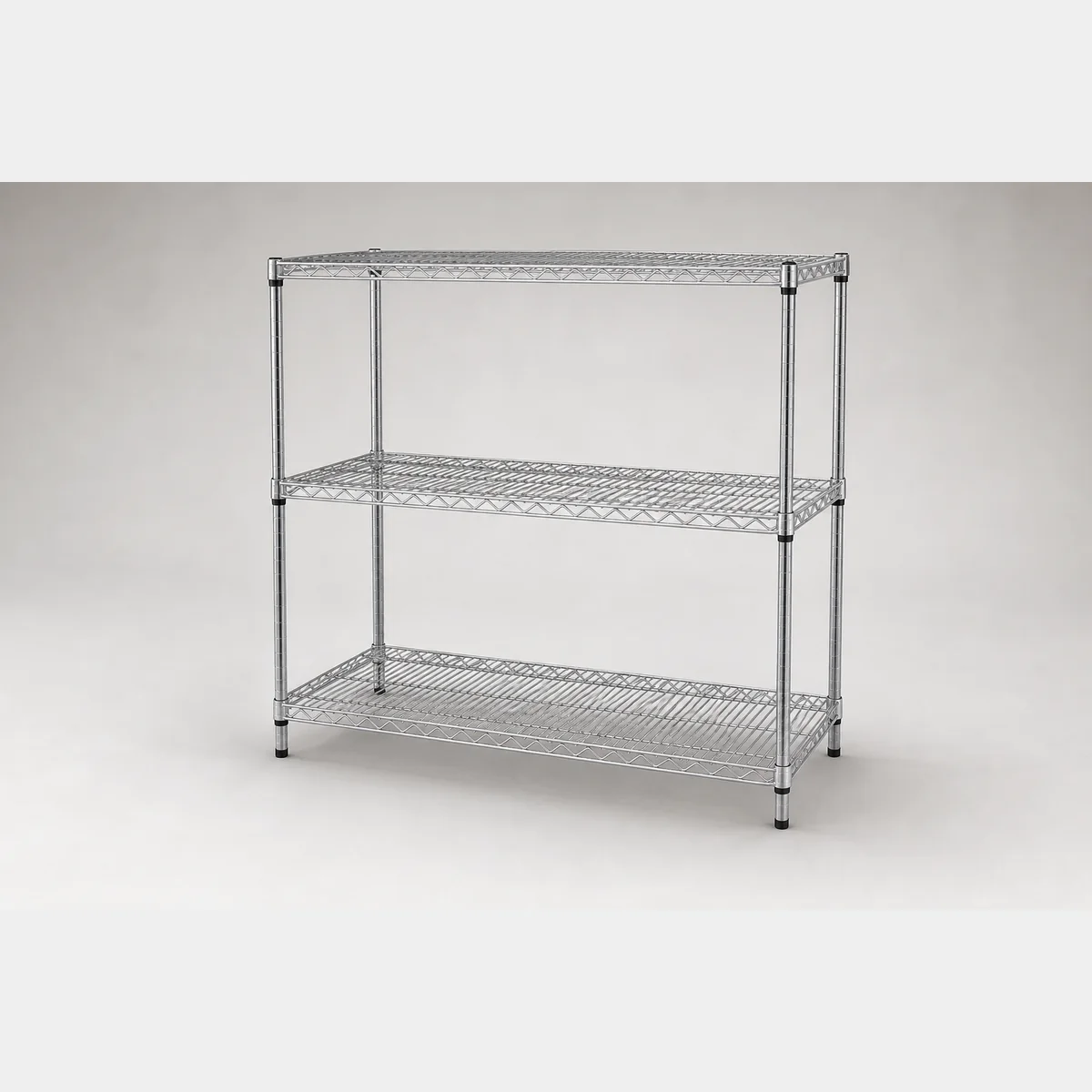
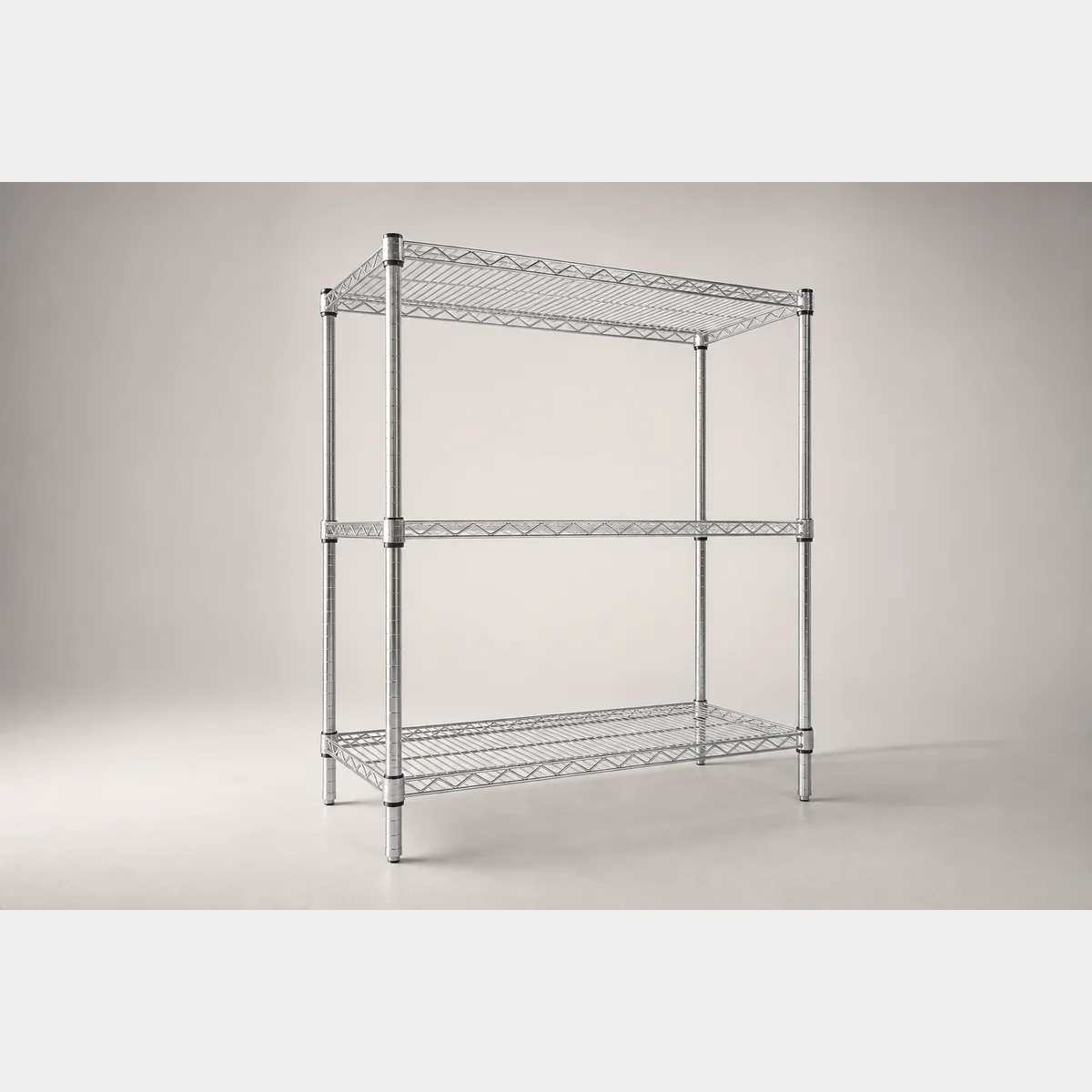
3-Tier Chrome Plated Shelf Rack
3-Tier chrome-plated shelf rack. Dimensions/Specifications: L1518 X W609 X H1500 MM / L1822 X W609 X H1500 MM; Average load per tier: 100kg. Please enquire for a formal quotation based on use, specifications and quantity.
- Dimensions/Specifications
- L1518 X W609 X H1500 MM / L1822 X W609 X H1500 MM
- Average load per tier
- 100kg
 Shelving & StorageProduct reference image
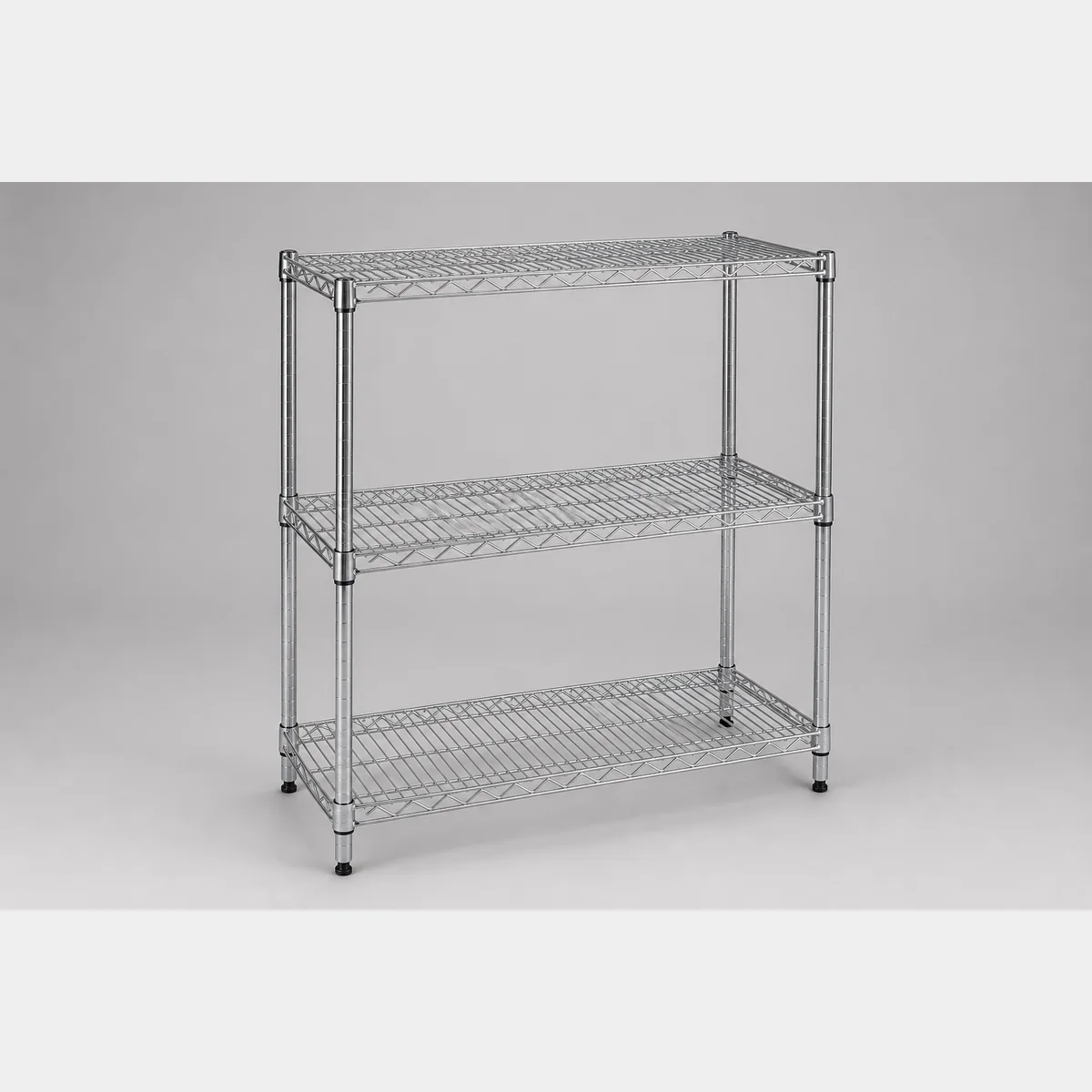
3-tier chrome-plated rack
3-tier chrome-plated rack, K4505: L1060 X W457 X H1500 MM; K4507: L1370 X W457 X H1500 MM; Load capacity per shelf: 100kg. Formal quotation available upon request based on use, specifications and quantity.
- K4505
- L1060 X W457 X H1500 MM
- K4507
- L1370 X W457 X H1500 MM
- Load capacity per shelf
- 100kg
 Shelving & StorageProduct reference image
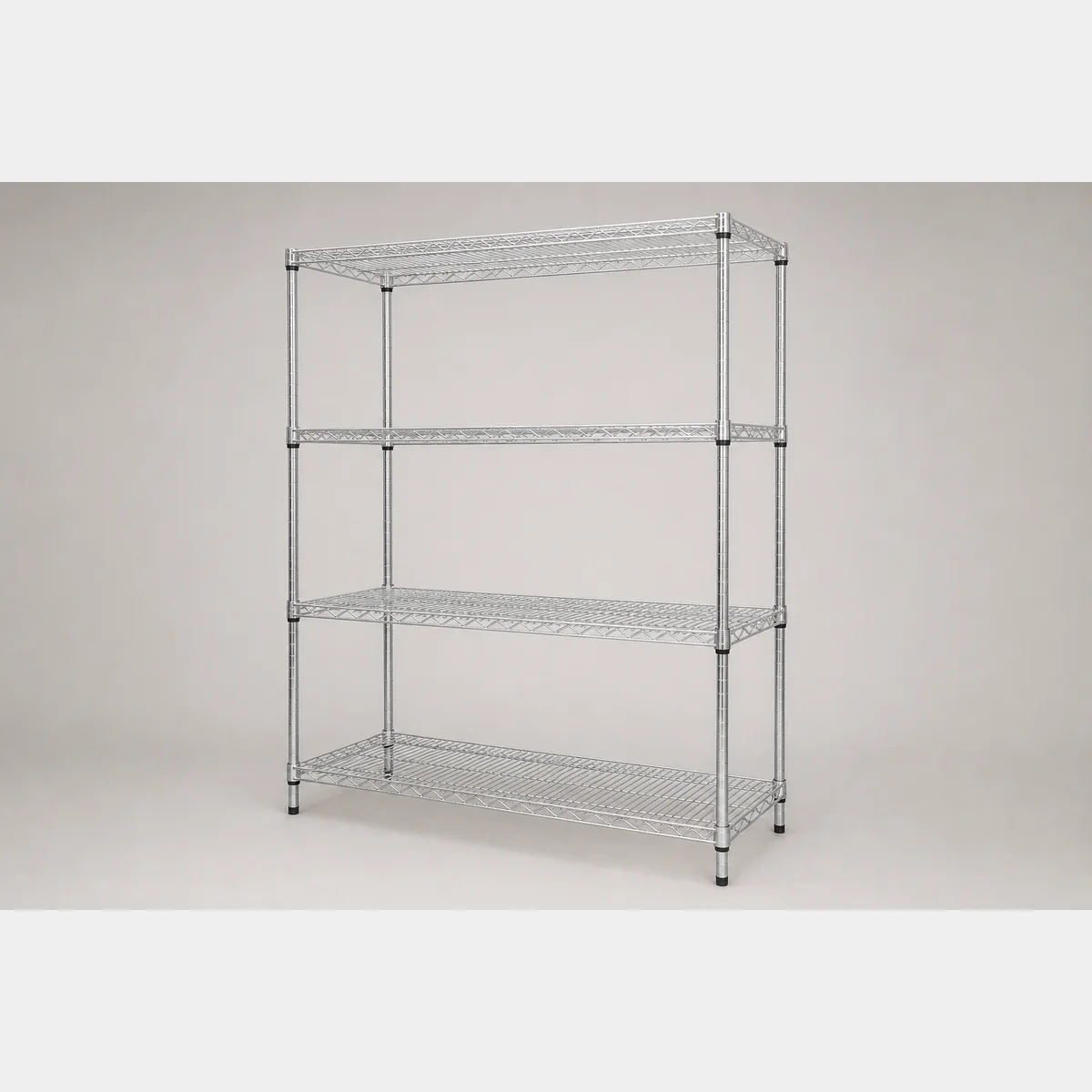
3-Tier Chrome-Plated Shelving Rack
3-Tier chrome-plated shelving rack, K5307: L1370 X W533 X H1500 MM; K5308: L1518 X W533 X H1500 MM; Average load per shelf: 100kg. Formal quotation available upon request based on use, specifications and quantity.
- K5307
- L1370 X W533 X H1500 MM
- K5308
- L1518 X W533 X H1500 MM
- Average load per shelf
- 100kg
 Shelving & StorageProduct reference image
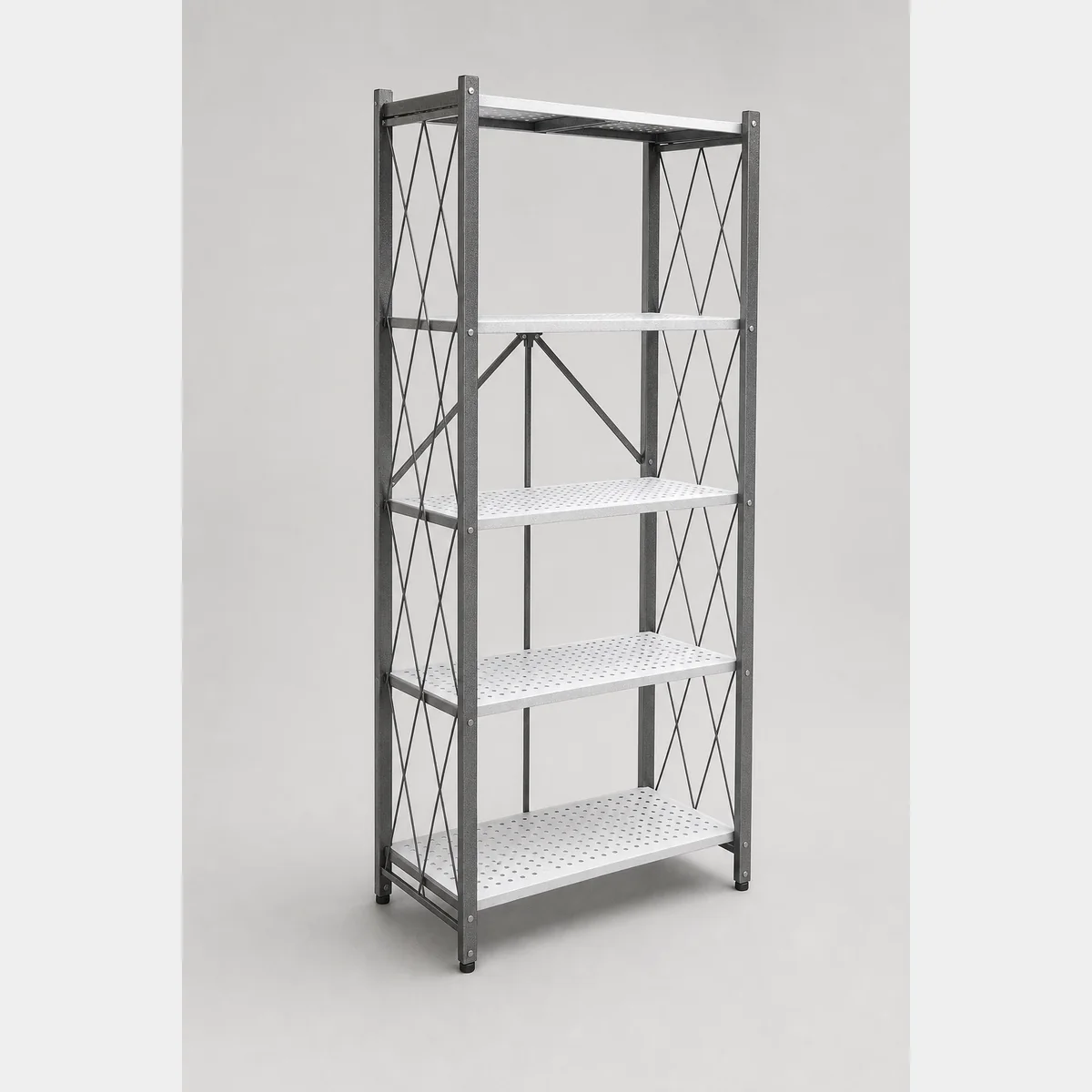
4-Tier Electroplated Rack
4-Tier electroplated rack, H6008: L1518 X W609 X H1800 MM; H6009: L1822 X W609 X H1800 MM; average load per shelf: 100kg. Formal quotation available based on usage, specifications and quantity.
- H6008
- L1518 X W609 X H1800 MM
- H6009
- L1822 X W609 X H1800 MM
- Average load per shelf
- 100kg
 Shelving & StorageProduct reference image
Five-tier Folding Display Rack (Perforated Shelves) — S9195B
Five-tier folding display rack S9195B, L710xW270xH1550 mm, listed load 30 kg per shelf.
- Model
- S9195B
- Dimensions
- L710xW270xH1550 mm
- Tier count
- 5 tiers
 Shelving & StorageProduct reference image
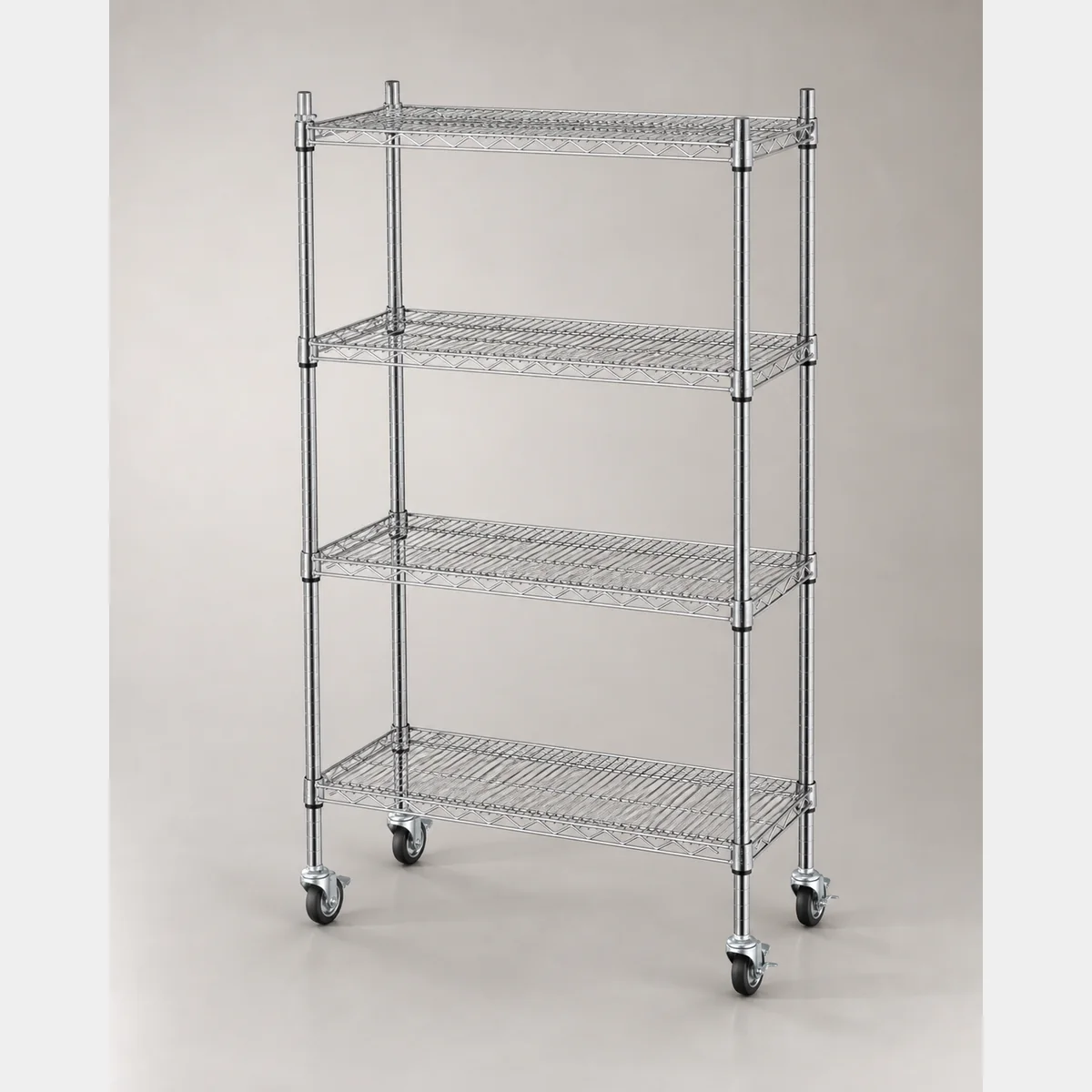
Four-tier chrome-plated rack
Four-tier chrome-plated rack. H4505: L1060 X W457 X H1800 MM; H4507: L1370 X W457 X H1800 MM; Load capacity per shelf: 100kg. Formal quotation available based on use, specifications and quantity.
- H4505
- L1060 X W457 X H1800 MM
- H4507
- L1370 X W457 X H1800 MM
- Load capacity per shelf
- 100kg
 Shelving & StorageProduct reference image
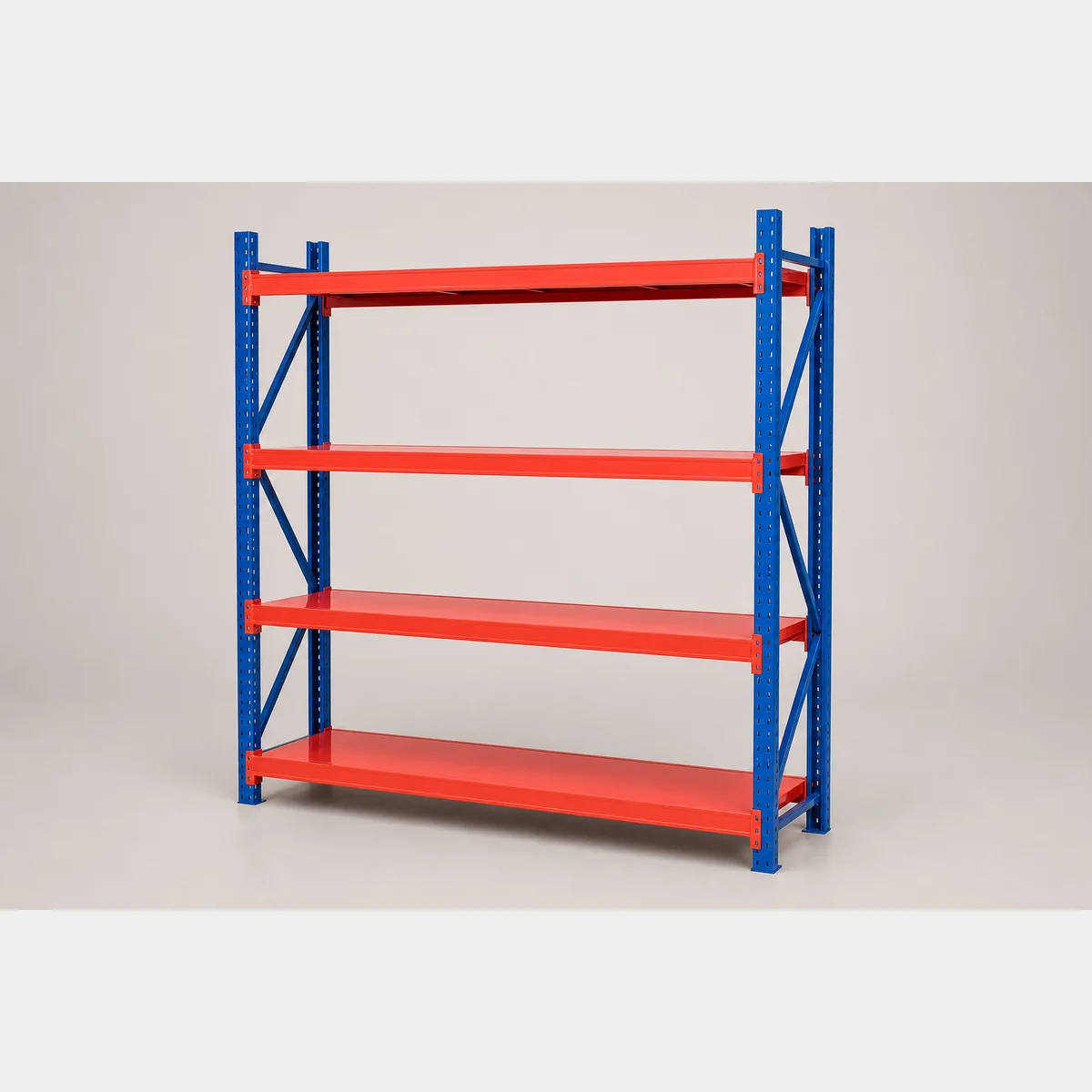
Medium Shelving Rack
Medium shelving rack, colour: blue upright posts, orange-red shelves and cross beams; average load per level: 300kg; A: L1200xW500xH2000 mm. Formal quotation available based on use, specifications and quantity.
- Colour
- blue upright posts, orange-red shelves and cross beams
- Average load per level
- 300kg
- A
- L1200xW500xH2000 mm
 Shelving & StorageProduct reference image
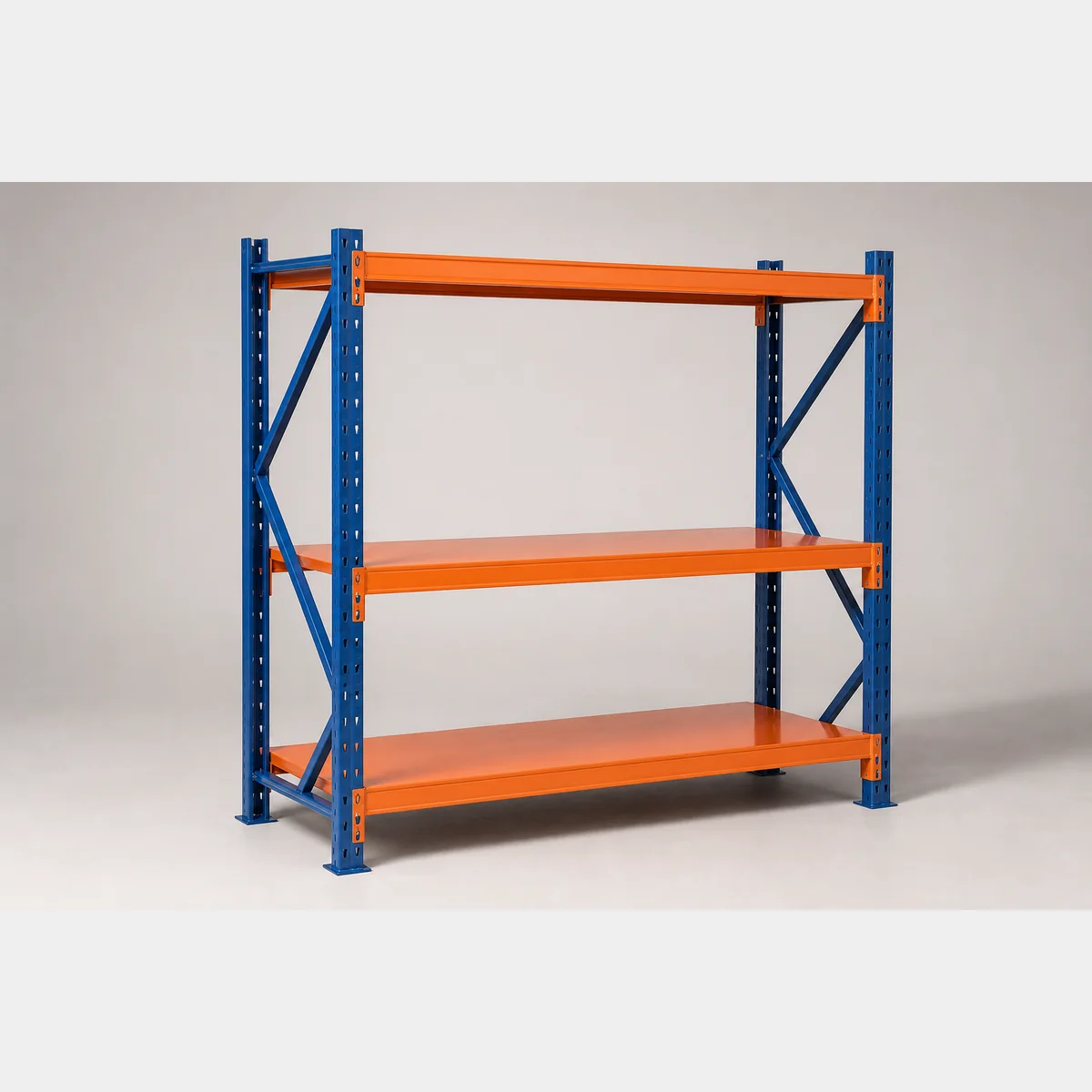
Racking
Racking, colour: blue uprights, orange beams and shelves; S9102-500A.: L1500xW600xH2000 mm; S9102-500B.: L1500xW800xH2000 mm. Formal quotation available based on use, specification and quantity.
- Colour
- Blue uprights, orange beams and shelves
- S9102-500A.
- L1500xW600xH2000 mm
- S9102-500B.
- L1500xW800xH2000 mm
Continue with closely related procurement topics
These pages share equipment, operating or decision-stage signals with this guide.
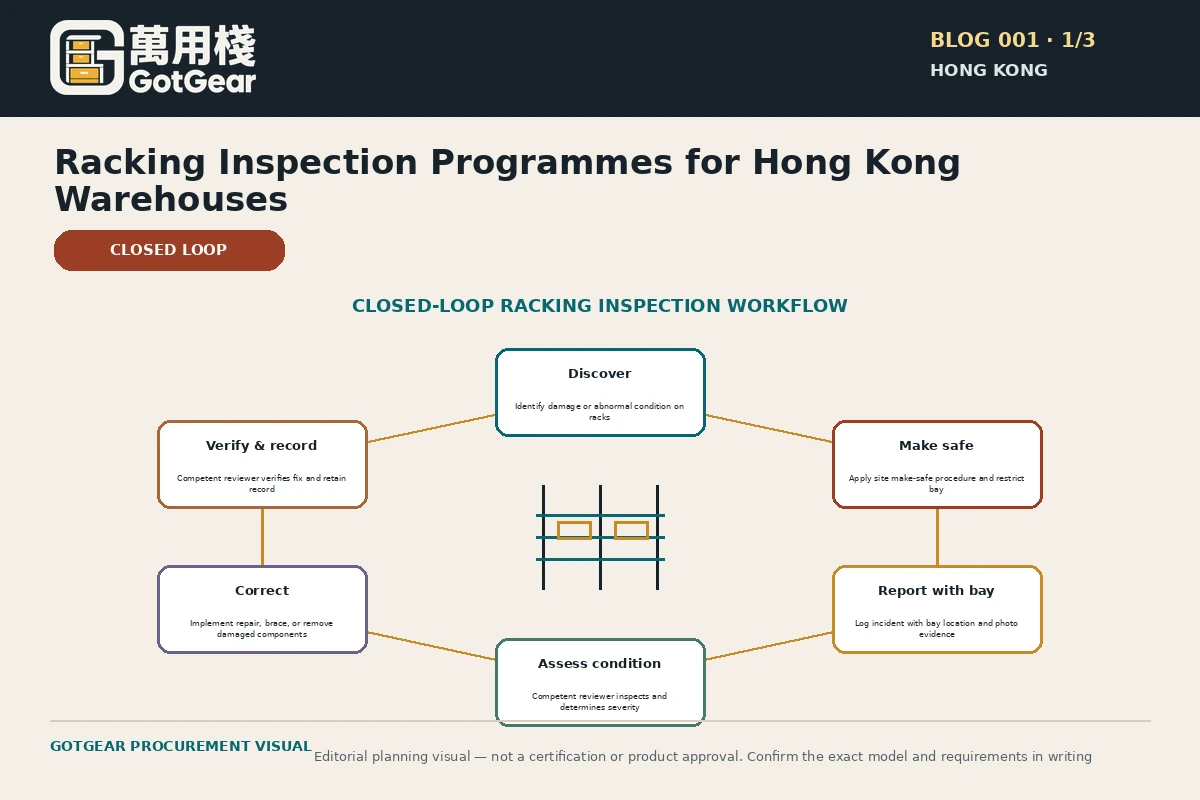
Warehouse racking inspection programme Hong Kong
GotGear explains warehouse racking inspection programme Hong Kong for Hong Kong buyers. See how racking damage reporting procedure Hong Kong supports warehouse rack inspection checklist Hong Kong, with practical checks, evidence boundaries and written requirements.
Read the guide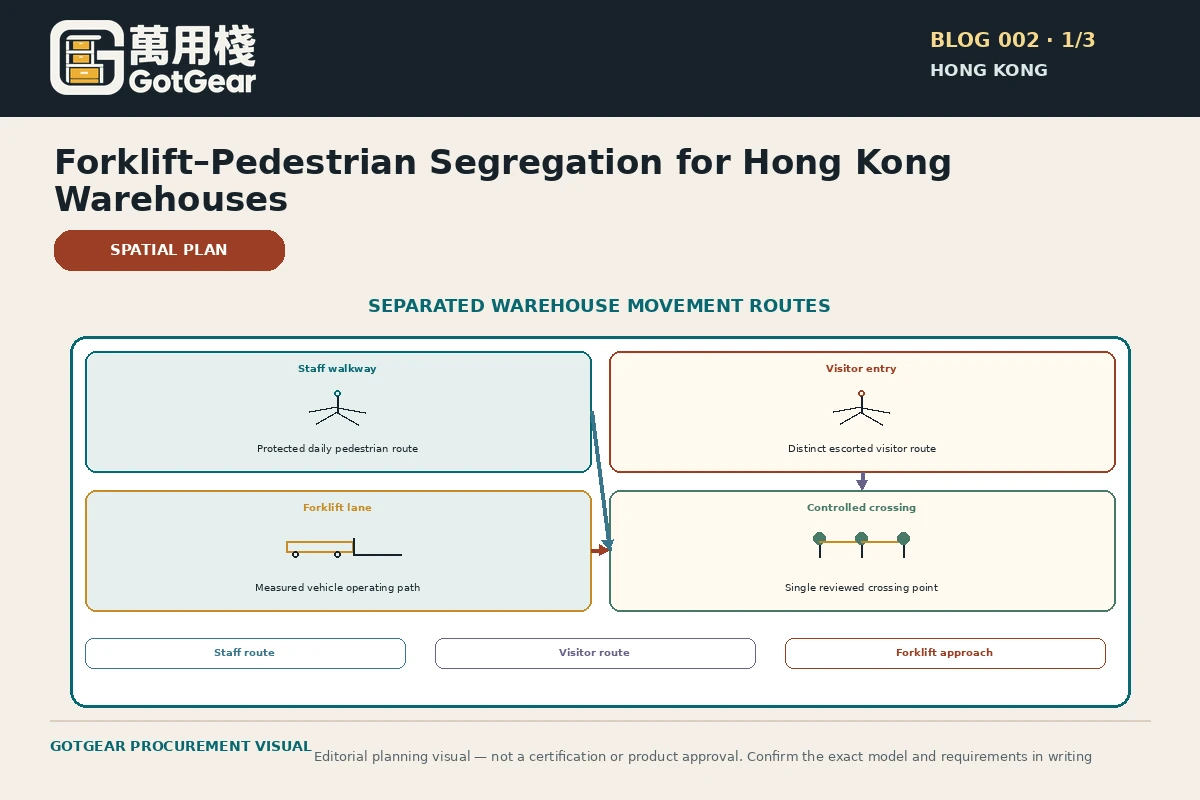
Forklift pedestrian segregation plan Hong Kong
GotGear explains forklift pedestrian segregation plan Hong Kong for Hong Kong buyers. See how warehouse traffic management plan Hong Kong supports forklift crossing controls Hong Kong, with practical checks, evidence boundaries and written requirements.
Read the guide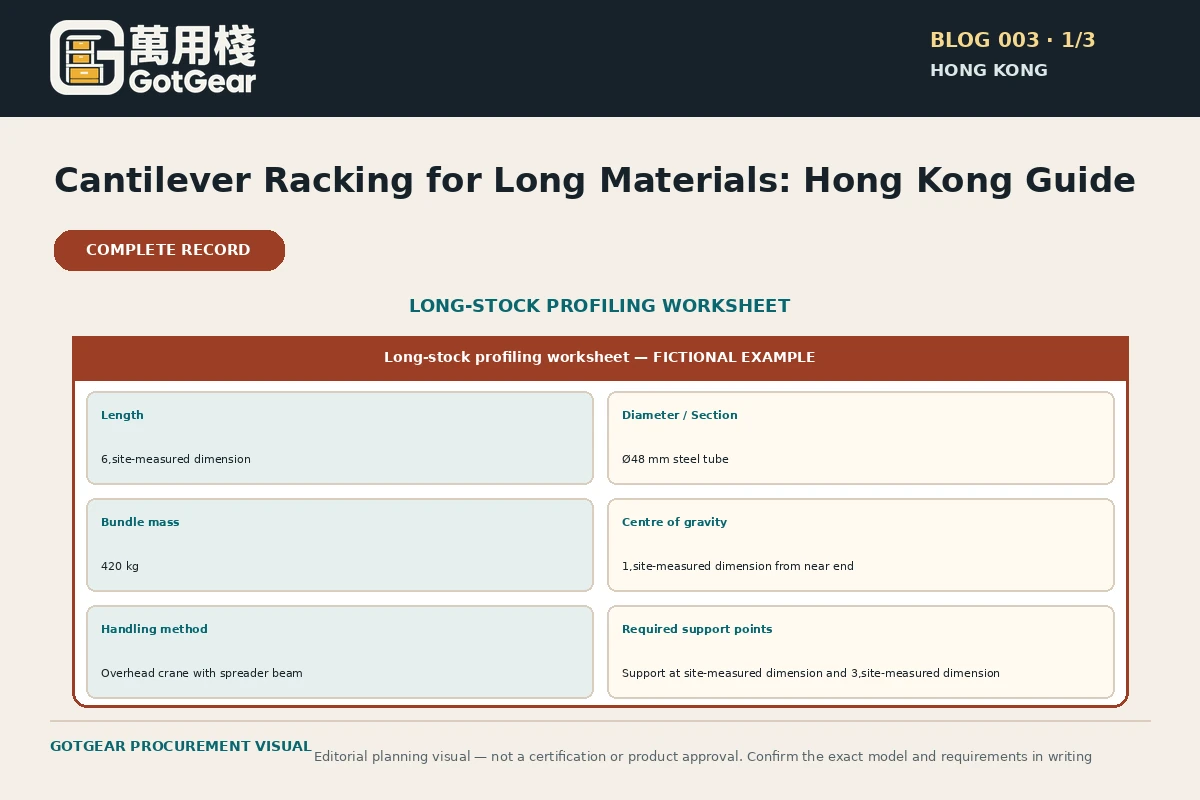
Cantilever racking for long materials Hong Kong
GotGear explains cantilever racking for long materials Hong Kong for Hong Kong buyers. See how pipe storage rack layout Hong Kong supports steel bar storage racking Hong Kong, with practical checks, evidence boundaries and written requirements.
Read the guide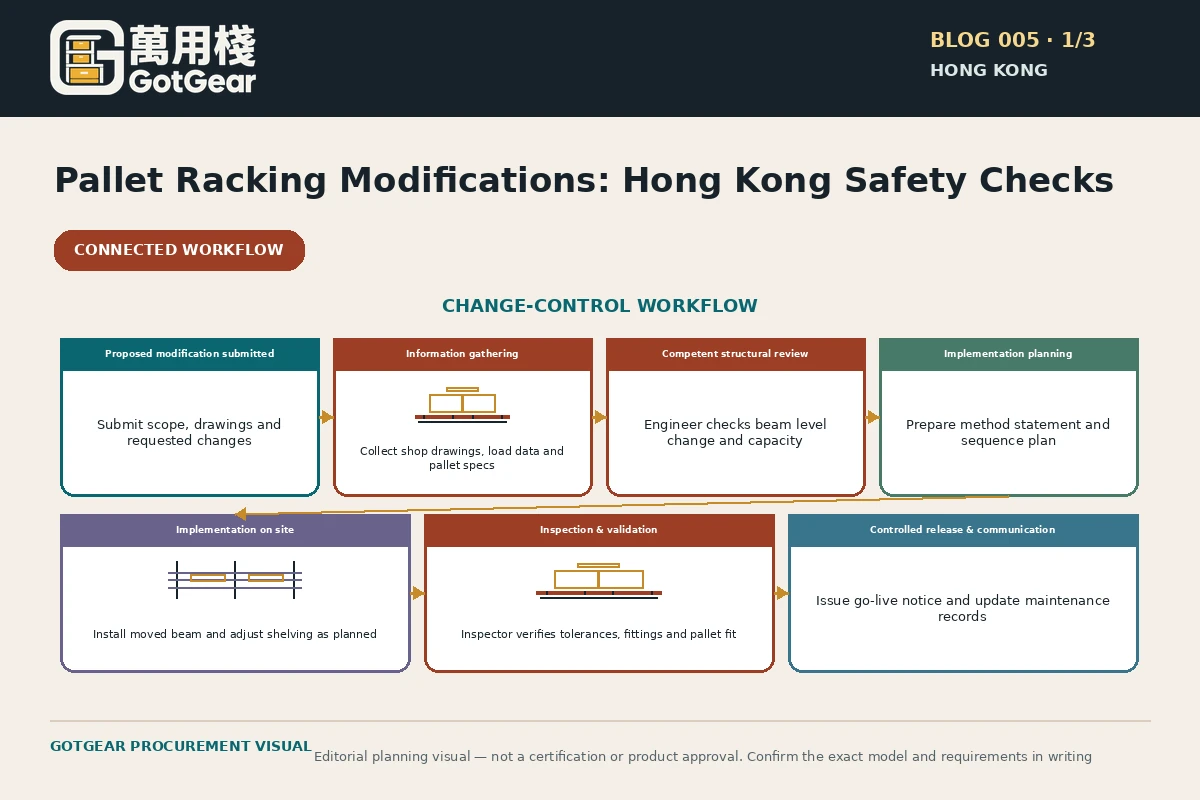
Pallet racking modification safety Hong Kong
GotGear explains pallet racking modification safety Hong Kong for Hong Kong buyers. See how warehouse racking reconfiguration Hong Kong supports rack beam level change review Hong Kong, with practical checks, evidence boundaries and written requirements.
Read the guideRelated topic indexOpen more English procurement pages14 topics
Browse additional equipment families, applications and procurement questions relevant to these operating requirements.