
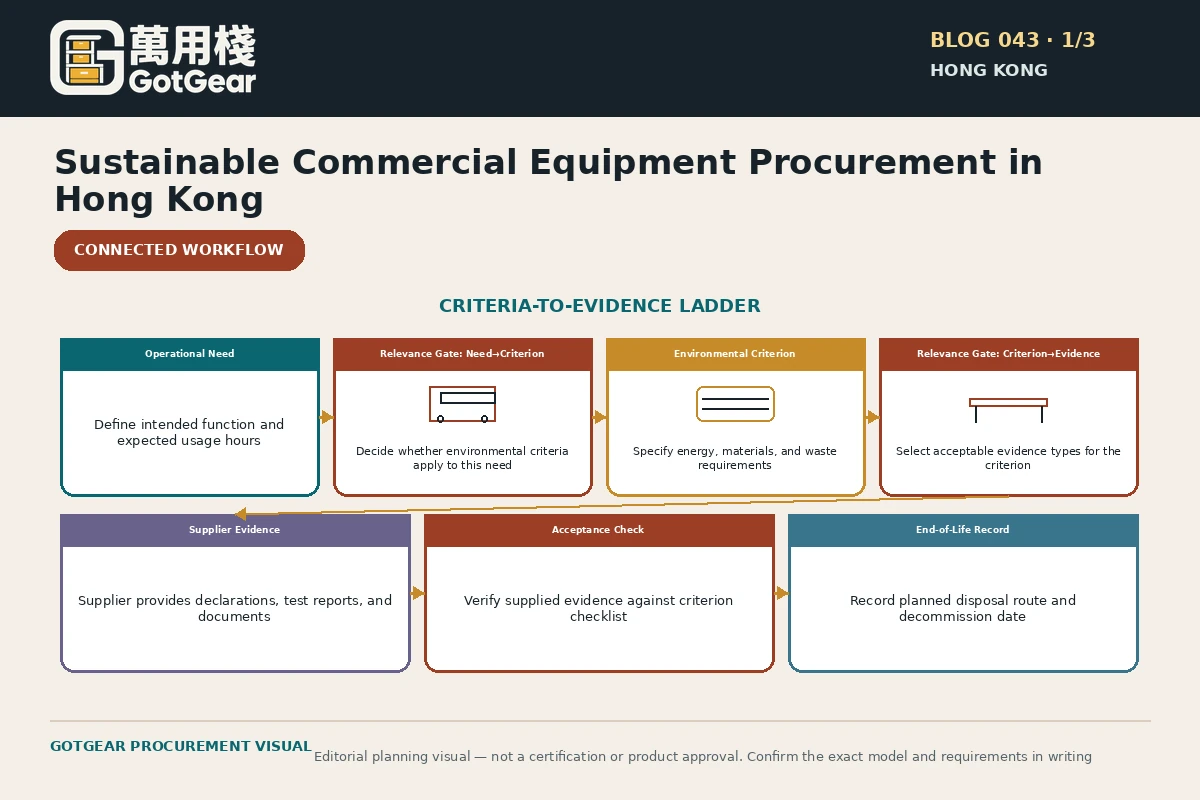
Start by defining what environmental outcomes are material for the specific item (energy, materials, emissions, hazardous components, longevity) and require verifiable evidence: recognised standards, test reports, life-cycle data or third-party declarations. Use the Hong Kong Government green-specifications as a reference, adapt criteria to avoid unjustified limits on suppliers, and verify whether the item is covered by WEEE/WPRS before assuming licensed recycling. Include a clear end-of-life plan that identifies data-bearing parts, safe decommissioning steps, repairability and responsible collection or recycling routes.
What to remember before you decide
- Translate broad sustainability goals into a short list of measurable, item-specific criteria backed by verifiable evidence.
- Use Hong Kong’s Government green-specifications as a reference, not an automatic checklist; adapt to your use case to avoid restricting competition.
- Verify WPRS/WEEE eligibility for each electrical item rather than assuming coverage; require licensed recycling where applicable.
- Include end-of-life obligations in the tender: data sanitisation, safe decommissioning, repairability assessment and chain-of-custody records.
- Require supplier evidence (test reports, recognised standards, third-party review) and accept demonstrably equivalent solutions.
- Balance environmental criteria with operational, maintenance and safety considerations; document proportionality and evaluation methods.
Turn policy intent into equipment-specific criteria
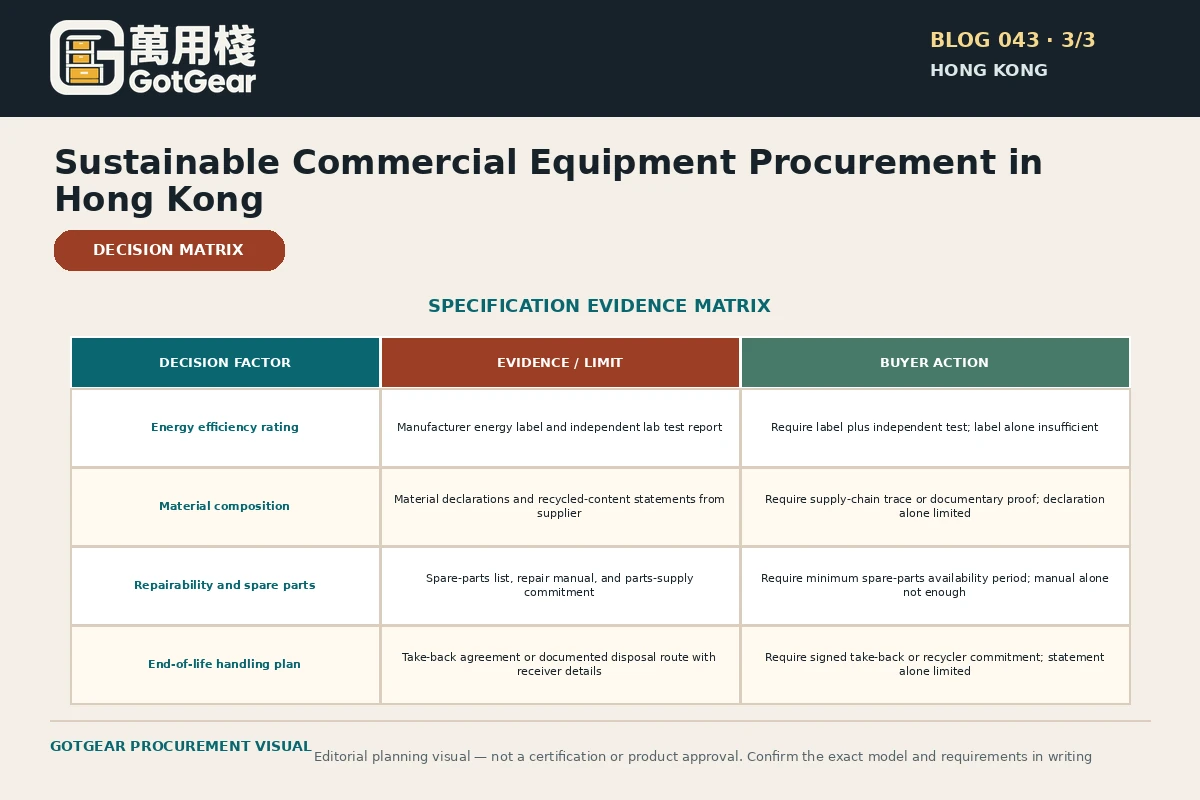
Decision teams often start procurement with a general sustainability objective but without the technical detail needed to test suppliers. Begin by listing the functions and failure modes of the equipment you will buy: power draw during operation and standby, consumables and filters, moving parts likely to wear, containment of hazardous media, and any data-bearing components. For each function identify which environmental attributes are material in Hong Kong: energy efficiency where equipment runs continuously, low-emission materials where indoor air quality matters, and reduced single-use consumables where ongoing waste is a procurement risk. Practical criteria examples include maximum standby power (W), minimum useful life or warranty period, availability of service parts for a defined period, VOC limits for finishes, and existence of a repair manual or spare-parts list. Where product-level environmental performance is available, request verifiable evidence: accredited test reports, third-party labels (if meaningful for the item), supplier declarations tied to measurable metrics, or a lifecycle assessment summary. Do not accept undated or unverified ‘green’ claims. Limitations and trade-offs: energy-efficient models can require more maintenance resources in some operating contexts or require different maintenance skills; low-emission materials may be harder to source in specialised items; repairability can be constrained by safety or calibration requirements. Each criterion must therefore include the acceptable evidence and a boundary: what test standard, which version, and whether an alternative equivalent is acceptable. Next actions for procurement teams: draft a shortlist of 4–6 measurable criteria tied to the item’s use case, ask technical stakeholders to sign off on safety or calibration exceptions, and specify the evidence type and acceptable laboratories or programmes in the tender documentation.
How to avoid unnecessarily restrictive specifications
Hong Kong procurement must treat the Government green-specifications database as a useful reference rather than a checklist to copy verbatim. The database covers many common items but not every class of commercial equipment; using it without adaptation risks unjustified technical restrictions that reduce competition. When a green specification gives a prescriptive technical requirement, translate it into an outcomes-based criterion where possible — for example specify an energy rating, test standard or maximum standby power rather than a single technology. Ask your legal or procurement adviser to run a proportionality test: is the criterion necessary to deliver the environmental outcome? Could it be met by several technologies? If a supplier can demonstrate an equivalent solution with verifiable evidence, allow it. Document permitted alternatives and the validation method in the tender documents so bidders can prepare compliant proposals. That approach protects procurement integrity and encourages innovation without sacrificing environmental aims.
“Practical sustainability in procurement is less about labels and more about measurable, verifiable outcomes that reflect how equipment will be used, serviced and eventually retired.”— GotGear Editorial Team
What should buyers compare for sustainable commercial equipment procurement Hong Kong?
| Option or approach | Best for | Trade-offs | Checks before acceptance |
|---|---|---|---|
| Vague green claim | Fast internal approval when sustainability is a general aim but no technical review is possible. | Offers no verifiable basis for evaluation; risks non-compliance with procurement transparency and yields poor supplier accountability. | Reject without evidence; ask supplier to replace with measurable metrics, test reports or a recognised label and specify acceptable evidence in the tender. |
| Prescriptive technical requirement | Situations where a particular technology is proven necessary for safety or compatibility. | May exclude innovative or equivalent solutions and reduce competition if not justified by the outcome. | Require a proportionality justification and accept equivalent solutions with demonstrable, measurable parity and third-party verification. |
| Outcome-based measurable criteria | Balancing environmental objectives and supplier innovation for common office or building equipment. | Requires clear measurement methods and acceptance criteria; may need technical expertise to evaluate evidence. | Specify the test standard, acceptable laboratories, and pass/fail thresholds; ask for sample reports during bid assessment. |
| Lifecycle evidence request (LCA summary) | High-impact purchases where embodied carbon or materials are important, such as large fixed systems. | LCAs can be resource-intensive, vary by methodology and may not be directly comparable without strict scope controls. | Ask for a scoped, third-party-reviewed LCA or standardised module results and allow simplified embodied-impact indicators for smaller suppliers. |
| End-of-life contract requirement | Equipment likely to contain hazardous components, data-bearing devices, or subject to regulated disposal. | Adds contractual complexity and may increase operational resource requirements; not all items will require it. | Require an end-of-life plan naming the collection, licensed recycler where applicable, documentation retention and evidence of WPRS eligibility for regulated items. |
This framework helps buyers create comparable written enquiries. Final model specifications, availability, delivery and commercial terms must be confirmed in a formal quotation.
End-of-life planning and WEEE considerations
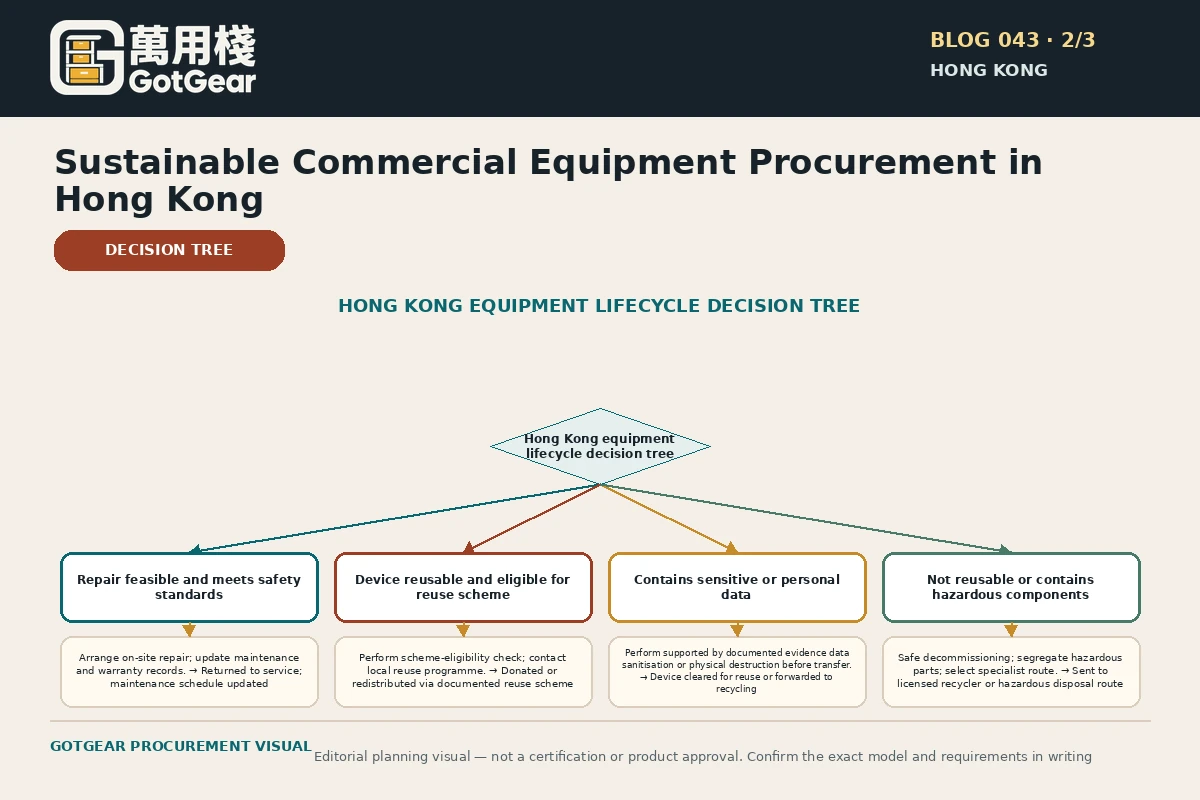
End-of-life planning must be specified before seeking proposals. Start by classifying the item: is it electrical or electronic, does it contain batteries, inks, refrigerants, or regulated hazardous materials? For electrical equipment, verify eligibility under the Hong Kong WPRS for WEEE: only named regulated items are covered and licensed recycling routes must be used where the scheme applies. Do not assume every plug-in device qualifies. Create an end-of-life checklist and require bidders to describe their proposed route for decommissioning and disposal. The checklist should include: item type and model, presence of data-bearing components, whether safe decommissioning requires special handling, potential for reuse or repair, whether the item is eligible for WPRS (and how eligibility will be verified), proposed collection or recycling route, and the records the supplier will retain and provide to your organisation. Require bidders to confirm they will not export regulated waste illegally and to explain their chain-of-custody procedures. A key limitation is that reuse or repair can be unsuitable for safety-critical, contaminated or obsolete equipment; some recycling routes are not available locally and transportation may create additional environmental impacts. Accept supplier proposals that show clearly why reuse or repair is infeasible and propose the least-impact disposal route, with verifiable proof such as a recycling contractor agreement.
Practical maintenance and whole-life thinking
Procurement does not end at purchase. Build operation and maintenance into your specification: require spare-part availability for a defined period, availability of firmware updates from the manufacturer where cybersecurity or calibration is relevant, and supplier obligations for training or technical support if specialist skills are needed for repair. Where lifecycle data exists, ask for total-resource requirements-of-ownership inputs: energy consumption in typical duty cycles, expected consumables consumption, and a forecast of common failure modes. Decision criteria should be proportionate: insist on maintenance plans for items where downtime or hazardous failure is material, but avoid overly burdensome service requirements for simple, low-risk items. Limitations include supplier willingness to commit to long-term support in fast-moving product categories and potential manufacturer consolidation that affects spare parts. Next, include a maintenance matrix in the tender (routine tasks, recommended frequency, spare-part lists) and require bidders to provide evidence of past performance for service delivery.
Sustainable commercial equipment procurement Hong Kong decision checklist
- Define the equipment’s essential functions, duty cycle and failure modes relevant to environmental outcomes.
- Identify which environmental attributes are material (energy, emissions, hazardous materials, consumables, repairability).
- Consult the Government green-specifications database as a reference; do not copy unmodified specifications.
- Decide the acceptable forms of evidence (test standards, accredited labs, third-party labels, LCA scope) and record them in the tender.
- Run a proportionality check to ensure criteria do not unjustifiably restrict competition; allow equivalent solutions with proof.
- Confirm whether the item is eligible under Hong Kong’s WPRS for WEEE and record the verification method.
- Specify end-of-life responsibilities including collection, licensed recycling where relevant, and chain-of-custody record-keeping.
- Require supplier confirmation of spare-part availability and technical support where downtime or safety is material.
- Define the minimum acceptable warranty or useful-life expectation and the remedies for early failure.
- Include evaluation points and weightings for environmental evidence, operation and total-life impacts in scoring methodology.
Practical action sequence
- Map the item’s use case and list material environmental attributes and stakeholders to consult (operations, IT, EHS).
- Check the Government green-specifications database for relevant references and extract adaptable metrics.
- Decide required evidence types and acceptable standards; include the specifics in tender documentation.
- Perform a proportionality and competition review with procurement counsel to confirm criteria are defensible.
- Request end-of-life plans from bidders and require verification of WPRS eligibility for regulated electrical items.
- Include a maintenance and spare-part matrix in the contract and require supplier commitments for defined support periods.
- Set evaluation scoring that balances environmental evidence, operational value and operational risk.
- Retain contractual rights for audit of disposal records and require suppliers to provide chain-of-custody documentation at handover.
Apply the checks to your Hong Kong site
In Hong Kong, sustainable commercial equipment procurement Hong Kong must be grounded in operational realities: limited local recycling infrastructure and tightly defined licensed routes mean procurement choices cannot assume end-of-life collection will be available for every item. Use the Government green-specifications as a working reference and require verification of WPRS eligibility for electrical items before treating licensed recycling as applicable. Specify record-keeping, decommissioning steps and a clear chain of custody in contracts, because local licensed routes exist only for named regulated items and some reuse or recycling solutions will rely on mainland or regional partners. Tailor green equipment specification Hong Kong around maintainability, modular replacement and documented transfer pathways rather than a single technical configuration. For commercial equipment end-of-life planning Hong Kong, lock decisions into procurement documents early and test the documented waste route in a pilot. Operational takeaway: mandate WPRS checks, a chain-of-custody clause and confirmed disposal partner options in procurement paperwork before award.
References used for this article
These sources provide regulatory, safety or planning context. They do not certify any GotGear product or replace site-specific professional advice.
- Environment and Ecology Bureau Green Procurement — Defines Hong Kong green procurement and situates environmental and health concerns alongside high-quality products and competitive commercial terms.
- Environment and Ecology Bureau Green Specifications — Government green specifications cover 183 commonly used items across 24 categories and are publicly available for reference; not every equipment class is covered.
- ISO 20400:2017 Sustainable Procurement — Guidance — Current guidance for organisations of any size on integrating sustainability into procurement; not a certification or Hong Kong legal requirement.
- Hong Kong WEEE @HK — Explains WPRS coverage of named regulated electrical equipment and the licensed-recycling route; eligibility must be verified for the particular item.
Questions about sustainable commercial equipment procurement Hong Kong
Should we copy the Government green-specifications exactly into our tender?
Use the Government green-specifications as a practical reference point but avoid wholesale copying. The database covers many common items and provides tested metrics, yet not every equipment class is included and some Government requirements are written for specific public-sector needs. Adapt the reference to your item’s use case, convert prescriptive clauses into outcomes-based, measurable criteria where possible, and document acceptable alternatives so that you do not improperly restrict competition.
Does ISO 20400 give us mandatory rules to follow in Hong Kong procurement?
No. ISO 20400 is current international guidance on integrating sustainability into procurement processes; it is useful for shaping policy and process but is guidance rather than a legal requirement in Hong Kong. Treat ISO 20400 as a framework to help structure decisions—particularly on stakeholder engagement, risk assessment and supplier management—while still recording the specific, verifiable technical criteria you will require from bidders.
Is every electrical item covered by Hong Kong WEEE schemes?
No. Hong Kong’s WPRS operates for named regulated electrical and electronic items and licensed recycling routes apply only where items are eligible under the scheme. Verify eligibility for the specific model and item class rather than assuming universal coverage. If an item is covered, require bidders to use licensed recyclers and to provide evidence of collection and recycling arrangements in their end-of-life plan.
If a supplier provides a sustainability declaration, is that sufficient evidence?
A sustainability declaration is a helpful starting point but does not establish technical fitness, safety or the full environmental performance of a product. Treat a declaration as evidence to be validated: require supporting documentation such as test reports, third-party certifications, or lifecycle summaries. Evaluate declarations critically and match them to the measurable criteria set out in your tender documents.
What should be on an end-of-life checklist for commercial equipment?
An end-of-life checklist should identify the item type and model, note any data-bearing components and how data will be sanitised, list hazardous media or regulated components (batteries, refrigerants, inks), specify safe decommissioning steps, assess potential for reuse or repair and reasons if it is unsuitable, confirm WPRS eligibility where relevant, describe the proposed collection or recycling route and name the contractor, and require the supplier to retain and provide disposal records for audit.
When is reuse or repair inappropriate?
Reuse or repair can be unsuitable for safety-critical equipment where calibration or certification cannot be restored reliably, for devices contaminated by biological or chemical hazards, or for obsolete items that cannot meet legal or technical interoperability requirements. If a bidder claims reuse is impossible, require them to document the technical or safety reasons and propose the least-impact disposal option with verifiable proof.
Compare available product models and specifications
These product cards are matched to this buying topic. Select a specification and quantity to send the product details to WhatsApp.
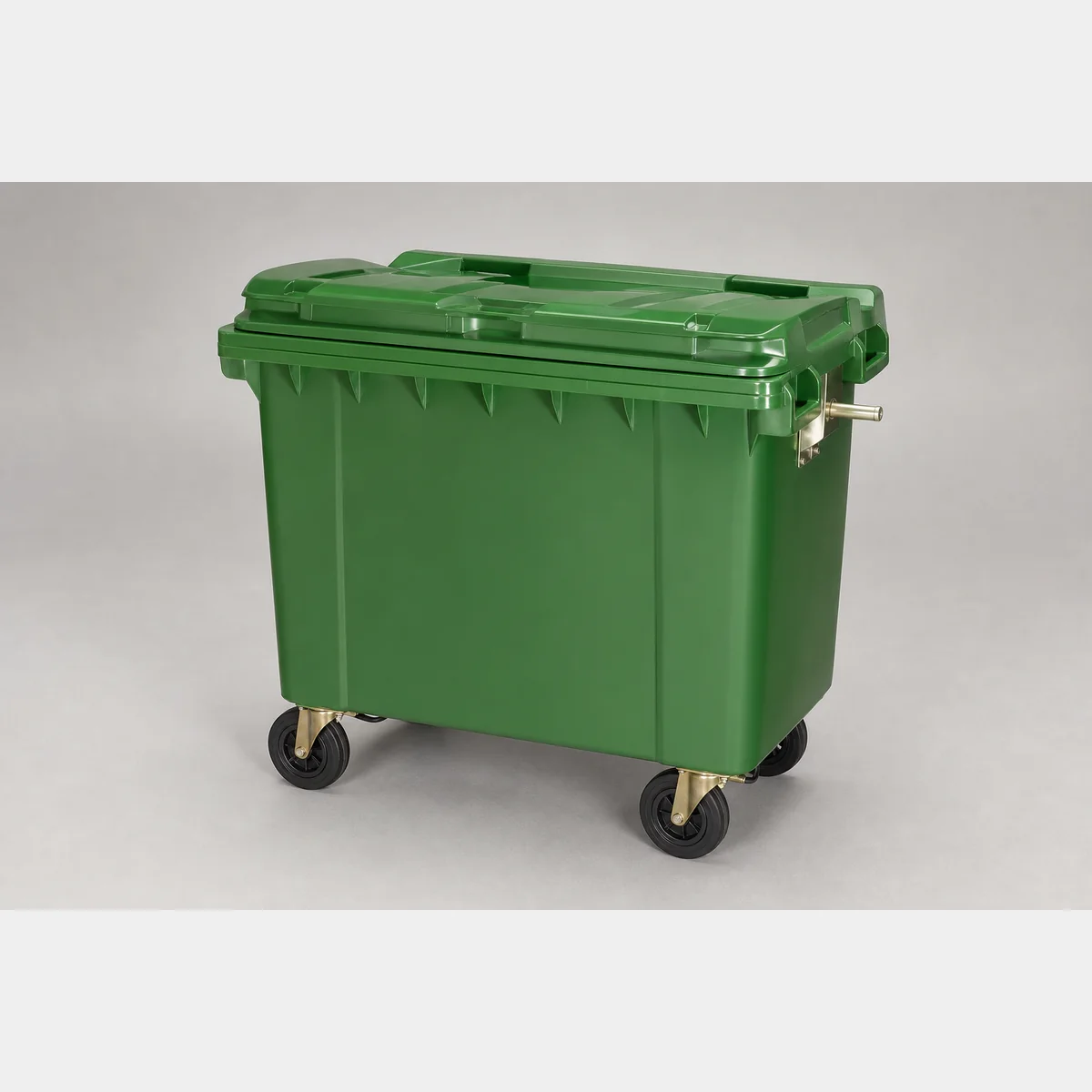 Cleaning & Waste ManagementProduct reference image
Eco-friendly Large Trash Bin (JB037)
660L Eco-friendly large trash bin. Dimensions/Specification line: L1420xW800xH1230 mm; Colours: Red, Grey, Blue, Green, Yellow; Use: Suitable for food waste, recyclables. Formal quotation available on request according to use, specification and quantity.
- Dimensions/Specification
- L1420xW800xH1230 mm
- Colours
- Red, Grey, Blue, Green, Yellow
- Use
- Suitable for food waste, recyclables
 Cleaning & Waste ManagementProduct reference image
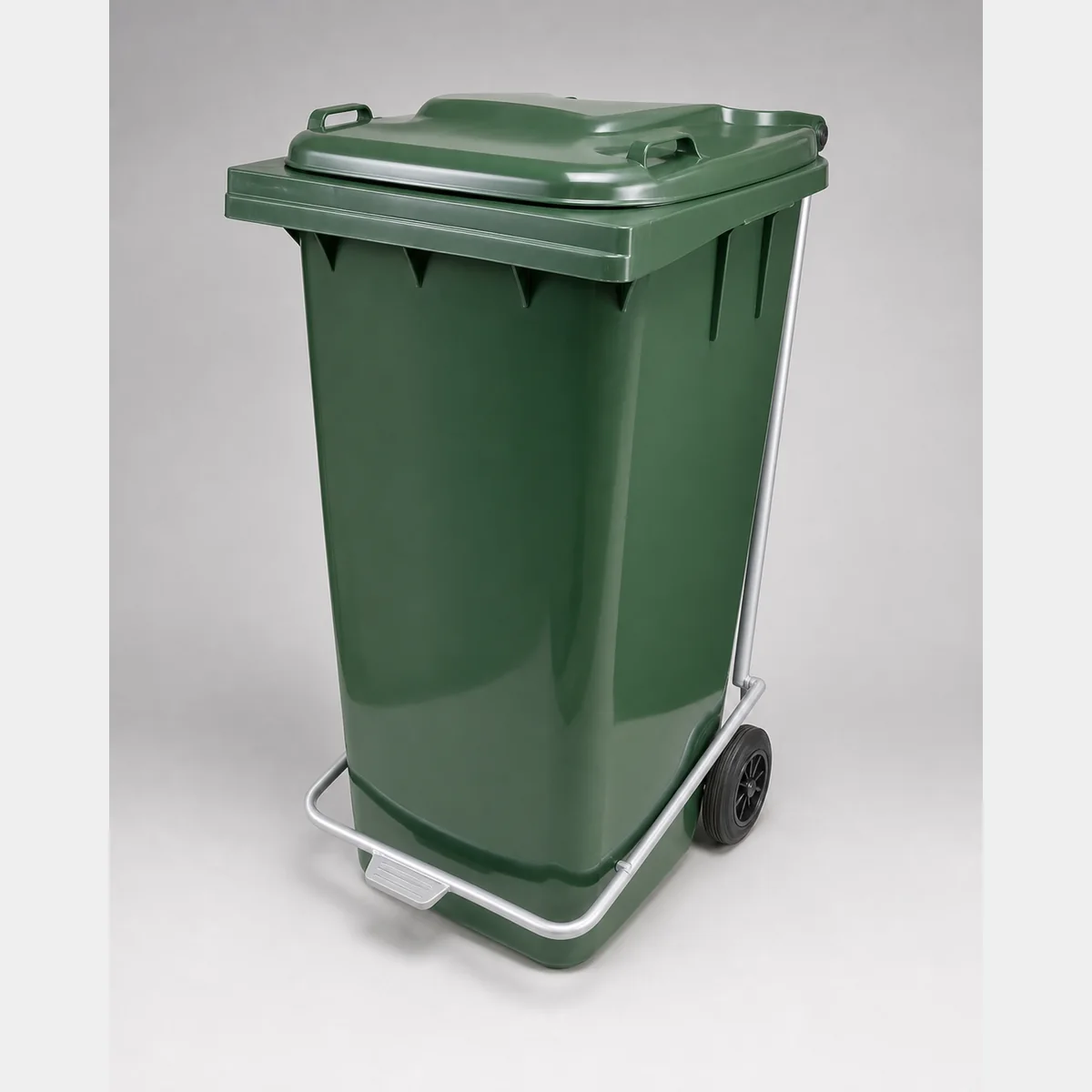
Trash Bin
Trash bin; Material: Plastic; Colour: Green/Grey; GEO100E (Capacity: 100L). Formal quotation available upon request for intended use, specifications and quantity.
- Material
- Plastic
- Colour
- Green/Grey
- GEO100E (Capacity)
- 100L
 Material Handling & LogisticsProduct reference image
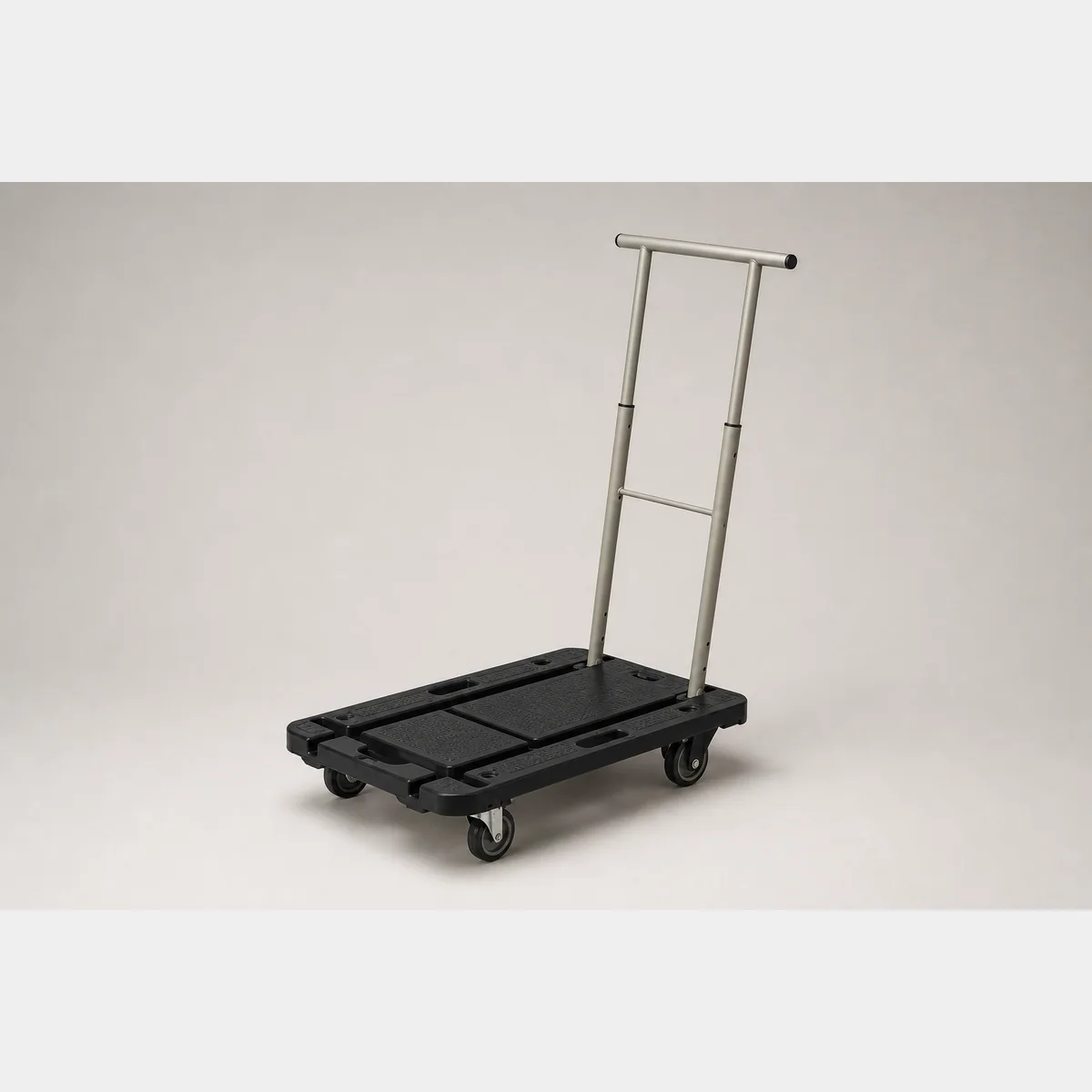
2-in-1 Hand Trolley
2-in-1 hand trolley, Dimensions/Specification: L600xW390xH820 mm; Formal quotation available based on application, specifications and quantity.
- Dimensions/Specification
- L600xW390xH820 mm
 Material Handling & LogisticsProduct reference image
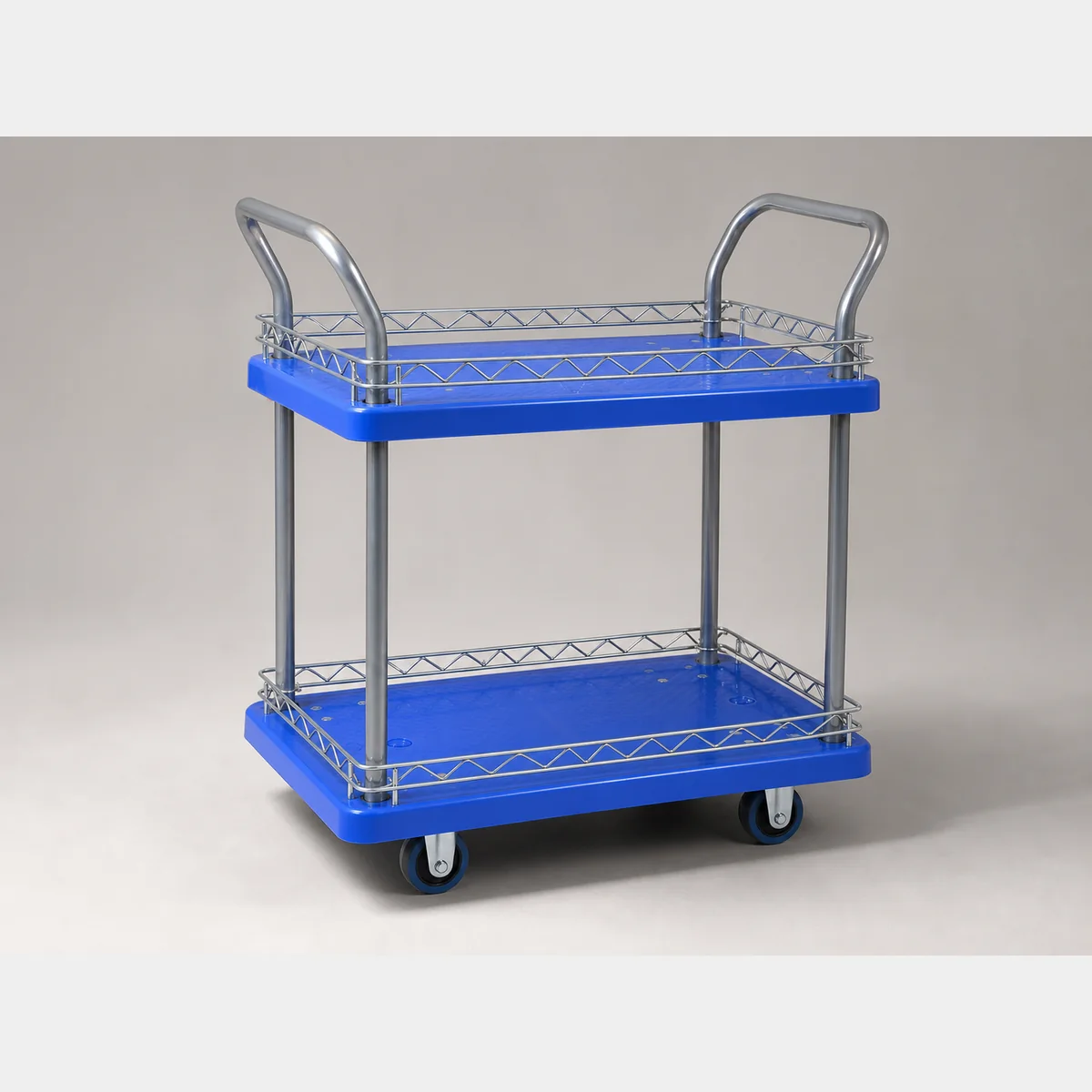
2-tier silent plastic trolley (with side guard rails)
2-tier silent plastic trolley (with side guard rails). (A) Dimensions: L730 X W480 X H950 MM; Net weight: 14.5kg *castor: 100 MM / 17.5kg *castor: 130 mm; Load capacity 150kg *shelf clearance: H550 MM. Formal quotation available based on application, specifications and quantity.
- (A) Dimensions
- L730 X W480 X H950 MM
- Net weight
- 14.5kg *castor: 100 MM / 17.5kg *castor: 130 mm
- Load capacity 150kg *shelf clearance
- H550 MM
 Material Handling & LogisticsProduct reference image
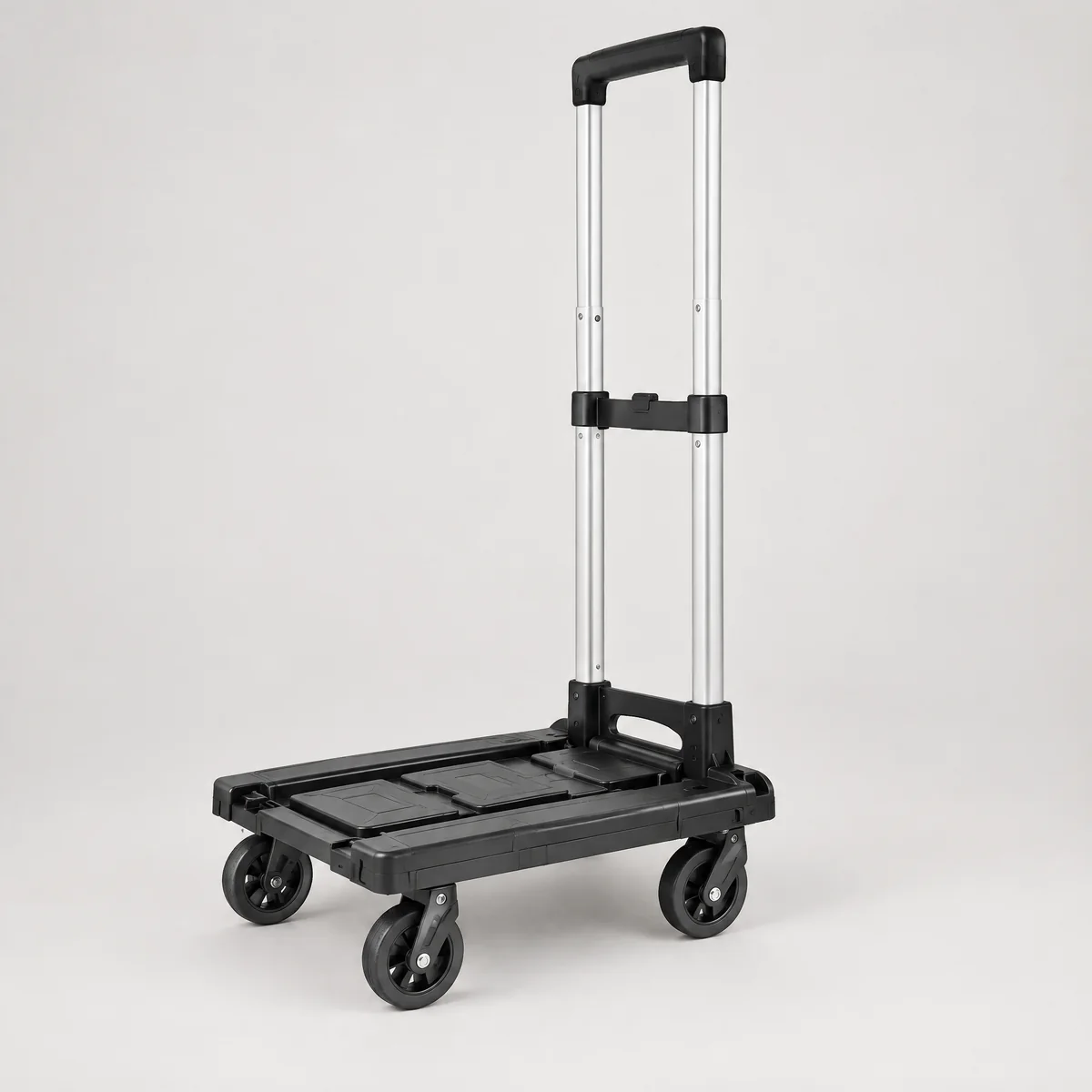
2.5-inch wheel hand cart
2.5-inch wheel hand cart, A: L48xW31xH78.5 cm; B: L50xW31xH88.5 cm; C: L55xW36xH97.5 cm. Please request a formal quotation with intended use, specifications and quantity.
- A
- L48xW31xH78.5 cm
- B
- L50xW31xH88.5 cm
- C
- L55xW36xH97.5 cm
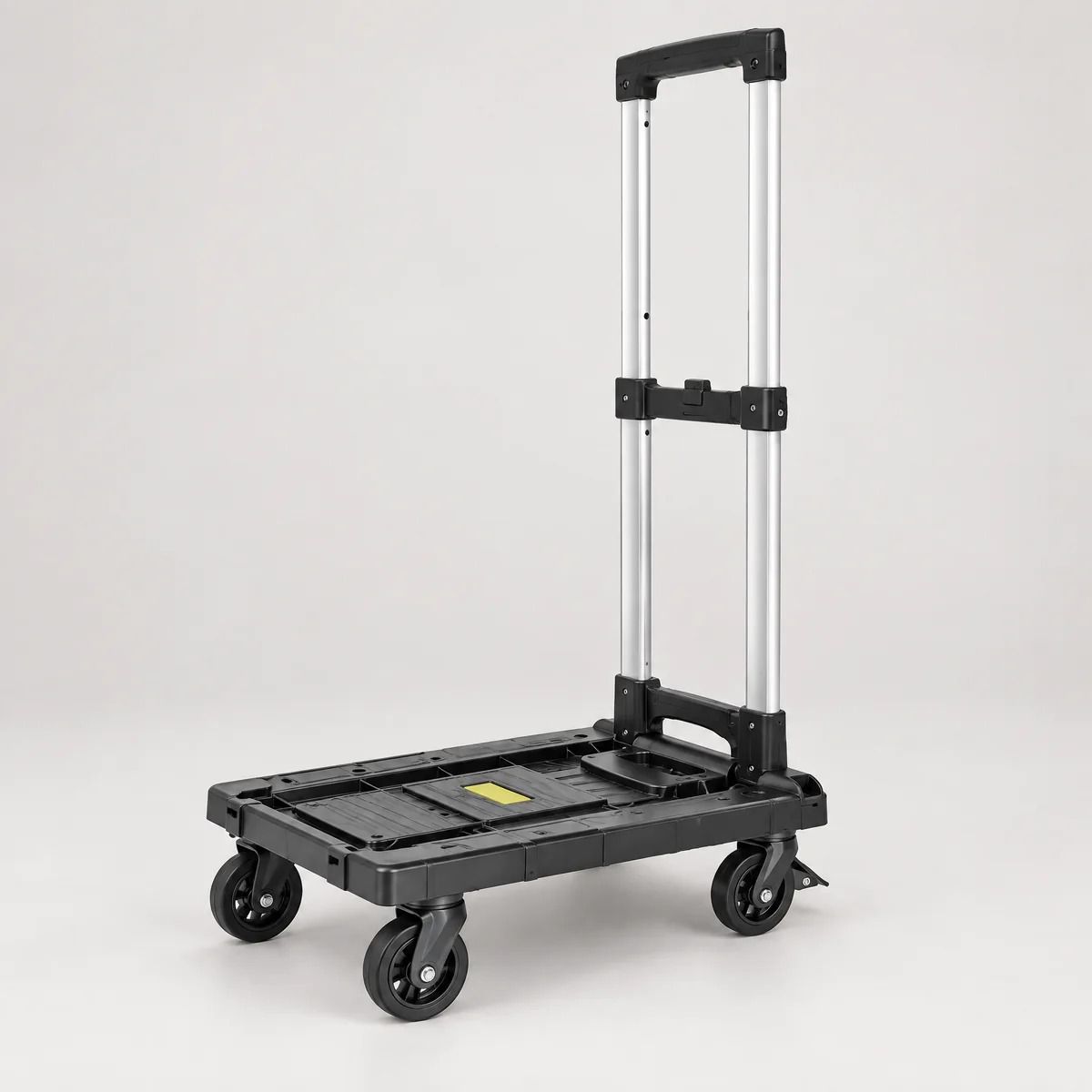 Material Handling & LogisticsProduct reference image
3-inch Wheel Hand Truck (SKU: JRA049)
3-inch wheel hand truck, A: L48xW31xH78.5 cm; B: L50xW31xH88.5 cm; C: L55xW36xH97.5 cm. For a formal quotation, please enquire with intended use, specifications and quantity.
- A
- L48xW31xH78.5 cm
- B
- L50xW31xH88.5 cm
- C
- L55xW36xH97.5 cm
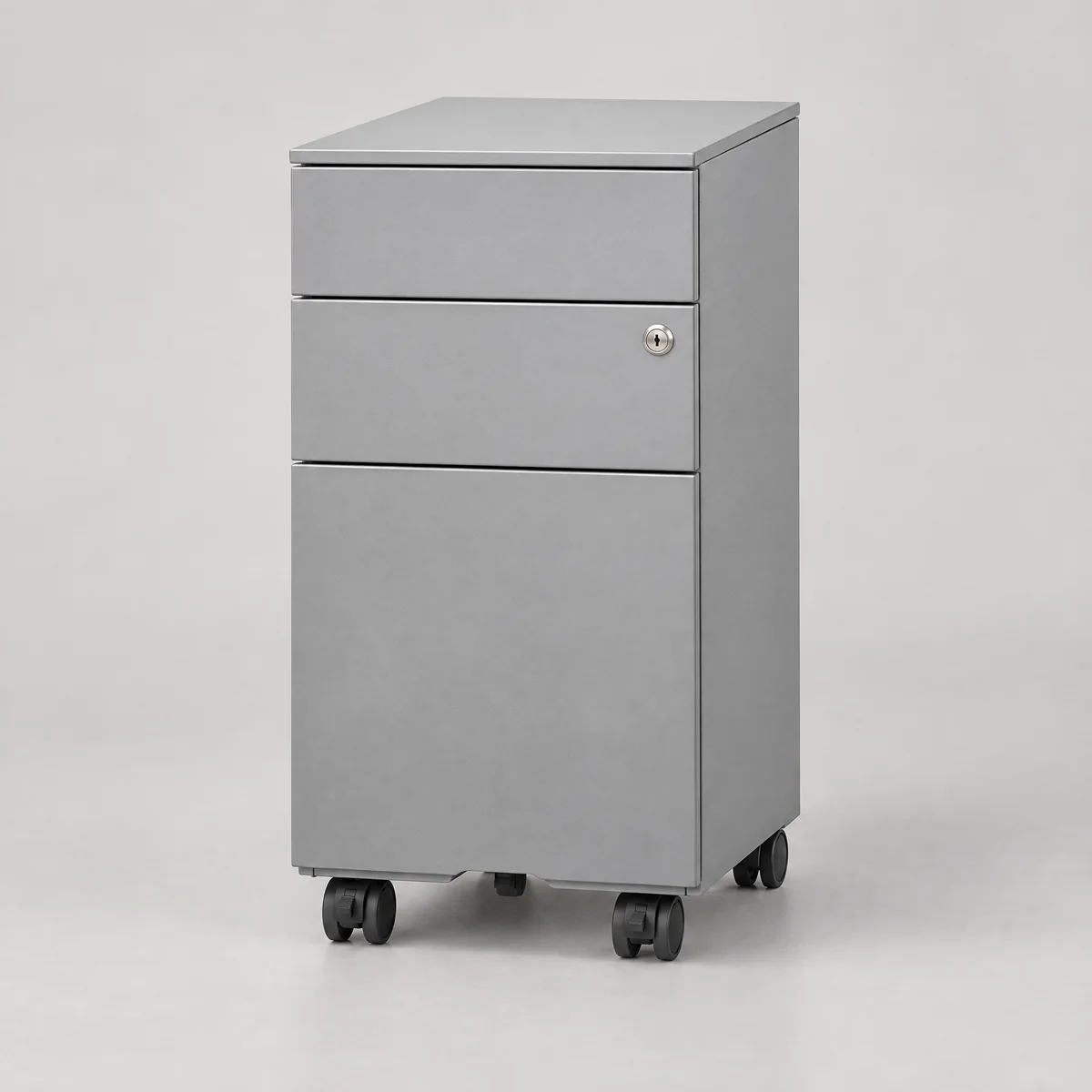 Shelving & StorageProduct reference image
3-tier filing cabinet
3-tier filing cabinet; Size: Length 300xDepth520 × Height 600 mm. Formal quotation available based on use, specifications and quantity.
- Size
- Length 300xDepth520 × Height 600 mm
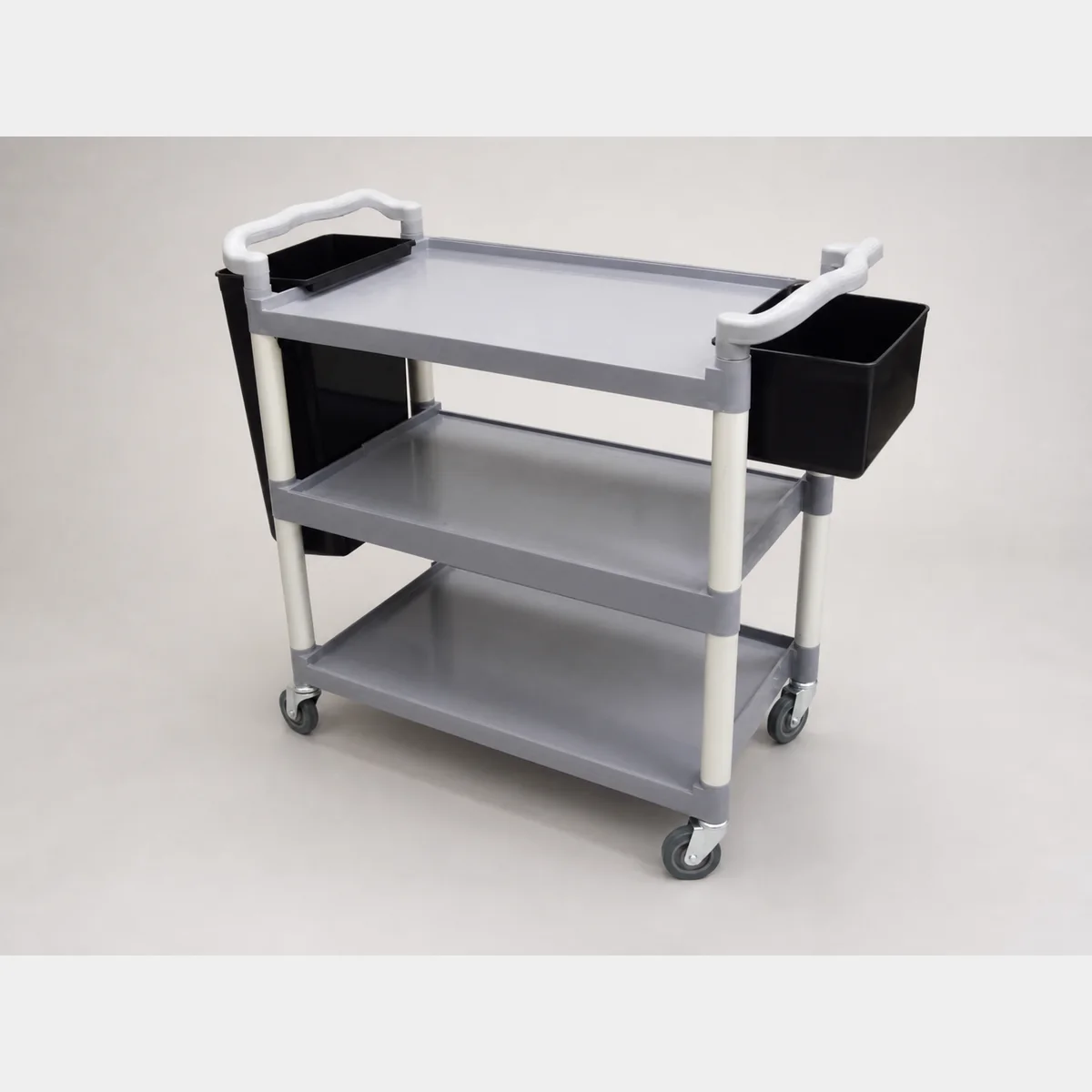 Material Handling & LogisticsProduct reference image
3-tier plastic trolley
3-tier plastic trolley. (Large) Overall dimensions: L103 X W51 X H96 CM; each shelf size: L83 cm x W51 cm / L62 cm x W41 cm; (Small) Overall dimensions: L80 X W41 X H96 CM. Formal quotation available based on usage, specifications and quantity.
- (Large) Overall dimensions
- L103 X W51 X H96 CM
- Each shelf size
- L83 cm x W51 cm / L62 cm x W41 cm
- (Small) Overall dimensions
- L80 X W41 X H96 CM
Continue with closely related procurement topics
These pages share equipment, operating or decision-stage signals with this guide.
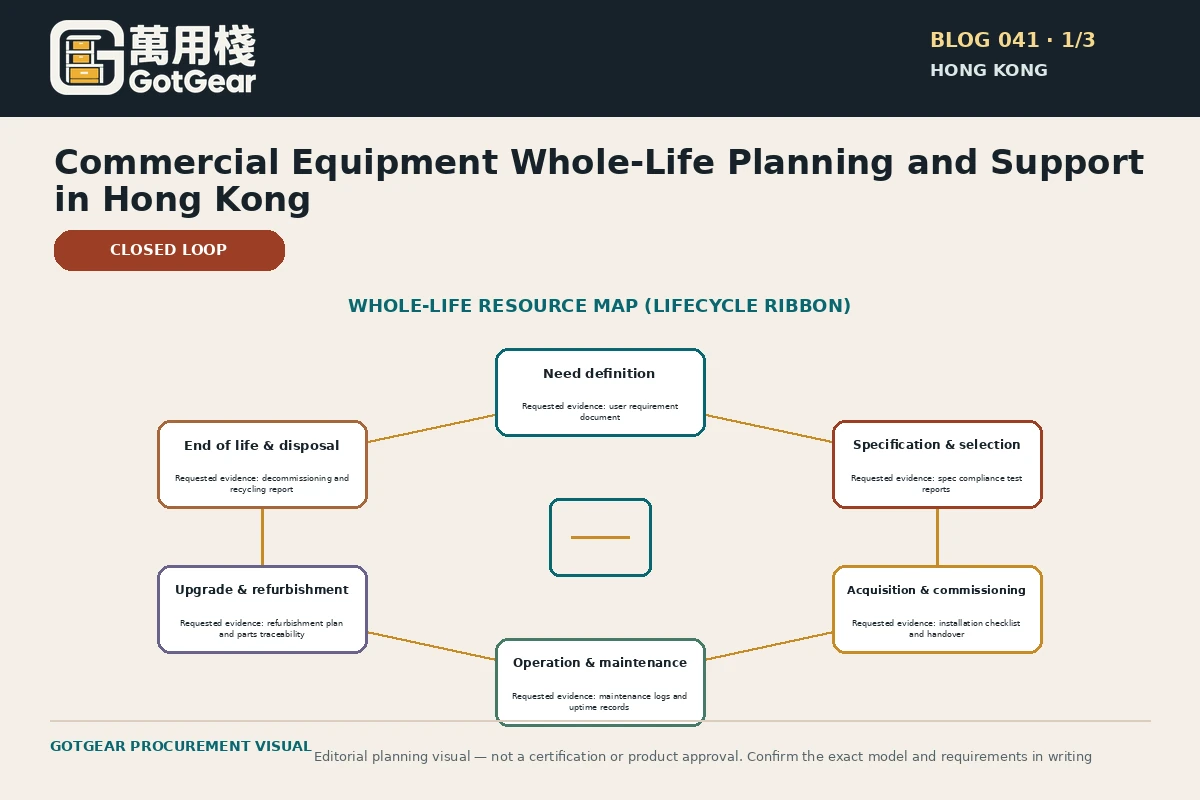
Commercial equipment whole life planning Hong Kong
GotGear explains commercial equipment whole life planning Hong Kong for Hong Kong buyers. See how commercial equipment lifecycle planning Hong Kong supports commercial equipment after-sales support Hong Kong, with practical checks, evidence boundaries and written requirements.
Read the guide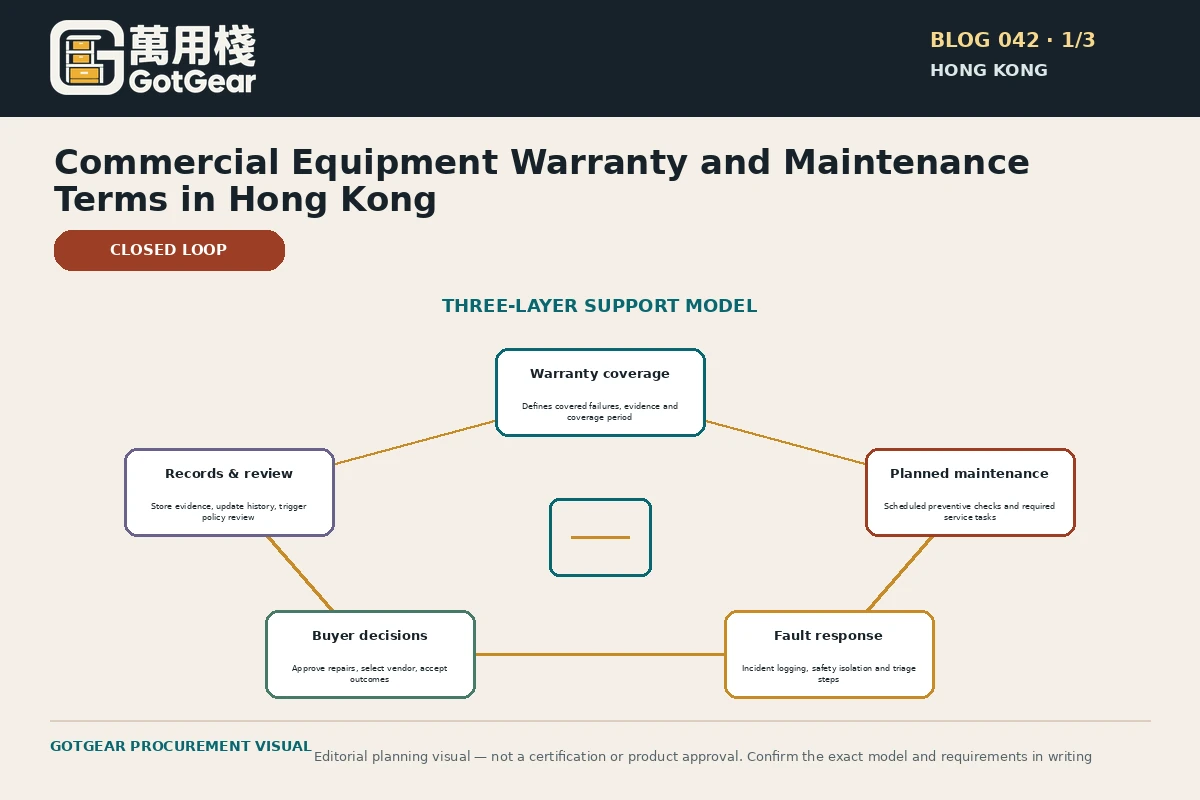
Commercial equipment warranty and maintenance terms Hong Kong
GotGear explains commercial equipment warranty and maintenance terms Hong Kong for Hong Kong buyers. See how commercial equipment warranty checklist Hong Kong supports commercial equipment preventive maintenance plan Hong Kong, with practical checks, evidence boundaries and written requirements.
Read the guide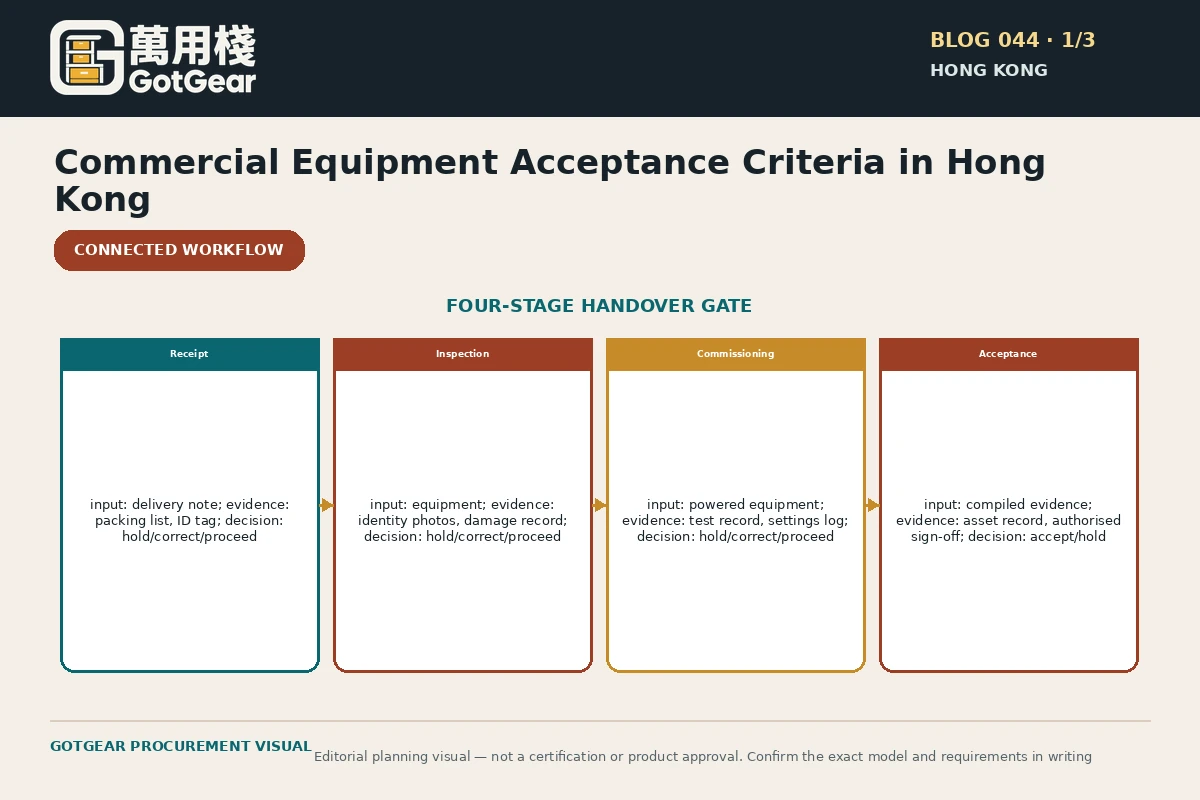
Commercial equipment acceptance criteria Hong Kong
GotGear explains commercial equipment acceptance criteria Hong Kong for Hong Kong buyers. See how commercial equipment commissioning checklist Hong Kong supports commercial equipment asset register Hong Kong, with practical checks, evidence boundaries and written requirements.
Read the guide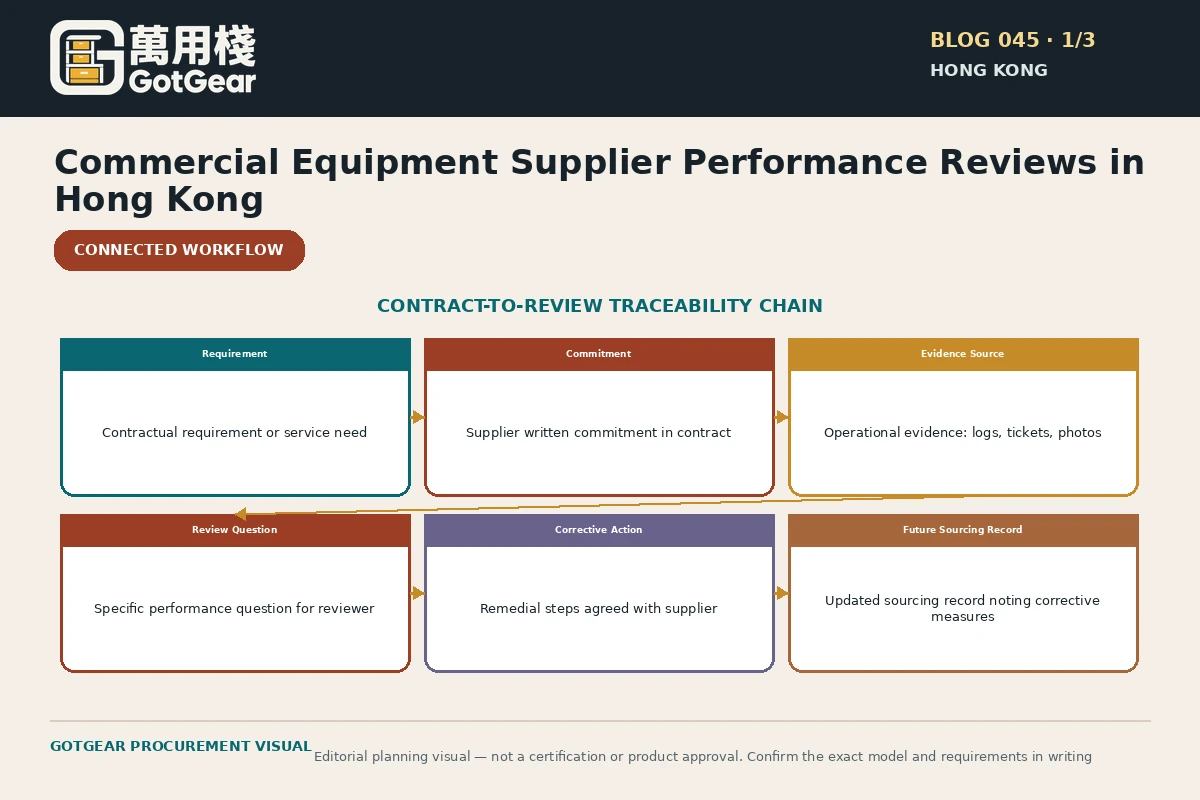
Commercial equipment supplier performance review Hong Kong
GotGear explains commercial equipment supplier performance review Hong Kong for Hong Kong buyers. See how commercial equipment service level agreement Hong Kong supports commercial equipment maintenance response time Hong Kong, with practical checks, evidence boundaries and written requirements.
Read the guideRelated topic indexOpen more English procurement pages14 topics
Browse additional equipment families, applications and procurement questions relevant to these operating requirements.