
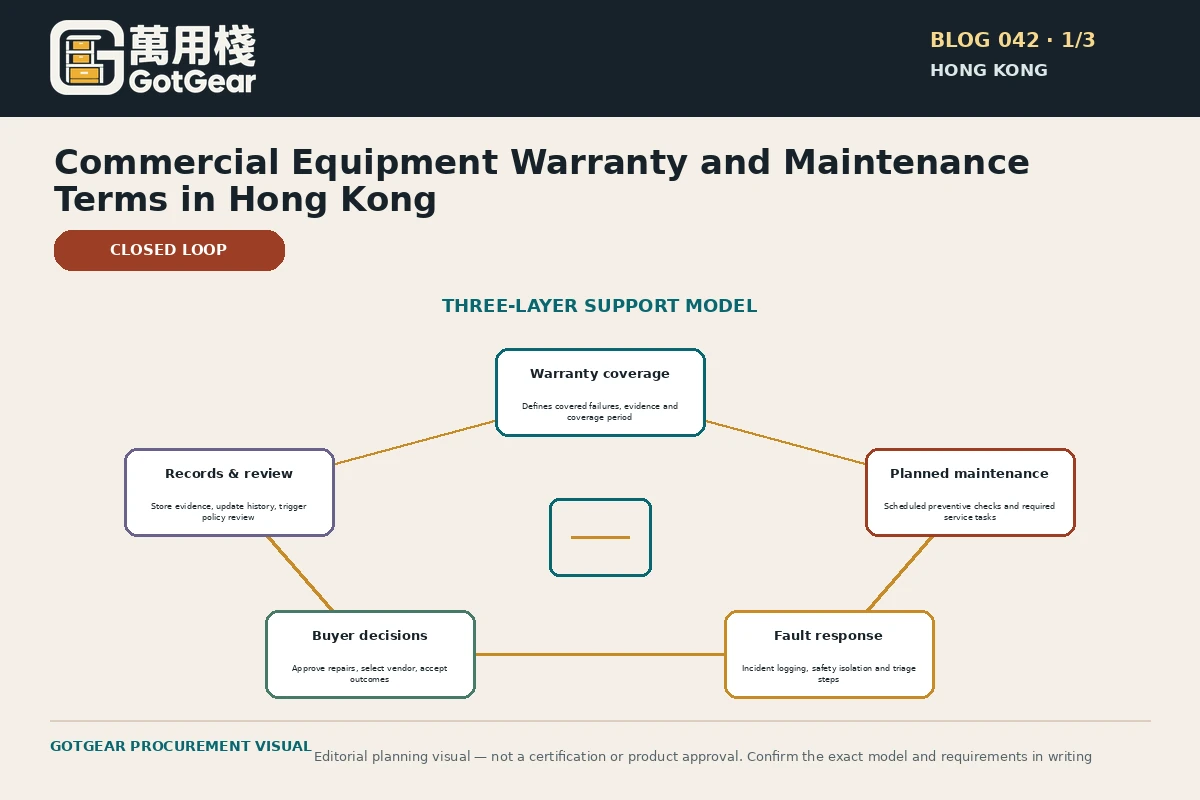
Treat warranty, planned maintenance and fault response as separate but connected support elements. Require suppliers to state period, covered components, clear exclusions, required user maintenance, scheduled preventive tasks, parts policy, reporting routes, evidence requirements and escalation steps. Add site fields for location, access windows, building restrictions and trained-user status. Use a single comparison sheet and a checklist that requests manufacturer instructions, safe isolation planning, competent maintenance arrangements and a disputed-fault resolution process.
What to remember before you decide
- Treat warranty, preventive maintenance and breakdown response as separate but interdependent support elements.
- Use a single comparison sheet that combines support fields with site-planning inputs to avoid later surprises.
- Require manufacturer maintenance manuals, technician competency evidence and safe-isolation procedures as bid attachments.
- Document a disputed-fault workflow with clear timelines to resolve coverage disagreements efficiently.
- Collect and protect service records; name a custodian and demand digital evidence formats for audits.
- Consider remote monitoring only with clear data-access, alert handling and acceptance criteria for warranty claims.
Define the three support components for purchasing decisions
Practical context: In Hong Kong procurement, buyers commonly conflate 'warranty' with 'service' or 'maintenance' because marketing material often bundles promises with product descriptions. That leads to misunderstandings during operation, when routine care, consumables or building-access constraints become stumbling blocks. Decision criterion: Separate definitions. Record whether the supplier offers: (1) a warranty that promises repair or replacement for specified defects and components within a stated period; (2) a preventive maintenance plan (PM) covering scheduled tasks, intervals and competent persons; and (3) a breakdown or fault-response service with agreed response times and escalation. A key limitation is that A warranty label alone does not establish on-site support. A warranty may exclude wear-and-tear, consumables or faults caused by incorrect site conditions or unauthorised repair. Manufacturer instructions must be respected to preserve any warranty. Next, Require concise definitions in tenders and comparison sheets. Ask suppliers to provide the exact wording of warranty clauses, the PM schedule with task lists, and the fault-response process including contact channels and escalation points. Keep these as schedule attachments to the purchase order.
Which elements to extract from supplier offers
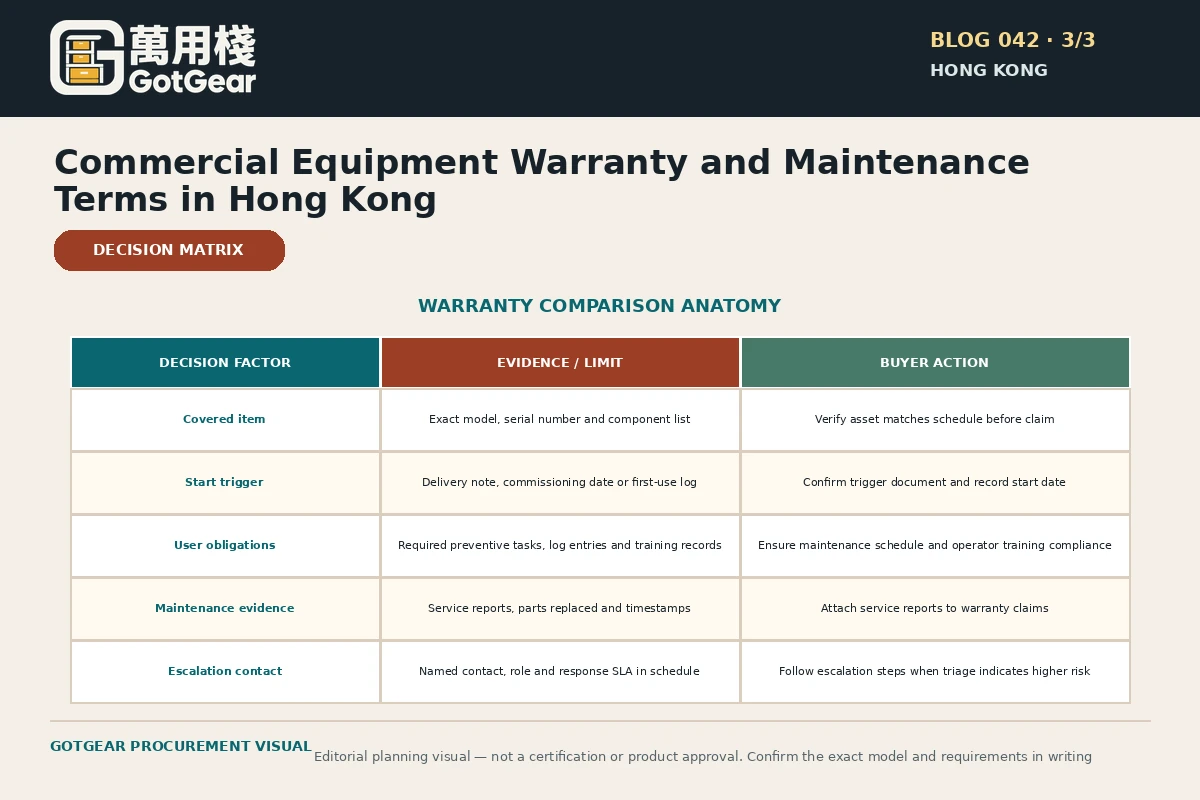
Practical context: Facilities teams and contractors in Hong Kong need actionable details rather than broad promises. Decision criterion: For each offer, extract and compare these fields: coverage period, covered components and serial-number ranges; express exclusions (consumables, calibration, software updates); user maintenance requirements and permitted consumables; preventive tasks with frequency and responsible party; parts-supply policy and typical lead times; fault-reporting channel, evidence required (photos, serial numbers, event logs) and escalation path; safety and isolation requirements for repairs; and training or documentation handed to end-users. A key limitation is that Suppliers may omit realistic lead times for spare parts or assume access during conventional working hours without considering building controls or sensitive locations. Next, Include site-planning fields on the comparison sheet (see Hong Kong relevance summary) and require suppliers to confirm access windows, any building-management permissions needed and the nominated service representative who will hold records.
“Good procurement treats support as a three-headed commitment: who fixes defects, who keeps equipment healthy and who responds when things go wrong — and it writes each head into the same comparison sheet.”— GotGear Editorial Team
What should buyers compare for commercial equipment warranty and maintenance terms Hong Kong?
| Option or approach | Best for | Trade-offs | Checks before acceptance |
|---|---|---|---|
| Comprehensive warranty plus supplier-run preventive maintenance contract | Buyers wanting a single accountable provider to manage defects, routine care and spare parts. | Higher supplier responsibility but potentially higher ongoing commitment and less buyer control over scheduling or subcontracts. | Request a combined schedule showing warranty periods, preventive tasks, technician competency statements and parts availability commitments; confirm through reference sites in Hong Kong with similar site constraints. |
| Warranty only; buyer procures preventive maintenance separately | Organisations with in-house maintenance teams who prefer control over PM tasks and schedules. | Lower supplier obligation post-warranty; buyer assumes responsibility for competence, records and parts stock. | Require the manufacturer’s maintenance manual and a clear list of user-performed tasks that must be done to keep the warranty valid; document in the purchase order which party performs each task. |
| Time-and-materials fault response with optional service-level add-ons | Low-criticality equipment where predictable resource requirements are less important than flexibility. | Potential variability in response times and resource requirements; disputes over whether a fault is warrantable may arise. | Set a dispute-resolution pathway in the contract, require response-time targets for critical items and ask suppliers to provide past mean-time-to-repair (MTTR) ranges for similar installations. |
| Manufacturer-maintained remote monitoring plus local PM | Equipment that supports remote diagnostics and where early detection reduces downtime. | Requires secure connectivity, data-sharing agreements and clarity on who acts on remote alerts. | Confirm what remote data is collected, who can access it in Hong Kong, how alerts are triaged and whether remote diagnosis is accepted as evidence for warranty claims. |
| Consumables-only warranty with buyer-managed maintenance | Low-resource requirements or highly customised equipment where full service contracts are uneconomic. | Buyer bears most operational risk; warranty limited to faulty parts not normal consumable depletion. | Detail which parts are consumables and excluded from warranty; request estimated consumable lifetimes and recommended stock levels. |
This framework helps buyers create comparable written enquiries. Final model specifications, availability, delivery and commercial terms must be confirmed in a formal quotation.
How to design a comparison sheet and site-planning fields
Practical context: Hong Kong sites vary from single-floor retail spaces to multi-tenanted high-rises with strict building management and access windows. Decision criterion: A useful comparison sheet combines contractual-support fields with site-planning inputs so bidders declare capability against real site constraints. Essential fields: operating location, floor/room, loading or lift restrictions, permitted service times, point of contact for access, criticality ranking, whether routine isolation or confined-space permits are needed and who will retain service records. A key limitation is that A well-prepared comparison sheet cannot fix unsuitable equipment choice, bad installation, or unavailability of replacement parts; it merely clarifies responsibilities and evidence trails. Next, Send the comparison sheet with tender documents and request bidder confirmation of each field; follow up with site visits or a short questionnaire to validate assumptions about access and criticality. Make acceptance conditional on supplier agreement to safe working practices and record custody.
Include safety, competence and disputed-fault processes
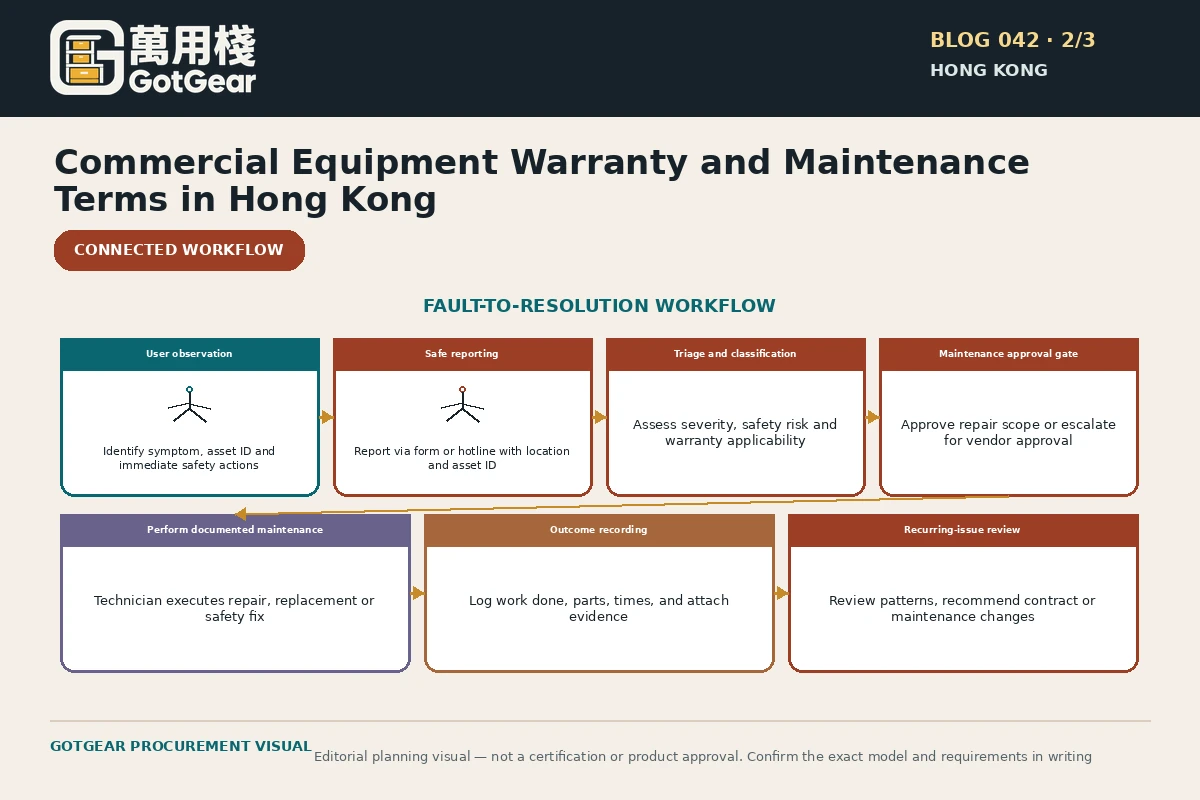
Practical context: Work safety and competent maintenance are central to continued operation in Hong Kong. Decision criterion: Require suppliers to describe safe isolation procedures, whether they use competent persons with local licences or certificates, how they will work with site safety officers and how they will protect building systems during maintenance. Also include a disputed-fault process so supplier and buyer can resolve whether a call-out is covered by warranty or falls outside the agreed warranty scope. A key limitation is that Contractual process descriptions are not a substitute for competent engineering review. If equipment is inherently unsuitable for the environment, no support plan will make it safe or reliable. Next, Ask for manufacturer maintenance manuals and competency records for technicians who will perform PM or repairs. Specify a stepwise disputed-fault workflow: logged report, on-site inspection window, provisional findings, testing evidence to attribute cause, and an impartial technical review step if parties disagree.
Commercial equipment warranty and maintenance terms Hong Kong decision checklist
- Have you defined warranty period(s) and listed covered components by model and serial range?
- Are exclusions explicit (consumables, wear-and-tear, software updates, misuse, site conditions)?
- Does the supplier supply a preventive maintenance schedule with task lists, intervals and responsible party?
- Have you confirmed fault-reporting channels, required evidence for a claim and escalation steps?
- Are spare-parts policies and expected lead times stated, including alternative supply arrangements for critical parts?
- Have you captured site constraints: access windows, lift/loading limits, building-management contacts and permitted working hours?
- Is there a safe isolation and working-at-height plan and evidence of technician competence where relevant?
- Does the contract require the supplier to hand over manufacturer maintenance manuals and as-installed serialised records?
- Is there a disputed-fault process with inspection windows and an impartial review step if parties disagree?
- Have you listed who will keep service records and how records will be made available for audits?
- Does the arrangement specify training for end-users and handover acceptance checks post-installation?
- Have you considered criticality ranking for escalation priorities and response-time commitment for high-criticality items?
Practical action sequence
- Create a single comparison sheet combining warranty, PM and fault-response fields and include site-planning inputs.
- Circulate the comparison sheet in tender documentation and request sworn confirmation for key fields (access, criticality, parts availability).
- Require manufacturers’ maintenance manuals and a PM task schedule as part of the bid submission.
- Ask for technician competency evidence and safe-isolation procedures relevant to Hong Kong practice.
- Negotiate a disputed-fault workflow and include it as a contract schedule with timelines for inspection and decision.
- Agree record-custody arrangements and formats (digital copies of work orders, photos, test logs) and name a custodian.
- If remote monitoring is proposed, specify data-access, alert handling and how remote diagnoses count towards warranty claims.
- Run a short site visit or accept a formal site-conditions affidavit from bidders to validate access and working windows.
- Include acceptance testing and training as preconditions for warranty start; record attendees and sign-off documents.
- Set periodic contract reviews aligned with the CIPS contract-management cycle to adjust support as parts or usage change.
Apply the checks to your Hong Kong site
Include Hong Kong-specific fields in procurement and tender documents: precise operating location (floor and room), authorised access windows and building-management liaison contact, lift and loading constraints, permitted working hours, equipment criticality level to set escalation priority, presence of trained end-users, a nominated day-to-day reporting contact, and a service-record custodian who will retain work orders, parts receipts and test certificates. Collecting these items up front reduces late surprises about access, permits and service windows that commonly delay response and increase resource requirements. When you clarify commercial equipment warranty and maintenance terms Hong Kong, insist that suppliers confirm who carries each responsibility and how records will be handed over. Cross-check offers against a commercial equipment warranty checklist Hong Kong and use the same site data to draft a commercial equipment preventive maintenance plan Hong Kong that assigns access slots and end-user duties. Operational takeaway: add those specific fields to every tender pack and require written validation of access constraints and the service-record custodian before contracting.
References used for this article
These sources provide regulatory, safety or planning context. They do not certify any GotGear product or replace site-specific professional advice.
- Hong Kong Government Guide to Procurement — Tender conditions may include maintenance, spare-parts provision, warranties and written commitments as appropriate; useful for defining comparison fields, not a private contract template.
- HSE Maintenance of Work Equipment — Recognised occupational-safety guidance on planned maintenance, manufacturer instructions, competent persons, fault reporting and safe isolation; Great Britain guidance, not Hong Kong law.
- CIPS Contract Management Cycle — Frames contract management as continuous from need identification through management and exit, supporting early definition of support arrangements.
Questions about commercial equipment warranty and maintenance terms Hong Kong
What should I assume a supplier warranty covers in Hong Kong?
Do not assume a warranty covers routine maintenance, consumables, misuse, improper installation or site-condition damage. Ask suppliers to provide the exact warranty text listing covered components, the duration for each component, and explicit exclusions. Require confirmation that following manufacturer maintenance instructions is a precondition; failing to do so can void warranty claims. Use your comparison sheet to make those distinctions clear when you evaluate offers.
How do I make sure preventive maintenance doesn’t conflict with building-management rules?
Include building-management contacts, permitted working hours, lift and loading constraints and any permit requirements on the comparison sheet. Require bidders to confirm they can operate within those constraints and to state any additional procedural requirements needed. Where a building requires an escorted technician or security clearance, have the bidder confirm they can meet those requirements and name the expected lead time to schedule a visit.
What evidence should suppliers provide when a fault is reported?
Require a standard evidence package for each report: equipment serial numbers, date/time of failure, photographs or log extracts showing the fault, a description of steps taken by the user and any error codes. For remote systems, require extraction of relevant logs. Make acceptance of claims conditional on provision of this evidence; use the disputed-fault process for contested cases.
Can I rely on overseas safety guidance for maintenance planning?
Overseas occupational-safety guidance, such as the HSE guidance on maintenance of work equipment, is useful for defining safe practices (competent persons, planned tasks, fault reporting and safe isolation) but it is not Hong Kong law. Use it as a reference to frame your maintenance schedules and competency requirements, and combine it with local regulation and building rules where applicable.
What should a disputed-fault process include?
A practical disputed-fault process sets timelines and steps: logging the dispute, an agreed on-site inspection window, provisional findings and evidence sharing, repair or testing where necessary, and an impartial technical review step if the parties cannot agree. Define who pays for the initial inspection and how resource requirements are allocated if the claim is found to be outside warranty. Recording these steps in the contract reduces operational friction later.
How do I validate supplier parts availability and lead times?
Request a parts availability statement and typical lead times for critical parts in the bid. Ask for alternative sourcing plans for parts at risk of obsolescence. Validate by checking references or similar installations in Hong Kong and asking for real examples where parts were required and how quickly they were supplied. Use this information to set realistic repair-time expectations in your comparison.
Compare available product models and specifications
These product cards are matched to this buying topic. Select a specification and quantity to send the product details to WhatsApp.
 Material Handling & LogisticsProduct reference image
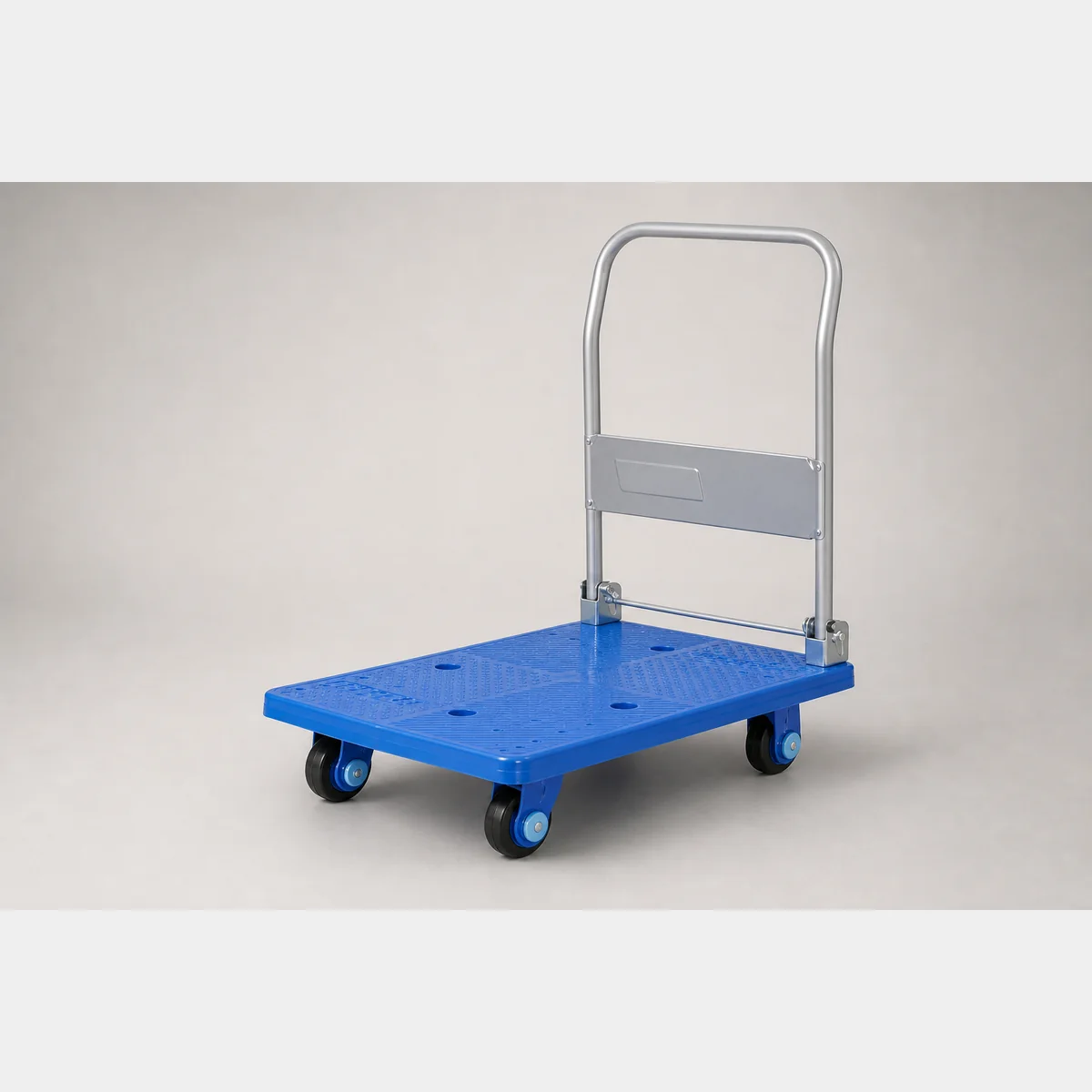
quiet hand trolley
quiet hand trolley. (A) Dimensions: L720 X W490 X H850 MM; Net weight: 10kg supports 150kg / 16kg supports 300kg; Wheels: 100 mm / 125 mm. Formal quotation available based on use, specifications and quantity.
- (A) Dimensions
- L720 X W490 X H850 MM
- Net weight
- 10kg supports 150kg / 16kg supports 300kg
- Wheels
- 100 mm / 125 mm
 Material Handling & LogisticsProduct reference image
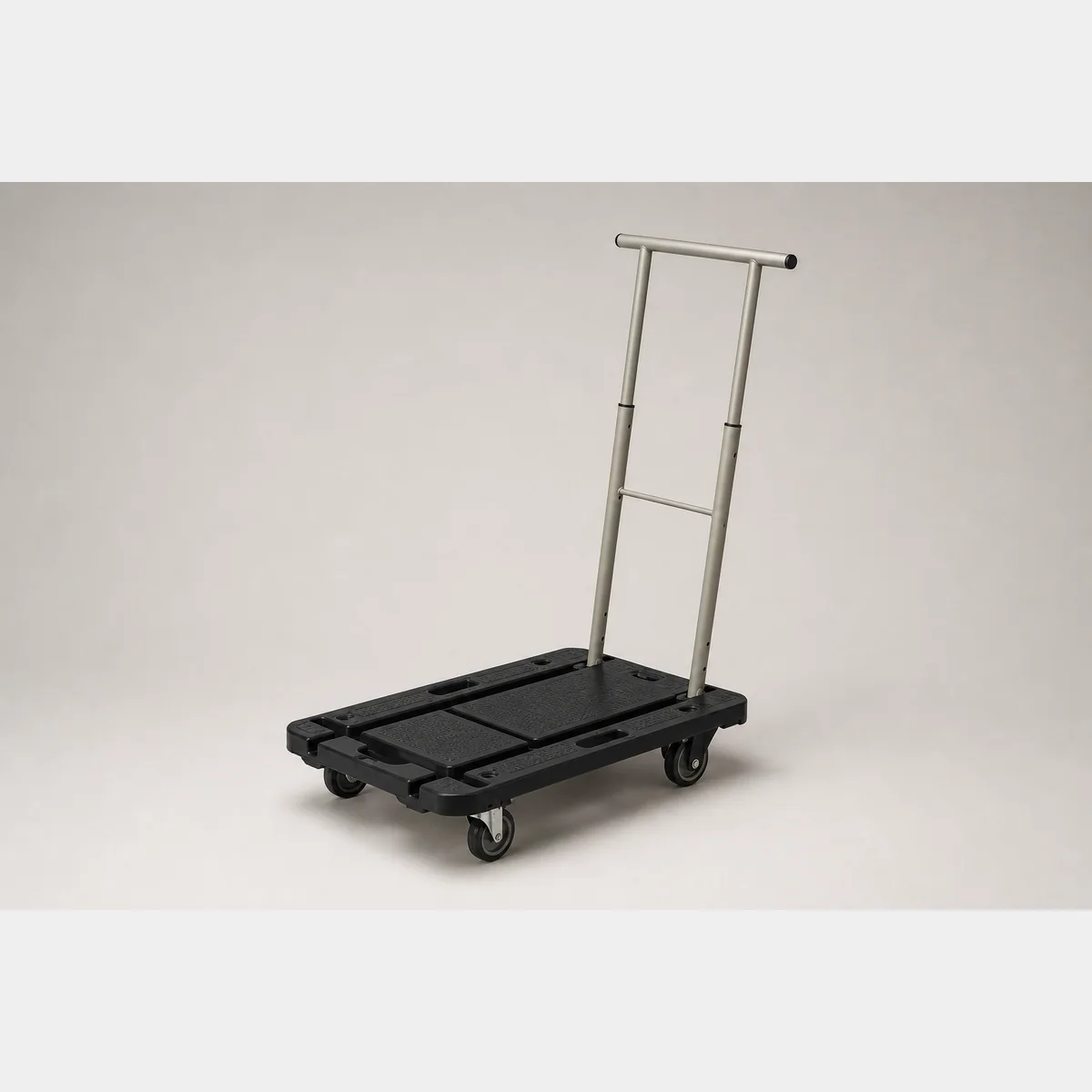
2-in-1 Hand Trolley
2-in-1 hand trolley, Dimensions/Specification: L600xW390xH820 mm; Formal quotation available based on application, specifications and quantity.
- Dimensions/Specification
- L600xW390xH820 mm
 Material Handling & LogisticsProduct reference image
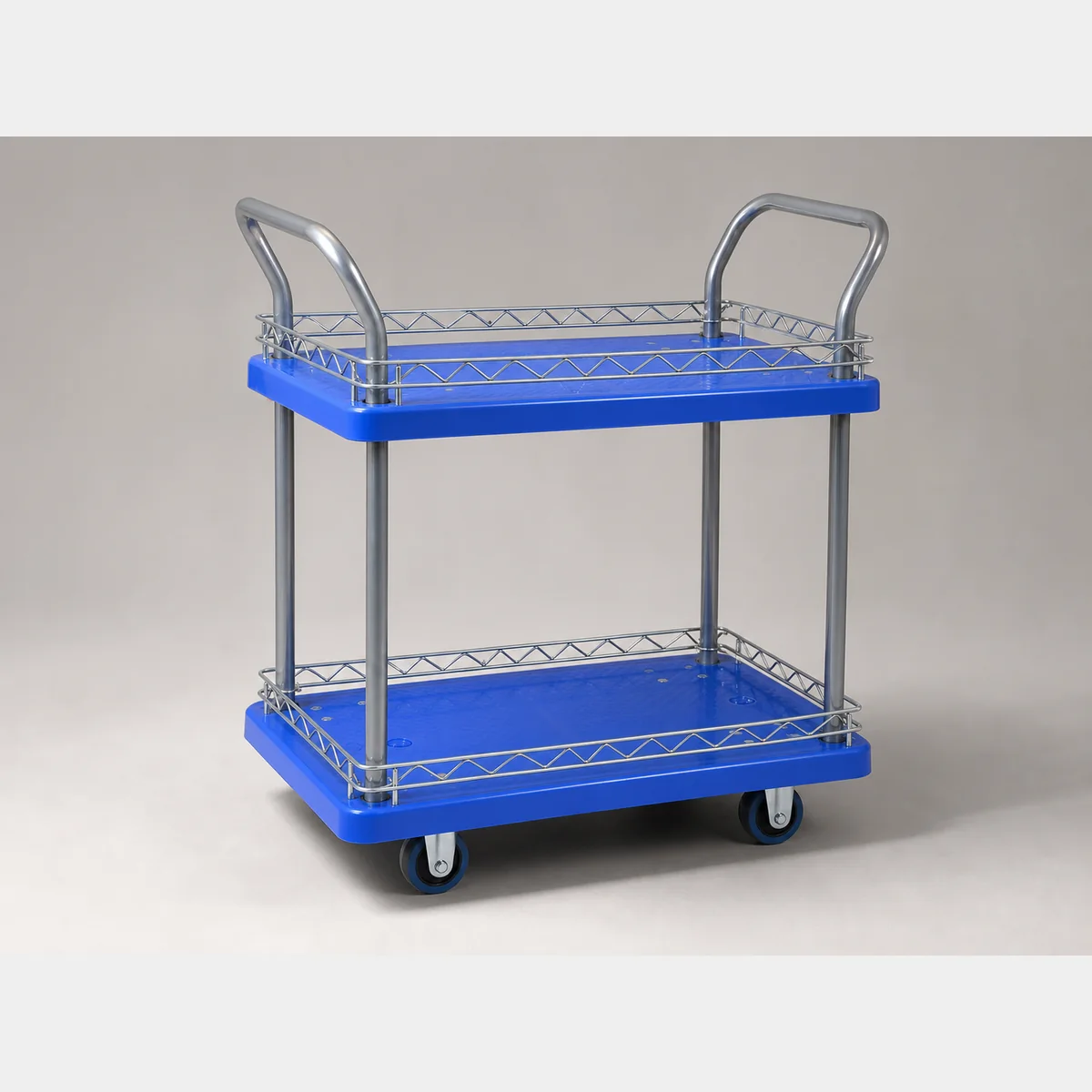
2-tier silent plastic trolley (with side guard rails)
2-tier silent plastic trolley (with side guard rails). (A) Dimensions: L730 X W480 X H950 MM; Net weight: 14.5kg *castor: 100 MM / 17.5kg *castor: 130 mm; Load capacity 150kg *shelf clearance: H550 MM. Formal quotation available based on application, specifications and quantity.
- (A) Dimensions
- L730 X W480 X H950 MM
- Net weight
- 14.5kg *castor: 100 MM / 17.5kg *castor: 130 mm
- Load capacity 150kg *shelf clearance
- H550 MM
 Material Handling & LogisticsProduct reference image
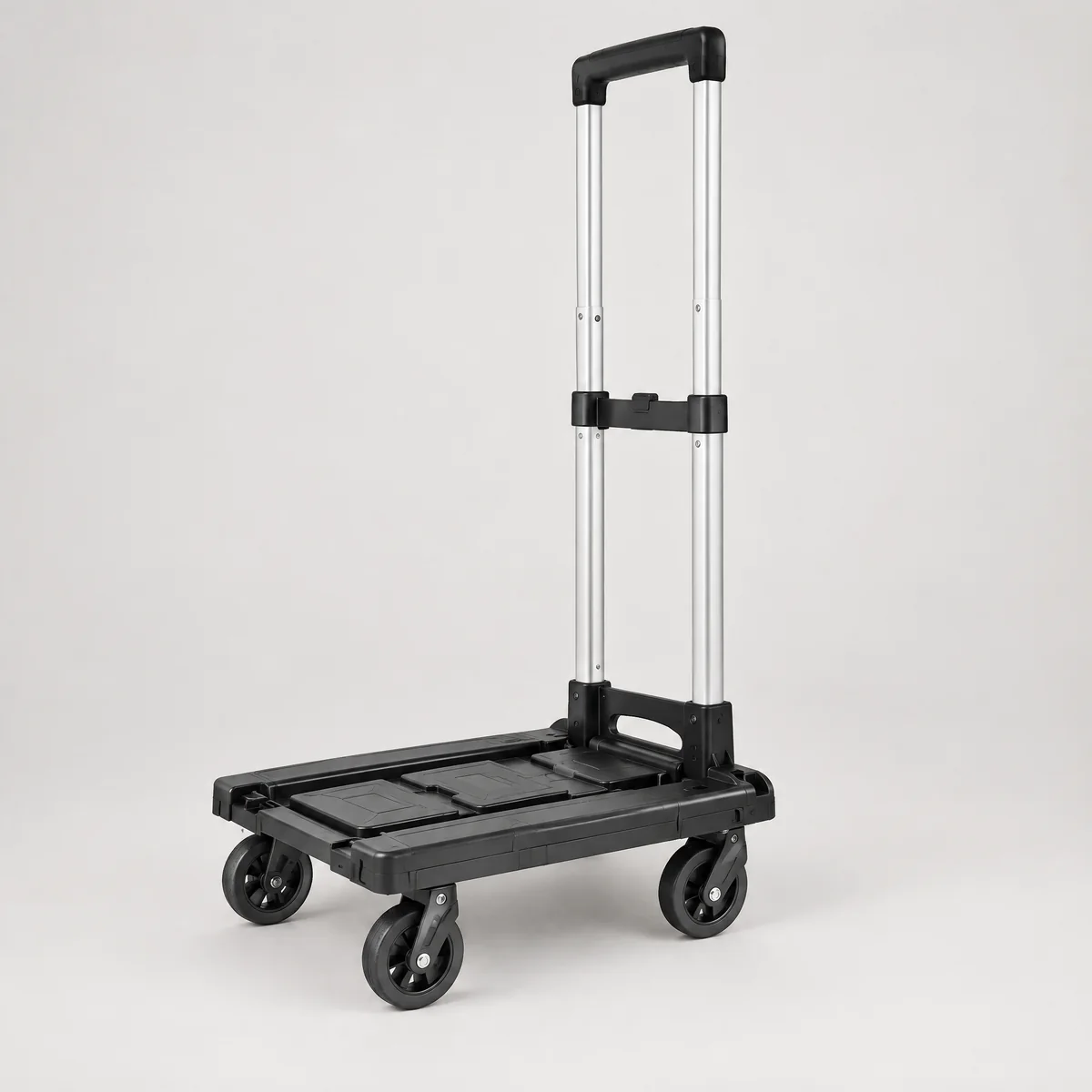
2.5-inch wheel hand cart
2.5-inch wheel hand cart, A: L48xW31xH78.5 cm; B: L50xW31xH88.5 cm; C: L55xW36xH97.5 cm. Please request a formal quotation with intended use, specifications and quantity.
- A
- L48xW31xH78.5 cm
- B
- L50xW31xH88.5 cm
- C
- L55xW36xH97.5 cm
 Material Handling & LogisticsProduct reference image
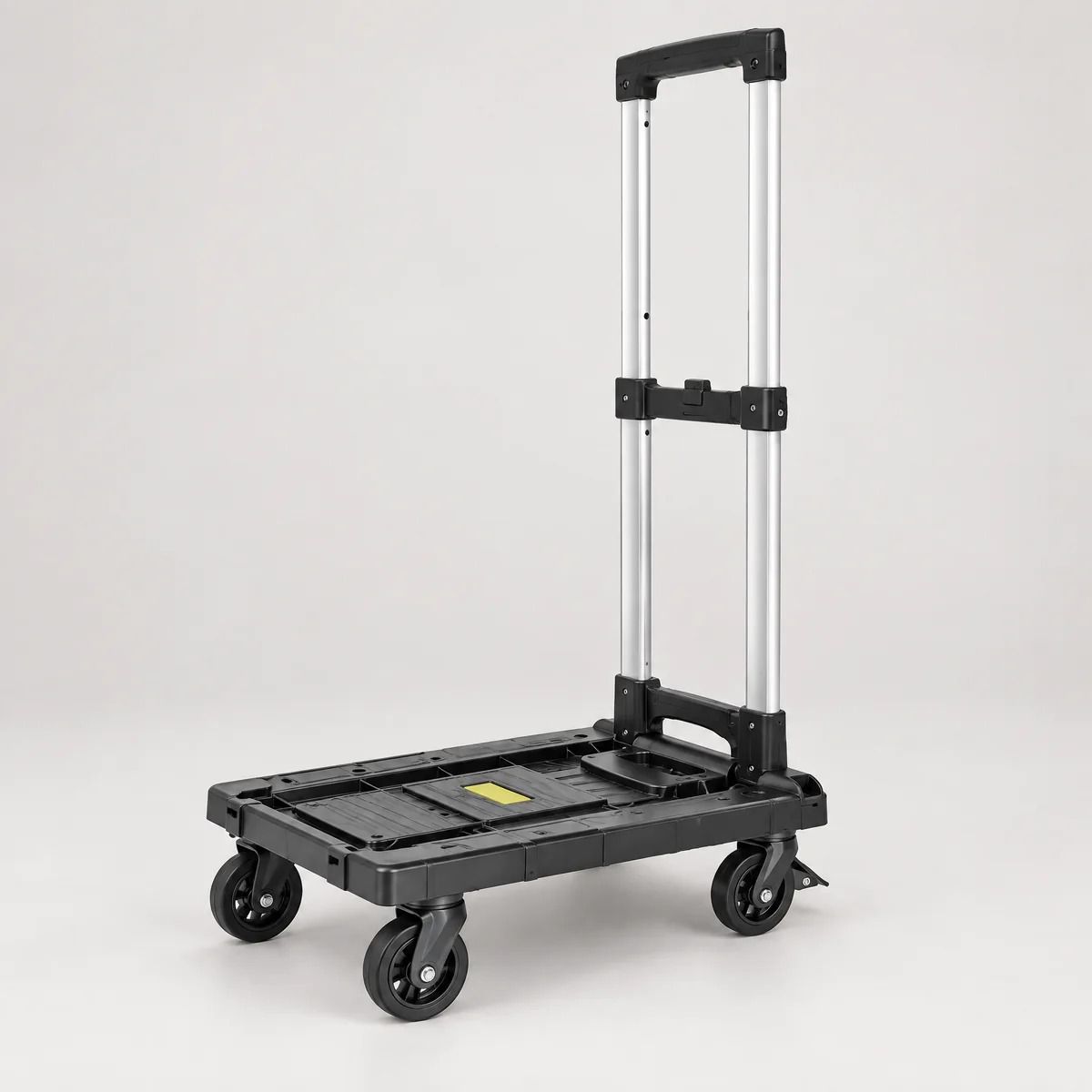
3-inch Wheel Hand Truck (SKU: JRA049)
3-inch wheel hand truck, A: L48xW31xH78.5 cm; B: L50xW31xH88.5 cm; C: L55xW36xH97.5 cm. For a formal quotation, please enquire with intended use, specifications and quantity.
- A
- L48xW31xH78.5 cm
- B
- L50xW31xH88.5 cm
- C
- L55xW36xH97.5 cm
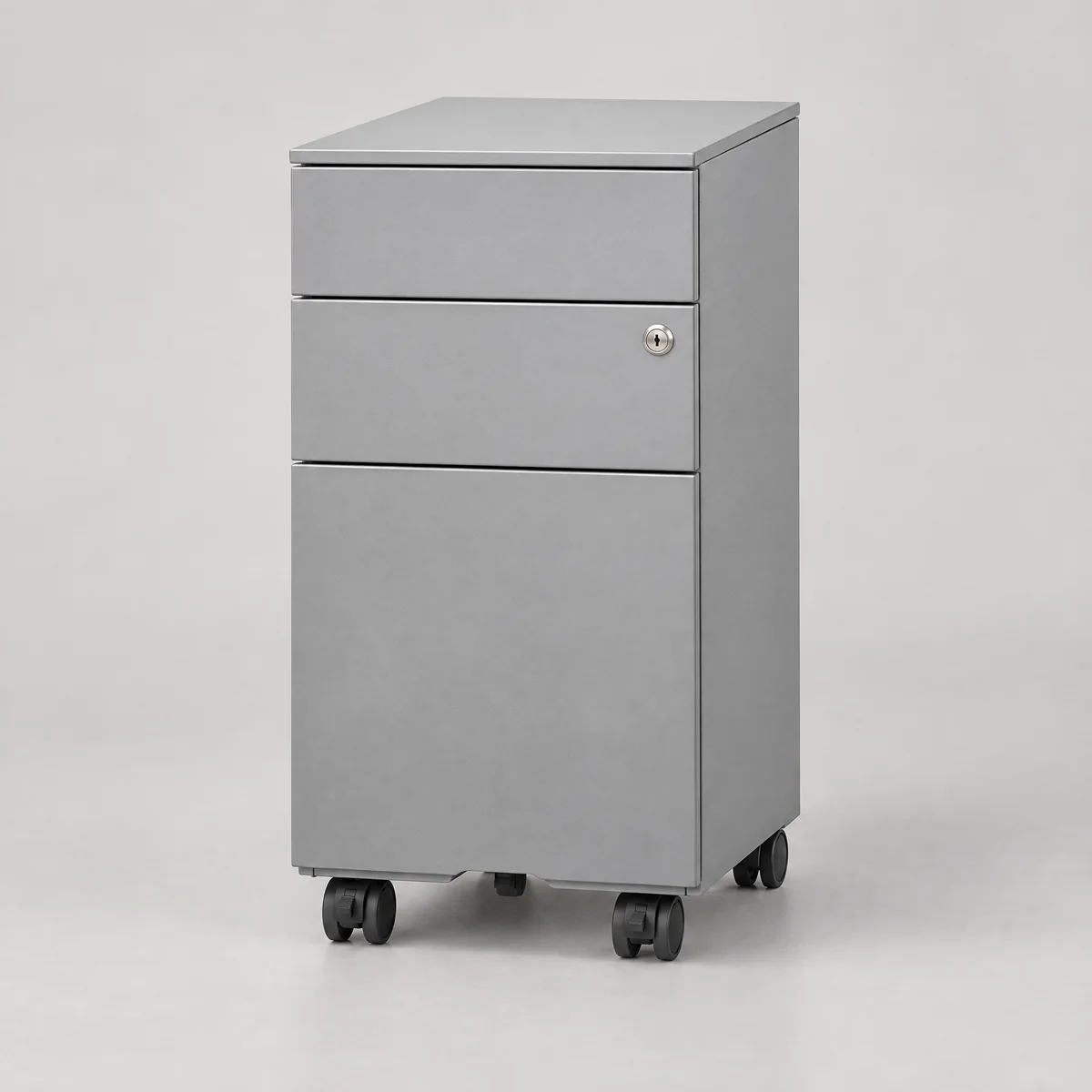 Shelving & StorageProduct reference image
3-tier filing cabinet
3-tier filing cabinet; Size: Length 300xDepth520 × Height 600 mm. Formal quotation available based on use, specifications and quantity.
- Size
- Length 300xDepth520 × Height 600 mm
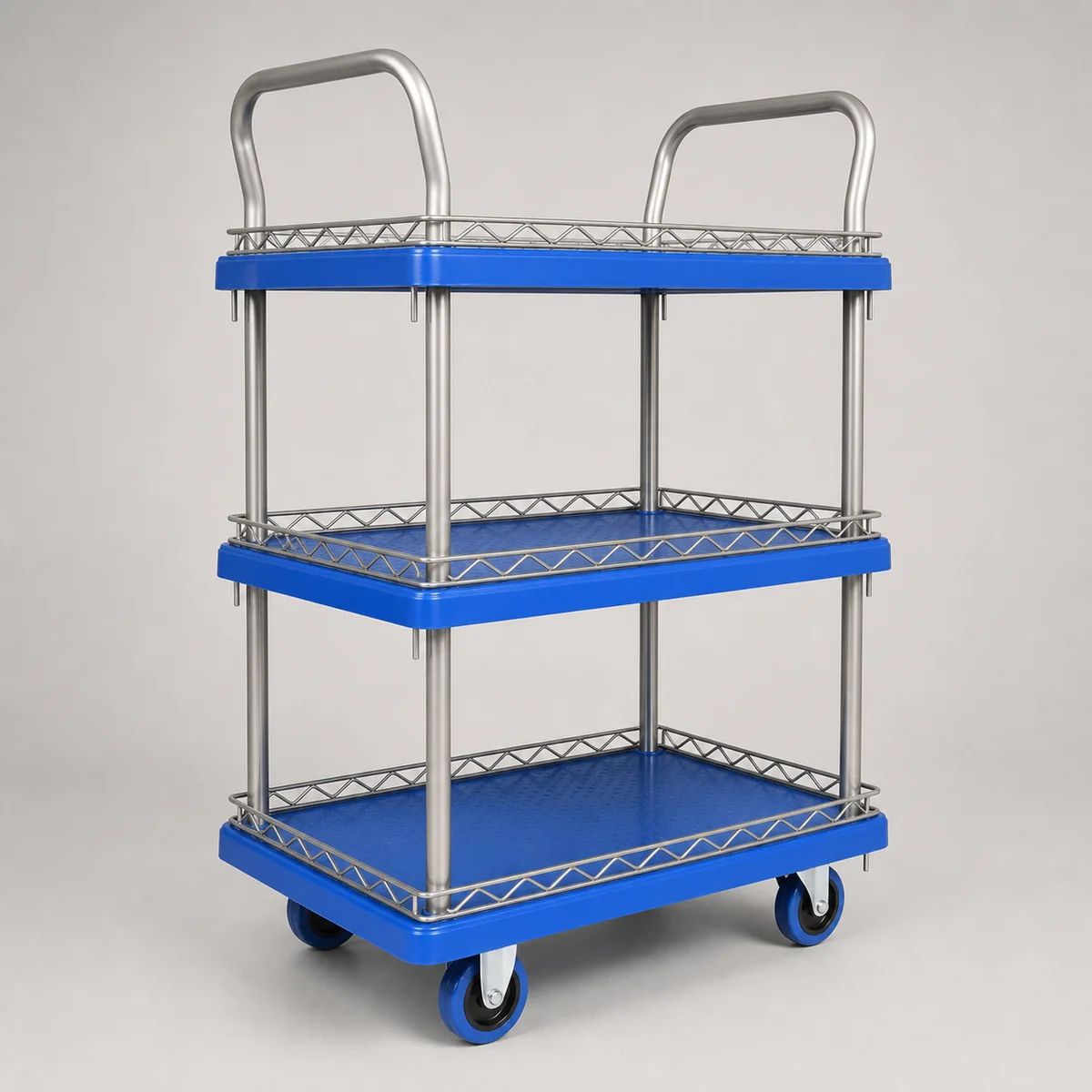 Material Handling & LogisticsProduct reference image
3-Tier Plastic Railed Trolley (S8923-AF)
3-tier plastic railed trolley. Model association requires written confirmation: source records list L730xW480xH950 mm and S8923-BF at L880xW590xH1000 mm.
- Recorded sizes
- L730xW480xH950 mm / S8923-BF: L880xW590xH1000 mm
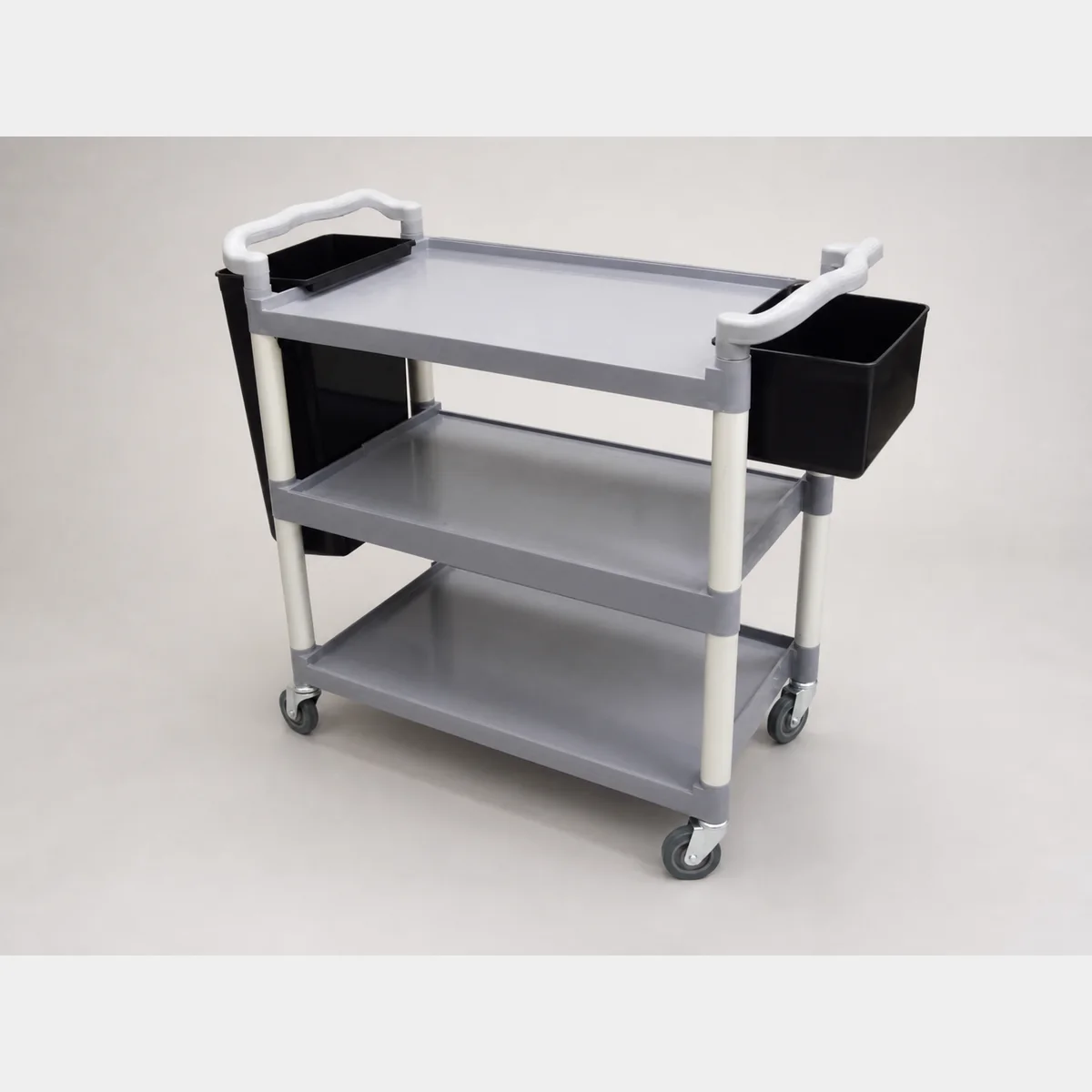 Material Handling & LogisticsProduct reference image
3-tier plastic trolley
3-tier plastic trolley. (Large) Overall dimensions: L103 X W51 X H96 CM; each shelf size: L83 cm x W51 cm / L62 cm x W41 cm; (Small) Overall dimensions: L80 X W41 X H96 CM. Formal quotation available based on usage, specifications and quantity.
- (Large) Overall dimensions
- L103 X W51 X H96 CM
- Each shelf size
- L83 cm x W51 cm / L62 cm x W41 cm
- (Small) Overall dimensions
- L80 X W41 X H96 CM
Continue with closely related procurement topics
These pages share equipment, operating or decision-stage signals with this guide.
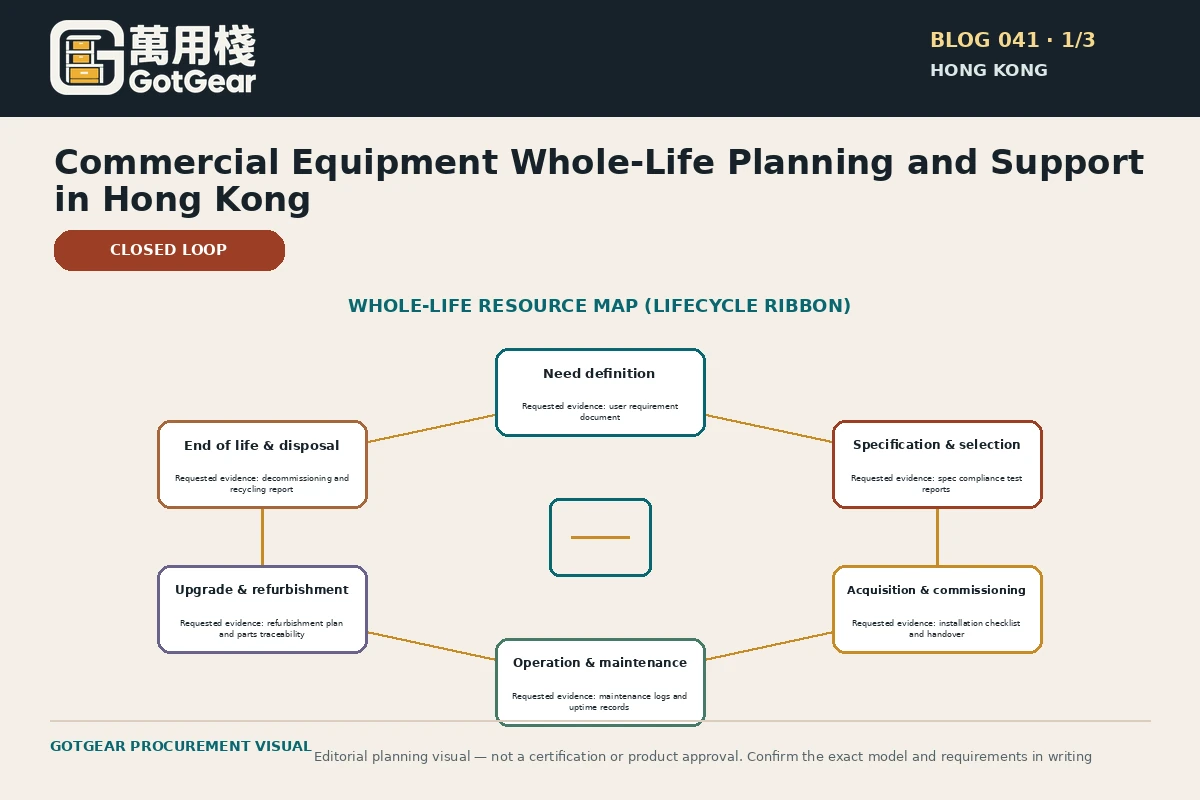
Commercial equipment whole life planning Hong Kong
GotGear explains commercial equipment whole life planning Hong Kong for Hong Kong buyers. See how commercial equipment lifecycle planning Hong Kong supports commercial equipment after-sales support Hong Kong, with practical checks, evidence boundaries and written requirements.
Read the guide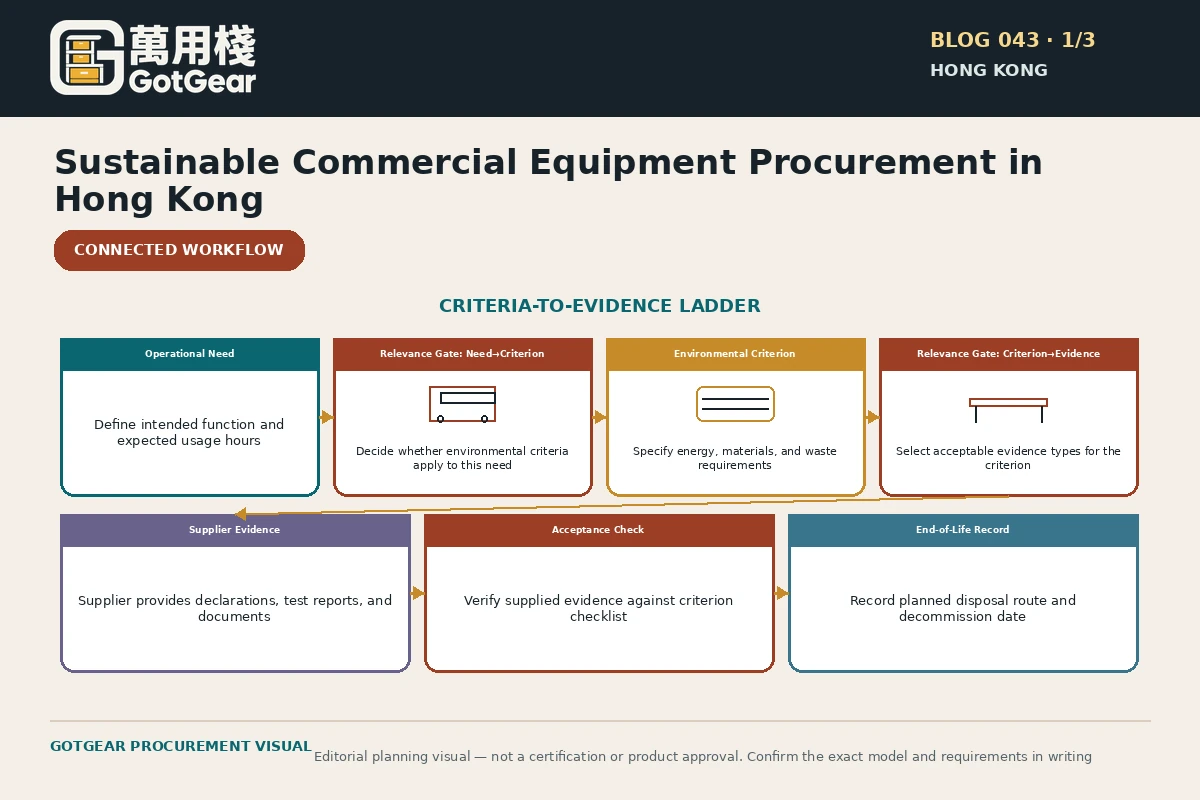
Sustainable commercial equipment procurement Hong Kong
GotGear explains sustainable commercial equipment procurement Hong Kong for Hong Kong buyers. See how green equipment specification Hong Kong supports commercial equipment end-of-life planning Hong Kong, with practical checks, evidence boundaries and written requirements.
Read the guide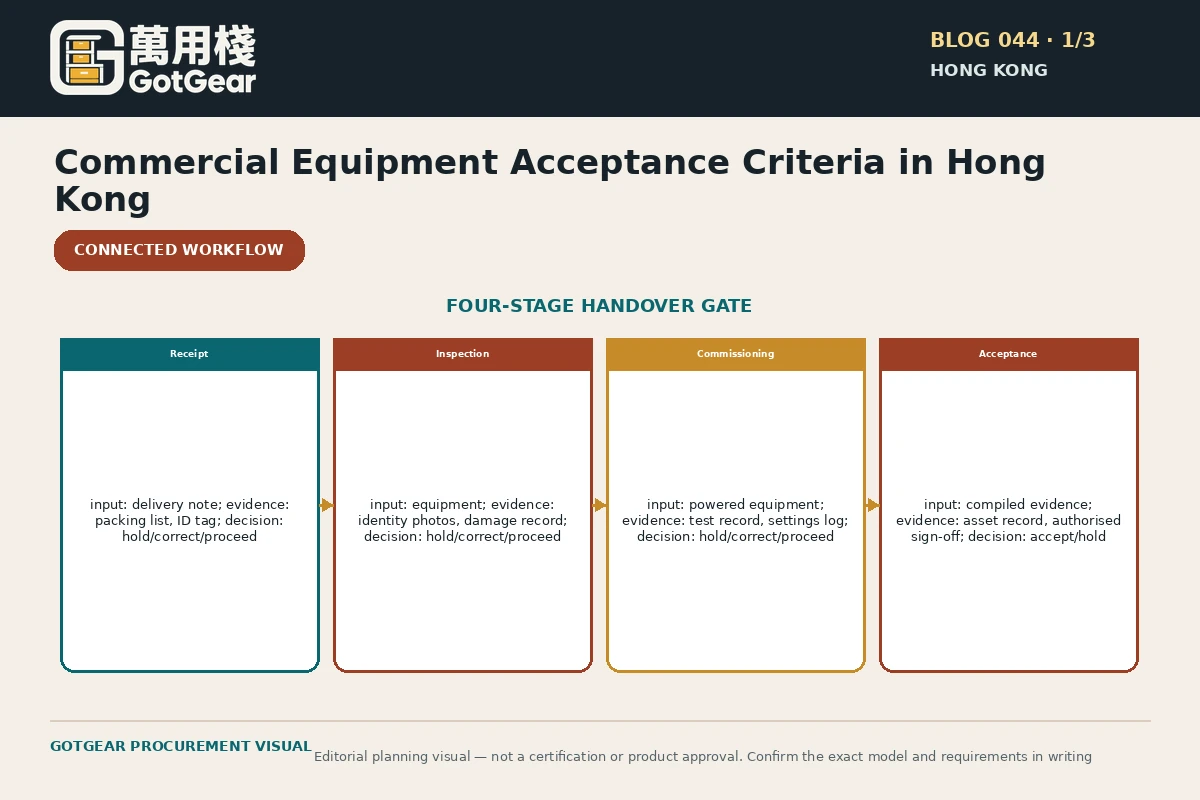
Commercial equipment acceptance criteria Hong Kong
GotGear explains commercial equipment acceptance criteria Hong Kong for Hong Kong buyers. See how commercial equipment commissioning checklist Hong Kong supports commercial equipment asset register Hong Kong, with practical checks, evidence boundaries and written requirements.
Read the guide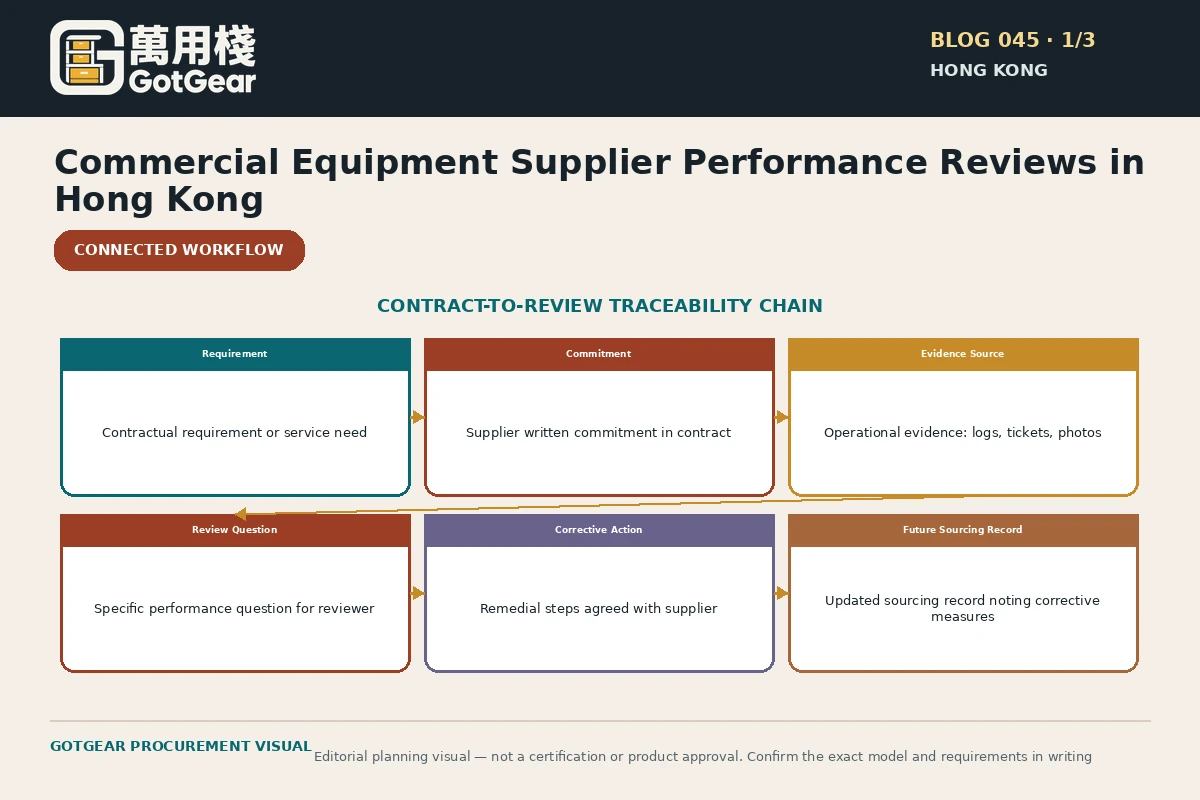
Commercial equipment supplier performance review Hong Kong
GotGear explains commercial equipment supplier performance review Hong Kong for Hong Kong buyers. See how commercial equipment service level agreement Hong Kong supports commercial equipment maintenance response time Hong Kong, with practical checks, evidence boundaries and written requirements.
Read the guideRelated topic indexOpen more English procurement pages14 topics
Browse additional equipment families, applications and procurement questions relevant to these operating requirements.