
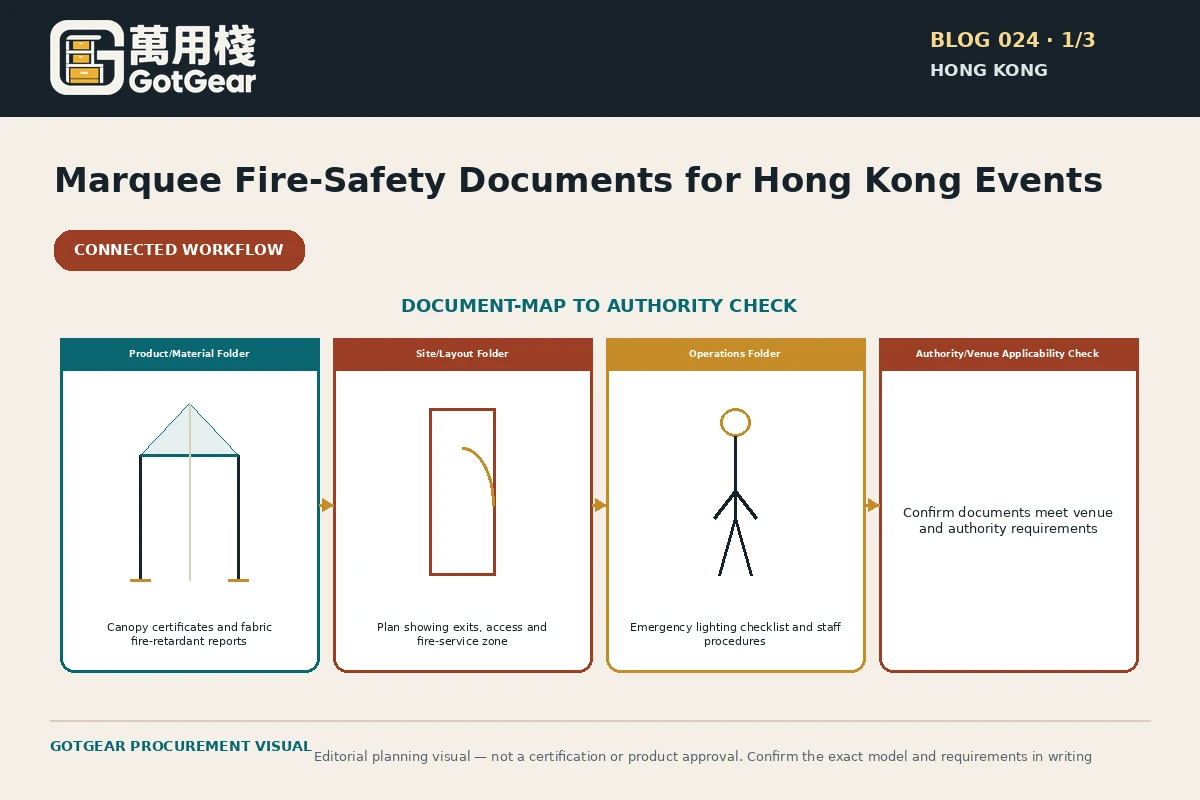
A compliant marquee document pack for Hong Kong events must match the specific marquee model, material and site layout to the event’s use and venue rules. Collect the fabric fire-resistance evidence, a site-specific exit and egress plan, emergency-lighting and sign arrangements and supplier installation/maintenance records, then validate applicability with the venue and FSD. A supplier’s generic canopy certificate is useful evidence but is not a substitute for venue or authority approval; on-site assessment and local conditions determine final requirements.
What to remember before you decide
- Build documentation around the specific marquee model, event layout and venue/FSD requirements — one certificate does not equal approval.
- Collect material evidence, a site-specific egress plan and operational test logs, and assign named owners for each.
- Submit documents early and schedule a joint on-site walk-through to resolve potential issues before inspection.
- A supplier’s fire test report is necessary but must be matched to the installed fabric, seams and finishes.
- Operational checks (emergency lighting, signage) must be tested shortly before the event and retained as signed logs.
- Expect site-specific conditions after FSD or venue assessment and plan contingencies for rapid layout adjustments.
What documents you need and why they differ
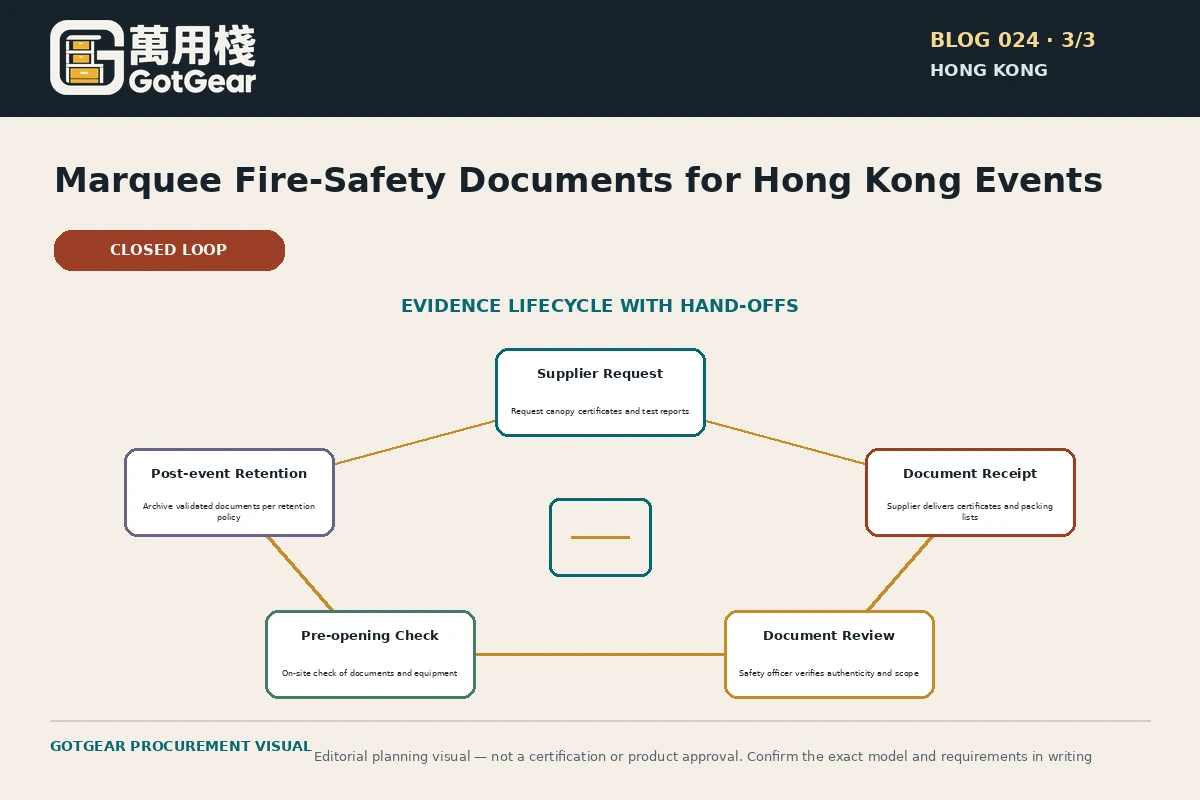
Event organisers should treat marquee fire-safety documentation as three complementary evidence streams: material evidence for the textile and finishes; event layout and egress evidence showing how people will enter, move through and exit the structure; and operational readiness checks that prove systems such as emergency lighting and signage have been installed and tested. In Hong Kong these streams matter for different decision-makers: suppliers and manufacturers supply material evidence; the venue and local fire officers focus on layout, access and emergency routes; and the on-site safety team or contractor typically owns operational checks and test records. Use these decision checks: start by confirming the venue type (indoor hall versus outdoor open site), expected occupant load and the intended use (exhibition, dining, performance). These factors determine which FSD requirements are likely to apply and whether additional authority conditions will be set after a site inspection. For example, a dense exhibition layout with trade stands requires clearer egress planning than a sparsely spaced canopy for registration. A key limitation is that no single document proves compliance for all parties. A canopy fire retardant fabric certificate issued by the manufacturer demonstrates a material property under specific test methods but cannot show that the installed structure, fittings, seating and temporary partitions meet the site’s evacuation needs. Similarly, a site plan cannot verify that emergency lights have been installed and maintained; only test records and recent inspections can. Next, identify who will own each evidence stream for your event (supplier for material evidence, venue or organiser for layout plan, on-site safety lead for operational checks) and set deadlines for submission and verification before the authority’s inspection or the venue’s pre-event sign-off.
Material evidence: what to get from your supplier
Obtain the exact marquee model’s technical file from the supplier: the fabric data sheet, the fire-retardant treatment or inherent flame-resistance certificate, test reports referencing recognised standards, and any maintenance or re-treatment instructions. For Hong Kong, the FSD guidance highlights fire-resistant textile materials and documentation in specified circumstances; you should therefore request documents showing the test standard and the sample identification so you can map the certificate to the actual canopy supplied. Use these decision checks: ask the supplier for the test method (for example, BS, ISO or recognised national standards), the date of the test, whether the sample represents the delivered material and whether any coatings or secondary finishes were tested. If the canopy has sewn joints, linings or printed graphics, confirm whether those elements were included in the test. These details influence acceptability to venue and authority. A key limitation is that a single certificate may cover only untreated fabric, not after site sewing, adhesives or local modifications. Certificates issued many years ago, or those with unspecified sample IDs, can be questioned by the venue or FSD. Manufacturer declarations from overseas laboratories are valid evidence but may be treated as contextual rather than determinative until accepted by the inspecting officer. Next, log the exact certificate numbers and test dates against the delivered material’s batch or serial number, and send copies to the venue and your FSD contact early in the planning stage so that any queries can be raised and resolved ahead of inspection.
“Treat documentation as a coordinated pack—material proof, layout intent and operational testing must be mapped to the actual installed marquee and verified with the venue and authority.”— GotGear Editorial Team
What should buyers compare for temporary marquee fire safety documents Hong Kong?
| Option or approach | Best for | Trade-offs | Checks before acceptance |
|---|---|---|---|
| Manufacturer fabric test report (sample-specific) | Proving the tested flame resistance of a specific material or treated fabric batch. | Shows material property only; does not prove installation conformity, seam/joint treatment, or on-site modifications. | Match test sample ID and date to the delivered batch, request laboratory accreditation details and confirm whether printed/laminated finishes were included. |
| Venue-approved layout plan with egress calculations | Demonstrating how occupants will evacuate and how the marquee interfaces with venue exits and firefighting access. | A plan explains intent but must be validated by the built arrangement during on-site inspection; fixed venue constraints can limit options. | Submit a scaled plan, reference occupant loads, and arrange a pre-build walk-through with venue operations and FSD/licensing officer if required. |
| Marquee emergency lighting checklist and test log | Showing that emergency lighting and illuminated signs have been installed, tested and maintained shortly before the event. | Only confirms functionality at test time; batteries or fixtures can fail later without scheduled retests. | Include date/time, tester name, battery duration results and corrective actions; retain signed copies on-site for the inspecting officer. |
| Supplier installation and maintenance records | Documenting that the marquee was installed to the supplier’s instructions and that maintenance or retreatment has been carried out. | Supplier records are persuasive for build quality but may not cover site-specific fire-safety adaptations requested by the venue or authority. | Request a signed installation certificate referencing model and batch numbers, plus any site-specific deviations noted and remedied. |
| Venue or FSD inspection report / conditional approval | Providing the definitive local authority or venue position on whether the event meets on-site requirements. | Often issued only after an on-site assessment; may impose conditions that require immediate changes to the build or operations. | Obtain written conditions, understand timelines for compliance, and confirm who is responsible for rectifying any items before opening. |
This framework helps buyers create comparable written enquiries. Final model specifications, availability, delivery and commercial terms must be confirmed in a formal quotation.
Layout, egress and site planning: what authorities will check
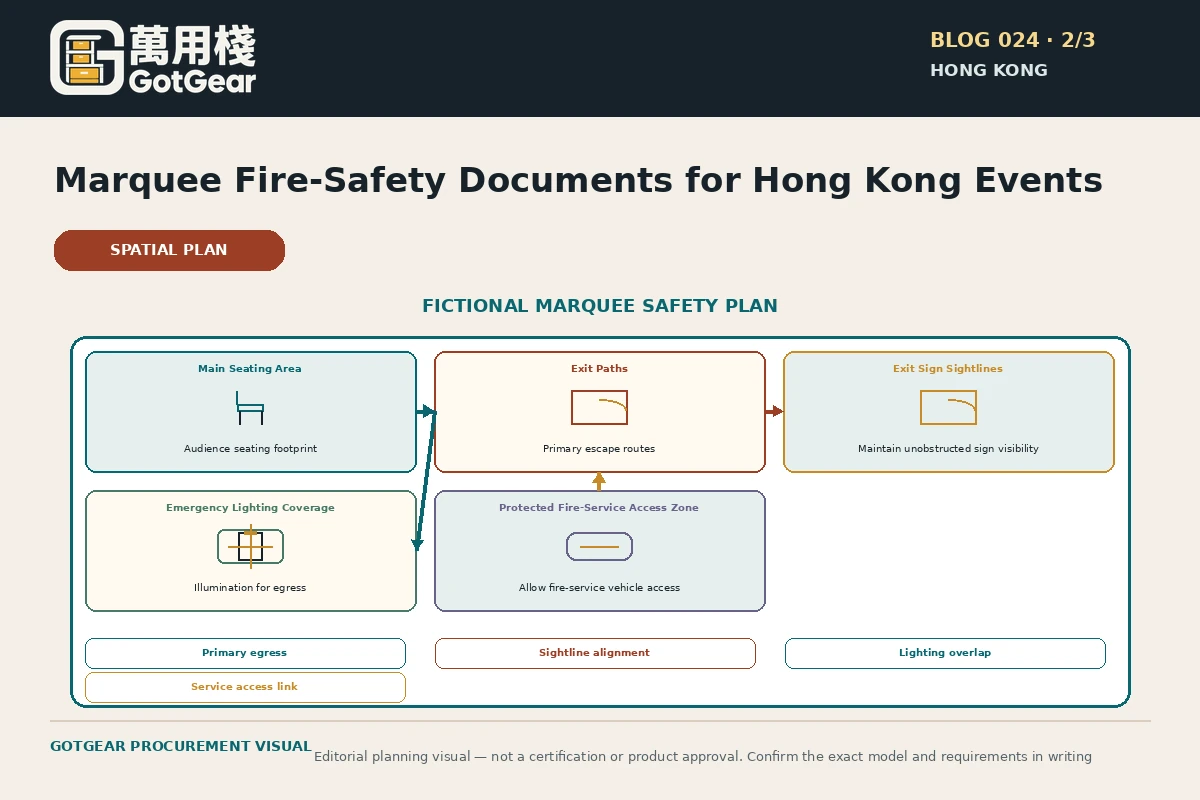
Site-specific plans are often decisive in pre-event approvals. Provide a scaled plan that shows marquee footprint, internal partitions, stand locations, seating, aisle widths, exit locations, firefighting access and any fixed venue features that affect routes. For Hong Kong events, FSD reference material stresses clear passageways, access for firefighting and that detailed requirements will be set after on-site assessment. Use the plan to demonstrate how you maintain unobstructed escape paths and how crowd flow is controlled in normal conditions and during evacuation. Use these decision checks: produce a plan that focuses on occupant flow metrics: minimum clear aisle widths, location and number of exits to match anticipated occupant load, and the distance to the nearest external safe zone or assembly point. Coordinate with the venue’s emergency exits and ensure none are blocked by temporary infrastructure. If your event expects higher occupancy at particular times, model peak egress to ensure exit capacity. A key limitation is that venue-fixed exits and external site constraints cannot be changed by documentation alone. Even an excellent plan may be adjusted after FSD or venue on-site checks identify sightline or access problems. Be prepared to revise layouts quickly and have alternate arrangements for display and seating if required. Next, submit the site plan to the venue and to your FSD contact (or licensing officer) early, request written confirmation of any special conditions, and schedule a walk-through with the venue operations and the marquee supplier to confirm that the proposed build matches the plan.
Operational readiness: emergency lighting, signage and testing
Operational checks demonstrate that systems intended to support evacuation actually work. For marquees this typically includes emergency lighting, illuminated exit signs, battery backup tests, functional tests of portable fire extinguishers, and records of any temporary electrical installations. Hong Kong guidance lists emergency lighting and exit sign requirements under temporary places of public entertainment and stresses that detailed requirements follow on-site assessment. Use these decision checks: ensure emergency lighting coverage is adequate for all egress routes inside the marquee and for the immediate external paths to assembly zones. Confirm battery duration meets venue or authority expectations and that illuminated signage is visible from anticipated viewpoints. Allocate responsibility for routine pre-event functional tests and record them with date, tester name and results. A key limitation is that a checklist or test record demonstrates readiness only at the time of testing; it does not guarantee continued performance throughout an event. Schedule retests where events run multiple days or overnight. Also, electrical work often requires licensed contractors and may be subject to separate approvals. Next, create and keep a signed, time-stamped test log for emergency lighting and signage, confirm the nominated person responsible during the event, and provide copies to the venue and to any inspecting officer on arrival.
Temporary marquee fire safety documents Hong Kong decision checklist
- Confirm the event type, maximum expected occupancy and whether it is classified as a ‘place of public entertainment’ under FSD guidance.
- Record the exact marquee model, batch or serial numbers and request the fabric data sheet and any fire-retardant treatment certificates with sample IDs.
- Obtain supplier confirmation on whether sewn seams, linings, adhesives and printed graphics were included in the fire test.
- Produce a scaled site plan showing footprint, internal layout, all exits, access for firefighting and distances to external assembly points.
- Check aisle widths and egress capacities against venue rules and anticipated peak occupant flows; model peak egress if crowding is likely.
- Secure an emergency-lighting and illuminated exit sign plan, and schedule battery/functional tests with signed, dated logs.
- Assign named owners for material evidence, layout submission and operational checks and set submission deadlines before site inspection.
- Send material certificates, the site plan and operational test records to the venue and your FSD/licensing contact early to identify queries.
- Plan for possible on-site adjustments requested by the venue or FSD and prepare alternative layouts or contingency equipment.
- Keep all original supplier documents and test reports on-site during the inspection and provide copies to the inspecting officer if requested.
Practical action sequence
- 1. Request the marquee technical file from your supplier, including fabric test reports and exact sample IDs.
- 2. Produce and sign off a scaled site layout showing exits, aisles, firefighting access and assembly points.
- 3. Arrange and record installation checks with the supplier; obtain a signed installation certificate tied to the model and batch.
- 4. Install emergency lighting and illuminated exit signs; perform battery duration and function tests and record the results.
- 5. Share the material evidence, site plan and test logs with the venue and FSD/licensing contact for early feedback.
- 6. Conduct a joint on-site walk-through with venue operations and supplier, addressing any items raised and updating documents as required.
Apply the checks to your Hong Kong site
FSD guidance in Hong Kong frames requirements for marquees and temporary entertainment places but relies on on-site assessment to confirm details. Treat FSD materials as a navigational map rather than a final permit: assemble supplier test evidence, a clear site-specific plan and operational test records early in project planning, and share them with the venue and the FSD for review. Event teams preparing temporary marquee fire safety documents Hong Kong should expect to revise both paperwork and layout after the authority or venue inspection. Make sure the supplier’s test report accompanies any canopy fire retardant fabric certificate Hong Kong, and keep functional logs to demonstrate the checks behind a marquee emergency lighting checklist Hong Kong. Operational takeaway: compile the supplier reports, the fabric certificate and the completed lighting checklist into a single site folder and hand it to venue staff and the FSD at the on-site assessment.
References used for this article
These sources provide regulatory, safety or planning context. They do not certify any GotGear product or replace site-specific professional advice.
- Hong Kong Fire Services Department — Additional Fire Services Requirements for Marquees — Sets out FSD marquee requirements, including fire-resistant textile materials and documentation in specified circumstances, emergency planning, exit signs and emergency lighting. Use with a clear applicability caveat and current authority confirmation.
- Hong Kong Fire Services Department — Fire Safety Requirements for Temporary Places of Public Entertainment — Provides temporary-event reference requirements/recommendations on clear passageways, electrical wiring, outdoor exits and fire-service access; FSD states that detailed requirements are separately issued after on-site assessment.
- Hong Kong Fire Services Department — Places of Public Entertainment fire-safety page — Shows the official source hub for temporary places of public entertainment and marquees and explicitly notes that listed fire-safety requirements are for reference, with detailed requirements subject to on-site assessment.
Questions about temporary marquee fire safety documents Hong Kong
Is a canopy fire retardant fabric certificate alone enough to get a marquee approved in Hong Kong?
No. A canopy fire retardant fabric certificate demonstrates the tested flame resistance of a specific material or treatment but does not on its own secure approval for an event. Hong Kong’s FSD guidance is clear that detailed requirements for temporary structures are determined after on-site assessment. Approval depends on how the material is used in the actual build, seam/joint treatments, the event layout, occupant load and firefighting access. Treat the fabric certificate as necessary evidence but expect the venue or the FSD to ask for additional documentation and on-site verification.
When should exit planning and egress arrangements be confirmed?
Confirm exit planning as early as possible in the design stage and certainly before ordering the marquee and ancillary infrastructure. Early confirmation allows layout changes without resource-intensive rework. Submit a scaled site plan and egress calculations to the venue and to your FSD/licensing contact during pre-planning so they can review and advise on any special conditions. Final confirmation typically follows an on-site assessment; schedule a walk-through with the venue and supplier to validate the plan against the built arrangement.
Do indoor events have the same requirements as outdoor marquees?
Not necessarily. Indoor venues often have fixed fire-safety systems and defined escape routes; temporary structures inside a hall must not impede those systems and may face stricter controls on aisle widths, exit signage and smoke management. Outdoor marquees may have more flexibility in siting exits to open external areas but will be inspected for access by fire appliances and clear external egress to assembly points. In both cases, the FSD emphasises on-site assessment, so treat indoor and outdoor setups as distinct and confirm requirements with the venue and FSD early.
Who should hold the core documents during an inspection — the supplier, venue or organiser?
The organiser should maintain the master document pack and ensure copies are on-site for inspectors, but responsibilities are often shared. Suppliers should provide material certificates and installation records; venue operations should retain site rules and venue-specific conditions; and the organiser should collate the site plan, test logs and supplier documents. At inspection, provide printed or digital copies and identify the nominated document owner who can answer technical and operational questions.
If the FSD raises conditions after on-site assessment, what is the normal approach?
Conditions from the FSD or venue typically require corrective measures before the event opens. Common responses include adjusting aisle widths, adding or relocating exits, supplementing emergency lighting, or changing occupancy limits. Verify in writing which party is responsible for each corrective action, update your documentation and test logs once changes are made, and request a re-inspection if required. Early engagement with the venue and supplier reduces the likelihood of late-stage conditions.
Compare available product models and specifications
These product cards are matched to this buying topic. Select a specification and quantity to send the product details to WhatsApp.
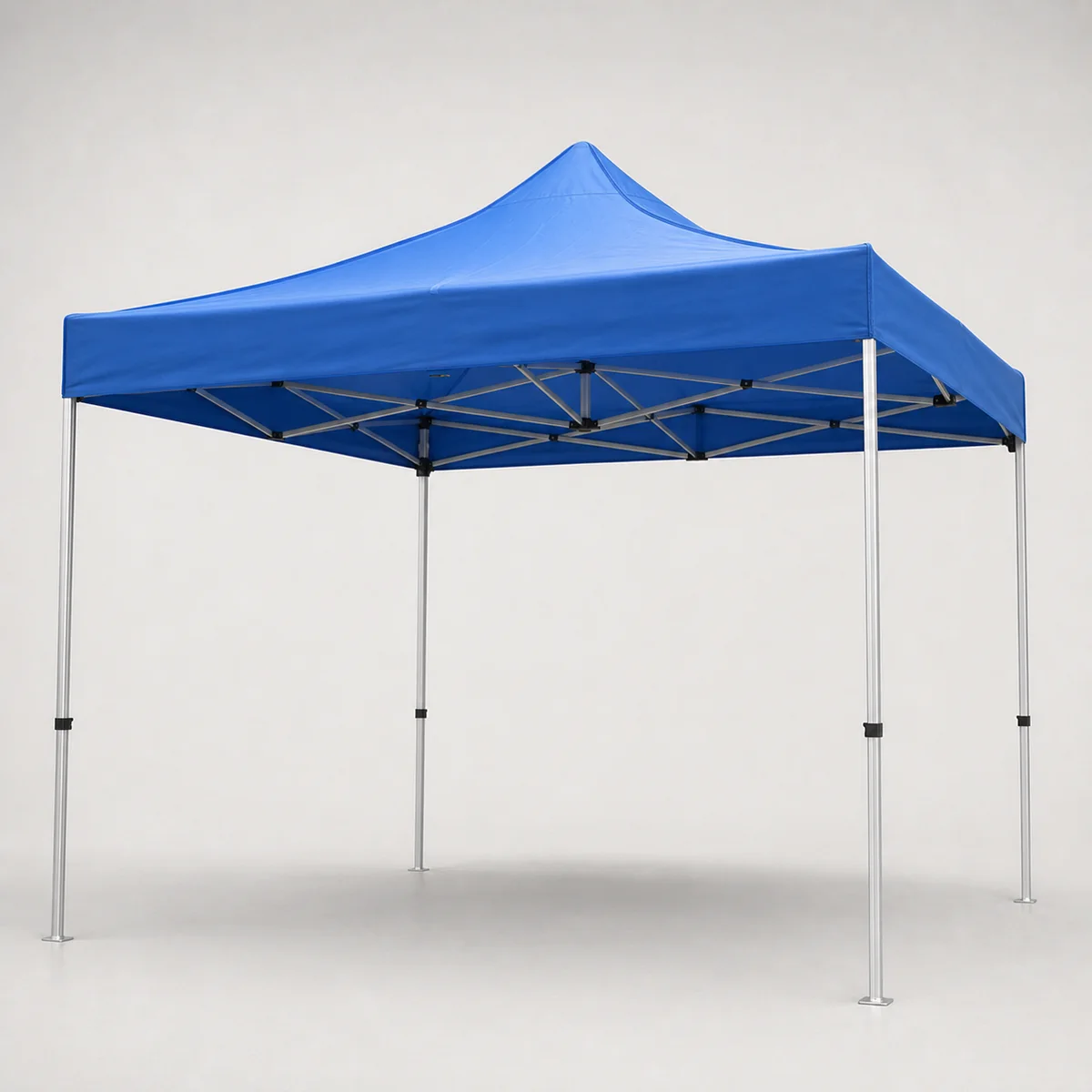
 Canopies & Outdoor EquipmentProduct reference image
Tent (stainless steel)
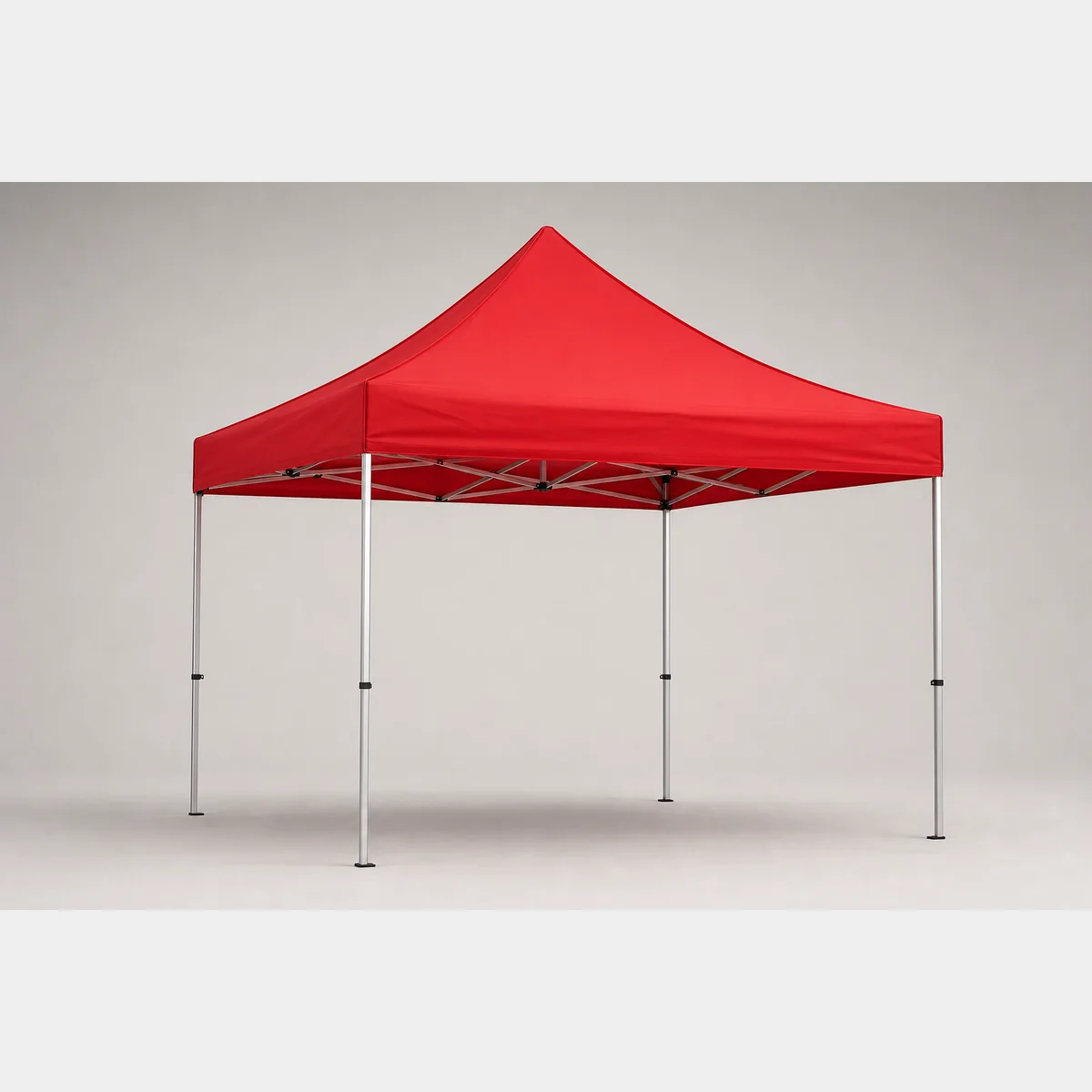
Tent (stainless steel). Material: stainless steel frame with canvas; canopy: 600D Oxford fabric; listed canopy colours: Red/Blue/Green (other colours are subject to written confirmation). Formal quotation available on request based on use, specifications and quantity.
- Material
- stainless steel frame with canvas
- Canopy
- 600D Oxford fabric
- Listed canopy colours
- Red/Blue/Green (other colours are subject to written confirmation)
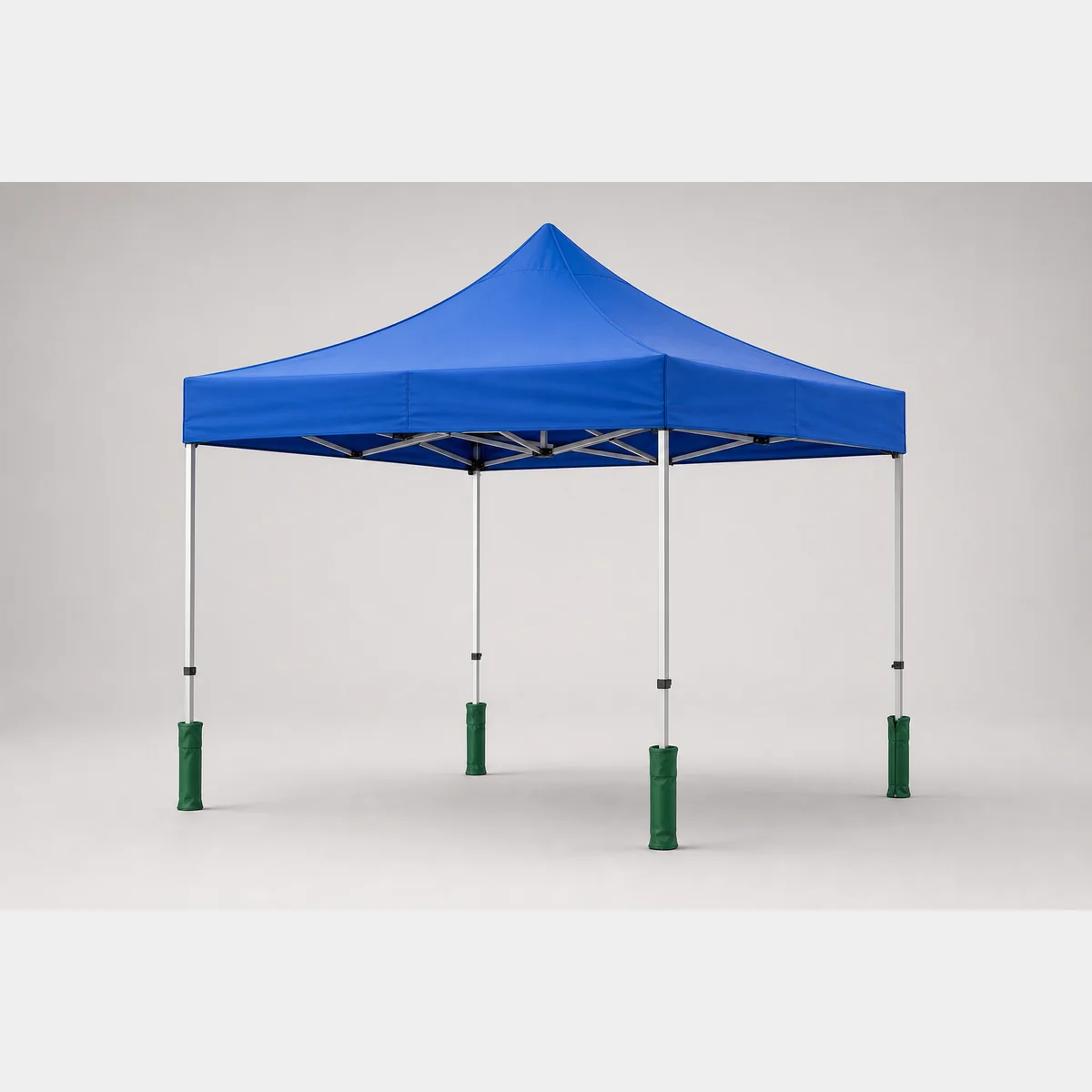
 Canopies & Outdoor EquipmentProduct reference image
Aluminium-frame Tent
Aluminium-frame tent. Material: aluminium alloy frame with canvas; Fabric: (600D Oxford fabric); Listed colours: Red/Blue/Green (other colours are subject to written confirmation). Formal quotation available upon enquiry by intended use, specifications and quantity.
- Material
- Aluminium alloy frame with canvas
- Fabric
- (600D Oxford fabric)
- Listed colours
- Red/Blue/Green (other colours are subject to written confirmation)
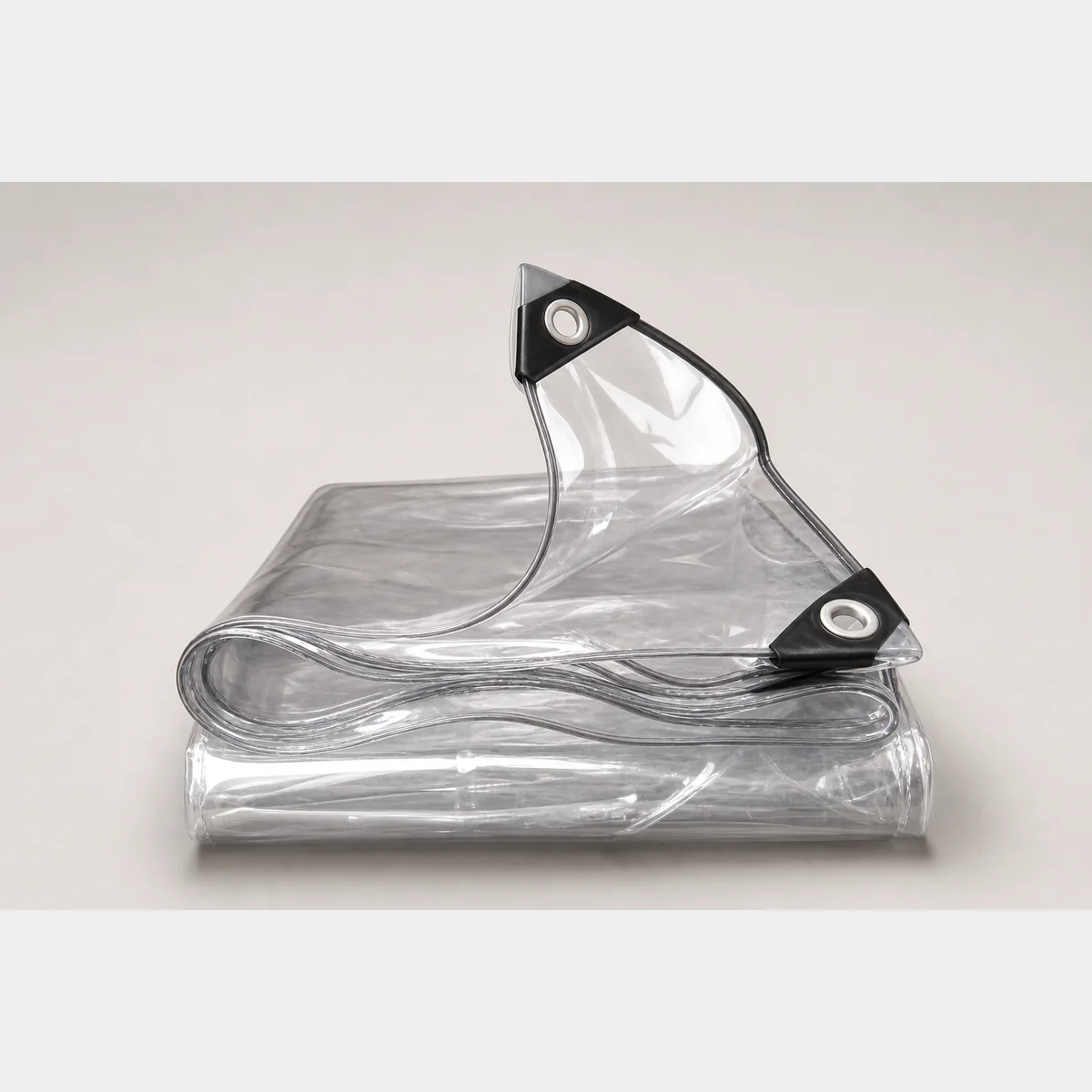
 Canopies & Outdoor EquipmentProduct reference image
Aluminium-frame Tent
Aluminium-frame tent. Material: aluminium alloy frame with canvas; Fabric: (600D Oxford cloth); Side curtain fabric: (420D Oxford cloth). Formal quotation available based on intended use, specifications and quantity.
- Material
- Aluminium alloy frame with canvas
- Fabric
- (600D Oxford cloth)
- Side curtain fabric
- (420D Oxford cloth)
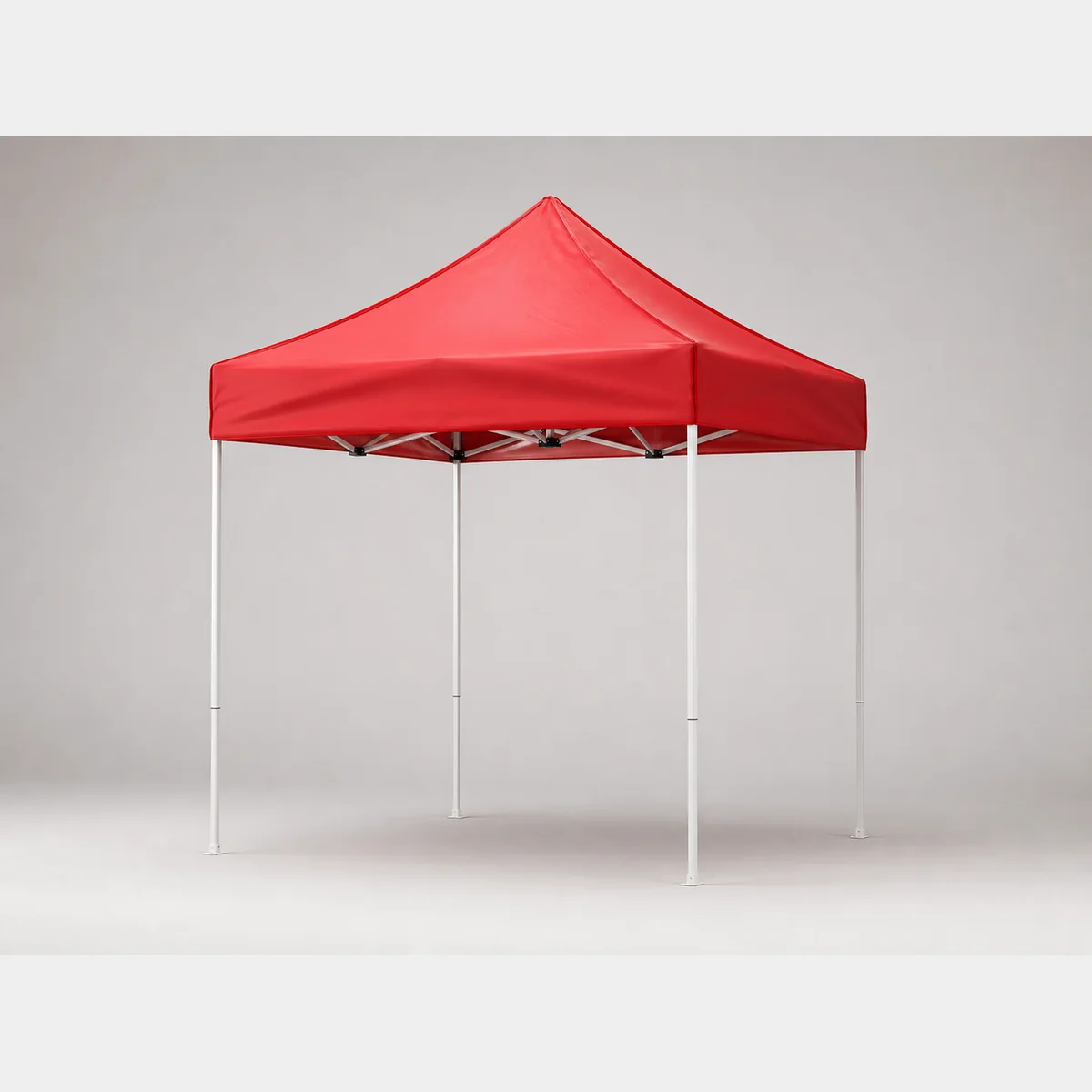
 Canopies & Outdoor EquipmentProduct reference image
Flame-retardant Transparent PVC Sidewall
Flame-retardant transparent PVC sidewall. A: 1.85M x 1.85M (0.5 mm thick); B: 1.85M x 2.85M (0.5 mm thick).
- A
- 1.85M x 1.85M (0.5 mm thick)
- B
- 1.85M x 2.85M (0.5 mm thick)
 Canopies & Outdoor EquipmentProduct reference image
Iron-frame Tent
Iron-frame tent, material: iron frame with canvas; Fabric colours: Red/Blue/Green (other colours or silk-screen logo require formal quotation); Fabric: (600D Oxford fabric). Formal quotation available based on use, specifications and quantity.
- Material
- iron frame with canvas
- Fabric colours
- Red/Blue/Green (other colours or silk-screen logo require formal quotation)
- Fabric
- (600D Oxford fabric)
 Canopies & Outdoor EquipmentProduct reference image
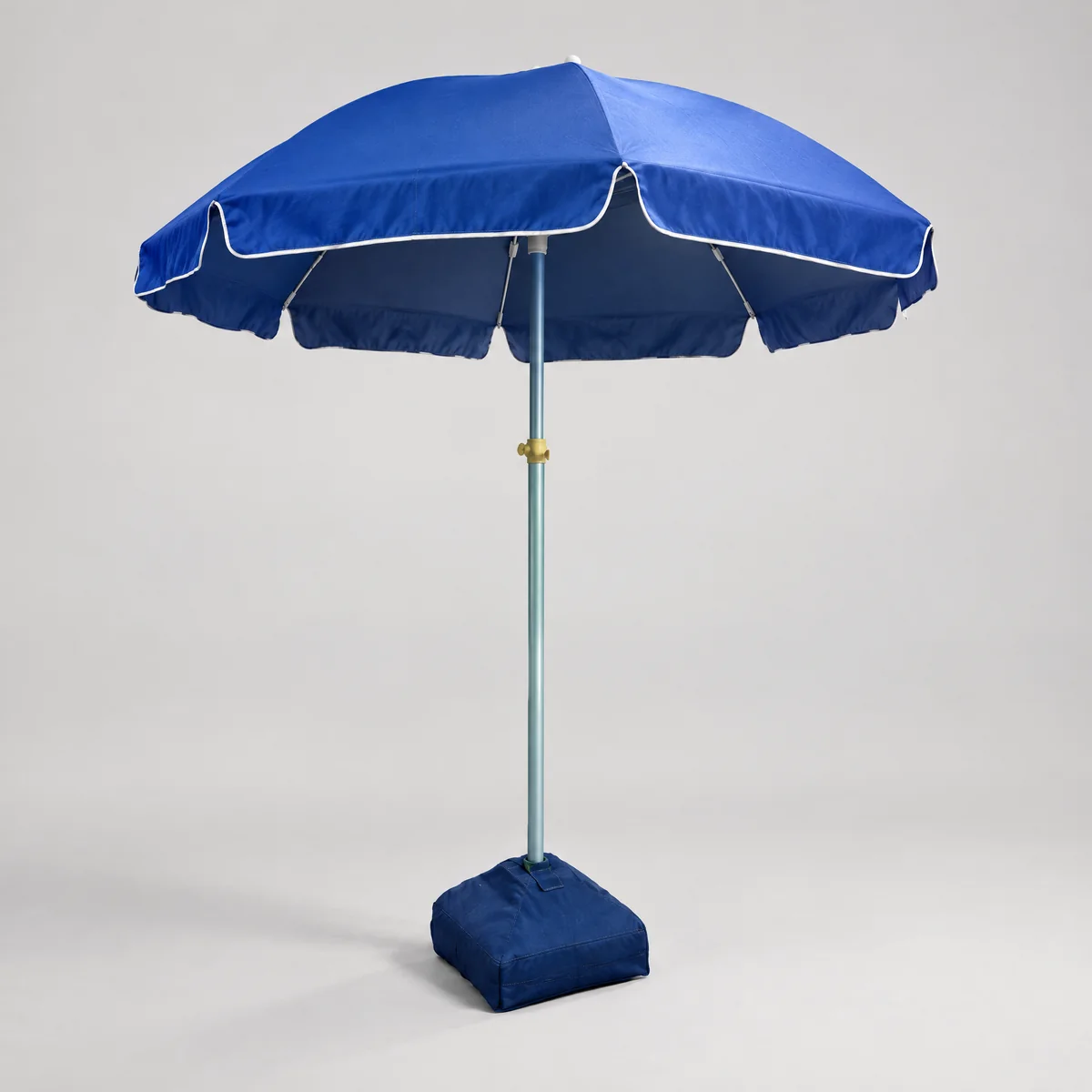
Sun Umbrella (S8109)
Sun umbrella with water base in source-listed 84 in (7 ft), 96 in (8 ft) and 108 in (9 ft) diameters. Nylon fabric; blue or multicolour finish; minimum quantity 1 piece.
- Umbrella diameters
- 84 in (7 ft) / 96 in (8 ft)
- Material
- Nylon fabric
- Colours
- Blue / Multicolour
 Canopies & Outdoor EquipmentProduct reference image
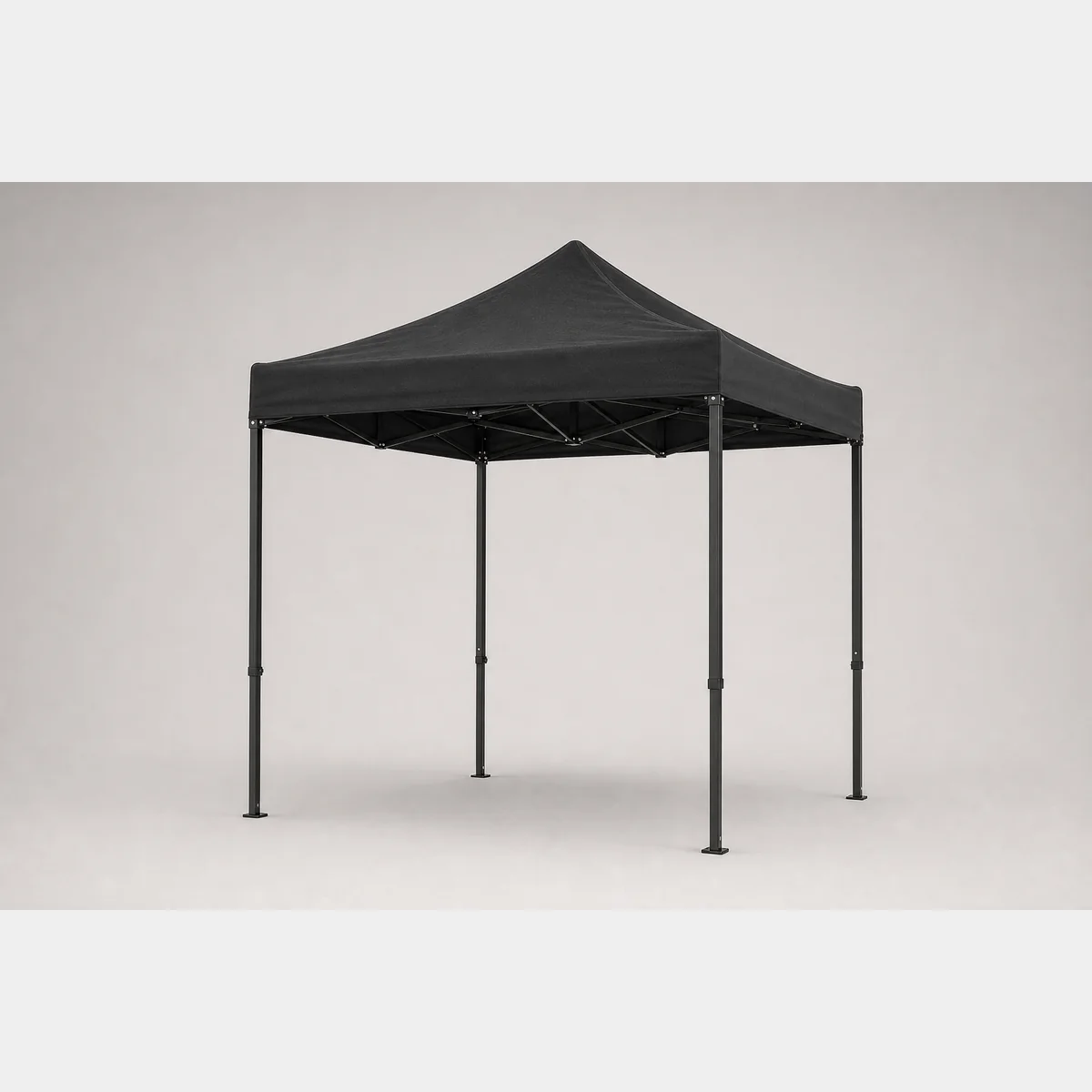
Tent (black iron frame)
Tent (black iron frame), sizes: 2 x 2 m / 3 X 3 m; MOQ: 1/PC; Fabric: (600D Oxford cloth). Request a formal quote based on application, specs and quantity.
- Dimensions
- 2 x 2 m / 3 X 3 m
- MOQ
- 1/PC
- Fabric
- (600D Oxford cloth)
 Canopies & Outdoor EquipmentProduct reference image
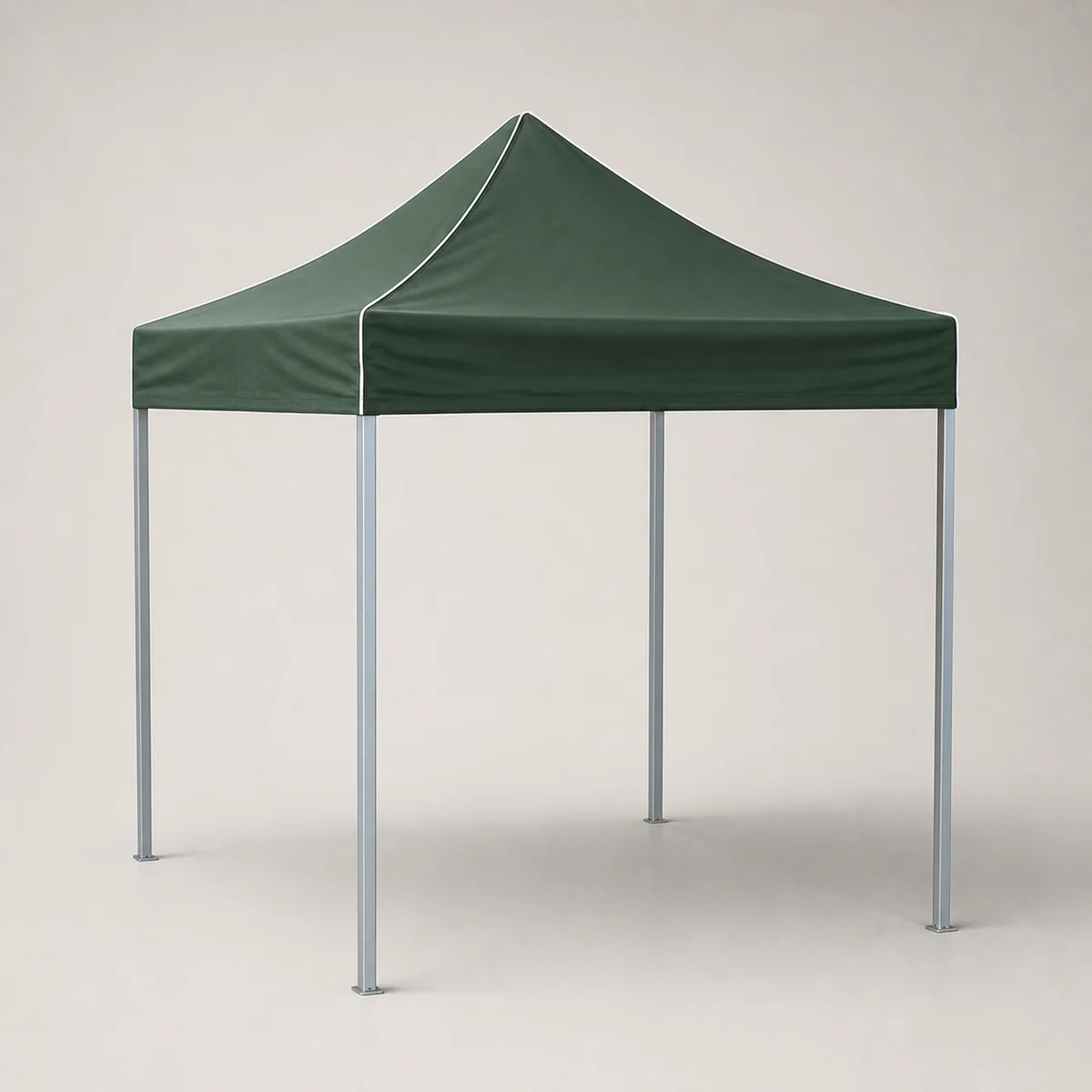
Tent (iron frame) S8101
Tent (iron frame); Material: iron frame with canvas; Fabric colours: Red/Blue/Green (with white trim); Fabric: (600D Oxford cloth). Formal quotation available based on use, specifications and quantity.
- Material
- Iron frame with canvas
- Fabric colours
- Red/Blue/Green (with white trim)
- Fabric
- (600D Oxford cloth)
Continue with closely related procurement topics
These pages share equipment, operating or decision-stage signals with this guide.
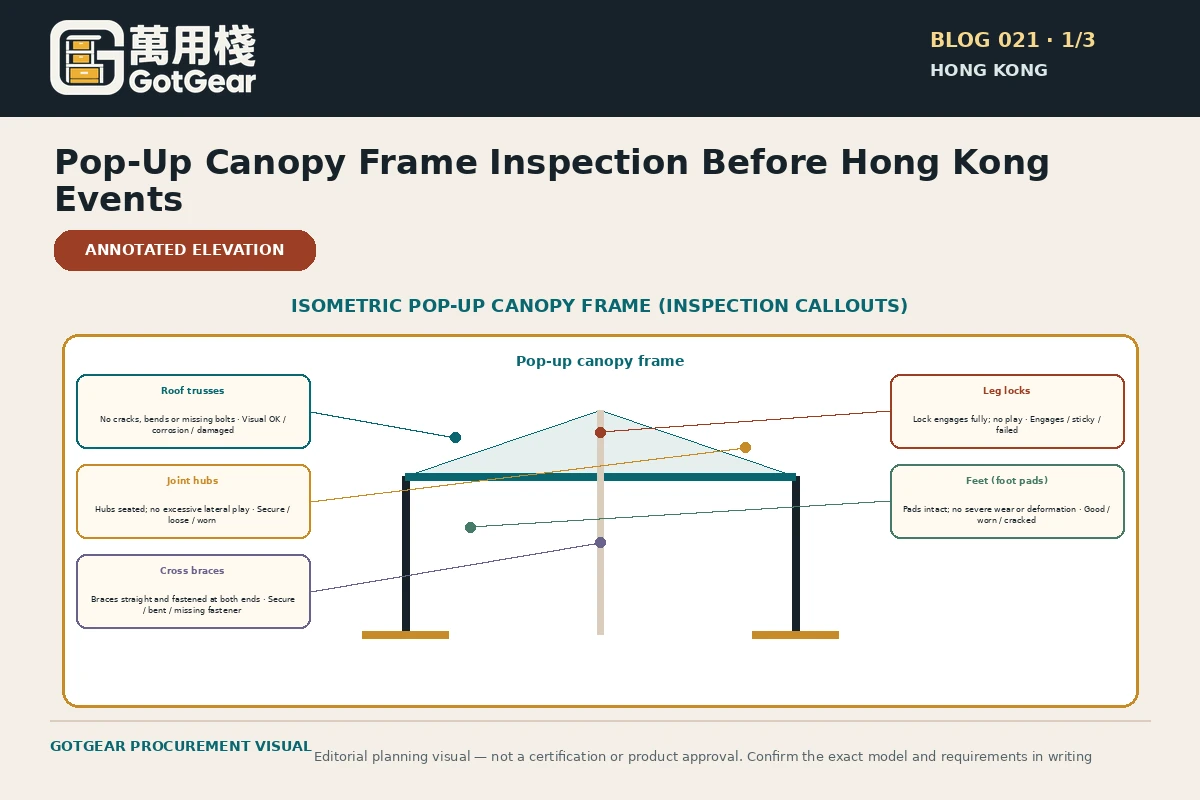
Pop up canopy frame inspection Hong Kong
GotGear explains pop up canopy frame inspection Hong Kong for Hong Kong buyers. See how folding tent leg locking mechanism check Hong Kong supports pop up canopy roof truss inspection Hong Kong, with practical checks, evidence boundaries and written requirements.
Read the guide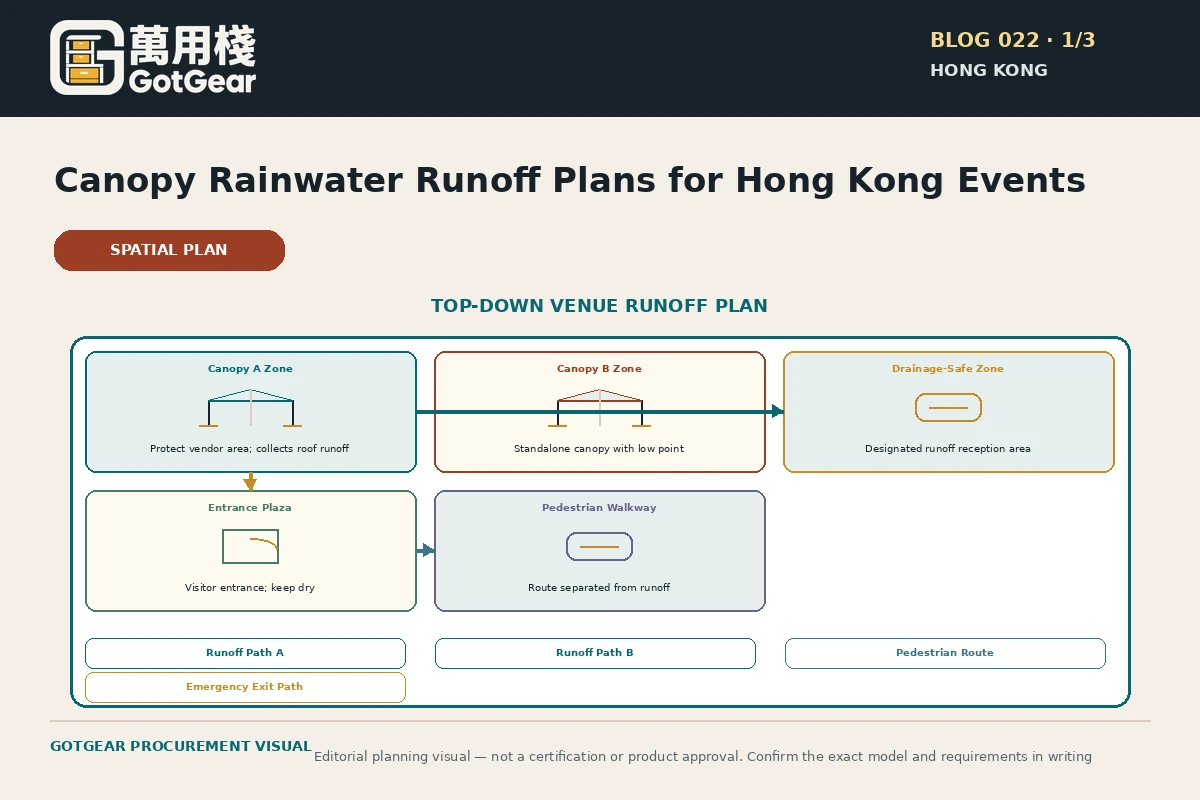
Canopy rainwater runoff plan Hong Kong
GotGear explains canopy rainwater runoff plan Hong Kong for Hong Kong buyers. See how pop up canopy gutter kit layout Hong Kong supports canopy tent rainwater pooling prevention Hong Kong, with practical checks, evidence boundaries and written requirements.
Read the guide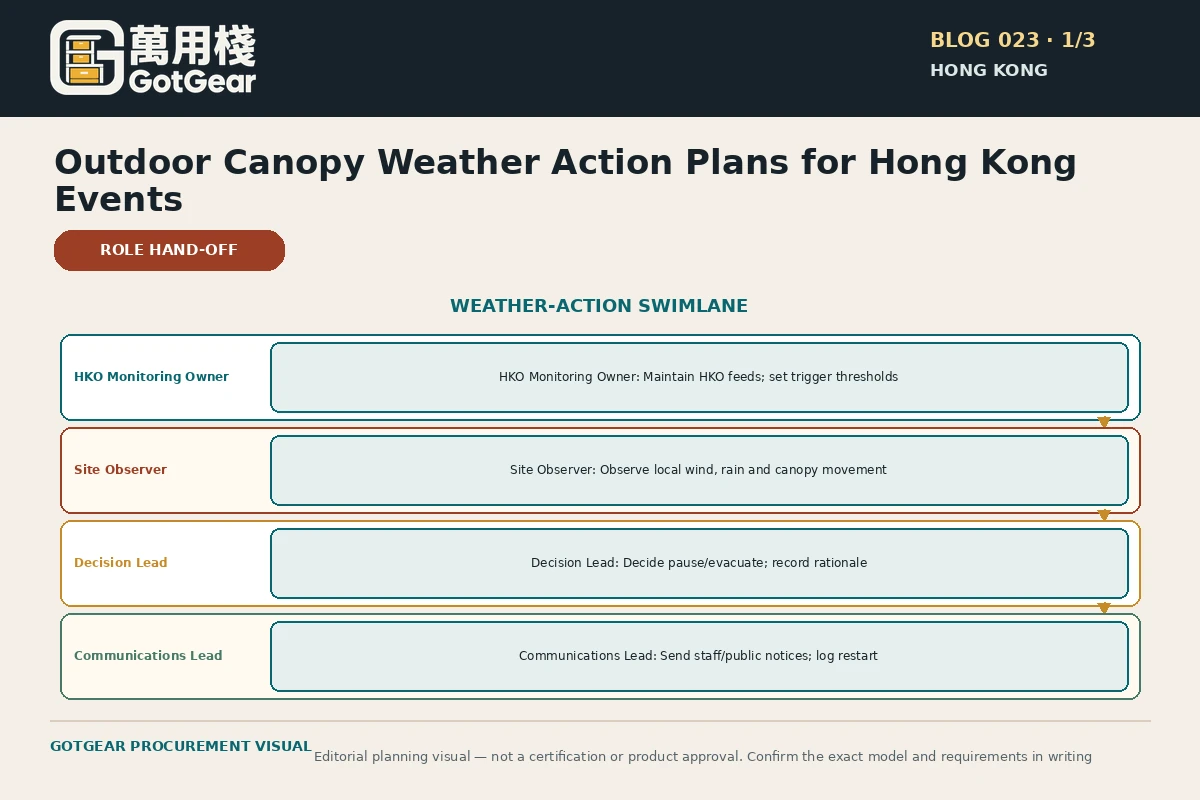
Outdoor canopy weather action plan Hong Kong
GotGear explains outdoor canopy weather action plan Hong Kong for Hong Kong buyers. See how canopy tent wind monitoring procedure Hong Kong supports pop up gazebo thunderstorm response plan Hong Kong, with practical checks, evidence boundaries and written requirements.
Read the guide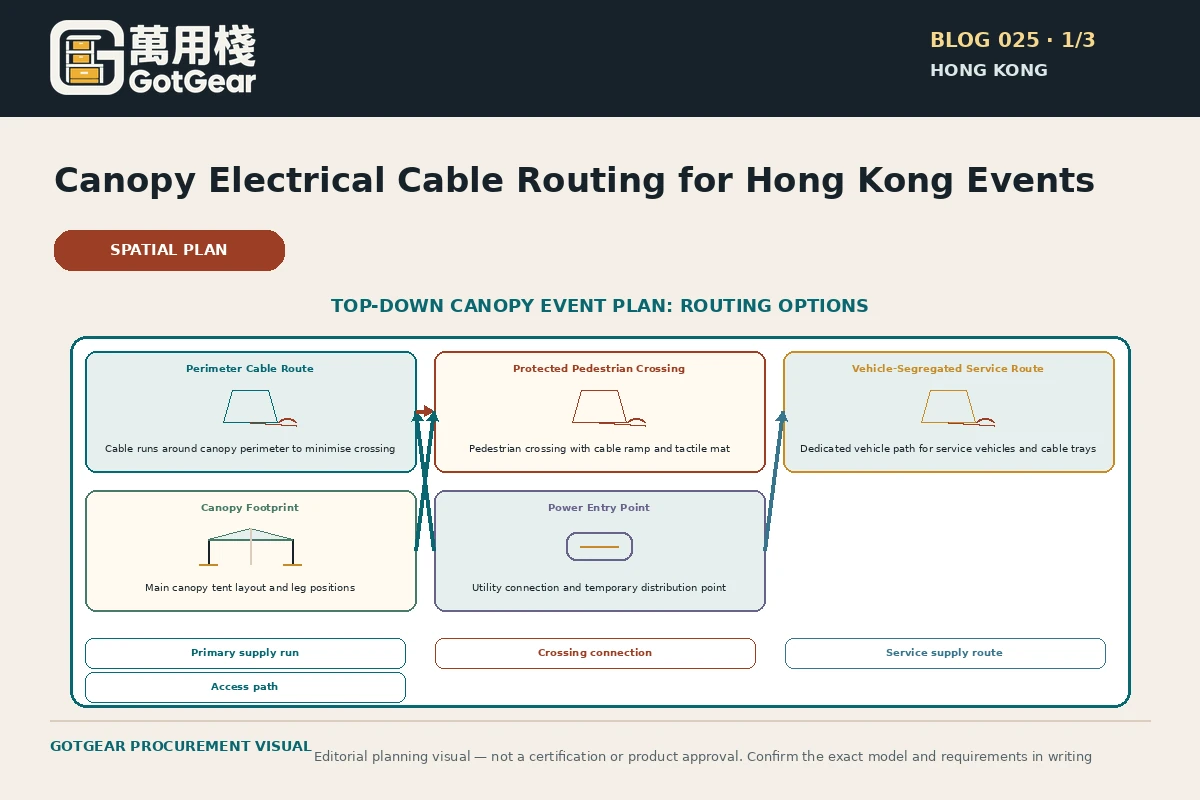
Canopy electrical cable routing Hong Kong
GotGear explains canopy electrical cable routing Hong Kong for Hong Kong buyers. See how outdoor event cable ramp layout Hong Kong supports canopy tent temporary power checklist Hong Kong, with practical checks, evidence boundaries and written requirements.
Read the guideRelated topic indexOpen more English procurement pages10 topics
Browse additional equipment families, applications and procurement questions relevant to these operating requirements.