
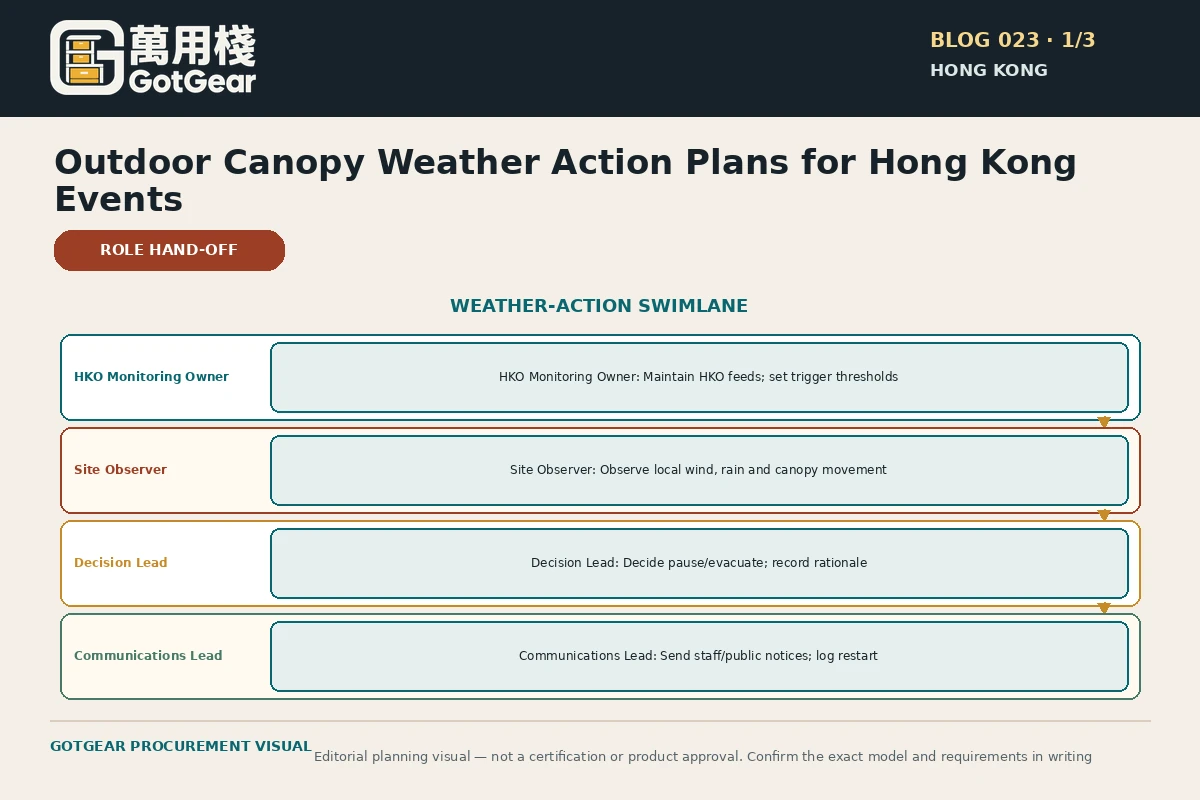
An effective plan is agreed before installation: name a decision lead and backup, assign who watches Hong Kong Observatory signals and site observations, record the canopy model and supplier operating limits, and set clear communication channels and shelter/egress options. Use HKO warnings and forecasts to trigger heightened monitoring, use local wind and ground observations for immediate decisions, and defer to the manufacturer for product-specific limits — with documented review steps if conditions change.
What to remember before you decide
- Agree roles and monitoring cadence before set-up: Decision Lead, Backup and trained spotters are essential.
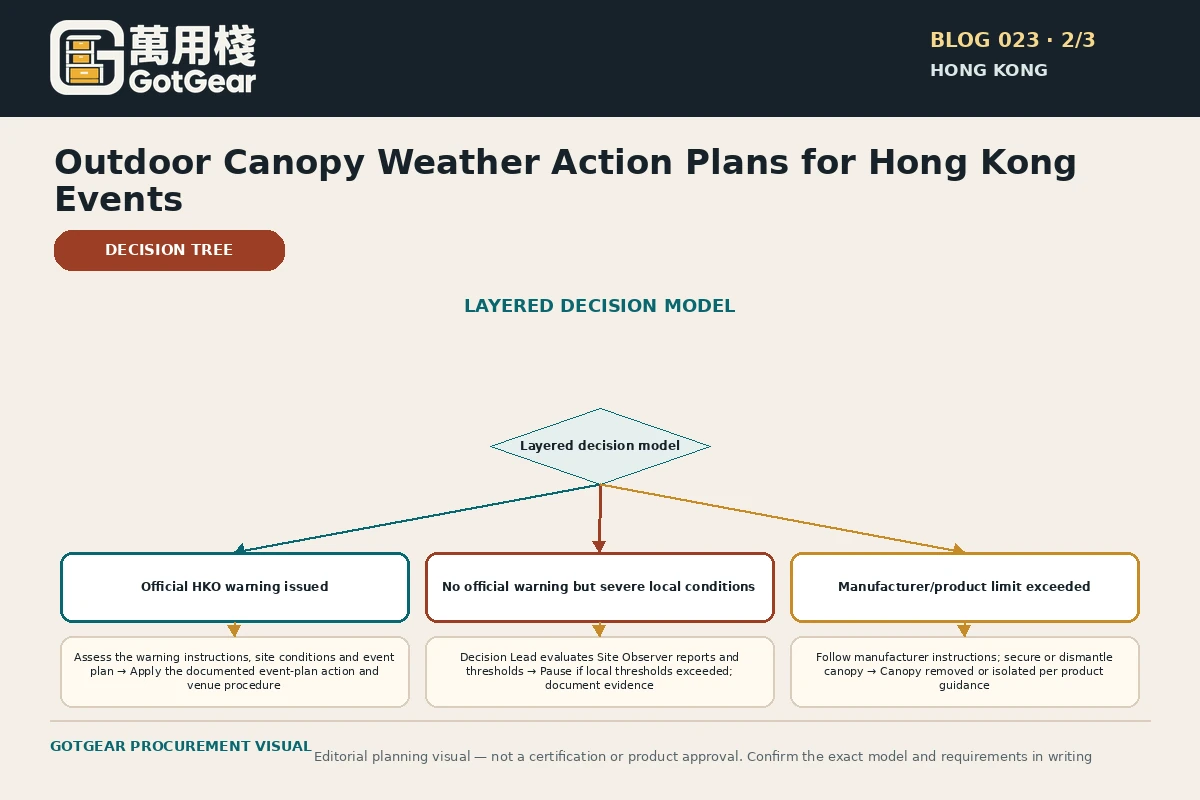
- Treat HKO warnings as escalation inputs, not universal canopy limits; combine them with local observation and manufacturer guidance.
- File supplier instructions and photograph installed configurations; deviations require conservative triggers and documented reassessment.
- Use objective instruments carefully: document calibration and mounting height and validate readings against visual cues.
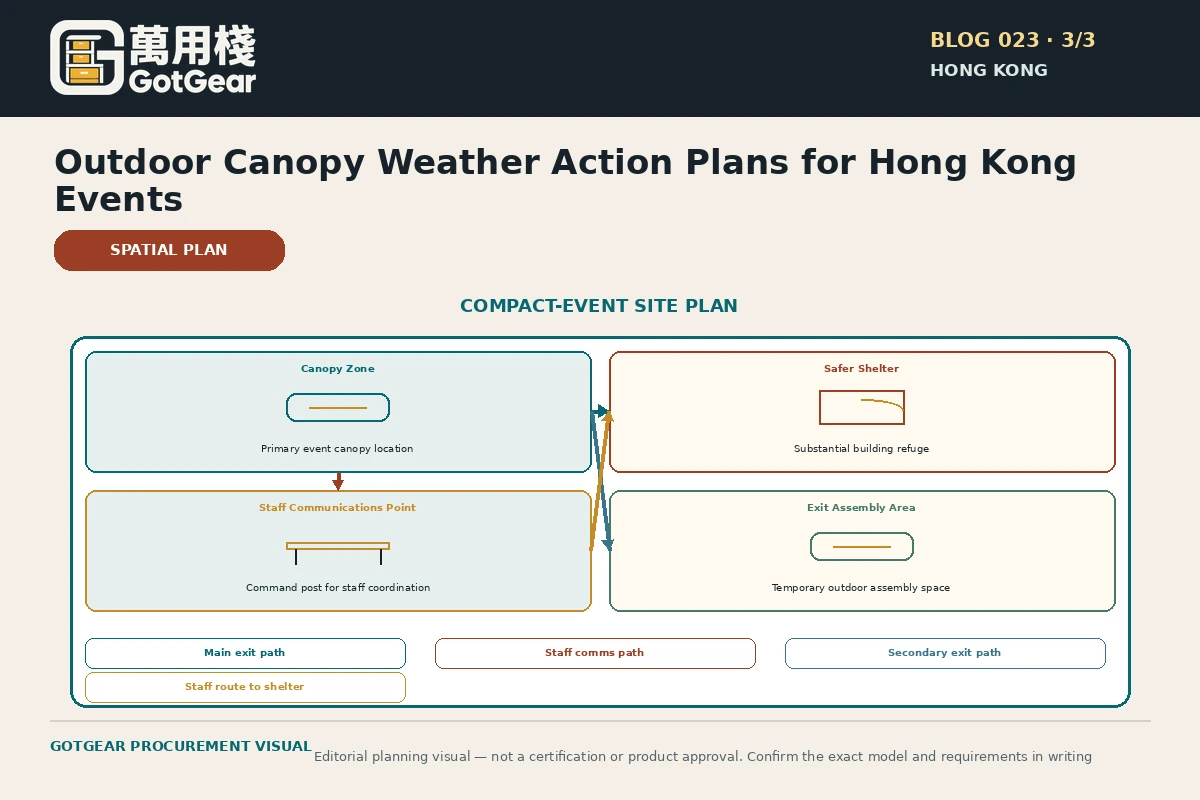
- Map safe shelter and egress routes and practise the escalation phrases and evacuation flow before public arrival.
- Record post-event findings and update the risk assessment and supplier discussions after any near-miss or damage.
Who monitors what, and how to name decision roles
Context: Hong Kong’s built environment and local topography produce strong local variation in wind and rain effects, so territory-wide HKO signals and forecasts are an early-warning input but not a universal operating limit. Use these decision checks: before any canopy goes up, assign a named Decision Lead and a Backup who will monitor HKO tropical cyclone, thunderstorm and rainstorm warnings, and who will coordinate local site observers. The Decision Lead must have access to live HKO products and the event’s risk assessment, plus supplier operating instructions for every canopy model on site. A key limitation is that The Decision Lead cannot rely on HKO signals alone because those signals describe territory-wide conditions and timing rather than roof-scale gusts at a particular piazza, street or rooftop. Manufacturer limits are product-specific and may assume certain anchoring, ground type and sidewall configuration; those assumptions must be checked on-site. Forecasts can be wrong or shift rapidly, and HKO warnings do not authorise specific operational decisions — they inform them. Next, document the Decision Lead and Backup on the site plan and in team information record; circulate supplier operating guidance and the event risk assessment to those names; confirm where and how the HKO feed will be monitored (mobile app, shared dashboard or radio) and agree a minimum monitoring cadence (for example: hourly monitoring when conditions are normal, 15-minute checks when HKO issues an advisory, and continuous observation when a warning is raised). Record these items on the permit-to-install or site team information record.
Practical monitoring assignments and communications
Context: In Hong Kong, heavy rain and sudden violent gusts often arrive with little local warning. Teams should combine official products with local observers and, where used, calibrated instruments. Use these decision checks: name at least two local spotters positioned upwind and downwind of the canopy array and one observer responsible for ground condition reporting. If you deploy anemometers, record their make and calibration date and state the mounting height — readings change with height and obstruction. Decide in advance which channels will be used for escalation (for example: radio channel 1 for site team, WhatsApp group for operational leads, and phone tree for emergency evacuation). A key limitation is that Portable anemometers provide localised data but are sensitive to siting and interference; a single reading cannot represent conditions across a spread of canopies. Visual observation of fabric movement, peg lift, and adjacent objects (trees, scaffolding, flags) is a vital complement. Also note that some supplier limits assume no sidewalls and fixed anchoring; if you add sidewalls or change anchoring, the manufacturer guidance may not directly apply. Next, create an observation log template that records time, HKO product status, local wind behaviour (gusts, sustained wind feel), ground condition (saturated, pooling, subsidence), and any changes to canopy configuration. Train spotters on the log and on clear, short escalation phrases (for example: “Monitor”, “Prepare to Pause”, “Stop Use”, “Evacuate”) and test radio and mobile alerts before public arrival.
“A clear plan names who watches warnings, who watches the site, and what exact words trigger shelter, pause or stop; without those names and phrases a warning is just noise.”— GotGear Editorial Team
What should buyers compare for outdoor canopy weather action plan Hong Kong?
| Option or approach | Best for | Trade-offs | Checks before acceptance |
|---|---|---|---|
| Official HKO warnings and forecasts | Territory-wide early warning, signalling broad risk increases and public safety advisories. | Cannot define canopy-specific wind limits; timing and local severity may differ from on-site conditions. | Confirm HKO product type and timestamp; use it to raise monitoring cadence and consult local observations before action. |
| Local site visual observation | Immediate, location-specific indication of dangerous conditions (peg pull, fabric flapping, debris). | Subjective and reliant on trained spotters; single observations are not a substitute for instrumented trends. | Use standardised observation log entries, multiple spotters and photographs; cross-check with instrument readings if available. |
| Portable anemometers and data loggers | Objective local wind readings tied to a recorded time series for trend detection. | Highly sensitive to siting height and obstruction; one sensor may not represent a spread of canopies. | Document make, calibration date and mounting height; compare trends across at least two sensors or with visual cues. |
| Manufacturer operating instructions and documented limits | Product-specific operational bounds and anchoring recommendations; primary technical authority for that model. | May assume ideal conditions and omit configurations (sidewalls, modified anchors) present on-site. | Attach manufacturer data to the canopy record, photograph installed configuration, and seek supplier clarification when site conditions deviate. |
| Event risk assessment and contingency planning | Holistic decisions that incorporate occupancy, adjacent hazards, egress routes and protective shelter availability. | Requires up-to-date site specifics and cannot replace immediate local observation during fast-changing weather. | Review risk assessment during site changes (layout, sidewalls, anchoring) and after any near-miss; update action triggers accordingly. |
This framework helps buyers create comparable written enquiries. Final model specifications, availability, delivery and commercial terms must be confirmed in a formal quotation.
Using manufacturer instructions and risk assessment to define stop/review triggers
Context: Manufacturer instructions and design documents describe product limits, anchoring methods and permissible configurations. In Hong Kong, suppliers’ guidance should be captured and attached to the site file for each canopy model. Use these decision checks: use manufacturer operating limits as the definitive technical constraints for that product, but only after confirming that the on-site anchoring, sidewalls and ground conditions match the manufacturer’s tested configuration. If they differ, document the divergence as a risk and set conservative triggers for review. A key limitation is that Manufacturer documents sometimes assume ideal anchoring, hard level surfaces and no sidewalls. They rarely account for corner-lift caused by asymmetrical gusts, or for the uplift effects of nearby buildings creating funnels or venturi effects. Engineering verification is outside the scope of a planning article; where conditions or deviations are material it is appropriate to obtain vendor clarification or an independent engineer’s opinion. Next, gather and file supplier operating instructions with photographs of the actual installed condition; record anchoring methods (type and length of straps, deadweight or screw-in anchors, ground type). Specify pre-agreed review triggers tied to observable conditions (for example: sidewall flapping, peg pull beyond half depth, canopy frame distortion, sustained local gusts as noted by spotters) and map those triggers to actions (reduce occupancy, lower sidewalls, deflate/rain-shed, pause activities, or evacuate).
Site observation, forecast use and when to treat a warning as a trigger
Context: Hong Kong Observatory warnings (tropical cyclone, thunderstorm, rainstorm) should elevate monitoring and may trigger staged protective actions. Use these decision checks: treat HKO forecasts and signals as escalation triggers rather than unconditional stop orders. For example, a thunderstorm warning should move the team from standard monitoring to intensified observation, immediate sheltering guidance for staff and the public near exposed canopies, and readiness to pause or stop activities if local signs show dangerous gusts or if manufacturer limits are approached. A key limitation is that Do not convert a named HKO signal number into a single canopy wind-speed operating limit. HKO guidance and signals do not replace product-specific limits or local assessment. Nor do they substitute for event evacuation plans or for engineering decisions about anchoring adequacy. Next, define staged actions keyed to HKO status and local observations — e.g. Stage 1 (HKO advisory): increase monitoring cadence and check anchors; Stage 2 (thunderstorm warning or significant forecast change): apply protective coverings, close sidewalls where safe, and restrict occupancy under canopies; Stage 3 (escalation indicators such as sustained violent gusts, visible frame damage or manufacturer breach): stop use, evacuate to identified safe shelter and secure or dismantle canopies when safe.
Outdoor canopy weather action plan Hong Kong decision checklist
- Name a Decision Lead and Backup; list mobile and radio contacts on the site plan.
- Record canopy model, serial number, supplier operating instructions and photographed installed condition.
- Identify and train at least two local spotters plus an instrument operator (if using anemometers).
- Define monitoring cadence for normal, advisory and warning states (e.g. hourly, 15-minute, continuous).
- Agree specific escalation phrases and communication channels (radio channel, WhatsApp, call tree).
- Map safe shelter locations and primary/secondary egress routes on the site plan and team information record.
- List anchoring methods, ground type and verify anchor penetration/weight before public arrival.
- Document sidewall configuration and note when sidewalls add additional wind loading requiring reassessment.
- Set documented stop/review triggers tied to observable criteria and manufacturer limits.
- Plan for post-event reassessment and record any deviations from supplier guidance for follow-up.
Practical action sequence
- Before set-up: attach supplier operating instructions to the canopy file and confirm anchoring compatibility with ground.
- inform the relevant team: communicate Decision Lead, Backup, spotter roles, monitoring cadence and escalation phrases.
- Install spotters and any instruments; confirm anemometers are sited, levelled and logged with timestamped readings.
- During event: log HKO updates, local observations and any instrument trends at the agreed cadence.
- If escalation trigger met: switch to pre-agreed protective measures (close sidewalls if allowed, restrict occupancy, prepare to dismantle).
- On immediate danger (frame damage, peg pull, violent gusts): execute Stop Use, evacuate to identified shelter and secure canopy if safe.
- After event: document actions, damages and near-misses; update risk assessment and supplier discussions.
- If configuration changed (sidewall added, anchors relocated): pause, reassess against manufacturer guidance and update triggers before resuming.
Apply the checks to your Hong Kong site
Hong Kong’s coastal promenades, Victoria Harbour exposures, hillside terraces and urban canyons create localised wind behaviours that can change gust direction and intensity within a few dozen metres. Diagram A — ‘Harbour funnel’ — sketches wind channelled between tall buildings that raises waterfront canopy gusts; Diagram B — ‘Hillside acceleration’ — shows upslope/down-slope variability relevant to rooftop and terrace setups; Diagram C — ‘Drainage and anchoring’ — is a plan view of saturated soil zones, recommended anchor positions and emergency egress routes. Use forecast monitoring, local site observation and manufacturer operating limits as complementary inputs, not substitutes, when you finish an outdoor canopy weather action plan Hong Kong. A canopy tent wind monitoring procedure Hong Kong should place spotters where topography amplifies gusts and document trigger thresholds. Likewise, integrate a pop up gazebo thunderstorm response plan Hong Kong for shelter routing and safe dismantling. Operational takeaway: assign trained spotters to identified acceleration zones, verify anchor engagement on firm ground, and mark nearest structural shelter on the site plan before erecting canopies.
References used for this article
These sources provide regulatory, safety or planning context. They do not certify any GotGear product or replace site-specific professional advice.
- Hong Kong Observatory — Considerations for Issuing Tropical Cyclone Warning Signals — Provides current definitions and cautions for Hong Kong tropical-cyclone signals, including local variation in wind conditions and forecast uncertainty; use to explain why local monitoring matters.
- Hong Kong Observatory — Thunderstorm Warning — Provides official thunderstorm-warning context and public precautions, including seeking safe shelter, avoiding high ground and being alert to violent gusts and flying debris.
- UK Health and Safety Executive — Outdoor equipment at events — Supports weather monitoring, attention to foreseeable wind loading and ground conditions, compliance with manufacturer/design instructions, and pre-planned action for adverse weather.
- Hong Kong Observatory — Rainstorm Warning System — Provides the official Amber/Red/Black rainstorm context and safety advice for heavy-rain disruption, flooding and exposed outdoor work.
Questions about outdoor canopy weather action plan Hong Kong
Is HKO Signal No. 3 a canopy wind limit I must follow?
No. HKO Signal No. 3 indicates gale or strong wind conditions over parts of the territory and is a signal to the public and organisations to take precautions. It is an important escalation trigger in your plan, but it does not translate into a universal canopy wind-speed operating limit. Canopies are product-specific and their safe operating conditions depend on manufacturer instructions, anchoring and local site effects. Use Signal No. 3 to increase monitoring and implement staged protective actions, then apply local observations and manufacturer limits to decide whether to pause or stop use.
Who should call a pause or stop for canopy use on site?
The Decision Lead (or the Backup if the Lead is unavailable) should call a pause or stop according to the pre-agreed plan and triggers. Spotters should immediately report observed hazards (e.g. peg pull, frame distortion, violent gusts) using the agreed escalation phrase. If a spotter judges conditions dangerous, they can issue the escalation to the Decision Lead, who implements the action. Ensure all staff and contractors know the chain of command and the exact words that constitute a pause or stop order.
Why might a calm forecast still require a local review of canopies?
Local topography and urban structures in Hong Kong can create sudden gusts and channelled winds that forecasts or broad HKO guidance may not capture. Heavy, localised thunderstorms can produce violent gusts even when synoptic forecasts appear calm. Ground conditions (saturated soil) or newly added sidewalls can materially change loadings. For these reasons, local observation and a pre-agreed reassessment process are essential even when the wider forecast is benign.
Should I rely on portable anemometer readings as the only trigger?
No. Portable anemometers are useful objective tools but are sensitive to siting height and nearby obstructions; a single sensor does not represent an array of canopies. Use anemometer trends together with visual spotter reports, manufacturer guidance and HKO products. Document sensor calibration and mounting height, and validate decisions against multiple inputs rather than a single reading.
What should I do if sidewalls need to be added during an event?
Adding sidewalls changes aerodynamic loading and can increase uplift and racking forces on the canopy frame. Pause operations, assess the manufacturer guidance for that model, and if the guidance does not support sidewalls in your configuration treat the change as a risk escalation: reduce occupancy, increase monitoring, and prepare to remove sidewalls if wind indicators rise. Record the change and the reassessment outcome in the site log.
After a storm or near-miss, what follow-up is required?
Conduct a post-event inspection and document any fabric tears, frame bends, peg displacement or anchor failure. Update the event risk assessment to reflect what happened, record decisions and timings, contact the supplier if product damage suggests a design or installation issue, and retrain spotters or adjust monitoring cadences based on lessons learned.
Compare available product models and specifications
These product cards are matched to this buying topic. Select a specification and quantity to send the product details to WhatsApp.
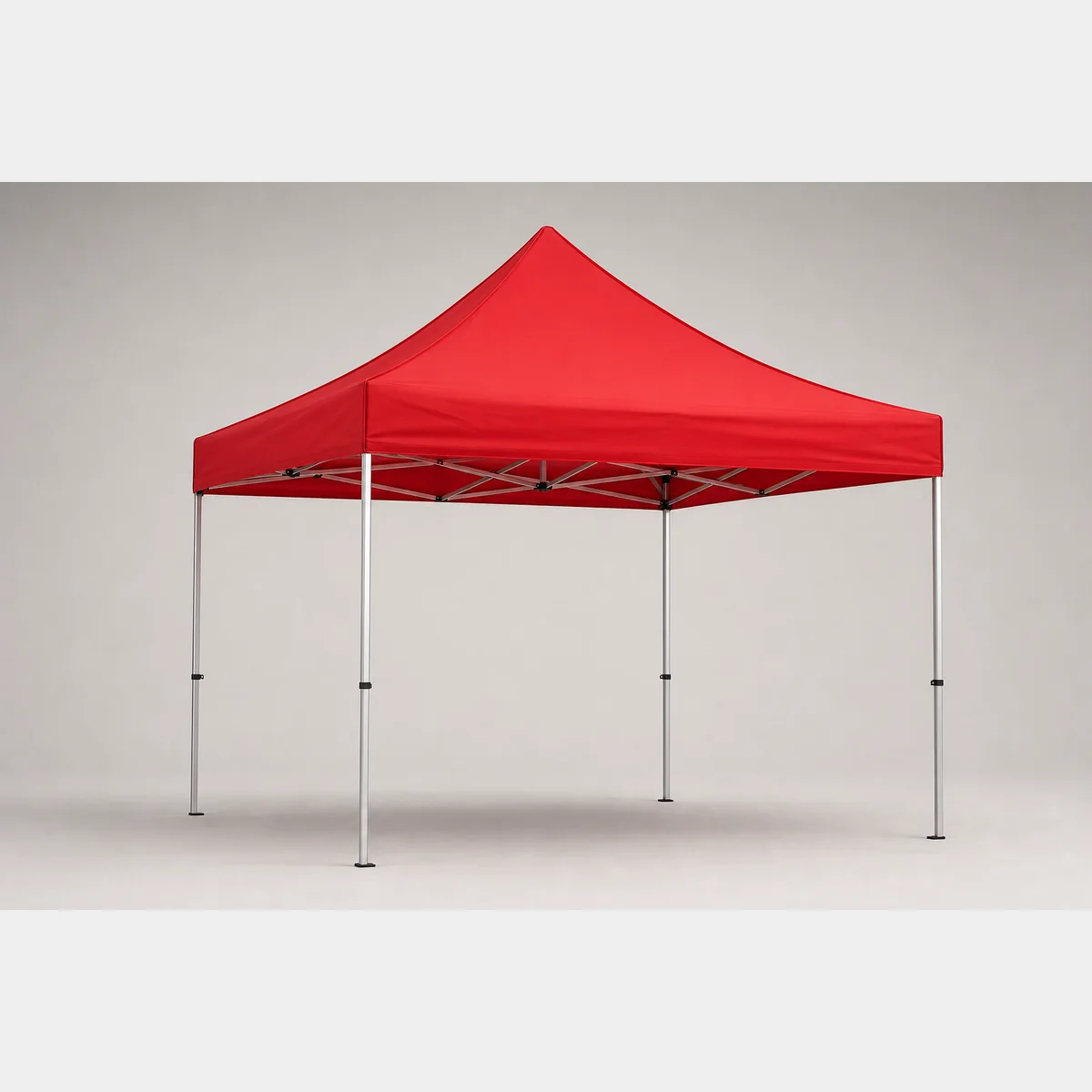 Canopies & Outdoor EquipmentProduct reference image
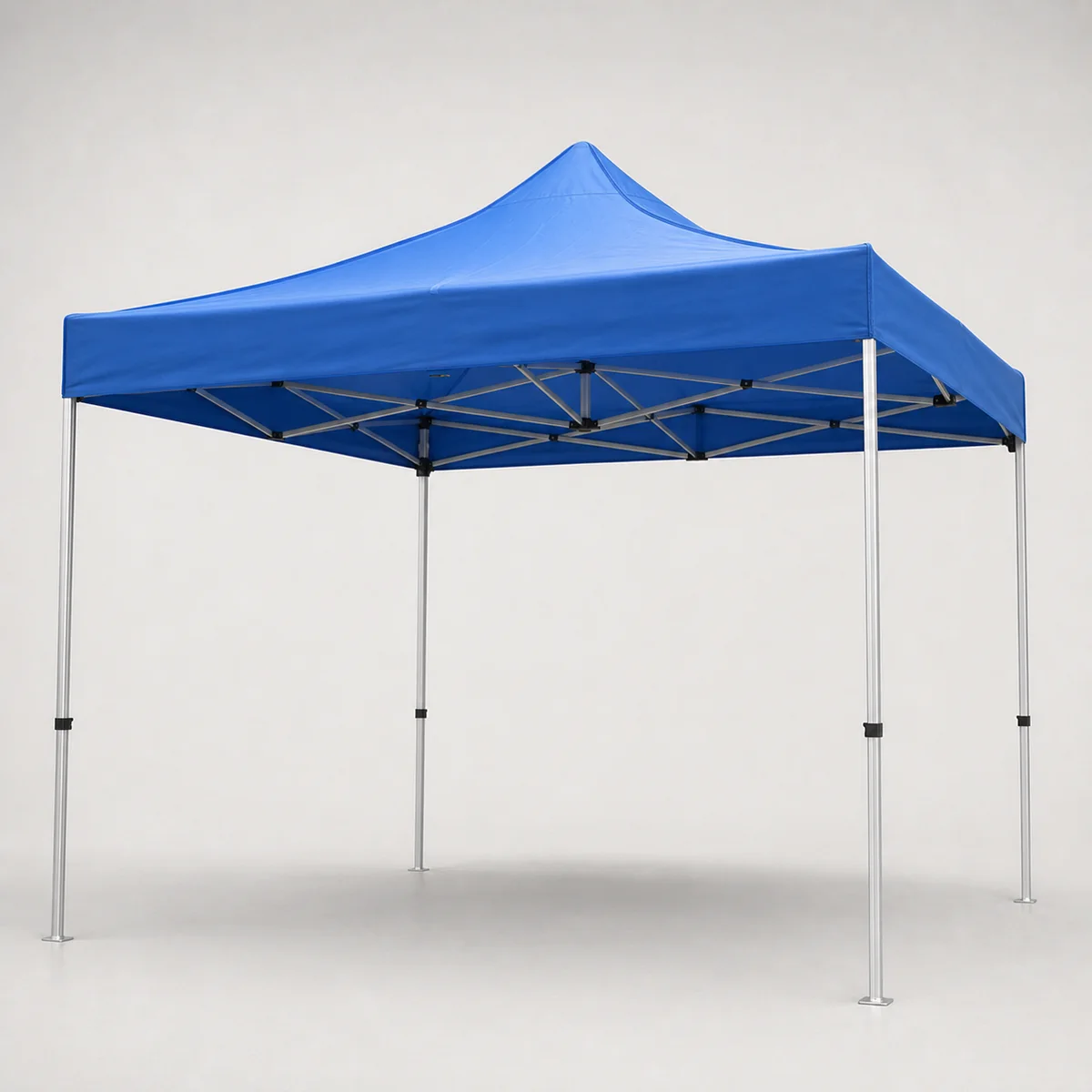
Tent (stainless steel)
Tent (stainless steel). Material: stainless steel frame with canvas; canopy: 600D Oxford fabric; listed canopy colours: Red/Blue/Green (other colours are subject to written confirmation). Formal quotation available on request based on use, specifications and quantity.
- Material
- stainless steel frame with canvas
- Canopy
- 600D Oxford fabric
- Listed canopy colours
- Red/Blue/Green (other colours are subject to written confirmation)
 Canopies & Outdoor EquipmentProduct reference image
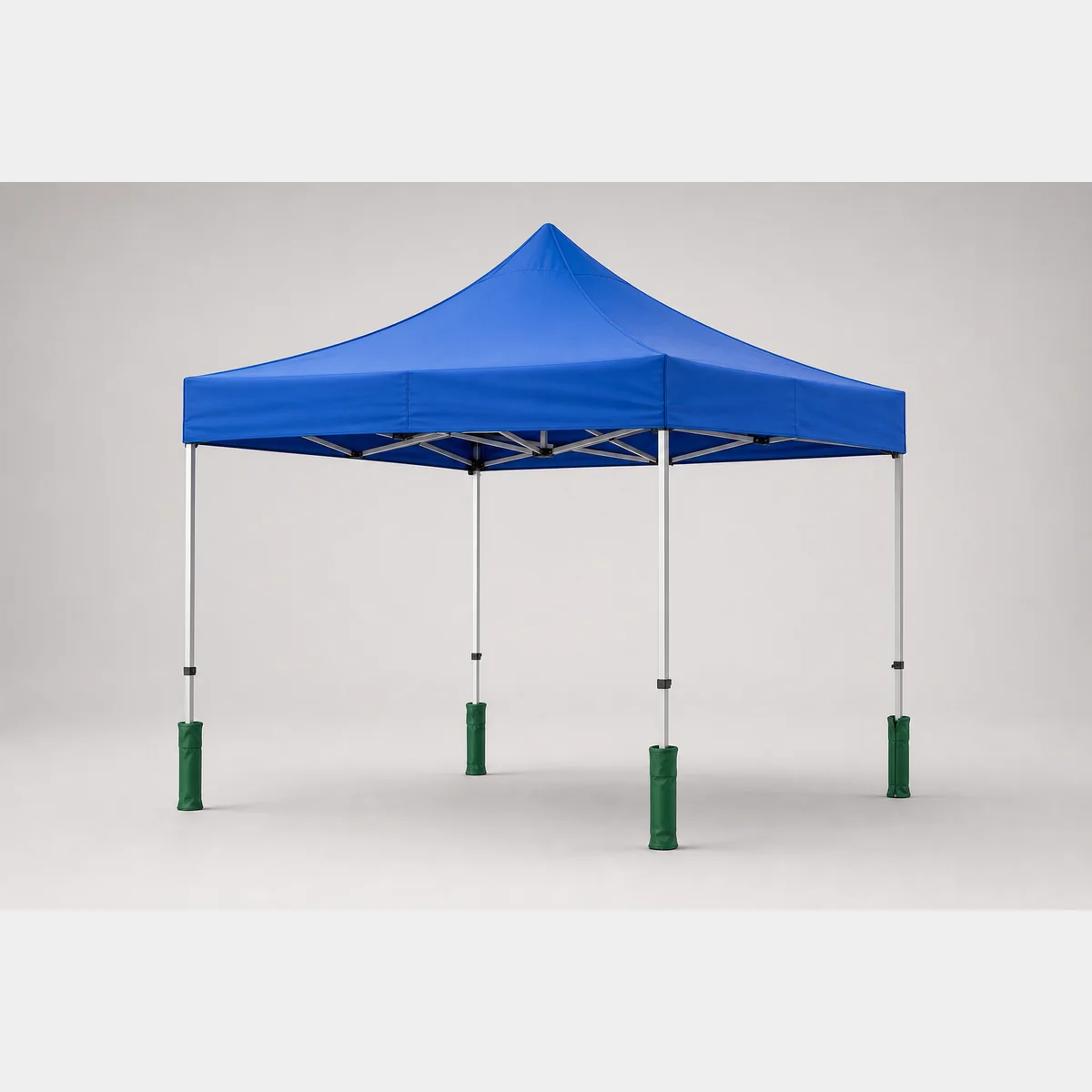
Aluminium-frame Tent
Aluminium-frame tent. Material: aluminium alloy frame with canvas; Fabric: (600D Oxford fabric); Listed colours: Red/Blue/Green (other colours are subject to written confirmation). Formal quotation available upon enquiry by intended use, specifications and quantity.
- Material
- Aluminium alloy frame with canvas
- Fabric
- (600D Oxford fabric)
- Listed colours
- Red/Blue/Green (other colours are subject to written confirmation)
 Canopies & Outdoor EquipmentProduct reference image
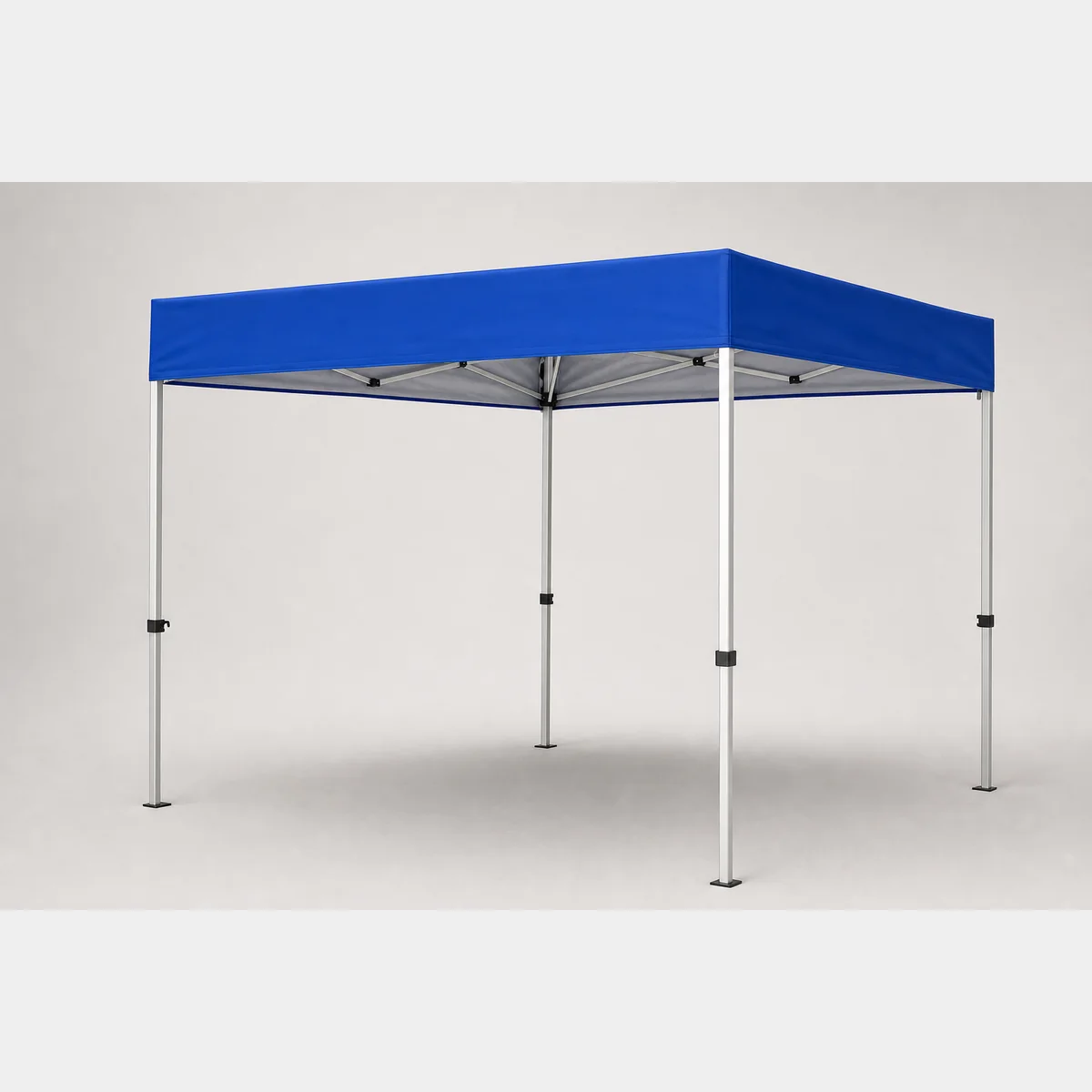
Aluminium-frame Tent
Aluminium-frame tent. Material: aluminium alloy frame with canvas; Fabric: (600D Oxford cloth); Side curtain fabric: (420D Oxford cloth). Formal quotation available based on intended use, specifications and quantity.
- Material
- Aluminium alloy frame with canvas
- Fabric
- (600D Oxford cloth)
- Side curtain fabric
- (420D Oxford cloth)
 Canopies & Outdoor EquipmentProduct reference image
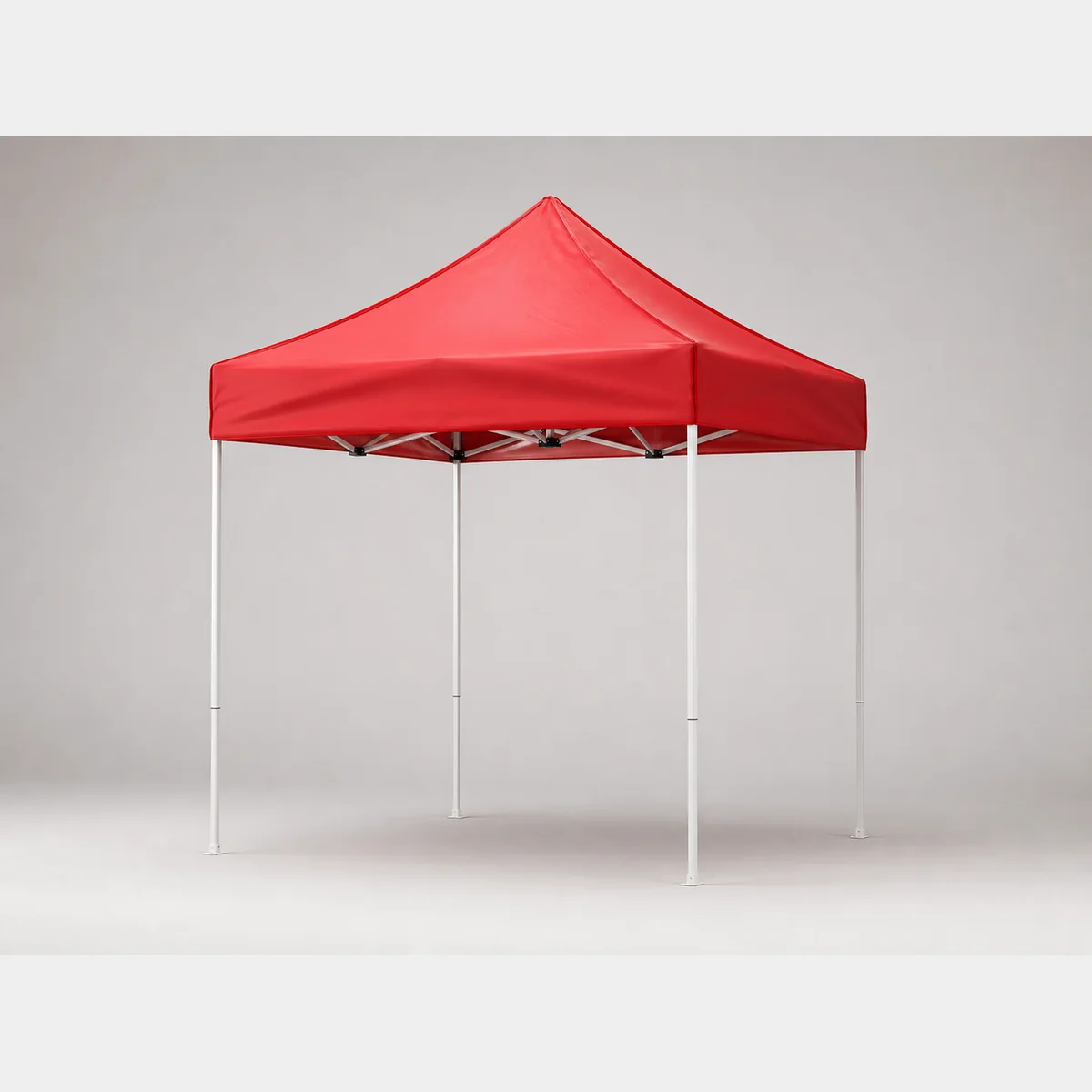
Flat-top Tent (Stainless Steel Frame)
Flat-top Tent (Stainless Steel Frame), A: 2Mx2M; B: 3Mx3M. Formal quotation available upon request based on use, specifications and quantity.
- A
- 2Mx2M
- B
- 3Mx3M
 Canopies & Outdoor EquipmentProduct reference image
Iron-frame Tent
Iron-frame tent, material: iron frame with canvas; Fabric colours: Red/Blue/Green (other colours or silk-screen logo require formal quotation); Fabric: (600D Oxford fabric). Formal quotation available based on use, specifications and quantity.
- Material
- iron frame with canvas
- Fabric colours
- Red/Blue/Green (other colours or silk-screen logo require formal quotation)
- Fabric
- (600D Oxford fabric)
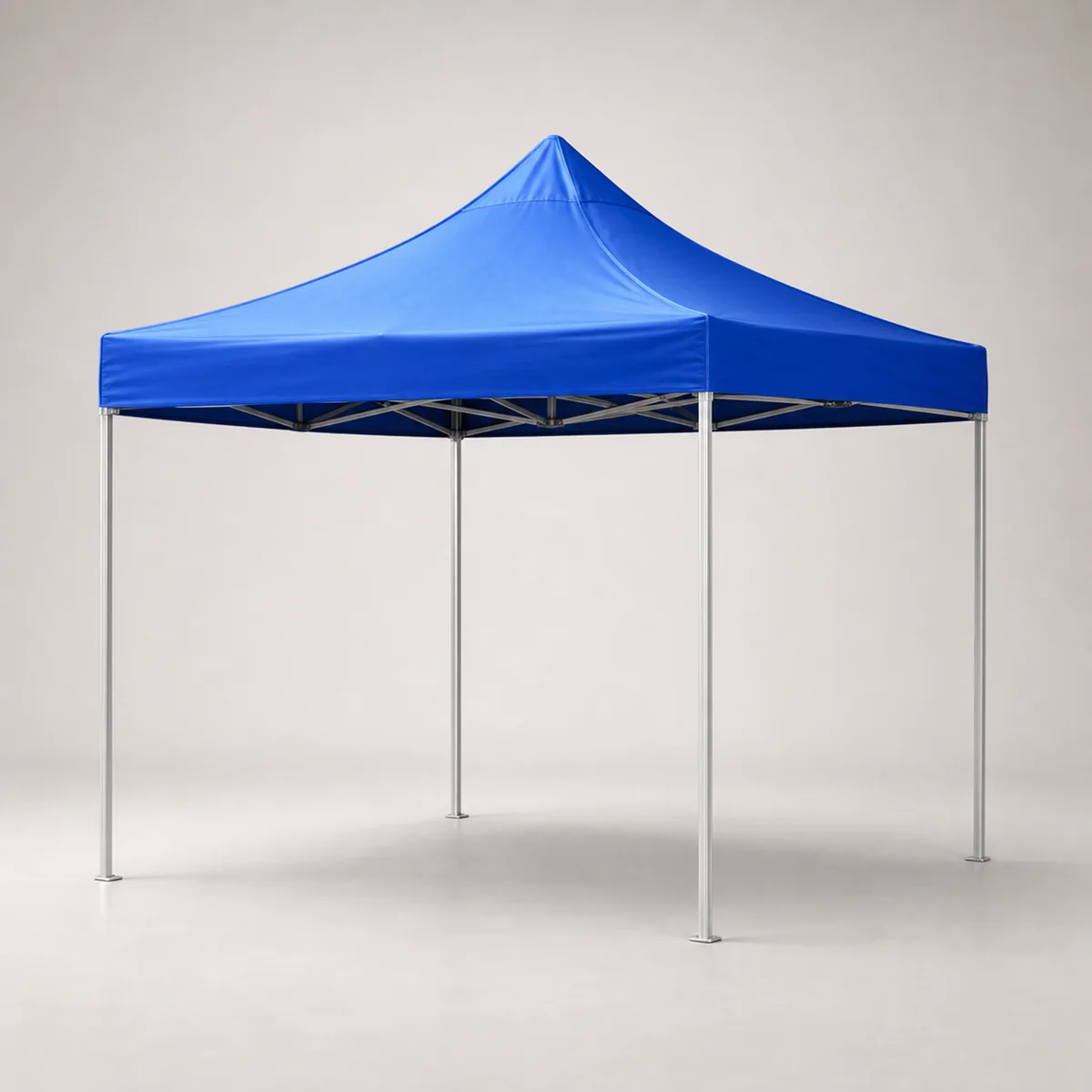 Canopies & Outdoor EquipmentProduct reference image
Tent (aluminium frame)
Tent (aluminium frame), A: 2M x 2M; B: 3M x 3M; C: 2.5M x 2.5M. Formal quotation available on request based on use, specifications and quantity.
- A
- 2M x 2M
- B
- 3M x 3M
- C
- 2.5M x 2.5M
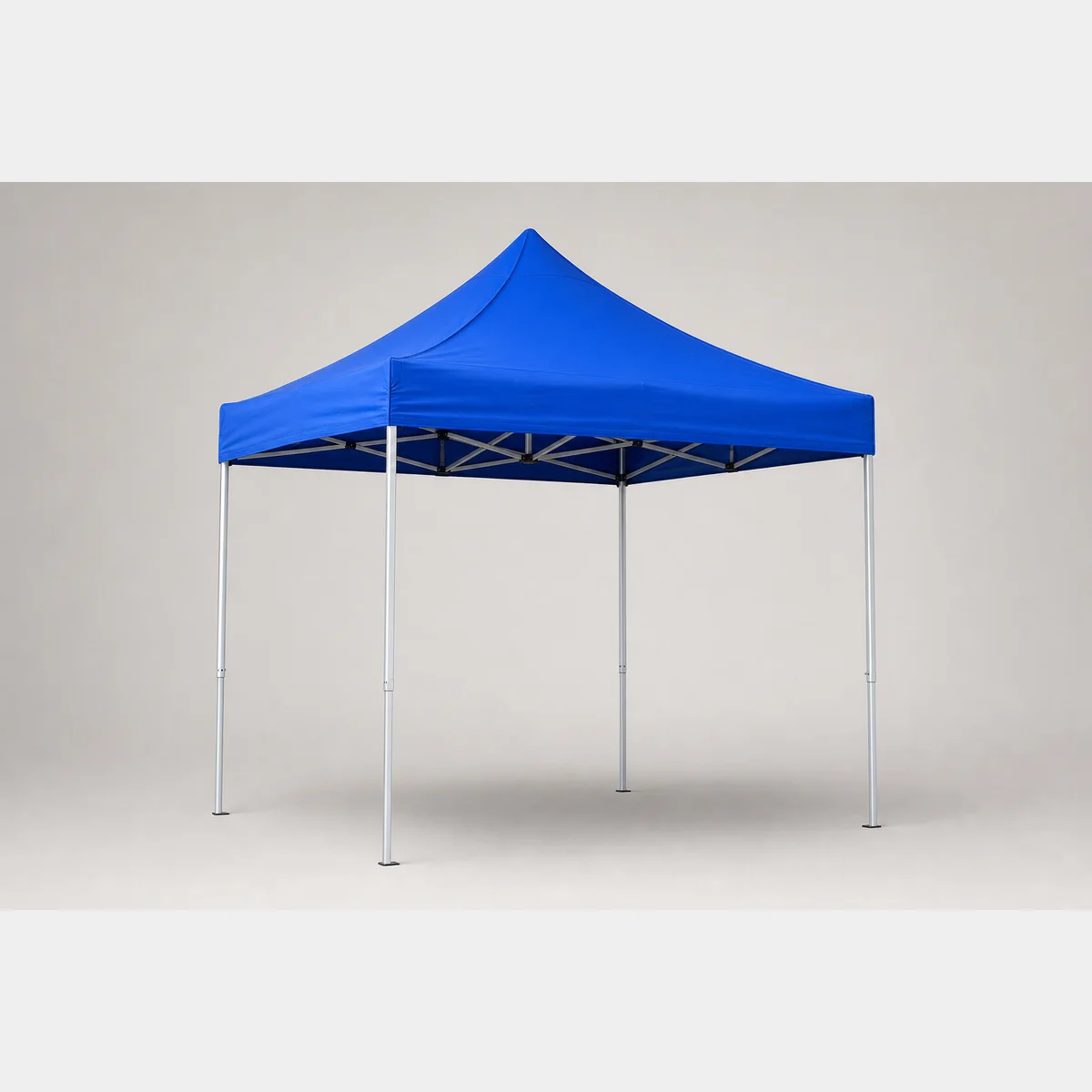 Canopies & Outdoor EquipmentProduct reference image
Tent (Aluminium frame) S8141
S8141 aluminium tent frame in four source-listed sizes. Source records conflict between 38 mm and 40 mm upright tubes; confirm the exact tube specification in writing.
- Size
- 2Mx2M
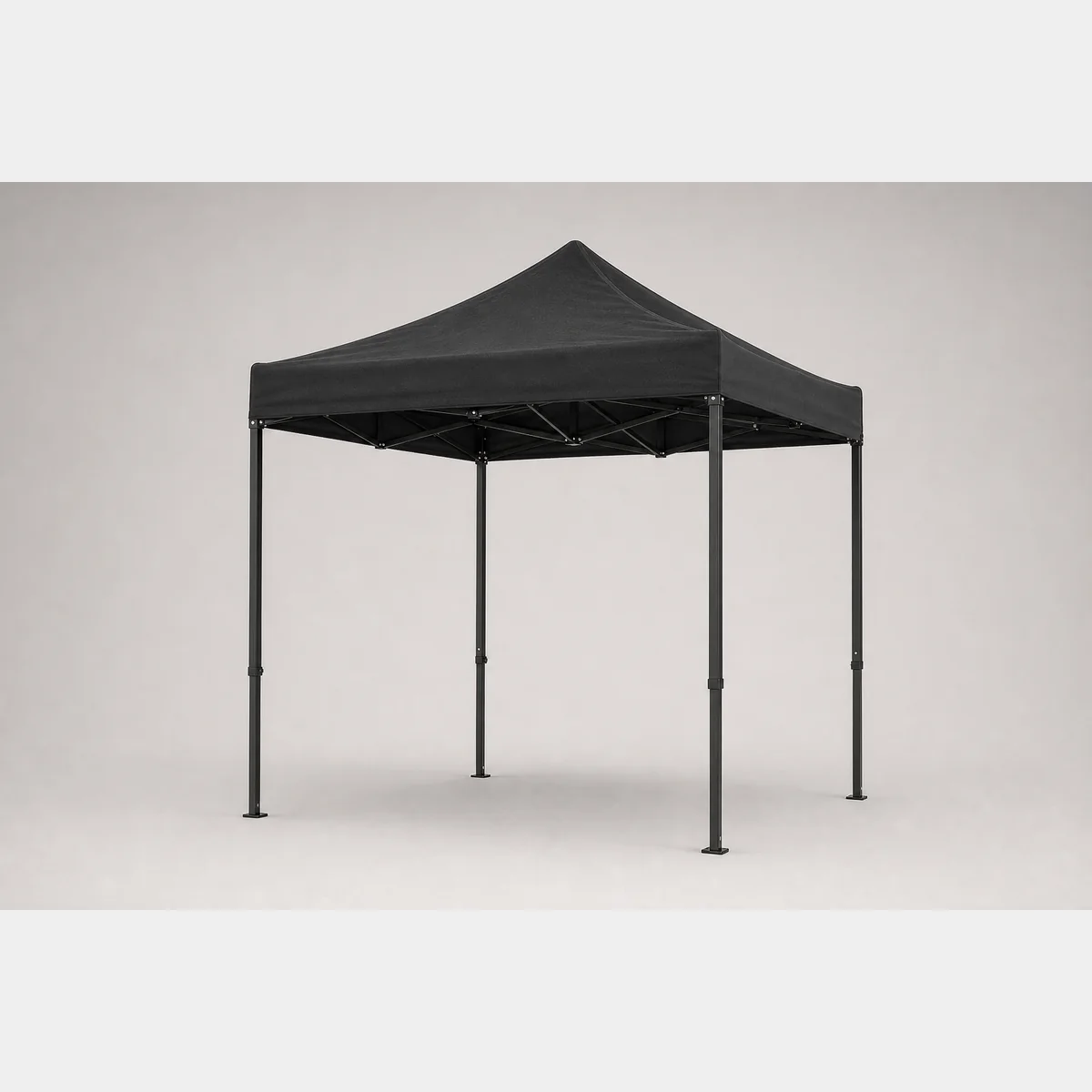 Canopies & Outdoor EquipmentProduct reference image
Tent (black iron frame)
Tent (black iron frame), sizes: 2 x 2 m / 3 X 3 m; MOQ: 1/PC; Fabric: (600D Oxford cloth). Request a formal quote based on application, specs and quantity.
- Dimensions
- 2 x 2 m / 3 X 3 m
- MOQ
- 1/PC
- Fabric
- (600D Oxford cloth)
Continue with closely related procurement topics
These pages share equipment, operating or decision-stage signals with this guide.
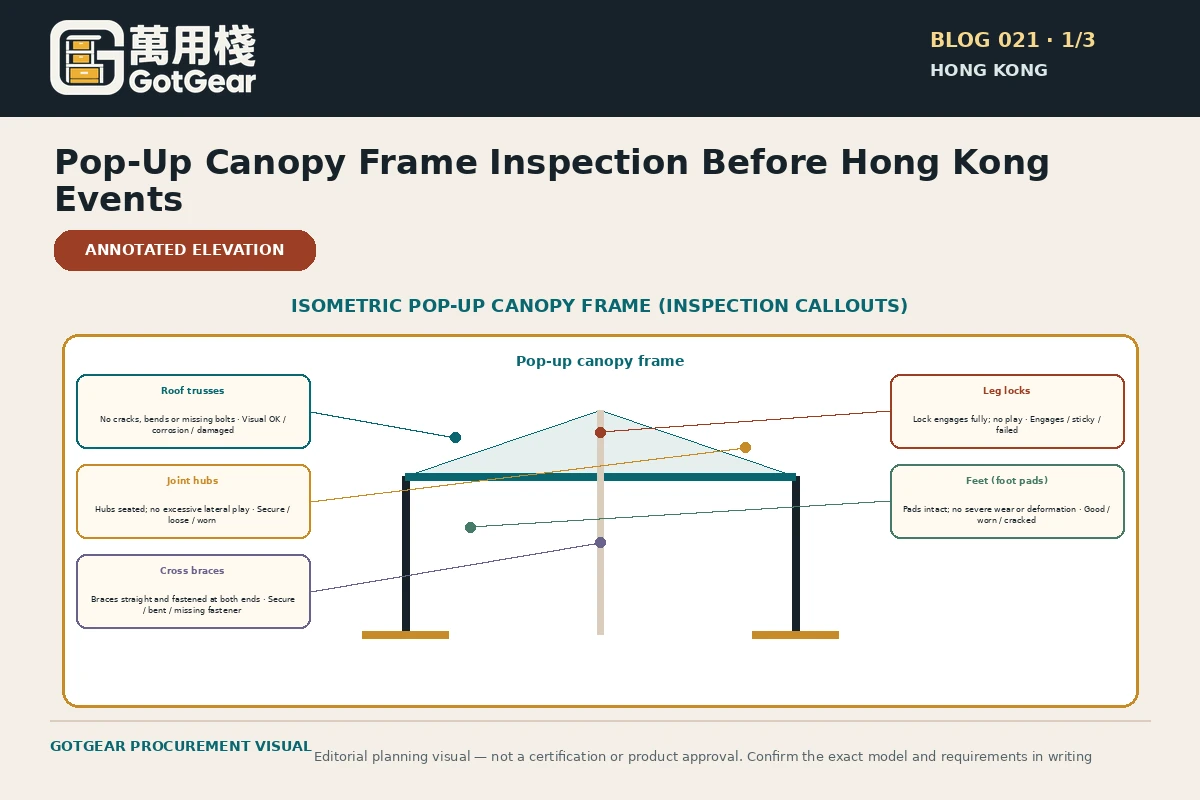
Pop up canopy frame inspection Hong Kong
GotGear explains pop up canopy frame inspection Hong Kong for Hong Kong buyers. See how folding tent leg locking mechanism check Hong Kong supports pop up canopy roof truss inspection Hong Kong, with practical checks, evidence boundaries and written requirements.
Read the guide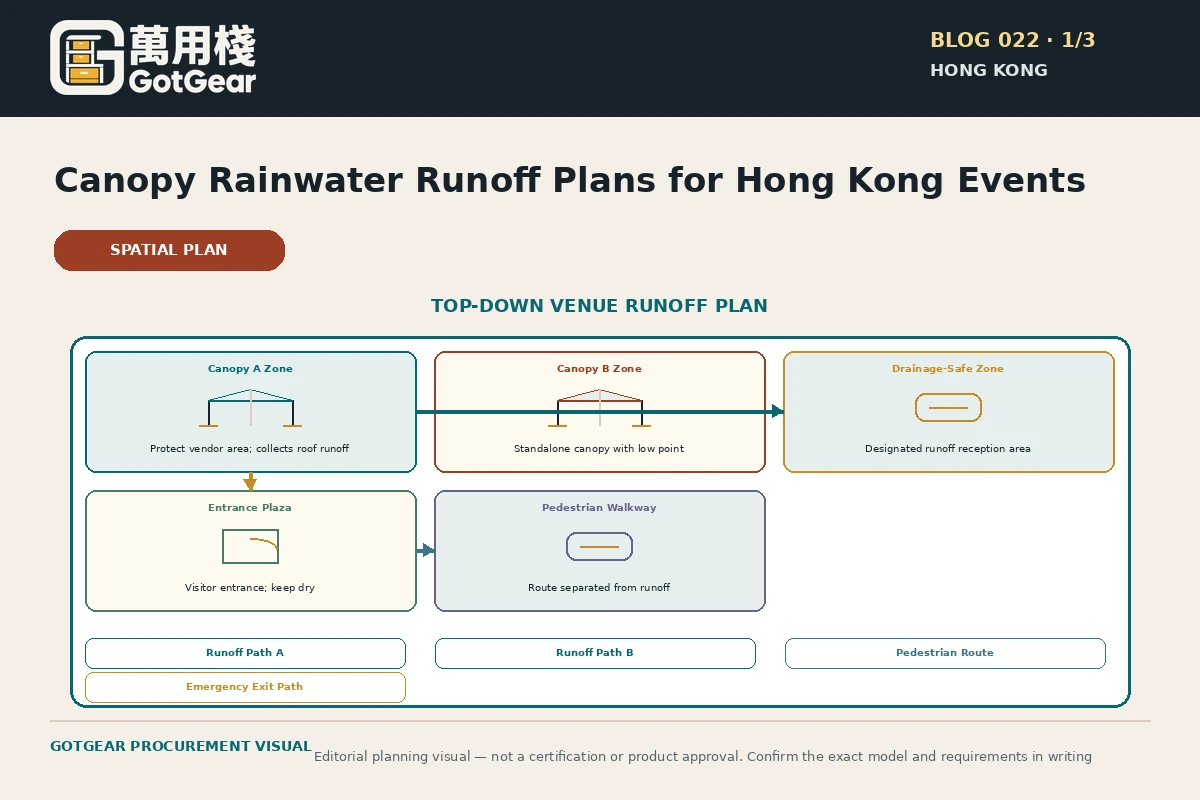
Canopy rainwater runoff plan Hong Kong
GotGear explains canopy rainwater runoff plan Hong Kong for Hong Kong buyers. See how pop up canopy gutter kit layout Hong Kong supports canopy tent rainwater pooling prevention Hong Kong, with practical checks, evidence boundaries and written requirements.
Read the guide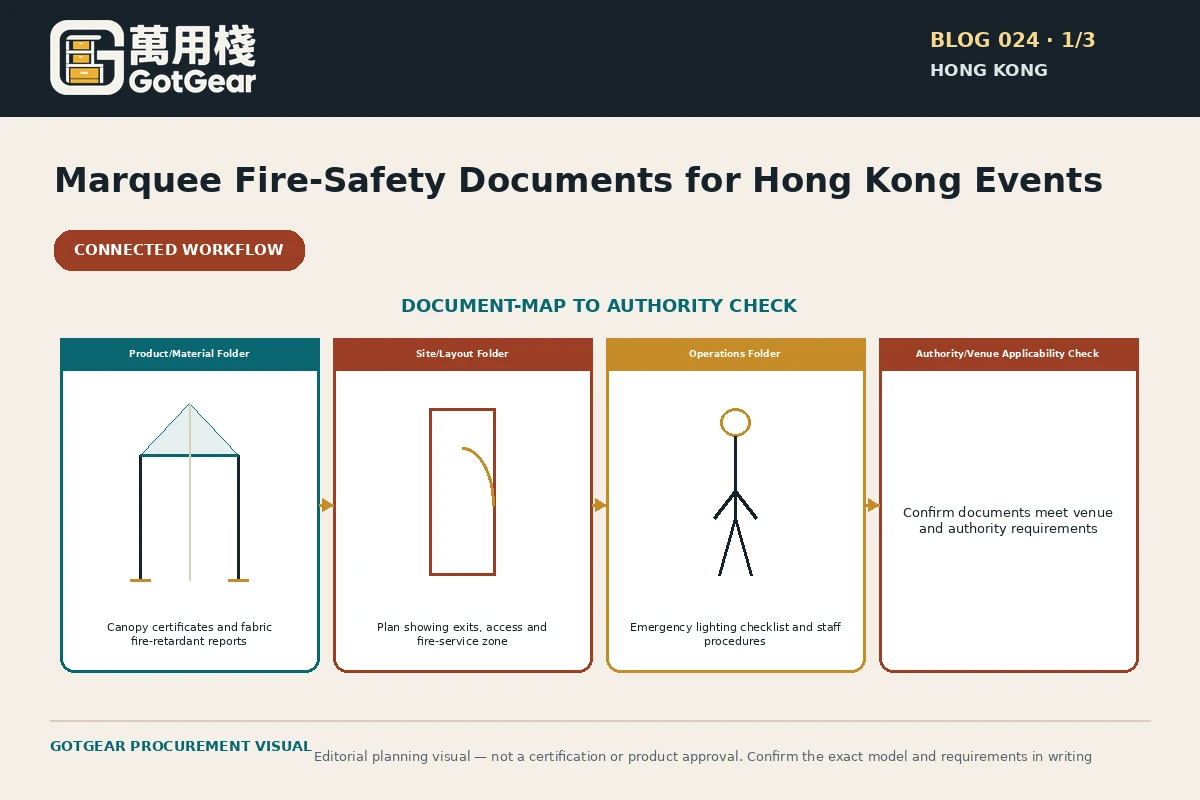
Temporary marquee fire safety documents Hong Kong
GotGear explains temporary marquee fire safety documents Hong Kong for Hong Kong buyers. See how canopy fire retardant fabric certificate Hong Kong supports marquee emergency lighting checklist Hong Kong, with practical checks, evidence boundaries and written requirements.
Read the guide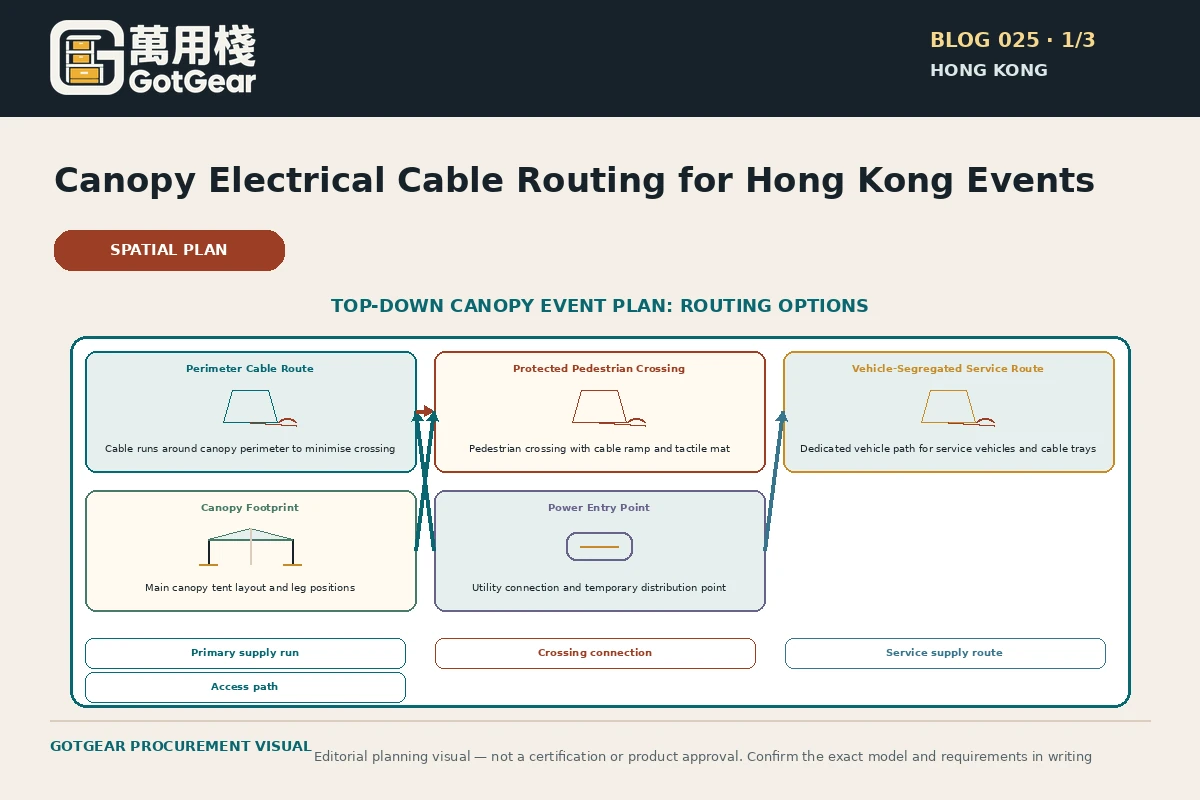
Canopy electrical cable routing Hong Kong
GotGear explains canopy electrical cable routing Hong Kong for Hong Kong buyers. See how outdoor event cable ramp layout Hong Kong supports canopy tent temporary power checklist Hong Kong, with practical checks, evidence boundaries and written requirements.
Read the guideRelated topic indexOpen more English procurement pages10 topics
Browse additional equipment families, applications and procurement questions relevant to these operating requirements.