
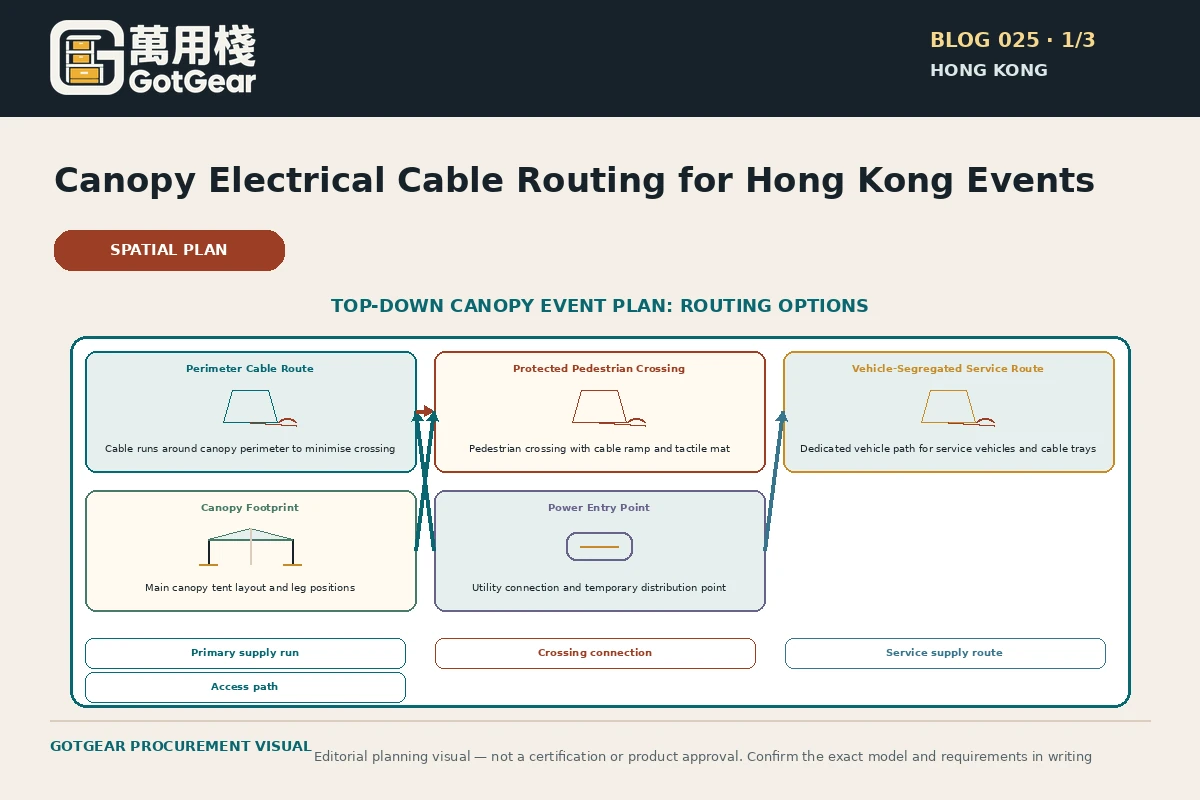
Canopy cable routing should be decided with the temporary electrical plan: prioritise protected connections, keep cables clear of exits and queues, and select routing that minimises pedestrian and vehicle interaction. For Hong Kong events, record canopy positions, rain exposure and traffic flows, arrange segregations or ramps where routes cross public lines, and have a registered electrical worker verify or install the arrangement under the EMSD Code of Practice.
What to remember before you decide
- Decide routing concepts early and map them against canopy legs, exits and vehicle access.
- Protect connections from rain and unauthorised contact; use IP-rated enclosures where required.
- A cable ramp mitigates trip risk but does not guarantee electrical safety or compliance.
- Always engage a registered electrical worker/contractor to verify and sign off the final installation.
- Use hybrid routing for mixed-access sites and plan stewarding and daily inspections.
- Record verification and maintain an installation log for commissioning, daily checks and decommissioning.
Choose a routing concept before installation
Planning cable routes for canopies begins with the event layout and an early decision on one of three broad concepts: perimeter routing, protected ground crossings and overhead routing. Each affects how the temporary distribution is located relative to canopy legs, public access and vehicle movement. In Hong Kong you must treat the EMSD Code of Practice as the governing technical context for temporary installations and direct installation-specific queries to a registered electrical worker or contractor. Decision criteria here include pedestrian density, the presence of queuing or emergency-egress lines, neighbouring vehicle access and prevailing weather risk. Perimeter routing favours running cables around the outer edge of canopy clusters, minimising crossings through high-traffic areas. It makes regular inspection and service access straightforward and keeps connections out of primary egress lines, but it may extend cable runs and requires careful securing where it passes public footflow. Protected ground crossings use purpose-built cable ramps, tactile segregation and temporary bollards at planned crossing points. This approach balances short routes with pedestrian safety but depends on durable ramps, correct placement and ongoing supervision. Overhead routing places mains and final circuits on temporary overhead supports or cable trays to avoid ground-level interaction; while this reduces trip risk and vehicle interaction, it introduces requirements for mechanical support, wind-loading checks, access for installers and protection of overhead connections from rain. A key limitation is that none of these concepts replaces the need for professional electrical assessment. A cable ramp or barrier reduces trip risk but does not make an installation electrically safe by itself: earthing, protective devices and connection integrity are site- and system-specific matters for a registered electrical worker. Next, produce a simple event map showing canopy positions, public routes and vehicle entrances; overlay potential routing bars for the three concepts; and book a registered electrical worker to review the plan and confirm the preferred approach.
Risk factors to record for each canopy location
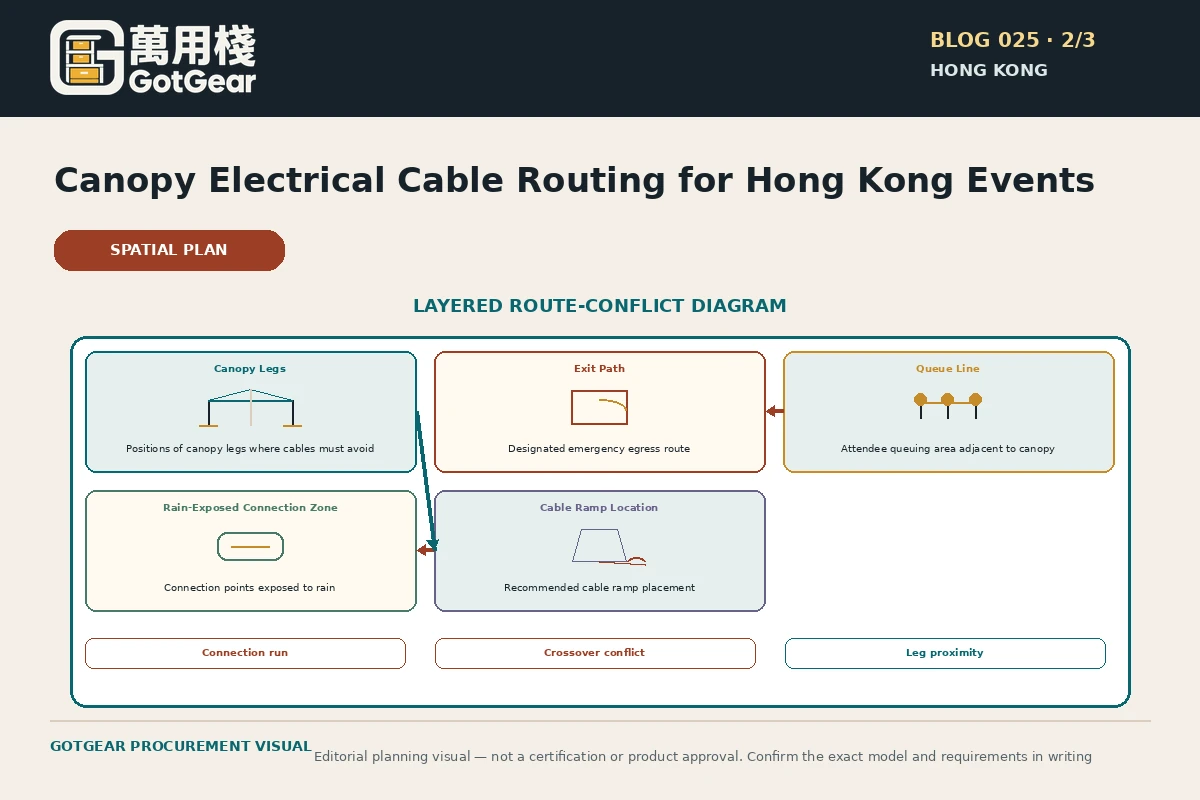
Before choosing a route, capture site-specific risks in a short register for each canopy: leg positions, nearby exits, queue lines, vehicle paths, prevailing wind and rain directions, and proximity to other services (gas, water, telecoms). Note the intended equipment location inside the canopy and whether the supply will be temporary distribution boards, generators or site mains. For Hong Kong public venues, also check any site rules or fire-safety conditions; the Fire Services Department guidance for Temporary Places of Public Entertainment flags that wiring should not impede passageways and that fire exits must remain unobstructed. Decision criteria here are practical: if a canopy is adjacent to a taxi drop-off or loading bay, perimeter routing may still place cables in a vehicle interaction zone; use protected crossings and bolstered mechanical protection or consider overhead routing instead. For canopies on sloped or trafficked pedestrian promenades, cable ramps must be specified to accommodate foot traffic volumes and drainage. Weather exposure is critical in Hong Kong: if a canopy faces prevailing monsoon rain, locate junctions and temporary distribution under cover or inside IP-rated enclosures; do not leave live plugs or exposed connectors in open rain. Again, specific enclosure selection and protective device settings are technical matters for the electrical professional. Site sketch: a top-down event plan showing canopy cluster, egress lines, queue lines, vehicle access and three overlay paths for perimeter, crossing and overhead routing. Cross-section: a path detail showing ground level with a cable ramp, pedestrian flow and verge protection. Overhead concept: a side elevation of canopy ridge supports with suspended cable tray and drop-down final connections inside the canopy, showing service access point for installers. A key limitation is that these diagrams are planning aids and not engineering drawings. Next, attach these sketches to your site plans, include recorded load centres and equipment lists (non-electrical details only) and request a site visit from a registered electrical worker to convert sketches into a verified installation plan.
“Plan routing as part of the temporary electrical design, not as an afterthought; protect connections, keep exits clear and have a registered electrical professional verify everything before public opening.”— GotGear Editorial Team
What should buyers compare for canopy electrical cable routing Hong Kong?
| Option or approach | Best for | Trade-offs | Checks before acceptance |
|---|---|---|---|
| Perimeter routing | Low-to-medium pedestrian density, sites where canopies do not border vehicle routes and where service access needs to be straightforward. | Longer cable runs, more connection points to inspect and potential exposure to passers-by without crossings controlled. | Site sketch review and final verification by the registered electrical worker to confirm distribution locations and protective housings; venue confirmation that routes do not block exits. |
| Protected ground crossings (cable ramps) | Planned crossings of public walkways or light vehicle routes where short runs are required and pedestrian segregation can be enforced. | Requires durable ramps, stewarding and regular inspection; may be unsuitable for heavy vehicle traffic and can concentrate water ingress risk at the crossing. | Material and anchor checks, ramp anti-slip verification, daily inspection log and sign-off from the electrical contractor and site safety officer. |
| Overhead routing (suspended trays or support) | Areas with high pedestrian density or frequent vehicle movement where ground routing is impractical and mechanical supports are permitted. | Higher complexity for mounting, wind-loading and emergency access; requires secure fixings and insured mechanical support. | Structural check for supports, installer certification for fixings and electrical sign-off for overhead terminations and separators. |
| Hybrid approach (combination of the above) | Larger sites with mixed zones — use perimeter runs for low-risk areas, ramps at controlled crossings and overhead in high-traffic corridors. | More complex management and multiple protection types to maintain; requires clear demarcation and varied inspection routines. | Integrated site plan, coordinated commissioning by the registered electrical worker and a single installation log covering all route types. |
| Temporary routed under raised platforms | Short-term exhibitions where platforms exist to carry services and prevent any public-level interaction with cables. | Requires platform design that accommodates cables and drainage; can complicate emergency egress if platforms obstruct exits. | Platform structural and egress review, confirmation that service entries to the canopy are accessible to authorised personnel and electrical verification. |
This framework helps buyers create comparable written enquiries. Final model specifications, availability, delivery and commercial terms must be confirmed in a formal quotation.
Comparing perimeter, protected crossing and overhead routes
This section compares the three main routing options against people/vehicle interaction, rain and connection protection, accessibility for service and the confirmation required from professionals or site authorities. Use the comparison to select the concept best aligned with occupancy, event duration and logistics. Perimeter routing works well where public flows are predictable and canopy clusters do not border vehicle routes. It reduces the number of controlled crossings but can lengthen cable runs and increase the number of exposed connectors at distribution points. Compared with protected crossings, perimeter routing requires fewer ramps but more securing points and frequent inspection. For weather exposure, keep splices and sockets under canopies or in IP-rated housings; verify with the registered electrical worker whether any covered distribution requires additional protection or elevation. Protected ground crossings are most appropriate where routes must cross public walkways or temporary vehicle lanes. They require robust ramps, clear signage and a stewarding plan to prevent unauthorised access. While ramps control trip risk, they introduce a single point where mechanical loading and water ingress need attention. A ramp is effective for pedestrian and light-vehicle crossings but is less suitable for continuous heavy vehicle access. Compliance checks should include material ratings for ramps, anti-slip surfaces and anchor methods; a registered electrical worker and site safety officer should confirm suitability. Overhead routing avoids most ground-level interactions but depends on competent support structures and temporary fixings that withstand wind loads and venue rules. Suspended routes can cross egress areas without interfering with evacuation, but they complicate access for emergency services and require secure attachments where the structure passes canopies. For outdoor Hong Kong events exposed to sudden squalls or typhoons, overhead supports must allow rapid isolation and safe lowering of cables if conditions deteriorate. Validation requires a structural check by the installer and sign-off from the registered electrical worker who will verify connections and protection.
Limitations, on-site checks and when to change approach
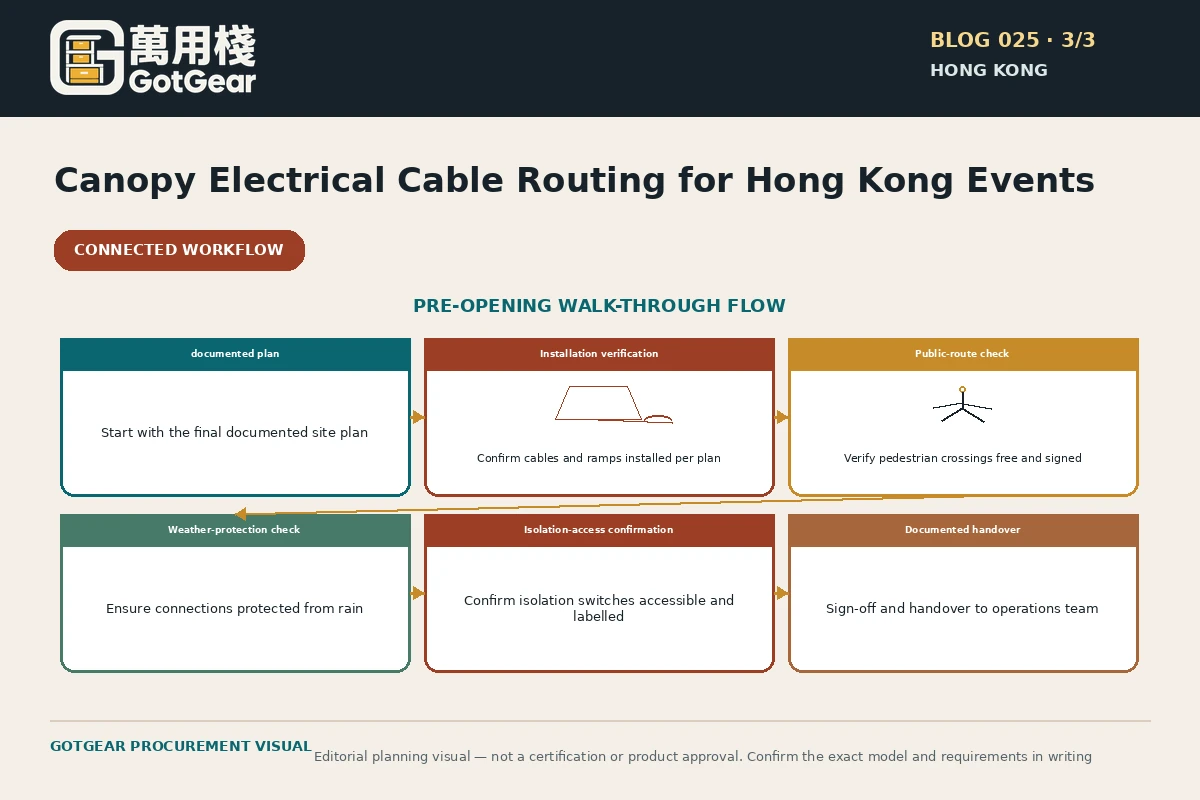
No routing concept is universally safest. Perimeter routes can create long runs and multiple connection points; ramps can degrade or be misused without supervision; overhead systems add mechanical and weather contingencies. Limitations also include site constraints such as listed buildings, heritage areas, planning conditions and venue-specific insurance requirements. In Hong Kong you should confirm any site-specific restrictions with the venue manager and reference the EMSD Code of Practice for the technical context of the temporary wiring. On-site checks to perform immediately after installation and before public opening include: clear access to all fire exits, secure and locked distribution enclosures, dry and shielded connectors, intact cable protective coverings and correctly installed ramps and bollards. Also check that isolation points are clearly labelled and accessible to authorised staff. If any of these checks fail, revert to the registered electrical worker for corrective action. Next, record the verification in a short installation log, plan a daily inspection regime while the event runs and organise a post-event decommission walk-through with the electrical contractor.
Canopy electrical cable routing Hong Kong decision checklist
- Map canopy positions, each leg location and intended equipment footprint on a site plan.
- Record all public pedestrian routes, queue lines and emergency exits relative to each canopy.
- Identify vehicle access points (drop-off, loading bays, emergency vehicle routes) that may intersect cable routes.
- Note prevailing weather exposure and potential rain paths affecting junctions and distribution points.
- Decide the primary routing concept (perimeter, protected crossing, overhead or hybrid) for each canopy cluster.
- Specify where cable ramps, bollards or barriers are required and whether stewarding will be provided.
- Ensure isolation points and distribution enclosures will be accessible for authorised staff without breaching public lines.
- Confirm venue or local authority constraints (heritage, fire-safety, insurance) that affect routing choices.
- Nominate the registered electrical worker/contractor who will review, install and sign off the arrangement.
- Plan a daily inspection and incident-log process during the event and a post-event decommission walk-through.
Practical action sequence
- Create a simple annotated site plan showing canopies, exits, queues and potential routing paths.
- Overlay the preferred routing concept and mark where ramps, bollards or overhead supports will be used.
- Compile a non-technical equipment list and note connection points for each canopy for the electrical requirements.
- Send the plan and requirements note to a registered electrical worker/contractor for site visit and verification.
- Agree on required protection measures and a commissioning checklist; schedule installation and a pre-opening inspection.
- Install ramps, barriers and signage and lock or shield distribution enclosures before final electrical connection.
- Conduct the post-installation walk-through with the electrical professional, safety officer and venue rep.
- Log verification results, schedule daily checks and confirm decommission procedures with the contractor.
Apply the checks to your Hong Kong site
Treat the EMSD Code of Practice as the primary technical reference for temporary installations and direct installation or compliance questions to registered electrical workers or contractors on the EMSD register. Use the Fire Services Department’s temporary-event guidance to confirm wiring, ramps and crossings do not obstruct exits or necessary passageways. Overseas material such as the UK HSE event-safety guidance is useful for practical routing concepts and risk reduction but remains editorial context, not Hong Kong law. Always have the final layout reviewed and signed off by an appropriately registered electrical professional. When planning canopy electrical cable routing Hong Kong, begin with current site measures, canopy leg positions, queue lines, exits, vehicle movements and likely rain exposure, then compare perimeter, protected crossing and overhead options against trip risk and service access needs. For an outdoor event cable ramp layout Hong Kong or a canopy tent temporary power checklist Hong Kong, record the chosen route and obtain a documented validation and EMSD-registered sign-off before any connection.
References used for this article
These sources provide regulatory, safety or planning context. They do not certify any GotGear product or replace site-specific professional advice.
- Electrical and Mechanical Services Department — Code of Practice for the Electricity (Wiring) Regulations, 2025 Edition — The current Hong Kong code contains a dedicated section on temporary electrical installations for exhibitions, shows, stands and festive lighting; cite it for the governing technical context rather than paraphrasing unverified clauses.
- Electrical and Mechanical Services Department — Electricity Safety — Explains EMSD’s electricity-safety role and administration of registered electrical worker and contractor registers; supports directing installation-specific questions to appropriately registered professionals.
- UK Health and Safety Executive — Electrical safety at events — Provides recognised event-safety guidance on temporary electrical planning, weather protection, public segregation, cable selection and routing to reduce trip and mechanical-damage hazards.
- Hong Kong Fire Services Department — Temporary Places of Public Entertainment fire-safety reference — Provides a Hong Kong temporary-event reference point that electrical wiring should not impede passageways; specific event requirements remain subject to applicable authority and site assessment.
Questions about canopy electrical cable routing Hong Kong
Can I route cables through a designated exit if it's the shortest path?
Routing cables through an exit is strongly discouraged because it can obstruct evacuation and breach fire-safety requirements. In Hong Kong, temporary wiring must not impede passageways; consult the Fire Services Department guidance and your venue manager. If no alternative exists, work with the registered electrical worker and venue safety officer to identify a mitigated approach: relocate the exit signage, provide a protected overhead route or reroute foot traffic. Any solution that affects an exit requires explicit approval from the responsible authority and must be validated by the electrical contractor before public use.
Does a cable ramp solve every trip or electrical risk?
No. A cable ramp reduces trip hazards and helps protect against mechanical damage but does not address electrical safety elements such as earthing, circuit protection, correct terminations or IP-rated enclosures for rain. Ramps should be part of a broader control set that includes supervision, correct enclosure selection and professional installation. Always remember that a ramp is a physical mitigation for pedestrian safety, not an electrical compliance solution; a registered electrical worker must confirm the electrical safety of the installation.
Who can confirm the final arrangement is compliant in Hong Kong?
Final confirmation must come from a person or firm registered on the EMSD lists of registered electrical workers or contractors. They will verify that the temporary installation satisfies the Code of Practice and site-specific safety requirements. For non-technical planning you can consult venue safety officers or event safety consultants, but any installation, connection or certification step must be performed or signed off by a registered electrical worker/contractor.
How should rain-prone canopy connections be protected for outdoor events?
Plan to keep junctions and temporary distribution under cover or inside IP-rated enclosures indicated by the registered electrical worker; do not leave exposed plugs or sockets in open rain. Use distribution enclosures and final-connection housings that the electrical contractor specifies, and position them away from water run-off paths and drainage inlets. For Hong Kong’s sudden heavy rain, add inspection frequency to your event log and ensure stewards know to report ingress or pooling around protected boxes. The selection of protective housings and their rating remains a professional decision for the electrical installer.
If my site has mixed vehicle and pedestrian access, which routing approach usually works best?
A hybrid approach is often the best solution on mixed-access sites: use overhead routing or perimeter runs where vehicles move continuously, and protected ground crossings with ramps and stewarding at planned pedestrian intersections. The hybrid method reduces the number of vulnerable crossing points but requires clear demarcation, varied inspection routines and coordination among the electrical contractor, site safety team and venue management.
What documentation should I expect from the electrical contractor after installation?
Expect an installation log that documents the chosen route types, confirmation of distribution locations, records of protective devices and enclosures installed, a commissioning checklist with sign-offs, and guidance on daily inspection items for event staff. The contractor should also mark isolation points and provide contact details for emergency disconnection and post-installation issues. Note that technical certification and statements about compliance will be provided by the registered electrical worker as appropriate.
Compare available product models and specifications
These product cards are matched to this buying topic. Select a specification and quantity to send the product details to WhatsApp.
 Canopies & Outdoor EquipmentProduct reference image
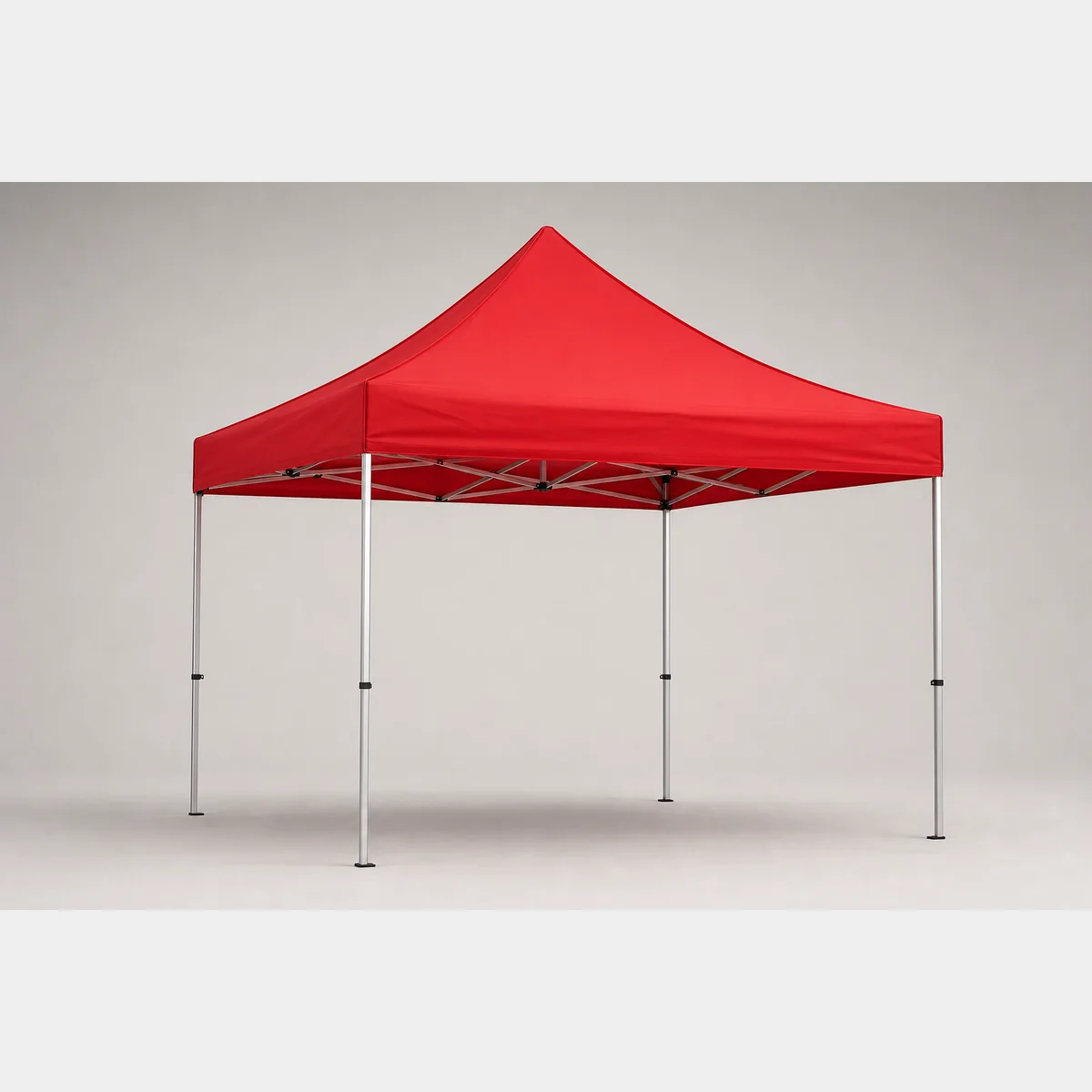
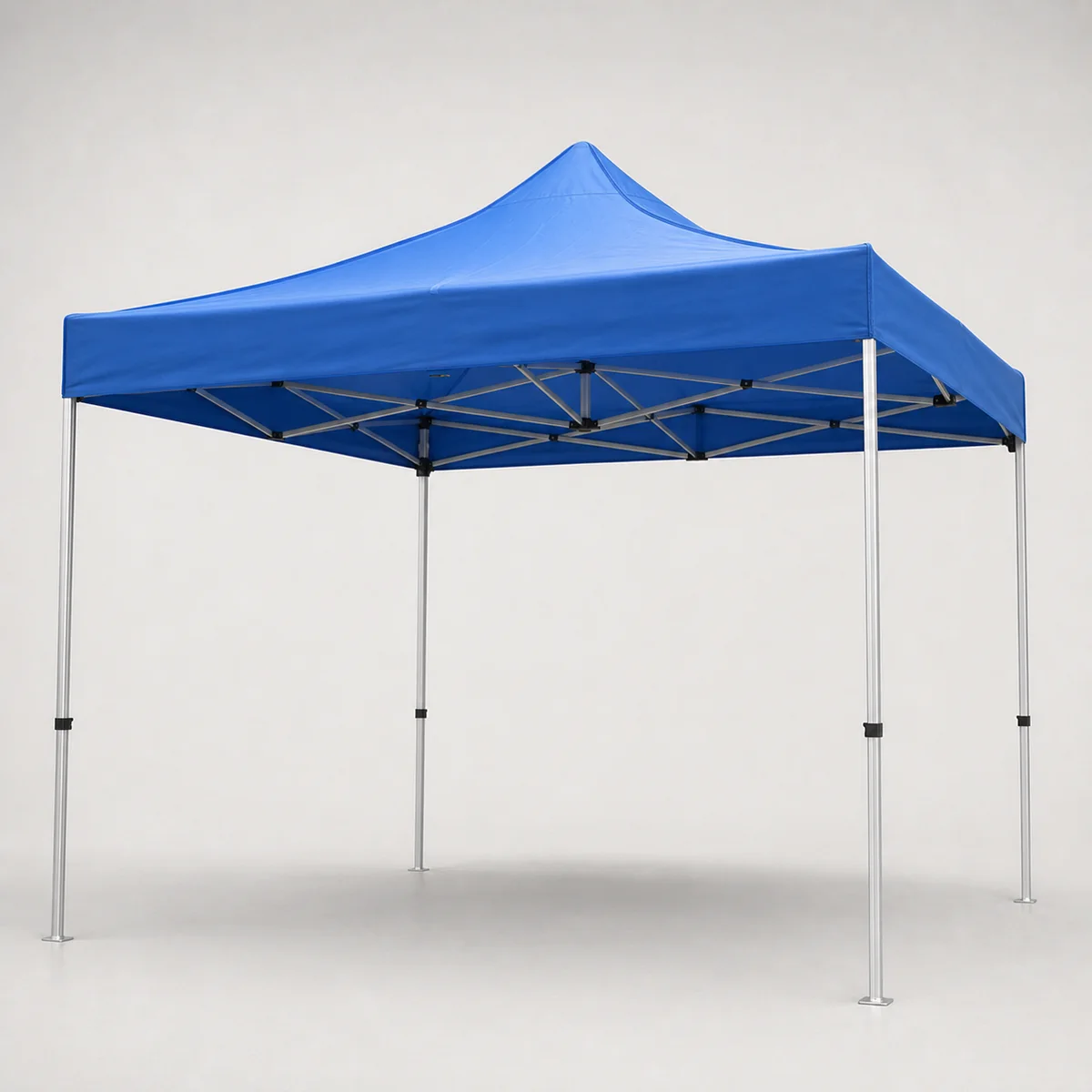
Tent (stainless steel)
Tent (stainless steel). Material: stainless steel frame with canvas; canopy: 600D Oxford fabric; listed canopy colours: Red/Blue/Green (other colours are subject to written confirmation). Formal quotation available on request based on use, specifications and quantity.
- Material
- stainless steel frame with canvas
- Canopy
- 600D Oxford fabric
- Listed canopy colours
- Red/Blue/Green (other colours are subject to written confirmation)
 Canopies & Outdoor EquipmentProduct reference image
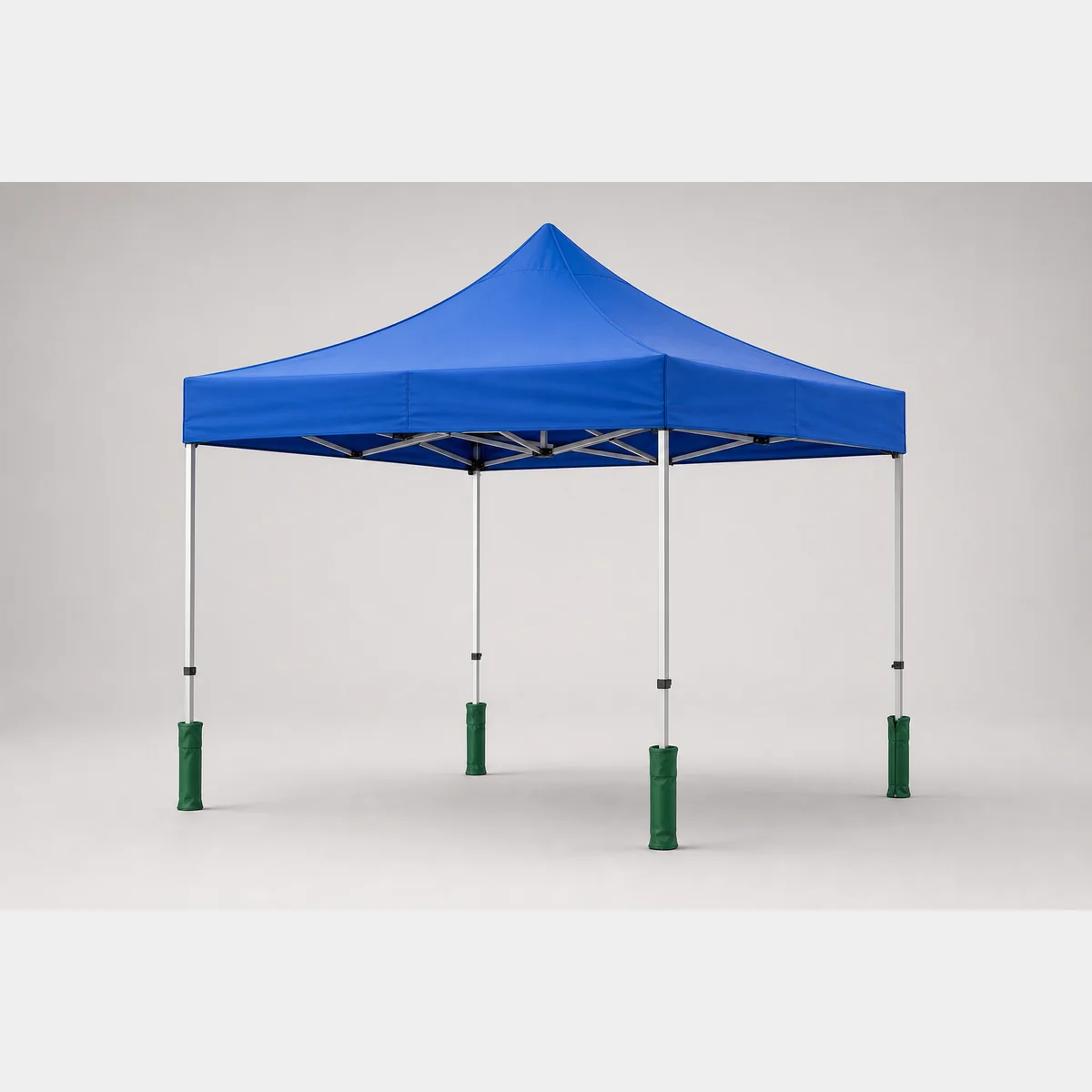
Aluminium-frame Tent
Aluminium-frame tent. Material: aluminium alloy frame with canvas; Fabric: (600D Oxford fabric); Listed colours: Red/Blue/Green (other colours are subject to written confirmation). Formal quotation available upon enquiry by intended use, specifications and quantity.
- Material
- Aluminium alloy frame with canvas
- Fabric
- (600D Oxford fabric)
- Listed colours
- Red/Blue/Green (other colours are subject to written confirmation)
 Canopies & Outdoor EquipmentProduct reference image
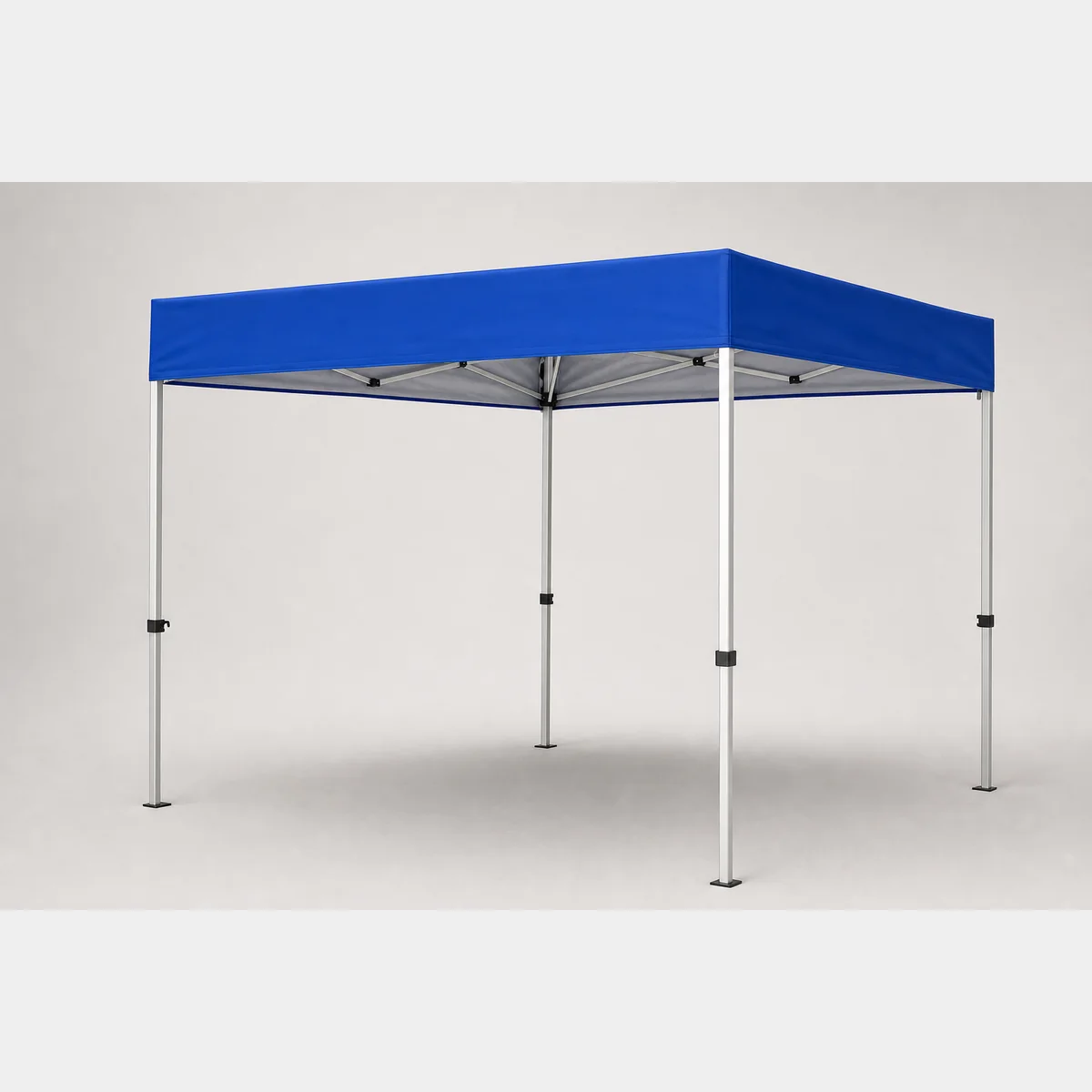
Aluminium-frame Tent
Aluminium-frame tent. Material: aluminium alloy frame with canvas; Fabric: (600D Oxford cloth); Side curtain fabric: (420D Oxford cloth). Formal quotation available based on intended use, specifications and quantity.
- Material
- Aluminium alloy frame with canvas
- Fabric
- (600D Oxford cloth)
- Side curtain fabric
- (420D Oxford cloth)
 Canopies & Outdoor EquipmentProduct reference image
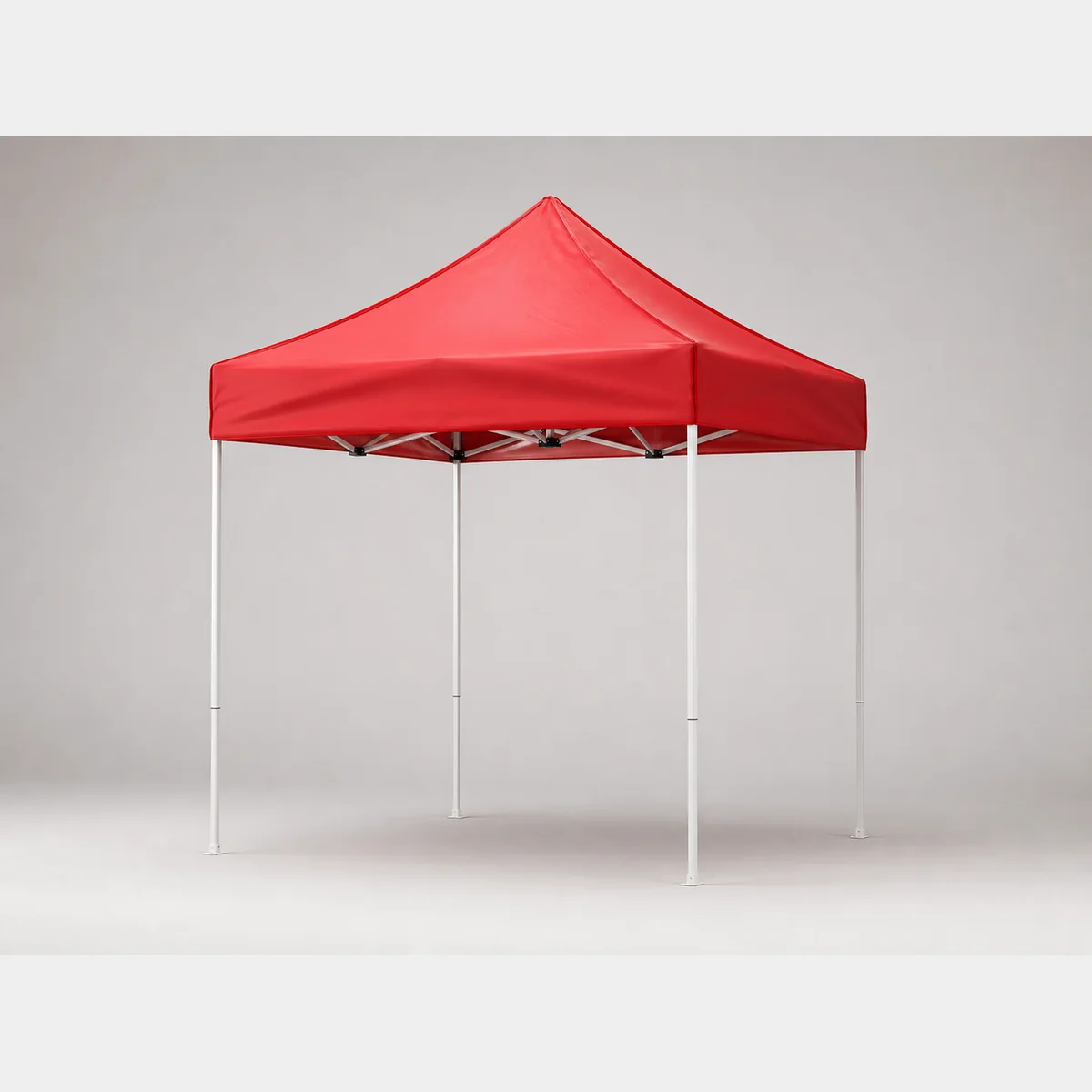
Flat-top Tent (Stainless Steel Frame)
Flat-top Tent (Stainless Steel Frame), A: 2Mx2M; B: 3Mx3M. Formal quotation available upon request based on use, specifications and quantity.
- A
- 2Mx2M
- B
- 3Mx3M
 Canopies & Outdoor EquipmentProduct reference image
Iron-frame Tent
Iron-frame tent, material: iron frame with canvas; Fabric colours: Red/Blue/Green (other colours or silk-screen logo require formal quotation); Fabric: (600D Oxford fabric). Formal quotation available based on use, specifications and quantity.
- Material
- iron frame with canvas
- Fabric colours
- Red/Blue/Green (other colours or silk-screen logo require formal quotation)
- Fabric
- (600D Oxford fabric)
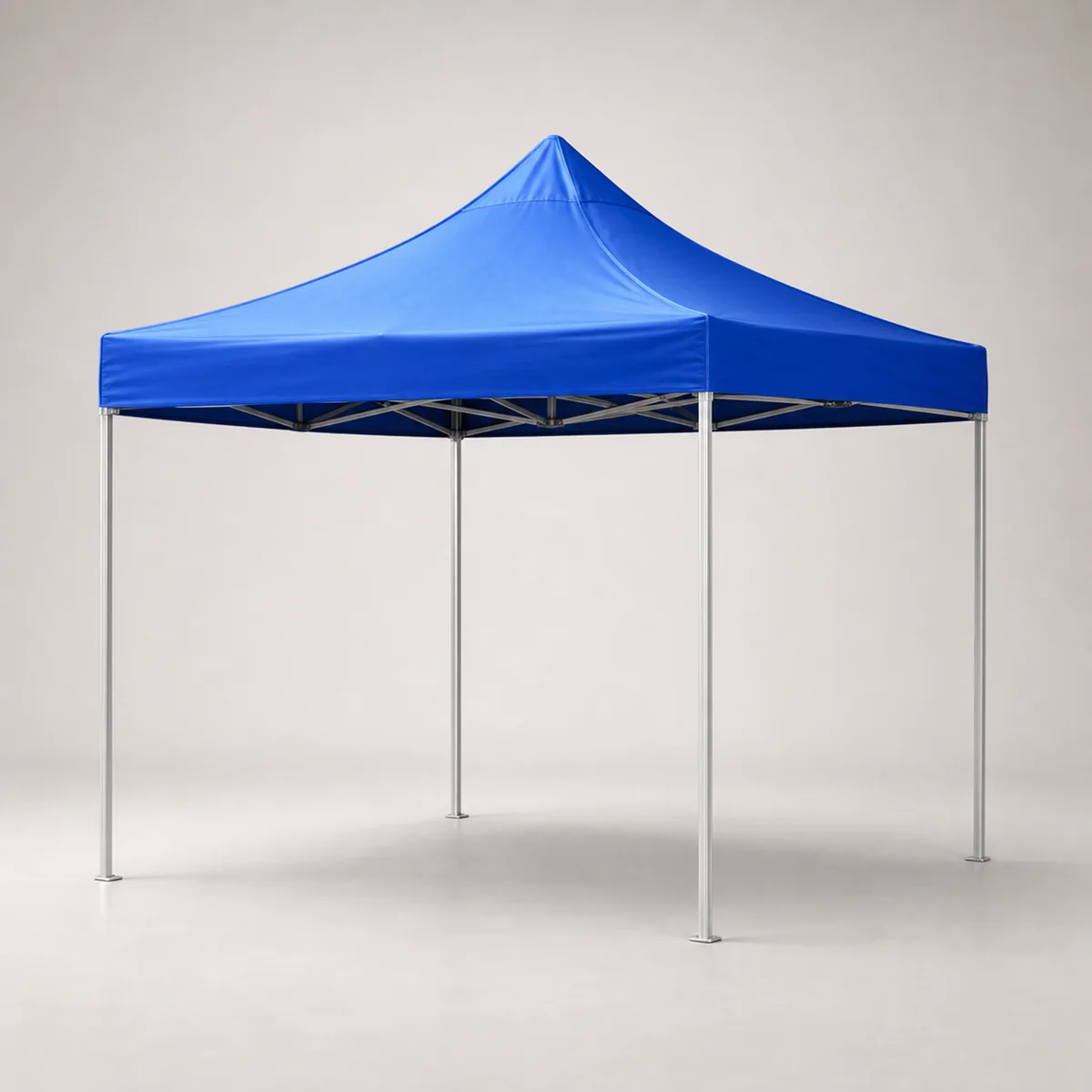 Canopies & Outdoor EquipmentProduct reference image
Tent (aluminium frame)
Tent (aluminium frame), A: 2M x 2M; B: 3M x 3M; C: 2.5M x 2.5M. Formal quotation available on request based on use, specifications and quantity.
- A
- 2M x 2M
- B
- 3M x 3M
- C
- 2.5M x 2.5M
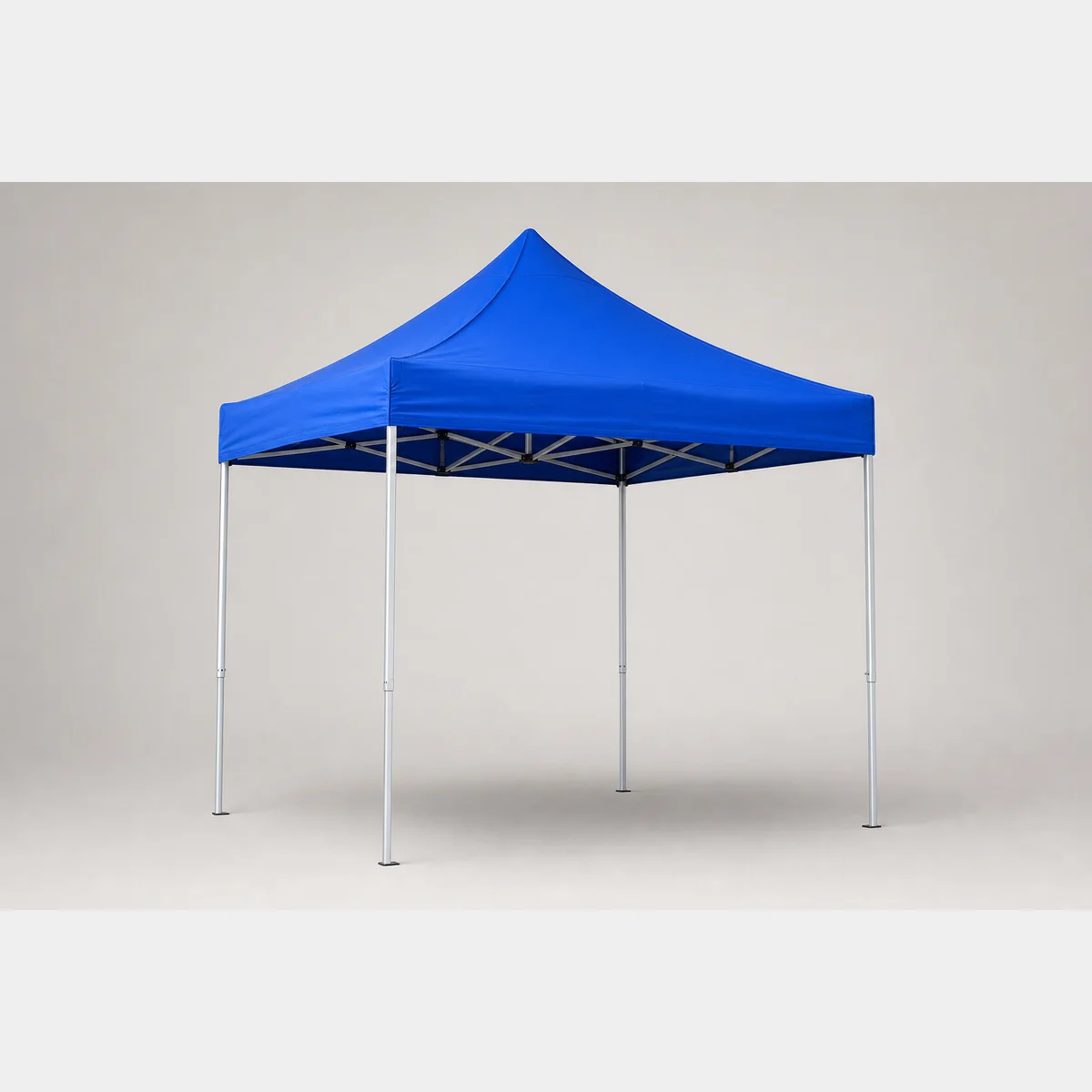 Canopies & Outdoor EquipmentProduct reference image
Tent (Aluminium frame) S8141
S8141 aluminium tent frame in four source-listed sizes. Source records conflict between 38 mm and 40 mm upright tubes; confirm the exact tube specification in writing.
- Size
- 2Mx2M
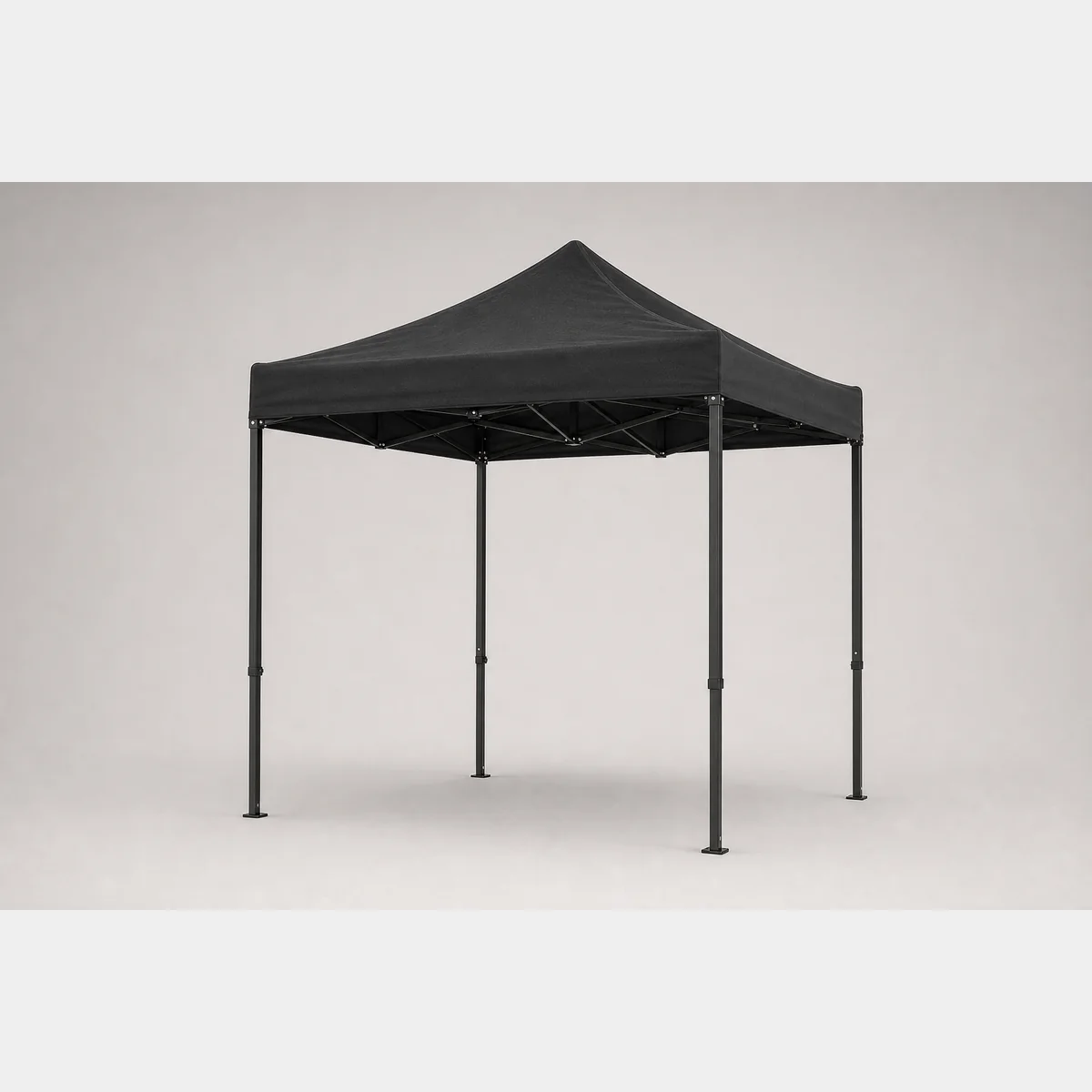 Canopies & Outdoor EquipmentProduct reference image
Tent (black iron frame)
Tent (black iron frame), sizes: 2 x 2 m / 3 X 3 m; MOQ: 1/PC; Fabric: (600D Oxford cloth). Request a formal quote based on application, specs and quantity.
- Dimensions
- 2 x 2 m / 3 X 3 m
- MOQ
- 1/PC
- Fabric
- (600D Oxford cloth)
Continue with closely related procurement topics
These pages share equipment, operating or decision-stage signals with this guide.
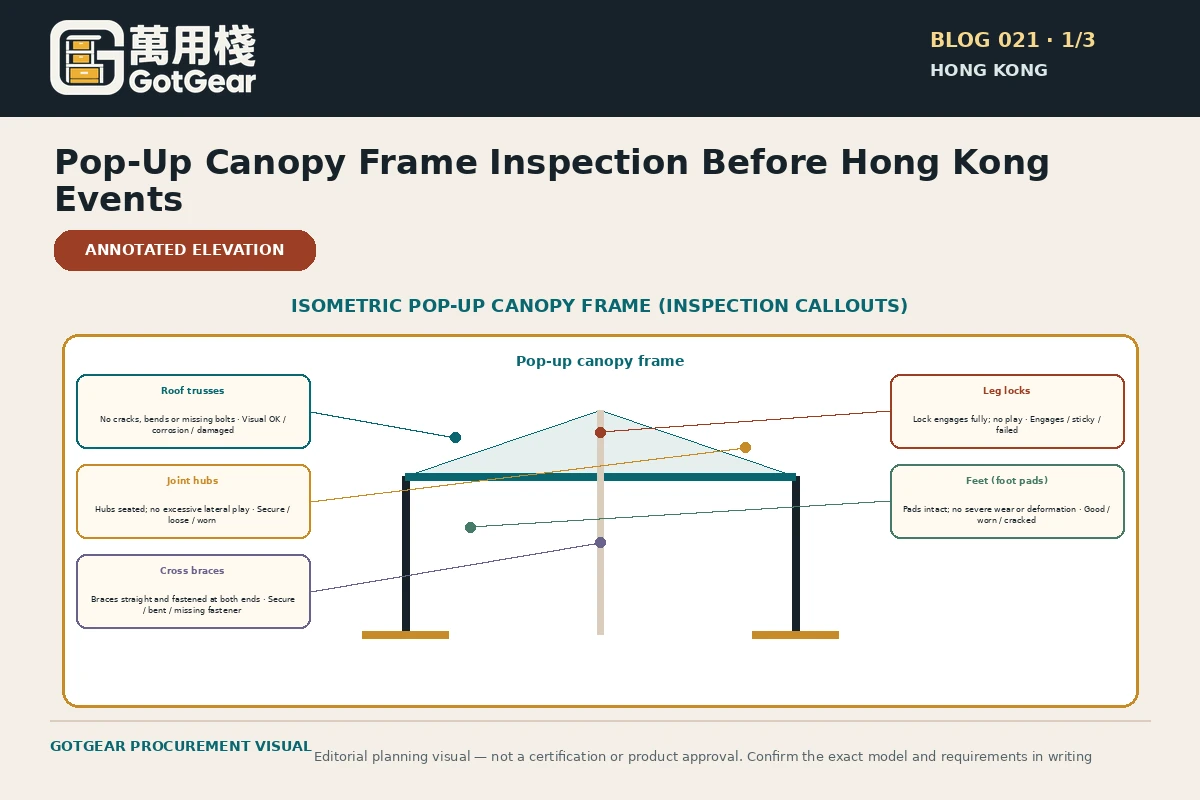
Pop up canopy frame inspection Hong Kong
GotGear explains pop up canopy frame inspection Hong Kong for Hong Kong buyers. See how folding tent leg locking mechanism check Hong Kong supports pop up canopy roof truss inspection Hong Kong, with practical checks, evidence boundaries and written requirements.
Read the guide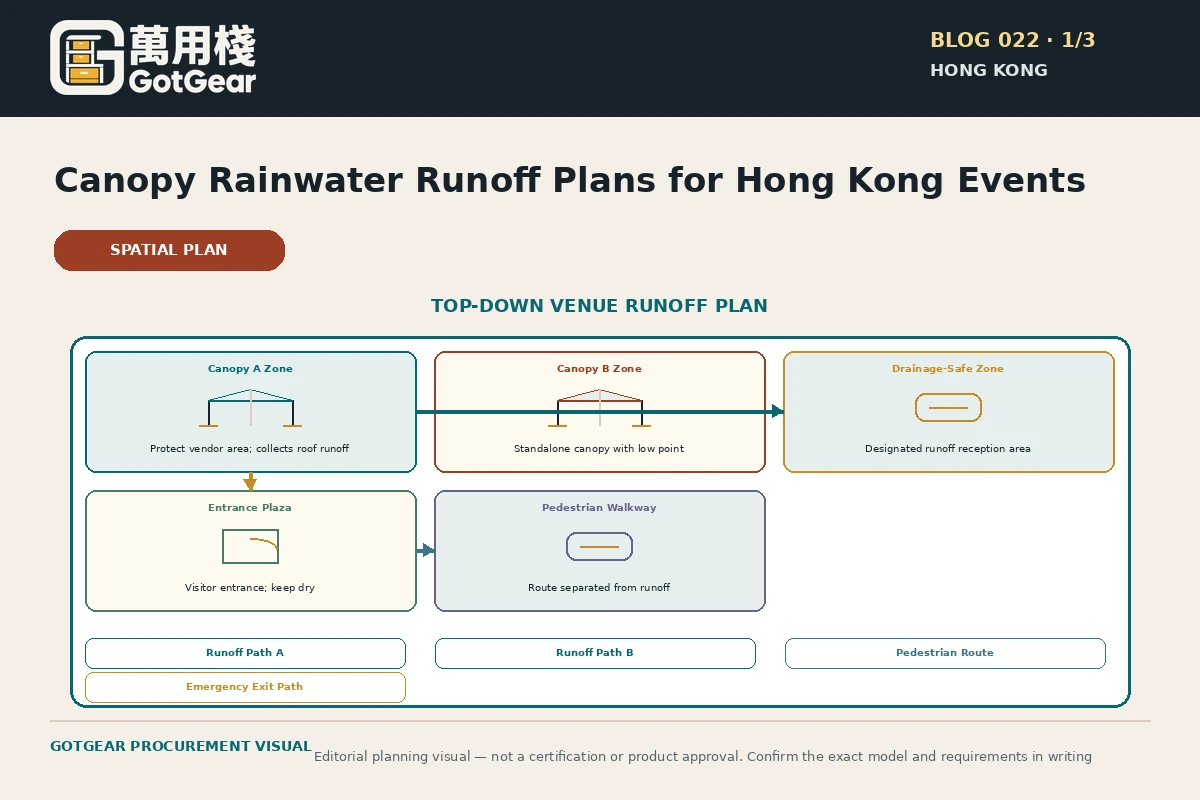
Canopy rainwater runoff plan Hong Kong
GotGear explains canopy rainwater runoff plan Hong Kong for Hong Kong buyers. See how pop up canopy gutter kit layout Hong Kong supports canopy tent rainwater pooling prevention Hong Kong, with practical checks, evidence boundaries and written requirements.
Read the guide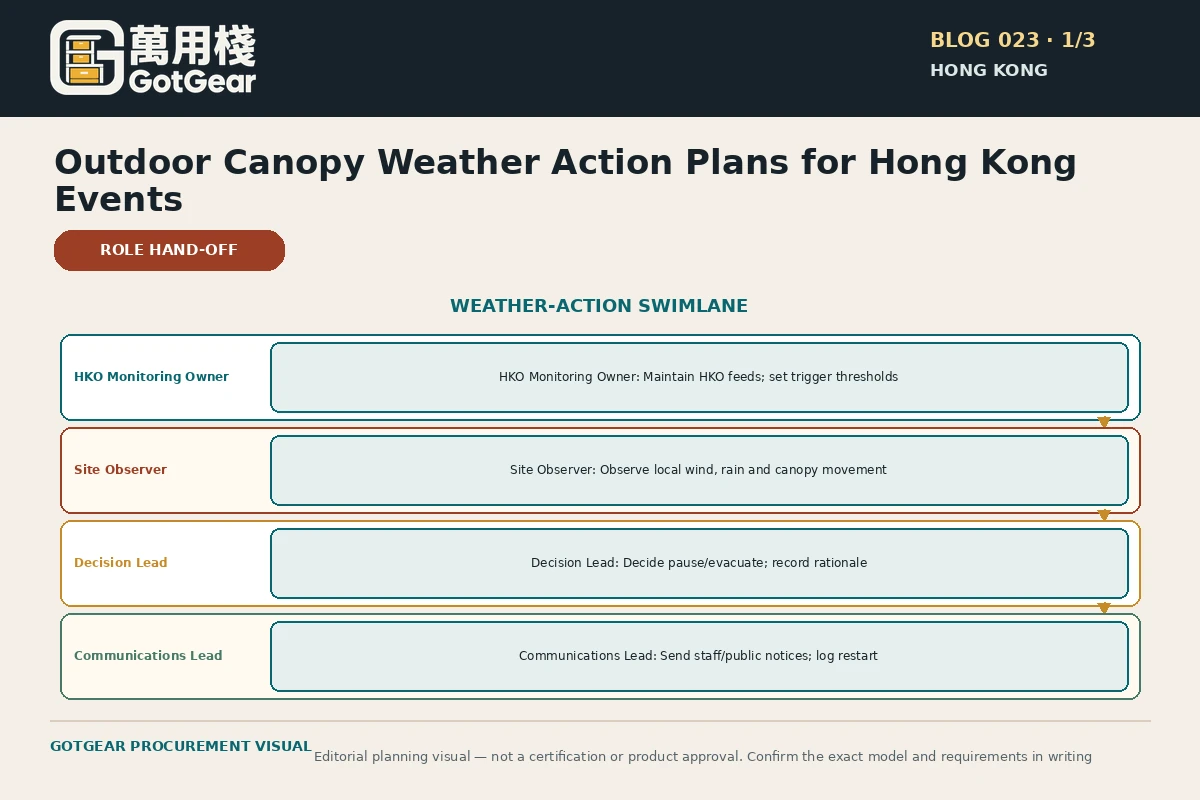
Outdoor canopy weather action plan Hong Kong
GotGear explains outdoor canopy weather action plan Hong Kong for Hong Kong buyers. See how canopy tent wind monitoring procedure Hong Kong supports pop up gazebo thunderstorm response plan Hong Kong, with practical checks, evidence boundaries and written requirements.
Read the guide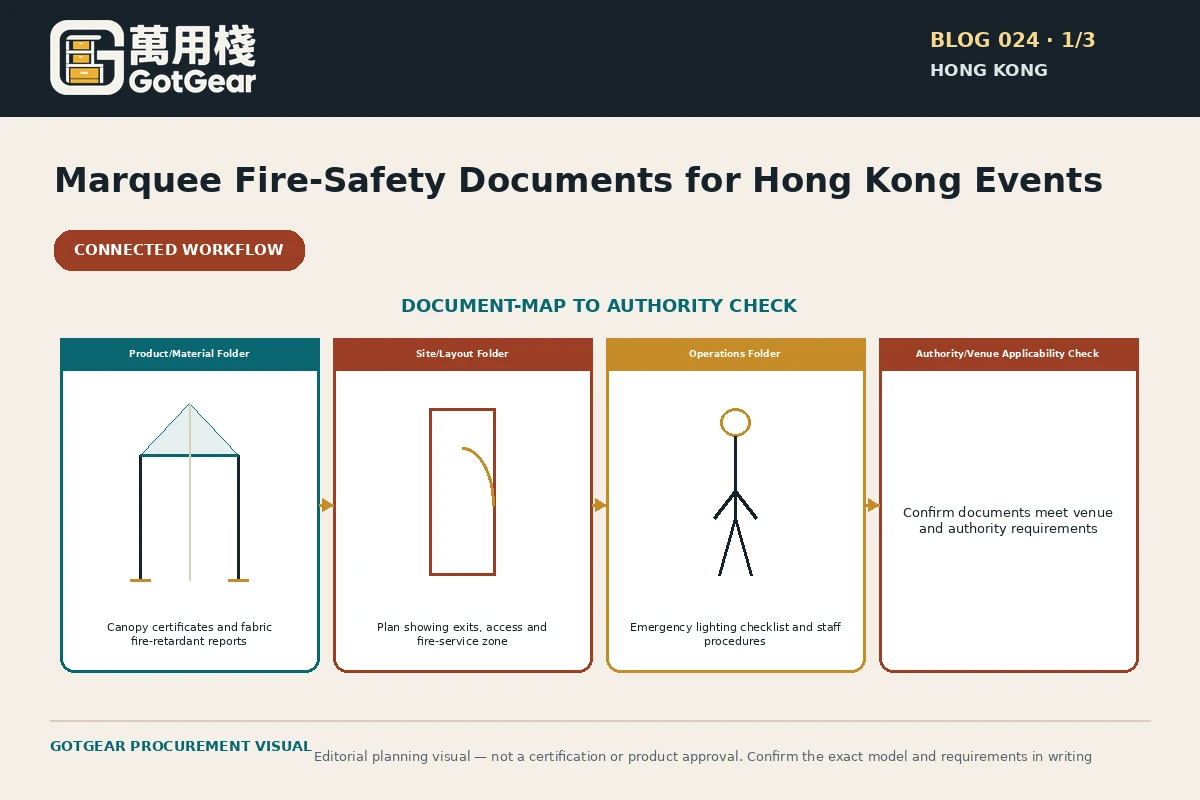
Temporary marquee fire safety documents Hong Kong
GotGear explains temporary marquee fire safety documents Hong Kong for Hong Kong buyers. See how canopy fire retardant fabric certificate Hong Kong supports marquee emergency lighting checklist Hong Kong, with practical checks, evidence boundaries and written requirements.
Read the guideRelated topic indexOpen more English procurement pages10 topics
Browse additional equipment families, applications and procurement questions relevant to these operating requirements.