
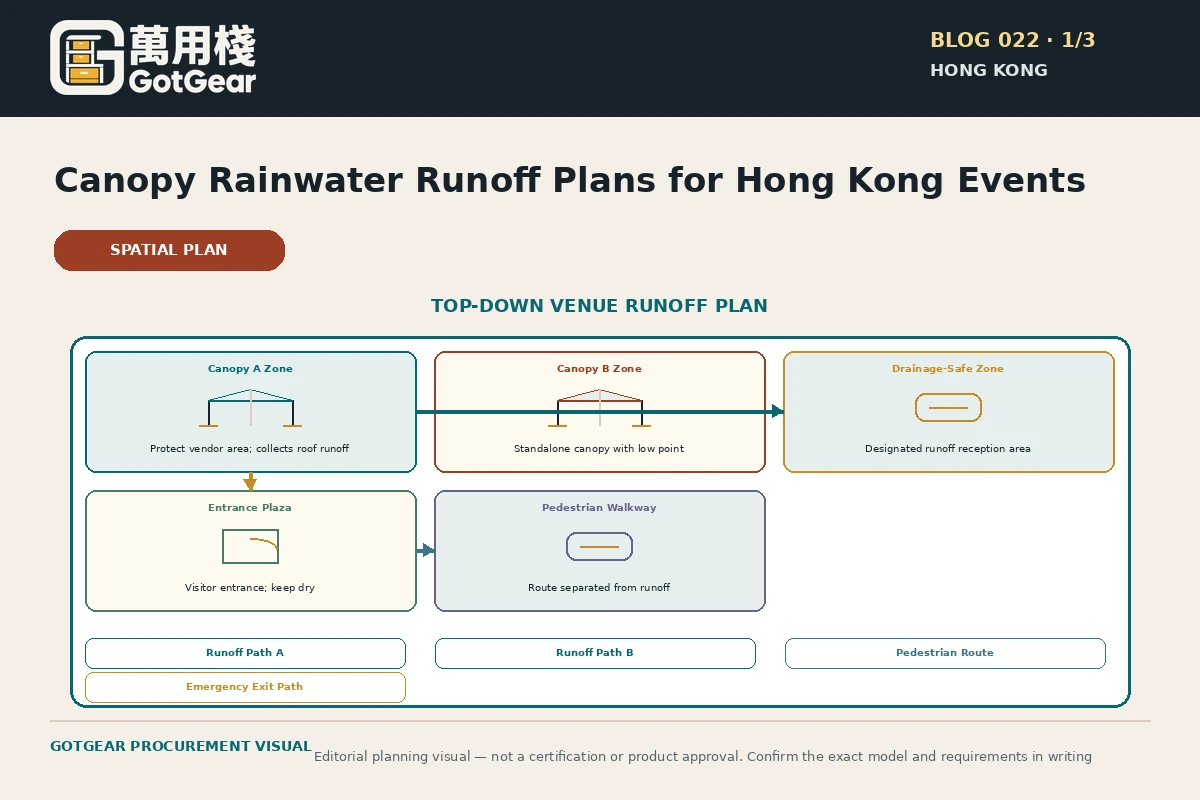
A canopy rainwater runoff plan for Hong Kong starts with a mapped site survey of slope direction, local low points, existing drains and all pedestrian thresholds and accessible routes; treat the weather owner as the event’s decision authority. Compare three responses: separate units spaced to shed independently, a supplier-approved linked canopy gutter accessory that redirects water to a managed discharge, or reducing/relocating covered area to avoid channelled flow. Pause work and revise the plan whenever visible pooling, blocked drains or unsafe circulation occur — temporary canopies are not flood-control systems.
What to remember before you decide
- Begin with a site survey: map falls, drains, low points and pedestrian thresholds before selecting accessories.
- Treat the weather owner as the decision authority: use Observatory warnings for timing but site observations for operational choices.
- Require written supplier confirmation for any linked-canopy gutter kit and check for wind-rating or anchorage implications.
- Prefer layout options that keep discharge away from primary egress, ticketing and accessible routes.
- Temporary canopies and gutter kits mitigate runoff but are not substitutes for permanent drainage or flood control.
Survey and map the site before you order accessories
Practical context: Hong Kong’s April–September rainy season and its rainstorm warning system mean heavy downpours and rapid ponding are possible, particularly on steep urban blocks, podiums and older open spaces with limited natural drainage. Use the Hong Kong Observatory warnings to plan the event’s weather-response, not as a design standard: the Observatory tells you when conditions may be unsafe; your site survey tells you where water will go. Use these decision checks: Walk the site in dry and wet conditions if you can, or consult recent site photos and drainage plans. Record: ground falls (direction of downhill), known low points, surface materials (paving, asphalt, grass), existing storm drains and gully locations, door thresholds, cable crossings, queue lanes and accessible routes. Note any locations used by building downpipes or podium overflows — these concentrate flow. Also identify canopy anchorage points and any permanent kerb or parapet that will hold water. A key limitation is that Site surveys show likely behaviours but cannot predict exact pooling depths under intense, localised storms. Temporary canopies are not substitutes for permanent drainage infrastructure. You must not assume a gutter accessory makes an area safe in flood-prone conditions. Next, Produce a scaled sketch or simple CAD overlay showing fall direction arrows, drain points, thresholds and pedestrian routes. Label locations where canopies will create valleys (connected ridge points) or where adjacent roof discharge may intersect your covered area. Share this plan with the venue, your safety officer and the canopy supplier before you order accessories. Diagram A — site-fall sketch (simple ASCII plan): North ^ | [Building] ----> (downpipe) | | ----------- | [Podium] V ----> [Open Plaza] ---> Drain (D) Canopy area: arrows show fall toward plaza drain; mark low point near D.
Identify pedestrian routes and safety-critical thresholds
Practical context: In Hong Kong venues, narrow circulation routes, ticketing entrances and lift lobbies are often the first places where canopy runoff will interfere with safe access. A runoff channel that crosses an entrance can create slip hazards and water ingress into buildings; queues under canopy edges may be exposed to redirected flow. Use these decision checks: Prioritise keeping primary egress, disabled-access routes and emergency exit paths free from diverted water. Where canopy placement risks directing water across a path, consider alternative locations or additional measures (temporary ramps with drainage, raised decking, or a supplier-approved guttering solution that discharges clear of circulation paths). A key limitation is that Measures such as raised decking or matting can help pedestrian circulation but do not remove large volumes of runoff; they can create trip hazards if not specified and installed correctly. Avoid improvising channel cuts or openings in canopies that the supplier has not approved. Next, Map primary and secondary pedestrian flows on the plan. Mark any thresholds where water must not cross. Share these constraints with the supplier so they can advise on accessory compatibility and recommended discharge locations. If a gutter accessory will direct water near a doorway, plan an alternative discharge point or relocation of the canopy.
“Plan drainage around people and fixed thresholds first; accessories are secondary. Map the water, then design the cover to keep circulation routes dry.”— GotGear Editorial Team
What should buyers compare for canopy rainwater runoff plan Hong Kong?
| Option or approach | Best for | Trade-offs | Checks before acceptance |
|---|---|---|---|
| Separated, independently spaced pop-up canopies | Sites where existing drains are adequate and you can keep water shedding away from pedestrian routes. | Larger footprint required; water sheds between canopies and may land on circulation routes if spacing not planned. | Map fall and drains; confirm spacing keeps runoff clear of thresholds; test a small area in wet conditions or examine photos of the site in rain. |
| Supplier-approved linked units with a compatible gutter kit | Tightly spaced arrays where you need to control and collect water from canopy valleys and channel it to a chosen discharge point. | Requires explicit supplier compatibility and may change wind/anchorage requirements; concentrates water to a discharge that must be managed. | Obtain written confirmation the gutter kit fits the canopy model and anchor positions; get guidance on wind-rating and anchorage; confirm discharge location with venue. |
| Relocate or reduce covered area (change of layout) | Sites with unavoidable low points or where pedestrian routes cannot be protected by accessories. | May reduce covered capacity and alter event flow; can require re-planning of ticketing and queueing. | Re-draw the site plan, simulate crowd flows, and confirm alternate covered locations are outside main flow paths and away from known low points. |
| Temporary diversion channels, raised decking or managed discharge points | Short-term mitigation where drains exist but need protection or where you must keep paths dry without linking canopies. | Adds installation time and complexity; must be removed afterwards; can create trip or barrier hazards if not installed correctly. | Design channels to avoid trip hazards, confirm weight/load on raised decking, ensure channels discharge to approved drains and check with venue management before installation. |
This framework helps buyers create comparable written enquiries. Final model specifications, availability, delivery and commercial terms must be confirmed in a formal quotation.
Compare layout responses by water path, access effect and supplier checks
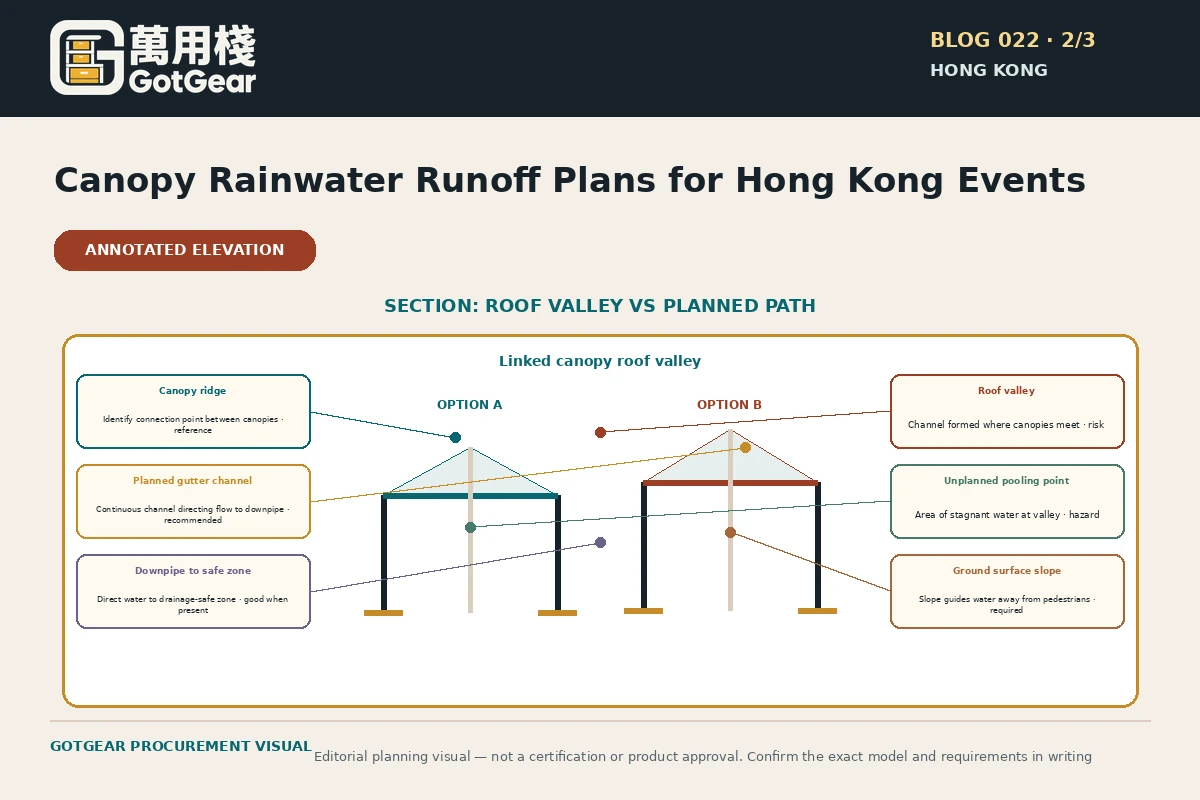
Practical context: Decision-making in Hong Kong often balances limited space with high pedestrian volumes. Each layout response shifts water paths and access risks differently; choose the one compatible with the canopy system and with venue constraints. Use these decision checks: Your choice should be based on three questions: where will the water go, will it cross or pool on pedestrian routes, and is the accessory manufacturer clear that the layout is compatible with the canopy model and local anchors? Prioritise options that keep water away from entrances and accessible routes and that have explicit supplier confirmation for linked units or gutter kits. A key limitation is that Manufacturer guidance varies; overseas guidance can be useful context but is not a substitute for confirmation from the canopy supplier about compatibility and warranty implications. You must not assume gutter kits fit every pop up canopy model. Next, Use the comparisonRows table below to weigh options on your plan. For any linked-gutter solution, obtain written confirmation from the supplier that the kit is designed for the canopy model, and check whether wind-rating or anchorage changes are required when guttering links are used. Diagram B — common linked-canopy valley (ASCII): [Canopy A] \/ [Canopy B] \______/ <-- valley where gutters collect and discharge Mark discharge point and check it’s off pedestrian route.
Monitor, trigger stop/review and document final decisions
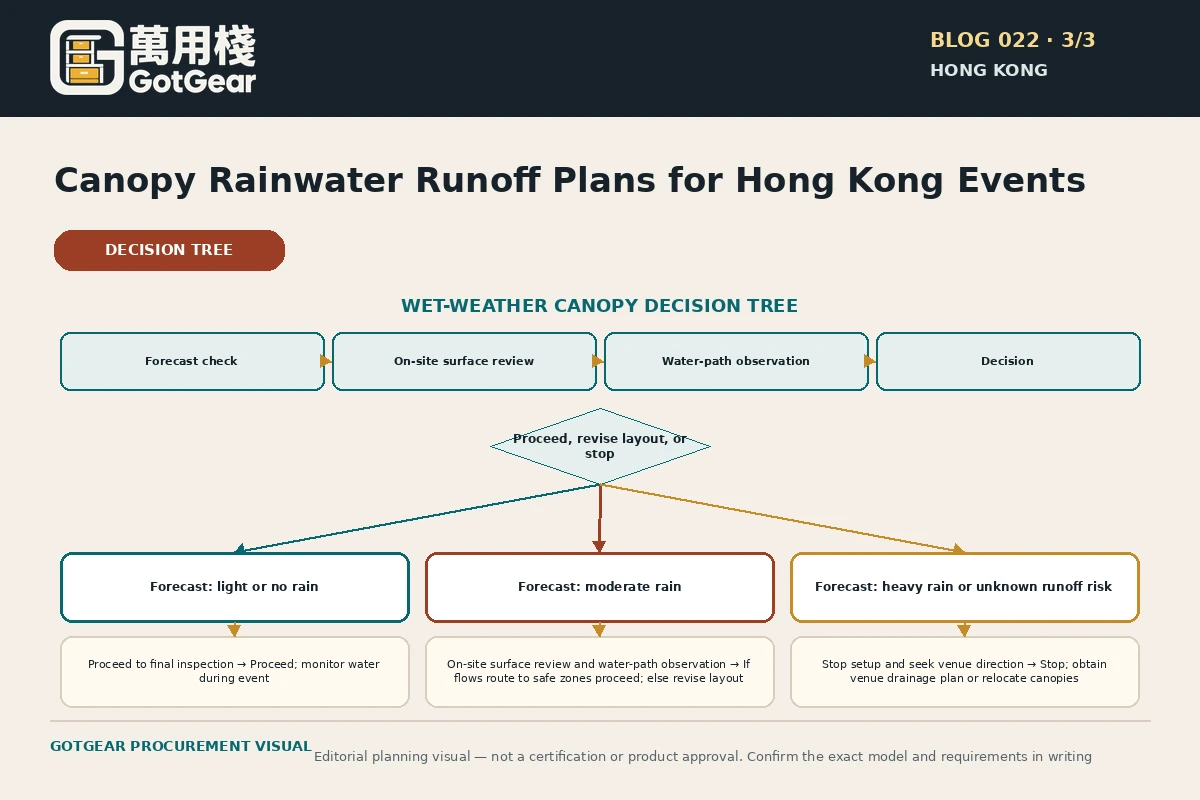
Practical context: For Hong Kong events, the weather owner (the person or team responsible for weather decisions) must have authority to pause canopy erection or to revise the site layout when conditions change. The Hong Kong Observatory’s rainstorm warnings guide the timing, but visible site conditions drive the operational decision. Use these decision checks: Define thresholds to pause or review the plan: visible pooling at intended canopy locations, blocked or overflowing drains, water crossing primary circulation routes, or heavy sustained rain during set-up. The weather owner should use the site map and supplier instructions to decide whether to: continue with separated units only, install a supplier-approved linked gutter, reduce covered area, or stop and demobilise. A key limitation is that You cannot rely on a canopy or accessory to keep people safe in the event of site flooding. If water levels are rising faster than you can manage safely, the correct decision may be to pause or cancel covered operations. Next, Log the decision and the conditions that led to it. Photograph any problem locations and keep supplier confirmation documents and venue drainage plans with the event file. This helps after-action review and continuous improvement for future Hong Kong events. Diagram C — quick decision flow (ASCII): Start -> Site survey complete? -> Yes -> Any drains blocked or pooling? -> Yes -> Pause erection; clear drains or reduce footprint -> No -> Are pedestrian thresholds threatened? -> Yes -> Consider linked gutter with supplier OK or move canopies -> No -> Proceed with standard layout; monitor continuously
Canopy rainwater runoff plan Hong Kong decision checklist
- Map site fall direction and mark existing drains and gully locations.
- Identify and label all pedestrian thresholds, accessible routes and emergency egress paths.
- Locate known low points, adjacent roof downpipes and planned canopy valleys.
- Measure and mark queue lines, cable runs and equipment thresholds that cannot be contaminated by runoff.
- Confirm canopy model, anchor details and supplier guidance on gutter kit compatibility and wind-rating changes.
- Check venue rules on discharge to building drains and whether drain protection or authorization is required.
- Nominate a weather owner with authority to pause/set a stop-review trigger based on observable conditions.
- Plan for safe anchorage: note ground type, required ballast or staking and any limitations on penetration or weights.
- Document the chosen layout on a scaled sketch and circulate to venue, supplier and safety team.
- Schedule monitoring rounds during setup and the event with clear reporting channels for water observations.
Practical action sequence
- Perform a ground-walk and annotate a site plan with falls, low points, drains and thresholds.
- Overlay planned canopy locations and shade primary pedestrian routes on the plan.
- Decide layout response (separated, linked gutter, reduced area or temporary diversion) and obtain written supplier confirmation if linking/guttering.
- Confirm anchorage and any wind-rating changes with supplier; plan ballast or fixings compatible with the surface and venue rules.
- Install canopies following the agreed layout, then run immediate checks at downflow points and pedestrian thresholds.
- If pooling or unsafe flows are observed, pause work, clear drains where safe to do so, or demobilise covered areas until the weather owner approves continuation.
Apply the checks to your Hong Kong site
Hong Kong-specific considerations remain central: April–September brings short, intense showers and localized urban runoff, so use Hong Kong Observatory rainstorm warnings for event decisions but not as a design standard. Podium and rooftop sites frequently have poor surface fall and few visible drains—inspect falls, outlet access and pedestrian crossing points early. Public venue rules, building-management procedures and fire/egress requirements can limit where you may discharge water; involve venue operations at the layout stage. Overseas guidance can inform choices but is not a substitute for local checks and written supplier confirmation. Event teams preparing a canopy rainwater runoff plan Hong Kong should base layouts on measured site fall, current venue documents and supplier sign-off. A pop up canopy gutter kit layout Hong Kong can link adjacent covers; consider a layout change by water path to support canopy tent rainwater pooling prevention Hong Kong. Operational takeaway: map runoff lines, confirm drain paths in writing with the venue and supplier, then trial the chosen gutter routing before installation.
References used for this article
These sources provide regulatory, safety or planning context. They do not certify any GotGear product or replace site-specific professional advice.
- Hong Kong Observatory — Rainstorm Warning System — Provides Hong Kong context on the April–September rainy season, the Amber/Red/Black warning system and the risk of flooding and disruption; use it for weather-response planning, not as a canopy design standard.
- UK Health and Safety Executive — Venue and site design — Supports assessing ground conditions, flooding response, site topography, temporary-structure position and emergency circulation when developing a site plan.
- UK Health and Safety Executive — Outdoor equipment at events — Supports considering ground strength, slope, foreseeable weather and manufacturer/design instructions; it does not prescribe a canopy-gutter configuration.
Questions about canopy rainwater runoff plan Hong Kong
How do I confirm a pop up canopy gutter kit is compatible with my canopy model?
Ask the supplier for written confirmation that the specific gutter kit is designed for your canopy model and the canopy’s frame geometry. Compatibility means the gutters attach without modifying load-bearing members and that any changes in wind rating or anchorage requirements are documented. If the supplier cannot confirm compatibility in writing, do not improvise attachments. Keep the confirmation with your site file and check whether using the kit affects warranty or insurance terms.
Can linked canopies or a gutter kit safely cover a queue or ticketing line?
They can, but only when the gutter discharge is directed away from pedestrian thresholds and when the accessory is supplier-approved for that canopy arrangement. A gutter that redirects water along the length of a queue may simply move the hazard from under the canopy to the queue line. Consider lowering the queued area out of the main runoff path, providing a secondary covered space, or using separated units that shed independently. Always check the plan against primary egress and accessible routes before committing to a solution.
What should we do immediately if water starts pooling under or around a canopy during setup?
Stop erecting adjacent or linked canopies and assess pooling depth and source. If safe, clear nearby drains and gullies or reposition ballast to shift the flow; however, do not attempt structural alterations to the canopy frame or guttering without supplier approval. If pooling threatens primary circulation routes, demobilise the affected canopies and protect egress paths. The weather owner should document the conditions and decisions and, if necessary, cancel covered operations while it is unsafe.
Does the Hong Kong Observatory rainstorm warning mean we must cancel events under canopies?
No — the rainstorm warning guides operational decision-making but does not automatically make every canopy event unlawful or unusable. Use the warning as a trigger to implement your weather-response plan: increase monitoring, pause risky activities (such as elevated rigging), and prepare to demobilise if site conditions are unsafe. Local venue procedures, visible pooling and the supplier’s guidance are the factors that determine whether covered operations should stop.
Can a temporary canopy system be used as a flood-control measure or connected directly to venue drains?
No. Temporary canopies are not flood-control systems and should not be relied on to manage large volumes of stormwater. Do not connect gutter kits directly into permanent building drainage without venue approval and confirmation from building engineers. Any managed discharge must be agreed with the venue management and should avoid overloading drains or creating water ingress risks.
Compare available product models and specifications
These product cards are matched to this buying topic. Select a specification and quantity to send the product details to WhatsApp.
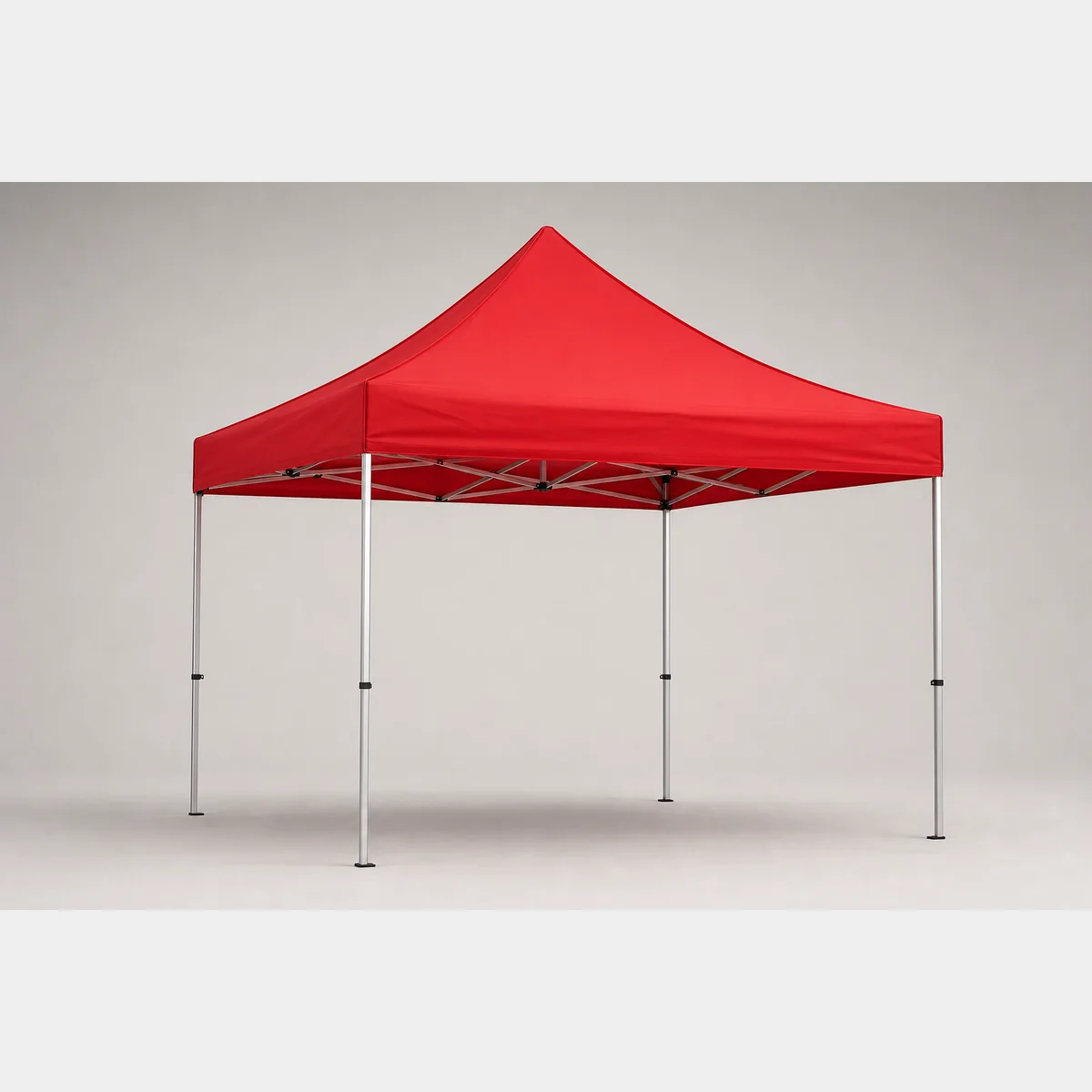 Canopies & Outdoor EquipmentProduct reference image
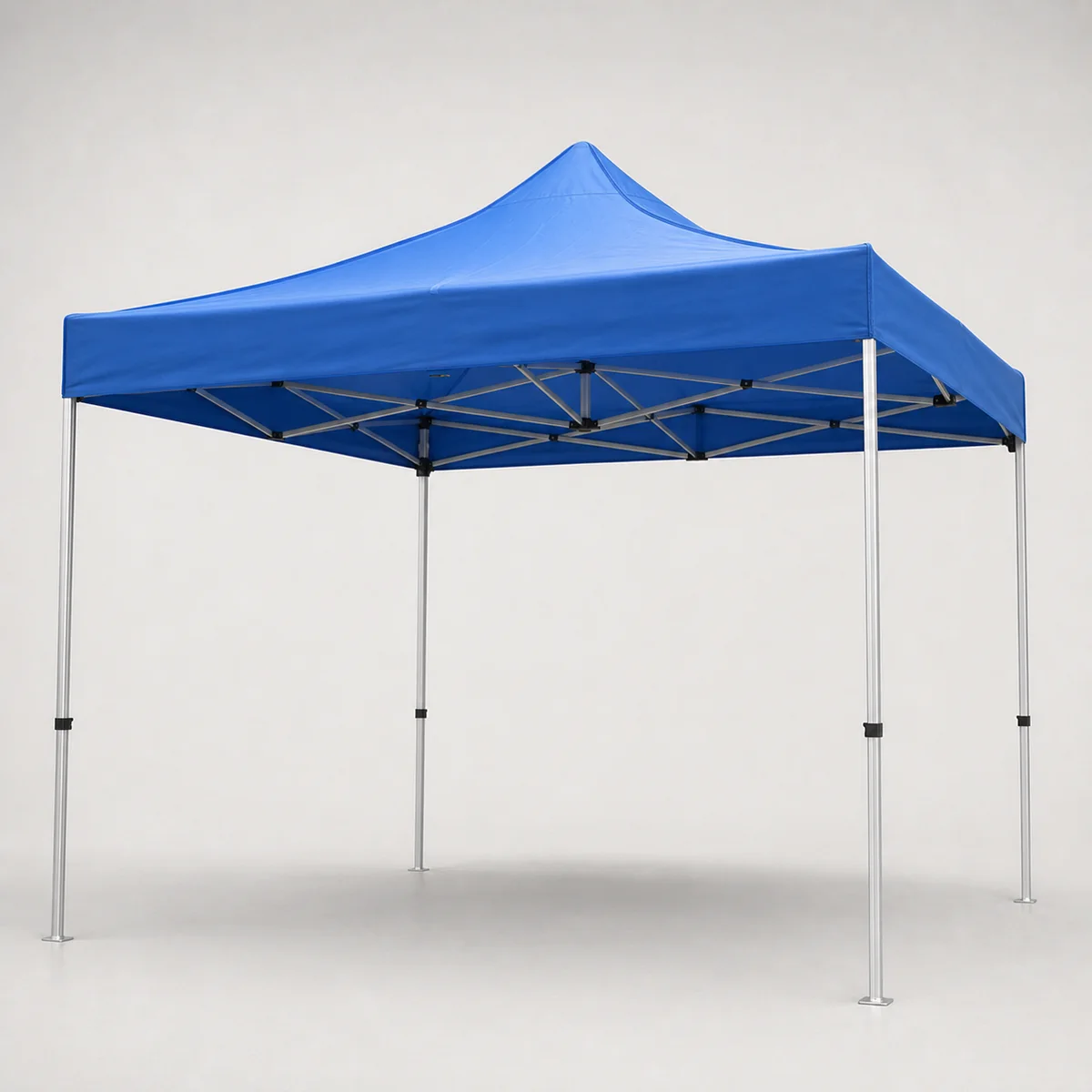
Tent (stainless steel)
Tent (stainless steel). Material: stainless steel frame with canvas; canopy: 600D Oxford fabric; listed canopy colours: Red/Blue/Green (other colours are subject to written confirmation). Formal quotation available on request based on use, specifications and quantity.
- Material
- stainless steel frame with canvas
- Canopy
- 600D Oxford fabric
- Listed canopy colours
- Red/Blue/Green (other colours are subject to written confirmation)
 Canopies & Outdoor EquipmentProduct reference image
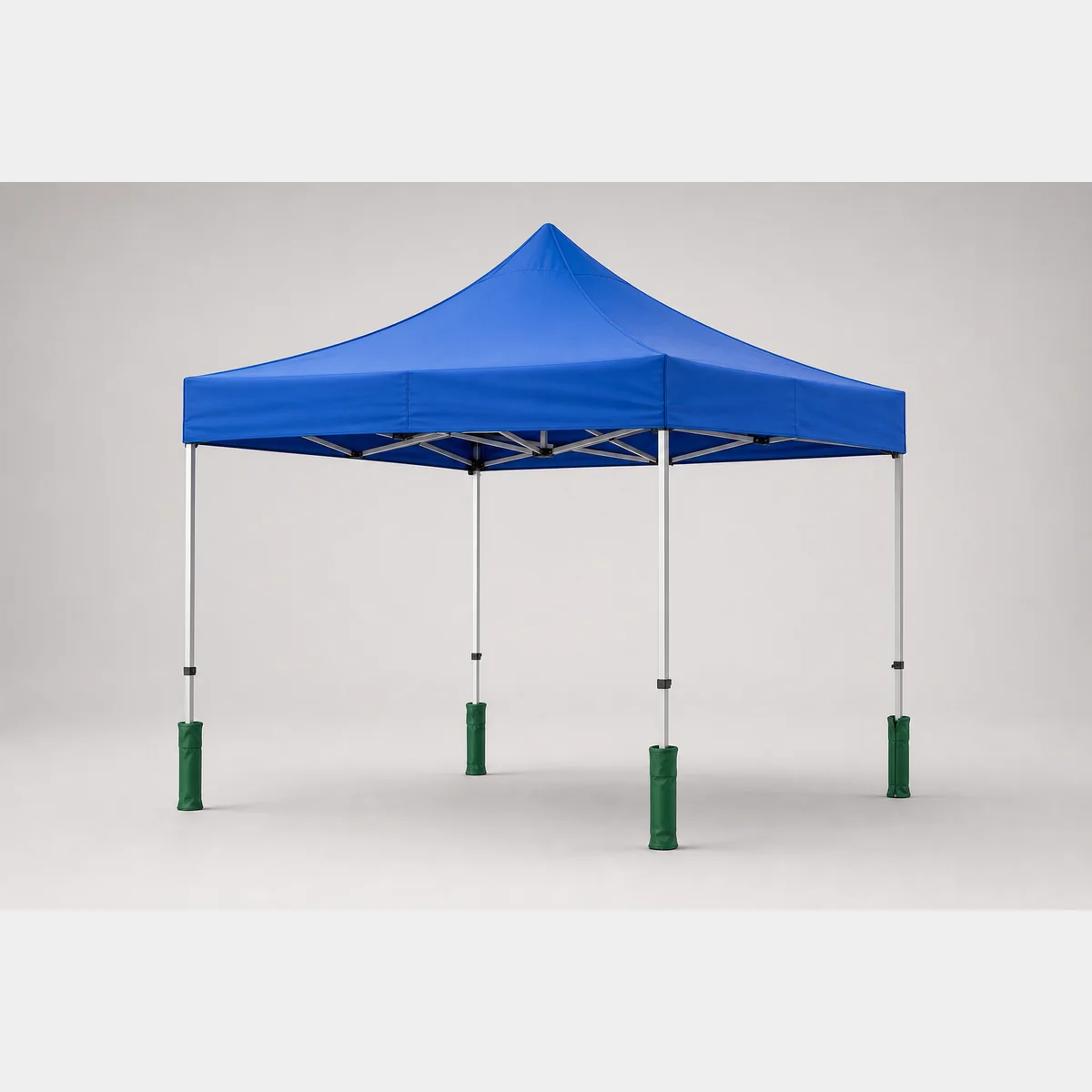
Aluminium-frame Tent
Aluminium-frame tent. Material: aluminium alloy frame with canvas; Fabric: (600D Oxford fabric); Listed colours: Red/Blue/Green (other colours are subject to written confirmation). Formal quotation available upon enquiry by intended use, specifications and quantity.
- Material
- Aluminium alloy frame with canvas
- Fabric
- (600D Oxford fabric)
- Listed colours
- Red/Blue/Green (other colours are subject to written confirmation)
 Canopies & Outdoor EquipmentProduct reference image
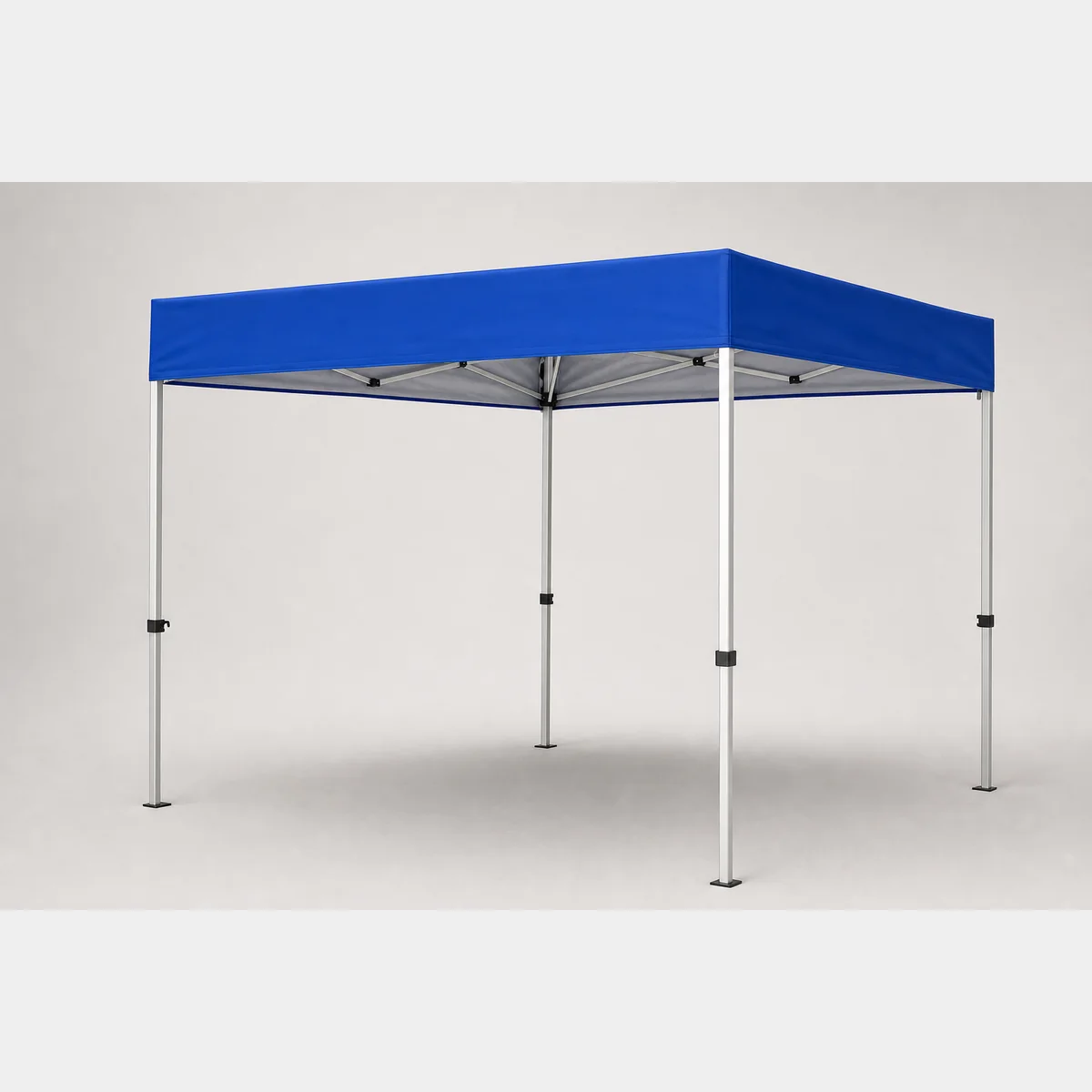
Aluminium-frame Tent
Aluminium-frame tent. Material: aluminium alloy frame with canvas; Fabric: (600D Oxford cloth); Side curtain fabric: (420D Oxford cloth). Formal quotation available based on intended use, specifications and quantity.
- Material
- Aluminium alloy frame with canvas
- Fabric
- (600D Oxford cloth)
- Side curtain fabric
- (420D Oxford cloth)
 Canopies & Outdoor EquipmentProduct reference image
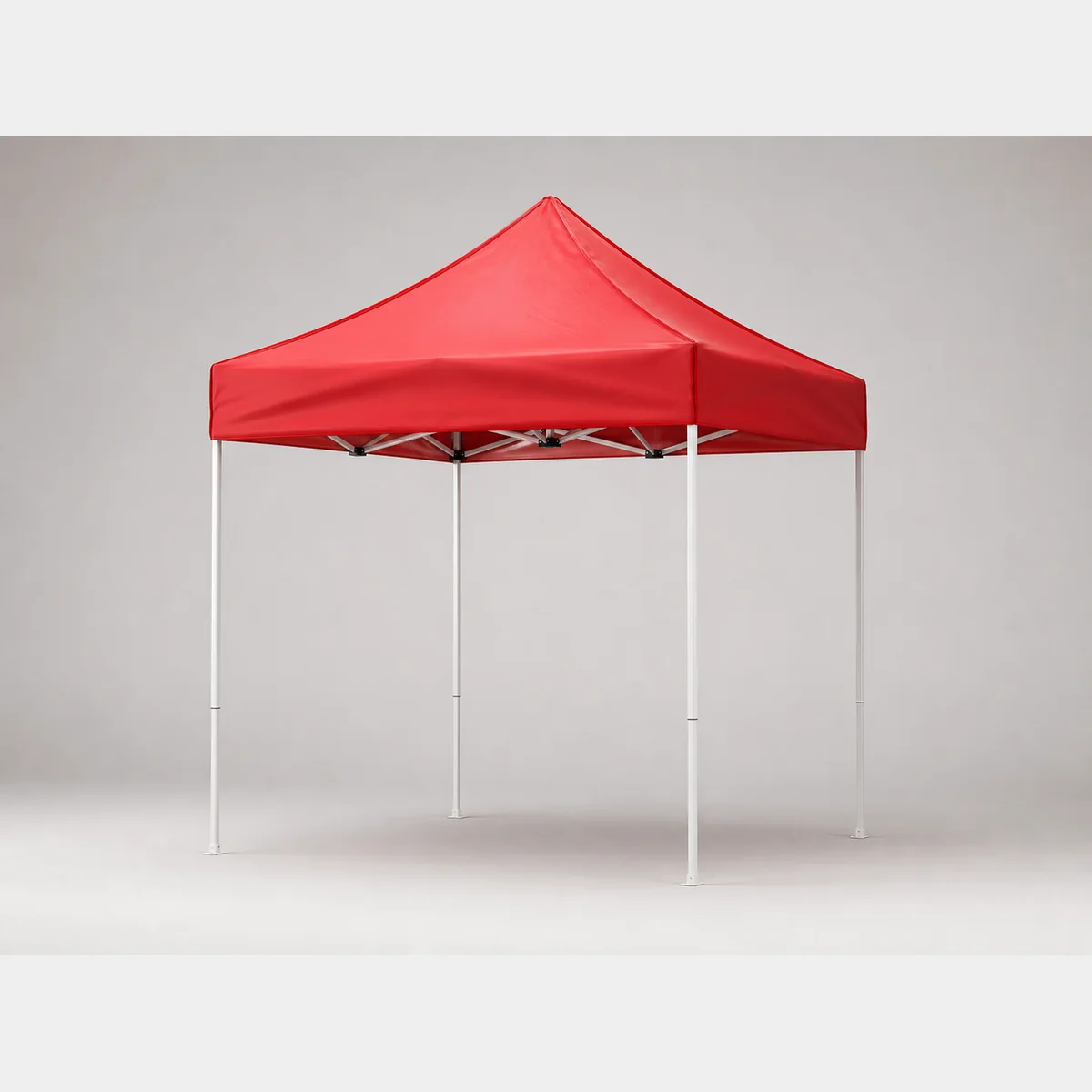
Flat-top Tent (Stainless Steel Frame)
Flat-top Tent (Stainless Steel Frame), A: 2Mx2M; B: 3Mx3M. Formal quotation available upon request based on use, specifications and quantity.
- A
- 2Mx2M
- B
- 3Mx3M
 Canopies & Outdoor EquipmentProduct reference image
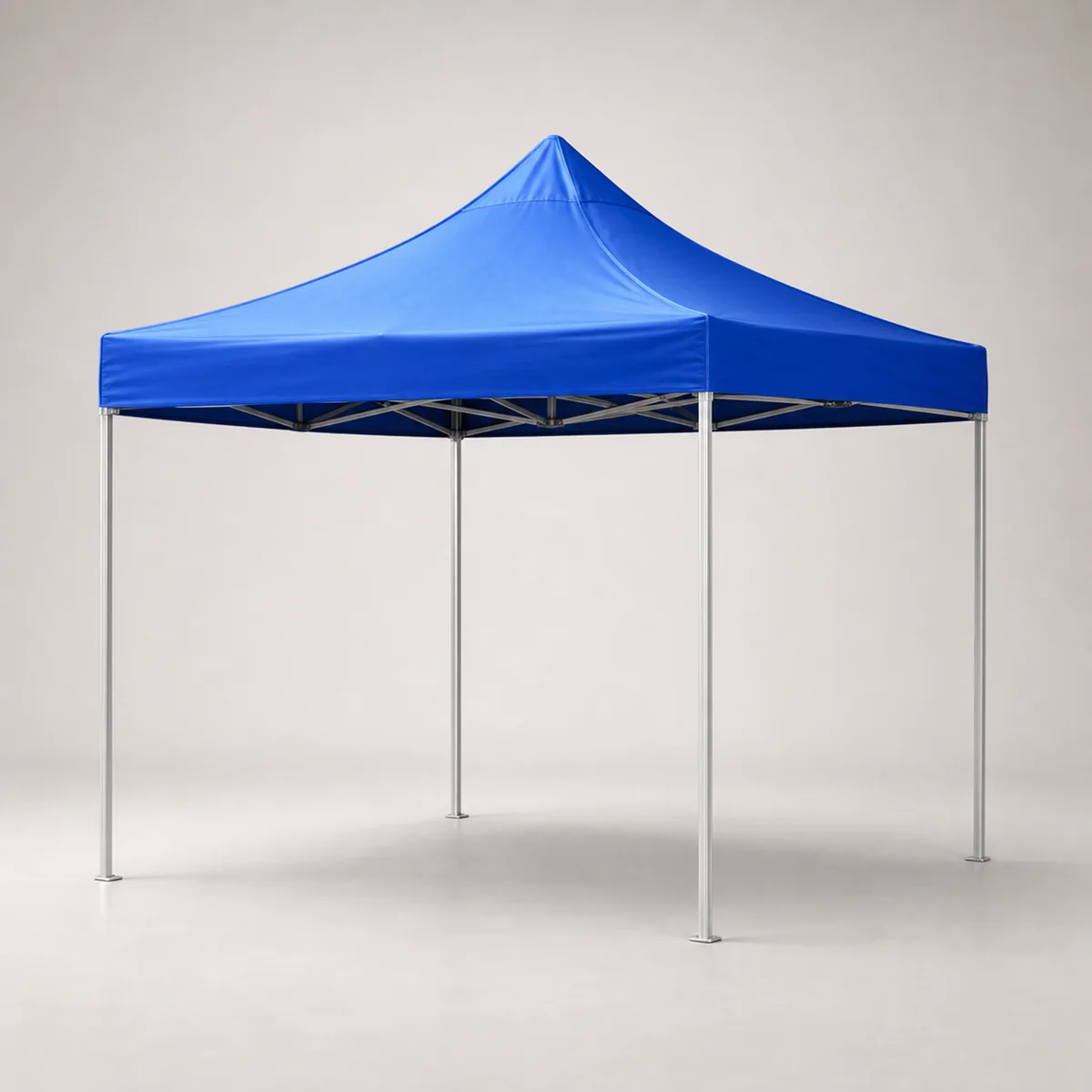
Iron-frame Tent
Iron-frame tent, material: iron frame with canvas; Fabric colours: Red/Blue/Green (other colours or silk-screen logo require formal quotation); Fabric: (600D Oxford fabric). Formal quotation available based on use, specifications and quantity.
- Material
- iron frame with canvas
- Fabric colours
- Red/Blue/Green (other colours or silk-screen logo require formal quotation)
- Fabric
- (600D Oxford fabric)
 Canopies & Outdoor EquipmentProduct reference image
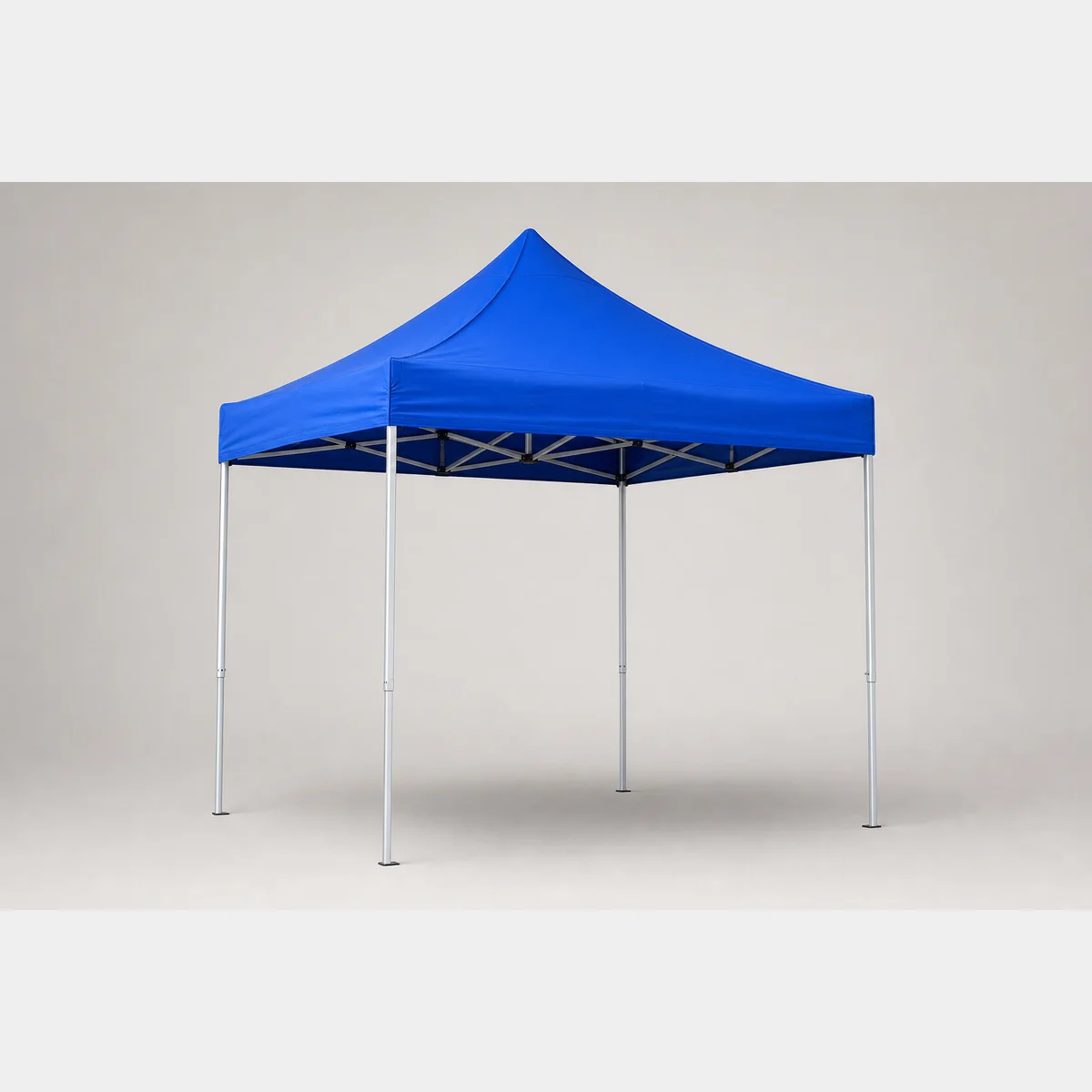
Tent (aluminium frame)
Tent (aluminium frame), A: 2M x 2M; B: 3M x 3M; C: 2.5M x 2.5M. Formal quotation available on request based on use, specifications and quantity.
- A
- 2M x 2M
- B
- 3M x 3M
- C
- 2.5M x 2.5M
 Canopies & Outdoor EquipmentProduct reference image
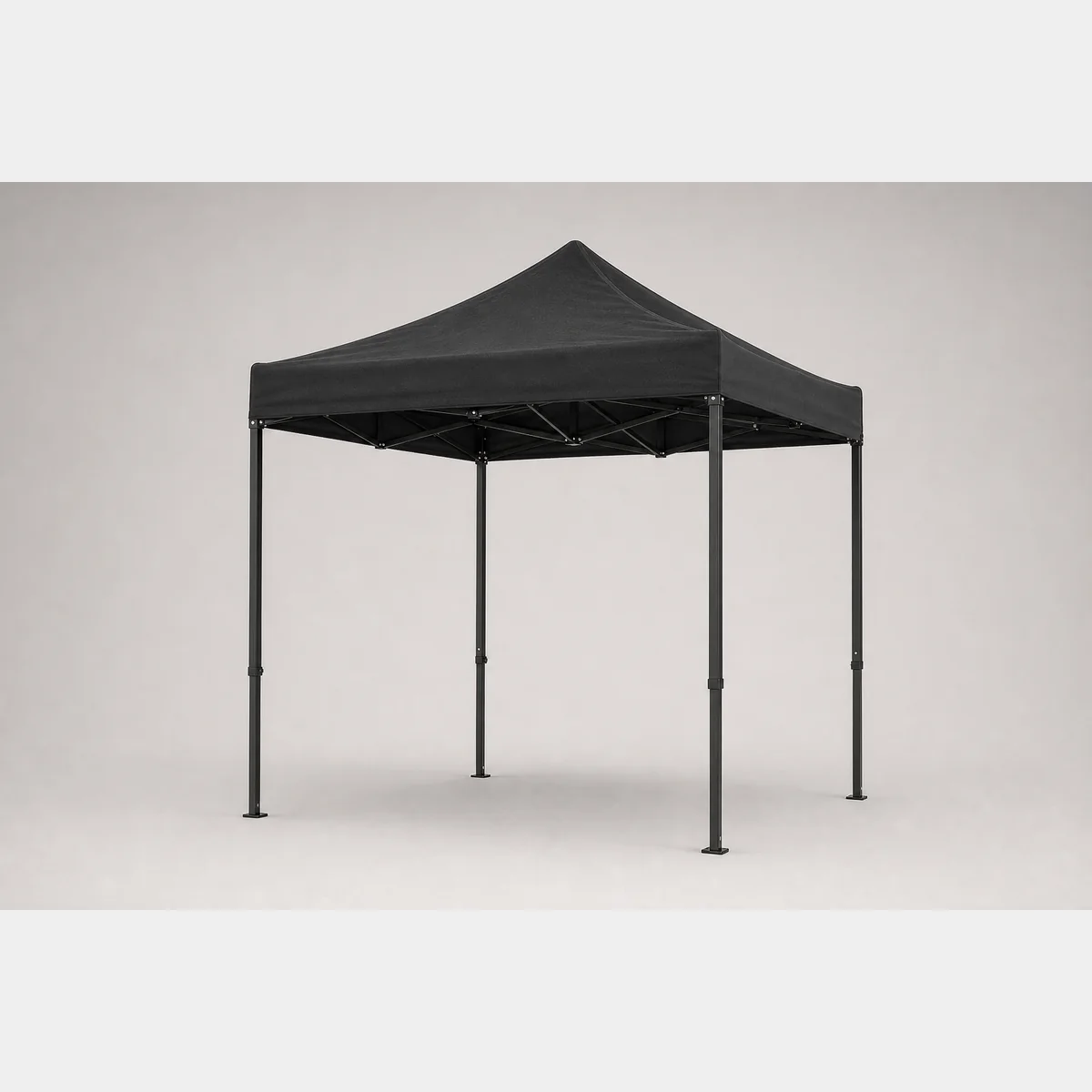
Tent (Aluminium frame) S8141
S8141 aluminium tent frame in four source-listed sizes. Source records conflict between 38 mm and 40 mm upright tubes; confirm the exact tube specification in writing.
- Size
- 2Mx2M
 Canopies & Outdoor EquipmentProduct reference image
Tent (black iron frame)
Tent (black iron frame), sizes: 2 x 2 m / 3 X 3 m; MOQ: 1/PC; Fabric: (600D Oxford cloth). Request a formal quote based on application, specs and quantity.
- Dimensions
- 2 x 2 m / 3 X 3 m
- MOQ
- 1/PC
- Fabric
- (600D Oxford cloth)
Continue with closely related procurement topics
These pages share equipment, operating or decision-stage signals with this guide.
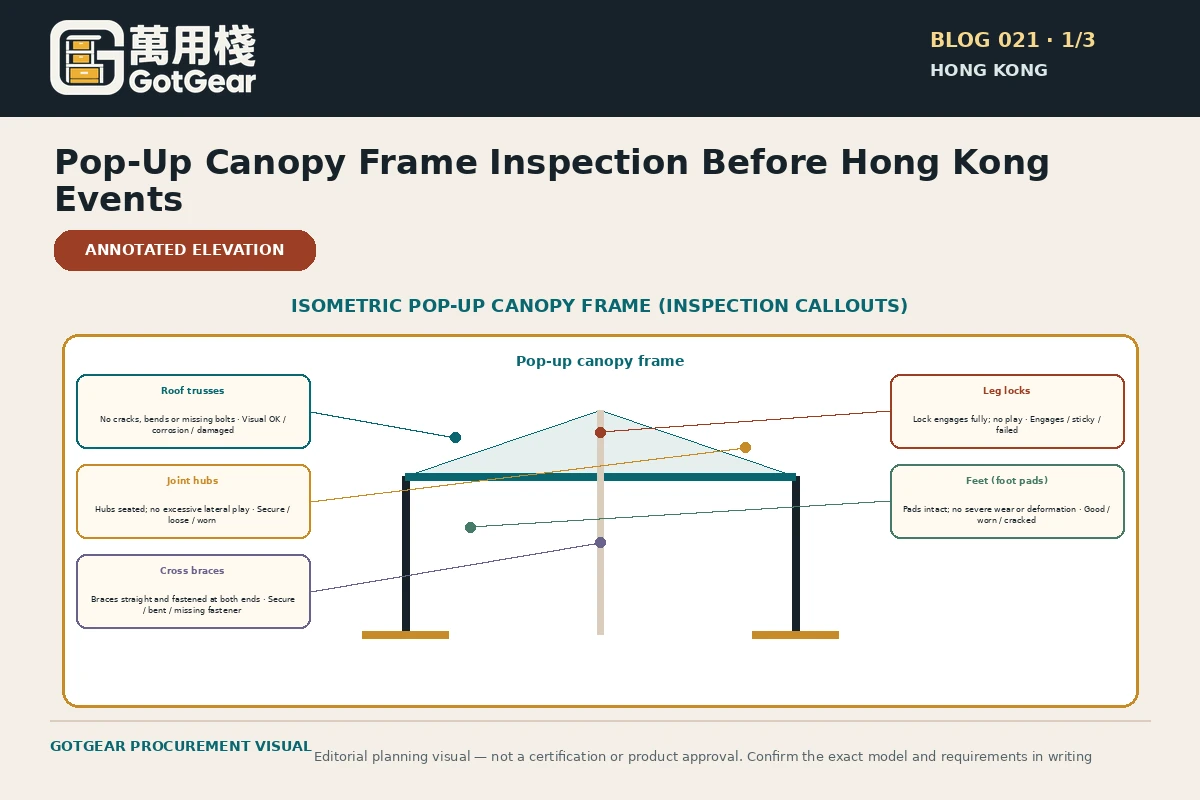
Pop up canopy frame inspection Hong Kong
GotGear explains pop up canopy frame inspection Hong Kong for Hong Kong buyers. See how folding tent leg locking mechanism check Hong Kong supports pop up canopy roof truss inspection Hong Kong, with practical checks, evidence boundaries and written requirements.
Read the guide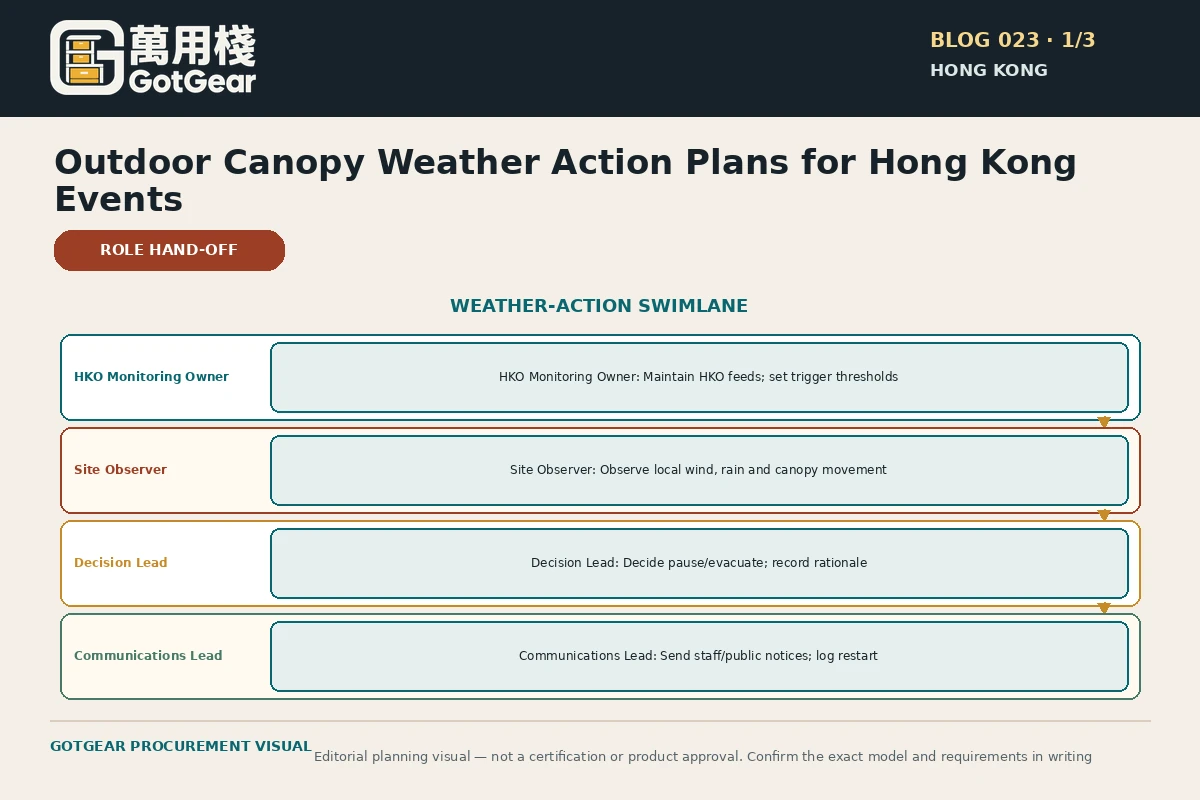
Outdoor canopy weather action plan Hong Kong
GotGear explains outdoor canopy weather action plan Hong Kong for Hong Kong buyers. See how canopy tent wind monitoring procedure Hong Kong supports pop up gazebo thunderstorm response plan Hong Kong, with practical checks, evidence boundaries and written requirements.
Read the guide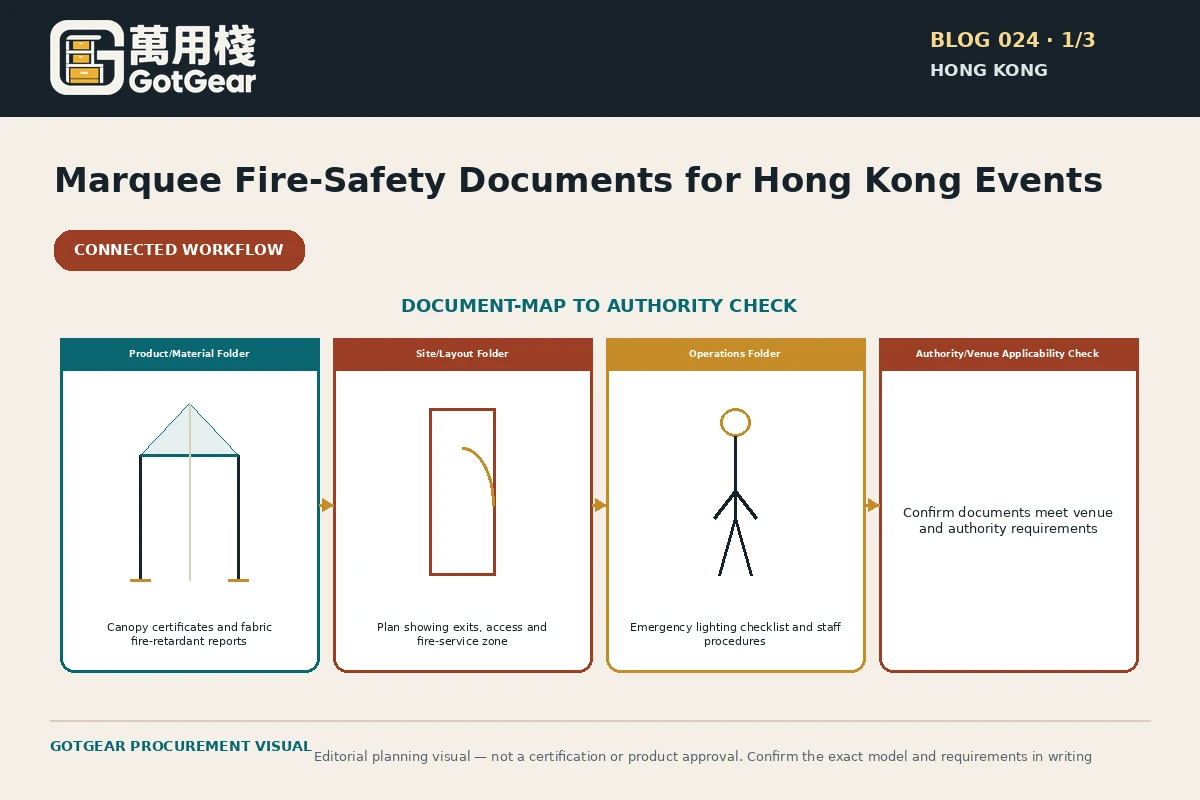
Temporary marquee fire safety documents Hong Kong
GotGear explains temporary marquee fire safety documents Hong Kong for Hong Kong buyers. See how canopy fire retardant fabric certificate Hong Kong supports marquee emergency lighting checklist Hong Kong, with practical checks, evidence boundaries and written requirements.
Read the guide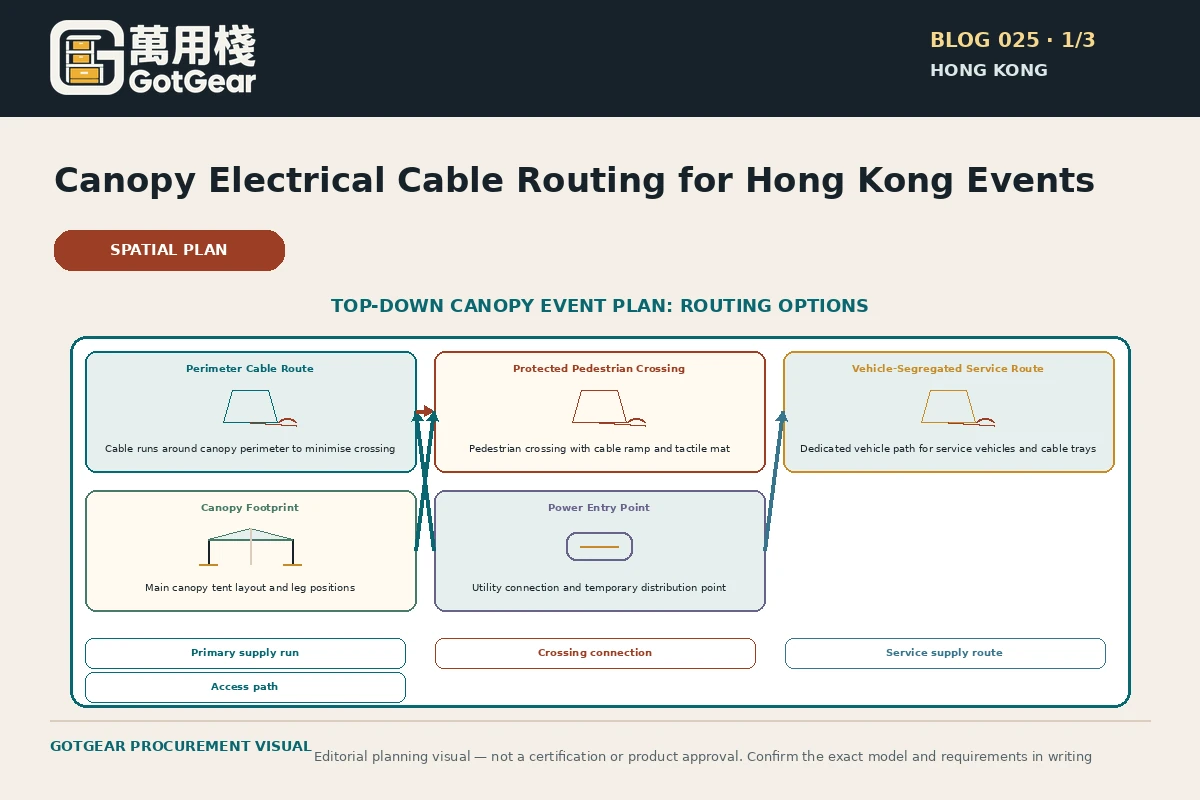
Canopy electrical cable routing Hong Kong
GotGear explains canopy electrical cable routing Hong Kong for Hong Kong buyers. See how outdoor event cable ramp layout Hong Kong supports canopy tent temporary power checklist Hong Kong, with practical checks, evidence boundaries and written requirements.
Read the guideRelated topic indexOpen more English procurement pages10 topics
Browse additional equipment families, applications and procurement questions relevant to these operating requirements.