
Glass trolley Hong Kong — Shortlist a trolley only when its rated capacity, support geometry, contact materials and restraints match the defined glass load. Verify manufacturer instructions and complete a task- and site-specific risk assessment, including applicable Hong Kong requirements, before use.
Glass trolley Hong Kong — Define glass dimensions, mass and handling condition
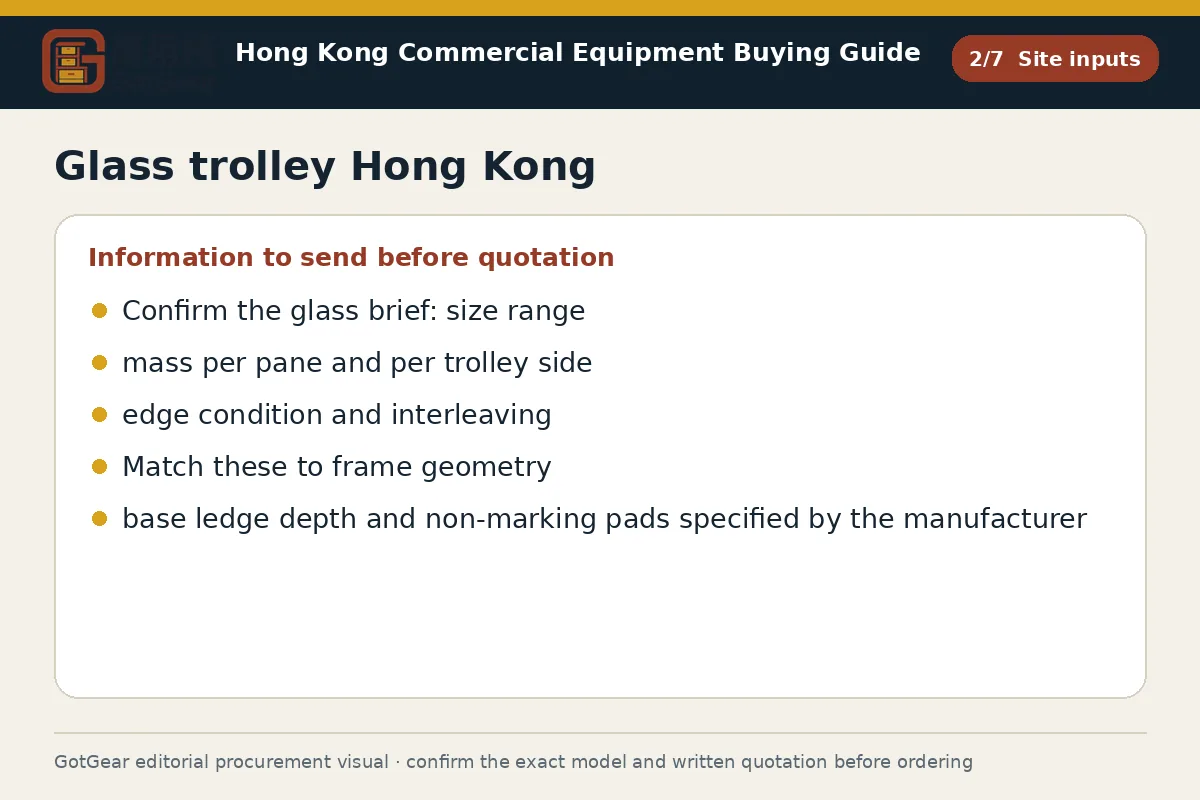
Begin your enquiry with a clear load definition that suppliers can quote against. Record the maximum and typical pane width, height and thickness; the number of panes per trip; the estimated mass per pane and per trolley side; and the edge condition (arrissed, polished, sealed or exposed). Note any coatings, protective films or interleaving sheets, and specify whether suction lifters, manual team lifts or crane forks will place the glass onto the trolley. When procuring a glass trolley Hong Kong, record the operating environment as well: air‑conditioned interiors, humid loading bays or short outdoor transfers between blocks.
Request suppliers to state, in writing, the model code, total rated capacity and per‑side capacity, usable frame length, base ledge depth, A‑frame angle, maximum recommended pane height, and the minimum pane thickness they will support without additional spacers. Specify preferred contact materials (rubber/EVA/felt), whether non‑marking contact is required, and the tolerance for wet glass. Ask for wheel diameter, tread compound, bearing type, brake configuration, overall footprint, and the turning radius claimed by the manufacturer. For direct comparison, require a drawing with key dimensions, photos of the contact pads, and confirmation of language availability for manuals and labels (English and Chinese where possible). The model specification and the final written quotation must prevail over any preliminary note or catalogue excerpt.
Glass trolley Hong Kong — Plan loading, visibility and clearance along the route
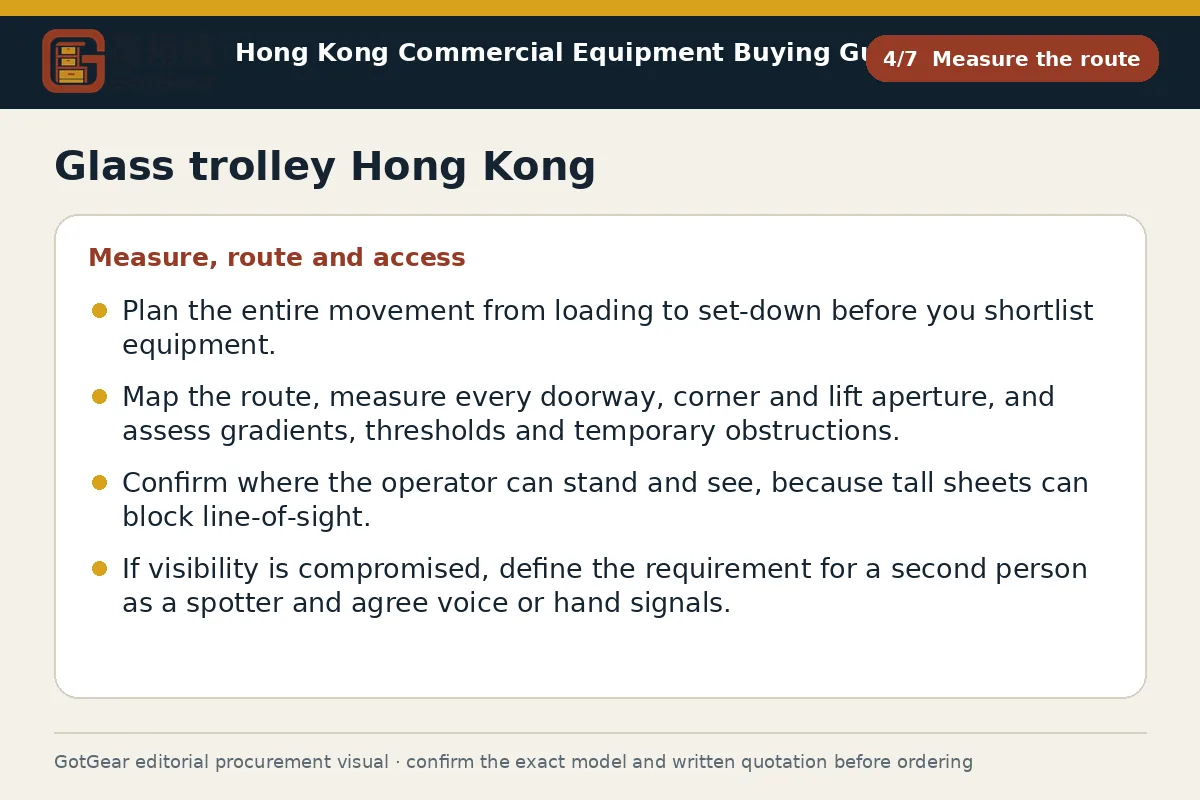
Plan the entire movement from loading to set‑down before you shortlist equipment. Map the route, measure every doorway, corner and lift aperture, and assess gradients, thresholds and temporary obstructions. Confirm where the operator can stand with a clear line of sight, because tall sheets can block visibility. If visibility is compromised, define the requirement for a second person to act as a spotter and agree voice or hand signals. Complete a trolley route assessment Hong Kong, and include a brief covering time‑of‑day footfall and building‑manager controls to speed approvals.
Record the smallest passage dimension and the tightest turn. As a practical starting point, note the actual gap to the nearest millimetre and aim for a working clearance band such as 25–50 mm, to be confirmed in your site plan and quotation. Capture goods‑lift cabin length, width, door size and floor load rating, plus any weekend or night loading windows. Where delicate finishes or crowded venues are involved, state the need for corner guards and trolley bumper protection Hong Kong to prevent impact damage. If the scope may shift to other panels during a shutdown or fit‑out, flag this early so the supplier can comment on cross‑use or alternative options like a panel trolley Hong Kong, subject to their model limits.
What should buyers compare for glass trolley Hong Kong?
| Criterion | Straightforward requirement | More complex requirement | Evidence to provide |
|---|---|---|---|
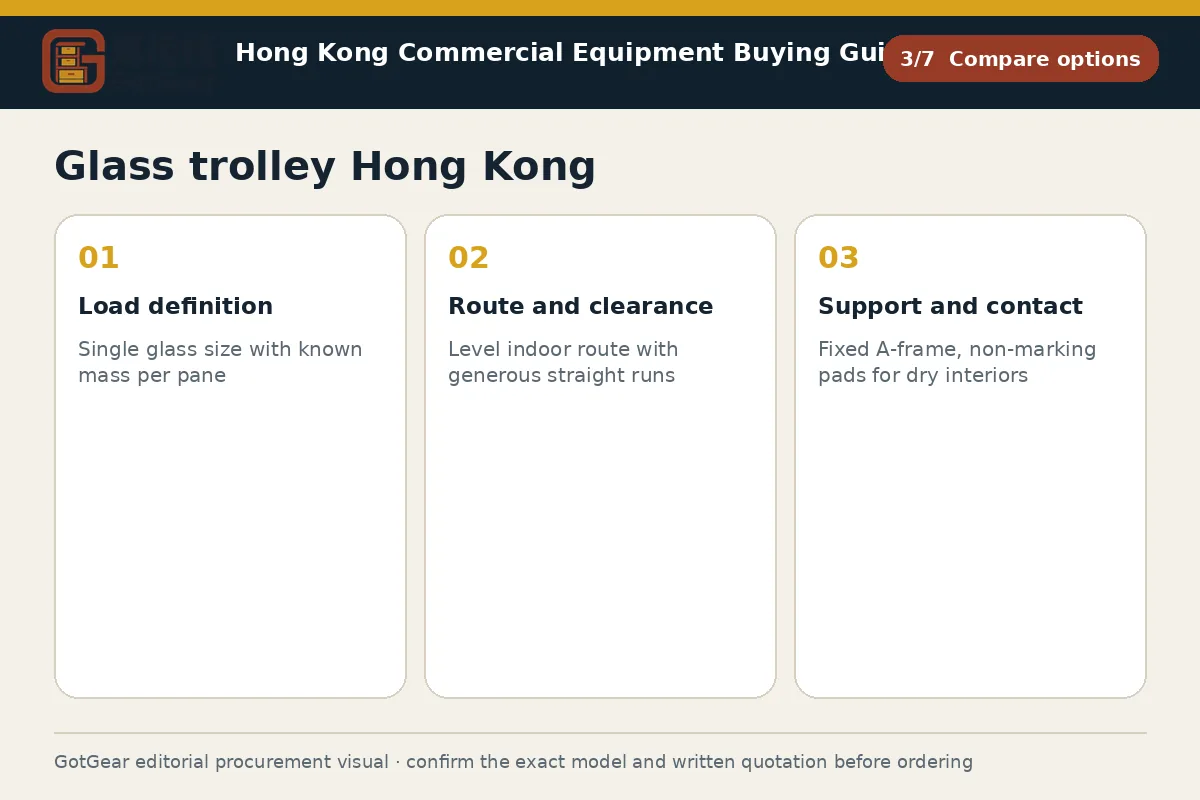
| Load definition | Single glass size with known mass per pane | Mixed sizes and thicknesses with batch variability | Provide drawing, thickness range, mass per pane, edge condition and interleave details |
| Route and clearance | Level indoor route with generous straight runs | Tight turns, lift transfers, thresholds and public interfaces | Submit route sketch with all apertures, tightest turn radius, lift cabin/door sizes and floor rating |
| Support and contact | Fixed A‑frame, non‑marking pads for dry interiors | Adjustable supports, moisture‑tolerant pads, corrosion‑resistant fasteners | State pad material preference, moisture exposure, and request material data/photos |
| Restraints and stability | Two straps per side and parking brakes | Clamp bar/secondary retention and wheel chocks for uneven routes | Quote required strap type/width, anchor protection, and include manual pages showing restraint use |
| Documentation and approvals | Model code, capacity plate and basic manual | Bilingual manual, maintenance guidance and building‑manager access conditions | Attach PDFs, label samples, and any email confirming loading window and access rules |
This framework helps buyers create comparable written enquiries. Final model specifications, availability, delivery and commercial terms must be confirmed in a formal quotation.
Glass trolley Hong Kong — Assess support, restraint and contact materials
Match support geometry, restraints and contact materials to the glass. Define the required A‑frame or dual‑sided frame type, the base channel depth, and any need for adjustable uprights or removable posts to suit varying sheet thickness. Specify non‑marking, oil‑free pads that resist moisture; rubber, EVA or felt are typical options, but ask the manufacturer to confirm compatibility with your glass coatings. In Hong Kong’s humid conditions, consider stainless fasteners or well‑finished galvanised components and provide drainage paths to reduce corrosion and water retention.
State restraint expectations: the number and type of straps or bars per side, preferred buckle or cam type, minimum strap width, and protected tie‑down points that keep hardware away from glass edges. If secondary retention (for example, a top clamp bar) is required for rough ground or lift thresholds, include it in the enquiry. Where routes pass public areas or areas with premium finishes, include sacrificial edging or integrated bumpers and reference trolley bumper protection in Hong Kong in the brief. If your programme also covers wood, stone or gypsum panels, note this so the same enquiry can inform a panel trolley comparison in Hong Kong. For quotations, request data sheets for pad compounds, photos of restraint anchors, and confirmation of the maximum recommended pane lean angle and any limits on clamp force, as stated by the manufacturer.
Glass trolley Hong Kong — Verify model limits and task controls before movement
Before first movement, confirm the selected model’s load and stability limits against your defined task. Check the capacity plate, per‑side rating, maximum pane height and any centre‑of‑gravity notes in the manual. Verify that the wheelbase, caster layout and brake type suit your route, including ramps, lift thresholds and turning spaces. If moving through public or mixed‑use areas, document spotter roles, exclusion measures and communications as part of a task‑specific risk assessment aligned with venue or building‑management requirements in Hong Kong.
Ask the supplier for the latest manufacturer instructions, maintenance guidance, spare‑parts list and a statement of intended use. Request bilingual operating labels where practicable. Define pre‑use checks for your team: inspect welds, frame straightness, pad adhesion, strap condition, caster rotation and brake bite on receipt and before deployment. For securing practices, align site rules with the chosen restraints and any limits stated by the maker; in your enquiry, note this under trolley load securing Hong Kong. Any example figures used during planning must be confirmed by the supplier, venue or competent adviser in writing, and the formal quotation and model specifications take precedence over drafts.
Glass trolley Hong Kong decision checklist
Confirm the glass brief: size range, thickness, mass per pane and per trolley side, edge condition and interleaving. Match these to frame geometry, base ledge depth and non‑marking pads specified by the manufacturer. Verify restraints: quantity per side, buckle type and protected anchor points, plus any top clamp if the route is uneven. Check wheel diameter, tread and brake type against slopes, thresholds and lift floors. Measure all apertures and turns, record the smallest clearance, and coordinate loading windows with the management office. Compare written quotations by model code, rated capacities, drawings and pad/strap materials. On receipt, inspect welds, caster action, brakes, capacity plate and labels in English/Chinese. Seek manufacturer documents for operation and maintenance before use.
Practical action sequence
- Operating use, quantity and expected frequency
- Dimensions, capacity, material and accessory requirements
- Delivery address, floor, goods lift and loading window
- Required documents, acceptance checks and after-sales arrangements
Apply the checks to your Hong Kong site
Material‑handling routes in Hong Kong often involve tight goods‑lifts, narrow service corridors and managed loading windows. Building‑management offices may require advance booking, a delivery docket, and proof of insurance before allowing access to lifts and back‑of‑house areas. Humidity in basements and loading bays can affect grip and corrosion; request contact materials and finishes suitable for damp conditions. Where routes cross public malls or school corridors, prepare bilingual signage and a spotter plan. This page outlines procurement considerations, not legal advice; confirm site and authority requirements in writing.
Questions about glass trolley Hong Kong
Do I need an A‑frame or a dual‑sided frame for glass panes?
Choose based on sheet size, quantity per trip and route stability. A dual‑sided frame can balance loads when moving multiple panes, while a single A‑frame may suit restricted widths. Confirm the manufacturer’s per‑side capacity, maximum pane height and lean angle. If other panels are planned later, ask whether the same frame safely accommodates them, subject to the model’s limits.
What wheel type works best on tiles and concrete in Hong Kong buildings?
Non‑marking elastic rubber often gives grip and vibration damping on tiles, while polyurethane can roll easily on smooth concrete. Prioritise wheel diameter and tread width that handle thresholds. As an example starting point, teams might explore mid‑size wheels for mixed floors, then confirm suitability with the supplier, building manager and the final written quotation.
When should I specify stainless components instead of painted steel?
Use stainless or well‑protected galvanised components when trolleys face damp loading bays, regular outdoor transfers between blocks, or frequent washdowns. Painted steel can suffice in dry, air‑conditioned interiors. Ask the supplier to confirm corrosion‑resistance measures, maintenance guidance and any effect on capacity. Where prestige finishes are nearby, pair the choice with durable non‑marking pads and protective bumpers.
What should I check on delivery before the trolley enters service?
Inspect the frame for straightness, weld quality and secure pad adhesion. Spin casters through full rotation, test brakes, and check straps for stitching and buckle function. Verify the capacity plate, model code and that manuals and labels are available in English/Chinese. If anything is unclear or missing, pause deployment and request written clarification from the supplier or manufacturer.
Compare available product models and specifications
These product cards are matched to this buying topic. Select a specification and quantity to send the product details to WhatsApp.
 Material Handling & LogisticsProduct reference image
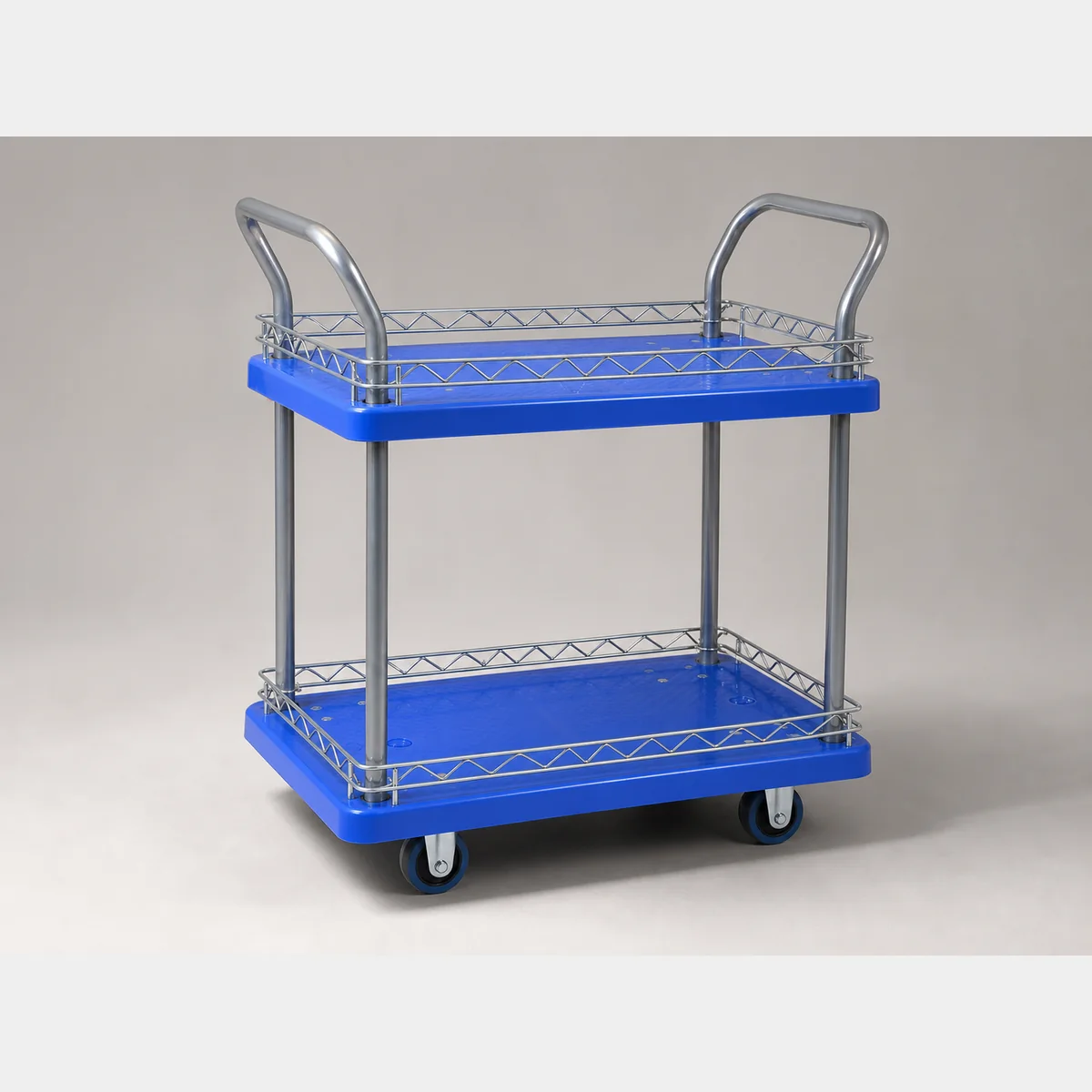
2-tier silent plastic trolley (with side guard rails)
2-tier silent plastic trolley (with side guard rails). (A) Dimensions: L730 X W480 X H950 MM; Net weight: 14.5kg *castor: 100 MM / 17.5kg *castor: 130 mm; Load capacity 150kg *shelf clearance: H550 MM. Formal quotation available based on application, specifications and quantity.
- (A) Dimensions
- L730 X W480 X H950 MM
- Net weight
- 14.5kg *castor: 100 MM / 17.5kg *castor: 130 mm
- Load capacity 150kg *shelf clearance
- H550 MM
 Material Handling & LogisticsProduct reference image
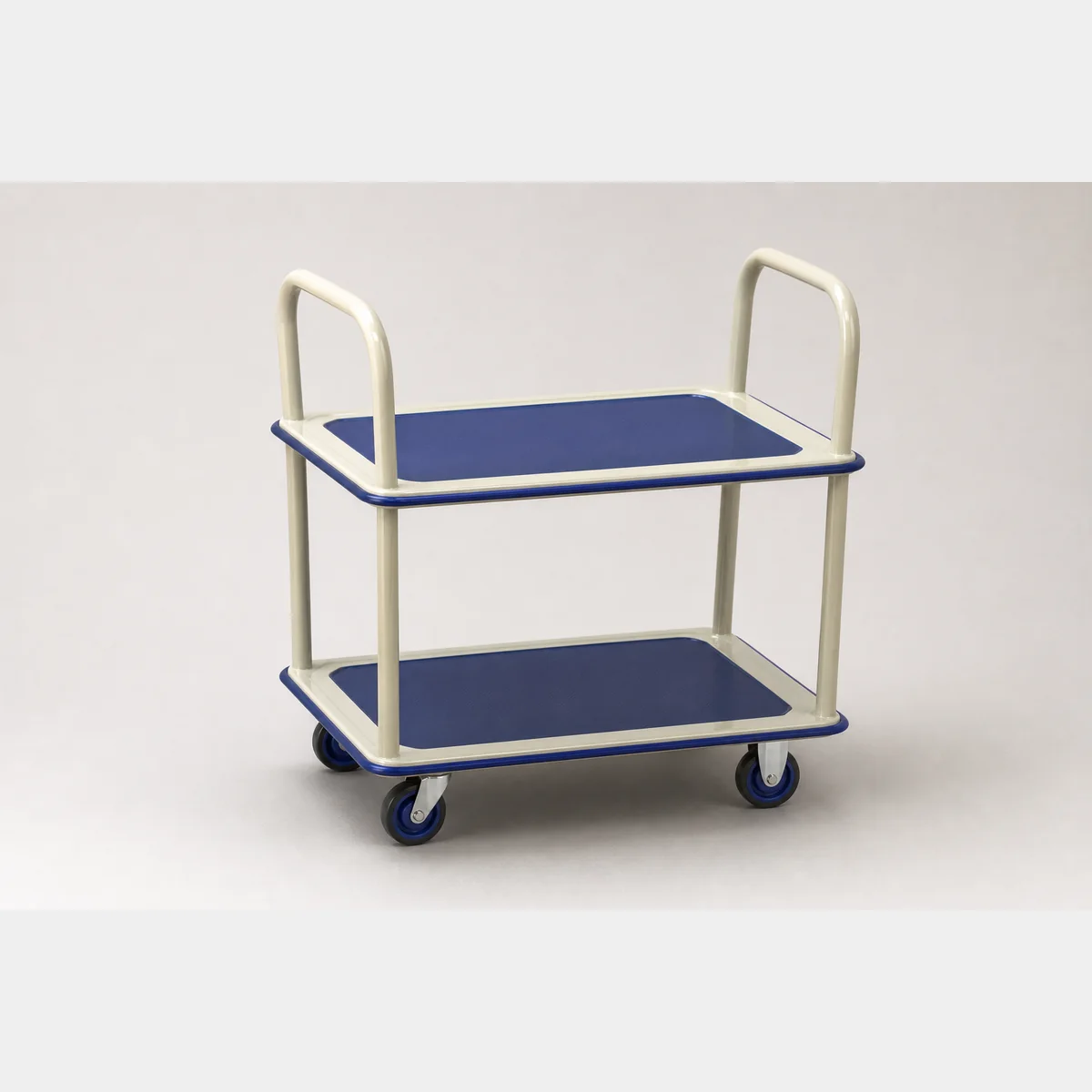
Double-deck flat push trolley with double handles
Double-deck flat push trolley with double handles. Dimensions: L730xW480xH925 mm; Load capacity: 120kg; Wheels: 2 fixed, 2 swivel. Formal quotation available based on use, specifications and quantity.
- Dimensions / Specs
- L730xW480xH925 mm
- Load capacity
- 120kg
- Wheels
- 2 fixed, 2 swivel
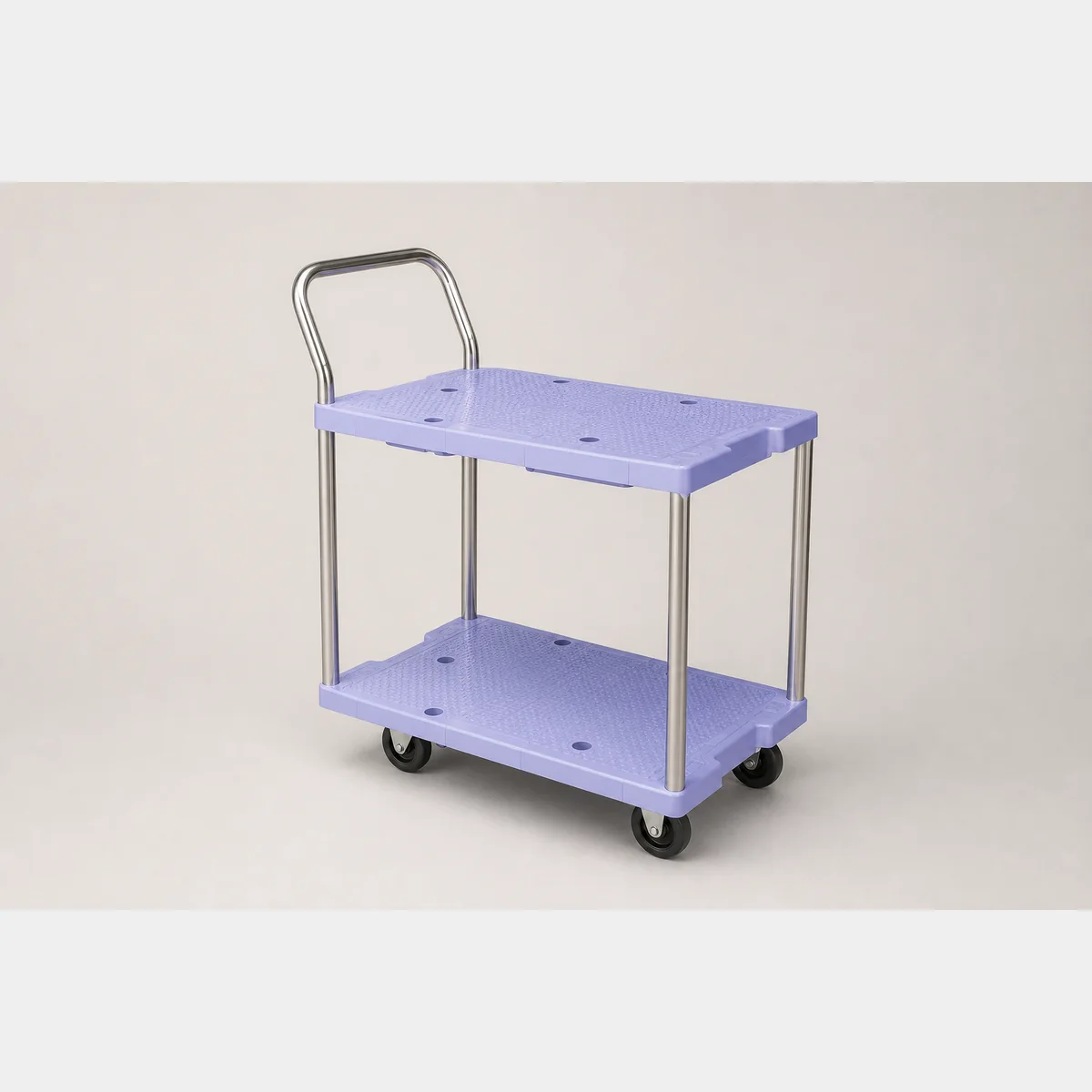 Material Handling & LogisticsProduct reference image
Double-deck Plastic Platform Trolley
Double-deck plastic platform trolley. Dimensions/Specs: L715xW460xH915 mm; Load capacity: 150kg. Formal quotation available based on use, specifications and quantity.
- Dimensions/Specs
- L715xW460xH915 mm
- Load capacity
- 150kg
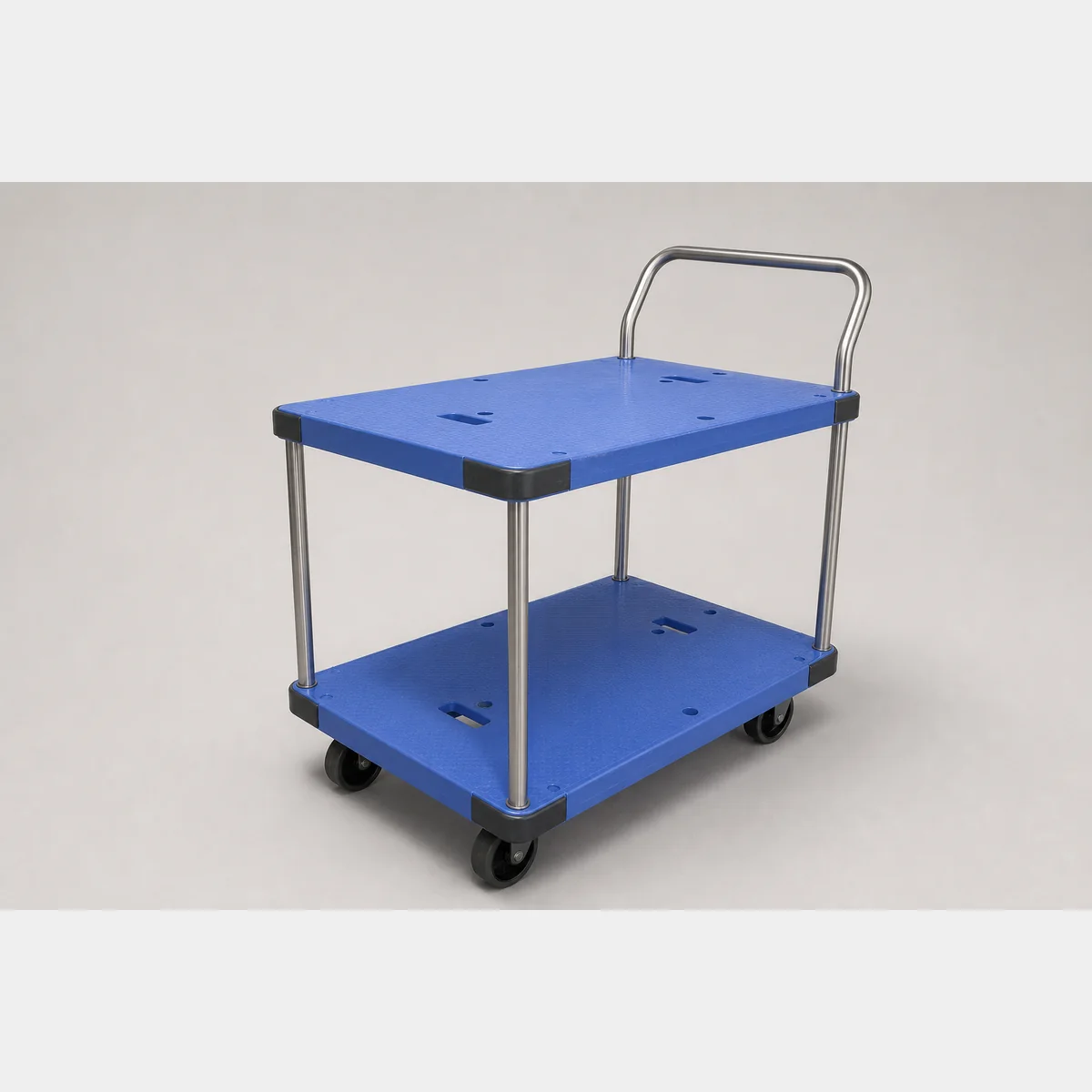 Material Handling & LogisticsProduct reference image
Double-layer Plastic Deck Trolley (DSK302)
Double-layer plastic deck trolley, Dimensions / Spec: L900xW600xH995 mm; Load capacity: 300kg. Formal quotation available upon request based on use, specifications and quantity.
- Dimensions / Spec
- L900xW600xH995 mm
- Load capacity
- 300kg
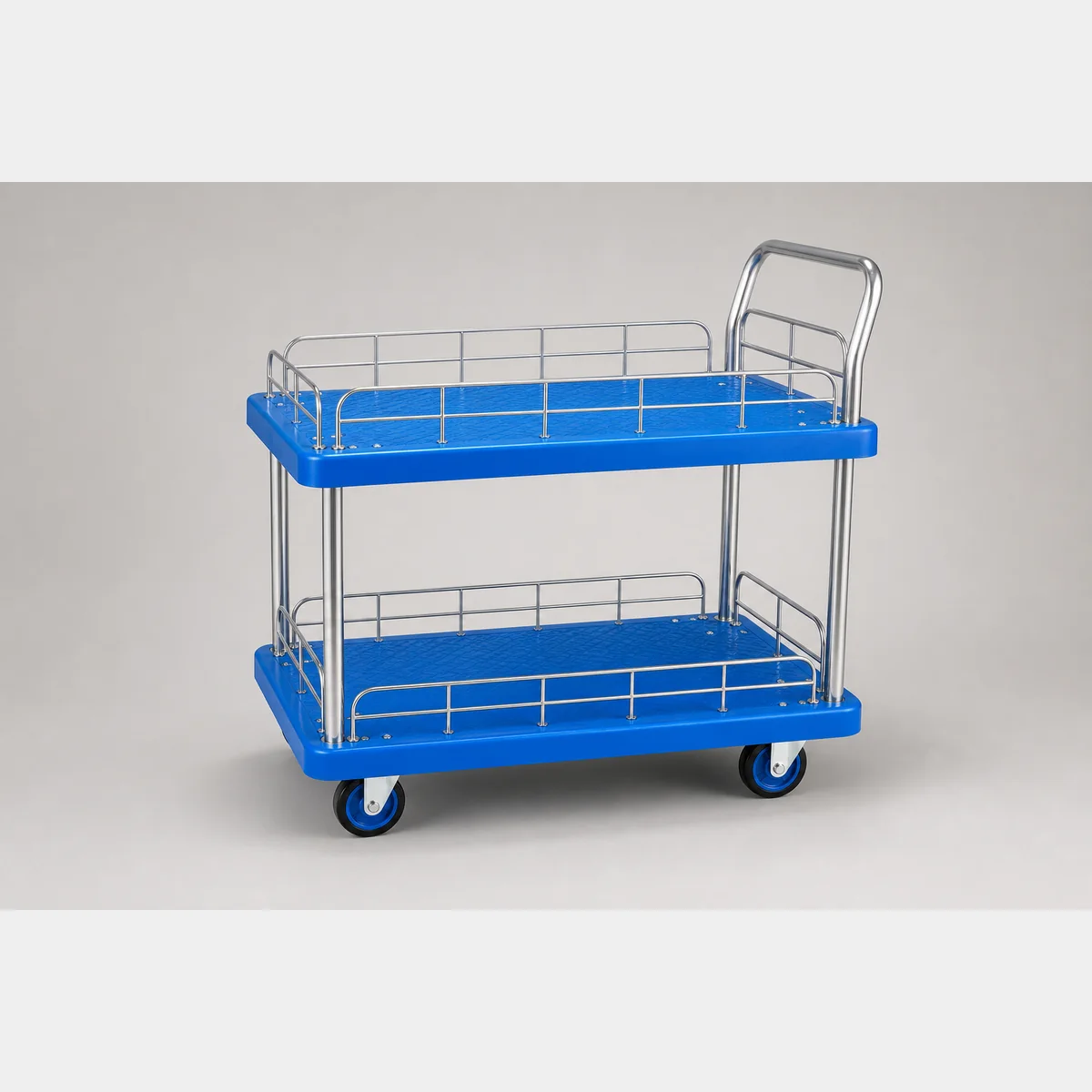 Material Handling & LogisticsProduct reference image
Double-tier Platform trolley with guard rails
Double-tier Platform trolley with guard rails. A: L715xW477xH940 mm; Load capacity: 150kg with 4" casters / 300kg with 5" casters; C: L890xW595xH990 mm. Please enquire for a formal quotation based on use, specifications and quantity.
- A
- L715xW477xH940 mm
- Load capacity
- 150kg, with 4" casters / 300kg, with 5" casters
- C
- L890xW595xH990 mm
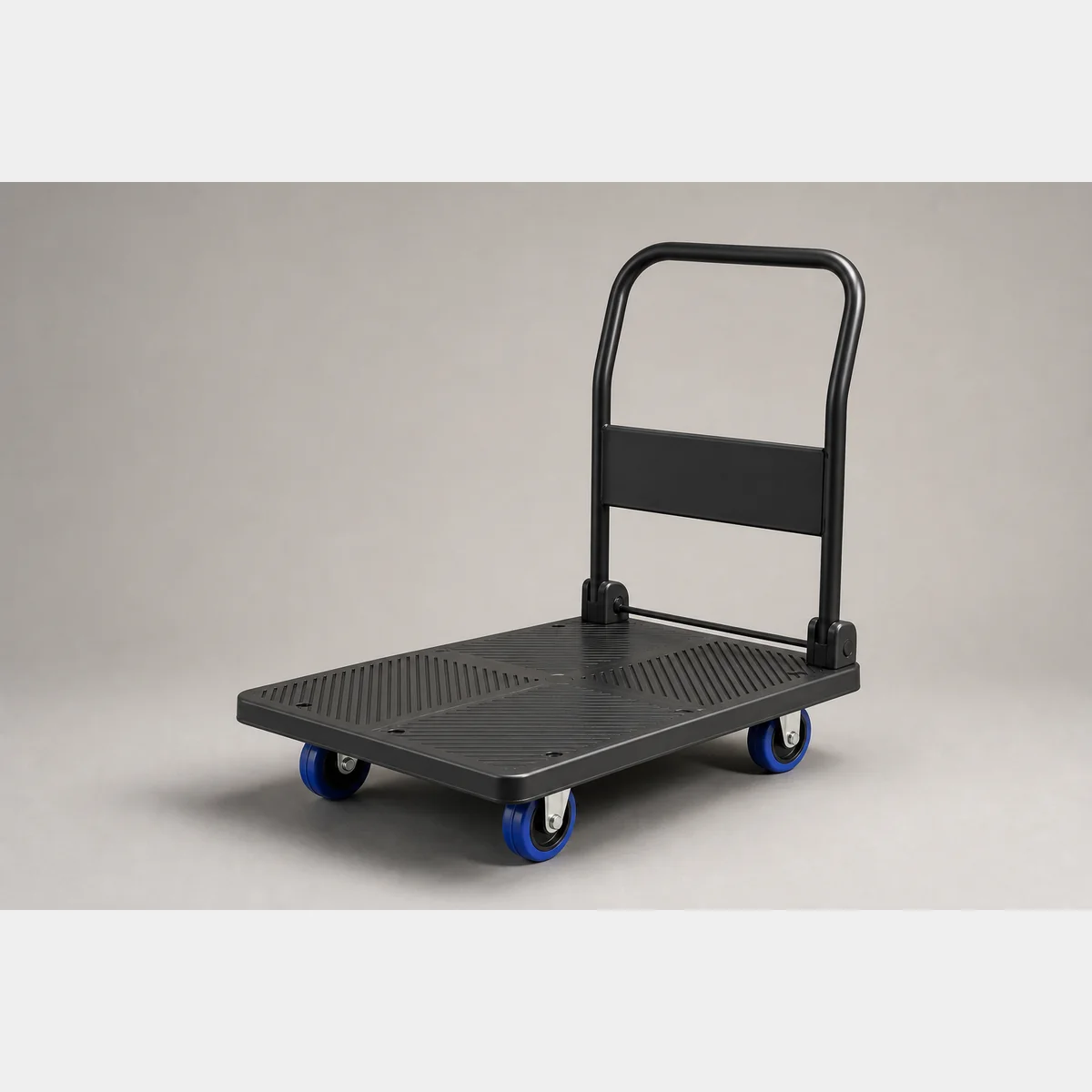 Material Handling & LogisticsProduct reference image
Flat Plastic Platform Trolley (SKU: JRA039)
Flat plastic platform trolley — A: L68xW47xH87 cm; Load capacity: 120kg/250kg; B: L90xW60xH89 cm. Formal quotation available based on application, specifications and quantity.
- A
- L68xW47xH87 cm
- Load capacity
- 120kg / 250kg
- B
- L90xW60xH89 cm
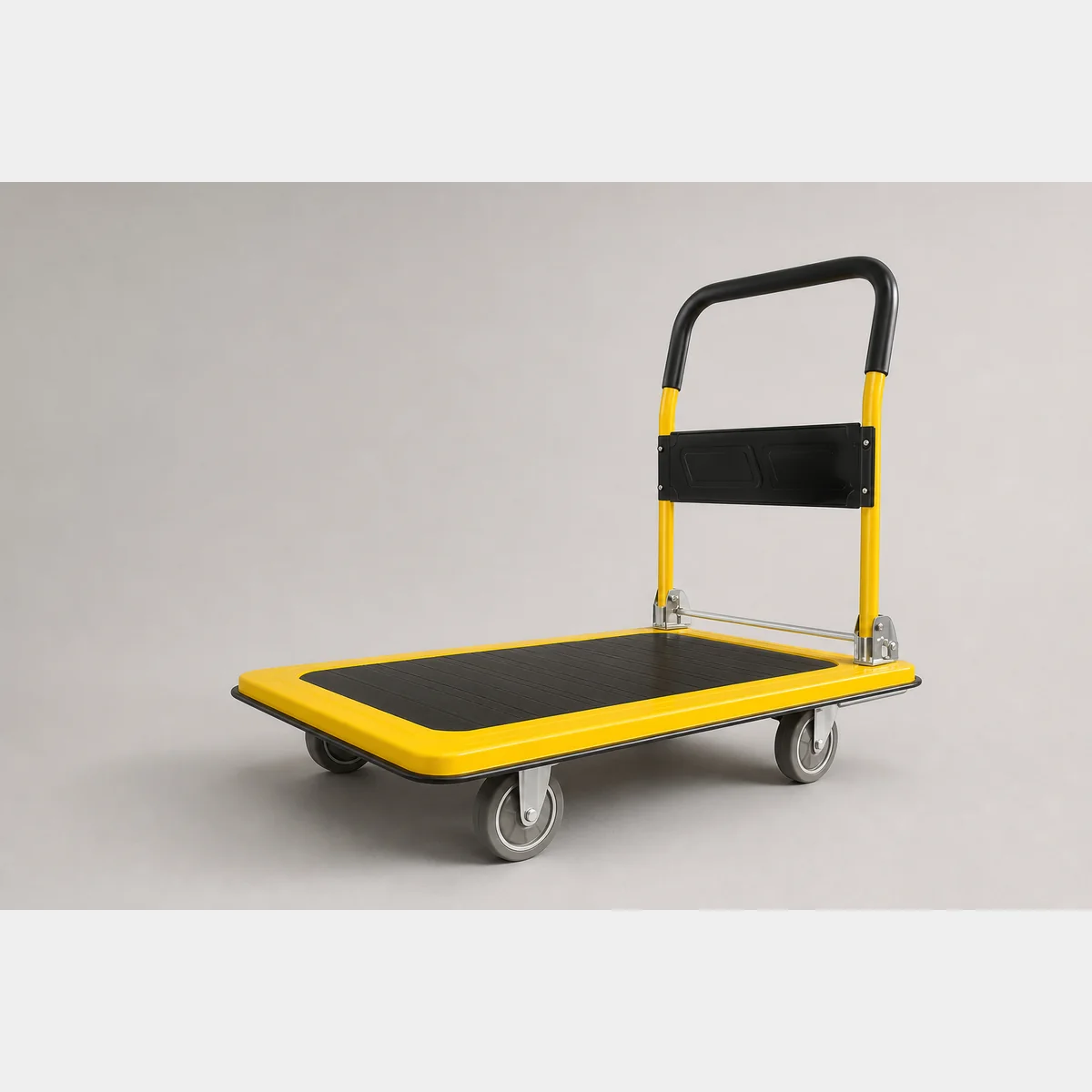 Material Handling & LogisticsProduct reference image
Flat Platform Trolley (S8560)
Flat Platform Trolley. Dimensions / Specification: L76xW49xH82 cm; Load capacity: 150kg. Formal quotation available based on usage, specification and quantity.
- Dimensions / Specification
- L76xW49xH82 cm
- Load capacity
- 150kg
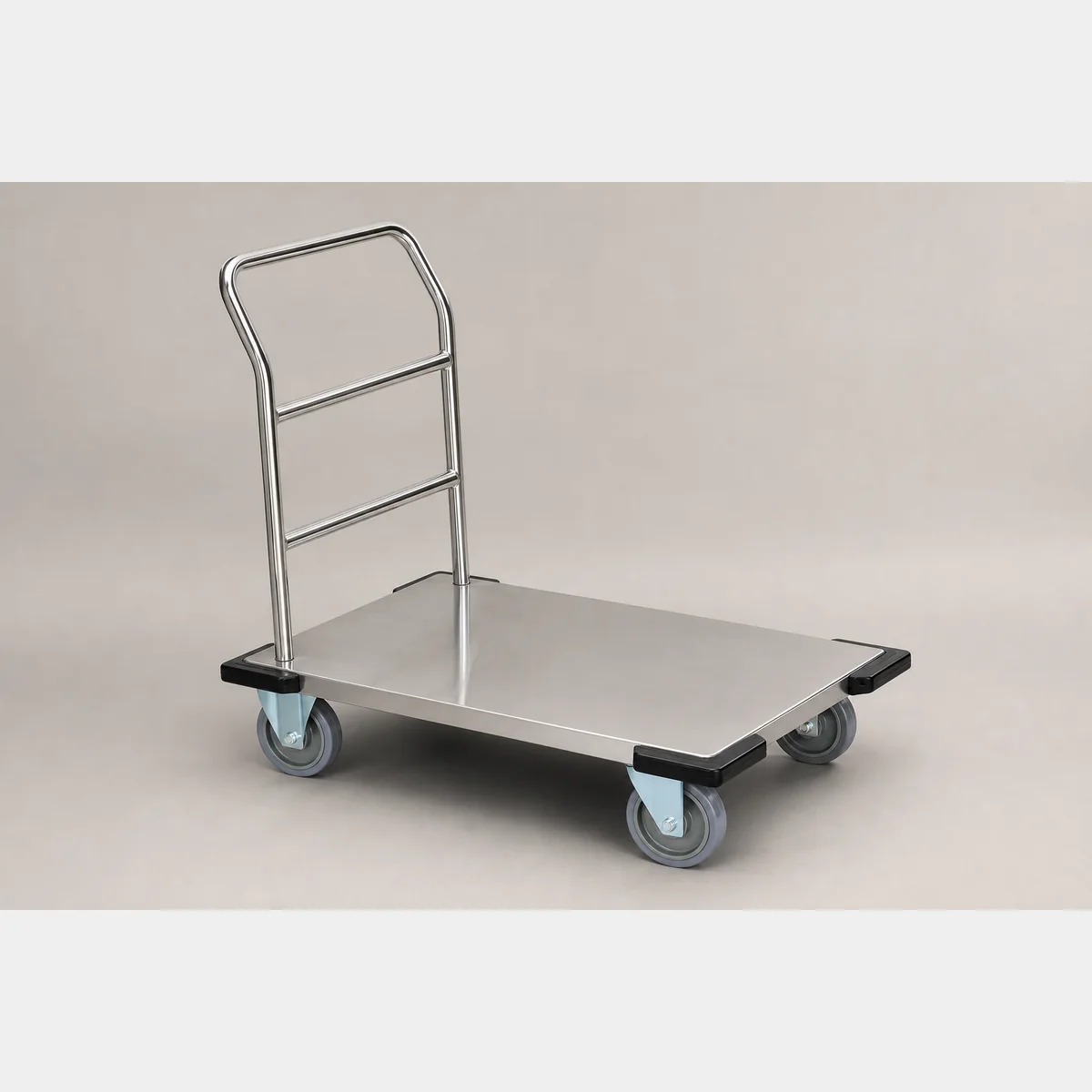 Material Handling & LogisticsProduct reference image
Heavy-duty stainless steel trolley
Heavy-duty stainless-steel trolley, L915 X W510 X H900 MM. Load-capacity records conflict between 300 kg and 350 kg; confirm the exact rating in writing.
- Dimensions
- L915 X W510 X H900 MM
- Net weight
- 21KG
- Material
- Rigid stainless steel plate surface with electroplated iron-tube handrail.
Continue with closely related procurement topics
These pages share equipment, operating or decision-stage signals with this guide.
Drum trolley Hong Kong
This quotation checklist helps facilities and EHS teams plan for drum trolley Hong Kong. It guides you on drum size, filled mass, orientation, pickup method, retention and route conditions, and is provided by GotGear.
Read the guide
Gas cylinder trolley Hong Kong
GotGear's checklist for a gas cylinder trolley Hong Kong outlines key considerations such as cylinder size, filled mass, valve guards, correct loading, safe gradients, and checks with the trolley manual and site rules.
Read the guide
Pipe trolley Hong Kong
For pipe trolley Hong Kong enquiries to GotGear, please provide pipe length and diameter, bundle mass and form, support spacing, end overhang, and restraint and turning clearance.
Read the guide
Equipment trolley Hong Kong
Use this request for quotation checklist from GotGear for equipment trolley Hong Kong to confirm dimensions, total mass, load distribution, wheel and brake suitability, access routes, controls, and site fit.
Read the guideRelated topic indexOpen more English procurement pages1 topics
Browse additional equipment families, applications and procurement questions relevant to these operating requirements.