
During commercial equipment receiving inspection Hong Kong, follow manufacturer instructions, the site risk assessment and applicable Hong Kong requirements. Isolate potentially unsafe or damaged items and use the authorised discrepancy process rather than testing them casually.
Commercial equipment receiving inspection Hong Kong: Quantity check on delivery, with item count and condition check on receipt
Begin at the vehicle, not the storeroom. Cross-check the delivery note, packing list and your purchase order line by line. Verify model codes, descriptions, and unit-of-measure so that a carton, kit or accessory pack is not mistaken for a single unit. For the commercial equipment quantity check on delivery Hong Kong, tally pallets, cartons, inner packs and loose items, then reconcile to ordered quantities. If pallets are stretch-wrapped or sealed, confirm the outer label count and photograph the seal numbers before moving anything. Record any driver references and time-in/time-out to support site logs.
Match delivery promises against what your written quotation states will be supplied on this drop versus back-ordered or cross-docked lines. If your commercial equipment delivery appointment Hong Kong arranged a multi-stop run, note which consignment segments arrived and which did not. In buildings with narrow loading windows or small goods-lifts, count at the bay and again at the lift lobby to ensure nothing is staged and forgotten. For multi-language sites, request bilingual paperwork where available and annotate any translated part names carefully. Where the item is an assembly with subcomponents, confirm accessories (mounts, cables, filters, casters, protective guards) against the quoted scope, keeping unopened spares together with their parent carton for traceability until acceptance is confirmed.
Evidence to capture during commercial equipment receiving inspection Hong Kong
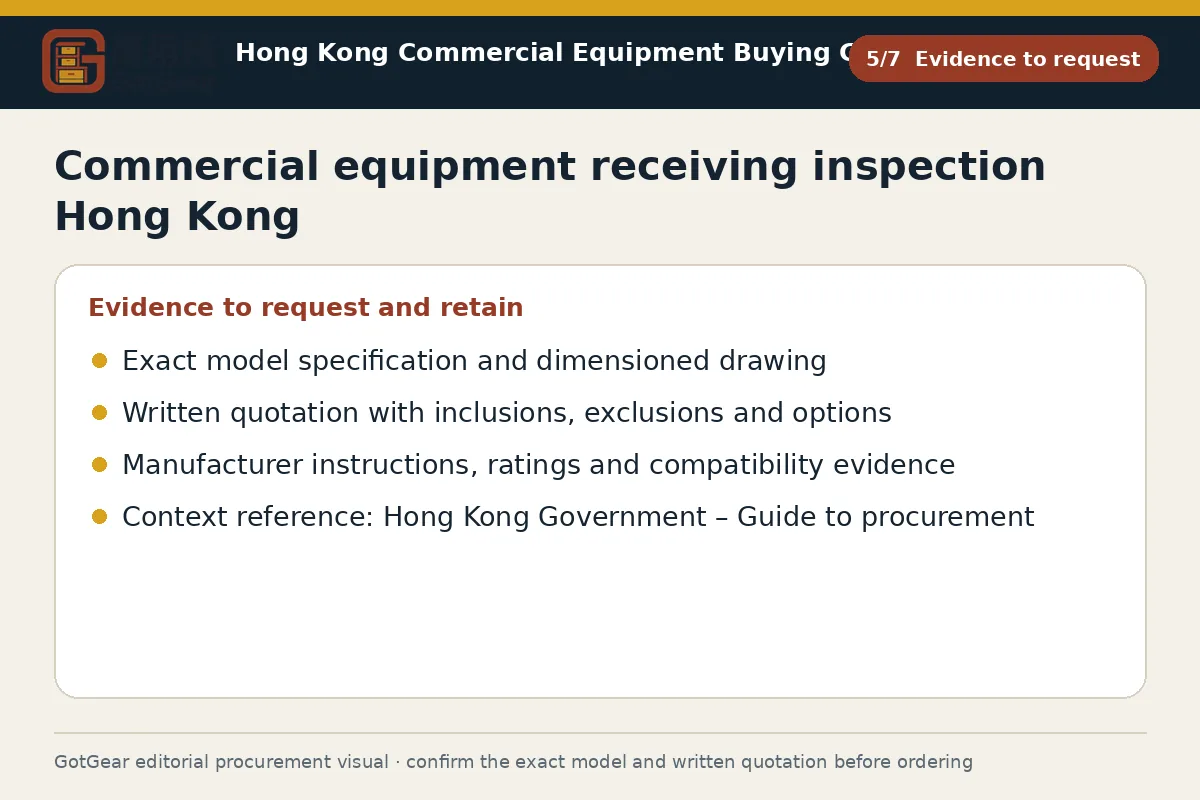
Capture evidence that proves what arrived, when, and in what state. Start with wide shots of each pallet or trolley showing labels and condition on all sides; then take close-ups of packing labels, barcodes, serial/lot numbers, manufacturing dates and any warning stickers. Photograph the delivery note beside the first pallet before breaking down. Where site policy permits, record the vehicle plate and seal numbers. If moisture is evident, include images of wet footprints, saturated cartons or desiccant pouches removed from the outer layer. Note the ambient conditions if they may affect electronics or finishes in a humid summer lobby.
Create a receiving log entry that ties each image group to your PO number, line number and staging location. Capture the floor-to-floor route and any constraints encountered (goods-lift size, door clear widths, turning radii) so operations know what handling equipment to use later, referencing commercial equipment safe handling Hong Kong where relevant. Where the quotation promised asset records on delivery, confirm the data fields supplied (for example, serial range, MAC address list, or batch code) and request missing fields in writing. If electrical ratings, hygiene data or fire-retardant details were requested in the enquiry, file the manufacturer document links or certificates alongside the receipt record, subject to the model and your institution’s approval process.
What should buyers compare for commercial equipment receiving inspection Hong Kong?
| Criterion | Straightforward requirement | More complex requirement | Evidence to provide |
|---|---|---|---|
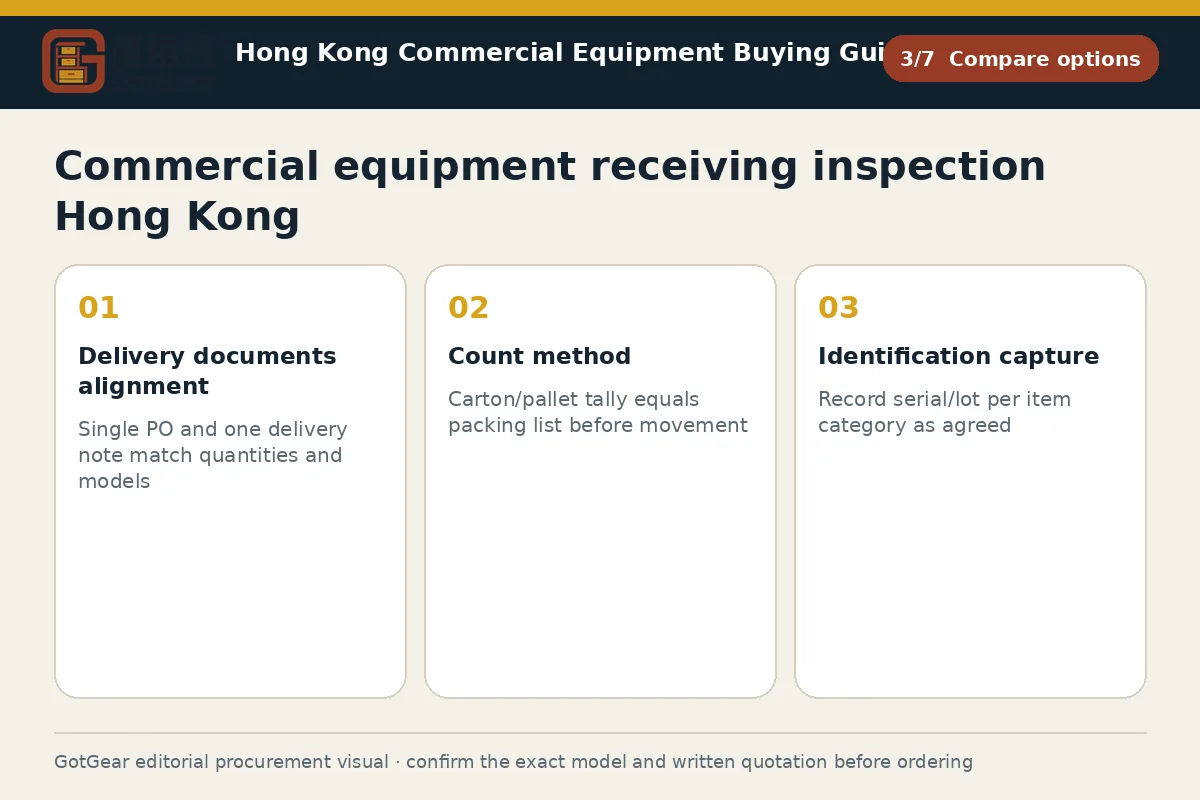
| Delivery documents alignment | Single PO and one delivery note match quantities and models | Split shipment across POs with partial lines and back-orders | PO number(s), packing list, delivery note refs, promised split by item |
| Count method | Carton/pallet tally equals packing list before movement | Mixed inner packs, kits and loose accessories reconciled | Photos of labels, seal numbers, manual count sheet per staging area |
| Identification capture | Record serial/lot per item category as agreed | Dual IDs (e.g., controller + module) and site asset tags aligned | Serial range, component IDs, asset tag mapping file if applicable |
| Condition at receipt | No crush, puncture, wetting or reseal visible on outers | Tilt/shock indicators triggered, condensation risk noted | Indicator close-ups, moisture notes, packaging state photos |
| Quarantine and escalation | Segregate discrepancies and notify supplier contact | Safety risk isolated; RMA or field inspection requested | Quarantine log entry, case/RMA ID, correspondence record |
This framework helps buyers create comparable written enquiries. Final model specifications, availability, delivery and commercial terms must be confirmed in a formal quotation.
Add a commercial equipment damage check on delivery Hong Kong to commercial equipment receiving inspection Hong Kong
Check visible condition methodically before signing acceptance. Examine corners and edges of cartons for crush, tears or resealing; look for punctures that could affect cabling, seals or glass. If tilt or shock indicators are fitted, photograph them clearly, and if triggered, isolate the shipment. Open outers only where your quotation allows inspection without voiding return rights; if you proceed, lift lids carefully, retain all inner packing, and avoid powering, inflating, or filling product. For stainless or coated equipment, check that protective films are intact and surfaces are free of dents and corrosion blooms. For mobile units, inspect casters, brakes and handles for misalignment. For control panels and enclosures, confirm doors shut squarely and that glands and gaskets are seated.
Humidity and condensation during summer offloading can mimic spills; blot test and document rather than guess. Where packaging quality does not match your agreed standard, escalate with reference to commercial equipment packaging requirements Hong Kong. Add a concise note if the plug, drain, or vent fittings supplied differ from your written specification. Complete a commercial equipment damage check on delivery Hong Kong without energising the unit; any function check should follow the manufacturer’s commissioning instructions at the correct location and power protection, once your safety and insurance approvals are in place.
Quarantine and escalation after commercial equipment receiving inspection Hong Kong
Quarantine any discrepancy immediately. Move suspect or unsafe items to a designated, signposted area away from pedestrian routes and food or teaching spaces; mark them “No Use – Inspection Hold”, and secure loose accessories in clear bags taped to the parent carton. Keep all packaging and pallets intact until the supplier authorises next steps. Create a case in your discrepancy log citing PO, delivery note, item codes, photos, and a short factual description (for example, “carton crushed; tilt 30° triggered; serial range recorded”).
Notify your supplier contact using the channel named in the quotation and copy your procurement approver. In industrial buildings, inform the management office if bay or lift incidents occurred, as they may require same-day notes. For safety-critical deviations, isolate power or fuel sources and seek competent advice before moving anything, in line with your site risk assessment. Use the supplier’s RMA or corrective-action reference to track returns, replacements or field inspection visits. When the resolution is agreed, update your inventory status, asset register and acceptance record, and close the case only after the written confirmation matches the model specification and formal quotation conditions.
Commercial equipment receiving inspection Hong Kong decision checklist
Confirm the delivery note, packing list and quotation describe the same models, accessories and unit-of-measure, then tally pallets, cartons and inner packs before anything is moved. Photograph labels, serials and any indicators, filing images against PO and line numbers. Record goods-lift sizes and route constraints that affected handling. If the quotation included asset data or commissioning documents, request them at receipt. For visible damage or reseals, quarantine immediately with packaging intact and raise a written case with photos. Do not switch on, plumb in or assemble anything while on hold. Escalate via the supplier’s named contact and reference their RMA or corrective-action process. Accept only when the resolved outcome matches the model specification and formal written quotation.
- Operating use, quantity and expected frequency
- Dimensions, capacity, material and accessory requirements
- Delivery address, floor, goods lift and loading window
- Required documents, acceptance checks and after-sales arrangements
Key points for commercial equipment receiving inspection Hong Kong, commercial equipment quantity check on delivery Hong Kong, commercial equipment damage check on delivery Hong Kong
In Hong Kong, receiving often happens in shared industrial buildings with tight loading windows, managed docks and small goods-lifts that require careful staging and re-counts. Plan your commercial equipment receiving inspection Hong Kong around booked lift slots and management-office rules, and expect humidity that can dampen cartons at street level. Bilingual paperwork helps multi-team sign-off, especially in schools and institutions. Allow time for cross-district traffic delays and keep the bay clear so split consignments can be verified separately without blocking other tenants. None of this is legal advice; follow your venue’s written procedures.
Questions about commercial equipment receiving inspection Hong Kong
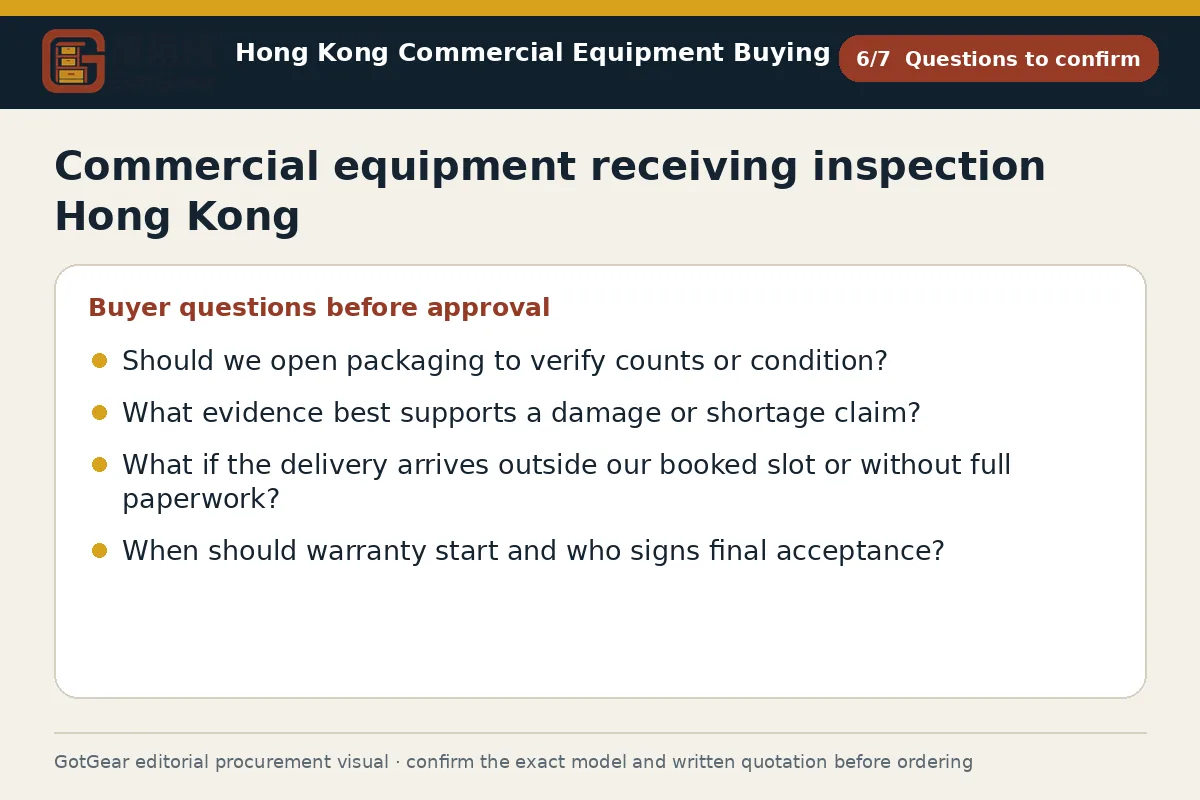
Should we open packaging to verify counts or condition?
Open only if your quotation or supplier confirms it will not compromise return rights, and do so carefully while preserving all materials. If opening is not authorised, verify by outer labels, seal numbers and carton counts, then request written approval for any deeper inspection. Document all steps and keep packaging intact until acceptance is recorded or the supplier instructs otherwise.
What evidence best supports a damage or shortage claim?
Provide clear photos of each pallet side, close-ups of labels, serial ranges, and any shock/tilt indicators, plus delivery notes, time stamps and driver references. Add short factual notes on moisture, crush points or reseals. Link everything to your PO and line numbers. If your insurer or venue requests additional documentation, follow their written guidance.
What if the delivery arrives outside our booked slot or without full paperwork?
You can place the shipment on hold in a safe, controlled area and request corrected documents before acceptance. Inform the building management office if bay schedules are affected. Log the time of arrival and any missing references. If acceptance deadlines apply in your quotation, notify the supplier immediately so they can reissue paperwork or reschedule as needed.
When should warranty start and who signs final acceptance?
Follow your institution’s approval chain and what the written quotation states about warranty start (for example, invoice, delivery or commissioning date). If commissioning triggers warranty, wait for the manufacturer’s instructions and sign-off at the installed location. Ask the supplier to confirm the start point in writing so your asset register and service planning match.
Continue with closely related procurement topics
These pages share equipment, operating or decision-stage signals with this guide.
Commercial equipment quotation Hong Kong
GotGear offers a practical guide to commercial equipment quotation Hong Kong. Standardise scope and responses by issuing one commercial equipment RFQ Hong Kong for each request for quotation commercial equipment Hong Kong.
Read the guide
Commercial equipment delivery terms Hong Kong
Review commercial equipment delivery terms Hong Kong and confirm timing and change notices with GotGear, then verify commercial equipment delivery lead time Hong Kong and agree the commercial equipment delivery schedule Hong Kong.
Read the guide
Commercial equipment delivery appointment Hong Kong
Confirm order number, arrival, contact and authoriser details, and vehicle limits for commercial equipment delivery appointment Hong Kong. Check clearance with GotGear for commercial equipment delivery floor access Hong Kong.
Read the guide
Commercial equipment supplier Hong Kong
GotGear outlines steps to vet a commercial equipment supplier Hong Kong by verifying the supplier's legal entity, experience, documentation, and that the quoted scope and terms match your equipment specification and intended use.
Read the guideRelated topic indexOpen more English procurement pages2 topics
Browse additional equipment families, applications and procurement questions relevant to a wider buying brief.