
Packing trolley Hong Kong — Keep frequently used materials accessible without restricting the packing surface or route. Confirm dimensions, load limits, adjustment and accessory compatibility from model documentation, then test the layout with representative orders and users.
Packing trolley Hong Kong — List cartons, consumables, tools and waste streams
List what the station must hold and how it is used throughout a full pick–pack–ship cycle. Capture the order mix (single-line vs multi-line), carton footprints when flat and erected, void-fill types, tape or strap widths, and printer media. For quotations on a packing trolley Hong Kong, operations should also note the daily waste profile (shrink-wrap offcuts, cardboard, labels, strapping) and any sharp-tool controls. Humidity can affect tape tack and label adhesion; record which consumables need dry storage or covered dispensers. Where dunnage is generated on demand, measure the reel/core diameters and pull direction so spindle or shelf orientation can be specified.
Translate the list into specification fields suppliers can quote: clear shelf width/depth and lip height, bin-rail pitch, pegboard hole pattern, divider options, and maximum roll diameter plus spindle diameter for tapes/films. State required locations for tape guns, scanners, knives and strap cutters, and whether magnetic, hook or bolted holders are preferred. For waste, request interchangeable frames for cardboard sacks and smaller bins for mixed plastics or label liners. Quote any EHS preferences (e.g., blade-safe holsters) and whether consumables are replenished by line-side kanban or by a separate parcel-sorting trolley for the Hong Kong team. Ask vendors to confirm compatibility of any named bins, reels or tool holders in writing and to include exploded drawings for accessories in the quotation.
Packing trolley Hong Kong — Position scales, printers and label equipment
Decide which weighing and labelling equipment will live on the trolley and which will sit bench-side. Identify the scale type (bench, platform or in-line), the target readability, and whether vibration damping is needed. Request shelf load ratings and example shelf-deflection data at an example starting point load, to be confirmed against the model datasheet. For printers and applicators, specify the make, media width, maximum roll diameter and orientation, plus the clearance needed to change labels without blocking the packing surface. Ask for anti-slip mats or retention lips under equipment if bumps are expected on the route.
Plan power and data early. Confirm cable routing, grommets, and whether a strip or individual sockets are preferred. State plug type and lead length; in Hong Kong most portable equipment uses 13 A BS-style plugs, but confirm with your electrician and venue. Note Wi‑Fi or LAN requirements, and any need for USB or serial pass-through to scanners. Where humidity is high, ask how printers and label stores are protected; suppliers should confirm any IP ratings where offered. Request bilingual operating labels for controls and safety notices. Compare quotations on whether shelves are height/tilt adjustable, if vibration pads are included, and whether cable clips and strain reliefs are supplied as standard or chargeable options.
What should buyers compare for packing trolley Hong Kong?
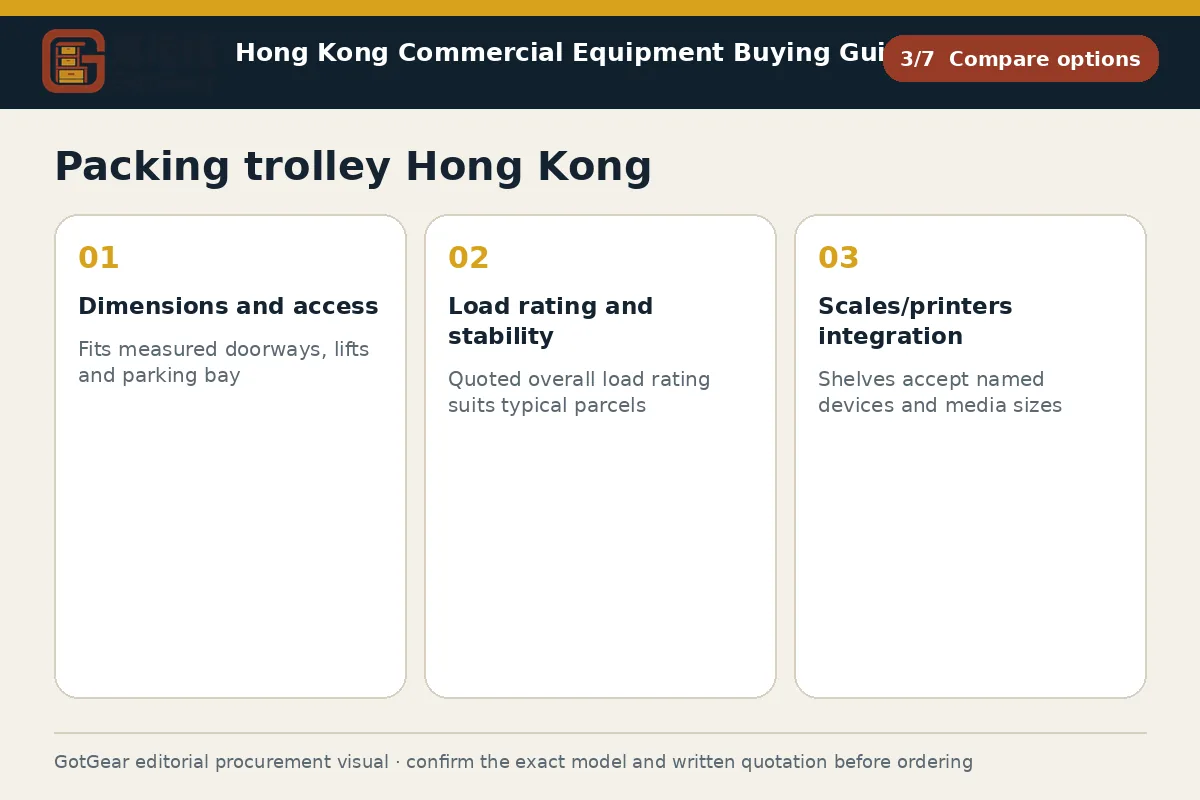
| Criterion | Straightforward requirement | More complex requirement | Evidence to provide |
|---|---|---|---|
| Dimensions and access | Fits measured doorways, lifts and parking bay | Turning radius and manoeuvring space validated on route sketch | Scaled drawings with widths, heights, lift car size, thresholds and route photos |
| Load rating and stability | Quoted overall load rating suits typical parcels | Per‑shelf and edge/point-load limits confirmed for uneven loads | Model datasheet extract, test method (example starting point) and written confirmation |
| Scales/printers integration | Shelves accept named devices and media sizes | Vibration damping, retention lips and cable routing included | Device model numbers, weights, media widths, power/data connectors, lead lengths |
| Castors and brakes | Four swivel castors with total-stop brakes | Mix of directional locks, anti‑static tread and wheel guards for thresholds | Floor materials, ramp gradients, noise sensitivity, ESD notes |
| Materials and cleaning | Powder-coated steel suitable for dry stores | Stainless/aluminium with smooth profiles for humid or hygiene‑sensitive zones | Cleaning agents used, humidity exposure, care instructions from manufacturer |
This framework helps buyers create comparable written enquiries. Final model specifications, availability, delivery and commercial terms must be confirmed in a formal quotation.
Packing trolley Hong Kong — Set working height, reach and replenishment needs
Set the working height based on the task and the users. Record elbow heights for representative operators and the thickness of preferred anti‑fatigue mats. Use an example starting point for bench height, then confirm the trolley’s adjustment range, increments and locking method from the model documentation. If stools or sit‑stand work are used, request minimum/maximum heights and foot‑clearance drawings. Specify handle height range and whether it should be independent of shelf height. Note any requirement for smooth edges, rounded corners and low‑glare finishes as part of material handling ergonomics Hong Kong; apply local practice for implementation.
Define reach zones for fast, medium and slow movers. Map the sweep of a forearm from the packing stance and place tape, cutters and scanners inside that arc. Ask suppliers to state shelf depths, vertical spacing between levels at your chosen configuration, and maximum tote/bin size per level. For consumables, estimate replenishment frequency and request quoted capacities for rolls, cartons and dunnage so refills align with delivery windows. If overflow storage is needed, consider a companion mobile storage cart Hong Kong, to decouple bulk consumables from the working trolley. Compare castor types, as larger diameters reduce push force, and request written confirmation of overall and per‑shelf load ratings, including any limits on point loads at shelf edges or corners.
Packing trolley Hong Kong — Plan movement, parking and cleaning around the station
Walk the trolley route from goods-in to the packing bay and to waste consolidation. Measure doorway and corridor clearances, lift car size and thresholds, and note turns, ramps and textured floors. Provide gradients and any step heights so suppliers can propose castor diameters, tread materials and wheel guards. Ask for options such as directional locks for long corridors and total-stop brakes at the station. State if quiet running is required near offices or classrooms. Plan parking: define marked bays, wheel orientation, and whether corner bumpers or wall buffers are required, in line with trolley parking safety Hong Kong, and with any applicable policies.
Design for cleaning and hygiene. Specify wipe-down surfaces and open profiles that avoid dust traps, and state whether drip trays or removable liners are needed for adhesive or dunnage debris. If disinfectants or citrus degreasers will be used, ask which finishes (powder coat, aluminium, stainless) the manufacturer supports and obtain care instructions. In humid or coastal sites, request corrosion-resistance statements and whether stainless fixings are standard. If operating near public areas or events, note any need for tether points, signage holders and bilingual caution labels. Confirm broom clearance beneath lower shelves and whether wheels are tool-free removable for hair/strap removal. Compare quotations on stated turning radius, overall footprint and brake types, and request scale drawings for parking layouts.
Packing trolley Hong Kong decision checklist
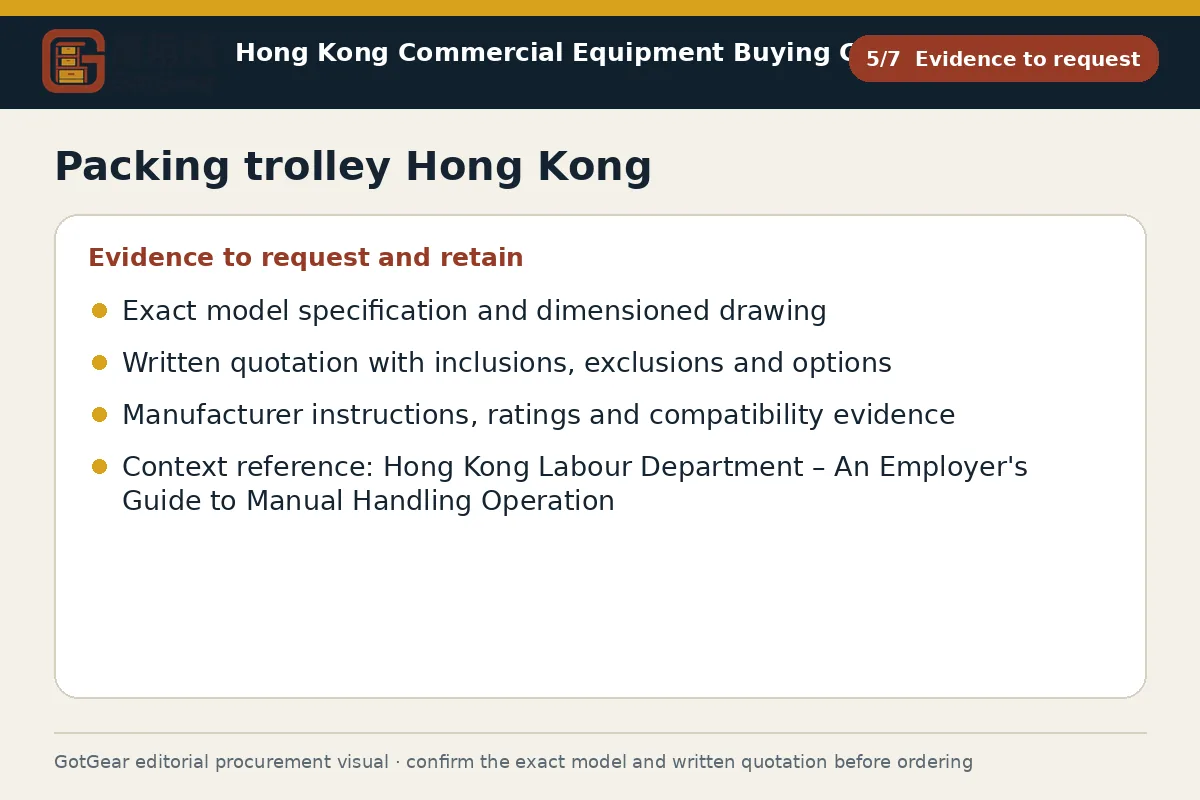
Confirm the packing sequence, order mix and the exact list of cartons, consumables, tools, scales and printers to be accommodated. Measure access routes, lift cars and parking bays; provide scale drawings. Specify shelf clear openings, load ratings (overall and per level), spindle and roll diameters, bin-rail pitch, handle and work-height requirements. State wheel diameter, tread, brake types, and any noise or ESD needs. For printers/scales, provide model numbers, weights, media sizes and power/data details. Ask for exploded drawings, accessory part numbers and bilingual labels. Compare written quotations line by line, noting inclusions for cable management, vibration pads and waste frames. Before approving, align with management-office delivery rules and any institutional sign-off. On receipt, inspect frame alignment, welds, finish, wheel action, brake hold, shelf fit and accessory compatibility against the quotation and model datasheet.
- Operating use, quantity and expected frequency
- Dimensions, capacity, material and accessory requirements
- Delivery address, floor, goods lift and loading window
- Required documents, acceptance checks and after-sales arrangements
Key points for packing trolley Hong Kong
Hong Kong sites often combine tight corridors, small goods lifts and controlled loading windows managed by building offices. Bookings and bilingual delivery notes are commonly required, so ensure the supplier can coordinate unloading and access with management in advance. Humidity affects tape and label performance; covered dispensers or closed bins may be prudent. Many routes cross public or shared areas, so quiet wheels, bumpers and clear parking plans reduce disruption. If equipment will enter food, school or event zones, confirm any venue-specific hygiene, guarding or electrical restrictions. This summary highlights local operating constraints only and does not constitute legal advice.
Questions about packing trolley Hong Kong
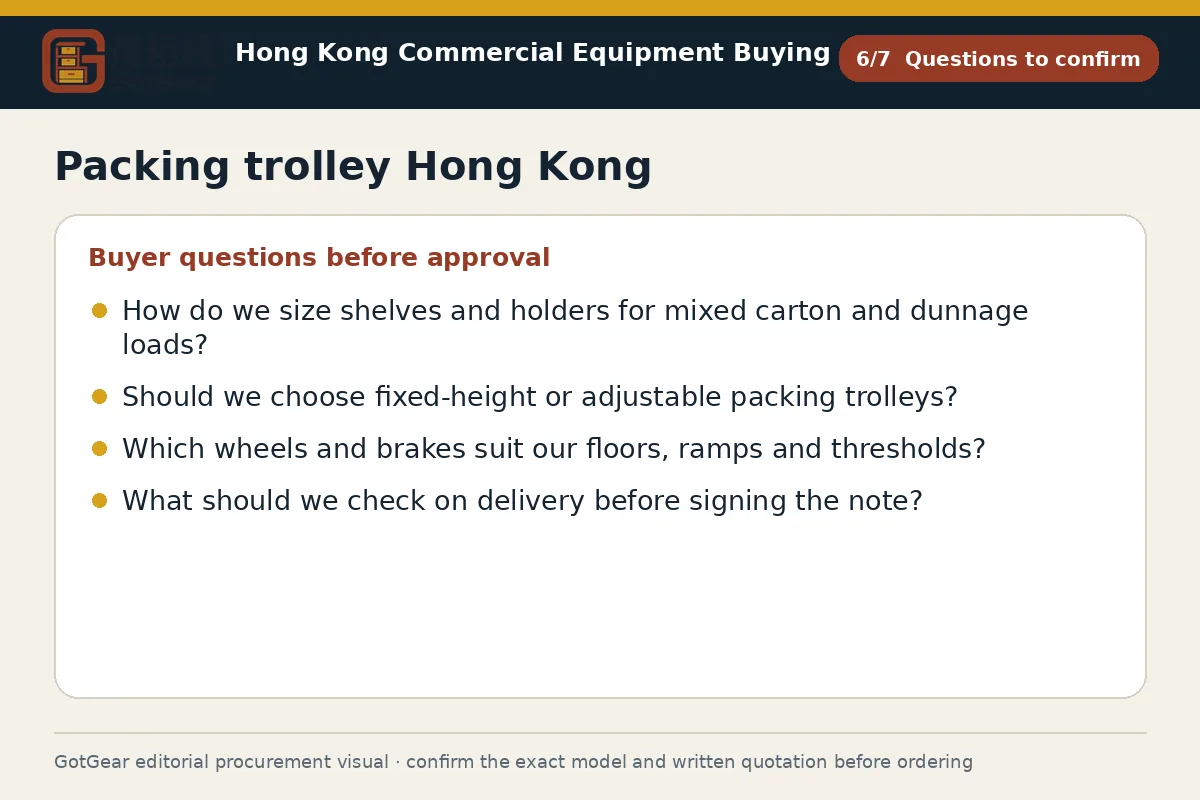
How do we size shelves and holders for mixed carton and dunnage loads?
List the largest erected carton footprint, flat blanks and dunnage roll diameters, then request clear shelf openings and maximum roll/spindle sizes to match. Ask for lip heights to contain light items and divider options for small parts. Provide drawings and photos of current loads so the supplier can confirm compatibility in writing.
Should we choose fixed-height or adjustable packing trolleys?
Adjustable frames suit teams with varied operators, sit‑stand needs or changing tasks; request the full height range, increments and locking method. Fixed height can be lighter and simpler. Use an example starting height only as a guide and confirm against model documentation and user trials with representative orders before ordering.
Which wheels and brakes suit our floors, ramps and thresholds?
Specify floor types, gradients and any thresholds. Larger diameter, soft-tread castors reduce vibration over tiles and joints; directional locks aid long corridors and total-stop brakes secure at the station. If ESD floors are present, ask for conductive options. Provide ramp gradients and route photos so the supplier can size castors confidently.
What should we check on delivery before signing the note?
Verify model and accessory part numbers against the quotation, then inspect welds, finish, squareness, shelf fit, and that wheels spin freely and brakes hold. Test stability with representative loads. Check cable clips, holders and waste frames match drawings. Note any transit damage on the documents and photograph issues before accepting.
Continue with closely related procurement topics
These pages share equipment, operating or decision-stage signals with this guide.
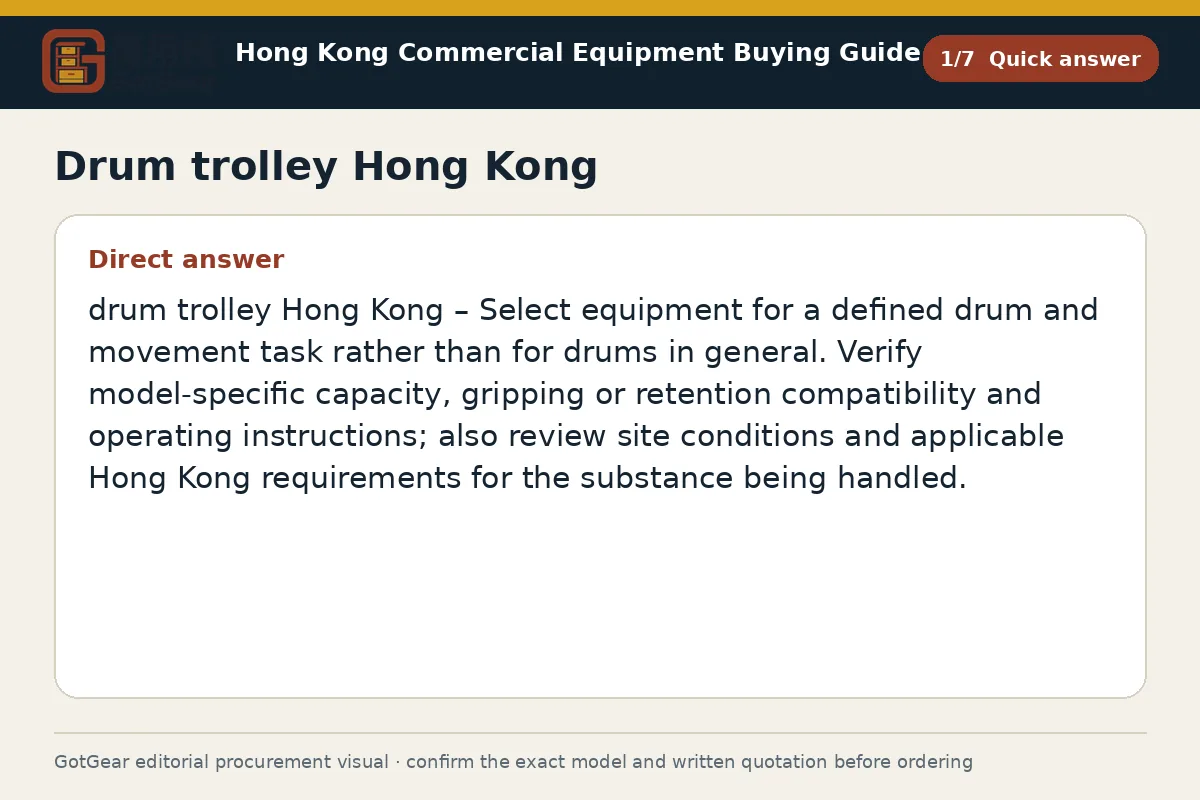
Drum trolley Hong Kong
This quotation checklist helps facilities and EHS teams plan for drum trolley Hong Kong. It guides you on drum size, filled mass, orientation, pickup method, retention and route conditions, and is provided by GotGear.
Read the guide
Gas cylinder trolley Hong Kong
GotGear's checklist for a gas cylinder trolley Hong Kong outlines key considerations such as cylinder size, filled mass, valve guards, correct loading, safe gradients, and checks with the trolley manual and site rules.
Read the guide
Panel trolley Hong Kong
GotGear offers a practical guide to panel trolley Hong Kong that helps facilities record dimensions, mass, surface finishes, support angles, contact materials, retention methods and route clearances.
Read the guide
Glass trolley Hong Kong
GotGear guide to glass trolley Hong Kong explains how to specify equipment and plan sites by comparing rated capacity, support geometry, contact materials and restraints, pane size, loading method and route clearances.
Read the guideRelated topic indexOpen more English procurement pages1 topics
Browse additional equipment families, applications and procurement questions relevant to a wider buying brief.