
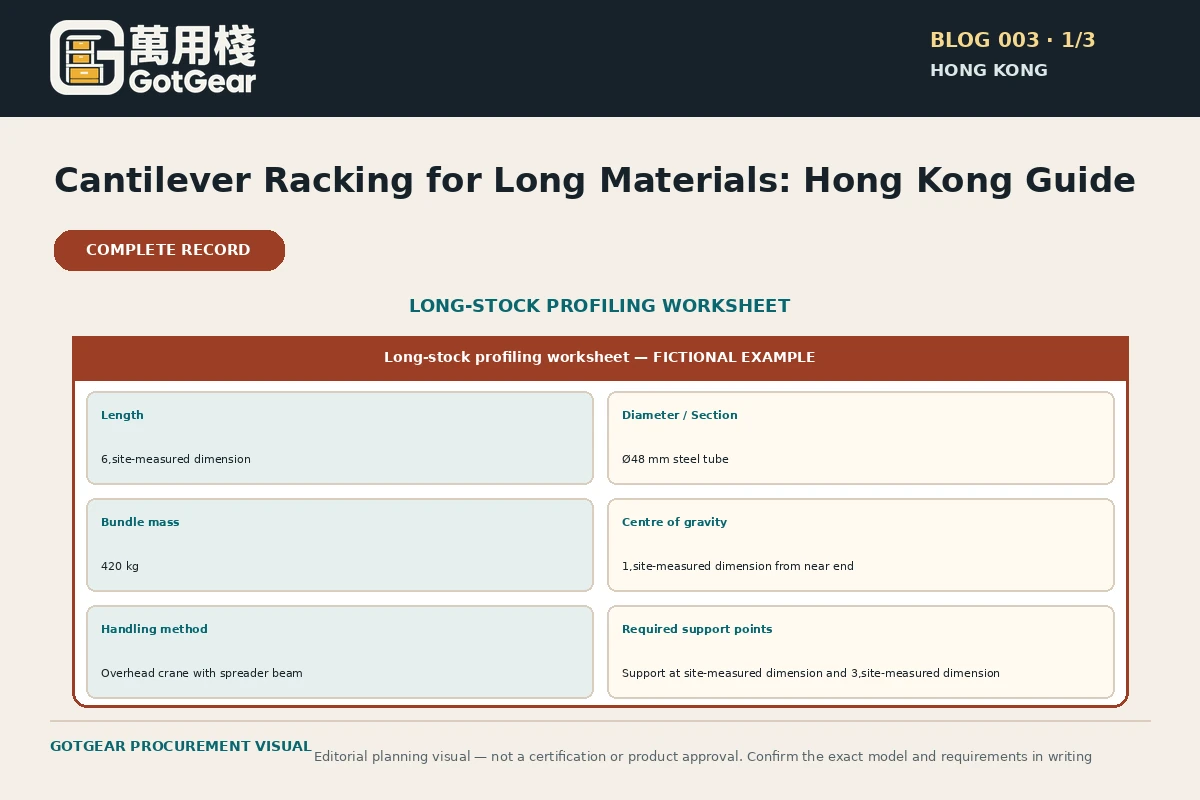
Cantilever racking is a good solution for many long items if the system is engineered for the actual lengths, bundle mass and expected lifting method, and if the workplace provides adequate floor bearing, clear approach lanes and an assessed loading/unloading process. Before approving cantilever, record each stock family’s span, bundle restraint needs and surface sensitivity; confirm how materials will be handled; and ask your supplier for arm spacing, capacity per arm, anchorage design and a documented loading procedure.
What to remember before you decide
- Collect hard data for every stock family—length, mass, bundle size and handling method—before requesting designs.
- Cantilever is effective when arms, deflection limits and anchorage are engineered for actual loads and handling patterns.
- Cylindrical or mixed stock needs deliberate containment; cantilever alone does not prevent rolling.
- Confirm floor strength and anchor details early; weak slabs often change the recommended solution.
- Operational controls, training and inspection schedules are part of a safe cantilever deployment, not optional extras.
Deciding whether cantilever suits your long stock
Begin every evaluation with measured, repeatable facts for each family of long stock. Capture overall length, cross-section profile, single-item mass, typical bundle size and the longitudinal mass distribution (centre of gravity). Note surface sensitivity—paint, galvanising, threads—along with any hollow or tapered ends and whether cylindrical sections are likely to roll. Record the likely handling profile: available lifting equipment (pedestrian pallet truck, sit-down forklift, reach truck, crane, tugger), typical approach direction for picks and places, and handling cadence (daily, weekly). Because Hong Kong yards and internal logistics areas commonly have narrow gates, mixed vehicle flows and vertical transfer through lifts or lobbies, include gate widths and headroom beneath overhead services in the measurement packet. Remember that cantilever arms and uprights provide horizontal support but do not automatically prevent rolling of cylindrical stock; chocks, side stops, straps or cradle inserts are required when rolling is possible. Cantilever design assumptions typically rely on even load distribution; concentrated or heavily offset bundles increase arm bending and connection shear and can invalidate supplier load tables that assume specific arm spacing and anchorage types. Any change to arm spacing, load concentration or approach method must be treated as a design change and revalidated. For each material family prepare a compact specification sheet: length, bundle diameter or width, bundle mass, move frequency, preferred handling equipment and corrosion sensitivity. Photograph representative items alongside a tape measure and annotate non-standard ends or fittings. Share that packet with shortlisted suppliers and require a written design basis that explicitly states assumed load distribution, arm spacing and anchorage type. Treat the supplier’s load table as conditional on those assumptions and plan for a supplier confirmation visit if the site or stock differs from the data provided.
Stock geometry, handling and storage density trade-offs
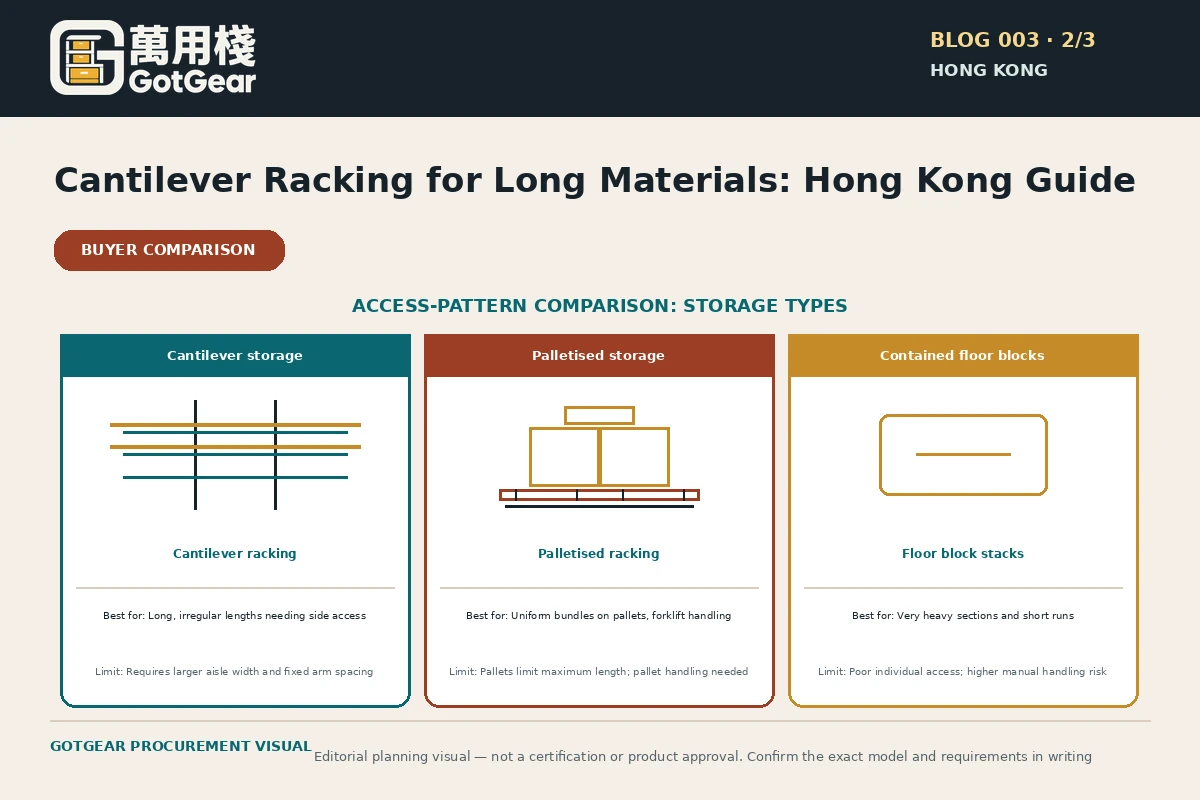
Space optimisation for long goods is a balance between accessibility and density. In Hong Kong, where footprint is rarely abundant, higher selectivity demands wider or more aisles, reducing gross storage density; deeper, lower-selectivity layouts increase capacity but slow retrieval and raise the chance of damage when operators search for specific lengths. Continuous flows with predictable SKUs can support long, uninterrupted rack runs with narrow aisles and powered handling; by contrast, mixed inventories with irregular turnover benefit from labelled arms, smaller bundles and closer arm spacing to reduce search time and accidental drops. Cantilever configurations that minimise the number of arms can look efficient, but increased unsupported spans raise deflection and bending stress. Long structural tubes, timber or extrusions can sag between arms unless intermediate supports, cradles or stiffer arm sections are provided. If manual adjustment or handling remains part of routine work, ergonomics and manual-handling risk increase; use Labour Department guidance on lifting aids, route clearance and work practices when defining place-and-pick methods. Also allow for a clear exclusion zone under the swing and lift envelope of long items—stacking or workbeneath suspended loads must be avoided. Map a representative pick sequence in situ and time each element: travel, positioning, engagement, lift and deposit. Note equipment constraints—fork carriage width and maximum fork spread for forklifts; hook reach, sling pattern and lift points for cranes or hoists. Request supplier-provided deflection estimates for the maximum expected span and proposed arm stiffness or intermediate cradle options. When manual tasks persist, involve your safety officer to apply ergonomic controls and, where relevant, reference ILO and Labour Department guidance to reduce injury risk.
“Designing long-stock storage is evidence-led: measure the material, map the handling, confirm the floor, then let the supplier match arms, anchors and containment to those facts.”— GotGear Editorial Team
What should buyers compare for cantilever racking for long materials Hong Kong?
| Option or approach | Best for | Trade-offs | Checks before acceptance |
|---|---|---|---|
| Cantilever racking (open arms) | Long, linear stock stored and retrieved by forklift or crane where lengths exceed pallet depth and where selectivity is moderate to high. | Provides dedicated support and good selectivity but needs engineered anchorage, containment for rolling items and sufficient aisle width. | Provide measured stock profiles, expected bundle distribution and handling method; request arm capacity, deflection data and anchor schedules from supplier. |
| Pallet racking with long-load arms (longspan pallet arms) | Operations already palletised or where long stock is bundled and moved on pallets using existing pallet trucks or forklifts. | Uses existing racking infrastructure and pallets for containment but reduces selectivity per pallet and requires pallet footprint planning. | Confirm pallet sizes, bundle stability on pallet and reach truck/forklift carriage compatibility; obtain supplier load ratings and pallet load patterns. |
| Floor-blocked storage with chocks and lane marking | Very heavy or irregular items that are infrequently moved and where racking anchor loads would overstress the slab. | Lowest capital equipment but highest footprint and lowest selectivity; floor must be clearly segregated and chocks maintained to prevent rolling. | Map blocking pattern, chock fixing method, floor load checks and implement strict lane separation and access controls per Labour Department guidance. |
| Modular cradles or troughs on shelving (cradle racks) | Cylindrical items that require lateral containment and uniform cradle support to prevent deformation or rolling. | Higher unit resource requirements and potentially lower density but excellent containment and easy integration with slings or rollers for handling. | Supply cradle geometry compared to stock profile, test-fit samples and confirm handling flow with supplier before full installation. |
| Conveyor or powered rollers with live storage | High-throughput operations with standardised lengths and mechanical handling where continuous feeds or production buffering are needed. | Significant installation and control resource requirements; limited flexibility for mixed lengths; requires power and maintenance. | Provide cycle rates, length variance tolerance and integration plan with other material flow systems; perform a pilot run with representative loads. |
This framework helps buyers create comparable written enquiries. Final model specifications, availability, delivery and commercial terms must be confirmed in a formal quotation.
Site constraints, anchorage and safety controls for Hong Kong workplaces
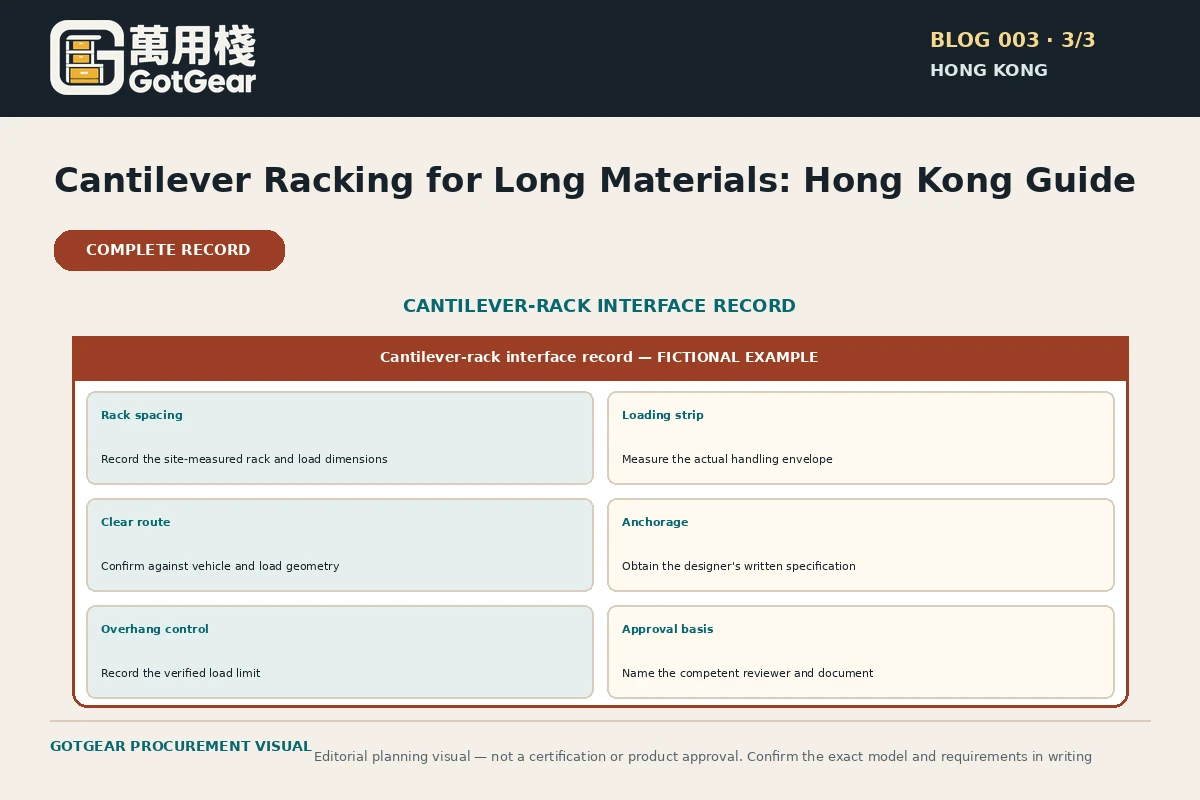
Concrete slab capacity, flatness and local conditions determine anchorage performance. Many older Hong Kong industrial buildings have limited slab capacities, variable thicknesses and reinforcement locations that influence anchor embedment and long-term performance. Document slab thickness where known, note proximity to expansion joints and services, and identify nearby vibration sources—ramps, heavy plant or frequent vehicle movements—that can loosen fixings over time. Legacy slabs with unknown reinforcement or thin profiles may require closer investigation before cantilever uprights are anchored. Cantilever uprights need moment-resisting anchorage or heavy baseplates with appropriate embedment to resist overturning and shear. Where slab strength or thickness is marginal, consider load-spreading baseplates, freestanding base designs or a structural engineer–designed pad. Anchored racking does not substitute for containment where items can roll or slide off arms; secondary restraints or guards are frequently necessary. Overhead constraints—sprinklers, ducts and power cabling—also limit achievable arm heights and may require custom arm profiles, cut-outs or clearance offsets. Obtain floor information from your building manager; if records are absent or incomplete, commission a competent contractor to confirm concrete thickness, locate rebar and, if necessary, take core samples for strength testing. Require suppliers to submit anchor-bolt schedules with minimum concrete classes, embedment depths and spacing requirements, and advise on safe distances from slab edges and joints. Implement a documented anchor inspection cadence with torque checks and visual inspections and appoint a responsible on-site manager to record damage, impacts and re-torque activities.
Operational controls, inspection and who signs off
Operational controls determine whether a cantilever installation remains safe and practical over time. The Labour Department’s workplace guidance—assess size, weight, shape and stability of items and keep routes clear—provides an operational framework that should drive training, routing and routine inspections rather than being treated as optional. Key operational factors include the competence of store staff, stock turnover frequency and whether multiple material types will occupy the same rack run; mixed materials require clear segregation with durable labels and, where appropriate, physical separators to prevent cross-loading and accidental overhangs. Suppliers can design and supply the system, but legal and managerial responsibility for safe operation, route planning and reacting to changes in material or method remains with the employer. Load notices and capacity plates are valid only while the installation and the actual loading pattern match the supplier’s assumptions; any change in handling equipment, bundle mass, arm spacing or loading practice requires reassessment. Require the supplier to issue a written loading notice that directly references your recorded stock data and handling plan before putting racks into regular use. Institute a simple, monthly inspection checklist covering anchor torque, visible deformation, missing or loose bolts and evidence of impact or corrosion. Train operators on permitted loading patterns, the existence of exclusion zones beneath lifts, safe pick and place procedures and mandatory reporting for damage or unexpected loads. When a change in stock or handling occurs, suspend use of the affected rack run until a documented reassessment and, if needed, remedial measures or new loading instructions are issued and signed off by the responsible manager or safety officer.
Cantilever racking for long materials Hong Kong decision checklist
- Record for each stock family: length, cross-section profile, single-item mass and typical bundle mass.
- Document centre-of-gravity behaviour: uniform distribution, end-heavy, or random placement within a bundle.
- Specify handling equipment and approach: forklift type, fork carriage size, crane hook reach or manual handling details.
- Measure access routes: gate/door clearances, aisle widths, overhead services and potential pinch points.
- Confirm floor slab data: thickness, known load limits, joints, visible cracks and proximity to slab edges.
- Photograph representative stock with a scale and annotate non-standard features (tapers, threads, coatings).
- Decide containment method for cylindrical items: chocks, cradle inserts, straps or enclosed bays.
- Request supplier load tables, arm spacing, maximum arm moment and deflection estimates for your loads.
- Ask for anchor bolt schedules, minimum concrete strength and edge/joint clearance requirements.
- Define inspection and torque-check intervals and who is responsible for damage reporting and locking out damaged bays.
Practical action sequence
- Collect and record measurement packet for every stock family (images, masses, handling notes).
- Map the proposed rack location and measure slab details, overhead and access lanes.
- Shortlist suppliers and share the packet; request written design basis and arm capacity reports.
- Review supplier anchor schedule against your slab data; if slab is unknown, arrange testing.
- Agree operational controls: loading patterns, training, inspection intervals and damage-reporting process.
- Install with competent labour, affix load notices and mark no-go zones; conduct an acceptance inspection.
- Run a pilot phase with representative loads and adjust arm spacing or cradle inserts as needed.
- Schedule monthly visual checks and a formal annual inspection of anchors, uprights and arm connections.
Apply the checks to your Hong Kong site
In Hong Kong projects the common constraints are narrow access, variable floor conditions in older buildings, and mixed-use yards with vibration and limited clearance. Use local Labour Department guidance to frame risk assessments: measure material geometry and mass distribution, record handling equipment and routes, confirm floor adequacy, and require supplier load notices and anchorage specifications. Treat overseas guidance (ILO, OSHA) as useful context for ergonomics and general storage principles but not a substitute for competent local assessment. Project teams considering cantilever racking for long materials Hong Kong must match arm length, spacing and anchorage to the measured stock and handling flow rather than relying on generic layouts. Equally, a pipe storage rack layout Hong Kong needs lateral restraint and bundle-specific supports, and steel bar storage racking Hong Kong should be planned around offload zones and transverse supports. Operational takeaway: perform a documented on-site geometry and load-validation survey and hold supplier anchorage details against that survey before accepting any design.
References used for this article
These sources provide regulatory, safety or planning context. They do not certify any GotGear product or replace site-specific professional advice.
- Hong Kong Labour Department — Handling of Heavy Objects in Workplaces — Local direction to assess size, weight, shape and stability; use suitable racks/supports; separate zones; keep routes clear; and control vibration and change.
- International Labour Organization — Manual handling — Ergonomic decision factors for heavy or awkward loads, reducing awkward reach/twist, considering lifting aids, route clearance and carrying distance.
- OSHA — General requirements for storage — General safety principles for securing stored materials against sliding, falling or collapse; keeping aisles clear; respecting safe floor load limits; and controlling cylindrical materials.
- SEMA — Racking Load Notices: Why They Are Important — Recognised-industry explanation of system-specific load information, supplier consultation, evenly distributed load assumptions and the effect of configuration changes.
Questions about cantilever racking for long materials Hong Kong
What measurements should I send for long-stock storage design?
Send a measurement packet for each material family: overall length, diameter or width, wall thickness for tubes, single-item mass and typical bundle mass. Include photos with a tape or ruler in-frame, notes about surface sensitivity (paint, galvanising), and sketches of any non-standard ends or fittings. Add handling data: how you will lift (forks, crane, manual), frequency of moves, and any restrictions on aisle width or overhead clearance. Suppliers use this to calculate arm spacing, deflection and anchorage.
Can pipe and bar stock share one rack run?
They can share a run if their geometries, bundle sizes and handling methods are compatible—meaning arms, cradles and containment suit both types and the loading pattern does not exceed the arm design. Mixing cylindrical items of different diameters increases rolling risk unless you provide fixed cradles or removable inserts. Also confirm that the heavier family does not regularly occupy bays designed for lighter stock; maintain clear labelling and enforce maximum load per arm.
When should a mechanical handling method replace manual movement?
Replace manual movement when the weight, awkwardness, frequency or risk of injury exceeds safe manual-handling limits or when repeated lifting causes workflow bottlenecks. Refer to the Labour Department and ILO ergonomic guidance: if lifts involve awkward reach, twisting, loads near the upper safe limits, or frequent repetition, introduce mechanical aids (forklift, hoist, roller cradle). Also consider mechanical handling when stock lengths or weights increase, when stacked work occurs at height, or when the aisle layout requires powered handling for efficiency.
How do I prevent cylindrical stock from rolling off cantilever arms?
Containment options include fitted chocks or V-shaped cradle inserts, side stops welded or bolted to arm ends, straps or webbing for bundles, and roller-to-cradle transitions for active handling. The correct choice depends on diameter variation and loading method; for varied diameters, adjustable cradle inserts or removable segmentation panels work best. Ensure your supplier details containment in the design and test-fit a sample bundle to validate the chosen solution.
What floor checks are essential before installing cantilever?
Confirm slab thickness, visible cracking, proximity to joints and known design floor loads. Ask building management for any structural drawings or recent floor upgrades. If unknown, engage a competent contractor to core or test the slab and confirm concrete class and reinforcement. Verify that proposed anchor positions are not directly above services or over thin areas and that edge distances meet supplier requirements. If the slab is weak, consider load spreaders or engineer-designed bearing pads.
How often should I inspect cantilever racks in an active Hong Kong yard?
Adopt daily quick visual checks by operators for loose bolts, obvious deformation or missing parts, and a monthly documented visual inspection for anchors, arm alignment and impact damage. Conduct a formal, recorded annual inspection by a competent person that includes torque checks, anchor pull-out testing where indicated and a review of load patterns. Increase inspection frequency in high-impact areas or where traffic vibration is significant.
Compare available product models and specifications
These product cards are matched to this buying topic. Select a specification and quantity to send the product details to WhatsApp.
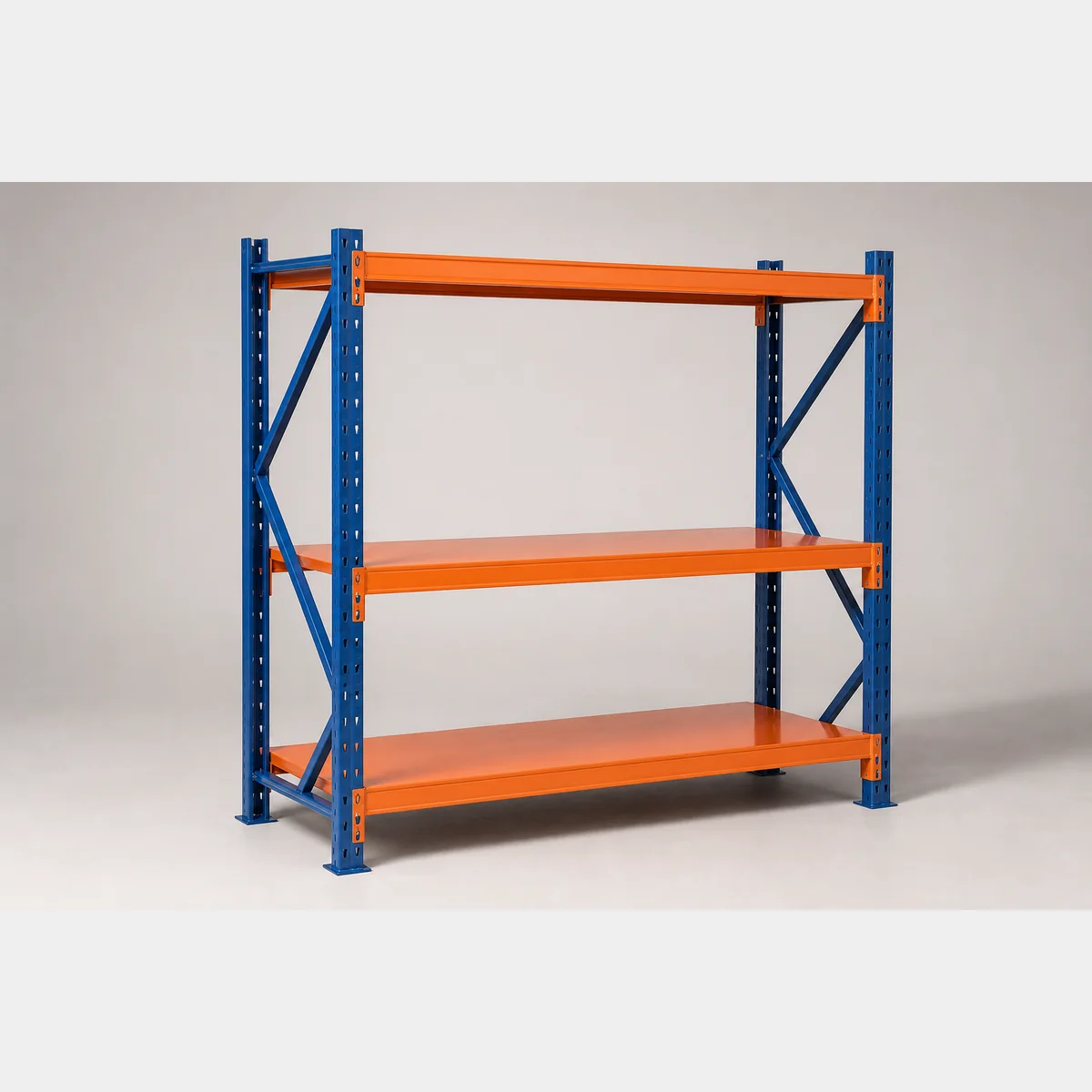 Shelving & StorageProduct reference image
Racking
Racking, colour: blue uprights, orange beams and shelves; S9102-500A.: L1500xW600xH2000 mm; S9102-500B.: L1500xW800xH2000 mm. Formal quotation available based on use, specification and quantity.
- Colour
- Blue uprights, orange beams and shelves
- S9102-500A.
- L1500xW600xH2000 mm
- S9102-500B.
- L1500xW800xH2000 mm
 Shelving & StorageProduct reference image
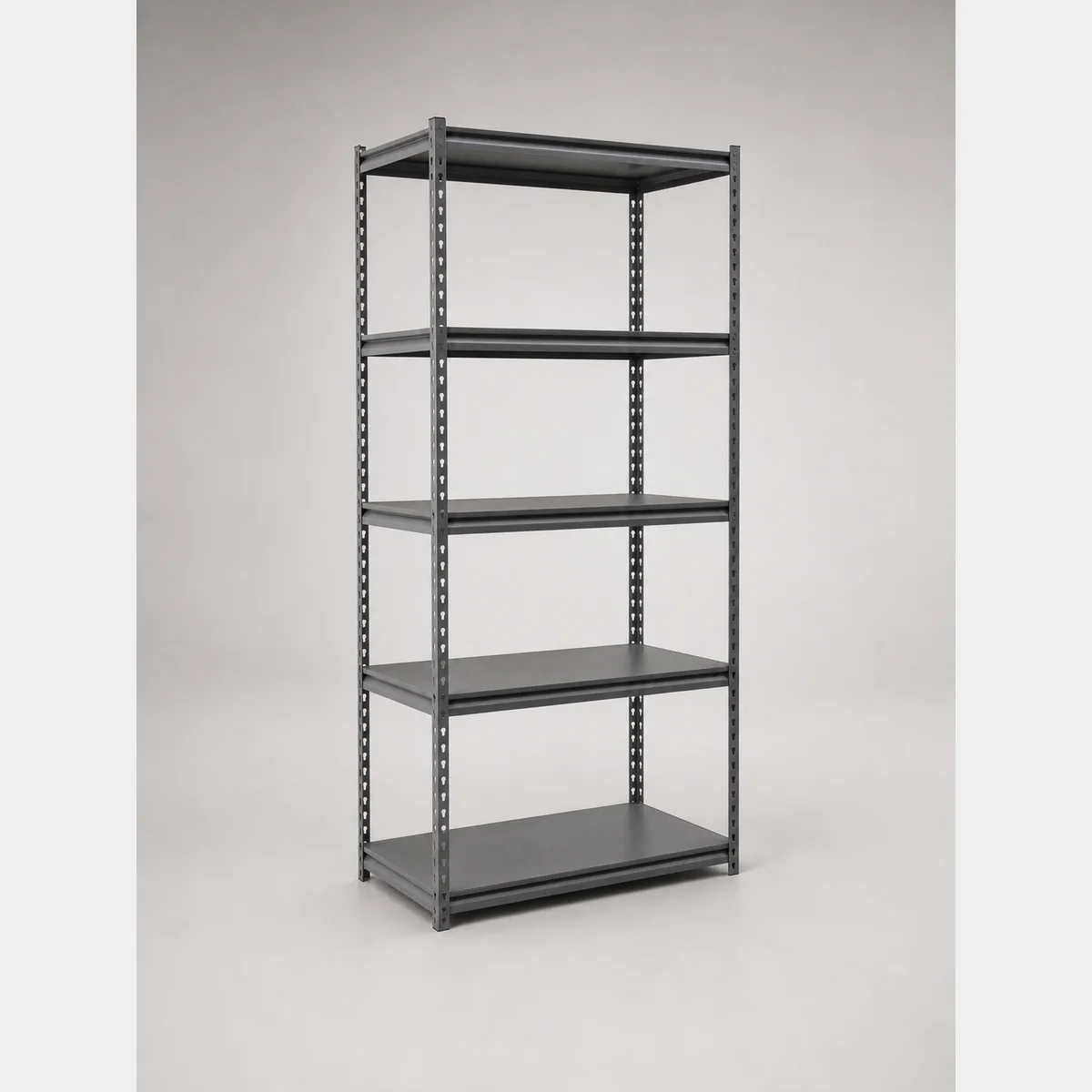
3-/4-/5-tier Storage Rack (S9190)
3-/4-/5-tier Storage Rack (S9190). Sizes/specs: Type A. L910 x W400 x H1830 mm / Type B. L1220 x W400 x H1830 mm; Type J: L910 x W460 x H1830 mm; Type K: L1220 x W460 x H1830 mm. Formal quotation available based on application, specifications and quantity.
- Size / Specification line
- Type A. L910 x W400 x H1830 mm / Type B. L1220 x W400 x H1830 mm
- Type J
- L910 x W460 x H1830 mm
- Type K
- L1220 x W460 x H1830 mm
 Shelving & StorageProduct reference image
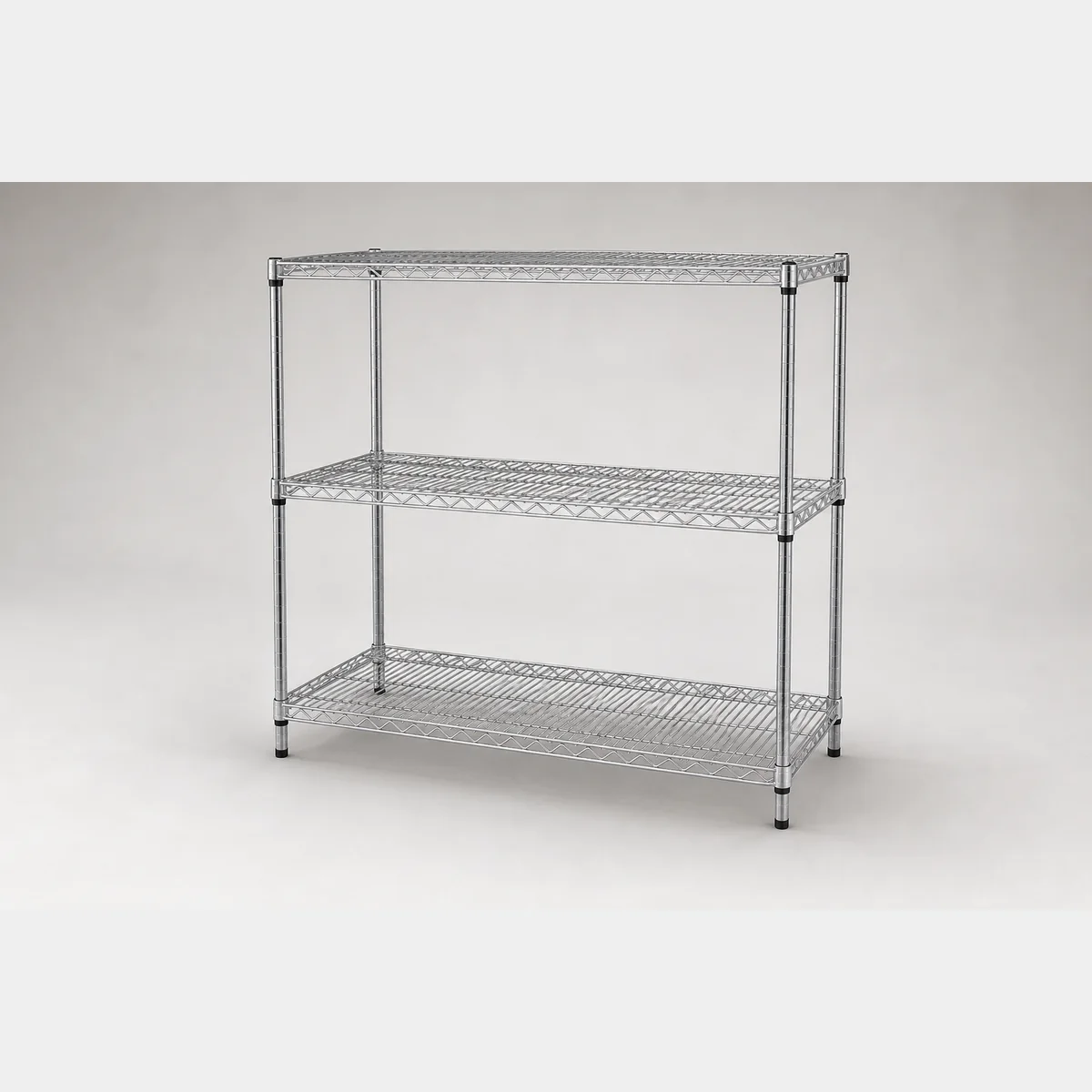
3-Tier Chrome Plated Shelf Rack
3-Tier chrome-plated shelf rack. Dimensions/Specifications: L1518 X W609 X H1500 MM / L1822 X W609 X H1500 MM; Average load per tier: 100kg. Please enquire for a formal quotation based on use, specifications and quantity.
- Dimensions/Specifications
- L1518 X W609 X H1500 MM / L1822 X W609 X H1500 MM
- Average load per tier
- 100kg
 Shelving & StorageProduct reference image
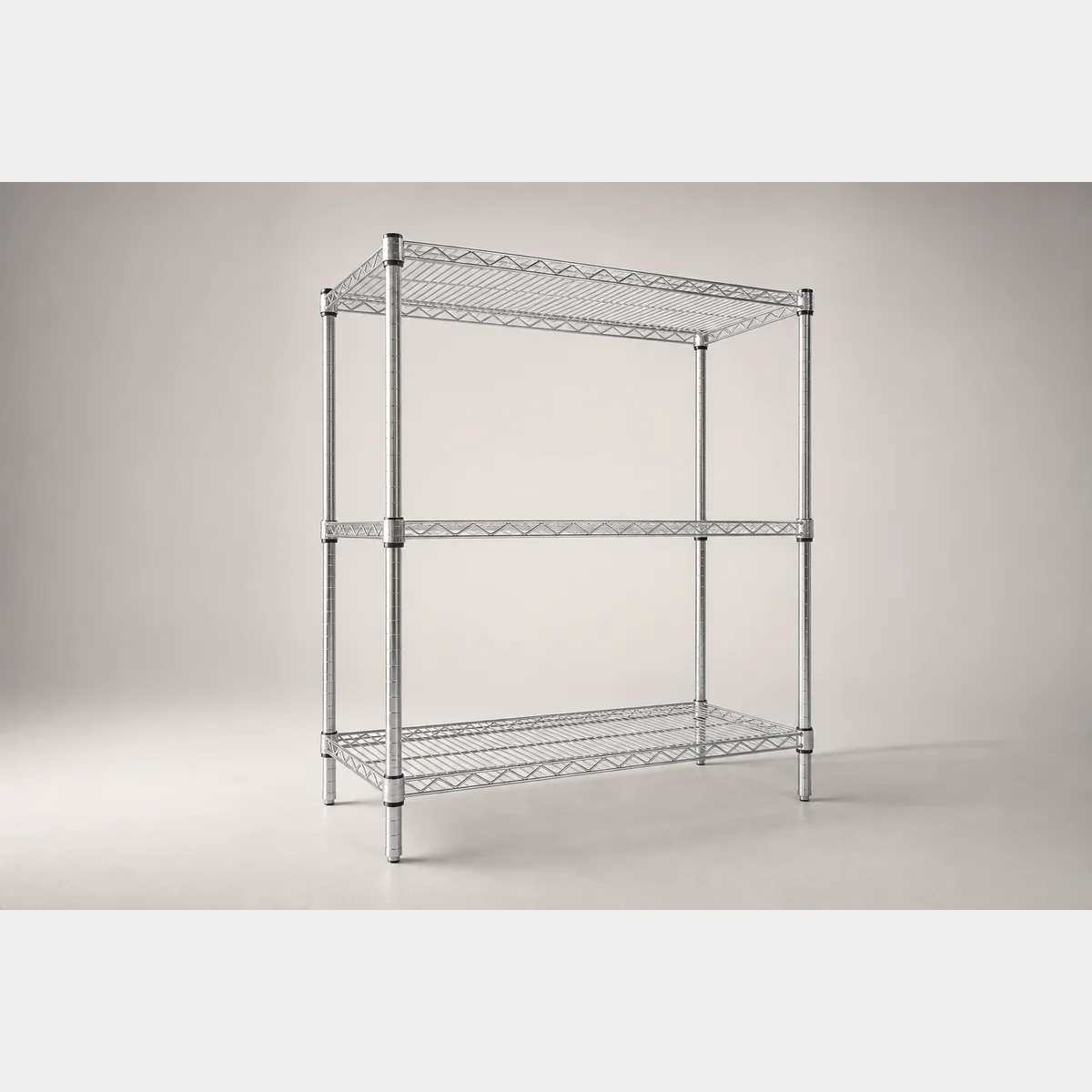
3-tier chrome-plated rack
3-tier chrome-plated rack, K4505: L1060 X W457 X H1500 MM; K4507: L1370 X W457 X H1500 MM; Load capacity per shelf: 100kg. Formal quotation available upon request based on use, specifications and quantity.
- K4505
- L1060 X W457 X H1500 MM
- K4507
- L1370 X W457 X H1500 MM
- Load capacity per shelf
- 100kg
 Shelving & StorageProduct reference image
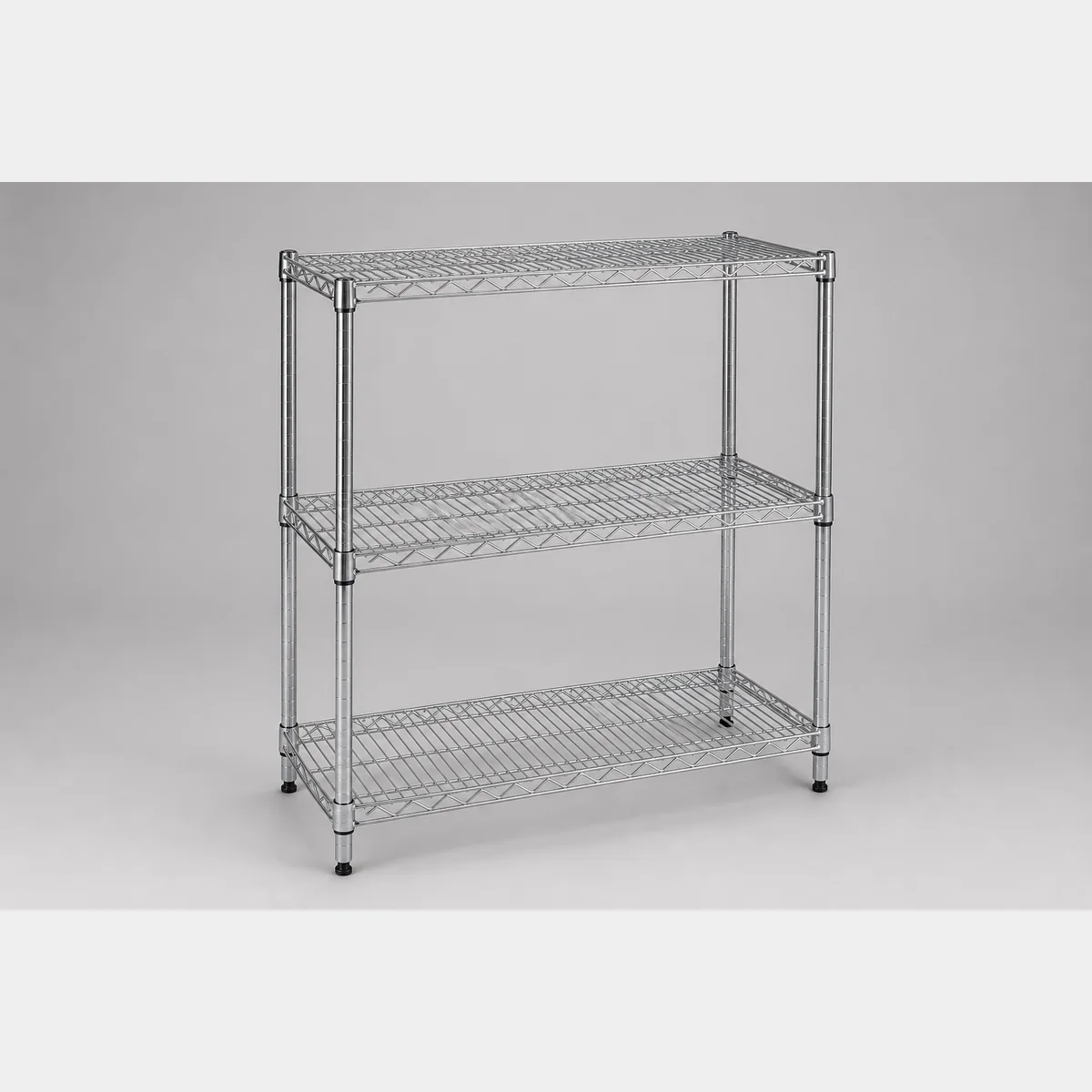
3-Tier Chrome-Plated Shelving Rack
3-Tier chrome-plated shelving rack, K5307: L1370 X W533 X H1500 MM; K5308: L1518 X W533 X H1500 MM; Average load per shelf: 100kg. Formal quotation available upon request based on use, specifications and quantity.
- K5307
- L1370 X W533 X H1500 MM
- K5308
- L1518 X W533 X H1500 MM
- Average load per shelf
- 100kg
 Shelving & StorageProduct reference image
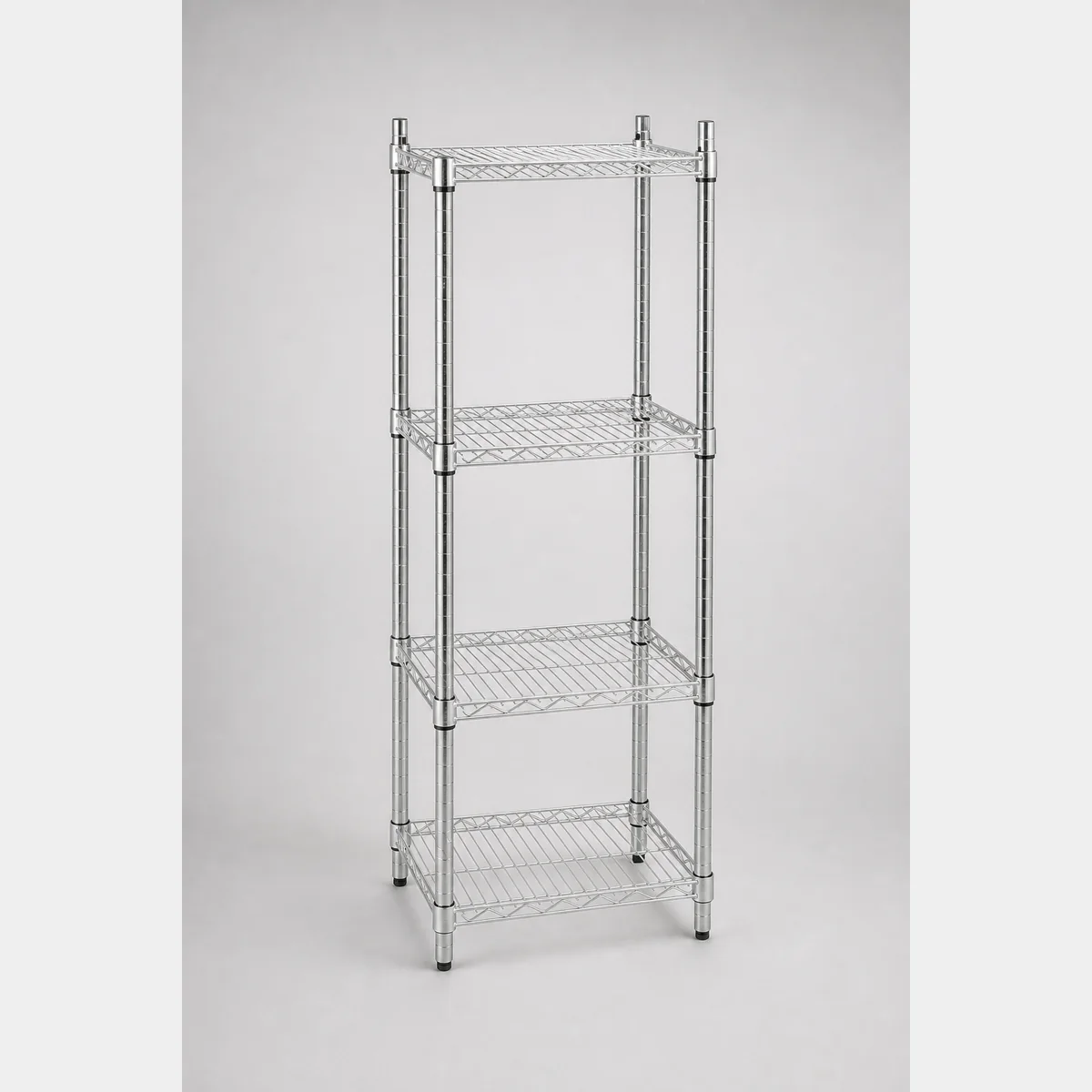
4-tier electroplated rack
4-tier electroplated rack, H3501: L355 X W355 X H1800 MM; H3502: L609 X W355 X H1800 MM; H3504: L907 X W355 X H1800 MM. Formal quotation available by intended use, specifications and quantity.
- H3501
- L355 X W355 X H1800 MM
- H3502
- L609 X W355 X H1800 MM
- H3504
- L907 X W355 X H1800 MM
 Shelving & StorageProduct reference image
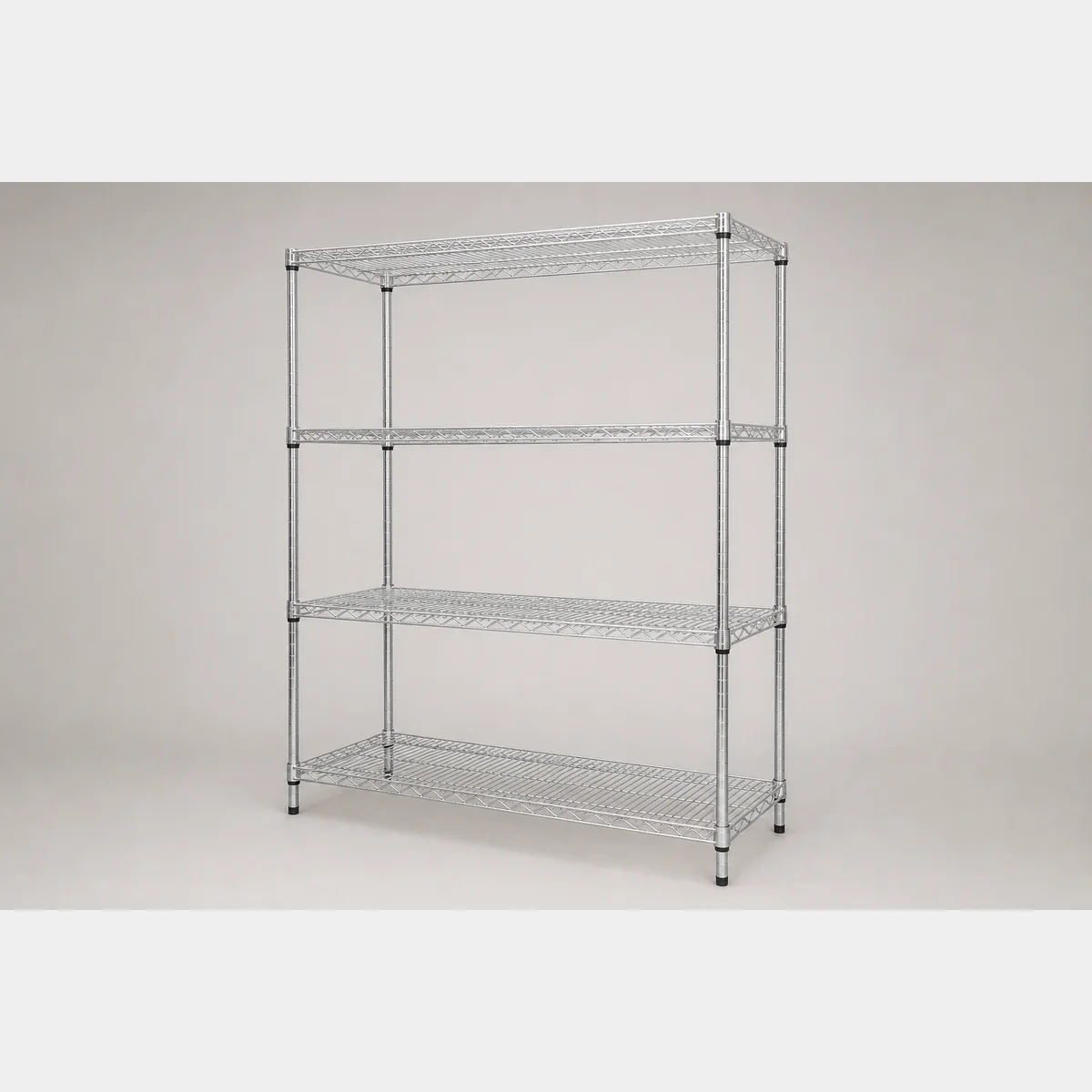
4-Tier Electroplated Rack
4-Tier electroplated rack, H6008: L1518 X W609 X H1800 MM; H6009: L1822 X W609 X H1800 MM; average load per shelf: 100kg. Formal quotation available based on usage, specifications and quantity.
- H6008
- L1518 X W609 X H1800 MM
- H6009
- L1822 X W609 X H1800 MM
- Average load per shelf
- 100kg
 Shelving & StorageProduct reference image
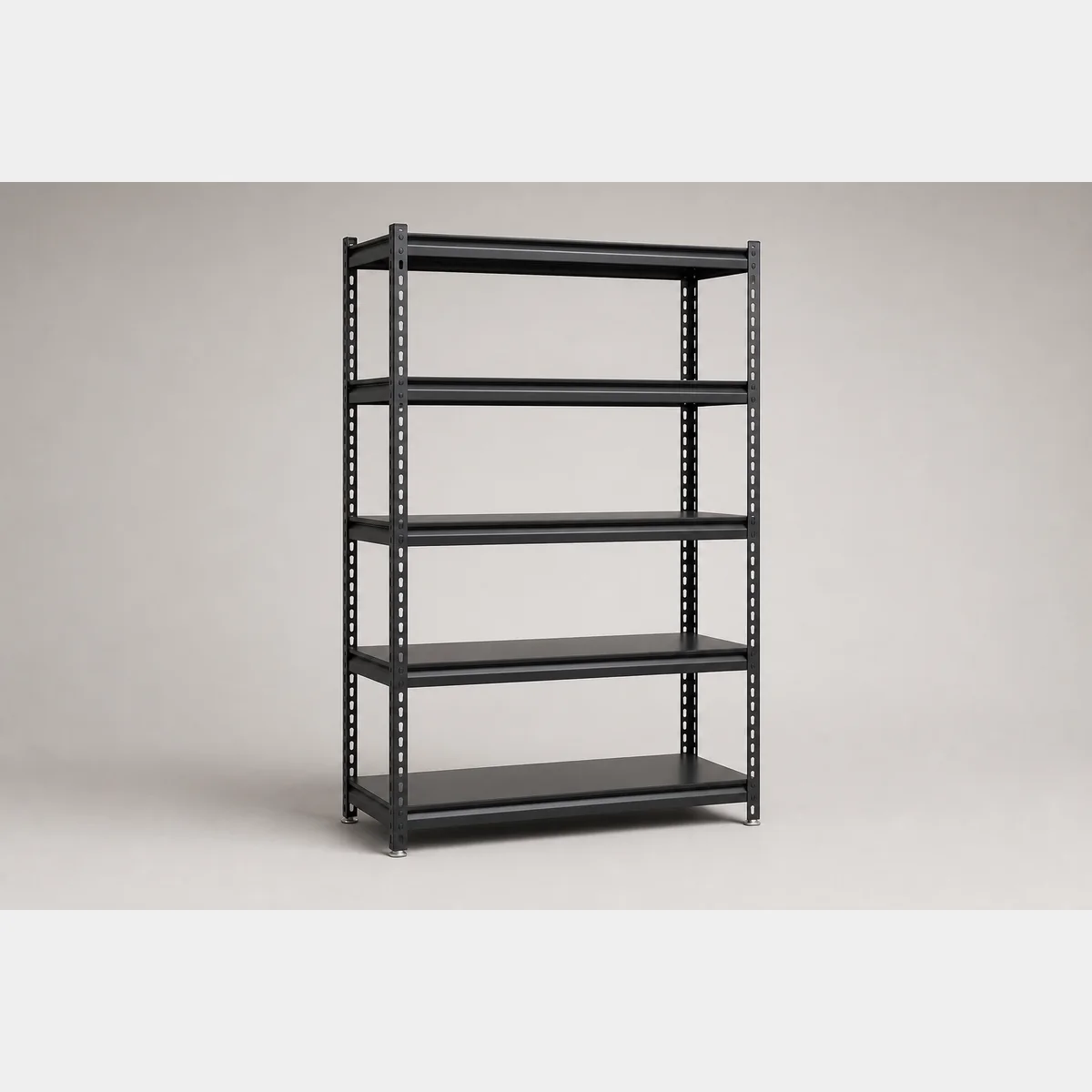
5-tier storage rack
5-tier storage rack, A: L76xW31x183 cm; B: L91xW31x183 cm; C: L91xW46x183 cm. Formal quotation available based on use, specifications and quantity.
- A
- L76xW31x183 cm
- B
- L91xW31x183 cm
- C
- L91xW46x183 cm
Continue with closely related procurement topics
These pages share equipment, operating or decision-stage signals with this guide.
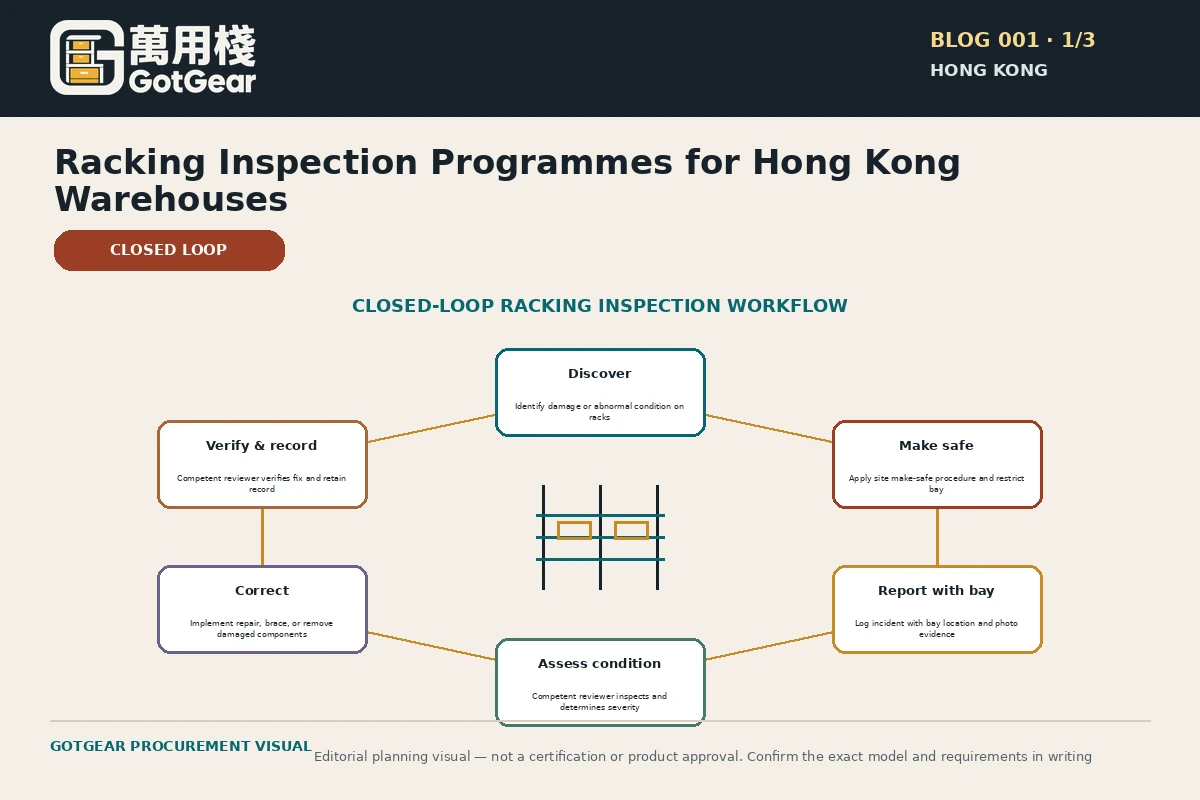
Warehouse racking inspection programme Hong Kong
GotGear explains warehouse racking inspection programme Hong Kong for Hong Kong buyers. See how racking damage reporting procedure Hong Kong supports warehouse rack inspection checklist Hong Kong, with practical checks, evidence boundaries and written requirements.
Read the guide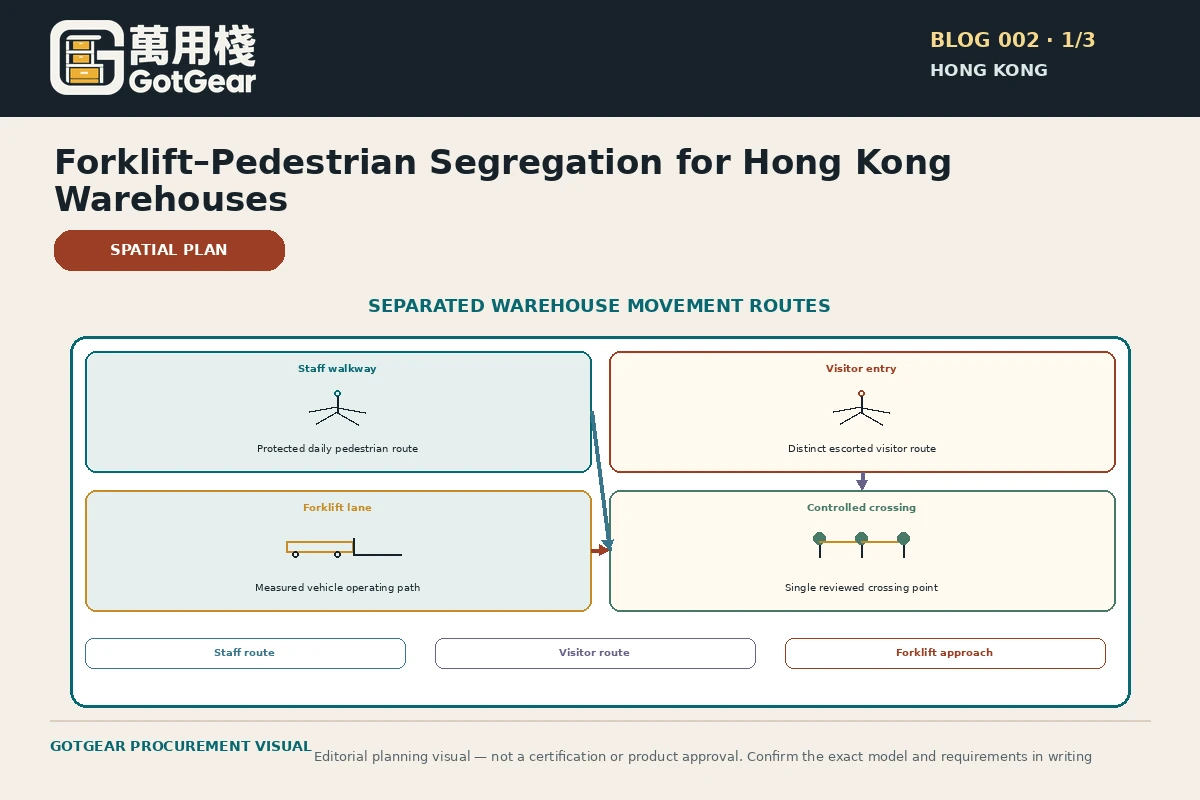
Forklift pedestrian segregation plan Hong Kong
GotGear explains forklift pedestrian segregation plan Hong Kong for Hong Kong buyers. See how warehouse traffic management plan Hong Kong supports forklift crossing controls Hong Kong, with practical checks, evidence boundaries and written requirements.
Read the guide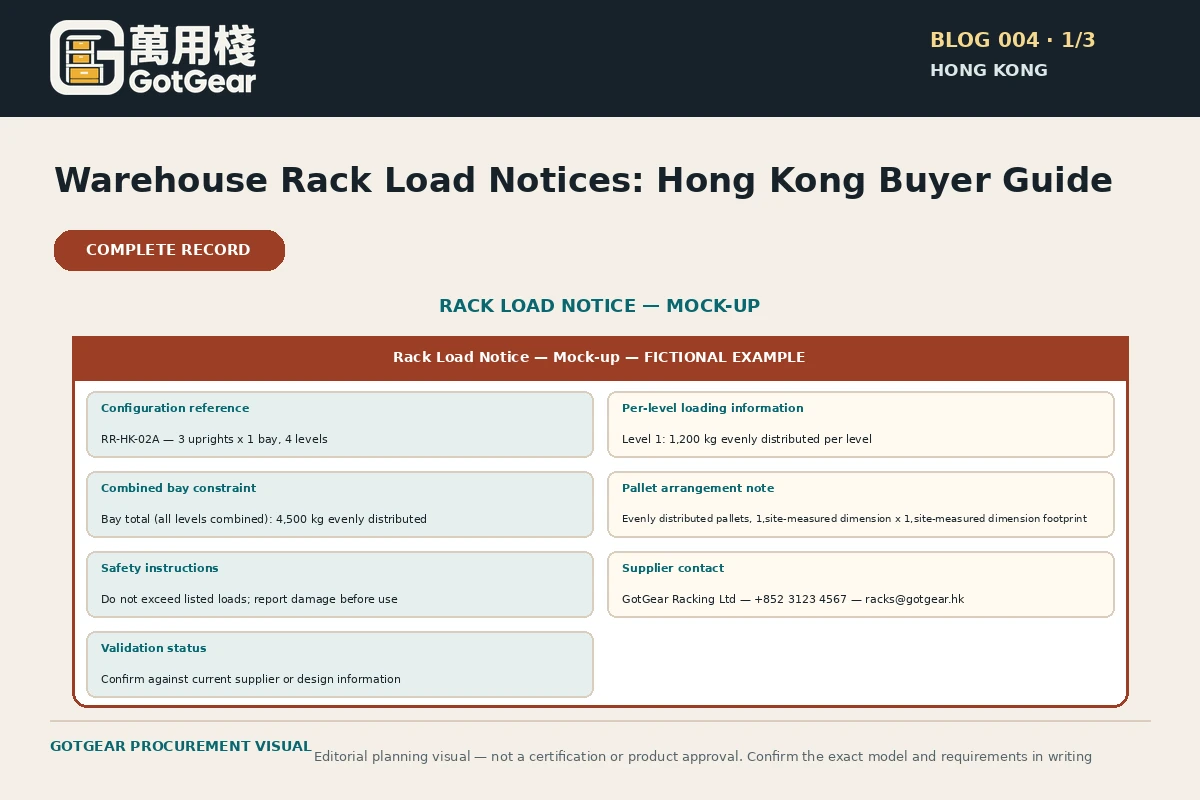
Warehouse rack load notices Hong Kong
GotGear explains warehouse rack load notices Hong Kong for Hong Kong buyers. See how pallet racking bay load Hong Kong supports racking safe working load sign Hong Kong, with practical checks, evidence boundaries and written requirements.
Read the guide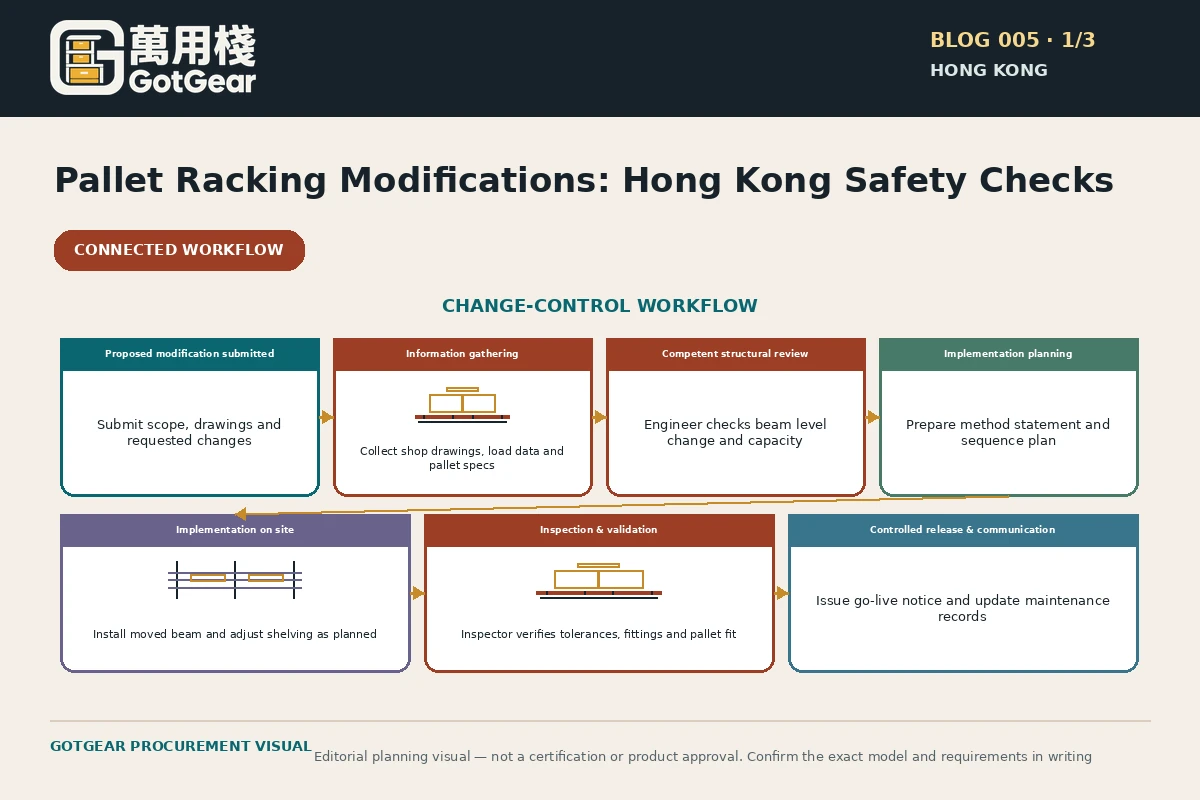
Pallet racking modification safety Hong Kong
GotGear explains pallet racking modification safety Hong Kong for Hong Kong buyers. See how warehouse racking reconfiguration Hong Kong supports rack beam level change review Hong Kong, with practical checks, evidence boundaries and written requirements.
Read the guideRelated topic indexOpen more English procurement pages15 topics
Browse additional equipment families, applications and procurement questions relevant to these operating requirements.