
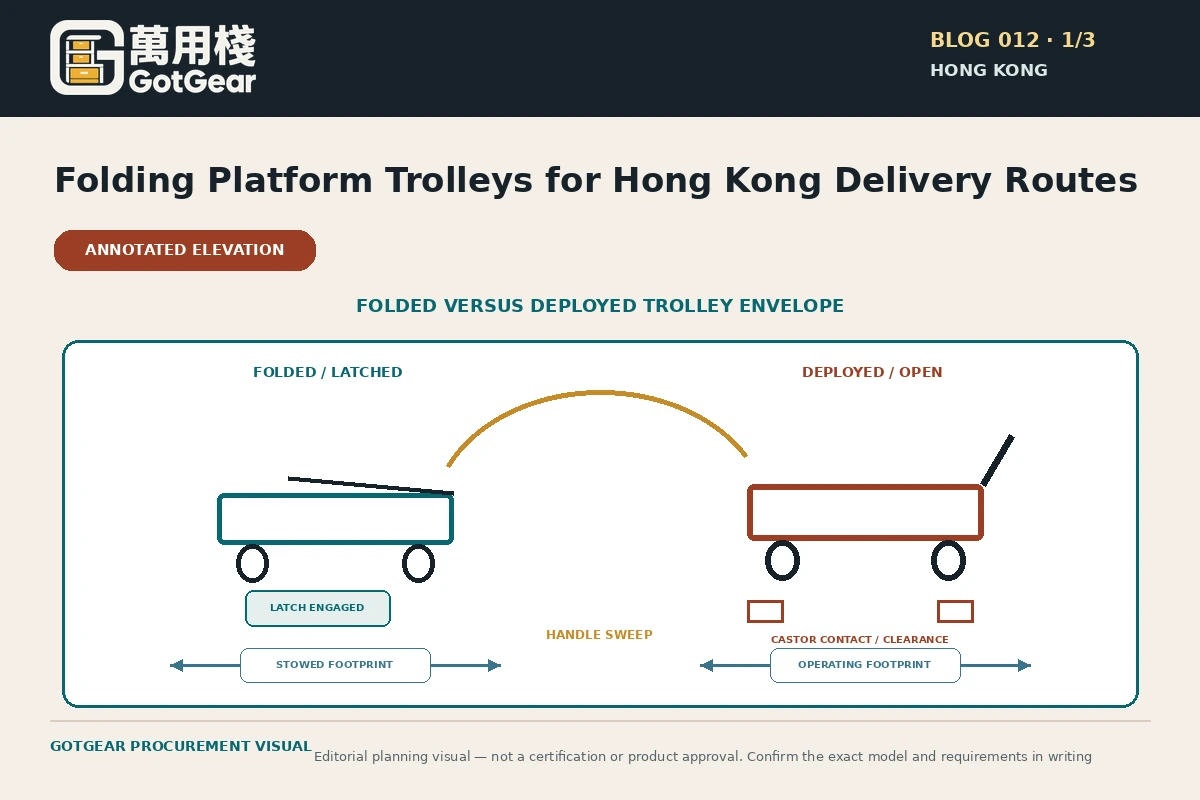
A folding platform trolley makes sense when its folded profile genuinely fits your storage space or van, and when the fully deployed trolley meets load, wheel and handle requirements for your route. Don’t assume foldability equals suitability: trial the trolley fully loaded on a typical delivery route, check wheel behaviour on wet kerbs and building thresholds, inspect catches and pinch points, and confirm rated capacity and handle ergonomics before replacing a rigid trolley.
What to remember before you decide
- Foldability helps only when folded dimensions truly solve a storage or vehicle-fit problem.
- Always trial a trolley fully loaded on a representative route, including van transfers and wet conditions.
- Wheel type and diameter often determine route suitability more than the folding mechanism.
- Inspect catches, hinges and brakes for pinch points and maintenance needs before committing.
- Prefer trolleys with spare-part availability and simple user-serviceable components in Hong Kong.
- Document daily inspections and train operators in safe folding and locking routines.
When foldability helps in Hong Kong routes
In Hong Kong, many retail replenishment teams, event crews and van-based operators work from tight back rooms, multi-storey car parks and compact vans. A trolley that folds flat can be moved into a narrow storeroom, stood upright in a van corridor or slipped under a shop counter. That advantage is concrete when folded dimensions are the difference between storing the trolley inside daily or leaving it outside. Use these decision checks: measure the storage opening, shelving depth and van width; compare these measurements to the trolley’s folded height, depth and width. Consider how often the trolley must be folded during a shift: frequent folding increases wear and the chance of operator error. A key limitation is that foldability alone doesn’t guarantee safer transfers. A folded trolley may still have protruding catches, loose straps or pinch points that catch on clothing or van fittings. Compact folded size may come at the resource requirements of a smaller platform area or reduced rated capacity; some folding frames reduce structural stiffness, which increases wobble with tall or off-centre loads. In Hong Kong’s mixed surfaces—wet pavements, metal thresholds and steep kerbs—wheel type can negate the storage benefit if small castors make exterior manoeuvre impractical. Next, physically measure your storage and vehicle openings and compare them to candidate trolleys’ folded dimensions. If possible, borrow or trial a sample on a busy shift to assess real fit and handling. Ask the supplier to demonstrate the folding and locking sequence, let operators test it with typical loads, and check whether the trolley stands securely folded without leaning on other stock.
Test criteria for route trials
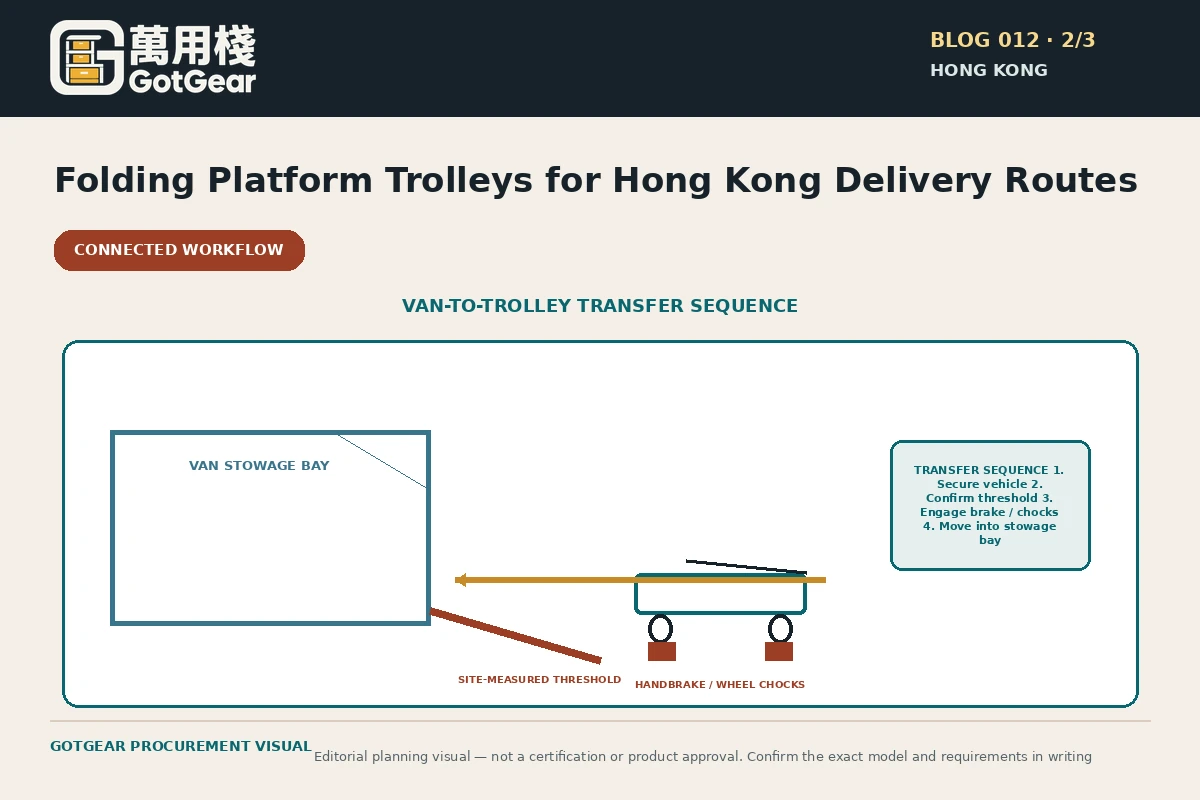
In Hong Kong, trial routes should include the most challenging segments you face—retail back rooms with narrow doors, loading bays with ramps, elevators and the first few metres across building thresholds. Decision criteria for a robust trial: 1) load the trolley to a typical or worst-case weight and distribute the load as your teams would; 2) use the same operator mix (height, strength, experience) who will use the trolley day-to-day; 3) trial both entering and exiting vans, including lifting the trolley into the vehicle and moving it across a van deck. A key limitation is that short showroom tests hide problems. A 30-minute trial may not reveal hinge slop, catch failure or handle looseness that appears after repeated folding. Environmental limitations matter: test in wet weather or after a rubber-clad ramp is present, and on kerbs typical of your delivery points. Some folding mechanisms become harder to operate with gloves or after light contamination with dust and grease. Next, schedule a full-shift trial rather than a single-use demo. Record objective metrics—time to fold/unfold, number of operator interventions, incidents of tipping or snagging—and gather operator feedback on comfort and perceived stability. If a supplier cannot support a multi-point trial, include return conditions in your purchase terms or plan an extended warranty with specific inspection points.
“Treat foldability as a storage and logistics feature, not a blanket safety guarantee. The deployed trolley — its wheels, capacity and locking detail — determines operational success on Hong Kong routes.”— GotGear Editorial Team
What should buyers compare for folding platform trolley Hong Kong?
| Option or approach | Best for | Trade-offs | Checks before acceptance |
|---|---|---|---|
| Rigid platform trolley with narrow profile | Operators who prioritise maximum stiffness and large platform area without frequent need to store in tight spaces. | Does not fold; requires dedicated storage space and may be harder to fit in narrow vans or cupboards. | Measure available storage and perform a vehicle fit test; confirm your teams can allocate a permanent bay for the trolley. |
| Folding trolley with large-diameter pneumatic wheels | Routes combining outdoor kerbs and limited storage space where shock absorption is needed. | Larger wheels and heavier chassis increase folded bulk and weight; may reduce convenience for daily carry-in tasks. | Trial loaded runs over kerbs and ramps, then fold and attempt to fit into the target storage or van compartment. |
| Compact folding trolley with polymer wheels for indoor use | Retail replenishment within malls and indoor event setups where pavements are smooth and storage is extremely tight. | Polymer wheels are poor over rough outdoor thresholds and give less shock protection to loads. | Run indoor-only route trials and inspect wheel performance on building thresholds and elevator entries. |
| Modular trolley with removable deck or folding nose | Operators needing flexible platform area for varied loads and occasional compact storage. | More moving parts increase maintenance needs; modular parts can be mislaid or require fasteners. | Confirm spare part availability locally and simulate repeated assembly/disassembly in a shift trial. |
| Low-profile folding trolley with integrated brake | Van-to-store transfers where stability on a van deck is critical and the trolley must be folded for storage. | Brake mechanisms add complexity and need regular checks; may be heavier to carry when folded. | Test brake effectiveness on a representative van deck and inspect operation after repeated folds. |
This framework helps buyers create comparable written enquiries. Final model specifications, availability, delivery and commercial terms must be confirmed in a formal quotation.
Choosing wheels, capacity and handles for outdoor and van use
In Hong Kong, many deliveries start on uneven kerbs, wet pavement and metal threshold plates, then continue inside buildings where floors are smooth but congested. Wheel selection is therefore central to operational suitability. Use these decision checks: prefer larger-diameter pneumatic or semi-pneumatic wheels if your routes include kerbs and rough surfaces—their greater shock absorption reduces force transmitted to the load and operator. For indoor-only routes, hardened rubber or polymer wheels give low rolling resistance and better manoeuvrability in tight aisles. Confirm wheel bearings are sealed to resist water and grime common in street-level operations. Capacity: pick a trolley whose rated capacity exceeds typical load by a safe margin; rated capacity is not a target but a maximum under ideal conditions. Consider load footprint: a narrow, tall stack is more likely to tip than a low, wide pallet even at the same weight. Handles: ergonomics matter—adjustable or two-position handles allow teams of different heights to keep wrists and back in safer postures on long pushes. Brakes and wheel locks significantly improve safety during loading/unloading; where a van deck lacks a flat, level unloading surface, a reliable parking brake or a wheel lock is essential. A key limitation is that larger wheels and heavier-duty chassis add weight and folded bulk, potentially negating storage benefits. High-capacity trolleys may not fold as compactly. Trade-offs must be measured against actual route profiles. Some brake systems are difficult to operate with work gloves or when the wheel is obstructed by dirt. Next, map your typical route surfaces and percentages of time spent on each. Choose wheel type and diameter accordingly and request samples or loan units for the same surfaces. Insist on operator trials with gloves and loaded conditions and confirm that brake operation remains straightforward after repeated use.
Maintenance, catches and safety checks
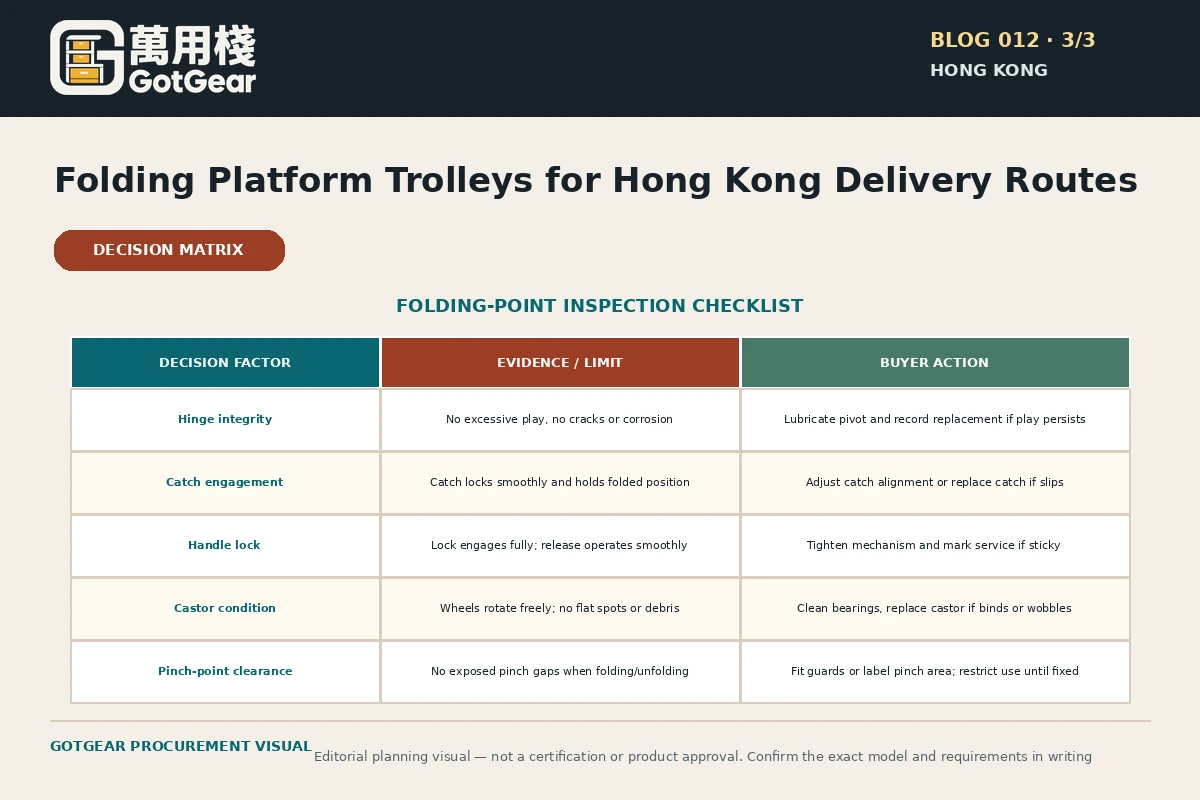
In Hong Kong, regular maintenance matters in a humid, coastal city where corrosion and grime can affect hinges, catches and wheel bearings. Decision criteria for maintenance plans: include simple daily checks (wheels rolling freely, no loose bolts, catches locking securely) plus weekly inspections for hinge wear and brake functioning. Check the folding mechanism for pinch points and exposed moving parts that could injure fingers during rapid folding under time pressure. A key limitation is that some folding designs require specialist spares or tools to service. If your organisation lacks in-house maintenance capability, prefer models with simple user-serviceable parts and easy access to replacement hinges and catches. Also consider spare-part availability in the Hong Kong market to avoid long downtime. Next, write a short inspection checklist tailored to your trolley model and add it to daily start-of-shift routines. Train operators to identify early signs of hinge play and to tag trolleys out of service if catches no longer lock reliably. Keep a small stock of critical spares (pins, catches, wheel sets) and negotiate lead times with your supplier for heavier components.
Folding platform trolley Hong Kong decision checklist
- Measure the exact storage opening, shelving depth and van interior dimensions and compare with folded trolley dimensions.
- Confirm the trolley’s rated capacity exceeds your typical and worst-case loads with a safety margin.
- Map route surfaces and proportion of outdoor kerb, ramp and indoor floor sections to choose wheel type.
- Trial the trolley fully loaded on a typical route including van loading and elevator use.
- Inspect folding catches, hinge access and pinch points for operator safety during rapid folding.
- Verify brake or wheel-lock operation is straightforward with gloves and after light contamination.
- Check spare-part availability and whether maintenance can be performed in-house or requires supplier support.
- Assess handle ergonomics for the range of operator heights in your team and multi-shift use.
- Confirm how often folding will be required in a shift; frequent folds favour robust locking mechanisms.
- Ensure daily and weekly inspection routines are documented and assigned to operators.
- Test the trolley in wet conditions to check wheel grip and frame corrosion resistance.
- Record time-to-fold and time-to-deploy as part of procurement evaluation metrics.
Practical action sequence
- Measure storage and vehicle openings and record dimensions for procurement.
- Select three candidate trolleys covering different wheel types and folding profiles.
- Arrange a multi-point trial that includes typical loads, kerbs, van loading and elevator use.
- Collect operator feedback and objective metrics (fold/unfold time, stability incidents).
- Review maintenance requirements and secure spare-part arrangements with the supplier.
- Adopt a start-of-shift inspection checklist and inform the relevant team on safe folding techniques.
- Decide on the model that balances folded fit, deployed performance and maintenance practicality.
- Document usage rules (maximum load, where to park folded trolleys) and schedule periodic checks.
Apply the checks to your Hong Kong site
Hong Kong operations need to separate genuine storage advantage from handling, wheel and folding-mechanism trade-offs when testing a folding platform trolley Hong Kong. Assess trials in the actual route and in the real folded storage position — narrow storerooms, high-rise lifts and tight light-commercial vans change how a trolley performs. Local health-and-safety practice prioritises assessment of manual tasks, pushing and pulling forces and floor conditions; apply those checks when trialling equipment. Overseas guidance in this article is offered only as operational context, not as local legal advice. Use the supplied materials to shape on-site trials, inspection checklists and team training within your own Hong Kong risk assessments. If you plan van trials, include a foldable trolley for delivery vans Hong Kong scenario and confirm fit for compact platform trolley storage Hong Kong. Operational takeaway: run loaded and folded cycles through the actual storeroom, lift and van, record clearances and handling observations, then update the risk assessment and training.
References used for this article
These sources provide regulatory, safety or planning context. They do not certify any GotGear product or replace site-specific professional advice.
- WorkSafe WA — Manual task solutions: Trolleys — Foldable/collapsible trolley considerations for storage and vehicle transfer, plus selection, maintenance, trialling and training.
- WorkSafe Victoria — Choosing and using trolleys — Foldable or collapsible options for constrained storage and relevant vehicle-transfer, wheel and environmental factors.
- UK Health and Safety Executive — Safe driving: loading and unloading — General vehicle loading-area guidance on level surfaces, stability, securing, brakes/stabilisers and deck checks.
- Hong Kong Labour Department — A Simple Guide to Health Risk Assessment — Local assessment context for pushing/pulling, force, sudden movement, floor condition and training.
Questions about folding platform trolley Hong Kong
Should we buy a folding trolley because storage is tight in our back room?
Not automatically. Tight storage is the most common reason to consider a folding platform trolley, but you must compare folded dimensions against your actual storage constraints and confirm that the deployed platform meets your load and handling needs. If the trolley folds but remains bulky when folded, or if it sacrifices platform area or rated capacity, the storage benefit may be illusory. Trial the trolley folded in your space and unfolded under load on a typical route to validate the benefit.
How should we trial a folding trolley before purchase, as recommended by safety authorities?
Follow a realistic, repeatable trial protocol: load the trolley to typical working weights and distribute the load as you would in service; run the trolley across the most challenging route segments (kerbs, thresholds, ramps, van deck); and have the actual operators perform the tasks while using their usual gloves and footwear. Record objective metrics—fold/unfold time, number of interventions, any tipping or snagging events—and collect operator feedback on comfort and perceived stability. WorkSafe guidance emphasises practical worker trials and task-specific assessment rather than acceptance based only on product specs.
What folding-trolley factors are relevant to transferring loads into and out of vans?
Vehicle transfers need a level, stable loading area, secure parking and a trolley that remains stable on a van deck. The UK HSE guidance on loading and unloading highlights level surfaces, secure loads and applied vehicle brakes; apply those principles in your trials. Ensure the trolley has a brake or locking wheel for decking, confirm its stability when being pushed over metal thresholds, and test whether folded dimensions allow the trolley to be manoeuvred into the vehicle without blocking doors or emergency exits.
Are overseas safety documents legally binding for Hong Kong operations?
No. Overseas guidance such as the WorkSafe WA and WorkSafe Victoria materials provide practical selection, trial and maintenance approaches that are useful context. They are not Hong Kong law. Use these documents to inform your local risk assessments and procedures, then align any measures with Hong Kong Labour Department guidance and your organisation’s legal or compliance teams. Local adaptation is essential so that controls reflect Hong Kong workplaces, floors, weather and operational practices.
What maintenance and inspection routines should we adopt for folding trolleys in Hong Kong?
Adopt a simple two-tier routine: daily operator checks for wheel freedom, visible damage, loose fastenings and secure locking of the folding mechanism; and a weekly or monthly technical inspection for hinge play, bearing wear, brake function and corrosion. Record findings and tag any trolley out of service if catches or locks show excessive wear. Because Hong Kong’s coastal humidity can accelerate corrosion, include hinge lubrication and bearing checks in periodic servicing and keep critical spares on hand to reduce downtime.
How do we balance larger wheels with the need to store a trolley folded in a compact space?
Larger wheels improve outdoor performance but increase folded bulk and weight. Balance this by analysing route percentages: if most time is spent indoors or in lifts, polymer wheels on a compact folding trolley may be preferable. If kerbs and rough surfaces are frequent, test a folding trolley with larger pneumatic or semi-pneumatic wheels and confirm whether its folded profile still fits your storage or van constraints. Where no single model fits both needs, consider a mixed fleet strategy for different route types.
Compare available product models and specifications
These product cards are matched to this buying topic. Select a specification and quantity to send the product details to WhatsApp.
 Material Handling & LogisticsProduct reference image
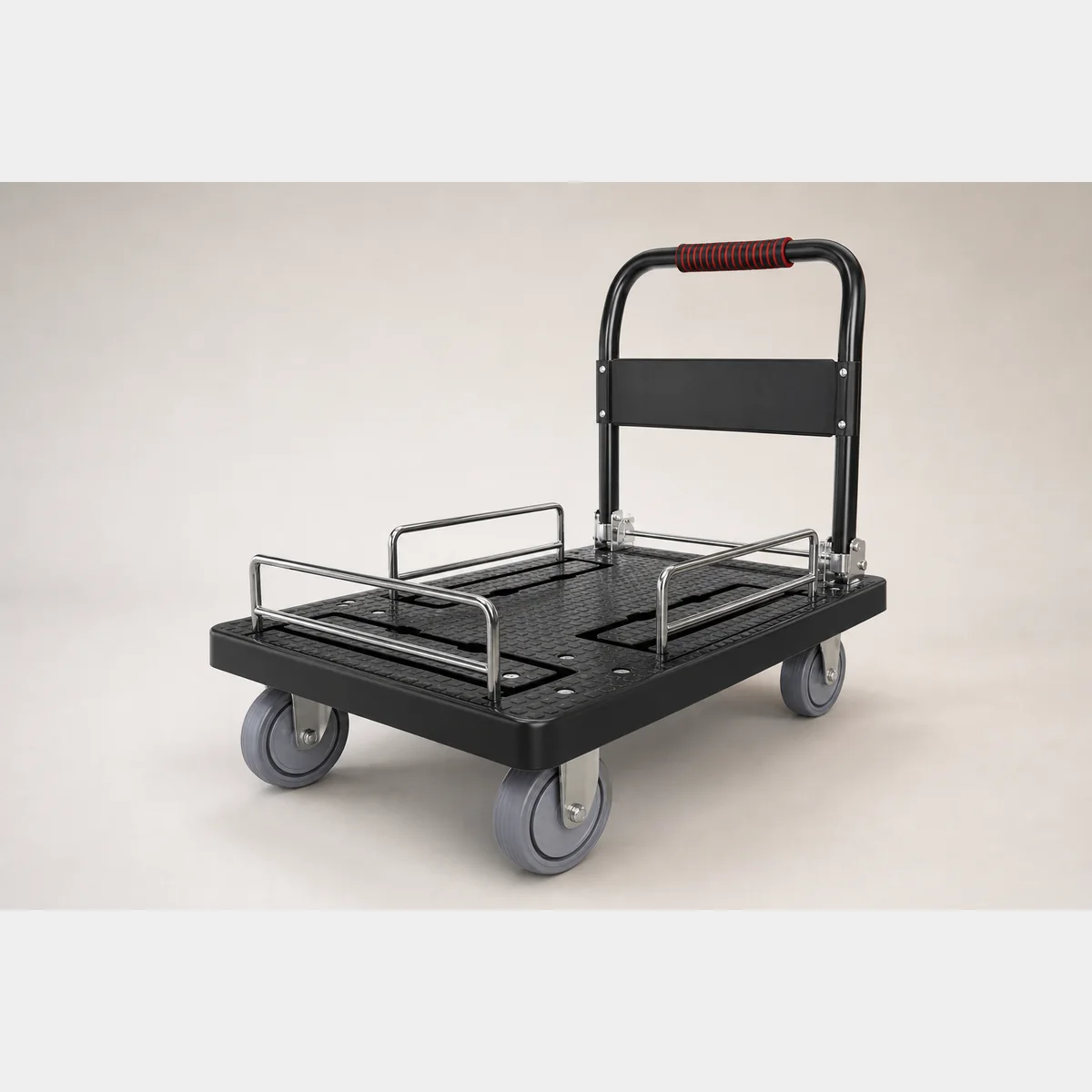
Plastic platform trolley with foldable guard rails
Plastic platform trolley with foldable guard rails. Dimensions/spec lines: L71xW47xH82 cm / L90xW60xH82 cm. Formal quotation available on request based on application, specifications and quantity.
- Dimensions / Spec lines
- L71xW47xH82 cm / L90xW60xH82 cm
 Material Handling & LogisticsProduct reference image
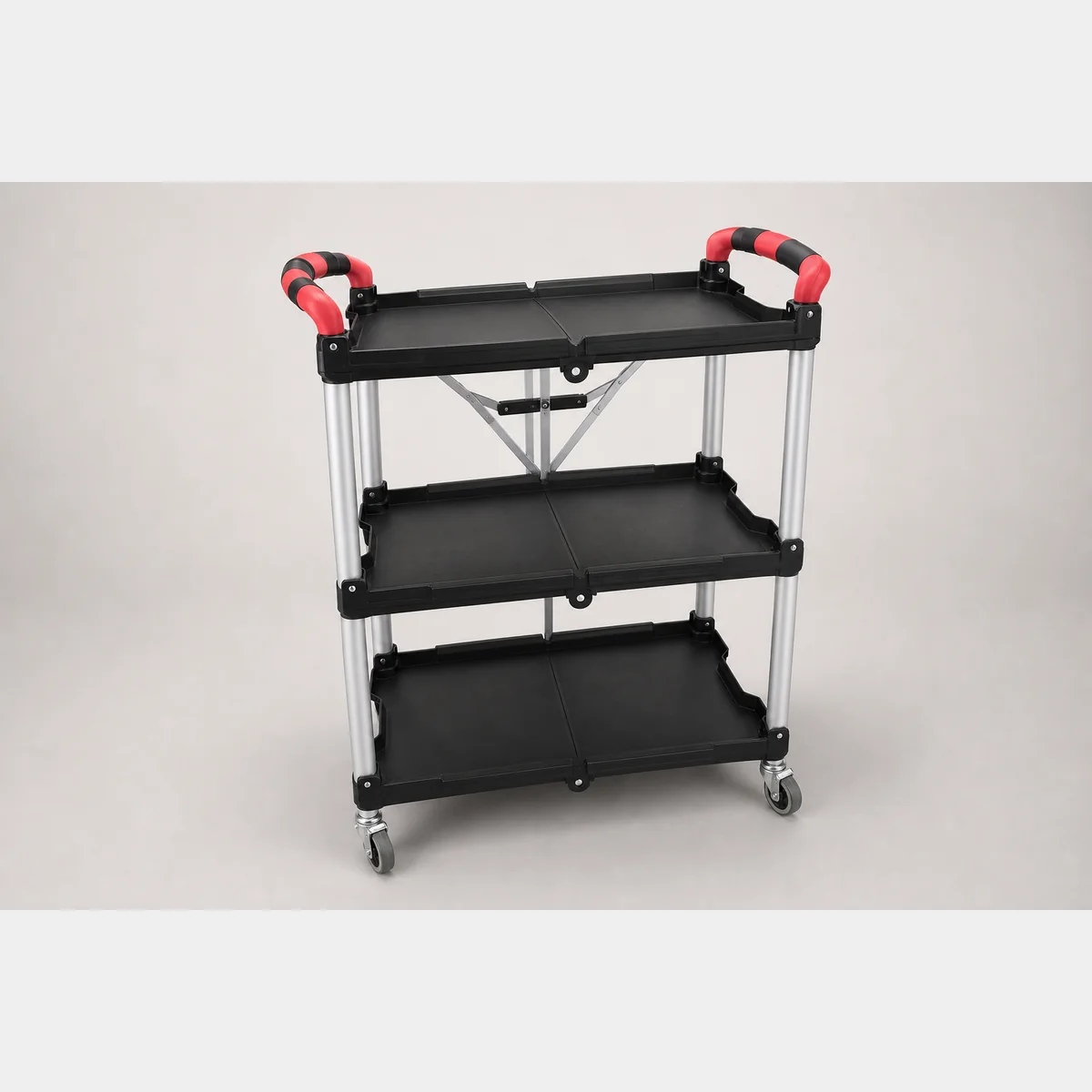
Three-tier Foldable Trolley
Three-tier Foldable Trolley (SKU: S8984). Dimensions/Specification: L67X W43 X H85 CM; Platform: L55xW35 cm. Formal quotation available upon enquiry with intended use, specifications and quantity.
- Dimensions/Specification
- L67X W43 X H85 CM
- Platform
- L55xW35 cm
 Material Handling & LogisticsProduct reference image
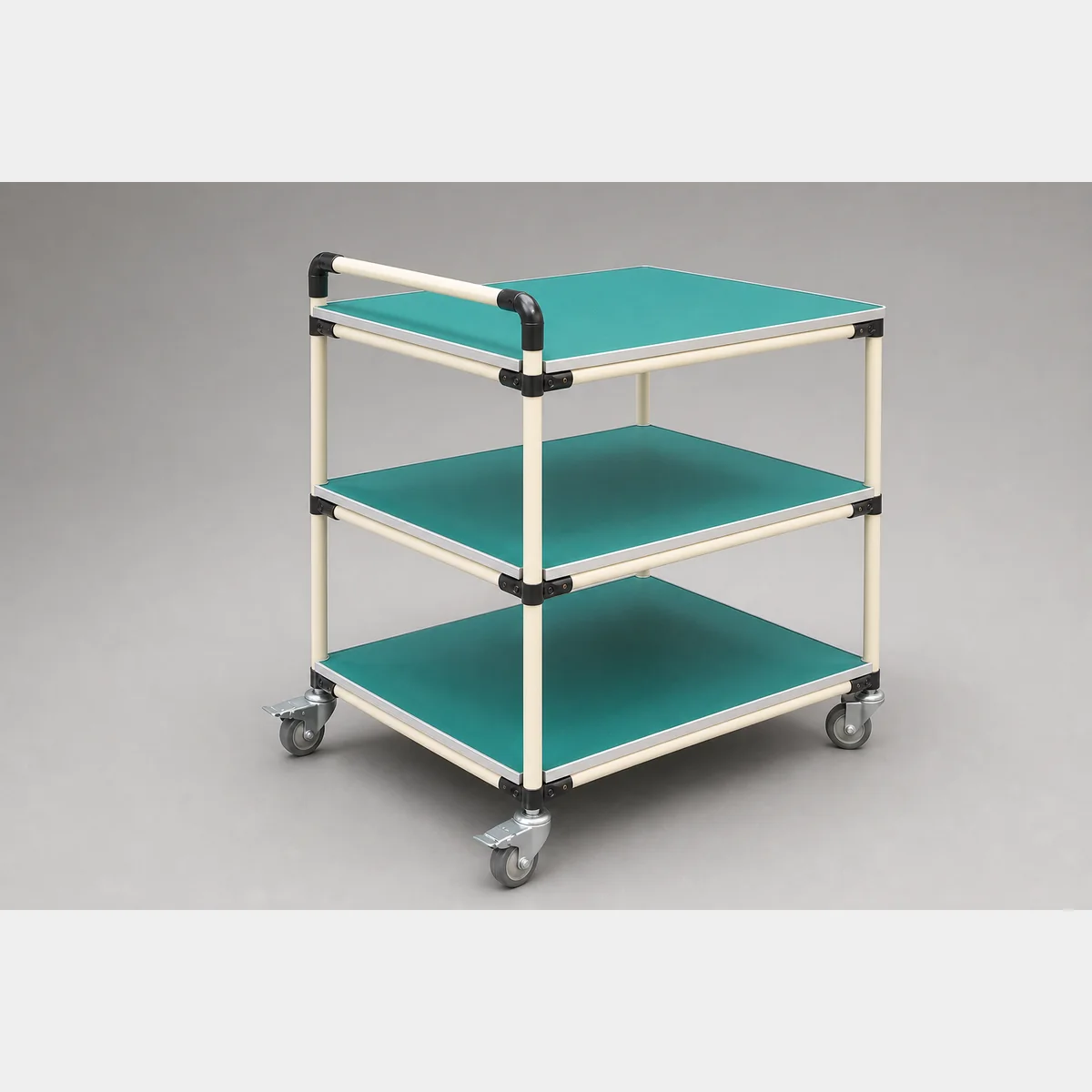
Anti-static Platform Trolley (JRA014)
Anti-static platform trolley; A: L700xW500xH900 mm; B: L800xW500xH900 mm; C: L1000xW500xH900 mm. Formal quotation available based on use, specifications and quantity.
- A
- L700xW500xH900 mm
- B
- L800xW500xH900 mm
- C
- L1000xW500xH900 mm
 Material Handling & LogisticsProduct reference image
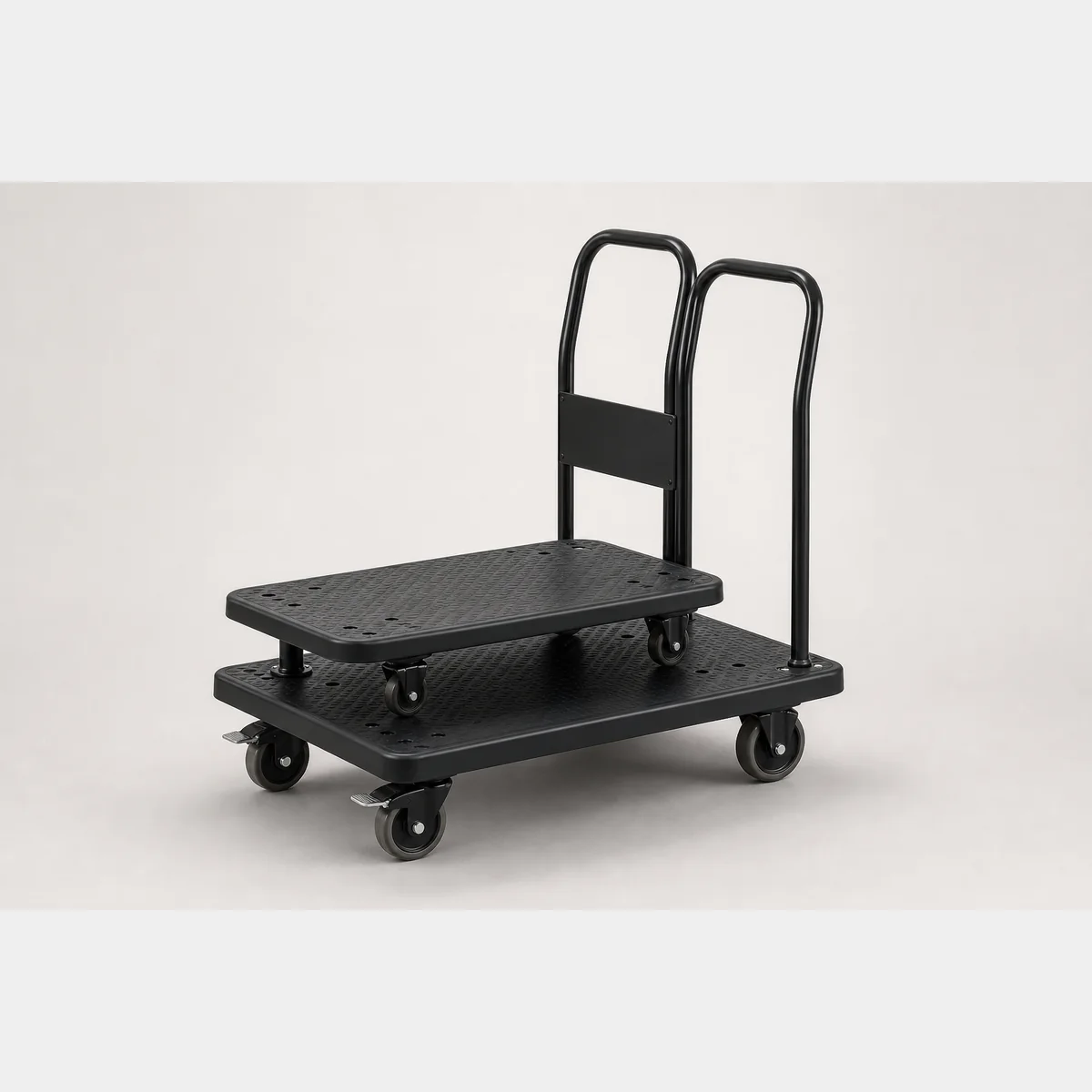
Black silent platform trolley
JRA016-BS dimensions require written confirmation because source records conflict between L72xW48xH83 cm and L73xW48xH83 cm.
- Exact model dimensions
- JRA016-BS dimensions require written confirmation because source records conflict between L72xW48xH83 cm and L73xW48xH83 cm.
 Material Handling & LogisticsProduct reference image
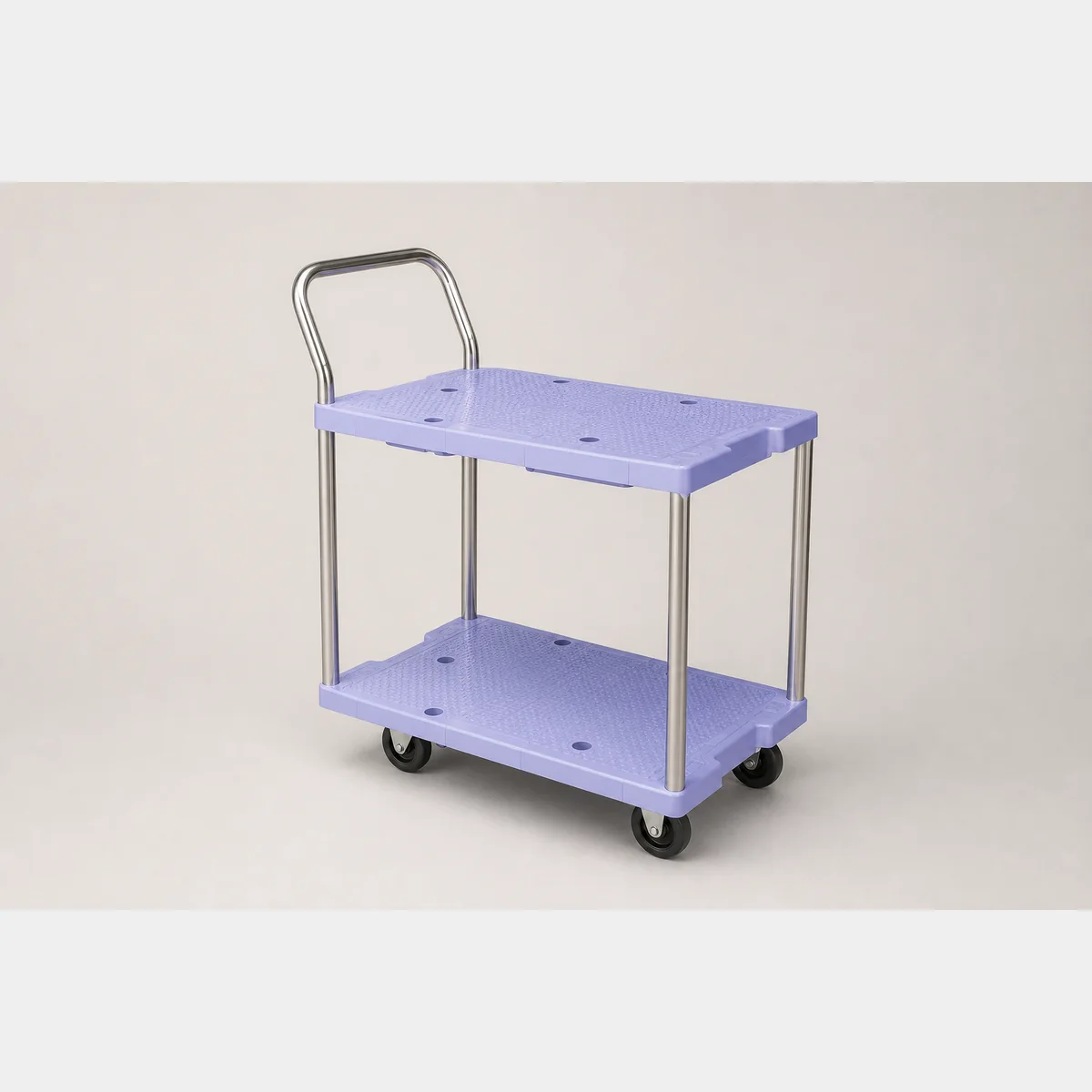
Double-deck Plastic Platform Trolley
Double-deck plastic platform trolley. Dimensions/Specs: L715xW460xH915 mm; Load capacity: 150kg. Formal quotation available based on use, specifications and quantity.
- Dimensions/Specs
- L715xW460xH915 mm
- Load capacity
- 150kg
 Material Handling & LogisticsProduct reference image
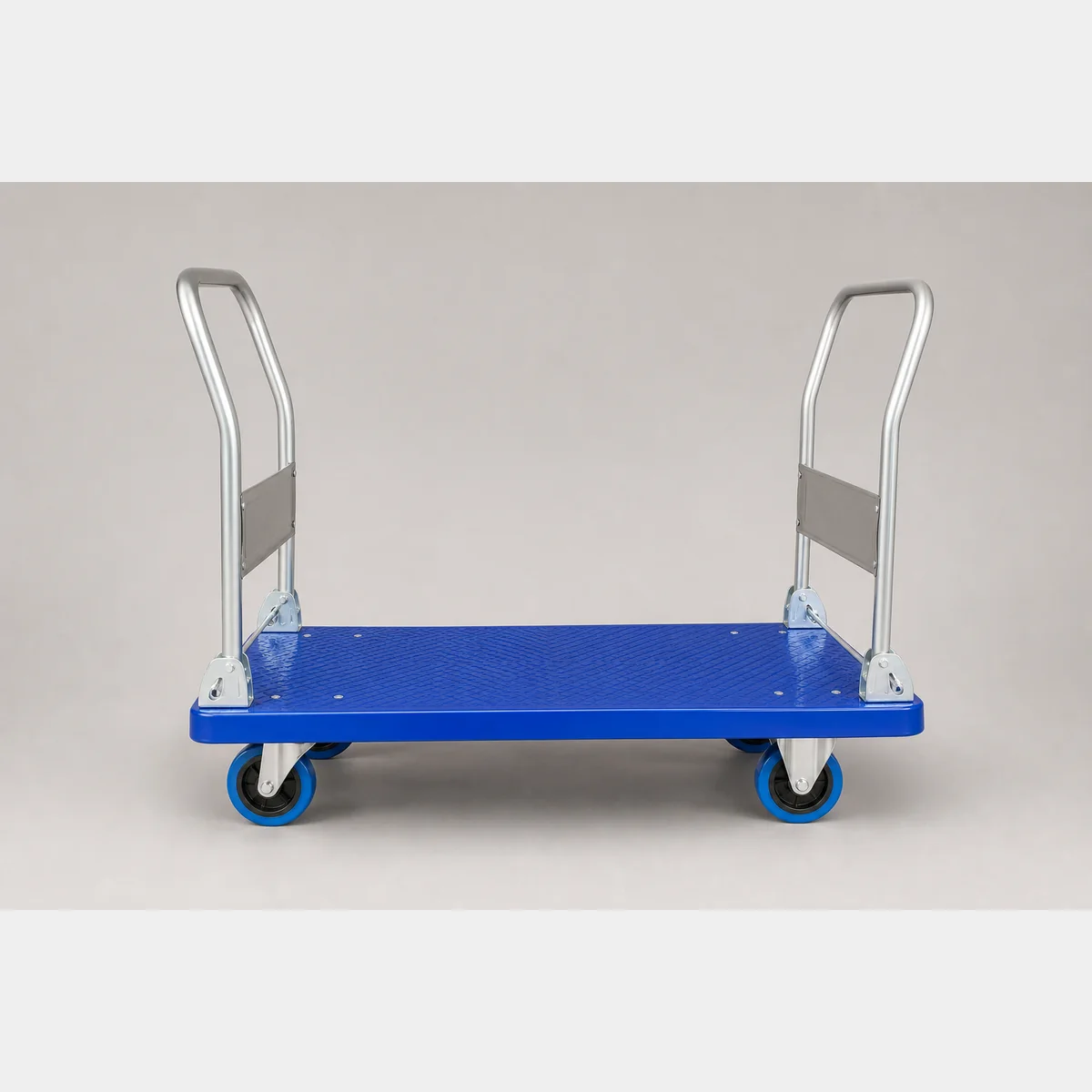
Double-handle Plastic Platform Trolley
S8541-C dimensions require written confirmation because source records conflict between L1350xW650xH885 mm and L1355xW650xH885 mm.
- Exact model dimensions
- S8541-C dimensions require written confirmation because source records conflict between L1350xW650xH885 mm and L1355xW650xH885 mm.
 Material Handling & LogisticsProduct reference image
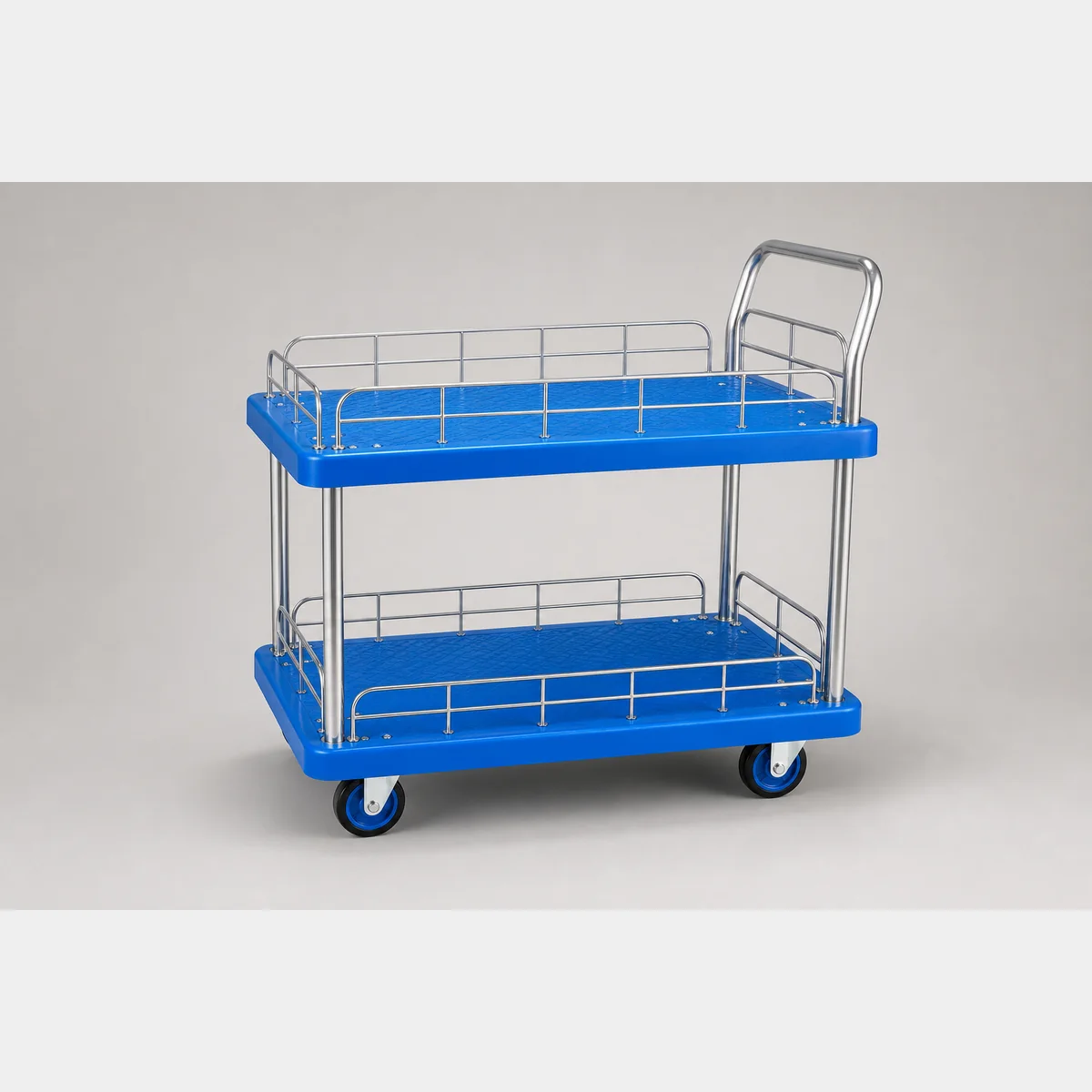
Double-tier Platform trolley with guard rails
Double-tier Platform trolley with guard rails. A: L715xW477xH940 mm; Load capacity: 150kg with 4" casters / 300kg with 5" casters; C: L890xW595xH990 mm. Please enquire for a formal quotation based on use, specifications and quantity.
- A
- L715xW477xH940 mm
- Load capacity
- 150kg, with 4" casters / 300kg, with 5" casters
- C
- L890xW595xH990 mm
 Material Handling & LogisticsProduct reference image
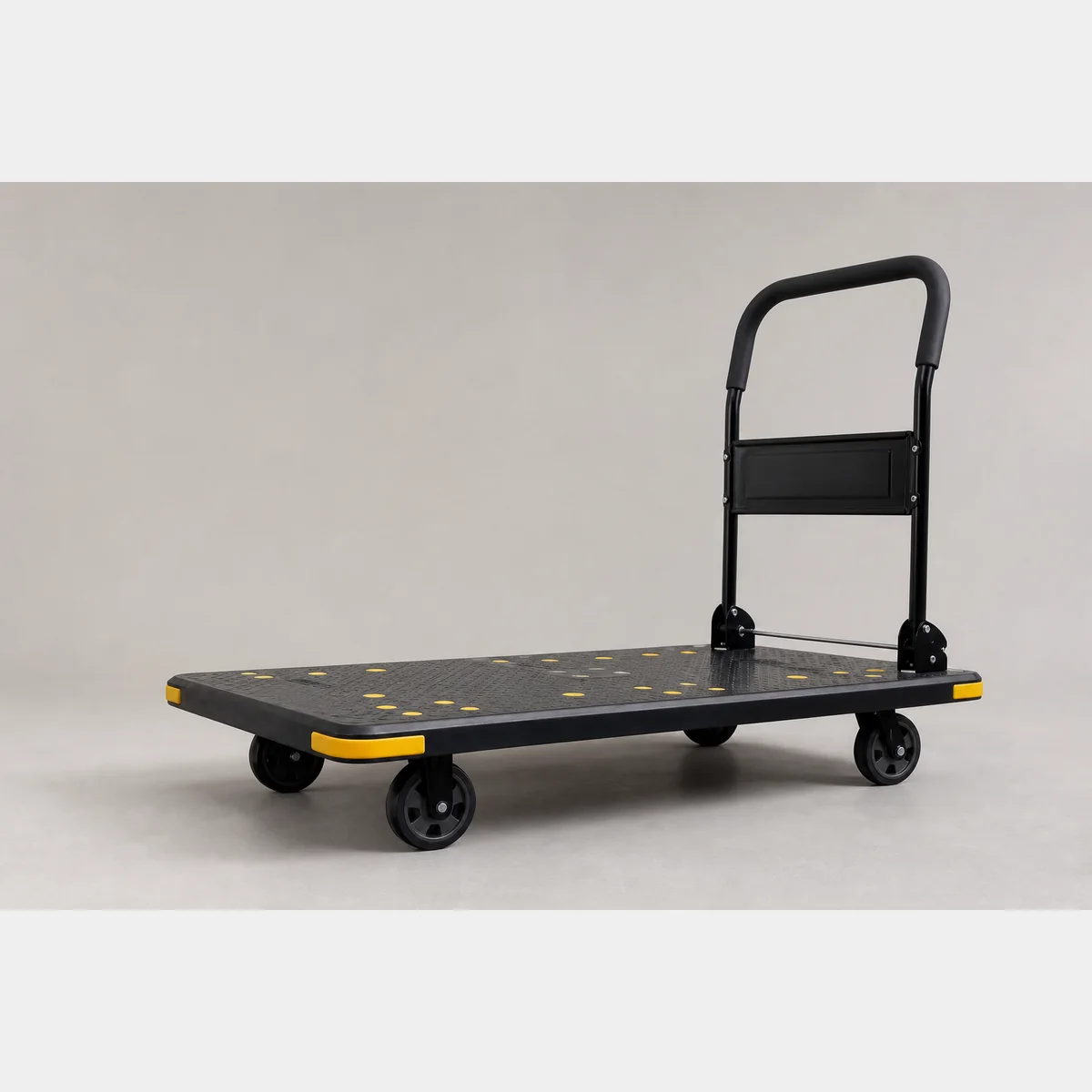
Flat Plastic Platform Trolley (Extra Large)
Flat Plastic Platform Trolley (Extra Large). Dimensions/Specs: L120xW68xH90 cm / L135xW70xH95 cm. Request a formal quotation based on usage, specifications and quantity.
- Dimensions/Specs
- L120xW68xH90 cm / L135xW70xH95 cm
Continue with closely related procurement topics
These pages share equipment, operating or decision-stage signals with this guide.
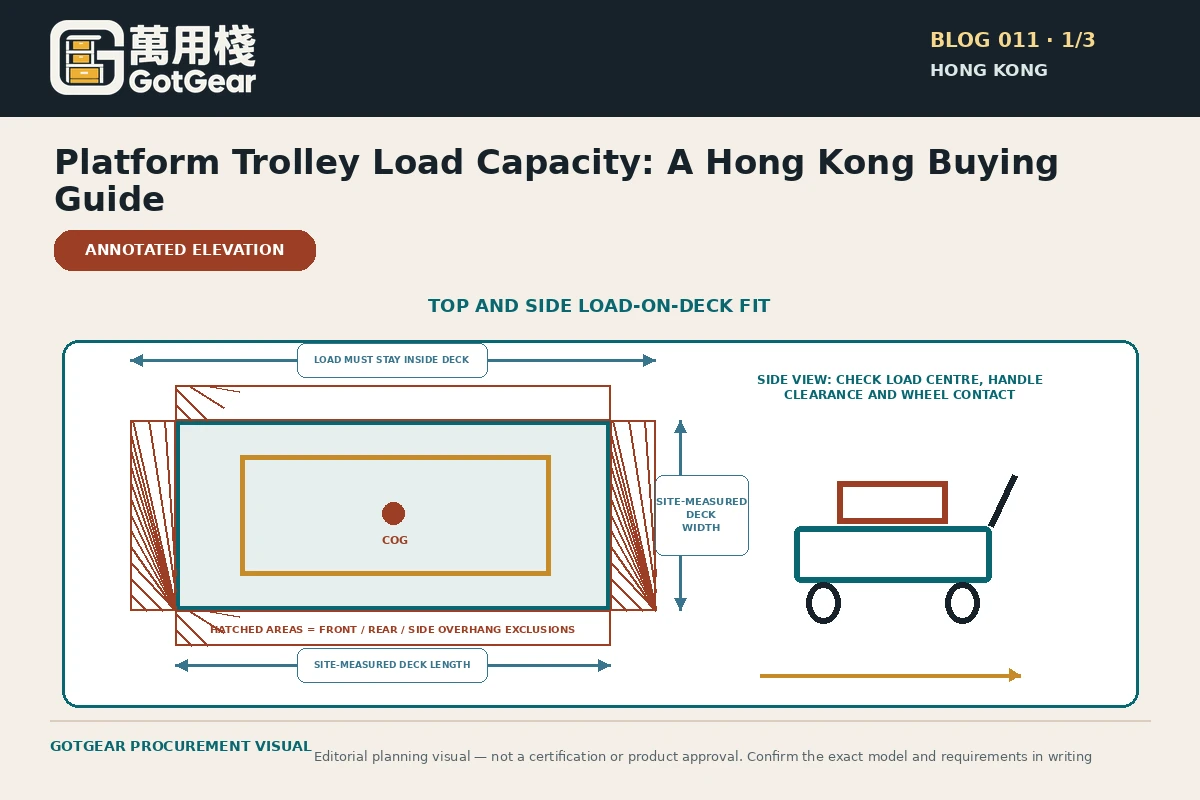
Platform trolley load capacity Hong Kong
GotGear explains platform trolley load capacity Hong Kong for Hong Kong buyers. See how platform trolley safe working load Hong Kong supports platform trolley deck size Hong Kong, with practical checks, evidence boundaries and written requirements.
Read the guide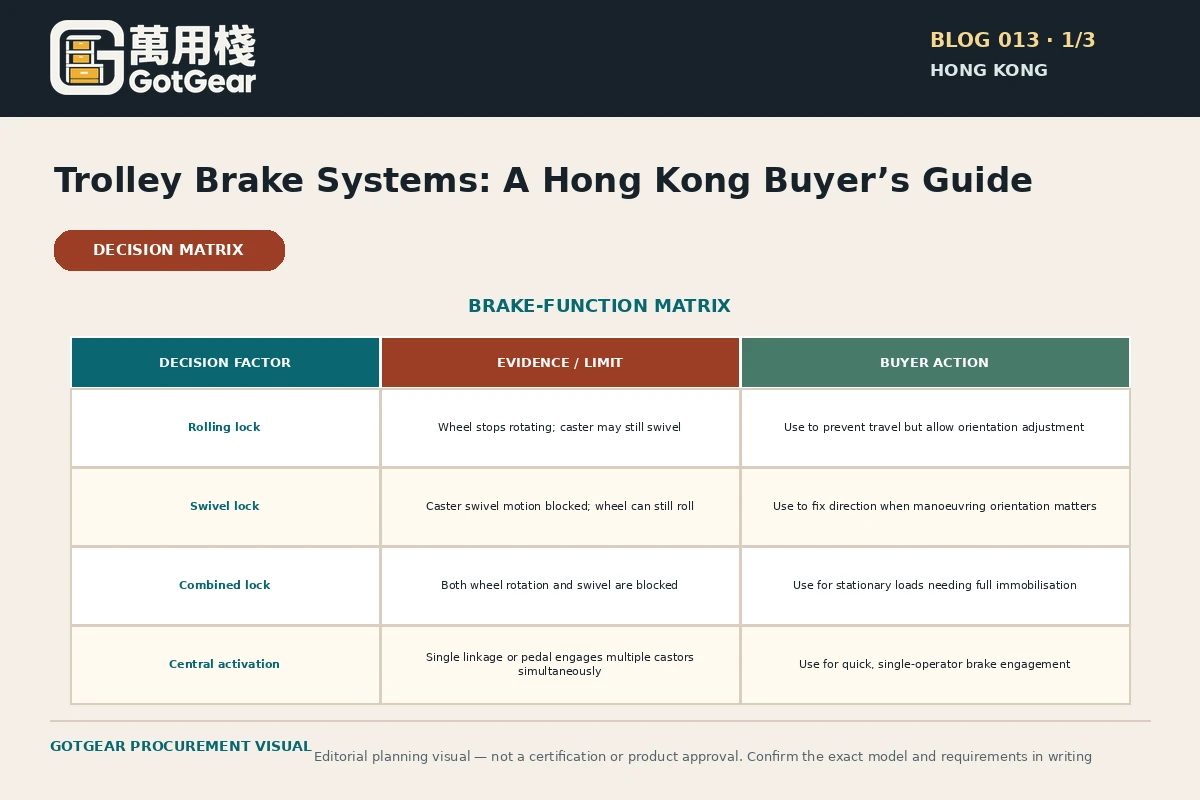
Trolley brake system Hong Kong
GotGear explains trolley brake system Hong Kong for Hong Kong buyers. See how trolley wheel brake types Hong Kong supports locking caster trolley Hong Kong, with practical checks, evidence boundaries and written requirements.
Read the guide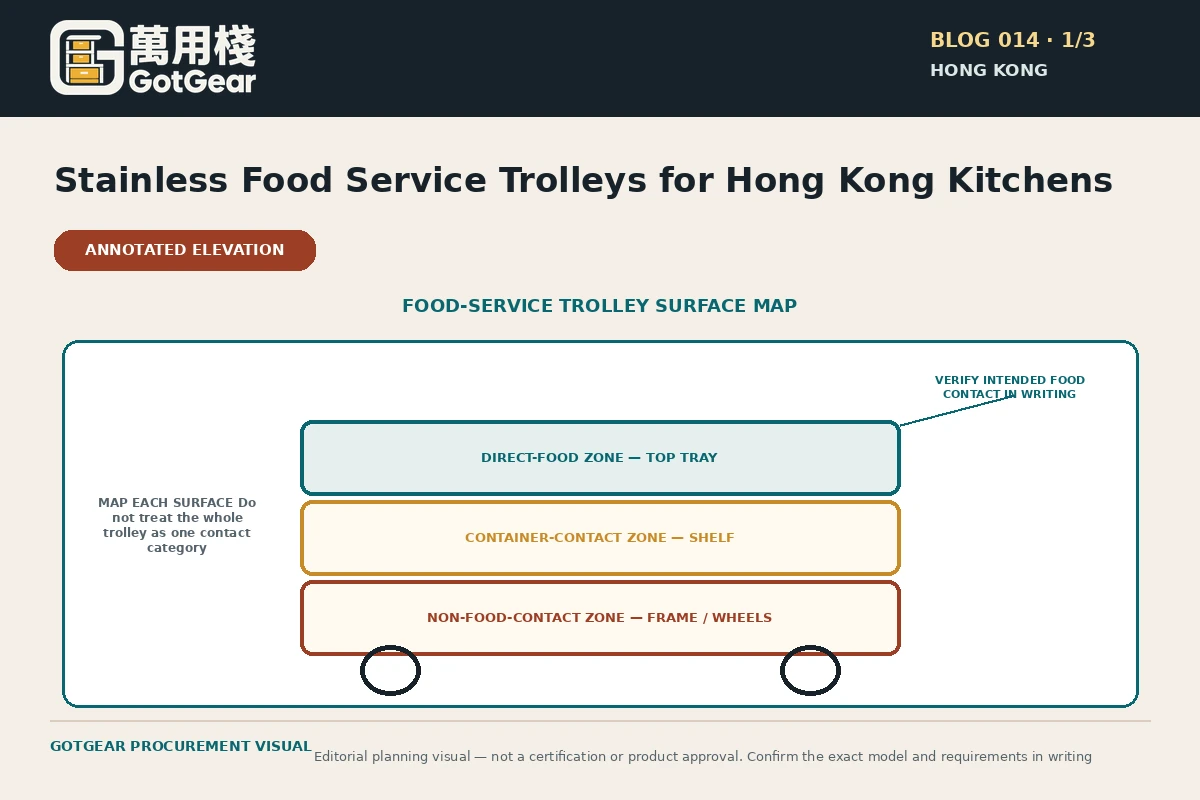
Stainless steel food service trolley Hong Kong
GotGear explains stainless steel food service trolley Hong Kong for Hong Kong buyers. See how stainless steel catering trolley Hong Kong supports food service trolley cleaning Hong Kong, with practical checks, evidence boundaries and written requirements.
Read the guide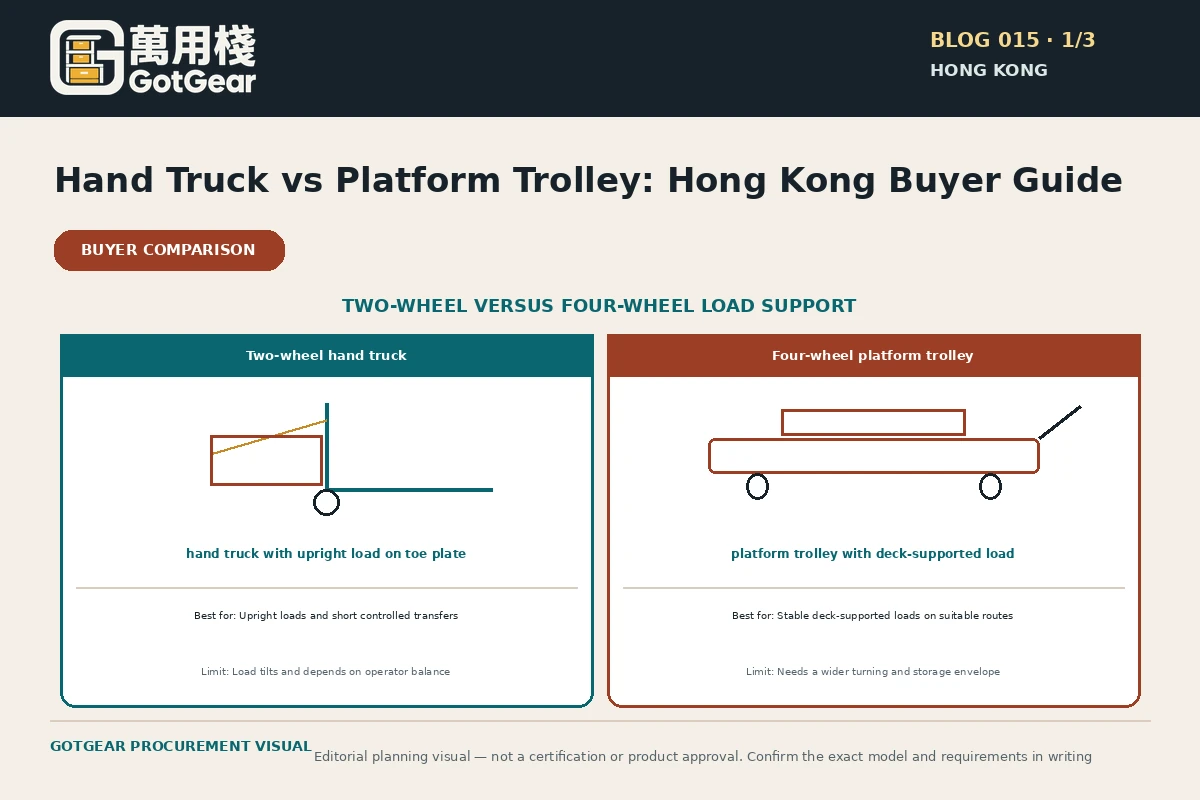
Hand truck vs platform trolley Hong Kong
GotGear explains hand truck vs platform trolley Hong Kong for Hong Kong buyers. See how two wheel hand truck Hong Kong supports four wheel platform trolley Hong Kong, with practical checks, evidence boundaries and written requirements.
Read the guideRelated topic indexOpen more English procurement pages17 topics
Browse additional equipment families, applications and procurement questions relevant to these operating requirements.