
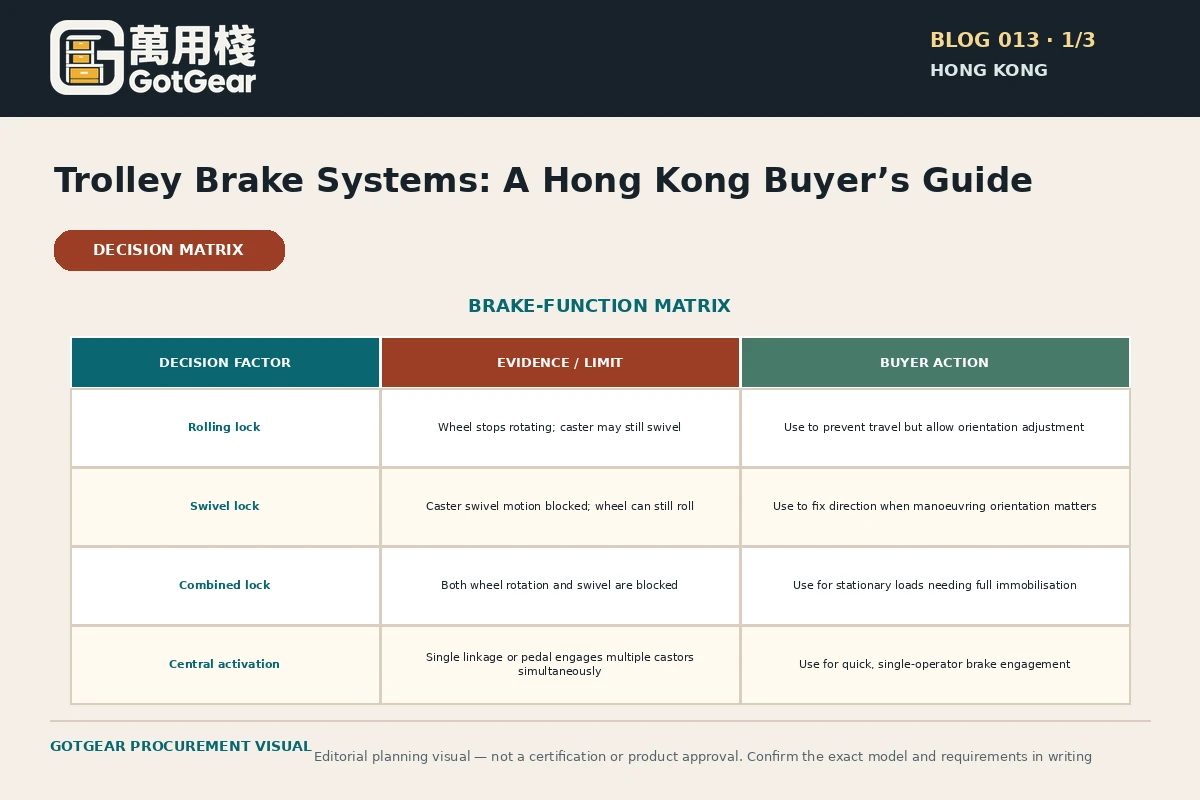
Specify a trolley brake system by the direction and extent of movement you need to control: rolling only (wheel brake), rolling plus swivel (wheel-and-swivel lock), multiple castors together (central or linked brake) or speed during descent (motion-control/speed limiter). Confirm the manufacturer’s stated function, trial the lock/brake with your loaded trolley on the intended floor and gradient, train operators and include routine maintenance. A locking caster is not a substitute for safe routing or secure loads.
What to remember before you decide
- Specify brakes by the movement you must control — rolling, swivel, multiple castors, or slope speed — not by generic "braked" wording.
- Always test the chosen system with the actual load and on your facility floors and gradients before acceptance.
- Central/linked brakes and motion-control systems solve different problems but increase mechanical complexity and maintenance needs.
- Include activation ergonomics, cleaning compatibility and spare-part availability in procurement decisions for Hong Kong environments.
- A locking caster is not a substitute for safe routing, load stability or site controls; combine mechanical and administrative controls.
Understand what brakes and locks actually do
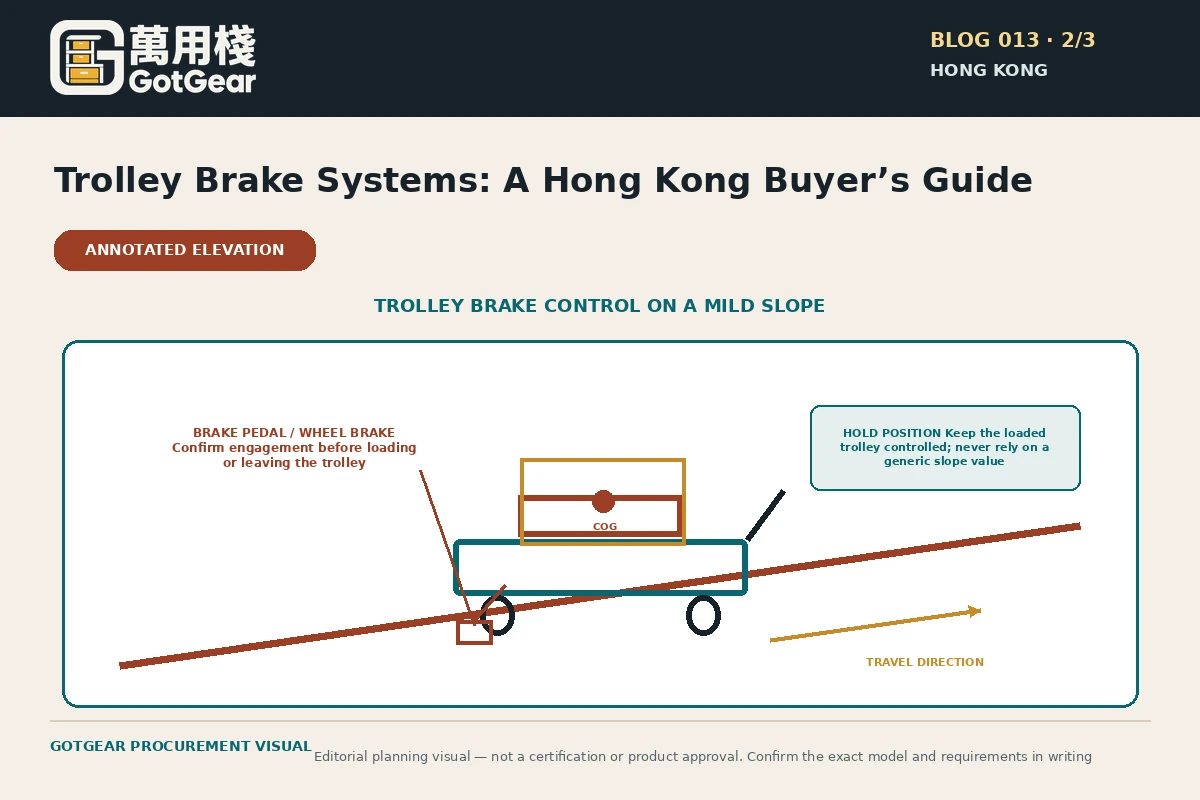
Practical distinction and Hong Kong contexts Begin from one clear point: a locking castor is designed to prevent motion when equipment is at rest; a brake is designed to slow or stop motion while the trolley is moving. Hong Kong buyers often assume the word "braked" supports a trolley will stay put on every surface or slope — that assumption risks unsafe reliance. In hospitals, kitchen back-of-house areas and retail stockrooms you must decide whether you need to prevent rolling only, prevent swivel-induced rotation that alters direction, or control downhill speed on ramps or sloped service corridors. Use these decision checks: Movement to control: rolling, swivel, both, or speed on a gradient. If carts are repeatedly parked for work (e.g. clinical trolleys at bedside), a dependable lock on both wheels and swivel may be needed. If trolleys travel down ramps or loading docks, you may need a motion-control brake or speed limiter rather than a simple rest lock. - Load and centre of gravity: tall, top-heavy loads can pivot on swivel action; locking a wheel without stopping the swivel can still allow tipping. - Floor surface: tiled, polished concrete, epoxy or wet kitchen tiles have different friction coefficients. Locks designed for one surface type may slip on another; test on your actual floor. Limitations to accept - Many product descriptions use the term "braked castor" generically. Suppliers may not state whether the device locks the swivel, the wheel, or both, or whether it limits speed on slopes. Overseas manufacturer literature defines these differences; do not take generic wording as assurance. - Even a correct brake may not halt a loaded trolley on a steep gradient; site controls (route planning, ramps with guard rails, staff procedures) remain essential. Next actions for buyers in Hong Kong 1. Map typical routes, including any ramps or sloped service alleys, and list floor types at start, transit and parking points. 2. Specify the movement to be controlled (rolling, swivel, multiple castors, speed) in your procurement documents. 3. Request explicit functional definitions and test reports from manufacturers and arrange an on-site trial with your load and floor before acceptance.
Functional clauses to include when you buy
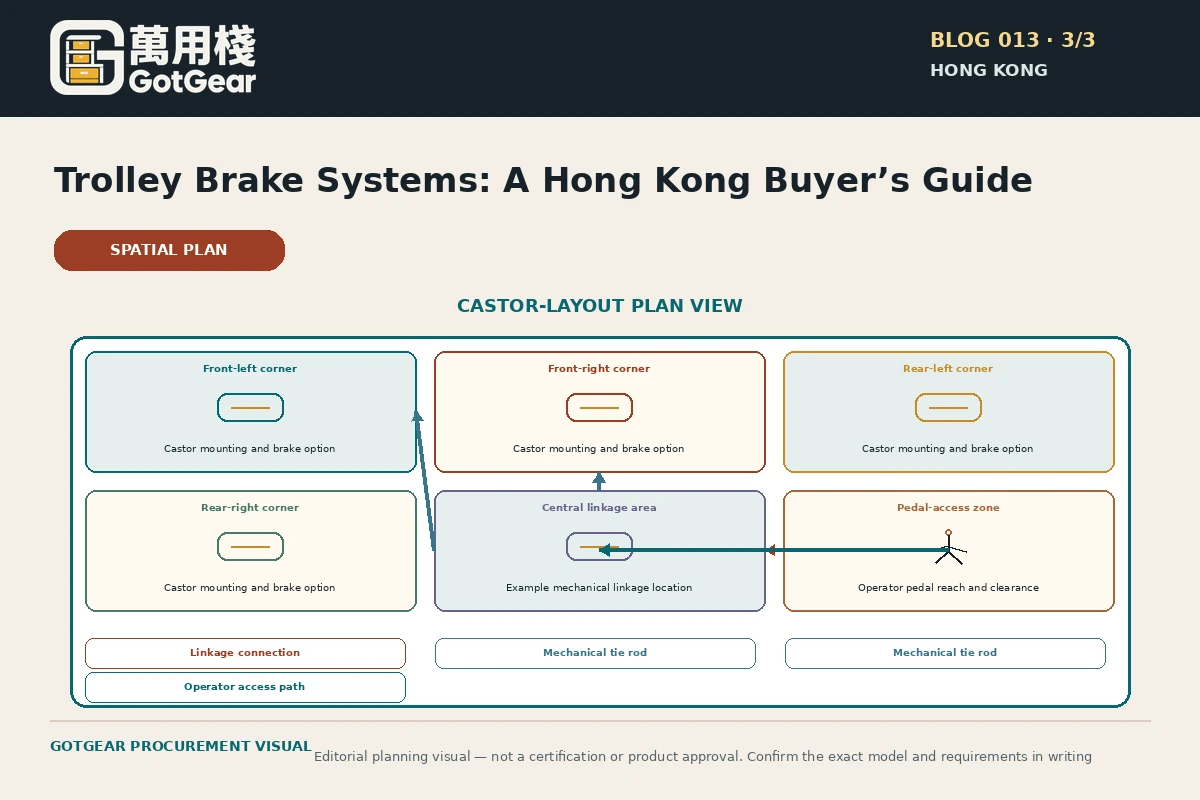
Write procurement requirements that avoid ambiguity When specifying castors and trolleys for departments in Hong Kong, include clear functional clauses: which wheels must lock, whether swivel locks are required, whether a linked or central brake is needed across all castors, and any slope-speed-control performance. Ask suppliers for the precise function (wheel lock, swivel lock, wheel-and-swivel lock, central/linked brake, drum brake, dead-man brake or motion-control device) and the testing standard they used. Use these decision checks: Access control: who can operate the brake? Foot-activated one-sided locks provide quick parking; central brake knobs can be harder for staff to reach in narrow corridors but ensure simultaneous locking of multiple castors. Choose based on routine operator posture and PPE (e.g. kitchen staff in clogs versus clinical staff wearing slippers). - Activation style: foot pedal, push-to-lock, twist knob, or automatic on deceleration. Foot pedals work well for frequent short stops; central hand-operated brakes suit trolley parking where pedal clearance is limited. - Maintenance and lifecycle: brakes and linked systems add moving parts. In high-use Hong Kong environments such as hospital wards and delivery docks, prioritise devices with replaceable brake pads, accessible lubrication points and documented maintenance intervals. Limitations - Manufacturer test data (e.g. DIN or EN references) are useful but may be performed in laboratory conditions that differ from Hong Kong floors or loaded trolleys. Vendor claims of "suitable for slopes" should be corroborated with in-situ trials. Next actions 1. Put functional clauses into purchase orders and request demonstration units for site trial. 2. Ask for maintenance manuals and spare-part lists. 3. Define acceptance tests in the contract that include loaded stopping and locking on your surfaces and gradients.
“Choose the brake for the movement you need to control, then prove it on your floors with your loads — specification without trial is a risk.”— GotGear Editorial Team
What should buyers compare for trolley brake system Hong Kong?
| Option or approach | Best for | Trade-offs | Checks before acceptance |
|---|---|---|---|
| Wheel-only brake (single-wheel stop) | Stopping rolling motion quickly on flat surfaces; frequent short parking in retail or hospitality. | Does not prevent swivel rotation; may not hold on slopes or with top-heavy loads. | Test with full load on actual floor; check whether swivel movement still allows unwanted repositioning. |
| Wheel-and-swivel lock (combined lock) | Fixing a trolley in place for work at the trolley, e.g. clinical or catering tasks. | More complex mechanism, can require more force to engage; may be slower to operate in repeated stops. | Confirm both wheel and swivel are immobilised under load on the intended floor and measure required operator effort. |
| Central/linked brake (locks multiple castors simultaneously) | Large trolleys that need immediate full immobilisation without multiple individual steps; useful in tight spaces or where operator posture is constrained. | Adds mechanical complexity and servicing needs; pedal or lever layout must suit operator ergonomics. | Verify synchronous locking across all castors with loaded trolley and inspect linkage for ingress risk in wet/dirty environments. |
| Motion-control or speed-limiting brake | Controlling descent speed on ramps and slopes; loading-dock and service ramp use in warehouses and hotels. | Does not necessarily lock the trolley at rest; can be heavier and more expensive and requires regular maintenance. | Test downhill speed and stopping distance with the maximum intended load and on the actual ramp surface. |
| Dead-man / automatic brakes | Trolleys that must stop when operator contact is released—useful in single-operator scenarios with steep transitions. | Operator training critical; system complexity higher and may not suit multi-user environments. | Run failure-mode checks, ensure release behaviour is predictable and retrain staff on emergency procedures. |
This framework helps buyers create comparable written enquiries. Final model specifications, availability, delivery and commercial terms must be confirmed in a formal quotation.
Compare common brake and lock approaches
Options, trade-offs and how they perform in Hong Kong operations Four categories dominate selection: wheel-only brakes, wheel-and-swivel locks, central/linked brakes, and motion-control/speed-limiting systems. Each has strengths and trade-offs for busy Hong Kong facilities. Use these decision checks: Frequency and type of stops: high-frequency stops in catering or ward rounds favour quick foot brakes; long-duration parking for procedures may favour positive swivel locks plus wheel locks. - Space and access: narrow corridors and lifts common in Hong Kong constrain operator movement; central brakes that lock all castors at once reduce repeated kneeling or bending. - Gradients and loading docks: if trolleys routinely travel on ramps or service corridors with any downhill gradient, include a speed-control feature or stronger braking capability and test downhill stopping distance with the loaded trolley. Limitations - Central or linked systems add mechanical complexity and can increase maintenance needs. Where rapid cleaning or steam-clean protocols apply (e.g. catering), non-sealed linkages can corrode if not chosen with materials suited for the environment. Next actions 1. Shortlist by the movement control required, not by marketing names. 2. Arrange live trials in the busiest real environment you operate in (ward, kitchen, loading bay). 3. Include spare parts and service intervals in the purchase evaluation. 4. Where slopes exist, trial with worst-case load and a competent operator and document stopping performance before accepting a trolley for that route after a documented trial.
Selecting for specific Hong Kong sectors
Sector guidance, practical constraints and local next steps - Healthcare: prefer wheel-and-swivel locks where trolleys must be fixed adjacent to a bed or equipment bay. Central brakes can be useful for larger instrument trolleys but ensure pedal or lever position does not obstruct emergency egress. Include infection-control-friendly materials and easy-clean designs. - Catering and food service: frequent short stops and wet floors mean choose brakes that work reliably when contaminated; look for sealed bearings and designs rated for wet environments. Test on wet kitchen tiles and specify corrosion-resistant finishes where hot cleaning is routine. - Warehousing and deliveries: for loading docks and internal ramps, prioritise motion-control devices or heavy-duty central brakes tested on loaded trolleys. Confirm service access for brake maintenance and plan staff training for dock-side procedures. - Laboratories and specimen transport: avoid brakes that generate particulate contamination and specify finishes and pad materials compliant with lab cleaning regimes. Limitations and procurement precautions - Don’t assume a locking caster equals suitability for all tasks: a lock that holds on flat tile may fail on a slope or when the trolley is top-heavy. - Overseas guidance (for example from WorkSafe Victoria) can be useful context on when brakes and speed limiters are recommended; treat these as operational guidance, not local legal advice. Next actions for Hong Kong buyers 1. Run a cross-department checklist with facilities, safety and frontline teams to capture route, floor type and use cases. 2. Schedule site trials during normal peak activity so performance is tested under real conditions. 3. Record trial data and keep it with maintenance records so future procurement or replacements match proven performance.
Trolley brake system Hong Kong decision checklist
- Define which movement(s) must be controlled: wheel rolling, swivel rotation, multiple castors together, or downhill speed.
- Map all typical routes, note each floor type (tile, epoxy, concrete) and identify any ramps or gradients.
- Specify activation method required (foot pedal, hand lever, twist, automatic) to suit operator posture and PPE.
- Request explicit manufacturer statements on whether the device locks the wheel, the swivel, or both, and any test standards used.
- Require an on-site trial clause: test with maximum loaded trolley on your floor surfaces and gradients before final acceptance.
- Ask for maintenance manuals, spare parts lists and recommended inspection intervals for brakes and linkages.
- Check materials and finishes for corrosion and cleaning compatibility with your facility procedures (hot wash, chemicals, steam).
- Verify ergonomic placement of pedals or levers for your staff and for operations inside lifts and narrow corridors.
- Confirm serviceability and supply of replacement brake pads or components locally to avoid long downtimes.
- Document trial results and acceptance criteria in procurement records so future replacements match proven performance.
Practical action sequence
- Survey routes and list floors, ramps and parking points used by trolleys.
- Decide which motion(s) need control and specify the required motion controls in the written requirements.
- Request demo units from shortlisted suppliers and schedule on-site trials during peak activity.
- Run tests with the maximum intended load; record stopping distances and whether swivel movement remains.
- Agree acceptance criteria and include maintenance and spare parts clauses in the contract.
- Train operators on locking/braking operation and emergency procedures; include trial findings in training.
- Log brake inspection schedules in maintenance systems and check linkages after cleaning or heavy use.
- Review trial and maintenance records annually and after any route, floor or process change.
Apply the checks to your Hong Kong site
In Hong Kong, teams specifying trolley braking must confirm function on their own floors and gradients rather than accepting generic "braked" labels. Conduct local trials in wards, kitchens and loading docks and treat overseas guidance as background for risk control, not as binding local law. Prioritise materials and maintenance that tolerate Hong Kong humidity and frequent wet-cleaning regimes. Use measured site data, current documents and a documented validation route signed by estates and clinical leads to confirm any trolley brake system Hong Kong operations will manage. When comparing units, separate the scope of a lock-at-rest from a brake that reduces movement so trolley wheel brake types Hong Kong are assessed for their intended tasks and control access. Do not assume one configuration fits every area when evaluating a locking caster trolley Hong Kong. Operational takeaway: require an on-site acceptance run with documented performance checks before fleet-wide deployment.
References used for this article
These sources provide regulatory, safety or planning context. They do not certify any GotGear product or replace site-specific professional advice.
- Blickle — Casters with brakes: safety and stability in transport — Technical distinction between locking and braking, plus wheel-and-swivel, central, drum and dead-man brake concepts and DIN EN 12526–12533 testing reference.
- WorkSafe Victoria — Choosing and using trolleys — Brakes and speed control as selection features for gradients and stopping, with appropriate castors and routine maintenance.
- WorkSafe WA — Manual task solutions: Trolleys — Lockable castors, safety brakes, environmental assessment, maintenance routines and employee trialling.
- Hong Kong Labour Department — A Simple Guide to Health Risk Assessment — Local assessment factors including excessive push/pull, sudden movement, slippery or uneven floors and space constraints.
Questions about trolley brake system Hong Kong
What is the difference between a locking caster and a brake?
A locking caster fixes the wheel and/or the swivel so the trolley stays at rest; it is intended to prevent motion while parked. A brake is designed to reduce speed or stop movement while the trolley is in motion and can include features that limit descent speed on slopes. Manufacturer literature and technical guides distinguish these functions; don't rely on the generic term "braked" without checking which action is provided.
Do I need brakes or speed limiters for trolleys on ramps or gradients?
If trolleys regularly travel on ramps or service-area gradients, consider brakes or motion-control devices in addition to safe routing and staff procedures. Guidance from other jurisdictions recommends speed control where stopping needs are non-trivial: these references are useful context for operational risk control. Always validate any proposed device by testing downhill speed and stopping distance with the actual load on your ramp before approval.
What should a Hong Kong health and safety assessment include when choosing trolley brakes?
Local risk assessment should record push/pull forces, gradient angles, floor slipperiness, likelihood of sudden load movement and space constraints for operator manoeuvres. The Hong Kong Labour Department's guidance on workplace risk assessment highlights these factors; use them to decide whether a locking caster, a linked central brake or a motion-control system is most appropriate and to design supporting site controls such as route segregation or loading-bay procedures.
How should we maintain brakes and locks in humid, busy Hong Kong environments?
Choose brakes and linkages finished and specified for corrosion resistance where cleaning or humidity is high. Include routine inspections of pads, linkages, bearings and activation mechanisms in your maintenance plan. Replace worn components promptly; heavy-use settings in hospitals and catering may require shorter service intervals. Ensure maintenance manuals and spare parts availability are provided by the manufacturer or supplier.
Can a locking caster substitute for route controls or safe loads?
No. A locking caster secures a trolley at rest within the limits of its design and the floor surface; it does not remove the need for safe route design, stable loads, or staff procedures. For gradient or loading-dock scenarios, combine mechanical brakes with site controls such as chocks, designated parking zones and staff training to manage residual risk.
How should we test a supplier’s claim that a brake "works on slopes"?
Insist on an on-site trial with the heaviest realistic load and on the actual ramp or slope to be used. Measure descent speed, stopping distance and the behaviour when the brake is applied; assess whether a locked trolley remains fixed under expected disturbances (e.g. accidental bumping). Document results against acceptance criteria in the purchase contract.
Compare available product models and specifications
These product cards are matched to this buying topic. Select a specification and quantity to send the product details to WhatsApp.
 Material Handling & LogisticsProduct reference image
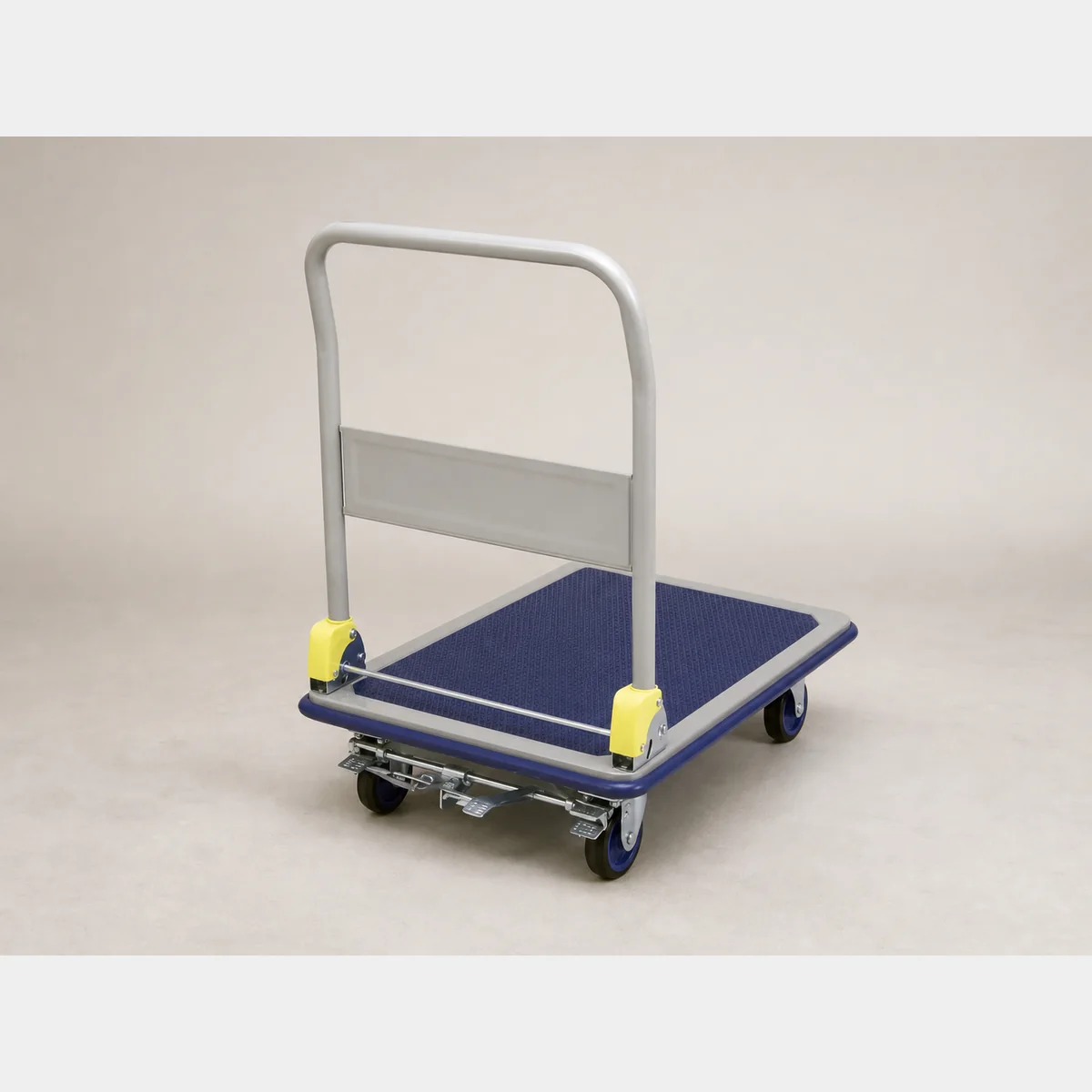
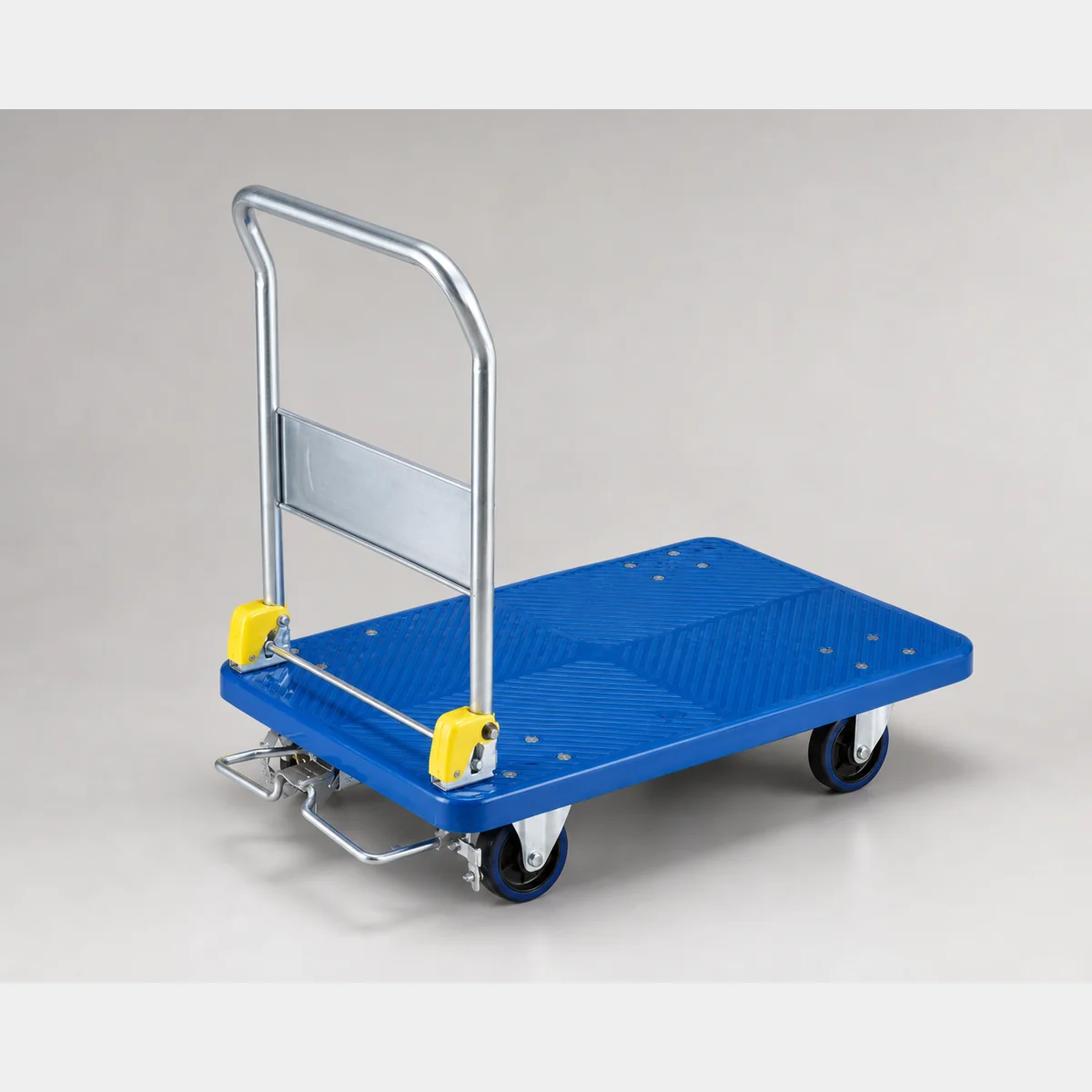
Japanese flatbed trolley (with brake) — NB-S101
Japanese flatbed trolley (with brake); (Small) dimensions: L740 X W480 X H850 MM; Net weight: 12kg / 21.5kg; (Large) dimensions: L920 X W610 X H870 MM. Contact us for a formal quotation based on use, specifications and quantity.
- (Small) dimensions
- L740 X W480 X H850 MM
- Net weight
- 12kg / 21.5kg
- (Large) dimensions
- L920 X W610 X H870 MM
 Material Handling & LogisticsProduct reference image
Silent Plastic Trolley (with Brake)
S8528-AS dimensions require written confirmation because source records conflict between L700xW480xH850 mm and L700xW480xH900 mm.
- Exact model dimensions
- S8528-AS dimensions require written confirmation because source records conflict between L700xW480xH850 mm and L700xW480xH900 mm.
 Material Handling & LogisticsProduct reference image
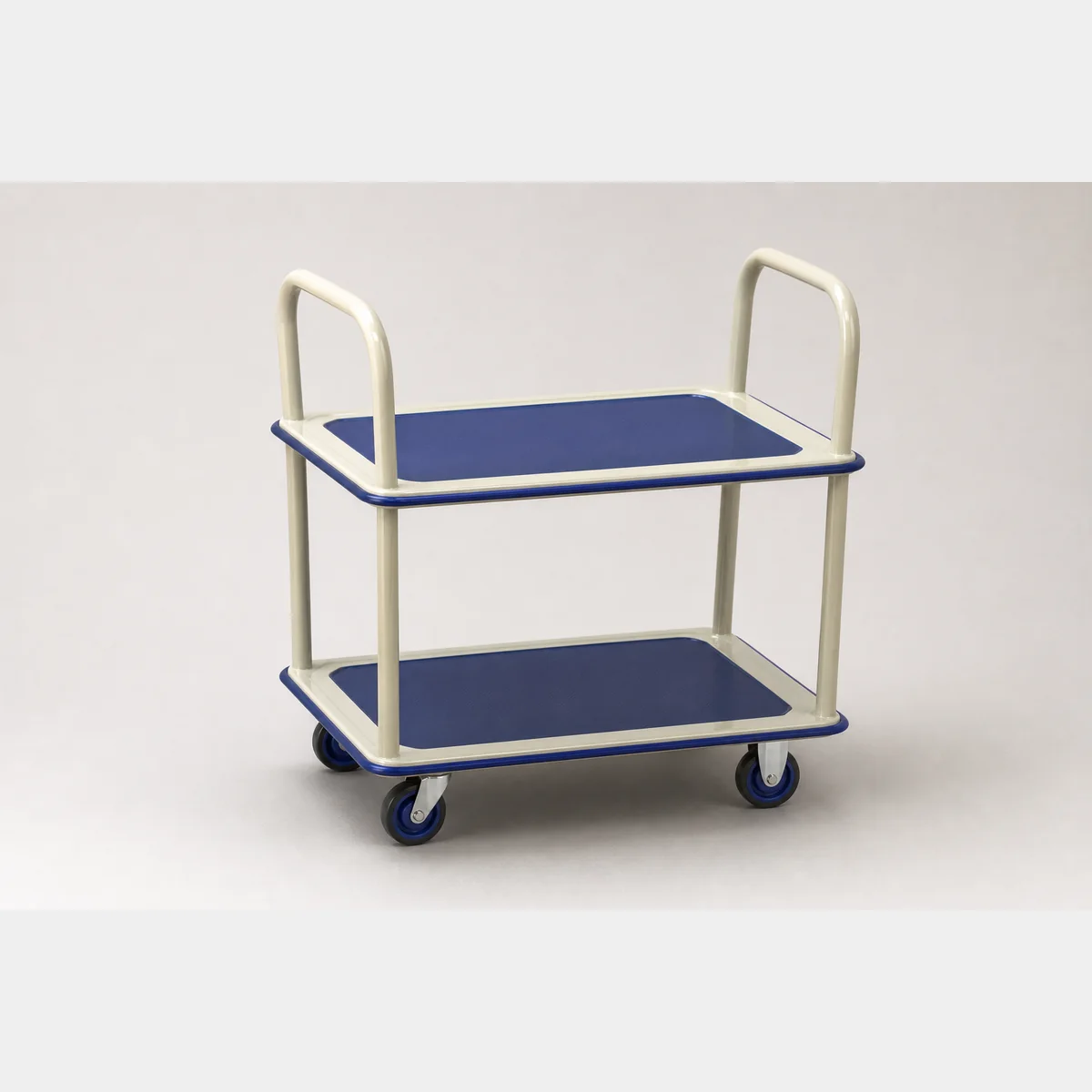
Double-deck flat push trolley with double handles
Double-deck flat push trolley with double handles. Dimensions: L730xW480xH925 mm; Load capacity: 120kg; Wheels: 2 fixed, 2 swivel. Formal quotation available based on use, specifications and quantity.
- Dimensions / Specs
- L730xW480xH925 mm
- Load capacity
- 120kg
- Wheels
- 2 fixed, 2 swivel
 Material Handling & LogisticsProduct reference image
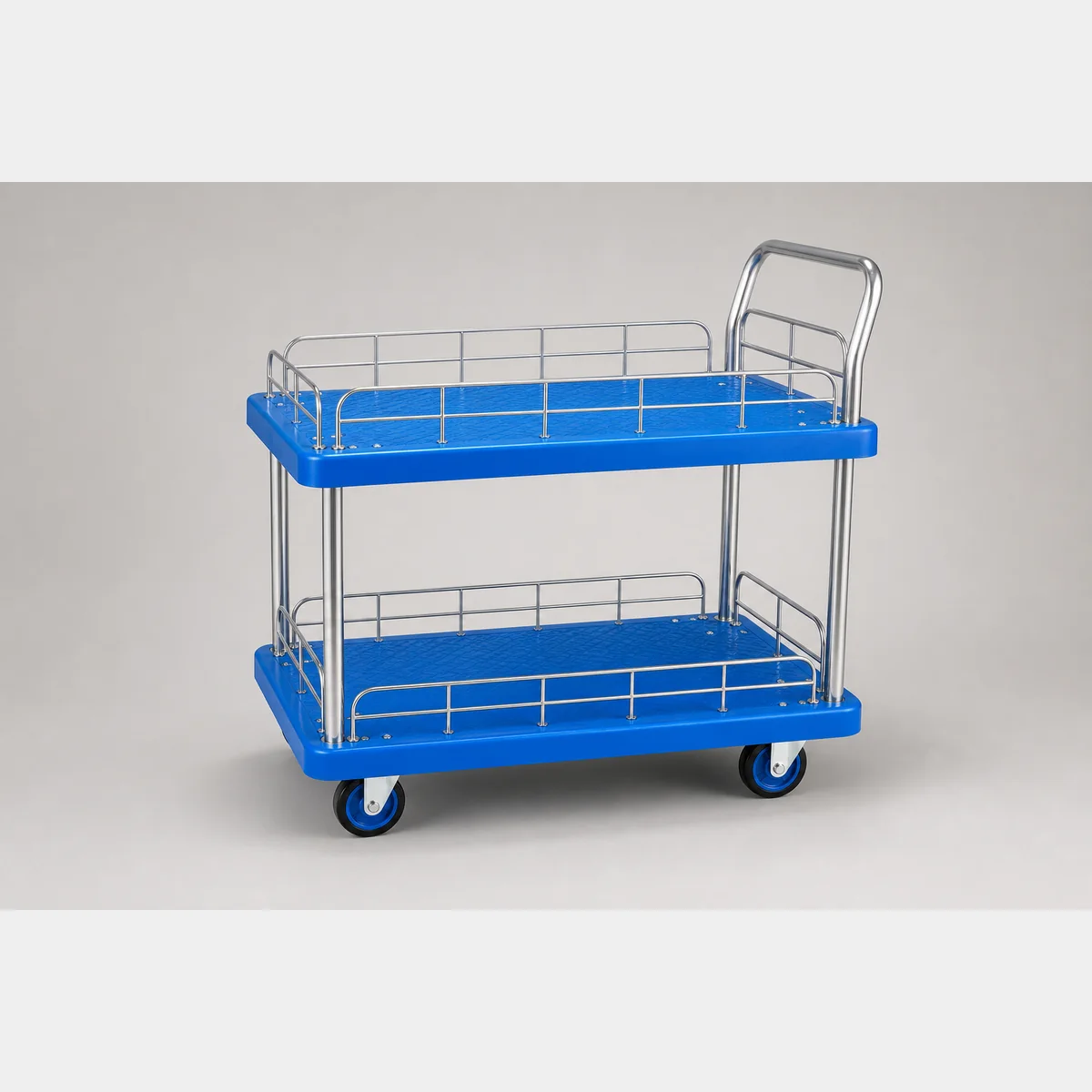
Double-tier Platform trolley with guard rails
Double-tier Platform trolley with guard rails. A: L715xW477xH940 mm; Load capacity: 150kg with 4" casters / 300kg with 5" casters; C: L890xW595xH990 mm. Please enquire for a formal quotation based on use, specifications and quantity.
- A
- L715xW477xH940 mm
- Load capacity
- 150kg, with 4" casters / 300kg, with 5" casters
- C
- L890xW595xH990 mm
 Material Handling & LogisticsProduct reference image
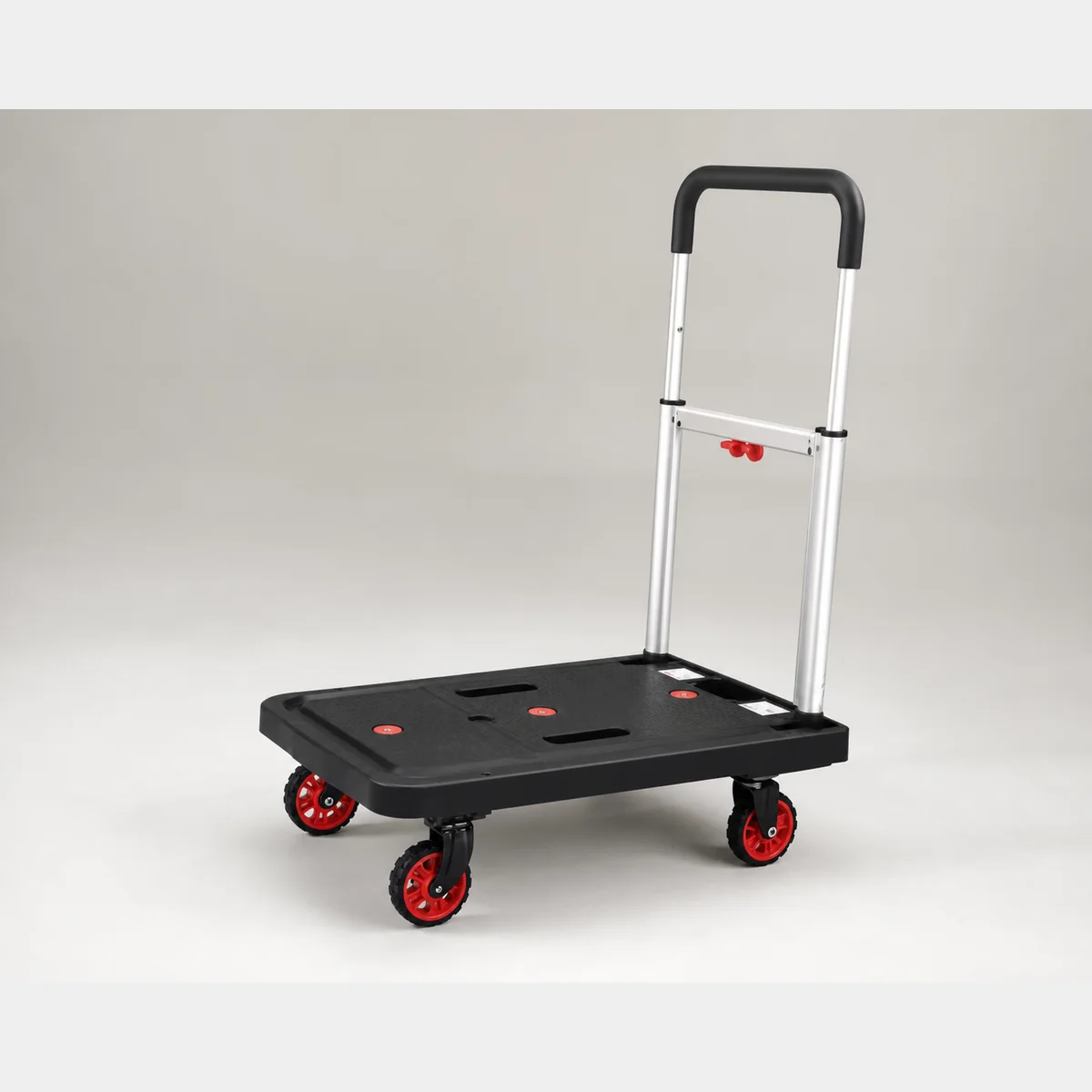
Folding Wheeled Trolley
Folding wheeled trolley. Dimensions/variants: L67xW41xH92 cm / L80xW52xH87 cm; Colour: White, red wheels; Wheels: Grey wheels. Formal quotation available upon enquiry by use, specification and quantity.
- Dimensions/Variants
- L67xW41xH92 cm / L80xW52xH87 cm
- Colour
- White, red wheels
- Wheels
- Grey wheels
 Material Handling & LogisticsProduct reference image
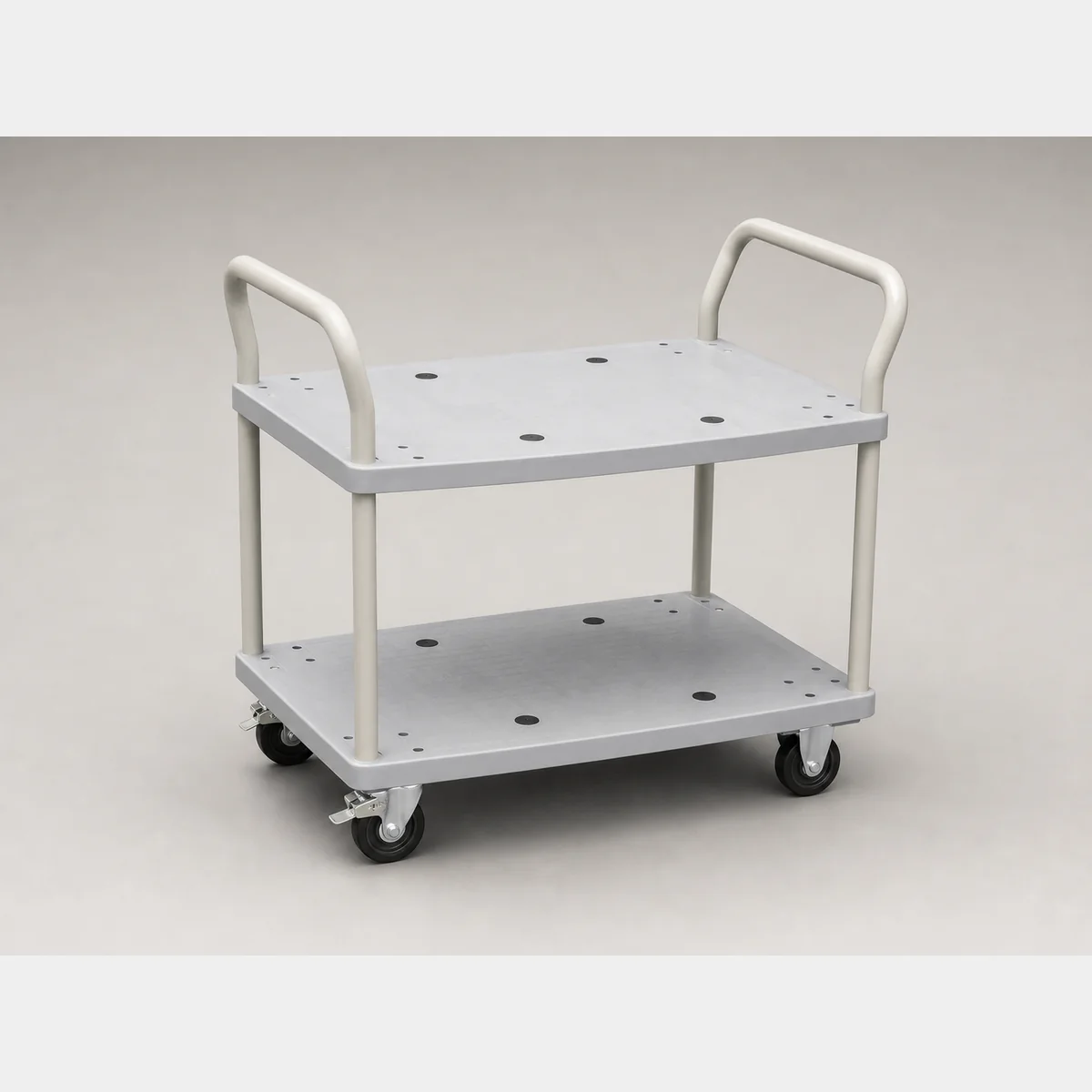
Japanese double-deck plastic trolley with double handrails
Japanese double-deck plastic trolley with double handrails, Dimensions: L625X W455 X H875 MM / L740X W455 X H875 MM; Net weight: 13kg *wheel : 100 MM / 20kg *wheel : 130 mm; 150kg load *shelf clearance: H473 MM / H480 MM. Formal quotation available upon request based on usage, specifications and quantity.
- Dimensions
- L625X W455 X H875 MM / L740X W455 X H875 MM
- Net weight
- 13kg *wheel : 100 MM / 20kg *wheel : 130 mm
- 150kg load *shelf clearance
- H473 MM / H480 MM
 Material Handling & LogisticsProduct reference image
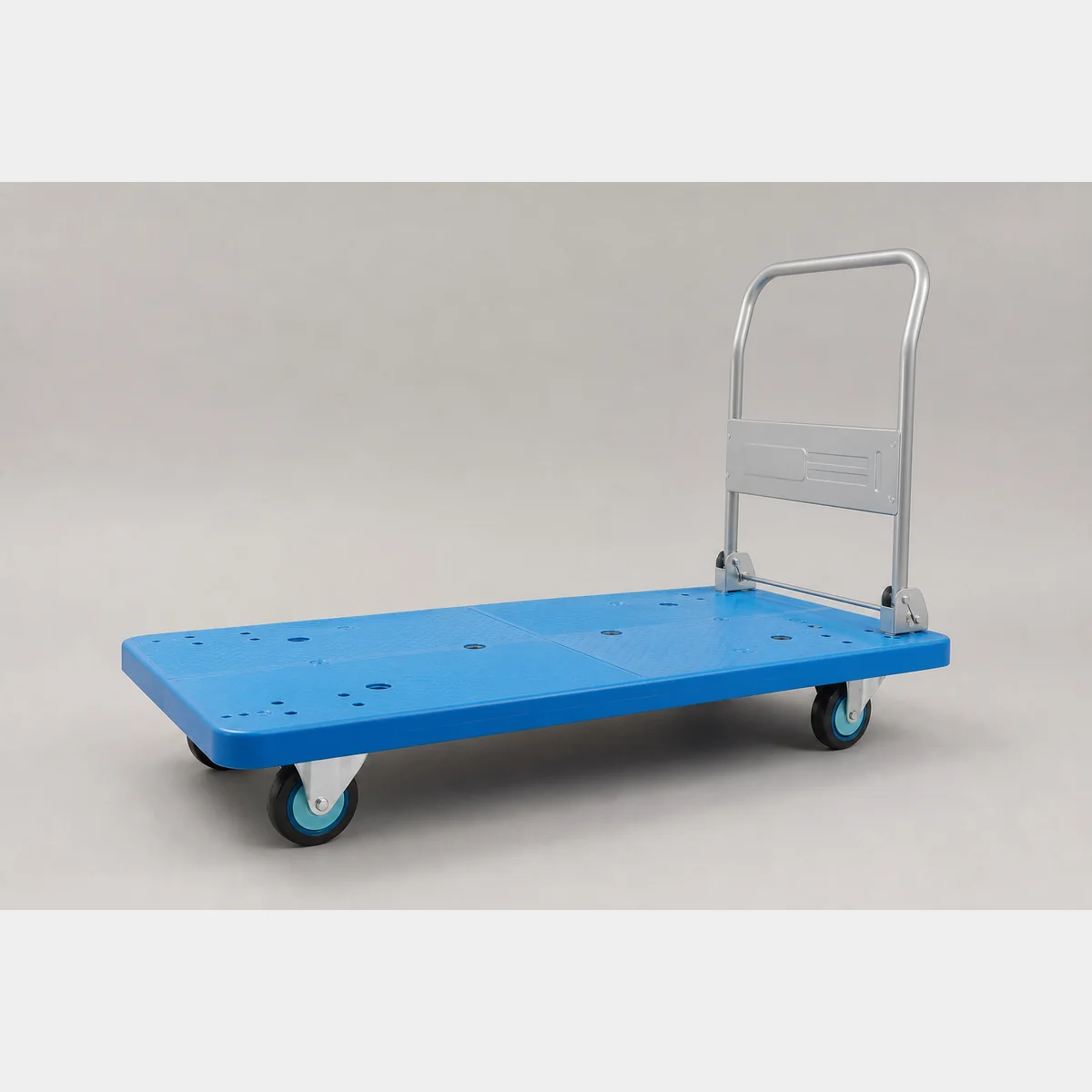
Long-Deck Silent Push Trolley
Long-Deck Silent Push Trolley, Dimensions: L1355 X W650 X H875 MM; Net weight: 21kg; Wheels: 125 mm. Formal quotation available upon request based on usage, specifications and quantity.
- Dimensions
- L1355 X W650 X H875 MM
- Net weight
- 21kg
- Wheels
- 125 mm
 Material Handling & LogisticsProduct reference image
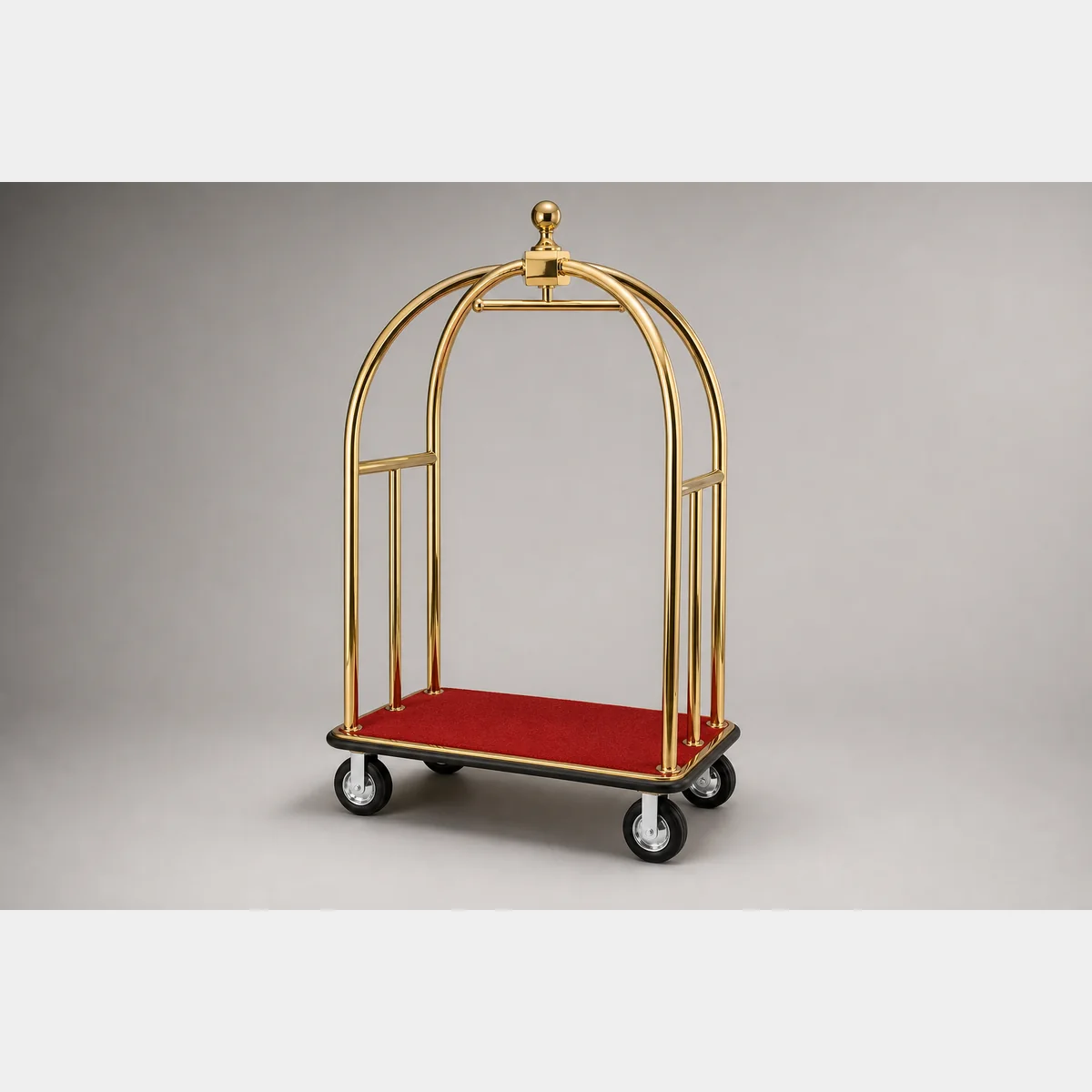
Luggage Trolley
Luggage Trolley, Material: Titanium finish with soft rubber wheels; Dimensions: L1100 x W610 x H1880 MM / L1050 x W610 x H900 MM. Formal quotation available upon request based on usage, specifications and quantity.
- Material
- Titanium finish with soft rubber wheels
- Dimensions
- L1100 x W610 x H1880 MM / L1050 x W610 x H900 MM
Continue with closely related procurement topics
These pages share equipment, operating or decision-stage signals with this guide.
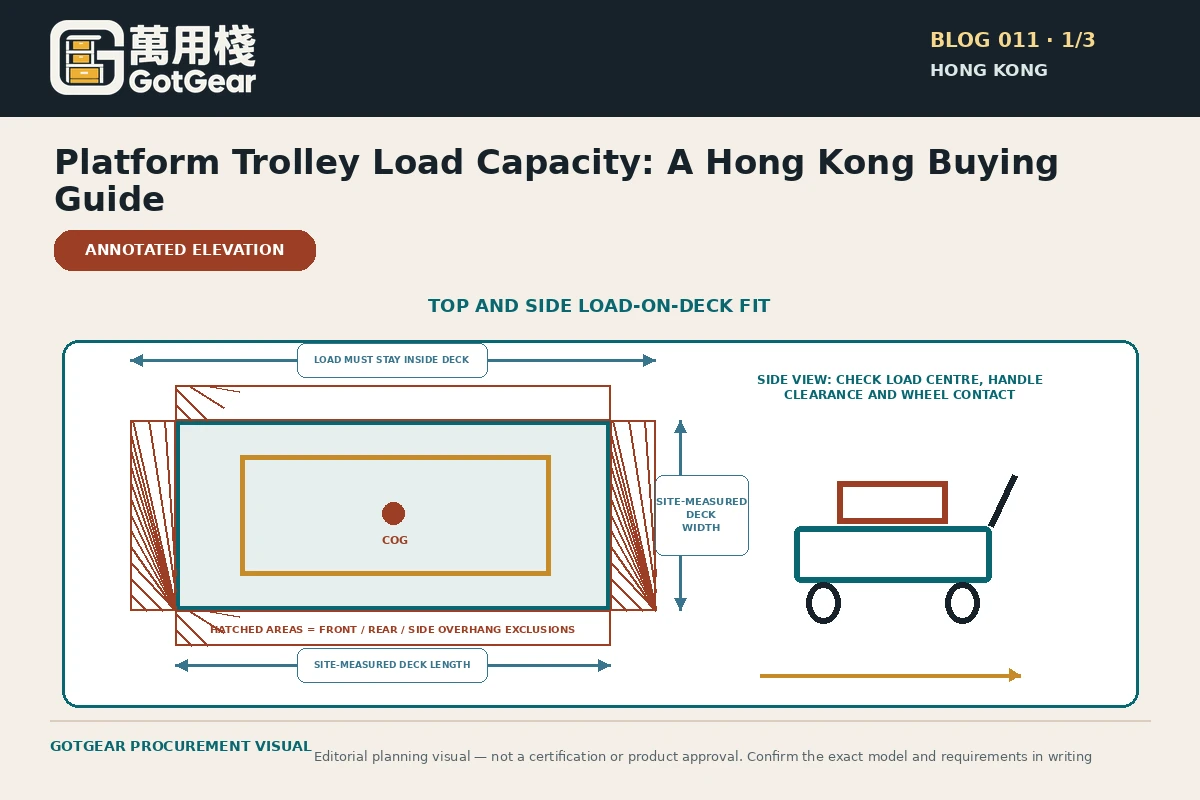
Platform trolley load capacity Hong Kong
GotGear explains platform trolley load capacity Hong Kong for Hong Kong buyers. See how platform trolley safe working load Hong Kong supports platform trolley deck size Hong Kong, with practical checks, evidence boundaries and written requirements.
Read the guide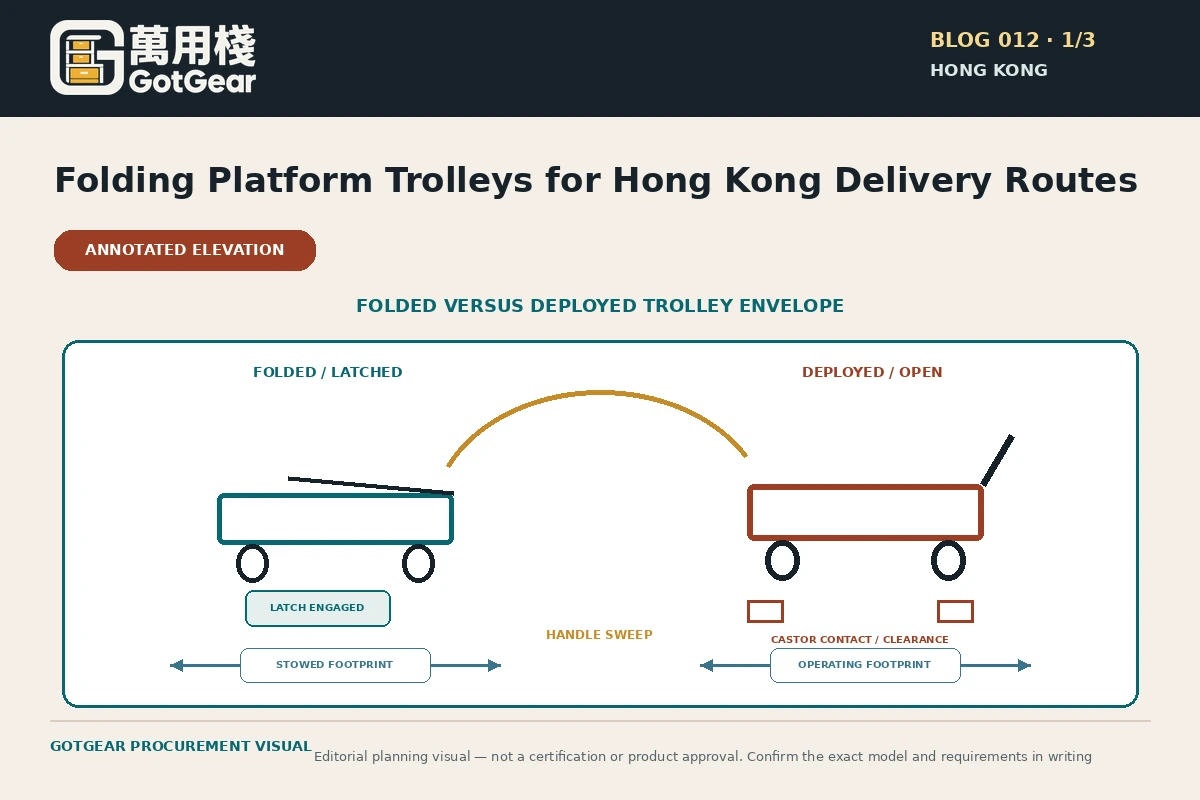
Folding platform trolley Hong Kong
GotGear explains folding platform trolley Hong Kong for Hong Kong buyers. See how foldable trolley for delivery vans Hong Kong supports compact platform trolley storage Hong Kong, with practical checks, evidence boundaries and written requirements.
Read the guide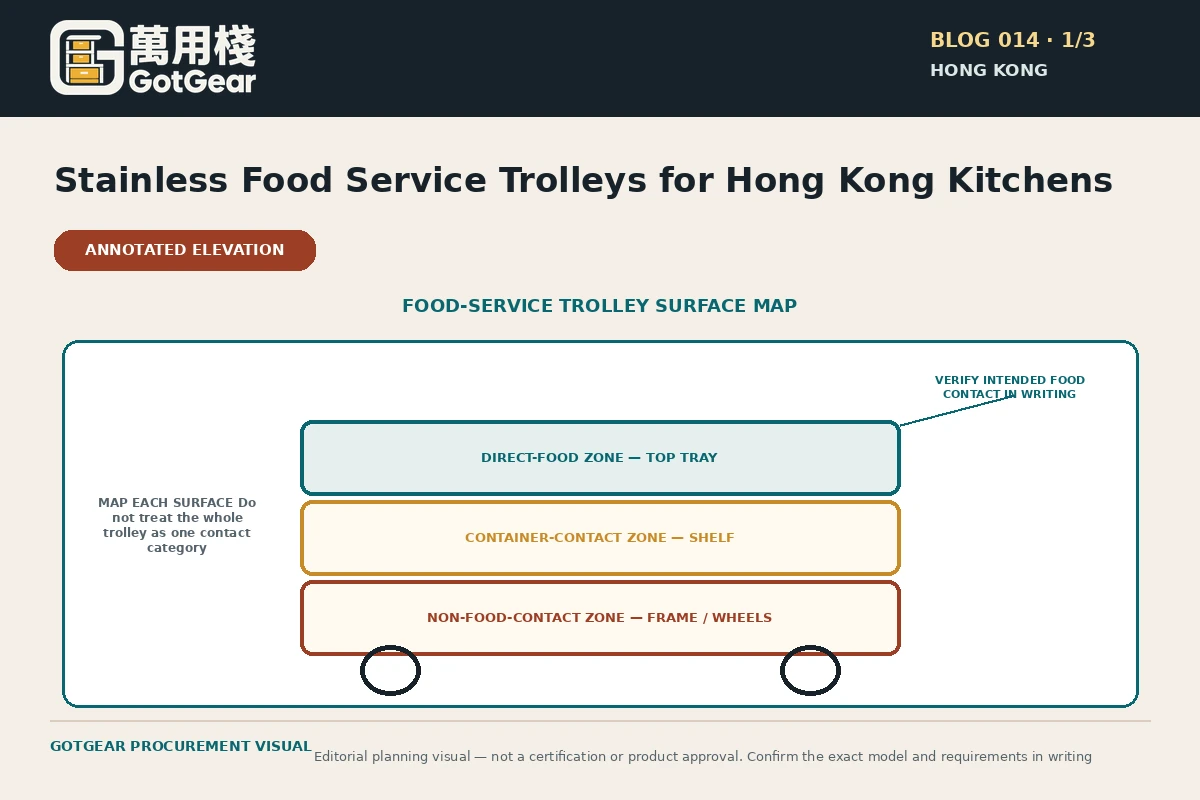
Stainless steel food service trolley Hong Kong
GotGear explains stainless steel food service trolley Hong Kong for Hong Kong buyers. See how stainless steel catering trolley Hong Kong supports food service trolley cleaning Hong Kong, with practical checks, evidence boundaries and written requirements.
Read the guide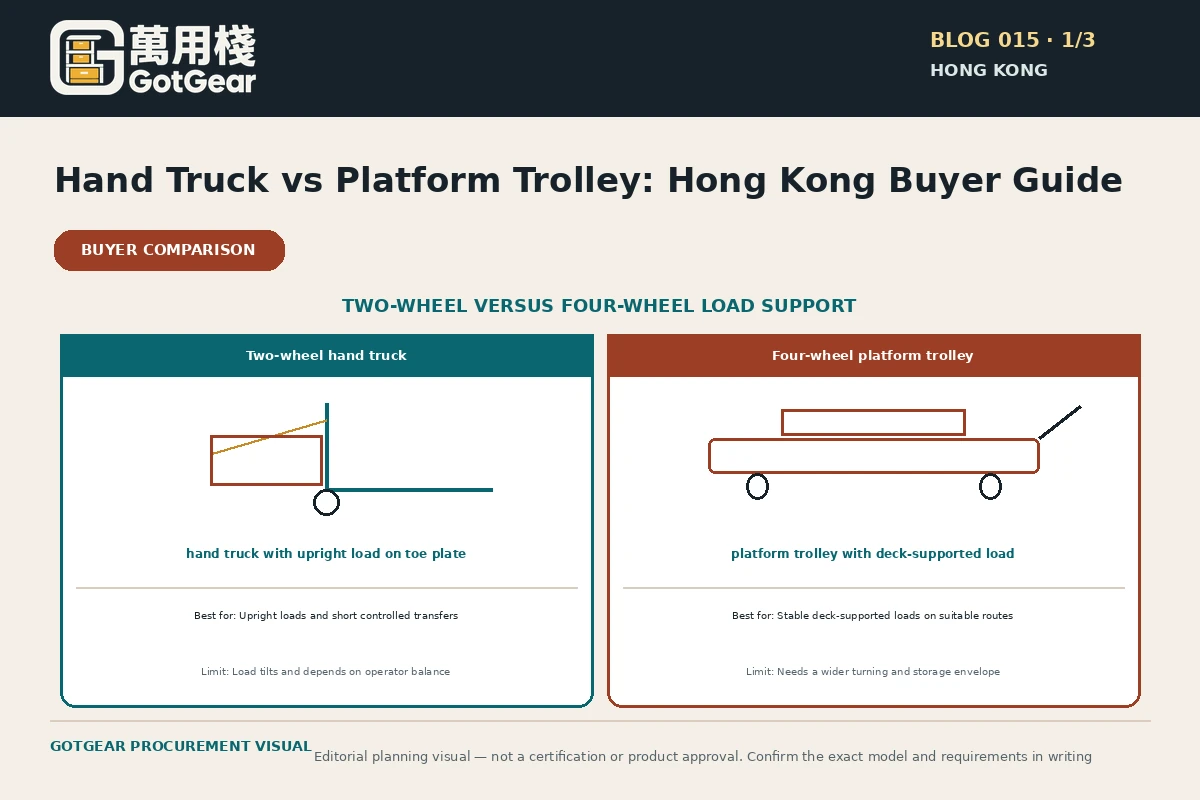
Hand truck vs platform trolley Hong Kong
GotGear explains hand truck vs platform trolley Hong Kong for Hong Kong buyers. See how two wheel hand truck Hong Kong supports four wheel platform trolley Hong Kong, with practical checks, evidence boundaries and written requirements.
Read the guideRelated topic indexOpen more English procurement pages17 topics
Browse additional equipment families, applications and procurement questions relevant to these operating requirements.