
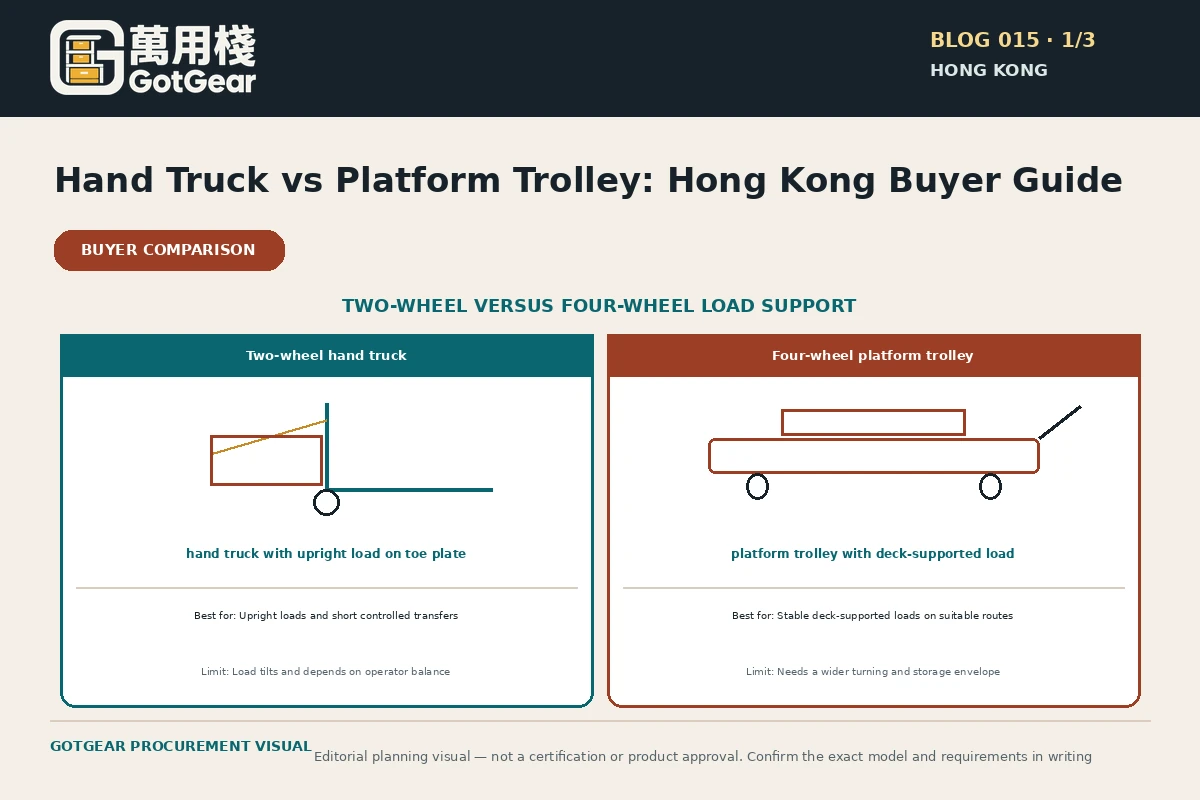
Select a two-wheel hand truck when loads are tall or carried on edge, need upright support and the route includes steps, narrow doorways or changes in level; select a four-wheel platform trolley when loads require a stable horizontal deck, low-profile handling or continuous pushing over flat surfaces. Assess the item’s centre of gravity, transfer heights, visibility for the operator, floor finish and gradients, and always match the supplier’s rated capacity. Test the chosen trolley on the actual Hong Kong route and practice safe transfer techniques before full deployment.
What to remember before you decide
- Match trolley choice to load geometry, transfer heights and the actual route — measure first, buy second.
- Two-wheel hand trucks suit tall, rigid items and tight spaces; platform trolleys suit flat, stacked loads on level routes.
- Rated capacity must be checked against the load centre and the intended use case; test with real loads on-site.
- Plan for visibility, wheel type compatibility with local floors and how the unit will fit into lifts and vans.
- Use site trials and short operator training to reveal practical problems before bulk procurement.
How the two-wheel hand truck and four-wheel platform trolley differ in Hong Kong use
Practical difference: a two-wheel hand truck is a vertical frame with a toe plate — it transfers some of the load’s weight into the operator’s control and relies on tilting to roll; a four-wheel platform trolley carries the load flat on a deck and relies on castors for movement. In Hong Kong this distinction matters because many retail backstores, service corridors and older warehouses have narrow aisles, stepped thresholds and frequent lift transfers. Two-wheel units excel where you must rotate or tilt the load to get through a doorway or carry an upright appliance up short flightings, provided the operator can see over or around the load. Platform trolleys work better when you must move stacked cartons, crates or equipment across a flat service corridor, through loading bays and into lifts without repeated tilting. Use these decision checks: inspect the primary route: door widths, lift internal sizes, thresholds, kerbs and slope severity. Measure the transfer heights at every handover point — a platform trolley that matches the pickup and dock heights reduces manual lifting. Confirm whether staff will carry loads by themselves or hand over between operators. For frequent single-operator moves over mixed surfaces, visibility and handle ergonomics are critical. Consider storage: two-wheel hand trucks stand upright and take less floor footprint; platform trolleys require flat storage space and can take up more room when stacked. A key limitation is that a two-wheel hand truck places more dynamic load on the operator during tilting and negotiating gradients; it can trap hands if loads slip during a transfer. A platform trolley can be harder to manoeuvre in tight corners and may not fit older lift cabs. Both types depend on suitable castors/wheels for Hong Kong’s mix of tiled floors, loading bay concrete and occasional wet surfaces; soft wheels ease kerb negotiation but wear faster indoors. Supplier-rated capacity is necessary but not sufficient — rated to a flat-deck scenario may not cover tilted loads. Next, walk the route with a tape measure and the heaviest typical load. Note turning clearances and transfer heights. Ask suppliers for a site trial or short-term demo so operators can try actual lifts, kerb approaches and lift entries. Add non-slip deck surfaces and basic load restraint for platform trolleys and check toe-plate depth and upright support on hand trucks for the types of cartons or appliances you move.
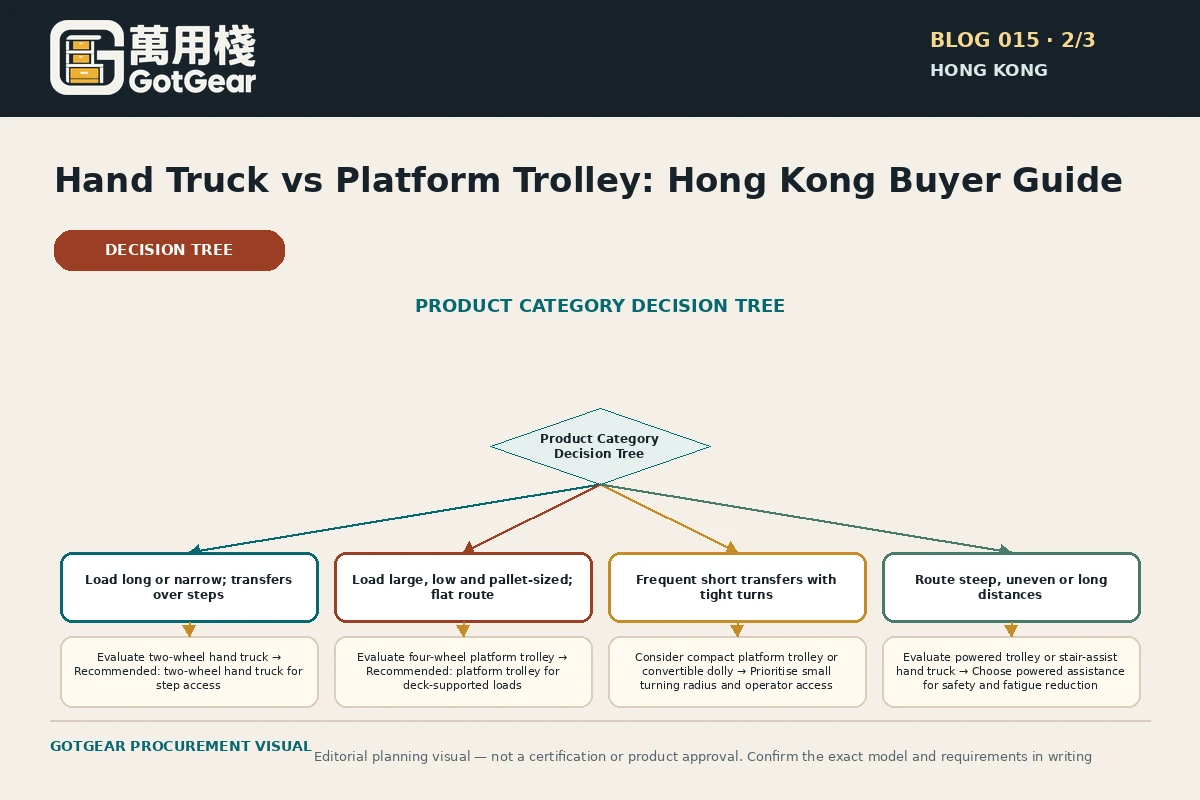
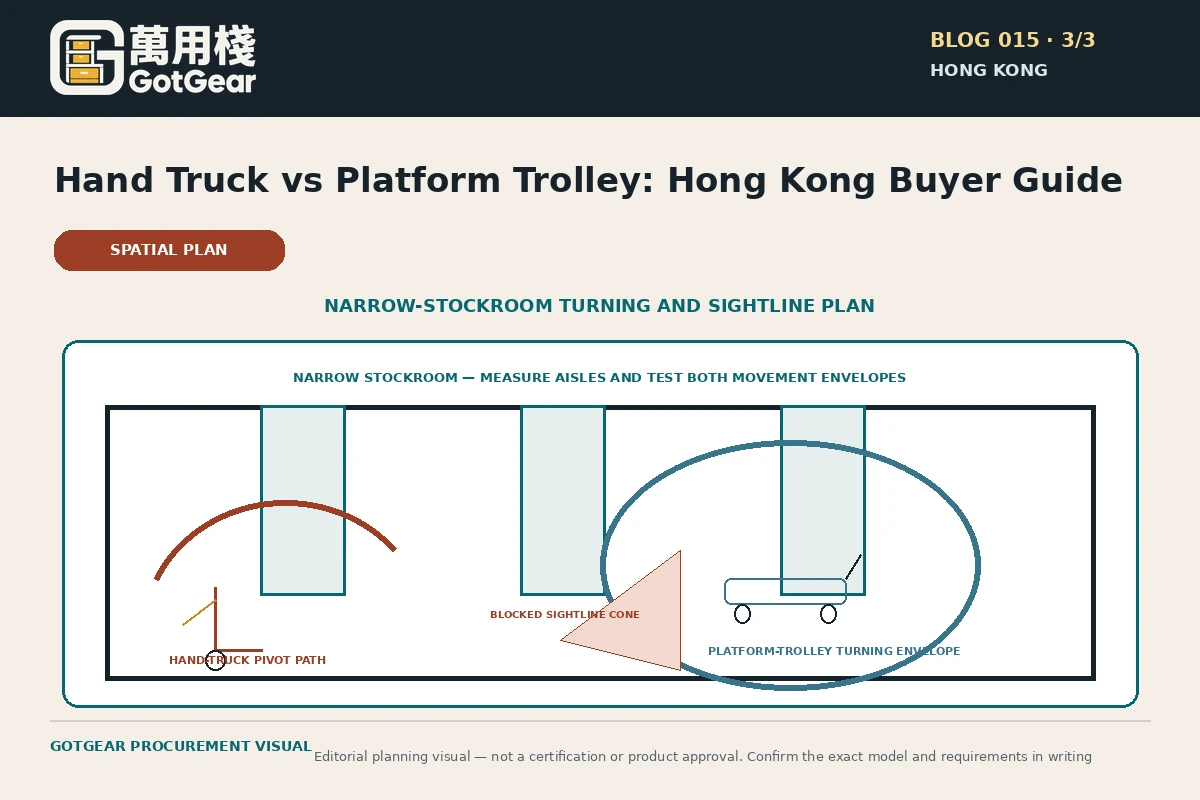
Load geometry, transfers and operator visibility — the deciding factors
Load geometry: start with the object’s centre of gravity and footprint. Tall, narrow loads such as refrigerators, safes or stacked boxes often suit a two-wheel hand truck because the upright frame prevents forward collapse and the toe plate supports the base. Flat, wide or loose-stacked loads — like multiple shallow cartons, crates or a bundle of stock — favour a four-wheel platform trolley because they sit flat and are easier to secure with straps or side guards. For each SKU or common item, note its width, depth, height, and whether it is rigid or prone to shifting. Transfer heights: document typical pickup and delivery heights in centimetres for every recurring move. If pick-up and drop-off surfaces are within 50–150 mm of each other, a platform trolley can be pushed straight across without interim lifts. Where transfer heights vary (for example, from a low loading dock into a delivery van or a raised service counter), a two-wheel unit can enable stepping the load up or down, but that increases the operator effort. For Hong Kong shops that use small trucks and vans, map the van bed height and the lift inside dimensions before selecting the format. Operator visibility and control: in narrow Hong Kong staircases, sight lines are short; a blocking load that prevents the operator seeing ahead is a frequent cause of collisions. Two-wheel hand trucks let the operator walk behind or to the side and tilt the load to see forward, but that requires training and space to step. Platform trolleys allow clear forward visibility but can conceal castor behaviour when changing direction. Test visibility with the actual load at full rated weight and observe whether the operator can safely see floor transitions and obstacles. A key limitation is that Do not assume rated capacity equals fit-for-purpose. Many ratings are tested on level, flat-deck conditions; a tilted load changes the vector on wheels and can exceed bearings’ capacity. Also consider Hong Kong’s frequent micro-variations in floor finish: glazed tiles in retail backrooms, drainage channels in service areas and raised thresholds at older buildings. Wheels and castors must match these surfaces to avoid snagging or sudden braking. Next, produce a short checklist for each frequent load type: dimensions, transfer heights, expected path, and a recommended trolley format. Carry out a low-risk trial (empty run, half load, full load) and record operator comments on visibility, turning and handle height comfort.
“Decide by route and load, not by maximum weight alone. The right trolley reduces transfers, improves visibility and lowers handling risk — measure first, test second.”— GotGear Editorial Team
What should buyers compare for hand truck vs platform trolley Hong Kong?
| Option or approach | Best for | Trade-offs | Checks before acceptance |
|---|---|---|---|
| Standard two-wheel hand truck (vertical frame, toe plate) | Tall, rigid loads; narrow aisles; stair negotiation and compact storage. | Higher operator tilt effort and reduced deck stability for flat loads; visibility can be compromised behind very tall items. | Measure load centre, test in your narrowest doorway and on the steepest slope encountered; try a loaded trial run up and down any short stairs or ramps. |
| Four-wheel platform trolley (flat deck, castors) | Wide, flat or stacked carton loads moved over continuous flat surfaces and through lift bays. | Less suited to stairs, bulkier storage footprint and may not fit older small lift cabs when loaded. | Measure deck-to-door and deck-to-lift clearances; secure typical stack with straps and perform a loaded cornering test at a service speed. |
| Convertible/flip-deck trolleys (convert between upright and platform) | Operations with mixed load types that need flexibility but limited storage. | More mechanical components can mean higher maintenance and potentially higher resource requirements; conversion takes time and training. | Confirm conversion time under loaded conditions, inspect locking mechanisms and run repeated convert-and-move cycles to test durability. |
| Stair-climbing hand truck (specialised wheels or tracks) | Frequent multi-step stair movements and moving appliances in buildings without service lifts. | Heavier, specialised equipment requiring trained operators and suitable only for specific stair geometries. | Test on the building’s actual stair run with a typical load and trained operator; ensure brake performance and handgrip ergonomics are suitable. |
| Powered/assisted trolleys (motorised drive) | High-frequency heavy moves over long corridors or repetitive push-pull tasks reducing operator effort. | Higher complexity, maintenance and need for battery charging/space; may be overkill for occasional moves. | Confirm run-time, charge procedures and safe turning radius in your tightest corridor; test emergency stop performance with typical load. |
This framework helps buyers create comparable written enquiries. Final model specifications, availability, delivery and commercial terms must be confirmed in a formal quotation.
Workplace constraints, safety limits and supplier questions specific to Hong Kong sites
Hong Kong context: many premises are vertically distributed — stockrooms above or below ground, mixed-age buildings with small lift cabs, and loading bays with short ramps. These constraints affect whether you choose a two-wheel hand truck or a platform trolley. If your workflow includes repeated elevator transfers, measure elevator internal clearances and the door swing; a four-wheel platform trolley may not fit certain older lift cabins when loaded, whereas a hand truck that can be tilted can sometimes be manoeuvred into tighter spaces. Use these decision checks: evaluate frequency of use and operator training. High-frequency moves that repeat the same route benefit from investing in the best-fitting design and operator instruction; occasional moves can use a more general-purpose trolley but with stricter handling controls. Consider the number of handovers: if a load changes hands often, minimise the number of manual lifts by matching trolley deck height to handover points. For mixed-use buildings in Hong Kong, check for thresholds, shallow ramps and narrow internal doors at the earliest stage of procurement. A key limitation is that remember regulatory guidance from overseas sources suggests operating within rated loads, maintaining a low centre of gravity and ensuring visibility, but those are general principles — local operational detail matters. Floor and environmental conditions in Hong Kong — humid wet floors during the rainy season, narrow emergency exits and busy service corridors — increase the need for non-slip decks, good wheel material and clear route marking. Platform trolleys with inadequate side restraint can allow stacked cartons to cascade during a sudden stop; two-wheel units lacking toe-plate depth can let small crates tip backward. Next, add route marking, mirror panels at blind corners where visibility is poor, and non-slip tape on decks. When talking to suppliers, ask for documented castor types, load centre assumptions for rated capacity, recommended maintenance intervals for wheels and bearings, and whether they can offer a site demo. If you foresee stair use, discuss stair-climbing accessories or specialist hand trucks designed for steps rather than improvising a standard trolley.
Practical procurement steps, site trials and training to reduce surprises
Procurement steps: produce a short specification sheet before requesting quotes: list the heaviest and most awkward items to be moved, the typical route(s) with measured clearances and transfer heights, frequency of moves per day, operator numbers and available storage footprint. Insist on supplier-supplied load drawings or videos showing the unit in use with similar loads. For Hong Kong channels that rely on quick turnarounds, plan a short site trial or demo in situ, because catalogue photos rarely show a device negotiating narrow lifts or step-ups. Training and maintenance: include a short operator induction covering correct tilting, braking and securing loads; cover safe practices for negotiating kerbs, ramps and thresholds. Agree an initial maintenance check list with the supplier — inspect wheels, bearings, handles and load restraint devices monthly for high-use locations. In Hong Kong’s busy retail and service sectors, a simple tagging system for repairable trolleys reduces the chance of a damaged unit staying in circulation. A key limitation is that even with trials and training, human error accounts for many incidents. Use engineering controls where possible: dock plates to match heights, portable ramps for van beds, and side guards or strap points on platform trolleys. Do not exceed rated capacities and avoid makeshift modifications that change the original design intent; these can change load paths and undermine safety. Next, compile feedback from the trial in a short decision memo and select one primary format and one secondary unit for exceptional moves. Schedule operator training within a week of deployment and set a three-month review to capture ergonomic feedback and any near misses.
Hand truck vs platform trolley Hong Kong decision checklist
- Measure the narrowest doorway, lift interior and corridor turning radius on every route used.
- Record transfer heights (pickup and drop) in millimetres for all regular handovers.
- List the heaviest and most awkward items to be moved, noting footprint and centre of gravity.
- Check floor surface types across the route (tile, concrete, grating) and note wet or sloping areas.
- Confirm whether moves are single-operator or multi-operator and how often handovers occur.
- Compare supplier-rated capacity with the load centre assumptions and ask for test conditions.
- Inspect wheel/castor types for suitability with your floor finishes and thresholds.
- Plan storage footprint and vertical space for stacked trolleys or standing hand trucks.
- Require a site trial with typical loads and operator volunteers on the actual route.
- Agree maintenance intervals for wheels, bearings, brakes and load restraint devices before purchase.
Practical action sequence
- Walk and measure the primary routes, doorways, lift interiors and any van/vehicle beds you use.
- Create a short spec sheet listing common loads, frequencies and transfer heights.
- Request demos from suppliers with the spec sheet and insist on a site trial if possible.
- Run operator trials: empty run, half load, full load; capture visibility, turning and braking feedback.
- Select primary and secondary formats and document exceptions where the alternate unit is required.
- Provide operator training on tilt, securement and braking; issue a quick-reference handling card.
- Schedule a maintenance tagging system for weekly wheel and brake checks and monthly inspections.
- Review performance after three months and record any near misses or ergonomic complaints.
Apply the checks to your Hong Kong site
Hong Kong’s mixed-age buildings, compact loading areas and frequent lift transfers make route measurement and transfer-height matching essential. Prioritise clear route mapping, site trials in actual lifts and vans, caster selection for tiled and concrete surfaces, secure loading procedures and straightforward operator training to reduce handling risk. A route-and-load view clarifies hand truck vs platform trolley Hong Kong choices: the two-wheel and four-wheel formats behave very differently when negotiating narrow lobbies, lift thresholds and vehicle decks. For confined stair approaches or angled lifts, a two wheel hand truck Hong Kong is often easier to pivot and control, but it still requires verified supplier-rated capacity, good visibility and load restraint. Conversely, a four wheel platform trolley Hong Kong offers better lateral stability on level runs and during short transfers, provided caster type and brakes suit the surface. Operational takeaway: run a fully loaded, representative site trial with nominated operators that exercises all lifts, doorways, slopes and vehicle decks and record clearances, load stability and caster performance before selecting the format.
References used for this article
These sources provide regulatory, safety or planning context. They do not certify any GotGear product or replace site-specific professional advice.
- WorkSafe Victoria — Choosing and using trolleys — Hand-truck/two-wheel and multi-wheel trolley selection and use: rated load, centre of gravity, visibility, route condition and operator control.
- Hong Kong Labour Department — A Simple Guide to Health Risk Assessment — Hong Kong manual-handling assessment framework for pushing, pulling, load stability, floor condition, posture and physical effort.
- International Labour Organization — Manual handling — International labour-safety principles for load, environment, worker capability, route obstructions and handling aids.
- WorkSafe WA — Manual task solutions: Trolleys — Framework to match trolley design to task, load, workplace, worker and castor/handle/visibility needs.
Questions about hand truck vs platform trolley Hong Kong
What does WorkSafe Victoria recommend about choosing and using trolleys?
WorkSafe Victoria emphasises selecting a trolley that matches the load and task, operating within the supplier’s rated load, maintaining a low centre of gravity and ensuring clear forward visibility and a clear route. It flags stairs and steep gradients as higher-risk situations requiring special controls. Use these principles as practical safety guidance — they are helpful design checks when you test equipment in your Hong Kong facility, but they are overseas guidance and not a substitute for local operational risk assessment.
How should Hong Kong employers use the Labour Department’s manual-handling assessment checklist?
The Hong Kong Labour Department checklist sets out factors to consider for pushing and pulling tasks, including excessive effort, sudden load movement, heavy or bulky loads and floor conditions. Apply it by documenting each route and load against those risks, recording controls such as load restraint, better wheels, or route improvements, and adjusting work practices or equipment choice accordingly. The checklist helps ensure you consider local workplace conditions before committing to one trolley format.
What role does International Labour Organization (ILO) guidance play in selecting handling aids?
The ILO promotes a systems approach: consider the load, the environment, worker capability and handling aids together. For Hong Kong buyers this means viewing a trolley not in isolation but as one element in an end-to-end handling plan. Use ILO guidance as international context when designing trials, preparing training and eliminating route obstructions; treat it as advisory rather than regulatory.
Is the supplier-rated capacity the only number I need to check?
No. Rated capacity is necessary but not sufficient. Ratings are often based on ideal, level conditions with the load centred on a flat deck. When loads are tilted, carried on an upright frame, or presented off-centre, the effective forces on wheels and bearings change. Verify the load centre used for the rating, test with your actual loads, and ask the supplier about performance when negotiating thresholds, ramps or steps.
Can I use a platform trolley on stairs if I strap the load?
Generally no. Platform trolleys are designed for flat movement; carrying them on stairs risks loss of control and sudden load movement. If stair movement is unavoidable, use a purpose-designed stair-climbing truck or a two-wheel hand truck designed for stair use, and train operators in correct techniques. Consider mechanical stair devices or alternative routing where possible.
What training and maintenance should I plan after buying a trolley?
Provide hands-on induction for operators covering correct tilting, braking, securing loads and negotiating ramps or kerbs. Institute a maintenance tag system: weekly visual inspection of wheels, brakes and handles and monthly checks of bearings and load restraint points for high-use areas. Keep a record of near misses and operator feedback to guide adjustments or further training.
Compare available product models and specifications
These product cards are matched to this buying topic. Select a specification and quantity to send the product details to WhatsApp.
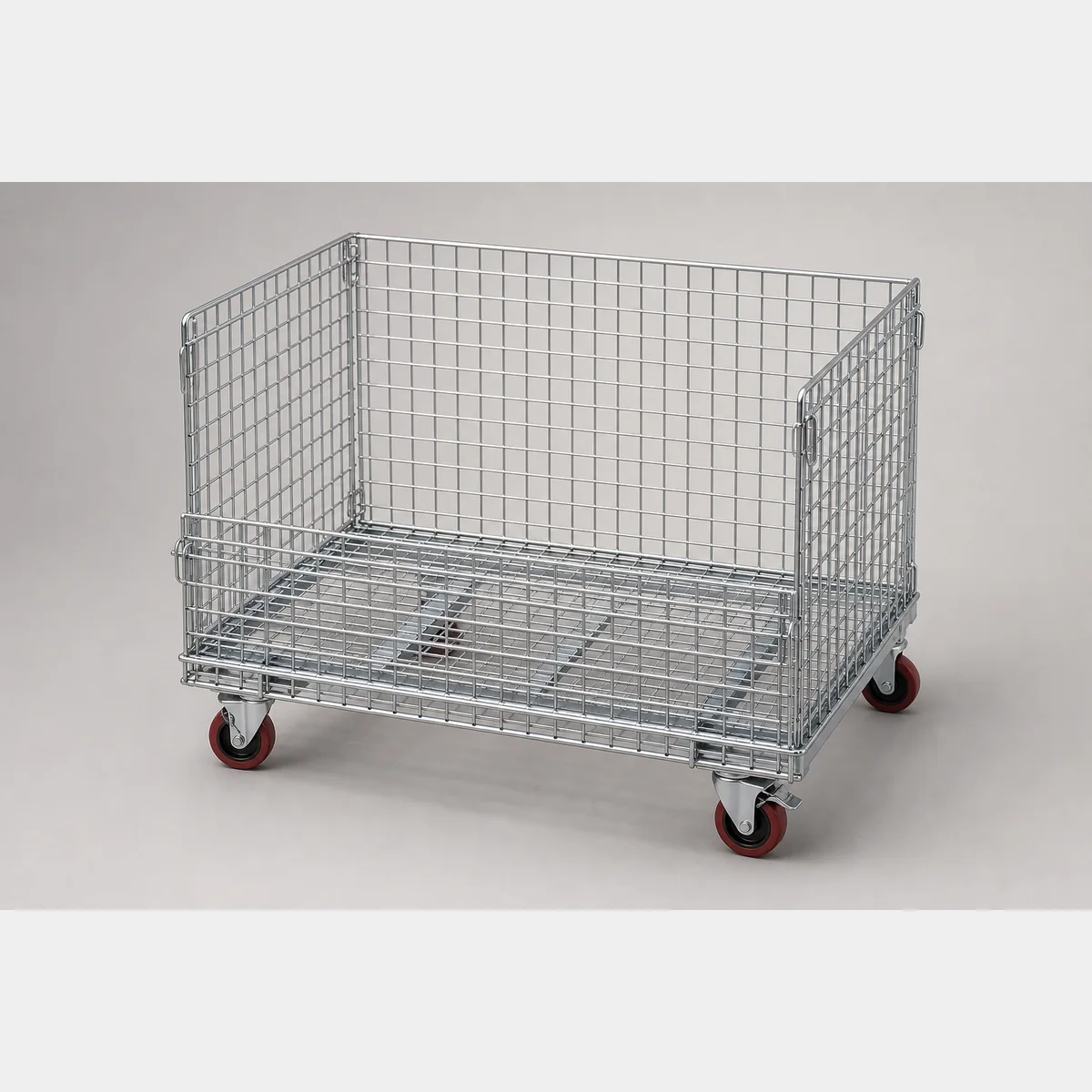 Material Handling & LogisticsProduct reference image
Wire Mesh Cage Trolley (S8909)
Wire mesh cage trolley. Dimensions/Specifications: A.1000 X 800 X 900 MM(excluding wheel height 830 mm) / B.1200 X 1000 X 950 MM(excluding wheel height 880 mm); Four wheels: two fixed and two swivel wheels. Formal quotation available on request based on use, specifications and quantity.
- Dimensions / Specification
- A.1000 X 800 X 900 MM(excluding wheel height 830 mm) / B.1200 X 1000 X 950 MM(excluding wheel height 880 mm)
- Four wheels
- Two fixed and two swivel
 Material Handling & LogisticsProduct reference image
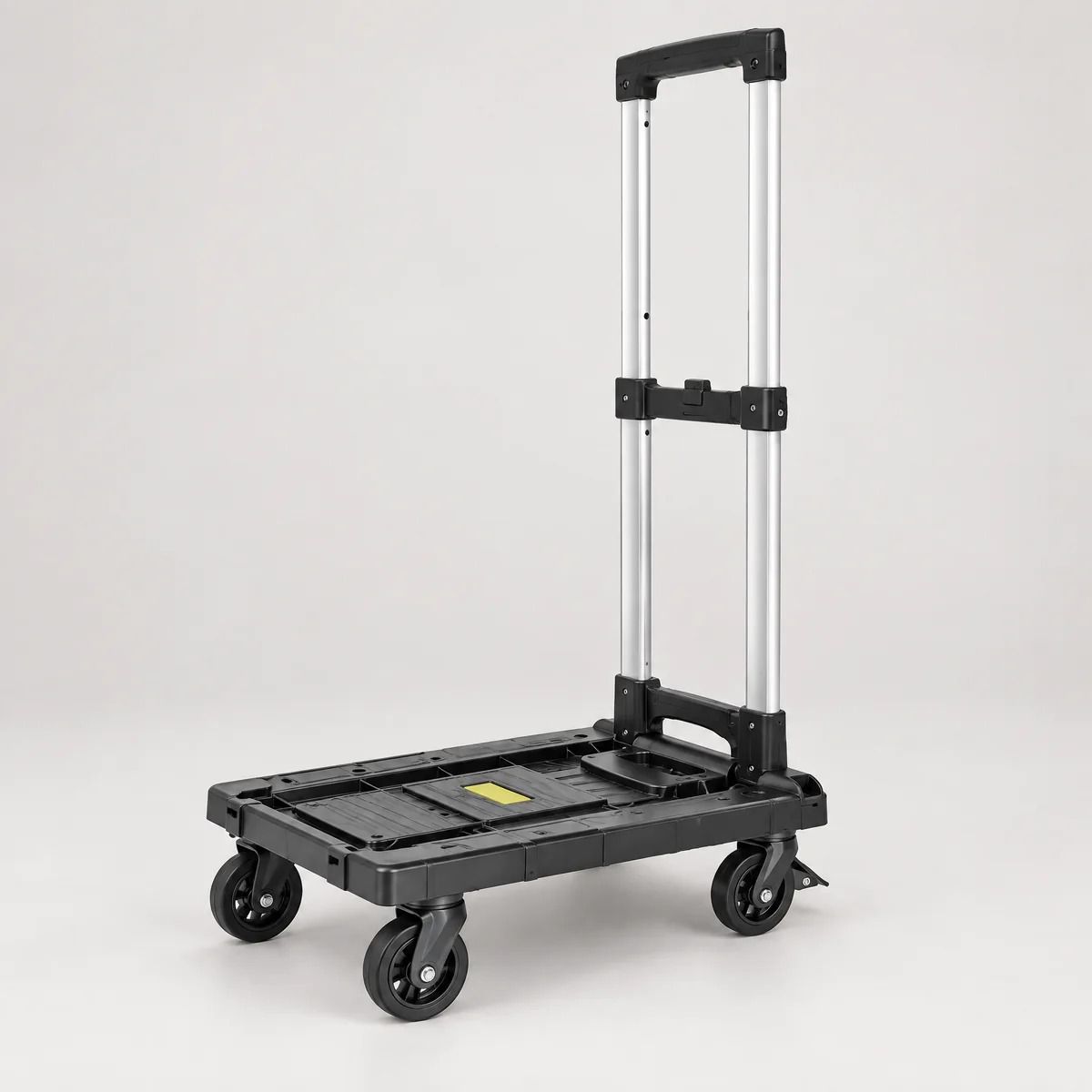
3-inch Wheel Hand Truck (SKU: JRA049)
3-inch wheel hand truck, A: L48xW31xH78.5 cm; B: L50xW31xH88.5 cm; C: L55xW36xH97.5 cm. For a formal quotation, please enquire with intended use, specifications and quantity.
- A
- L48xW31xH78.5 cm
- B
- L50xW31xH88.5 cm
- C
- L55xW36xH97.5 cm
 Material Handling & LogisticsProduct reference image
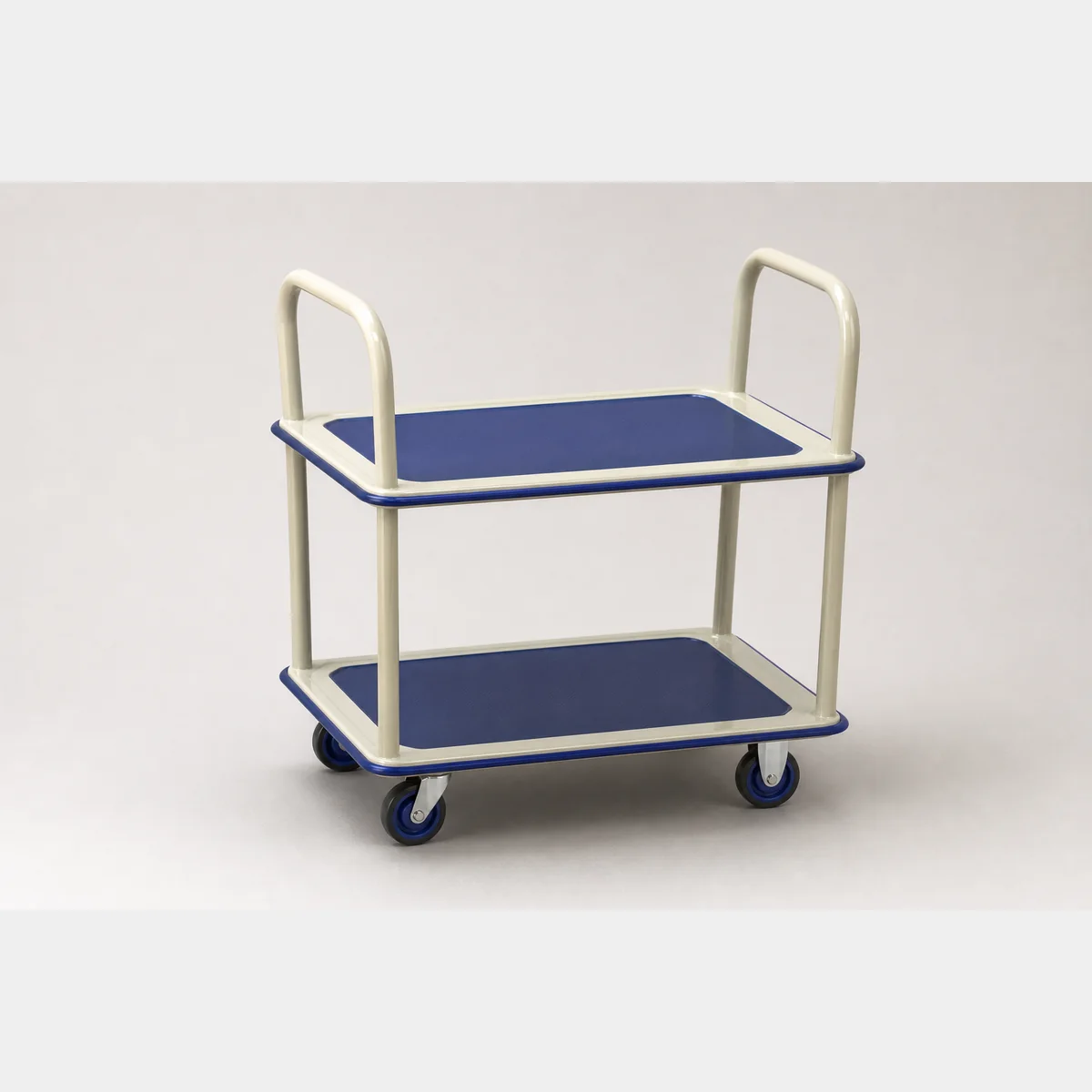
Double-deck flat push trolley with double handles
Double-deck flat push trolley with double handles. Dimensions: L730xW480xH925 mm; Load capacity: 120kg; Wheels: 2 fixed, 2 swivel. Formal quotation available based on use, specifications and quantity.
- Dimensions / Specs
- L730xW480xH925 mm
- Load capacity
- 120kg
- Wheels
- 2 fixed, 2 swivel
 Material Handling & LogisticsProduct reference image
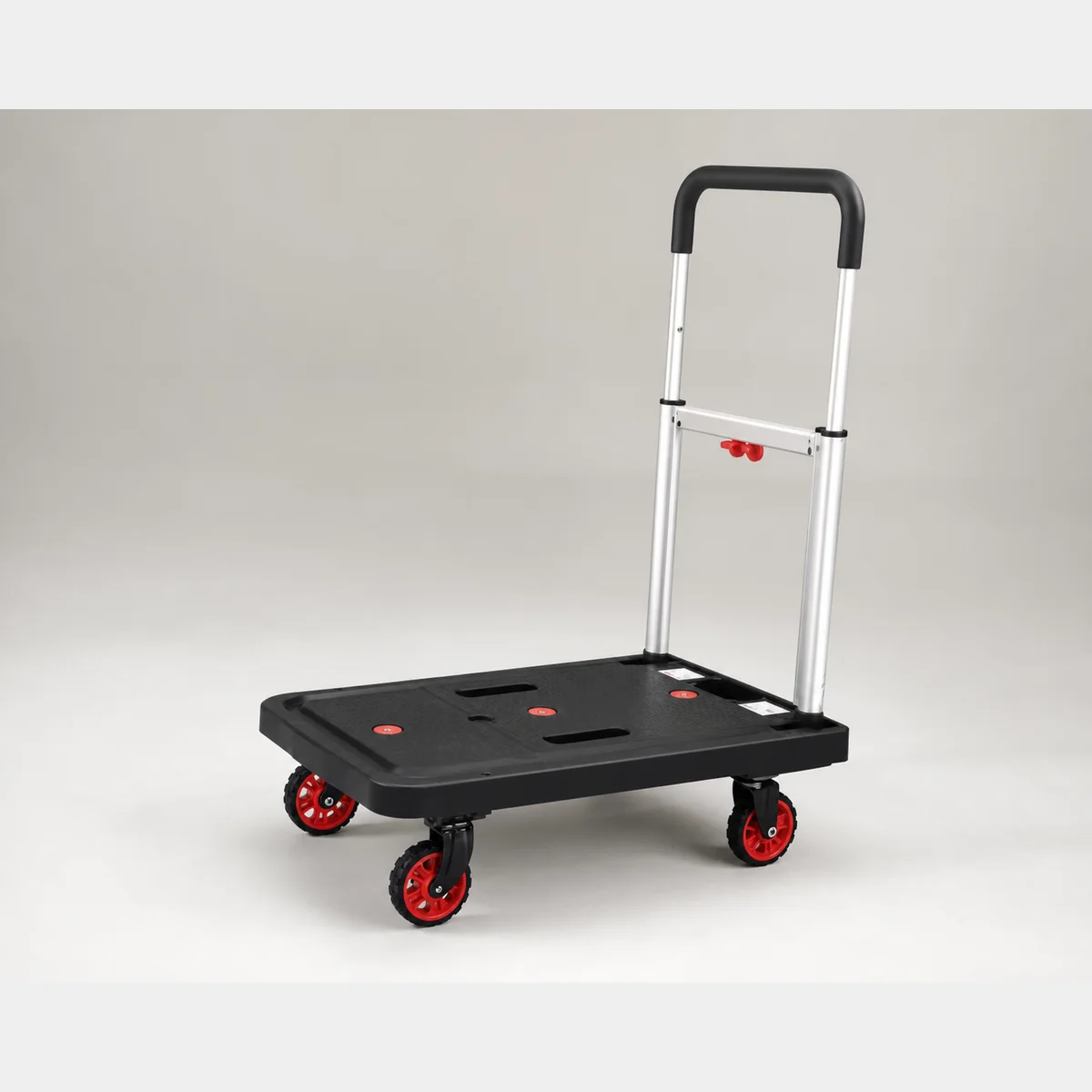
Folding Wheeled Trolley
Folding wheeled trolley. Dimensions/variants: L67xW41xH92 cm / L80xW52xH87 cm; Colour: White, red wheels; Wheels: Grey wheels. Formal quotation available upon enquiry by use, specification and quantity.
- Dimensions/Variants
- L67xW41xH92 cm / L80xW52xH87 cm
- Colour
- White, red wheels
- Wheels
- Grey wheels
 Material Handling & LogisticsProduct reference image
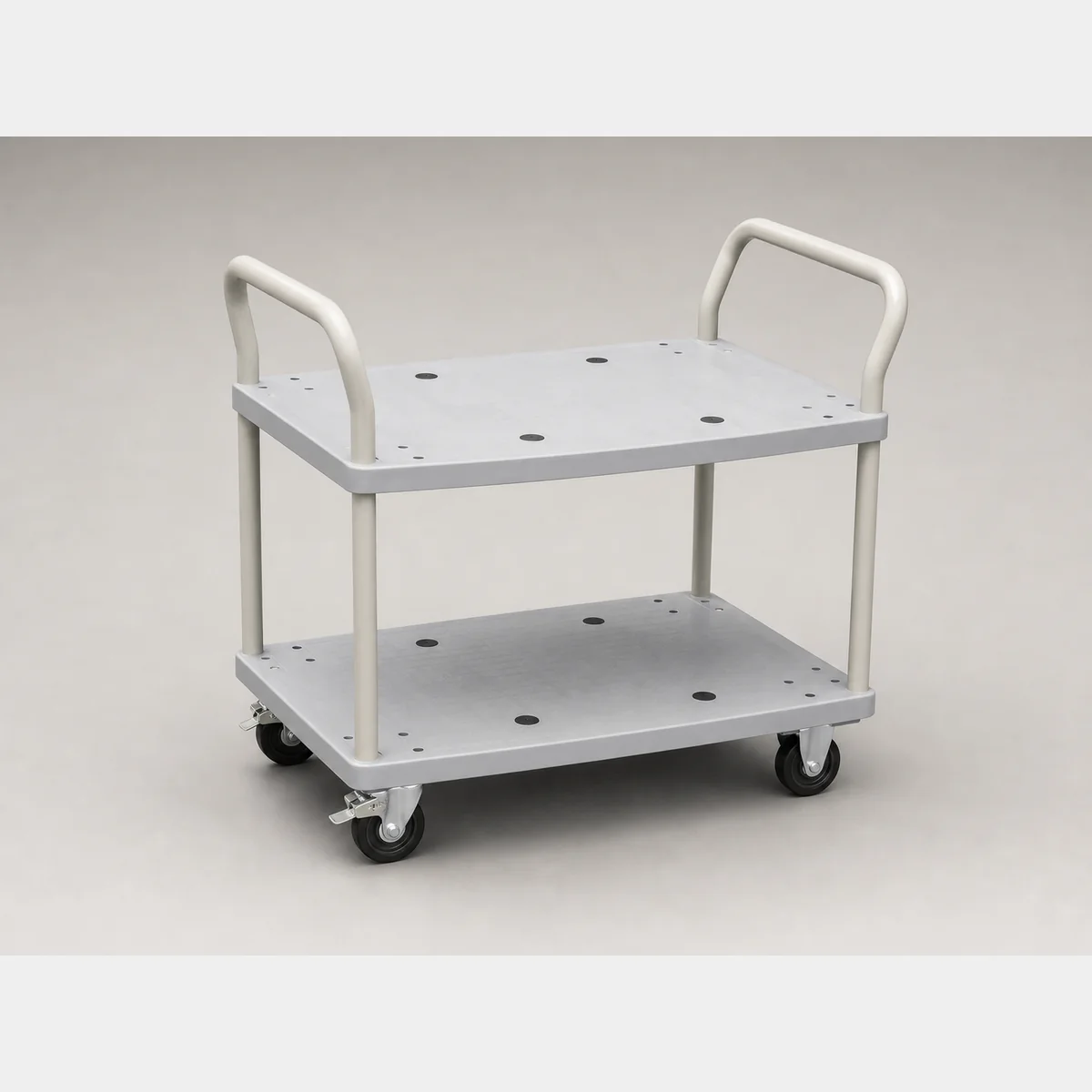
Japanese double-deck plastic trolley with double handrails
Japanese double-deck plastic trolley with double handrails, Dimensions: L625X W455 X H875 MM / L740X W455 X H875 MM; Net weight: 13kg *wheel : 100 MM / 20kg *wheel : 130 mm; 150kg load *shelf clearance: H473 MM / H480 MM. Formal quotation available upon request based on usage, specifications and quantity.
- Dimensions
- L625X W455 X H875 MM / L740X W455 X H875 MM
- Net weight
- 13kg *wheel : 100 MM / 20kg *wheel : 130 mm
- 150kg load *shelf clearance
- H473 MM / H480 MM
 Material Handling & LogisticsProduct reference image
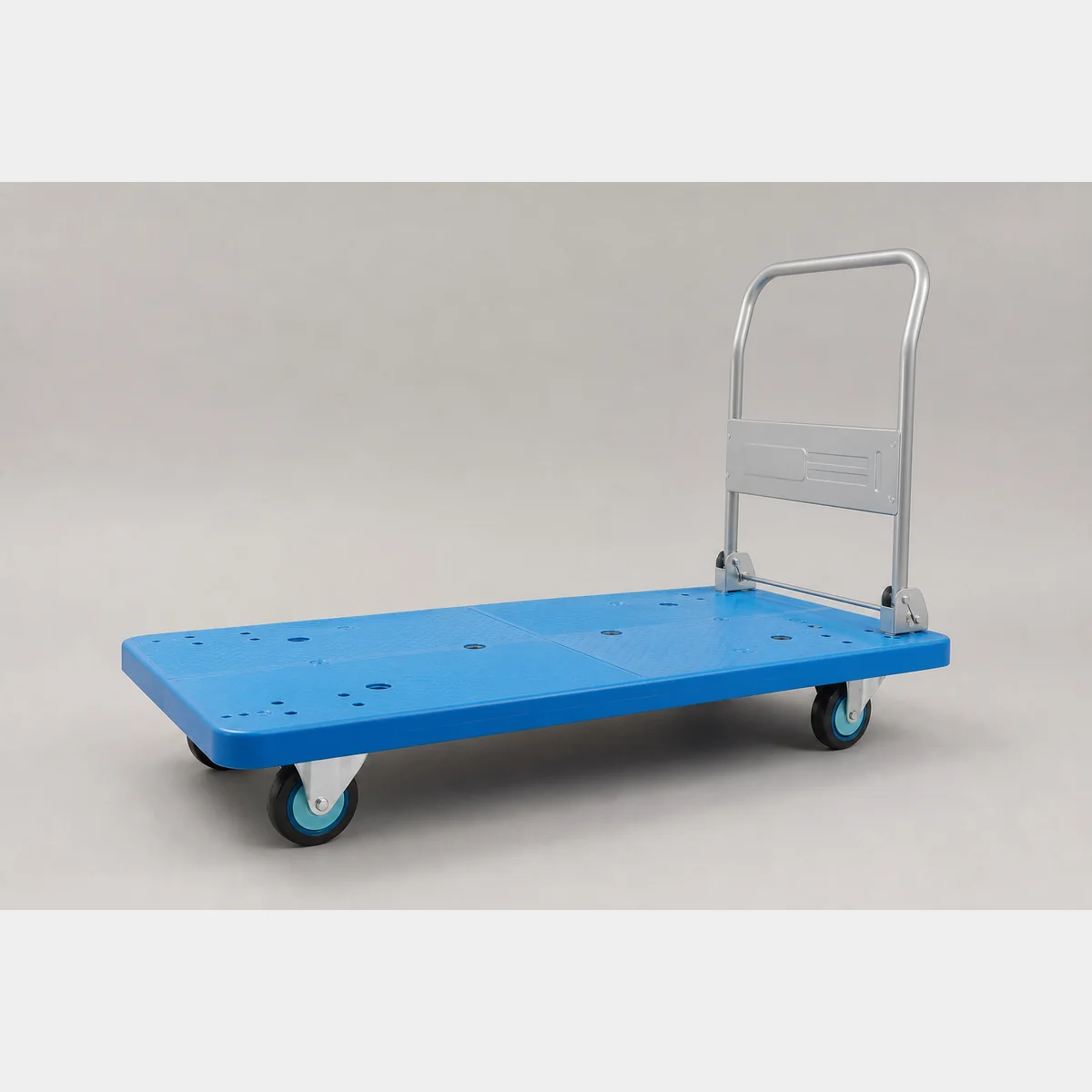
Long-Deck Silent Push Trolley
Long-Deck Silent Push Trolley, Dimensions: L1355 X W650 X H875 MM; Net weight: 21kg; Wheels: 125 mm. Formal quotation available upon request based on usage, specifications and quantity.
- Dimensions
- L1355 X W650 X H875 MM
- Net weight
- 21kg
- Wheels
- 125 mm
 Material Handling & LogisticsProduct reference image
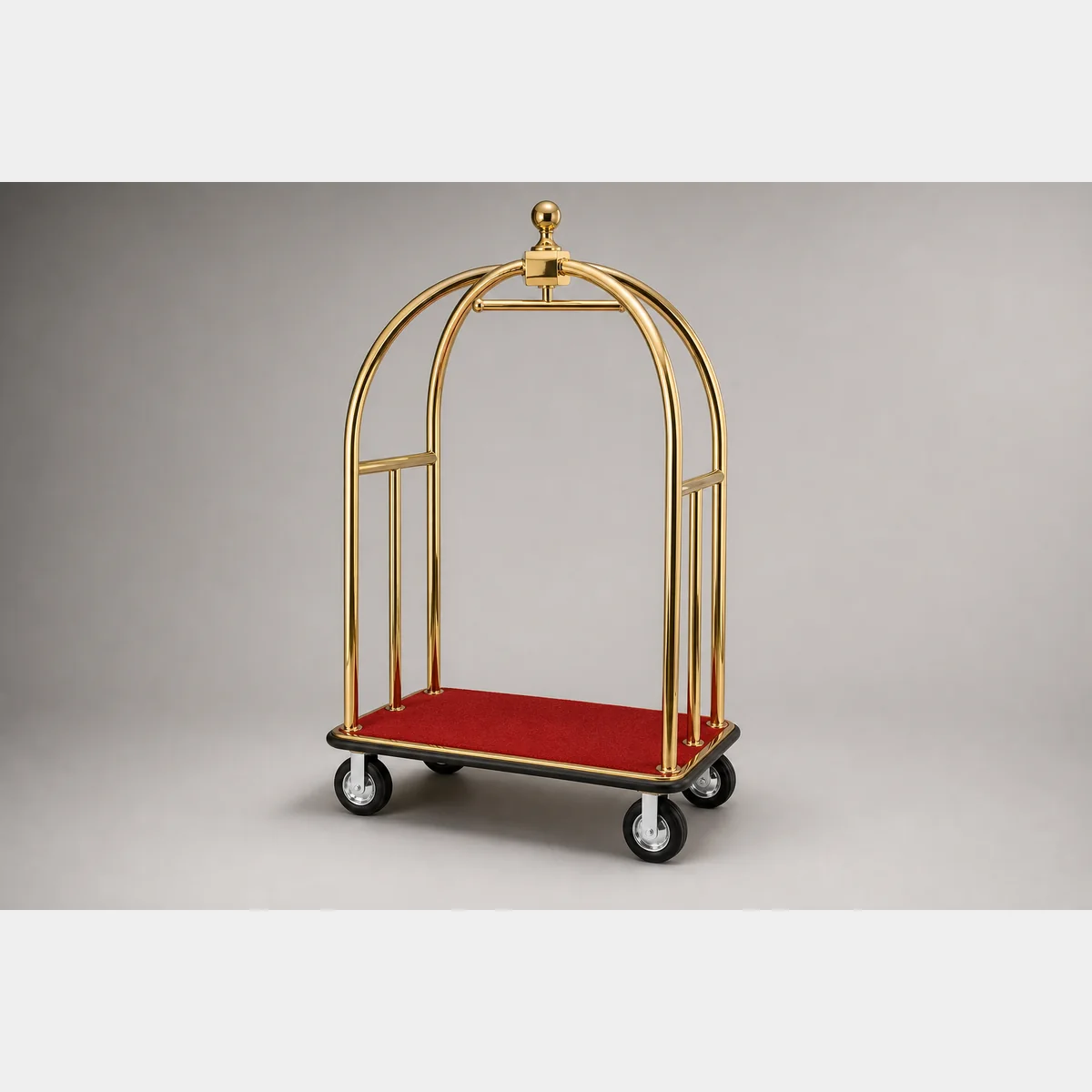
Luggage Trolley
Luggage Trolley, Material: Titanium finish with soft rubber wheels; Dimensions: L1100 x W610 x H1880 MM / L1050 x W610 x H900 MM. Formal quotation available upon request based on usage, specifications and quantity.
- Material
- Titanium finish with soft rubber wheels
- Dimensions
- L1100 x W610 x H1880 MM / L1050 x W610 x H900 MM
 Material Handling & LogisticsProduct reference image
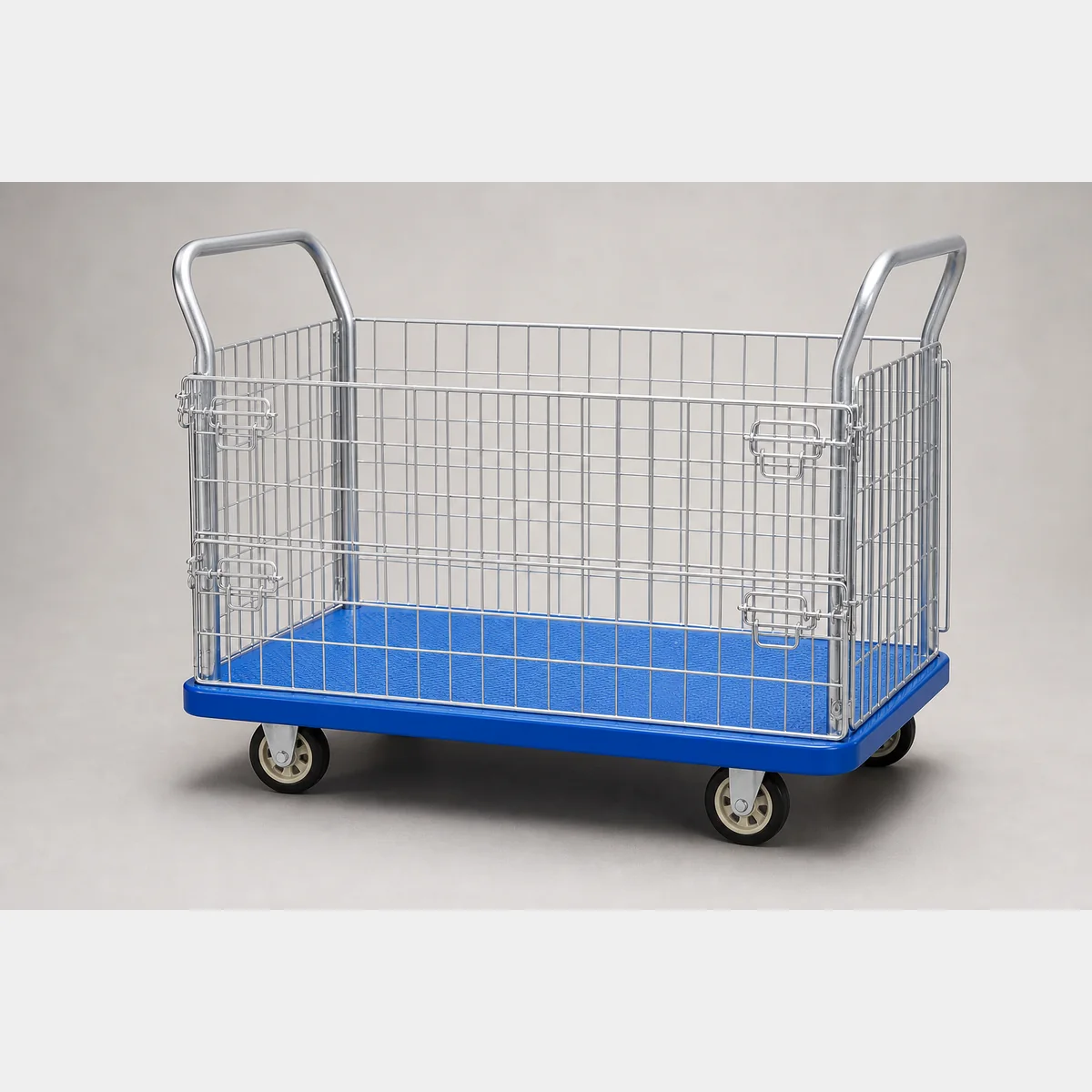
Mesh Cage Trolley
Mesh cage trolley, dimensions: L880 X W590 X H850 MM / L1355 X W650 X H885 MM; cage height: 500 MM; net weight: 16.5kg wheels: 125 mm. Formal quotation available based on application, specifications and quantity.
- Dimensions
- L880 X W590 X H850 MM / L1355 X W650 X H885 MM
- Cage height
- 500 MM
- Net weight
- 16.5kg wheels: 125 mm
Continue with closely related procurement topics
These pages share equipment, operating or decision-stage signals with this guide.
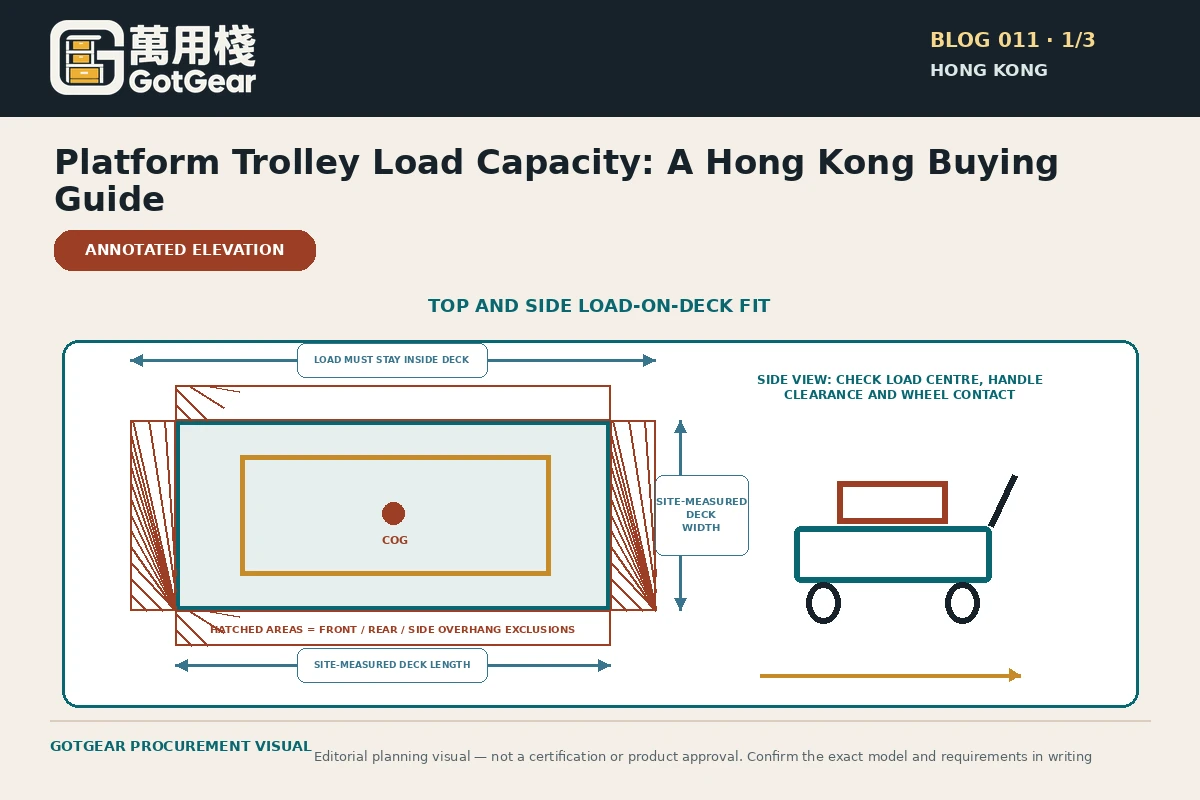
Platform trolley load capacity Hong Kong
GotGear explains platform trolley load capacity Hong Kong for Hong Kong buyers. See how platform trolley safe working load Hong Kong supports platform trolley deck size Hong Kong, with practical checks, evidence boundaries and written requirements.
Read the guide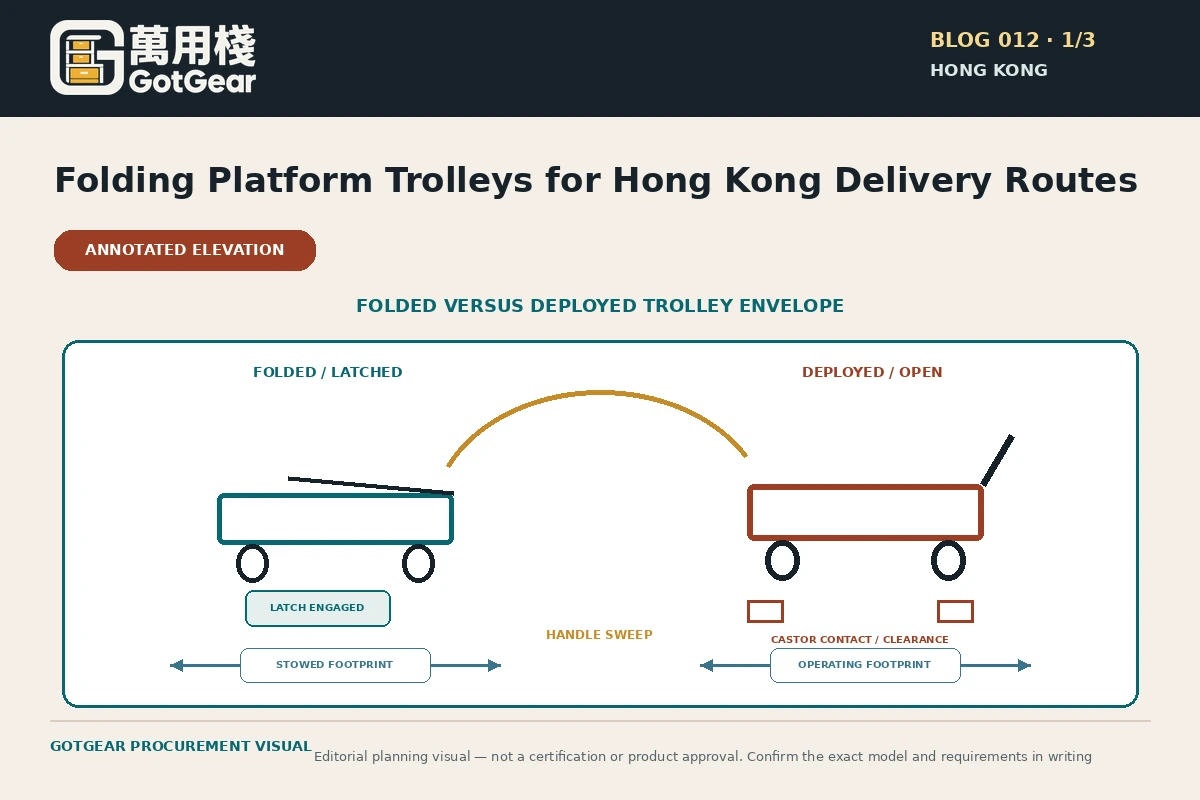
Folding platform trolley Hong Kong
GotGear explains folding platform trolley Hong Kong for Hong Kong buyers. See how foldable trolley for delivery vans Hong Kong supports compact platform trolley storage Hong Kong, with practical checks, evidence boundaries and written requirements.
Read the guide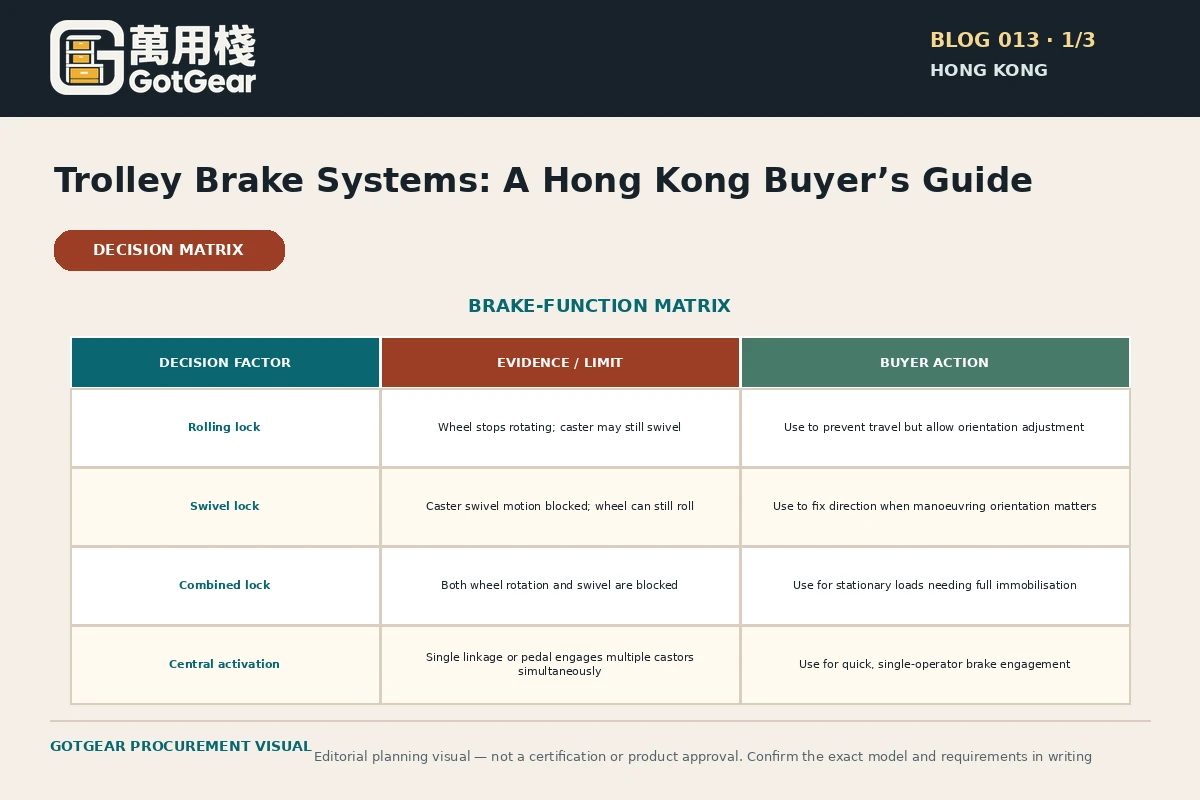
Trolley brake system Hong Kong
GotGear explains trolley brake system Hong Kong for Hong Kong buyers. See how trolley wheel brake types Hong Kong supports locking caster trolley Hong Kong, with practical checks, evidence boundaries and written requirements.
Read the guide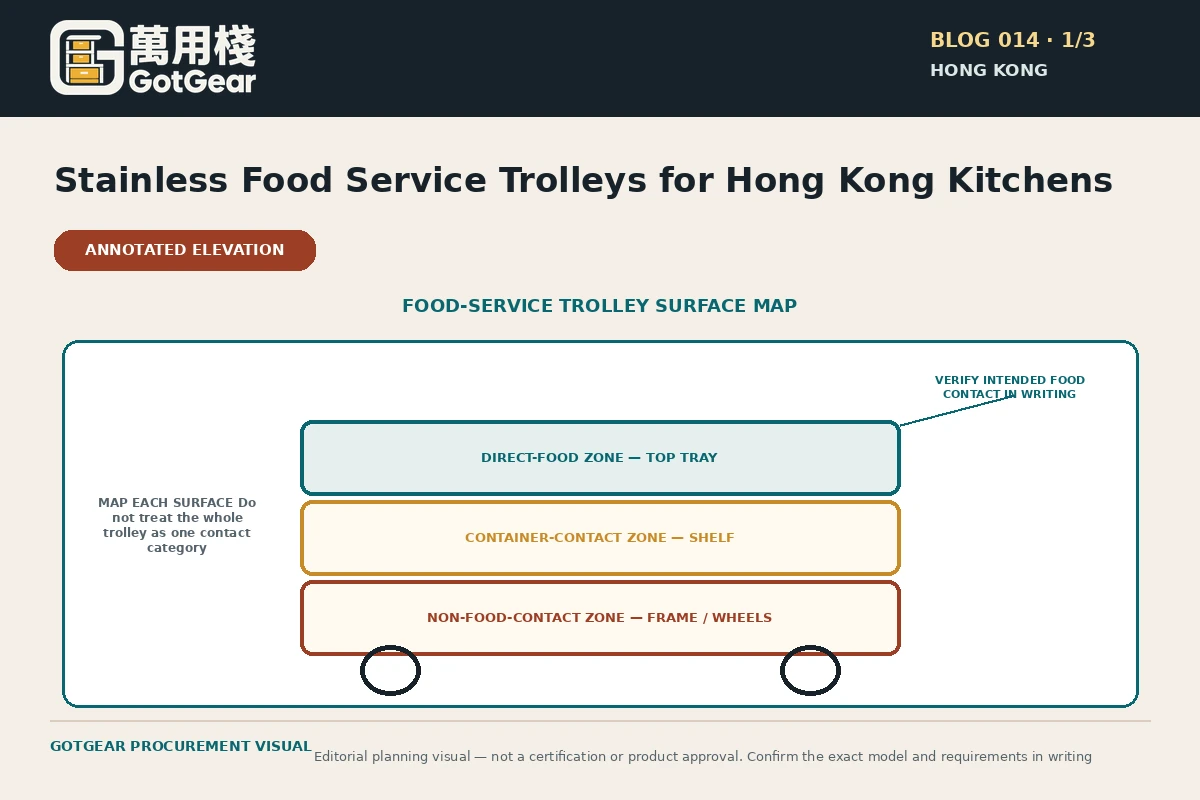
Stainless steel food service trolley Hong Kong
GotGear explains stainless steel food service trolley Hong Kong for Hong Kong buyers. See how stainless steel catering trolley Hong Kong supports food service trolley cleaning Hong Kong, with practical checks, evidence boundaries and written requirements.
Read the guideRelated topic indexOpen more English procurement pages17 topics
Browse additional equipment families, applications and procurement questions relevant to these operating requirements.