
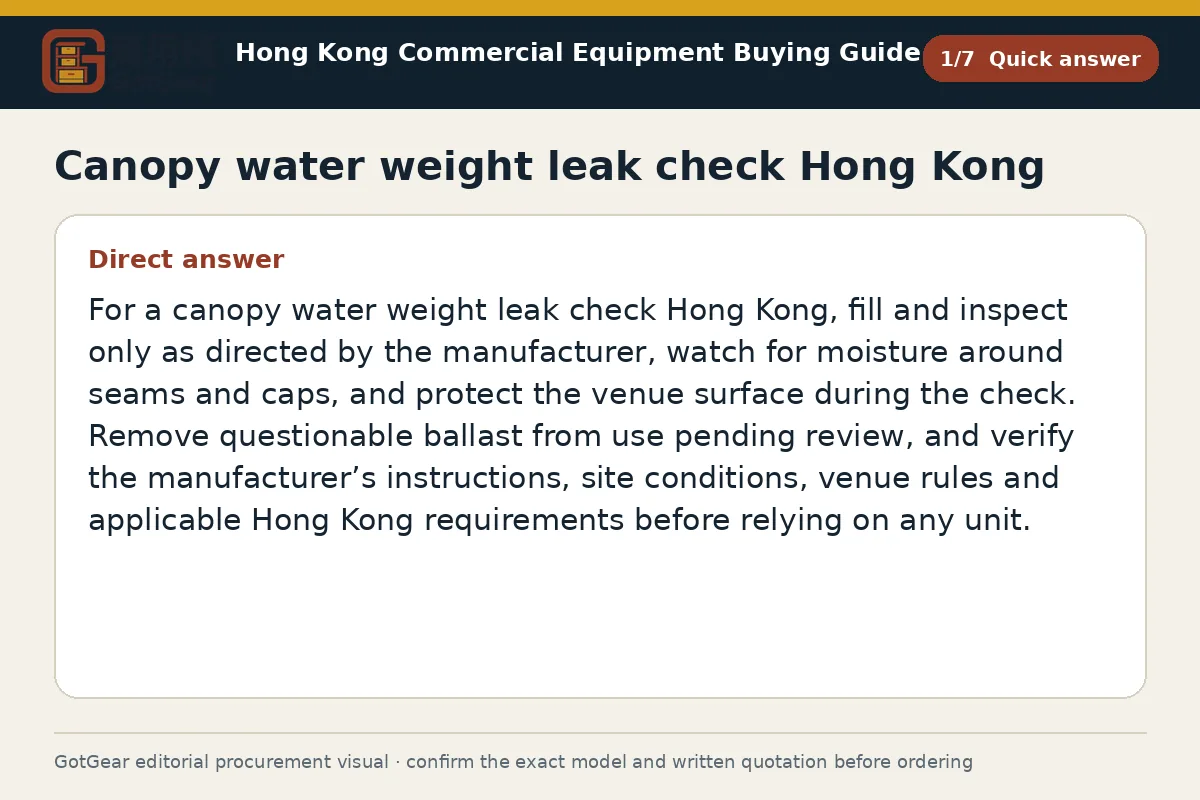
For a canopy water weight leak check Hong Kong, fill and inspect only as directed by the manufacturer, watch for moisture around seams and caps, and protect the venue surface during the check. Remove questionable ballast from use pending review, and verify the manufacturer’s instructions, site conditions, venue rules and applicable Hong Kong requirements before relying on any unit.
Shell, seam and cap checks in canopy water weight leak check Hong Kong
Start with a clean, dry container. Wipe the shell with a light-coloured cloth so fresh moisture shows clearly. Examine for cuts, pinholes, stress whitening, hardening or soft spots, and any distortion that could prevent a stable footprint. Trace every seam with your fingers; a sound weld usually feels smooth and continuous. Look for lifted edges, bubbles, abrasion at corners and scuffing where the unit was dragged. If the model has moulded handles, check for hairline cracks radiating from the fix points.
Open the closure and inspect the cap threads, tether and sealing face. Check the gasket or O‑ring for brittleness, flattening or nicks, and confirm the vent design (if fitted) can be shut securely. For procurement, request the manufacturer’s data for polymer type, UV stabilisers, declared wall gauge (example starting point to discuss: 0.7–1.2 mm) and the seam method (e.g. heat or RF weld). Ask for cap size, gasket material, part codes for replacements and a statement of intended service life, all in bilingual documents where possible. Before ordering in volume, confirm the filled dimensions will pass your narrowest doorway and goods‑lift car; measure cap height and any protrusions against the building manager’s published clearances and turning space on the route to the event area.
Defect records from canopy water weight leak check Hong Kong
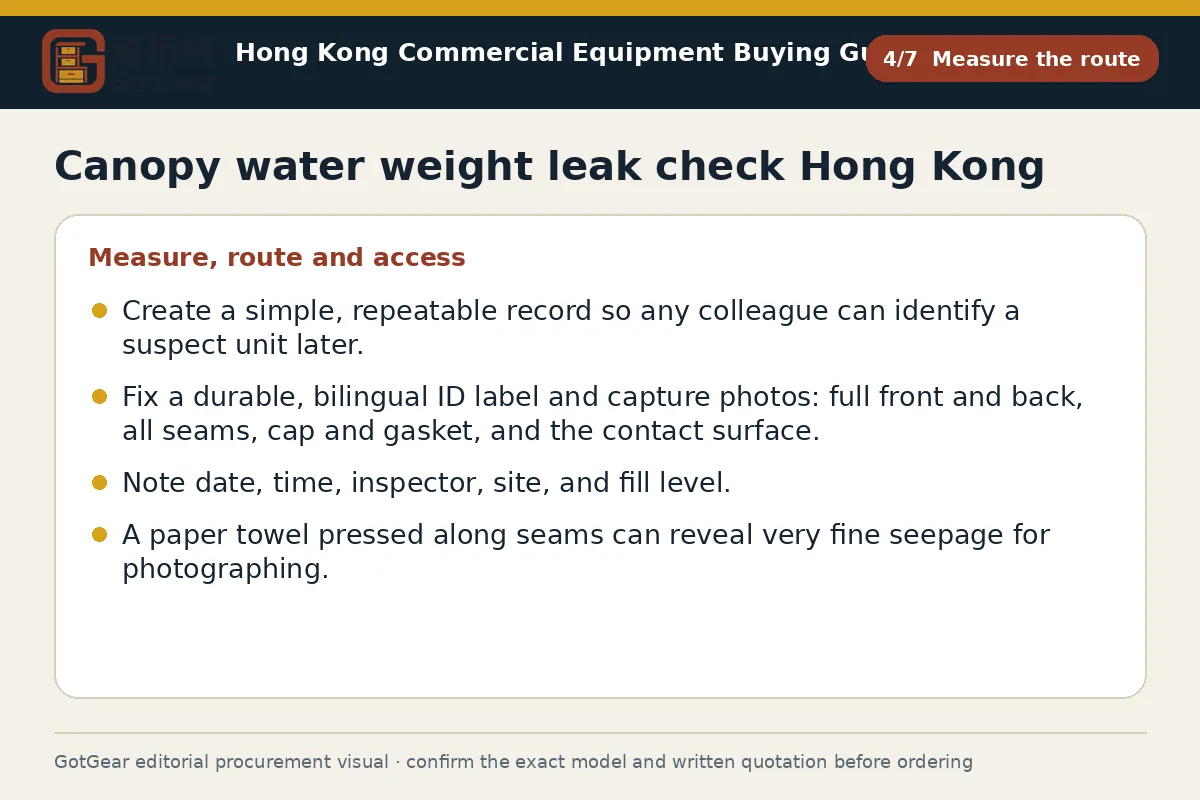
Create a simple, repeatable record so any colleague can identify a suspect unit later. Affix a durable, bilingual ID label and capture photos of the full front and back, all seams, the cap and gasket, and the contact surface. Note date, time, inspector, site, and fill level. A paper towel pressed along seams can reveal very fine seepage for photographing. Weighing a filled unit adds objective evidence where scales are available and approved to use on site.
During a canopy water weight leak check Hong Kong, teams should agree a short observation period appropriate to the venue, water source and the model’s guidance (example starting point only: 10–15 minutes, then confirm in the written brief). Record any drip path, puddle size and floor protection used, and attach images to the unit’s QR record. Align statuses with your folding tent accessory inventory in Hong Kong so quarantined items cannot be issued. File supplier batch codes and any previous repair notes. When escalation is needed, send the record set to the manufacturer or distributor with model designation and purchase reference, and keep the item isolated until written advice is received.
What should buyers compare for canopy water weight leak check Hong Kong?
| Criterion | Straightforward requirement | More complex requirement | Evidence to provide |
|---|---|---|---|
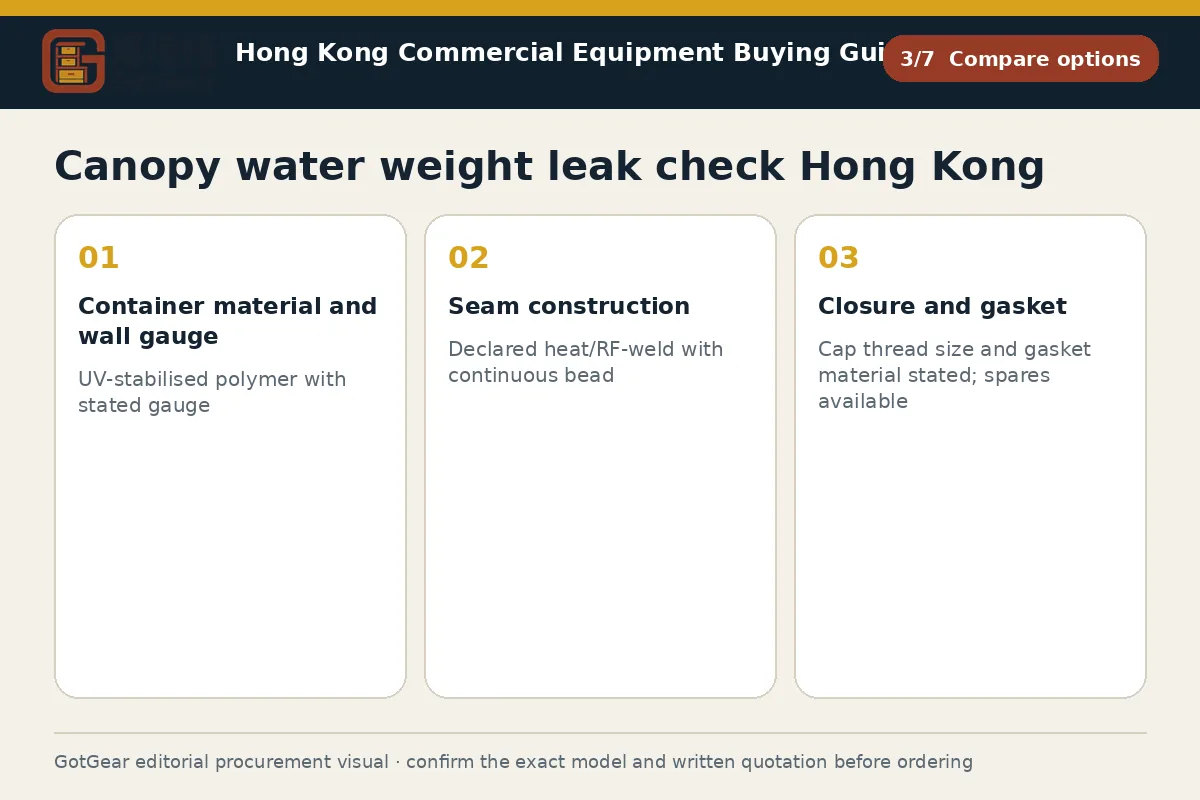
| Container material and wall gauge | UV‑stabilised polymer with stated gauge | Material data and batch traceability provided on request | Spec sheet, material data sheet and batch/lot code |
| Seam construction | Declared heat/RF‑weld with continuous bead | Reinforced corners/cross‑seams for high‑wear points | Close‑up photos, drawing/excerpt, warranty note if offered |
| Closure and gasket | Cap thread size and gasket material stated; spares available | Secondary seal/vent design and tethered cap documented | Exploded diagram, part codes and replacement-seal ordering details |
| Containment and floor protection | Non‑marking mat under each weight for testing/use | Bunded tray sized to exceed one unit’s capacity and route controls | Mat/tray specifications and venue approval email |
| Identification and records | Unique ID label on every weight | QR‑linked photo history and check outcomes | Sample record, label durability specification |
This framework helps buyers create comparable written enquiries. Final model specifications, availability, delivery and commercial terms must be confirmed in a formal quotation.
Containment and floor contact for canopy water weight leak check Hong Kong
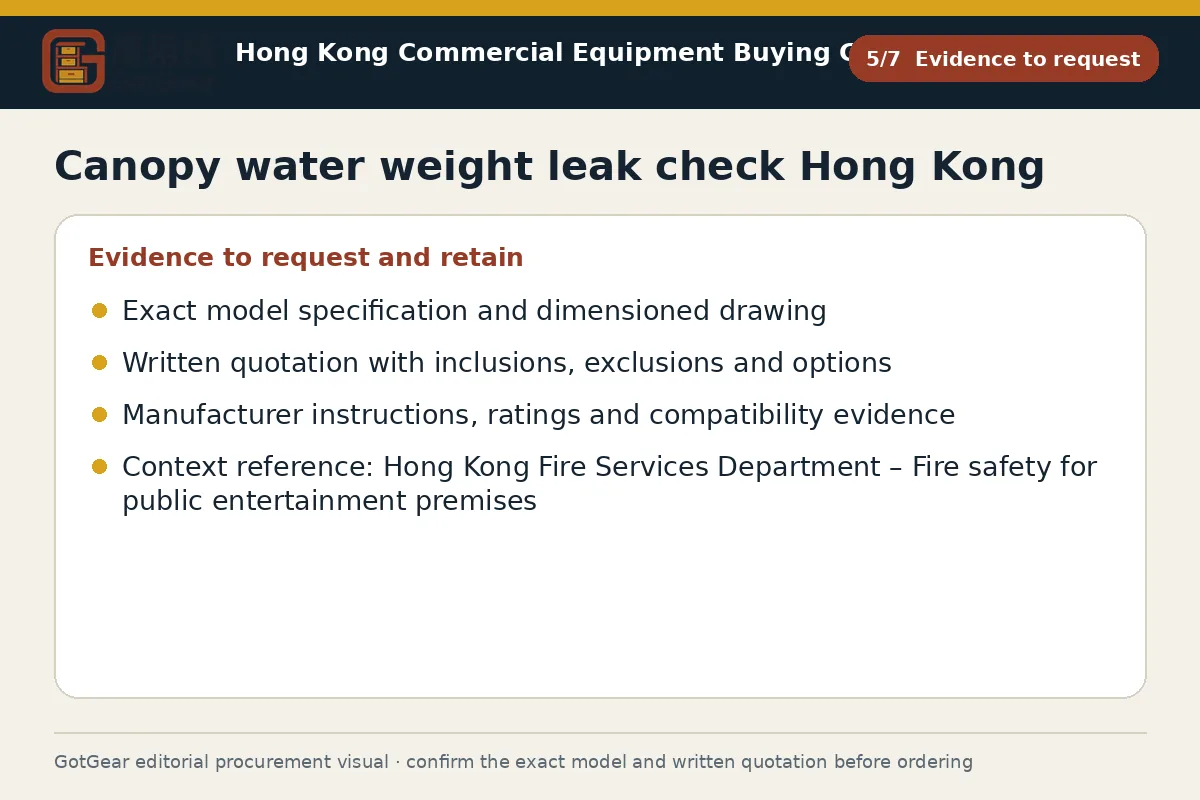
Contain leaks before they reach the venue floor. Set up a test area using bunded trays or a tarpaulin formed with an upturned edge, and place absorbent pads at likely drip points. Place a non-marking mat under each unit to prevent scuffs during manoeuvring and to distribute the contact pressure. Your canopy tent weight and floor protection plan for Hong Kong should be set out in a document that states mat composition, thickness (example starting point for discussion: 3–5 mm rubber), and coverage per weight, and then be confirmed with the venue. In humid conditions, post "wet floor" warnings and ventilate where possible to deter condensation that can mask actual seepage.
Check the contact surface of each ballast. If the model uses a flat base, confirm it sits flush on your chosen mat; for rounded forms, ensure cradle blocks or frames keep the shell from point-loading the floor. Ask suppliers to provide footprint dimensions when filled, recommended placement orientation, and any compatible containment accessories. Note site constraints such as timber sports floors, carpet tiles, slopes, and restricted drainage. Include these protections in the canopy tent event acceptance checklist for Hong Kong so the same standard is applied at every setup and pre-event inspection.
Removing suspect ballast after canopy water weight leak check Hong Kong
When a unit shows seepage, cap damage or unexplained mass loss, stop using it immediately and keep it out of public view. Place it in a labelled bund or heavy‑duty bag, mark DO NOT USE in bilingual text, and move it via trolley to a designated quarantine rack. Coordinate with the management office for goods‑lift booking and any requirement to use a drip tray during transit. Do not pour water into storm drains unless the venue explicitly permits it; follow the building’s instructions for disposal.
Send the defect record to the supplier and request written manufacturer guidance on repairability, replacement parts and safe disposal if beyond repair. Keep the quarantined unit excluded from your folding tent anchoring checklist Hong Kong sign‑off until closed out in writing. If a cap or gasket is the only issue, compare quotations for genuine replacement parts, ask for part codes and installation notes, and confirm whether any repair affects the model’s stated performance. Document the final decision, update inventory counts and retrain the team where the root cause suggests a handling improvement.
Canopy water weight leak check Hong Kong decision checklist
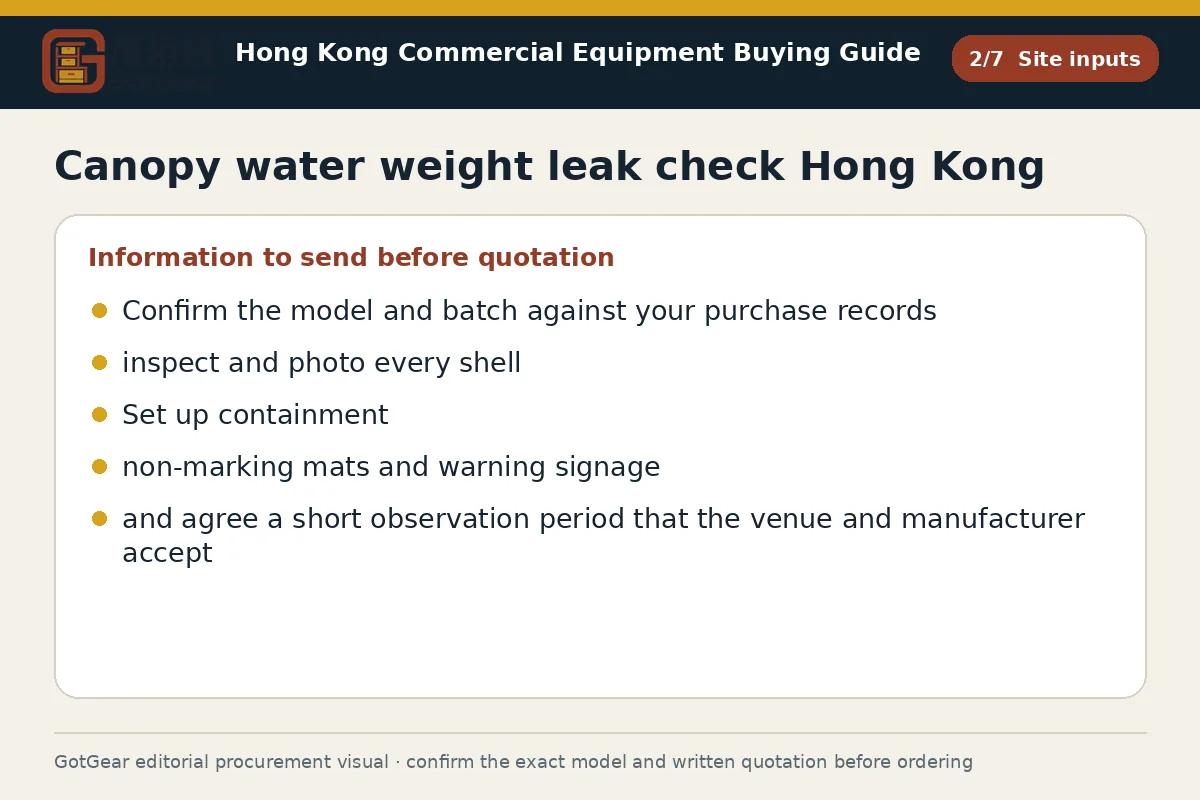
Confirm the model and batch against your purchase records, then clean, inspect and photo every shell, seam and cap. Set up containment, non‑marking mats and warning signage, and agree a short observation period that the venue and manufacturer accept. Record unit IDs, fill level, mass (if measured) and any seepage, then quarantine suspect pieces in labelled bunds. For procurement, request polymer, wall gauge, seam method, cap and gasket details, and replacement part codes in bilingual documents. Check filled dimensions against the building’s doorways and goods‑lift. Compare written quotations on identical specifications, delivery conditions and after‑sales support. On receipt, check packaging for wet patches and verify batch codes. Escalate defects to the supplier with your record set and await written instructions before reuse.
- Operating use, quantity and expected frequency
- Dimensions, capacity, material and accessory requirements
- Delivery address, floor, goods lift and loading window
- Required documents, acceptance checks and after-sales arrangements
Key points for canopy water weight leak check Hong Kong
Hong Kong venues often sit inside high‑rise complexes with tight goods‑lifts, narrow fire doors and managed loading windows. Plan your inspection route and containment so filled weights fit lift cars and turning spaces, and so any drained water can be disposed of where the building permits. Many sites require floor protection over timber or sports surfaces and may ask for bilingual labels and method statements. Public‑facing events typically involve venue and insurer oversight; confirm their written requirements before relying on any ballast. This summary highlights common operating constraints only and is not legal advice.
Questions about canopy water weight leak check Hong Kong
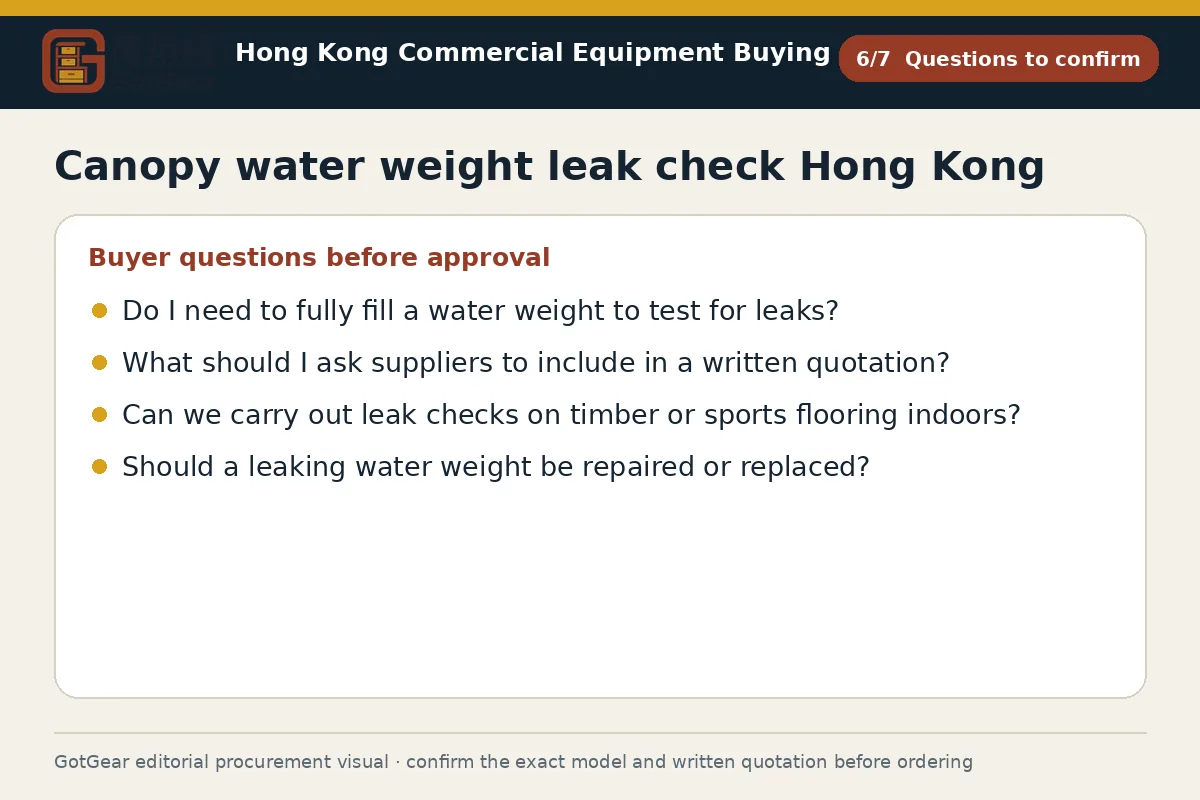
Do I need to fully fill a water weight to test for leaks?
Not always; you can add enough water to cover seams and the cap area, then observe within your containment setup. As an example starting point, some teams use a partial fill for a short timed check, but the manufacturer’s guidance and venue rules should prevail. Confirm the agreed method in your written brief before you begin.
What should I ask suppliers to include in a written quotation?
Request the polymer type, UV stabiliser claim, declared wall gauge, seam method, cap thread size, gasket material, and part codes for replacement caps and seals. Ask for filled dimensions, recommended footprint, compatible containment accessories, and bilingual instructions. Where a venue or insurer requires it, seek a written statement of intended use. The supplier’s formal quotation should prevail.
Can we carry out leak checks on timber or sports flooring indoors?
Yes, provided you use bunded containment, non-marking mats and clear signage, and the building manager agrees to the method in writing. Integrate these controls into your canopy tent weight floor protection Hong Kong arrangements, and include them in your written plan. Ventilation reduces condensation that can confuse results. Always confirm disposal points for drained water and follow the venue's instructions.
Should a leaking water weight be repaired or replaced?
Quarantine it and consult the manufacturer. Minor cap or gasket defects may be addressed with approved parts; seam failures often need factory repair or replacement. Compare written quotations for parts and new units on the same specification, and confirm whether repair affects stated performance. Follow the building’s rules for handling waste water and for moving suspect items.
Continue with closely related procurement topics
These pages share equipment, operating or decision-stage signals with this guide.
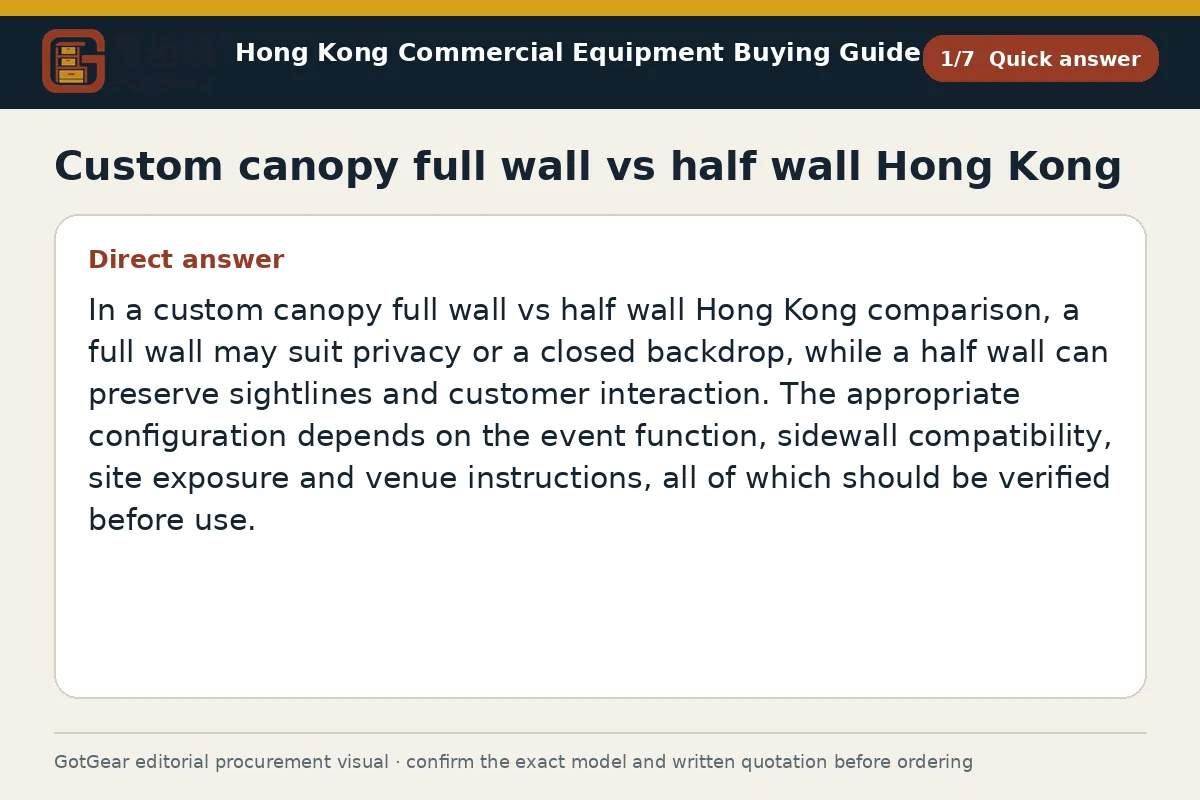
Custom canopy full wall vs half wall Hong Kong
Compare enclosure, visibility, access and branding area when choosing between custom canopy full wall vs half wall Hong Kong. Also consider privacy, how customers will approach and venue rules when planning with GotGear.
Read the guide
Clear canopy sidewall vs mesh sidewall Hong Kong
Compare clear canopy sidewall vs mesh sidewall Hong Kong to assess visibility, airflow, enclosure, panel compatibility and visitor comfort when planning your site. Get practical guidance from GotGear.
Read the guide
Canopy tent weights and tie down straps Hong Kong
Compare canopy tent weights and tie down straps Hong Kong by considering the venue, surface and permitted fixing points. Check the manufacturer's instructions and local weather before use and follow guidance from GotGear.
Read the guide
Folding tent accessory inventory Hong Kong
GotGear covers folding tent accessory inventory Hong Kong and what to record for kit storage. It links canopy sidewall packing and labelling Hong Kong with folding tent condition report Hong Kong to keep kits traceable.
Read the guideRelated topic indexOpen more English procurement pages3 topics
Browse additional equipment families, applications and procurement questions relevant to a wider buying brief.